
In short
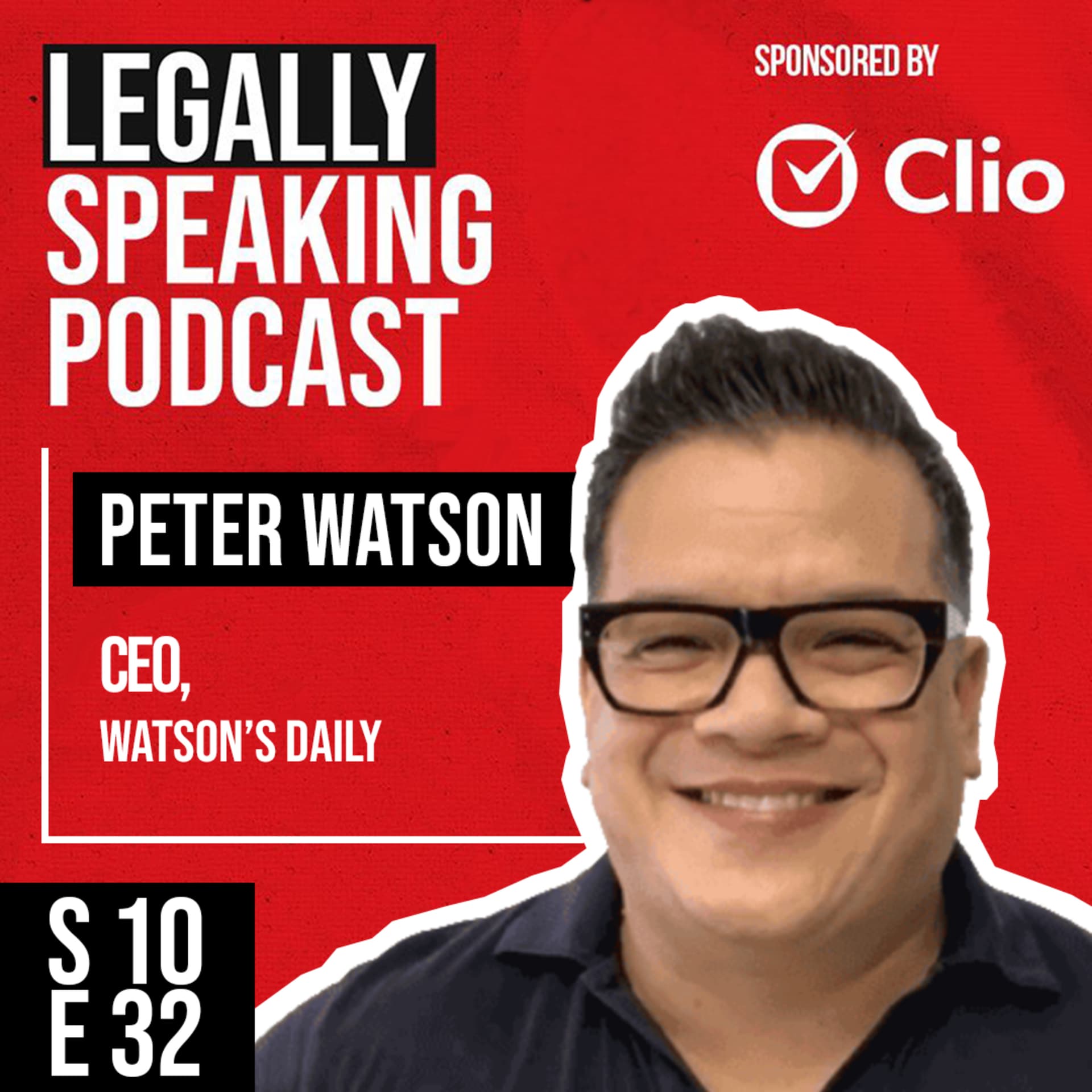
Peter Watson explains commercial awareness for lawyers—how to move from knowing business news to applying it in interviews and client work. He argues it differentiates “great” candidates, because law firms need people who can use knowledge to help the firm make money. He also covers how AI affects news consumption, how to research companies (especially via LinkedIn), and habits for building commercial awareness consistently.
Guest (Peter Watson) background
CEO/founder of Watson’s Daily (launched 2014). Former stockbroker for 13 years across London and Tokyo (advising institutions on UK/European/Japanese markets). Later worked as a headhunter/recruiter (finance/investment banking; from junior hires to CEOs). Writes a daily commercial awareness/business news platform for students and professionals.
Key claims
Don’t treat commercial awareness like pub-quiz revision; understand how companies make money and how news impacts you. Best research is “LinkedIn backwards.” AI summaries help but don’t replace doing the work.
Notable examples
GDPR and interest rates as “news that applies to you”; a “Watson’s Daily ambassador” who went from no offers to many offers and a high-paying role; explaining M&S store categories while walking as a sectoral knowledge exercise.
Written by AI. May contain mistakes. Listen to the episode to check what was said.
Chapters
Tap a time to open that second in VOExploring Peter Watson's Background
0:39 to 1:56
Discussion about Peter Watson's career journey and expertise in commercial awareness.
“Peter is the CEO of Watson's Daily, one of the UK's leading commercial awareness and business news platforms.”
Icebreaker Questions with Peter
1:56 to 3:25
Fun icebreaker questions revealing Peter's personality and preferences.
Peter's Career Path to Watson's Daily
3:25 to 5:48
Peter shares pivotal moments in his career leading to the creation of Watson's Daily.
“So basically, it was a big Japanese company who were building a European headquarters.”
The Evolution of Watson's Daily
5:48 to 9:22
Discussion on the growth and rebranding of Watson's Daily and its mission.
“And to be honest, have a bit of fun because I think a lot of people take themselves far too seriously in this kind of world.”
Defining Commercial Awareness
9:22 to 11:15
Peter defines commercial awareness and discusses common misconceptions.
The Importance of Commercial Awareness Today
11:15 to 12:38
Exploration of why commercial awareness is crucial in today's world.
“So when they start reading it, they think, what is this?”
Adapting to Economic Changes
12:38 to 14:00
Peter talks about adapting commercial awareness to current economic volatility.
“So, yeah, so I think there's a definite gap between what people think commercial awareness is and then how they apply the knowledge to their circumstances.”
The Importance of Commercial Awareness for Lawyers
14:00 to 16:45
Learn why understanding commercial awareness is crucial for young lawyers.
“I mean, after all, that's what you've been studying for quite some time until this point.”
Standing Out in the Job Market
16:45 to 19:52
Discover key qualities that differentiate successful candidates from the rest.
“But really, I think what it's all about is can this person sitting in front of me use their knowledge to make us money?”
Researching Companies Effectively
19:52 to 24:13
Understand how to utilize LinkedIn and other resources to research companies.
“And ideally, not the official stuff that you still meet in.”
Show all 21 chapters
AI and Commercial Awareness: A Double-Edged Sword
24:13 to 28:00
Explore how AI influences commercial awareness and information processing.
“So you can't, I don't think you can actually do that.”
Developing Commercial Awareness in Law Firms
28:00 to 30:13
Learn how law firms are enhancing lawyers' commercial skills.
Skills for Future Lawyers
31:04 to 35:34
Explore the essential skills that will define successful lawyers.
“And I think that the problem at the moment is I think that there are fewer opportunities for people to develop skills like that.”
Building Commercial Awareness Habits
35:35 to 41:28
Get practical tips on developing commercial awareness consistently.
Case Study: Success through Commercial Awareness
41:28 to 42:00
Hear a real-life example of career transformation via commercial skills.
“Maybe a quick case study now to perhaps back this up, but an example of someone who transformed their career opportunities through actually investing and improving their commercial awareness.”
The Impact of Watson's Daily Ambassadors
42:00 to 46:00
Learn how a Watson's Daily ambassador transformed his career through podcasts and social media efforts.
“He did some podcasts when I was doing the podcast every day.”
Encouraging Curiosity in Legal Teams
46:00 to 48:02
Explore ways leaders can foster commercial awareness and knowledge sharing in their organizations.
“How can they encourage curiosity, learning, enthusiasm across their teams?”
Educational Gaps in Commercial Awareness
48:02 to 50:17
Discuss the shortcomings of legal education in preparing students for real-world commercial challenges.
“I suspect that, you know, something like commercial awareness is probably going to stay within the nice to have.”
Career Advice for New Legal Professionals
50:17 to 56:00
Discover essential career advice for graduates entering the legal industry, focusing on self-awareness and adaptability.
Finding Balance in Legal Careers
56:00 to 59:16
Learn the importance of prioritizing work-life balance in legal careers.
“I mean, I think that law seems to be a very all consuming kind of job, you know.”
Future Trends in Legal Profession
59:16 to 59:51
Discover the traits of future successful professionals in the legal field.
Transcript
Automatic transcript. May contain errors.0:00Peter Watson:There are shifts that are going on now that we have never seen before. You don't know what you know and what you don't know until you try and talk about it. If you've ever been in a position where you start talking about something, thinking, yes, I know about this. And as you get further into it, you think, actually, do you know what? No, I don't. You don't want to be in that position when you're in an interview or an important client meeting. So you really need to talk about this with other people. understand yourself. If you don't do that, you are setting yourself up to fail. If you don't understand yourself and your motivations, you are not going to be able to convince anyone else.
0:38Andrew McFarlane:On today's Legally Speaking podcast, I'm delighted to be joined by Peter Watson. Peter is the CEO of Watson's Daily, one of the UK's leading commercial awareness and business news platforms. After building a successful career spanning stockbroking, financial markets, and recruitment, Peter launched Watson's Daily in 2014. He had a simple mission, helping people understand what is happening in the world of business and why it matters. Today, Watson's Daily is supporting thousands of students, professionals, lawyers, and business leaders by making complex economic developments accessible, practical, and easy to understand.
1:16Andrew McFarlane:Peter's financial markets expertise, recruitment experience, and passion for education has made him a trusted voice on commercial awareness, career development, and the future of business. Today, we're exploring why commercial awareness has become one of the most valuable professional skills in an increasingly complex world. We will discuss how business news shapes decision making, what employers are looking for when they assess commercial awareness, and how lawyers can stand out in a competitive market, and why understanding business has never been more important. so finally a very big warm welcome to the show peter hello there i'm very excited by this very excited i'm equally excited we've known each other for years and years and the last sort of few episodes it's been really a nice full circle moment for me as a host getting to see people that we've collaborated with over the years and all the great stuff that you're doing before i spoil too much we have a couple of icebreaker questions before we get into you your journey and all the good stuff you're doing so first one what's your favorite beverage and what's your preferred choice of footwear on a typical work day so favorite beverage is um
2:25Peter Watson:brew dog elvis juice because it's and i justify that by saying that it's sort of grapefruit flavor so it kind of counts as your one of your five a day so that's that's my favorite beverage the um in terms of um uh footwear um birkins i've got these birkenstocks which i uh you know i do like a birken well i do well two two birkenstocks to be precise but yeah uh there we go and a piece
2:54Andrew McFarlane:of tech that you use every day that you now rely on that would have seemed unthinkable when you
3:00Peter Watson:first started out your career um well well if technically that would be the mobile phone because i'm quite old so i think so that's that's that's quite a good one so yeah probably the mobile phone
3:15Andrew McFarlane:good stuff all right well let's talk a bit about you peter would you mind telling our listeners a
3:20Peter Watson:bit about your background and career journey let's start the so university um i went to cardiff university um best you know best university in the whole world so i hear um so yeah i went there i did law and japanese for my for my degree uh part that's all right two years in cardiff i went off to uh tokyo to university over there for two years which was amazing and then i came back did the final year in cardiff and then was released into the world um my first job out of uni was i I was an interpreter for a£1 billion Japanese project. So basically, it was a big Japanese company who were building a European headquarters.
4:10Peter Watson:And basically, I was the interpreter for the head architect of the project, which was quite scary. So I did that for a bit. Then I got a phone call from someone I knew at university. And to cut a long story short, they actually recommended me to become a stockbroker in London. So again, long story short, got the job, had an amazing time. And so I was a stockbroker 13 years, four different investment banks, London and Tokyo. and I advised clients so all big you know they're all institute all big institutions you know banks insurance companies on what stops to buy and sell in the UK European and Japanese stock markets and I either did it I either did it in English or Japanese depending on what they wanted and how much they're going to pay me and yeah it was it was you know it was really good um after that i i've also been a stock uh i mean obviously a stockbroker but a headhunter for about five years a few different institutions all finance mainly investment banking i've recruited people from junior you know juniors right through to heads of m &a ceos and all sorts of things so so there was that so there's that part of my career as well um and in terms of what uh you know what the the you know what's leading to now um is that i i now write a uh newsletter which the sole purpose of this newsletter is to try to help people to understand remember and use um business and financial markets news because i think it's kind of the scary news i i often say that people see it as the boring news but it's the boring news that can earn you a lot of money So that's why I'm trying to help people to understand it, make it less scary.
6:14Peter Watson:And to be honest, have a bit of fun because I think a lot of people take themselves far too seriously in this kind of world. So I try my best to make it fun as well.
6:25Andrew McFarlane:And you've been doing a fantastic job. And you're obviously referencing the Watson's Daily, which is phenomenal. And I know you get up with a crack of dawn every day and you've been committed to doing it for many years, providing tons of value particularly in the legal space as well to aspiring lawyers lawyers etc but was there a particular moment you realized there was a gap in the market for a platform like Watson's Daily?
6:45Peter Watson:Well I mean it started by the so when I was a headhunter I remember I started off something called Watson's Wi-Fi. Wi-Fi stood for what I found interesting which I thought was hilarious at the time. That is brilliant by the way just going to interject there and say that's brilliant thank you and so we started doing that and and basically the um had a lot of um people for the company that i worked for at the time when they had management coming in they would do they would come into this meeting so i started off doing a doing a note because everyone kept asking me stuff when i was at work and i said listen why don't i just do something on a friday and what i do is i'm going to tell you what which businesses you should be calling to to make some money right So that kind of got quite popular.
7:32Peter Watson:And managers used to come in from different offices to this to this. So I thought it was pretty good. There was some need there. And then when I was a headhunter, I was interviewing people. And I thought a lot of them, there were a lot of people that I met that I thought, you should know this. you know and and in theory like your degree is this you know all the theory but you don't know how to apply it in a practical situation so i thought actually maybe i could use my um you know my experience um and and help people to do that and it basically did the the initially the um the idea of the newsletter was really to help people to prepare for interviews really um and that's kind of how it started off and then it got you know momentum uh you know there was a bit more momentum and it went from being a sort of word you know slash pdf document that i sent out to you know my mom and a couple of friends um to something a bit bigger um and then uh yeah then you know in 2018 I thought you know what actually I want to go all in on this and so did a complete rebrand I was told by the the agency that Watson's Wi-Fi sounded like a broadband magazine so reluctantly I had to change it and I thought well what shall I call it and I thought well my name is Watson it's my surname by the way so my name is Watson and it comes out daily so why not watson's daily so so there we go um that's that's basically what happens um and then after that yeah a few a few there were a few interesting um moments that really suddenly catapulted it out of nowhere and uh yeah so that's it but yeah a lot of fun yeah and obviously you've had your own show
9:34Andrew McFarlane:as well and that's been hugely successful you know chart topping no less but i want to talk about commercial awareness because i know it's something you're really passionate about and again want to educate our audience we've got a whole spectrum of listeners from those trying to break into profession in the profession and i think your definition of this and how you come at this will be really helpful so it's a buzzword everyone's talking about commercial awareness law finance consulting you name it but how do you define it and why do so many professionals misunderstand it in terms of what it means there are loads of definitions out there um but i mean
10:06Peter Watson:my i have a one sentence definition um so uh it's the appreciation and understanding of how companies and industries interact with the wider environment and how they make money. That's it. I mean, there's a lot of, you know, I know that there are various definitions floating out around there, but I just think that really you're trying to understand how companies think, how they interact with themselves, with the environment, with the industry, but but also how does it apply to you and your, you know, and your business or your company or whatever. And I think that what is difficult, I think the main difficulty is there is a, is a big gap between knowing what the news is and then thinking, and then actually applying it to you and or your career and or, you know, and or company because you never really get asked to do that until you get into the world of work properly and i think that that's what people find difficult because i think many people in a way start off by thinking that it's they always treat it like a revising for a pub quiz you know they they'll read things up but the classic classic um advice is how do i go so how do i improve my commercial awareness the classic advice is read the ft now the problem with that is is that the ft is actually really hard to read if you don't know what you're doing and pretty much everyone starts off and i'm not including myself in this by the way and you start off thinking right i'm going to read the ft and you start from page one and you desperately try to get to the end and you just can't because it's such a i mean i think it's the best by the way i'm not sponsored by the way i just think it is the best newspaper in the world i've read so many well in english anyway um i mean i i've read it for so long now and it's just so well written so densely packed But the problem is that because it's densely packed and sort of assumes at least a bit of knowledge, I think that makes it intimidating for people.
12:37Peter Watson:So when they start reading it, they think, what is this? And then they kind of give up. So, yeah, so I think there's a definite gap between what people think commercial awareness is and then how they apply the knowledge to their circumstances.
12:55Andrew McFarlane:And let's bring it forward then, you know, in terms of the world we're operating today, which is heavily shaped by AI, economic volatility, rapid tech change. Why is it perhaps more important than ever to understand commercial awareness, perhaps from years gone past?
13:13Peter Watson:I think the thing is, it's quite interesting how, so I mean, I, you know, I do a lot of presentations of things, either companies or universities and things like that. and it's very interesting how the subject of what I'm talking about changes and so for instance I remember quite quite back I do remember going to I think it was Manchester University five ages I mean pre-COVID and stuff and I remember talking about GDPR and I remember you know standing in front of them saying hey do you know what GDPR is and no one knew what it was and I said listen you need to know this because this is really important you know so explained about you explained what it was what the impact is going to be all that kind of stuff so at that point gdpr was one big thing um i mean i think that it would be fair to say that especially since covid russia invading ukraine um you know president trump you know causing a bit of a stir should we say um suddenly all these things that kind of seem to be oh it's out there you know i i don't
14:23Andrew McFarlane:it doesn't really apply to me they really apply to you i mean this is i mean another example was um
14:30Peter Watson:i used to talk you know you sort of bang on about interest rates right i said listen i know that you're going to think interest rates who cares and the fact of the matter is they're actually quite important you know so actually what i'm trying to do is to try to maybe guide people who you know you might be sitting there watching the news you listen they always stick it in at the end um you know the nick a did this the f the footsie did that the s and put you know he'll sit in there and he's all just going you know and and then you know they might talk about the interest rate and I would say most people just don't really think about it in terms of how does it apply to me some people might think about it in terms of what it does to their mortgage but there are so many more you know there's so many more impacts and that's what I'm trying to do is yeah even taking something like that and then trying to explain it to people in a way that they can apply it to themselves and what the implications might mean so let's keep it specific then obviously we've
15:35Andrew McFarlane:got a large legal audience and sort of thinking about lawyers advantage you know law firms are ranking commercial awareness obviously I see it from recruiting side as well as one of the top attributes that they're looking for in prospective candidates so why do you think commercial
15:47Peter Watson:awareness has become a critical skill for young lawyers because at least one of the reasons is because I think it distinguishes a great candidate from a good candidate because I get the impression that law firms will say, they'll kind of say, well, we expect you to know the law and understand the law. I mean, after all, that's what you've been studying for quite some time until this point. However, we need you to understand where this applies within the real world. And, you know, I mean, I think another kind of brutal way of looking at it is law firms aren't charities. they have to pay money and actually some of them pay a lot of money um and so really they want you to apply what is you know your knowledge to what is going on in the real world so they can make some money so you know that's what it that is i sounds very mercenary but that is what it is and uh and i think that you know that's why it's not because they think oh we want a well-rounded I mean, you know, there is a bit of that.
17:01Peter Watson:But really, I think what it's all about is can this person sitting in front of me use their knowledge to make us money?
17:10Andrew McFarlane:And I know that sounds brutal. No, but I think it's important, you know, for profit businesses. That's why they're in business. Otherwise, there'd be a charity. You mentioned at the top around your recruitment background. And obviously, you spent years recruiting candidates from junior analysts to CEOs. you know what's been the biggest difference you've noticed between candidates who actually stand out and those who continue their skills and i think you've also done or got a book or
17:34Peter Watson:something around this as well which you can tell us yeah yeah yeah so so i think really in terms of standing out i think it's people who have the ability i'm not going to say the cliche but they We have the ability to think flexibly.
17:53Andrew McFarlane:Like you just did.
17:56Peter Watson:So I think, you know, obviously we live in the real world. We don't live in a laboratory. And so things happen that aren't foreseen. I mean, just ask Boris Johnson, for instance. I mean, all those things happen and you have to react because you can't just do it. Let's have a time out. things have to things have to happen so you have so I think um for me I would say that the for the for the roles that I recruited I think yes you kind of you want to tick all the boxes with it with regard to the skills that are needed but in an ideal world you're kind of looking for someone with a bit of a bit of an x-factor a bit of um you know a bit of an appreciation a bit of a flexibility of thoughts in an ideal world but it's not but the i would also say by the way that not every job at every company requires that and a type a personality you know some jobs are you know some people just want to go they want to do their job they you know ideally bit maybe a bit of mental stimulation and go home and that that's fine as well but i'm just saying that i think that you know from the for the people that i interviewed um that's that's what i did i also actually i would just quickly add that um i for the first time um when i was at uh you know it was a robert half that was you know accountants and stuff like that um i covered the interim market as well as the permanent market and i found that fascinating because i had never even thought of doing something on an interim basis and because I thought why would you I mean if you're really good why wouldn't you stay in a company you know get the pension and the holidays and all that but it was fascinating speaking to them and and I think that they had a different they have a really different view of work and quite an interesting outlet because it's almost like they get parachuted in to to address a specific issue they use all the experience that they gained to sort of sort it all out and ideally then you know bring someone in permanent to replace them and then they ride off into the sunset i mean i think that's a very i didn't really it didn't really occur to me but actually meeting these people was amazing so yeah i mean i you know i mean there's there's also as i say different strokes different folks and i think that you know it it's not for everyone that kind of thing and it can be quite stressful but it was very interesting to meet these types of people
20:38Andrew McFarlane:yeah and you've had a wealth of experience across different sectors and you've probably this leads nicely to where i want to go next and see a wealth of interviews what are the most common mistakes students and indeed professionals make when discussing commercial awareness during their
20:50Peter Watson:interviews well i think the worst one is not doing enough not doing your research i mean there's nothing i obviously i i've been i've interviewed people to join my teams and um there's nothing as an as a as an interviewer there's nothing quite as galling to be sat opposite someone and they don't know much about the company or the and or the role you kind of think let's just pack up now and just go home that used to really get me and especially these days i mean there's no excuse there's so much you know there's so much stuff out there and i think that's you know there's materials i think that you know websites and things they have improved i mean i would say though that actually and i suppose this might be a bit controversial but um i actually think that the best way to research a company is not really their website.
21:53Peter Watson:It's actually LinkedIn. And ideally, not the official stuff that you still meet in. So I'm sure you'll probably appreciate this, but given your background. But when I was a headhunter, I was constantly trying to find people. I was trying to find people with certain set of skills. And it was very hard because quite often, it's the people that don't want to be found are actually the gold that you're looking for. And so, you know, I actually was going on there to look for people. And I think that's uh you know what i learned by doing that is there are ways so i was also trying to map out companies as well so i would look at a company i would go on linkedin i would by the way i'm not sponsored by them either um they go on linkedin and i would map out you know what their their trading team or something like that so then have a you know sort of try and get my own market map and then I would look at that and then I would think you know is this team is it a revolving door do loads of people leave do do they all leave and they go to the same place do they are there certain people that stay there in you know in position so what that would imply for instance is that you've got two senior people and they are very hard to dislodge people stay there for three years or something, realize that this is going to be impossible to move on.
23:32Peter Watson:So they go somewhere else. So I mean, I'm just giving you an example. This is a way, I mean, I always say this is, I always describe this as to candidates as using LinkedIn backwards because most people see LinkedIn as basically, I write my CV, stick it on LinkedIn and just, you know, and watch the good times roll. It's not quite like that. And if you understand, the more you understand how recruiters actually use it i think the more effective you'll be in terms of the way that actually you express yourself um on there and and you know and make sure that you've got the skills that they are actually looking for couldn't agree more i think
24:12Andrew McFarlane:it's bang on the money one thing you talked a lot about is is is lots of information and ai and information overload you know it's said many times we're drowning in information but actually craving wisdom so we have all this information available on every llm on every website on every source has ai made commercial awareness easier to develop or has it made it harder to distinguish meaningful insights from all the noise it's very difficult i think i think so on the one hand
24:41Peter Watson:you know anyone can put in you know please can you find me the top stories of today or something I mean, I don't know. I think that there is a delay. So you can't, I don't think you can actually do that. But I've tried, tried, because the thing is, is that, you know, I, I don't want to get up. Yeah. I don't want it to, I would like to spend a little bit more time in bed. And I did try to sort of at one point to use AI. I so I went through so I so just as a, you know, people don't know. So I get up at 4am. I in order to write Watson's Daily I read the Financial Times, Wall Street Journal, Times, Telegraph and Guardian.
25:24Peter Watson:I pick out the stories that I think are going to be most impactful and that comes from basically my time as a stockbroker because I used to have to do that all the time all day all the time and then you know I'd come up with where I got the story from a bit of a synopsis and then I say why is that important and that that is the a lot of people called the so what section um where i say you know what the impact is on the uh uh you know on on the company on the industry on the region and things like that so um so yeah so i so um i don't want to necessarily get up before am all the time it ain't natural it's certainly not natural for me um but i tried using ai and initially and i found this a lot with ai initially i'm like oh my god this is amazing.
26:15Peter Watson:This is amazing. You know, I'm going to, this is going to change my life. I'm going to be able to get, get up at 5am or maybe even 6am, you know, and, you know, really, really live it up. And, and the more I looked at it, the less good it was. And I, and this is from someone that wanted it to work, right? I wanted it to work, but I just thought actually I spent more time correcting, editing, making it sound like me, but actually I'll just do it myself as always. And that's what basically what happened. So, um, I, that's, that's, that's, that's what's happened. I do, however, think it is very useful for things like, um, uh, you know, summaries and stuff like that, which can be very useful.
27:07Peter Watson:I mean, I think, uh, what's it called it? Oh, I forgot the name of it now, but there is one where you kind of put in an article and it's completely, it's absolutely wild. It, you know, it makes a podcast out of it. It makes a, you know, it makes a video out of it. It makes a presentation out of it, you know, all in a matter of minutes. Now, whether those things are actually any good, I would say they're 80 % good. But the problem is, I mean, and for some people that's good enough. You know, if you're revising for an exam or something and maybe you like to hear things you know a podcast version then that's probably quite good you know you might do it on the yeah you might do it on the commute and stuff you might find that useful but if you're actually properly using it yeah you really want a 100 outcome it's not going to do it for you it's almost going to do it but it's not quite
28:01Andrew McFarlane:yeah no okay fair comment and you know it'll be interesting to see how that that plays out as time goes on of course law firms are investing heavily in training on the technical skills how are law firms investing in helping their lawyers develop commercial understanding and business acumen and perhaps what can more could be done to assist them i'm working with um at the
28:22Peter Watson:moment at least one law firm um and basically i uh i train their lawyers so all the way from their juniors right through to their senior partners on commercial awareness and what they have done is they give me their you know did they say look here here are the areas that we cover here are the clients within those areas we want to see the news from that you know from that point of view and you know i i really enjoy that because it's actually it's kind of like when i was when i was stockbroking because you know i would know let's say i had 20 to 30 clients each of those clients would have um different investment horizons you know um the the pension funds guy would would say he'd buy and hold for five years so he'd be interested in certain types and certain aspects of stories you have the hedge fund guys who you know they've got the concentration span of the goldfish uh and they'd want to you know they'd want they'd want results by the end of this week they want to know you know stories that all earn the money by the end of this week in two weeks in one month you know all that sort of thing but you you know so you knew all the different things and you just presented the stories that you had to give in the way that they're looking for them you know because it's no good giving them a story that is interesting but they can't do anything with so similarly with this um you know the way i i coach now um is i'm trying to give them what they need in order to make the money now i can't i mean i i can't do loads of this because there's only one of me and it does take quite yeah it does eat up considerable time but it is fun and that's
30:13Andrew McFarlane:how i'm doing it at the moment today's episode is brought to you by cleo if you're spending more time managing your practice than practicing law, it's time for a change. Clio is the intelligent legal work platform built for modern solicitors, combining context-aware AI with trusted legal research to help you work smarter, not harder. Switching is easier than you might think. Clio's dedicated migration teams handle your client and case data every step of the way, so you can focus on what matters most, your clients. Plus, award-winning support 24-5 via live chat, phone, and email means help is always on hand when you need it.
30:55Andrew McFarlane:Visit clio.com forward slash UK to find out why thousands of UK solicitors trust Clio. Now back to the show. At the moment, let's look forward then. Future. In the coming years, five years, I know it's so hard to tell, but what skills do you believe will separate the highest performing professionals from everyone else being human as in so emotional intelligence knowing how people work and react i think that
Read the full transcript
31:26Peter Watson:the the so-called soft skills are going to become so much more important and they're going to become hard skills actually you know to be able to read a room to be able to understand how clients think to be able to give people what they want in the way that they want it is easy to say, but difficult to do. And I think that the problem at the moment is I think that there are fewer opportunities for people to develop skills like that. And so and especially at the moment, because I would say, you know, there's a lot of stuff about youth unemployment. and I think that they, you know, so I got, I got, I got some, he's just done, done his GCSEs for instance.
32:14Peter Watson:Right. And, and, uh, people are talking about, you know, summer jobs and things, but things like, you know, hospitals, things that you might have done before. Like I, I did, I worked at Sainsbury's again. I'm not, I'm not, I worked at Sainsbury's, did the tills, did the trolley pushing, did the cheese did the cheese at the deli counter did all the stuff and the ham and I did all this stuff and it helped me, it helped my confidence it helped me talk to people I mean okay look I've never been a shy retiring wallflower but you know in an actual in a sort of grown up context it was a very good experience and I feel the young people are going to find it harder to get that kind of experience So, yeah, I think that being human and what it is to be human and to understand your fellow human beings is going to be a rarer and probably more premium quality, I think, going into the future.
33:20Andrew McFarlane:I forget how many episodes we've done well over 500 and probably a large chunk of them I say this time and time again we're no longer no b2b or b2c it's h2h human to human connection that's what we are craving that's what we're going to be needing moving forwards and it's nice that you're echoing that here okay business trends through Watson's daily you spend hours you mentioned you're up at 4am every day analyzing business economic development what's the biggest trends professionals perhaps should be paying attention looking forward obviously i appreciate ai is going to be part of that is there any subsections or anything else you would say trends wise that
33:54Peter Watson:people should really be thinking about in 2026 the geopolitical situation because i say it's going to sound boring but it's anything but boring if you take ai aside because i'm sure it's been done to death i do think that having a greater appreciation of the shifting sands of what is happening you know with regard to the relationship between the US and the rest of the world let's be honest so the US the UK the US versus Europe US versus the Middle East you know and then the Middle East as well you know what is happening there you know the the war I think has shifted perceptions of what countries had previously taken for granted now all of this is very sort of high level stuff but the way that filters down is where does the investment go you know are you going to see more people moving to dubai for instance and you know are they going to is it going to be expats is it not going to be expats are they are the expats on the way out um is it going to be locals you know that sort of thing i think actually although it does sound a bit too top down I do think that it is very important because there are shifts that are going on now that we have never seen before and I think to have an appreciation of how that works and how it impacts you is extremely important and well worth keeping in mind if you are trying to sort of map out some kind of career path.
35:35Andrew McFarlane:This might sound a little bit overwhelming to people they're listening to this and they're thinking wow there's so much business news out there every day so much going on where should they start what practical habits would you recommend them to improve
35:47Peter Watson:commercial awareness consistency i think start with what you know so okay okay so first first of all think about how much time can you devote to this right that's the thing so everyone will say how long does it take to be good at commercial awareness what do i do i say well the thing is you you need to be you need to think practically you need to think about how much time can you devote to this you know can you do 10 minutes a day can you do half an hour can you do an hour can you do two hours yeah i think the best thing to do is to think about what is the minimum amount that you can absolutely 100 guarantee to be able to do every single day and stick with that and if you can do any more any other days then that's great but what you don't want to do is to leave it and and then revise it and think that you'll be okay because you won't it's or you might you might luck out but you probably won't it'd be like going into an exam that has three questions and there's nine you know there's nine topics that you they could be and you've only learned you know you've only learned um three there's a high percentage that you're not going to know what's what you know that could work you never know anyway the point is say first of all you start off what can you do what you know what what amount of time can you do and stick with that every day and i mean every day i mean you know seven days a week the second thing is think about what sources do you have access to um i'm very much a fan of newspapers because um i think that they are consistent they are um very much uh you know they they have quality standards whatever you might think you know they have editors they have teams looking at them so you say think so think of the time think of the sources and then you know and then try to pick things up from there you know do what you can with the time that you're allowed another thing you can do is um i would say if you're looking to gain sectoral uh knowledge start with what you know so i mean the the most common one i've i've done and i did a video on this ages ago where i was i live in guildford's right and and uh so i was walking up um guildford high street and i'm looking at the shops on either side and so i'm saying for instance there's m &s so m &s breaks down into food non-foods in non-food it's been you know quite confusing the offers and all that has been quite confusing but they're doing they've they've sorted that out they've got a cardo on the case although maybe that's looking a bit tenuous these days but they've also sorted out their their non-foods because it used to be um you know the clothing and stuff was very narrow in terms of what they had but now they've got you've got different brands in there and it means that there's more reasons for more people from different demographics to actually go into mms because they might be going in for you know as as we all do for you know percy picks of course um and then you know come out with percy picked and a bath towel and and and and maybe a you know a t-shirt or something like that but you know it's changed so anyway so i'll go down the street and literally in my head that is exactly one thing i know that sounds weird that's probably why most people don't walk with me up the high street but you know i'm there i'm like thinking okay who's that owned by who's that owned by you know is that a subsection of a company is it owned by private equity who bought it You can do this all the time because, you know, Wikipedia is always on you if it's on your phone.
39:24Peter Watson:And if you don't know, you can quickly look at it. And then suddenly you start to get a framework because this is the idea of what I'm trying to do generally is to give people a knowledge framework. And then once you get this knowledge framework, you can just add extra bits onto it. But the final thing that is really, really important to really drill this into your head is to discuss it. You don't know what you know and what you don't know until you try and talk about it. If you've ever been in the position, which I bet you've never been in this position, and I've only very occasionally been in this position, where you start talking about something thinking, yes, I know about this.
40:06Peter Watson:and as you get further into it you think actually do you know what no i don't now the thing is you don't want to be in that position when you're in an interview or if you're in an imported client meeting so you really need to talk about this with other people and in an ideal world you need to talk about it with people that actually know what they're talking about because there's there's a certain amount of value in blasting out what you know you know and it's good because it gets it out there but really what you want is people that might challenge you or might give you an extra point of view because that just adds to the richness of your knowledge and actually it's funny how when you're talking to like say a small group of people about this kind of thing that you remember what they say more than more than what you've read because it's coming out of their mouth you know and you've had a discussion about it so although it's difficult you know because let's face it it may be a bit of a niche um bit of a niche sort of topic of conversation if you can find like-minded people it will really help you and you know um i i do think that that is very important for you your confidence in the knowledge and the the ability to deliver it in a concise and appropriate way.
41:28Andrew McFarlane:A little masterclass there, folks. Thanks for sharing that, Peter. Very, very in-depth and helpful. Maybe a quick case study now to perhaps back this up, but an example of someone who transformed their career opportunities through actually investing and improving their commercial awareness. What were the lessons maybe our listeners can take away from that particular story, if there's one top of mind?
41:47Peter Watson:I've had in the past, I've been very fortunate
41:50Andrew McFarlane:to have had a lot of Watson's Daily Ambassadors.
41:54Peter Watson:and I am you know I am I am looking for some more and I've had a lot of stories from people that I've taken on and there's one guy that springs to mind I won't say exactly what he said and where he went but he started off and he started off as Watson's Daily ambassador and I said look look you know if you do if you can help me I will help you right so anyway so it's really good did loads of like he did some writing for Watson's Daily like um special reports uh not the day because I I do the daily, but he's a special report. He did some podcasts when I was doing the podcast every day. And he was part of the social media team as well.
42:31Peter Watson:So we put out a lot of stuff that, you know, back then. And he said, you know, he went from getting no, no, no, nothing, you know, not, not, not even, not even sort of back schemes or anything like that to getting a lot of offers. and and then you know he went and worked for a very big company for quite a lot of money and and he's he's done very well and he and he loved it and he's really doing well for himself now and he said like doing the podcast was like he said it was just like doing the partner interview so what i was what i've always tried to do and i haven't done this for a while i must admit but you know i talking talking to what's the state the ambassadors on a podcast is what i've tried to do is to get them our articles to ask them to talk about one topic from that day's what's sustaining i talk about another topic and what happens is what i'm trying to do is over prepare them for the podcast because our podcasts were probably about 15 minutes long and i tried to over prepare them because i said my unusually my objective with this podcast is to make you sound as good as possible i want people to listen to this podcast and think we've got to hire that person so that's basically what happened and it was it's really good and i mean look they're not my kids right they're not my kids but i do feel a certain sense of it's so nice to see these people and i know what they you know the issues that they had when they started and to get to know them and they you know they they get involved and it was just amazing really and and i'm so massively grateful um for the help that i've had um you know they've all they've all contributed uh in in some way i mean i see things still on on watson's daily and i think oh yeah that was done by this person this is this was the idea that that person yeah obviously it's absolutely brilliant and i think that i've also been very occasionally i've been stopped on the streets i mean the most bizarre one was quite recently i was at um i was watching an england match at twickenham or the eva stadium um and there's i think there were it was 81 000 or 71 or 81 000 people on that day and this guy came up to me and he said are you watson staley and i went uh yeah and he said well you know thanks for the podcast you do the show dailies and the blood it was so nice i thought we what are the chances what are the chances of that so that was quite cool but i think that um you know until i'm asked to do like strictly i don't think i would call it fame but it was quite funny and it's just nice you know sometimes i you know people will come up to me and they'll say i've got my dream job i couldn't have got it without you that is what makes getting up at 4 a.m worth it you know when on the and on the days when it's not hot when it's cold outside it's dark outside i know people are gonna think this is so cheesy but honestly it's that that is what makes it worth it so you know so there we go you're
45:50Andrew McFarlane:making an impact aren't you and you know it's a great sort of legacy that you're building and yeah but of industry fame why not here's to that okay leaders senior leaders what can they do to create more commercial awareness within their organizations? How can they encourage curiosity, learning, enthusiasm across their teams?
46:09Peter Watson:That's a really good question. I've never been asked that before. I would suggest that if they possibly can, and this is difficult to do because, you know, the bill of lour is still there. So they're very, they're very sort of conscious of time. but I just think that if they take the time to have a chat with their if it's possible with junior staff or just in their within their teams of how they do it you know how they see a story how they break it down and how they use that to make money I think and and you know and tell them And by the way, one of the reasons why I got this particular work is because I said this to this client and they reacted and they did this.
46:59Peter Watson:So I think if they can try to share the way that they think and the way they do it more with their staff, that would be great. But I know that it's not always possible. but I think if there's a way to sort of create a space where they can just sit and talk about this stuff you know that I think that would be really valuable because you could have everyone in a room you know like your juniors and and and more senior people talking about the same kind of thing and and they can then try to help them in the way that they think about these you know about these issues about the themes and i think that would that would sort of accelerate their education and make them more likely to make more money for the company sooner and and you know it will help them get over that kind of how do how does this even apply you know i think that would be i think that would be great if they could do that i couldn't agree more that knowledge sharing is
48:02Andrew McFarlane:super powerful um let's stick with education then to just mention it do you think universities law schools professional training programs are doing enough to prepare students for commercial realities
48:12Peter Watson:of modern business i'd say no the reason is they've got so much other stuff to do the thing is it's a bit well in a way i mean it's not it's not like financial education i mean i i'm a big believer of this whole movement like i think you know carla hoppe and um you know lots of other people doing stuff with regard to helping educate people and campaigning to educate people from an early stage in terms of financial, like, you know, their sort of domestic balance sheet has been seen to be a nice to have, but is now coming into the mainstream. I suspect that, you know, something like commercial awareness is probably going to stay within the nice to have.
48:58Peter Watson:um but i think that there's a lot of scope to use it i mean when i actually when i first started out there was a school so i met this guy in a pub and i told him what i did and he said god that'd be really interesting he said i i i teach sit for right in this school in in lancaster actually and uh anyway so i basically got in front of someone the guy who's head of economics and business studies at the school and he said wow this is great you know really like the stuff and what ended up happening was they used to use watson's daily or what was known back then you know watson's wi-fi and they used to use it as the economics in the real world class so they used to actually base a class on it and the idea was that they used that as a discussion topic they used that as a as a springboard as it were and then and then talk about it now i must say i haven't done loads of stuff with with um school since then but i do think it is something that they certainly could do and it would be nice if they could and i think that you know maybe in um economics or and or business studies classes it is something that they that they could do i mean i'm i've i've have said to my son who's hopefully going to sick form um you know i've said oh yeah what do you think about dad going into your school he said no don't do it don't do it don't do it until i've left so i'm not allowed i'm not allowed to go to his school but you know the like you say i i do think it's something that they that is is it's a really good thing for teachers to be able to do because they can say look this is the theory but look at this is what's happening in the real world because i remember yeah i well i would have thought that uh things like uh interest rates and stuff are just something that your average student is not that interested in but when they see what happens and why it's going up and down what what the reasons are behind the decision suddenly it comes alive and it means that you remember it so it's it's a good thing and it's really yeah
51:05Andrew McFarlane:once it's relatable to them and they can see the impact or what happens i think it you know amplifies things okay uh let's talk about future proofing careers for a couple of wrap-up questions if you're advising a graduate a trainee trainee solicitor young professional entering the legal industry what would be your top three pieces of career advice your top three first of all
51:27Peter Watson:understand yourself and your motivations if you don't do that you are setting yourself up to fail because if you don't understand yourself and your motivations you are not going to be able to convince anyone else i mean you might be able to but the problem is that you're you quite possibly will end up you you'll be able to fake it for a bit but then it will catch up with you and you will end up in a difficult situation so i think number one is understand yourself your strengths your weaknesses what your motivations are i mean that whole thing i mean the classic questions of why law and then why this firm is so it's so kind of it's not overdone but it's it's an obvious there are obvious things and you really need to get to the bottom of that actually um you know you were saying earlier about how you know stories about people that i've known who improved their commercial awareness and stuff there was one um uh there was one person and she said that she thought when she went in she thought she had a really good why this foot yeah why lawn wear this foot but then she you know she didn't quite get there she you know she got very close to it but didn't quite get there actually this is up to a few people i know and they've they've gone out they become paralegal they've done paralegaling maybe done something else then they come back and then they say the difference so i've asked them what is the difference between you not getting a you know an offer and you getting an offer and they all said it was because of the it was the motivation because they could then having been away from it and and sort of really thinking about it and then coming back they understood themselves better in the workplace of what they could offer and why they wanted to be there.
53:22Peter Watson:So that is what happened. So number one, I know that sounds a bit corny, but really, I think that is the first, that's the best thing. Secondly, I think, you know, be open. You know, be open. So have a plan, have a kind of a plan because it's always better, you know, I think it's always better to have a plan than not. Because if you have a plan, you can really think about um you can see opportunities if you don't have a plan and you just say i'll just leave it to fake let's see what happens you might get the most amazing opportunity but because you don't it doesn't look like it's not an obvious opportunity there's a chance you might not take it and if that is the case you know it's it's an opportunity lost you don't get loads of opportunities in this life and so the ones that you do get that align with what you want they they are worth grabbing with both hats and i think that um i think that so yeah so i think that um you need to have a bit of a plan but be prepared to change because things you know life changes priorities change you know motivations change all the way through and you have to adapt and i think that's that's the second bit of advice i would say so have a bit of a plan third one um go all in go all in you know especially if you're at the beginning of your career just i mean i know this is probably not going to be massively popular to say but i think that going in and saying i want work-life balance from the off it's i think you'll again Again, you're setting yourself up to be disappointed because, you know, there's a huge gap between academia and the real world in terms of the, you know, in terms of the company, you know, your career.
55:23Peter Watson:There's a huge gap and it takes a lot to bridge that gap. And there are times you can't always get that within, you know, nine to five or whatever it is. You can't always get it within that. And I think that you have to sort of, you have to prioritize your career for a bit, at least, and review. This is the thing. So you either. So I think that sometimes people say, well, I'll just, yeah, I'll just do whatever. It's fine. And they think like that for ages and they stay in and they keep doing it because that's what they do. And it's very, it's all encompassing. I mean, I think that law seems to be a very all consuming kind of job, you know.
56:06Peter Watson:and it's very difficult to switch off. And I think you do that and then you get to a point and you think, hold on a minute, what have I done? I'm eight years down the line. Ooh, I didn't think I was going to be here. But that's what happens if you just let fakes happen. So what I would say is, in order for that to stop happening, is maybe to sort of review yourself maybe once every, I think once every year is a bit too often, but maybe once every two years or something. You know, maybe even before, let's say you're going to start having a family or something, maybe before a big event like that.
56:43Peter Watson:You know, I think that it's another thing to sort of think about your priorities and to think holistically. Don't just think about the job, you know, because the job is just one aspect of your life. You have to think of where the job fits in with your life, with your family, your aspirations, where you want to be. you know do you want to have um you know be able to go off and an amazing holiday you want to go off and skiing holidays and a few other holidays a year um and you know do whatever you want socially and just never worry about money in which case you're probably gonna have to do pretty long hours or are you going to be you know do you want do you want to see your family more in which case for instance don't apply to these kinds of firms you know go to those kinds of firms because you at some point you are going to come a cropper and and and so one one one sort of one other thought i i would with that to all this is that i really believe that you don't know what it's like to do a full-time job until you're in it it's so hard to understand because it's unlike anything i I mean, you know, just think about it.
58:01Peter Watson:There was that guy a few years ago who I think he used to be, I think he was in the Delta Force or something like that, right? So he was an elite US military person. And he committed suicide. You know, he was at an investment bank, committed suicide. You're thinking, hold on a minute. How can someone do that, being under the pressure that he was under, doing, you know, in his previous job, to now? and you think you know there's different types of pressure and i think that i mean obviously to do something as dramatic as that that's not the job is not the only thing there's clearly there's a lot of you know things have gone into that and situations and stuff but my point is is that you just you just don't you just don't know um you know you yeah i mean you just have to think
58:53Andrew McFarlane:of your priorities and you have to think of how things are changing and and it's very as I say
58:59Peter Watson:it's very difficult to understand what pressures of the job are until you've done it so you be be just beware yourself and don't try and do too much right from the off because it's it's exhausting
59:12Andrew McFarlane:it's a marathon not a sprint isn't it a career and you know it's been really really really good conversation so a couple of final questions before I let you go Peter if you had to complete this sentence how would you finish it the professionals who thrive in the next decade will not necessarily be the smartest they will be the ones who they will be the ones who see the trends just before everyone else does like it okay if our listeners want to follow you learn more about you watson's daily or apply to be a brand ambassador where can they go to find out more yeah so just yeah
59:46Peter Watson:thank you very much um yeah you know watson's daily follow the socials and things you know if you want to know about the careers side of things i've written a book um called a career that fits it is on watson's it is part of the watson's daily subscription which starts at 9.99 a month but you could do you you can look at that and you can literally i sat down and i wrote everything i know about recruitment about being a candidate and across all sorts of different industries and and seniorities and stuff like that and to in order to try and help people because all the news that we're seeing at the moment is quite sad it makes me feel sad you know about the youth unemployment and stuff so yeah there we go and there we have it folks peter's
1:00:33Andrew McFarlane:helped thousands of professionals understand the business world effectively actually making these complex commercial economic developments easier for you to understand and actually go out and apply to help you get better jobs, to promote well within your organizations and just do so much. So Peter, it's been an absolute blast finally having you on the Legally Speaking podcast sponsored by Clio. Wishing you lots of continued success with Watson's Daily and indeed Future Pursuits. But from now, from all of us on the show, over and out. Thank you for listening to this week's episode. If you like the content here, why not check out our world-leading content and collaboration of the Legally Speaking Club over on Discord.
1:01:11Peter Watson:Go to our website, www.legallyspeakingpodcast.com There's a link to join our community there. Over and out.
From the publisher
"They will be the ones who see the trends just before everyone else does." - Peter Watson
Commercial awareness is one of the most requested skills in law, finance and consulting. Yet too many people mistake it for simply reading the news. In this episode of the Legally Speaking Podcast sponsored by Clio, I am joined by Peter Watson, CEO of Watson's Daily. Peter draws on 13 years in stockbroking, experience across financial markets and recruitment, and more than a decade spent helping people make sense of business news.
Together, we explore what commercial awareness really means, why law firms use it to distinguish great candidates from good ones, and how professionals can turn headlines into useful insight for interviews, clients and career decisions. Peter also examines AI and information overload, the growing value of emotional intelligence, the geopolitical trends shaping future opportunities, and the simple habits that make commercial awareness easier to build. This is a practical conversation for anyone who wants to understand business more clearly, communicate with greater confidence and become a more valuable adviser.
So why should you be listening in?
You can hear Rob and Peter discussing:
- Application Over Accumulation: Knowing the Headline is Only the First Step
- Commercial Value: Law Firms Want People Who Can Connect Legal Knowledge to Real-World Outcomes
- Judgement Over Noise: AI Can Summarise Information, But Professionals Still Need to Decide What Matters
- Human Skills as Hard Skills: Emotional Intelligence, Reading a Room and Framing Advice
- Consistency Over Cramming: a Realistic Daily Habit Beating Last-Minute Interview Revision.
Connect with Peter Watson here - https://uk.linkedin.com/in/peter-watson-5a275213