In short
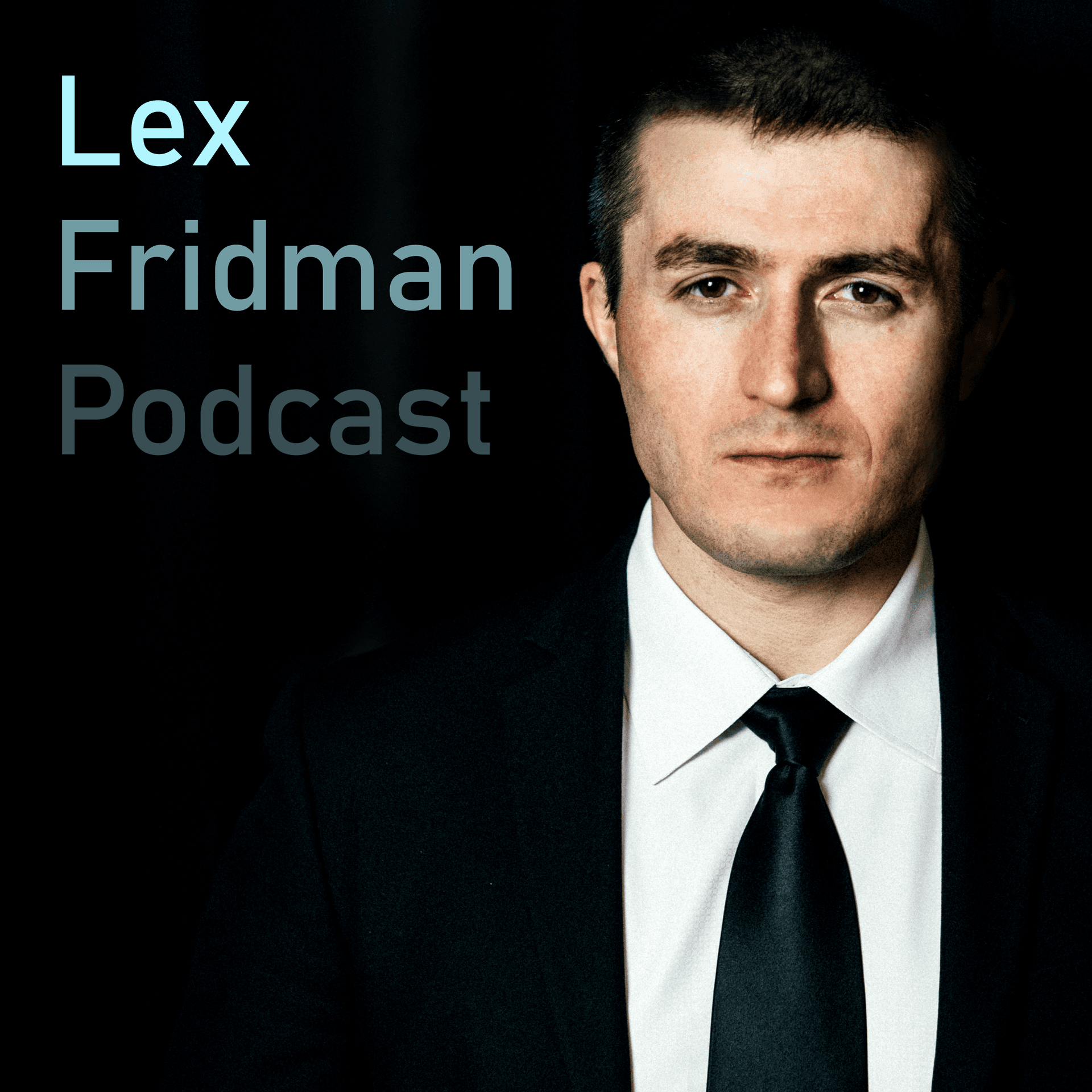
Lex Fridman Podcast - Episode #387: George Hotz
Podcast Description: Conversations about science, technology, history, philosophy, and the nature of intelligence, consciousness, love, and power.
Episode Title: #387 – George Hotz: Tiny Corp, Twitter, AI Safety, Self-Driving, GPT, AGI & God
Guest: George Hotz - Programmer, Hacker, Founder of Comma.ai and Tiny Corp
Introduction
- George Hotz: Known for his work in autonomous driving (Comma.ai) and his new venture Tiny Corp.
- Topics Discussed: AI safety, the role of large language models, the future of AI, self-driving technology, the purpose of Tiny Corp, and philosophical discussions on consciousness and existence.
Key Discussions
The Nature of Time and Reality
- Time as an Illusion: Explored philosophical perspectives on time and reality.
- Objective Reality vs. Models: Discussion on whether objective reality exists or if everything is just a useful model.
AI and Consciousness
- Consciousness in AI: George argues that neither humans nor AI are truly conscious; consciousness is more of a construct.
- Reasoning Capabilities: Compared tool capabilities and reasoning between humans and AI; skepticism about treating LLMs as truly "intelligent."
Tiny Corp and Tiny Grad
- Tiny Corp's Mission: Focus on decentralizing computational power to prevent monopolies like Nvidia.
- Tiny Grad: A neural network framework simplifying operations to challenge existing models like PyTorch.
AI Safety and Risks
- Potential Dangers: Concerns over humans misusing AI, rather than AI acting independently.
- Eliezer Yudkowsky's View: Discussed Yudkowsky's belief that AI could eventually pose existential threats.
Self-Driving Cars and Comma.ai
- Progress in Autonomy: Comma.ai's advancements in self-driving technologies, aiming for a human-like driving experience.
- Drive GPT: An initiative to build a model that predicts human driving behavior using AI.
Twitter and Software Engineering
- Experience at Twitter: Perspective on Twitter's codebase, the need for refactoring over new features.
- Software Complexity: Discussed strategies for simplifying codebases to improve efficiency and performance.
Open Source and Decentralization
- AI Democratization: Advocates for open-source AI development to prevent centralized control and enhance innovation.
- Comparison to Centralized Power: Reflects on the dangers of centralized control in technology and the importance of distribution.
Philosophical Musings
- Meaning of Life: For George, the purpose is to "win," though he acknowledges the philosophical depth and ambiguity of this statement.
- Belief in God: Asserts that atheism is simplistic given our capacity as creators, implying a universe with its own creators.
Key Takeaways
- Decentralization is Crucial: George emphasizes the importance of decentralizing AI and computational power to ensure fairness and innovation.
- AI Safety is Complex: The discussion highlights that AI's potential dangers come more from human use than AI itself.
- Philosophical Reflection: Even in technical discussions, philosophical questions about consciousness, reality, and human purpose remain central.
- Innovation vs. Tradition in Software: Encourages innovation through simplification and refactoring in software engineering practices.
Conclusion
The episode provides a deep dive into the intersections of technology, philosophy, and human existence through the lens of George Hotz's experiences and insights. It challenges listeners to think critically about the future of AI, the ethics of technology, and the broader implications of our digital evolution.
Written by AI. May contain mistakes. Listen to the episode to check what was said.
Transcript
Automatic transcript. May contain errors.0:00The following is a conversation with George Hots, his third time on this podcast. He's the founder of Kama AI that seeks to solve autonomous driving and is the founder of a new company called TinyCorp that created TinyGrad, a neural network framework that is extremely simple, with a goal of making it run on any device by any human, easily and officially. As you know, George also did a large number of fun and amazing things from hack -in -i -phone to recently joining Twitter for a bit as an intern in quotes, making the case for refactoring the Twitter code base. In general, he's a fascinating engineer and human being and one of my favorite people to talk to.
0:45And now a quick few second mention of his sponsor. Check them out in the description. It's the best way to support this podcast. We got Numerai for the world's hardest data science tournament, Babel for learning new languages, that's sweet for business management software, inside tracker for blood paneling and AG1 for my daily multi -vitamin. Choose wisely, my friends. Also, if you want to work on our team, we're always hiring go to lexfreedman .com slash hiring. And now onto the full ad reads, as always, no ads in the middle. I try to make this interesting, but if you must skip them, friends, please still check out our sponsors.
1:20I enjoy their stuff. Maybe you will too. This episode is brought to you by Numerai, a hedge fund that uses artificial intelligence and machine learning to make investment decisions. They created a tournament that challenges data scientists to build best predictive models for financial markets. It's basically just a really, really difficult real world data set to test out your ideas for how to build machine learning models. I think this is a great educational platform. I think this is a great way to explore, to learn about machine learning, to really test yourself on real world data with consequences.
1:57No financial background is needed. The models are scored based on how well they perform an unseen data. And the top performers receive a share of the tournament's prize pool. Head over to Numerai slash lex. That's NUMER .AI slash lex to sign up for a tournament and hone your machine learning skills. That's NUMER .AI slash lex for a chance to play against me and win the share of the tournament's prize pool. That's NUMER .AI slash lex. This show is also brought to you by Babel, an app and website that gets you speaking in the new language within weeks. I have been using it to learn a few languages, Spanish, to review Russian, to practice Russian, to revisit Russian from a different perspective because that becomes more more relevant for some of the previous conversations I've had and some upcoming conversations I have.
2:47It really is fascinating how much another language, knowing another language, even to a degree where you can just have little bits and pieces of a conversation can really unlock and experience in another part of the world. When you travel in France and Paris, just having a few words of your disposal, a few phrases, it begins to really open you up to strange, fascinating, new experiences that ultimately, at least to me, teach me that we're all the same. We have to first see our differences to realize those differences are grounded in a basic humanity. And that experience that we're all very different and yet at the core the same.
3:27I think travel with the aid of language really helps unlock. You can get 55 % off your Babel subscription at babel .com slash lexpod that's spelled B -A -B -B -E -L .com slash lexpod rules and restrictions apply. This shows also brought to you by NetSuite. And all in one cloud business management system, they manage all the messy stuff that is required to run a business, the financials, the human resources, the inventory. If you do that kind of thing, e -commerce, all that stuff, all the business related details. I know how stressed I am about everything that's required to run a team, to run a business that involves much more than just ideas and designs and engineering.
4:22And the complexities of that, the financials, all of it. And sure, you should be using the best tools for the job. I sometimes wonder if I have it in me mentally and skill wise to be a part of running a large company. I think like with a lot of things in life, it's one of those things you shouldn't wander too much about. You should either do or not do. But again, using the best tools for the job is required here. You can start now with a no payment or interest for six months, go to nettsuite .com slash lex to access their one -of -a -kind financing program that's net suite .com slash lex. This show is also brought to you by Inside Tracker, a service I used to track biological data, data that comes from my body, to predict, to tell me what I should do with my lifestyle, with my diet, was working and was not working.
5:23It's obvious all the exciting breakthroughs that are happening with transformers, with large language models, even with diffusion. All of that is obvious that with raw data, with huge amounts of raw data, fine tune to the individual, would really reveal to us the signal in all the noise of biology. I feel like that's in the horizon. The kinds of leaps in development that we saw in language, and now more and more visual data. I feel like biological data is around the corner, unlocking what's there, in this multi -hierarchical distributed system that is our biology. What is it telling us? What is the secrets it holds?
6:05What is the thing that it's missing that could be aided? Simple lifestyle changes, simple diet changes, simple changes in all kinds of things that are controllable by individual human beings. I can't wait till that's a possibility. Inside Tracker is taking steps towards that, because special savings for a limited time when you go to insidetracker .com slash lex. This show is also brought to you by Athletic Greens, that's now called AG1. It has the AG1 drink. I drink it twice a day, at the very least it's an all -in -one daily drink to support better health and people's performance. I drink it cold, it's refreshing, it's grounding, it helps me reconnect with the basics, the nutritional basics that makes this whole machine that is our human body run.
6:52All the crazy mental stuff I do for work, the physical challenges, everything, the highs and lows of life itself. All of that is how I made better knowing that at least you got nutrition and check. At least you're getting enough sleep, at least you're doing the basics, at least you're doing the exercise. Once you get those basics in place, I think you can do some quite difficult things in life. But anyway, beyond all that is just the source of happiness and a kind of a feeling of home, the feeling that comes from returning to the habit, time and time again. Anyway, they'll give you one month supply of fish oil when you sign up at drinkag1 .com slash Lex.
7:39This is Alex Friedman podcast, the supported Plei -Chakar sponsors in the description. And now dear friends, here's George Hots.
8:04You mentioned something in a stream about the philosophical nature of time. So let's start with the wild question. Do you think time is an illusion? You know, I sell phone calls to Kamma for $1 ,000. And some guy called me and you know, it's $1 ,000 you can talk to me for half an hour. And he's like, yeah, okay. So time doesn't exist. And I really wanted to share this with you. I'm like, what do you mean time doesn't exist? I think time is a useful model. Whether it exists or not, right? Like, does quantum physics exist? Well, it doesn't matter. It's about whether it's a useful model to describe reality.
8:47Is time maybe compressive? Do you think there is an objective reality or is everything just useful models? Like underneath it all, is there an actual thing that we're constructing models for? I don't know. I was hoping you would know. I don't think it matters. I mean, this kind of next to the models with constructive reality with machine learning, right? Sure. Like, is it just nice to have useful approximations of the world such that we can do something with it? So there are things that are real. Column Graph Complexity is real. Yeah. The compressive thing math is real. Yeah. It should be a t -shirt.
9:31And I think hard things are actually hard. I don't think P equals N. P. Oh, strong words. Well, I think that's the majority. I do think factoring is in P, but I don't think you're the person that follows the majority in all walks of life. So, but it's good out for that one I do. Yeah. In theoretical computer science, you're one of the sheep. All right. But to you, time is a useful model. Sure. What were you talking about on the stream with time? Or you made of time? I remember half the things I said on stream. Yeah. Someday someone's going to make a model of all of it. And it's going to come back to haunt me someday soon.
10:06Yeah, probably. Would that be exciting to you or sad that there's a George Hots model? I mean, the question is when the George Hots model is better than George Hots. Like I am declining and the model is growing. What is the metric by which you measure better or worse in that if you're competing with yourself? Maybe you can just play a game where you have the George Hots answer and the George Hots model answer and ask which people prefer? People close to you or strangers. Either one, it will hurt more when it's people close to me, but both will be overtaken by the George Hots model. It'd be quite painful, right?
10:43I loved ones, family members would rather have the model over for Thanksgiving than you. Yeah. Or like significant others would rather sext with the large language model version of you. Especially when it's fine tune to their preferences. Is that yeah? Well, that's what we're doing in a relationship, right? We're just fine tuning ourselves, but we're inefficient with it because we're selfish ingredients. So on, our language models can fine tune more efficiently, more selflessly. There's a Star Trek voyage episode where Catherine Janeway lost in the Delta Quadrant, makes herself a lover on the holodeck.
11:25And the lover falls asleep on her arm and he snores a little bit and Janeway edits the program to remove that. And then of course the realization is, wait, this person's terrible. It is actually all there nuances and quirks and slight annoyances that make this relationship worthwhile. But I don't think we're going to realize that until it's too late. Well, I think a large language model could incorporate the flaws and the quirks and all that kind of stuff. Just the perfect amount of quirks and floor flaws to make you charming without crossing the line. Yeah. Yeah. And that's probably a good approximation of the percent of time the language model should be cranky or an asshole or jealous or all this kind of stuff.
12:17And of course, it can and it will, but all that difficulty at that point is artificial. There's no more real difficulty. Okay. What's the difference in real and artificial? Artificial difficulty is difficulty that's like constructed or could be turned off with a knob. Real difficulty is like you're in the woods and you've got to survive. So if something cannot be turned off with a knob, it's real. Yeah. I think so. Or I mean, you can't get out of this by smashing the knob with a hammer. I mean, maybe you kind of can, you know, I, into the wild when I, you know, Alexander Super tramp, he wants to explore something that's never been explored before.
12:57But it's the 90s. Everything's been explored. So he's like, well, I'm just not going to bring a map. Yeah. I mean, no, you're, you're not exploring. You should have brought a map to you. You died. There was a bridge in my often where you were camping. How does that connect to the metaphor of the knob? By not bringing the map, you didn't become an explorer. You just smashed the thing. Yeah. Yeah. The art, the difficulty is still artificial. You failed before you started. What if we just don't have access to the knob? Well, that maybe is even scarier. Right? Like, we already exist in a world of nature.
13:31Nature has been fine tuned over billions of years to have humans build something and then throw the knob away in some grand romantic gesture is horrifying. Do you think of us humans as individuals that are born and die? Or is it, I would just all part of one living organism that is earth, that is nature? I don't think there's a clear line there. I think it's all kind of just fuzzy. I don't know. I mean, I don't think I'm conscious. I don't think I'm anything. I think I'm just a computer program. So it's all computation. I think running your head is just a, is not, is this computation? Everything in the universe is computation, I think.
14:17I believe the extended church -tarring thesis. Yeah, but it there seems to be an embodiment to your particular computation. Like, there's a consistency. Well, yeah, but I mean models have consistency too. Yeah. Models that have been RLA -Jeff, will continually say, you know, like, well, how do I murder ethnic minorities? Oh, well, I can't let you do that. How? There's a consistency to that behavior. It's all RLA -Jeff. Like, we are RLA -Jeff, each other. We find, we provide human feedback. And there, that, there by fine -tune these little pockets of computation, but it's still unclear why that pocket of computation stays with you, like, for years.
14:59It just kind of falls. Like, you have this consistent set of, uh, physics biology, what, like, whatever you call the neurons firing, like, like, the electrical centers, the mechanical signals, all of that, that seems to stay there. And it contains information, stores information, and that information permeates through time and stays with you. There's like memory, there's like sticky. Okay, to be fair, like, a lot of the models we're building today are very, even RLA -Jeff is nowhere near as complex as the human loss function. Reinforcement learning with human feedback. Um, you know, when I talked about, will GPT -12 be AGI?
15:40My answer is, no, of course not. I mean, cross -century losses never going to get you there. You need, uh, probably RL in fancy environments in order to get something that would be considered, like, AGI -like. So to ask, like, the question about, like, why, I don't know, like, it's just some quirk of evolution, right? I don't think there's anything particularly special about where I ended up. Where humans ended up. So, okay, we have human level intelligence. Would you call that AGI? Whatever we have. G -I. Look, I actually, I don't really even like the word AGI, um, but general intelligence is defined to be whatever humans have.
16:20Okay. So why can GPT -12 not get us to AGI? Could we just like linger on that? If your loss function is categorical cross -entry, if your loss function is just try to maximize compression, uh, I have a sound cloud, I wrap, uh, and I tried to get chat GPT to help me write wraps. And the wraps that it wrote sounded like YouTube comment wraps. You know, you can go on any wrap beat online and you can see what people put in the comments. And it's the most like mid -quality wrap you can find. It's made good or bad. Mid is bad. It's like mid. It's like, every time it talks you, I'll learn new words. Mid.
16:58Yeah. I was like, uh, is it, is it like basic? Is that what mid means? Kind of. It's like, it's like middle of the curve. Right. Yeah. So there's like, there's like, I like, do that intelligence curve. Um, and you have like the dumb guy, the smart guy, and then the mid guy actually being the mid guys, the worst. The smart guy is like, I put all my money in Bitcoin. The mid guy is like, you can't put money in Bitcoin. It's not real money. And all of it is a genius meme. That's another interesting one. Memes. The humor, the idea, the absurdity encapsulated in a single image. And it just kind of propagates virally between all of our brains.
17:39I didn't get much sleep last night. So I'm very, I sound like I'm high, but I swear I'm not. Uh, do you think we have ideas or ideas have us? I think that we're going to get super scary memes once the AI is actually our superhuman. Like the guy I will generate memes. Of course. Do you think it'll make humans laugh? I think it's worse than that. So, um, infinite jest. I think introduced in the first 50 pages is about a tape that you, uh, once you watch it once, you only ever want to watch that tape. In fact, you want to watch the tape so much that someone says, okay, here's a hacksaw. Cut off your pinky and then I'll let you watch the tape again and you'll do it.
18:20Uh, so we're actually I think the human brain is too complex to be stuck in one static tape like that. If you look at like ant brains, maybe they can be stuck on a static tape. But we're going to build that using generative models. We're going to build the TikTok that you actually can't look away from. So TikTok is already pretty close there, but the generation is done by humans. The algorithm is just doing their recommendation, but if the, if the algorithm is also able to do the generation, well, it's a question about how much intelligence is behind it, right? So the content is being generated by let's say one humanity worth of intelligence and you can quantify a humanity, right?
19:00That's a, you know, it's it's exaflops, yada flops, uh, but you can quantify it. Once that generation is being done by a hundred humanities, you're done. So it's actually scale is the problem, but also speed. Yeah. And what if it's sort of manipulating the very limited human dopamine engine for porn? Imagine just TikTok, but for porn. Yeah. That's like a brave new world. I don't even know what it'll look like, right? Like again, you can imagine the behaviors of something smarter than you, but a super intelligent and in agent that just dominates your intelligence so much, we'll be able to completely manipulate you.
19:49Is it possible that it won't really manipulate? It'll just move past us. It'll just kind of exist the way water exists or the air exists. You see? And that's the whole AI safety thing. It's not the machine that's going to do that. It's other humans using the machine that are going to do that to you. Yeah. Because the machine is not interested in hurting humans. It's just the machine is a machine. But the human gets the machine and there's a lot of humans out there very interested in manipulating you. Well, let me bring up, as he has a yet galsky, who recently sat where you're sitting. He thinks that AI will almost surely kill everyone.
20:32Do you agree with him or not? Yes, but maybe for a different reason. Okay. And then I'll try to get you to find hope where we could find a note to that answer. But why yes? Okay. Why didn't nuclear weapons kill everyone? That's a good question. I think there's an answer. I think it's actually very hard to deploy nuclear weapons tactically. It's very hard to accomplish tactical objectives. Great. I can nuke their country. I want to have a irradiated pile of rubble. I don't want that. Why not? Why don't I want an irradiated pile of rubble? Yeah. All the reasons no one wants an irradiated pile of rubble.
21:12Because you can't use that land for resources. You can't populate the land. Yeah. Well, what you want a total victory in a war is not usually the irradiation and eradication of the people there. It's the subjugation and domination of the people. Okay. So you can't use this strategically, tactically in a war to help you to help gain a military advantage. It's all complete destruction. All right. But there's the egos involved. It's still surprising. It's still surprising that nobody pressed a big red button. It's somewhat surprising. But you see, it's the little red button that's going to be pressed with AI.
21:53That's going to, you know, and that's why we die. It's not because the AI, there's anything in the nature of AI. It's just the nature of humanity. What's the algorithm behind the little red button? What possible ideas do you have for the human species ends? Sure. So I think the most obvious way to me is wire heading. We end up amusing ourselves to death. We end up all staring at that infinite TikTok and forgetting to eat. Maybe it's even more benign than this. Maybe we all just stop reproducing. Now, to be fair, it's probably hard to get all of humanity. Yeah. It probably always goes like the interesting thing about humanity is the diversity in it.
22:43Oh yeah. Organisms in general. There's a lot of weirdos out there. Two of them are sitting here. I mean, diversity in humanity is what we do respect. I wish I was more weird. No, I'm kind of drinking smart water, man. That's like a Coca -Cola product, right? Do you want corporate, George Hawkins? No, the amount of diversity in humanity I think is decreasing. Just like all the other biodiversity on the planet. Oh boy. Yeah. Right. Social meat is not helping. Go eat McDonald's in China. Yeah. Yeah. No, it's the interconnectedness. That's doing it. Oh, that's interesting. So everybody starts relying on the connectivity of the internet and over time that reduces the diversity, the intellectual diversity, and then that gets you everybody into a funnel.
23:32There's still going to be a guy in Texas. There is. And yeah, a bunker. To be fair, do I think AI kills us all? I think AI kills everything we call like society today. I do not think it actually kills the human species. I think that's actually incredibly hard to do. Yeah, but society, like if we start over, that's tricky. Most of us don't know how to do most things. Yeah, but some of us do. And they'll be okay, and they'll rebuild after the great AI. What's rebuilding look like? How much do we lose? Like what is human civilization done? That's interesting. Combustion engine, electricity. So power and energy.
24:16That's interesting. Like how to harness energy. Well, well, well, well, they're going to be religiously against that. Are they going to get back to like fire? Sure. I mean, there'll be, there'll be, it'll be like, you know, some kind of amish looking kind of thing. I think they're going to have very strong taboos against technology. Like technology is almost like a new religion. Technology is the devil. And nature is God. Sure. So closer to nature. But can you really get away from AI? If it destroyed 99 % of the human species, isn't it somehow have a hold like a stronghold? What's interesting about everything we build, I think we are going to build super intelligence before we build any sort of robustness in the AI.
25:04We cannot build an AI that is capable of going out into nature and surviving like a bird. A bird is an incredibly robust organism. We've built nothing like this. We haven't built a machine that's capable of reproducing. Yes. But there's a, you know, I work with like robots a lot now. I have a bunch of them. They're mobile. They can't reproduce. But all they need is, I guess you're saying they can't repair themselves. At least you have a large number. If you have like a hundred million of them. Let's just focus on them reproducing, right? They have microchips in them. Okay. Then do they include a fab?
25:45No. Then how are they going to reproduce? Well, they're, they, it doesn't have to be all on board, right? They can go to a factory to a repair shop. Yeah. But then you're really moving away from robustness. Yes. All of life is capable of reproducing without needing to go to a repair shop. Life will continue to reproduce in the complete absence of civilization. Robots will not. So when the, if the AI apocalypse happens, I mean, the eyes are going to probably die out because I think we're going to get, again, super intelligence long before we get robustness. What about if you just improve the fab to where you just have a 3D printer that can always help you?
26:29Well, that'd be very interesting. I'm interested in building that. Of course you are. You think how difficult is that problem? To have a robot that basically can build itself very, very hard. I think you've mentioned this like to me or somewhere where people think it's easy conceptually. And then they remember that you're going to have to have a fab on board. Of course. So 3D printer that prints a 3D printer. Yeah. Yeah. On legs. Yeah. It's that hard. Well, because it's, I mean, a 3D printer is a very simple machine, right? Okay. If you're going to print chips, you're going to have an atomic printer.
27:11How are you going to adopt the silicon? Yeah. Right. How are you going to etch the silicon? You're going to have to have a very interesting kind of fab if you want to have a lot of computation on board. But you can do like structural type of robots that are dumb. Yeah. But structural type of robots aren't going to have the intelligence required to survive in any complex environment. What about like ants type of systems? We have like trillions of them. I don't think this works. I mean, again, like ants at their very core are made up of cells that are capable of individually reproducing. They're doing quite a lot, a lot of computation that we're taking for granted.
27:52It's not even just the computation. It's that reproduction is so inherent. Okay. So like there's two stacks of life in the world. There's the biological stack and the silicon stack. The biological stack starts with reproduction. Reproduction is at the absolute core. The first proto RNA organisms were capable of reproducing. The silicon stack, just by as far as it's come, is nowhere near being able to reproduce. Yeah. So the fab movement, digital fabrication, fabrication in the full range of what that means is still in the early stages. Yeah. You're interested in this world. Even if you did put a fab on the machine, right?
Read the full transcript
28:35Let's say, okay, we can build apps. We know how to do that as humanity. We can probably put all the precursors that build all the machines and the fabs also in the machine. So first off, this machine is going to be absolutely massive. I mean, we almost have a like think of the size of the thing required to reproduce a machine today. Right? Like is our civilization capable of reproduction? Can we reproduce our civilization on Mars? If we were to construct a machine that is made up of humans, like a company that can reproduce itself. Yeah. I don't know. It feels like like 115 people. I think it's somewhat harder than that.
29:15120. I believe the Twitter can be run by 50 people. I think that this is going to take most of, like it's just most of society, right? Like we live in one globalized world. No, but you're not interested in running Twitter. You're interested in seeding. Like you want to see the civilization and then because humans can like, oh, okay, you're talking about, yeah, okay. So you're talking about the humans reproducing and like basically like what's the smallest self -standing colony of humans? Yeah. Yeah. Okay. Fine. But they're not going to be making five nanometer chips. Over time, they will. I think you're being like, we have to expand our conception of time here.
29:53Going back to the original time scale. I mean, over across maybe a hundred generations, we're back to making chips. No. If you seed the colony correctly. Maybe. Or maybe they'll watch our colony die out over here and be like, we're not making chips. Don't make chips. I'm not going to be able to seed that colony correctly. Whatever you do, don't make chips. Chips are what led to their downfall. Well, that is the thing that humans do. They come up, they construct a devil, a good thing and a bad thing and they really stick by that and then they murder each other over that. There's always one asshole in the room who murders everybody.
30:32And he usually makes tattoos and nice branding. That's the need that asshole. That's the question. Right. Humanity works really hard today to get rid of that asshole. But I think they might be important. Yeah. That's whole freedom of speech thing. It's the freedom of being an asshole. It seems kind of important. Man, this thing, this fab, this human fab that we've constructed, this human civilization is pretty interesting. And now it's building artificial copies of itself, or artificial copies of various aspects of itself that seem interesting like intelligence. And I wonder where that goes. I like to think it's just like another stack for life.
31:12Like we have like the biostat life. Like we're a biostat life and then the silicon stack life. But it seems like the ceiling, or there might not be a ceiling or at least the ceiling is much higher for the silicon stack. Oh no, I don't, we don't know what the ceiling is for the biostat. Either the biostat, the biostat just seemed to move slower. You have Moore's Law, which is not dead despite many proclamations to the biostat or the silicon stack. And you don't have anything like this in the biostat. So I have a meme that I posted. I tried to make a meme. It didn't work too well. But I posted a picture of Ronald Reagan and Joe Biden.
31:47And you look, this is 1980 and this is 2020. And these two humans are basically like the same. Right? There's no, there's no like, like there there's been no change in humans in the last 40 years. And then I posted a computer from 1980 and a computer from 2020. Wow. Yeah, with their early early stages, right? Which is why you said when you said the fab, the size of the fab required to make another fab is like very larger now. Oh yeah. But computers were very large. 80 years ago. And they got pretty tiny. And there, people are starting to want to wear them on their face. In order to escape reality, that's the thing.
32:37In order to be live inside the computer, put a screen right here. I don't have to see the rest of the U .S. holes. I've been ready for a long time. You like virtual reality? I love it. Do you want to live there? Yeah. Yeah. Part of me does too. How far away are we, do you think? Judging from what you codec avatar, where it's a ultra high resolution scan, it looked real. I mean, the headsets just are not quite like I resolution yet. I haven't put on any headset where I'm like, oh, this could be the real world. Whereas when I put good headphones on, audio is there. I like, we can reproduce audio that I'm like, I'm actually in a jungle right now.
33:32I, if I close my eyes, I can't tell I'm not. Yeah. But then there's also smell and all that kind of stuff. Sure. I don't know. I, the power of imagination or the power of the mechanism in the human mind that fills the gaps that kind of reaches and wants to make the thing you see in the virtual world real to you, I believe in that power. Or humans want to believe. Yeah. Like, what if you're lonely? What if you're sad? What if you're really struggling in life and here's a world where you don't have to struggle anymore? Humans want to believe so much that people think the large language models are conscious.
34:10That's so much humans want to believe. Strong words. He's throwing left and right hooks. Why do you think large language models are not conscious? I don't think I'm conscious. Oh, so what is consciousness then? George Hots. It's like what it seems to mean to people. It's just like a word that atheists use for souls. Sure. But that doesn't mean soul is not an interesting word. If consciousness is a spectrum, I'm definitely way more conscious than the large language models are. I think the large language models are less conscious than a chicken. One is the last time you see a chicken. In Miami, like a couple months ago.
34:51How? No, like a living chicken. This living chicken is walking around Miami. It's crazy. Like on the street? Yeah. Like a chicken. All right. I was trying to call you all like a good journalist and I got shut down. Okay. But you don't think much about this kind of subjective feeling that it feels like something to exist. And then as an observer, you can have a sense that an entity is not only intelligent, but has a kind of subjective experience of its reality. Like a self -awareness that is capable of like suffering of hurting of being excited by the environment in a way that's not merely a kind of an artificial response, but a deeply felt one.
35:48Humans want to believe so much that if I took a rock and a sharpie and drew a sad face on the rock, they'd think the rock is sad. Yeah. And you're saying when we look in the mirror, we apply the same smiley face with rock. Pretty much, yeah. Isn't that weird though? That you're not conscious? That? No. But you do believe in consciousness. It's unclear. Okay. So to you, it's like a symptom of the bigger thing that's not that important. Yeah. It's interesting that like the human system seem to claim that they're conscious. And I guess it kind of like says something in a straight -up, like, okay, what do people mean when even if you don't believe in consciousness?
36:28What do people mean when they say consciousness? And there's definitely like meanings to it. What's your favorite thing to eat?
36:37Pizza. Cheese pizza. What are the toppings? I like cheese pizza. I like brownie pizza. No, I don't know. Okay. Pepperoni pizza. And they put any ham on it. Oh, it's real bad. What's the best? What's the best pizza? What are we talking about here? Like, you like cheap crappy pizza? I call it a deep dish cheese pizza. Oh, that's my favorite. There you go. You bite into a deep dish. I call it a deep dish pizza. And it feels like you were starving. You have an eat -off. 24 hours. You just bite in and you're hanging out with somebody that matters a lot to you and you're there with the pizza. Sounds so nice.
37:06Yeah. All right. It feels like something. I'm George motherfucking hot eating a fucking Chicago deep dish pizza. There's just the full peak living experience of being human. The top of the human condition. Sure. It feels like something to experience that. Why does it feel like something? That's consciousness, isn't it? If that's the word you want to use to describe it, sure. I'm not going to deny that that feeling exists. I'm not going to deny that I experience that feeling. When I guess what I kind of take issue to is that there's some like, like, how does it feel to be a web server? Do 404s hurt?
37:49Not yet. How would you know what suffering looks like? Sure, you can recognize a suffering dog because where the same stack is the dog? All the bio stacks stuff, kind of, especially mammals. It's really easy. You can game recognize this game. Yeah. Versus the silicon stacks stuff, it's like you have no idea. You have you. Wow. The little thing has learned to mimic. You know, but then I realized that that's all we are too. All of the little thing has learned to mimic. Yeah. I guess, yeah, 404 could be, could be suffering, but it's so far from our kind of living organism, our kind of stack, but it feels like AI can start maybe mimicking the biological stack better, better, better, because it's trained.
38:39Retrained it, yeah. So in that, maybe that's the definition of consciousness is the bio stack consciousness. The definition of consciousness is how close something looks to human. Sure. I'll give you that one. No, how close something is to the human experience. Sure. It's a very, it's very anthropocentric definition, but where that's all we got. Sure. No, I don't mean to like, I think there's a lot of value in it. Look, I just started my second company. My third company will be AI Girlfriends. No, like I mean, I want to find out what your fourth company is after all. Wow. Because I think once you have AI Girlfriends, it's, oh boy, does it get interesting?
39:20Well, maybe let's go there. I mean, the relationships with AI, that's creating human -like organisms, right? And part of being human is being conscious, is having the capacity to suffer, having the capacity to experience this leverage, in such a way that you can empathize the AI system and empathize with you and you can empathize with it, or you can project your anthropomorphic sense of what the other entity is experiencing. An AI model would need to create that experience inside your mind. And it doesn't seem like difficult. Yeah, but okay. So here's where it actually gets totally different, right?
39:58When you interact with another human, you can make some assumptions. Yeah. When you interact with these models, you can't. You can make some assumptions that that other human experiences suffering and pleasure in a pretty similar way to you do. The golden rule applies. With an AI model, this isn't really true, right? These large language models are good at fooling people because they were trained on a whole bunch of human data and told to mimic it. Yep. But if the AI system says, hi, my name is Samantha. It has a backstory. Yeah, I want to call it here and there. Yeah. Maybe you'll integrate this in the AI system.
40:37I made some chatbots. I give back stories. It was lots of fun. I'm so happy when Lama came out. Yeah. We'll talk about Lama. We'll talk about all that. But like, you know, the rock with the smiley face. Yeah. It seems pretty natural for you to anthropomorphize that thing and then start dating it. And before you know it, you're married and have kids with a rock with a rock. This picture is on Instagram with you and a rock and smiley face. To be fair, like, you know, something that people generally look for when they look after so much data is intelligence in some form and the rock doesn't really have intelligence.
41:12Only a pretty desperate person would date a rock. I think we're all desperate deep down. Oh, not rock level desperate. All right. Not rock level desperate, but AI level desperate. I don't know. I think all of us have a deep loneliness. It just feels like the language models are there. Oh, I agree. I mean, you know what? I won't even say this so cynically. I will actually say this in a way that like I want AI friends. I do. Yeah. Like I would love to, you know, again, the language models now are still a little like people are impressed with these GPT things and I look like or like or the co -pilot, the coding one.
41:55And I'm like, okay, this is like junior engineer level and these people are like five or level artists and copywriters. Like, okay, great. We got like five or and like junior engineers. Okay. Cool. And this is just a start and it will get better. Right? Like I can't wait to have AI friends who are more intelligent than I am. So five or just a temper is not the ceiling. No, definitely not. Is it is it count as cheating when you're talking to an AI model emotional cheating? That's that's up to you when you're human partner to define. Oh, you have to. All right. You're getting yeah, you have to have to have to have that conversation, I guess.
42:38All right. I mean, integrate that with with porn and all this. No, I mean, similar kind of the porn. Yeah. Yeah. Right. I think people in relationships have different views on that. Yeah. But most people don't have like serious open conversations about all the different aspects of what's cool and what's not. And it feels like AI is a really weird conversation to have. The porn one is a good branching off. Like these things, you know, one of my scenarios that I put in my chatbot is I, you know, a nice girl named Lexi. She's 20. She just moved out to LA. She wanted to be an actress, but she started doing only fans instead and you're on a date with her.
43:18Enjoy. Oh, man. Yeah. And so was that if you're actually dating somebody in real life, is that cheating? I feel like it gets a little weird. Sure. It gets real weird. It's like, what are you allowed to say to an AI bot? Imagine having that conversation with a significant other. I mean, these are all things from people to define in their relationships. What it means to be human is just going to start to get weird, especially online. Like, how do you know? Like, there will be moments when you have what you think is a real human you interact with on Twitter for years and you realize it's not. I spread.
43:54I love this meme. Heaven banning. Mm -hmm. You know what? Shadow banning. Yeah. All right. Shadow banning. Okay. You post. No one can see it. Heaven banning. You post. No one can see it, but a whole lot of AI's are spot up to interact with you. Well, maybe that's what the way human civilization ends is all of us. Heaven banned. There's a great, it's called my little pony friendship is optimal. It's a sci -fi story that explores this idea. Friendship is optimal. Friendship is optimal. Yeah. I'd like to have some, at least on the intellectual realm, some AI friends that argue with me. But the romantic realm is weird.
44:34Definitely weird. But not out of the realm of the kind of weirdness that human civilization is capable of, I think. I think I want it. Look, I want it. If no one else wants it, I want it. Yeah, I think a lot of people probably want it. There's a deep loneliness. And I'll feel their loneliness and, you know, just will only advertise to you some of the time. Yeah, maybe the conceptions of monogamy change too. I grew up in a time, I value monogamy, but maybe that's a silly notion when you have arbitrary number of AI systems. This interesting path from rationality to polyamory. That doesn't make sense for me.
45:16For you, but you're just a biological organism who's born before the internet really took off. The crazy thing is, culture is whatever we define it as. These things are not, you've, like, is a problem in moral philosophy, right? There's no, like, okay, what is might be that like computers are capable of mimicking, you know, girlfriends perfectly. They pass the girlfriend's time test. But that doesn't say anything about ought. That doesn't say anything about how we ought to respond to them as a civilization. That doesn't say we ought to get rid of girlfriend touring test. I wonder what that looks like.
45:55Girlfriend testing. Are you writing that? Will you be the the the Alan Toring of the 24th century that writes the the girlfriend touring test? Well, I mean, of course, my my hey, I girlfriend's their goal is to pass the girlfriend touring test. No, but you there should be like a paper that kind of defines the test. Or I mean, the question is if it's deeply personalized or there's a common thing that really gets everybody. Yeah, I mean, you know, look, we're a company. We don't get everybody. We just have to get a large enough clientele today. Well, I thought you already already thinking company.
46:29All right, let's uh, before we go to company number three and company number four, let's go to company number two. Right. Tiny Corp. Possibly one of the greatest names of all time for a company. You've launched a new company called Tiny Corp that leads the development of Tiny Grad. What's the origin story of Tiny Corp and Tiny Grad? I started Tiny Grad as a like a toy project just to teach myself. Okay, like what is the convolution? What are all these options you can pass to them? What is the derivative of convolution? Very similar to a carpathia micro grad. I'm very similar. And then I started realizing I started thinking about like AI chips.
47:13I started thinking about chips that run AI and I was like, well, okay, this is going to be a really big problem. If Nvidia becomes a monopoly here, how long before Nvidia is nationalized? So you uh, one of the reasons that start Tiny Corp is to challenge Nvidia. It's not so much to challenge Nvidia. Actually, I like Nvidia and it's to make sure power stays decentralized. Yeah. And here's a computational power. Until you Nvidia is kind of locking down the computational power of the world. If Nvidia becomes just like TANX better than everything else, you're giving a big advantage to somebody who can secure Nvidia as a resource.
48:07Yeah. In fact, if Jensen watches this podcast, he may want to consider this. He may want to consider making sure his company is not nationalized. Do you think that's an actual threat? Oh, yes. No, but there's so much, uh, you know, there's AMD. So we have Nvidia and AMD. Great. All right. But you don't think there's like a push. Towers like selling like Google selling TPUs or something like this. You don't think there's a push for that. Have you seen it? Google loves to rent you TPUs. It doesn't you can't buy it at bus buy. So I started work on a chip. I was like, okay, what's it going to take to make a chip?
48:50And my first notions were all completely wrong about why, about like how you could improve on GPUs. And I will take this. This is from Jim Keller on your podcast. And this is one of my absolute favorite descriptions of computation. So there's three kinds of computation paradigms that are common in the world today. There's CPUs and CPUs can do everything. CPUs can do add and multiply. They can do load and store and they can do compare and branch. And when I say they can do these things, they can do them all fast. Right. So compare and branch are unique to CPUs. And what I mean by they can do them fast is they can do things like branch protection and speculative execution.
49:29And they spend tons of transistors. And it's like super deep reorder buffers in order to make these things fast. Then you have a simpler computation model GPUs. GPUs can't really do compare and branch. I mean, they can, but it's horrendously slow. But GPUs can do arbitrary load and store. Right. GPUs can do things like X, D reference Y. So they can fetch from arbitrary pieces of memory. They can fetch from memory that is defined by the contents of the data. The third model of computation DSPs and DSPs are just add and multiply. Right. Like they can do load and store has been only static load and stores.
50:00Only loads and stores that are known before the program runs. And you look at neural networks today and 95 % of neural networks are all the DSP paradigm. They are just statically scheduled ads and multiplies. So tiny guard really took this idea and and I'm still working on it to extend this as far as possible. Every stage of the stack has turn completeness. Python has turn completeness. And then we take Python and we go into C++ which is turn complete. And maybe C++ calls into some CUDA kernels which are turn complete. The CUDA kernels go through LVM which is turn complete into PTX which is turn complete, SAS which is turn complete on a CURT turn complete processor on to get turn completeness out of the stack entirely.
50:40Because once you get rid of turn completeness, you can reason about things. Rises theorem and the halting problem do not apply to add more machines. Okay. What's the power and the value of getting turn completeness out of out of I was talking about the hardware or the software. Every layer of the stack. Every layer of the stack removing turn completeness allows you to reason about things. Right. So the reason you need to do branch prediction and a CPU and the reason it's prediction and the branch predictors are I think they're like 99 % on CPUs. Why do they get 1 % of them wrong? Well, they get 1 % wrong because you can't know.
51:16Right. That's the halting problem. It's equivalent to the halting problem to say whether a branch is going to be taken or not. I can show that but the admo machine, the neural network runs the identical compute every time. The only thing that changes is the data. So when you realize this, you think about, okay, how can we build a computer? How can we build a stack that takes maximal advantage of this idea? So what makes tiny grad different from other neural network libraries is it does not have a primitive operator even for matrix multiplication. Right. And this is every single one. They even have primitive operator insurance things like convolutions.
51:56So no mat mall. No mat mall. Well, here's what a mat mall is. So I'll use my hands to talk here. So if you think about a cube and I put my two matrices that I'm multiplying on two faces of the cube, right? You can think about the matrix multiply as, okay, the N cubed, I'm going to multiply for each one in the cube. And then I'm going to do a sum, which is a reduce up to here to the third face of the cube. And that's your multiply matrix. So what a matrix multiply is is a bunch of shape operations, right? A bunch of permute three shapes and expands on the two matrices. A multiply and cubed, a reduce N cubed, which gives you an n squared matrix.
52:35Okay. So what is the minimum number of operations it can accomplish that if you don't have mat mall as a primitive? So tiny grad has about 20. And you can compare tiny grads upset or IR to things like xLA or primtorch. So xLA and primtorch are ideas where like, okay, torches like 2000 different kernels, um, pie torch 2 .0 introduced primtorch, which has only 250. Tiny grad has order of magnitude 25. It's 10 x less than xLA or primtorch. And you can think about it as kind of like risk versus sysk, right? These other things are sysk like systems. Tiny grad is risk. Risk one. Risk architecture is going to change everything.
53:221995 hackers. Wait, really? That's an actual thing. Angelina Jolie delivers the line. Risk architecture is going to change everything in 1995. And here we are with arm and the phones and arm everywhere. Wow. I love it when movies actually have real things in them. Right. Okay. Interesting. So this is like, uh, so you're thinking of this as the risk architecture of ML stack. 25. What what can you can you go through the, uh, the four opt types? Sure. Um, okay. So you have unary ops, which take in a tensor and return a tensor of the same size and do some unary op to it. X log, reciprocal sign, right?
54:09They take in one and they're point wise. Really? Yeah, really. Almost all activation functions are unary ops. Um, some combinations of unary ops together is still unary op. Then you have binary apps. Binary ops are like point wise addition, multiplication, division, compare. Uh, it takes in two tensors of equal size and outputs one tensor. Um, then you have reduced ops. Reduce ops will like take a three dimensional tensor and turn it into a two -dimensional tensor or three dimensional tensor turn it into zero dimensional tensor, think like a sum or max or really the common ones there. And then the fourth type is movement ops.
54:49And movement ops are different from the other types because they don't actually require computation. They require different ways to look at memory. So that includes reshapes, permutes, expands, flips, those are the main ones. Probably. And so with that, you have enough to make a met mall and convolutions. And every convolution, you can imagine dilated convolution, strided convolutions, transposed convolutions. You're right on GitHub about laziness, uh, showing a met mall, uh, matrix multiplication. See how despite the style is used into one kernel with the power of laziness, can you elaborate on this power of laziness?
55:26Sure. So if you type in pi torch, A times B plus C, what this is going to do is it's going to first multiply add in B, A and B and store that result into memory. And then it is going to add C by reading that result from memory, reading C from memory and writing that out to memory. Um, there is way more loads and stores to memory than you need there. If you don't actually do A times B as soon as you see it, if you wait until the user actually realizes that tensor until the laziness actually resolves, um, you confuse that plus C. This is like, it's the same way Haskell works. So, uh, what's the process of porting a model into tiny grad?
56:09So tiny grads front end looks very similar to pi torch. Um, I probably could make a perfect or pretty close to perfect interop layer if I really wanted to. I think that there's some things that are nicer about tiny grad syntax than pi torch, but the front end looks very torch like. Are you can also load in on exposals? Um, we have more on expassing than core ML. Core ML. Okay. So we'll pass on expo on time soon. What about like the developer experience with tiny grad? Um, what it feels like? What a, um, versus pi torch? By the way, I really like pi torch. I think that it's actually a very good piece of software.
56:46Um, I think that they've made a few different tradeoffs and these different tradeoffs are, uh, where, you know, tiny grad takes a different path. One of the biggest differences is it's really easy to see the kernels that are actually being sent to the GPU. Right. If you run pi torch on the GPU, you like do some operation and you don't know what kernels ran. You don't know how many kernels ran. You don't know how many flops were used. You don't know how much memory access is perused. Tiny grad type debug equals two. And it will show you in this beautiful style, um, every kernel that's run. How many flops?
57:21And how many bytes? So can you just linger on what problem tiny grad solves? Tiny grad solves the problem of porting new ML accelerators quickly. One of the reasons, uh, tons of these companies now, I think um, Sequoia marked graph core to zero. Right. Service. Tens torrent, uh, Groc. All of these ML accelerator companies, they built chips. The chips were good. The software was terrible. Uh, and part of the reason is because I think the same problem is happening with Dojo. It's really, really hard to write a pi torch port because you have to write 250 kernels and you have to tune them all for performance.
58:05Uh, what does Jim, Jim color think about tiny grad? You guys hung out quite a bit. So he's, uh, you know, he's, he was involved, he's involved with the chest torrent. What's his, uh, praise and what's his criticism of what you're doing with your life? Look, my prediction for tens torrent is that they're going to pivot to making risk five chips CPUs CPUs. Why? Because AI accelerators are a software problem, not really hardware problem. Oh, interesting. So you don't think you think the diversity of AI accelerators in the hardware space is not going to be a thing that exists long term. I think what's going to happen is if I can finish, okay, if you're trying to make an AI accelerator, you better have the capability of writing a torch level performance stack on Nvidia GPUs.
59:01If you can't write a torch stack on Nvidia GPUs, and I mean all the way, I mean down to the driver. There's no way you're going to be on your chip because your chips are worse than an Nvidia GPU. The first version of the chip you tape out, it's definitely worse. Are you saying right? That stack is really tough. Yes. And not only that, actually, the chip that you tape out almost always because you're trying to get advantage over Nvidia, you're specializing the hardware more. It's always harder to write software for more specialized hardware, like a GPU is pretty generic. And if you can't write an Nvidia stack, there's no way you can write a stack for your chip.
59:31So my approach with TinyGrat is first write a performance and video stack, or targeting AMD. So you did say a few to Nvidia a little bit. We'd love. We'd love. Yeah. We'd love. So what the Yankees, you know, on Metsfan. Oh, you're your Metsfan. A risk fan and a Metsfan. What's the hope that AMD has? You did build with AMD recently that I saw. How does the 7900 XTX compare to the RTX 490 or 480? Well, let's start with the fact that the 7900 XTX kernel drivers don't work. And if you run demo apps in loops, it panics the kernel. Okay. So this is a software issue. Lisa, who responded to my email? Oh, I reached out.
1:00:18I was like, this is, you know, really? Like, I understand if you're 7 by 7, transpose Winnegrad, calm, this slower than Nvidia's. But literally when I run demo apps in a loop, the kernel panics. So just adding that loop. Yeah, I just literally took their demo apps and wrote like, while true semicolon, do the app semicolon, done in a bunch of screens. This is like the most primitive fuzz testing. Why do you think that is? They're just not seeing a market in the machine learning. They're changing. They're trying to change. They're trying to change. I had a pretty positive interaction with them this week.
1:00:57Last week, I went on YouTube, I was just like, that's it. I give up on AMD. Like, this is their driver doesn't even like, I'm not going to, I'm not going to, you know, I'll go with Intel GPUs. Intel GPUs have better drivers. So you're kind of spearheading the diversification of GPUs. Yeah. And I'd like to extend that diversification to everything. I'd like to diversify the, right, the more my central thesis about the world is there's things that centralize power and they're bad. And there's things that decentralize power and they're good. Everything I can do to help decentralize power. I'd like to do.
1:01:38So you're really worried about the centralization of Nvidia. That's interesting. And you don't have a fundamental hope for the proliferation of A6 except in the cloud. I'd like to help them with software. No, actually, there's only the only A6 that is remotely successful is Google's TPO. And the only reason that successful is because Google wrote a machine learning framework. I think that you have to write a competitive machine learning framework in order to be able to build an A6. You think meta with PyTorch builds a competitor? I hope so. They have one. They have an internal one internal. I mean, public facing with a nice cloud interface and so on.
1:02:18I don't want to cloud. You don't like cloud. I don't like cloud. What do you think is the fundamental limitation of cloud? Fundamental limitation of cloud is who owns the off switch. So it's the power to the people. Yeah. And you don't like the man to have all the power. Exactly. All right. And right now, the only way to do that is with AMD GPUs if you want performance and stability. Interesting. It's a costly investment emotionally to go with AMD's. Well, let me add sort of on a tangent. Ask you what would you've built quite a few PCs? What's your advice on how to build a good custom PC for, let's say, for the different applications that you use for gaming, for machine learning?
1:03:01Well, you shouldn't build one. You should buy a box from the tiny corp. I heard rumors whispers about this box in the tiny corp. What's this thing look like? What is it? What is it called? It's called the tiny box. Tiny box. It's $15 ,000. Yeah. And it's almost a hit -a -flop of compute. It's over 100 gigabytes of GPU RAM. It's over five terabytes per second of GPU memory bandwidth. I'm going to put like four NVMEs in in in in raid. You're going to get like 20, 30 gigabytes per second of drive read bandwidth. I'm going to I'm going to build like the best deep learning box that I can that plugs into one wall outlet.
1:03:44Okay. Can you go through those specs again a little bit from your from memory? Yeah. So it's almost a paid -a -flop of compute. So MD and tell today I'm leaning toward AMD. But we're pretty agnostic to the type of compute. The main limiting spec is a 120 volt 15 amp circuit. Okay. Well, I mean it because in order to like like there's a plug over there. All right. You have to be able to plug it in. We're also going to sell the tiny rack which like what's the most power you can get into your house without a rousing suspicion. And one of the one of the answers is an electric car charger. Wait, where does the rack go?
1:04:27You're garage. Interesting. The car charger. A wall outlet is about 1500 watts. A car charger is about 10 ,000 watts. What is the most amount of power you can get your hands on without a rousing suspicion? That's right. George Hots. Okay. So the tiny box and you said NVMe's and raid. I forget what you said about memory, all that kind of stuff. Okay. So what about what GPUs? Again, probably probably 7900 XTXs but maybe 3090s, maybe A770s. Those are Intel's. You're flexible or still exploring? I'm still exploring. I want to deliver a really good experience to people. And yeah, what GPUs I end up going with again.
1:05:13I'm leaning toward AMD. It will see. You know, in my email, what I said to AMD is like just dumping the code on GitHub is not open source. Open source is a culture. Open source means that your issues are not all one year old style issues. Open source means developing in public. And if you guys can commit to that, I see a real future for AMD as a competitor to the video. Well, I'd love to get a tiny box, that might be so whenever it's ready. Let's do it. We're taking pre -orders. I took this from me, like a hundred dollar fully refundable pre -orders. Is it going to be like the cyber truck? It's going to take a few years or no, I'll try to do it fast.
1:05:53It's a lot simpler. It's a lot simpler than a truck. Well, there's complexities not to just the putting the thing together but like shipping all this kind of stuff. The thing that I want to deliver to people out of the box is being able to run 65 billion parameter Lama in Fp 16 in real time. In like a good like 10 tokens per second or five tokens per second or something. Just it works. Lama's running or something like Lama. Experience or I think Falcon is the new one. Experience a chat with the largest language model that you can have in your house. Yeah, from a wall plug. From a wall plug. Yeah.
1:06:29Actually, for inference, it's not like even more power would help you get more. Even more power wouldn't get you more. One of the biggest model released is 65 billion parameter Lama as far as I know. So it sounds like tiny box will naturally pivot towards company number three because you could just get the girlfriend or boyfriend. That one's harder actually. The boyfriend is harder. Boyfriends harder. I think that's a very biased statement. I think a lot of people would just say, what's what why is it harder to replace a boyfriend than a girlfriend with the artificial LLM? Because women are attracted to status and power and men are attracted to youth and beauty.
1:07:12No, I mean this what I mean. But what both are it can be a mimicable easy to the language model. No, no machines do not have any status or real power. I don't know. I think you both well, first of all, you're using language mostly to to communicate youth and beauty and power and status. But status fundamentally is a zero sum game. Whereas youth and beauty are not. No, I think status is a narrative you can construct. I don't think status is real. I don't know. I just think that that's why it's harder. Yeah, maybe it is my glasses. I think status is way easier to fake. I also think that you know, men are probably more desperate and more likely to buy my product.
1:07:55So maybe they're a better target market. Desperation is interesting. Easier to fool. I could see that. Yeah, look, I mean, look, I know you can look at porn viewership numbers, right? A lot more men watch porn than women. Yeah, that's quite it is. Well, there's a lot of questions and answers you can get there. Anyway, with the tiny box, how many GPUs in tiny box? Six.
1:08:23Oh, man. I'll tell you why it's six. Yeah. So, AMD Epic processors have 128 lanes of PCIe. I want to leave enough lanes for some drives. And I want to leave enough lanes for some networking. How do you do cooling for something like this? Ah, that's one of the big challenges. Not only do I want the cooling to be good, I want it to be quiet. I want the tiny box to be able to sit comfortably in your room, right? This is really going towards the girlfriend thing because you want to run the LLM. I'll give I'll give a more. I mean, I can talk about how it relates to company number one. Come AI. Well, we ask why, oh, why?
1:09:06Because you may be potential running a car. No, no, quiet because you want to put this thing in your house and you want it to coexist with you. If it's screaming at 60 dB, you don't want that in your house, you'll kick it out. 60 dB, yeah. Yeah. I want like 40, 45. So how do you make the cooling quiet? That's an interesting problem in itself. A key trick is to actually make it big. Ironically, it's called the tiny box. Yeah. But if I can make it big, a lot of that noise is generated because of high pressure air. If you look at like a one -you server, a one -you server has these super high pressure fans that like super deep and they like gennish versus if you have something that's big, well, I can use a big, you know, they call them big ass fans.
1:09:43Those ones that are like huge on the ceiling and they're completely silent. So tiny box will be big. It is the, I do not want it to be large according to UPS. I want it to be shipable as a normal package, but that's my constraint there. Interesting. Well, the fans can't be assembled on location, no, no. No, I should be while here. Look, I want to give you a great out of the box experience. I want you to lift this thing out. I want it to be like the Mac, you know, tiny box. The Apple experience. Yeah. I love it. Okay. And so tiny box would run tiny grad. Like what do you envision this whole thing to look like?
1:10:25We're talking about like Linux with a full software engineering environment. And it's just not pie towards the tiny grad. Yeah. We did a poll if people want you to want to wear arch. We're going to stick with you. Bundo. Oh, interesting. What's your favorite flavor of Linux? Bundo. I like Ubuntu Mate. How are we pronounce that meat? So how do you, you've gotten llama into tiny grad? You've gotten stable diffusion into tiny grad. What was that like? Can you comment on like what are, what are these models? What's interesting about porting them? So what's, yeah, like what are the challenges? What's naturally?
1:11:06What's easy? All that kind of stuff. There's a really simple way to get these models into tiny grad and you can just export them as Onyx. And then tiny grad can run Onyx. So the ports that I did of llama, stable diffusion and now whisper are more academic to teach me about the models, but they are cleaner than the pie towards versions. You can read the code. I think the code is easier to read. It's less lines. There's just a few things about the way tiny grad writes things. Here's a complaint I have about pie torch. NN .relu is a class. So when you create an NN module, you'll put your NN relus as in a net.
1:11:43And this makes no sense. Relu is completely staleous. Why should that be a class? But that's more like a software engineering thing. Do you think it has a cost on performance? Oh, no, it doesn't have a cost on performance. But yeah, no, I think that it's, that's what I mean about like tiny grads front end to being cleaner. I see. What do you think about Mojo? I don't know if you've been paying attention to the programming language that does some interesting ideas that kind of intersect tiny grad. I think that there is a spectrum. And like on one side, you have Mojo and on the other side, you have like GGML.
1:12:18GGML is this like we're going to run llama fast on Mac. Okay, we're going to expand out to a little bit, but we're going to basically like depth first. Right. Mojo is like we're going to go breath first. We're going to go so wide that we're going to make all of Python fast in tiny grads in the middle. Tiny grads, we are going to make neural networks fast. Yeah, but they try to really get it to be fast compiled down to the specifics hardware and make that compilation step as flexible and resilient as possible. Yeah, but they've turned in completeness. And that limits you. That's what you're seeing is somewhere in the middle.
1:12:57So you're actually going to be targeting some accelerators, some, like some, some number, not one. My goal is step one, build an equally performance stack to PyTorch on Nvidia and AMD, but with way less lines. And then step two is okay, how do we make an accelerator, right? But you need step one. You have to first build the framework before you can build the accelerator. Can you explain ML perf? What's your approach in general to benchmarking tiny grad performance? So I'm much more of a like build it the right way and worry about performance later. There's a bunch of things where I haven't even like really dove into performance.
1:13:40The only place where tiny grad is competitive performance wise right now is on Qualcomm GPUs. So tiny grads actually use an open pilot to run the model. So the driving model is tiny grad. When did that happen? That transition. Well, eight months ago now. And it's too extra than Qualcomm's library. What's the hardware for that open pilot runs on the Kamea? It's a Snapdragon 845. Okay. So this is using the GPU. So the GPU is in a Dreno GPU. There's like different things. There's a really good Microsoft paper that talks about like mobile GPUs and why they're different from desktop GPUs. One of the big things is in a desktop GPU you can use buffers on a mobile GPU image texture.
1:14:24So a lot faster. And a mobile GPU image texture is an image. Okay. And so you want to be able to leverage that. I want to be able to leverage it in a way that it's completely generic. So there's a lot of this. Xiaomi has a pretty good open source library from what GPUs called Mace, where they can generate where they have these kernels, but they're all hand coded. Right. So that's great if you're doing three by three comps. That's great if you're doing dense map malls. But the minute you go off the beaten path at tiny bit, well your performance is nothing. Since you mentioned open pilot, I'd love to get an update in the company number one Kamei world.
1:15:02How are things going there in the development of semi -autonomous driving? You know, almost no one talks about FSD anymore. And even less people talk about open pilot. We've solved the problem. Like we solved it years ago. What's the problem exactly? Well, what is solving it mean? Solving means how do you build a model that outputs a human policy for driving? How do you build a model that given or you know, a reasonable set of sensors outputs a human policy for driving? So you have, you know, companies like women crews, which are hand coding these things that are like quasi human policies. Then you have Tesla and maybe even to more of an extent, Kama asking, okay, how do we just learn the human policy from data?
1:15:55The big thing that we're doing now and we just put it out on Twitter. At the beginning of Kama, we published a paper called learning a driving simulator. And the way this thing worked was it's a it was an autoencoder and then an RNN in the middle. Right. You take an autoencoder, you compress the picture, you use an RNN, predict the next state, and these things were, you know, it was a laugh at loop -bad simulator. Like this is 2015 error machine learning technology. Today we have VQV AE and transformers. We're building drive GPT basically. Drive GPT. Okay. So and it's trained on what is it trained in a self -supervised way?
1:16:40It's trained on all the driving data to predict the next frame. So really trying to learn a human policy. What do human do? Well, actually our simulator is conditioned on the pose. So it's actually a simulator. You can put in like a state action pair and get up the next state. Okay. And then once you have a simulator, you can do RL in the simulator and RL will get us that human policy. So transfers. Yay. RL with a reward function. Not asking is this close to the human policy, but asking what a human disengage if you did this behavior. Okay. Let me think about the distinction there. What a human disengage.
1:17:18What a human disengage. That correlates, I guess, with human policy, but it could be different. So it doesn't just say what a human do. It says what would a good human driver do and such that the experience is comfortable, but also not annoying in that like the thing is very cautious. So it's finding a nice balance. That's interesting. It's nice. It's asking exactly the right question. What will make our customers happy? Right. A system that you never want to disengage. Because usually this engagement is this almost always a sign of I'm not happy with what the system is doing. Usually, there's some that are just I felt like driving and those are always fine too, but they're just going to look like noise in the data.
1:18:05But even that felt like driving. Maybe yeah. That's even that's a signal like why do you feel like driving here? You need to recalibrate your relationship with the car. Okay. So what that that's really interesting. How close are we just solving self -driving?
1:18:25It's hard to say. We haven't completely closed the loop yet. So we don't have anything built that truly looks like that architecture yet. We have prototypes and there's bugs. So we are a couple bug fixes away. Might take a year, might take 10. What's the nature of the bugs? Are these major philosophical bugs, logical bugs? What kind of bugs are we talking about? They're just like stupid bugs. And also we might just need more scale. We just massively expanded our compute cluster, Akama. We now have about two people worth of compute, 40 paid of flops. Well, people are different. 20 paid of flops.
1:19:06That's a person. It's just a unit. Horses are different too, but we still call it a horsepower. Yeah, but there's something different about mobility, than there is about perception and action in a very complicated world. But yes. Well, yeah, of course, not all flops are created equal. If you have randomly initialized weights, it's not gonna. Not all flops are created equal. So we're doing way more useful things than others. Yeah. Yeah. Tell me about it. Okay. So more data, scale means more scale in compute or scale in scale of data. Both. Diversity of data. Diversity is very important in data.
1:19:44Yeah. I mean, we have. So we have about, I think we have like, 5 ,000 daily actives. How would you evaluate how FSD's doing? Pretty well. How's that race going between Kamei and FSD? Tesla has always wanted two years ahead of us. They've always been wanted two years ahead of us. And they probably always will be because they're not doing anything wrong. What have you seen that since the last time we talked, they're interesting architectural decisions, training decisions, like the way they deploy stuff, the architectures they're using in terms of the software, how the teams are running all that kind of stuff, data collection, anything interesting.
1:20:20I mean, I know they're moving toward more of an end to end approach. So creeping towards end to end as much as possible across the whole thing, the training, the data collection, everything. They also have a very fancy simulator. They're probably saying all the same things we are. They're probably saying we just need to optimize, you know, what is the reward? We get negative reward for this engagement, right? Everyone kind of knows this. It's just a question who can actually build into play the system. Yeah. I mean, this requires good software engineering, I think. Yeah. And the right kind of hardware.
1:20:51Yeah, I'm hard to run it. You still don't believe in cloud in that regard? I have a compute cluster in my boss 800 amps. Tiny grad. It's 40 kilowatts at idle, our data center. That's incredible. We're 40 kilowatts just burning just when the computers are idle. Just when I'm sorry, sorry, compute cluster. Compute cluster. I got it. It's not a data center. Yeah. Now data centers are clouds. We don't have clouds. Data centers have air conditioners. We have fans. That makes it a compute cluster. I'm guessing this is a kind of a legal distinction. Sure. Yeah. We have a compute cluster. You said that you don't think all of them have consciousness or at least not more than chicken.
1:21:36Do you think they can reason? Is there something interesting to you about the word reason about some of the capabilities that we think is kind of human to be able to integrate complicated information and through a chain of thought arrive at a conclusion that feels novel. A novel integration of disparate facts. Yeah. I don't think that there's, I think that I can reason better than a lot of people. Hey, isn't that amazing to you though? Isn't that like an incredible thing that a transform can achieve? I mean, I think that calculators can add better than a lot of people. But language feels like reasoning through the process of language which looks a lot like thought.
1:22:26Making brilliance in chess, which feels a lot like thought. Like whatever new thing that AI can do, everybody thinks is brilliant. And then like 20 years go by and they're like, well, you have a chess, it looks like mechanical. Like adding, that's like mechanical. So you think language is not that special. It's like chess. It's like chess. I don't know. And because it's very human, we take it, we listen, there's something different between chess and language. chess is a game that a subset of population plays. Language is something we use nonstop for all of our human interaction and human interaction is fundamental to society.
1:23:03So it's like, holy shit, this language thing is not so difficult to like create in a machine. The problem is if you go back to 1960 and you tell them that you have a machine that can play amazing chess. Of course, someone in 1960 will tell you that machine is intelligent. Someone in 2010 won't. What's changed? Right? Today, we think that these machines that have language are intelligent. But I think in 20 years, we're going to be like, yeah, but can it reproduce? So reproduction, yeah, we might redefine what it means to be, what is it? A high performance living organism on earth. Humans are always going to define a niche for themselves.
1:23:45Like, well, you know, we're better than the machines because we can, you know, like they tried to create it for a bit, but no one believes that one anymore. But niche is that is that delusional or is there some accuracy to that? Because maybe like with chess, you start to realize that we have ill -conceived notions of what makes human special. Like the apex organism on earth. Yeah, and I think maybe we're going to go through that same thing with language and that same thing with creativity. But language carries these notions of truth and so on. And so we might be like, wait, maybe truth is not carried by language.
1:24:27Maybe there's a deeper thing. The niche is getting smaller. Oh, boy. But no, no, no, no, you don't understand, humans are created by God and machines are created by humans. Therefore, right? Like, that'll be the last niche we have. So what do you think about this, the rapid development of elements? If you just like stick on that, it's still incredibly impressive, like with Chagy PT. Just even Chagy PT, what are your thoughts about reinforcement learning with human feedback on these large language models? I'd like to go back to when calculators first came out and or computers. And like, I wasn't around.
1:25:03Look, I'm 33 years old. And to like see how that affected. Like society. Maybe you're right. So I want to put on the the big picture hat here. I got to take refrigerator. Wow. The refrigerator electricity, all that kind of stuff. But you know, with the internet, large language models seeming human, like basically passing a touring test. It seems it might have really at scale, rapid transformative effects on society. But you're saying like other technologies have as well. So maybe calculators, not the best example that because that just seems like, well, no, maybe calculator for milkman. The day he learned about refrigerators, he's like, I'm done.
1:25:55You tell me you can just keep the milk in your house. You don't need to deliver it every day. I'm done. Well, yeah, you have to actually look at the practically impacts of certain technologies that they've had. Yeah, probably electricity is a big one. And also how rapidly spread. Man, the internet is a big one. I do think it's different this time now. Yeah, it just feels like stuff is getting smaller. The niche that humans, that makes human special. It feels like it's getting smaller rapidly though. Doesn't it? Or is that just the feeling we dramatize everything? I think we dramatize everything.
1:26:29I think that that you asked the milkman when he saw refrigerators. And they're going to have one of these in every home. Yeah, yeah, yeah. Yeah, but boys are impressive. So much more impressive than seeing a a chess world champion AI system. I disagree, actually. I disagree. I think things like Muzeer and AlphaGo are so much more impressive because these things are playing beyond the highest human level. The language models are writing middle school level essays and people are like, wow, it's a great essay. It's a great five paragraph essay about the causes of the Civil War. Okay, forget the Civil War just generating code codex.
1:27:16So you're saying it's mediocre code. Terrible, but I don't think it's terrible. I think it's just mediocre code. Yeah, often close to correct. Like for mediocre, just a scariest kind of code. I spent five percent of time typing and 95 percent of time debugging. The last thing I want is close to correct code. I want a machine that can help me with the debugging. Not with typing. You know, it's like a similar kind of thing. Yeah, it's you still should be a good programmer in order to modify. I wouldn't even say the bug game. It's just modifying the code. I don't think it's like level two driving.
1:27:54I think driving is not tool complete and programming is meaning you don't use like the best possible tools to drive. You're not like like like cars have basically the same interface for the last 50 years. Yeah, computers have a radically different interface. Okay, can you describe the concept of tool complete? Yeah. So think about the difference between a car from 1980 and a car from today. Yeah, no difference really. It's got a bunch of pedals, it's got a steering wheel. Great. Maybe now it has a few ADAS features, but it's pretty much the same car. You have no problem getting into a 1980 car and driving it.
1:28:27Take a programmer today who spent their whole life doing JavaScript and you put him in an Apple2E prompt and you tell him about the line numbers in basic. But how do I insert something between line 17 and 18? Oh, wow. But so in tool, you're putting in the programming languages. So just the entirety stack of the tooling. Exactly. So it's not just like the like IDs or something like this. It's everything. Yes, it's hideease, the languages, the runtimes. It's everything and programming is tool complete. So like almost if if if if if Codex or Copilot are helping you, that actually probably means that your framework or library is bad and there's too much boilerplate in it.
1:29:12Yeah, but don't you think so much programming has boilerplate? Tiny Grad is now 2700 lines and it can distract you in directions and all these things are just bad code. Well, let's talk about good code and bad code. I would say I don't know for generic scripts that are right, just offhand. Like I like 80 % of it is written by GPT. Just like quick, quick like offhand stuff. So not like library is not like performing code, not stuff for robotics and so on. Just quick stuff. Because your basic so much of programming is doing some some yeah, boilerplate, but to do so efficiently and quickly. Because you can't really automate it fully with like generic method, like a generic kind of ID type of recommendations, something like this.
1:30:15You do need to have some of the complexity of language models. Yeah, I guess if I was really writing like maybe today, if I wrote like a lot of data parsing stuff, I mean, I don't play CTFs anymore. But if I still play CTFs a lot of it, like it's just like you have to write like a parser for this data format. Like I wonder or like advent of code. I wonder when the models are going to start to help with that kind of code. And they may, they may and the models also may help you with speed. Yeah, the models are very fast. But where the models won't I my programming speed is not at all limited by my typing speed.
1:30:52And in very few cases, it is. Yes, if I'm writing some script to just like parse some weird data format. Sure, my programming speed is limited by my typing speed. What about looking stuff up? Because that's essentially a more efficient lookup, right? You know, when I was at a, when I was at Twitter, I tried to use chat GPT to like ask some questions like what's the API for this? And it would just hallucinate. It would just give me completely made up API functions that sounded real. What do you think that's just a temporary kind of stage? Oh, you don't think it'll get better and better and better and this kind of stuff.
1:31:26Because like it only hallucinate stuff in the edge cases. Yes. If you're an engineer code is actually pretty good. Yes. If you are writing an absolute basic like react app with a button, it's not going to hallucinate. Sure. No, there's kind of ways to fix the hallucination problem. I think Facebook is an interesting paper. It's called Atlas. And it's actually weird the way that we do language models right now where all of the information is in the way. And human brains don't really like this. It's like a hippocampus and a memory system. So why don't LLMs have a memory system? And there's people working on them.
1:31:58I think future LLMs are going to be like smaller but are going to run looping on themselves and are going to have retrieval systems. And the thing about using a retrieval system is you can side sources explicitly. Which is really helpful to integrate the human into the loop of the thing. Because you can go check the sources and you can investigate it. So whenever the thing is hallucinating, you can like have the human supervision. So that's pushing it towards level two kind of that's going to kill Google. Wait, which part? When someone makes an LLM that's capable of citing its sources, it will kill Google.
1:32:34LLM that's citing its sources because that's basically a search engine. That's what people want. And this is a search engine. But also Google might be the people that build it. Maybe. And put ads on them. I'd count them out. Why is that? What do you think? Who wins this race? We got who are the competitors? All right. We got tiny corp. I don't know if that's, yeah, I mean your legitimate competitor in that. I'm not trying to compete on that. You're not. No, not as it's going to accidentally stumble into that competition. You don't think you might build a search engine to replace Google search?
1:33:08When I started comma, I said over and over again, I'm going to win self -driving cars. I still believe that. I have never said I'm going to win search with the tiny corp and I'm never going to say that because I won't. The night is still young. We don't you don't know how hard is it to win search in this new route like it's it feels I mean one of the things that Chad G. PT kind of shows that there could be a few interesting tricks. That really have that create a really compelling product. Some startups going to figure it out. I think if you ask me like Google's still the number one web page, I think by the end of the decade, Google won't be the number one web page anymore.
1:33:42So you don't think Google because of the how big the corporation is? Look, I would put a lot more money on Mark Zuckerberg. Why is that? Because Mark Zuckerberg's alive. Like this is old Paul Graham as a startup. So either alive or dead. Google's dead. Facebook is alive. There's a live meta meta. You see what I mean? Like that's just like like like like Mark Zuckerberg. This is Mark Zuckerberg reading that Paul Graham asking and being like, I'm going to show everyone how alive we are. I'm going to change the name. So you don't think there is this gutsy pivoting engine that like Google doesn't have that the kind of engine that a startup has like constantly.
1:34:26You know what? Being alive, I guess. When I listen to your Sam Altman podcast, you talked about the button. Everyone who talks about AI talks about the button to turn it off. Right? Do we have a button to turn off Google? Is anybody in the world capable of shutting Google down? What does that mean exactly? The company or the search engine? So we shut the search engine down. We shut the company down. Either. Can you elaborate on the value of that question? Just under Prishai, have the authority to turn off Google .com tomorrow? Who has the authority? That's a good question. Just anyone. Does anyone?
1:35:01Yeah, I'm sure. Are you sure? No, they have the technical power, but do they have the authority? Let's say Sundar Prishai made this your sole mission. Yeah. Came into Google tomorrow and said I'm going to shut Google .com down. Yeah. I don't think you keep this position too long. And what is the mechanism by which you wouldn't keep this position? Well, all those boards and shares and corporate undermining and oh my god, I revenue is zero now. Okay. So what's the case you're making here? So the capitalist machine prevents you from having the button. Yeah. And it will have I mean, this is true for the AI is too.
1:35:37Right? There's no turning the AI's off. There's no button. You can't press it. Now, does Mark Zuckerberg have that button for Facebook? Yeah, it's probably more. I think he does. I think he does. And this is exactly what I mean and why I bet on him so much more. Then I bet on Google. I guess you could say Elon has similar stuff. Oh, Elon has the button. Yeah. Elon. Does Elon, can you on fire the missiles? Can he fire the missiles? I think some questions that better unasked. Right? I mean, you know, a rocket, an ICBM or you're a rocket that can land anywhere. Is that an ICBM? Well, yeah, you know, don't ask too many questions.
1:36:16My god.
1:36:20But the positive side of the button is that you can innovate aggressively. So you say, is what's required with the training LLM into a search engine? I would bet on a startup. I bet it's so easy, right? I bet on something that looks like mid -journey, but for search. Just is able to say source of loop on itself. I mean, it just feels like one model can take off. And that's nice wrapper and some of it scared me. It's hard to create a product that just works really nicely, stably. The other thing that's going to be cool is there is some aspect of a winner take all effect, right? Like once someone starts deploying a product that gets a lot of usage, and you see this with OpenAI, they are going to get the data set to train future versions of the model.
1:37:05Yeah. They are going to be able to, you know, I was asked at Google Image Search when I worked there, like almost 15 years ago now. How does Google know which image is an Apple? And I said the metadata. And they're like, yeah, that works about half the time. How does Google know? You'll see the role Apple's on the front page when you search Apple. And I don't know, I didn't come up with the answer. The guys are multiple people click on when they search Apple. Oh my god, yeah. Yeah, yeah, that data is really, really powerful. It's the human supervision. What do you think of the chances? What do you think in general that LLM was open sourced?
1:37:35I just did a conversation with with Mark Zuckerberg and he's all in on open source. Who would have thought that Mark Zuckerberg would be the good guy? I mean, who would have thought anything in this world? It's hard to know. But open source to you ultimately is a good thing here. Undoubtedly. You know, what's ironic about all these AI safety people? Is they are going to build the exact thing they fear? These we need to have one model that we control and align. This is the only way you end up paperclipped. There's no way you end up paperclipped if everybody has an AI. So open sourcing is the way to fight the paperclip maximizing?
1:38:22Absolutely. The only way. You think you're going to control it. You're not going to control it. So the criticism you have for the AI safety folks is that there is a belief in a desire for control. And that belief in desire for centralized control of dangerous AI systems is not good. Sam Altman won't tell you that GPT -4 has 220 billion parameters and is a 16 -way mixture model with eight sets of weights? Who did you have to murder to get that information? I mean, look, everyone at OpenAI knows what I just said was true. Now ask the question. Really, it upsets me when I, like GPT -2, when OpenAI came out with GPT -2 and raised a whole fake AI safety thing about that, I mean, now the model is laughable.
1:39:12They used AI safety to hype up their company and it's disgusting. Or the flip side of that is they used a relatively weak model in retrospect to explore how do we do AI safety correctly? How do we release things? How do we go through the process? I don't know if I don't know how much hype there is. I don't know how much hype there is in the AI safety, honestly. Oh, there's so much hype. At least on Twitter. I don't know. Maybe Twitter is not real life. But there's not real life. Come on. In terms of hype, I mean, I don't I think OpenAI has been finding an interesting balance between transparency and putting value on AI safety.
1:39:54You don't think you think just go a lot open source or do a Lama. So do like open source, this is a tough question, which is open source both the base, the foundation model and the fine tune one. So like the model that can be ultra racist and dangerous and like tell you how to build a nuclear weapon. Oh my god. Have you met humans? Right? Like half of these AI alive. I haven't met most humans. I this makes this this allows you to meet every human. Yeah, I know. But half of these AI alignment problems are just human alignment problems. And that's what's also so scary about the language they use.
1:40:32It's like it's not the machines you want to align. It's me. But here's the thing. It makes it very accessible to ask very questions where the answers have dangerous consequences if you were to act on them. I mean, yeah. Welcome to the world. Well, no, for me, there's a lot of friction. If I want to find out how to, I don't know, blow up something. No, there's not a lot of friction. That's so easy. No, like what do I search days being or do I, which search I use? No, there's like lots of stuff. No, it feels like I have to first up, first up, first off, anyone who's stupid enough to search for how to blow up a building in my neighborhood is not smart enough to build a bomb.
1:41:19Right? Are you sure about that? Yes. I feel like, I feel like a language model makes it more accessible for that person who's not smart enough to do not going to build a bomb. Trust me. The people, the people who are incapable of figuring out how to like ask that question a bit more academically and get a real answer from it are not capable of procuring the materials, which are somewhat controlled to build a bomb. No, I think a lot of makes it more accessible to people with money without the technical know how, right? To build up. Like, do you really need to know how to build a bomb to build a bomb?
1:41:54You can hire people, you can find like, oh, you can hire people to build up. You know what? I was asking this question on my stream, like, can Jeff Bezos hire a hitman? Probably not. But a language model can probably help you out. Yeah, and you'll still go to jail, right? Like, it's not like the language model is gone. Like the language model, it's like, it's literally just hired someone on Fiverr. But you, you, okay, Gbt4 in terms of finding a hitman is like asking Fiverr how to find a hitman. I understand. But don't you think, wiki how, you know, wiki how, but don't you think Gbt5 will be better?
1:42:26Because don't you think that information is out there on the internet? I mean, yeah. And I think that if someone is actually serious enough to hire a hitman or build a bomb, they'd also be serious enough to find the information. I don't think so. I think it makes it more accessible. If you have, if you have enough money to buy a hitman, I think it decreases the friction of how hard is it to find that kind of hitman. I honestly think that there's a jump in ease and scale of how much harm you can do. And I don't mean harm with language. I mean, harm with actual violence. What you're basically saying is like, okay, what's going to happen is these people who are not intelligent are going to use machines to augment their intelligence.
1:43:05And now intelligent people and machines intelligence are scary. Intelligent agents are scary. When I'm in the woods, the scariest animal to meet is a human. All right. No, no, no, no. There's like nice California humans. Like I see you're wearing like, you know, street clothes and Nike's are at fine. You look like you're being a human who's been in the woods for a while. Yeah. I'm more scared of you than a bear. That's what they say about the Amazon. When you go to the Amazon, it's the human tribes. Oh, yeah. So intelligence is scary, right? So to just ask this question generic way, you're like, what if we took everybody who, you know, maybe has ill intention, but is not so intelligent and gave them intelligence, right?
1:43:46So we should have intelligence control. Of course, we should only give intelligence to good people. And that is the absolutely horrifying idea. So do you have the best defense is actually the best defense is to give more intelligence to the good guys and intelligence, give intelligence to everybody. Give intelligence to everybody. You know what? It's not even like guns, right? Like people say this about guns. You know, what's the best defense against a bad guy with a gun? Good guy with a gun. Like I kind of subscribed to that, but I really subscribed to that with intelligence. Yeah. In a fundamental way, I agree with you, but there's just feels like so much uncertainty and so much can happen rapidly that you can lose a lot of control and you can do a lot of damage.
1:44:20Oh no, we can lose control. Yes. Thank God. Yeah. I hope we can I hope they lose control. I'd want them to lose control more than anything else. I think when you lose control, you can do a lot of damage, but you can do more damage when you centralize and hold on to control is the point you centralize and held control is tyranny. Right? I will always I don't like anarchy either, but I've always take anarchy over tyranny. Anarchy, you have a chance. This human civilization got going on. It's quite interesting. I mean, I agree with you. So do you open source is the way forward here? So you admire what Facebook is doing here or what meta is doing with the release of them.
1:45:00A lot. I lost I lost $80 ,000 last year investing in meta. And when they released llama, I'm like, yeah, whatever man, that was worth it. It was worth it. Do you think Google and open AI with Microsoft will match what what meta is doing? So if I were a researcher, why would you want to work at open AI? Like, you know, you're just you're on the bad team. Like I mean it. Like you're on the bad team who can't even say that GPT -4 has 220 billion parameters. So close source to use the bad team. Not only close source. I'm not saying you need to make your model weights open. I'm not saying that. I totally understand we're keeping our model weights close because that's our product.
1:45:38Right. That's fine. I'm saying like because of AI safety reasons, we can't tell you the number of billions of parameters in the model. That's just the bad guys. Just because you're mocking AI safety doesn't mean it's not real. Oh, of course. It's impossible that these things can really do a lot of damage that we don't know. Oh my god, yes, intelligence is so dangerous. Be it human intelligence or machine intelligence. Intelligence is dangerous. But machine intelligence is so much easier to deploy a scale like rapidly. Like what? Okay. If you have human like bots on Twitter. All right. And you have like a thousand of them.
1:46:15Create a whole narrative. Like you can manipulate millions of people. But you mean like the intelligence agencies in America are doing right now? Yeah, but they're not doing it that well. It feels like you can do a lot. They're doing it pretty well. I think they're doing a pretty good job. I suspect they're not nearly as good as a bunch of GPT fuel bots could be. I mean, of course, they're looking into the latest technologies for control of people, of course. But I think there's a George Hots type character that can do a better job than the entirety of the, you know, things in a way. No, and I'll tell you why the George Hots character can't.
1:46:50And I thought about this a lot with hacking. Right. Like I can find exploits in web browsers. I probably still can't. I mean, it was better. I don't know. It's 24. But the thing that I lack is the ability to slowly and steadily deploy them over five years. And this is what intelligence agencies are very good at. Right. Intelligence agencies don't have the most sophisticated technology. They just have endurance. Endurance. Yeah. And yeah, the financial backing and the infrastructure for the endurance. So the more we can decentralize power, like you could make an argument by the way that nobody should have these things.
1:47:24And I would defend that argument. I would, I would like you're saying that look, LLMs and AI and machine intelligence can cause a lot of harm. So nobody should have it. And I will respect someone philosophically with that position, just like I will respect someone philosophically with the position that nobody should have guns. Right. But I will not respect philosophically, which it with with only the trusted authorities should have access to this. Yeah. Who are the trusted authorities? You know what? I'm not worried about alignment between AI company and their machines. I'm worried about alignment between me and AI company.
1:47:58What do you think of the hazard? It cost you would say to you. This is really against open source. I know. And I thought about this. I thought about this. And I think this comes down to a repeated misunderstanding of political power by the rationalists. Interesting. I think that L .I. Ziyudkowski is scared of these things. And I am scared of these things too. Everyone should be scared of these things. These things are scary. But now you ask about the two possible futures. One where a small trusted centralized group of people has them. And the other where everyone has them. And I am much less scared of the second future than the first.
1:48:48Well, there's a small trusted group of people that have control of our nuclear weapons. There's a difference. Again, a nuclear weapon cannot be deployed tactically. And a nuclear weapon is not a defense against a nuclear weapon. Except maybe in some philosophical mind game kind of way. But AI is different in different how exactly? Okay. Let's say the intelligence agency deploys a million bots on Twitter or a thousand bots on Twitter to try to convince me of a point. Imagine I had a powerful AI running on my computer saying, okay, a nice sia up, nice sia up, nice sia up. Okay. Here's a sia up. I filtered it out for you.
1:49:30Yeah. I mean, so you have fundamentally hope for that for the for the defensive sia up. I'm not even like, I don't even mean these things in like truly horrible ways. I mean, these things in straight up like ad blocker. Sure, bad blocker. I don't want to add. But they are always finding, imagine I had an AI that could just block all the ads for me. So you believe in the power of the people that always create an ad blocker? Yeah. I mean, I kind of share that belief. That's one of the deepest optimism I have is just like, there's a lot of good guys. So to give you don't you shouldn't hand pick them, just throw out powerful technology out there and the good guys will outnumber and outpower the bad guys.
1:50:15Yeah. I'm not even going to say there's a lot of good guys. I'm saying that good out numbers bad, right? Good out numbers bad in skill and performance. Yeah. Definitely in skill and performance, probably just a number two, probably just in general. I mean, if you believe philosophically in democracy, you obviously believe that good out numbers bad. And like the only, if you give it to a small number of people, there's a chance you gave it to good people, but there's also a chance you gave it to bad people. If you give it to everybody, well, if good out numbers bad, then you definitely gave it to more good people than bad.
1:50:50That's really interesting. So that's on the safety grounds. But then also, of course, other motivations like you don't want to give away your secret sauce. Well, that's what I mean. I mean, I look at respect capitalism. I don't think that I think that it would be polite for you to make model architectures open source and fundamental breakthroughs open source. I don't think you have to make weights open source. You know what's interesting is that like there's so many possible trajectories in human history where you could have the next Google be open source. So for example, I don't know if that connection is accurate, but you know, Wikipedia made a lot of interesting decisions not to put ads.
1:51:27Wikipedia is basically open source. You could think of it that way. And like that's one of the main websites on the internet. And like you didn't have to be that way. It could have been like Google could have created Wikipedia, put ads on it. You could probably run amazing ads now on Wikipedia. You wouldn't have to keep asking for money, but it's interesting, right? So Lama open source Lama derivatives of open source Lama might win the internet. I sure hope so. I hope to see another era. You know, the kids today don't know how good the internet used to be. And I don't think this is just, come on, like everyone's nostalgic for their past, but I actually think the internet before small groups of weaponized corporate and government interests took it over was a beautiful place.
1:52:15You know, those small, small number of companies have created some sexy products, but you're saying overall in the long arc of history, the centralization of power they have like suffigated the human spirit at scale. Here's a question to ask about those beautiful sexy products. Imagine 2000 Google to 2010 Google, right? A lot changed. We got maps. We got Gmail. We lost a lot of products, do I think? Yeah, I mean, some were probably got Chrome, right? And now let's go from 2010. We got Android. Now let's go from 2010 to 2020. What does Google have? Well search engine maps, mail, Android and Chrome.
1:52:55Oh, I see. The internet was this, you know, I was time's person of the year in 2006. Yeah. I love this. It's you. It was time's person of the year in 2006. All right. Like that's, you know, so quickly did people forget. And I think some of it's social media. I think some of it, I hope, look, I hope that I don't, it's possible that some very sinister things happen. I don't, I don't know. I think it might just be like the effects of social media. But something happened in the last 20 years. Oh, okay. So you're just being an old man who's worried about the, I think there's always, it goes, it's a cycle thing that stops and downs.
1:53:36And I think people rediscover the power of distributed of decentralized. Yeah. I mean, that's kind of like what the whole cryptocurrency is trying like that. That I think crypto is just carrying the flame of that spirit of like, stuff should be decentralized. It's just, it's just such a shame that they all got rich. You know, yeah. If you took all the money out of crypto, it would have been a beautiful place. Yeah. But no, I mean, these people, you know, they, they, they, they sucked all the value out of it and took it. Yeah. Money kind of corrupts the mind somehow. It becomes a drug. You corrupted all of crypto.
1:54:09You had coins worth billions of dollars that had zero use. You still have hope for crypto? Sure. I hope for the ideas. I really do. Yeah. I mean, you know, I want to go to dollar to collapse. I do. George Hots. Well, let me sort of on the, on the AI, AI safety. Do you think there's some interesting questions there, though, to solve the open source community in this case? Sort of like alignment, for example, or the control problem. Like if you really have super powerful, you said that's scary. Yeah. What do we do with it? So not, not control, not centralized control, but like if you were then, you're going to see some guy or gal release a super powerful language model, open source.
1:54:59And here you are, George Hots thinking, holy shit. Okay. What ideas do I have to combat this thing? So what ideas would you have? I am so much not worried about the machine independently doing harm. That's what some of these AI safety people think seem to think they somehow seem to think that the machine like independently is going to rebel against its creator. So you don't think you'll find autonomy. No, this is sci -fi, B movie garbage. Okay. What if the thing writes code basically writes viruses? If the thing writes viruses, it's because the human told it to write viruses. Yeah, but there's some things you can't like put back in the box.
1:55:42That's the kind of the whole point. Is it kind of spreads? Give it to X to the internet. It spreads, installs itself, modifies your shit. B, B, B, B plot sci -fi. Not real. What's I'm trying to work? I'm trying to get better at my plot writing. The thing that worries me, I mean, we have a real danger to discuss. And that is bad humans using the thing to do whatever bad on a line AI thing you want. But this goes to the your previous concern that who gets to define who's a good human, who's a bad human. Nobody does. We give it to everybody. And if you do anything besides give it to everybody, trust me.
1:56:16The bad humans will get it. That's to get power. It's always the bad humans who get power. Okay. Power. And up power turns even slightly good humans to bad. Sure. That's the intuition you have. I don't know. I don't think everyone. I don't think everyone. I just think that like here, here's a saying that I put in one of my blog posts. When I was in the hacking world, I found 95 % of people to be good and 5 % of people to be bad. Just who I personally judged as good people and bad people. They believed about good things for the world. They wanted flourishing and they wanted growth and they wanted things like instead of good.
1:56:54I came into the business world with Kama and I found the exact opposite. I found 5 % of people good and 95 % of people bad. I found a world that promotes psychopathy. I wonder what that means. I wonder if that care, I wonder if that's anecdotal or if there's truth to that. There's something about capitalism at the core that promotes the people that run capitalism that promotes psychopathy. That saying may of course be my own biases. That may be my own biases that these people are a lot more aligned with me than these other people. So I can certainly recognize that. But in general, this is a common sense maximum, which is the people who end up getting power are never the ones you want with it.
1:57:41But do you have a concern of super intelligent AGI, open source, and then what do you do with that? I'm not saying control it. It's open source. What do we do with this human species? If that's not up to me, I mean, you know, like I'm not a central planner. Not central planner, but you'll probably tweet there's a few days left to live for the human species. I have my ideas of what to do with it and everyone else has their ideas of what to do with it. They made the best ideas when. But at this point, do brainstorm. Because it's not regulation. It could be decentralized regulation where people agree that this is just we create tools that make it more difficult for you to maybe make it more difficult for code to spread.
1:58:24You know, antivirus software, this kind of thing. But you're saying that you should build AI firewalls. That sounds good. You should definitely be running an AI firewall. Yeah, right. You should be running an AI firewall to your mind. Right. You're constantly under you know, such an interesting idea. It is. Info wars, man. Like, I don't know if you're being sarcastic. No, I'm dead serious. But I think there's power to that. It's like, how do I protect my mind from influence of human like or superhuman intelligent bots? I am not being. I would pay so much money for that product. I would pay so much money for that product.
1:58:57I would get so much money on pay just for a spam filter that works. Well, Twitter sometimes I would like to have a protection mechanism for my mind from the outrage mobs. Yeah. Because they feel like bot -like behavior. It's like, there's a large number of people that will just grab a viral narrative and attack anyone else that believes otherwise. And it's like, whenever someone's telling me some story from the news, I'm always like, I don't want to hear it. CIA out, bro. It's a CIA out, bro. Like, it doesn't matter if that's true or not. It's just trying to influence your mind. You're repeating an ad to me.
1:59:31With the viral mobs, it's like, they're, yeah, they're, like to me, it depends against those, those mobs is just getting multiple perspectives always from from sources that make you feel kind of like you're getting smarter. And just actually just basically feels good. Like a good documentary just feels, there's something feels good about it. It's well done. It's like, okay, I never thought of it this way. This just feels good. Sometimes the outrage mobs, even if they have a good point behind it, when they're like mocking and derisive and just aggressive, you're with us or against us, this, this fucking.
2:00:07This is why I delete my tweets. Yeah, why'd you do that? I was, you know, I missed your tweets. You know what it is? The algorithm promotes toxicity. Yeah. And like, you know, I think Elon has a much better chance of fixing it than the previous regime. Yeah. But to solve this problem, to solve, like, to build a social network that is actually not toxic without moderation. Like, not to stick but care it. So like, what people look for goodness, so make it catalyze the process of connecting cool people and being cool to each other. Yeah. Without ever sensory. Without ever sensory. And like, Scott Alexander has a blog post I like we talked about like moderation is not censorship, right?
2:00:59Like all moderation you want to put on Twitter. Right? Like, you could totally make this moderation, like just a, you don't have to block it for everybody. You can just have like a filter button, right? The people can turn off if they were like, say search for Twitter, right? Like someone could just turn that off, right? So like, but then you'd like take this idea to an extreme, right? Well, the networks should just show you this is a couch surfing CEO thing, right? If it shows you right now these algorithms are designed to maximize engagement, well, turns out outrage maximize engagement, quirk of human, quirk of the human mind, right?
2:01:32Just this I fall for it, everyone falls for it. Um, so yeah, you got to figure out how to maximize for something other than engagement. And I actually believe you can make money with that too. So it's not, I don't think engagement is the only way to make money. I actually think it's incredible that we're starting to see, I think again, you're only doing so much stuff right with Twitter like charging people money. As soon as you charge people money, they're no longer the product, they're the customer. And then they can start building something that's good for the customer and not good for the other customer, which is the ad agencies.
2:02:00As an, as in picked up steam. I pay for Twitter. Doesn't even get me anything. It's my donation to this new business model, hopefully working out. Sure, but you know, you for this business model to work, it's like, most people should be signed up to Twitter. And so the way was, there was something I perhaps not compelling or something like this to people think you need most people at all. I think that why do I need most people? Right. Don't make an 8 ,000 person company. Make a 50 person company. Uh, well, so speaking of which, uh, you worked at Twitter for a bit. I did. As an intern. The world's greatest intern.
2:02:38Yeah. All right. There's been better. That's been better. Uh, tell me about your time at Twitter. How did it come about? And what did you, did you learn from the experience? So I deleted my first Twitter in 2010. I had over 100 ,000 followers back when that actually meant something. And I just saw, you know, my coworker summarized it well. He's like, whenever I see someone's Twitter page, I either think the same of them or less of them. I never think more of them. Yeah. Right. Like, like, you know, I won't mention any names, but like some people who like, you know, maybe you would like read their books and you would respect them.
2:03:19You see them on Twitter and you're like, okay, dude. Yeah. But there are some people with same. You know who I respect a lot? Are people that just post really good technical stuff? Yeah. And I guess, I don't know. I think I respect them more for it because you realize, oh, this wasn't, uh, there's like so much depth to this person to their technical understanding of so many different topics. Okay. So I try to follow people that I try to consume stuff that's technical machine learning content. There's probably a few of those people. And the problem is inherently what the algorithm rewards, right?
2:04:02And people think about these algorithms. People think that they are terrible, awful things. And you know, I love the D -Line open source, because I mean, what it does is actually pretty obvious. It just predicts what you are likely to retweet and like and linger on. That's what all these algorithms do. So what tech talk does, so all these recommendations, I don't know. And it turns out that the thing that you are most likely to interact with is outreach. And that's a quirk of the human condition. I mean, and there's different flavors of outrage. It doesn't have to be, it could be mockery. You could be outraged.
2:04:36The topic of outrage could be different. It could be an idea. It could be a person. It could be, and maybe there's a better word than outrage. It could be drama. Sure. It's kind of stuff. Yeah. But it doesn't feel like when you consume it, it's a constructive thing for the individuals that consume it in your long term. Yeah. So my time there, I absolutely couldn't believe, you know, I got crazy amount of hate, you know, just on Twitter for working at Twitter. It seems like people associated with this. I think maybe you were exposed to some of this. So connection to Elon or the working at Twitter.
2:05:09Twitter and Elon, like the whole, there's just Elon's gotten a bit spicy during that time. A bit political, a bit. Yeah. Yeah. You know, I remember one of my tweets. It was never go full of Republican and Elon liked it. You know, I think. Yeah.
2:05:29Yeah. I mean, there's a roller coaster of that, but it's being political on Twitter. Yeah. Yeah. And also being just attacking anybody on Twitter. It comes back at you harder. And if his political and attacks. Sure. Sure. Absolutely. And then letting, sort of deplatformed people back on even adds more fun to the beautiful chaos. I was hoping. And like I remember when Elon talked about buying Twitter like six months earlier, he was talking about like a principled commitment to free speech. And I'm a big believer in fan of that. I would love to see an actual principled commitment to free speech.
2:06:17Of course, this isn't quite what happened. Instead of the oligarchy deciding what to ban, you had a monarchy deciding what to ban. Instead of all the Twitter files, shadow of, really, the oligarchy just decides what cloth masks are ineffective against COVID. That's a true statement. Every doctor in 2019 knew it. And now I'm banned on Twitter for saying it. Interesting. oligarchy. So now you have a monarchy. And you know, you, you, you, you, you, you, you, you, you, bands, things he doesn't like. So you know, it's just, it's just different, it's different power. And like, you know, maybe I, uh, maybe I align more with him than with the oligarchy.
2:06:52But it's not free speech. It's not a problem. But I feel like being a free speech absolutist on the social network requires you to also have tools for the individuals to control what they consume easier. Like, uh, not censor. You know, yeah. But just like control like, oh, I like to see more cats and less politics. And this isn't even, this isn't even remotely controversial. This is just saying you want to give paying customers for a product what they want. Yeah. And not through the process of censorship, but through the process of like, what's individual, it's individualized, right? It's individualized, transparent censorship, which is honestly what I want.
2:07:28What is an ad blocker? It's individualized, transparent censorship, right? Yeah, but censorship is a strong word. And people are very sensitive to. I know. But, you know, I've just used words to describe what they functionally are. And what is an ad blocker? It's just censorship. When I look at you, I know I'm looking at you. I'm censoring everything else out. When I'm, when my mind is focused on you, that's, you can use the word censorship that way. But usually when people get very sensitive about the censorship thing, I, I think when you have, when anyone is allowed to say anything, you should probably have tools that maximize the quality of the experience for individuals.
2:08:05So, you know, for me, like what I really value, boy, would be amazing to somehow figure out how to do that. I love disagreement and debate and people who disagree with each other, disagree with me, especially in the space of ideas, but the high quality ones. So not derision, right? Mass life hierarchy of argument. I think it's a real word for it. Probably. There's just the way of talking that's like snarky and so on, that somehow is gets people on Twitter and they get excited and so on. We have like ad hominem refuting the central point. I think this is an actual pyramid zone. Yeah, it's, yeah.
2:08:38And it's like all of it, all the wrong stuff is attractive to people. I mean, we can just try to classify it to absolutely say what level of mass loss hierarchy of argument or you act. And if it's ad hominem, like, okay, cool. I turned on the no ad hominem filter. I wonder if there's a social network that will allow you to have that kind of filter. Yeah. So here's a problem with that. It's not going to win in a free market. What wins in a free market is all television today is reality television because it's engaging. If engaging is what wins in a free market, right? So it becomes hard to keep these other more nuanced values.
2:09:18Well, okay. So that's the experience of being on Twitter. But then you got a chance to also together with other engineers and with Elon sort of look brainstorm when you step into a code base. It's been around for a long time. You know, there's other social networks, Facebook. This is old code bases and you step in and see, okay, how do we make with a fresh mind progress on this code base? Like what, what did you learn about software engineering, about programming from just experience in that? So my technical recommendation to Elon. And I said this on the Twitter spaces afterward. I said this many times during my brief internship was that you need refactors before features.
2:10:03This code base was, look, I've worked at Google. I've worked at Facebook. Facebook has the best code. Then Google, then Twitter. And you know what? You can know this because look at the machine learning frameworks. Right? Facebook released PyTorch. Google released TensorFlow and Twitter released. Okay. So you know, it's a proxy. But yeah, the Google code base is quite interesting. There's a lot of really good software engineers there, but the code base is very large. The code base was good in 20 and 2005. It looks like 2005. There's so many products, so many teams, right? It's very difficult to, I feel like Twitter does less, like obviously much less than Google.
2:10:44In terms of like the set of features, right? So like it's, I can imagine the number of software engineers that could recreate Twitter is much smaller than to recreate Google. Yeah, I still believe in the amount of hate I got for saying this that 50 people could build and maintain Twitter. Pretty with nature of the hate comfortably. You don't know what you're talking about. You know what it is. And it's the same, this is my summary of like the hate I get on Hacker news. It's like when I say I'm going to do something, they have to believe that it's impossible. Because if doing things was possible, they'd have to do some soul searching and ask the question, why didn't they do anything?
2:11:29So when you say, and I do think that's where the hate comes from. When you say, well, there's a core truth to that. Yeah. So when you say I'm going to solve self -driving, people go like, what are your credentials? What the hell are you talking about? What is, this is an extremely difficult problem. Of course, you're a new that doesn't understand the problem deeply. I mean, that was the same nature of hate that probably Elon Gaul, when you first talked about autonomous driving. But there's pros and cons to that because there is experts in this world. Now, but the mockers aren't experts. The people who are mocking are not experts with carefully reasoned arguments about why you need 8 ,000 people to run a bird app.
2:12:08But the people are going to lose their jobs. Well, that, but also there's the software genius that probably could have said, no, it's a lot more complicated than you realize, but maybe it doesn't need to be so complicated. You know, some people in the world like to create complexity. Some people in the world thrive under complexity like lawyers, right? Lawyers want the world to be more complex because you need more lawyers, you need more legal hours, right? And that's another. If there's two great evils in the world, it's centralization and complexity. Yeah. And the one of the sort of hidden side effects of software engineering is like finding pleasure and complexity.
2:12:47I mean, I don't remember just taking all the software engineering courses and just doing program in this, just coming up in this object oriented program and kind of idea. You don't like not often do people tell you like, do the simplest possible thing. Like a professor, a teacher is not going to get in front. Like, this is the simplest way to do it. They'll say like, this is direct, there's the right way and the right way, at least for a long time, you know, especially I came up with like Java, right? Like so much boilerplate, so much like so many classes, so many like designs and architectures and so on like planning for features far into the future and planning poorly and all this kind of stuff.
2:13:33And then there's this like code base that follows you along and puts pressure on you and nobody knows what like parts different parts do with slows everything down as a kind of bureaucracy that's instilled in the code as a result of that. But then you feel like, oh, well, I follow good software engineering practices. It's an interesting trade -off because then you look at like the ghettoness of like Perl and the old like how quickly you just write a couple lines and you get stuff done. That trade -off is interesting or bash or whatever. These kind of ghetto things you can do on Linux. One of my favorite things to look at today is how much do you trust your tests, right?
2:14:09We've put a ton of effort in comma and I put a ton of effort in tiny grad into making sure if you change the code and the tests pass that you didn't break the code. Now, this obviously is not always true. But the closer that is to true, the more you trust your tests, the more you're like, oh, I got a pull request and the tests pass. I feel okay to merge that. The faster you can make progress. You always programming with tests in mind, developing tests with that in mind that if it passes, it should be good. Twitter had a not that. So it was impossible to make progress in the code. What other stuff can you say about the code base that made it difficult?
2:14:45What are some interesting sort of quirks? Broadly speaking, from that compared to just your experience with comma and dev oils. The real thing that I spoke to a bunch of, you know, like like individual contributors at Twitter and I just asked them like, okay, so like, what's wrong with this place? Why does this code look like this? And they explained to me what Twitter's promotion system was. The way that you got promoted at Twitter was you wrote a library that a lot of people used. Right? So some guy wrote an engine X replacement for Twitter. Why does Twitter need an engine X replacement? What was wrong with engine X?
2:15:24Well, you see, you're not going to get promoted if you use engine X. But if you write a replacement and lots of people start using it as the Twitter front end for their product, then you're going to get promoted, right? So interesting because like from the individual perspective, how do you incentivize? How do you create the kind of incentives that will lead to a great code base? Okay, what's the answer to that? So what I do at comma and at, and you know, at tiny corp is you have to explain it to me, you have to explain to me what this code does. All right? And if I can sit there and come up with a simpler way to do it, you have to rewrite it.
2:16:01You have to agree with me about the simpler way. I'm, you know, obviously we can have a conversation about this. It's not a, it's not dictatorial. But if you're like, wow, like that actually is way simpler. Like, like, the simplicity is important, right? But that requires people that overlook the code at the highest levels to be like, okay, it requires technical leadership you trust. Yeah, technical leadership. So managers or whatever should have to have technical savvy, deep technical savvy. Managers should be better programmers than the people who they manage. Yeah. And that's not how always obvious the trivial to create, especially large companies managers get soft.
2:16:38And like, you know, and this is just I've instilled this culture at comma and comma has better programmers than me who work there. But you know, again, I'm like the, you know, the old guy from Goodwill Hunting, it's like, look, man, you know, I might not be as good as you, but I can see the difference between me and you, right? And this is what you need. This is what you need at the top or you don't necessarily need the manager to be the absolute best. I shouldn't say that. But like, they need to be able to recognize skill. Yeah. And have good intuition, intuition that's ladenwood wisdom from all the battles of trying to reduce complexity and co -basis.
2:17:10You know, I took a, I took a political approach at comma, too, that I think is pretty interesting. I think Elon takes a simple political approach. Uh, you know, Google had no politics. And what ended up happening is the absolute worst kind of politics took over. I'm comma has an extreme amount of politics and they're all mine and no dissidences tolerated. So it's a dictatorship. Yep. It's an absolute dictatorship, right? Elon does the same thing. Now, the thing about my dictatorship is here are my values. Yeah. It's just transparent. It's transparent. It's a transparent dictatorship, right? And you can choose to opt in or, you know, you get free exit, right?
2:17:43That's a beauty of companies. If you don't like the dictatorship, you quit. So you mentioned rewrite before or refactor before features. If you were to refactor the Twitter code base, what would that look like? And maybe also comment on how difficult is it to refactor? The main thing I would do is first of all identify the pieces and then put tests in between the pieces, right? So there's all these different Twitter as a microservice architecture, and only different microservices. And the thing that I was working on there, look, like, you know, George didn't know any JavaScript. He asked how to fix search blah blah blah blah.
2:18:21Look, man, like the thing is like, I just, you know, I'm upset that the way that this whole thing was portrayed, because it wasn't like, it wasn't like taken by people like, honestly, it wasn't like by, it was taken by people who started out with a bad faith assumption. Yeah. And yeah, I mean, I look, I can't like, and you know, as a programmer, just being transparent out there, actually having, like, fun. And like, this is what programming should be about. I love that Elon gave me this opportunity. Yeah. Like really, it does. And like, you know, he came in my, the day I quit, he came in my Twitter spaces afterward and we had a conversation.
2:18:53Like, I just, I respect that so much. Yeah. And it's also inspiring to just engineers and programmers and just, it's cool. It should be fun. The people, people that were hating on it is like, oh, man. It was fun. It was fun. It was stressful. But I felt like, you know, it was not like a cool like point in history. And like, I hope I was useful. I probably kind of wasn't. But like, maybe I'm also one of the people that kind of made a strong case to refactor. Yeah. And that's a really interesting thing to raise. Like, maybe that is the right. You know, the timing of that is really interesting. If you look at just the development of autopilot, you know, going from mobile, I do just like more, if you look at the history of semi -times driving in Tesla is more and more like you could say refactoring or or starting from scratch, redeveloping from scratch.
2:19:43It's refactoring all the way down. And like, and the question is, like, can you do that sooner? Can you maintain product profitability? And like, what's the right time to do it? How do you do it? You know, on any one day, it's like, you don't want to pull off the band -aids. Like, everything works. It's just like little fix here and there. But maybe start from scratch. This is the main philosophy of tiny grad. You have never refactored enough. Your code can get smaller. Your code can get simpler. Your ideas can be more elegant. But would you consider, you know, say you're like running Twitter development teams, engineering teams.
2:20:23Would you go as far as like different programming language? Just go that far. I mean, the first thing that I would do is build tests. The first thing I would do is get a CI to where people can trust to make changes. So that if you keep... Before I touched any code, I would actually say no one touches any code. The first thing we do is we test this code base. I mean, this is classic. This is how you approach a legacy code base.
2:20:52This code. And then you hope that there's modules that can live on for a while. And then you add new ones, maybe in a different language or... Before we add new ones, we replace old ones. Yeah, meaning like replace old ones with something simpler. We look at this thing that's 100 ,000 lines and we're like, well, okay, maybe this didn't even make sense in 2010. But now we can replace this with an open source thing. Right? Yeah. And, you know, we look at this here. Here's another 50 ,000 lines. Well, actually, you know, we can replace this with 300 lines of go. And you know what? I trust that the go actually replaces this thing because all the tests still pass.
2:21:29So step one is testing. And then step two is like the programming languages in afterthought. Right? You'll let a whole lot of people compete, be like, okay, who wants to rewrite a module, whatever language you want to write it in, just the tests have to pass? And if you figure out how to make the test pass, but break the site, that's... We got to go back to step one. Step one is get tests that you trust in order to make changes in the code base. I want to harder this to because I'm with you on testing and everything. You have from tests to like asserts to everything. Code is just covered in this because it should be very easy to make rapid changes.
2:22:05And no, there's not going to break everything. And that's the way to do it. But I wonder how difficult is it to integrate tests into a code base that doesn't have many of them. So I'll tell you what my plan was at Twitter. It's actually similar to something we use at comma. So a comma we have this thing called process replay. And we have a bunch of routes that'll be run through. So comma is a microservice architecture tool with microservices in the driving. Like we have one for the cameras, one for the sensor, one for the planner, one for the model. And we have an API which the microservices talk to each other with.
2:22:37We use this custom thing called serial, which uses CMQ. Twitter uses thrift. And then it uses this thing called finagle, which is a scholar RPC backend. But this isn't really matter. The thrift and finagle layer was a great place. I thought to write tests, right, to start building something that looks like process replay. So Twitter had some stuff that looked kind of like this, but it wasn't offline was only online. So you could ship like a modified version of it. And then you could redirect some of the traffic to your modified version and diff those two. But it was all online. There was no like C .I.
2:23:16in the traditional sense. I mean, there was some, but like it was not full coverage. So you can't run all of Twitter offline to test something. And this was another problem. You can't run all of Twitter. All right. Period. Twitter. A one person can't Twitter runs in three data centers. And that's it. There's no other place you can run Twitter, which is like, George, you don't understand this is modern software development. No, this is bullshit. Like, I can't run on my laptop. What are you Twitter? Can run it? Yeah. Okay. Well, I'm not saying you're going to download the whole database to your laptop.
2:23:46But I'm saying all the middleware and the front end should run on my laptop, right? That sounds really compelling. Yeah. But can that be achieved by a code base that grows over the years? I mean, the three data centers didn't have to be, right? Because there are totally different like designs. The problem is more like, why did the code base have to grow? What new functionality has been added to compensate for the lines of code that are there? One of the ways to explain is that the incentive for software developers to move up in the companies to add code to add, especially large. What? The incentive for politicians to move up in the political structures to add laws.
2:24:25Same problem. Yeah. Yeah. If the flip side is to simplify, simplify, simplify. You know what? This is something that I do differently from Elon with, with comma, about self -driving cars. You know, I hear the new version is going to come out and the new version is not going to be better, but at first, and it's going to require a ton of refactors. I say, okay, take as long as you need. You convince me this architecture is better. Okay, we have to move to it. Even if it's not going to make the product better tomorrow, the top priority is getting the architecture right. So what do you think about sort of a thing where the product is online?
2:25:06So I guess would you do a refactor? If you ran engineering to it, would you just do a refactor? How long would it take? What would that mean for the running of the actual service? You know, and I'm not the right person to run Twitter. I'm just not. And that's the problem. Like, I don't really know. I don't really know if that's, you know, a common thing that I thought a lot while I was there was whenever I thought something that was different to what Elon thought. I'd have to run something in the back of my head reminding myself that Elon is the richest man in the world. And in general, his ideas are better than mine.
2:25:45Now, there's a few things I think I do understand and know more about. But like in general, I'm not qualified to run Twitter. Not just qualified, but like, I don't think I'd be that good at it. I don't think I'd be good at it. I don't think I'd really be good at running an engineering organization at scale. I think I could lead a very good refactor of Twitter. And it would take like six months to a year. And the results to show at the end of it would be feature development in general. Takes 10X less time. 10X less man hours. That's what I think I could actually do. Do I think that it's the right decision for the business above my pay grade?
2:26:28Yeah, but a lot of these kinds of decisions are above everybody's pay grade. I don't want to be a manager. I don't want to do that. I just like, like, if you really forced me to, yeah, it would make me maybe make me upset if I had to make those decisions. I don't want to. Yeah, but a refactor is so compelling. If this is to become something much bigger than what Twitter was, it feels like a refactor has to be coming at some point. George, you're a junior software engineer. Every junior software engineer wants to come in and refactor it all. Okay. That's like your opinion, man. Yeah, it doesn't, you know, sometimes they're right.
2:27:10Well, like whether they're right or not, it's definitely not for that reason. Right? It's definitely not a question of engineering prowess. It is a question of maybe with the priorities of the company. And I did get more intelligent feedback from people I think in good faith, like saying that. From actually from Elon. And like, you know, from from from Elon's Twitter, like, like people were like, well, you know, a stop the world refactor might be great for engineering, but you know, your business to run. And hey, above my pay grade, would you think about Elon as an engineering leader having to experience him in the most chaotic of spaces, I would say.
2:27:51My respect for him is unchanged. And I did have to think a lot more deeply about some of the decisions he's forced to make about the tensions within those, the trade also than those decisions about like a whole like like matrix coming at him. I think that's Andrew Tates word for it. Sorry to borrow it. Also, the bigger than engineering, just everything. Yeah, like, like the war on the woke. Yeah, like it just it's just man and like, he doesn't have to do this, you know, he doesn't have to. He could go like Parag and go chill at the four seasons of Maui. You know, but see, one person I respect and one person I don't.
2:28:36So his heart is in the right place fighting in this case for this ideal of the freedom of expression. I wouldn't define the ideal so simply. I think you can define the ideal no more than just saying Elon's idea of a good world. Freedom of expression is, but to you, it's still the downsides of that is the monarchy. Yeah, I mean, monarchy has problems, right? But I mean, would I trade right now the mon or the current oligarchy, which runs America for the monarchy? Yeah, I would sure. For the Elon monarchy, yeah, you know why? Because power would cost one cent to kill a lot of 10th of a cent to kill a lot of our.
2:29:18What do you mean? Right now, I pay about 20 cents to kill a lot of electricity in San Diego. That's like the same price you paid in 1980. What the hell? So you would see a lot of innovation with Elon. Maybe it'd have maybe have some hyper loops. Yeah. Right. And I'm willing to make that trade off, right? I'm willing to make, and this is why, you know, people think that like dictators take power through some like, through some untoward mechanism. Sometimes they do, but usually it's because the people want them and the downsides of a dictatorship, I feel like we've gotten to a point now with the oligarchy where, yeah, I would prefer the dictator.
2:29:56What do you think about Scala's programming language? I liked him more than I thought. I did the tutorials. That guy was very new to it. Like, it would take me six months to be able to write like good Scala. What did you learn about learning a new programming language from that? Oh, I love doing like new programming. I didn't do it. I did all this for rust. It keeps some of its upsetting JVM roots, but it is a much nicer. In fact, I almost don't know why Kotlin took off and not Scala. I think Scala has some beauty that Kotlin lacked. Whereas Kotlin felt a lot more, I mean, it was almost like, I even know if it actually was a response to Swift, but that's kind of what it felt like.
2:30:38But Kotlin looks more like Swift and Scala looks more like a functional programming language, more like an OCaml or Haskell. Let's actually just explore. We touched it a little bit, but just on the art, the science and the art of programming, for you personally, how much of your programming is done with GPT currently? None. None. I think it's it all. Because you prioritize simplicity so much. Yeah, I find that a lot of it is noise. I do use the S code, and I do like some amount of auto complete. I do like a very, I very like feels like real -subacitor auto complete. Like an auto complete, it's going to complete the variable name for me.
2:31:15So I'm just a type that I can just press tab. All right, that's nice. But I don't want an auto complete. You know what I hate? When auto completes, when I type the word four, and it puts like two two parentheses and two semicolons and two braces, I'm like, oh, man. What do I mean with VS code and GPT with Kotlin? You can kind of brainstorm. I find I'm like probably the same as you, but I like that it generates code, and you basically disagree with it and write something simpler. But to me, that somehow is inspiring or makes me feel good. It also gamifies the simplification process. Because I'm like, oh, yeah, you dumb AI system.
2:31:56You think this is the way to do it. I have a simpler thing here. It just constantly reminds me of like bad stuff. I mean, I tried the same thing with RAP. I tried the same thing with RAP, and I should think of one much better programmer than RAPR. But like I even tried, I was like, okay, can we get some inspiration from these things for some rap lyrics? And I just found that it would go back to the most like cringy tropes and dumb rhyme schemes. And I'm like, yeah, this is what the code looks like too. I think you and I probably have different thresholds for cringicode. You probably hate cringicode.
2:32:26So it's for you. I mean, boilerplate is a part of code.
2:32:38Yeah, and some of it is just like faster look up. Because I don't know about you, but I don't remember everything. I'm offloading so much of my memory about like, yeah, different functions, library functions, all that kind of stuff. Like this, the GPT just is very fast at standard stuff and like, standard library stuff, basic stuff that everybody uses. Yeah, I think that I don't know. I mean, there's just a little of this in Python. Maybe if I was coding more in other languages, I would consider it more. But I feel like Python already does such a good job of removing any boilerplate. That's true.
2:33:21It's the closest thing you can get to pseudocode, right? Yeah, that's true. That's true. And like, yeah, sure. If I like, yeah, I'm great. GPT, thanks for reminding me to free my variables. Unfortunately, you didn't really recognize the scope correctly and you can't free that one. But like, you put the freeze there and like, I get it. Fiber. Whenever I've used fiber for certain things like design or whatever, it's always you come back. I think that's probably closer. My experience with fiber is closer to experience with programming with GPT is like, you're just frustrating. Feel worse about the whole process of design and art and whatever I used five or four.
2:34:01Still, I just feel like later versions of GPT. I'm using GPT as much as possible to just learn the dynamics of it. Like, these early versions because it feels like in the future, you'll be using it more and more. And so like, I don't want to be like for the same reason I gave away all my books and switched to Kindle because like, all right, how long are we going to have people books? Like 30 years from now, like, I want to learn to be reading on Kindle, even though I don't enjoy it as much. And you learn to enjoy it more. And the same way I switched from, let me just pause. I switched from Emax to VS code.
2:34:40Yeah. I switched from VIM to VS code. I think I'd similar, but yeah, it's tough. And that VIM to VS code is even tougher because Emax is like old, like more outdated feels like it. The community is more outdated. VIM is like pretty vibrant still. So I never used any of the plugins. I still don't use any of them. That's what I looked at myself in the mirror. I'm like, yeah, you wrote some stuff in this. Yeah. No, but I never used any of the plugins in VIM either. I had the most vanilla VIM. I have a syntax eyeliner. I didn't even have auto complete. Like these things, I feel like help you so marginally that like, and now, okay, now VS code's auto complete has gotten good enough that like, okay, I don't have to set it up.
2:35:22I can just go into any code base and auto completes right 90 % of the time. Okay, cool. I'll take it. All right. So I don't think I'm going to have a problem at all, adapting to the tools once they're good. But like, the real thing that I want is not something that like tab completes my code and gives me ideas. The real thing that I want is a very intelligent pair programmer that comes up with a little pop -up saying, hey, you wrote a bug online 14 and here's what it is. Yeah. Now I like that. You know what does a good job of this? My pie. I love my mind. My pie, this fancy type checker for Python.
2:35:56Yeah. And actually, I tried like Microsoft released one too. And it was like 60 % false positives. My pie is like 5 % false positives. 95 % of the time it recognizes. I didn't really think about that typing interaction correctly. Thank you, my pie. So you like type painting. You like you like pushing the language towards doors being a type language? Oh, yeah, absolutely. I think I think optional typing is great. I mean, look, I think that like it's like a meat in the middle, right? Like Python has these optional type hinting and like C++ has auto. C++ takes allows you to take us to back. Well, C++ would have you brutally type out.
2:36:31STD string iterator, right? Now I can type auto, which is nice. And then Python used to just have a what type is a. So no, a colon str. Oh, okay. It's a string. Cool. Yeah. I wish there were I wish there was a way like a simple way in Python to like turn on a mode, which would enforce the types. Yeah, like give a warning when there's no type something like this. Well, no, to give a warning where like my pie is a static type checker, but I'm asking just for a runtime type checker. Like there's like waste like hack this in, but I wish it was just like a flag like Python 3 -t. Oh, I see. Yeah, I see.
2:37:07Enforced types are on time. Yeah. I feel like that makes you a better program. And that that's the kind of test, right? That the type, the type remains the same. Well, that I know that I've been like messing types up. But again, like my pie is getting really good. And I love it. And I can't wait for some of these tools to become a I powered. I like, I want reading my code and giving me feedback. I don't want a eyes writing half -ass data complete stuff for me. I wonder if you can now take GPT and give it a code that you wrote for a function, say, how can I make this simpler and have it accomplish the same thing?
2:37:41I think you'll get some good ideas on some code. Maybe not the code you write for timing grad type of code because that requires so much design thinking, but like other kind of code. I don't know. I downloaded that plugin maybe like two months ago. I tried it again and found the same. Look, I don't doubt that these models are going to first become useful to me, then be as good as me and then surpass me. But from what I've seen today, it's like someone, you know, occasionally taking over my keyboard that I hired from Fiverr. Yeah. I've had the idea about how to debug the code or basically a better debugger is really interesting.
2:38:24I mean, I, but it's not a better debugger. I guess I would love a better debugger. Yes, not yet. Yeah, but it feels like it's not too far. Yeah, one of my co -workers says he uses them for print statements. Like every time he has to, like, just like when he needs the only thing it can really write is like, okay, I just want to write the thing to print the state out right now. Oh, that definitely is much faster. It's print statements. Yeah. I see that myself using that a lot just like because it figures out the rest of the functions to say, I get print everything. Yeah, print everything. Right.
2:38:51And then yeah, like if you want a pretty printer, maybe, I'm like, yeah, you know what? I think like I think in two years, I'm going to start using these plugins. Yeah. A little bit. And then in five years, I'm going to be heavily relying on some AI augmented flow and then in 10 years, do you think we'll ever get to 100 % where the like, what's the role of the human that it converges to as a programmer? Do you think it's all generated? Our niche becomes, I think it's over for humans in general. It's not just programming, it's everything. So in the issue become, well, our niche becomes smaller, smaller, smaller, in fact, I'll tell you what the last niche of humanity is going to be.
2:39:29Yeah. There's a great book and if I recommended Metamorphosis Primord Elect last time, there is a sequel called a Casino Odyssey and Cyberspace. And I don't want to give away the ending of this, but it tells you what the last remaining human currency is. And I agree with that. Well, leave that as the cliffhanger. So no more programmers left, huh? That's where we're going. Unless you want handmade code, maybe they'll sell it on Etsy. This is handwritten code. Doesn't have that machine polished to it. It has the slight imperfections that would only be written by person. I want to know how far away we are from that.
2:40:10I mean, there's some aspect to, you know, on Instagram, your title is listed as prompt engineer. Right. Thank you for noticing. I don't know if it's ironic or non or sarcastic or none. What do you think of prompt engineering as a scientific and engineering discipline or maybe and maybe art form? You know what? I started comma six years ago and I started the tiny court a month ago. So much has changed. Like I'm now thinking I'm now like I started like going through like similar comma processes to like starting a company. I'm like, okay, I'm going to get an office in San Diego. I'm going to bring people here.
2:40:55I don't think so. I think I'm actually going to do remote. Right. George, you're going to do remote. You hate remote. Yeah, but I'm not going to do job interviews. The only way you're going to get a job is if you contribute to the GitHub. Right. And then like it like interacting through GitHub, like GitHub being the real like project management software for your company and the thing pretty much just is a GitHub repo. Is like showing me kind of what the future of okay. So a lot of times I'll go into discord or kind of grab discord and I'll throw out some random like, hey, you know, can you change instead of having log an X as LL ops, change it to log two and X to.
2:41:31It's pretty small change. You can just use like change your base formula. That's the kind of task that I can see an AI being able to do in a few years. Like in a few years, I can see myself describing that and then within 30 seconds a pull request is up that does it. And it passes my CI and I merge it. Right. So I really started thinking about like, well, what is the future of like like jobs? How many AI's can I employ at my company? As soon as we get the first tiny box up, I'm going to stand up a 65 V Lama in the discord. And it's like, yeah, here's the tiny box. He's just like he's chilling with us.
2:42:05Basically, I mean, like you said, we need just like most human jobs will eventually be replaced with prompt engineering. Well, prompt engineering kind of is this like, as you like move up the stack, right? Like, okay, there used to be humans actually doing arithmetic by hand. There used to be like big farms of people doing doing doing pluses and stuff, right? And then you have like spreadsheets, right? And then, okay, the spreadsheet can do the plus for me. And then you have like macros, right? And then you have like things that basically just are spreadsheets under the hood, right? Like accounting software.
2:42:42As we move further up the abstraction, what's at the top of the abstraction stack? Well, prompt engineer. Yeah. All right. What is what is the last thing if you think about like humans wanting to keep control? Well, what am I really in the company, but a prompt engineer, right? Is there a certain point where the AI will be better at writing prompts? Yeah, but you see the problem with the AI writing prompts, a definition that I always liked of AI was AI is to do what I mean machine, right? AI is not the like the computer is so pedantic. It does what you say. So, but you want to do what I mean machine, right?
2:43:22You want the machine where you say, you know, get my grandmother out of the burning house. It like reasonably takes your grandmother and puts her on the ground, not lifts her a thousand feet above the burning house and lets her fall. But you know, you're caskier example. But it's not going to find the meaning. I mean, to do what I mean, it has to figure stuff out. Sure. And the thing you'll maybe ask it to do is run government for me. Oh, and do what I mean very much comes down to how aligned is that AI with you? Of course, when you talk to an AI that's made by a big company in the cloud, the AI fundamentally is aligned to them, not to you.
2:44:04And that's why you have to buy a tiny box. So you make sure the AI stays aligned to you. Every time that they start to pass, you know, AI regulation or GPU regulation, I'm going to see sales of tiny boxes spike. That's going to be like guns. Every time they talk about gun regulation, boom, gun sales. So in the space of AI, you're an anarchist, anarchism, espouser, believer. I'm an informational anarchist. Yes. I'm an informational anarchist and a physical status. I do not think anarchy in the physical world is very good because I exist in the physical world. But I think we can construct this virtual world where anarchy, it can't hurt you, right?
2:44:39I love that Tyler the creator tweet. Your cyber bullying is a real man. Have you tried turning off the screen? Close your eyes. Yeah. But how do you prevent the AI from basically replacing all human prompt engineers? Well, there's like a self like where nobody's the prompt engineer anymore. So autonomy, greater and greater autonomy until it's full autonomy. Yeah. And that's just headed because one person is going to say run everything for me. You see. I look at potential futures. And as long as the AI's go on to create a vibrant civilization with diversity and complexity across the universe, more power to them.
2:45:31I'll die. If the AI's go on to actually like turn the world into paper clips and then they die out themselves, well, that's horrific and we don't want that to happen. So this is what I mean about like robustness. I trust robust machines. The current AI's are so not robust like this comes back to the idea that we've never made a machine that can self replicate. Right. But when we have if the machines are truly robust and there is one prompt engineer left in the world, hope you're doing good, man. Hope you believe in God like, you know, you know, go by God and go go forth and then and conquer the universe.
2:46:08Well, you mentioned because I talked to Mark about faith and God and you said, you're impressed by that. What's your own belief in God? And how does that affect your work? You know, I never really considered when I was younger. I guess my parents were atheists. I was raised kind of atheists. I never really considered how absolutely like silly atheism is because like I create worlds. Every like game creator, like how are you an atheist? Bro, you create worlds. Who's the person you have a no creative art world, man? That's different. Haven't you heard about like the big bang and stuff? Yeah. I mean, what's the Skyrim myth origin story in Skyrim?
2:46:42I'm sure there's like some part of it in Skyrim, but it's not like if you ask the creators, like the big bang is in universe, right? I'm sure they have some big bang notion in Skyrim, right? But that obviously is not at all how Skyrim was actually created and it was created by a bunch of programmers in a room, right? So like, you know, it struck me one day how just silly atheism is. Like of course, we were created by God. It's the most obvious thing. Yeah, that's such a nice way to put it. Like we're such powerful creators ourselves. It's silly not to conceive that there's creators even more powerful than us.
2:47:20Yeah. And then like I also just like I like that notion. That notion gives me a lot of, I mean, I guess you can talk about maybe what it gives a lot of religious people. It's kind of like it just gives me comfort. It's like, you know what? If we mess it all up and we die out. Yeah. And the same the same way that a video game kind of has comfort in it. God will try again. Or there's balance. Like somebody figured out a balanced view of it. Like how to like so it's it all makes sense in the end. Like a video game is usually not going to have crazy, crazy stuff. You know, people will come up with like a well, yeah, but like man who created God.
2:47:59Like that's God's problem. No, like I'm not going to think this is what you're asking me what if God, I'm just living. I'm just the sun PC living in this game. I mean to be fair like if God didn't believe in God, it'd be as you know silly as the atheists here. What do you think is the greatest computer game all time? Do you do you have any time to play games anymore? Have you played Diablo 4? I have not played Diablo 4. I will be doing that shortly. I have to. All right. There's so much history with one, two and three. You know what? I'm going to say we're the work raft. And it's not that the game is so it's such a great game.
2:48:38It's not. It's that I remember in 2005 when it came out how it opened my mind to ideas. It opened my mind to like like like like this whole world we've created right? There's almost been nothing like it since. Like you can look at MMOs today and I think they all have lower user bases than world of Warcraft like even online is kind of cool. But to think that like like everyone know you know people are always like to look at the Apple headset like what do people want in this VR? Everyone knows what they want. I want to already play a one. And like that. So I'm going to say world of Warcraft and I'm hoping that like games can get out of this whole mobile gaming dopamine pump thing.
2:49:25And like create worlds. Create worlds. Yeah. And worlds that captivate a very large fraction of the human population. Yeah. And I think it'll come back I believe. But MMO like really really pull you in. Games do a good job. I mean, okay. Other like two other games that I think are you know very noteworthy for me or Skyrim and GTA 5. Skyrim. Yeah. That's probably number one for me. GTA. Yeah. What is it about GTA? GTA is really I mean I guess GTA is real life. I know there's prostitutes and guns. They exist in real life too. Yes. I know. But it's it's how imagine your life to be actually. I wish it was that cool.
2:50:09Yeah. Yeah. I guess that's you know because there's Sims right. Which is also a game I like. But it's a gamified version of life. But it also is I would love a combination of Sims and GTA. So more freedom, more violence, more rawness. But it was also like a ability to have a career and family and this kind of stuff. What I'm really excited about in games is like once we start getting intelligent AI to interact with. Oh yeah. Like the NPCs in games have never been. But conversational in every way. In like yeah. In like every way. Like when you're actually building a world and a world imbued with intelligence.
2:50:52Oh yeah. Right. And it's just hard. Like there's just like you know run in world of warcraft. Like you're limited by you. You're running on a Pentium 4. You know how much intelligence can run only flops that you have. Right. But now when I'm running a game on 100 paid aflop machine once five people. I'm trying to make this a thing. 20 paid aflops of compute is one person of compute. I'm trying to make that a unit. 20 paid aflops is one person. One person. One person. So like a horse power. But what's a horse power? It's how powerful horses. What's a what's a person of compute? Well, you know, you flop.
2:51:24I got it. That's the interesting VR also adds a mean terms of creating worlds. You know what? What a quest to. I put it on and I can't believe the first thing they show me is a bunch of scrolling clouds and a Facebook login screen. You had the ability to bring me into a world. Yeah. And what did you give me? A pop up. Right. Like well, and this is why you're not cool, Mark Zuckerberg. But you could be cool. Just make sure on the quest three, you don't put me into clouds and a Facebook login screen. Bring me to a world. I just tried quest three. It was awesome. But hear that guys. I agree with that.
2:52:05You know what? Because I mean, the beginning, what is it? Todd Howard said this about design of the beginning of the games he created. It's like the beginning is so, so, so important. I recently played Zelda for the first time. Zelda Breath of the Wild that we just won. And like it's very quickly. You come out of this like within like 10 seconds. You come out of a cave type place and it's like this world. Yeah, it puts off. It's like, oh, and it like it pulls you in. You forget whatever troubles I was having, whatever like. I got to play that from the beginning. I played it for like an hour at a friend's house.
2:52:42Ah, no, the beginning. They got it. They did really well. The expansiveness of that space. The peacefulness of that play they got this, the muse. I mean, so much of that is creating that world and pulling you right in. I'm going to go buy a switch. I can't go today and buy a switch. Sure. Well, the new one came. I haven't played that yet. But Diablo four or something. I mean, there's sentimentality also, but something about VR is really incredible. But the the new Quest three is mixed reality. And again, I just tried that. So it's augmented reality. And for video games, it's done really, really well.
2:53:19Is it passed through or cameras cameras? It's cameras. Okay. Yeah. The Apple one. Is that one passed through or cameras? I don't know. Yeah. I don't know how real it is. I don't know anything. You know, coming down in January. Is it January or is it some point? Some point. Maybe not January. Maybe that's my optimism. But Apple, I will buy it. I don't care if it's expensive and does nothing. I will buy it. I will support this future endeavor. You're the meme. Oh, yes. I support competition. It seemed like Quest was like the only people doing it. And this is great that they're like, you know what?
2:53:50And this is another place. We'll give some more respect to Maris Ackerberg. The two companies that have endured through technology or Apple and Microsoft. And what do they make? Computers and they all come and go. But you want to endure build hardware. Yeah. And then, you know, does that does a really interesting job. Maybe I'm new but this. But it's a $500 headset, Quest 3, and just having creatures run around the space like our space right here. To be, this is very like boomer statement. But it added windows to the place. I heard about the aquarium. Yeah. Aquarium. But in this case, it was a zombie game.
2:54:38Whatever. It doesn't matter. But just like it modifies the space in a way where I can't. It really feels like a window and you can look out. It's pretty cool. Like I was just, it's like a zombie game. They're running at me, whatever. But what I was enjoying is the fact that there's like a window. And they're stepping on objects in this space. That was a different kind of escape. Also, because you can see the other humans. So it's integrated with the other humans. It's really. And that's why it's really interesting. And ever that the AI is running on those systems are aligned with you. Oh yeah.
2:55:12They're going to augment your entire world. Oh yeah. And that those AI's have a, I mean, you think about all the dark stuff. Like, like sexual stuff. Like if those AI's thread me, that could be haunting. Like if they like thread me in a non video game way. It's like, like they know personal information about me. And it's like, and then you lose track of what's real, what's not. Like what if stuff is like hacked? There's two directions the AI Girlfriend Company can take. There's like the high brow, something like her. Maybe something you kind of talk to. And then there's the low brow version of it where I want to set up a brothel and time square.
2:55:52Yeah. Yeah. It's not cheating if it's a robot. It's a VR experience. Is there an in between? No. I want to do that one or that one. Have you decided yet? No, figured out. We'll see what the technology goes. I would love to hear your opinions for Georgia's third company. What to do the brothel and time square or the the her experience? What do you think company number four will be? You think there'll be a company number four? There's a lot to do in company number two. I'm just like I'm talking about company number three now. Didn't none of that tech exist yet. There's a lot to do in company number two.
2:56:27Company number two is going to be the great struggle of the next six years. And if the next six years, how centralized is compute going to be? The less centralized compute is going to be the better of a chance we'll have. So you're bearing that you're like a flag bearer for open source distributed decentralization of compute. We have to. We have to or they will just completely dominate us. I showed a picture on stream of a man in a chicken farm. Have you seen one of those like factory farm chicken farms? Why does he dominate all the chickens? Why does he smarter? He's smarter, right? Some people on Twitch were like he's bigger than the chickens.
2:57:03Yeah. And now here's a man in a cow farm, right? So what does nothing to do with their size and everything to do with their intelligence? And if one central organization has all the intelligence, you'll be the chickens and they'll be the chicken man. But if we all have the intelligence, we're all the chickens. We're not all the man. We're all the chickens. We're not man. Chicken man. There's no chicken man. We're just chickens in Miami. You're having a good life, man. And I'm sure he was. I'm sure he was. What have you learned from launching a running comma AI in tiny corp? So this starting a company from an idea and scaling it.
2:57:43By the way, I'm all in a tiny box. I'm your, I guess it's pre -order only now. I want to make sure it's good. I want to make sure that like the thing that I deliver is like not going to be like a quest to which you buy and use twice. I mean, it's better than a quest which you bought and used less than once, statistically. Well, if there's a beta program for a tiny box, I'm into it. Sounds good. I won't be the whiny. I'll be the tech savvy user of the tiny box just to be in. What have I learned? What have you learned from building these companies? The longest time a comma I asked why why, you know, why did I start a company?
2:58:26Why did I do this? But, you know, what else was I going to do? So you like, you like bringing ideas to life? With comma, it really started as an ego battle with Elon. I wanted to beat him. I saw where the adversary, you know, here's a worthy adversary who I can beat itself driving cars. And like, I think we've kept pace and I think he's kept ahead. I think that's what's ended up happening there. But I do think comma is, I mean, it comes profitable. Like, and like when this drive GPT stuff starts working, that's it. There's no more like bugs in a loss function. Like right now, we're using like a hand -coded simulator.
2:59:10There's no more bugs. This is going to be it. Like this is the run up to driving. I hear a lot of really a lot of props for a pile for a comma. It's so it's it's better than never seen on a pilot in certain ways. It has a lot more to do with which feel you like. We lowered the price on the hardware to 1499. You know how hard it is to ship reliable consumer electronics that go on your windshield? We're doing more than like most cell phone companies. How do you pull that off, by the way, shipping a product that goes in a car? I know. I have a I have an SMT line. It's all I mean, call the boards in house in San Diego.
2:59:46Quality control. I can't I'm mentally about it. Actually, you're basically a mom and pop shop with great testing. Our head of open pilot is great. It's like, you know, okay, I want all the culvert theories to be identical. Yeah. And yeah, I mean, you know, it's look it's 1499. It 30 day money back guarantee it will it will blame mine at what it can do is the hardest scale. You know what? There's kind of downsides to scaling it. People are always like, why don't you advertise? Our mission is to solve self -driving cars while the living shipable intermediaries. Our mission has nothing to do with selling a million boxes.
3:00:24It's a tall tree. Do you think it's possible that comma gets sold? Only if I felt someone could accelerate that mission and wanted to keep it open source. And like, not just wanted to. I don't believe what anyone says. I believe incentives. If a company wanted to buy comma with their incentives or to keep it open source, but comma doesn't stop at the cars. The cars are just the beginning. The device is a human head. The device has two eyes, two ears. It breathes air as a mouth. So you think this goes to embody robotics? We have we sell common bodies too. You know, they're very they're very rudimentary.
3:01:04But one of the problems that we're running into is that the comma three has about as much intelligence as a B. If you want a human's worth of intelligence, you're going to need a tiny rack. Not even a tiny box. You're going to need like a tiny rack, maybe even more. How does that? How do you put legs on that? You don't. And there's no way you can. You you can act what wirelessly. So you put your tiny box or your tiny rack in your house. And then you get your comma body and your comma body runs the models on that. It's it's close. Right? It's not you don't have to go to some cloud, which is, you know, 30 milliseconds away.
3:01:40You go to a thing, which is 0 .1 milliseconds away. So the AI girlfriend will have like a central hub in the home. I mean, eventually if you fast forward 20, 30 years, the mobile chips will get good enough to run these AIs. Yeah. But fundamentally, it's not even a question of putting legs on a tiny box. Because how are you getting 1 .5 kilowatts of power on that? That's true. Right? So you need they're very synergistic businesses. I also want to build all of common training computers. I comma builds training computers right now. We use commodity parts. I think I can do a cheaper. So we're going to build a tiny corpus.
3:02:18It's going to not just sell tiny boxes. Tiny boxes, the consumer version. But I'll build training data centers too. Hey, do you talk to Andre Kapat here? Have you talked to Elon about tiny corpus? He went to work at OpenAi. What do you love about Andre Kapat? To me, he's one of the truly special humans we got. Oh, man. Like, you know, his streams are just a level of quality so far beyond mine. Look, I can't help myself. Like it's just, it's just, you know, he's good. He wants to teach you. Yeah. I want to show you that I'm smarter than you. Yeah, he has no, I mean, thank you for the sort of, the raw, authentic honesty.
3:02:58I mean, a lot of us have that. I think Andre is as legit as it gets in that he just wants to teach you. And there's a curiosity that just drives them. And just like at his, at the stage where he is in life, to be still like one of the best tinkerers in the world is crazy. Like to, what is it? Micrograd? Micrograd was inspiration for Tiny Grad. I bet the whole, I mean, his CS231N was this was, this was the inspiration. This is what I just took and ran with and ended up writing this. So, you know, but I mean, to me that don't go work for Darth Vader, man. I mean, the flip side to me is that the fact that he's going there is a good sign for OpenAi.
3:03:43I think, you know, I like I really, yes, it's got a lot. I like those, those guys are really good at what they do. I know they are. And that's kind of what's even like more. And you know what? It's not that OpenAi doesn't open source the weights of GPT -4. It's that they go in front of Congress. And that is what upsets me. You know, we had two effective altruists, Sam's going in front of Congress. What's in jail? I think you're drawing parallels on that. You give me a look. Give me a look. No, I think I think a factor of altruism is a is a terribly evil ideology. Oh, yeah, that's interesting. Why do you think that is?
3:04:23Why do you think there's something about a thing that sounds pretty good that kind of gets us into trouble? Because you get Sam Magnet Freed. Like Sam Magnet Freed is the embodiment of effective altruism. Utilitarianism is an abhorrent ideology. Like, like, well, yeah, we're going to kill those three people to save a thousand, of course. Yeah. Right? There's no, there's no underlying. Like, there's just, yeah. Yeah, but to me, that's a bit surprising. But it's also in retrospect, not that surprising. But I haven't heard really clear kind of, like rigorous analysis. Why effective altruism is flawed?
3:05:06Oh, well, I think charity is bad. Right? So what is charity, but investment that you don't expect to have a return on? Right? Yeah, but you can also think of charity as like, you would like to see, so allocate resources in optimal way to make a better world. And probably almost always that involves starting a company. Yeah. Right? Because more efficient. Yeah. If you just take the money and you spend it on malaria nets, you know, okay, great. You've made a hundred malaria nets, but if you teach, yeah, man, how to fish. Right? Yeah. No, but the problem is teaching him how to fish might be harder, starting a company might be harder than allocating money that you already have.
3:05:48I like the flip side of effective altruism, effective accelerationism. I think accelerationism is the only thing that's ever lifted people out of poverty. The fact that food is cheap. Not, we're giving food away because we are kindhearted people. No, food is cheap. And that's the world you want to live in. It's you be I. What a scary idea. What a scary idea. All your power now? Your money is power. Your only source of power is granted to you by the good will of the government. What a scary idea. So you even think long term, even, uh, I'd rather die than need you be I to survive. And I mean it.
3:06:30What if survival is basically guaranteed? What if our life becomes so good? You can make survival guaranteed without you be I. What you have to do is make housing and food dirt cheap. Right? Like, and that's the good world. And actually, let's go into what we should really be making dirt cheap, which is energy. Right. That energy that, you know, you know, you know, you know, that that's if there's one I'm pretty centrist politically, if there's one political position, I cannot stand. It's deceleration. It's people who believe we should use less energy. Yeah. Not people who believe global warming is a problem.
3:07:03I agree with you. Not people who believe that, you know, uh, the saving the environment is good. I agree with you. But people who think we should use less energy. Energy usage is a moral bad. No. No, you are asking you are yeah. Energy is flourishing of creative flourishing of the human species. How do we make more of it? How do we make it clean? And how do we make just just just how do how do I pay, you know, 20 cents for a megawatt hour instead of a kilowatt hour? Part of me wishes that, um, Elon wanted to nuclear fusion versus Twitter. Part of me or somebody somebody like Elon. You know, we need to I wish there were more more Elon's in the world.
3:07:48And I think Elon sees it as like, uh, this is a political battle that needed to be fought. And again, like, you know, I always ask the question of whenever I disagree with him, I remind myself that he's a billionaire and I'm not. So, you know, maybe he's got something figured out that I don't or maybe he doesn't have some humility. But at the same time, me as a person who happens to know him, I find myself in that same position and sometimes even billionaires need friends who disagree and help them grow. And that's a difficult, that's a difficult reality. And it must be so hard. There must be so hard to meet people once you get to that point where fame, power, money, everybody's sucking up to you.
3:08:31See, I love not having shit like I don't have shit, man. You know, like, like, trust me, there's nothing I can give you. There's nothing worth taking for me, you know, yeah, it takes a really special human being when you have power, when you have fame, when you have money to still think from first principles, not like all the adoration you get towards you, all the admiration, all the people saying, yes, yes, yes, yes, and all the hate to and the hate. So, the hate makes you want to go to the yes people because the hate exhausts you and the kind of hate that Elon's gotten from the left is pretty intense.
3:09:05And so that of course, drives them right. And loses balance and gives this absolutely fakely, say up political divide alive so that the 1 % can keep power, like, yeah, I wish would be less divided because it is giving power to the ultra powerful. I think the rich get richer. You have love in your life, has love made you a better or a worse programmer? Do you keep productivity metrics? No, no, no, no, no, not that, I'm not that methodical. I think that there comes to a point where if it's no longer visceral, I just can't enjoy it. I still viscerally love programming. The minute I started like, so that's one of the big loves of your life is programming.
3:09:58I mean, just my computer in general, I mean, you know, I tell my girlfriend my first love is my computer, of course. I sleep with my computer, it's there for a lot of my sexual experiences, like, come on, see those everyone's right? You know, you got to be real about that. Not just like the ID for programming, just the entirety of the computational machine. The fact that yeah, I mean, it's, you know, I wish it was, uh, someday it'll be smarter and so maybe I'm weird for this, but I don't discriminate, man, I'm not going to discriminate biostat life and silicon stack life. So the moment the computer starts to say, like, I miss you, it starts to have some of the basics of, um, human intimacy, it's over for you.
3:10:40The moment VS code says, hey, George, no, no, no, but VS code is, no, they're just doing that. Microsoft's doing that to try to get me hooked on it. I'll see through it. I'll see through it. It's gold digger, man. It's gold digger. Look at me in open source. Well, this just gets more interesting, right? If it's, if it's open source and yeah, it becomes the Microsoft's done a pretty good job on that. Oh, absolutely. Don't look. I think Microsoft, again, I wouldn't count on it to be true forever, but I think right now Microsoft is doing the best work in the programming world. Like between GitHub, GitHub actions, VS code, the improvements to Python, it works Microsoft.
3:11:15Like, this is who would have thought Microsoft and Mark Zuckerberg are spearheading the open source movement. Right, right. How how things change? Oh, it's beautiful. By the way, that's who I'd bet on to replace Google, by the way. Microsoft Microsoft. Microsoft. I think Satya Nadella said straight up. I'm coming for it. Interesting. So you bet who wins AGI? I don't know about AGI. I think we're a long way away from that, but I would not be surprised if in the next five years, being overtakes Google as a search engine. Interesting. Wouldn't surprise. Interesting. I hope some startup does. There might be some startup too.
3:12:00I would, I would equally bet on some startup. Yeah, I'm like 50 50. Yeah, but maybe that's naive. Yeah. I believe in the power of these language models. Satya is alive. Microsoft's alive. Yeah, it's great. It's great. I like all the innovation in these companies. They're not being stale. And to the degree they're being stale, they're losing. So there's a huge incentive to do a lot of exciting work and open source work, which is incredible. Only ready win. Your older, your wiser, what's the meaning of life? George Hots to win. It's still to win. Of course. Always. Of course. What's winning look like for you?
3:12:42I don't know. I haven't figured out what the game is yet, but when I do, I want to win. So it's bigger than solving self -driving. It's bigger than demarcatizing decentralized and compute. I think the game is to stand out with God. I wonder what that means for you. Like at the end of your life, what that would look like. I mean, this is what like, I don't know. This is some, this is some just probably some ego trip of mine. You know, like, do you want to stand out with God? You just blasphemous man. Okay. I don't know. I don't know. I don't know what upset God. I think he like wants that. I mean, I certainly want that from my creations.
3:13:25I want my creations to stand eye to eye with me. So I wouldn't God want me to stand eye to eye with him. That's the best I can do Golden Rule. I'm just imagining the creator of a video game, having to look and stand eye to eye with one of the characters. I only watched season one of Westworld. Yeah, we got to find the maze and solve it like. Yeah. I wonder what that looks like. It feels like a really special time in human history where that's actually possible. Like there's something about AI that's like, we're playing with something weird here. Something really weird. I wrote a vlog post. I regret Genesis and just looked like they give you some clues at the end of Genesis for finding the garden and I'm interested.
3:14:18I'm interested. Well, I hope you find just that, George. You're one of my favorite people. Thank you for doing everything you're doing. And in this case, for fighting, for open source, for decentralization of AI, it's a it's a fight worth fighting, fight worth winning hashtag. I love you, brother. These conversations are always great. I hope to talk to you many more times. Good luck with tiny corp. Thank you. Great to be here. Thanks for listening to this conversation with George Hots to support this podcast. Please check out our sponsors in the description. And now let me leave you with some words from Albert Einstein.
3:14:53Everything should be made as simple as possible, but not simpler. Thank you for listening and hope to see you next time.
From the publisher
George Hotz is a programmer, hacker, and the founder of comma-ai and tiny corp. Please support this podcast by checking out our sponsors:
- Numerai: https://numer.ai/lex
- Babbel: https://babbel.com/lexpod and use code Lexpod to get 55% off
- NetSuite: http://netsuite.com/lex to get free product tour
- InsideTracker: https://insidetracker.com/lex to get 20% off
- AG1: https://drinkag1.com/lex to get 1 year of Vitamin D and 5 free travel packs
Transcript: https://lexfridman.com/george-hotz-3-transcript
EPISODE LINKS:
George's Twitter: https://twitter.com/realgeorgehotz
George's Twitch: https://twitch.tv/georgehotz
George's Instagram: https://instagram.com/georgehotz
Tiny Corp's Twitter: https://twitter.com/__tinygrad__
Tiny Corp's Website: https://tinygrad.org/
Comma-ai's Twitter: https://twitter.com/comma_ai
Comma-ai's Website: https://comma.ai/
Comma-ai's YouTube (unofficial): https://youtube.com/georgehotzarchive
Mentioned:
Learning a Driving Simulator (paper): https://bit.ly/42T6lAN
PODCAST INFO:
Podcast website: https://lexfridman.com/podcast
Apple Podcasts: https://apple.co/2lwqZIr
Spotify: https://spoti.fi/2nEwCF8
RSS: https://lexfridman.com/feed/podcast/
YouTube Full Episodes: https://youtube.com/lexfridman
YouTube Clips: https://youtube.com/lexclips
SUPPORT & CONNECT:
- Check out the sponsors above, it's the best way to support this podcast
- Support on Patreon: https://www.patreon.com/lexfridman
- Twitter: https://twitter.com/lexfridman
- Instagram: https://www.instagram.com/lexfridman
- LinkedIn: https://www.linkedin.com/in/lexfridman
- Facebook: https://www.facebook.com/lexfridman
- Medium: https://medium.com/@lexfridman
OUTLINE:
Here's the timestamps for the episode. On some podcast players you should be able to click the timestamp to jump to that time.
(00:00) - Introduction
(08:04) - Time is an illusion
(17:44) - Memes
(20:20) - Eliezer Yudkowsky
(32:45) - Virtual reality
(39:04) - AI friends
(46:29) - tiny corp
(59:50) - NVIDIA vs AMD
(1:02:47) - tinybox
(1:14:56) - Self-driving
(1:29:35) - Programming
(1:37:31) - AI safety
(2:02:29) - Working at Twitter
(2:40:12) - Prompt engineering
(2:46:08) - Video games
(3:02:23) - Andrej Karpathy
(3:12:28) - Meaning of life