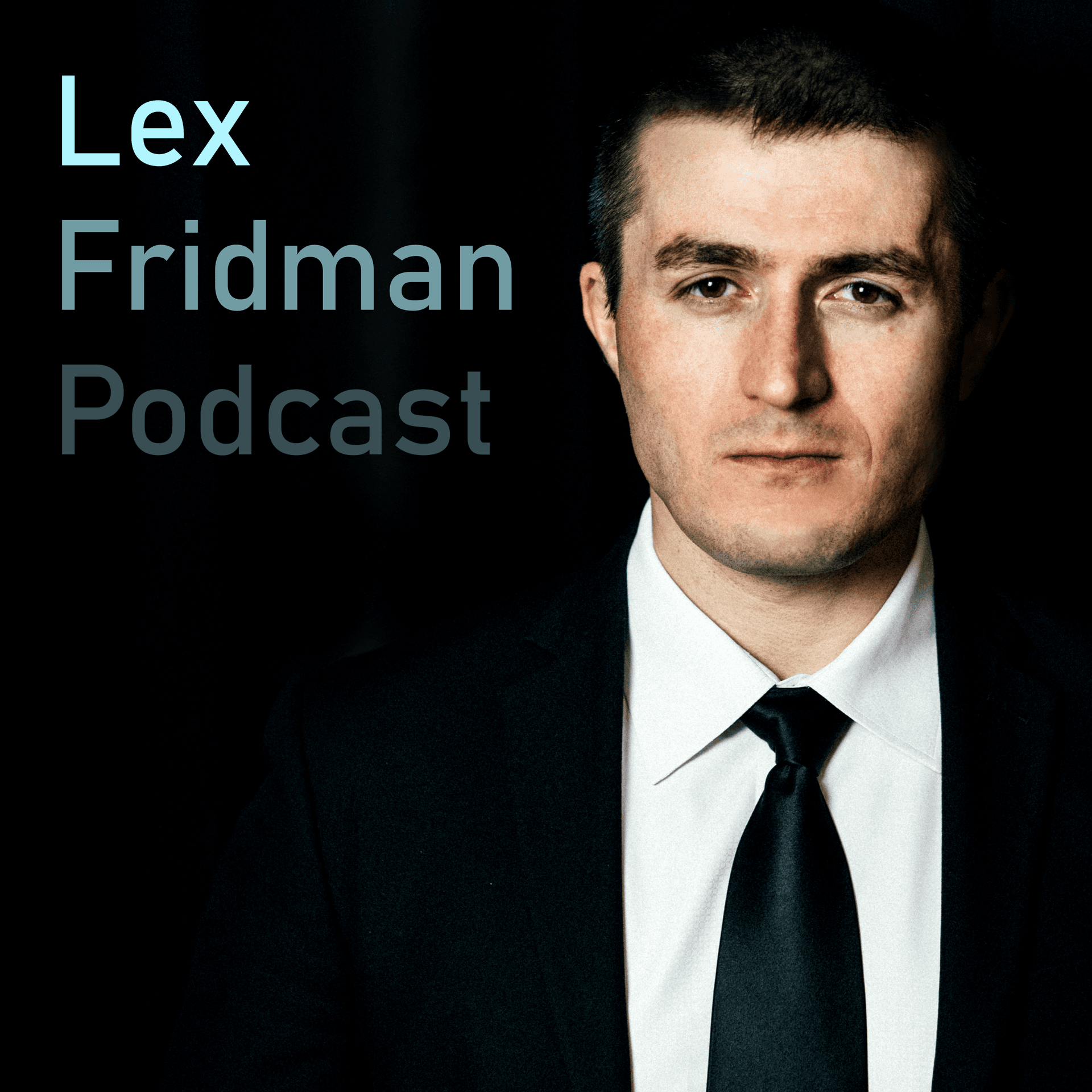
In short
Topic A historian of psychiatry, Andrew Scull, explains why modern psychiatry is in crisis: limited effectiveness of treatments, unstable/contested diagnoses, and a long history of “bad ideas” (asylums, eugenics, lobotomies, insulin coma therapy, electroconvulsive therapy, psychoanalysis, and later psychopharmacology). He argues psychiatry often provides symptomatic relief rather than cures, and that interventions can create new harms (“iatrogenic” problems).
Guest
Andrew Scull
historian of psychiatry and mental health; author of Madness in Civilization, A Cultural History of Insanity from the Bible to Freud, from the Madhouse to Modern Medicine, and Desperate Remedies, Psychiatry’s Turbulent Quest to Cure Mental Illness. He studies how societies define “madness,” how psychiatry gained authority, and how that authority was sometimes used with false confidence.
Key claims
- Progress exists, but psychiatry still lacks cures; no “psychiatric penicillin” exists.
- Drug and talk-therapy approaches are only partially effective; many patients don’t respond, and clinicians can’t reliably predict who will.
- Modern diagnostic systems (DSM) are reliable but not necessarily valid: diagnoses can be consistent yet still misrepresent underlying reality.
- The DSM’s symptom-based, tick-box approach expanded categories and became increasingly questionable.
- A “brain disease” focus (genetics/neuroscience) attracted funding and prestige but didn’t deliver improved outcomes after massive investment (he cites NIMH spending of about $20 billion with no improvement).
- Public policy failures contribute to severe outcomes: people with serious mental illness die 15–25 years earlier; jails have become de facto psychiatric institutions.
- Historical “biological” narratives enabled atrocities: asylum-era optimism shifted into degeneration/eugenics, culminating in Nazi killing of psychiatric patients.
Notable examples
- Rosenhan’s “On Being Sane in Insane Places” (pseudo-patients diagnosed inconsistently).
- DSM evolution from DSM-III’s symptom criteria (1980) to DSM-5’s continued reliance on similar frameworks.
- Eugenics/sterilization: California sterilized mental patients until ~1960; Nazi T4 program and mass killing of psychiatric patients; gas-chamber technology development.
- Lobotomy: Walter Freeman’s “ice pick” lobotomies (1936 onward), Nobel Prize awarded to António Egas Moniz (1949), and lobotomy’s decline with antipsychotic drugs and backlash.
- PTSD therapy example: confronting trauma can help some but worsen symptoms for others.
Written by AI. May contain mistakes. Listen to the episode to check what was said.
Chapters
Tap a time to open that second in VOIntroduction to Andrew Scull's Views
4:07 to 5:08
Discussion on the current crisis in modern psychiatry and treatment limitations.
“out once more into the breach, dear friends.”
Introduction to Andrew Scull's Views
5:17 to 6:23
Discussion on the current crisis in modern psychiatry and treatment limitations.
“Previously, celebrator of beautiful Ruby code, currently celebrator of agentic engineering in the context especially of Linux and his new Omachi Linux distribution system, it's always a joy to talk to him.”
Introduction to Andrew Scull's Views
6:31 to 7:35
Discussion on the current crisis in modern psychiatry and treatment limitations.
“They figure out what you need and match it with a licensed professional therapist in under 48 hours.”
Introduction to Andrew Scull's Views
7:45 to 8:10
Discussion on the current crisis in modern psychiatry and treatment limitations.
“And now, dear friends, here's Andrew Skull.”
The Complexity of Mental Illness
8:10 to 12:49
Exploring the complexities of psychiatric treatment and the limitations of current methods.
“Let's start at where we stand before we go into the rich history that you so eloquently write about.”
The Diagnostic Challenges in Psychiatry
12:49 to 14:00
Analysis of the DSM and the challenges of psychiatric diagnosis over the years.
“And making those judgment calls about what to do is very, very difficult.”
The Erratic Nature of Psychiatric Diagnosis
14:00 to 17:04
Learn about the inconsistencies in psychiatric diagnoses and the impact of the DSM-III.
“time agreeing with one another about what was wrong with somebody.”
The Shift Towards Brain Disease
17:04 to 20:44
Discover the transition in mental health understanding towards brain-centric models.
“conclusion faced by the same patient, that you had a reliable diagnostic system.”
The Complexity of Mental Health Factors
20:44 to 22:33
Explore the interplay of cultural, social, and biological factors in mental health.
“But starting in the 1990s, the period when the first George Bush declared the decade of the brain, NIMH increasingly focused on the idea that mental health was purely a brain disease.”
The Crisis in Psychiatry
22:33 to 24:26
Hear a poignant quote summarizing the challenges faced by modern psychiatry.
“That's a mistaken way of looking at the world.”
Show all 77 chapters
The Evolution of the DSM
24:26 to 28:00
Trace the historical changes in the DSM and its impact on psychiatric diagnoses.
“of the problems, is a quote by Leon Eisenberg, who had a very long career at Harvard.”
Evolution of the DSM: From Psychoanalysis to Symptom-Based Diagnosis
28:00 to 29:46
Learn how the DSM has evolved from a psychoanalytical approach to a focus on symptoms and reliability.
“using broad, often vague categories like reactions.”
The Crisis in Psychiatric Diagnosis and Treatment
29:46 to 31:05
Explore the challenges faced by the DSM-5 and the limitations of current psychiatric treatments.
“It feels like that description doesn't necessarily fully get to the core of why the DSM-5 doesn't quite get the full scope of the problem.”
Historical Context and Failures of Psychiatric Care
31:05 to 36:25
Understand the historical optimism around asylums and the fallout from their abandonment.
“By about 2008, they had thrown up their hands and said, no, we're going to have to continue to refine but rely upon the same basic approach that we developed in 1980.”
The Dark Reality of Community Care
36:25 to 37:45
Discuss the failures of community care and the current state of psychiatric care in the U.S.
“And really, that underlay the construction of the asylums.”
Categories of Mental Illness: Insights from History
37:45 to 41:27
Delve into the major categories of mental illness as defined through historical perspectives.
“I was wondering if you can also just lay out what are the big categories of mental illness that we're referring to.”
Understanding Psychosis and Depression
41:27 to 42:00
Learn about the differences between psychosis, depression, and other mental disturbances.
“So here's a very strange bit of historical record.”
Understanding Mental Disorders
42:00 to 43:04
Explore the evolution of terms and concepts in mental health from past to present.
“We have something also that the ancients recognized, dementia, the loss, really the loss of our mind, as it were.”
The Crisis of Asylums
43:04 to 45:52
Analyze the decline of asylums and the challenges faced in mental health treatment.
“And very often that alternates with periods of depression.”
Degeneration and Institutional Abuse
45:52 to 47:56
Discuss the harmful narratives around mental illness and their societal impacts.
“recovered and maybe spends years or decades there and only leaves in a pine box.”
The Dark History of Eugenics
47:56 to 50:30
Examine the eugenics movement's influence on mental health policies and practices.
“So maybe we can release them if we make sure they can't breed.”
Funding and the Evolution of Psychiatry
50:30 to 56:00
Investigate the role of major funding sources in shaping psychiatric research and practices.
“And so the patients were taken away to a number of psychiatric centers and systematically put to death.”
The Dark Legacy of Psychiatric Science
56:00 to 57:11
Explore how ideologies influenced psychiatric practices and the lessons learned.
“It supported a number of the then extant therapeutic experiments going on.”
Lobotomy: A Disturbing Treatment
57:11 to 59:00
Learn about the history and methods of lobotomy and its societal implications.
“We can discuss a series of therapeutic experiments on people who were shut up in a double sense.”
Cultural Reflections on Mental Health
59:00 to 1:02:36
Discuss the impact of pop culture, particularly film, on perceptions of mental health treatments.
“Freeman starts his work in 1936, borrowing from the work of the preceding year of a Portuguese neurologist named Egos Moniz.”
Innovative Yet Dangerous Treatments
1:02:36 to 1:10:08
Examine historical treatments for mental illness and their evolution over time.
“who is given ECT, electroconvulsive therapy, in a very dramatic rendition of what that was, not really what was going on by the 1970s with ECT, but nonetheless, certainly what had been going on back in the past.”
The Evolution of Medical Treatments
1:10:08 to 1:14:30
Learn about the historical evolution of medical treatments and their impact on psychiatry.
“So the idea potentially was you were sort of burning the parasites out of the brain with this agent.”
Henry Cotton's Controversial Approach
1:14:30 to 1:18:12
Discover Henry Cotton's radical and ultimately harmful methods of treating mental illness.
“So medicine now has interventions that work.”
The Placebo Effect in Medicine
1:18:12 to 1:20:54
Explore the significant role of the placebo effect in psychiatric treatment outcomes.
“Cotton gives a series of lectures at Princeton, the Vanuyssen lectures, which are given by Nobel Prize winners.”
Insulin: A Medical Breakthrough
1:20:54 to 1:23:44
Understand the impact of insulin on diabetes and its transformative effects on patient lives.
“But now if you have combined an actual gigantic operation that is physically, mentally, in every way life-changing, everybody around you in lab coats, all of society is telling you this is going to be life-changing.”
Insulin Coma Therapy's Rise and Fall
1:23:44 to 1:24:01
Learn about the adoption and eventual decline of insulin coma therapy for schizophrenia.
“They would be revived by giving them glucose, usually intravenously, sometimes not.”
Insulin Coma Therapy: Historical Overview
1:24:01 to 1:25:25
Learn about the history and adoption of insulin coma therapy in psychiatry.
“And he claimed that this insulin coma treatment cured 80 % of his.”
John Nash and Insulin Coma Therapy
1:25:26 to 1:26:57
Explore the case of John Nash and his experiences with insulin coma therapy.
“That's just nonsense, but that's rational.”
From Seizures to Electroconvulsive Therapy (ECT)
1:26:58 to 1:30:02
Understand the transition from inducing seizures to the development of ECT.
“Also in the Austro-Hungary in this period, another psychiatrist decided that you couldn't be both schizophrenic and epileptic, that there was somehow an antagonism between the two.”
The Mechanism and Spread of ECT
1:30:03 to 1:31:34
Learn how ECT emerged as a treatment method and its implications.
“come by, two electrodes cross their head.”
Clinical Applications and Controversies of ECT
1:31:35 to 1:35:50
Discuss the effectiveness and controversies surrounding ECT in modern psychiatry.
“And ECT becomes a very widely used intervention.”
Legal and Social Perspectives on ECT
1:35:51 to 1:38:01
Examine the legal regulations and societal views on ECT treatment.
“They may not have a different disease, but the drugs don't work for them, hence treatment-resistant.”
The Crisis of Trust in Psychiatry
1:38:01 to 1:49:11
Explore the growing distrust in medical science and its implications for psychiatry.
“They are convinced that the drug treatments are poisonous.”
Cultural Reflections on 'One Flew Over the Cuckoo's Nest'
1:49:21 to 1:52:00
Analyze the impact and differences between the book and the film adaptations.
“Now we're back just to talk a little bit more about ECT and One Flew Over the Cuckoo's Nest.”
Madness in Cinema and One Flew Over the Cuckoo's Nest
1:52:00 to 1:53:56
Explore the influence of films on perceptions of psychiatry, especially the iconic One Flew Over the Cuckoo's Nest.
“I used to teach a class called Madness in the movies, and I didn't just use, in fact, I used relatively few contemporary films.”
The Reality of Mental Hospitals
1:53:56 to 1:56:04
Discussion of the environment, treatment practices, and patient experiences in mental hospitals.
“My book, Madhouse, at one point interested Hollywood, and one of the two principals said to me, I really like this story.”
Historical Treatments: ECT and Lobotomy
1:56:04 to 1:58:03
Examines the historical use of ECT and lobotomies in treating mental illness and the gender disparities involved.
“Yeah, I think there was an abusive element in a lot of mental hospitals.”
The Dual Nature of ECT Treatment
1:58:03 to 2:01:08
Covers both the negative perceptions and the life-changing experiences associated with ECT treatment.
“That's complicated by the fact that it's used primarily, as we were discussing, in serious cases of depression and so-called treatment-resistant depression.”
The Evolution of Psychiatry: A Personal Journey
2:01:08 to 2:03:39
Reflects on the changes in psychiatric understanding and treatment through a personal narrative.
“The complicating thing is, we have no clue why it works.”
Complexity and Suffering in Psychiatry
2:03:39 to 2:06:00
Discusses the profound complexity of psychiatric conditions and the universal nature of mental suffering.
“You wrote Desperate Remedy, Psychiatry, Struggle in Quest to Cure a Mental Illness.”
Understanding the Mind: A Historical Perspective
2:06:00 to 2:06:44
Explore the complexities of human psychology and the ongoing journey to understand the mind.
“The very fact that we have such limits to our knowledge means there's space there to examine things in what needs to be a very complicated way.”
The Rise of Psychotherapy in the 19th Century
2:06:44 to 2:07:29
Learn about the origins of psychotherapy and its intertwining with new religious movements.
“is really exciting to me and really important to the history of psychiatry is the psychotherapy side.”
Religious Influences on Mental Health Treatments
2:07:29 to 2:10:13
Discover how different religious movements sought to address mental health issues in the 19th century.
“hospital and to people incarcerated in those places, had become very biological.”
The Emergence of Neurology and Psychiatry
2:10:13 to 2:13:00
Examine the conflict and collaboration between neurologists and psychiatrists in addressing mental health.
“And it attracted both adherents and severe critics.”
Innovative Treatments and Historical Perspectives
2:13:00 to 2:15:08
Understand the range of treatments available in the past and their relevance to modern issues.
“I feel like that's another Evans-backed technique that works well.”
The Arrival of Freud: Impact on American Psychiatry
2:15:08 to 2:19:57
Learn about Freud's introduction to America and the initial reactions from the psychiatric community.
“We look back on the 19th century and think of it in idyllic terms of as much slower pace of life and people.”
Freud's Early Influences and Career Challenges
2:20:00 to 2:20:40
Learn about Freud's background, his challenges, and his relationship with Charcot.
“Freud, of course, is widely acknowledged to be the father of psychoanalysis.”
The Freud-Jung Relationship and Its Fallout
2:20:40 to 2:22:40
Explore the complex relationship between Freud and Jung, including their eventual split.
“That's a clever way to help your career along.”
Introduction to Psychoanalysis and Anna O.
2:22:40 to 2:27:20
Discover the origins of psychoanalysis through the case of Anna O. and key concepts.
“Let's actually focus first before the conference on the actual ideas of psychoanalysis.”
Freud's Theories on the Mind's Structure
2:27:20 to 2:30:10
Understand Freud's model of the mind consisting of the id, ego, and superego.
“Of course, Freud added a bunch of stuff in the realm of psychosexual stages of childhood.”
Freud's Influence on 20th Century Psychology
2:30:10 to 2:32:50
Learn about Freud's impact on psychotherapy, particularly post-World War I.
“And initially, Jung gets one of the heirs to the international harvester fortune as a patient.”
Challenges of Freudian Therapy and Public Perception
2:32:50 to 2:34:00
Discuss the resistance to Freudian therapy within mainstream psychiatry and society.
“World War I saw the breakdown of many soldiers from something that came to be labeled as shell shock.”
The Rise of Freudian Ideas in Society
2:34:00 to 2:36:40
Explore how Freud's ideas gained traction among artists and psychoanalysts but faced resistance in clinical settings.
“smart section of society, those ideas developed a considerable purchase.”
Impact of World War II on Psychoanalysis
2:36:40 to 2:40:40
Learn about the significant transformations in psychoanalysis spurred by the events of World War II.
“they can't treat that many patients, a few thousand, when there are hundreds of thousands in the hospitals, right?”
Diagnosis and Treatment of Soldiers' Trauma
2:40:40 to 2:44:10
Understand the challenges faced by psychiatrists in treating soldiers' psychological issues during and after the war.
“We've talked about all these approaches that didn't work.”
Shift to Outpatient Care by Psychologists
2:44:10 to 2:48:00
Examine how the role of psychologists evolved post-war, leading to an emphasis on outpatient treatment.
“But obviously, the Allies, that was not the response.”
Cognitive Behavioral Therapy and Its Impact
2:48:00 to 2:53:30
Explore the principles and effectiveness of cognitive behavioral therapy.
“And then they have two or three years of clinical work and experience.”
The Limitations of CBT
2:53:30 to 2:57:10
Discuss the limitations of cognitive behavioral therapy for severe mental disorders.
“So all of this develops, and Americans are unusual.”
Origins of Psychopharmacology
2:57:10 to 3:02:00
Learn about the accidental discoveries that led to psychopharmacology.
“There is some talk therapy ideas of psychoanalysis, and then there is, from the clinical psychology side, cognitive behavioral therapy.”
The Discovery of Chlorpromazine
3:02:00 to 3:05:14
Learn about the origins and early applications of chlorpromazine in psychiatry.
“one of the cautions is it'll make you sleepy, don't drive, right?”
Rise of Tranquilizers in Psychiatry
3:05:14 to 3:08:26
Explore the transition from major tranquilizers to antipsychotics and their societal impact.
“this drug it's a bonanza for them right not an accident because they put their best salesman on the job of selling this.”
Effects and Limitations of Antipsychotics
3:08:26 to 3:11:40
Understand how antipsychotics address positive and negative symptoms of schizophrenia.
“Just to state out loud and clear that both positive and negative effects so-called by psychologists of schizophrenia are both devastating and both negative.”
Serious Side Effects of Antipsychotic Drugs
3:11:40 to 3:14:14
Examine the severe side effects associated with first-generation antipsychotics.
“A paper appeared in Science by George Crane, a Maryland psychiatrist, in which he said, we as a profession have been ignoring this terrible problem.”
The Evolution of Antipsychotic Treatments
3:14:14 to 3:16:00
Discover the development of second-generation antipsychotics and their implications.
“Of course, there's not a real, at that time or even now, a real science of like when you have a human come to you, what is the actual protocol of how you figure out which to give?”
Efficacy and Side Effects of Antipsychotic Drugs
3:16:00 to 3:18:38
Learn about the findings regarding the efficacy and side effects of first and second generation antipsychotic drugs.
“So we do something called the Cady study and it's published in the New England Journal of Medicine and there are two interesting findings.”
The Complexity of Drug Side Effects
3:18:38 to 3:20:02
Understand the complex nature of psychiatric medications and their unpredictable side effects.
“You mean every individual that walks into the picture, they don't know where in the distribution they fall.”
The Development of Antidepressants
3:20:02 to 3:23:21
Explore the historical development of antidepressants and their impact on depression treatment.
“People, you know, some of the patients who drop out, drop out because they find the richness of their mental life is completely gone, and they don't want to tolerate that.”
Diagnostic Creep in Psychiatry
3:23:21 to 3:25:38
Discover the phenomenon of diagnostic creep and its implications for mental health diagnoses.
“unambiguous deviations from the norm that are so serious that any competent member of the culture knows that's that.”
SSRIs and Their Impact on Patients
3:25:38 to 3:30:00
Learn about SSRIs, their effectiveness compared to placebos, and the significant side effects they can cause.
“And then if you're around somebody suffering from it, it's a very social experience.”
The Efficacy and Dangers of Antidepressants
3:30:00 to 3:34:50
Explore the complexities of antidepressant use, including their limited effectiveness and potential side effects.
“This drug's a little better than placebo, but it doesn't really affect your quality of life much.”
The Future of Psychiatric Research
3:34:50 to 3:38:40
Discuss the need for broader psychiatric research and the role of psychosocial factors in mental health.
“What about talk therapy on both the CBT, cognitive behavioral therapy, and psychoanalysis?”
Hope for the Future of Psychiatry
3:38:40 to 3:41:56
Reflect on the potential for progress in psychiatry and the importance of compassion in treatment.
“can we increase the amount of social connections that people who suffer have, and all of that together.”
Transcript
Automatic transcript. May contain errors.0:00Lex Fridman:The following is a conversation with Andrew Scull, a historian of psychiatry and mental health. He has authored many books that I highly recommend, including Madness in Civilization, A Cultural History of Insanity from the Bible to Freud, from the Madhouse to Modern Medicine, and Desperate Remedies, Psychiatry's Turbulent Quest to Cure Mental Illness. Andrew Scull has spent decades studying how societies have understood madness, how psychiatry rose to authority, and how often that authority was used with false confidence and catastrophic consequences. In this conversation, we'll trace the long arc from the asylum era to eugenics, from lobotomy and insulin coma therapy to electroconvulsive therapy, psychoanalysis, antipsychotics, antidepressants, and the modern crisis of mental health.
0:52Lex Fridman:It is, in part, a story about the terrifying history of bad ideas in medicine, but it is also about the fascinating mystery of the human mind and about the difficult journey to understand it. And now a quick few second mention of each sponsor. Check them out in the description or at lexfriedman.com slash sponsors. It is in fact the best way to support this podcast. We got Whisper Flow for voice to text writing, Finn for customer service AI agents, Element for electrolytes, Shopify for selling stuff online, BetterHelp for mental health, and Perplexity for curiosity-driven knowledge exploration.
1:33Lex Fridman:Choose wisely, my friends. And now, onto the full ad reads. I try to make them interesting, but if you skip, please still check out our sponsors. I enjoy their stuff. Maybe you will too. And to get in touch with me, for whatever reason, go to lexfriedman.com slash contact. All right, let's go. This episode is brought to you by WhisperFlow, the AI voice dictation app I use that lets me and lets you write prompts to AI by speaking. You can write anything, really. You can add a custom dictionary of words that you want to make sure it gets right. All that is available, a ton of different features.
2:16Lex Fridman:it's kind of miraculous that speech to text took so long to get right. This was an obvious thing for many years. It works really well across operating systems. I in particular like to use it on Android. Just flawlessly integrated into the computing experience. A thing I always wished existed and now it does. So you too can try it out at whisperflow.ai.lex to get one month of Whisperflow Pro Free. That's W-I-S-P-R-flow.ai.lex. This episode is also brought to you by Finn, the number one agent for customer service. there are very few things as important to the success of a company as an obsessive care for the happiness of its customers.
3:12Lex Fridman:So you got to use the best tools available to you if you're a company small, medium, large to address the needs, the concerns, the issues that come up with the customers. Fin is just a really powerful, respected, highly lauded tool for helping you with that. 65 % average resolution rate trusted by over 6 ,000 customer service leaders and top companies, including AI companies, many of which you know. When an AI company trusts another AI company to do a specific niche thing like customer service, you know they're legit. Go to fin.ai.lex to learn more about transforming your customer service and scaling your support team.
3:57Lex Fridman:that's fin.ai slash lex. This episode is also brought to you by Element, my daily zero sugar and delicious electrolyte mix that I'm sipping on right now as I'm mentally preparing to go out once more into the breach, dear friends. The breach of the insane Texas heat as I run who knows how many miles, but it'll be rough and it'll be beautiful. I have a love-hate relationship with running, mostly on the hate side. The love comes with ignoring the voice that wants to be lazy, that wants to avoid the thing you don't want to do, and overcoming it, and getting out there, getting a good run in. That feeling when you've accomplished that little bit of a hard thing, especially when it's done on a daily basis, is a beautiful feeling.
4:48Lex Fridman:anyway the electrolytes help before and after and element is the best and the most delicious way i found to get electrolytes into my system sodium potassium magnesium watermelon salt is the flavor get a free eight count sample pack with any purchase try it at drink element.com slash lex. This episode is also brought to you by Shopify, a company, the CEO of which, Toby, is somebody who comes up very often, especially when I'm talking to DHH, and we just did a podcast with DHH. Previously, celebrator of beautiful Ruby code, currently celebrator of agentic engineering in the context especially of Linux and his new Omachi Linux distribution system, it's always a joy to talk to him.
5:40Lex Fridman:I love people who love building and he's that. And Toby is also that great engineer, great leader of engineers. So whenever a company is led by a great engineer like that, and also somebody who is very interesting, not just on the technical side, but on the philosophical side, it's always exciting when a company like that becomes successful. And so I will forever celebrate Shopify because of Toby and because of the great team of engineers that they have. But on the service side, you know, what Shopify is allows you to sell stuff, sellers to find buyers. And you too can find the buyers by signing up for a$1 per month trial period at shopify.com slash lex.
6:22Lex Fridman:That's all lowercase. Go to shopify.com slash lex to take your business to the next level today. This episode is also brought to you by BetterHelp, spelled H-E-L-P help. They figure out what you need and match it with a licensed professional therapist in under 48 hours. Obviously, very relevant to this episode, where we discuss the long history of psychiatry. I'm a big believer in the power of talk therapy as a way to explore the puzzle of the human mind, the complexity of the human condition. What a beautiful thing we got going on between our ears and how difficult it is to untangle the peculiar mix of traumas and triumphs that make up each one of us, each one of our life journeys.
7:18Lex Fridman:Anyway, if you want to take a leap into talk therapy, talk to a licensed therapist, an easy, discreet, affordable, available everywhere way of doing that is BetterHelp. Check them out at betterhelp.com slash lex and save on your first month. That's betterhelp.com slash lex. This is a Lex Freeman podcast. To support it, please check out our sponsors in the description, where you can also find links to contact me, ask questions, give feedback, and so on. And now, dear friends, here's Andrew Skull.
8:09Lex Fridman:is it fair to characterize your view on psychiatry and mental illness is that there's a crisis in modern psychiatry we have made some progress yes over the past century but mostly we still are not good at treating mental illness, either via the drugs or talk therapy, meaning psychopharmacology or psychotherapy, or as you put it, the brain or the mind route. Yeah. So let's start at the end of our story. Let's start at where we stand before we go into the rich history that you so eloquently write about. So psychiatry is a profession that tries to deal with an enormously complicated thing. the human mind, the human emotions, the human ability to attempt to understand the world.
9:03And in particular, obviously, it focuses on people where our common sense approach to the world seems to break down. People whose emotional life is filled with turmoil, people whose ability to relate to others is badly damaged, people who see things in the world that the rest of us simply think aren't there. They're illusions, they're hallucinations, they're delusions. And this is a subject that has occupied some very clever minds over the years. And there's no question that in the course of at least the last three quarters of a century, there has been some limited progress in dealing with the problems that mental illness creates.
9:56Some of that is confined to the milder forms of mental distress, the more serious forms of psychosis and breakdown of emotional control. Those are areas where I think, again, there's been some progress, but it's easy to overstate how much of that there's been. As we'll see probably later in our conversation today, the advent of modern psychopharmacology, which occurred in the early 1950s, was a serendipitous event. It wasn't planned for. It happened almost by accident, and it did mark, in some ways, an advance over some of the things that psychiatry had engaged in before that. And no question for some people, that revolution and a parallel revolution in the psychotherapeutic realm have created some advance for patients, and we should not minimize that.
10:57What we have available to us are symptomatic treatments, not cures. We don't have a psychiatric penicillin for any of the conditions we're going to be talking about. That doesn't mean we can't do some things that help, but the help is quite limited. And it's important to understand both the ways in which we have progressed and the limits of that progress, and also to understand that when we treat something, sometimes we create new problems, what we call eatrogenic problems, things caused by the interventions that we use. That's true of some psychotherapeutic interventions, and it's most certainly true of the drugs we use to treat mental illness these days.
11:48So, for example, in treating PTSD, we often get patients to confront the episode, the trauma, which provoked their distress. And that is often a very, very fraught process. And for many patients, it actually makes things worse. For some patients, it makes them better. So that's a situation where you can see problems. With both antipsychotics and antidepressants, the two main classes of psychotropic drugs that we use, they're at best partially effective, and they don't work for a significant fraction of patients who are given them. And one of the big problems psychiatry faces is that psychiatrists don't know in advance who's going to respond well to the drugs, who's going to respond badly.
12:48For which group of patients in the middle, the side effects and the main effects, if that's what we want to call them, the therapeutic effects, are finally balanced. And making those judgment calls about what to do is very, very difficult. Now, in terms of the crisis psychiatry faces at the moment as I see it, there are a number of strands that point to this. Psychiatry's diagnostic system that is still used, I mean, the fundamental basis of psychiatric diagnosis today was really first formulated in 1980 with the third edition of the Diagnostic and Statistical Manual of a profession.
13:34Lex Fridman:DSM-3. DSM-3, and then there's been DSM-3R, DSM-4, DSM-4TR, and now DSM-5. Finally, not with a Roman numeral, but with an Arabic numeral. So they thought with DSM-5, when they needed to modify it, it would be like a piece of software. You have Windows 10, Windows 11, and so on, right? Now, that diagnostic system came into being because psychiatrists had a very hard time agreeing with one another about what was wrong with somebody. And that became embarrassingly clear, first in the professional literature, which outsiders didn't read, and then via a very famous study that's a scientific fraud by David Rosenhorn called On Being Sane in Insane Places, where he claimed to have sent in pseudo-patients to the hospital, and they all were diagnosed as schizophrenia, but one of them diagnosed as schizophrenic, the other as somebody with bipolar disorder, and they were fake patients.
14:38So almost in a panic after that study appeared in science, and because there was an abundant professional literature from the 1960s showing the same thing, that diagnosis was a very erratic process. The DSM-III task force, led by Robert Spitzer, who was then at Columbia, was explicitly set up to try to create a sort of tick-the-boxes approach to deciding which box a patient belonged in. Were you schizophrenic? Were you this type of schizophrenic or that type of schizophrenic? Were you manic-depressive or bipolar? Did you have various forms of depression. And to construct those boxes, what they relied upon was a list of symptoms.
15:29And if you had more than a certain number, if you had more than six or ten or more symptoms of a certain sort, you could be diagnosed with major depression, for example. So that system came into being. It was partially embedded because it appealed to drug companies who were developing drugs to treat these various disorders. It appealed to insurance companies because it gave them a stable basis to look at. But it appealed, as diagnosis always does, to patients and their families who are scrambling to deal with these enormous upsets in the mental life of either themselves or a family member. So it provided some sense of certainty around diagnosis.
16:22But that was always based simply on symptoms in the way an 18th century doctor might diagnose dropsy or diagnose some other kind of disorder, fever, for example. Well, fever and other diseases they talked about in the 18th century are really a constellation of very different things under one label. And I think that's what is turning out to be true of the DSM labels. But that approach approach was really all that psychiatry could come up with if it wanted to make sure, whether you were in Walla Walla or New York or San Francisco or Atlanta, you reached the same conclusion faced by the same patient, that you had a reliable diagnostic system.
17:10That didn't mean necessarily it was a valid diagnostic system, if you understand the distinction between validity and reliability. Reliability means you and I faced with the same sets of facts, reached the same conclusion, but that conclusion may or may not reflect the underlying reality of things, right? So you had this diagnostic system and it went through various iterations. Each time it went through an iteration, the number of possible psychiatric disorders you could get grew and grew and grew. And it became difficult to believe in some of those categories, shall we say, that they were really illnesses rather than some sort of social construct.
17:59But beyond that, psychiatrists wanted to be more like other medical doctors, to root their diagnoses in an understanding of the underlying pathology of the disorder. What was it that caused people to become schizophrenic? The sense was, if we could grasp that, we'd have a better handle on how to attack it, how to treat it. And when DSM-5 was mooted, the fifth edition in the early 2000s, NIMH, then under the leadership of Stephen Hyman, who's at Harvard now, and succeeded by Thomas Insel, who ruled NIMH for about 13 years, the two of them had pushed psychiatry and psychiatric research in a very particular direction.
18:55On the one hand, towards understanding the genetics of mental illness, and on the other, to looking at what the new discipline of neuroscience could contribute to understanding things. Both of them were heavily invested in the idea that mental illness was brain disease. And if it was brain disease, then the question was, what was making the mechanism here go awry? What was causing people's emotions or their cognitive skills or their sense of the world to become so disordered. And they invested a lot of money in that approach. When Ensel stepped down, he gave an interview actually to somebody at MIT, and he's repeated it since in a book he wrote about his experiences, where he said, well, you know, as I look back on my 13 years, I funded an enormous amount of scientific, really cool scientific research.
19:55I funded geneticists, and I funded neuroscientists, and they did a lot of really interesting science. And after spending$20 billion, the lot of the mentally ill has improved not one bit, right? Which was a pretty devastating statement, I thought. And IMH is National Institute of Mental Health. National Institute of Mental Health, yes, I shouldn't resort to jargon. But the National Institute of Mental Health had been founded in the late 1940s with the goal of improving, doing basic research, training people in the field, advancing the care of the mentally ill and producing, obviously, cures and advances.
20:41And its mission has varied widely over the years since. But starting in the 1990s, the period when the first George Bush declared the decade of the brain, NIMH increasingly focused on the idea that mental health was purely a brain disease. And there's something to that, and there's also a mistake in thinking about it that way.
21:05Lex Fridman:This is, by the way, as we'll talk about, this distinction between seeing mental health, the maladies of the human mind as a problem of the brain, like neurobiology, neuroscience, versus the problem of the mind, which is more in the cognitive science, psychotherapy, is less amenable to scientific rigor. So I think what's appealing about studying the brain and neurobiology and neuroscience is there's data. It's more rigorous. You could do science. It's the kind of thing that really appealed to medical school deans. Because once NIMH and the drug companies, too, were funding basic research on neurobiology and basic research on genetics, the money's flooded in.
21:54And psychiatry, which had been something of an orphan, became much more popular.
21:58Lex Fridman:And we should say that this is something you write a lot about, that there's all these factors to consider. So there's the cultural elements, there's the political public policy elements, and there's at a certain point the drug companies and the insurance companies come in. And there's, of course, all the human beings around somebody who is suffering with a mental health issue. So there's the family factors, and that's connected to the cultural stuff. It's a very, very complicated area, and oversimplification is a real problem, I think. And I think even that dichotomy you just drew between the brain and the social or the psychological or some mix of those things, I think in some ways that's a category mistake.
22:47That's a mistaken way of looking at the world. Because the brain you and I have today is not the brain we were born with. Human brains are remarkably plastic things. They develop in response to the environment. So the social and the psychological end up being embedded in our brains. And so that rigid separation of saying one or the other, no, there's abundant evidence from epidemiology that social factors play an important role in the development of mental illness.
23:23Lex Fridman:Nevertheless, the history of psychotherapy, for example, but all of these subfields, the human mind is incredibly complicated with all of these factors. So in order to say anything helpful, you have to simplify. You have to simplify, of course. And then Freud famously simplified it a lot towards a very particular view of the human mind. And that simplification is actually, I mean, we'll talk about it, but it's not correct to do in some deeper sense, but it also can be productive. Yes. In fact, whenever you're trying to deal with a very complicated set of issues, you have to simplify. You have to make heuristic decisions about what you're going to neglect and what you're going to emphasize.
24:10But what I'm trying to say, well, you asked me about the crisis in psychiatry, and the simplest way for me to encapsulate the issue and the problem as I see it that's arisen, one of the problems, is a quote by Leon Eisenberg, who had a very long career at Harvard. and Eisenberg said towards the end of his career, he said, when I entered psychiatry, it was a brainless psychiatry. And when I'm leaving it, it's a mindless psychiatry. And I think that sums up the way in which the field has to a large degree moved. And I think in the process, important insights have been lost, even though in some ways other things are being gained.
25:02Freudians tended to neglect the biological, to suggest the brain as a biological organism was not something we needed to worry about. We worried at the level of a psychological model of how our minds work. And all too often, not exclusively because some of the psychiatrists I'm friends with, are very sophisticated men and women and do grasp that you can't move in these bipolar directions. You've got to meet somewhere in the middle. But that sort of got lost, I think, in all the enthusiasm for neuroscience. I mean, when antipsychotic drugs were discovered in the early 1950s. We had no clue of how they worked.
25:56And one of the things that they helped to spawn as people began to say, well, why do these drugs work? What do they do? Was to begin to understand that the brain wasn't just a set of electrical signals, as had been thought in the first half of the 20th century and before, but rather there was this very interesting chemical soup running around in our brains with neurotransmitters that helped the brain work the way it did and perhaps explained why it went awry. So it was one of the many factors that gave rise to neuroscience. The first neuroscience conventions were in the 1970s. They attracted a few hundred people.
26:39Now it's tens of thousands of neuroscientists. It's a huge enterprise. So diagnosis has come under threat. The categories that we have all become familiar with, that we're told are real diseases like bipolar disorder, schizophrenia, major depression, are beginning to falter. We're beginning to worry about whether those diagnoses are real ways of thinking about the world and may, in fact, mislead us. because if we think there's something called schizophrenia, or the schizophrenia's, as the inventor of that term put it, if we think there's something like that and we try to research where it comes from, but that's not really what's going on, obviously we're probably going to not make the progress we could be making if we had a better diagnostic system.
27:32And that's what DSM-5 thought it was going to be able to do and discovered it couldn't. So it stayed basically with this symptomatic approach.
27:41Lex Fridman:If we can, just really brief, I would love to talk a little bit more about the DSM, but just to give history here, looking it up on perplexity, DSM-1 in 1952 was a 32-page pamphlet with 106 diagnoses heavily influenced by psychodynamic concepts and etiology using broad, often vague categories like reactions. DSM-2 in 1968 expanded to 185 diagnoses, still psychodynamically flavored and reliability poor, but added more attention to childhood disorders and later removed homosexuality as a disorder in 1974 printing. Then to the revolution, as you mentioned, the DSM-3 in 1980 introduced explicit symptom-based diagnostic criteria, a multi-axial assessment system, and an officially a theoretical stance about causes aiming to improve reliability and research utility.
28:39Lex Fridman:And then DSM-3R in 1987 revised criteria and expanded to around 297 diagnosis. DSM-4 in 94 and DSM-4TR in 2000 focused on literature-driven empirical revisions, added and deleted some disorders, increased coordination with ICD-10, and goes on. And then finally, in 2013, DSM-5 came out, which eliminated the multi-axial system, integrated most information into a single non-axial diagnostic list and separate notations for psychological and medical factors. It reorganized chapters, e.g. neurodevelopmental, obsessive-compulsive-related, trauma - and stress-related disorders, introduced new and refined entities, and so on.
29:31Lex Fridman:But big picture trajectory, conceptually, the DSM moved from cause-focused and psychoanalytical to symptom-based, atheoretical, and reliability-driven. Over time, there has been growth in the number of granularity of categories, closer alignment with ICD, ongoing controversy over medicalization validity and the balance between categorical and dimensional approaches. Yes. It feels like that description doesn't necessarily fully get to the core of why the DSM-5 doesn't quite get the full scope of the problem. You invest a ton of money. You invest more than$20 billion in a particular approach. And at the time you're constructing this, you say, finally, because of all the work that's been done in genetics, we now have decoded the human genome.
30:29We have PCR so we can chop it up and we can look at bits of it. We have a lot more understanding of the role of neurotransmission in the brain. surely we're going to be able to recast our diagnostic system based on underlying pathology so that we won't be worrying about symptoms anymore. We'll be looking at the actual underlying pathological changes that have taken place. But in the event, it turned out they couldn't do that. By about 2008, they had thrown up their hands and said, no, we're going to have to continue to refine but rely upon the same basic approach that we developed in 1980. And when that document came out, and there'd been a lot of criticism, some of it from Robert Spitzer, who had been largely in control of DSM-III and DSM-III-R, and then his successor, Alan Francis, who'd run DSM-IV, they both were fiercely critical about what was going on and said it was being done in the dark and it was done in secrecy and it wasn't scientific.
31:48And when it was about to come out, Thomas Insull and Stephen Hyman, the two then existing and the preceding director of the National Institute of Mental Health, denounced the document as unscientific and useless. So if you're talking about a crisis, that's a crisis for the field if its diagnostic system is being dissed by leading figures like that. What else was a problem? The difficulties with the drug-existing therapies, that particularly, had become more and more manifest. And to make matters worse, partly because Big Pharma had sometimes behaved, shall we say, rather unethically. with these drugs.
Read the full transcript
32:36It had hidden things that undercut their claims. It had manufactured studies. It had manipulated data. And it got caught out, and it paid billions of dollars in damages for some of the tricks that it got up to. And not just in psychiatry. I mean, Vioxx, for example, the painkiller, was another huge scandal. It was a$5 billion settlement. But the drug companies had suffered some reputational damage. Beyond that, they didn't have any real clues. Unfortunately, neuroscience hadn't thrown up new targets for different forms of drug development. And they decided they could make more money with spending their money on research on other diseases, not mental illness.
33:26So a crisis was you were stuck with a set of drugs that Steve Hyman says aren't really any advance on the ones that by accident we found in the 50s. And there isn't new research, unless it's small startups going on, to develop new ones. So you have an increasing sense your diagnostic process is falling apart, your drug treatments' limitations are becoming more manifest. And as well, for people with serious mental illness, public policy has screwed things up badly. So if you are a person with serious mental illness, you will die on average 15 to 25 years before the rest of us. And that gap has been growing rather than diminishing.
34:24So that's not a good thing. It's not something I want to lay entirely at the door of psychiatry, so don't get me wrong. I think a lot of this is public policy that has really abandoned treatment for the seriously mentally ill, and you see it on the streets of our cities. You see the sidewalk psychotics. You see people who are cycling between brief periods of inpatient care, the gutter or the flop house, and the jail. So the three largest centers of inpatient psychiatric care, if you can call it that, in the United States today, are the Los Angeles County Jail, Cook County Jail in Chicago, and Rikers Island in New York.
35:10That's shocking because, by their very nature, of course, prisons aren't equipped to deal with serious mental illness.
35:19Lex Fridman:So some dark ways to return to the asylum era. Yeah, well, you know, the asylums had acquired a very bad reputation, and I've written about some of the reasons why that happened. But when asylums were founded, it was a period of enormous optimism that we were going to be able to cure these people, that we would rescue them from attics and from jail cells, and for providing a therapeutic environment, coaxing them to work, creating a system where they learn to control themselves, not necessarily to drive their demons out, but to keep them under some sort of wraps. The expectation was, when the asylums came along, that they'd not only rescue people from horrendous conditions in the prisons and the jails, but they'd actively cure them.
36:11And the earliest alienists, as they called themselves then, thought that they could cure 60%, 70%, 80%, maybe even more, of patients as long as they came in early. And really, asylums were built out of that sense of optimism, that sense that so much was environmental and so much was not exacerbating the condition by treating people like animals or treating them, beating them in other ways, horrifically, maltreating them, that that would create a sense of cure. And really, that underlay the construction of the asylums. And now, having abandoned the asylums, which we did starting a little bit in the 1950s, but really the late 1960s onwards, that was because there was going to be something miraculous called community care.
37:10But community care is a shell game without a P. It's like one of those confidence tricks. There were no substitute community facilities for dealing with the really serious mentally ill.
37:24Lex Fridman:So now we're in this truly, in this crisis, in this essentially dark ages. and in part, I think our conversation, our journey through the history of psychiatry is an exploration of some gigantic mistakes, but also an exploration of where lay some hope for the future. So we'll talk quite a bit about this. I was wondering if you can also just lay out what are the big categories of mental illness that we're referring to. You've already hinted at them, but levels of seriousness and the categories of illness, like with psychosis and depression and so on. So going back to the early 20th century was when the German psychiatrist, Emil Kreplin, working with thousands of records in German asylums, inductively developed a distinction between two very broad categories of mental illness.
38:25One he called dementia praecox, or early dementia, and the other he called manic depressive illness, which was a more remitting illness that sometimes went away entirely, other times went back and forth, whereas dementia praecox was a one-way ticket down. Now, that label was transformed by a Swiss psychiatrist Broyler into the term we use today, schizophrenia. Although Broyler talked about the schizophrenia because he thought under that broad label, there were a diverse group of things running around. And I think that was an important insight that tends to get lost sometimes. This was jamming together people with very serious psychosis, that is, people who'd lost touch with what we like to think of is reality, whose emotional and cognitive lives were in total turmoil, who lost the ability to connect with other human beings.
39:32So their social skills atrophied. This is something contemporary psychiatrists would refer to as the positive and negative symptoms of schizophrenia.
39:43Lex Fridman:But underlying the definition of schizophrenia here is a detachment from reality. So you're hearing voices, you're seeing visions. You're thinking people are plotting against you. You think the television is talking directly to you. And because of that, it has these consequences of how you're connected to the rest of the world and what your emotional life is like. Yes, your emotional life flattens out. Your language capacity deteriorates. Your ability to relate to other people either vanishes or becomes caught up in the web of delusions where you think people around you are plotting against you or doing terrible things to you.
40:23Lex Fridman:And is that a different world than the world of bipolar and the world of depression? Yes. The Greeks recognized, and the Romans, ancient Greece and ancient Rome recognized different forms of insanity, as they called it. So melancholia would have been the term the Greeks and the Romans would have used. And it survived and was very much around. And I think that is a form of depression. What's happened now is major depression has become a catch-all category. So it embraces both what we might think of as milder forms of emotional distress, along with what melancholia referred to, which was really a kind of depression that had psychotic features, this loss of contact, as it were, with everyday reality.
41:18Lex Fridman:So something you would talk about, maybe like a clinical depression. And by the way, we should mention that this field in the 21st century is like a minefield. Yes. Very much so. So here's a very strange bit of historical record. The other distinction, and the distinction we're grappling with, so we have people whose depression is of such a scale, they're threatening to do away with themselves. They've retreated into complete almost immobility. They're overwhelmed by senses of sadness and loss, and if they're religious, that they're damned to hell, all those kinds of things. So we have the psychosis that we've been talking about.
42:02We have something also that the ancients recognized, dementia, the loss, really the loss of our mind, as it were. But then we also have other kinds of disturbance of our mental faculties that generally we think of as more minor, but I don't want to make light of them because often people that suffer from these things genuinely suffer pretty badly. But those things we in the 20th and 21st centuries tend to talk about as neuroses, neurotic diseases, psychotic diseases. In the 19th century, neurosis was a term that meant things rooted in the brain, as you can see from the root of the word, and psychosis was stuff that came from the mind, the psyche.
42:54And yet sometime in the late 19th century, those things crossed over. And so when we talk in the present, we do tend to distinguish between the core, really the most severe forms of mental disorder, which would include things like Alzheimer's disease and other forms of dementia would include very serious depression, would include bipolar disorder where people oscillate, either have extreme mania, so they're not getting any sleep, they're talking at an extraordinary rate, their behavior is very hard to tolerate, and they're exhausting themselves, and they may even die from exhaustion if it's not controlled.
43:37And very often that alternates with periods of depression. So that was a category that was captured initially as manic depressive illness and later on evolved into bipolar disorder and then separating out depression and major depression separately. But then there are a whole bunch of other things like, for example, phobias. People can't go outside because they find it too frightening. Milder phobias, I can't go in an airplane because it's going to crash. I can't go to school because it's overwhelming for me. So school phobia emerges as a diagnosis. A disorder that at first attracted Freud, hysteria.
44:24Lex Fridman:And now we should say you wrote a book on hysteria. I did indeed, yes. I mean, hysteria, every classification we're talking about has been used and abused by every layer of society, including institutions, including just culturally, the word hysteria applied to different races disproportionately, to different genders disproportionately. So we're in this crisis of trying to figure out what to do with this super complicated human mind, and everybody is dogmatically creating narratives that hold, take hold, and in so doing can lead to some abuses. Yes, they do. As you document. If you look back at the asylum era, born in this period of intense optimism, and then the claims to be able to cure these vast numbers of patients were overblown.
45:18I do believe the early asylums actually did good work and that some patients did very well and recovered as a result of their stays. But what happened, they weren't discharging 80 % of their patients. They were discharging 35 % or 40 % of their patients. And what that meant is every year left behind were a batch of chronic patients, and then the next year you repeated it. And over time, What that means is the ratio of new patients to chronic patients gets worse and worse. And more and more, the image of the asylum is defined by the chronic patient who hasn't recovered and maybe spends years or decades there and only leaves in a pine box.
46:04So the image of the asylum declined drastically. As they became more and more overcrowded, conditions in them deteriorated. Patients were often abused. Psychiatrists didn't know what to do with them. And they faced a problem in the late 19th century. You'd promised 70 or 80 % cures, but we're not seeing that. In fact, when we calculate cures on the numbers of people in the asylum, it's more like 10 or 12%. That's the way you can play with statistics, because that's all the old patients mixed with than you, but still, it looks very bad. How do you explain this, doctor? You promised us one thing, and you delivered something quite different.
46:49The answer came in a way of blaming the victim, in a way of saying, well, you know, what we didn't understand was that mental illness is a fundamentally biological condition. These people are evolutionary throwbacks. Evolution was generally thought of as a progressive onwards and upwards, but these people had fallen back into a lesser form of existence. They'd lost their essential humanity because their brains were defective. So what emerged then was the idea of degeneration, the idea that these patients were degenerates. They were people with an inferior biology. You couldn't release them because they breed like rabbits.
47:35They didn't have any self-control because of their diminished humanity. This is the narrative. This is the narrative. And so what it did was provide a justification for locking up people in asylums that wasn't therapeutic at all. It was just keeping them out of the way.
47:52Lex Fridman:And then it led to the justification of sterilization. Exactly. Based on the same argument. So maybe we can release them if we make sure they can't breed. This is the beginning of the darkness. It is the beginning of the darkness. My own state was one of the pioneers in this process, and it continued to sterilize mental patients up until about 1960. By the 1960s, over 60 ,000 sterilizations have been performed in the U.S., with California performing a disproportionately high number. that's correct. But even more serious consequences could flow from these set of issues. When you start talking, one British psychiatrist said that if his patients that were coming into the asylum had been puppies, we'd have tied them up in a sack because they were some horrible mongrel, not a purebred dog, tied them up in a sack with some lead weights and throw them in the pond and drown them.
48:56That kind of language is very, very dangerous. And what happened, California's law surrounding sterilization was advocated for in the West. By that, I mean North America and Britain and much of Europe. There were enough checks and balances in the democratic system that even though there were enthusiasts, the eugenicists who said, best get rid of these people, put them to death. That never really acquired mass support. But what happened in Germany once the Nazis came to power is they seized on these notions and that the idea that the mentally ill were, as they put it, useless eaters, people consuming resources but never going to get better, just a burden on the state.
49:46Their lives weren't worth living because after all They had this serious mental illness. So first you sterilize, and then you go, but we're still supporting all these people. And so Hitler starts something called the T4 program after the street name of the house where this was concocted, Thierensdasser IV. And the mentally ill were the first people to suffer from the final solution. It was in the mass killing of the mentally ill, which may have been as many as a quarter million people, that the technology of the gas chamber was developed. And the technology of disguising the gas chamber as showers was developed.
50:31And so the patients were taken away to a number of psychiatric centers and systematically put to death. and they had the crematoriums and the black smoke and the local people talked about the buses that were bringing them in as killing crates. So they were aware of what was going on.
50:52Lex Fridman:Were they influenced by the narratives that were born in the United States? Yes, absolutely. About this kind of... About that sort of thing. And lacking the checks and balances that at least until recently this country had, it was relatively easy for Hitler to do that. And particularly with the war looming, the idea that we're going to support all these useless people, let's kill them. And German psychiatry, for the most part, collaborated with that process. I wonder how many people throughout that whole journey in the psychiatry profession sort of were brave enough to speak up like, hey, maybe the sack of puppies kind of language is a problem.
51:37Lex Fridman:Yes. That's the really nasty direction that that language could lead to. And it was symptomatic of the kind of stigma that tends to attach itself to mental illness and this sense of hopelessness. But if you're a healing profession, if you enter psychiatry thinking, I'm going to do this to help people, to cure people, to make their lives better, to just become a glorified boarding housekeeper, keeping them under lock and key, or in the alternative to collaborate in the sorts of awfulness that the Nazis perpetrated, that's something from which decent human beings tend to recoil and decent psychiatrists tended to recoil.
52:26And so still thinking, as they did by the end of the 19th century, that mental illness was predominantly a biological problem, some of them began to say, well, maybe biology as well as being the problem could provide the solution. Maybe we should look for ways to intervene in the biological systems of these people and make them better. The same logic that applies, I would say, in the present for many working in the field.
53:00Lex Fridman:But in a cruder form. But in a very different form, exactly. Yeah, if we can just speak about the Nazis a bit more, you highlight that America financially supported the German psychiatric researchers with deep Nazi ties like Ernst Rudin, who was the key architect of Hitler's mass sterilization and extermination laws. So it seems like the Nazis borrowed the American narratives of the psychiatrists that these are lesser biological beings, and then the financial support and the ties continued. Yeah. So one of the organizations that recognized that mental illness was an acute social problem, very costly to the state, inflicting all kinds of suffering on people, was the Rockefeller Foundation.
53:49What we don't realize today is that the involvement of the federal government in medical research, and indeed scientific research, is a World War II and post-war development, partly the Cold War and Sputnik and all of that. But that's when big science and big medicine got funded in extravagant ways. Before the war, science was an orphan. It didn't get money from the government much, and medicine even more so. So to the extent medical training was reformed, that was the product of investment by the Rockefeller Foundation enormously wealthy by the standards of the time. And come about 1930, the Rockefeller Foundation decided it needed to concentrate its resources and pick priorities for the money it was investing.
54:50And it may seem a rather strange thing within the whole range of medical areas that it could choose. It chose psychiatry as the one that it was going to invest in. And I think it did so in part for precisely because scientific research in psychiatry was so backward,
55:11Lex Fridman:partly because it was such a pressing public problem, and partly, and this was less public, but nonetheless, I think, played an important role. Several of the trustees of the Rockefeller Foundation had direct experience of mental illness in their families, wives who'd been institutionalized as schizophrenic. In one case, a wife who murdered the children and killed herself, leaving her husband as a major actor in the Rockefeller Foundation, bereft and, of course, inclined then to support research in this area. And Rockefeller spread its money very widely, precisely because it didn't know where to spend most of its money.
55:57So it did some support of psychotherapeutics. It supported a number of the then extant therapeutic experiments going on. And it supported work in genetics. And one of the geneticists it supported, Ernest Rudin in Germany, who was the leading German researcher in genetics and mental disorder. And Rudin, because he's absorbed the lessons from California about sterilization, became a very enthusiastic proponent of that, and then a supporter of murdering mental patients.
56:32Lex Fridman:We should say, and we'll probably talk about the complicated nature of science, that it sometimes can be captured by certain ideologies, and in so doing, do a lot of damage to humanity. But ultimately, the beacon of hope for the future of humanity lays in the scientific method. as flawed as it is. So everything we're talking about, we get to see how you F up in a major, dark, disturbing ways throughout the 20th century in the psychiatric profession. But that should be instructive lessons of how we proceed forward to do better and better and better. We can discuss a series of therapeutic experiments on people who were shut up in a double sense.
57:21They were locked away, and their voices were not heeded because it was the product of their madness. And so what we see in the first five decades, really, of the 20th century is people with a variety of motivations, including the desire to improve a lot of the mental health, engaging in uncontrolled experiments that had terrible results. and the science behind it was shaky, but nonetheless, it existed. It wasn't just plucked out of the sky. And yes, it eventually, those things break down. I mean, the clearest case of that, because it's the most extreme of these, at least in the public imagination, is lobotomy.
58:04The idea that you're going to solve psychotic breakdowns in people by excising part of their brain, initially by drilling holes in the skull and injecting alcohol or using what looks like a butter knife to break connections between the brain. And then later, when that process seems to be too slow, the Henry Ford of lobotomy, his daughter said Walter Freeman aspired to be the Henry Ford of lobotomy, the one who could mechanize the production of it and get it done fast. He invented the ice pick lobotomy, where you used an ice pick in the orbit of the eye, having rendered somebody unconscious after two or three electric shocks, and you banged it through the bone and wiggled it about and severed.
58:54I mean, it's just hard to even describe. So this is from the 1930s to the 1970s? Yes. Freeman starts his work in 1936, borrowing from the work of the preceding year of a Portuguese neurologist named Egos Moniz. And Moniz wins the Nobel Prize in medicine in 1949 for lobotomy. So it's important to see that. That was 14 years of experience, and yet that won a Nobel Prize. I'm sure that's one they'd like to retract. So he popularized Walter Freeman, the ice pick. And his particular specialty after the war became this ice pick lobotomy because there there were over half million patients in America's mental hospitals.
59:41Freeman was convinced this operation was a cure-all. And so he traveled around in a camper truck, which he called the lobotomobile, and he would descend in the summer on state hospitals and he would teach them how to do this ice pick lobotomy.
1:00:00Lex Fridman:This is, by the way, image of the tool? Yes, those are the tools he used. Originally, he used an actual ice pick, and then he developed this. This is what he developed? Yes. This is the state-of-the-art technology. This is the state-of-the-art with a hammer or a mallet. Oh, no. Yes, I'm sorry. It's very distressing. I don't know. You having to write about this, by the way, is a lot. Really very, very, very, very difficult. I came across, for example, a picture of a woman, a naked woman, being dragged away by attendants to be lobotomized, and she's resisting with all her might, and to no avail.
1:00:41You have a picture there of Walter Freeman lobotomizing a patient in Washington State. Freeman was ambidextrous. and when he taught neurology, he would draw simultaneously with his left and right hand, and he could do it perfectly. When he was performing lobotomy, when his right hand got tired, he switched to his left hand, and he sometimes would do 20 or 30 lobotomies in an afternoon. And he boasted, he said, you know, I could teach any damn fool to perform a lobotomy in 20 minutes, even a psychiatrist, because Freeman was a neurologist, and he had a lot of contempt for psychiatrists. So this was a very ugly episode.
1:01:26How did it die away? It really took generational change. Some of these lobotomists continued to operate into the 60s, even to the early 70s. But the younger generation who became acquainted with the really worst failures of that regime, the people on the back wards who were incontinent, who were basically zombies, had lost all mental power, they rebelled against this. And by then they had a different treatment in the form of antipsychotic drugs, which looked much more like what regular medicine was doing, and didn't have these horrible overtones. And of course, In the popular mind, I think probably the most famous instance of telling the public about some of these interventions was the film of Ken Kesey's novel, One Flew Over the Cuckoo's Nest, where you see Jack Nicholson giving, I think, the performance of a lifetime, who is given ECT, electroconvulsive therapy, in a very dramatic rendition of what that was, not really what was going on by the 1970s with ECT, but nonetheless, certainly what had been going on back in the past.
1:02:56And then finally, when ECT doesn't smash him to bits, they lobotomize him, And the film ends, obviously, with him being smothered to death because Chief can't bear to see him in the state that he's in. So that fixed in the public mind some of the images of these things. It was one of the things that gave electroconvulsive therapy such a bad name.
1:03:24Lex Fridman:So we'll actually, not to fast forward too quickly, let's talk about the full journey of everything we've been talking about. So we mentioned the asylum era that began in the mid-19th century going to the 20th, and we talked about the narratives. And we talked about sterilization. Sterilization. And let's look at the insulin shock therapy of 1933 to the 1960s, where you were putting patients in deep hypoglycemic comas using large doses of insulin. Yeah. So as I mentioned, for psychiatrists who went into the field and were ambitious, but who also wanted to think of themselves as therapeutic agents, to just sit there passively and contain the patients was very unattractive.
1:04:13And so they looked around for ways in which perhaps biological interventions could be used to ameliorate this condition that they still saw in largely biological terms. Now, in some ways, one of the crucial early ways in which this thinking went, and which affected a large number of patients, was this. One of the few diagnostic triumphs of psychiatry in the early 19th century as the profession began to emerge was that it began to distinguish a group of patients who were deemed to be suffering from something called general paralysis of the insane. That encapsulates two things about what was going on.
1:05:02First of all, paralysis, the gradual loss of motor control, ability to walk, ability to swallow, ability to talk. So those are primarily what we think of these days as neurological issues. But those were accompanied by bizarre psychiatric symptomatology. These were people who thought they were Napoleon or Jesus Christ or the richest and sexiest man in the world or Mary, the mother of God. They were primarily men, but there were also female victims. At the turn of the 20th century, as many as 25 % of the people being admitted to asylums were suffering from general paralysis of the insane, or GPI for short.
1:05:53There have been a lot of suspicions about this being connected somehow to sex and to moral dissolution and so forth. But what evolved in the early 20th century was the discovery of the actual origins of this disorder. So I've said psychiatry has been looking for the underlying pathology that lies behind mental diseases. This was one that at the Rockefeller Institute, they discovered that the organism that causes syphilis was residing in the brains of the people who were suffering from GPI. This was, in fact, tertiary stage of syphilis. Syphilis is still a real public health problem, just like AIDS in the late 19th century.
1:06:47It was everywhere. and when you first contract syphilis in the primary phase, you have pain, but then it goes underground and you think it's gone and it lurks the way chickenpox virus lurks and can surface years later, right? It lurks, it lurks, and it's insidiously damaging. Sometimes it attacks the heart. People drop dead of a heart attack in their 40s. Oh, he died of a natural heart attack, but in fact, it was the syphilis. Or it attacks the central nervous system, the spinal column, the brain, and then you get the paralysis. And then you get also the psychiatric symptomatology. So when that was discovered, that sort of suggested that mental illness might have an infectious origin.
1:07:42Tertiary syphilis, GPI, went on to win for somebody who developed a treatment for it, a Nobel Prize, one of only two awarded for psychiatric innovations. One was lobotomy, the other was giving people malaria to cure their syphilis.
1:07:58Lex Fridman:In case people didn't hear that. Giving people malaria. Yes. in order to cure syphilis. So there was an Austrian doctor, Wagner Jareg, who had long thought that fever could be used to cure mental illness. And he tried rat-back fever. He tried giving people typhoid vaccine that creates a fever to no avail. And towards the end of World War I, the Italians were fighting in World War I on the side of the British and the Americans and the French. They captured an Italian soldier who had malaria. Malaria was endemic in those years in Italy. And they brought him to him, and he extracted the malarial blood and injected it into a series of patients with GPI, with general paralysis of the insane, and claimed it cured them.
1:08:52We know from later on, when he fessed up, that those claims were wildly exaggerated, but they were widely accepted. and malarial treatment spread to Britain, it spread to Germany, it spread to the United States. Sometimes it was vials of malarial blood, but very often mental hospitals had actual colonies of malarial mosquitoes. So imagine you're a mental patient and you're put in a straitjacket and you're put in a room and you can't move and mosquitoes are buzzing around and they bite you and then you develop malaria.
1:09:30Lex Fridman:And he got a Nobel Prize for this? Yes, in 1927, he got a Nobel Prize. Because this was a condition that was invariably fatal. And the claim was that somehow the malarial fever worked. Now, there are two possible ways. Von Jarek thought it stimulated the immune system to attack whatever it was, was causing the insanity. But the other possibility was the following. When you have the malarial parasite in a test tube and you heat the test tube to about 105, 106 degrees, it dies. So the idea potentially was you were sort of burning the parasites out of the brain with this agent. And because people were pretty unsophisticated about statistics, and because the idea of a controlled trial had not yet come to pass, this treatment was used extensively for a couple of decades what caused it to stop and you talk about the progress of science was the discovery of penicillin which was a real magic bullet so once you had penicillin you weren't going to continue treating people with malaria so it died away but it was the first such treatment and here's the other way this feeds into the narrative of these desperate remedies that develop in this period between the mid-teens and, say, 1950.
1:11:01The discovery of the syphilitic origins of general paralysis of the insane occurred at a time when medicine had undergone a profound transformation. In the late 19th century, the work of Louis Pasteur, who was a chemist, not an MD, and the work of Robert Koch in Germany, had uncovered the origins of a variety of diseases and suggested that bacteria were the reason why people sickened. And that led, of course, to a whole series of public health triumphs, because initially it didn't lead to antibiotics, but for a lot of these diseases, even viral diseases like rabies, you could develop a vaccine.
1:11:54And the vaccines were phenomenally effective. And so that was one way in which the new germ theory of disease transformed medicine and tied it into the laboratory and into science in a new way. And the other was the adaptation of Pasteur's theories by a British surgeon named Lister, who previously, when developed post-surgery, people thought that was a good sign. Lister said, no, I don't think so. This is actually these nasty germs causing this. And so we're going to do antiseptic surgery. So he sprayed carbolic acid on the wounds to try to kill the microbes. Most of his colleagues thought he was nuts, thought he was just, this is ridiculous, these microorganisms.
1:12:49You couldn't even see them, you know? Well, you could with a... But Lister prevailed. And eventually we moved from antiseptic surgery to aseptic surgery, which is what we have now, where you try to have a sterilized set of instruments in a sterilized environment so you don't infect things, right?
1:13:08Lex Fridman:By the way, these are definitive examples of progress in medicine. Absolutely. Penicillin, making sure there's no germs in your surgery. A surgical wound, yes. So these are all just refreshingly clear examples of progress. The reason I say it's refreshingly clear that there's progress, there's not a refreshingly clear progress in the history of psychiatry. Maybe a few hints. Some bits, yes. There haven't been the dramatic breakthroughs that I think everybody in the field would hope for. And there's some debate about how powerful what we have done is, and I think it's reasonable to debate that.
1:13:50and to also acknowledge that there is important progress, limited as it is. Now you have 25 % of them admits to a mental hospital actually suffering from an infectious disease. Medicine in general has now tied its fortunes to the laboratory. The idea that disease is caused by bacteria, we can't yet see viruses, is a very powerful one. And that notion that disease is caused by bacterial infection acquires great momentum. But it hasn't touched psychiatry. So medicine now has interventions that work. And sometimes quite dramatically, you know, the first patient given diphtheria vaccine, diphtheria causes a leather-like membrane to grow over your throat, and you die choking to death.
1:14:50And if you have a child, and you watch that child die like that, you will never be over it. So when you had something that warded that off, that improved medicine's image dramatically, and improved its financial prospects dramatically, particularly as medical training became reformed and more involved with science. So that hasn't applied to psychiatry until syphilis comes along. Now we have the model that an infectious agent can cause people's minds to go amok. so the very person who invents the basic distinction between kinds of psychoses we still use today schizophrenia and bipolar disorder emil kraplin begins to think you know there may be something infectious about the mental illnesses we're treating and one of the people he trains is a young psychiatrist from the united states named henry cotton who's also been trained by Adolf Meyer, who is the leading American psychiatrist of the first 40 years of the 20th century.
1:16:10And when he comes back from Germany, having spent a year there, Meyer secures him a position as head of the New Jersey State Mental Hospital at Trenton. And Cotton is an ambitious reforming man. He wants to bring psychiatry back to medicine. He also wants to chuck out all the old stuff. He doesn't want chains in his hospital. He doesn't want, if he can help it, straight jackets. So that goes away. But nothing seems to change fundamentally. He still isn't curing patients. And then he comes across this idea of focal sepsis, the idea that low-grade infections can lurk in the body, and what they do is release toxins into the bloodstream and the lymph.
1:16:57And hey, imagine if those toxins get to the brain, what's it going to do? It's going to poison the brain, and the brain is then going to act up. So we don't have antibiotics. So what are we going to do about this? Well, we can perhaps locate the bacterial infection, and then we can get rid of it. We can engage in what he calls surgical bacteriology. So the first obvious target here is teeth. Your teeth lurk close to your brain. They're often infected. That infection often goes untreated for a time. So we pull a lot of teeth. Patients don't get better. Maybe the theory is wrong. No. Tonsils, they're getting infected.
1:17:50So we'll remove them. Still don't get better. Well, they're swallowing the bacteria. So we remove stomachs and we move spleens and we remove colons. And we claim to be curing 80 % of our patients. And rich patients come from all over America to be treated with this novel treatment. Cotton gives a series of lectures at Princeton, the Vanuyssen lectures, which are given by Nobel Prize winners. There's a very prestigious series. It's published by Oxford University Press and Princeton University Press. The New York Times hails it as a great breakthrough. And in reality, 45 % of the people who get the abdominal surgery die within a year.
1:18:35Lex Fridman:So they're cutting out stomachs. Yeah, he's cutting out stomachs. He says, there's this passage in one of his papers where he says, stomachs are like cement mixtures on a construction site and can be dispensed with. And you think, oh my God. If you were released from Trenton and you had no teeth, people immediately knew you were an ex-patient because the word had spread. And this goes on for starting in 1916. Cotton drops dead of a heart attack in 1933, but he's succeeded by three people he's trained. They drop the abdominal surgery. They use colonic irrigation, but the teeth and the tonsils keep being pulled.
1:19:22I interviewed the dentist who had come to the hospital in 1916 and must have pulled several hundred thousand teeth. And he retired in 1960, which was when that finally stopped. And he was convinced Cotton should have won the Nobel Prize for this.
1:19:40Lex Fridman:Well, can you just give some intuition, put ourselves in that mind space? I mean, presumably these are smart human beings. Why were they fraudulent in the reporting of how effective it is? Why are all the people that are participating, both the doctors and the general culture? It's extraordinary. So, obviously, many of the interventions I'm talking about are very powerful interventions conducted by people in white coats and stethoscopes and scalpels. Powerful, by the way, by the amount of impact they have on the human body. not powerful in terms of how effective they are. Yes, powerful as well in terms of placebo effect.
1:20:25Look at what I am going to do to you. And yes, it's going to hurt and it's very intimate, but it's going to make you better. So that's always, this is a problem that persists in contemporary psychiatry, trying to figure out how much of the improvement we're seeing is the placebo effect and how much of it is the active effect of whatever we're doing.
1:20:48Lex Fridman:But by the way, on that small tangent, let's return to that perhaps often. I, for one, can tell you that for me, for my mind, the placebo effect, even when you tell me it's placebo, will work. But now if you have combined an actual gigantic operation that is physically, mentally, in every way life-changing, everybody around you in lab coats, all of society is telling you this is going to be life-changing. I get it. That's like the most pure kind of placebo effect. It's placebo effect that comes from both the patient who wants to be better and wants to believe this is going to make them better and from the person conducting.
1:21:32And it's easy to deceive yourself, to see what you want to see. So anyway, that was one episode. We talk about triumphs of medicine. So let me talk about one of the real triumphs of 20th century medicine, which is interesting to refer to because it wasn't a cure. just like psychiatric drugs aren't a cure for mental illness. It was a symptomatic treatment, but it transformed lives. And that was the discovery of insulin in the 1920s. Previously, particularly what we now call type 1 or juvenile diabetes, was a death sentence. You got it, and whatever you did, you tried various quack remedies, you tried diet, you tried all sorts of things.
1:22:27The inevitable thing was it killed you. And then came insulin. Now, insulin doesn't mean you're cured of your diabetes, but what it means is you can live a relatively normal life, and your lifespan is greatly expanded. So by any measure, you have to say that's dramatic progress. But insulin is something our bodies produce, we hope, unless we're really seriously diabetic. Those of us with type 2 diabetes, our bodies resist insulin, and we have to resort to other ways of trying to cope. But if you get too much insulin, it makes you unconscious. And that's how another one of these desperate remedies came along.
1:23:18A man named Sackle, working in a German clinic for drug addicts, they were using putting people under mild comas to help them through the withdrawal symptoms once they got over their addiction. So he was familiar with that. And when he moved to Austria, he decided he'd try this as a treatment for schizophrenia. And so he put people into comas, sometimes comas that would last hours, days. They would be revived by giving them glucose, usually intravenously, sometimes not. During the time they were in comas, they often seized, had seizures. He saw that as a therapeutic sign. And he claimed that this insulin coma treatment cured 80 % of his.
1:24:0980 % tends to come up again and again in these treatments as a sort of percentage that you cure. And he was invited to New York and demonstrated this at the Harlem Valley Mental Hospital. It spread. This is in the 30s. This was starting in 1933. The visit to America was, I believe, 1936. And Sackle ended up settling here. He had a very lucrative private practice in New York. And when he died, he left his partner, I think, in a state of about$2 million, which in the early 60s was a very substantial amount of money that he'd earned from practice. So insulin coma therapy was widely adopted. What kept it from being a large-scale thing was it required an enormous amount of nursing and medical attention, because people were literally hovering on the brink of life and death.
1:25:06They could go into a permanent coma, they could just die. So vital signs had to be monitored, they had to be brought around very quickly if need be. And there's some evidence that the treatment killed brain cells, and when Sackle was told that, he said, yes, that's probably true. They're killing the schizophrenic brain cells. That's just nonsense. That's just nonsense, but that's rational. Insulin comas weren't subjected to a randomized controlled trial until the 1950s. And when they were subjected to a controlled trial, they failed it. And so it died out. And that's, I guess, scientific progress again, in a way, but it took a long time.
1:25:50One of the people who received insulin coma therapy, have you seen the film A Beautiful Mind? He did receive insulin coma therapy, ironically, actually, at Trenton State Hospital where Cotton had been. John Nash got insulin comas and they were going to lobotomize him and they didn't. But he was at risk of that.
1:26:14Lex Fridman:We should say that this treatment, Patients with thrash mode and convulse before falling into a coma. The treatment required a course of up to 60 comas. It turned out to have a mortality rate of 1 % to 5 % and caused significant brain damage and obesity, yet was hailed as a miracle cure for schizophrenia. Yes, that's right. It was performed on John Nash, one of the great minds of the 20th century. Yes. And Nash clearly did become delusional, but that was one of the treatments he was subjected to, and well represented, actually, in the film of A Beautiful Mind. So, I mentioned seizures. Also in the Austro-Hungary in this period, another psychiatrist decided that you couldn't be both schizophrenic and epileptic, that there was somehow an antagonism between the two.
1:27:17So, if you had epilepsy, you didn't have schizophrenia, and if you had schizophrenia, you couldn't have epilepsy. I should say at the outset, that's not true. But that's what he believed. So then the logical next step was, well, if we could create an artificial epileptic seizure, maybe we would drive out the schizophrenia. So what to do? He first tries injecting camphor, a natural substance. Natural substances aren't necessarily benign substances. That caused abscesses, and it wasn't very effective. He sought an alternative and he settled on something that was called cardiozole or metrazole, depending which side of the Atlantic you were on.
1:28:04And injecting that into a patient usually caused a seizure, a big seizure, like a grand mal seizure where your body arcs back, your legs contract dramatically.
1:28:16Lex Fridman:You can fracture spines and hips and bones. And you ended up, yes, with fractures of the vertebrae, fractures of the hip socket, because when the muscles in the thigh contract that badly, what happens? The thigh bone is driven into the socket at such a rate that it fractures, right? So these were among the complications that Metrazole produced. More than that, he himself conceded that between the injection and the seizure, the patient felt as though he were on or she was on the brink of death. Now imagine, pretend you're a mental patient, you're brought in in a straitjacket, a man in a white coat with a big hypodermic injects something into you.
1:29:05You feel as though you're going to die. And maybe that lingers for two, three, ten minutes, and then you seize with those possible fractures following. Violent seizures. It's violent and hard to witness and is very unpredictable. So it's used, but people are not very happy. And that's how we get electroconvulsive therapy, electroshock, as it's first called. Two Italian psychiatrists, Saletti and Binni, experiment with electricity, and they first experiment on dogs. And they make a mistake initially. They have an electrode on the head, an electrode on the anus. The electric current passes through the body.
1:29:50It stops the heart. The dogs die. So that seems a dead end. And then somebody says to them, you know, you should go to the Rome slaughterhouse and see the pigs being slaughtered, because you'll learn something very interesting. So they go, and the pigs are dangling by their horn legs, and as they come by, two electrodes cross their head. Electrochon, they convulse, they're unconscious, their throats are slit, and pork arrives. So they try that on dogs, and current passing through the brain. It turns out it doesn't kill him. So they decide to try it out. They pick up a transient, a homeless person at their own train station, and they bring him in, and they try it.
1:30:39And at first, they don't use enough current, and nothing very much happens. And they're very white-faced. They're quite worried. They're off in the corner. We have descriptions of this, and they're talking, what should we do? Well, we'll up the current. And the patient hears that and says, not another one that's deadly. They do it anyway. And he convulses, another grand mal seizure with the same problems of spinal fractures and hip fractures and so on. Not universally, obviously, but often enough. And he stops breathing. You can imagine the scene.
1:31:16Lex Fridman:And then he spontaneously starts breathing again. And when he comes around, he's in contact with reality. they go, oh, we've got this miracle cure, and it's very easy to administer, cheap. Doesn't involve injecting things into people's bodies. So that quickly spreads across the Atlantic and other parts of Europe. And ECT becomes a very widely used intervention. A couple of things to say about this. it turns out it's not very useful for schizophrenia remember the connection between seizures and seizure and schizophrenia that was originally positive positive but it seems to work in cases of depression suicidal depression particularly fast forwarding to the modern day and this is something I learned by reading a bunch recently.
1:32:19It seems to be one of the few evidence-based,
1:32:24Lex Fridman:like, scientifically-backed method that actually work for clinical depression, for serious depression. Yes. If we fast forward, we're looking at, in some respects, a different animal, and for reasons I'll explain. This is unmodified. Yeah. So, we're talking about unmodified ECT, which rules the roost really well into the 1950s in some places, even into the 1960s. And so it is associated with all the problems of fractures that we've talked about. It's also associated with memory problems. People often lose memory. There's some dispute about how serious that is, but it's pretty widely recognized.
1:33:03That's one of the prices you're going to pay for that treatment. the thing is for mental hospitals in the 40s and 50s ect was much more used as a device to control people's behavior than as a therapeutic intervention was quite punitive seen as such patients didn't want to repeat and so they sort of control themselves a bit. But yes, we don't know why it, quote, works. But more recent work, starting in probably the 1990s, and I'm going to get in trouble with some people for saying this, because you mentioned patients and psychiatrists who swear by ECT. There are others who swear at it, partly because of the memory problems I alluded to, and partly because of claims that it may cause brain damage passing electric currents through the brain.
1:34:05It's possible. What changed ECT a bit, quite a bit actually, was giving muscle relaxants so that people didn't thrash about and the fractures were largely a thing of the past. When you introduce these muscle relaxants. Originally, they used curare, but then they used other more modern drugs to paralyze the muscles temporarily. Problem is that would also paralyze your breathing muscles, so that's not too good. So it became a more complicated procedure because you needed an anesthesiologist, breathing support, and so forth during the procedure, but you did eliminate the fractures. It still was a very widely disdained practice, I think, particularly when they had drugs available.
1:34:56The thinking was that, well, we'd sooner use those, but the drugs turn out to be only partially effective and pretty ineffective very often for suicidal cases and cases of extreme melancholia. Now, a couple of things to say. Very often, ECT has to be repeated at intervals. It's a kind of maintenance therapy. So it hasn't cured things, but it temporarily alleviates the symptoms, and the temporary may be fairly lengthy, but nonetheless, very often things will recur. The memory problems can be quite severe. The worries about brain damage are, I think, certainly things we have to be very cautious about.
1:35:41And when we talk about treatment-resistant depression, that's an interesting concept to me. What it means is those are the patients who don't respond to drugs. They may not have a different disease, but the drugs don't work for them, hence treatment-resistant. And the numbers of psychiatrists who are willing to give ECT are rather small. And in many states, it's hedged around with there's lots of legal restrictions. In California, for example, ECT now almost can't be given to involuntarily confined patients because you have to volunteer for it. So it's unusual. Most medical procedures aren't hedged about by legal constraints like that.
1:36:35And there clearly is a very powerful group of people, some of them psychiatrists, many of them ex-patients, many of them other people who just are suspicious of modern medicine and science, who form a group who are very powerfully opposed to ECT. So although it's fair to say there are trials now that seem to provide decent evidence that for some patients this works, and that those patients are deeply distressed before the treatment, it's also still a controversial treatment, I think it's fair to say.
1:37:16Lex Fridman:Like basically every single topic, treatment, problem, subfield of psychiatry today. Yes. Everything we say today, there will be at least one person upset and writing a letter? I think lots of people upset. So if we talk about drugs, there'll be two kinds of people who will be upset. Those who think the drugs are more powerful than they are, or who have been successfully treated by the drugs and go, well, it worked for me, so stop criticizing it because it really is an effective treatment. And then on the other side of the coin. There are those who either the drug treatment has been used and it's failed, or they've been left with terrible side effects that don't go away, or they're part of a general group of people that unfortunately is a growing number these days who are so suspicious of medical science and of the drug companies that no amount of evidence will sway them.
1:38:28They are convinced that the drug treatments are poisonous. The Scientologists being a very extreme example of that, they have a whole museum in Los Angeles, and the title is Psychiatry Industry of Death. And then if you think about all the resistance, for example, that has surfaced to vaccination in contemporary U.S. and how the trust in vaccination has been destroyed for a substantial number of people, it's very difficult to convince them that they're mistaken.
1:39:10Lex Fridman:And not just the trust in vaccination, a consequence of that is a general distrust in science. General distrust, exactly. And distrust in medicine and so on. That's one of my great worries about our contemporary situation, that we're less than a year in. After four years of this, first of all, the degree of mistrust will have grown exponentially. Once trust is lost, it's very hard to recover. Secondly, the science itself is being destroyed. clinical trials that were midway through were aborted so that knowledge has been lost you would have to start from square one and that's years of work scientists aren't being trained because funding has been cut scientists with successful careers no longer have the funding necessary to do their work.
1:40:10And it takes at least six or seven years to train a scientist at the beginning of their career. And so if you have four years with nobody being trained, you're talking about a decade being lost. And what's lost is invisible, because it's counterfactuals. We don't know what that science will lead to or what that medical treatment might lead to. And very many times, they fail. That's the nature of science. It's the nature of medicine and medical research, that not every bright idea we have is going to eventuate in a breakthrough. It would be really simple and wonderful if that opposite were the case.
1:40:58But the reality is we have to go down lots of blind alleys, we have to try lots of different things, and we have to take years to move from the laboratory to practical application. And when we eliminate a whole segment of that, and when on top of that we diminish people's trust
1:41:24Lex Fridman:in science. That's a really, I think, a profoundly devastating thing that probably, given my advanced age, I won't live to see the consequences of, but my children and grandchildren will. It really is something cultural that you've got to build up trust, and it can be destroyed very easily. It's one of the things to go back to the very first question you asked me about, is psychiatry in crisis? Well, genetics was supposed to provide a clear picture of the origins of various mental diseases because they do seem to run in families. So the expectation was once we decoded the human genome and we could examine bits and pieces of it, that we would very quickly find a Mendelian gene or set of genes for schizophrenia, let us say.
1:42:21Hasn't happened. We now use gene-wide association studies, that is throwing everything in the kitchen soup into the picture and then without any preconditions and seeing what relates to what. And if we use 300 small variations in the genome, we can account for about 10 % of schizophrenia. That's not very powerful. Beyond that, what psychiatric genetics has tended to throw up is something that undermines the distinctions that we've made based on symptomatology. So if you look, there is a great deal of overlap in the kinds of genetic abnormalities that heighten the susceptibility to bipolar disorder or schizophrenia or autism.
1:43:11There's a lot of overlap there. What that suggests is these aren't distinctive entities in the way that, you know. Schizophrenia, as my friend Robin Murray, a British psychiatrist, has to say, really seems to be the extreme end of psychosis, the most serious. But it's sort of on a continuum, you know. And so if psychiatry has to say in 10 years, as some leading psychiatrists are speculating, that there's no such thing as schizophrenia. There's no such thing as bipolar disorder. That will tend, I suspect, to have pretty bad effects on people's trust in psychiatry. And yet, that's where the science may lead them.
1:43:56So it's a complicated picture. But this issue of trust and its absence is vital, I think, in looking at not just what we're talking about today, but across a whole spectrum of things, even outside the medical realm altogether. If you lose trust in institutions, trust in science, trust in history, so I think more humility and less arrogance. more willingness to confess the limits of what we can do, more awareness of the dangers of enthusiasm, more skepticism when we're told something is a breakthrough. One of the things I worry about is the tendency of science journalism and medical journalism to hype things.
1:44:58And then when the hype turns out to be just that, that undermines trust. So be cautious when things come along. Don't be so sure that it represents a breakthrough. I'm very worried at the moment. I see ketamine and psychedelics being propounded as a miracle cure for depression. And the evidence for that is enormously weak, is the best way to put it. And I've seen this movie before too many times. I mentioned that 80 % cure for cotton's work, 80 % cure for insulin coma therapy, 80 % cure for the early asylums. this is overblown rhetoric. And the reality is usually progress comes in small steps.
1:45:53Sometimes it comes in big steps. Penicillin, I think, was a huge step. I was lucky enough to grow up in the era when penicillin and other antibiotics became widely available. They hadn't been overused by then. And so if I had a strep throat, I had something that got rid of it right away. I didn't run the risk of heart valve damage, which in previous times would have been the case. So, you know, once in a while you do have these dramatic shifts and maybe AI will help us in that regard, but maybe it won't. It's another potential double-edged sword.
1:46:35Lex Fridman:I should mention that psychedelics, psilocybin in particular, has been demonized for a long time. And so there are studies now out of John Hopkins that are doing serious studies on cases where it is effective. I think it's nice to give a chance to the different treatments with the rigor of science, but with caution and basically ignoring, like you're saying, science journalists who are basically hyping every new thing because they have to get clicks and all this kind of stuff. Look at the actual science in the modern day. So in the past, the rigor was not there. In the modern day, there's more.
1:47:15Lex Fridman:Yes. We can add beyond the realm of science journalists, I think science and nature make choices about what they're going to foreground. And they too have this tendency to look for things that make a big splash. Oh, you mean the editors of the major journals? Yes, I think the editors, the major journals, that's what they're looking for. As you know, I mean, negative findings are very important in science. They're the things that help us avoid mistakes, but they're not the things that are going to get you published in the journal. Right, so it's not just the surface level of science journalism.
1:47:55Lex Fridman:It is also the actual journals and the conferences and the publication process. Having lots of scientists working on these problems in different sites and different places turns out to be very important, I think, as a check on enthusiasm, as a check on premature claims that turn out to be unfounded. And also because you often partially write, but you're not fully right, and someone else following the same idea is perhaps going to be a little closer to the truth than you were. And so it's very helpful to have multi-centered things and not everything under one all-knowing thing. And that's a problem with funding agencies.
1:48:43The maverick scientist has a hard time very often getting a hearing. And we know of lots of examples of that in history where after the fact, we go, oh, well, yes, we should have supported that line of research, but we didn't.
1:49:02Lex Fridman:Very well put. Let us return to the origins of ACT and how it was applied. But first, if it's okay, a quick bathroom break. Quick 10 second thank you to our sponsors. Check them out in the description. it really is the best way to support this podcast. Go to lexfriedman.com slash sponsors. And now, dear friends, back to my conversation with Andrew Skull. Now we're back just to talk a little bit more about ECT and One Flew Over the Cuckoo's Nest. So what can we say about that little cultural moment, one of the most famous moments about psychiatry? First of all, Ken Kesey wrote this book about his own experience in the mental institution.
1:49:45Lex Fridman:Yeah, Menlo Park, yes. How representative is it of the system at the time? Mental hospitals have had a very patchy and complicated history. He was working actually in a hospital for veterans. Those were largely created after the Second World War when there were very many more psychiatric casualties among American troops than even the First World War. I mean, the interesting thing is we all, by osmosis, know that in the First World War, there was something called shell shock that afflicted the troops and that the military initially resisted recognizing and ultimately were forced to grasp. But in World War II, American psychiatric casualties among the troops were two to three times as high as in World War I.
1:50:39And that's an important part of the history of psychiatry But the upshot of that was that post-war, the VA was heavily involved in, first of all, paying to train psychiatrists and even psychologists, and then had in its mental hospital system a considerable involvement with psychiatric disorders. Well, the book is different than the film, is the first thing to say. Obviously, the film is heavily indebted to the book, but it changes various things.
1:51:15Lex Fridman:If I may, just going to perplexity, the book and the 1975 film tell the same basic story of McMurphy challenging an oppressive psychiatric ward, but they differ sharply in point of view, tone, and what the story is about. The novel is weirder, more political, and more about Chief Bromden's inner world and the combine, while the film is more naturalistic, character-driven, and turns McMurphy into the central hero. Yes, I think that's right. Murphy is the person that received DCT, played by Jack Nicholson. Yes, and you have a nurse figure in Nurse Ratched. Louise Fletcher, I think, is an equally powerful performance.
1:51:57Lex Fridman:It's just one of the greatest films of all time, who happens to be, which is unfortunate it for, you know, maybe psychiatry. Psychiatry, yes. It's very interesting. I used to teach a class called Madness in the movies, and I didn't just use, in fact, I used relatively few contemporary films. And among all the films from back then, the one almost everybody in the class had seen was One Flew Over the Cooker's Nest. So 19 and 20-year-olds in 2015, if I showed them Alfred Hitchcock's Bellbound, no chance they'd ever seen that, maybe one, because there were a class of people interested in film. But everybody had seen One Flew Over the Cooker's Nest.
1:52:50Lex Fridman:On that tangent, really quick, what is the greatest film? A Madness, in your view. Oh, well. Would that be The One Flew Over the Cuckoo's Nest? I think One Flew Over the Cuckoo's Nest, I think. Oddly, a very different film that appeared at about the same time was I Never Promised You a Rose Garden, which is a much more sympathetic portrait of a different kind of psychiatry, a very Freudian psychiatry. It's really about Frieda Fromm Reichman, who worked at Chestnut Lodge in Maryland and treated schizophrenia with psychotherapy rather than with drugs or other forms of physical intervention. And that was a best-selling novel by a young girl who had been her patient with some fairly serious delusions and a very complicated family background.
1:53:49And again, the film changed a lot of things. In the novel, that's what films do. My book, Madhouse, at one point interested Hollywood, and one of the two principals said to me, I really like this story. It's got a great first act and a great second act, but where's the third act? Meaning, where's the happy ending? And I had to say, there wasn't any happy ending to that story. It was just rather grim.
1:54:15Lex Fridman:Madhouse, a tragic tale of megalomania and modern medicine is the book you're referring to. That reminds me of Flowers of Argonne. That is a happy ending, and that's not about mental health necessarily, but it's about the journey of the institution in relation to the health of a patient. Yes. Pat Barker's trilogy of novels about World War I was turned into a film. I think it was called Regeneration. And that was quite powerful. It was about World War I and the treatment of Shellshock. And I thought it was quite well done. And my friend Patrick McGrath, who's a novelist, wrote a book called Asylum.
1:54:59Patrick grew up in the grounds of Broadmoor. Broadmoor is England's premier hospital for the criminally insane. And he was babysat by some of the patients. And when you read his novels, you can see how that upbringing affected his rather macabre imagination. But anyway, so One Flew Over the Cuckoo's Nest. The poverty of the environment, the room that the patients were in, I think fairly successfully recreates that. the way in which staff very often put patients down, didn't listen to them, or poke fun at them, or even were physically abusive, although you don't see that. Those were all features of mental hospitals.
1:55:50The general boredom of life is sort of there, but yeah, it's hard to represent. You don't, putting boredom on the screen will turn an audience off rather fast. What about nurse and this kind of abusive element, you know? Yeah, I think there was an abusive element in a lot of mental hospitals. And it was almost inevitable. If you look at who had the most contact with the patients, It was the lowest paid, least respected ward attendants, very few even RNs. And the ratio of doctor to patient in the large state mental hospitals meant that patients hardly ever saw a physician. you know. What's remarkable about the film, there are many remarkable things about the film, as well as its polemical edge, I think is that the chief psychiatrist that you see in the film is the real head of Oregon State Mental Hospital.
1:56:59He really was. That was his introduction to acting, and I thought he was pretty remarkable, actually. But obviously, there's a lot of exaggeration there. But ECT was used in the 50s and 60s as a tool of discipline in the hospitals. It was also used therapeutically, but overwhelmingly it was used as a tool of discipline and control. And that's true to life. lobotomy. One of the interesting things we haven't talked about with all these treatments we've been discussing is that almost invariably, except for the case of the syphilitic patients, for obvious reasons, men were more troubled by that condition than women.
1:57:46It was women that got the brunt of these experiments. So Henry Cotton, about 70 % of his patients who were treated were female. Lobotomy patients, it's hard to get overall numbers, but those of us who've looked at the records of a number of different hospitals again and again discover, again, 60 or 70 % of the patients are female. ECT tends to be heavily female. That's complicated by the fact that it's used primarily, as we were discussing, in serious cases of depression and so-called treatment-resistant depression. And depression is a diagnosis that is more to be found among women than men. Not that there aren't very many men with depression, but again, the ratio is such men tend to get different diagnoses.
1:58:43Personality disorders, for example, are very common and more a male diagnosis. ADHD is more male than female, and so on. So it's good to point that out. I think it helped end interest in ECT, except for a small handful of enthusiasts, for decades, that film. And probably even now, it creates hesitation in people about the treatment. So it's one that has had a very powerful and long-lasting effect, I think.
1:59:29Lex Fridman:I think the surprising thing is I recently learned a friend of mine tried everything about 20 years ago, tried everything with depression, and the ECT is the last thing he tried and it changed his life for the better. That's not an uncommon story. And then I looked online and there's a lot of stories like this. And before learning of that, I'm embarrassed to say knowledge of ECT was just one flew over the cuckoo's nest. You know, it has a terrible history in the 40s, 50s, and 60s. There are lots of... The CIA funded Ewan Cameron up in Canada, and he was giving multiple ECTs a day and reducing people to...
2:00:20Well, they couldn't walk, they couldn't talk, they couldn't feed themselves, they were incontinent. and then he built them back up or so he claimed, but in many cases they were left permanently damaged. So I could recite lots of real horror stories about ECT, but it's also, if you're honest about the thing, what you just described, that is patients who were on the brink of suicide, who had long-running depressions, some of them, had ECT, and they describe it as life-saving. And as I say, when more controlled trials have been done recently, there's enough evidence now that it's hard to say, this never works, this is just one of these desperate remedies we should consign to the dark ages.
2:01:11The complicating thing is, we have no clue why it works. It's a purely empirical treatment. And that itself, I think, tends to put people off. If you have a curable form of cancer, and the surgeon says, well, I'm going to remove it, and she does, that's that. But because we understand even a little bit, even if our knowledge of human biology is pretty primitive, we do understand a little bit that cancer is cells dividing uncontrollably and taking up and doing damage to the body and eventually killing you. And the fact that we can surgically remove it is a big deal. There are lots of disorders.
2:01:56I have high blood pressure. If untreated, my blood pressure is like a 20-year-old's, thanks to treatment. It's an ongoing thing. I take the damn pill every day, and it has a few minor side effects, but for me, very minor ones. And it turns what could have killed me via a stroke or a heart attack into a condition that's very well controlled. So, you know, all of these things, they're complicated. It's easy with some of these things, with lobotomy, with insulin comas, deep sleep treatments, Henry Cotton's endeavors. Those, you can just say, well, we'll throw them away. And for a long time, I think ECT would have formed part of that cast of characters.
2:02:46So when I first conceived the idea of writing Desperate Remedies, the book, it was back in 1981. And I was in London on a Guggenheim Fellowship at the Wellcome Institute. And I hadn't done research in detail, but I was aware there were all these things lurking about that had happened in the 1920s and 30s. And I thought that would be a very interesting thing to study. and luckily i didn't do it right away or i did it piecemeal over the years and i ended up writing a much more comprehensive look at psychiatry really from its origins to now um and i couldn't have written that book back then and i would have missed all the developments from 1980 onwards which are very very important to the to the overall picture so 40 years later 2022 yes
2:03:44Lex Fridman:Yes, exactly. You wrote Desperate Remedy, Psychiatry, Struggle in Quest to Cure a Mental Illness. I've written a lot of books. And along the way, part of the way I think I've been productive and kept interested, I always had at least two projects on the go at once. You can't simultaneously write two things. But I'd have one and I'd work on it. And if I got tired of it, I'd pick up the other one for a bit and then go back. And it also meant when I was working on one main project, I had other things percolating in my head. And I would come across things that were relevant to them, and I'd make a note, and then I'd go back.
2:04:25So when I finally did Desperate Remedies, I'd been thinking about those issues for 40 years. And that made a big difference, I think, to the way I approached things and to what I thought. Because you just, either like Thomas says, you say the same thing over and over and over again for 40 years, or you learn new things and you broaden what you know and you think about things in a different way because you realize you haven't grasped the full complexity of what you're looking at. And so, look, what I found with psychiatry is that there are really a couple of fundamental things that have kept me engaged with the field.
2:05:12Lex Fridman:One, it's an arena where there's tremendous human suffering, and it spreads out. And as far as I know, and I wrote a big book called Madness in Civilization about from the ancient Greeks and ancient China to now, in every society I've studied, they have to cope with this. It takes different forms. It's regarded in different ways. It's treated differently. But that there are people that deviate so far from the norm of what we regard as culturally appropriate, they exist everywhere. So the suffering, the difficulty of studying it, and then the fact that it is such a complex and difficult subject to understand.
2:06:02The very fact that we have such limits to our knowledge means there's space there to examine things in what needs to be a very complicated way. and so it's intellectual puzzle that's attracted some very, very smart people but there's a long way to go.
2:06:25Lex Fridman:Yeah, we have glimmers of insights about how the mind works but if you look at the span of human history we're probably in the very early days of understanding this particular one. I have to, if it's okay. Yes, of course. So that we've been carrying multiple threads together. One of the threads that I think is really exciting to me and really important to the history of psychiatry is the psychotherapy side. We have mentioned the psychopharmacology that will also, it would be nice to discuss when the two clash and there's a revolution where psychopharmacology kind of wins over psychoanalysis for a time.
2:07:07Lex Fridman:But let us start at the somewhat beginning, the 19th century, when talk therapy starts coming to life. maybe in the religious context with the Christian science and then psychoanalysis context. Yes. So I'd mentioned late 19th century psychiatry, confined as it was to the mental hospital and to people incarcerated in those places, had become very biological. But there were people experiencing mental troubles of various kinds, sadness, confusion, loss of social relationships that were troubling them, grief, all sorts of things like that, that didn't involve time in a mental hospital, but nonetheless involved a good deal of distress, as they continue to do.
2:08:02And one of the things that was interesting about 19th century America is it spawned a number of new religions, sort of variants of Christianity. So you had Seventh-day Adventists, a group that still exists, who actually spawned a sanitarium for their depressed congregants that was later taken over by two prominent members of the Adventist church, the Kellogg family. Everybody knows them through cereal, but they ran a huge sanitarium to which Abraham Lincoln's widow went, Tarzan went, Henry Ford went, lots of very prominent industrialists and politicians. It was kind of a farm to go and recover your mental stability and health, and it was all bound up also with beliefs about diet and defecation and all sorts of things.
2:09:03So there were the Mormons or Church of Jesus Christ of the Latter-day Saints. Many Christians don't believe they're really Christian, but they think they are and call themselves such. So you have a number of these. And one of them was Christian science, which was the invention of a woman named Mary Baker Eddy. And it wasn't just about mental troubles. Mary Baker Eddy developed the idea, and there are still Christian science churches and Christian science reading rooms all across America, that there wasn't such a thing as disease, that it could be prayed away, that it was just a lack of sufficient faith.
2:09:44So faith healing tended to work, I think, better if it worked at all for psychiatric treat problems than it did if you had, say, cancer. But Christian science achieved a considerable number of followers, disproportionately women, but not only women. And it began to treat many of the people suffering from what we would think of as the milder mental disorders. And it attracted both adherents and severe critics. Mark Twain, for example, was thoroughly dismissive of Mary Baker Eddy. But it was very successful for a time. And there were other religiously-based attempts to join in, the most important of which in New England was something called the Emanuel movement centered around the Church of the Emmanuel in Boston, which was an attempt actually initially to bring medical and religious approaches to helping the mentally troubled.
2:11:00But rather quickly, the doctors involved decided this was veering too much in the direction of medically-based therapeutics, and they kind of withdrew from that enterprise. And it dispensed, I mean, there were talk therapies, obviously, with a strong religious component around them. And this was also at a time when some, I guess we can call them psychiatrists, they were often neurologists, were beginning to get lots of patients with these kinds of difficult-to-treat disorders. Neurology had emerged in America after the Civil War. The Civil War provided a lot of naturalistic experiments on what happens to the human brain and the human nervous system when trauma affects.
2:11:59I don't mean psychological trauma, I mean bullets blowing holes in your brain. So, a group of new specialists emerged after the Civil War who claims expertise in the brain and the nervous system. Well, one of the other side parts of that is insanity, because insanity is also seen as a brain disease. So there is a conflict that erupts in the 1870s and 80s between neurologists and psychiatrists. But the neurologists can't, for the most part, get into the asylum where the most seriously ill patients are. And so gradually, what comes to their waiting room, along with people suffering from things like multiple sclerosis, are people with functional mental disorders.
2:12:50And so there's the beginning of an outpatient practice, which initially involves some drugs, the use of electricity, not ECT, but the use, for example, of static electricity, because it produces obvious physiological responses, and electricity is seen as dominating the workings of the body, and sometimes tonics of one sort and another, and most notoriously of all, something called the rest cure, which Silas Weir Mitchell, one of the leading lights of American neurology, develops, which is complete bed rest, lots of calories, lots of food, complete lack of intellectual stimulation, and supposedly this is going to cure you, mainly aimed at women.
2:13:44Lex Fridman:I feel like that's another Evans-backed technique that works well. I've partaken in this, and I know it has helped me. Laying in bed, doing nothing, eating snacks. Virginia Woolf was one of the people subjected to this, and she claimed it practically drove for man, it made her worse, you know. Just to clarify, we're talking about laying in bed, eating snacks. Eating lots of snacks, a very high calorie. So, Weir Mitchell wrote two popular bestsellers, self-help books, I suppose you'd call them in the modern genre. One was called Wear and Tear. So, the pace of modern life, the telegraph, the railway, was all too much.
2:14:29And your nervous system was overstressed. Either your batteries ran down, that was one analogy, or you overtaxed your system and went bankrupt. So wear and tear, that was the problem. And the solution was fat and blood. That was the title of the other book. So you got scrawny and all nervous and twitchy. And what you really needed was to build back up your strength, including your nervous strength.
2:14:58Lex Fridman:Isn't it fascinating to look at that 120 years plus ago, they're talking about how anxiety-inducing society is, how much is going on. And we, in the modern day, talk in the exact same way about social media, the internet, all that kind of stuff. It is. We look back on the 19th century and think of it in idyllic terms of as much slower pace of life and people. They thought it was stressful in exactly the ways we do. So there was a class of potential patients. Some of them were seeking help in the neurologists and a few psychiatrists who moved out of the asylum. But there were also these mental healing groups that were religious, and they're all around at the beginning of the 20th century.
2:15:48And in 1909, a Viennese gentleman and two of his close colleagues travel across the Atlantic on a German steamer and arrive in New York and then transport themselves up to Worcester, Massachusetts, where Clark University is celebrating its 20th anniversary. Clark University was then set up, it still exists, but it was set up to copy the German research university. The only comparable example at the time was Johns Hopkins in Baltimore. And Hopkins developed the leading medical school of the time, borrowing from that German concept of mixing research and teaching and patient care.
2:16:36Lex Fridman:I like how you're telling this in a cinematic way, the story of Sigmund Freud and Carl Jung coming to America to give a lecture. I like how the movie opens and then... Yes, well, here he is. You don't know who he is. He's fairly obscure. We should say the reason you're actually telling it that way is America has been a really defining place for psychiatry. And then Freud had his own views on America and so on. But this was, in terms of the history of psychiatric medicine, America is central. Right. Many of the in-house histories of psychiatry portray this as Freud's conference, but it wasn't. Freud was almost an afterthought of the conference.
2:17:25The head of Clark was a psychologist, and he was interested in Freud. But actually, there were about 30 speakers at the Clark conference, two Nobel Prize winners in physics, Franz Boas, who was the leading anthropologist of his generation, and a host of other scholars, including a couple of Freud's fierce critics, one of whom, Stern, was on the same boat as him, and they avoided one another like the plague. But anyway, it's important to see that. And Freud, it's a mark of how important German science and German medical science was in the late 19th, early 20th century, where it was the most advanced in the world, that Freud delivered his lectures in German.
2:18:13And the audience, that wasn't a problem for the audience because they'd all learned German so they could read German literature on medicine. So quite an extraordinary thing. William James attends one of Freud's lectures and has a conversation with him. William James is one of the people thinking about the psychology of the human mind in interesting ways. He's not impressed by Freud, and he also has a bad heart condition. He dies not all that long afterwards. But he's not impressed by Freud. A handful of people are, some of the neurologists. And Freud's lectures explicitly attack religiously-based psychotherapy.
2:18:56He says, psychotherapy is like a surgical operation on the mind, and only us doctors, or only us thoroughly trained people, because actually he doesn't believe that psychoanalysis is only something that can be practiced by the medically qualified.
2:19:11Lex Fridman:But the lecture is on psychoanalysis. Yes. It's five lectures. They're published subsequently. And he makes a very important convert there. James Jackson Putnam is a Broston Brahmin, one of the upper-class Brostonians, who's extremely well-connected, and is professor of neurology at Harvard, and he becomes a Freudian at that conference. So, mainstream American psychiatry pays very little attention to Freud's arrival on the scene, and when he becomes a bit more visible, they tend to be very dismissive. They regard the idea of talk therapy for something they regard as a biological condition is a ridiculous idea.
2:19:59Lex Fridman:Maybe just to mention a few things. Freud, of course, is widely acknowledged to be the father of psychoanalysis. And he has a bunch of ideas, one of which is there's this unconscious mind that is the source of many of our behaviors. Exactly. And then psychoanalysis is a way to delve deep into that mind. And the tools he used to do that is talking. Yes. Freud was trained as a neurologist himself. and studied under the most famous late 19th century neurologist, Charcot, in Paris, and translated Charcot into German and endeared himself to Charcot by doing that. That's a clever way to help your career along.
2:20:45But his Viennese colleagues didn't think much of Charcot, and they didn't think much of Freud's ideas either, so he had a bit of a hard time. But he did develop a successful practice in the sense that patience came to him. He was accompanied by two of his close disciples to the Clark Conference. One of them, Carl Jung, was then anointed the crown prince. He was supposed to inherit Freud's enterprise until the men had a very serious falling out just a little bit later in 1913. and Freud and Jung went their separate ways. That's a complicated story. Freud, as one of his close friends and collaborators put it, was a great hater.
2:21:37If you fell out with Freud, it was bad news.
2:21:41Lex Fridman:You were excommunicated. If it was Adler, but Jung especially. Jung was Swiss, and he worked in the major mental hospital in Zurich, and he was attracted to psychoanalysis and to Freud. And for the first few years, there was this obvious close alliance. Anyway, so Jung was the person who actually persuaded Freud to go to America. Freud initially, Freud had very low opinion of America. He said it should be renamed Dolaria because it was only interest in the dollar. And American women were far too pushy and powerful, and American food was dreadful and it poisoned him, and on and on. So as you said, Freud was a master hater.
2:22:25Yeah, he was. And one of the things he hated was America, even though America brought him some fairly rich patients. But the richest patients of all went to Jung, not to Freud. And I think that probably exacerbated this split.
2:22:42Lex Fridman:Let's actually focus first before the conference on the actual ideas of psychoanalysis. So, Freud was the originator of psychoanalysis in the 19th century. So, tell me about the original case of Anna Oh, and what is psychoanalysis? Yeah. So, Freud's academic career had been failing in Vienna, and he faced a prospect of either having to emigrate to America, which he regarded with horror in the 1880s, or perhaps reviving his career by going and studying under the most famous neurologist of the era, Jean-Martin Charcot, who was then delivering lectures on hysteria in Paris. And so Freud went and spent some months there and came back imbued with Charcot's ideas about hysteria and found a Viennese medical establishment.
2:23:38He started a consulting career and that involved, he had a close friend named Joseph Breuer. And Breuer was more senior, had a very large practice, and referred patients to Freud. And the two of them began to be interested in this problem of hysteria. Breuer had treated a woman who's now known as the sort of foundation patient for the OER patient for psychoanalysis, who was known to us as Anna O. We actually know she was Berta von Pappenheim, but that was hidden for a long time. A lot of these patients had pseudonyms because obviously the cases exposed a lot about their inner psychology. And quite reasonably, even without the modern concerns about privacy, there was a reluctance to identify them.
2:24:39So Anna O. had nursed her father. She was Breuer's patient, not Freud's. She'd nursed her father through an illness and he'd ended up dying. And she developed various physical symptoms that troubled her a great deal and was also somewhat depressed. And Breuer and Freud dealt with that by developing a notion that what she was suffering from was repressed memories and trauma. And this would become central to psychoanalysis, the idea of half-mordered memories lurking in your subconscious that emerged in distorted forms of psychological symptoms and ways of being in the world that were disruptive.
2:25:27Freud, of course, develops a much more elaborate theory of this in years to come. Frey and Breuer collaborate on a book called Studies in Hysteria. And there are a series of case vignettes in there of patients Freud is treated. And he develops the notion that people have these past experiences. Initially, he thinks they're real, that they're, for example, they have been sexually assaulted as a child, and that they can't face that. And so they hide it away from themselves, but they can't completely. So it emerges in this tortured series of forms. And as things develop, the notion of resistances emerge is that you can't easily retrieve these memories, and indeed, you resist them surfacing, and you have a hard time acknowledging them, and only with long and painful work will it become possible.
2:26:26But as you bring them from the unconscious into the conscious world, you learn to cope with them in a different way, and your personality is transformed, and you're made better.
2:26:38Lex Fridman:But crucially, the stuff that happens in childhood is important. Yes. The early experiences have a dramatic effect. And I think even some biological psychiatrists would agree with that notion these days. That, you know, to the extent we abolish this distinction between mind and body and acknowledge that they're closely tied together, So traumatic experiences in childhood, various socialization experiences, loss, and so on, deeply mark the human psyche, I think, and can have long-term effects that are very powerful. Of course, Freud added a bunch of stuff in the realm of psychosexual stages of childhood.
2:27:27Lex Fridman:Yes. As he begins to develop his theories, he more and more comes to see, at first, the libido, which gets sort of transformed into the sex drive and sexual experiences and repression of sexuality and the modification of sexuality as people grow. So all of that enters the picture. It's one of the things that ends up dividing Freud and Jung somewhat, because Jung downplays that sexual side of things after the break. So Freud develops a very complicated theory of mind. And initially, reflecting his training as a neurologist, he tries to write an essay which survives called Project for a Scientific Psychology.
2:28:18And the scientific psychology is going to tie psychology back into neurology.
2:28:23Lex Fridman:But he abandons that. And once he's abandoned that, he goes on to develop an increasingly elaborate theory. He writes the interpretation of dreams, for example, because he begins to regard dreams as an arena where these hidden memories, these suppressed things, re-emerge in disguised form in your dream life. And so that book marks an important step forward. He becomes interested in things like slips of the tongue, so-called Freudian mistakes, as seeing those as revealing what really is hidden from you. And so there's this very elaborate dissection of things that relies upon long, extended talk therapy.
2:29:15Lex Fridman:Of course, underlying it, he's building a model of how this whole mind thing works. There's three interacting parts of the personality. First, the id, which is the primitive, entirely unconscious, driven by pleasure principle, seeking immediate gratification or basic drives, such as sex and aggression. There's the ego, which is the rational mediator, operating on the reality principle, balancing the id's demands with the external reality. And finally, the superego, which is the internalized moral standards and ideals as producing guilt or pride and striving for perfection. So that's the structure.
2:29:56Yeah, that is, broadly speaking, the structure that Freud ends up with. And the conflicts between these entities and the ways they interact are obviously the thing that creates your mental universe, your way of being in the world, and in many cases creates pathology, which through the process of psychoanalysis, you can transform grotesque unhappiness into ordinary unhappiness or something like that. Yes, you get that. And initially, Jung gets one of the heirs to the international harvester fortune as a patient. And the McCormick family are as rich as the Rockefellers and the Carnegie's and the Vanderbilts of that world.
2:30:52This guy is a U.S. senator who ends up committing suicide in 1925 after a lot of treatment from Jung when he fails to win re-election to the U.S. Senate. He kills himself in Washington in the interregnum. But he also gets another one of that brood. One of the Rockefeller daughters, Edith Rockefeller, marries a McCormick. And she has a lot of psychological issues, and she tries to get Young to move to Chicago, promising him she'll set him up in a mansion with lots of her friends as his patients, and Young is no interest. So then she finally persuades him to come to New York and accompany her on the liner across to Zurich to be treated.
2:31:42She's agoraphobic, and so she has a hard time being out of her little cocoon. So she's treated there as an example of how peculiar she was. I mentioned the agoraphobia. So she occupies a huge array of suites with all her servants and so on in Zurich. And she takes a train journey, a stopping train, and her chauffeur follows the train in the Rolls Royce in case she has to jump out of the train at a station because she can't bear it anymore. And she becomes a Jungian analyst, but she's very wealthy, and she writes big checks to Jung, which is the important thing. And then Jung attracts Paul Mellon and his wife Mary.
2:32:25And so Jung's works are published by Princeton University Press with a subvention from that Mellon Foundation. So it's a long-running thing. Freud doesn't get patients quite that rich. He gets some rich Americans. We should say that Freud became, for his ideas, became quite popular among
2:32:46Lex Fridman:the intellectual and artist class in the 1920s in America. And another thing happened. World War I saw the breakdown of many soldiers from something that came to be labeled as shell shock. The label shell shock intimates the first theories about its origin, which was that shells bursting near you and bombs bursting near you shook up your body and your brain and created some physical damage that then accounted for the symptoms of shell shock, your mutism, your blindism, your constant shaking, your nightmares, all of that. But it became increasingly apparent that shell shock was actually a psychological thing.
2:33:31The trauma of war in a significant number of cases brought about mental breakdowns. And in thinking about that, Freud's ideas about the unconscious mind and trauma and its connection to symptomatology acquired a new significance for a lot of people in that period. And then after the war, you're absolutely right, among a certain smart section of society, those ideas developed a considerable purchase. Psychiatrists who were mostly stuck in the asylums dealing with psychotic patients wanted nothing to do with these ideas this talk therapy.
2:34:16Lex Fridman:The mainstream psychotherapy, which was mostly in the clinical setting, Freud's ideas were not popular. No. The only partial exception to that was the mental hospital in Washington, D.C., the only federal mental hospital, St. Elizabeth's. William Alanson White, who was then the superintendent, was somewhat sympathetic to Freud's ideas and tried a bit, but you're talking about thousands of patients, and the idea of talk therapy for them is obviously out of reach. Plus, they are much more severely disturbed. So it does happen. Novelists, painters, artists, playwrights, and the audience for those elite forms of culture do tend to embrace Freudian's ideas.
2:35:14Sex sells in the theater and on the movies, obviously. But beyond that, part of Freud's appeal to everybody, it was something he lamented at one point. He said, you know, my case histories read like short stories, like works of fiction. And in that sense, people think they lack the stamp of serious science. But I'm driven to that because that's how I unpack what's going on. Well, psychoanalysis is telling stories. It's getting people to recover stories, recover memories, to rebuild, right? And it's elements of psychological conflict and hidden motives and so forth are naturally very appealing to people writing novels, people writing plays, people doing screenplays.
2:36:10And for artists of the modern sort, the idea that we can extract things from the subconscious, surrealism and the like, for example, are clearly very heavily influenced by Freudian ideas. But it's important to know, circa 1930, there are probably 300 psychoanalysts in North America. If they each, classical psychoanalysis involving five hours a week, they can't treat that many patients, a few thousand, when there are hundreds of thousands in the hospitals, right? So what changes that? The war, Second World War. Hitler starts killing off Jews and killing off psychoanalysts, the ones who can escape.
2:37:06Some of them go to England and some come to America. The most famous escapee is Freud himself and his daughter Anna, who Princess Bonaparte, who is one of Freud's great supporters, bribes the Nazis to... to get him out. And he travels by train to London, very sick with cancer of the jaw, as he has been since the mid-20s. So he sets up shop in London, and Anna succeeds him really as one of the central figures in British psychoanalysis. But other analysts come here to America. So the numbers of analysts, probably by 1940, America's not yet in the war, have a bit more than doubled. And more importantly, psychoanalytic training has become much more organized here.
2:37:55The institutes outside the universities control psychoanalysis. And universities are not yet the knowledge factories they become after the war. And that's a crucial mistake that psychoanalysis makes. It's great because it controls its training completely. The bad thing is when the center of gravity moves to the university, it's not there. And it either resists being incorporated or the university resists incorporating it. So I think that's a structural weakness for that. But what really transforms things is World War II.
2:38:31Lex Fridman:To backtrack, what's officially the process for psychoanalysis as Freud and Carl Jung saw it? He said five hours a week. So it's this long, deep dive. Five 50-minute hours, famously. They last 50 minutes because then there's 10 minutes for poor analysts to recover before the next patient arrives. And literally, I mean, you think it's not important, but I guess they were pretty strict about this. You're lying on the couch. Yes, you are free associating on the couch and gradually being coaxed to see, as the material emerges, what you're hiding from yourself. I mean, initially they tried, this is in the early, early days, they tried hypnosis.
2:39:14Lex Fridman:Yes. But this is where Freud took the big leap and expanded to free association. Right. So I mentioned Freud training under Charcot. Charcot hypnotized his hysterical patients. We now know a lot of that was fakery. I don't think he was conscious of the fakery, but the patients were on display over and over again, and they worked their routines up very well, and they deceived him, and they deceived the audience. But Freud came back from Paris, bringing with him the idea that hypnosis was the way forward. But after the break with Breuer, Breuer had a general medical practice and lost interest in history and didn't want anything to do with the revisions of Freud's work on history.
2:40:05After that happened, Freud, who was a very clumsy hypnotist by his own account, began to develop this alternative of free association and getting people to speak whatever came into their head without a censor. That was the important thing, that the half-murded memories were being hidden from you, and the constellation of psychological forces in your unconscious were squashing them down, but they were re-emerging as other kinds of symptoms.
2:40:39Lex Fridman:So how well did psychoanalysis work? How much do we understand? We've talked about all these approaches that didn't work. How well did it work at that time? You know, one of the things after World War II when psychoanalysis was making great strides in America, and the Rockefeller Foundation was still heavily involved in promoting psychiatry and developing what I hoped would be new tools in it. The then heads of the funding program, Alan Gregg and Robert Morrison, especially Morrison, kept pressing the analysts, provide us proof that what you do works. And the analysts kept resisting and resisting and resisting, saying it's much more complicated than that.
2:41:27There's no easy measure because what we're doing is reconstructing entire personalities, entire ways of being, people censor themselves, their ways of being in the world, and we don't have easy ways to measure that.
2:41:42Lex Fridman:To contrast that with the 80 % promises over and over and over and over. And it's a long and complicated process. That was very important because Whereas another kind of psychotherapeutics is emerging during and in the aftermath of the war as a rival for both psychiatry and for psychoanalysis. Initially not terribly successful, but as time goes on, a more and more important part of the story. So to focus on the war for a minute, America's psychiatrists went to the military brass and to the politicians before America entered the war. And it had some advance warning because America didn't enter until Pearl Harbor, but the European war had been going on.
2:42:34And they said, look, if we have to fight, we're going to have the same problem we had in the First World War. We're going to train these soldiers. We're going to equip them. We're going to put them in the battlefield. and the psychologically vulnerable among them are going to break down. They'll be shell-shocked all over again. So we should screen all recruits to make sure they're not psychologically weak and susceptible. And they screen out one and three-quarter million people and say, these men are not fit. So now we won't have the problems we had in World War I, except it quickly turns out that those problems re-emerge.
2:43:23Industrial warfare exposes people to seeing things and doing things that all of us in normal life would recoil from. And when we're forced to do them as soldiers, many of us, I can't speak from experience, but from talking to people who've gone through all this, many of them find the experiences and the memories they create intolerable, and they emerge in symptoms, and they break down. So it became a huge problem for the American army, as it did for all the armies, actually. The Nazis just shot people, broke down, bang, you're dead. We're not dealing with you. But obviously, the Allies, that was not the response.
2:44:18And they quickly had to try to treat these troops, maybe get them back into the fighting lines, maybe get them into support positions, something to cope with the problem. which created extraordinary morale problems among the troops, and it invited malingering, claiming you had these conditions when you didn't. It obviously cost a lot of the fighting force in combat conditions as much as 25 % of the soldiers broke down. So it was a big, big problem. before the war there were about 2 000 psychiatrists in north america in the u.s the end of the war there were more than 2 000 psychiatrists in the u.s military okay so you had to train people in a hurry um and even still it was hard to get enough people trained.
2:45:20And it turned out that the head of the U.S. military, not the first, but the first one died. The second one was a man named William Menninger from the Menninger Clinic in Kansas, where he and his brother ran a psychoanalytic treatment facility. So Bill Menninger became the head of the Army Psychiatry. He concluded that the best treatment for these soldiers breaking down was psychotherapeutic in nature. The origin of their condition was trauma. And so in a watered-down way, Freud's ideas, those were the ones that the people that recruited quickly and retrained as psychiatrists absorbed. So they formed after the war a fairly coherent group of people separate from the psychiatrists in the state hospitals who were still very biologically oriented.
2:46:21Another group emerged during the war, precisely because you couldn't produce enough psychotherapists who were MDs quickly enough. Psychologists were drafted in and asked to treat. So what the psychologists discovered was, hey, we could do this stuff too, and we really like it. it's interesting it's challenging we we should do that so after the war similar kind of problem mental illness is a massive problem the returning soldiers it's a big problem but it's also a problem in the in the community um these guys don't the the psychiatrists don't go and work in the mental hospital, they start outpatient treatment.
2:47:08And by 1958, about 80 % of psychiatrists are working in outpatient rather than in the hospitals, right? So the psychologists organize themselves, and federal money, again, we need you, we need you, we need more of you. So the VA, the Veterans Administration, and then once the National Institute of Mental Health is established, they start providing a lot of money for training. And they train not just psychiatrists, they train psychologists. So the question is, how are the psychologists going to set up clinical training? So what the psychologists come up with, the clinically oriented ones, is a training program where would-be clinical psychologists spend two years learning basic scientific psychology and research methods.
2:48:08And then they have two or three years of clinical work and experience. And that's very clever because it means when they start looking for grants, they know how to do that. and the psychoanalysts don't have a clue how to reply for federal crime money, and they don't get any almost. Beyond that, these people begin to work on treating symptoms. The psychoanalysts think to treat a symptom is to play whack-a-mole. If you don't deal with the underlying problems of the personality, the interaction between your id, ego, and superego, you suppress that symptom, and another one will pop up over here. The clinical psychologists go, we're going to treat the symptoms of what are troubling people.
2:48:59We're going to treat the symptoms. And we're going to develop techniques that allow people to cope with those symptoms and eliminate them. And how are we going to do that? we're going to do it primarily through what initially is cognitive behavioral therapy, and later interpersonal therapy, and some other variants emerge. But basically, what they try to do with those techniques is develop things that work relatively quickly, work specifically on one set of problems or a small subset of problems and try to get those under control. And how does it work? You've developed really bad habits. The way you react to being socially snubbed or being ignored or the way you deal with your co-workers or the trouble you're having with your disruptive child will help you see the patterns that you've fallen into, and we'll give you exercises that will work to give you a better way of coping with those things that don't produce these symptoms.
2:50:18I'm oversimplifying, obviously, but basically that's the fundamental thrust of this.
2:50:23Lex Fridman:And one of the other contrasting things about CBT, cognitive behavioral therapy, is that it doesn't have necessarily that heavy requirement of five hours a week. Exactly. So these therapies could be packaged. They could be reproduced. They could be tested to see whether they worked. So they had an evidentiary foundation. The psychoanalysts would say, it's going to take us years and it's hard to measure. These guys, well, we'll measure what happens when we treat people this way. Psychologists. Yeah. The symptoms are what matter, not the underlying more complex thing that psychoanalysts claim to be treating.
2:51:07And so it's shorter, it's reproducible, whereas psychoanalytic, you know, every patient is a new patient with a new set of complicated things going on. Here we are, we're going to do this.
2:51:25Lex Fridman:And the key figures here is Albert Bandura, Albert Ellis, Aaron Beck. Yes, Bandura and some other psychologists launching this movement. And then later on, Aaron Beck, who went by Tim Beck, who just recently died at, I think he was 99. Extraordinary. I think he crossed 100. Maybe 100, yeah. Maybe 100. There's videos of him talking at that age, and he's still killing it so wise. Aaron Beck is a remarkable figure because he was also one of the first in the 1960s to look at psychiatric diagnosis and show how unreliable it was, how difficult it was to get psychiatrists to agree on what was wrong. So he was a psychoanalyst, right?
2:52:16He had been trained as a psychoanalyst, became disillusioned with it. And so there were two strands, two important strands that stemmed from his work. First, he was one of the ones within the community itself, who said to his fellow psychiatrists, you know, we're not very good at this diagnosis business, and maybe we need to work on that. And that was very important for the movement towards DSM-3. The other side of the coin was he broke with the idea that treating symptoms was a waste of time. And joined with the psychologists who already embarked on that journey to say, how can we develop techniques to overcome these self-destructive ways in which people are responding?
2:53:09How can we help with their ability to interact, so interpersonal therapy is much much more concerned with the way in which if your relations with other people break down, that damages your emotional stability. If you repair those relationships, that helps your emotional stability come back. So all of this develops, and Americans are unusual. Most of the rest of the world has what we call socialized medicine. America doesn't have that, so we're used to paying for medical care. And so Americans were more willing, I think, to pay for clinical psychologists, and they attacked some of the problems of everyday living.
2:54:02The more, I was going to say minor, but these are often quite distressing things, but those were the things they were most successful at doing. If I look at the literature on CBT, for example, and its uses in cases of schizophrenia, the evidence is pretty poor that it works. And even the evidence for the milder conditions is a bit more ambiguous than they like to pretend. The Cochrane reviews, which are a systematic attempt to assess how strong the evidence for particular approaches to disease of all sorts are, say that at best the evidence for CBT is of low and medium confidence, you know. But I think, again, there are patients for whom this helps.
2:54:56And indeed, for the milder forms of depression, I think CBT works better than the drugs, without some of the side effects that the drugs have. And indeed, NICE, which is the British organization that passes on what treatments the National Health Service will support and which ones are sufficiently evidence-based, has come to that same conclusion. So I think one thing to say about cognitive behavioral therapy, I mean, it has some elements of kind of surface level intuitive kind of things like being aware of
2:55:41Lex Fridman:and adjusting your thought patterns, being aware of triggers that get you down in a negative spiral, and then basic behavior changes, habit changes that lead to a healthier life. So I think this kind of getting your life together kind of process is intuitive that that would have a positive effect on some percent of the population. But as you get more serious and serious into the land of mental disorders, it starts to be a little bit less conclusive. Yes, I think that's an accurate statement of the way I read the literature. and it's not a cure-all, but for some patients, this really does seem to improve things quite a lot.
2:56:27And it does make sense that you have developed poor ways of responding to signals from the outside world, and they've become habitual, and the habits, as we know, are very hard to break. You know, there's a lot of homework, there's a lot of exercises you have to do to try to to reconfigure the ways you deal with the world. And it's not for everybody, and it doesn't work for everybody, but there's some subset of people for whom this seems to have positive effects.
2:57:03Lex Fridman:So this is the lay of the land. We talked about some of the darkness. Yes. Lobotomies and so on. There is some talk therapy ideas of psychoanalysis, and then there is, from the clinical psychology side, cognitive behavioral therapy. Then starts to emerge the psychopharmacology that challenges this whole shebang of talk therapy, period. And can you talk about the accidental origins of psychopharmacology that challenges this whole thing? Hardly anybody had conceived of the idea that drugs could be used to treat mental illness. Drugs had been used in the mental hospitals back in the 19th and 20th centuries, but they were usually things that were used to control patients to calm them down.
2:57:55Opiates, for example, various hypnotics that would put people to sleep when they were extremely agitated, and so forth. Sometimes marijuana was experimented with, as was alcohol in the 19th century, interestingly enough, given the revival of psychedelics. But the idea that a drug might be used to actually attack the underlying problem, it emerged by accident in the following kind of way. the drug industry in general had emerged mostly in germany where i'd mentioned the most advanced medicine was being practiced in the late 19th century from the chemical industry from for example refining coal tar into different substances that's where we got aspirin that's where we got a whole bunch of drugs.
2:58:54And gradually, the drug companies become more organized. They differentiate themselves from all the quack remedies that are around. And the war, I think, greatly accelerates. Again, World War II greatly accelerates things, not least because we discover a real magic bullet called penicillin and then the other antibiotics that we subsequently come across. Penicillin had been observed by Alexander Fleming famously in his lab in some Petri tube, Petri dishes where bacteria had been killed. Later was one of the co-winners and made a lot of capital out of that discovery. It was really Harold Florey and his team at Oxford who developed the therapeutic potential of penicillin.
2:59:46And actually, Flory threw some of it in his jacket across the Atlantic to America. And it was Americans that solved the critical thing. It took Flory and his team weeks to develop enough penicillin to treat a single mouse. what America learned how to do was mass-produce penicillin. And that was critical because it was vital to the war effort, obviously. And after the war, it was vital to the civilian population because it was such an important breakthrough.
3:00:28And drug companies grew fatter on that. They embarked on research to try to find new substances they could use to treat things. And a French company named Rompulank came across a chemical that had actually been synthesized back in the 1880s in Germany. It was an antihistamine, chlorpromosine. They didn't know what to do with it, but other kinds of antihistamines in the war had been used effectively. And they thought, well, let's look and see if we can find a market for this drug. And so the interesting thing to remember in those days is that investigating the property of new drugs was a Wild World West phenomenon.
3:01:15There were no controls. You could do whatever you wanted, and you handed stuff out and said, why don't you try this and see if it works? right? So Rohn-Polenk did that. They thought this might work as an antiemetic. If you have a child who's prone to car sickness, you give them an antiemetic drug. So that was one possibility. Another possibility, it might work for eczema so that people didn't scratch themselves. Well, there were a number of possibilities. And somebody said, well, maybe it'll work as an anesthetic potentiate, meaning if you gave some of this, you'd need to use less anesthetic. It would act like a catalyst because it tended to make you sleepy.
3:01:59If you read the leaflets on Dramamine, one of the cautions is it'll make you sleepy, don't drive, right? So why don't we give it to some surgeons and see if they can find a use for it? Literally, it's like that. And one of the people who gets that drug is a lieutenant in the French Navy, Henri Laborey. And he tries it as an anesthetic potentiator. And he also gives it to some of the patients who are awaiting surgery. Normally, when you're awaiting surgery, you're a little bit anxious. These patients stop being anxious. This was the era of lobotomies. And he wrote to one of his relatives who worked in one of the Paris mental hospitals, he said, this works like a chemical lobotomy.
3:02:48These people
3:02:49Lex Fridman:don't care anymore about their surgery. And that's supposed to be a good thing, right? Well, lobotomy hadn't become the nasty word it would become in a few years. So one of his colleagues contacts Dele and Danica, who work at Sedan's, which is the biggest mental hospital in Paris, and says, hey guys, this might work on your psychiatric patients. You should give it a try. and they do. When it doesn't work, they give a larger dose, and when it doesn't work, they have a larger dose. And sure enough, patients stop acting out, they stop smashing furniture, they become, they're still sort of conscious, but they're less mobile and they're much calmer.
3:03:35And this is why in the early stages, chlorpromosine, which becomes known as as logactyl or mighty drug in Europe and Thorazine here, it becomes known as a major tranquilizer because it has this tranquilizing effect. The hospitals see it as a boon because it'll help control the patients. They're not yet thinking of it as more than that. So that's the accidental one where it's discovered. It comes to North America via Quebec, where there's a psychiatrist up there, Hans Lehmann, who actually works in the Protestant hospital. Quebec in those days is dominated by its Anglo-speaking elite who oppressed the French Canadians pretty mightily.
3:04:22But because of the French connection, he gets mounts of the drug. He's the one that does the early trials here, the early, I shouldn't say they're really trials. I gave it to 15 patients and they were like that. It's completely uncontrolled. But Rohn-Palenck has had to sell the rights to an American company. In those days, American physicians don't trust European science or European medicine, especially European medicine. so rumple length sells the rights the first two drug companies it approaches say no thank you this doesn't look very interesting to us i don't think there's much of a market and then smith klein and french buys it up and within two years two million people are taking this drug it's a bonanza for them right not an accident because they put their best salesman on the job of selling this.
3:05:23And they realize the hospital psychiatrists mostly aren't interested. They haven't yet gotten to this idea of a chemical cure or a chemical treatment. So it's the companies that wake up to this. The companies wake up, they sell it to the politicians. They go to the state legislatures. They have moving pictures of an agitated patient who turns calm, you know.
3:05:46Lex Fridman:So this is already the mechanism of big pharma. Yeah. So it's starting to be big pharma. It transforms Smith, Klein, and French from a small operator into a big company. And then, of course, once that's successful, it turns out that chlorpromazine can be easily tweaked as a molecule. And so copycat drugs emerge on the scene. So this happens in America in 1954. The following year in 1955, we get the so-called minor tranquilizers being invented and brought to market. This is Milltown. Yeah, this is Milltown, heavily promoted by the first major television star of the mid-50s, Milton Byrne, who calls himself Uncle Milltown and promotes the drug heavily on his show.
3:06:36Lex Fridman:So these are mostly like tranquilizer type of effects? Those work really, they're muscle relaxant types of things. And, you know, later on in the 60s, we get Valium and Librium coming on, adding to, and replacing those first generation drugs. So you have major tranquilizers, minor tranquilizers, minor tranquilizers. And guess what? The Freudians don't want really anything to do with these drugs. Right. The hospital psychiatrists, once they wake up to the usefulness of Thorazine and its analogs, do start using the drugs a lot. And that's really important. And in the early 60s, they changed their name.
3:07:22Instead of being major tranquilizers, they become antipsychotics. So that suggests they actually attack the underlying psychosis. Is there any evidence of that for them? They do change the forms of psychosis in important ways. Some good, and some they fail to attack. So they reduce the agitation. They reduce the delusions and the hallucinations, the things psychiatrists call the positive symptoms of schizophrenia. Those they help with for not every patient, but for a significant number of patients. And that's very important. Why are they called the positive? The positive symptoms activate things.
3:08:11They activate the hallucinations and the delusions. Those are changing, and they're visible usually, because if somebody's deluded or hallucinating, you know about it pretty quickly, right? The negative symptoms are things like apathy, loss of ability to interact with people, poverty of language, lack of initiative. All of those things are devastating.
3:08:36Lex Fridman:Just to state out loud and clear that both positive and negative effects so-called by psychologists of schizophrenia are both devastating and both negative. Yes, yes. I think that's right. In the common parlance of what negative means. It's a very strange choice of language, but it's been there for a long time. So it's embedded. Now, to the extent antipsychotics work, they work on the positive symptoms. They either dull them down, so you're still hallucinating a bit and you're still delusional, but it's very much less. And you are somewhat pacified. You're less overtly disturbed. But the negative side of things, not so much, or not at all.
3:09:25Then on top of that, the drugs work for some people, and they don't work for others.
3:09:32Lex Fridman:And a significant number of psychotic patients are non-drug responders, just as a significant number of people with depression and not responsive to antidepressants. Moreover, initially the enthusiasm for these drugs, everybody neglects the fact that they have serious side effects. Or, many of them argue, the side effects are an essential part of the treatment and you just have to put up with it. So what are we talking about when I say there are nasty side effects? Well, among others, you may become incurably restless. So you're constantly in motion, you're moving around, you're never still. If you're in the presence of somebody like that, it becomes unbearable after a fairly short while, and it's unbearable often to the person who can't control it.
3:10:31Other patients develop Parkinson's disease symptoms. It's an awful affliction, which unfortunately affects a significant number of people each year, and we don't have. We have, through L-DOPA, a means to delay its impact, but eventually that loses its efficacy, and unfortunately we don't have a cure. So you have those. And then perhaps the nastiest is what's called tardive dyskinesia. Tardive, because it's late developing, it doesn't happen right away. And dyskinesia, because what involves is jerky, uncontrolled movements of the body, and particularly of the facial muscles. So your tongue will protrude, you'll make strange noises, you'll twitch, you'll stagger about walking.
3:11:20If somebody like that is walking down the street towards you, you will think there's a mentally ill person and you'll cross the other side of the street. And yes, they probably are a mentally ill person, but what you're seeing is the iatrogenic effects of the drugs they're on. So that problem was ignored for about 20 years. A paper appeared in Science by George Crane, a Maryland psychiatrist, in which he said, we as a profession have been ignoring this terrible problem. Yes, the drugs do some good, but they're also creating a lot of harm, and we need to focus more on that. And it took a few years, but by the 80s, I think the American Psychiatric Association was very worried by that problem.
3:12:11And the drug companies were kind of worried about it, but didn't have any obvious solution until towards the end of the 80s, something happened. In 1957, when the people were developing copycat versions of Thorazine, Clozapine was developed by a small company, which was subsequently bought up by a bigger company and introduced in Europe. It never came to America because of two things. First, it tended not to produce tardive dyskinesia. And at that time, many in the profession thought if you didn't get those symptoms, you weren't attacking the problem.
3:12:53Lex Fridman:Bizarre, right? Secondly, in a significant number of patients, it destroyed the patient's white blood cells and they died. Okay, not a good outcome. So it was quickly withdrawn from the market, and it never made it to this side of the Atlantic. However, as this tardive dyskinesia problem became more acute, there was an attempt to revive clozapine, and it turns out it tends to work better in treatment-resistant cases, meaning cases don't respond to the other antipsychotics that we have. And it could be revived, but at the cost of weekly blood checks, because you had to be very careful. If your white blood cells count started to drop, you had to stop, right?
3:13:53So it came to market in the late 80s. and very quickly other drug companies tried to find other compounds actually chemically not related to it but that's hardly the point the whole class of drugs
3:14:13Lex Fridman:became known as second generation antipsychotics so clozapine risperdal yes those kinds of prexs Zyprexa. Zyprexa. Yes. And so there were a number of these, and they have actually, because they are chemically quite different from each other, but they're classed together in the public mind and in the professional mind, they tend to have different side effect profiles and slightly different modes of action and differing levels of efficacy, I think. Of course, there's not a real, at that time or even now, a real science of like when you have a human come to you, what is the actual protocol of how you figure out which to give?
3:14:56Right. So in 2005, most of the, I should say, once the drugs revolution came along, increasingly the studies were funded by the drug companies who owned the data and controlled the data and only released what they chose to release, what was helpful for them and not what wasn't.
3:15:15Lex Fridman:And they were heavily marketing stuff. Oh, yeah, very heavily. And then to get FDA approval of efficacy and safety, you needed two trials. You might have conducted 15 trials, and 13 of them had been failures. But if you had two that worked, that was enough. That's what you needed. That was the gold standard. So 2005, the National Institutes of Mental Health funds a drug study, not an industry study. and what it wants to look at, the first generation drugs are now out of patent and they're cheap. The second generation are patented and are quite expensive, 10 times as expensive in some cases. So we do something called the Cady study and it's published in the New England Journal of Medicine and there are two interesting findings.
3:16:09So you have one first generation antipsychotic, one of those very early drugs, and you have four more recent drugs that you're looking at. And you ask a number of questions. Are the new drugs more efficacious than the old drug? No. Were patients willing to tolerate these drugs? And that was a finding that I thought was much underreported at the time. Between 67 % and 82 % of the patients, depending on which drug they were on, dropped out of the trial because either the drug wasn't working or they couldn't stand the side effects. So that tells you, these are our best drugs. You know, they're real complications here.
3:16:59And then as we delve further into it, do they have nasty side effects? Well, Well, less tardive dyskinesia, somewhat, but a whole new set of side effects. If you take these pills, you will gain, in most cases, a lot of weight. 10, 20, 30, 40 pounds, 50 pounds. What does that do? That gives you metabolic syndrome. It gives you diabetes. It gives you heart trouble. So, important to state when we're looking at this, because there is no free lunch with medicine. If you take an aspirin, it may cause your stomach to bleed, sometimes enough to really put you in serious jeopardy. Most of the time, it's fine.
3:17:59um everything every drug that's brought to market has the main effect we're looking looking for and some side effects which may be minimal for most people but for some people may be worse than that so we've got to it's one of these cost benefit analysis right you you're getting some relief from your psychiatric symptoms, but you're courting these other dangers that may or may not arise. And going in, we don't know where you're going to fall. We don't know. Trial and error.
3:18:39Lex Fridman:You mean every individual that walks into the picture, they don't know where in the distribution they fall. Right. And we have no biological markers at the moment that would tell us. One or two of my friends in the psychiatric genetics industry, if that's the right term for it, but in that research area, are saying, well, we haven't done very well to find the genetic roots of mental illness, but maybe we can learn to distinguish which patients are going to respond well to drugs and which shouldn't be given them because they're not going to. that's a promissory note it's not something that they actually can do now it's just we hope we'll be able to do this and i hope they're able to do it too but you know you can't have an enormous amount of confidence in that maybe it'll happen and well maybe some other mechanism will emerge that allows us to see who the responders and non-responders are who's going to suffer the were side effects if they put on these medications.
3:19:41And the side effects do vary, so though a lot of what I've described is common to this class of drugs.
3:19:50Lex Fridman:And sometimes it's hard to describe the side effects. You're talking about the human mind. So describing the side effects, it's not like bleeding or like diarrhea or weight gain. That's describable, but like the effect on your personality? Yeah, that's much harder, much harder. People, you know, some of the patients who drop out, drop out because they find the richness of their mental life is completely gone, and they don't want to tolerate that. They'd sooner tolerate some hallucinations. That's a hard one. So there's that picture, the SSRIs that also came to be Prozac, Zoloft, Paxil. Yes, Paxil, all of that.
3:20:31Well, again, they're the second generation of antidepressants. So that's a complicated story. Again, it's an accident. They're treating patients with advanced tuberculosis in the 1950s. Now, that's a very unpleasant thing that's also going to kill you. So tuberculosis, very advanced cases. You're coughing your lungs up. You're depressed as all get out. And here we have two new drugs, iproniazid, that we can use that maybe will treat the condition. When you give it to the patients, and these depressed tuberculosis patients start acting happy, dancing about, their mood changes. Bingo, we've got something that maybe we can use over here to treat depression.
3:21:21However, the drug companies in circa 1960 think of depression as a small market, because what they're talking about is the kind of melancholic, psychotic depression that leads people into the mental hospital. And that's not an insignificant group, but it's not a huge group. So it's really much later on that things begin to change. Right now, it's fair to say depression is the common cold of psychiatry. It's abundant. The depressive diagnosis is probably the most commonly given one among psychiatrists.
3:22:01Lex Fridman:So part of that is a deeper understanding of the human mind, and a big part of that is probably the drug companies convincing the world. Well, it's transforming, yes. So there were big disputes, for example, when DSM-5 was being contemplated about whether grief, bereavement, would count as a mental disorder, count as a form of depression. if you lose a parent if you lose even worse a child um it's a deep how can i put it deeply upsetting yeah it's one of the most horrible things that can happen to you yes exactly as i unfortunately know from personal experience so um if you're feeling emotionally pretty wrought in the aftermath of an event like that, does that mean you're mentally ill?
3:22:58Does it mean you need an antidepressant? Well, some psychiatrists say yes and some no, but it's an example of what happens in psychiatry repeatedly, what I would call diagnostic creep, which is a term actually an Australian named Nick Haslam came up with, but it's a phenomenon I described before that. You start with a core of unambiguous deviations from the norm that are so serious that any competent member of the culture knows that's that. But then you begin to say, well, there's this penumbra, you see, and just outside that core, there are people who are also disturbed, not perhaps as sufficiently disturbed that you actually recognize it, but it's happening.
3:23:47And so that has tended to happen over and over again. Parents with an autistic child won't necessarily agree with what I'm about to say, but the chief editor of DSM-IV, Alan Francis, is convinced the huge increase in the number of diagnoses of autism is more driven by the fact he loosened the criteria for the diagnosis than it is because there are more actual cases. Autism used to be a fairly rare phenomenon, and now, sadly,
3:24:21Lex Fridman:It's a very broad one. And I understand why parents react very negatively to that, because the diagnosis is the key to all sorts of social supports and educational supports and all the rest. And they're dealing with a child who is extremely difficult. But there is a real difference between the most severe forms of autism, where people lose the capacity to speak and very often and any ability to interact with other people and so forth. And the other cases that are still serious but milder sort. Diagnostic creep is not driven just by psychiatric imperialism, the desire for more territory, more patients.
3:25:05It's driven as well by patients and people, and they resist it being pushed back very often. So families have formed organizations like NAMI, but those aren't the mentally ill. Those are the family members of the mentally ill. And there are differences in the perspectives and the interests of the family members and the patients. And that's easy to forget.
3:25:29Lex Fridman:I think one of the things you talk about is, I mean, the quote you had used the word madness. but that madness or mental health maladies, if you're suffering from them, it's a deeply lonely experience. And then if you're around somebody suffering from it, it's a very social experience. Yeah, this is actually, that's a paraphrase. I was quoting one of my friends and fellow historians of psychiatry, Michael McDonald. the most solitary of afflictions for the sufferer, and the most social of maladies for those around them. And there's lots of ways in which you can see that very powerfully. And that's why I think there are a ton of people who suffer in various ways from mental disturbances of one sort and another.
3:26:23But the effects aren't confined to them. They extend out to everybody else around them, And that's really powerful. So we had this first generation, and there were actually two different kinds of antidepressants, MAOIs, as they're called in the trade, and tricyclates, which were called tricyclates because they had a third ring of a certain element in their molecule. Those had, as I say, a limited market, but also there were complications associated with them. It was easy to overdose and die. And so giving a depressed patient a bunch of pills that if they took too many of them would kill them was tricky.
3:27:07They also could kill you another way because, for example, certain dietary items, cheese, cured meats, in combination with them were very health-threatening, maybe even fatal. Now, in the late 80s, the drug companies came across a new class of antidepressants that didn't have those side effects. As we'll see, they had other side effects, but not those. And the most famous of those was Prozac. There were a class of drugs called SSRIs, and again, forgive the acronym, but what it means is selective serotonin reuptake inhibitors. Serotonin is something manufactured in our bodies, actually in our digestive system, and it performs a variety of functions in the body, but it's also one of the neurotransmitters in our brains.
3:28:09And the way these drugs worked was by slowing the reuptake of serotonin in the brain, which was marketed by the drug companies as the solution to depression. That when you got depressed, it was because you didn't have enough serotonin in your brain, and these pills solved that problem. It was like, well, Tipper Gore, Al Gore's ex-wife, was like many politicians' wives, depressed, for reasons I fully understand, or at least partially understand. And she went to her psychiatrist, and that was one of the things she was given. and she became one of the big public advocates for SSRIs, which still were the most prescribed antidepressants.
3:29:05Lex Fridman:Do they work, and what are the side effects? Yeah. So here's where we get into slippery territory. Every time you do a controlled study of these antidepressants, they beat placebo in a statistically significant margin. but not necessarily in a clinically significant margin. And this is when you see drug ads. Be very careful. This one significantly improves X or Y. Does that mean clinically or does it mean statistically? Because when we measure improvement with depression, we tend to use rating scales of various sorts. And if you improve on one of the major scales, It's used by one or two points on a 60-point scale.
3:29:58It may be enough to show statistical significance. This drug's a little better than placebo, but it doesn't really affect your quality of life much. And for most patients, antidepressants are marginally better than placebo, but a lot of the effect is the placebo effect. and they come with very difficult side effects. A lot of people describe them as numbing drugs. They flatten everything out. So you can't experience the highs and lows that normally we take as part of human experience. And then the numbing extends elsewhere in your body. In particular, lots of patients find a complete loss of libido.
3:30:50They can't get an erection. They can't climax if they're a woman. Their sex life just goes away. And sometimes it doesn't come back after you stop the drugs. Next layer of problems, getting off the drugs for some people turns out to be hell on wheels. They get worse depression than they had before. They get terrible feelings. their brain is sparking something's wrong. And so many patients find themselves trapped on those drugs for a long time, and we don't know what the effects of that are going to be. So it's a very mixed picture, you know. That's why I think groups like NICE in England are saying, use CBT as the first line, not drugs.
3:31:43But again, it's also fair to say, I think what we find, and there was a recent Lancet study that I think was revealing on this point, it's like this with both antipsychotics and antidepressants. You have a group of people who respond pretty well, and the side effects for them are bearable, or even they don't experience them. That's great. You have a group of people, and it's significant. With depressed patients, we're talking 40, north of 40%, who aren't responding. So drugs aren't doing anything for them, and they're running a risk. And then in the middle, you have a group of people who get some positive improvement, but they also get side effects.
3:32:33And that's where this cost-benefit analysis, if we can call it that, comes into play, and it's very difficult. And the problem is going in, you don't know which group you're going to fall in, and your doctor doesn't know which group you're going to fall in. And more importantly, one of the things the drugs revolution did was it moved the diagnosis and the prescribing of things away from psychiatry alone. So many of these things, particularly antidepressants, are dispensed by primary care docs, not psychiatrists.
3:33:13Lex Fridman:Let's zoom out. We did say that there's a real crisis. From an individual perspective, suffering from psychosis or suffering from depression, what are you supposed to do? What works? And what is the hope for the future in the next 10, 20 out? So you probably need to try the drugs because the suffering is very intense. But you need to be aware of things and you need a clinician who's monitoring very carefully. More generally, psychiatric research needs to broaden. We have spent all our monies on drugs, on neuroscience, and on genetics. But there are other things we could do that would improve the lives of families and patients more immediately.
3:34:10So we need to spend some time on the psychosocial dimensions of mental illness and to allow psychiatrists to build careers in those fields. One of the problems, if you're an academic psychiatrist, your whole future is dependent on you bringing in grant monies. And there aren't grant monies available to study. Are there better ways we could cope with the problem of homelessness? Are there better ways we could ease the problem for families who are having to cope with somebody and their meds too hallucinating. That sort of thing, I think, would help.
3:34:53Lex Fridman:What about talk therapy on both the CBT, cognitive behavioral therapy, and psychoanalysis? We left psychoanalysis in this place where society left it behind. I think it's become a niche product now. Only the very wealthy can afford to do it, and some of them indeed do make use of it, and some of them claim that it helps them. Oh, do you think there's future in it? I will add an extra, I would add an extra bit to that carefully, is with the advent and the rapid improvement of artificial intelligence systems that are able to communicate with individual humans and learn a lot about them and have a conversation about the deepest secrets that you sometimes actually would even be uncomfortable telling even a therapist.
3:35:47Lex Fridman:That starts to go into the realm of Freud and Jung and psychoanalysis. Yes, and we did see actually COVID. with the isolation that it produced and the fact people couldn't go to their therapist directly, we did see the rise of some of this distant learning of this. And some of it may indeed be mechanizable in the way you described. It's very important that psychiatrists broaden their perspective on these things, and some already have. I think public policy is in a mess when it comes to serious mental illness, but I'm pessimistic about fixing that because it would cost bunches of money. If we were talking about something where we could cure people, transform them from, as they used to say, tax eaters to taxpayers, there'd be incentive to do it.
3:36:50But the honest answer is right now, that's not where we are. And so we've faced dilemmas. I think helping people as much as we can with social supports. And, you know, social interaction is tremendously important to people's mental health. If they lack it, if they're lonely, if they're isolated, it does bad things to people. So somehow providing that kind of support, providing some sense of agency to people who often lack it would be very helpful. I hope somebody has a breakthrough and produces a better drug because unlike some people, I would be astonished if the major forms of mental illness didn't have a biological component to them.
3:37:37I don't think that's ever going to be the whole story, but it's going to be an important part of the story. And therefore, you know, the fact that major drug companies have abandoned research in this area, they've been bad actors in many ways, but the drugs have had some positive effects. And the fact that there's no research being done by the people with the most money to develop better treatments is, well, one word for it would be depressing. You know, That's not what we want to see.
3:38:10Lex Fridman:So the path forward is a mix of continued research on drugs, but from a patient perspective, extreme caution in the use of those drugs. Talk therapy, whether it's CBT or psychoanalysis, further investigation research on that front. Then the psychosocial component of social family, people around you, less loneliness, investigating how from a cultural, social perspective and from a public policy perspective, can we increase the amount of social connections that people who suffer have, and all of that together. Yes, and breakthrough with people who have very hard time making those connections or who've lost the ability to make them.
3:38:56Lex Fridman:If we can zoom out, looking back at this rich history of human beings, and we did look at the darkness, but I think there's a very large number of people that want to help those who suffer. So looking at the history of people trying to figure out how to help those who suffer, what gives you hope about our future? A real hope for the future of psychiatry that we can actually help people who suffer. Well, I think we have a profession with many very well-meaning people who see the suffering on a day-to-day, face-to-face basis. And I like to think that among them will be people who move this thing forward.
3:39:54And the fact is, we have moved things forward. We have tended to dwell a lot on some of the very unsavory aspects of the past, and even some of the drawbacks of what we have available to us in the present. But it is important to see, at times, highly motivated people have been able to do very good things to help people with these conditions. And there is, I think, hope in the future that we will see more of that than has been the case. And that involves, in some senses, a shift in the mentality of a whole profession in a more caring kind of direction, a less technocratic kind of direction, a less reliance on something as simple as giving people pills, because that can help, but it's clearly not going to be the solution to the whole thing.
3:41:00We need a system that is aware of and catering to the suffering that people experience and finds ways, if they can't eliminate it entirely, to ameliorate it in ways that people will sense is actually of help to them. It's a very difficult area, this one. It's one that touches some of the most profound aspects of ourselves as human beings. And I think as difficult as this problem is, it's very important not to be cynical, not to give up hope, not to deny the possibility of progress because that's always there and has happened and I hope will happen with increasing pace in the years ahead of us.
3:41:58Lex Fridman:And if you're listening to these words and you're right now in this moment of your life where you, yourself, are suffering, please know we're with you. We're in this together. Stay strong. There's hope. Legitimately, as one human to another, I love you, brother, sister, if you're listening to this, stay strong. Andrew, thank you for this incredible work of history that you do, incredible work of raising awareness, stepping into a difficult topic and trying to find the wisdom, the insights in it. And thank you for this incredible conversation today. Lex, thank you for having me. and I felt you were remarkably prepared to push me in various directions.
3:42:48So you'd obviously done a lot of preparation to get this in the right frame. And I hope that people will get something positive from this conversation, along with some of the darkness we've inevitably had to talk about.
3:43:06Lex Fridman:Thank you for listening to this conversation with Andrew Skull. To support this podcast, Please check out our sponsors in the description, where you can also find links to contact me, ask questions, give feedback, and so on. And now, let me leave you with some words from Friedrich Nietzsche. To live is to suffer. To survive is to find meaning in the suffering. Thank you for listening, and I hope to see you next time.
3:43:42Thank you.
From the publisher
Andrew Scull is a historian of psychiatry.
Thank you for listening ❤ Check out our sponsors: https://lexfridman.com/sponsors/ep502-sc
See below for timestamps, transcript, and to give feedback, submit questions, contact Lex, etc.
Transcript:
https://lexfridman.com/andrew-scull-transcript
CONTACT LEX:
Feedback – give feedback to Lex: https://lexfridman.com/survey
AMA – submit questions, videos or call-in: https://lexfridman.com/ama
Hiring – join our team: https://lexfridman.com/hiring
Other – other ways to get in touch: https://lexfridman.com/contact
EPISODE LINKS:
Andrew’s Website (UCSD faculty page): https://sociology.ucsd.edu/people/faculty/emeritus/andrew-scull.html
Desperate Remedies (book): https://amzn.to/4vmBquI
Madness in Civilization (book): https://amzn.to/3SZhd0I
SPONSORS:
To support this podcast, check out our sponsors & get discounts:
Wispr Flow: AI-powered voice dictation app.
Go to https://wisprflow.ai/lex
Fin: AI agent for customer service.
Go to https://fin.ai/lex
LMNT: Zero-sugar electrolyte drink mix.
Go to https://drinkLMNT.com/lex
Shopify: Sell stuff online.
Go to https://shopify.com/lex
BetterHelp: Online therapy and counseling.
Go to https://betterhelp.com/lex
Perplexity: AI-powered answer engine.
Go to https://perplexity.ai/
OUTLINE:
(00:00) – Introduction
(01:07) – Sponsors, Comments, and Reflections
(08:10) – Crisis in Psychiatry
(37:48) – Categories of Mental Illness
(45:07) – Asylums, Eugenics, and the Nazis
(57:13) – The Ice Pick Lobotomy
(1:03:26) – Malaria “Cure” for Syphilis
(1:21:42) – Insulin Coma Therapy
(1:29:34) – Electroconvulsive Therapy (ECT)
(1:49:03) – One Flew Over the Cuckoo’s Nest
(2:06:35) – Freud and Psychoanalysis
(2:36:30) – WWII and Cognitive behavioral therapy (CBT)
(2:57:04) – Antipsychotics
(3:20:24) – Antidepressants
(3:33:18) – Future of Psychiatry
PODCAST LINKS:
– Podcast Website: https://lexfridman.com/podcast
– Apple Podcasts: https://apple.co/2lwqZIr
– Spotify: https://spoti.fi/2nEwCF8
– RSS: https://lexfridman.com/feed/podcast/
– Podcast Playlist: https://www.youtube.com/playlist?list=PLrAXtmErZgOdP_8GztsuKi9nrraNbKKp4
– Clips Channel: https://www.youtube.com/lexclips