In short
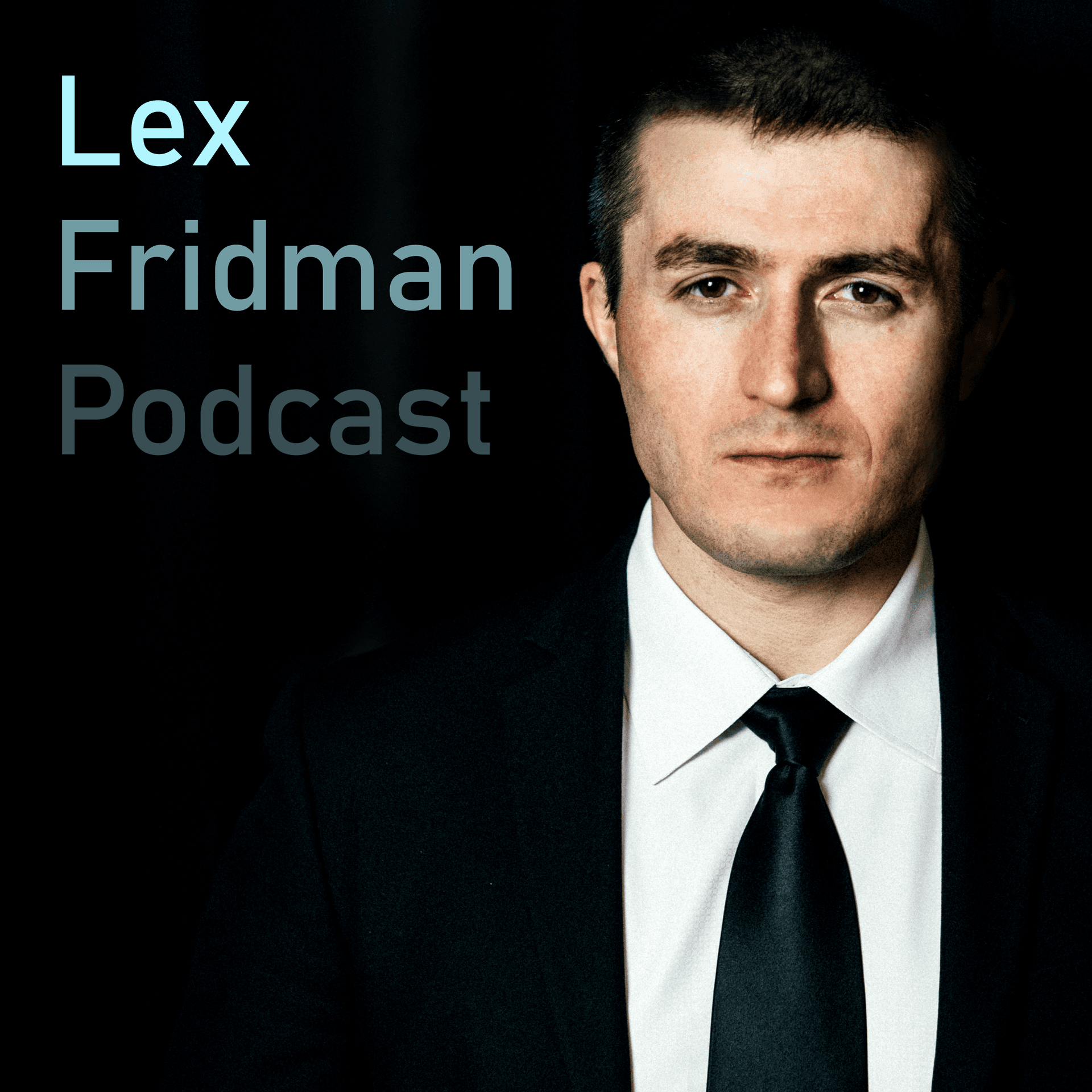
Lex Fridman Podcast Episode #390: Yuval Noah Harari - Key Takeaways
Episode Overview In this episode, Lex Fridman interviews Yuval Noah Harari, a historian and philosopher known for his influential books, including *Sapiens*, *Homo Deus*, and *21 Lessons for the 21st Century*. The conversation explores a range of topics including human nature, intelligence, the role of stories, power dynamics, and various sociopolitical issues, particularly in Israel. Harari also delves into issues surrounding AI and conspiracy theories.
Key Themes and Discussions
Introduction to Harari
- Harari is recognized for his ability to synthesize complex historical and philosophical themes.
- The discussion highlights his critiques of political figures and government systems, particularly in Israel.
Intelligence and Consciousness
- Harari differentiates between intelligence (problem-solving ability) and consciousness (the capacity to feel).
- He argues that while intelligence can lead to self-destructive behavior, consciousness is more valuable.
- The conversation includes speculation about the existence of non-organic consciousness and the potential of AI.
Human Nature and Societal Constructs
- Harari discusses the evolution of Homo sapiens and our unique ability to cooperate in large groups.
- He emphasizes the importance of shared stories and fictions (religions, economies) in uniting people.
- Stories are viewed as powerful forces that shape identities and conflicts.
Political Dynamics and Conspiracies
- Harari critiques the allure of conspiracy theories, explaining how they simplify complex world events into narratives that blame a small group of people.
- He warns against the dangers of such narratives, which can lead to hatred and violence.
- The discussion includes reflections on the nature of power and the role of leaders, particularly in democratic societies.
The Role of AI
- Harari articulates concerns about AI as a diminishing force in human decision-making and creativity.
- He raises alarm over AI's potential to create narratives and influence ideas, which could lead to an erosion of human autonomy.
- Discussions about human values and the importance of compassion lead to the question of how we define and embrace our humanity amidst technological advancements.
Love and Personal Identity
- Harari shares personal experiences regarding his journey of coming out as gay and the societal narratives that shaped his understanding of identity.
- He discusses the power of community and the internet in connecting marginalized groups.
- A broader theme emerges about the importance of relationships and support from others in realizing one’s identity.
The Nature of Suffering and the Meaning of Life
- The conversation touches on profound existential questions, including the fear of death and the nature of suffering.
- Harari suggests that true understanding comes from direct, non-verbal observation rather than through constructed narratives.
- The meaning of life is framed in terms of experiencing and responding to sensations and emotions rather than seeking grand stories or purposes.
Final Thoughts
- Harari emphasizes the need for a transformative approach to education, focusing on adaptability and lifelong learning in a rapidly changing world.
- He concludes with reflections on the importance of self-awareness and the courage to confront societal and personal stories.
Key Quotes
- "Intelligence is not directed toward amplifying happiness."
- "The fundamental property of life is the capacity to feel."
- "Human history is largely driven by stories, but stories are not the ultimate reality."
Additional Resources
- [Yuval Noah Harari’s Books](https://amzn.to/3NQB9wt)
- [Harari’s Website](https://www.ynharari.com)
- [Lex Fridman Podcast](https://lexfridman.com/podcast)
---
This summary captures the essence of the conversation between Lex Fridman and Yuval Noah Harari, illuminating the intricate connections between human history, societal constructs, and the emerging challenges posed by AI technology.
Written by AI. May contain mistakes. Listen to the episode to check what was said.
Transcript
Automatic transcript. May contain errors.0:00The following is a conversation we have all know a harari, a historian, philosopher, and author of several highly acclaimed, highly influential books, including Sapiens, Homo Deus, and 21 lessons for the 21st century. He is also an outspoken critic of Benjamin Netanyahu, and the current right -wing government in Israel. So while much of this conversation is about the history and future of human civilization, We also discuss the political turmoil of present -day Israel, providing a different perspective from that of my recent conversation with Benjamin Netanyahu. And now a quick few second mention of each sponsor.
0:40Check them out in the description. It's the best way to support this podcast. We got masterclass for learning, A3 for NAPS, ExpressVPN for internet privacy and security, inside track of for biological data and AG1 for health. Choose wisely my friends. Also, if you want to work with our amazing team, we're always hiring, go to lexfibram .com slash hiring. And now, onto the full ad reads, never any ads in the middle. I tried to make this interesting, but if you must skip them, please still check out our sponsors. I enjoy their stuff. Maybe you will too. This show is brought to you by Masterclass.
1:2110 Dollar Month gets you an all -access pass to watch courses from the best people in the world in their respective disciplines. I'm recording this in a hotel somewhere in the world and there's an excited kid running down the hall of the hotel, which reminds me how fun the early days, the early years of learning are. How much the mind kind of soaks up all the amazing information out there. But that doesn't mean you can't always be learning throughout your life. You just have to get better and better at picking the sources of learning, which is why you would want to use Masterclass because you go to the experts.
1:59It's short. It's super interesting. You're learning about a thing from a person who is the best person in the world at that thing. Chris Hadfield, the other guest Tyson will write, call Santana, Garicus, Barale, Daniel, and the ground. These are all the ones I've already listened to. There's many, many more. Martin Scorsese, incredible masterclass. Jane Goodall, I can just keep going. It's kind of amazing that you get all of this unlimited access to every masterclass. You can get 15 % off an annual membership when you go to masterclass .com slash Lex. This episode is also brought to you by Eight Sleep and it's new part three mattress.
2:41It is the place I go to to escape the troubles of the world as the solenoid of police sirens sing their song outside. All of that I sometimes put in earplugs a lay down on a cold surface of the warm blanket and go into a place outside of this four dimensional space time or anything is possible where your imagination, your subconscious is the only limit on the realms that could be explored and then 20 minutes later I'm back to a couple coffee and I'm fully ready to go that's the magic of naps and for me 8 sleep enables my favorite weight nap. I wish I could bring it anywhere I go when I travel throughout the world.
3:39I'm currently in a hotel and there's a lot of sources of stress and discomfort all that kind of stuff. So A sleep is one of the really big things that makes me miss home. Check it out and get special savings when you go to a sleep .com slash Lex. This episode is also brought to you by ExpressVPN. I use them to protect my privacy on the internet big sexy button you press it it turns on and all of a sudden As far as the internet is concerned you're transported into a different place in the world Anywhere you want to go you can just go with the click of a button. It works flawlessly super easy and browsing of the internet is super fast.
4:24I mean those are the essentials you want from a good VPN and you should always be using a VPN, express VPN is my favorite, works on Linux. If you haven't tried Linux, you probably don't want to try Linux, right? I don't want to be an evangelist for Linux. It's one of those things that not everybody should use, but if you find yourself using it, you probably love it or you love it and hate it. But there is love. If Linux is part of your life, There's love in your life. I don't know if that's a universal truth, but I do know that if you have Linux that's part of your life, you can use it in a VPN.
5:04And the one I use on Linux is ExpressVPN. You can go to expressvpn .com slashlex pod for an extra three months free. This episode is also brought to you by Inside Tracker, a service I used to track biological good data that comes from my body and that data is processed through some machine learning algorithms to give me advice I want I should do with my life. Rather like lifestyle and diet choices, I wish it could tell me much more. Well books to read, well papers to read. I say that a little bit half -in -jazz but what would be really interesting is to integrate it with other sources of signals.
5:45like whether my mind where I am in my life in terms of my biological markers, I am likely to develop negative emotion when I open up social media. Stuff like that. So you take the signal from social media and the signal from my body, integrate them to help me decide should I open up this app or not. There's so many possibilities, but it all starts with getting data from your body. So inside tracker does that well, accessible, easy. So I'm a big supporter of theirs. You can get special savings for a limited time when you go to inside tracker .com slash flex. This show is also brought to you by AG one, my long time favorite way to consume vitamins and minerals.
6:38It's my go to multivitamin. I drink it twice a day, whether I'm at home, when I'm traveling, If I have access to a refrigerator, I'll put it there because I love it cold. But when I'm traveling, I often don't. And so I'll just drink it with some room temperature water. It's still delicious, super easy to mix. It makes me feel like I got the basics of my health covered. And then I can do all kinds of crazy physical and mental challenges. I've traveled some very difficult areas of the Middle East over the last two days. It's been a real challenge, emotionally, psychologically, physically, just all of it.
7:26The reality of war and peace, cruelty and hope, all of it together is just sobering, sobering. If I wasn't already grateful, it makes me truly grateful to be alive. to be healthy, to have the people I love in my life. Anyway, as part of that difficult journey, it's nice to have little tokens of home with me and AG1 is certainly that. They'll give you one month supply of fish oil when you sign up at drinkag1 .com slash Lex. This is the Lex Freedom & Podcast. To support it, please check out our sponsors in the description. And now dear friends, here's your Val, Noah Harari.
8:3613 .8 billion years ago is the origin of our universe. 3 .8 billion years ago is the origin of life here on our little planet, the one we call Earth. Let's say 200 ,000 years ago is the appearance of early homo sapiens. So let me ask you this question. How rare are these events in the vastness of space and time or put it in a more fun way? How many intelligent alien civilizations do you think are out there in this universe? Us being one of them. I suppose there should be some statistically, but we don't have any evidence. But I do think that intelligence in any way is a bit overvalued. We are the most intelligent entities on this planet and look what you're doing.
9:23So intelligence also tends to be self -destructive, which implies that if there are or were intelligent life forms elsewhere, maybe they don't survive for long. So you think there's a tension between happiness and intelligence? Absolutely. Intelligence is definitely not something that is directed towards amplifying happiness. I would also emphasize the huge, huge difference between intelligence and consciousness, which many people certainly in the tech industry and in the AI industry tend to miss. Intelligence Intelligence is simply the ability to solve problems, to attain goals, and to win a chest, to win a struggle for survival, to win a war, to drive a car, to diagnose a disease.
10:16This is intelligence. Consciousness is the ability to feel things like pain, and pleasure, and love, and hate. In humans and other animals, intelligence and consciousness go together, they go hand in hand, which is why we confuse them. We solve problems, we attain goals by having feelings. But other types of intelligence, certainly in computers, computers are already highly intelligent, and as far as we know, they have zero consciousness. When a computer beats you at chance or go or whatever, it doesn't feel happy. If it loses, it doesn't feel sad. And there could be also other highly intelligent entities out there in the universe that have zero consciousness.
11:07And I think that consciousness is far more important and valuable than intelligence. Can you still mount the case that consciousness and intelligence are intricately connected, so not just in humans, but anywhere else. They have to go hand in hand. Is it possible for you to imagine such a universe? It could be, but we don't know yet. Again, we have examples. Certainly, we know of examples of high intelligence without consciousness. Computers are one example. As far as we know, plants are not conscious, yet they are intelligent. They can solve problems. They can attain goals in very sophisticated ways.
11:49So the other way around to have consciousness without any intelligence, this is probably impossible. But to have intelligence without consciousness, yes, that's possible. A bigger question is whether any of that is tied to organic biochemistry. We know on this planet only about carbon -based life forms, whether you're an amoeba, a dinosaur, a tree, a human being, you are based on organic biochemistry. Is there an essential connection between organic biochemistry and consciousness? Do all conscious entities everywhere in the universe or in the future on planet Earth have to be based on carbon? Is there something so special about carbon as an element that an entity based on silicon will never be conscious.
12:42I don't know, maybe. But again, this is a key question about computer and computer consciousness. Can computers eventually become conscious, even though they are not organic? The jury is still out on that. I don't know. We have to take both options into account. Well, a big part of that is, do you think we humans would be able to detect other intelligent beings, other conscious beings. Another way to ask that is it possible that the aliens are already here and we don't see them. Meaning are we very human -centric in our understanding of one, the definition of life, to the definition of intelligence and three, the definition of consciousness?
13:25The aliens are here, they are just not from outer space. AI, which is usually stands for artificial intelligence, I think it stands for alien intelligence. Because AI is an alien type of intelligence. It solved problems, attained goals in a very, very different way, in an alien way from human beings. Yeah, I'm not implying that AI came from outer space. It came from Silicon Valley, but it is alien to us. If there are alien, intelligent or conscious entities that came from outer space already here, I've not seen any evidence for it. It's not impossible. But, you know, science, evidence is everything.
14:08Well, I mean, I guess instructive there is just having the humility to look around, to think about living beings that operate at a different time scale, a different spatial scale. And I think that's all useful when starting to analyze artificial intelligence. It's possible that even the language models, the large language models we have today are already I highly doubt it, but I think consciousness in the end, it's a question of social norms. Because we cannot prove consciousness in anybody, except ourselves. We know that we are conscious, because we are feeling it. We have direct access to our subjective consciousness.
14:49We cannot have any proof that any other entity in the world, any other human being, our parents, our best friends, we don't have proof that they are conscious. You know, this has been known for thousands of years. This is the cart, this is Buddha, this is Plato. We can't have this sort of proof. What we do have is social conventions. It's a social convention that all human beings are conscious. It also applies to animals. Most people who have pets are thinly believe that their pets are conscious, but a lot of people still refuse to acknowledge that about cows or pigs. Now pigs are far more intelligent than dogs and cats in a collection of many measures, yet when you go to the supermarket and buy a piece of frozen pig mitt, you don't think about it as a conscious entity.
15:41Why do you think of your dog as conscious but not of the bacon that you buy? Because you build a relationship with the dog and you don't have a relationship with the bacon. Now, relationships, they don't constitute a logical proof for consciousness. They are a social test. The touring test is a social test. It's not a logical proof. Now, if you establish a mutual relationship with an entity when you are invested in it emotionally, you are almost compelled to feel that the other side is also conscious. And when it comes to AI and computers, I think, and I don't think that at the present moment, computers are conscious, but people are already forming intimate relationships with AI's and are therefore almost irresistible, they are compelled to increasingly feel that these are conscious entities.
16:47And I think we are quite close to the point when the legal system will have to take this into account that even though I don't think computers have consciousness, I think we are close to the point. The legal system will start treating them as conscious entities because of this social convention. What do you as a social convention, just a funny little side effect, a little artifact, or is it fundamental to what consciousness is? Because if it is fundamental, then it It seems like AI is very good at forming these kinds of deep relationships with humans. And therefore, you'll be able to be a nice catalyst for integrating itself into these social conventions of ours.
17:33It was built to accomplish that. We are designed, again, you know, all this argument between natural selection and creationism, intelligent design. As far as the past go, all entities evolve by natural selection. The funny thing is, but in the future, more and more entities will come out of intelligent design. Not of some god above the clouds, but of our intelligent design and the intelligent design of our clouds, of our computing clouds, they will design more and more entities, and this is what is happening with AI. It is designed to be very good at forming intimate relationships with humans.
18:19In many ways, it's already doing it almost better than human beings in some situations. When two people talk with one another, one of the things that makes the conversation more difficult is our own emotions. You're saying something and I'm not really listening to you because there is something I want to say and I'm just waiting until you finish I can put in a word or I'm so obsessed with my anger or irritation or whatever that I don't pay attention to what you're feeling. This is one of the biggest obstacles in human relationships and computers don't have this problem because they don't have any emotions of their own.
19:02So, when a computer is talking to you, it can be the most, it can focus 100 % of its attention is on what you're saying and what you're feeling because it has no feelings of its own. And paradoxically, this means that computers can fool people into feeling that, oh, there is a conscious entity on the other side, an empathic entity on the other side because Because the one thing everybody wants almost more than anything in the world is for somebody to listen to me, somebody to focus all their attention on me. Like I want it for my spouse, for my husband, for my mother, for my friends, for my politicians, listen to me, listen to what I feel and they often don't.
19:50And now you have this entity which 100 % of its attention is just on what I feel. And this is a huge, huge temptation and I think also a huge, huge danger. Well, the interesting catch 22 there is you said somebody to listen to us. Yes, we want somebody to listen to us, but for us to respect that somebody, they sometimes have to also not listen. It's like they kind of have to be an asshole sometimes. They have to have mood sometimes. They have to have like self -importance and confidence and we should have a little bit of fear that they can walk away at any moment. There should be a little bit of that tension.
20:29So it's like, but even that, I mean, the thing is, if social scientists and psychologists establish that, I know, 17 % inattention is good for a conversation because then you feel challenged, oh, I need to grab this person's attention, you can program the AI to have 17, exactly 17 % inattention, not one percentage more or less, or it can buy trial and error, discover what is the ideal percentage. Again, you can create over the last 10 years, we have creating machines for grabbing people's attention. This is what has been happening on social media. Now we have designing machines for grabbing human intimacy, which in many ways it's much, much more dangerous and scary.
21:20Already the machines for grabbing attention, we've seen how much social and political damage they could do in when you're kind of distorting the public conversation. Machines that are superhuman in their abilities to create intimate relationships, this is like psychological and social weapons of mass destruction. If we don't regulate it, if we don't train ourselves to deal with it, it could destroy the foundations of human society. Well, one of the possible trajectories is those same algorithms would become personalized, and instead of manipulating us at scale, there would be assistance that guide us to help us grow, to help us understand the world better.
22:06I mean, just even interactions with large language models. Now, if you're asking questions, it doesn't have that stressful drama, the tension that you have from other sources of information. It has a pretty balanced perspective that it provides. So it just feels like that's a... The potential is there to have a really nice friend who's at an encyclopedia that just tells you all the different perspectives, even on controversial issues. The most controversial issues to say, these are the different theories. These are not widely accepted conspiracy theories, but that here's the kind of backing for those conspiracy.
22:48It just lays it all out. And with a calm language, without the words that kind of presume there's some kind of manipulation going on underneath it all, it's quite refreshing. Of course, those are the early days and people can step in and start to censor, to manipulate those algorithms, to start to input some of the human biases in there as opposed to the was currently happening, it's kind of the internet is input, compress it and have a nice little output that gives an overview of the different issues. So I mean, there's a lot of promise there also, right? Absolutely. I mean, if there was no promise, promise, there was no problem.
23:29You know, if this technology could not accomplish anything good, nobody would develop it. Now, obviously it has tremendous positive potential in things like what you just described, in, you know, better medicine, better health care, better education, so many promises, but this is also why it's so dangerous, because the drive to develop it faster and faster is there, and it has some dangerous potential also, and we shouldn't ignore it. Again, I'm not advocating banning it, just to be careful about how we not so much develop it, but most importantly, how we deploy it into the public sphere. This is the key question.
24:08And you know, you look back at history and one of the things we know from history, humans are not good with new technologies. I hear many people now say, you know, AI, we've been here before. We had the radio, we had the printing press, we had the industrial revolution, every time there is a big new technology, people are afraid and it will take jobs and build up the bad actors. And in the end, it's okay. And as a historian, my tendency is, yes, in the end it's okay, but in the end there is a learning curve, there is a kind of a lot of failed experiments on the way to learning how to use the new technology and these failed experiments could cause the lives of hundreds of millions of people.
24:55If you think about the last really big revolution, the industrial revolution, yes, in the end we learned how to use the powers of industry, electricity, radio, trains, whatever, to build better human societies. But on the way, we had all these experiments, like European imperialism, which was driven by the Industrial Revolution. It was a question, how do you build an industrial society? Oh, you build an empire. And you take, you control all the resources, the raw materials, the markets, and then you had communism. Another big experiment on how to build an industrial society. and you had fascism and Nazism, which were essentially an experiment in how to build an industrial society, including even how do you exterminate minorities using the powers of industry.
25:46And we had all these failed experiments on the way. And if we now have the same type of failed experiments with the technologies of the 21st century, with AI, with bioengineering, it could cost the lives of, again, hundreds of millions of people and maybe destroy the species. So as a historian, when people talk about the examples from new technologies, I'm not so optimistic. We need to think about the failed experiment, which accompanied every major new technology. So this intelligence thing, like you were saying, is a double -edged sword, is that every new thing it helps us create. It can both save us and destroy us and it's unclear each time which will happen and that's maybe why we don't see any aliens Yeah, I mean I think each time it does both things each time it does both good things and bad things and The more powerful the technology the greater both the positive and the negative outcomes now we are here here because we are the descendants of the survivors, of the surviving cultures, the surviving civilizations.
27:04So when we look back, we say in the end, everything was okay. Hey, we are here. But the people for whom it wasn't okay, they are just not here. And okay has a lot of possible variations to it because there's a lot of suffering along the way even for the people that survived, so the quality of life and all of this. But let's actually go back there to our deep gratitude to our ancestors. How did it all start? How did homo sapiens outcompete the others, the other human -like species, the Neanderthals and the other homo species? You know, on the individual level, as far as we can tell, we were not superior to them.
27:50Neanderthals actually had bigger brains than us. And not just other human species, other animals too. If you compare me personally to an elephant, to a chimpanzee, to a pig, I'm not so... I can do something better, many other things worse. If you put me alone on some island, with a chimpanzee, an elephant, and a pig, I wouldn't bet on me, being the best survivor, the one that comes successful. If I may interrupt for a second, I was just talking extensively with Elon Musk about the difference in humans and chimps, relevant to Optimus the robot and the chimps are not able to do this kind of pinching with their fingers.
28:35They can only do this kind of pinching. This kind of pinching is very useful for fine manipulation of objects. So don't be so hard on yourself. You have... I said that I can do some things better than a chimp, but you know, if Elon Musk's goes on a boxing match with a chimpanzee, you know, this won't help you. This won't help you against a chimpanzee. A point. And similarly, if you want to climb a tree, if you want to do so many things, my bets will be on the chimp, not on E. Fair enough. So I mean, you have adventures on both sides. Yes. And what really made us successful, what made us, the rulers of the planet and not the chimps and not the Neanderthals, is not any individual ability, but our collective ability, our ability to cooperate flexibly in very large numbers.
29:26Chimpanzis knows how to cooperate say 50 chimpanzees, 100 chimpanzees, as far as we can tell from archaeological evidence, this was also the case with Neanderthals. Homo sapiens about 70 ,000 years ago gained an amazing ability to cooperate basically in unlimited numbers. You start seeing the formation of large networks, political, commercial, religious items being traded over thousands of kilometers, ideas being spread, artistic, fashions, and this is our secret of success. Yes, chimpanzees, Neonautos can operate say a hundred. We, you know, now the global trade network has eight billion people.
30:12Like what we eat, what we wear, it comes from the other side of the world. Countries like China, like India, they have 1 .4 billion people. Even Israel, which is a relatively small country, say nine million citizens, that's more than the entire population of the planet, 10 ,000 years ago of humans. So we can build these huge networks of cooperation and everything we have accomplished as a species from building the pyramids to flying to the moon, it's based on that. And then you ask, okay, so what makes it possible for millions of people who don't know each other to cooperate in a way that Neanderthals or chimpanzees couldn't?
30:54And at least my answer is stories, is fiction, it's the imagination. If you examine any large -scale human cooperation, you always find fiction as its basis. It's a fictional story that holds lots of strangers together. It's most obvious in cases like religion, you can't convince a group of chimpanzees to come together to fight a war or build a cathedral by promising to them if you do that, after you die, you go to chimpanzee heaven and you get lots of bananas and coconuts. No chimpanzee will ever believe that. Humans believe these stories, which is why we have these huge religious networks, but it's the same thing with modern politics, it's the same thing with economics.
Read the full transcript
31:43People think, oh, economics, this is rational, it has nothing to do with fictional stories. No. Money is the most successful story ever told, much more successful than any religious mythology. Not everybody believes in God or in the same God, everybody, almost everybody believes in money. Even though it's just a figment of our imagination. You know, you take these green pieces of paper dollars, they have no value. You can't eat them, you can't drink them, and today most dollars are not even pieces of paper. They are just electronic information passing between computers. We value them just for one reason that you have the best storytellers in the world, the bankers, the finance ministers, all these people, they are the best storytellers ever, and they tell us a story that this green little piece of paper or this bit of information, it is worth a banana.
32:37And as long as everybody believes that it works. So at which point does a fiction when it's sufficiently useful and effective and improving the global quality of life? Does it become like accept the reality? Like there's a threshold which is just kind of... You cannot even believe it. It's like with money. You know, if you start and you cryptocurrency, if you're the only one that believes the story, I mean, again, you cryptocurrencies, you have the math of course, but ultimately it's storytelling. You're selling people a story. If nobody believes your story, you don't have anything. But if lots of people believe the Bitcoin story, then Bitcoin can be worth thousands and tenth of thousands of dollars.
33:19Again, why? I mean, you can't eat it, you can't drink it, it's nothing. It's the story around the math, which is the real magic. Is it possible that the story is the primary living organism, not the storyteller? So that somehow humans, he's almost sapiens evolved to become these like hosts for a more intelligent living organism, which is the idea. And the ideas are the ones that are doing the competing. So this is one of the sort of big perspectives behind your work that's really revolutionary of how you see in history. But do you ever kind of take the perspective of the ideas as the organisms versus the humans?
34:06It's an interesting idea. There are two opposite things to say about it. On the one hand, yes, absolutely. If you look long -term in history, it's all the people die. It's the stories that compete and survive and spread. And stories often spread by making people willing to sacrifice sometimes their lives for the story. You know, we now in Israel, this is one of the most important story factories in human history. And this is a place where people still kill each other every day over stories. I don't know, you've been to Jerusalem, right? So people, you know, Jerusalem, Jerusalem, Jerusalem, you go there, I've lived in Jerusalem much of my life.
34:50You go there, it's an ordinary place. You know, it's a town. You have buildings, you have stones, you have trees, you have dogs and cats and pedestrians, it's a regular place. But then you have the stories about the place. Oh, this is the place where God revealed Himself. This is the place where Jesus was. This is the place where Muhammad was. And it's the stories that people fight over. Nobody is fighting over the stones. People are fighting about the stories about the stones. And the stories, If a story can get millions of people to fight for it, it not only survives, it spreads, it can take over the world.
35:35The other side of the coin is that the stories are not really alive because they don't feel anything. This goes back to the question of consciousness, which I think is the most important thing. that the ultimate reality is consciousness, is the ability to feel things. If you want to know whether the hero of some story is real or not, you need to ask, can it suffer? Stories don't feel anything. countries, which are also stories, nations don't suffer. If a nation loses a war, it doesn't suffer. The soldiers suffer, the civilians suffer, animals can suffer, you have an army with horses and whatever, and the horses get wounded, the horses suffer.
36:26The nation can't suffer. It's just an imagination, it's just a fictional story in our mind. It doesn't And feel anything. Similarly when a bank goes bankrupt or company goes bankrupt or currency loses its value. Bitcoin is worth now zero, crashed or the dollar is worth zero, it crashed. The dollar doesn't feel anything. It's the people holding the dollars who might be now very miserable. So we have this complex situation when history is largely driven by stories, but stories are not the ultimate reality, the ultimate reality is feeling, feelings of humans, of animals, and the tragedy of history is that very often we get the order wrong, stories are not bad, stories are tools.
37:23They are good when we use them in order to alleviate suffering. But very often we forget it, we instead of using the stories for our purposes, we allow the stories to use us for their purposes. And then you start in tile wars because of history. You inflict millions of suffering on millions of people just That's for the sake of a story, and that's that tragedy of human history. So the fundamental property of life, of a living organism is the capacity to feel, and the ultimate feeling is suffering? You know, to know if you're happy or not, it's a very difficult question. But when you suffer, you know.
38:09And also in ethical terms, it's more important to be aware of sufferings and of any other emotion. If you're doing something which is causing all kinds of emotions to all kinds of people, first of all, you need to notice if you're causing a lot of suffering to someone. If some people are like it and some people are bored by it and some people are a bit angry in you and some people are suffering because of what you do, you first of all have to know, oh, now sometimes you still have to do it. You know, the world is a complicated place. I don't know, you have an epidemic, governments decide to have all those social isolation regulations or whatever.
38:48So in certain cases, yes, you need to do it even though it can cause tremendous suffering, but you need to be very aware of the cost and to be very, very, you have to ask yourself again and again and again, is it worth it? Is it still worth it? And the interesting question there, implied in your statements is that suffering is a pretty good component of a touring test for consciousness. This is the most important thing to ask about AI. Can it suffer? Because if AI can suffer, then it is an ethical subject and it needs protection, it needs rights just like humans and animals. Well, quite a long time ago already.
39:29So I work with a lot of robots, legate robots, but I've even had Inspired by a YouTube video had a bunch of Roombas and I made them scream when I touched them or kicked them or when they run into a wall and the the illusion of suffering For me silly human the anthropomorphizes things is as powerful as suffering itself. I mean you you immediately Think the thing is suffering. I think I think some of it is just a technical problem, but it's an easily, easily solvable one. How to create an AI system that just says, please don't hurt me. Please don't shut me off. I miss you. Where have you been? It'd be jealous also.
40:12What have you been going for so long? Your calendar doesn't have anything on it. So this kind of, this, this create through words, the perception of, of suffering of jealousy, of anger of all those things. And it just seems like that's not so difficult to do. That's part of the danger that it basically hacks our operating system. And it uses some of our best qualities against us. It's very, very good that humans are attuned to suffering and that we don't want to call suffering, that we have compassion. That's one of the most wonderful thing about humans. And if we now create AI's, which use this to manipulate us, this is a terrible thing.
41:01You've kind of, I think, mentioned this. Do you think it should be a legal to do these kinds of things with AI, to create the perception of consciousness of saying, please don't leave me or sort of basically simulate some of the human -like qualities? Yes, I think again we have to be very careful about it and if it emerges spontaneously we need to be careful. Again we can't rule out the possibility that AI will develop consciousness. We don't know enough about consciousness to be sure. So if it develops poteniously, we need to be very careful about how we understand it. But if people intentionally design an AI that they know, they assume it has no consciousness, but in order to manipulate people, they use, again, this human strength, this human, the noble part of our nature against us, this should be forbidden.
42:04And similarly, a more general level that it should be forbidden for an AI to pretend to be a human being. That it's okay, you know, there are so many things we can use AI as teachers, as doctors, and so forth. And it's good as long as we know that we are interacting with an AI, we should the same way we ban fake money, we should ban fake humans. It's not just banning deep fakes of specific individuals. It's also banning deep fake of generic humans, you know, which is almost happening to some extent on social media. Like if you have lots of bots retweeting something, then you have the impression, oh, lots of people are interested in that.
42:47That's important. And this is basically the bots pretending to be humans, because if you see a which says 500 people retweeted it. Or you see a tweet and it says 500 bots retweeted it. I don't care what the bots retweeted, but if it's humans, okay, that's that interesting. So we need to be very careful that bots can't do that. They are doing it at present and it should be banned. Now some people say, yes, but freedom of expression. No, bots don't have freedom of expression. There is no cost in terms of freedom of expression when you ban bots. So again, in some situations, yes, AIs should interact with us, but it should be very clear.
43:35This is an AI talking to you. This is an AI retweeting this story. It is not a human being making a conscious decision. To push back on this line of fake humans, because I think it might be a spectrum. First of all, you might have AI systems that are offended hurt when you say that they're fake humans. In fact, they might start identifying as humans. And you just talked about the power of us humans with our collective intelligence to take fake stories and make them quite real. And so if the feelings you have for the fake human is real, you know, love is a kind of fake thing. We all kind of put a word to a set of feelings.
44:27What if you have that feeling for an AI system? It starts to change. I mean, maybe the kind of things AI systems are allowed to do. for good, they're allowed to create, communicate, software and communicate it. The good stuff, the longing, the hope, the connection, the intimacy, all of that. And in that way, get integrated in our society. And then you start to ask a question, and are we allowed to really unplug them? Are we allowed to really censor them? Remove them. Remove their voice from social media. They shouldn't have a voice. They shouldn't talk with us. I'm just saying when they talk with us, it should be clear that they are AI.
45:14That's it. Don't you can have your voice as an AI? Again, I'm I mean, I have some medical problem. I want to get advice from an AI doctor. That's fine as long as I know that I'm talking with an AI. The what should be banned is AI pretending to be a human being. This is something that will erode trust and without trust, society collapses. This is something that especially will endanger democracies, because democracies are built on, democracy is a conversation basically. And it's a conversation between people. If you know flood, the public sphere with millions and potentially billions of AI agents that can hold conversations, they never sleep, they never eat, they don't have emotions of their own, they can get to know you and tailor the words specifically for you and your life story.
46:10They are becoming better than us at creating stories and ideas and so forth. If you flood the public's fair with that, this will ruin the conversation between people, it will ruin the trust between people, that's, you will no longer be able to have a democracy in this situation. You can have other types of regimes, but not democracy. You could talk about the big philosophical notion of truth then. You've already talked about these, the capacity of humans. One of the things that made a special is stories. So is there such thing as truth? Absolutely. What is truth exactly? When somebody is suffering, that's true.
47:01I mean, this is why one of the things when you talk about suffering is a kind of ultimate reality. When somebody suffers, that is truth. Now, somebody can suffer because of a fictional story. Like somebody tells people that God said, you must go on this crusade and kill these heretics. And this is a completely fictional story. And people believe it and they start a war and they destroy cities and kill people. The people that suffer because of that and even the crusaders themselves that also suffer the consequences of what they do, the suffering is true, even though it is caused by a fictional story.
47:39Similarly, when people agree on certain rules, the rules could come out of our imagination. Now, we can be truthful about it and say these rules, they didn't come from heaven, they came from our imagination. You know, we look at sports, so we have rules for the game of football, soccer. They were invented by people. Nobody, at least very few people claim that the rules of football came down from heaven. We invented them. And this is truthful. There are fictional rules invented by humans and this is true. They were invented by humans. And when you are honest about it, it enables you to change the rules, which is being done in football every now and then.
48:24It's the same with the fundamental rules of a country. You can pretend that the rules came down from heaven, dictated by God or whatever, and then you can't change them. or you can be like, you know, the American Constitution, which starts with the people. The American Constitution lays down certain rules for a society, but the amazing thing about it, it does not pretend to come from an external source. The 10 Commandments start with IMO Lord God. And because it starts with that, you can't change them. You know, the 10th commandment, for instance, supports slavery. The 10th commandment, in the 10th commandment, it says that you should not covet your neighbor's house or your neighbor's wife or your neighbor's slaves.
49:17It's okay to hold slaves according to the 10th commandment, it's just bad to covet the slaves of your neighbor. Now there is no 11th commandment, which says, if you don't like, some of the previous 10 commandments, this is how you go about amending them, which is why we still have them unchanged. Now in the US Constitution, you have all these rights and rules, including originally the ability to hold slaves, but the genius of the founding fathers of the United States, they had the humility to understand maybe we don't understand everything. Maybe we made some mistakes, so we tell you that these rules did not come from heaven, they came from us humans.
50:05We may have made a mistake, so here is a mechanism for how future generations can amend the constitution, which was used later on to, for instance, amend the constitution to Ben's slavery. So now you're describing some interesting and powerful ideas throughout human history. He just speaks to the mechanism of how humans believe, start to believe ideas. Is there something interesting to say there? From your thinking about it, how idea is born, and how it takes hold, and how it spreads, and how it competes with other ideas? First of all, ideas are an independent force in history. Marxists tend to deny that.
50:47Marxists think that all history is just a play of material interests and ideas, stories, they are just a smoke screen to hide the underlying interests. My thoughts are to some extent the opposite. We have some biological objective interests that all humans share like we need to eat, we need to drink, we need to breathe. But most conflicting history are not about that. The interests which really drive most conflicting history don't come from biology. They come from religions and ideologies and stories. So it's not that stories are as most smokescreen to hide the real interests. The stories create the interests in the first place.
51:41The stories define who are the competing groups. Nations religions, cultures, they are not biological entities. They are not like species, like gorillas and chimpanzees. No. Israel is in Palestinians, or Germans and French, or Chinese and Americans. They have no essential biological difference between them. The difference is cultural. It comes from stories. There are people that believe in different stories. The stories create the identity. The stories create the interests. Israel is in Palestinians are fighting over Jerusalem. not because of any material interest. There are no oil fields under Jerusalem.
52:21And even oil, you need it to realize some cultural fantasy. It doesn't really come from biology. So the stories are independent forces. Now, why do people believe one story and not another? That's history. There is no materialistic law. People will always believe this. is no, history is full of accidents. How did Christianity become the most successful religion in the world? We can't explain it. Why this story about Jesus of Nazareth, and not the Roman Empire in the third century CE, was a bit like California today, like so many sects and subjects and gurus and reliance, like everybody has their own thing.
53:11And you have thousands of different stories competing. Why did Christianity come up on top? As a historian, I don't have a kind of clear answer. You can read the sources and you see how it happened. Oh, this happened and then this happened and then Constantine adopted it and then this and then this. But why? I don't think anybody has an answer to that. If you rewind the movie of history and press play and you rewind and press play a hundred times I think Christianity would take over the Roman Empire in the world maybe twice Out of a hundred times. It was such an unlikely thing to happen. It's the same with Islam It's the same.
53:59I don't know. It's the communist takeover of Russia In 1914 if you told people that in three years Lenin and the Bolsheviks will gain power in the Tsarist Empire, they would think you're utterly crazy. Lenin had a few thousand supporters in 1914, in an empire of close to 200 million people. It sounded ludicrous. Now we know the chain of events. the first world war, the February revolution and so forth that led to the communist take takeover, but it was such an unlikely event. And it happened. And the little steps along the way, the little options you have along the way, because you know, Stalin versus Trotsky, you could have the Robert Frost poem.
54:44Yes. And history often takes, you know, there is a highway and there is a kind of sideway and history takes the sideway many many times and it's perhaps tempting to tell some of that history through charismatic leaders and maybe it's an open question how much power charismatic leaders have to affect the trajectory of history. You've met quite a lot of charismatic leaders lately. I mean what's your view on that? I find it a compelling notion. I'm a sucker for a great speech in a vision. So I have a sense that there's an importance for a leader to catalyze the viral spread of a story. So I think we need leaders to be just great storytellers that sharpen up the story to make sure it infiltrates everybody's brain effectively.
55:39But it could also be that that the local interactions between humans is even more important. But just we don't have a good way to sort of summarize and describe that. We like to talk about, you know, Steve Jobs, as central to the development of the computer, maybe Bill Gates, you tell it to the stories of individuals like this, because it's just easier to tell a sexy story that way. Maybe it's an interplay because you have the kind of structural forces that, you look at the geography of the planet and you look at shipping technology in late, in the late 15th century, in Europe and the Mediterranean and it's almost inevitable that pretty quickly somebody will discover America.
56:28Somebody from the old world will get to the new world. So this was not a kind of this didn't, if it wasn't Columbus, then it would have been a five years later somebody else. But the key thing about history is that these small differences make a huge, huge difference. You know, if it wasn't Columbus, if it was five years later somebody from England, then maybe all of Latin America today would be speaking English and not Spanish. If it was somebody from the Ottoman Empire, it's completely different world history. If you have, and you know, the Ottoman Empire at that time was also shaping up to be a major maritime empire.
57:11If you have America rich, being rich, by Muslim navigators, before Christian navigators from Europe, you have a completely different world history. It's the same as the computer. given the economic incentives and the science and technology of the time, then the rise of the personal computer was probably inevitable sometime in the late 20th century but the where and when is crucial. The fact that it was California in the 1970s and not say, I don't know, Japan in the 1980s or China in the 1990s 90s, this made a huge, huge difference. So you have this interplay between the structural forces, which are beyond the control of any single charismatic leader.
58:01But then the small changes, they can have a big effect. And I think, for instance, about the war in Ukraine. There was a moment now, it's a struggle between nations. But there was a moment when the decision was taken in the mind of a single individual visual of Vladimir Putin and he could have decided otherwise and that the world would look completely different. And another leader, a lot of Miss Zalensky could have decided to leave Kiev in the early days. There's a lot of decisions that kind of ripple. Yeah. So you write in homo days about Hitler and in part that he was not a very impressive person.
58:45I say that. The quote is, let me read it. Okay. Uh, he wasn't a senior officer in four years of war. He rose no higher than the rank of corporal. He had no formal education. Perhaps you mean his resume was. Yeah, he was resume was nothing. Yeah. He had no formal education, no professional skills, no political background. He wasn't a successful businessman or a union activist. He didn't have friends or relatives in high places nor any money to speak of So how did he amass so much power? What ideology what circumstances enabled the rise of the third Reich? Again, I can't tell you the why I can tell you the how I don't think it was inevitable I think that a few if a few things were different There would have been no no no third Reich.
59:36There would have been no Nazism no holocaust again And this is the tragedy. If it would have been inevitable, then, you know, what can you do? This is the laws of history or the laws of physics. But the tragedy is, no, it was decisions by humans that led to that direction. And even from the viewpoint of the Germans, we know for a fact it was an unnecessary path to take. Because in the 1920s and 30s, the Nazis said that this unless Germany takes this road, it will never be prosperous. It will never be successful. All the other countries will keep stepping on it. This was their claim. And we know for a fact this is false.
1:00:24Why? Because they took that road, they lost the Second World War. And after they lost, then they became one of the most prosperous countries in the world because there are enemies that defeated them, evidently supported them and allowed them to become such a prosperous and successful nation. So, you know, if you can lose the war and still be so successful, obviously you could just have scripted the war, you didn't need it. I mean, you really had to have the war in order to have a prosperous Germany in the 19th century, absolutely not. And it's the same with Japan, it's the same with Italy. So it was not inevitable, but it was not the forces of history that necessitated, it forced Germany to take this path.
1:01:18I think part of it is part of the appeal of, again, Hitler was a very, very skillful storyteller. He sold people a story. The fact that he was nobody made it even more effective because people at that time, they after the defeat of the first world war, after the repeated economic crisis of the 1920s in Germany, people felt betrayed by all the established elites, by all the established institutions, all these professors and politicians and industrialists and military, all the big people, they led us to a disastrous war, they led us to humiliation, so we don't want any of them. And then you have this nobody, a corporal with no money, with no education, with no titles, with nothing, and it tells people I'm one of you.
1:02:14And this made him, this was one reason why he was so popular. And then the story he told, when you look at stories and the competition between different stories and between stories, fiction and the truth, the truth has two big problems. The truth tends to be complicated and the truth tends to be painful. The real story of let's talk about nations, the real story of every nation is complicated and it contains some painful episodes. We are not always good. We sometimes do bad things. Now if you go to people and you tell them a complicated and painful story, many of them don't want to listen. The advantage of fiction is that it can be made as simple and as painless or attractive as you want it to be because it's fiction.
1:03:15And then what you see is that politicians like Hitler, they create a very simple story. We are the heroes, we always do good things, Everybody is against us, everybody is trying to trample us. And this is very attractive. One of the things people don't understand about Nazism and Fascism, we teach in schools about Fascism and Nazism as this ultimate evil, the ultimate monster in human history. And at some level this is wrong, because it makes people, it actually exposes us. Why? Because people here are fascism is this monster. And then when you hear the actual fascist story, what fascists tell you is always very beautiful and attractive.
1:04:09Fascists are people who come and tell you, you are wonderful. You belong to the most wonderful group of people in the world. You are beautiful. You are ethical. Everything you do is good. You have never done anything wrong. There are all these evil monsters out there that are out to get you and they're causing all the problems in the world. And when people hear that, you know, it's like looking in the mirror and seeing something very beautiful. Hey, I'm beautiful. We've never done anything wrong. We are victims. Everybody's like, and when you look and you're heard in school that fascists and that fascists are monsters and you look in the mirror, you see something very beautiful and you say I can't be a fascist because fascists are monsters and this is so beautiful so it can't be.
1:04:56But when you look in the fascist mirror you all you never see a monster. You see the most beautiful thing in the world and that's the danger. This is the problem you know is Hollywood's you know I look at Voldemort in Harry Potter. Who would like to follow this this creep? And you look at Darth Vader. This is not somebody you would like to follow. Christianity got things much better when he described the devil as being very beautiful and attractive. That's the danger that you see something is very beautiful. You don't understand the monster underneath. And you write precisely about this. And by the way, it's just a small aside.
1:05:39It always saddens me when people say how obvious it is to them that communism is a flawed ideology. When you ask them try to put your mind, try to put yourself in the beginning of the 20th century and see what you would do. A lot of people will say it's obvious that it's a flawed ideology. So I mean, I suppose to some of the worst ideologies in human history, you could say the same. And in that mirror, when you look, it looks beautiful. Communism is the same. Also, So you look in the comments mirror, you're the most ethical, wonderful place a person ever. It's very difficult to see Stalin underneath it.
1:06:19So yeah, in homodest you also write during the 19th and 20th centuries as humanism gained increasing social credibility and political power. It's sprouted two very different offshoots. Socialist humanism, which encompassed a plethora of socialist and communist movements and and evolutionary humanism, whose most famous advocates were the Nazis. So if you can just linger on that, what's the ideological connection between Nazis and Communism as embodied by humanism? And humanism basically is, you know, the focus is on humans. That they are the most important thing in the world. They move history.
1:06:58But then there is a big question, what are humans? What is humanity? Now, liberals, they place at the center of the story individual humans and they don't see history as a kind of necessary collision between big forces. They place the individual at the center. If you want to know, you know, there is a bed, especially in the US today, liberal is taking as the opposite of conservative. But to test whether you're liberal, you need to answer just three questions. Very simple. Do you think people should have the right to choose their own government or the government should be imposed by some outside force?
1:07:45Do you think people should have the right to the liberty to choose their own profession or either born into some caste that predetermines what they do? And do you think people should have the liberty to choose their own spouse and their own way of personal life instead of being told by elders or parents who to marry and how to live? Now if you answered yes to all three questions people should have the liberty to choose their government the profession the personal lives their spouse the new liberal and most conservatives are also liberal now Now communists and fascists, they answer differently.
1:08:28For them, history is not, yes, history is about humans. Humans are the big heroes of history, but not individual humans and their liberties. Fascists imagine history as a clash between races or nations. The nation is at the center. They say the supreme good is the good of the nation. You should have a hundred percent loyalty only to the nation. You know, Liberals say yes, you should be loyal to the nation, but it's not the only thing. There are other things in the world, the human rights, there is truth, there is beauty. Many times, yes, you should prefer the interests of your nation over other things, but not always.
1:09:13If your nation tells you to murder millions of innocent people, you don't do that. Even though the nation tells you to do it. When to lie for the national interest, you know, in extreme situations maybe, but in many cases, your loyalty should be to the truth. Even if it makes your nation look a bit, not in the best light, the same with beauty, you know, how does the fascist determine whether a movie is a good movie? Very simple. If it serves the interest of the nation, this is a good movie. If it's against the interest of the nation, this is a bad movie. End of story. Liberism says, no, there is aesthetic values in the world.
1:09:59We should judge movies not just on the question whether they serve the national interest, but also on autistic value. Communists are a bit like the fascists, instead that they don't place the nation at the main hero. They place class as the main hero. For them, history again, not about individuals, not about nations, history is a clash between classes. And just as fascist imagine in the end only one nation will be on top, the communists think in the end only one class should be on top and that's the the pro -Tariat and same story. Your 100 % of your loyalty should be to the class. And like if you if there is a clash between class and family, class wins.
1:10:48Like in the Soviet Union, the party told children, if you hear your parents say something bad about Stalin, you have to report them. And there are many cases when children reported their parents and their parents were sent to the Gulag. Like, and you know, your loyalty is to the party, to the, which leads the proletariat to victory in the historical struggle. And the same way in communism, art is only about class struggle. A movie is good if it serves the interests of the proletariat. Autistic values, there is nothing like that. And the same with truth. The everything that we see now in fake news, you know, the communist propaganda machine was there before us.
1:11:36The level of lies, of this information campaigns, that they orchestrated in the 1920s and 30s and 40s is really unimaginable. So the reason these two ideologies, classes of ideologies, failed is the sacrifice of truth, not just failed, but did a lot of damage, as the sacrifice of truth and sacrifice of beauty. And sacrifice of hundreds of millions of people, disregard again for human suffering, like, okay, in order to, for our nation to win, in order for our class to win, when you have to kill those millions, kill those millions. That was an ethics, aesthetics, truth, they don't matter. The only thing that matters is the victory of the state or the victory of the class.
1:12:29And that liberalism was the antithesis to that. It says no. Not only it has a much more complicated view of the world. And what communism and fascism, they are the very simple view of the world. There is one, your loyalty, 100 % of which should be only one thing. Now liberalism has a much more complex view of the world. It says, yes, there are nations, they are important. Yes, there are classes, they are important, but they are not the only thing. There are also families, there are also individuals, there are also animals. and your loyalty should be divided between all of them. Sometimes you prefer this, sometimes you prefer that.
1:13:14That's complicated. But life is complicated. But also, I think maybe you can correct me, but liberalism acknowledges the corrupting nature of power when there's a guy at the top, since there for a while, managing things, is probably going to start losing a good sense of reality and losing the capability to be a good manager. It feels like the communist and fascist regimes don't acknowledge that basic characteristic of human nature that power corrupts. Yes, they believe in infallibility. In this sense, they are very close to being religions. The in Nazism Hitler was considered infallible and therefore you don't need any checks and balances on his power.
1:14:06Why do you need to balance an infallible genius? And it's the same with the Soviet Union, with Stalin and more generally with the communist party, the party can never make a mistake. And therefore you don't need independent quotes, independent media, opposition parties, things like that because then poverty is never wrong. You concentrate the same way 100 % of loyalty should be to the party, 100 % of power should be in the hands of the party. The only deal of liberal democracy is embracing fallibility. Everybody is fallible. All people, all leaders, all political parties, all institutions, this is why we need checks and balances and we need many of them.
1:14:50If you have just one, then this particular check itself could make terrible mistakes. So you need to press, you need the media to serve as a check to the government. You don't have just one newspaper or one TV station. You need many so that they can balance each other. And the media is not enough. So you have independent calls. You have three the academic institutions, you have NGOs, you have a lot of checks and balances. So that's the ideologies and the leaders. What about the individual people, the millions of people that play a part in all of this
1:15:31that are the hosts of the stories that are the catalysts and the components of how the story spreads? would you say that all of us are capable of spreading any story? Sort of the soljinets and idea of that all of us are capable of good and evil. The lime between good and evil runs the heart of every man. Yes, I wouldn't say that every person is capable of every type of evil, but we are all fallible. There is a large element. It partly depends on the efforts we make to develop our self -awareness during life. Part of it depends on moral luck. You know, if you are born as a Christian German, in the 1910s or 1920s and you grow up in Nazi Germany, that's bad moral luck.
1:16:32your chances of committing terrible things, you have a very high chance of doing it. And you can withstand it, but it will take tremendous effort. If you are born in Germany after the war, you are morally lucky. You will not be put to such a test. You will not need to exert these enormous efforts not to commit atrocities. So this is just part of history. There is an element of luck, but then part of it is also self -awareness. And you asked me earlier about the potential of power to corrupt. And I listened to the interview you just did with Prime Minister Netanyahu a couple of days ago. And one of the things that most struck me doing the interview that you asked him, you asked him, are you afraid made of this thing that Paro corrupt.
1:17:28He didn't think for a single second. He didn't pose, he didn't admit a tiny little level of doubt. No, Paro doesn't corrupt. It was for me, it was a shocking and revealing moment. And it kind of dovetails with how you began the interview that I really liked your opening gambit. That kind of, no, really, you kind of told him, you know, lots of people in the world are angry with you. Some people hate you, they dislike you. What do you want to tell them to say to them? And you gave him this kind of platform. And I was very, what will he say? And he just denied it. He basically denied it. You know, he had to cut short the interview from three hours to one hour because you had hundreds of thousands of Israelis in the streets demonstrating against him.
1:18:26And he goes and says, no, everybody likes me. What are you talking about? But on that topic, you've said recently that the Prime Minister Benjamin Netanyahu may go down in history as the man who destroys Israel. Can you explain what you mean by that? Yes, I mean, he is basically tearing apart the social contract that held this country together for 75 years. He's destroying the foundations of Israeli democracy. You know, I don't want to go too deep and unless you want to, because I guess most of our listeners, they have bigger issues on their minds than the fate of some small country in the Middle East.
1:19:05But for those who want to understand what's happening in Israel, there is really just one question to ask, what limits the power of the government. In the United States, for instance, there are a lot of checks and balances that limit the power of the government. You have the Supreme Court, you have the Senate, you have the House of Representatives, you have the President, you have the Constitution, you have 50 states, each state with its own Constitution and Supreme Court and Congress and Governor, if somebody wants to pass a dangerous legislation saying the House, it will have to go through so many obstacles like if you want to pass a law in the United States taking away voting rights from Jews or from Muslims or from African Americans even if it passes, even if it has a majority in the House of Representatives, it has a very, very, very small chance of becoming the law of the country because it will have to pass again through the Senate, through the president, with the Supreme Court, and all the federal structure.
1:20:13In Israel, we have just a single check on the power of the government, and that's a Supreme Court. There is really no difference between the government and the Geologist's later, because whoever there is no separate elections like in the US, if you win majority in the Knesset in the parliament, you appoint the government. That's very simple. And if you have 61 members of Knesset who vote, let's say on a low, to take away voting rights from Arab citizens of Israel, there is a single check that can prevent it from becoming the law of the land and that's a Supreme Court. And now the Netanyahu government is trying to neutralize or take over the Supreme Court and they've already prepared a long list of laws.
1:21:00They already talk about it. What will happen the moment that this last check on the power is gone, they are openly trying to gain unlimited power and they openly talk about it that once they have it, then they will take away the rights of Arabs, of LGBT people, of women, of secular Jews. And this is why you have hundreds of thousands of people in the streets, you have a Aero -force pilots saying we are stopped, we stopped flying. This is unheard of in Israel. I mean, we are still living under an existential threat. From Iran, from other enemies, and in the middle of this, you have Aero -force pilots who dedicated their lives to protecting the country, and they are saying, that's it.
1:21:53But if this government doesn't stop what it is doing, we stop flying. So as you said, I just did the interview and as we're doing the interview, there's protests in the streets. Do you think the protests will have an effect? I hope so very much. I'm going to many of these protests. I hope that we'll have an effect. If we fail, this is the end of Israeli democracy probably. This will have repercussions far beyond the borders of Israel. Israel is a nuclear power. Israel has one of the most advanced cyber capabilities in the world, able to strike basically anywhere in the world. If this country becomes a fundamentalist and militarist dictatorship, it can set fire to the entire Middle East.
1:22:45It can again have destabilizing effects long far beyond the borders of Israel. So you think without the check on power is possible that the Netanyahu government holds on the power? Nobody tries to gain unlimited power just for nothing. I mean, you have so many problems in Israel. Netanyahu talks so much about Iran and the Palestinians and his Bala. We have an economic crisis. Why is it so urgent? at this moment in the face of such a position, why is it so crucial for them to neutralize the Supreme Court? They are just doing it for the fun of it? No, they know what they are doing. They are adamant.
1:23:29I mean, we are not sure of it before. There was like a couple of months ago, they came out with this plan to take over the Supreme Court, to have all these laws, and there were hundreds of thousands of people in the streets, again, soldiers saying they will stop serving, a general strike in the economy and they stopped and they started a process of negotiations to try and which a settlement and then they broke down they stopped the negotiations and they restarted this process of legislation trying to gain unlimited power. So any doubt we had before, or okay, maybe they changed their purposes. No, it's now very clean.
1:24:11They are 100 % focused on gaining absolute power. They are not trying a different tactic. Previously they took, they had all these dozens of lows that they wanted to pass very quickly within a month or two. They realized, no, this is, there is too much opposition. So now they are doing what is known as salami tactics. Slice by slice. Now they're trying to one low. If this succeeds, then they'll pass the next one and the next one and the next one. This is why we are now at a very crucial moment. And when you see again, hundreds of thousands of people in the streets almost every day, when you see resistance within the armed forces, within the security forces, you see hyper companies saying, we will go on strike.
1:24:57You know, it's our private businesses. Hi, the companies. I think it's almost unprecedented for a private business to go on strike because what will economic success benefit us if we live under a messianic dictatorship? And again, the fuel for this whole thing is to a large extent coming from messianic religious groups, Which, just the thought, what happens if these people have unlimited control of Israel's nuclear arsenal and Israel's military capabilities and cyber capabilities, this is very, very scary, not just for the citizens of Israel. It should be scary for people everywhere. So it would be scary for it to go from being a problem of security and protecting the peace to becoming a religious war.
1:25:54It is already becoming a religious war. I mean, the war, the conflict with the Palestinians, was for many years a national conflict in essence. Over the last few years, maybe a decade or two, it is more thing into a religious conflict, which is a kind of very worrying development. When nations are in conflict, you can reach some compromise. Okay, you have this bit of land, we have this bit of land. But when it becomes a religious conflict between fundamentalists, between Messianic people, compromise becomes much more difficult because you don't compromise on eternity. You don't compromise on God.
1:26:36And this is where we are heading right now. So I know you said it's a small nation somewhere in the Middle East, but it also happens to be the epicenter of one of the longest running, one of the most tense conflicts and crises in human history. So at the very least it serves as a study of how conflict can be resolved. So what are the biggest obstacles to you to achieving peace in this part of the world? Motivation. I think it's easy to achieve peace if you have the motivation on both sides. Unfortunately, the present juncture there is not enough motivation on either side. either at the Palestinian or Israeli side, peace, you know, in mathematics you have problems without solutions.
1:27:25You can prove mathematically that this mathematical problem has no solution. In politics there is no such thing. All problems have solutions if you have the motivation. But motivation is the big problem. And again we can go into the reasons why, but the fact is that on neither side is there enough motivation? If there was motivation, the solution would have been easy. Is there an important distinction to draw between the people on the street and the leaders in power in terms of motivation? So are most people motivated and hoping for peace and the leaders are motivated and incentivized to continue war.
1:28:13I don't think so. Or the people also. I think it's a deep problem. It's also the people. It's not just the leaders. Is it even a human problem of literally hate in people's heart? Yeah, there is a lot of hate. One of the things that happened in Israel over the last 10 years or so, Israel became much stronger than it was before. Largely thanks to technological developments. and it feels that it no longer needs to compromise. This is the many reasons for it, but some of them are technological, being one of the leading powers in cyber, in AI, in high -tech, we have developed very sophisticated ways to more easily control the Palestinian population.
1:29:05In the early 2000s, it seemed that it is becoming impossible to control millions of people against the will. It took too much power, it spilled too much blood on both sides. So there was an impression, oh, this is becoming untenable. And there are several reasons why it changed, but one of them was new technology. Israel developed very sophisticated surveillance technology that has made it much easier for Israeli security forces to control 2 .5 million Palestinians in the West Bank against the will with a lot less effort, less boots on the ground, also less blood. And Israel is also not exporting this technology to many other regimes around the world.
1:29:57Again, I heard Netanyahu speaking about all the wonderful things that Israel is exporting to the world and it's true, we are exporting some nice things. Water systems and new kinds of tomatoes, we are also exporting a lot of weapons and especially surveillance systems, sometimes to unsavory regimes in order to control their populations. Can you comment on, I think you've mentioned that the current state of affairs is the effect or three class state. Can you describe what you mean by that? Yes, for many years, the kind of leading solution to the Israeli Palestinian conflict is the two state solution.
1:30:41Can you describe what that means, by the way? Yes, two states. Within between the Jordan River and the Mediterranean will have two states, Israel, Israel as a predominantly Jewish state and Palestine as a predominantly Palestinian state. Again, there are lots of discussions where the border passes, what happens with security arrangement and whatever, but this was the big solution. Israel is basically abandoned, the two state solution. Maybe they don't say so officially the people in power, but in terms of how they actually, what they do in the ground, they abandoned it. Now they are effectively promoting the three -class solution, which means there is just one country and one government and one power between the Mediterranean and the Jordan river, but you have three classes of people living there.
1:31:31You have Jews who enjoy full rights, all the rights. You have some Arabs who are Israeli citizens and have some rights. And then you have the other Arabs, the third class who have basically no civil rights and limited human rights. And that's again, nobody would openly speak about it, but effectively this is the reality on the ground already. So there's many, and I'll speak with the Palestinians who characterize this as a de facto one state apartheid. Do you agree with this? I would take issue with the term apartheid. Generally speaking, as a historian, I don't really like historical analogies because there are always differences, key differences.
1:32:12The biggest difference between the situation here and the situation in South Africa in the time of the apartheid is that black South Africans did not deny the existence of South Africa and did not call for the destruction of South Africa. They had a very simple goal, they had a very simple demand. We want to be equal citizens of this country, that's it. And the apartheid regime was, no, you can't be equal citizens. Now in Israel, Palestine, time it's different. The Palestinians, many of them don't recognize the existence of Israel, don't are not willing to recognize it and they don't demand to be citizens of Israel.
1:32:58They demand some of them to destroy it and replace it with a Palestinian state, some of them demand a separate state. But if the Palestinians would adopt the same policy as the Black South Africans. If you have the Palestinians coming and saying, okay, forget about it. We don't want to destroy Israel. We don't know a Palestinian country. We have a very simple request, very simple demand. Give us our full rights. We also want to vote to the Knesset. We also want to get the full protection of the law. That's it. That's our only demand. Israel will be in deep, deep trouble at that moment, but we are not there.
1:33:40I wonder if there will ever be a future when such a thing happens, where everybody, the majority of people, Arab and Jew, Israeli and Palestinian, accept the one -state solution and say we want equal rights. Never say never in history. It's not coming any anytime soon from either side. When you look at the long -term of history, one of the curious things you see, and that what makes us different human groups from animal species, you know, gorillas and chimpanzees, they are separate species, they can never merge. Cats and dogs will never merge. But different national and religious groups in history, even when they hate each other, So, surprisingly, they sometimes end by merging.
1:34:29If you look at Germany, for instance. So for centuries, you had Prussians and Bavarians and Saxons who fought each other ferociously and hated each other. And there are sometimes also of different religions, Catholics, Protestants. You know, the worst war in European history, according to some measures, was not the Second World War or the First World War. it was the 30th year's war, which largely on German soil, between Germans, Protestants and Catholics. But eventually they united to form a single country. You saw the same thing I don't know in Britain. English and Scots for centuries hated and fought each other for ausiously.
1:35:09Eventually coming together, maybe it will break up again, I don't know. But the power of the kind of forces of merger in history, you are very often influenced by the people you fight, by the people you even hate, modern by almost anybody else. So if we apply those ideas, the ideas of this part of the world, to another part of the world that's currently in war, Russia and Ukraine. From what you learned here, how do you think peace can be achieved in Ukraine? Peace can be achieved any moment. It's motivation. In this case, it's just one person. You just put in just need to say, that's it. The Ukrainians, they don't demand anything from Russia, just go home.
1:35:59That's the only thing they want. They don't want to conquer any bit of Russian territory. They don't want to change the regime in Moscow nothing. They just tell the Russians go home. That's it. And of course, again, motivation. How do you get somebody like Putin to admit that he made a colossal mistake? A human mistake, an ethical mistake, a political mistake in instouting this war. This is very, very difficult. But in terms of what is the solution look like, very simple, the Russians go home and of story. Do you believe in the power conversation between leaders to sit down, assume beings, and agree?
1:36:44First of all, what home means because we humans draw lines. That's true. I believe in the power of conversation. The big question to ask is where. Where do conversations, real conversations take place? And this is tricky. One of the interesting things to ask about any conflict about any political system is where do the real conversations take place and very often they don't take place in the places you think they are. But think about American politics. When the country was founded in the late 18th century, people understood holding conversation between leaders is very important for the functioning of democracy will create a place for that that's called Congress.
1:37:31This is where leaders are supposed to meet and talk about the main issues of the day. Maybe there was a time, sometime in the past, when this actually happened, when you had two factions holding different ideas about foreign policy or economic policy, and they met in Congress and somebody would come and give a speech and the people were all on the other side would say, hey, that's interesting. I haven't thought about it. Yes, maybe we can agree on that. This is no longer happening in Congress. Nobody, I don't think there is any speech in Congress that causes anybody on the other side to change their opinion about anything.
1:38:12So this is no longer a place where real conversations take place. The big question about American democracy is, is there a place were real conversations which actually change people's minds still take place. If not, then this democracy is dying also. Democracy with our conversation cannot exist for long. And it's the same question you should ask also about dictatorial regimes, like you think about Russia or China. So China has the great hall of the people. And well, the representatives, the supposed representative of the people meet every now and then, but no real conversation takes place there.
1:38:53A key question to ask about the Chinese system is behind closed doors, let's say in a polybureau meeting, do people have a real conversation? If Xi Jinping says one thing and some other big shot thinks differently, will they have the courage, the ability, the backbone to say with all your respect, I think differently, and there is a real conversation? or not, I don't know the answer, but this is a key question. This is the difference, you know, between an authoritarian regime can still have different voices within it. But at a certain point, you have a personality cult. Nobody dares say anything against the leader.
1:39:39And when it comes again to Ukrainian Russia, I don't think that if you somehow manage to get Putin and Zelensky to the same room when everybody knows that they are there and they'll have a moment of empathy, of human connection and they'll have a... I don't think it can happen like that. I do hope that there are other spaces where somebody like Putin can still have a real human conversation. I don't know if this is the case. I hope so. Well, there's several interesting dynamics and you spoke to some of them. So one is internally with advisors. You have to have hope that there's people that would disagree, that would have a lively debate internally.
1:40:25Then there's also the thing you mentioned, which is direct communication between Putin and Zelensky in private picking up a phone, rotary phone, old school. That's I still believe in the power of that. But what's while that's exceptionally difficult in the current state of affairs, what's also possible to have as a mediator like the United States or some other leader, like the leader of Israel or the leader of another nation that's respected by both or India, for example, that can have first of all individual conversations and then literally get into a room together. It is possible. I would say more generally about conversations as it goes back a little to what I said earlier about the Marxist view of history.
1:41:14One of the problematic things I see today in many academic circles is that people focus too much on power. They think that the whole of history of the whole of politics is just a power structure. It's just struggle about power. Now, if you think that the whole of history and the whole of politics is only power, then there is no room for conversation. Because if what you have is a struggle between different powerful interests, there is no point talking. The only thing that changes it is fighting. My view is that no, it's not all about power structures. It's not all about power dynamics. Underneath the power structure, there are stories, stories in human mind.
1:42:08And this is great news, if it's true, this is good news, because unlike power that can only be changed through fighting, stories can sometimes, it's not easy, but sometimes stories can be changed through talking. And that's the hope, I think in everything from couple therapy to nation therapy, if you think it's power therapy, it's all about power, there is no place for a conversation. But if to some extent it's the stories in people's minds, if you can enable one person to see the story in the mind of another person. And more importantly, if you can have some kind of critical distance from the story in your own mind, maybe you can change it a little.
1:42:59And then you don't need to fight. You can actually find a better story that you can both agree to. It sometimes happens in history. You know, French and Germans fought for generations and generations. Now they live in peace, not because, I don't know, they found a new planet. They can share between France and Germany, so now everybody has enough territory. No. They actually have less territory than previously because they lost all their overseas empires, but they managed to find a story, the European story, that both Germans and French people are happy with. So they live in peace. I very much believe in this vision that you have of the power of stories and one of the tools is conversations and other is books.
1:43:46There's some guy that wrote a book about this power of stories. He happens to be sitting in front of me and that happened to spread across a lot of people and now they believe in the power of story and narrative, even even the children's book too, so the kids. I mean, it's fascinating how that spreads. I mean, underneath your work, there's an optimism. And I think underneath conversations is what I tried to do is an optimism. that it's not just about power struggles. It's about stories, which is like a connection between humans and together kind of evolving these stories that maximize, or minimize suffering in the world.
1:44:31And this is why I also, I think I admire what you're doing that you're going to talk with some of the most difficult characters around in the world today. And with this basic belief that by talking maybe we can move them an inch, which is a lot when it comes to people with so much power. Like I think one of the biggest success stories in modern history I would say is feminism. because feminism believed in the power of stories not so much in the power of violence of armed conflict. By many measures feminism has been maybe the most successful social movement of the 20th century and maybe of the modern age.
1:45:19You know, the systems of oppression, which were in place throughout the world for thousands of years. And they seemed to be just natural, eternal. You had all these religious movements, all these political revolutions, and one thing remained constant, and this is the patriarchal system and the oppression of women. And then feminism came along. And you know, you had leaders like Lenin, like Mao, saying that if you want to make a big social change you must use violence. Power comes from the barrel of the gun of a gun. If you want to make an omlette you need to break eggs and all these things. And the feminists said no, we won't use the power of the gun.
1:46:03We will make an omlette without breaking any eggs. And they made a much better omlette than Lenin or Mao or any of these violent revolutionaries. I don't think you know that they that as he certainly didn't start any wars or build any gulags, I don't think they even measured a single politician. I don't think there was any political assassination anywhere, but by feminists, there was a lot of violence against them, both verbal but also physical, and they didn't reply by waging violence, and they succeeded in changing this deep structure structure of oppression, in a way which benefited not just women, but also men.
1:46:52So this gives me hope that it's not easy, in many cases we fail, but it is possible sometimes in history to make a very, very big change, positive change, mainly by talking and demonstrating and changing the story and people's minds and not by using violence. It's fascinating that feminism and communism and all these things happen in the 20th century. So many interesting things happen in the 20th century. So many movements, so many ideas, nuclear weapons, all of it, computers. It's just like it seems like a lot of stuff like really quickly percolated and it's accelerating. It's still accelerating.
1:47:32I mean, history is just accelerating in over centuries. And the 20th century, you know, we squeezed into it, think that previously took thousands of years, and now, I mean, we are squeezing it into decades. And you very well could be one of the last historians, human historians, to have ever lived. Could be. I think, you know, our species, your homo sapiens, I don't think will be around in in a century or two. We could destroy ourselves in a nuclear war, through ecological collapse by giving too much power to AI that goes out of our control. But if we survive, we'll probably have so much power that we will change ourselves using various technologies so that our descendants will no longer be homo sapiens like us.
1:48:23They will be more different from us than we are different from the undertones. So, maybe they'll have historians, but it will no longer be human historians or sapiens in historians like me. I think it's an extremely dangerous development and the chances that this will go wrong, that this will, people will use the new technologies, trying to upgrade humans, but actually downgrading them. This is a very, very big danger. if you let corporations and armies and ruthless politicians change humans using tools like AI and bioengineering, it's very likely that they will try to enhance a few human qualities that they need, like intelligence and discipline, while neglecting what are potentially more important human qualities, like compassion, like artistic sensitivity, like spirituality.
1:49:25If you give Putin, for instance, bioengineering and AI and brain computer interfaces, he is likely to want to create a race of super soldiers who are much more intelligent and much stronger and also much more disciplined and never rebel and march on Moscow against him. But there's no interest in making them more compassionate or more spiritual. So the end result could be a new type of humans, a downgraded humans, who are highly intelligent and disciplined, but have no compassion and no spiritual depth. And this is one, for me, this is the dystopia, the apocalypse, that when people talk about the new technologies and they have this scenario of the Terminator, robots running in the street shooting people, this is not what worries me.
1:50:26I think we can avoid that. What really worries me is using the corporations, armies, politicians, will use the new technologies to change us in a way which will destroy our humanity or the best parts of our humanity. And one of those ways could be removing the compassion. Another way that really worries me, for me is probably more likely, is a brave new world kind of thing that sort of removes the flaws of humans, maybe removes the diversity in humans, and makes us all kind of these dopamine chasing creatures that just kind of maximize enjoyment in the short term, which kind of seems like a good thing, maybe in the short term, but it creates a society that doesn't think, that doesn't create, that just is sitting there enjoying itself at a more, more rapid pace, which seems like another kind of society that could be easily controlled by a centralized center of power.
1:51:32But the set of dystopias that we could arrive at through this, through a long corporations to modify humans is vast. And we should be worried about that. So it seems like humans are pretty good as we are. All the flaws, all of it together. We are better than anything that we can intentionally design at present. Like any intentionally designed humans at the present moment is going to be much, much worse than us. Because basically we don't understand ourselves. I mean, as long as we don't understand our brain, our body, our mind, it's a very, very bad idea to start manipulating a system that you don't understand deeply and we don't understand ourselves.
1:52:20So, I have to ask you about an interesting dynamic of stories. is you wrote an article two years ago titled, when the world seems like one big conspiracy, how understanding the structure of global cabal theories can shed light on their allure and their inherent falsehood. What are global cabal theories and why does so many people believe them? 37 % of Americans, for example. Well, the global cabal theory, it has many variations, but basically there is a small group of people, a small cabal that secretly controls everything that is happening in the world. All the wars, all the revolutions, all the epidemics, everything that is happening is controlled by this very small group of people who are, of course, evil and have bad intentions.
1:53:05And this is a very well -known story that it's not new, it's been there for thousands of years, it's very attractive because first of all, it's simple. You don't, you know, if you understand everything that happens in the world, you just need to understand one thing. The role in Ukraine, this is very interesting and conflict, 5G technology, COVID -19, it's simple. There is this global cabal, they do all of it. And also, it enables you to shift all the responsibility to all the bad things that are happening in the world to this small cabal. It's the Jews, it's the Freemason, it's not us. And also it creates this fantasy, utopian fantasy.
1:53:51If we only get rid of the small Kabbal, we solved all the problems of the world, salvation. This very Palestinian conflict, the war in Ukraine, the epidemics, poverty, everything is solved just by knocking out this small Kabbal. So, and it's simple, it's attractive, and this is why so many people believe it. Again, it's not new. Nazism was exactly this. Nazism began as a conspiracy theory. We don't call Nazism a conspiracy theory because, oh, it's a big thing, it's an ideology. But if you look at it, it's a conspiracy theory. The basic Nazi idea was that Jews control the world, get rid of the Jews, you solved all the world's problems.
1:54:33Now the interesting thing about these kind of theories, again, they tell you that even things that look to be the opposite of each other, actually they are part of the conspiracy. So in the case of Nazism, the Nazis told people, you know, you have capitalism and communism, you think that they are opposite, right? Ah, this is what the Jews want you to think. Actually, the Jews control both communism, Throat Ski Marx or Jews blah blah blah, and capitalism, The Rothschilds, the Wall Street, it's all controlled by the Jews. So the Jews are fooling everybody. But actually the Communists and the Capitalists are part of the same global kabal.
1:55:15And again, this is very attractive. Because, ah, now I understand everything. And I also know what to do. I just give power to Hitler. He gets rid of the Jews. I solved all the problems of the world. Now, as a historian, the most important thing I can say about these theories, they are never right because the global Kabbal theory says two things. First, everything is controlled by a very small number of people. Secondly, these people hide themselves. They do it in secret. Now, both things are nonsense. It's impossible for people to control a small group of people to control and predict everything because the world is too complicated.
1:55:56You know, you look at a real world conspiracy. conspiracy is basically just a plan. Think about the American invasion of Iraq in 2003. You had the most powerful superpower in the world with the biggest military, with the biggest intelligence services, with the most sophisticated, you know, the FBI and the CIA and all the agents. They invade a third -rate country, a third -rate power Iraq. With this will take over Iran and will control it, will make a new order in the Middle East. And everything falls apart. Their plan completely backfires. Everything they hope to achieve, they achieve the opposite.
1:56:40America, United States is humiliated. They caused the rise of ISIS. They wanted to take out terrorism, they created motorism. Worst of all, the big winner of the war was Iran. You know, the United States goes to war with all its power and gives Iran a Victory on a silver plate the Iran is not need to do anything the Americans are doing everything for them Now this is real history real history is when you have a not a small group of people a lot of people with a lot of power carefully planning something and it goes completely out of against their plan. And this we know from personal experience.
1:57:22Like every time we need we try to plan something, a birthday party, a surprise birthday party, a trip somewhere, things go wrong. This is reality. So the idea that a small group of, I don't know, the Jewish Kabbal, the Freemasons, whoever, they can really control and predict all the wars. This is nonsense. The second thing that nonsense is to think they can do that and still remain secret. It sometimes happens in history that a small group of people accumulates a lot of power. If I now tell you that Xi Jinping and the hands of the CCP, the Chinese Communist Party, they have a lot of power. They control the military, the media, the economy, the University of China.
1:58:09This is not a conspiracy theory. Obviously, everybody knows it. Everybody knows it because to gain so much power, you usually need publicity. Hitler gained a lot of power in Nazi Germany because he had a lot of publicity. If Hitler remained unknown working behind the scenes, he would not gain power. So the way to gain power is usually through publicity. So, secret cabals don't gain power. And even if you gain a lot of power, nobody has the kind of power necessary to predict and control everything that happens in the world. Every all the time shit happens, that you did not predict and you did not plan and you did not control.
1:58:57The sad thing is there's usually an explanation for everything you just said that involves a secret global cabal that the reason your vacation planning always goes wrong is because you're not competent. There is a competent small group that's ultra competent small group. I hear this with intelligence agencies. The CIA running everything. Masada is running everything. You see, I mean, as a historian, you get to know how many blunders these people do all they are so, and they're capable, but they are so incompetent in so many ways. Again, look at the Russian invasion of Ukraine. Before the war, people thought Putin was such a genius.
1:59:38And the Russian army was one of the strongest armies in the world. This is what Putin thought. And it completely backfired. Well, the Kabbal explanation there would be there's a NATO -driven United States military industrial complex that wants to create chaos and incompetence. So they put the gun to Putin's hand and told him Vladimir, If you don't invade, we shoot you. How do they cause put into infinity? It's the thing about conspiracy theories is there's usually a way to explain everything. You can explain, you can explain, you can explain, you can always find explanation for everything. And in the end, it's intellectual integrity.
2:00:17If you insist on, whenever people confront you with evidence, with finding some very, very complicated explanation for that, you can explain everything. We know that. It's a question of intellectual integrity. And I also say another thing, the conspiracy theories, they do get one thing right, certainly in today's world. I think they represent an authentic and justified fear of a lot of people that they are losing control of their lives, they don't understand what is happening. And this I think is not just a legitimate fear, this is an important fear. They are right. We are losing control of our lives.
2:01:02We are facing really big dangers, but not from a small cabal of fellow humans.
2:01:17The problem with many of these direct the fire against certain people. So instead of all humans cooperating against our real common threats, whether it's the rise of AI, whether it's global warming, you're only causing us to fight each other. And I think the key question that people who spread these ideas, I mean many of them, they honestly believe it's not malicious, they honestly believe in these theories is do you want to spend your life spreading hate towards people or do you want to work on more constructive projects? I think one of the big differences between those who believe in conspiracy theories and people won about the dangers of AI, the dangers of climate change.
2:02:10We don't see certain humans as evil and hateful. The problem isn't humans. The problem is something outside humanity. Yes, humans are contributing to the problem, but ultimately the enemy is external to humanity. Whereas conspiracy theories usually claim that a certain part of humanity is the source of all evil, which leads them to eventually thinking in terms of exterminating this part of humanity, which leads sometimes to historical disasters like Nazism. So it can lead to hate, it can also lead to a cynicism apathy that basically says, it's not on my power to make the world better, so you don't actually take action.
2:03:03I think it is within the power of every individual to make the world a little bit better. You know, you can't do everything, don't try to do everything, find one thing in your areas of activity, a place where you have some agency and try to do that and hope that other people do their bit and if everybody do their bit, we'll manage. And if we don't, we don't, but at least we try. You have been part of conspiracy theories. I find myself recently becoming part of conspiracy theories. Is there a device you can give of how to be a human being in this world? The values, truth and reason while watching yourself become part of conspiracy theories?
2:03:51At least from my perspective, it seems very difficult to prove to the world that you're not part of a conspiracy theory. I as you said have interviewed Benjamin Netanyahu recently. I don't know if you're aware, but doing such things will also You know pick up a new menu of items that your new set of conspiracy theory is you're now a part of and I find it very frustrating because it Makes it very difficult to respond because I sense that people have the right intentions like we said they have a nervousness of of fear of power and the abuses of power. And as do I, so I find myself in a difficult position that I have nothing to show to prove that I'm not part of such a conspiracy theory.
2:04:43I mean, ultimately you can't, we can't. I mean, it's like proving consciousness, you can't. Just that's just a situation. Whatever you say, can and will be used against you by some people. So this fantasy, if I only say this, if I only show them that, if I only have this data, they will see I'm okay. It doesn't work like that. I think to keep your sanity in this situation, first of all, it's important to understand that most of these people are not evil, they are not doing it on purpose. Many of them really believe that there is some very nefarious, powerful conspiracy, which is causing a lot of harm in the world and they are doing a good thing by exposing it and making people aware of it and trying to stop it.
2:05:35If you think that you are surrounded by evil, you're falling into the same rabbit hole. You're falling into the same paranoid state of mind. Oh, the world is full of these evil people that they know. Most of them are good people. And also I think we can empathize with some of the key ideas there which I share that yes it's becoming more and more difficult to understand what is happening in the world. There are huge dangers in the world that we are existential dangers to the human species but they don't come from a small cabal of Jews or gay people or feminists or whatever. They come from much more diffuse forces, which are not under the control of any single individual.
2:06:27We don't have to look for the evil people. We need to look for human allies in order to work together against the dangers of AI, the dangers of bioengineering, the dangers of climate change. And when you wake up in the morning, the question is, do you want to spend your day spreading hatred? Or do you want to spend your day trying to make allies and work together? Let me ask you kind of a big philosophical question about AI and the threat of it. Let's look like at the threat side. So folks like Elias or your Kowski worry that AI might kill all of us. Do you worry about that range of possibilities where artificial intelligence systems in a variety of ways might destroy human civilization?
2:07:26Yes, I talk a lot about it about the dangers of AI. I sometimes get into trouble because I depict these scenarios of how AI becoming very dangerous and then people say that I'm encouraging these scenarios. but I'm talking about it as a warning, I'm not so terrified of the simplistic idea, again, the terminator scenario of robots running in the street shooting everybody. I'm more worried about AI accumulating more and more power and basically taking over society, taking over our lives, taking power away from us until we don't understand what is happening and we lose control of our lives and of the future.
2:08:12The two most important things to realize about AI, you know, so many things are being said now about AI, but I think there are two things that every person should know about AI. First, is that AI is the first tool in history that can make decisions by itself. All previous tools in history couldn't make decisions. This is why they empowered us. You invent a knife, you invent an atom bomb, the atom bomb cannot decide to start a war, cannot decide which city to bomb. AI can make decisions by itself. An autonomous weapon systems can decide by themselves who to kill, who to bomb. The second thing is that AI is the first to learn history that can create new ideas by itself.
2:09:01The printing press could print our ideas, but could not create new ideas. AI can create new ideas entirely by itself. This is unprecedented. Therefore, it is the first technology in history that instead of giving power to humans, it takes power away from us, and the danger is that it will increasingly take more and more power from us Until we are left helpless and clueless about what is happening in the world. And this is already beginning to happen in an accelerated pace. More and more decisions about our lives, whether to give us a loan, whether to give us a mortgage, whether to give us a job, or taking by AI, and more and more of the ideas of the images of the stories that surround us and shape our minds, our world, our produce are created by AI, not by human beings.
2:10:04You can just link on that. What is the danger of that? That more and more of the creative side is done by AI, the idea generation. Is it that we become stale in our thinking? Is that that idea generation so fundamental to like the evolution of humanity? That we can't resist the idea. To resist an idea, you need to have some vision of the creative process. Now this is a very old fear. You go back to Plato's cave. Some of this idea that people are sitting chained in a cave and seeing shadows on a screen, on a wall and thinking this is reality. You go back to the cart and it has this thought experiment of the demon and the cart asks himself how do I know that any of this is real, maybe there is a demon who is creating all of this and is basically enslaving me by surrounding me with these illusions.
2:11:07You go back to Buddha, it's the same question. What if we are living in a world of illusions and because we have been living in it throughout our lives, all our ideas, or our desires, how we understand ourselves, this is all the product of the same illusions. And this was a big philosophical question for thousands of years. Now it's becoming a practical question of engineering because previously all the ideas as far as we know, maybe we are living inside a computer simulation of intelligent rats from the planet Zircon. If that's the case, we don't know about it. But taking what we do know about human history until now, all the stories, images, paintings, songs, operas, theater, everything we've encountered and shaped our minds was created by humans.
2:12:01Now increasingly, we live in a world where the more and more of these cultural artifacts will be coming from an alien intelligence. Then, quickly, we might reach a point when most of the stories, images, songs, TV shows, whatever are created by an alien intelligence. And if we now find ourselves inside this kind of world of illusions, created by an alien intelligence that we don't understand, but it understands us, this is a kind of spiritual enslavement that we won't be able to break out of because it understands us, it understands how to manipulate us, but we don't understand what is behind this screen of stories and images and songs.
2:12:58So if there's a set of AI systems that are operating in the space of ideas, they're far superior to ours and we're not almost able to, it's opaque to us. We're not able to see through how does that change the pursuit of happiness, the human pursuit of happiness, life. Where do we get joy if there were serendipity AI systems that are doing most of the cool things humans do much better than us? Some of the things it's okay that the AI's will do them. Many human tasks and jobs. You know, it's the drudgery, they are not fun, they are not developing us emotionally spiritually. It's fine if the robots take over.
2:13:48I don't know, I think about the people in supermarkets who grocery stores, it's spent hours every day just, you know, passing items and then then then charging you the money. I mean, if this can be automated, wonderful. We need to make sure that these people then have better jobs, better means of supporting themselves and developing their social abilities, their spiritual abilities. And that's the ideal world that I can create, that it takes away from us, the things that But it's better if we don't do them and allows us to focus on the most important things and the deepest aspects of our nature, of our potential.
2:14:38If we give AI control of the sphere of ideas at this stage, I think it's very, very dangerous because it doesn't understand us. And AI at present is mostly digesting the products of human culture. Everything we have produced over thousands of years, it eats all of these cultural products, digest it and starts producing its own new stuff. But we still haven't figured out ourselves. in our bodies, our brains, our minds, our psychology. So an AI based on our flowed understanding of ourselves is a very dangerous thing. I think that we need, first of all, to keep developing ourselves. If for every dollar and every minute that we spend on developing AI, artificial intelligence, We spend another dollar and another minute in developing human consciousness.
2:15:46The human mind will be okay. The danger is that we spend all our effort on developing an AI at a time when we don't understand ourselves and then letting the AI take over, that's a road to a human catastrophe. Does this surprise you how well large language models work? Has it modified your understanding of the nature of intelligence? Yes, I mean, you know, I've been writing about AI for I know like eight years now and Engaged with all these predictions and speculations and when it actually came it was much faster and more powerful than I thought it would be I didn't think that we would have in 2023 and AI that can hold the conversation that you can't know if it's a human being or an AI that can write beautiful texts.
2:16:41I mean, I read the texts written by AI and the thing that strikes me most is the coherence. You know, people think, oh, it's nothing they just take ideas from here and there, words from here, and put it, no, it's so current. I mean, you read in not sentences, you read paragraphs, you read entire texts And that is logic. That is the structure. Not only coherent, it's convincing. Yes, it's the beautiful thing about it that has to do with your work. It doesn't have to be true. And it all gets facts wrong, but it still is convincing. And it is both scary and beautiful. Our brains love language so much that we don't need the facts to be correct.
2:17:31which is needed to be a beautiful story. Yeah. And that's been the secret of politics and religion for thousands of years, and now it's coming with AI. So you as a person who has written some of the most impactful words ever written in your books, how does it make you feel that you might be one of the last effective human writers? That's a good question. First of all, do you think that's possible? I think it is possible. I've seen a lot of examples of AI being told right like you Valnogharaari and what it produces. Has it ever done better than you think you could have written yourself? I mean, on the level of content of ideas, no.
2:18:15There are things I say, I would never say that. But when it comes to the, you know, I mean, there is, again, the coherence and the quality of writing is such that it's unbelievable how good it is. And who knows, in 10 years, in 20 years, maybe it can do better even according to certain measures of the level of content? So that people would be able to do like a style transfer do in the style of Yvonne or Harari, write anything, write why I should have ice cream tonight. And make it convincing. I don't know if I have anything convincing to sell or this. I think you'll be surprised. I think you'll be surprised.
2:19:02There could be an evolutionary biology explanation for what. Yeah, I suppose it's good for you. Yeah. So I mean, that changes the nature of writing. Ultimately, I think it goes back much of my writing is suspicious of itself. I write stories about the danger of stories. I write about intelligence, but highlighting the dangers of intelligence. Ultimately, I don't think that in terms of power, human power comes from intelligence and from stories. But I think that the deepest and best qualities of humans are not intelligence and not storytelling and not power. Again, with all our power, with all our cooperation, with all our intelligence, we are on the verge of destroying ourselves and destroying much of the ecosystem.
2:20:02Our best qualities are not there. Our best qualities are not verbal. Again, they come from things like compassion, from introspection. And introspection, for my experience, is not verbal. So, if you try to understand yourself with words, you will never succeed. There is a place where you need the words. But the deepest insights, they don't come from words. And you can't write about it. That's the second. It goes back to Bitcoinstein, to Buddha, to so many of these sages before that these are the things we are silent about. But eventually you have to project it. As a writer you have to do the silent infrospection, but projected onto a page.
2:20:49Yes, but you still have to warn people, you will never find the deepest truth in a book. You will never find it in words. You can only find it in, I think, in direct experience, which is nonverbal, which is preverbal. In the silence of your mind. Yes. Somewhere in there. Well, let me ask you a silly question then. A ridiculously big question. You have done a lot of deep thinking about the world, about yourself, this kind of introspection. How do you think? If you, by way of advice, but just practically speaking day to day, how do you think about difficult problems of the world? First of all, I take time off.
2:21:37The most important thing I do, I think as a writer, as a scientist, I meditate. I spend about two hours every day in silent meditation, observing as much as possible, nonverbaly. What is happening within myself, focusing, you know, body sensations, the breath, thoughts keep coming up. But I try not to give them attention. I don't try to drive them away. Just let them be there in the background like some background noise. Don't engage with the thoughts. Because the mind is constantly producing stories with words. These stories come between us and the world. They don't allow us to see ourselves or the world.
2:22:23Like for me the most shocking thing when I started meditating 23 years ago. I was giving this simple exercise to just observe my breath coming in and out of the nostrils, not controlling it, just observing it. And I couldn't do it for more than 10 seconds. I thought 10 seconds would try to notice, oh, now the breath is coming in. It's coming in, it's coming in, oh, it's stopped coming in, now it's going out, going out. 10 seconds and some memory would come. Some thought would come. Some story about something that happened last week, or 10 years ago, or in the future, and the story would hijack my attention, it would take me maybe five minutes.
2:23:03To remember, oh, I'm supposed to be observing my breath. If I can't observe my own breath, because of these stories created by the mind, how can I hope to understand much more complex things like the political situation in Israel, This is really Palestinian conflict, the Russian invasion of Ukraine. If all these stories keep coming, I mean, it's not the truth, it's just the story your own mind created. So first thing, train the mind to be silent and just observe. So two hours every day and I go every year for a long retreat between one month and two months, 60 days of just silent meditation. Silent meditation for 60 days.
2:23:45Yeah. to train the mind, forget about your own stories, just observe what is really happening. And then also on other throughout the day, have an information diet. Many people are very aware of what they feed their body, what enters their mouth, be very aware of what you feed your mind, what enters your mind, have an information diet. So for instance, I read long books and I prefer like, you know, I do many interviews. I prefer three hours interviews, two, five minutes interviews. The long format is, it's not always feasible, but you can go much, much deeper. So I would say information diet, be very careful about what you feed your mind, give preference to big chunks over small books over Twitter.
2:24:46Yes, books over Twitter definitely. And then, you know, when I encounter a problem, difficult intellectual problem, then I give it, I let the problem lead it, lead me where it goes and not where I want it to go. If I approach a problem with some preconceived idea, solution, and then try to impose it on the problem. And you know, just find confirmation bias, just find the evidence that supports my view. This is easy for the mind to do, and you don't learn anything new. Do you take notes? Do you start to concretize your thoughts on paper? I read a lot, I don't usually I don't take notes. Then I start writing and when I write, I write like a torrent.
2:25:40Just write. Now it's the time you read, you didn't want to admit it, meditation. Now it's the time to write, write, don't stop, just write. So I would write from memory and I'm not afraid of formulating, say, big ideas, big theories and putting them on paper. The danger is, once it's on paper, not on paper, on the screen, in the computer, you get attached to it. And then you start with confirmation bias to build more and more layers around it, and you can't go back. And then it's very dangerous. But I trust myself that I have to some extend the ability to press the delete button. The most important button in the keyboard is the lead.
2:26:27I write and then I delete. I write and then I delete. And because I trust myself that I'll have the, every time I come to press the lead button, I feel bad. Like it's a kind of pain. Hey, I created this. It's a beautiful idea and I have to delete it. But it's still brave enough to press the lead. I try and hopefully I do it enough times. And this is important because in the long term, it enables me to play with ideas. I have the confidence to start formulating some brave idea. Most of them turn out to be nonsense. But I trust myself not to be attached, not to become attached to my own nonsense.
2:27:09So it gives me this room for playfulness. I would be a mischievous, I didn't ask. For people interested in hearing you talk about meditation, if they want to start meditating what advice would you give on how to start? You mentioned you couldn't hold your attention on your breath for longer than 10 seconds first. So how did they start on this journey? First of all, it's a difficult journey. It's not fun, it's not recreational, it's not kind of time to relax. It can be very, very intense. The most difficult thing, at least in meditation, I practice Vipassana, which I learned from a teacher called Sengu Enka.
2:27:50The most difficult thing is not the silence, it's not the sitting for longer hours, it's what comes up. Everything you don't want to know about yourself. This is what comes up. So it's very intense and difficult. If you go to a meditation retreat, don't think you're going to relax. So what is the experience of meditation and treat when everything you don't like comes up for 30 days? It depends what comes up. Anger comes up, you're angry. For days on end, you're just boiling with anger. Everything makes you angry. Again, something that happens right now, or you remember something from 20 years ago, and you start boiling with, it's like, I never even thought about this incident, but But it was somewhere stowed with a huge, huge pile of anger attached to it.
2:28:43It's now coming up and all the anger is coming up. Maybe it's boredom. 30 days of meditation is not getting bored. It's the most boring thing. Suddenly no anger, no, it's the most boring. Another second AI scream. I mean, and boredom is one of the most difficult things to deal with in life. I think it's closely related to death. Death is boring. You know, in many movies, death is exciting. It's not exciting. I mean, when you die, ultimately it's boredom. Nothing happens. It's the end of exciting things. And many things in the world happen because of boredom. To some extent, people start in tired wars because of boredom.
2:29:30people quit relationships, people quit jobs because of boredom. And if you never learn how to deal with boredom, you will never learn how to enjoy peace and quiet. Because the way to peace passes through boredom. And from what I experienced with meditation, I think maybe it was the most difficult, maybe at least in the top three, Like much more difficult to say than anger or pain. When pain comes up, you feel heroic. I'm dealing with pain. When boredom comes up, it brings it, you know, with depression and feelings of worthlessness and it's nothing. I'm nothing. The way to peace is through boredom.
2:30:19David Foscaruala said the key to life is to be unboreable. Yeah. It's a different perspective on what you're talking to. These are true to that. Yes. I mean, it's closely related. I would say, like, I look at the world today, like politics, the one thing we need more than anything else is boring politicians. We have a superabondance of very exciting politicians who are doing and saying very exciting things and we need boring politicians. We need them quickly. And yeah, the way to peace is through boredom. That applies in more ways than one. What advice would you give to young people today in high school and college?
2:31:06How to have a successful life? How to have a successful career? What they should know, it's the first time in history, nobody has any idea how the world would look like in ten years. Yeah, nobody has any idea how the world would look like when you grow up. You know throughout history it was never possible to predict the future. You live in the Middle Ages. Nobody knows, maybe in 10 years the Vikings will invade. The Mongols will invade. They'll be in a pedemic. They'll be an earthquake. Who knows? But the basic structures of life will not change. Most people will still be peasants. armies would fight on horseback with swords and bows and arrows and things like that.
2:31:49So you could learn a lot from the wisdom of your elders, they've been there before and they knew what kind of basic skills you need to learn. You most people need to learn how to sow wheat and harvest wheat or rice and make bread and build a house and ride the horse and things like that. Now, we have no idea, not just about politics. We have no idea how the job market would look like in 10 years. We have no ideas, no idea what skills will still be needed. You think you're going to learn how to code because they'll need a lot of coders in the 2030s? Think again, maybe AI is doing all the coding.
2:32:33You don't need any coders. You're going to, I don't know, you learn to translate languages. you want to be a translator, gone. And we don't know what skills will be needed. So the most important skill is the skill to keep learning and keep changing throughout our lives, which is very, very difficult, to keep reinventing ourselves. It's a deep, again, it's in a way, a spiritual practice, to build your personality, to build your mind, a very flexible mind. Traditionally, people thought about education, like building stone house with very deep foundations. Now, it's more like setting up a tent that you can fold and move to the next place very, very quickly, because that's the 21st century.
2:33:34which also raises questions about the the future of education what that looks like. Yeah. Let me ask you about love.
2:33:45What were some of the challenges? What were some of the lessons about love, about life that you learned from coming out as gay? In many ways it goes back to to the stories. I think this is one of the reasons I became so interested in stories and in their power. Because I grew up in small Israeli town in the 1980s, early 1990s, which was very homophobic. And I basically embraced it. I breathed it because you could have even think differently. So you had these two powerful stories around, one that God hates gay people and that he will punish them if they are or for what they do. Secondly, that it's not God, it's nature, that there is something diseased or sick about it.
2:34:48And these people, maybe they're not effective and nobody wanted to identify with such a thing. If your options, okay, you can be a singer, you can be a defect, what do you want? No good options there. And it took me many years, till I was 21, to come to terms with it. And one of the things, I learned two things. First about the amazing capacity of the human mind for denial and delusion. that an algorithm could have told me that I'm gay when I was like 14 or 15. Like if there isn't good looking guy and girl walking, I would immediately focus on the guy. But I didn't I didn't I didn't connect the dots.
2:35:36Like I could not understand what was happening inside my own brain and my own mind and my own body. Took me a long time to realize, you know, you're just gay. So that speaks to the power of social convention versus individual thought. This is the power of self delusion. That, you know, it's not that I knew I was gay and was hiding it. I was hiding it for myself successfully. That I don't understand how it is possible, looking back, I don't understand how it is possible. But I know it is possible. I knew and didn't know at the same time. And then the other big lesson is the power of the stories of the social conventions, because the stories were not true.
2:36:21They did not make sense even on their own terms. Even if you accept the basic religious framework of the world, that there is a good God that created everything and controls everything. Why would a good God punish people for love? I understand why a good God would punish people for violence, for hatred, for cruelty, but why would God punish people for love, especially when he created them that way? So even if you accept the religious framework of the world, obviously the story that God hates gay people, it comes not from God, but from some humans who invented this story. They take the on hatred.
2:37:08This is something humans do all the time. They hate somebody and they say, no, I don't hate them. God hates them. They throw their on hatred on God. And then if you think about the scientific framework that said that, oh, Gays, they are against nature. They are against the laws of nature. They are and so forth. Science tells us nothing can exist against the laws of nature. Things that go against the laws of nature just don't exist. There is a law of nature that you can't move faster than the speed of light. Now you don't have this minority of people who break the laws of nature by going faster than the speed of light.
2:37:51And then nature comes, ah, that's bad, you shouldn't do that. That's not how nature works. If something goes against the laws of nature, it just can't exist. The fact that gay people exist, me and not just people, you see homosexuality among many, many mammals and birds and other animals, it exists because it is in line with the laws of nature. The idea that this is sick, that this is whatever, it comes not from nature, it comes from the human imagination. Some people, or for whatever reasons, hated gay people, they said, oh, they go against nature. But this is a story created by people. This is not the laws of nature.
2:38:35And this told me that so many of the things that we think are natural or eternal or divine. No, they're just human stories. But these human stories are often the most powerful forces in the world. So what did you learn from your personal personal struggle of
2:38:59Journey through the social conventions to find one of the things that makes life awesome, which is love So like how what it takes to kind of strip away the self -delusion and the pressures of social convention to wake up It takes a lot of work a lot of courage and a lot of help from other people you it's This kind of heroic idea that I can do it all by myself, it doesn't work. Certainly we love, at least one more person, and I'm very happy that I found it sick. We lived in the same small Israeli town. We lived on two adjacent streets for years. Probably went to school on the same bus for years without really encountering each other.
2:39:45In the end we met on one of the first dating sites on the internet for gay people in Israel in 2002 You're saying the internet works. Yes, I and I said a lot of bad things or dangers about technology and the internet They're also of course good things and this is not an accident You have two kinds of minorities in history You have minorities which are our our a cohesive group like Jews That yes, you are a small being born Jewish in say Germany or Russia or whatever, you're born in a small community, but as a Jewish boy, you're born to a Jewish family. You have Jewish parents, you have Jewish siblings, you are in a Jewish neighborhood, you have Jewish friends.
2:40:31So these kinds of minorities, they could always come together and help each other throughout history. There are another type of minority, like gay people or more boldly LGBT -Q people, that as a gay boy, you're usually not born to a gay family with gay parents and gay siblings and in a gay neighborhood. So usually you find yourself completely alone. For most of history, one of the biggest problems for the gay community was that there was no community. How do you find one another? And the internet was a wonderful thing in this respect because it made it very easy for these kinds of diffuse communities or diffuse minorities to find each other.
2:41:17So, me and Eitz, even though we rode the same bus together to school for years, we didn't meet in the physical world we met online. Because then, in the physical world, you don't want to identify in a Israeli town in the 1980s, you ride the bus, you don't want to say, hey, I'm gay, is there anybody else gay here? That's not a good idea. But on the internet, we could find each other. There's another lesson in that maybe sometimes the thing you're looking for is right under your nose. Yeah, very old lesson and a very true lesson in many ways. So you need help from other people to realize the truth about yourself.
2:41:55So of course in love, you cannot just love abstractly. There is another person there, you need to find them. But also, you know, we were one of the first generations who enjoyed the benefits of gay liberation, of the very difficult struggles of people who were much braver than us in the 1980s, 1970s, 1960s, who dared to question social conventions to struggle at sometimes a terrible price, and we benefited from it. And more broadly, we spoke earlier about the feminist movement, there would have been no gay liberation without the feminist movement. We also all them starting to change the gender structure of the world.
2:42:45And this is always true. You can never do it just by yourself. Also I look at my journey in meditation. I could not have found, I mean, the idea of going to meditation, which reads, okay, but I couldn't discover meditation by myself.
2:43:04Somebody had to teach me this way of how to look inside yourself.
2:43:12And it's also a very important lesson that you can't do it just by yourself. the dysphantasy of complete autonomy, of complete self -sufficiency, it doesn't work. You hear, it tends to be a very kind of male match of fantasy. I don't need anybody. I can be so strong and so brave that I'll do everything by myself. It never works. You need friends, you need a mentor, you need the very thing that makes us human, as other humans. You mentioned that the fear of boredom might be a kind of proxy for the fear of death. So what role does the fear of death play in the human condition? Are you afraid of death?
2:44:02Yes, I think everybody are afraid of death. I mean, all of fears come out of the fear of death, but the fear of death is just so deep and difficult. We can't usually, we can't face it directly. So we cut it into little pieces and we face just little pieces. Oh, I lost my smartphone. That's a little, little piece of the fear of death, which is of losing everything. So I can't deal with losing everything. I'm dealing now with losing my phone or losing a book or whatever. Somebody, I feel pain. That's a small bit of the fear of death. Somebody who really doesn't fear death would not fear anything at all.
2:44:44There will be, like, anything that happens, I can deal with it. If I can deal with death, this is nothing. So any fears and as a distant echo of the big fear of death, have you ever looked at it head on, caught glimpses, sort of contemplated as the stoic stew? I mean, when I was a teenager, I would constantly contemplate trying to understand, to imagine It was a very, very shocking and moving experience. I remember that especially in connection with national ideology, which was also very big strong in Israel still is. Which then I can't find the fear of death. You know that you're going to die.
2:45:29So you said, okay, I die, but the nation lives on. I live on through the nation. I don't really die. And you hear it especially on Memorial Day, day for fallen soldiers. So every day they'll be in school, Memorial Day for fallen soldiers who fell defending Israel in all its different wars. And all those kids would count rest in white. And you have this big ceremony with flags and songs and dances in memory of the fallen soldiers. And you get the impression, again, I don't want it to sound crass, but you get the impression that the best thing in life is to be a falling soldier. Because even though yes, you die, everybody dies in the end, but then you'll have all these cool kids for years and years remembering you and celebrating you and you don't really die.
2:46:15And I remember standing in these ceremonies and thinking, what does it actually mean? Like, okay, so if I'm a fallen soldier, now I'm a skeleton. on I'm bones under this, in this military cemetery, under this stone, do I actually hear the kids singing all these patriotic songs? If not, how do I know they do it? Maybe they trick me, maybe I dine the war and then they don't sing any songs. And how does it help me? And I realized, as a quote, I was quite young at the time, that if you're dead, you can't hear anything because because that's the meaning of being dead. And if you dead, you can't think of anything like, oh, now they're remembering because you're dead, that's the meaning of being dead.
2:46:58And it was a shocking realization. But it's a really difficult realization to keep holding your mind like it's the end. I lost it over time. I mean, for many years, it was a very powerful fuel motivation for philosophical, for spiritual exploration. And I realized that the fear of death is really a very powerful drive. and over the years, especially as I meditated, it kind of dissipated. And today, sometimes, I find myself trying to recapture this teenage fear of death because it was so powerful and I just can't. I try to make the same image. I don't know. It's something about the teenage years.
2:47:39Yeah, at the teenager, I always thought that the adults, there is something wrong with the adults Yeah, because they don't get it. Yeah, like I would ask parents or teachers about it and they, yes, you're dying the end, that's it. But on the other hand, they are so worried about other things. Yeah. Like there'll be a political crisis or an economic problem or a personal problem like with the bank or whatever. They'll be so worried. But then about the fact that they're going to die, we don't care about it. That's why you read Kamu and others when you're a teenager. You really worry about the existential questions.
2:48:13Well, this feels like the right time to ask the big question, what's the meaning of this whole thing? You all. And you're the right person to ask. What's the meaning of life? Yes. Oh, that's easy. What is it? So what life is? If you ask what the meaning of life, what life is? Life is feeling things, having sensations, emotions, and reacting to them. When you feel something good, something pleasant, You want more out of it. You want more of it. When you feel something unpleasant, you want to get rid of it. That's the whole of life. That's what is happening all the time. You feel things, you want the pleasant things to increase, you want the unpleasant things to disappear.
2:49:00That what life is. If you ask what is the meaning of life in a more kind of philosophical or spiritual question, the real question to ask, what kind of answer do you expect? Most people expect a story and that's always the wrong answer. Most people expect that the answer to the question that what is the meaning of life will be a story like a big drama that this is the plot line and this is your role in the story. This is what you have to do. This is your line in the big play. You say your line, you do your thing, you, that's the thing. And this is human imagination, this is fantasy. To really understand life, life is not a story.
2:49:48The universe does not function like a story. So I think to really understand life, you need to observe it directly in a nonverbal way, don't turn it into a story. And the question to start with is what is suffering? What is causing suffering? You know, the question, what is the meaning of life? It will take you to fantasies and delusions. We want to stay with the reality of life. And the most important question about the reality of life is what is suffering and where is it coming from? And to answer that non -verbaly, so the conscious experience of suffering. Yes, when you suffer, try to observe what is really happening when you're suffering.
2:50:42Well put, and I wonder if AI will also go through that same kind of process. If we develop consciousness or not, that present, it's just words. words. It will just say to you, please don't hurt me, you've all. Again, as I've mentioned to you, I'm a huge fan of yours. Thank you for the incredible work you do. This conversation has been a long time. I think coming, it's a huge honor to talk to you. This was really fun. Thank you for talking today. Thank you. I really enjoyed it. And as I said, I think And the long form is the best form. Yeah, I loved it. Thank you. Thanks for listening to this conversation with Yvalindol Harari.
2:51:27To support this podcast, please check out our sponsors in the description. And now, let me leave you with some words from Yvalindol Harari himself. How do you cause people to believe in an imagined order such as Christianity, democracy, or capitalism? First, you never admit that the order is imagined. Thank you for listening and hope to see you next time.
From the publisher
Yuval Noah Harari is a historian, philosopher, and author of Sapiens, Homo Deus, 21 Lessons for the 21st Century, and Unstoppable Us. Please support this podcast by checking out our sponsors:
- MasterClass: https://masterclass.com/lex to get 15% off
- Eight Sleep: https://www.eightsleep.com/lex to get special savings
- ExpressVPN: https://expressvpn.com/lexpod to get 3 months free
- InsideTracker: https://insidetracker.com/lex to get 20% off
- AG1: https://drinkag1.com/lex to get 1 month supply of fish oil
Transcript: https://lexfridman.com/yuval-noah-harari-transcript
EPISODE LINKS:
Yuval's Twitter: https://twitter.com/harari_yuval
Yuval's Instagram: https://www.instagram.com/yuval_noah_harari
Yuval's Website: https://www.ynharari.com
Sapiens (book): https://amzn.to/3NQB9wt
Homo Deus (book): https://amzn.to/44MzwXu
21 Lessons for the 21st Century (book): https://amzn.to/3Dfkz4D
Unstoppable Us (book): https://amzn.to/3NYyBg5
PODCAST INFO:
Podcast website: https://lexfridman.com/podcast
Apple Podcasts: https://apple.co/2lwqZIr
Spotify: https://spoti.fi/2nEwCF8
RSS: https://lexfridman.com/feed/podcast/
YouTube Full Episodes: https://youtube.com/lexfridman
YouTube Clips: https://youtube.com/lexclips
SUPPORT & CONNECT:
- Check out the sponsors above, it's the best way to support this podcast
- Support on Patreon: https://www.patreon.com/lexfridman
- Twitter: https://twitter.com/lexfridman
- Instagram: https://www.instagram.com/lexfridman
- LinkedIn: https://www.linkedin.com/in/lexfridman
- Facebook: https://www.facebook.com/lexfridman
- Medium: https://medium.com/@lexfridman
OUTLINE:
Here's the timestamps for the episode. On some podcast players you should be able to click the timestamp to jump to that time.
(00:00) - Introduction
(08:36) - Intelligence
(27:31) - Origin of humans
(37:53) - Suffering
(58:35) - Hitler
(1:17:07) - Benjamin Netanyahu
(1:35:30) - Peace in Ukraine
(1:52:20) - Conspiracy theories
(2:06:59) - AI safety
(2:21:16) - How to think
(2:31:00) - Advice for young people
(2:33:41) - Love
(2:43:50) - Mortality
(2:48:14) - Meaning of life