In short
```markdown
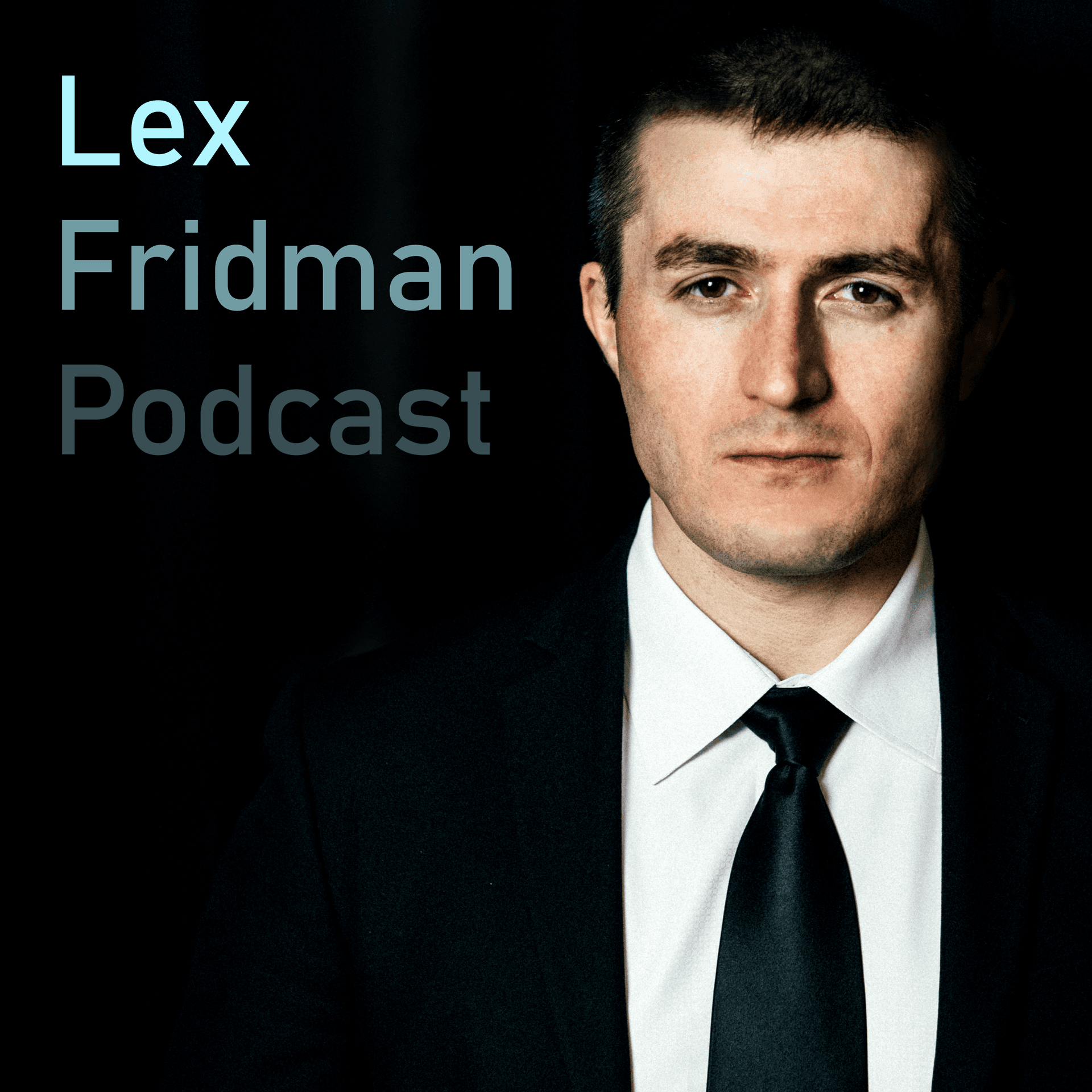
Lex Fridman Podcast Episode #391
Mohammed El-Kurd on Palestine
Introduction In this episode, Lex Fridman sits down with Mohammed El-Kurd, a Palestinian writer and poet. This conversation offers a different perspective on Israel and Palestine, focusing on experiences, challenges, and ongoing struggles from a Palestinian viewpoint.
Main Topics Discussed
Sheikh Jarrah and Jerusalem
- Sheikh Jarrah: Mohammed El-Kurd describes growing up in Sheikh Jarrah, East Jerusalem, a neighborhood heavily affected by eviction orders and settler expansion. He recounts his family's history, displacement, and the ongoing legal battles to retain ownership of their homes.
- Historical Context: Discussion on the Nakba of 1948, the displacement of Palestinians, and the historical and ongoing Zionist movement. Mohammed explains how Palestinian neighborhoods are targeted by settler organizations and the asymmetry in the Israeli judicial system.
The Israeli-Palestinian Conflict
- Legal and Political Battle: El-Kurd emphasizes the political nature of his neighborhood’s struggle, rather than it being a mere legal dispute. The conversation touches on the broader implications of these evictions and the role of international law.
- Hate and Anger: Mohammed discusses the perception of hate and anger within the Palestinian community. He argues that these feelings are natural responses to oppressive circumstances but do not define the Palestinian identity.
Antisemitism and Anti-Zionism
- Distinction: The episode addresses the conflation between anti-Zionism and antisemitism, with Mohammed opposing the idea that being against the policies of the Israeli state equates to being against Jewish people.
- Political Manipulation: He discusses how accusations of antisemitism are used to stifle criticism against Israel, especially in Western media and political discourse.
Peace and Coexistence
- Peace in the Middle East: Mohammed shares his vision for justice through recognition, return, and redistribution, emphasizing the importance of recognizing Palestinian rights and ending the occupation.
- Two-State Solution: Skepticism about the feasibility of a two-state solution given the current geographical and political realities. Advocates for a one-state solution with equal rights for all inhabitants.
The Role of the United States
- U.S. Involvement: Discussed the significant role of the U.S. in supporting Israel through military aid and political backing, suggesting this support perpetuates the conflict.
Cultural and Personal Reflections
- Poetry and Writing: Mohammed talks about his book "Rifqa" and the power of poetry and literature in expressing Palestinian struggles and identity.
- Hope and the Future: Despite the bleak circumstances, Mohammed finds hope in historical precedent that justice eventually prevails and emphasizes the resilience and spirit of the Palestinian people.
Key Takeaways
- The conversation highlights the complexity of the Israeli-Palestinian conflict from a Palestinian perspective, focusing on lived experiences rather than abstract political discourse.
- Mohammed El-Kurd advocates for a re-evaluation of narratives around the conflict, encouraging a more nuanced understanding of Palestinian resistance and struggle.
- The episode underscores the importance of hope, resilience, and cultural expression in the face of oppression.
Further Reading and Resources
- Mohammed's Website: [mohammedelkurd.com](https://mohammedelkurd.com)
- "Rifqa" by Mohammed El-Kurd: [Amazon Link](https://amzn.to/3Oqippl)
- "The Hundred Years' War on Palestine" by Rashid Khalidi: [Amazon Link](https://amzn.to/3K7ZtsE)
Connect with Mohammed El-Kurd
- Twitter: [@m7mdkurd](https://twitter.com/m7mdkurd)
- Instagram: [@mohammedelkurd](https://instagram.com/mohammedelkurd)
Support the Podcast
- [Patreon](https://www.patreon.com/lexfridman)
- Check out the sponsors listed in the episode description for ways to support the podcast.
---
*Note: The perspectives shared in this episode reflect those of Mohammed El-Kurd and provide insight into the Palestinian experience and the broader historical and political context of the region.* ```
Written by AI. May contain mistakes. Listen to the episode to check what was said.
Transcript
Automatic transcript. May contain errors.0:00The following is a conversation with Muhammad al -Qurd, a world renowned Palestinian poet, writer, journalist, and an influential voice speaking out and fighting for the Palestinian cause. He provides a very different perspective on Israel and Palestine than my previous two episodes with Benjamin Netanyahu and Yoval Noah Harari. I hope his story and his words add to your understanding of this part of the world as it did to mine. I will continue to have difficult long -form conversations such as these, always with empathy and humility, but with backbone. And please allow me to briefly comment about criticisms I receive of who I am as an interviewer and a human being.
0:46I am not afraid to travel anywhere or challenge anyone, face to face, even if it puts my life in danger. But I'm also not afraid to be vulnerable, to truly listen, to empathize, to walk a mile in the well -worn shoes of those very different from me. It's this latter task, not the formal one, that is truly the most challenging, in conversations and in life. But to me, it is the only way. And now a quick few second mention of each sponsor. Check them out in the description. It's the best way to support this podcast. We got a factor for delicious pre -made meals, simple safe for home security, better help from mental health, babble for learning new languages, and house of macadamias for delicious snacks, choose wisely my friends.
1:38Also, if you want to work with our amazing team where I was hiring at lexfreedwin .com slash hiring. And now onto the full ad reads, never any ads in the middle. I tried to make this interesting, but if you must skip them, please still check out our sponsors. I enjoy their stuff, maybe you will too. This show is brought to you by a factor. I'm ready to eat meal kit service that delivers nutritious and delicious meals straight to your door. I've been eating their stuff for quite a while now, and it brings joy, diversity, and deliciousness into my life. Primarily because I eat keto, and so it's not trivial to cook for very low carb meals.
2:21In fact, it provides you with a bunch of different keto meals. I think I've tried herb -crossed chicken. I've tried their chorizo chili. There's just a bunch of stuff. It's high in nutritiousness, high in deliciousness. It's funny to think of life as a process of figuring out what makes you feel good in all aspects of life. And food is one of the few fundamental components that can make your life miserable. You can make your life beautiful. I eat many, many meals a day, high in carbs, work out a lot, and then I realized you can still work out a lot. You can still exercise and have intense physical and mental things in your life while not eating many meals at all.
3:07In fact, fasting the entire day and only eating once a day. Sometimes fasting for multiple days or doing intermittent fasting, where you don't eat for 16 or 18 hours. It's like a magical discovery about your own body that you can make. Of course, others will give you advice. That advice is only a catalyst to explore. You really ultimately should be listening to your own body. And for me, low carb with a small number of meals a day, oftentimes just one is what makes me feel really good. Anyway, if you want to do that kind of thing and make it delicious, go to factormeals .com slash lex50 and use code lex50 to get 50 % off your first box.
3:51That's factormeals .com slash lex50 and use code lex50. This show is brought to you by SimpliSafe, a home security company designed to be simple and effective. It's one of the many layers of security that I use. And it takes security very seriously in the physical, in the cyber and increasingly in the psychological mental space. And I suggest that everybody should do the same. The thing that makes SimpliSafe really interesting is how easy it is to get it working. To set up all the sensors, to get it working and to keep it working. There's a cool new feature that I got that's called, I think, fast protect monitoring, where you have a monitoring agent that can see and speak to and deter intruders through their smart alarm indoor camera.
4:46That's a pretty cool and wild feature. If I was an intruder, maybe an accidental intruder, I'd be kind of terrified if I'd go through that experience, that kind of interaction. So the many layers of deterrence, I think, is really important to basic security. Anyway, go to SimpliSafe .com slash flex to get 20 % off any simply safe system when you sign up for fast protect monitoring that simply safe .com slash flex. This episode is brought to you by BetterHelp. It's spelled H -E -LP help. Like I mentioned, security is very important. And what BetterHelp does is a psychological mental security to make sure that the foundation of your mind are strong.
5:34We all have demons, we all have trauma, we all have things we're contending with in our consciousness of conscious minds. Bringing them to the surface, reversing, je nearing it, traveling to the past, and then traveling back into the present so you can build a good future. Is a really important process for being healthy. I don't know why the previous several sentences kind of sound like an Instagram motivational poster. But I mean it. It's a little too simply said, but it is true nevertheless. And I've been going through a lot in my mind. They're doing some of the difficult conversations I had to do and still doing the future and just trying to figure out my life.
6:32So I'm doing a lot of insurrection and soul searching and really taking my mental health increasingly seriously has been a priority for me. And if it is for you as well, I think BetterHelp is one of the easiest, most effective ways to get started. You can check them out at BetterHelp .com slash flex and save on your first month. That's BetterHelp .com slash flex. The show is also brought to you by Babel, an app and website that gets you speaking in a new language within weeks. They offer multiple languages including Spanish, French, Italian, German, Russian and so on. I'm increasingly taking languages seriously.
7:14To state that obvious, they are one of the fundamental barriers and communication between the various peoples of the world. And that silly little barrier sometimes trivially prevents us from seeing the common humanity in us. And so for myself, I'm starting to learn more and more languages just to start to feel the music of the language. But I'm also from a podcast interview perspective and opening myself up to do interviews in other languages and to also do translation and to take translation seriously at scale. I imagine a kid growing up in a rural, india, rural, china or somewhere South America and just to be able to speak to him or her, just to show that there's hope that we're all in this together, that there's so much beauty in this world and there's so much awesomeness that we can create together.
8:19I think that's a really, really important thing to strive for. And I think technology increasingly unlocks that. Anyway, to work on your own language skills, I suggest you try Babel and get 55 % off your Babel subscription in a Babel .com slash Lex pod spelled BABBL .com slash Lex pod rules and restrictions apply. This show is also brought to you by Haasam Academias, a company that ships delicious high quality and healthy macadamia nuts directly to your door. I have a kitchen closet full of macadamia nuts snacks that have been slowly working my way through. And by working, I mean loving every second of it.
9:05There are really small portions, which is great for me because I'm not good at moderation. So I like when the packaging enforces moderation. And it's just a diversity of deliciousness. Also, I bring it to the podcast studio and share it with guests so they can partake in the plethora of flavors that is the Haasam Academias snacks. I'm still not sure what my favorite is actually. Like with the element drink, I'm really sure that watermelon salt is my favorite flavor. But Haasam Academias, man, there's so much good stuff. Both the whole nuts and the bars just really, really, really, really delicious.
9:51And obviously it's super healthy for you, at least if you have the similar kind of nutritional and diet perspectives on life as I do. Go to Haasam Academias .com slash Lex to get a free box of the best seller, the Namibian sea salted macadamia nuts, both 20 % off your entire order. That's house macadamias .com slash Lex. This is the Lex Freeman podcast to support it. Please check out our sponsors in the description. And now dear friends, here's Muhammad L .Curd.
10:41Tell me about Sheikh Jarrah, the neighborhood in East Jerusalem where you grew up. Surzorah has, you know, in a way a typical neighborhood, despite despite the absurd reality that surrounds it's a typical neighborhood in terms of Palestinian neighborhoods is one that is threatened with colonialism with settler expansion and with forced expulsion and it has been that way since the early 70s. My family, like all of the other families in Surzorah were expelled from their homes in the Nakhbe in 1948 and they were forced out by the Haganah and other hazinas parallel militaries that later formed the Israeli military.
11:21And they were driven to various cities and my grandmother moved from city to city and she ended up in Surzorah in 1956. Surzorah was established as refugee housing unit by the United Nations and by the Jordanian government which had control over that part of Jerusalem at the time. And then people lived there. Homunously, they were all from different parts of Palestine and you know, they managed to rebuild their lives after the first expulsion and then in the 70s, you had settler organizations. Many of whom were registered here in New York and in the United States claiming our houses and our lands as their own by divine decree.
12:06And because obviously because the judges are Israeli and the laws were written by Israeli settlers and the whole judiciary was established atop the rubble of our homes and villages. We had no, you know, we had no real pull in the courts. The Israeli courts would look at the Israeli documents which we argue are falsifies and fabricated and they would take them at face value without authentication and they refused to look at our documents. The documents from the Jordanian government, the documents from the UN, the documents from the Ottoman archives. So you already have this kind of asymmetry in the court that for any person with common sense would lead you to believe that this is not in fact a legal battle or a real estate dispute as Israeli Ministry of Foreign Affairs likes to frame it.
12:57But rather a very, very political battle. One that is about social engineering, one is about demographics, one that is about removing as many Palestinians as possible from occupied Jerusalem. So we did what all Palestinian families in Jerusalem do when they're faced with this kind of threat and we bought time. We, we pleaded and pleaded and appealed the courts and appealed the cases and we got over 50 expulsion orders in 2009. Rifle wielding settlers accompanied by police and Israeli military came over and shoved our neighbors outside of their home around 5 a .m. It's like it was the most brutal violent thing I'd seen as a child at the time and I didn't realize that my turn was coming.
13:48My turn was next. They threw them out in the middle of the night with sound bombs and rubber bullets and they had to live intense on the street for many, many months and even lived in our front yards for a few months and lived in their cars. Can you regard that process 2009? You said 50 expulsion orders. What, what was happening between the 70s and 2009 there had been many dozens of expulsion orders against us and against many other families in the neighborhood 28 other families, 20, 28 families in total actually. And in 2008 2009 the first wave of expulsions finally happened it actually began with.
14:30I'm coming to the court we're not related but we live on the same street and the same neighborhood she was thrown out of her home. Her husband and elderly man also named them. And the other day the court was pronounced dead on the spot he had a stroke and died. They, the Israeli soldiers pulled him out of his home while he was urinating and threw him into the streets and he died. A few months later the Raway and the Hanoun families, which are you know kind of not a clan but you know in Palestine you have sometimes a building that contains multiple brothers and their wives. And then in the past, each have little apartments so the Raway and Hanoun families about 35 people or thrown out in the middle of the street right across from us.
15:09And then by the end of 2009 I had come home from school to find all of my furniture scattered across the length of the street and I saw the settlers many of whom had American accents living in our house. And their justification for this their reasoning for this is you know divine decree. This is this is what God wants. This is the promised land. This is so and so as if God is some kind of real estate agent. So they took over half of our home and we continue to be in courts for the following decade. This was I was still a child and I had broken English and I was talking to all of these diplomats and all these journalists.
15:50Who would you know subjugate me to their subject me to their you know racism and biases and and so on and so forth and I had to prove my humanity time and time again and I had to you know do all of this all with broken English. And we were lucky even if we got a if we got a quote in the in the article origin about us by the times or so on and so forth. Move forward to 2020 I was in New York City studying a master's degree getting a master's degree and my father calls me and he tells me you know we haven't yet another expulsion order and we decided to launch a campaign. It was quite ambitious at the time.
16:35But the whole objective of the campaign was to demystify what is happening right because it's reported on in the news it's reported on around the world as this real estate dispute as these evictions which was not really what's happening evictions do not entail a foreign army and an occupied territory for possibly removing you out of your home. So I came home from New York and we launched a campaign which turned into a global success and I believe it was a global success because finally the images on the screen matched the rhetoric that was being said it wasn't so confusing or complicated anymore all of this asymmetry was pronounced and articulated in a way that any viewer be it in Alabama be it in New York be it in Egypt was able to understand the asymmetry.
17:25Of the judicial system and you know the agenda of colonialism that was taking place here and due to immense international and diplomatic pressure from all over the world even the United States. The Israeli Supreme Court was forced to cancel all of the eviction orders in Surah until further notice this I consider was a small victory because obviously we are still at risk of losing our homes once they decide to do the land registry which we can get into a little bit later if you'd like. But nonetheless it was something that we haven't seen before and the fact that the Supreme Court canceled all of these dozens and dozens of past eviction orders it's not a precedent and it's also proved that this was a political battle not a legal one.
18:16So let's just add a little more detail to the people who are not familiar with the story with the region with the evictions with the courts so first of all Sheikh Jaraz in East Jerusalem maybe you can say what is Jerusalem where is it located what are we talking about in terms of regionally and second what kind of people that live there so if you could talk about the Palestinian people and we should also make clear that these evictions is literally people living in homes and their homes are taken away from them. I suppose technically it's legal. I think it's not a legal eviction but you're saying that there's a symmetry of power in the courts where the legal is not so much legal but is politically it may be even religiously based.
19:15Yeah I mean the biggest the most important context here is that oftentimes Americans think that Israel and Palestine are some kind of two neighboring two neighboring countries. That live next to each other and they are at war but the fact of the matter is Palestinian cities exist all over the country and it's just one country it's just one infrastructure and Israel is literally on top of Palestine it was established on top of our villages. In the late 40s now according to international law the eastern part of Jerusalem is under occupation so Israeli presence and jurisdiction over the area is completely illegitimate they say the evictions are legal because the settlers right there law obviously they're going to allow settlements to expand but according to international law according to even US policy.
20:13Israel occupies the eastern part of Jerusalem it's jurisdiction there is illegitimate we shouldn't even be going to their courts in the first place but we have no other option. We're talking about Jerusalem we're talking about generations and generations and generations of people who have lived there. For the longest time who now even though you know for example me I don't have a citizenship I'm a resident a mere resident I have a blue ID card even though my grandmother and my grandfather were born in Jerusalem their grandparents were born in Jerusalem. Even though we've lived there for generations but Palestinians in Jerusalem we are not citizens we're just mere residents same thing with residents of the occupied Syrian go on they are not citizens they are just.
21:01Just residents in their own hometowns this is an important piece but all of this gets convoluted and lost in translation and I think I would argue it's a lot more it's a lot of the time it's do be as it's it's malicious the fact that these little pieces of context that frame the entire story get lost. You know I'll talk to you about something else just 10 minutes 10 minutes across from my neighborhood so there's another not their neighborhood called Silwan and the people in Silwan are also threatened with expulsion but not through evictions but through home demolitions and if you look at American state American media or Israeli state media you would read the headlines you know Palestinians living in homes built illegally are going to face you know their homes as they're going to be torn apart.
21:53But what these headlines don't tell you and even sometimes most of the time the substance doesn't tell you that Palestinians seldom ever get building permit applications in fact recently a spokesperson for the Israeli military confirmed that was 95 % of building permits applications submitted by Palestinians in Israel some end of us bank are rejected by the Israeli authorities and to make this even more absurd the guy. The Councilman who is responsible for rejecting and accepting building building permit applications his name is Jonathan use and he's a he's an activist in the settler movements and he's a Jerusalem council member.
22:36And he last week following the expulsion of a sublob and family and the old city of Jerusalem he posted to his official basic hit Facebook account Nakba now demanding a second Nakba promising another Nakba he has done so many occasions he has chanted with a megaphone just a few months ago walking down the street and my neighborhood chanting we want Nakba now this is a man who has vandalized our murals who has screamed Islamophobic slurs. This is literally a man in the government making these decisions right. And this is similar to you know my saffariato in the South have on health for those who don't know it's a it's a place in the occupied West Bank where bad when and cave dweller Palestinians have lived for generations they have cultivated the land.
23:27And recently they were expelled from their homes over a thousand people were expelled from the remote small villages again if you're reading American media they would say it would say Palestinians living in firing zones were removed because they're living in a military zone what these media reports will not tell you that in the 80s the Israeli government purposefully classified many lands in the occupied West Bank. And this is not something that I think as firing zones as off limit military zones for the sole purpose of expelling the residents and this is not some kind of conspiracy theory this is declassified information that was released from the Israeli state archive that was later reported on by our audience also these reports will not tell you that the judge.
24:12Who rules on whether these people continue to live under homes or not is himself a settler in the West Bank and we're not even talking about. You know a loose definition of a settler but according to international law this is a settler living illegally in an illegal settlement in the occupied West Bank this is the judiciary that we deal with which is hilarious considering how it's being reported on. In American media recently as some kind of beacon of progress and democracy that the new government is trying to undermine. So there's no representation in the courts for the Palestinian people I mean we have lawyers but no there is no there is no in fact there is for Palestinians with Israeli citizenships for example there's over 60 laws that specifically and explicitly this coronies against them.
24:59So again it's technically legal the evictions and the demolitions yeah so was Jim Crow is legal also you know when something is legal can also still be wrong absolutely history has shown us time and time again. That legality does not necessarily mean morality and the law you know is the law is a blood bath in many ways it has been used and abused to facilitate the most horrendous atrocities in the case of the Palestinians the law has served to facilitate and we're prioritized are ethnic cleansing. Do you think there's people judges and just people in power in the judiciary that have hate for the Palestinian people.
25:53I mean I'm not really the easy simplistic answer is yes but I don't really care about the contents of their hearts what I care about the policy they enact read the laws they write and enact are hateful demolishing a person's home. So you can have somebody from Long Island New York who is fleeing you know fraud charges this is the case in my house live in there in there you know front yard that's hateful so I don't need you know confirmation this is something we see a lot actually you know Palestinians and people who are pro Palestine and just people who want to make a difference in how this cause is represented.
26:37We often run for the first opportunity to cite an Israeli being hateful you know the recent the last Israeli prime minister said that he has killed many Arabs and that he has no qualms with it. Netanyahu has said slew of racist hateful things Joe Tinsky the pioneer of Zionism hearts all one of the pioneers of Zionism all have said horrible hateful things we also like cannot wait to you know site. It's a confession from a former Israeli soldier who's guilty conscious is keeping them you know up at night and we use all of these you know confessions or slip ups as evidence to prove that this is a racist country that is enacting racist racist acts but we don't need this because the material proof is on the ground you see it in the policies that are enacted you see it.
27:36In how the country how this regime has behaved for the past 75 years I don't need you know confessions from the likes of Netanyahu to understand that his heart is full of hate. So if you could return to 1948 describe something that you've mentioned the knock -buh which means catastrophe in Arabic. What was this event what was this displacement and this possession of Palestinians in 1948. Well you know like May 15th 1948 is commemorated every year as you know the anniversary of the Nakabay but I would even argue anything this is like a very popular idea is that the Nakabay did not begin or end in 1948 the 48 was rather you know a crystallization of the Zionist enterprise in Palestine.
28:29And what happened was that many Zionist paramilitaries that again today merged and made the Israeli army which calls itself the Israeli defense forces even though they're literally always aggressor committed atrocities and massacres and you know they destroyed over 500 villages they are not going to be able to do that. They killed over 15 ,000 people they forced a very large portion a majority of the Palestinian population to flee their homes and this was you know the near total destruction of Palestinian society that continues on to this day we refer to it as the ongoing Nakabay and you see it in in Syarjara you see it in Syduhan you see it in Hebron in all of these people losing their homes and in many cases time and time again you know I grew up and my grandmother told me the stories about the Nakabay she told me stories about her neighbors who were running away in a panic and they had mistaken a pillow for their offspring and they just took it with them and they realized later that they forgot their child and they came back for it's many many people who were separated from their my grandmother herself she lost her husband for a few months for nine months he was imprisoned by the Israelis.
29:56You know she told me all of these stories and she wasn't just reminiscing about them she was you know letting me know that this is still happening and and I didn't need to grow up that old to see it happening in my own front yard to see that expulsion happen in the same fashion she she's talked about it but you know now they have replaced their artillery with the judiciary they have replaced you know the the slashing of the pregnant women's bellies in the Darylian scene massacre with with laws that say you know you're not you're not legally allowed to be here we're going to kick you out of your home and it's happening and it has happened in in in broad daylight one piece of context for the listener who doesn't know what I'm going to say.
30:50And who is not familiar with the Nakabe is the Balfour Declaration which was a promise quote unquote promise made by the British to the Zionist movement in 1917 committing to the establishment I'm quoting I think word for word committing to the establishment of a Jewish state and Palestine as if Palestine was you know the British to give away. And there was this whole movement that called for colonization of Palestine and there were different there were different schools of thought in Zionism you know people like Zangul said that this was a country without a people and Palestinians who have existed there who have cultivated the lands who have you know had diverse cultural and religious and political practices they were completely erased and other people like Zobotinsky were a lot more explicit and a lot more honest and said that we need to fight the Palestinians because they love their land much like the red Indians love their lands.
32:01And he had a paper called the iron wall colonization of Palestine must go forward. And all of these all of these schools of thoughts were then shopping around for you know imperialist support for their cause they tried they tried to get support from the Ottoman Empire they tried to get support from Germany and this is in the 1800s and then they got support from the United Kingdom. A great book to recommend is the 100 year the 100 years war on Palestine by the shiitre ledy that's the you know traces design is movement oftentimes in design is own words. And so today what we're seeing is a continuation and you know people like Zobotinsky who are like profoundly and explicitly racist who have called for genocide who have called the Palestinians barbaric who have said and done.
33:02Racist things you know Zobotinsky also was like the founder of the Ergun one of the other militias that later merged to become the I the Israeli army which was responsible for the Daryl Yassin massacre which was responsible for the bombing of the King David hotel. This is a person who still celebrated in Israeli society there are still streets named after him and not any of them just two weeks ago if I'm mistaken honored him in a public celebration so this is Zionism it's not even through my own words. What do you say to people that describe Israel as having historical right to the land so if you stretch not across decades but across centuries into the past.
Read the full transcript
33:49This kind of thing is a red herring into destruction because you don't think of any state as having rights but there is this exceptionalism to the Israeli regime where it is it has a right to defend itself and it has a right to the land and it has a right to shoot 14 year old boys because. It thought they had a knife in their pockets you know a lot of the time people cite the Torah and site religious books and you know sometimes Zionist will even say like read the Quran and blah blah blah you know regardless of whatever was written in these books that were written thousands and thousands of years ago the fact of the matter is no one has a right to go on slaughtering people removing them from their homes and then continuing to live in their homes continuing to drink coffee on their balconies.
34:36Decades and decades later with no shame with no introspection with no reflection that's no one has the right to do that no one has the right to keep an entire population of people in a cage which is what's happening to people in the West Bank who have no freedom of movement which is what's happening in Gaza which is blockaded to water air and land and. Is deemed uninhabitable by human rights organizations like the UN no one has a right to do that. Do you have hate in your heart for Israel what why does that matter. As one human being to another you're describing quite brilliantly that the contents of people's hearts don't matter as much as the policies and the contents of the courts and the laws and.
35:31What actually is going on on the streets in terms of actions but. This is also a human story. Yeah and. I feel like. At the core of the situation here is. It's a. Hate is or maybe inability for some group of humans to see the humanity in another group of humans and so it's important here to talk about the contents of hearts if we're too think about the long term future of this. Yeah I mean I would be concerned actually if I didn't feel some kind of way in my heart I would be concerned for my own dignity. Because the people who revolt the people who are angry the people who refuse to live under occupation know that they deserve better.
36:26People start revolutions not because. Some kind of cultural phenomenon not because of some kind of desire but because they cannot breathe because they cannot. They cannot breathe they cannot live they are living under excruciating circumstances. You know Palestinians you know I don't know I don't know how many Palestinians have interacted with but we are some of the most wonderful people I mean not all of us think some of us are you know and sufferable but most of us you know we're very hospitable. Even like in the early early correspondence between the mayor of Jerusalem and the heart so who wrote the Jewish state you know the generosity through which the Palestinian mayor was talking to heart so was plotting to take over his land is impressive and at the same time you know heart wrenching.
37:22But I personally think there is there's a lot of dignity. In negating your oppressor and I think it would be ridiculous today today if we like look back at Jim Crow for example and we asked the person who's lived under under Jim Crow. If they have hate in their heart for Jim Crow as if that's not the absolutely logical and natural sentiment to feel. In Rifka you wrote my father told me anger is a luxury we cannot afford. Be composed calm still laugh when they ask you smile when they talk answer them educate them.
38:07So let me linger on this is their anger in there in your heart and does the cloud judgment does it cloud made judgment I don't think so I think with I think our campaign to defend our homes was.
38:23Particularly successful because it was honest to what was happening on the ground because it refused to follow the strategy that we have used in our advocacy before. When we shrink ourselves and we turned the other cheek can we try to convince. American lawmakers and American diplomats and journalists of our humanity. Because we wait for their approval you know I was 14 years old when I first flew to Congress to speak to Congress people and to speak to the European Parliament and I at the time I thought wow I must be such a brilliant 14 year old for them to have me here. And you know looking back I didn't know what I was talking about I had horrendously broken English.
39:11And he didn't have any any talking points and it came to realize that the reason why we send our kids with their power points to the Hill is because of the racism and the hatred that lingers inside the hearts of American politicians who refused to sit on the table with Palestinian adults as equals. And so we resort to sending our kids who will not threaten and who will not you know trigger the biases they have against Muslims and Arab people which Palestinians even though we're not all Muslim or racialized as Muslim. And this is why we emphasize the deaths of women and children as though the deaths of our men does not counter does not matter.
39:53All of these things I think the new generation of Palestinians is rebelling against. I think words like you know I think it's loaded. It's loaded language. Anger and angry and hate and so on and so forth because it miss. Mischaracterizes people and it kind of the legitimizes them a little bit. But you know I think the real the real anger is the bulldozer bulldozing through my house I think the real anger is the 18 year old soldier who refuses to see me as a human being and strip searches me every chance they get that's where the real anger lies. And I'm quite honestly proud of you know our unabashedness and our refusal to like bow our heads or bury our heads in the sand.
40:45I think that's the only way forward. So anger whatever it is is a fuel for action. Absolutely and it has been throughout throughout history it has been. How much of this tension is religious in the practical aspects of the courts and the evictions and the demolitions and you mentioned something divine decree. How much underneath do you feel the division over religious texts and religious beliefs. You know it's convenient to market what's happening in Palestine as a religious conflict because it allows. The listener the luxury of believing that this is an ancient complicated thing that stretches thousands of thousands of years ago but the fact of the matter is.
41:41The people who invented Zionism who pioneered the Zionist movement who called for immigration and settling into Palestine a lot of them were atheists a lot of them were not religious at all. And the leaders of the Israeli state today a lot of them are atheists. And a lot of them are secular and so on and so forth it's easy to it's easy to say that this is. You know about Muslims and and Jews fighting over the land and so on and so forth but it's not it's about the land itself and it's about. People being forced out of their homes Benjamin at any hour who said anti Zionism is anti -Semitism of course you said that.
42:29Do you disagree absolutely I disagree what's the gap between anti Zionism anti -Semitism those who are against the policies of. Israel versus those who are against the Jewish people. I watched the well the first like 20 minutes and then I couldn't do it anymore you know but I watched and then what was interesting about not any of us that he said you know being being anti Zionist is like saying I'm okay with the Jews I just don't believe the Jews have a right to form their own state that's like. saying I'm okay with Americans I'm just not okay with Americans having their own state and there is so much wrong with that statement in the sense that.
43:16Jewish people are a religious group in Americans and to be being an American is a nationality that consists of a diversity of religions and. And so on and so forth first of all and the second second thing that's wrong with that statement is the whole idea that states somehow have a right to exist or whatever it's it's such a distraction you have you have people getting shot in the street you have like millions and millions of people be siege you have people losing their homes you have people who are held in Israeli prisons without trial. or charge indefinitely but the conversations that are being held in the hit on the hill the conversation that are being held on CNN.
44:01Or does Israel has a right to exist or like why would you negate Israel is having a right to exist that's one now of course on the I just I just find it's ridiculous again like that opposing a secular political movement that was explicitly colonialist expansionist exclusive and racist. Through the words of its own authors is somehow and also again opposing such a political movement that is quite young and quite recent is somehow equivalent equivalent to opposing a religion that is thousands and thousands of years old but it is convenient again for Israeli politicians to frame us who oppose Zionism a form of racism and bigotry as anti -Semites.
44:50But I can guarantee you Benjamin Netanyahu has no problem with anti -Semitism this is the same man who has no problem getting on stage and shaking hands with pastor John Higgy doing web webinars with pastor John Higgy for those who don't know pastor John Higgy is the founder of Christians United for Israel who has said on multiple occasions that Hitler was a hunter who was sent to hunt the Jews who said on the street. And multiple occasions that Jewish people are going to perish in hell you can all of this is like very viable by Google and this is one of the Israeli regime's closest allies right.
45:34So the Israeli regime does not have a problem with anti -Semites when it serves its interests it has a problem I mean like if you look at evangelical evangelicals like Christian Zionism at large anti -Semitism lies at the heart of Christian Zionism it's the idea that we want to derive all of the Jews outside of the United States so that Armageddon could happen or whatever the fuck up. This accusation has been a muzzle it has been used as a muzzle to silence political opposition and to stifle political advocacy for the liberation of Palestine and a lot of the time people get caught up in denouncing it and in justifying themselves and disclaimers and so on and so forth that you lose the point that you're distracted from the focal point that is there is an ongoing colonialism happening where people are going to die.
46:32Every single day are killed I cannot keep count this morning a kid was shot in Palestine. We cannot it's embarrassing even for me that I don't even know the numbers here but this muzzle has been effective and I think the only righteous option is to oppose these labels these smear campaigns that target us. I myself have been labeled an anti -Semitism by the ADL and I mean like if you want to talk about that surface level people people say like wow the ADL anti -difimation league you know condemned you but people do not look at the history of the anti -difimation league do not look at the present of the anti -difimation league the fact that they are the largest non -governmental police training department in the country where they are going to die.
47:28They train police and racial profiling and militarism the fact that they have historically and continue to have engaged in surveillance on on black liberation movements on anti -apartite South African activists most recently in Charlottesville when white supremacists were marching and chanting anti -Semitic shit the ADL advised local police departments to see the anti -difimation. They are going to spy on the black organizers opposing the white supremacists this is again all verifiable on the internet go to drop the ADL .org. So the ADL does not alleviate the hate in the world as it probably is designed to do.
48:20No it's a guys I don't think the apartheid defense league is really our most progressive. That's what it stands for.
48:34If you can just linger on this idea of anti -Semitism there's quite a bit of anti -Muslim sentiment in the United States especially after 9 -11 I've spoken to people about that. There's also anti -Jewish anti -Semitism sentiment in the United States but also throughout human history what do you make about this kind of fact of human nature that people seem to hate Jews throughout history especially in the 20th century especially with Nazi Germany. What are your in general thoughts about the hatred of the Jewish people? I mean I think it's obviously wrong I don't know it's this it's this idea that even have to clarify what I think about anti -Semitism that doesn't sit right well with me.
49:29I think it's completely unfortunate and wrong that Jewish people have been persecuted across history. So one of the criticisms I think I read the ADL making this criticism of you is maybe you've tweeted a comparison between Israel and Hitler and thereby diminishing the evil that is Hitler. What would you say to that? Amy says there talks about this a lot the exceptionalization of Hitler. Hitler is a deplorable I don't know a condemnable you know rotten racist horrible human being that belongs in the depths of hell obviously that's the that goes without without saying but I'm allowed analogy and I'm allowed to say whatever I want.
50:27Now I don't necessarily think that that such an analogy is a good strategy to have but at the time the context came in 2021 when it's really soldier isn't policemen and settlers were literally burning down our neighborhood again verifiable by Google. And I tweeted and also I remember I tweeted something I hope every single one of them dies and to this day like this some kind of you know gotcha for me as if I should have tweeted like oh here's apple pie for every single soldier that's throwing tear gas in my house. You know there is there is such an exceptionalism when it comes to Palestinians we're not allowed analogy we're not allowed expression we're not allowed armed resistance we're not allowed armed resistance we're not allowed to be a threat.
51:19We're not allowed peaceful resistance we're not allowed to boycott because that's anti -Semitic we're not allowed to do anything. So what are we allowed if I if I can't boycott and that's against American law and out to boycott and if I can't pick up a rifle because that's against the law and if I can even tweet my frustration out what am I allowed to do. And you maybe not to know who can send me a manual he's happy with. So you've spoken about the taking of homes the IDF killing civilians killing children. What about the violence going the other direction Israelis being killed in part by terrorist action.
52:01Well it depends on depends on how you define terrorism right across history one man's freedom fighters another man's terrorist. I don't necessarily subscribe to the definition of terrorism if if a foreign army is in my neighborhood which it's not supposed to be in and they're shooting live ammunition at my house. I'm allowed to do what I'm allowed to do. And again this is another yet another case of Palestinian exceptionalism because when it comes to Ukraine. People have no problem seeing Ukrainians defending their homes seeing Ukrainians dying further and seeing Ukrainians making makeshift more of zone sky news you know sky news was running more of making cocktails.
52:50The New York Times ran an article interviewing Ukrainian psychologists who said that hatred and paraphrasing but he said hatred for all Russians is actually a healthy outlet the New York Post ran a headline champion championing quote unquote heroic Ukrainian suicide bomber. These things we would not even dream of as as Palestinians. We are we are told to turn the other cheek time and time again we're told that we we should continue loving these inside these enclaves without access to clean water without access to to the right to movement without access to building permits without our natural right to expansion without you know without a guarantee that if we leave our house we're not going to be shot.
53:35And we're supposed to not do anything about it that is absurd any any any person watching this understands this completely people understand you know people understand that if somebody is attacking your home you fight back if somebody is attacking your family you fight back that is that is not. But again who gets to call who are terrorists who gets to define tourism this is all about who has power who gets to write these laws who gets to write these definitions. You know why is it why is it that American actions in Iraq is not called terrorism by American politicians wise you know violence is like this mutating mutating concept you know and it takes on many shapes and forms and if it's in a uniform it's if it speaks in English if it has blonde hair it's somehow acceptable it's okay we make.
54:32We make movies about it you know we sell out tickets about it we make games about it but if it's without a uniform it's if it has a thick accent if it has a beard you know that's that's condemnable that's wrong that's terrorism you know. Do you think violence is an effective method of protest and resistance in general in general I think it has been but I think you know I believe in fighting with all fronts I don't think violence alone is going to be. I think I think there's so much to do in culture and in shifting public opinion there's so much to do in media and fighting back against media erasure and census and censorship there's so much to do diplomatically and politically.
55:22And I think I would be naive if I don't take the power imbalance into consideration one side has makeshift weapons and the other side is one of the most sophisticated armies in the world so I don't know I don't know how effective violence could be in this case. But if you look at the flip side do you see the power of non violent resistance so Martin Luther King Gandhi the power of turning the other cheek you spoke negatively about turning the other cheek. Yeah so I sense that doing so has not been effective for the Palestinian people. We've turned the other cheek generation after generation there is a Zionist trope that that is used against us they say Palestinian rejection is on.
56:12They say that we reject everything but if you look at the history like our leadership the Palestinian authority has given up inch after inch has compromised on acre after acre has signed deal after deal after deal after deal and still there is no peace. So turning the other cheek is not you know the most effective method in my book what are the top obstacles to peaceful coexistence of Israelis in Palestinians. The occupation comes to mind the the critical policies come to mind the siege comes to mind the asymmetry of the judiciary comes to mind. The whole the whole system needs to be dismantled I will quote my dear friend Raria Rabariyeh who is who's a lawyer who says you know the solution justice comes about through recognition return and redistribution.
57:11There are millions of Palestinian refugees who are living in excruciating circumstances in refugee camps around the world there are thousands of Palestinian prisoners who are held in prisons for defending their homes hundreds of which are held without charge or trial by the way there are many Palestinians who get killed in broad daylight with no records journalists and medics and everyday people not just the fire fire. The freedom fighters we need again recognition return and redistribution and peace comes about when when when they stop killing us when they stop keeping us in a cage I mean that's that's quite simple can you describe recognition redistribution return and redistribution return right of return right the right of return to all of the Palestinian refugees to their homes you know when I'm driving around high for an AC.
58:09My grandmother is home that's now turned into a restaurant you know I could have you know I made a joke and one of my essays recently that had a had that I could have had at all you know a beach front views her smug attitude you know she grew up by the she grew up by the sea after she relocated to high five after you know jealous of them we want that we want to and you know they're lucky I don't want that in your home. I just want my home I just want my home we want to return I also there needs you know in like I believe in the 1960s the Israeli government classified 90 % of all of historic Palestine estate on land this is all land that was owned by Palestinian farmers who have cultivated their lands for decades you know since the establishment of the Israeli state there has been Jewish only towns popping up every few years and not one town not one palace.
59:09Palestinian town has emerged we are even those of us who have Israeli citizenship who live outside of the wall are encircled and cannot have their natural community growth in their towns that needs to change that needs to change you mentioned the wall can describe the wall the wall is a nine meter high cement wall. So that was finished in 2003 and if you're American you've probably heard the white wash sanitized version of the name which is the security wall but it's it's a wall that literally has stolen thousands of donums of land and has ripped apart families my mother is a poet or was a poet at some point and she had this poem she she published in the paper called love behind the wall and it describes you know it's a great way to do it.
59:58It's a poem but it describes a real life situation of two families that who lived right across the street from each other but were then separated by the wall and they would fly balloons you know to see each other from each side of the wall or something like that this although it sounds absurd but it's the reality for many Palestinian families whose lives were torn apart whose livelihoods also were torn apart by the wall. Maybe this is a good opportunity to talk about the legal classifications for Palestinians you know Israel much like any other colonial entity was has divine has divided and fragmented the Palestinian people as I said earlier I have a blue ID which means I'm a resident a friend of mine who lives in Hefa for example two hours away from me 150 kilometers nothing too bad in this country has and is ready to sit in the wall.
1:00:55He can you know travel he can enter the West Bank he can do a lot more he's a citizen he can vote if he wants to not that we want to you know I always see my friends or you can go to Italy without a visa because you have an Israeli citizenship but you know they battle national erasure they battle crime in their own communities because of police negligence they they battle land confiscation land confiscation and have battle land confiscation. And 50s whereas somebody with a green ID somebody from the West Bank cannot leave the West Bank cannot go anywhere without a special permit and lives behind these walls and even within the West Bank the West Bank I think hilariously George Bush described it as Swiss cheese because of the holes every every few every 100 meters there's a new settlement or there's a new military checkpoint so even if you live behind the wall in the West Bank with your green ID even though you're raw your rob of your right to movement you still even can't move from town to town within the West Bank without encountering settler violence or military violence while you're crossing the checkpoints and so on and so forth.
1:02:13And then the last category we have is people who live in raze we are talking about over two million people who live in an open air prison who have no right to movement but also have no access to clean water water and no access to supplies no access to good food no access to good health care and so on and so forth who were keenly get bombarded every few years. raze is like two hours away from my house it feels like an absolute far away planet because it's so isolated from the rest of the country. So imagine all of these different legal statuses fragmenting your everyday identity and creating different challenges and obstacles for you to deal with for each group to deal with.
1:03:00You know it's amazing and impressive that despite these colonial barriers the the real cement ones and the you know the barriers in the mind despite all of these barriers the Palestinian people have made have maintained their national identity for 70 years that is incredibly impressive and it also sends a message that as long as we have a boot on our neck we're going to continue fighting you know violence cracking down on refugees. Camps bombarding refugee camps is only going to bring about more violence. So West Bank is a large region where a lot of Palestinian people live in and there are settlements sprinkled throughout and those settlements have walls around them.
1:03:44Yeah. Security cameras security guards security guards almost a million sellers in the West Bank. So what are the different cities here if you can mention in the West Bank in the West Bank or my knowledge in need Bethlehem or Braun Jericho. Yeah. No, it's also their own stories their own histories. Yeah. And it's fascinating also how interconnected they are you know like a friend of mine, Mona Omar, he recently did a documentary report on the day that Haifa fell during the Zionist invasion. The Haganah led the Palestinian residents of Haifa down to the city center and as absurd as it sounds. Those of them who stood on the right side of the street were forced into cars that took them to multiple stops that would later become multiple refugee camps.
1:04:36The last of which was Jeanine refugee camp and those who stood on the left side of the street were forced to board boats. That took them to Lebanon to become refugee camps the refugees there. Last month we saw the Israeli army invade Jeanine and maybe the largest military invasion of Jeanine since 2002. And they killed many people they attacked medics and journalists and brought their light on camera. They have destroyed infrastructure and it was all very painful. But I think the most compelling aspect of the raid on Jeanine was what followed. Israeli soldiers at night held their megaphones and instructed hundreds of Palestinians to flee their homes.
1:05:31And they told them if you don't leave if you don't have your hand up in the air, you will get shot and they were forced to leave their homes in the camp and walk to God knows where. I can guarantee you because the Nakaba is not that old I can guarantee you that some people who were marching away from their camps were chased away from their homes in the camp. In Jeanine were some of the same people who were chased away from the homes in Heifa in the first place. This perpetual exile that Palestinian people continue to live is unbearable. I mean, in my case, my grandmother was removed from her home in Heifa in 48 and then she moved from city city.
1:06:12And then in 2009 she saw half of her home taken over by Israeli soldiers. My grandmother died in 2020 and two months later we got the next expulsion order from the Israeli court. I'm quite ashamed to admit that I was relieved that my grandmother had died because they did not want her. 103 years old at the time to go through yet another Nakaba. And this is the fact for so many Palestinians regardless of where they are on the map. If I may read the description of the situation in Jeanine and maybe you can comment. So this is on July 3rd, 4th and 5th. Just reading Washington Post description. So this was an Israeli military incursion to Jeanine.
1:06:57The raid included more than 1000 soldiers back by drone strikes. Making it Israel's largest such operation in the West Bank since the end of the second Palestinian uprising in 2005. The Israeli military said it dismantled hundreds of explosive, cleared hundreds of weapons, destroyed underground hideouts, and confiscated hundreds of thousands of dollars in quote terror funds. Many of the 50 Palestinians who have attacked Israelis since the start of the year have come from Jeanine camp and the surrounding area. Palestinian attacks inside Israel have killed 24 people this year. You want experts to describe the Jeanine operation as collective punishment in quotes for the Palestinian people, amounting to egregious violations of international law.
1:07:46Many of the more than 150 Palestinians killed by Israelis this year have also come from these communities. Palestinians fighters say they need arms to defend themselves against the Israeli occupation and military incursions into the camp during which Palestinians civilians, including children, have been killed. So those are the, I would say different perspectives on the many people on both sides who have been killed. Many more Palestinians. Can you comment more about this situation? I mean, I think the Washington Post article is a little bit more careful than other media that came out recently about Jeanine.
1:08:30I think I was listening to our Reuters radio show and they failed to ever mention the occupation. I don't even think this paragraph mentioned that Jeanine is under occupation by the Israeli forces, by the Israeli regime. I think this is the most important piece of context that gets upsecured in our media reporting is these cities, these refugee camps are under illegal occupation. The Israeli army has no business being there in the first place. That is the most, that is the departure point. That is the most important piece of context that will answer to you why these people are arming themselves.
1:09:11Many of which, by the way, lived through the 2002 massacre and bombardment of Jeanine and grew up in that violence. The context that Palestine is under occupation that these Palestinian cities are under occupation that they have to deal with land seizures at all times that they cannot leave their towns without a special permit. All of this will give context to the violence and you know, the thousands of Israeli soldiers that raided the camp that day, that traumatized an entire generation. They think they will quell that generation. They think that with such bloodshed and such barbaric violence, destroying infrastructure, attacking medics, killing people left and right, they think with this kind of terror that they can, you know, quell people, tell people that, you know, they can guarantee that these kids are not going to grow up and resist, but that's the opposite of what happens.
1:10:13One thing about Palestinian people, they will not compromise their dignity, you know. These people live in, any live in dire, excruciating circumstances and it is so courageous, in my opinion, that they even think to defend themselves against one of the most lethal, one of the most fisticated armies in the world against a nuclear state that can wipe them out in the matter of seconds. But it's not, at the end of the day, it's not even about courage, it's about survival. They don't do this because, you know, of machismo or because of heroic tendencies, it's because this is about survival. So the degree there's violence, it's about survival.
1:11:02Absolutely, absolutely. I think if there was no occupation and there would be no violence, it's quite obvious. And again, people understand us. I mean, like we saw on Twitter in the recent months, all of these Israeli propagandists who had tweeted pictures of like little girls with guns in Ukraine and like women making bombs in Ukraine and young men carrying their rifles in Ukraine and praising them as heroes post very similar pictures of Palestinians and calling them terrorists. It's glaring, the double standard. I don't even need to linger on it. Well, the double standard is glaring, but I also think the glorification of violence is questionable.
1:11:47There's a balance to be struck, of course. But Yeah, I mean, I don't, I don't think I don't think we should be glorifying violence at all, but I don't think we should be normalizing violence either. I think that's that's what it is. You know, I'll tell you a story. I was interviewing a person whose brother was killed by the Israeli military during a Israeli raid on their village and the person was so concerned about whether I was going to report that her brother allegedly had a molotov cocktail in his hand. And he found it absolutely insane, absolutely absurd that we can just glance over the fact that there is again a foreign military in tanks with rifles and snipers invading the village at 4 a .m.
1:12:47in the morning, shooting live ammunition at people's houses throwing tear gas. That we can just glance over. It's normal. We can just report on it. No problem. Nobody's going to bat an eyebrow. But the fact that potentially somebody might have picked up a molotov cocktail to throw it at this invading army is where we draw the line. It says a lot about whose violence is normalized, is accepted, is institutionalized, is glorified even, right? You walk around Tel Aviv and you see all of the placks plastered around the streets of the country, of the city, celebrating the battles that they had won, the massacres that they had enacted against the Palestinian people.
1:13:35But God forbid, God forbid Palestinians have any kind of similar sentiment. So on July 4th, during this intense period, a Palestinian rammed a car into pedestrians at a bus stop in Tel Aviv, injuring eight people before being shot dead by a passerby. Also that night, Hamas fired Rockies into Israel, and then Israel responded with strikes on what it said was an underground weapon site, just to give some context to the intense violence happening here. What do you think about Hamas firing Rockies into Israel? Well, the framing makes it seem as though like unprovoked Hamas is like firing Rockets onto Israel, regardless of what do you think of Hamas, obviously, but unprovoked.
1:14:27But that's not the case. The provocation is the fact that they are forced to live in a cage, that they have no access to clean water, they have no access to basic rights, no access to imports, no access to anything, that they can't leave their living in a densely populated enclave that was deemed uninhabitable by the UN, that was deemed an open air prison. So the Rockets, in any case, are retaliation for the siege. Let's start there. But again, this is just to prove my point. Violence begins to violence. Palestinian people are not violent people. We are not violent people at the core. And I think what serves this narrative is Islamophobia, is xenophobia towards Arabs, which we don't have, I don't have the luxury to write laws about.
1:15:21By the way, I'm quite frustrated by this. I am preoccupied. And the Palestinian people are preoccupied with the material violence that we have to deal with on the day -to -day the demolitions, the bombings, the imprisonment. That's what we're distracted with and busy with, that we can't even talk about the racism, the casual racism against the anti -Palestinian racism, being in the media, on social media and the diplomatic circles. But all of this racism that has gone unchecked has not been regulated for decades allows for these tropes to continue, in which Palestinians are promoted as these barbaric terrorists.
1:16:05And the only way we could remedy that situation is by marketing them as these defenseless victims. But the fact of the matter is is not this simplistic. Palestinian people are human beings who should enjoy a full spectrum of humanity, which includes rage, which includes this day, which includes happiness, enjoy, and laughter, which includes celebration, which includes all of these things. But we're not allowed this. But we are doing exactly what any people throughout history who have been oppressed, who have been colonized, who have been occupied, have done and continue to do, as we see in Ukraine, which is celebrated by mainstream media.
1:16:48I'm sorry to keep reiterating this point, but at this point, I am quite exhausted by how exceptional Palestinian resistance is when the world tells me time and time again that it doesn't have a problem with violence, it just has a problem with who does that violence. Do you in your mind, in the way you see this region, draw a distinction between the people and power versus the regular people? So you mentioned the Palestinian people. Is there something you can comment on Hamas and the PLO? Do you see them as fundamentally different from the people? What does Hamas do well? Where do they fall short?
1:17:41I think governments wherever globally are different from people. No government is a reflection of its people. I think this is even true in the case of like Arab countries that normalize with Israel. In many of the cases, there are unelected governments. I think the Palestinian authority continues to fail. I think there are subcontractors of the Israeli regime through their security coordination. And also, I'd like to use this as an opportunity to comment a little bit on the analogy, I think, not to like stray away from the question, but you know, the Palestinian authority two years ago killed an opposition activist named Nizad Benat.
1:18:31It was a horrendous crime. And I was in Ramallah with the people protesting against the Palestinian authority. And at some point, they had their batons, the Palestinian authority police, and they beat us with it. And many of the people on the crowd were liking the Palestinian authority to Zionism. I think people, this is what people do. When they are confronted by a great evil, they liken it to some other great evil. And this is where the Hitler analogy came from. Again, I don't think it's like the best strategy moving forward, but I refuse to be criminalized for a little sentence. But to linger on those in power, one of the criticisms towards Hamas and PLO, towards the Israeli government, at least the current coalition government, is that there's a lot of incentive to perpetuate violence to maintain power.
1:19:36There's a hunger for power and maintaining that power amongst the powerful. That's the way power works. So is there a worry you have about those in power not having the best interests of its people? So those in power with the PLO, Hamas, not being incentivized towards peace, towards justice. You know, looking at the PA's action today, it tells you a great deal about what they're interested in and what they're not interested in. And maybe the occupation is in their best interest. And you can infer similar things looking at Hamas. But these two entities virtually have no power. Even Hamas. There is the context that Hamas is permitted by international law to use undressistance.
1:20:37Does that mean Hamas is like equipped to govern Razeh? I don't think so. Does that mean that people around Palestine necessarily want to live under Hamas rule? In 2006, Hamas was democratically elected. I don't know if that's still the case today. There is a lot to be said, but neither of these entities have any real power in perpetuating. The only body that has access that can flip the switch on all of this equation is Israelis. They're the ones who are keeping people in a case. They're the ones who are wrapping the West Bank with a wall. Everything else to me is just secondary, regardless of what I think personally of any of those people.
1:21:31And not personally for me, the world -day invasion, not just Palestine, the world -day invasion is a world that goes beyond states, that goes beyond this framing of power, this hierarchy, in which some people will, over other people, this whole idea of nation -state be it Israel or any other nation -state. It's futile. It's not good. It's exclusive. I think we can achieve a better world than that. Well, how do you do a better world? Actually, if you just linger on that, what politically speaking, geopolitically, you have to have representation of the people. You have to have laws, you have to have leaders in governing bodies that enact those laws and all those kinds of things.
1:22:22You probably need to have militaries to protect the people. Can you not imagine a world without militaries? I can imagine it, but we're not in that world. Yeah, I'm not saying, I have all the answers of our PowerPoint in my pocket with the instructions. But I'm saying the world I'd like to live in is one that transcends borders is one that does not necessitate militaries, that doesn't necessitate all of these prisons, all of these walls, all of these racist laws. So you don't take violence as a fundamental part of human nature that emerges and like, combine with the hunger for power. I do think I do think that both of these things are like truly intrinsic to human beings.
1:23:13But I also do think there is a way to move beyond them. I'm not saying I have the answers. I'm tempted to say so. But you have a hope that there doesn't have to be war in the world. Definitely. Definitely. Well, if we look a little bit more short term, people speak about a one -state solution, a two -state solution. What is your hope here for this part of the world? Do you see a possible future with the two -state solution? Whether it's your Palestine and Israel, do you see a one -state solution where there is a diversity of different peoples like in the United States and they have equal rights in the courts and everywhere else?
1:24:01You know, I don't think there's a geography in which a two -state solution is possible. As we said earlier, Swiss teasers literally settlements all over the West Bank. And I don't think it's fair. A two -state solution is fair to all of the people whose homes are still in Hefa, in Nazareth, in Yaffa and so far. And I don't think it's fair that like, I'm going to have to travel to another country to visit my cousin, who's married in Nazareth, for example. And beyond that, it's just not possible. I do believe that whatever you want to call it, one -state to state, 48 states, 29 states, whatever you want to call it, refugees need to return.
1:24:49Land needs to be given back. wealth needs to be redistributed. And a recognition of the Nakaba needs to happen. That is the only way we could move forward. And you know, regarding whether this is like a possible situation for two people to live side -by -side. Let's ask two questions. Let's say you lived in a house with a person, your roommate, you just had a roommate who constantly beat the shit out of you. I wonder if you'd want to continue to live with them. That's one. And let's try another scenario. Let's say you live in a house with a roommate who you just absolutely hate, just absolutely oppose their existence as a people.
1:25:42You don't even give him a key to your to your apartment. Let's say now you're like equal partners in the apartment. Would you want to live with him? I don't know. We'll see. We'll see time. We'll tell. But I don't think they want to live with us. Israelis are quite good. Especially Israeli diplomats. They're quite good at using flowery language about peace and coexistence and so on and so forth. And they're good with making a seam and say, in a radical or full of hate and so on and so forth. But the policies speak for themselves. The actions on the ground speak for themselves. And I truly, I mean, every time there's an uptake many of them live and I wonder, I would like to see I wonder what would happen in on state solution.
1:26:35Well, okay. So you've spoken eloquently about the injustice of the evictions, the demolitions, the settlements. But is there, can you comment about the difficulty of the security from the Israel perspective when there is a large number of people that want to destroy it? How does Israel exist peacefully? This one state solution? I don't know. By not shooting, you know, a journalist doing her job in the Ziningr refugee camp. But that is killing a 14 -year -old standing in his front yard. This whole talk about, you know, security and security fence and the whole propaganda of the Israeli defense forces and this whole iron wall ideology in which somehow they are always defending themselves.
1:27:25Even though there, you know, Netanyahu and the Israeli government continue to talk about an existential threat, about Iran being an existential threat. Even though the Israeli government is the only body that holds nuclear weapons in the region, they're the most sophisticated army in the region. And yet they continue hiding behind their fingers and talking about an existential threat and talking about how like they're insecure and so on and so forth. I came here on the bus, you know, I live in a house where everybody in the world can easily Google it and get its address. And anybody can just walk into my house.
1:28:11And this is just, and I'm lucky and privileged as a Palestinian journalist. There are many Palestinian journalists who lose their lives. This is like that's real insecurity. But we don't even have time to whine about it because there's real shit going on on the ground that we're preoccupied with and reporting on all the time that we don't even have the time to talk about how limited is our institutional backing, how limited is our, you know, cyber security, how limited is our, you know, even healthcare, you know, like all of these things, we don't even have time to complain about. But they're the real life things that formulate an insecure population that is really, that Israel certainly does not suffer from.
1:28:58There's a tension here. It's true that the ideas of existential threats to a nation have been used to expand the military industrial complex and to limit the rights of its people. So in the United States, after 9 -11 Iraq and Afghanistan were invaded under some justification of their being terror in the world, these big ideas. And in the same way, yes, Israel with the existential threat of Iran is used to expand its military might over the region and control over the region. But it also has some truth to it in terms of the threat that Israel is facing, including from Iran. If Iran were to get a nuclear weapon, do you think there's a threat from that?
1:29:47But who has the nooks? Right now. Yeah, but like we're talking about this like far away monster, that's like we're scared of, you know, it's like fear mongering. What do you mean? Yani, who has the nooks? Some of it is fear mongering, but some of it is true. I don't think it's true. I don't think it's true. I think Israelis are obsessed with genocide because they have enacted genocide against us. Even when we talk about like a future, a liberation of Palestine, when we're talking about anything, they constantly jump to the, to saying things like, oh, they want to throw us into the sea. They want to kill all Jews.
1:30:27What kind of hyperbolic bullshit is that? To say that if I am chanting and marching for my home, not to be taken away from me by some kind of settler court, I am somehow demanding the murder of all Jews across the world. That is hyperbolic. And the fact that we caught, caught it is insane to me. So no, I don't think as things stand right now, as the power of balance stands right now, I don't think there's an existential threat to Israel.
1:31:00And also, Israeli regime, the Zionist regime should continue to exist in its forms, subjugating people and acting the crime of apartheid according to a bajillion human rights organizations. Do we think that it should continue keeping people in a cage? If that's what people are fighting to save, then that says a lot about the people who are feeling this existential threat, not me. Do your beliefs represent the Palestinian people? Meaning, how many people are there that want Israel to be gone? But what does it mean for Israel to be gone? What it means is for people who think of Israel as an occupier who stole land, they need to go away that this should be all Palestine.
1:31:44Yeah, but is that a bad thing for these borders to be like for the occupation to end, for these for the land to be given back? Is that a bad thing? Well, there's different definitions of occupation. There's still people in their homes now, right? But is it their home? I'm not talking about, I'm not talking about like some random home, but there are many, many, many, many, many, many, many, many, many, many, many, many, many, many, many, many, many, many Israelis who drink their coffee every morning from living rooms that are not theirs. That are not theirs that were taken just a few decades ago.
1:32:24Yeah. Where like the owners, the rightful owners of these homes are still lingering and refugee camps are still dreaming of return. There are homes on the land of Israel that you wouldn't classify as stolen. I mean, there is like if it wasn't stolen, like if it was built but is the land stolen, right? But all of this, again, I try not to like fall into this because it's feels so abstract in far away and this is not how liberation is going to look like. What's so ever? And I'm not like, I'm not fixated on ethnic cleansing. That is not, I'm not obsessed with ethnic cleansing. I'm obsessed with ending the ethnic cleansing campaign that has been, that has been visited upon me and my family and my community for seven plus decades.
1:33:18That's what I'm obsessed with. All of this other stuff about what happens to the settlers and like, you know, we want to kill all Jews and all of this, I think it's bullshit, anything it's ridiculous, and I think, you know, fixated on it is like distracting from the focal point. There needs to be an end to all of the injustices, to all of the atrocities. You know, a little boy from Jerusalem should be able to go jog around the city without fear and getting shot. That's like the simplest thing we're asking for here. And we want our land back. And those things do not mean actually at all the ethnic cleansing of another people.
1:33:58Well, but that we should be precise here. So a little boy being able to run around Jerusalem, that's a great vision, not just safely, but without racism, without hate. That's a beautiful vision. Yes, but people in West Jerusalem, people in Tel Aviv that are homes, do should they stay there? Should they have the right to stay there? That's like maybe number 99 on my priorities list. I'm concerned with the refugees. I'm concerned with the teenagers and in the prisons. I am concerned with my house. I'm concerned with my family's house in Haifa. I'm concerned, there is a lot for me to do before I can even tend to the needs of my occupier.
1:34:48Yeah, that is the least of my concerns. So you want the low hanging fruit, the obvious and justices to end? Yeah. But still, the long -term vision of existential survival of Israel, which is the concern of its government, is concern of its people. Do you see a future where Israelis have a home in the region? Sure, just not in my front yard. You know, which where's the front yard? It was the backyard. There are literally Jewish settlers. Yes. One of which from Long Island in my literal front yard. Yes. And this is the case in hundreds, if not thousands of Palestinian homes. You know, no one is saying Jewish people shouldn't exist or they shouldn't have a state of their own.
1:35:38I mean, I think all religious -based states are like a bad idea. All nation states are bad idea. But whatever, if that's what they want to do, that's what they want to do. But that doesn't mean that they are allowed or have a right to create and implement a system of Jewish supremacy at my expense. That's not a crazy thing to say. That is not a controversial thing to say. You can have your state. Just don't kill anyone. Thank you. Have a good day. You know, like that's not a crazy thought to have. And seek and establish a symmetry of power in the courts, which is the current source of injustice.
1:36:18I mean, that's when it comes to like forced expulsions in our home, but there's a media, a myriad of other ways. To the military? The military. I mean, the police, if you look at how many times I should have brought the data with me, but if you look at how little, times the Israeli military or police has investigated its own people or indicted, its own people. I mean, just recently, the killer who has been hailed a hero by some some of Israeli society who killed a Yad al -Hallak, a Palestinian man who's autistic who lives inside the occupied old city where again, Israeli military has no business being their orjuristic, and whatsoever.
1:37:01He was shot and killed by an Israeli soldier who was sugar happy because again, they again, they have this like siege mentality where like any moving object is going to kill them. And he was shot and killed. And despite it being in broad daylight, despite being well documented, despite the victim being, you know, disabled, despite all of this, he was acquitted by the Israeli court. The military, the courts, the government, they all worked together, which is why it's so ironic to me that there are hundreds of thousands of people marching on the streets of Tel Aviv, you know, trying to save the progressive beacon that is the Israeli supreme court, when you find its fingerprints all over the injustices perpetuated against Palestinians, be it, you know, legalizing and upholding the withholding of slain Palestinian bodies who were killed by the Israeli military to be used as bargaining chips with Israeli militaries, be it making decisions to dispossess entire villages like Emel Haeran, be it never once, you know, granting release to any Palestinian who was held in administrative detention without charge or trial, be it upholding the legality of the family reunification law that does not allow Palestinian couples who hold different legal statuses of reuniting and living together as families.
1:38:27I mean, those are just some of the few things I can think of about the Israeli supreme court. So they're like the real, the real tension that exists is the lack of diversity on the Israeli political spectrum that makes the vision for a future so limited because those on what seems to be like the far left are defending an extremely conservative institution that is a supreme court that they regard as progressive when in fact it is the opposite of such. So what do we do? How can we talk? How can we have peace with people who are chanting to save the very body that is displacing us? You know, it's ridiculous.
1:39:19What's your vision? Let's just take it as a microcosm of Jerusalem. What's your vision for Jerusalem looks like with a peaceful coexistence of people? You know, as it looked like before the Israeli state emerged, I mean, we should be reading our history here. When you read like European and white historians, they'll tell you like Palestine was bare and many of them would say like it was even without a people. There were nobody, nobody was there or like some of them will say we were on civilized but the fact of the matter is Palestine, Jerusalem particularly had a diversity of religion. Drew's Jewish people, you know, my grandmother continues to talk about while she continued until she died.
1:40:08She continued to talk about her Jewish neighbors when she grew up in the old city, well like when she was born in the old city and then her Jewish neighbors. In Haifa, we even had one Jewish member of our family, I'm standing actually, who just also recently passed away. The Jews were a part of Palestine and they spoke Hebrew, a different kind of Hebrew, what they spoke Hebrew and they were, people really need to read the 100 years war on Palestine. It's really an excellent synopsis of the history. But this whole idea that this is like some kind of war between two religions is so misleading because what's happening is a bunch of frankly European settlers with a certain political secular ideology came and relocated here and turned it into a religious conflict between people who have lived harmoniously together for decades before that.
1:41:03And you know, the whole idea be it like you know, Christians, Zionism or you know, John Higgy or like the the calls for Jews to leave the United States and relocate in Israel or like you know, recently which we've heard about a long time ago. But recently in Israeli historian confirmed the fact that Israeli organizations were bombing Bardad and bombing synagogues in Bardad in Iraq to get Iraqi Jews to leave and come relocate in Israel, right? All of this is manufactured. And again, none of this is a conspiracy theory. I know it sounds absurd and you know, anytime I like look at my life from a bird's eye view, I think what a circus.
1:41:46But it's but it's real and it's it's verifiable, Yanny. Call the fact suckers. You mentioned the land registry. Can you elaborate what's happening there? Yeah, yeah, absolutely. So our small victory in the Israeli courts was that they would keep us in our homes until a land registry is completed. Basically, it means that they have to check who owned the land prior. And then they could decide if the land is ours or the land belongs to the Israeli settler organizations that are headquartered in the United States and enjoy a tax exempt status here. And that sounds great on the surface. But then you look at Israeli law, you look at Israeli courts, you look at ownership and you see that, oh, Israelis refuse to authenticate or take into consideration any land ownership documents from the prior of the establishment of the state.
1:42:47So all of us in Jerusalem who have their taboo papers, their ownership papers from the Ottoman era, that's not legit in the eyes of Israel even existed. So we're not going to take this into consideration. So not to be cynical here, but unfortunately, the likely result of the land registry is that they're going to say, oh, all of this land belongs to these Jewish organizations because they're not going to take any of our documents into consideration. But that means that there's going to be another campaign and there's going to be a long winded fight. And we'll see what happens. But that's the fear and there's a huge dreadful fear of a massive loss in property and Jerusalem following this land registry.
1:43:36For the reasons I just told you, it's the mere fact that they just refuse to look at land ownership documents. What is the process of the fighting this in the course look like if you can maybe just comment on it? So there's I always make a joke of being in Israeli court is like playing a game of broken telephone because you know, everybody's speaking in Hebrew and then like your lawyer says something to your dad and your dad says something to your mom and your mom was present in your ear and then you're like, you see it to your cousin, your cousin has like a completely different idea of the verdict than what the verdict is, but that's really the reality.
1:44:08So a lot of the fights happen with family by family? No, it's like groups. So like in our case, it's like four houses, every four houses. But again, it happens in a language we do not speak. And a lot of the time our strategy is buying time and you know, building a global campaign. Like we know there is no recourse in the Israeli courts. I mean, my grandmother used to say, and this is like a popular proverb. If your enemy is the judge to whom do you complain? So the whom you complain is maybe the international community? Yeah, I mean, in our case, in our case, it was an international community, but in our case, also, it wasn't just an international community.
1:44:50It was like the hundreds of thousands of people in Palestine and abroad who were marching on the streets, getting beaten and brutalized in Jerusalem. And I don't know, sometimes arrested and places like Germany and so on and so forth, who forced themselves inside the media cycle. This was what was unique about Shalzharah. We were able to penetrate an industry that usually ignores us and usually refuses to use any of our framing, any of our quotations. And these people that marched, these people that spread the rhetoric, spread the facts, wrote articles, these people that made videos online. And and God arrested and many of whom are still in Israeli prisons paying higher prices than I have ever paid.
1:45:35These people are the ones that truly moved the international community into action. It wouldn't have, you know, the United States, I don't think would have said anything had it not been for the immense media pressure that was created from the immense popular pressure. There are a lot of moving parts to a global campaign. And I think it's so impressive, you know, that we were able to do this without any media backing, without any institutional backing, without any training, without, without any budget, nothing. You mentioned the United States. What's the role of the United States in the struggle that you've been describing?
1:46:10What's the positive? What's the negative? The role is perpetuating what's happening, Yani. It's all a negative role, to be honest. With the money with power? Yeah, it's like the 3 .8 billion in military aid every year. It's the standing ovation. Israel is the largest recipient of US foreign aid since World War II. Today, the United States has provided Israel $158 billion. As you said, it's providing currently $3 .8 billion every year. A lot of people raised the question of what's the interest of tax paying American citizens in this kind of? Yeah, zero interest. Foreign aid. Zero interest. I don't think Americans, I think Americans, a lot of Americans are concerned with healthcare, a lot of Americans are concerned with clean water.
1:47:04In Flint, I don't think they're concerned with funding apartheid in another country. I think it's a disturbing phenomenon that although public opinion in the United States is shifting, I would argue drastically about Palestine. People in Washington are yet to catch up. It was only I think nine congresspeople who boycotted Herzog speech in Congress yesterday. He received standing ovation after standing ovation after standing ovation after standing ovation. I wonder if the everyday American is concerned that many of their politicians are Israel first politicians are politicians who care more about maintaining a relationship with the Israeli regime than they care about their own districts.
1:47:53You've tweeted that 49 years ago, Gasson Kanifani, you could maybe correct me on the pronunciation, was assassinated. You wrote quote, his revolutionary articulations of the Palestinian plight for liberation shook the colonial regime, yet he's not dead. His ideas remain ever -timely and teachable. You also tweeted an excerpt from his writing between 1936 and 1939, the Palestinian Revolutionary Movement suffered a severe setback at the hands of three separate enemies that were to constitute together the principle threat to the nationalist movement in Palestine in all subsequent stages of its struggle.
1:48:37One, the local reactionary leadership to the regimes in the Arab States surrounding Palestine and three the imperialist Zionist enemy. Can you analyze what he means by those three things? The local reactionary leadership, the regimes in the Arab States surrounding Palestine and the imperialist Zionist enemy. And also, could you comment on him as a person? Yeah, I mean, was thinking of any of the brilliant, brilliant, brilliant writer. And he was prolific. He's authored so much books. Even though he was assassinated in the 70s, but he was 37, if I'm not mistaken, 35 when he was assassinated. He was an inspiration to me in school.
1:49:20I remember even my teachers had qualms about him because he was like a secular person. But I loved Palestinian and Palestinian community. And I hope to one day be able to like achieve a fraction of what he's achieved in terms of like shaping a political consciousness for Palestinians and for people in the region. Did he classify himself as a politician, as a philosopher, as an activist? Do you know? He was a writer, but he was also part of the Palestine liberation front, PFLP. So he used the words to fight for freedom? Yeah, I don't think he would would have thought his words were divorced from other forms of struggle, but I think he recognized the importance of culture and shaping culture and shaping public opinion, both in achieving you know, a shift in global stance and also in achieving, you know, an awakening in the Palestinian generation as well.
1:50:31You know, there's a very famous, famous interview of his where he's talking to, I believe, a British journalist and the British journalist is asking him why don't you why don't you have talks with the Israelis and he means what do you mean talks? You mean capitulation? You mean talking that you can't have a conversation between the sword and the neck. And they think that that really summarizes the kind of, you know, values he stood for. Now to talk about the three things, local reactionary leadership regimes in the Arab states surrounding Palestine and the perilous Zionist enemy. Yeah, so in today's terms, the local reactionary leadership is the Palestinian Authority.
1:51:13The regional regimes we're talking about, you know, actually, you know, the normalization deals that have emerged in recent years, the Abrahamical courts have been talked about as though they're like groundbreaking new phenomenon. But many Arab countries have normalized relations with the Israeli regime. Since the birth of the state, it's not a new thing. But yes, in other words, he, I think he was talking about Egypt and Jordan at the time. Today, we can include United Arab Emirates, we can include Bahrain, we can include Morocco. And, you know, these, again, these Abrahamical courts, they are promoted and marketed and talked about as some kind of like religious reconciliation, which I think is the most disgusting thing ever because they're not about religious reconciliation.
1:52:13They're about arms deals and economic deals and they're about, you know, consolidating power in the region. They're about mutual strategic interests that all of these nations have together. And some people argue that, you know, Palestine is no longer an Arab cause because Arab countries are normalizing. But most of these governments, if not all, actually all these governments that have normalized, most of them are monarchies, are not elected governments. And they do not represent the will of the people or the desires or the opinions of their peoples. And the proof to this is like places like Jordan and Egypt, even though they've normalized and had peace agreements with Israel for many, many, many, many years, Palestine and the Palestinian cause was still a talking point in the political campaigning of politicians, the Jordanian Egyptian politicians and continues to be for them to gain popularity because that's where the hearts of the people are.
1:53:16And then, you know, the Zionist regime is quite explanatory. The imperial Zionist regime, I mean, what else do you call a regime that sought help from imperial powers to depopulate an entire country and build a new one on top of it? So mostly you say the thing that Abraham Accords achieved is a negative thing for Palestine. So just kinds of agreements amongst the power about the between the leadership is not positive for the region. No, no, obviously they're going to be marketed as positive and obviously another, they're going to have this flowery language surrounding them and the idiots in the room might like not in smile, but anybody with critical thinking skills can know that if people continue to be under occupation, you know, that's there's nothing positive there.
1:54:15And it's also there is, you know, let's linger a little bit on the mutual interests. The only way Morocco could normalize relations with the Israeli regime is so that the Israeli regime could recognize Moroccan sovereignty over the Western Sahara, which just happened actually last week in Morocco. And before that Morocco recognized sovereignty, it's really sovereignty over the West Bank. It's not like Morocco itself is just has no interest in this kind of deal. You mentioned that you you hope of accomplishing some of the things that Hassan kind of funny was able to accomplish. Let me ask you a silly question, perhaps a silly question.
1:55:00Do you have interest in running for political office in to leadership? I hear laughter in the room to lead in a leadership position in Palestine. Not not not currently know. Let's see if this age as well. I don't think yeah, I don't think there's there's a body through which you I can run for anything. It's like they're completely dysfunctional. And also, you know, I don't want to wear a suit all the time. Who would want to do that? So from which kind of pedestal or from which kind of stage do you think you can be most effective? You know, I speak I was born in Jerusalem. I speak perfect Arabic.
1:55:51I think my Arabic writing is much superior to my English writing, but I choose to write in English because I think there's not there's a disparity. And there's a chasm between what is said in Arabic on the street in Palestine and what is said here about Palestinians, both by anti -Palestine Erasists and people who are pro -Palestine and advocates for Palestine. And I believe I and a few others from my generations or many others actually from my generation are working to fill that chasm. And I also believe that literature, culture, the public sphere changing the public opinion, changing the narrative is important to affecting policy, to affecting change, affecting material change.
1:56:40You know, I'm not gonna I'm not gonna go read a poem in front of a in front of a checkpoint in what's a catch and flames. That's not I'm not that delusional about the power of words, but I do think that I have a responsibility and I have a privilege even to have a voice to have some kind of platform. And if I'm not, you know, defining myself and if I'm not talking and representing myself, then other people will define me and they're their definitions of the Palestinian people across the few past decades have not been kind or generous to the Palestinian people. That's one thing. The other thing is I believe in the United States as a as a front for change.
1:57:23I believe we have a lot more leverage here than we do back home. Again, I believe in in someone said the other day, I can't remember their name, but someone said no stone unturned. I believe in fighting on all fronts, but here really I can go I can go protest in front of the Israeli embassy without getting shot. There's a lot there's a lot of work to be to be done here. There's a lot of people waking up. I would even argue that a reckoning is coming in the American public and more and more American people are concerned where their tax money is going or concerned what their politicians are invested in.
1:58:01More and more American people are saying not on our dime or saying not not today, not not here. There's many Palestinians in the diaspora here in the United States and Europe who could benefit from political education in the English language because of the diaspora across history, the Palestinian diaspora has been effective in the 70s and the 80s and I'm hoping ever since 2021 there has been a resurgence of the power and influence of the Palestinian diaspora. To ask another silly question since you mentioned the United States, I don't know if you follow the politics of the United States, but do you have a preference of presidential candidates in the 2024 election?
1:58:55Or is that do you follow where each candidate stands on their different policies? I think everybody in the world should be able to vote for American elections actually. I do follow up because of the influence that I have. Yes. Yes. I don't have a preference whatsoever. I don't. I suck or know West on CNN. I don't think you know, I don't know if he's going to go far with his campaign. Colonel West is running with the Green Party and I don't think he's going to achieve much success, but I saw him on CNN berating Anderson Cooper and I enjoyed that very much. Wouldn't mind seeing that on my screen regularly.
1:59:38Regularly, but don't really have an opinion about you know. You wrote RIFCA, a book of poetry. How did that come about? Maybe you can tell the story of that book coming to be. You know, I signed the book when I had a lot less visibility in the world. So when I didn't think thousands and thousands and thousands people would be reading it, I decided to include many poems which I wrote when I was young. Because it's a long journey, this book, it starts in Jerusalem. It goes to Atlanta. It goes back to Jerusalem and then it ends in New York. And RIFCA is the name of my grandmother and it's an Arabic name, a Hebrew name and it means to accompany someone.
2:00:30And I wanted to write about displacement in a way that was beyond what we read about in English. Poetry as a medium, I don't know if I have much faith in it anymore. To be honest, maybe like I'm turned off by it and I'll revisit it again in a few years. But at the time of writing this book, poetry as a medium, it really was a source of hope and inspiration for me. So my mother was a poet and she would, you know, her and my dad would play this game in the morning. She would read her poems to him and he would guess which lines would be read, penciled by the Israeli military censor because she would submit her poems to the local newspaper, Putz newspaper.
2:01:15And you know, the military censor has to go over it. And you know, she would get her poems back with a bunch of words erased and they would laugh about it. And blah, blah, blah, blah. So poetry was very much part of my upbringing and, you know, as a Palestinian, when you're excluded from mainstream spaces, including media and journalism, poetry tends to be a place where you can say what you want to say without repercussions. And I say that I realized that our greatest writer, Rastin Kineff and he literally had his car bombed, exploded because of his writings and, you know, recently, Daryen Totur, a poet, Palestinian poet who the Israeli citizenship was imprisoned for a few months, for publishing a poem on Facebook and which he said, resist, make people resist.
2:02:00So even that is not necessarily true. But anyway, it just felt like I could, it's a place where I could talk and express large ideas in a simplistic way. And, you know, the best example I could give you is one of my favorite poets, Rastin Kineff, when the Israeli authorities decided to do the land, the land law, which classified, I believe, 93 % of historic Palestine is Israeli owned, is state owned, forgive me. And then when they also did the absentee property law, which allows the Israeli government to take over homes that were depopulated from the Palestinian owners, he wrote a poem called God is a refugee.
2:02:51It's kind of a sarcastic, serdonic poem in which he goes, you know, God has become a refugee, sir. So confiscate even the carpet of the mosque and sell the church because it's his property and sell our orphans because their father is absent and do whatever you want. It's like, it's a sarcastic poem that was in reaction to these laws that translate it to the everyday Palestinian, to the farmers, to the landowners, what these bureaucratic, complicated laws meant to them, what they meant to their land, and what it meant, what effect are these laws going to have on these people's lands? And that I think is a role of poetry that I try to achieve.
2:03:34So poetry ultimately prizes the power of words. And so the medium, the power of the medium of poetry transfers nicely to any medium that celebrates words. So even I mean, just writing novels, tweeting. Yeah. You're also working on a new book, a memoir, what's the title? What can you say about it? Memoir is bizarre because, you know, I'm so young. So it's not really my memoir, but rather the memoir, a memoir of the neighborhood, which I grew up, the title, the tentative title is a million states and one, and it's not to how many different realities and universes exist in this tiny one country. And it's, you know, it's, it's kind of, it's kind of a documentation of the two waves of expulsion in 2009 in 2020, 2021, and the kind of behind the scenes of the campaign that took place, the diplomatic and media campaign and grassroots campaign that took place to save our homes.
2:04:41And it's also an exploration of other communities that are threatened with the expulsion and other communities who are resisting in their own way, be it in beta and Nablus or South Herb on Hills in in Massaferiotto or in Silwan or in the knock -op all these communities that are dealing with different forms of expulsion. And, you know, the emphasis that I'm trying to achieve with this book is dignity. I want to write a book about, you know, my experiences that is like super, that is super dignified, that kind of kicks its feet up on the table and says what it wants unabashedly because, you know, we are told not only are we going to be victimized but we are going to be polite in our suffering.
2:05:31And I want to reject that completely and I want to lean into the humor of the past few years of my life because I think that's really the world needs and what I need to be writing. The few questions here, but one of them is about humor. In Riftka, you wrote, my mother has always said the most tragic of disasters are those that cause laughter. What do you think she meant by that? Yeah, I don't know if, I mean, that's my mom saying, but I don't know if it's like probably a proverb that I first heard from my mom, but it's a short little belly at the Mayotek. Like the most evil of atrocity is what makes you laugh.
2:06:12And it can be, you know, it's open for interpretation. You should be used to be aware of one school of thought, would say you should be weary of the things that make you laugh, but another school of thought would say this is a commentary on like our natural reactions to tragedies, right? In like 2012, 2011, something like this, we had like a protest. And after the protest, all of the women of the neighborhood were sitting down under the the victory of our neighborhood, which they always do. And you know, a bunch of soldiers, maybe before these soldiers started marching down the street and everybody dispersed and hid in their homes.
2:06:51But my aunt was now passed away. My aunt refused to go home. She wanted to gather her tea cups because she really cared about her tea cups. So I was begging her to go inside and she refused. She was gathering her tea cups. So a soldier, a soldier, you know, grabbed me and squeezed me between his baton and an electricity pole. And it was very excruciatingly painful and traumatizing for me as a child. But it was, it's also like a funny memory in a way, despite the pain, despite the trauma that came with it, it was, it's there's still something funny about it. The absurdity of it. Yeah. And it's like, it's dignifying to find humor in these kinds of things.
2:07:36It makes you realize you are not so weak, you know, in this, would, you know, insist on not going to sleep before washing the dishes. And I would always see her and say, what you're just going to, like, you're going to give them the house clean. Like, you can leave it dirty so they have to clean it up. And these little things, although, like, incredibly, you know, absurd and telling of a heroin reality that our family and many and the neighborhood we're living are also the coping mechanisms that we were using to deal with our everyday reality. And so much in the public framing of Palestinians, be it in media and novels and diplomacy and so on and so forth, is that of the powerless victim, is that of the person who only weeps, you know, like Israeli propaganda, for example, will like show pictures on Twitter of like a house in Raze.
2:08:41And they'll be like, look, this house has windows, like, they're talking about their bc's, but they have a nice, they have a balcony on their house. What are they talking about? Like, you know, or like, they'll show a video of a supermarket in Raze and they'll be like, how come they're talking about a blockade when they have a supermarket in Lula Blah? As though, you know, the ceiling has been so lowered that we can't even afford joy anymore, or, you know, a little supermarket in the neighborhood. So as a poet as a writer, written a book of poetry, not working a new book, what can you say about your process of crafting words?
2:09:19I think people listening to this can hear that there's a poetry the way you speak in English. So, somebody that cares about the craftsmanship of words in both English and Arabic, what can you say about your process? It's a lot more neat than like this conversation. It's like, I am obsessed with sentences. It takes me a long time to like finish a piece of writing. I'm a perfectionist. Do you edit a lot? I edit all the time. And I like can't move on from one sentence until it's perfect, but I will say my other writer friends here in New York do not face is how easily disrupted my writing is by other news.
2:10:04I'll put your stories on my editor about something, for example, and then as I'm writing it, 20 minutes in, some kid was taught and killed by the Israeli military. So, we have to say something about it. And then 30 minutes later, as I'm writing it, there's news about a home demolition in Siloan. And there is this relentless onslaught of news that prevents us and the preface of the ability to analyze, to frame, to think, to conceptualize, to, you know, to write beyond the current affairs, we're stuck in this, in the relentless list of the occupation. That a lot of the time I worry that the things I'm writing are always in reaction to a crime that took place to a bombing that took place and so on and so forth.
2:10:55And I think that's unfortunately true for so many Palestinian writers. So, you know, I would say isolation and like stepping away from the news is very important to do, but I don't do it. It's okay. So, the struggle to find the time, the timeless message in it is an ongoing struggle for you. I mean, there is the timeless, you know, it's not even timelessness, it's time, I think what your writing is always timely because the occupation is ongoing. But the struggle is, you know, moving beyond the news and tackling more nuances because in Arabic, I can, in Arabic, I can philosophy as I can talk about violence and I can talk about my complicated relationship with violence or like my complicated, I can complicate and nuance and give things nuance.
2:11:51But in English, people still do not believe we are under occupation, even though it is an internationally recognized fact that is broadcasted 24, 7 through the world's most watched screens. So, we're stuck in like a practice of providing facts and figure as an actually this happened and this person did this and according to international law and blah blah blah. So, we're stuck in this because the basic truths about our own existence are denied that we don't even have the luxury of, you know, evolving our writing beyond it or at least evolving my writing and this is what I'm trying to do with this new book.
2:12:31That's fascinating that in English, your your brain is more inclined to be to go towards activism or as an Arabic, you have the luxury to be more a philosopher. I wouldn't say activism, I would say journalism, I would just, just making sure, you know, like disrupting the flow of this sentence to insert a statistic or insert a historical fact that should be implied and should be a household name, but it's not, you know, I can't just say the Nakaba, I have to say the Nakaba, the 1948 near total destruction of fascinating society at the hands of Zainas Malashas, that leader from the Israeli military that now terrorizes us today and there is like three -tier legal system, blah blah blah, I can't just say the Nakaba, I have to give all of these explanations and that's heartbreaking and people are out to do better, people are out to, you know, do better, this is not, it's not what my literature should be limited to, it's not what anybody's literature should be limited to, it's the job of, it's the job of, you know, news reporters to reward the news, but a lot of the time they use loaded language, they use passive voice, they off -escape facts and it's on the shoulders of us, the heavy carrying.
2:14:00Would you say that depressing in the United States does a good or poor job of covering Israel and Palestine? Terrible job, horrible job. What's the, they don't do their talk, what's other? What are the biggest failings? Not mentioning that a town is occupied when you're reporting about an occupied town, not mentioning that a settlement is illegal or a settler is legally present in a Palestinian village when you're reporting on them, only quoting Israeli officials and only quoting Israeli positions and police officers and framing your entire analysis with Israeli officials and only interviewing Palestinians when they have been brutalized and victimized physically.
2:14:48Yeah, those are some of the issues, there is plenty and then like saying things, you know, like Israel will bomb a hospital in Gaza and the press will say like Hamas run hospital and this negative association with Hamas will remove any sympathy from the reader towards the victims of this hospital bombing. A lot of things, a lot of the more sinister. I have many friends, many journalist friends and I've seen many journalists online speak about their experiences when talking about Palestine, the censorship that goes on into it, and I have many journalist friends some at the New York Times, some, they used to be at the Washington Post who tell me the kinds of battles they had to do, they had to go through with their editors to let them even utter the word Palestine and not even in like new species, like pieces about, let's say a Palestinian artist or a Palestinian chef or whatever, you know, there's lots of, there's a lot that happens behind the scene that is not reported on because when it comes to Palestine, the rules and the laws of journalism are bendable, you know, passive voices king, emitting facts is acceptable, anything goes.
2:16:10So you personally just psychologically, what what have been the lowest points in your life, the darkest points? A recent study came out and said that 52 % of Palestinians have depression, I would argue that the number is much much much higher. I think it would be absurd for someone to live under the conditions we live under and not contemplate many things, many things, not just suicide but many many many things, and if people were to put themselves in our shoes for just one day they would understand where all of the rage and all the resistance is coming from, it's not an easy life. So what do you find the strength?
2:16:57I'm surrounded by good people and I'm surrounded by good people and I don't even think of it as a strength, I think if this is my obligation, it just feels like the thing I have to do, it's not, I don't need inspiration, I don't need strength, I don't need, it's just my obligation, it's just there is a great travesty taking place in the world and I and few others have been put in a place where we're able to talk about it to a few more people and it's just my obligation, I have to do it. What gives you hope about the future of Palestine? What gives me hope about what the future of Palestine is taking a look at history and understanding that across history there has not been an injustice that lingered endlessly, everything comes to an end, it's not necessarily, there's not necessarily a perfect resolution for everything but nothing continues in the form that it started in the occupation and colonialism and Palestine and Zionism, all of these things are not at all sustainable whatsoever.
2:18:14So taking a look at history, a lot of what I'm saying today and what I have said in your podcast, many people would have would be, you know, pro -clutching hearing me say what I say but I always try to remind myself that during Jim Crow, during slavery, during the Holocaust, during the occupation of Algeria, during any point of colonialism in the African continent, people did not possess the moral clarity, they possessed today when they talk about these things and all of these things were contested and controversial and in many, many cases legal and today they are deplorable, condemnable and people say never again and they don't remember them.
2:18:57So that's what gives me hope is believing in the, you know, and believing in the inevitability of justice. What do you love most about Palestine? What are like maybe little things that you remember from your childhood, from your life there in each Jerusalem and elsewhere? You just brings a small tear face. I think just the unabashedness of Palestinians, we are people who are told and at some point we're told by the large majority of the world that we should shrink ourselves, that we should be ashamed of who we are, that we are monsters, that we are terrorists, that we are you know, they're continuing to live as they do, they continue to resist, they continue to write, they continue to do, to do all that they do and they, they love the, the most and they love our ability to laugh more than anything else.
2:19:54One thing is that's misunderstood in American culture about Palestinian culture or this Western culture in there is like martyrdom culture. A lot of the time people will, will, you know, broadcast images of Palestinian women cheering when their sons have been killed by Israeli forces and they will say, you know, these people glorify death and these people are eager to like have sex with the 70 virgins in heaven and so on and so forth. But that's not the case. The whole idea of the occupation, when they are killing our children, the whole idea is that they're trying to break our spirits. So these mothers whose hearts are broken, who are anguished, who are, you know, so, so in so much pain, when they are cheering, they are not, they are not celebrating, they're not cheering, they are, they are letting the occupier know that you have not broken my spirit.
2:20:56I have not yet been defeated and I think that is beautiful. It's the same thing with our prison culture. You know, Palestinians are fascinating in the sense that Palestinians go to prison and they study and they come out with degrees, they can find ways to participate in civil society, they can even smuggle, you know, sperm to give a life outside of it because they understand in their philosophy of prisons, they understand that these structures, these buildings, were built to break your spirits. So what do you do? You allow it, you don't allow it to break your spirits. You resist it. You continue to hold on to life.
2:21:37You continue to hold on to your love of life. You continue to hold on to your love of freedom and you come out of prison and you're celebrated by your community. And the prison has not broken your spirit. So all of these structures and systems that is the designist movement has put into place, be it the shoot -to -kill policies or the prisons or the demolishing our homes that were meant to kill our spirits, they don't. You demolish the home in Jerusalem and the people say, don't worry, we'll build another and you demolish it and we'll build another. That's what I admire most about the Palestinian people.
2:22:11It's this resilience and you know, people love to say resilience, but I think it's stubbornness. I think we're such a stubborn people and I think that's great. Well, Mahalma, thank you for being a man who exemplifies this unbreakable spirit. Thank you for the words you've written, the words you've spoken and thank you for talking today. This is an honor and this is thank you for educating me. Thank you so much. Thanks for listening to this conversation with Muhammad Al -Khard. To support this podcast, please check out our sponsors in the description. And now let me leave you with some words from Nelson Mandela.
2:22:47It always seems impossible until it's done. Thank you for listening and hope to see you next time.
From the publisher
Mohammed El-Kurd is a Palestinian writer and poet. Please support this podcast by checking out our sponsors:
- Factor: https://factormeals.com/lex50 and use code lex50 to get 50% off first box
- SimpliSafe: https://simplisafe.com/lex to get free security camera plus 20% off
- BetterHelp: https://betterhelp.com/lex to get 10% off
- Babbel: https://babbel.com/lexpod and use code Lexpod to get 55% off
- House of Macadamias: https://houseofmacadamias.com/lex and use code LEX to get 20% off your first order
Transcript: https://lexfridman.com/mohammed-el-kurd-transcript
EPISODE LINKS:
Mohammed's Twitter: https://twitter.com/m7mdkurd
Mohammed's Instagram: https://instagram.com/mohammedelkurd
Mohammed's Website: https://mohammedelkurd.com
Rifqa (book): https://amzn.to/3Oqippl
Books Mentioned:
The Hundred Years' War on Palestine (book): https://amzn.to/3K7ZtsE
PODCAST INFO:
Podcast website: https://lexfridman.com/podcast
Apple Podcasts: https://apple.co/2lwqZIr
Spotify: https://spoti.fi/2nEwCF8
RSS: https://lexfridman.com/feed/podcast/
YouTube Full Episodes: https://youtube.com/lexfridman
YouTube Clips: https://youtube.com/lexclips
SUPPORT & CONNECT:
- Check out the sponsors above, it's the best way to support this podcast
- Support on Patreon: https://www.patreon.com/lexfridman
- Twitter: https://twitter.com/lexfridman
- Instagram: https://www.instagram.com/lexfridman
- LinkedIn: https://www.linkedin.com/in/lexfridman
- Facebook: https://www.facebook.com/lexfridman
- Medium: https://medium.com/@lexfridman
OUTLINE:
Here's the timestamps for the episode. On some podcast players you should be able to click the timestamp to jump to that time.
(00:00) - Introduction
(10:41) - Palestine
(35:09) - Hate
(48:40) - Antisemitism
(56:37) - Peace in the Middle East
(1:03:34) - West Bank
(1:13:43) - Hamas
(1:23:31) - Two-state solution
(1:39:21) - Jerusalem
(1:46:04) - Role of the US
(1:47:54) - Ghassan Kanafani
(1:58:39) - 2024 Elections
(1:59:48) - Poetry
(2:09:08) - Language
(2:17:36) - Hope