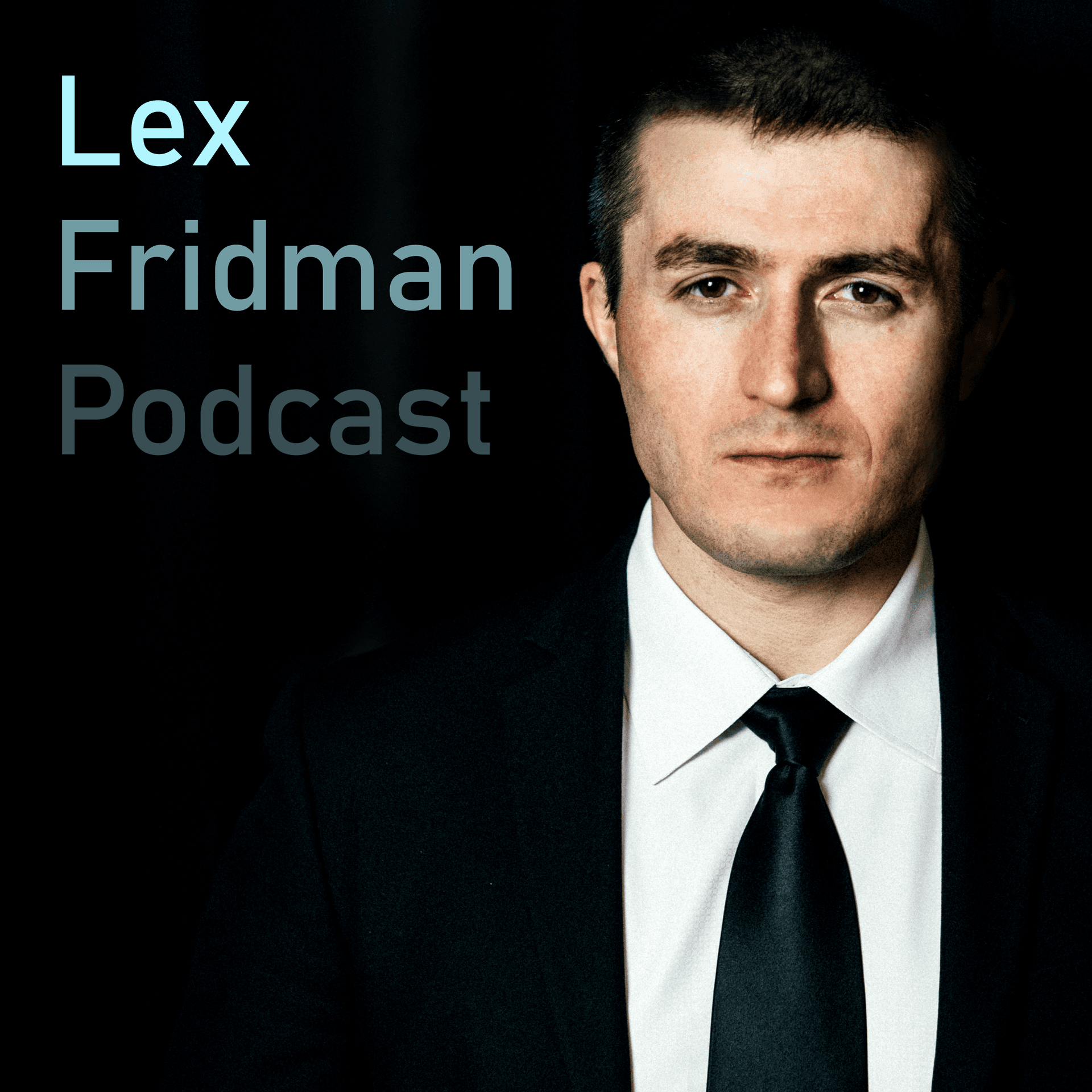
In short
```markdown Lex Fridman Podcast - Episode #433
Guest
Sara Walker Title: Physics of Life, Time, Complexity, and Aliens Description: Sara Walker is an astrobiologist and theoretical physicist. In this episode, she discusses the physics of life's emergence, the nature of time, complexity, and the potential existence of alien life.
Key Concepts and Discussions
Introduction
- Sara Walker's background as an astrobiologist and theoretical physicist.
- Discussion of her book, "Life as No One Knows It: The Physics of Life's Emergence."
Defining Life
- Materialists vs. Vitalists: Debate over whether life can be fully described by physical matter or if there is an intangible essence.
- Complexity in Definition: Life's definition is paradoxical; traditional definitions often fail due to counterexamples like viruses and machines.
Time and Space
- Life and complexity are deeply tied to time rather than just space.
- Discussion on seeing time as a massive structure, making living objects vast in temporal dimensions.
Technosphere and the Theory of Everything
- Technosphere: The integration of technology and life on Earth as a large, living system.
- Theory of Everything: Critique of current physics approaches; suggesting a deeper explanatory framework is needed.
Origin of Life
- Life as a continuous process, not a singular event.
- Exploration of how life might originate through self-reinforcing chemical structures.
Assembly Theory
- A framework to measure complexity through assembly index and copy number.
- The idea that life's building blocks emerge from historically contingent pathways.
Aliens and the Great Perceptual Filter
- Speculation on the existence of alien life.
- The potential perceptual limitations that prevent recognizing other complex life forms.
Fashion and Beauty
- Fashion as a metaphor for exploring the complexity of human aesthetics.
- Beauty as an adaptive trait in social and evolutionary contexts.
Language and Computation
- Language as a dynamic, living structure evolving over time.
- Computation as a language to understand the universe, though not fundamental.
Consciousness and Artificial Life
- Consciousness embedded in the temporal history of life.
- Perspectives on artificial intelligence and its potential to become conscious.
Free Will and the Nature of Existence
- Free will arises from deterministic structures embedded in randomness.
- Philosophical inquiry into why anything exists at all.
Sponsors
- Notion: [notion.com/lex](https://notion.com/lex)
- Motific: [motific.ai](https://motific.ai)
- Shopify: [shopify.com/lex](https://shopify.com/lex)
- BetterHelp: [betterhelp.com/lex](https://betterhelp.com/lex)
- AG1: [drinkag1.com/lex](https://drinkag1.com/lex)
Links
- [Sara's Book](https://amzn.to/3wVmOe1)
- [Sara's X](https://x.com/Sara_Imari)
- [Sara's Instagram](https://instagram.com/alien_matter)
Podcast Information
- Podcast Website: [lexfridman.com/podcast](https://lexfridman.com/podcast)
- Apple Podcasts: [link](https://apple.co/2lwqZIr)
- Spotify: [link](https://spoti.fi/2nEwCF8)
- RSS: [link](https://lexfridman.com/feed/podcast/)
- YouTube Full Episodes: [youtube.com/lexfridman](https://youtube.com/lexfridman)
- YouTube Clips: [youtube.com/lexclips](https://youtube.com/lexclips)
Support & Connect
- Support on Patreon: [patreon.com/lexfridman](https://www.patreon.com/lexfridman)
- Twitter: [@lexfridman](https://twitter.com/lexfridman)
- Instagram: [@lexfridman](https://www.instagram.com/lexfridman)
- LinkedIn: [lexfridman](https://www.linkedin.com/in/lexfridman)
- Facebook: [lexfridman](https://www.facebook.com/lexfridman)
- Medium: [@lexfridman](https://medium.com/@lexfridman)
Conclusion Sara Walker's discussion with Lex Fridman covers a broad spectrum of topics from the fundamental nature of life and the universe to the implications of advanced artificial intelligence. Her insights challenge conventional views and encourage rethinking the deep connections between life, consciousness, and the cosmos. ```
Written by AI. May contain mistakes. Listen to the episode to check what was said.
Transcript
Automatic transcript. May contain errors.0:00The following is a conversation with Sarah Walker, her third time in this podcast. She is an astrobiologist and theoretical physicist interested in the origin of life and in discovering alien life on other worlds. She has written an amazing new upcoming book titled Life as no one knows it, The Physics of Life's Emergence. This book is coming out on August 6th, so please go pre -order it now. It will blow your mind. And now a quick few second mention of each sponsor. Check them out in the description. It's the best way to support this podcast. We got Notion for Notes, Motific for LLM deployment, Shopify for e -commerce, better help for mental health and age you one for delicious, delicious multivitamin drink.
0:52Choose wise in my friends. Also, if you want to get in touch with me or to work with our amazing team, go to Lex freebie .com slash contact. And now onto the full ad reads, no ads in the middle. I try to make these interesting, but if you skip them, please still check out the sponsors. I enjoy their stuff. Maybe you will too. This episode is brought to you by Notion, a note taking and team collaboration tool. I've been using it recently for note taking on academic papers, specifically machine learning papers. And there's a lot of machine learning papers and it's straight up just a great note taking tool.
1:30But beyond that, it's a great collaboration tool for the note taking process and the whole project management life cycle. So it combines note taking wiki's project management and then there's an AI assistant that can summarize everything and anything and you can ask questions across all of those things. So it's not just for single document across all the documents and obviously people are collaborating on those documents so you can ask questions, what did this person do, what is the status of this project, so on, so forth. It's just a really nice integration of LLMs. This is the fun about the question with LLMs.
2:06How do you leverage the obvious power that they possess to be useful to whatever tasks that we do? What is the actual product here? And so, notion leverages them extremely well where the product is team collaboration on notes, wikis, and project management. So, really well done. Love to support people that do a great job of building a great software product. Try Notion AI for free when you go to notion .com slash Lex. That's all lowercase notion .com slash Lex to try the power of notion AI today. This episode is brought to you by a new sponsor. It's a SaaS platform that helps businesses deploy all -ems and in general, a generative AI that are customized with Rags or TreeVlog Mints generation on organizational data sources.
2:59Obviously, these kinds of data sources are often super sensitive and that's where the certificate comes in. They help companies with security and compliance. A little background here since I had to do the deep dive myself a while back. Motific is created by Cisco, specifically Cisco's outchift group. And outchift is doing cutting edge R &D stuff in Cisco. So Cisco has very, very, very long track record and reputation of working with giant businesses and helping them out and not messing stuff up. When you're dealing with sensitive data and when you're dealing with businesses that make a lot of money and already have products that bring in a lot of money and a lot of people rely on you don't want to mess stuff up.
3:46I think specifically this task of taking organizational data that's private to the company that has to remain very secure, it's very sensitive data, using the power of LLM's and search the the RAAG framework on that data is super, super powerful. I think companies that do this well and quickly, which is what MetaFix helps with, will win because the productivity gains nobody knows but I don't think there's a ceiling so it pays off to play with LLM's but do so in a secure way. Visit Motivic AI to learn more as MOTIFIC .AI. This episode is also brought to you by Shopify, a platform designed for anyone to sell anywhere with a great looking online store.
4:47I have a site set up like streaming .com slash store as a few shirts on it, took a few minutes to set up, super easy. They integrate third -party apps. I did that for the on -demand printing so I don't have to think about any of that. all you do is upload the design, the shirts are sold and shipped. It's kind of an interesting experiment for me to understand how people look at you when you have a t -shirt with nothing on it and a t -shirt with something on it, especially if that's something that's recognizable. So if I have Jimmy Hendrix or Pink Floyd shirt or Johnny Cash or Metallica shirt, there's going to be certain people that look at me with recognition and respect and almost like they want to start a conversation with me.
5:27When I have a t -shirt, like a black t -shirt with nothing on it, that kind of look doesn't happen. If I went out more, I would take a notebook and actually make this a little bit more rigorous. But anyway, there's definitely a noticeable social effect that happens when you have a t -shirt with a cool thing on it. So I'm really happy with all the creators there using Child Fight the Cell cool t -shirts. I wish there was a better discovery process though. I'm always in search of buying cool t -shirts. I had just on Instagram I think there was an advertisement for a set of t -shirts for classic movies and that was really bad -ass but I scrolled past it and I regret it.
6:13See that's like a piece of advertisement that actually works. But I wish there was a way to not take me from the scrolling experience or maybe a way to book market really naturally. There's already a natural sort of skepticism about advertisement, but here it worked. So like when advertisement is done well, it works. I just wish I saved it. But anyway, hopefully they you Shopify to sell shirts if they don't, they should. And if you're thinking of selling shirts, you Shopify also sign up for a $1 per month trial period at Shopify .com slash Lux. That's all lowercase. Go to Shopify .com slash Lux to take your business to the next level today.
6:53This episode is brought to you by BetterHelp. spelled H -E -L -B -H -H -H -L -B. They figure out what you need to match you with a licensed therapist in under 48 hours. Individuals, couples, the whole thing. What are my favorite couples therapies in the film? I feel like breaking bad had good ones. That's a series, but I'm trying to think of them in a movie. That's a cool setting because I've been thinking about interviews, directors, and actors more and more. and the setting of a couple's therapy is really interesting. It's a really interesting dynamic between a man and a woman and a therapist and then trying to sort of make explicit the implicit drama that's been boiling over in their relationship.
7:40Obviously, the therapist one -on -one relationship was really interesting on film. Goodwill hunting with Robin Williams, man. What a great great performance. I miss that guy so much. What a truly special human being. Anyway, back in the real world therapy, even when there's no camera, is really important. Pushing the light on the young in shadow. 350 million plus messages, 34 ,000 licensed therapists, 4 .4 million people who have gotten help through better help. Check them out at betterhelp .com slash Lex and save on your first month. That's betterhelp .com slash Lex. This episode is also brought to you by AG1 and all in one daily drink at the support better health and peak performance.
8:30I drink it every day multiple times a day sometimes. Usually after a run like I'm going to go for a run and a little bit, it's already that Texas heat. It's warming up. It's warming up. It's creeping up on the 100 degree weather and I love it. I don't care. The hotter it is, the tougher the run, the more of a mental test it is. And what I do is I speed up, take that feeling of discomfort and allow myself to sit in it and visualize that feeling of discomfort fading. So from a third person perspective, it's just a feeling and a feeling can be controlled. A feeling can be ignored. A feeling can be morphed from the negative to the positive.
9:15So for me, it's not just a meditative practice of letting go of all feelings and focusing on the breath. For me, it is also being able to control that discomfort and letting go of that discomfort, the feeling and the notion of discomfort even when on the surface there should be a lot a physical discomfort because physical discomfort is first and foremost a construction of the mind. It's not real. It's not real. As long as you believe it's not real, it's not real. And that's what I do. But when I get back home, extremely exhausted and uncomfortable having overcome that challenge, I put an age you one in the freezer for like 30 minutes.
9:59It has this great consistency and then after a shower I just take the drink and celebrate having overcome something difficult. They'll give you one month supply of fish oil when you sign up at drinkag1 .com slash Lex. This is Alex. We've been podcast to support it. Please check out our sponsors in the description and now to your friends here Sarah Walker.
10:40You open the book, Life as no one knows it, the physics of life's emergence with the distinction between the materialists and the vitalists. So what's the difference? Can you maybe define it too? I think the question there is about whether life can be described in terms of matter and, you know, physical things or whether there is some other feature that's not physical that actually animates living things. So for a long time, people maybe have called that a soul. It's been really hard to pin down what that is. So I think the vitalist idea is really that it's kind of a dualistic interpretation that there's sort of the material properties, but there's something else that animates life that is there when you're alive and it's not there when you're dead.
11:32And materialists kind of don't think that there's anything really special about the matter of life and the material substrates that life is made out of. So they disagree on some really fundamental points. Is there a gray area between the two? Like, maybe all the verses matter, but there's so much we don't know that it might as well be magic. Yeah. That like, whatever that magic that the vitalists see, meaning like, there's just so much mystery that it's really unfair to say that it's boring and understood. And as simple as quote unquote, physics. Yeah, I think the entire universe is just a giant mystery.
12:13I guess that's what motivates me as a scientist. And so oftentimes when I look at open problems like the nature of life or consciousness or what is intelligence or are their souls or whatever question that we have that we feel like we aren't even on the tip of the answering yet. I think we have a lot more work to do to really understand the answer to these questions. So it's not magic. It's just the unknown. And I think a lot of the history of humans coming to understand the world around us has been taking ideas that we once thought were magic or supernatural and really understanding them in a much deeper way.
12:53That we learn what those things are and they still have an air of mystery even when we understand them. There's no. So there's no sort of bottom to our understanding. So do you think the vitalists have a point that they're more eager and able to notice the magic of life? I think that no tradition, vitalists included, is ever fully wrong about the nature of the things that they're describing. So a lot of times when I look at different ways that people have described things across human history, across different cultures, there's always a seat of truth in them and I I think it's really important to try to look for those because if there are narratives that humans have been telling ourselves for thousands of years, for thousands of generations, there must be some truth to them.
13:39We've been learning about reality for a really long time and we recognize the patterns that reality presents us. We don't always understand what those patterns are. And so I think it's really important to pay attention to that. So I don't think the violists are actually wrong and a lot of what I talk about in the book, but also I think about a lot just professionally is the nature of our definitions of what's material and how science has come to invent the concept of matter and that some of those things actually really are inventions that happened in a particular time in a particular technology that could learn about certain patterns and help us understand them and that there are some patterns we still don't understand and if we knew how to measure those things or we knew how to measure those things or we knew how to measure those things.
14:28describe them in a more rigorous way. We would realize that the material world matter has more properties than we thought that I did. And one of those might be associated with the thing that we call life life could be a material property and still have a lot of the features that the vitalists thought were mysterious. So we may still expand our understanding what is incorporated in the category of matter that will eventually incorporate such magical things the dividalists have noticed in that life. Yeah, so I think about, I always like to use examples from physics, so I'll probably do that to like, it's just my go -to place.
15:08But in the history of gravitational physics, for example, in the history of motion, when Aristotle came up with his theories of motion, he did it by the material properties he thought things had. So there was a concept of things falling to earth because they were solid like and things was raising to the heavens because they were air -like and things moving around the planet because they were celestial -like. But then we came to realize that thousands of years later and after the invention of many technologies that allowed us to actually measure time in a mechanistic way and track planetary motion and we could, you know, roll balls down in climb planes and track that progress, we realized that if we just talked about mass and acceleration, we could unify by all motion in the universe in a really simple description.
15:55So we didn't really have to worry about the fact that my cup is heavy and the air is light, like the same laws describe them. If we have the right material properties to talk about what those laws are actually interacting with. And so I think the issue with life is, we don't know how to think about information in a material way. And so we haven't been able to build a unified description of what life is or the kind of things that evolution builds because we haven't really invented the right material concept yet. So when talking about motion, the laws of physics appear to be the same everywhere out in the universe.
16:36You think the same is true for all the kinds of matter that we might eventually include life in? I think life obeys universal principles. I think there is some deep underlying explanatory framework that will tell us about the nature of life in the universe and will allow us to identify life that we can't yet recognize because it's too different. You're right about the paradox of defining life. Why does this seem to be so easy and so complicated at the same time? You know all the sort of Classic definitions people want to use just don't work. They don't work in all cases. So Carl Sagan had this wonderful essay on definitions of life where I think he talks about aliens coming from another planet.
17:22If they saw Earth, they might think that cars were the dominant life form because there's so many of them on our planet. And like humans are inside them. And you might want to exclude machines, but any definition, you know, like classic biology textbook definitions would also include them. And so, you know, he wanted to draw a boundary between these kind of things by trying to exclude them, but they were naturally included by the definitions people want to give. And in fact, what he ended up pointing out is that all of the definitions of life that we have, whether it's life is a self -reproducing system, or life eats to survive, or life requires compartments, whatever it is, there's always a counter example that challenges that definition.
18:04And this is why viruses are so hard or why fire is so hard. And so we've had a really hard time trying to pin down from a definitional perspective. Exactly what life is. Yeah, you actually bring up the zombie and fungus. I enjoyed looking at this thing as an example of one of the challenges. You seem to mention viruses, but this this is a parasite. Look at that. Did you see this in the jungle? Infects and actually one of the interesting things about the jungle, everything is a fermoral, like everything eats everything really quickly. So if you, if an organism dies, that organism disappears. It's a machine that doesn't have, I wanted to say, doesn't have a memory or a history, which is interesting, given your work on history in defining a living being.
18:56The jungle forgets very quickly. It wants to erase the fact that you existed very quickly. Yeah, but it can erase it. It's just restructuring it. And I think the other thing that is really vivid to me about this example that you're giving is how much death is necessary for life. So I worry a bit about notions of immortality and whether immortality is a good thing or not. So I have sort of a broad conception that life is the only thing the universe generates that actually has even the potential to be immortal. But that says like this sort of process that you're describing, relife is about memory and historical contingency and construction of new possibilities.
19:37But when you look at any instance of life, especially one, as dynamic as what you're describing, it's a constant birth and death process. But that birth and death process is like the way that the universe can explore what possibilities can exist and not everything, not every possible human or every possible ant or every possible zombie ant, or every possible tree will ever live. So it's, you know, it's an incredibly dynamic and creative place because of all that test. So does this thing, this is a parasite that needs the ant. So is this a living thing or is this not a living thing? So this is, it just pierces the ant.
20:18I mean, it, right. And I've seen a lot of this, by the way, organisms working together in a jungle, like ants protecting a delicious piece of fruit. So they need the fruit. But like if you touch that fruit, they're going to like the forces emerge. They're fighting you. They're defending that food, right to the death. It just nature seems to find mutual benefits, right? Yeah, it does. I think that's perplexing for me about these kind of examples is, you know, effectively the ants dead, but it's staying alive now because it's piloted by this fungus. And so that gets back to this, you know, thing that we're talking about a few minutes ago about how the boundary life is really hard to define.
21:00So, you know, anytime that you want to draw a boundary around something and you say, this feature is the thing that makes this alive or this thing is alive on its own, there's It's not ever really a clear boundary and these kind of examples are really good at showing that because it's like the thing that you would have thought is the living organism is now dead except that it has another living organism that's piloting it. So the two of them together are alive in some sense, but they're, you know, now in this kind of weird symbiotic relationship that's taking the sand to its death. So what do you do with that in terms of when you try to define life?
21:35I think we have to get rid of the notion of an individual as being relevant. And this is really difficult because a lot of the ways that we think about life, like the fundamental unit of life is the cell, individuals are alive. But we don't think about how gray that distinction is. So for example, you might consider self -reproduction to be the most defining feature of life. a lot of people do actually like, you know, one of these standard definitions that a lot of people may feel like to use an astrobiology. Life is a self -sustaining chemical system capable of Darwinian evolution, which I was once quoted as agreeing with and I was really offended because I hate that definition.
22:18I think it's terrible. And I think it's terrible that people use it. I think like every word in that definition is actually wrong as a descriptor of life. Life is a self -sustaining chemical system capable of Darwinian evolution. Why is that? That seems I can pretty yeah, I know if you want to make me angry you can pretend I said that and believed it. So self -sustaining chemical system, Darwinian evolution, what is self -sustaining? What's so frustrating? I mean, which aspect is frustrating to you? But it's also very interesting words. Yeah, they're all interesting words. And you know, together they sound really smart and they sound like they box in what life is, but you can use any of the words individually and And you can come up with counter examples that don't fulfill that property.
23:02The self -sustaining one is really interesting thinking about humans, right? Like we're not self -sustaining, we're dependent on societies. And so, you know, I find it paradoxical that, you know, it might be that societies because they're self -sustaining units are now more alive than individuals are. And that could be the case, but I still think we have some property associated with life. I mean, that's the thing that we're trying to describe. So that one's quite hard and in general, you know, no organism is really self -sustaining. They always require an environment. So being self -sustaining is coupled in some sense to the world around you.
23:37We don't live in a vacuum. So that part's already challenging. And then you can go to chemical system. I don't think that's good either. I think there's a confusion because life emerges in chemistry. That life is chemical. I don't think life is chemical. I think life emerges in chemistry because chemistry is the first thing the universe builds where it cannot exhaust all the possibilities because the combinatorial space of chemistry is too large. Well, but is the possible to have a life that's not a chemical system? Yes. Well, there's a guy I know named Lee Kronin has been on a podcast a couple times who just got really pissed off.
24:16I know, I know, I know, I know, I know, I know, I know. He probably just got really pissed off hearing that I hope people somehow don't know he's a chemist. He would agree with that statement. Woody, I don't think he would. I don't think he would. He would broaden the definition of chemistry until it would include everything. Oh, sure. Okay, so you're maybe, I don't know. But wait, but you said that universe, that's the first thing it creates is chemistry. Where the, very precisely, it's not the first thing it creates. Obviously, it has to make atoms first, but it's the first thing. If you think about the universe originated, atoms were made in big bang nucleus synthesis, and then later in stars and then planets formed and planets become engines of chemistry.
24:56They start exploring what kind of chemistry is possible. And the commonatorial space of chemistry is so large that even on every planet in the entire universe, you will never express every possible molecule. I like this example actually that Lee gave me, which is to think about taxaul. it has a molecular weight of about 853. It's got a lot of atoms, but it's not astronomically large. And if you try to make one molecule with that molecular formula and every three -dimensional shape you could make with that molecular formula, it would fill 1 .5 universes in volume. So with one unique molecule, that's just one molecule.
25:43So chemical space is huge. And I think it's really important to recognize that because if you want to ask a question of why does life emerge in chemistry? Well, life emerges in chemistry because life is the physics of how the universe selects what gets to exist. And those things get created along historically contingent pathways and memory and all the other stuff that we can talk about. But the universe has to actually make historically contingent choices in chemistry because it can't exhaust all possible molecules. What kind of things can you create as outside the combinatorial space of chemistry?
26:17That's what I'm trying to understand. Oh, if it's not chemical. So I think some of the things that have evolved on our biosphere, I would call as much alive as chemistry as a cell, but they seem much more abstract. So for example, I think language is alive. I think, or at least life, I think memes are. I think. You're saying language is life. Yeah, languages alive. No boy, I'm gonna have to explore that one. Okay, but - Life maybe not, maybe not alive, but I don't, I actually don't know where I stand exactly on that. I've been thinking about that a little bit more lately, but mathematics too. And it's interesting because people think that math has this platonic reality that exists outside of our universe.
27:01And I think it's a feature of our biosphere and it's telling us something about the structure of ourselves. And I find that really interesting because when you would sort of internalize all of these things that we notice about the world and you start asking, well, what does these look like if I was, you know, something outside of myself observing these systems that we're all embedded in what would that structure look like and I think we look really different than the way that we talk about what we look like to each other. What do you think a living organism in math is is it one X -Sematic system or is it individual theorems or is it I think it's the fact that it's open -ended in some sense.
27:43It's another open -ended combinatorial space and the recursive properties of it allow creativity to happen, which is what you see with you know like the revolution in the last century with girdle theorem and touring and you know there's there's clear places where mathematics notices holes in the universe. So it seems like you're sneaking up at a different kind of definition of life, open -ended, large -committerial space, room for creativity. Definitely not chemical. I mean chemistry is one substrate. Shredded to chemical. Yeah. Okay, what about the third thing which I think will be the the hardest because you probably like it the most is evolution or selection.
28:28Well specifically it's Darwinian evolution. Darwinian evolution. Darwinian evolution is a problem but the reason that definition is a problem is not because evolution is in the definition but because the implication is that most people would want to make is that an individual is alive and the evolutionary process at least the Darwinian evolutionary processes, most evolutionary processes, they don't happen at the level of individuals. They happen at the level of populations. So again, you would be saying something like what we saw with the self -sustaining definition, which is that populations are alive, but individuals aren't, because populations evolve and individuals don't.
Read the full transcript
29:06And obviously, maybe you're alive because your gut microbiome is evolving, but Lex's an entity right now is not evolving by canonical theories of evolution in assembly theory, which is attempting to explain life, evolution is a much broader thing. So in an individual organism can evolve under assembly theory? Yes, you're constructing yourself all the time. Assembly theory is about construction and how the universe selects for things to exist. What if you reformulate everything like a population is the living organism? That's fine too. But this again gets back to it. So I think what all of the, you know, like we can nitpick at definitions.
29:45I don't think it's like incredibly helpful to do it, but the reason for me. Yeah, it is fun. It is really fun. And actually, I do think it's useful in the sense that when you see the ways that they all break down, you either have to keep forcing in your like sort of conception of life you want to have or you have to say all these definitions are breaking down for a reason. Maybe I should adopt a more expansive definition that encompasses all the things that I think and our life. And so for me, I think life is the process of how information structures matter over time and space. And an example of life is what emerges on a planet and yields an open and de -cascade of generation of structure and increasing complexity.
30:31And this is the thing that life is. And any individual is just a particular instance of these lineages that are structure to cross time. And so we focus so much on these individuals that are these short temporal moments in this larger causal structure that actually is the life on our planet. And I think that's why these definitions break down because they're not general enough, they're not universal enough, they're not deep enough, they're not abstract enough to actually capture that regularity. Because we're focused on those that little a formal thing that fall into life? Yeah. Aristotle focusing on heavy things falling because they're earth like and things floating because they're air like it's the wrong thing to focus on.
31:18What exactly are we missing by focusing on such a short span of time? I think we're missing most of what we are. So one of the issues, I've been thinking about this all like really viscerally lately. It's weird when you do theoretical physics because I think it literally changes the structure of your brain. And you see the world differently, especially when you're trying to build new abstractions. Do you think it's possible if you're a theoretical physicist that like it's easy to fall off the cliff and go descend into madness? I mean, I think you're always on the edge of it, but I think what is amazing about being a scientist and trying to do things rigorously is it keeps your sanity.
31:56So I think if I wasn't a theoretical physicist, I would be probably not saying. But what it forces you to do is hold the thought, like you have to hold yourself to the fire of like these abstractions in my mind have to really correspond to reality and I have to really test that all the time. And so I love building new abstractions and I love going to those like incredibly creative. You know, spaces that people don't see as part of the way that we understand the world now. But ultimately I have to make sure that whatever I'm pulling from that space is something that's really usable and really like relates to the world outside of me That's what science is so we were talking about what we're missing when we look at a small stretch of time in a small stretch of space.
32:42Yeah, so the issue is You we evolve perception to see reality a certain way right so for us space is really important and time feels fleeting. I had a really wonderful mentor, Paul Davies, most of my career, and Paul's amazing because he gives these little seed thought experiments all the time. Something he used to ask me all the time when I was a postdoc, this is a random tangent. How much of the universe could be converted into technology if you were thinking about long -term futures and stuff like that? It's a weird thought experiment, but there's a lot of deep things there. And I do think a lot about the fact that we're really limited in our interactions with reality by the particular architectures that we evolved.
33:27And so we're not seeing everything. And in fact, our technology tells us this all the time because it allows us to see the world in new ways by basically allowing us to perceive the world in ways that we couldn't otherwise. And so what I'm getting at with this is I think that living objects are actually huge. Like, there are some of the biggest structures in the universe, but they are not big in space. They are big in time. And we actually can't resolve that feature. We don't interact with it on a regular basis. So we see them as these fleeting things that have this really short temporal clock time without seeing how large they are.
34:03When I'm saying time here, I really, like, the way that people could picture it is in terms of causal structures. So if you think about the history of the universe to get to you, and you imagine that that entire history is you. That is that the picture I have in my mind when I look at every living thing. So you have a tweet for everything. You tweeted. It doesn't everyone. You have a lot of poetic profound tweets. Sometimes they're puzzles that take a long time to figure out. Well, you know what it is? The trick is the reason they're hard to write is because it's compressing a very deep idea into a short amount of space and I really like doing that intellectual exercise because I find it productive for me.
34:47Yeah, it's a very interesting kind of compression algorithm though. Yeah, I like language. I think it's really fun to play with. Yeah, I wonder if AI can decompress it. I think I would like to try this but I think I use language in certain ways that are non -canonical and I do it very purposefully and it would be interesting to me how AI would interpret it. Yeah, your tweets would be a good touring test for this for super intelligence. Anyway, you tweeted that things only look emergent because we can't see time. So if we could see time, what would the world look like? You're saying you'll be able to see everything that an object has been every step of the way that led to this current moment and all the interactions that required to make that evolution happen.
35:41So you would see this gigantic tail. The universe is far larger in time than it is in space. And this planet is one of the biggest things in the universe. Also the more complexity the bigger. Yeah, technosphere. I think the modern technosphere is the largest object in time in the universe that we know about. And when you say technosphere, what do you mean? I mean, the global integration of life and technology on this planet. So all the things, all the technological things we've created? But I don't think of them as separate. They're like very integrated with the structure that generated them. So you can almost imagine it, like time is constantly bifurcating and it's generating new structures and these new structures are locally constructing the future.
36:34And so things like you and I are very close together in time because we didn't diverge like very early in history universe. It's very recent. And I think this is one of the reasons that we can understand each other so well and we can communicate effectively. And I might have some sense of what it feels like to be you, but you know, other organisms, um, bifurcated from us in time earlier. This is just the concept of phylogeny, right? Um, but if you take that deeper and you really think about that as the structure of the physics that generates life, um, and you take that very seriously, all of that causation is still bundled up in the objects we observed today.
37:16And so you and I are close in this temporal structure, but we're also, we're so close because we're really big. And we only are very different and sort of like the most recent moments in the time that's like embedded in us. It's hard to use words to visualize what's in minds. I have such a hard time with this sometimes. I'm like, I actually was thinking in the way over here. I was like, you know, you have pictures in your brain and then they're hard to put into words. But I realized I always say I have a visual, but it's not actually I have a visual that I have a feeling because oftentimes I cannot actually draw a picture in my mind for the things that I say, but sometimes they go through a picture before they get to words.
38:03But I like experimenting with words because I think they help paint pictures. Yeah, it's again some kind of compressed feeling that you can query to get a sense of the bigger visualization that you have in mind. Yeah, it's just a really nice compression. But I think the idea of this object that in it contains all the information about the history of identity that you see now, just trying to visualize that is pretty cool. Yeah. I mean, obviously the mind breaks down quickly as you step seconds and minutes back in time. For sure. I guess it's just a gigantic object. Yeah, I'm supposed to be thinking about.
38:48Yeah, I think so. And I think this is one of the reasons that we have such an ability to abstract as humans, because we are so gigantic that like the space that we can go back into is really large. So like the more abstract you're going like the deeper you're going in that space But in that sense aren't we fundamentally all connected? Yes, and this is why the the definition of life cannot be the individual It has to be these lineages because they're all connected They're interwoven and they're exchanging parts all the time Yeah, so maybe there's certain aspects of those lineages that Can be lifelike they can be characteristics they can be measured like with the somebody theory that yeah more or less life But they're all just fingertips of a much bigger object.
39:30Yeah, I think life is very high dimensional. And in fact, I think you can be alive in some dimensions and not in others. Like if you could, if you could project all the causation that's in you in some, in some features of you, you know, very little causation is required and like a very little history. And in some features, a lot is. So it's quite difficult to take this really high dimensional, very deep structure. and project it into things that we really can understand and say like this is the one thing that we're seeing because it's not one thing. It's funny we're talking about this now and I'm slowly starting to realize one of the things I saw when I took ayahuasca afterwards actually.
40:16So the actual ceremony is four or five hours but afterwards you're still writing whatever the thing that you're writing. And I got a chance to, afterwards, hang out with some friends and just shoot the shit in the, you know, in the forest. And I get to see their faces. And what was happening with their faces and their hair is I would get this interesting effect. First of all, everything was beautiful and I just had so much love for everybody. But I could see their past selves like behind them. It was this effect where I guess it's a blurring effect of where like if I move like this, the faces that were just there are still there and it would just float like this, these behind them, which will create this incredible effect.
41:09But it's also another way to think about that is I'm visualizing a little bit of that object of the thing they wore just a few seconds ago. It's a cool little effect. And now it's like giving it a bit more profundity to the effect that was just beautiful aesthetically. But it's also beautiful from a physics perspective because that is a past self. I get a little glimpse at the past self that they were. But then you take that to its natural conclusion, not just a few seconds ago, but just to the beginning of the universe. And you could probably get to that. Billions of years. Yeah. Get down that lineage.
41:50It's crazy that there's billions of years inside of all of us. All of us. Yeah. And then we connect, obviously, not too long ago. You mentioned just the technosphere, and you also wrote that the most alive thing in this planet is our technosphere. Yeah. Why is the technology we create a kind of life form? Why are you seeing it as life? Because it's creative, but with us obviously, like not independently of us, and also because of this sort of lineage view of life. And I think about life often as a planetary scale phenomenon, because that's sort of the natural boundary for all of this causation that's bundled in every object in our biosphere.
42:31And so for me, it's just sort of the current boundary of how far life on our planet has pushed into the things that our universe can generate. And so it's the furthest thing, it's the biggest thing. And I think a lot about the nature of life across different scales. And so, you know, we have cells inside of us that are alive and we feel like we're alive, but we don't often think about the societies that we're embedded in as alive or a global scale organization of us and our technology on the planet as alive. But I think if you have this deeper view into the nature of life, which I think is necessary also to solve the original life, then you have to include those things.
43:20All of them. You have to simultaneously think about life at every single scale, the planetary and the bacteria level. Yeah, this is the hard thing about solving the problem of life. I think is how many things you have to integrate into building a sort of a Unified picture of this thing that we want to call life and a lot of our theories of physics are built on Building Deep regularities that explain a really broad class of phenomenon. I think we haven't really traditionally thought about life that way But I think to get at some of these hardest questions like looking for life on other planets or the origin of life you really have to think about it that way.
44:00And so most of like my professional work is just trying to understand like every single thing on this planet that might be an example of life which is pretty much everything and then trying to figure out like what's the deeper structure underlying that. Yeah, shorting a wrote that living matter while not alluding to laws of physics has established up to date is likely to involve other laws of physics here. They're too unknown. So to him, I love that quote. There was a sense that at the bottom of this are new laws of physics that could explain this thing that we call life. Yeah, children really tried to do what physicists tried to do, which is explain things.
44:45And his attempt was to try to explain life in terms of non -equilibrium physics because he thought that was the best description that we could generate at the time. And so he did come up with something really insightful, which was to predict the structure of DNA is an apiatic crystal. And that was for a very precise reason that, you know, that was the only kind of physical structure that couldn't code enough information to actually specify a cell. We knew some things about genes, but not about DNA and his actual structure when he proposed that. But in the book, he tried to explain life is kind of going against entropy.
45:26And so some people talked about it as like Schrodinger's paradox how can life persist when the second law of thermodynamics is there. But in open systems, that's not so problematic. And really the question is, why can life generate so much order? And we don't have a physics to describe that. And it's interesting, you know, generations of physicists have thought about this problem. Oftentimes it's like when people are retiring, they're like, oh, now I can work on life. Or they're like more senior in their career, and they've worked on other more traditional problems. And there's still a lot of impetus in the physics community to think that non -equilibrium physics will explain life, but I think that's not the right approach.
46:06I don't think ultimately the solution to what life is is there, and I don't really think entropy has much to do with it unless it's entirely reformulated. Well, because you have to explain how interesting water, how complexity emerges from the soup. Yes, from randomness. From randomness. Physics currently can't do that. No, physics hardly even acknowledges that the universe is random at its base. We like to think we live in a deterministic universe and everything is deterministic, but I think that's probably an artifact of the way that we've written down laws of physics since new and invented modern physics in his conception of motion and gravity, which You know, he formulated laws that had initial conditions and fixed dynamical laws.
46:54And that's been sort of become the standard canon of how people think the universe works and how we need to describe any physical system is within initial condition and a law of motion. And I think that's not actually the way the universe really works. I think it's a good approximation for the kind of systems that physicists have studied so far. And I think it will radically fail in the long term at describing reality at its more basal levels. But I'm not saying there's a base. I don't think that reality has a ground. And I don't think there's a theory of everything. But I think there are better theories.
47:28And I think there are more explanatory theories. And I think we can get to something that explains much more than the current laws of physics do. We say theory of everything. You mean like everything everything? Yeah. Yeah, you know, like in physics right now, it's really popular to talk about theories of everything. This was string theory, supposed to be a theory of everything because it unifies quantum mechanics and gravity. And you know, people have their different pet theories of everything and the challenge with a theory of everything, I really love this quote from David Crackauer, which is a theory of everything, is a theory of everything except those things that theorize.
48:01I mean, you're removing the observer from the thing. Yeah, but it's also, it's also weird because if a theory of everything, explained everything, I think it should also explain the theory. So the theory has to be recursive. And none of our theories of physics are recursive. So it's just a weird concept. Yeah, but it's very difficult to integrate the observer into a theory. I don't think so. I think you can build a theory acknowledging that you're an observer inside the universe. But it doesn't become recursive in that way. And that's, you're just being as possible to make a theory that's okay with that.
48:33I think so. I mean, I don't think there's always gonna be the paradox of another meta level, you could build on the meta level, right? So like if you assume this is your universe and you're the observer outside of it, you have some meta description of that universe, but then you need a meta description of you describing that universe, right? So, you know, this is one of the biggest challenges that we face, being observers inside our universe and also, you know, why the paradox is in the foundations of mathematics in any place that we try to have observers in the system or a system describing itself show up.
49:08But I think it is possible to build a physics that builds in those things intrinsically without having them be paradoxical or have holes in the descriptions. And so one place I think about this quite a lot, which I think can give you sort of a more concrete example is the nature of like what we call fundamental. So we typically define fundamental right now in terms of the smallest indivisible units of matter. So again, you have to have a definition of what you think material is and matter is. But right now, what's fundamental or elementary particles? And we think they're fundamental because we can't break them apart further.
49:47And obviously we have theories like string theory that if they're right, would replace the current description of what's the most fundamental thing in our universe by replacing it with something smaller. But we can't get to those theories because we're technologically limited. And so if you look at this from a historical perspective and you think about explanations changing as physical systems like us learn more about the reality in which they live, we once considered atoms to be the most fundamental thing. And it literally comes from the word indivisible and then we realized Adams had substructure because we built better technology, which allowed us to quote unquote see the world better and resolve smaller features of it.
50:32And then we built even better technology, which allowed us to see even smaller structure and get down to the standard model particles. And we think that there's might be structure below that, but we can't get there yet with our technology. So what's fundamental the way we talk about it in um current physics is not not actually fundamental. It's the boundaries of what we can observe in our universe, what we can see with our technology. And so if you want to build a theory that's about us and about what's inside the universe that we can observe, not what's at the boundary of it, you need to talk about objects that are in the universe that you can actually break apart to smaller things.
51:16So I think the things that are fundamental are actually the constructed objects. They're the ones that really exist and you really understand their properties because you know how the universe constructed them because you can actually take them apart. You can understand the intrinsic laws that built them. But the things that the boundary are just at the boundary, they're evolving with us and we'll learn more about that structure as we go along. But really, if we want to talk about what's fundamental inside our universe, we have to talk about all these things that are traditionally considered emergent, but really just structures in time that have causal histories that constructed them.
51:46and you know, are really actually what our universe is about. So we should focus on the construction methodology as the fundamental thing. Do you think there's a bottom to the smallest possible thing that makes up the universe? I don't see one. And it'll take way too long. It'll take longer to find that than it will to understand the mechanism that created life. I think so, yeah. I think for me, the frontier in modern physics, where the new physics lies is not in high energy particle physics. It's not in quantum gravity. It's not in any of these sort of traditionally sold. This is going to be the newest deepest insight we have into the nature reality.
52:25It is going to be in studying the problems of life and intelligence and the things that are sort of also our current existential crises as a civilization or a culture that's going through an existential trauma of inventing technologies that we don't understand right now. The extent to trauma. And the terror we feel that that technology might somehow destroy us, us, meaning living intelligently with organisms. Right. Yeah, we don't understand what that even means. Well, humans have always been afraid of our technologies though, right? So it's kind of a fascinating thing that every time we invent something, we don't understand.
53:01It takes us a little while. I like to chat with it. I think also in part, humans kind of love being afraid. Yeah, we love being traumatized. It's weird. We want to learn more. And then when we learn more, it traumatizes us. You know, I never thought about it this before, but I think this is one of the reasons I love what I do is because it traumatizes me all the time. That's really bad. But what I mean is like, I love the shock of like realizing that like coming to understand something in a way that you never understood it before. I think it seems to me when I see a lot of the ways other people react to new ideas that they don't feel that way intrinsically, but for me that's like, that's why I do what I do.
53:39I love, I love that feeling. But you're also working on a topic where it's fundamental ego destroying. Because you're talking about like life. It's humbling to think that we're not the individual, human is not special. Yeah. And you're like very viscerally exploring that. Yeah. I'm trying to embody that. because I think you have to live the physics to understand it, but there's a great quote about Einstein. I don't know if this is true or not, that he went so that he could feel like the beam in his belly. And I think, you gotta think about it though, right? Like if you're a really deep thinker and you're really thinking about reality that deeply and you are part of the reality that you're trying to describe, like you feel it, you really feel it.
54:27That's what I was saying about, you're always like walking along the cliff. If you follow off, you're following into madness. Yes, it's a constant, constant dissent in the madness. The fascinating thing about physicists and madness is that you don't know if you've fallen off the cliff. Yeah, you know you don't know. That's the cool thing about that. I rely on other people to tell me, actually this is very funny, because I have these conversations with my students often, they're worried about going crazy. I guess like, reassure them that one of the reasons they'll stay seen is by trying to work on concrete problems.
55:01going crazy or waking up, I don't know which one it is. So what do you think is the origin of life on earth? And how can we talk about it in a productive way? The original life is like this boundary that the universe can only cross if a structure that emerges can reinforce its own existence, which is self -reproduction, auticatelosis, things people traditionally talk about. But it has to be able to maintain its own existence against this sort of randomness that happens in chemistry and this randomness that happens in the quantum world. And like, in some sense, the emergence of like a deterministic structure that says, you know, I'm going to exist and I'm going to keep going.
55:48But, you know, pinning that down is really hard. We have ways of thinking about it in assembly theory that I think are pretty rigorous. And one of the things I'm really excited about is trying to actually quantify in an assembly theoretic way when the original life happens. But the basic process I have in mind is like a system that has no causal contingency, no constraints of objects basically constraining the existence of other objects or forming or allowing the existence of other objects. And so that sounds very abstract. but like you can just think of like a chemical reaction can't happen if there's not a catalyst, for example, or a baby can't be born if there wasn't a parent.
56:29So there's a lot of causal contingency that's necessary for certain things to happen. So you think about this sort of unconstrained random system. There's nothing that reinforces the existence of other things. So the sort of resources just get washed out in all of these different structures and none of them exist again, or they're not very complicated if they're in high abundance. And some random events allow some things to start reinforcing the existence of a small subset of objects. And if they can do that, just molecules basically recognizing each other and being able to catalyze certain reactions, there's this kind of transition point that happens where unless you get a self -reinforcing structure, something that can maintain its own existence, it actually can't cross this boundary to make any objects in high abundance without having this sort of past history that it's carrying with us and maintaining the existence of that past history.
57:36And that boundary point where objects can't exist unless they have the selection and history in them is what we call the original life. And pretty much everything beyond that boundary is holding on for dear life to all of the causation and causal structure that's basically put it there. And it's carving its way through this possibility space into generating more and more structure. And that's when you get the open end of cascade of evolution. But that boundary point is really hard to cross. And then what happens when you cross that boundary point and the way objects come into existence is also like really fascinating dynamics because you know like as things become more complex, the assembly index increases I can explain all these things.
58:15Sorry, you can tell me what you want to explain. I mean, explain or what people want to hear. Sorry, I have like a very vivid visual on my brain and it's really hard to articulate it. Got a converted to language. I know. It's so hard. It's like, it's going from like a feeling to a visual to language. It's so stifling. I have to convert it from language to a visual to a feeling. Yeah, I think it's working. I hope so. I really like the self -reinforcing objects. I mean Yeah, just so I understand one way to create a lot of the same kind of object is make them self -reinforcing Yes, so self -reproduction has this property, right?
59:01Like if the system can make itself Then it can it can persist in time, right? Because all objects decay. They all have a finite lifetime time. So if you're able to make a copy of yourself before you die, before the second law eats you or whatever people think happens, then that structure can persist in time. So that's a way to sort of emerge out of a random soup, out of the randomness of soup. Right. But things that can copy themselves are very rare. Yeah. And so what ends up happening is that you get structures that enable the existence of other things. And then somehow, only for some sets of objects, you get closed structures that are self -reinforcing and allow that entire structure to persist.
59:50Right, so the one object A reinforces the existence of object B, but you know, object A can die. Yeah. So you have to close that loop. Right. So this is the classic. I very unlikely. Yeah, but you know that's right. So officially, um, it's you're saying there's a chance. There is a chance. There is a chance. And then but once you solve that, once you close the loop, you can create a lot of those objects. And that's what we're trying to figure out is what are the causal constraints that close the loop. So there is this idea that's been in the literature for a really long time. That was originally proposed by Stuart Kaufman as really critical to the origin life called Autochelic set.
1:00:27So AutoCADL is exactly this property. We have A makes B, B makes C, C makes A, and you get a closed system. But the problem with the theory of AutoCADLLX sets is incredibly brittle as a theory, and it requires a lot of ad hoc assumptions. Like you have to assume function. You have to say this thing makes B. It's not an emergent property, the association between A and B. And so the way I think about it is much more general if you think about these histories that make objects, it's kind of like the structure of the histories becomes collapses in such a way that these things are all in the same sort of causal structure and that causal structure actually loops back on itself to be able to generate some of the things that make the higher level structures.
1:01:16Lee has a beautiful example of this actually in molybdenum. It's like the first non -organic, autocatalytic set. It's a self -reproducing molybdenum ring, but it's like molybdenum. And basically, if you look at the molybdenum, it makes a huge molybdenum ring. I don't remember exactly how big it is. It might be like 150 molybdenum atoms or something. But if you think about the configuration space of that object, you know, it's exponentially large, how many possible molecules. So like, why? Just the entire system collapse on just making that one structure. If you start from like, you know, molybdenum atoms that are maybe just like a couple of them stuck together.
1:01:53And so what they see in this system is there's a few intermediate stages. So there's like some random events where the chemistry comes together makes these structures. And then once you get to this very large one, it becomes a template for the smaller ones. And then the whole system just reinforces its own production. How did Lee find this molybdenum?
1:02:15If I knew how Lee's brain work, I think I would understand a word about the universe, but I just just not an algorithm would discover it's a no, but I think it goes to the deepest roots of like when he started thinking about origins of life. So I like I mean I don't know all his history, but like what he's told me is he started out in crystallography and you know there's some things was that people would just take for granted about chemical structures that he was deeply perplexed about. Just why are these really intricate, really complex structures forming so easily under these conditions? And he was really interested in life, but he started in that field.
1:02:56So he's just carried with him these deep insights from these systems that seem like they're totally not alive and just like these metallic chemistries into actually thinking about the deep principles of life. So I think he already knew a lot about that chemistry and he also, you know, assembly theory came from him thinking about how these systems work. So he had some intuition about what was going on with this lipid and ring. The mullibden might be able to be the thing that makes a ring. They knew about them for a long time, but they didn't know that the mechanism of why that particular structure form was all the catalytic feedback.
1:03:37And so that's what they figured out in this paper. And I actually think that paper is revealing some of the mechanism of the origin life transition, because really what you see, like the original life is basically like, you should have a common tutorial explosion of the space of possible structures that are too large to exhaust and yet you see it collapse on this really small space of possibilities that's mutually reinforcing itself to keep existing. That is the origin of life. There's some set of structures that result in this autocratic catalytic feedback. And what is that tiny, tiny, tiny, tiny percent?
1:04:18I think it's a small space, but chemistry is very large. And so like there might be a lot of them out there, but we don't know. And one of them is the thing that probably started life on Earth. That's right. Or many, many starts. Yes. They keep starting maybe. Yeah. I mean, there's also all kinds of other weird properties that happen around this kind of phase boundary. So this other project that I have in my lab is focused on the origin of chirality, which is, you know, thinking about. So chirality is this property of molecules that they can come in mirror image forms. So like chiral learning means hand.
1:04:56So your left and right hand are what's called non -superimposable because if you try to lay one on the other, you can't actually lay them directly on top of each other. And that's the property being a mirror image. So there's this sort of perplexing property, the chemistry life that no one's been able to really adequately explain, that all of the amino acids and proteins are left handed and all of the bases in RNA and DNA are right handed. And yet the chemistry of these building block units, the amino acids, and nucleobases is the same for left and right handed. So you have to have some kind of symmetry breaking where you go from these chemistries that seem entirely equivalent to only having one chemistry take over as the dominant form.
1:05:40And for a long time, I had been really, I actually did my PhD on the origin of chirality, I was working on it as like a symmetry breaking problem in physics. This is how I started in the original life. And then I left it for a long time because I thought it was like one of the most boring problems in the original life, but I've come back to it because I think there's something really deep going on here related to this like combinatorial explosion of the space of possibilities. But just to to get to that point, like this feature of this hand in this has been the main focus. But people take for granted the existence of chiral molecules at all that this this property of having a hand in this.
1:06:18And they just assume that, you know, like, it's just a generic feature of chemistry. But if you actually look at molecules, if you look at chemical space, which is like the space of all possible molecules that people can generate, and you look at small molecules, things that have less than about seven to 11 heavy atoms, so things that are not hydrogen, almost every single molecule in that space is a chiral. Like, doesn't have a chiral center, So it would be like a spoon. A spoon doesn't have it like it's the same as its mirror image. It's not like a hand. That's different than a mirror image. But if you get to like this threshold boundary above that boundary, almost every single molecule is chiral.
1:06:59So you go from a universe where almost nothing has a mirror image form. There's no mirror image universe of possibilities to this one where every single structure has pretty much a mirror image version. And what we've been looking at in my lab is that it seems to be the case that the original life transition happens around the time when you start accumulating. You push your molecules to a large enough complexity that chiral molecules become very likely to form. And then there's a cascade of molecular recognition where chiral molecules can recognize each other. And then you get this sort of autocatalog feedback and things self -reinforcing.
1:07:40So is chirality in itself an interesting feature is just an accident? No, it's a super interesting feature. I think chirality breaks symmetry in time, not space. So we think of it as a spatial property, like a left and right hand. But if I choose the left hand, I'm basically choosing the future of that system for all time because I've basically made a choice between the ways that that molecule can now react with every other object in its chemical universe. And so you're actually like when you have this splitting of making a molecule that now has another form it could have had By the same exact atomic composition, but now it's just a mirror image isometry You're basically splitting the universe of possibilities every time Yeah Into into but molecules can have more than one chiral center and that's not the only stereosomotry that they can have So this is one of the reasons that tax all fills 1 .5 universes of spaces all of these spatial permutations that you do on these objects that actually makes the space so huge.
1:08:37So the point of this sort of chiral transition that I'm pointing out is chirality is actually signature of being in a complex chemical space. And the fact that we think it's a really generic feature of chemistry and it's really prevalent is because most of the chemistry we study on Earth is a product already of life. And it also has to do with this transition and assembly, this transition and possibility spaces because I think there's something really fundamental going on at this boundary. that you don't really need to go that far into chemical space if you can to actually see life in terms of this depth and time, this depth and in symmetries of objects in terms of like chiral symmetries or this assembly structure.
1:09:21But getting past this boundary, that's not very deep in that space requires life. It's a really weird property and it's really weird that so many abrupt things happen in chemistry at that same time. scale. Would that be the greatest invention ever made on earth in its evolutionary history? I really like that formulation of it. Nick Lane has a book called Life Assending where he lists the 10 great inventions of evolution. The origin of life being first. DNA, the hereditary material, then in cohesogenic instructions for all living organisms, then photosynthesis, the process that allows organisms to convert sunlight into chemical energy producing oxygen as a bribodic, the complex cell, eukaryotic cells, which contain in nucleus and organelles that rose from simple bacterial cells, sex, sexual reproduction, movement, so just the ability to move under which you have the predation, the predators and ability of living on an interesting food.
1:10:25I like that movement in there, that's cool. Yeah, but a movement includes a lot of interesting stuff in there, like predator prey dynamic, right? Which not to romanticized a nature's metal. That seemed to be important. I don't know. It's such a computationally powerful thing to have a predator and prey. Well, it's efficient for things to eat other things that are already alive because they don't have to go all the way back to the base chemistry. Well, that, but maybe I just like deadlines, but it creates an urgency. You're going to get eaten. You got to live. Yeah. Like survival is not just the static and you're about against, you're like, the dangers against which you're trying to survive are also evolving.
1:11:10This is just much faster way to explore this basic possibilities. I actually think it's a gift that we don't have much time. Yes. A site, the ability to see so that increasing, complexifying of sensory organisms, consciousness and death, the concept of program, cell death. These are all inventions along the line. I like invention as a word for them. I think that's good. Which are the more interesting inventions to you? What origin of life? Because you kind of are not glorifying the origin of life itself. There's a, there's a more. No, I think the origin of life is a continual process. That's why I'm interested in the first transition in solving that problem because I think it's the hardest, but I think I think I think it's happening all the time.
1:11:57When you look back at the history of earth, like what do you impress to happen? I like sight as an invention because I think having sensory perception and trying to comprehend the world to use the anthropocentric terms is like a really critical feature of life and I also, it's interesting the way that sight has complexified over time, right? So like, if you think at the original life, nothing on the planet could see. Right? So like for a long time, life had no sight. And then, you know, like photon receptors were invented. And then when multicellularity evolved, those cells eventually grew into eyes.
1:12:45And we had the multicellular eye. And then it's interesting when you get to societies, like human societies, that we invent even better technologies of seeing telescopes and microscopes, which allow us to see deeper into the universe or smaller scales. So I think that's pretty profound the way that site has transformed the ability of life to literally see the reality in which it's existing in. I think consciousness is also obviously deeply interesting. I've gotten kind of obsessed with octopus. They're just so weird and the fact that they evolved complex nervous systems independently seems very alien.
1:13:34There's a lot of alien organisms. That's another thing I saw in the jungle. Yeah, just things that are like okay, they make one of those huh? It just feels like there's samples There's a frog that's as thin as a sheet of paper And I was like what and it gets birth through like pores like oh, I've seen videos of that so gross when the babies come out Yeah, did you see that like yes like in person like the baby? Oh, no, no, I saw the Without the have you seen videos of that it's so gross It's one of the grossest things I've ever seen. Well, gross is just the other side of beautiful. It's just like, oh wow, that's possible.
1:14:18I guess if I was one of those frogs, I would think that was the most beautiful event I'd ever seen. Although human childbirth is not that beautiful either. Yeah, so all better perspective. Well, we come to the world so violently. It's just like, it's amazing. I mean, the world is a violent place. So again, another, it's just another side of the coin. You know what? This actually makes me think of one that's not up there, which I do find really incredibly amazing is the process of the germline cell in organisms. Like basically every living thing on this planet at some point in its life has to go through a single cell.
1:14:59And this whole issue of development, like the developmental program is kind of crazy. like how do you build you out of a single cell? How does a single cell know how to do that? Like, you know, pattern formation of a multicellular organism obviously like evolves with DNA, but there's a lot of stuff happening there about when cells take on certain morphologies and things that people don't understand like the actual shape formation mechanism. A lot of people study that and it's, and there's a lot of advances being made now in that field. I think it's pretty shocking though that like how little we know about that process.
1:15:30us. And often it's left off of people's lists. It's just kind of interesting. And Rio Genesis is fascinating. Yeah, because you start from just one cell. Yeah. And the genes and all the cells are the same, right? So like the differentiation has to be something that's like much more about like the actual like, you know, expression of genes over time and like how they get switched on and off and also the physical environment of like the cell interacting with other cells and there's just a lot of stuff going on. Yeah, the computation, the intelligence of that process might be like the most important thing to understand, we just kind of don't really think about it.
1:16:11Right. We think about the final product. Yeah. Maybe the keeps understanding the organism is understanding that process, not the final product. Probably yes. I think most of the things about understanding anything about what we are embedded in time. Of course you would say that. I know. So predictable. It's turning into a deterministic universe. It always has been. Always was like the meme. Yeah, always was, but it won't be in the future. Well, that's before we talk about the future, let's talk about the past, the assembly theory. Can you explain a assembly theory to me? I listened to Lee talk about it for many hours and I just said nothing.
1:16:51No, I'm just kidding. I just wanted to take another, you've been already talking about it, but just, just, just, the, just what from a big picture view is the assembly theory way of thinking about our world, our universe. Yeah. I think the first thing is, you know, the, like the observation that life seems to be the only thing the universe that builds complexity and the way that we see it here and complexity is obviously like a loaded term. So I'll just use assembly instead because I think assembly is more precise. But the idea that like, you know, all the things on your desk here from your computer to the pen to, you know, a sitting here don't exist anywhere else in the universe as far as we know.
1:17:46They only exist on this planet and it took a long evolutionary history to get to us. is a real feature that we should take seriously as one that's deeply embedded in the laws of physics and the structure of the universe that we live in. Standard physics would say that all of that complexity traces back to the infinitesimal deviations and like the initial state of the universe that there was some order there. I find that deeply unsatisfactory and what assembly theory says that's very different is that the universe is basically constructing itself. And when you get to these commonest tutorial spaces like chemistry, where the space of possibilities is too large to exhaust them all, you can only construct things along historically contingent paths like you basically have causal chains of events that happen to allow other things to come into existence.
1:18:47and that this is the way that complex objects get formed is basically on scaffolding on the past history of objects making more complex objects, making more complex objects. That idea in itself is easy to state and simple, but it has some really radical implications as far as what you think is the nature of the physics that would describe life. And so what Assembly Theory does formally is try to measure the boundary in the space of all things that, you know, chemically could exist, for example, like all possible molecules. Where is the boundary above which we should say? These things are too complex to happen outside of an evolutionary chain of events, outside of selection.
1:19:32And we formalized that with two observables, one of them is the copy number, the object. So how many of the object did you observe? And the second one is what's the minimal number of recursive steps to make it. So if you start from elementary building blocks like bonds for molecules and you put them together and then you take things you've made already and build up to the object was the shortest number of steps you had to take. And what Lee's been able to show in the lab with his team is that for organic chemistry, it's about 15 steps. And then you only see molecules that we observe that are past that threshold are ones that are in life.
1:20:18And in fact, when I think I'm trying to do with this idea of trying to actually quantify the original life as a transition in a phase transition, assembly theory is actually be able to explain why that boundary is where it is. Because I think that's actually the boundary that life must cross. So the idea of going back to this thing we're talking about before about these structures that can reinforce their own existence and move past that boundary 15 seems to be that boundary in chemical space. It's not a universal number. It will be different for different assembly spaces. But that's what we've experimentally validated so far and then so literally 15 like this somebody indexes 15.
1:20:56It's 15 or so for the experimental data. Yeah. So that's when you start getting the self reinforcing. That's when you have to have that feature in order for to observe molecules in high abundance in that space. So the copy number is the number of exact copies. That's when you mean by high abundance and assembly index or the complexity of the object is how many steps took to create it recursive recursive. Yeah. So you can think of objects and assembly theory is basically recursive stacks of the construction steps to build them. So they're like, it's like, you take this step and then you make this object and you make it this object and make this object and then you get up to the final object.
1:21:36But that object is all of that history rolled up into the current structure. What if you took the long way home? You can't take the long way. The long way doesn't exist. It's a good song though. What do you mean the long way doesn't exist? If I do a random walk from A to B, I'll eventually, if I start an A, I'll venture end up but B in that random walk will be much shorter than the short. No, if you look at objects and you, so we define something we call the assembly universe. And the assembly universe is ordered in time. It's actually ordered in the causation, the number of steps to produce an object.
1:22:13And so all objects in the universe are in some sense existed a layer that's defined by their assembly index. And the size of each layer is growing exponentially. So what you're talking about if you want to look at the long way of getting to an object, as I'm increasing the assembly index of an object, I'm moving deeper and deeper into an exponentially growing space, and it's actually also the case that the sort of typical path to get to that object is also exponentially growing with respect to the assembly index. And so if you want to try to make a more and more complex object and you want to do it by a typical path that's actually an exponentially receding horizon.
1:22:55And so most objects that come into existence have to be causally very similar to the things that exist because they're close by in that space and they can actually get to it by an almost shortest path for that object. Yeah, the almost shortest path is the most likely. And like by a lot. By a lot. OK, so you see a high copy number. Yeah, imagine yourself. Yeah, yeah. Yeah, I mean, basically we live, the more complex we get, we live in a space that is growing exponentially large. And the ways of getting to objects in the space are also growing exponentially large. And so we're this kind of recursively stacked structure of all of these objects that are clinging onto each other for existence.
1:23:39And then they grab something else and allow able to bring that thing into existence because it's kind of similar to them. But there is a face transition. There is a... there is a transition. There is a place where you would say, oh, that's good. I think it's actually abrupt. I've never been able to say that in my entire career before I've always gone back and forth about whether the original life was kind of gradual or abrupt. I think it's very abrupt. A poetically, technically, literally, what snaps, okay, it's very beautiful. It snaps. Okay, but - We'll be poetic today. But no, I think there's like a lot of random exploration.
1:24:09And then there's like, and then the structure, the possibility space just collapses on the structure kind of really fast that can reinforce its own existence because it's basically fighting against non -existence. Yeah, you are tweeted, the most significant struggle for existence in the evolutionary process is not among the objects that do exist, but between the ones that do and those that never have the chance to. This is where selection does most of its causal work. The objects that never get a chance to exist. Yeah. The struggle between the ones that never get a chance to exist and the ones that, okay, what's that line exactly?
1:24:49I don't know. We can make songs out of all of these. What are the objects that never get a chance to exist? What does that mean? So there was this website. I forgot what it was, but it's like a neural network that just generates a human face. And it's like, this person does not exist. I think that's what it's called, right? So you can just click on that all day and you can look at people all day that don't exist. All of those people exist in that space of things that don't exist. Yeah, but there's the real struggle. Yeah, so the struggle of the quote, the struggle for existence is, you know, that goes all the way back to Darwin's writing about natural selection, right?
1:25:25So like the whole idea of survival of the fittest is everything struggling to exist, this predator prey dynamic, and the fittest survive. and so the struggle for existence is really what selection is all about. And that's true. We do see things that do exist competing to continue to exist. But each time that, like, if you think about this space of possibilities and each time the universe generates a new structure, or like an object that exists generates a new structure along this causal chain. It's generating something that exists, that never existed before. And each time that we make that kind of decision, we're excluding the huge pace possibilities.
1:26:13And so actually like as this process of increasing assembly index, it's not just that like the space that these objects exist in is exponentially growing, but there are objects in that space that are exponentially receding away from us. So they're becoming exponentially less and less likely to ever exist. And so existence excludes a huge number of things. Just because of the accident of history, how it ended up... Yeah, it is important accident because I think some of the structure that gets generated is driven a bit by randomness. I think a lot of it, so one of the conceptions that we have an assembly theory is, you know, the universe is random at its base.
1:26:58You can see this in chemistry, like, unconstrained chemical reactions are pretty random. And then, and also quantum mechanics, you know, like, there's lots of places that give evidence for that. And deterministic structures emerge by things that can causally reinforce themselves and maintain persistence over time. And so we are some of the most deterministic things in the universe. And so like we can generate very regular structure and we can generate new structure along a particular lineage, but the possibility space at the sort of tips, like the things we can generate next is really huge. So there's some stochasticity in what we actually, you know, instantiate as like the next structures that get built in the biosphere.
1:27:44It's not completely deterministic because the space of future possibilities is always larger than the space of things that exists now. So how many instantiations of life is out there? Do you think? So how often does this happen? What we see happen here on earth? How often is this process repeated throughout our galaxy, throughout the universe? So I said before like right now, I think the original life is a continuous process on earth. Like I think this this idea of like combinatorial spaces that are biosphere generates, not just chemistry, but other spaces, often cross this threshold where they then allow themselves to persist with particular regular structure over time.
1:28:25So language is another one where, you know, like the space of, you know, possible configurations of the 26 letters of the English alphabet is astronomically large, but we use with very high regularity certain structures. And then we associate meaning to them because of the regularity of like how much we use them, right? So meaning is an emergent property of the causation and the objects and like how often they recur and what the relationship of the recurrences to other objects. Meaning is the emergent property. Okay, got it. Well, this is why you can play with language so much actually. So words don't really carry meaning.
1:28:57It's just about how you lace them together. Yeah, but from where does that? But you don't have a lot of room. Obviously as a speaker of a given language, you don't have a lot of room with a given word to wiggle, but you do have you do have you have a certain amount of room to push the meanings of words. Yeah. And and I do this all the time and you have to do it with the kind of work that I do because if you want to discover an abstraction like some kind of concept that we don't understand yet, it means we don't have the language. And so the words that we have are inadequate to describe the things is why we're having a hard time talking about assembly theory because it's a newly emerging idea.
1:29:41And so I'm constantly playing with words in different ways to try to convey the meaning that is actually behind the words, but it's hard to do. So you have to wiggle within the constraints? Yes, lots of wiggle. The great orators are just good at wiggling. Do you wiggle? I'm not a very good wiggler, no. This is the problem. This is part of the problem. No, I like playing with words a lot. You know, it's very funny because you know, like I know you talked about this with Lee, but like people were so offended by the writing of the paper that came out last fall. And it was interesting because the ways that we use words were not the way that people were interacting with the words.
1:30:25And I think that was part of the mismatch where we were trying to use words in a new way because we were trying to describe something that, you know, hadn't been described adequately before, but we had to use the words that everyone else uses for things that are related. And so it was really interesting to watch that clash play out in real time for me, being someone that tries to be so precise with my word usage, knowing that it's always going to be vague. Boy, can I relate? Like, what is truth? Is truth the thing you meant when you wrote the or it's truth the thing that people understood when they read the words.
1:31:02Oh yeah. I think that compression mechanism into language is a really interesting one. And that's why Twitter is a nice exercise. I love Twitter. You get to write a thing and you think a certain thing when you write it and then you get to see all these other people interpret it in all kinds of different ways. I use it as an experimental platform for that reason. I wish there was a higher diversity of interpretation mechanisms applied to tweets, meaning like all kinds of different people will come to it. Like some people that see the good and everything and some people that are ultrasonicals, a bunch of haters and a bunch of lovers and a bunch of...
1:31:41Maybe they could do better jobs with presenting material to people. Like you know, the rant, like how things, you know, it's like usually based on interest, but I think it would be really nice if you got like 10 % of your Twitter feed was random stuff sampled from other places. That'd be kind of fun. Also, I would love to filter just like bin the response to tweets by like the people that hate on everything. Yes. The people that are... That would be fantastic. The people that are like super positive on everything. And they'll just kind of, I guess, normalize the response. Yeah. Because then it'd be cool to see if the people that are usually positive about everything you're hating on you or like totally don't understand or completely misunderstood.
1:32:24Yeah, usually it takes a lot of clicking to find that out. Yeah, so it'd be better if it was sorted. Yeah. The more clicking you do, the more damaging it is to the soul. Yeah, it's like instead of like, well, you could have the blue check, but you should have like, are you a pessimist and optimist? Yeah, there's a lot of color. There's a lot of color. What's your whole rainbow of checks? And then you realize there's more categories than we can possibly express in college. Yeah, of course. People are complex. That's our best feature. I don't know how we got to the wiggling required given the constraints of language because I think we started about me asking about alien life, which is how many different times did the face transition happen elsewhere?
1:33:19Do you think there's other alien civilizations out there? This goes into like the you know like are you on the boundary of insane or not? But you know when you think about the the structure of the physics of what we are that deeply it really changes your conception of things and you know going to this idea of the universe you know being kind of small and physical space compared to how big it is in time and like how large we are, it really makes me question about whether there's any other structure that's like this giant crystal in time, this giant causal structure like our biosphere, slash technosphere is anywhere else in the universe.
1:34:01Why not? I don't know. Just because this one is gigantic, this I mean, there's other j... There's other j... But I think when the universe is expanding, right, it's expanding in space, but in assembly theory it's also expanding in time and actually that's driving the expansion in space. And expansion in time is also driving the expansion in the sort of combinatorial space of things on our planet. So that's driving the sort of, you know, pace of technology and all the other things. So time is driving all of these things, which is a little bit crazy to think that the the universe is just getting bigger because time is getting bigger.
1:34:40But this sort of visual that gets built in my brain about that is this structure that we're building on this planet is packing more and more time in this very small volume of space, right? Because our planet hasn't changed its physical size in four billion years, but there's a ton of causation and recursion and time, whatever word you want to use information packed into this. And I think this is also embedded in the virtualization of our technologies or the abstraction of language and all of these things that seem really abstract or just really deep in time. And so what that looks like is you have a planet that becomes increasingly virtualized.
1:35:27And so it's getting bigger and bigger in time, but not really expanding out in space and the rest of space is like kind of moving away from it. It's again, it's a sort of exponentially receding horizon. And I'm just not sure how far into this evolutionary process, something gets if it can ever see that there's another such structure out there. What do you mean by virtualized in that context? Virtual as sort of a plan, virtual reality, and simulation theories. But virtual also, in a sense of, we talk about virtual particles and particle physics, which they are very critical to doing calculations about predicting the properties of real particles, but we don't observe them directly.
1:36:06So what I mean by virtual here is virtual reality for me, things that appear virtual, appear abstract are just things that are very deep in time in the structure of the things that we are. are. So if you think about you as a 4 billion year old object, the things that are part of you, like your capacity use language or think abstractly or have mathematics are just very, you know, like deep temporal structures. That's why they look like they're informational and abstract is because they're like, they're existing in this temporal part of you, but not necessarily spatial part. Just because I have a 4 billion year old history, why does that mean I can't hang out with aliens?
1:36:47There's a couple ideas that are embedded here. So one of them comes again from Paul. He wrote this book years ago about the Erie silence and why we're alone. And he concluded the book with this idea of quinteligence or something, but this idea that really advanced intelligence would basically just build itself into a quantum computer. And it would want to operate in the vacuum of space because that's the best place to do quantum computation. It would just run out all of its computations indefinitely, but it would look completely dark to the rest of the universe. And I don't think, as typical, I don't think that's actually the right physics, but I think something about that idea, as I do with all ideas is partially correct.
1:37:27And Freeman Dyson also had this amazing paper about how long life could persist in a universe that was exponentially expanding. And his conception was like, if you imagine analog life form, it could run slower and slower and slower and slower and slower as a function of time. And so it would be able to run indefinitely, even against an exponentially expanding universe, because it would just run exponentially slower. And so I guess part of what I'm doing in my brain is putting those two things together, along with this idea that we are building, you know, like if you imagine with our technology, we're now building virtual realities, right?
1:38:07Like things we actually call virtual reality, which required, you know, four billions is that you're a history and a whole bunch of data to basically embed them in a computer architecture. So now you can put like, you know, an Oculus headset on and think that you're in this world, right? And what you really are embedded in is in a very deep temporal structure. And so it's huge in time, but it's very small in space. And you can go lots of places in the virtual space, right? But you're still stuck in like your physical body and like sitting in the chair. And so, you know, part of it is it might be the case that sufficiently evolved Biosphere's kind of virtualize themselves and they internalize their universe and they're sort of temporal causal structure And they close themselves off from the rest of the universe.
1:38:53I just don't know if a deep temporal structure And this is only means that you're closed off. No, I don't either. So that's kind of my fear So I'm not I'm not sure I'm agreeing with what I say I'm just saying, this is one sort of conclusion. And in my most sort of, it's interesting because I don't do psychedelic drugs. But when people describe to me, you're seeing what the faces and stuff. And I have had a lot of deep conversations with friends that have done psychedelic drugs for intellectual reasons and otherwise. But I'm always like, oh, it sounds like you're just doing theoretical physics.
1:39:23That's what brains do on theoretical physics. So I live in these really abstract spaces most of the time. But there's also this issue of extinction, right? Like, extinction events are basically pinching off an entire, like, causal structure than one of these, like, I'm gonna call them time crystals. I don't like, no, but there's like, these very large objects in time, pinching off that whole structure from the rest of it. And so it's like, if you imagine that sort of same thing in the universe, I once thought that sufficiently advanced technologies would look like black holes. So it would be just completely perceptible, though.
1:39:57Yeah. So there might be lots of aliens out there. Maybe that's the combination for all the singularities. They're all pinched off causal structures that virtualize their reality and kind of broke off from us. Black holes in every way. So like untouchable to us or unlike you be detectable by us. Right. Whatever sensory mechanisms would. Yeah. But the other way I think about it is, is there is probably hopefully life out there. So like I do work on life detection efforts in the solar system and I'm trying to help with the habitable worlds observatory mission planning right now and working with like the biosignature team for that like to think about exoplanet biosignature.
1:40:37So like I have some optimism that we might find things. But there are the challenges that we don't know the likelihood for life, like, which is what you were talking about. So if I get to a more grounded discussion, what I'm really interested in doing is trying to solve the original life so we can understand how likely life is out there. So I don't think that the, I think that the problem of discovering alien life and solving the origin of life are deeply coupled and in fact are one in the same problem. And that the first contact with the alien life will actually be in an origin life experiment.
1:41:16But that part I'm super interested in and then there's this other feature that I think about a lot which is our own technological phase of development as sort of like what is this phase in the evolution of life on a planet. If you think about a biosphere emerging on a planet and evolving over billions of years and evolving into a technosphere. When a technosphere can move off planet and basically reproduce itself on another planet, now you have biosphere's reproducing themselves. Basically, they have to go through technology to do that. And so there are ways of thinking about sort of the nature of intelligent life and how it spreads in that capacity that I'm also really excited about and thinking about.
1:42:05Um, and all of those things for me are connected. Like we have to solve the original life in order for us to get off planet because we basically have to start life on another planet. And we also have to solve the original life in order to recognize other alien intelligence. Like all of these things are like literally the same problem. Right. Understanding the origin of life here on earth is a way to understand ourselves into understanding ourselves as a prerequisite for me able to detect other intelligent civilizations. I for one, take it for what it's worth, I know Oscar. One of the things I did is zoom out like aggressively and like a spaceship.
1:42:44And it would always go quickly through the galaxy and from the galaxy to this representation of the universe. And at least for me, from that perspective, it seemed like it was full of alien life. Not just alien life, but intelligent life. I like that. And conscious life. So I don't know how to convert it into words. It's more like a feeling. Like you were saying, a feeling converted to a visual to convert it into words. So I had a visual with it, but really it was a feeling that it was just full of this vibrant energy that I was feeling when I'm looking at the people in my life and full of gratitude, but that same exact thing is everywhere in the universe.
1:43:33Right. I totally agree with this, like that visual I really love and I think we live in a universe that generates life and purpose and it's part of the structure of just the world. Maybe this lone leave you I have is, I never thought about this way to describe it. I was like, I want to live in that universe and I'm a very optimistic person and I love building visions of reality that are positive. But I think for me right now in the intellectual process, I have to tunnel through this particular way of thinking about the loneliness of being like separated in time from everything else, which I think like we also all are because time is what defines us as individuals.
1:44:18So part of you is drawn to the trauma being alone, deep in a physics. Yeah, but also part of what I mean is like you have to go through ideas you don't necessarily really agree with to work out what you're trying to understand. I'm trying to be inside this structure so I can really understand it. I don't think I've been able to like, I'm so deeply embedded in what we are intellectually right now that I don't have an ability to see these other ones that you're describing if they're there. One of the things you describe that you already spoke to, you call it the great perceptual filter. So there's the famous great filter, which is basically the idea that there's some really powerful moment in every intelligence civilization that where they destroy themselves.
1:45:09That explains why we have not seen aliens, and you're saying that there's something like that in the temporal history of the creation of complex objects that at a certain point they become an island, an island too far to reach based on the perceptions. I hope not, but yeah, I worry about it. Yeah. But that's basically meaning there's something fundamental about the universe where if the more complex you become, the harder it will be to perceive other complex. Yeah. I mean, just think about us with microbial life, right? Like we used to once be cells. And for most of human history, we didn't even recognize how your life was there until we built a new technology, microscopes that allowed us to see them.
1:45:51Right, so that's kind of weird, right? Like, things that we... And they're close to us. They're close. They're everywhere. But also in the history of the development of complex objects, they're pretty close. Yes, super close. Super close. Like, yeah, I mean, everything on this planet is like... It's like pretty much the same thing. Like, the space of possibilities is so huge. It's like, we're virtually identical. So how many flavors or Kinds of life do you think are possible? I'm like trying to imagine all the little flickering lights in the universe like in the way that you were describing That was kind of cool.
1:46:26I mean it was awesome It was exactly that it was like lights. Yeah the way you maybe see a city, but a city from like Up above you see a city with the flickering lights, but there's a coldness to the city Yeah, there's some you know that you know humans are capable of good and evil and you could see like there's a complex feeling to the city I had no such complex feeling about seeing the lights of All the galaxies whatever the billions of galaxies. Yeah, this is kind of cool I answer the question a second, but it's maybe like this idea flickering lights and intelligence is interesting to me because I you know Like we have such a human -centric view of of alien intelligences that a lot of the work that I've been doing with my lab is just trying to take inspiration from non -human life on earth and so I have this really talented undergrad student That's basically building a model of alien communication based on fireflies So one of my colleagues or at Pellegr is she's totally brilliant But she she goes out with like GoPro cameras and like you know films and high -resolution all these firefly flickering and she has like this theory about how they're signaling evolved to like maximally differentiate the flickering pattern.
1:47:41So like she has a theory basically that predicts, you know, like the species should flash like this. If this one's flashing like this, this other one's going to do it at a slower rate so that they, you know, like they can distinguish each other living in the same environment. And so this undergrad's building this model where you have like a pulsar background of all these like giant flashing sources in the universe and an alien intelligence, you know, wants to signal it's there. or so it's flashing like a firefly. And I just like, I like the idea of thinking about non -human aliens, so that was really fun.
1:48:11The mechanism of the flashing unfortunately is like the diversity of that is very high. And we might not be able to see it, that's what - Yeah, well, I think there's some ways we might be able to differentiate that signal. I'm still thinking about this part of it. So one is like, if you have pulsars and they all have a certain spectrum to their pulsing patterns and you have this one signal that's in there that's basically tried to maximally differentiate itself from all the other sources in the universe, it might stick out in the distribution, like there might be ways of actually being able to tell if it's an anomalous pulse or basically.
1:48:42But I don't know if that would really work or not. So still thinking about it. You tweeted, if one wants to understand how truly combinatorially and compositionally complex our universe is, they only need step into the world of fashion. It's bonkers how big the constructable space of human aesthetics is. Can you explain? Can you explore the space of human aesthetics? Yeah, I don't know. I've kind of assessed with the, I never know how to pronounce it, it's a shop or rally. Like, you know, like they have ears and things. It's such like a weird grotesque aesthetic, but like it's totally bizarre.
1:49:21But what I meant, like, I have a visceral experience when I walk into my closet. I have like a lot of... How big is your closet? It's pretty big. It's like, I do assembly theory every morning when I walk in my closet because I have... I really like a very large, combinatorial, diverse palette, but I never know what I'm going to build in the morning. Do you get rid of stuff? Sometimes. Do you have trouble getting rid of stuff? I have trouble getting rid of some stuff. It depends on what it is. So it's very vintage, it's hard to get rid of, because it's kind of hard to replace. It depends on the piece.
1:49:55So you have your closet is that one of those temporal time crystals that you get to visualize the entire history of the physical manifestation of my personality. Right. So why is that a good visualization of the combinatorial and composition complex? I think it's an interesting feature of our species that we allow we get to express ourselves through what we wear Right, like if you think about all those animals in the jungle you saw like they're born looking the way they look and then they're stuck with it for life That's true I mean it is one of the loudest, clearest Most consistent ways we signal to each other.
1:50:35Yeah, the clothing we wear. Yeah And it's highly dynamic. I mean you can be dynamic if you want to very few people are There's a certain bravery, but it's actually more about confidence, willing to play with style and play with aesthetics. I think it's interesting when you start experimenting with it, how it changes the fluidity of the social spaces and the way that you interact with them. But there's also commitment. You have to wear the outfit all together. I know. I know. The big commitment. Do you feel like that every morning? I wore, that's why. I'm like, this is a life commitment. So all I have is suits and black shirt and jeans.
1:51:17Those are the two odd fits. Yeah. Well, see, this is the thing though, right? It simplifies your thought process in the morning. So like, I have other ways I do that. I park in the same exact parking spot when I go to work on the fourth floor of a parking garage because no one ever parks on the fourth floor. So I don't have to remember where I park my car. But I really like aesthetics and playing with them. So I'm willing to spend part of my cognitive energy every morning trying to figure out what I want to be that day. Did you deliberately think about the outfit you're wearing today? Yep. Was there backup options that were you going back and forth between?
1:51:49Three or four. But I really like - Were they drastically different? Yes. Okay. It's okay. And even this one could have been really different because like, you know, it's not just the sort of jacket and the shoes and like - and the hairstyle, it's like the jewelry and the accessories. So like any outfit is a lot of small decisions. Well, I think your current off is like a lot of shades of yellow. There's like a theme. It's nice. It's really, I'm grateful that you did that. It's like it's it's own art form. Yeah, yellow's my daughter's favorite color and I never really thought about yellow much, but she's been obsessed with yellow.
1:52:28She's seven now and I don't know, I just really love it. I guess you can pick a color and just make that the constraint and just go with it. I'm playing with yellow a lot lately. Like this is not even the most yellow because I black pants on, but I have. I've worn outfits that have probably five shades of yellow in them. Wow. What, uh, what do you think beauty is? We seem to, so underline this idea of playing with aesthetics is we find certain things beautiful. Yeah. What is it that humans find beautiful? And why do we need to find things beautiful? Yeah, you know, it's interesting. It's not, I'm not a, I mean, I am attracted to, to, to style on aesthetics because I think they're beautiful, but it's much more because I think it's fun to play with.
1:53:17And so, so I will get to the beauty thing, but I like, I, I guess I want to just explain a little bit about my motivation in this space, because it's really an intellectual thing for me. And you know, Stewart Brand has this great infographic about the layers of like human society. And I think it starts with like the natural sciences and like physics at the bottom and it goes through all these layers and it's like economics and then like fashion is at the top is like the fastest moving part of human culture. And I think I really like that because it's so dynamic and so short and it's temporal longevity contrasted with like studying the laws of physics, which are like, you know, like the deep structure reality that I feel like bridging those scales tells me much more about the structure of the world that I live in.
1:54:04That's right. There's some kinds of fashions, like a dude in a black suit with a black tie. It seems to be less dynamic. Yeah. It seems to persist through time. Are you embodying this? Yeah, I think so. I think I like to see you wear yellow wax. I don't even know what to do with myself. I would freak out. I wouldn't know how to do it. You wouldn't know how to be you. Yeah, I know this is amazing though, isn't it? Amazing. You have the choice to do it. But what are my favorite, just on the question of beauty? What are my favorite fashion designers of all time is Alexander McQueen. And he was really phenomenal.
1:54:45But his early, and actually, I kind of used what happened to him in the fashion industry, a coping mechanism with our paper when the nature paper and the fall, when everyone was saying it was controversial and how terrible that, but controversial is good, right? But now Alexander McQueen first came out with his fashion lines. He was mixing horror and beauty. And people were horrified. It was so controversial. It was McCabra. He had like, look like there were blood on the models. And like - That's beautiful. We just look into picture -share. Yeah, no, I mean his stuff is amazing. Um, his first, uh, like runway line, I think was called Neal Lism.
1:55:25I don't know. I don't know if you could find it. Um, you know, I mean, he was really dramatic. I he carried a lot of trauma with him. Uh, there you go. That's yeah. Uh, yeah. Um, but he changed the fashion industry. His stuff became very popular. That's, that's a good offer to show up to a party. Right. Right. But this gets at the question like is is that horrific or is it beautiful? And I think you know he he had a traumatic he ended up committing suicide and actually he left his death note on the descent of man So he was he was a really deep person. So I mean great fashion certainly has that kind of depth to it Yeah, sure does so I think it's the intellectual pursuit right like it's not so this is like very highly intellectual and I think it's a lot like how I play with language is the same way that I play with fashion or the same way that I play with ideas and theoretical physics.
1:56:19Like there's always this space that you can just push things just enough. So they're like, they look like something someone thinks is familiar, but they're not familiar. And yeah, and I think that's really cool. It seems like beauty doesn't have much function, right? But it seems to also have a lot of influence on the way with collaboration. It has tons of function. What do you mean it doesn't have function? I guess sexual selection incorporates beauty somehow, but why? Because beauty is a sign of health or something. I don't even. Oh, evolutionarily, maybe. But then beauty becomes a signal of other things, right?
1:56:58So it's really not like, and then beauty becomes an adaptive trait, so it can change with different speed. Like, you know, maybe some some species would think, well, you thought the frog having babies come out of its back was beautiful and I thought it was grotesque. Like, there's not a universal definition of what's beautiful. It is something that is dependent on your history and how you interact with the world. And I guess what I like about beauty, like any other concept, is when you turn it on its head. So, you know, maybe the traditional conception of, you know, why women wear makeup and they dress certain ways is because they want to look beautiful and, you know, pleasing to people and I just like to do it because it's a confidence thing.
1:57:44It's about embodying the person that I want to be and about owning that person and then the way that people interact with that person is very different than if I didn't have the like if I wasn't using that attribute as part of and obviously that that's influenced by the society I live and like what's aesthetically pleasing things but it's interesting to be able to turn that around and not have it necessarily be about the aesthetics, but about the power dynamics that the aesthetics create. But you're saying there's some function to beauty in that way, in the way you're describing, and the dynamic it creates in the social interaction.
1:58:18Well, the point is you're saying it's an adaptive trait for like sexual selection or something, and I'm saying that the adaptation that beauty confers is far richer than that, and some of the adaptation is about social hierarchy and social mobility, and just playing social dynamics. Like, why do some people dress golf? It's community and a culture associated with that and they get, you know, and that's a beautiful aesthetic. It's a different aesthetic. Some people don't like it. So it has the same richness as does language. Yes. It's the same kind of. Yes. And I think I think too few people think about the way that they, the aesthetics they build for themselves in the morning and how they carry it in the world and the way that other people interact with that because they put clothes on and they don't think about closes carrying function.
1:59:08Let's jump from beauty to language. There's so many ways to explore the topic of language. You called that you said that language is parts of language or language itself and the mechanism of language is is as a kind of living life form. You've tweeted a lot about this in all kinds of poetic ways. Let's talk about the computation aspect of it. You you tweeted the world is not a computation, but computation is our best current language for understanding the world. It is important we recognize this so we can start to see the structure of our future languages that will allow us to see deeper than the computation allows us.
1:59:48So what's the use of language in helping us understand and make sense of the world? I think one thing that I feel like I notice much more viscerally than I feel like I hear other people describe is that the representations in our mind and the way that we use language are not the things like actually I mean this is an important point going back to what Gertel did but also this idea of signs and symbols and all kinds of ways of separating them. There's like the word right and then there's like what the word means about the world and we often confuse those things. And what I feel very viscerally, I almost sometimes think I have some kind of like synesthesia for language or something and I just like don't interact with it like the way that other people do.
2:00:38But for me words are objects and the objects are not the things that they describe. They have like a different ontology to them. Like they're physical things and they carry causation and they can create meaning, but they're not what we think they are. And also, like the internal representations in our mind, like the things I'm seeing about this room are probably, you know, like their small projection of the things that are actually in this room. And I think we have such a difficult time moving past the way that we build representations in the mind and the way that we structure our language to realize that those are approximations to what's out there and they're fluid and we can play around with them and we can see deeper structure underneath them that I think like we're missing a lot.
2:01:24Yeah, but also the life of the mind is in some ways richer than the physical reality. Sure. What's going on in your mind might be a projection. Right. Actually here, but there's also all kinds of other stuff going on there. Yeah, for sure. I love this essay by Pancarré about like mathematical creativity where he talks about this sort of like frosting of all these things and then like somehow you build your arms on top of it and they become kind of concrete. But like, and I also think about this with language, it's like there's a lot of stuff happening in your mind, but you have to compress it in this few sets of words to try to convey it to someone.
2:01:59So it's it's a compactification of this space. And it's not a very efficient one. And I think just recognizing that there's a lot that's happening behind language is really important. I think this is this is one of the the great things about the existential trauma of large language models, I think, is the recognition that language is not the only thing required. Like, there's something underneath it, not by everybody. Can you just speak to the feeling you have when you think about words? So is there, like, what's the magic of words to? Is it, like, do you feel it? It almost sometimes feels like you're playing with it.
2:02:42Yeah, I was just going to say it's like a playground. But you're almost like, I think one of the things you enjoy, maybe I'm projecting, is deviating, like using words in ways that not everyone uses them. Yeah. Like slightly sort of deviating from the norm a little bit. I love doing that and everything I do, but especially with language. But not so far that it doesn't make sense. Exactly. So you're always like tethered to reality to the norm but like are playing with it like basically fucking with people's minds a little bit. I mean like you know and in so doing creating a different perspective and other thing that's been previously explored in a different way.
2:03:24Yeah it's literally my favorite thing to do. Yeah. Like use words as one way to make people think. Yeah so I you know a lot of my sort of like what happens in my mind when I'm thinking about ideas is I've been presented with this information about how people think about things. And I try to go around to different communities and hear the ways that different whether it's like, you know, hanging out with a bunch of artists or philosophers or scientists thinking about things like they all think about it different ways. And then I just try to figure out like, How do you take the structure of the way that we're talking about it and turn it slightly?
2:04:05So you have all the same pieces that everybody sees are there, but the description that you've come up with seems totally different. So they can understand that there's like they understand the pattern you're describing, but they never heard the structure underlying it described the way that you describe it. Is there words or terms you remember that disturbed people the most? Maybe the positive sense of disturbed? Is assembly theory, I suppose, is one? Yeah, I mean, the first couple sentences of that paper disturbed people a lot. And I think they were really carefully constructed in exactly this kind of way.
2:04:41What's that? Let me look it up. It was really fun. But I think it's interesting because I do, you know, sometimes I'm very upfront about it. I say I'm going to use the same word in probably six different ways in a lecture. And I will. You're right. Scientists have grappled with reconciling biological evolution with immutable laws of the universe defined by physics. These laws underpin life's origin, evolution and the different. for this with me when he was here too. The development of human culture. Well, he was, I think your love for words runs deeper than these. Yeah, for sure. I mean, this is part of the sort of brilliant thing about our collaboration is, you know, complimentary skill sets.
2:05:30So I love playing with the abstract space of language. And it's a really interesting playground when I'm working with Lee because he thinks at a much deeper level of abstraction than can be expressed by language and the ideas we work on are hard to talk about for that reason. What do you think about computation as a language? I think it's a very poor language. A lot of people think it's a really great one, but I think it has some nice properties, but I think the feature of it that is compelling is this kind of idea of universality that like you can if you if you if you have a language you can describe things in any other language Well for me one of the people who kind of revealed The expressive power of computation aside from Alan Turing is Steven Wolfram through all the explorations of like cellular automata type of objects that he did in a new kind of science and afterwards So what would you get from that the?
2:06:29the kind of computational worlds that are revealed through even something as simple as cellular tomat. It seems like that's a really nice way to explore languages that are far outside our human languages and do so rigorously and understand how those kinds of complex systems can interact with each other can emerge, all that kind of stuff. I don't think that they're outside our human languages. I think they define the boundary of the space of human languages. They allow us to explore things within that space, which is also fantastic, but I think there is a set of ideas that takes, and Stephen Wolfram has worked on this quite a lot, and contribute very significantly to it.
2:07:18And I really like some of the stuff that Stephen's doing with his physics project, but don't agree with a lot of the foundations of it, but I think this base is really fun that he's exploring. You know, there's this assumption that computation is at the base of reality. And I kind of see it at the top of reality, not at the base. Because I think computation was built by our biosphere. It's something that happened after many billion years of evolution. And it doesn't happen in every physical object. It only happens in some of them. And I think one of the reasons that we feel like the universe is computational is because it's so easy for us as things that have the theory of computation in our minds and actually, in some sense, it might be related to the functioning of our minds and how we build languages to describe the world and sets relations to describe the world.
2:08:17But it's easy for us to go out into the world and build computers. And then we mistake our ability to do that with assuming that the world is computational. And I'll give you a really simple example. This one came from John Conway. I one time had a conversation with him, which was really delightful. He was really fun. But he was pointing out that if you, you know, string lights in a barn, you know, you can, you can program them to have your favorite one -dimensional CA. And you might even be able to make them, you know, do a, like, be capable of universal computation. Is universal computation a feature of the string lights?
2:08:59Oh, no. No. It's probably not. It's a feature of the fact that you, as a programmer, had a theory that you could embed in the physical architecture of the string lights. Now what happens though, is we get confused by this kind of distinction between us as agents in the world that actually can transfer things that life does onto other physical substrates with what the world is. And so for example, you'll see people, you know, studying the mathematics of chemical reaction networks and saying, well, chemistry is turning universal or studying the laws of physics and saying the laws of physics are turning universal.
2:09:34But anytime that you wanna do that, you always have to prepare an initial state, you have to, you know, you have to constrain the rule space and then you have to actually be able to demonstrate the properties of computation and all of that requires an agent or a designer to be able to do that. But it gives you an intuition. If you look at a one -deer, two -deceler, automata, it gives you, it allows you to build an intuition of how you can have complexity emerge from very simple beginnings, very simple in your condition. I think that's the intuition that people have derived from it. The intuition I get from cellular automata is that the flat space of an initial condition in a fixed dynamic law is not rich enough to describe an open -ended generation process.
2:10:18And so the way I see cellular automata is their embedded slices in a much larger causal structure. And if you want to look at a deterministic slice of that causal structure, you might be able to extract a set of consistent rules that you might call a cellular automata, but that you could embed them as much larger space. That's not dynamical and is about the causal structure and relations between all of those computations. And that would be the space cellular trauma live in. And I think that's the space that Stephen is talking about when he talks about his ruley -add and these hypergraphs of all these possible computations.
2:10:49But I wouldn't take that as my base reality because I think again, computation itself, this abstract property computation is not at the base of reality. So can we just link on that Ruliette this year? Yeah, one Ruliette rule them all. Yeah, so what this is part of a well from physics project, it's what he calls the entangled limit of everything that is computationally possible. So what's your problem with the Ruliette? Well it's interesting. So Stephen came to a workshop we had in the Beyond Center in the fall and the workshop theme was mathematics. Is it evolved or eternal? And he gave a talk about the Rulie ad.
2:11:30And he was talking about how, you know, a lot of the things that we talk about in the Beyond Center, like does reality have a bottom, you know, if it has a bottom, what is it? You know, like, what the... I need to go to... I need to go to... We'll have you to once sometime. Oh, this is great. But... This reality have a bottom. Yeah, so we had one that was, it was called Infinite Turtles or Ground Truth. And it was is really just about this issue. But the thing that was interesting, I think Stephen was trying to make the argument that fundamental particles aren't fundamental, gravitation is not fundamental.
2:12:05These are just turtles, and computation is fundamental. And I just, I remember pointing out to him, I was like, well, computation is your turtle. And I think it's a weird turtle to have. First of all, isn't it okay to have a turtle? It's totally fine to have a turtle. everyone has a turtle. You can't build a theory without a turtle. Yeah. It's just, so it depends on the problem you want to describe and I actually the reason I can't get behind Stephen's ontology is I don't know what question he's trying to answer and without a question to answer I don't understand why you're building a theory of reality.
2:12:40And the question you're trying to answer is what life is? What life is which another simpler way of phrasing that as how did life originate? Well, I started working in the original life. And I think what my challenge was there was no one knew what life was. And so you can't really talk about the origination of something if you don't know what it is. And so the way I would approach it is if you want to understand what life is, then proving that physics is solving the original life. So there's the theory of what life is, but there's the actual demonstration that that theory is an accurate description of the phenomena and I you aim to describe.
2:13:19So again, they're the same problem. It's not like I can decouple origin life from what life is. It's like that is the problem. And the point, I guess I'm making about having a question is no matter what slice of reality you take, what regularity of nature you're gonna try to describe, there will be an abstraction that unifies that structure of reality, hopefully. and that will have a fundamental layer to it, right? Cause you have to explain something in terms of something else. But so if I wanna explain life, for example, then my fundamental description of nature has to be something I think that has to do with time being fundamental.
2:14:02But if I wanted to describe, I don't know the sort of interactions of matter and light, I have elementary particles be fundamental. If I want to describe electricity and magnetism in the 1800s, I have to have waves be fundamental. So like you earn quantum mechanics, like it's a wave function that's fundamental because that's the sort of explanatory paradigm of your theory. So I guess I don't know what problem saying computation is fundamental solves. doesn't he want to understand how does the basic quantum mechanics and general relativity emerge? Yeah, but that's the time. Right. So I think that doesn't really answer an important question.
2:14:52Well, I think the issue is general relativity and quantum mechanics are expressed in mathematical languages. And then computation is a mathematical language. So you're basically saying that maybe there's a more universal mathematical language for describing theories physics that we already know. That's an important question and I do think that's what Steven's trying to do and do well. But then the question becomes, does that formulation of a more universal language for describing the laws of physics that we know now tell us anything new about the nature of reality? Or is it a language? Entity of languages are fundamental.
2:15:30It can't be fundamental. The language itself is never the fundamental thing. It's whatever it's describing. So one of the possible titles you were thinking about originally for the book is the hard problem of life. So reminiscent of the hard problem of consciousness. So you're saying that a somebody theory is supposed to be answering the question about what is life. So let's go to the other heart problems. You also say that's the easiest of the heart problems is the is the heart problem of life. So what do you think is the nature of intelligence and consciousness? Do you think something like assembly theory can help us understand that?
2:16:19I think if assembly theory is an accurate depiction of the physics of life, it should shed a lot of light on those problems. And in fact, I sometimes wonder if the problems of consciousness and intelligence are at all different than the problem of life generally. And I'm not, I'm of two minds of it, but I, in general, try to, you know, like the process of my thinking is trying to regularize everything into one theory. So pretty much every direction I have is like, oh, how do I fold that into? And like, so I'm just building this giant abstraction that's basically trying to take every piece of data I've ever gotten in my brain into a theory of what life is.
2:17:06and consciousness and intelligence are obviously some of the most interesting things that life has manifest. And so I think they're very telling about some of the deeper features about the nature of life. They do seem like they're all flavors of the same thing. But it's interesting to wonder like at which stage there's something that we would recognize as life in a sort of canonical silly human way. and something that we would recognize as intelligence, which stages that emerge, which assembly index does that emerge and which assembly index is a consciousness, something that we would connoctally recognize as consciousness?
2:17:46Is this the use of flavors the same as you meant when you were talking about flavors of alien until like alien life? Yeah, sure, yeah. I mean, it's the same as the flavors of ice cream and the flavors of fashion. Yeah, but we were talking about in terms of colors and like very non -descript, But the way that you just talked about flavors now was more in like the space of consciousness and intelligence It was kind of like much more specific. Maybe nice if there's a formal way of expressing quantifying flavors. quantifying flavors. Yeah, it seems like I would order it life consciousness intelligence probably as like the order in which things emerge and they're all just it's a part of the same We're using the word life differently here.
2:18:32I mean, life, sort of when I'm talking about what is a living versus a non -living thing at a bar with a person, I'm already like four or five drinks in, that kind of thing. That's that. Like we're not being too philosophical. Like there's a thing that moves and here's a thing that doesn't move. And but maybe consciousness precedes that. It's a weird dance there. Is life perceived consciousness or consciousness perceived life? And I think that understanding of what life is and the way you're doing will help us disentangle that. Depending on what you want to explain, as I was saying before, you have to assume something is fundamental.
2:19:15And so because people can't explain consciousness, there's a temptation for some people to want I want to take consciousness as fundamental and assume everything else is derived out of that. And then you get some people that want to assume consciousness preceded life. And I don't find either of those views particularly illuminating. I think, because I don't want to assume a feminology before I explain a thing. And so what I've tried really hard to do is not assume that I think life is anything, except hold on to sort of the patterns and structures that seem to be the sort of consistent ways that we talk about this thing and then try to build a physics that describes that.
2:19:56And I think that's a really different approach than saying, you know, consciousness is this thing, you know, we all feel and experience about things. I would want to understand the regularities associated with that and build a deeper structure underneath that and build into it. I wouldn't want to assume that thing and that I understand that thing, which is usually how I see people talk about it. The difference between life and consciousness, which comes first. Yeah, so I think if you're thinking about this sort of thinking about living things as these giant causal structures or these objects that are deep in time or whatever language we end up using to describe it, it seems to me that consciousness, consciousness is about the fact that we have a conscious experience is because we are these temporally extended objects.
2:20:50So consciousness and the abstraction that we have in our minds is actually a manifestation of all the time that's rolled up in us. And it's just because we're so huge that we have this very large inner space that we're experiencing. That's not, and it's also separated off from the rest of the world because we're the separate thread in time. And so our consciousness is not exactly shared with anything else because nothing else occupies the same part of time that we occupy, but I can understand something about you may be being conscious because you and I didn't separate that far in the past. In terms of our causal history, so in some sense we can even share experiences with each other through language, because of that sort of overlap in our structure.
2:21:33Well, then if consciousness is merely temporal separateness, then that comes before life. It's not merely temporal separateness. It's about the depth in that time. So the reason that my conscious experience is not the same as yours is because we're separated in time. The fact that I have a conscious experience is because I'm an object that's super deep in time. So I'm huge in time. And that means that there's a lot that I am basically in some sense a universe onto to myself because my structure is so large relative to the amount of space that I occupy. But it feels like that's possible to do before you get anything like bacteria.
2:22:13I think there's a horizon and I don't know how to articulate this yet. It's a little bit like the horizon at the original life where the space inside a particular structure becomes so large that it has some access to a space that's not that doesn't feel as physical. It's almost like this idea of counterfactuals. So I think like the past history of your horizon is just much larger than can be encompassed in like a small configuration of matters. So you can like pull this stuff into existence. This property is maybe a continuous property, but there's something really different about human level physical systems and human level ability to understand reality.
2:23:00I really love David Joyce's conception of universal explainers and like, and that's related to the theory of universal computation. And I think there's some transition that happens there. But maybe to describe that a little bit better, what I can also say is like what intelligence is in this framework. So you have these these objects that are, you know, large in time, they were selected to exist by constraining the possible space of objects. to this particular, like all of the matter is funneled into this particular configuration of object over time. And so these objects arise through selection, but the more selection that you have embedded in you, the more possible selection you have on your future.
2:23:46And so selection and evolution, we usually think about in the past sense, where selection happened in the past, but objects that are high density configurations of matter that have a lot of selection in them are also selecting agents in the universe. So they actually embody the physics of selection and they can select on possible futures. And I guess what I'm saying with respect to consciousness and the experience we have is that there's something very deep about that structure and the nature of how we exist in that structure that has to do with how how we're navigating that space and how we generate that space and how we continue to persist in that space.
2:24:27Is there shortcuts we can take to artificially engineering living organisms, artificial life, artificial consciousness, artificial intelligence? So maybe just looking pragmatically at the LLMs we have now. Do you think those can exhibit qualities of life, qualities of consciousness, qualities of intelligence in the way we think of intelligence. I mean, I think they already do, but not in the way I hear popularly discussed. So, they're obviously signatures of intelligence and a part of an ecosystem of intelligence systems, but I don't know that individually, you know, I would assign all the properties to them that people have.
2:25:18It's a little like, so, you know, we talked about the history of eyes before and like how I scaled up into technological forms. And language has also had a really interesting history and got much more interesting, I think, once we started writing it down. And then inventing books and things. But every time that we started storing language in a new way, we were kind of accidentally traumatized by it. So the idea of written language was traumatic because it seemed like the dead were speaking to us, even though they were deceased and books were traumatic because, you know, like suddenly there were lots of copies of this information available to everyone and it was going to somehow dilute it.
2:26:01And large language models are kind of interesting because they don't feel as static. They're very dynamic. But if you think about language in the way I was describing before as language is this very large and time structure and before it had been something that was distributed over human brains as a dynamic structure. And occasionally we store components of that very large dynamic structure in books or in written language. Now we can actually store the dynamics of that structure in a physical artifact, which is a large language model. And so I think about it almost like the evolution of genomes in some sense, where there might have been really primitive genes in the first living things, and they didn't store a lot of information, or they were really messy.
2:26:45And then we, you know, like, by the time you get to the UCRX cell, So you have this really dynamic genetic architecture that's read writable, right? And like, and has all of these different properties. And I think large language models are kind of like the genetic system for language in some sense where it's, it's allowing and a sort of archiving that's highly dynamic. And I think it's very paradoxical to us because obviously in human history, we haven't been used to conversing with anything that's not human. But now we can converse basically with a crystallization of human language in a computer.
2:27:24That's a highly dynamic crystal because it's a crystallization in time of this massive abstract structure that's evolved over human history and is now put into a small device. I think crystallization kind of implies that a limit on its capabilities. I think there's not a, I mean it very purposefully because a particular instantiation of the language model trained on a particular data set becomes a crystal of the language at that time. It was trained but obviously we're iterating with the technology and evolving it. I guess the question is when you crystallize it when you compress it when you archive it you're archiving some slice of the collective intelligence of the human species.
2:28:04That's right and the question is like how powerful is that? Right. It's a societal level technology, right? We've actually put collective intelligence in a box. Yeah. I mean, how much smarter is the collective intelligence of humans versus a single human? And that's, that's the question of HGI versus human level intelligence, super human level intelligence versus human level intelligence. Like how much smarter can this thing when done well when we solve a lot of the computation complexities. Maybe there's some data complexities and how to really archive this thing, crystallize this thing really well.
2:28:45How powerful is this thing going to be? I don't like the sort of language we use around that. I think the language really matters. I don't know how to talk about how much smarter one human is than another. Usually we talk about abilities or particular talent someone has. Going back to David Jewish's idea of universal explainers, adopting the view that we're the first kinds of structures our biosphere has built that can understand the rest of reality. We have this universal personal comprehension capability, he makes an argument that basically we're the first things that actually are capable of understanding anything.
2:29:36It doesn't mean an individual understands everything, but we have that capability. And so there's not a difference between that and what people talk about with AGI. In some sense, AGI is a universal explainer. But, you know, like it might be that a computer is much more efficient at doing, you know, I don't know, prime factorization or something than a human is, but it doesn't mean that it's necessarily smarter or has a broader reach of the kind of things that can understand than a human does. And so I think we really have to think about, is it a level shift or is it we're enhancing certain and kinds of capabilities humans have in the same way that we can enhance eyesight by making telescopes and microscopes are we enhancing capabilities we have into technologies?
2:30:25And the entire global ecosystem is getting more intelligent or is it really that we're building some super machine in a box that's gonna be smart and kill everybody? Like that sounds like a science, like it's not even a science fiction narrative, it's a bad science fiction narrative. I like I just don't think it's actually accurate to any of the technologies we're building or the way that we should be describing them. It's not even how we should be describing ourselves. So the benevolent story is, there's a benevolent system that's able to transform our economy, our way of life by just, you know, 10Xing the GDP of the country.
2:30:59Well, these are human questions, right? I don't think they're necessarily questions that we're going to like outsource to an artificial intelligence. I think what is happening and will continue to happen is there's a co -evolution between humans and technology that's happening and we're coexisting in this ecosystem right now and we're maintaining a lot of the balance and for the balance to shift to the technology would require some very bad human actors, which is a real risk, or some sort of, I don't know, some sort of dynamic that favors, like I just don't know how that plays out without human an agency actually trying to put it in that direction.
2:31:43It could also be how rapid the rate. The rapid rate is scary. So I think the things that are terrifying are the ideas of deep fakes or all the kinds of issues that become legal issues about artificial intelligence technologies and using them to control weapons or using them for child pornography or faking out that someone's loved one was kidnapped or killed. There's all kinds of things that are super scary in this landscape and all kinds of new legislation needs to be built and all kinds of guardrails on the technology to make sure that people don't abuse it need to be built. and that needs to happen.
2:32:32And I think one function of sort of the artificial intelligence, doom's days, sort of part of our culture right now is it's sort of our immune response to knowing that's coming. And we're overscaring ourselves, so we try to act more quickly, which is good. But I just, you know, it's about the words that we use versus the actual things happening behind the words. I think one thing that's good is when people are talking about things different ways it makes us think about them and also when things are Existentially threatening we want to pay attention to those But the ways that they're essentially threatening and the ways that we're experiencing existential trauma I don't think that we're really going to understand for another century or two if ever And I certainly think they're not the way that we're describing them now Well creating existential trauma is one of the things that makes life fun, I guess.
2:33:28Yeah, it's just what we do to ourselves. It gives us really exciting big problems to solve. Yeah, for sure. Do you think we will see these AI systems become conscious or convinces that they're conscious? And then maybe we'll have relationships with them, romantic relationships. Well, I think people are going to have romantic relationships with them and I also think that some people would be convinced already that they're conscious. But I think in order, you know, what does it take to convince, um, convince people that something is conscious? I think that we actually have to have an idea of what we're talking about that it's, like, it's, like, we have to have a theory that explains when things are conscious or not, that's testable, right?
2:34:14And we don't have one right now. So I think until we we have that it's always going to be this sort of gray area where some people think it hasn't some people Think it doesn't because we don't actually know what we're talking about that we think it has so you think it's possible to get out of the gray area and really have a formal test for consciousness for sure and for life as you're for sure as we've been talking about for somebody Yeah, consciousness is a tricky one. It is a tricky one. I mean, that's why it's called the hard problem of consciousness because it's hard and And it might even be outside of the purview of science, which means that we can't understand it in a scientific way.
2:34:48There might be other ways of coming to understand it, but those may not be the ones that we necessarily want for technological utility, or for developing laws with respect to because the laws are the things that are going to cover in the technology. Well, I think that's actually where the hard problem of consciousness, a different hard problem of consciousness, Yeah, is that I fear that humans will resist. That's the last thing that will resist is calling something else conscious. Oh, that's interesting. I think it depends on the culture though, because I mean, some cultures already think like everything's imbued with a life essence or kind of conscious.
2:35:32I don't think those cultures have nuclear weapons. No, they don't. They're probably not building the most advanced technologies. the cultures that are primed for destroying the other, constructing a very effective propaganda machines of what the other is, the group to hate, the cultures that I worry would be very resistant to label something to sort of acknowledge the consciousness in a thing that was created by estimates. And so what do you think the risks are there that the conscious things will get angry with us and fight back? No, that we would torture and kill conscious beings. Oh, yeah. I think we do that quite a lot.
2:36:21Anyway, without... I mean, it goes back to your... And I don't know how to feel about this, but we talked already about the predator pray thing that like in some sense, you know, being alive requires eating other things that are alive. And even if you're a vegetarian or, you know, like try to have like, you're like, you're still eating living things. I, yeah. So maybe part of the story of Earth will involve a predator -pre dynamic between humans and human creations. Yeah. And all of that is part of the technologies as a separate species because this again goes back to this sort of levels of selection issue.
2:37:04And you know, if you think about humans individually alive, you miss the fact that societies are also alive. And so I think about it much more in the sense of, I, any ecosystems not the right word, but we don't have the right words for these things of like, and this way I talk about the technosphere, it's a system that is both human and technological. It's not human or technological. And so this is the part that I think we're really good for the like, and this is driving in part a lot of the sort of attitude of like, I'll kill you first with my nuclear weapons. We're really good at identifying things as other.
2:37:47We're not really good at understanding when we're the same or when we're part of an integrated system that's actually functioning together in some kind of cohesive way. So even if you look at like, you know, the division in American politics or something, for example, it's important that there's multiple sides that are arguing with each other because that's actually how you resolve society's issues. It's not like a bad feature. I think like some of the sort of extreme positions and like the way people talk about are maybe not ideal. But that's how society's solve problems. What it looks like for an individual is really different than the societal level outcomes and the fact that like there is, I don't want to call it competition or computation.
2:38:24I don't know what you call it, but like there is a process playing out in the dynamics of societies that we are all individual actors in and like we're not part of that, you know, like it requires all of us acting individually, but like this higher level structure is playing out some things and like things are getting solved for it to be able to maintain itself. And that's the level that our technologies live at. They don't live at our level. They live at the societal level and they're deeply integrated with the social organism if you want to call it that. And so I really get upset when people talk about the species of artificial intelligence.
2:39:00I'm like, you mean we live in an ecosystem of all these kind of intelligent things and these animating technologies that were, you know, in some sense helping to come alive. We are generating them, but it's not like the biosphere eliminated all of its past history when it invented a new species. All of these things get scaffolded. And we're also augmenting ourselves at the same time that we're building technologies. I don't think we can anticipate what that system is going to look like. So in some fundamental way, you always want to be thinking about the planet as one organism. The planet is one living thing.
2:39:31What happens when it becomes multi -planetary? Is it still just the... Still the same causal chain. Same causal chain. It's like when the first cell split into two. That's what I was talking about when the planet reproduces itself, the The technosphere emerges enough understanding. It's like this recursive, like the entire history of life is just recursion, right? So you have an original life event, it evolves for four billion years at least on our planet. It evolves a technosphere. The technologies themselves start to become having this property we call life, which is the phase we're undergoing now.
2:40:04It solves the origin of itself, and then it figures out how that process all works, understands how to make more life and then can copy itself onto another planet so the whole structure can reproduce itself. And so the original life is happening again right now on this planet in the technosphere with the way that our planet is undergoing another transition just like at the original life when geochemistry transition to biology which is the global for me it was a planetary scale transition it was a multi -scale thing that happened from the scale of chemistry all the way to planetary cycles. It's happening now all the way from individual humans to the internet, which is a global technology and all the other things.
2:40:44Like there's this multi -scale process that's happening and transitioning us globally. And it is really like it's a dramatic transition. It's happening really fast. And you think we're living in it. You think this technology that we created this increasingly complex technology will spread to other planets. I hope so. I think so. You think we'll become a type two car to shove. of civilization. I don't really like the Kardashev scale. And it goes back to like, I don't like a lot of the narratives about life, because they're very like survival of the fittest, energy consuming, this, that, and the other thing, it's very like, I don't know, sort of old world, you know, like conqueror mentality.
2:41:22What's the alternative to that, exactly? I mean, I think it does require life to use new energy sources in order to expand the way it is. So that parts accurate. it. But I think this sort of process of life, like being the mechanism that the universe creatively expresses itself generates novelty, explores the space of the possible, is really the thing that's most deeply intrinsic to life. And so, you know, these sort of energy consuming scales of technology, I think, is missing the sort of actual feature that's most prominent about any alien life that we might and find, which is that it's literally our universe, our reality, trying to creatively express itself and trying to find out what can exist and trying to make it exist.
2:42:09See, but past a certain level of complexity, unfortunately, maybe you can correct me, but we're built all complex life. I know if there's built on a foundation of that predator, parade dynamic. Yes. And so like, I don't know if we can escape that. I don't know. We can't. But this is why I'm okay with having a finite lifetime. time. One of the reasons I'm okay with that actually goes back to this issue of the fact that we're resource bound. We live in a, we have a finite amount of material, whatever way you want to define material, I think, like for me, material is time, material is information, but we have a finite amount of material.
2:42:46If time is generating mechanism, it's always going to be finite because the universe is, it's a resource that's getting generated, but it has a size. Which means that all the things that could exist don't exist, and in fact most of them never will. So death is a way to make room in the universe for other things to exist that wouldn't be able to exist otherwise. So if the universe over its entire temporal history wants to maximize the number of things, it wants a hard word, maximize a hard word, all these things are approximate, but wants to maximize the number of things that can exist. The best way to do it is to make recursively embedded stacked objects like us that have a lot of structure and a small volume of space and to have those things turn over rapidly so you can create as many of them as possible.
2:43:31So for sure there's a bunch of those kinds of things throughout the universe. Hopefully. Hopefully your universe is teaming with life. This is like early on in the conversation you mentioned that we really don't understand much like there's mystery all around us. Yes. If you had to like bet money at it like What percent? So like say a million years from now the story of science and human understanding understanding that started on earth is written. Like what chapter are we on? Are we like is this like 1 % 10 % 20 % 50 % 90 % how much do we understand? Like the big stuff. Not not like the details of like big important questions and ideas.
2:44:25I think we're in our 20s and 20 % of the 20s. No, like age -wise, let's say we're in our 20s, but the lifespan is going to keep getting longer. You can't do that. I can. You know why I use that though? I'll tell you why. Why my brain went there is because anybody that gets an education in physics, you know, it has this sort of trope about how all the great physicists did their best work in their 20s. And then you don't do any good work after that. And I always thought it was kind of funny because for me physics is is not complete. It's not nearly complete, but most physicists think that we understand most of the structure of reality.
2:45:07And so I think I actually, I think I put this in the book somewhere, but like this idea to me that But societies would discover everything while they're young is very consistent with the way we talk about physics right now. But I don't think that's actually the way that things are going to go. And you're finding that people that are making major discoveries are getting older in some sense than they were. And our lifespan is also increasing. So I think there is something about age and your ability to learn and how much of the world you can see that's really important over a human lifespan, but also over the lifespan of societies.
2:45:46And so I don't know how big the frontier is. I don't actually think it has a limit. I don't believe in infinity as a physical thing, but I think as a receding horizon, I think because the universe is getting bigger, you can never know all of it. Well, I think it's about 1 .7%. 1 .7. Where does that come from? And it's a finite, I don't know, I just made it up. What is that? That number had to come from somewhere. It's certainly, I think seven is the thing that people usually pick. Seven percent? So I wanted to say one percent, but I thought it'd be funnier. Yeah, I think. To add a point, you know, so she would inject a little humor in there.
2:46:26So the seven is for the humor. One is for how much mister, I think there's out there. 99 % mystery, one percent known. In terms of like really big important questions. Yeah, the list say there's gonna be like 200 chapters like the stuff that's gonna remain true But you think the book has a finite size yeah, yeah, and I don't I Mean it not that I believe in infinities, but I don't I think the size of the book is growing Well the fact that the size of the book is growing is one of the chapters in the book Oh, there you go over we're being recursive I think you can't have an ever growing book. Yes, you can.
2:47:11I mean, you just, I'm not even, because then... Well, you couldn't have been asking this at the original life, right? Because obviously, you wouldn't have existed at the original life, but like the question of intelligence and artificial general, like those questions did not exist then. And so, and they, in part, existed because the universe invented a space for those questions to exist. through evolution. But like I think that question will still stand a thousand years from now. It will, but there will be other questions we can't anticipate now that we'll be asking. Yeah, and maybe we'll develop the kinds of languages that we'll be able to ask much better questions.
2:47:49Right. Or like this year, like gravitation for example, like when we invented that theory, like we only knew about the planets in our solar system. Right. And now, you know, many centuries later, we know about all these planets around other stars and black holes and other things that we could never have anticipated. And then we can ask questions about them. We wouldn't have been asking about singularities and can they really be physical things in the universe several hundred years ago? That question couldn't exist. Yeah, but it's not, I still think those are chapters in a book. I don't get a sense from that.
2:48:22So do you think the universe has an end? If you think it's a book with an end. I think the number of words required to describe how the universe works as an end, yes.
2:48:36Meaning, like, I don't care if it's infinite or not. As long as the explanation is simple and it exists. Oh, I see. And I think there is a finite explanation for each aspect of it, the consciousness, the life. Yeah. Yeah. I mean, very probably there's like some black hole thing is like, what's going on there? Where's that going? So far, about here. Where's that going? So far, about here. And then, you know, why the big bang, like what? Right. It's probably there's just a huge number of universities and it's like, you know, University and Society. You think so? I think universities inside universities may be possible.
2:49:16I just think it's it um every time we assume this is all there is it turns out there's much more universe is a huge place and we mostly talked about the past and the richness of the past but the future I mean with the with many worlds interpretation of quantum mechanics so oh I am not at many words person you're not no are you how many lexes are there depending on the day Well, do some of them wear yellow jackets at the moment. We asked the question. There was one at the moment I'm answering it. There's not in near infinity apparently. I mean the future is the future is bigger than the past. Yes.
2:49:58Yes. Okay. And the past the coin to the already gigantic. Yeah. But yeah, I mean that's consistent with many world's right because like there's this constant branching. So, but it doesn't really have a directionality to it. I don't know many worlds is weird. So my interpretation of reality is if you fold it up like all that bifurcation of many worlds and you just fold it into the structure that is you and you just said you are all of those many worlds. And that sort of like your history converged on you but you're actually an object exists that was selected to exist and And you're self -consistent with the other structures.
2:50:36So like the quantum mechanical reality is not the one that you live in. It's this very deterministic, classical world. And you're carving a path through that space. But I don't think that you're constantly branching into new spaces. I think you are that space. So to you at the bottom, it's deterministic. I thought you said the universe. No, it's random at the bottom, right? But like this randomness that we see at the bottom of reality that is quantum mechanics I think like people have assumed that that is reality and what I'm saying is like all those things You see in many worlds all those versions of you just collect them up and bundle them up and like they're all you And what has happened is You know like elementary particles don't have they don't live in a deterministic universe the things that we study in quantum experiments They live in this fuzzy random space, but as that structure collapsed and started to build structures that were deterministic and evolved into you, you are a very deterministic microscopic, macroscopic object, and you can look down on that universe that doesn't have time in it that random structure.
2:51:42And you can see that all of these possibilities look possible, but they don't look they're not possible for you because you're constrained by this giant like causal structural history. So you can't live in all those universes. You'd have to go all the way back to the very beginning of the universe and retrace everything again to be a different you. So where's the source of the free will for the macro object? It's the fact that your deterministic structure living in a random background. And also all of that selection bundled in you allows you to select impossible futures. So that's where your will comes from.
2:52:17And there's just always a little bit of randomness because the universe is getting bigger. And you know, like this idea that the past is and the present is not large enough yet to contain the future, the extra structure has to come from somewhere. And some of that is because outside of those giant causal structures that are things like us, it's fucking random out there. And it's scary. And we're all hanging on to each other because the only way to hang on to each other, like the only way to exist is to like cling on to all of these causal structures that we happen to co -inhabitate existence with and try to keep reinforcing each other's existence.
2:52:58All the selection bundled in. Well done, but free will's totally consistent with that. I don't know what I think about that. That's complicated to imagine. And just that little bit of randomness is enough. Okay. Well, it's also, it's not just the randomness. There's two features. One is the randomness helps generate some novelty and some flexibility. But it's also that, because you're the structure that's deep in time, you have this combinatorial history that's you. And I think about time and assembly theory, not as linear time, but as combinatorial time. So if you have all of the structure that you're built out of, your future can be combinations of that structure.
2:53:40you obviously need to persist yourself as a coherent you. So you want to optimize for a common, like a future in that commonatorial space that still includes you most of the time for most of us. And when you make those kinds, and then that gives you a space to operate in, and that's your sort of horizon where your free will can operate. And your free will can't be instantaneous. So for like example, like I'm sitting here talking to you right now, I can't be in the UK and I can't be in Arizona, but I could plan, I could execute my free will over time because free will is a temporal feature of life to be there tomorrow or the next day if I wanted to.
2:54:24But what about like the instantaneous decisions you're making? Like I don't know, to put your hand on the table. That's... I think those were already decided a while ago. I don't think the I don't think free will is ever instantaneous, but I'm no longer time horizon. There's some kind of staring going on. Who's doing the staring? You are. And you being this macro object that's encompasses. Or you being Lex. Whatever you want to call it. There he is. I mean words to things once again. I know. Why does anything exist at all? You've kind of taken that as a starting point. Yeah. It exists. I think that's the hardest question.
2:55:16Isn't it just hard questions that can top of each other? It is. Wouldn't it be the same kind of question of what is life? It is the same. Well, that's the sort of like I try to fold all of the questions into that question because I think that one's really hard. And I think the nature of existence is really hard. You think actually like answering what is life will help us understand existence. Maybe there's... It's turtles all the way down. It'll just... Understanding the nature of turtles will help us kind of march down, even if we don't have the experimental methodology of reaching before the Big Bang.
2:55:49Right. So, well, I think there's sort of two questions embedded here. I think the one that we can answer by answering life is why certain things exist and others don't. But I think this sort of ultimate question, the sort of like prime mover question of why anything exists, we will not be able to answer. What's outside the universe? Oh, there's nothing outside the universe. So I have a very, I am a very like, I am like the most physicalist that like anyone could be. So like for me, everything exists in our universe. And like I like to like think it like everything exists here. So even when we talk about the multiverse, I don't like to me, it's not like there's all these other universes outside of our universe that exists.
2:56:38The multiverse is a concept that exists in human minds here. And it allows us to have some counterfactual reasoning to reason about our own cosmology. And therefore it's causal in our biosphere to understanding the reality that we live in and building better theories. But I I don't think that the multiverse is something like an also math. I don't think there's a platonic world that mathematical things live in. I think mathematical things are here on this planet. I don't think it makes sense to talk about things that exist outside of the universe. If you're talking about them, you're already talking about something that exists inside the universe and is part of the universe and is part of what the universe is building.
2:57:17It all originates here. It all exists here in some way. I mean, what else would there be? That could be things you can't possibly understand outside of all this. Right, but you can say that and that's an interesting philosophy. But again, this is sort of like pushing on the boundaries of like the way that we understand things. I think it's more constructive to say the fact that I can talk about those things is telling me something about the structure of where I actually live and where I exist. That's because it's more constructive, doesn't mean it's true. Well, it may not be true. It may be something that allows me to build better theories I can test to try to understand something objective.
2:57:54In the end, that's a good way to get to the truth. Exactly. Even if you realize you were wrong in the past. Yeah. So there's no such thing as experimental pletanism. But if you think math is an object that emerged in our biosphere, you can start experimenting with that idea. And that to me is really interesting. Like to think about, well people, I mean mathematicians do think about math, sometimes it's experimental science, but to think about math itself as a object for study by physicists, rather than a tool physicists use to describe reality, it becomes the part of reality they're trying to describe to me as a deeply interesting inversion.
2:58:35What to use most beautiful about this kind of exploration of the physics of life that you've been doing? I love the way it makes me feel. And then you have to try to convert the feelings, individuals and the visuals into words. Yeah, so I think I love, yeah, I love the way it makes me feel to have ideas that I think are novel. And I think that the dual side of that is the painful process of trying to communicate that with other human beings to test if they have any kind of reality to them. And I also love that process. I love trying to figure out how to explain really deep abstract things that I don't think that we understand and trying to understand them with other people.
2:59:25And I also love the shock value of you. You, this idea we were talking about before of being on the boundary of what we understand. People can see what you're seeing, but they haven't ever sought that way before. I love the shock value that people have, that immediate moment of recognizing that there's something beyond the way that they thought about things before. Being able to deliver that to people is one of the biggest joys that I have. Maybe it's that sense of mystery, to share that there's something beyond the frontier of how we understand and we might be able to see it. And you get to see the humans transformed?
3:00:03Yeah. What's your idea? Yes. And I think my greatest wish in life is to somehow contribute to an idea that transforms the way that we think. Like, I have my problem I want to solve. But the thing that gives me joy about it is really changing something. And ideally getting to a deeper understanding of how the world works and what we are. Yeah, I would say understanding life at a deep level is probably one of the most exciting problems, what are most exciting questions. So I'm glad you're trying to answer just that and doing it in style. It's the only way to do anything. Thank you so much for this amazing conversation.
3:00:52Thank you for being here, Sarah. This was awesome. Thanks for listening to this conversation with Sarah Walker. To support this podcast, please check out our sponsors in the description. And now let me leave you with some words from Charles Darwin. In the long history of humankind and animal kind too, those who learn to collaborate and improvise most effectively have prevailed. Thank you for listening and hope to see you next time.
From the publisher
Sara Walker is an astrobiologist and theoretical physicist. She is the author of a new book titled "Life as No One Knows It: The Physics of Life's Emergence". Please support this podcast by checking out our sponsors:
- Notion: https://notion.com/lex
- Motific: https://motific.ai
- Shopify: https://shopify.com/lex to get $1 per month trial
- BetterHelp: https://betterhelp.com/lex to get 10% off
- AG1: https://drinkag1.com/lex to get 1 month supply of fish oil
Transcript: https://lexfridman.com/sara-walker-3-transcript
EPISODE LINKS:
Sara's Book - Life as No One Knows It: https://amzn.to/3wVmOe1
Sara's X: https://x.com/Sara_Imari
Sara's Instagram: https://instagram.com/alien_matter
PODCAST INFO:
Podcast website: https://lexfridman.com/podcast
Apple Podcasts: https://apple.co/2lwqZIr
Spotify: https://spoti.fi/2nEwCF8
RSS: https://lexfridman.com/feed/podcast/
YouTube Full Episodes: https://youtube.com/lexfridman
YouTube Clips: https://youtube.com/lexclips
SUPPORT & CONNECT:
- Check out the sponsors above, it's the best way to support this podcast
- Support on Patreon: https://www.patreon.com/lexfridman
- Twitter: https://twitter.com/lexfridman
- Instagram: https://www.instagram.com/lexfridman
- LinkedIn: https://www.linkedin.com/in/lexfridman
- Facebook: https://www.facebook.com/lexfridman
- Medium: https://medium.com/@lexfridman
OUTLINE:
Here's the timestamps for the episode. On some podcast players you should be able to click the timestamp to jump to that time.
(00:00) - Introduction
(10:40) - Definition of life
(31:18) - Time and space
(42:00) - Technosphere
(46:25) - Theory of everything
(55:06) - Origin of life
(1:16:44) - Assembly theory
(1:32:58) - Aliens
(1:44:48) - Great Perceptual Filter
(1:48:45) - Fashion
(1:52:47) - Beauty
(1:59:08) - Language
(2:05:50) - Computation
(2:15:37) - Consciousness
(2:24:28) - Artificial life
(2:48:21) - Free will
(2:55:05) - Why anything exists