In short
```markdown
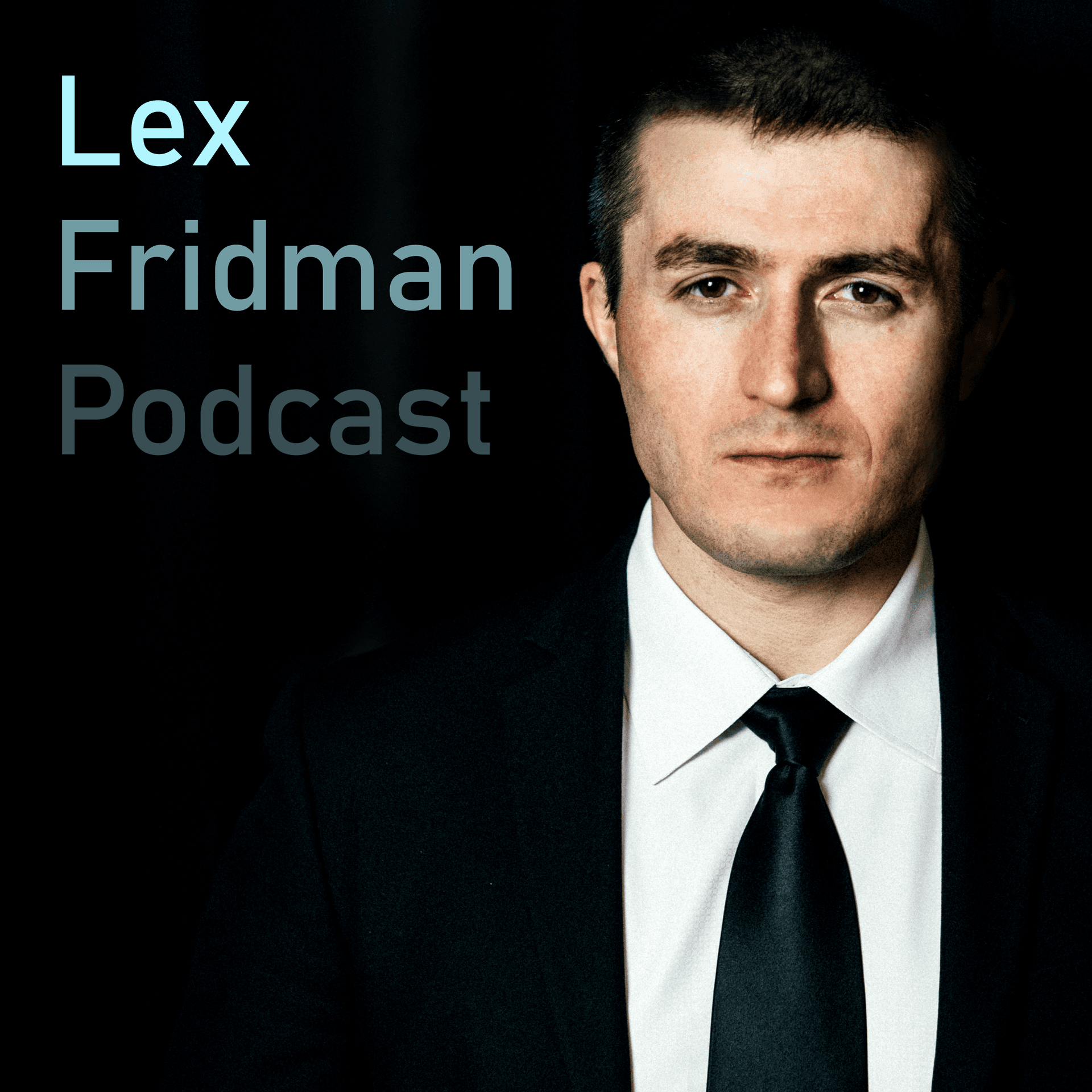
Lex Fridman Podcast
Episode #458
Title
Marc Andreessen: Trump, Power, Tech, AI, Immigration & Future of America
Guest
Marc Andreessen
- Entrepreneur and investor
- Co-creator of Mosaic (first widely used web browser)
- Co-founder of Netscape
- Co-founder of Andreessen Horowitz (venture capital firm)
Overview In this episode, Lex Fridman speaks with Marc Andreessen about a wide range of topics, including the future trajectory of America, technology and AI, political and social dynamics, and immigration issues. The conversation explores historical contexts, current trends, and potential futures with a focus on identifying challenges and opportunities.
Episode Highlights
Introduction (00:00)
- Background on Marc Andreessen and his contributions to the tech industry.
Best Possible Future (12:46)
- Discussion of America's growth potential and economic resilience.
- Factors leading to America's capability for growth despite global challenges.
History of Western Civilization (22:09)
- The evolution of social structures from ancient civilizations to the present.
- Importance of understanding historical context to comprehend current societal structures.
Trump in 2025 (31:28)
- Analysis of potential impacts of a Trump administration on America's future.
- Discussion on reducing governmental constraints to promote growth.
Social and Political Dynamics
- TDS in Tech (39:09): Exploration of political biases within the tech industry.
- Preference Falsification (51:56): Examination of societal dynamics where private beliefs diverge from public statements.
- Self-censorship and Censorship (1:07:52 & 1:22:55): Impact of censorship on freedom of speech in digital platforms and media.
Influential Figures and Events
- Jon Stewart (1:31:34): Contribution to public discourse on significant topics.
- Mark Zuckerberg on Joe Rogan (1:34:20): Discussion on leadership and decision-making at Meta.
- Government Pressure (1:43:09): Examination of government influence on tech companies.
Nature of Power (1:53:57)
- Understanding the dynamics of power in political and corporate realms.
- The balance between governmental control and corporate autonomy.
Journalism (2:06:45)
- The role of media in shaping public perception and the challenges of maintaining journalistic integrity.
Trump Administration (2:17:17)
- Reflections on the previous Trump administration and expectations for the future.
DOGE and Tech Trends (2:24:56)
- Speculation on the future of cryptocurrency and digital finance.
Immigration and H1B Visas (2:38:48)
- Analysis of the immigration system, with a focus on the implications of H1B visas.
- Discussion on balancing high-skill immigration with fostering native talent.
The AI Race (3:29:02)
- Examination of the competitive landscape in AI development among major tech players.
- Discussion on the implications of AI advancements for society.
Reflections on Success and Humanity
- Success (3:46:30): Definition and personal reflections on the nature of success.
- God and Humanity (3:49:26): Exploration of philosophical and existential questions related to religion and human purpose.
Additional Resources
Contact and Feedback
- [Feedback](https://lexfridman.com/survey)
- [AMA](https://lexfridman.com/ama)
- [Hiring](https://lexfridman.com/hiring)
- [Other Contact Options](https://lexfridman.com/contact)
Episode Links
- [Marc's X](https://x.com/pmarca)
- [Marc's Substack](https://pmarca.substack.com)
- [Marc's YouTube](https://www.youtube.com/@a16z)
- [Andreessen Horowitz](https://a16z.com)
Sponsors
- Encord: [encord.com/lex](https://encord.com/lex)
- GitHub: [gh.io/copilot](https://gh.io/copilot)
- Notion: [notion.com/lex](https://notion.com/lex)
- Shopify: [shopify.com/lex](https://shopify.com/lex)
- LMNT: [drinkLMNT.com/lex](https://drinkLMNT.com/lex)
Conclusion This episode delves deeply into the intersection of technology, politics, and societal change, offering listeners insights into both the challenges and opportunities facing America. Marc Andreessen shares his perspectives on a range of topics, reflecting on historical contexts and projecting future developments. The conversation highlights the importance of innovation, policy, and leadership in shaping a prosperous future.
[Watch the Full Transcript](https://lexfridman.com/marc-andreessen-2-transcript)
[Podcast Website](https://lexfridman.com/podcast) ```
Written by AI. May contain mistakes. Listen to the episode to check what was said.
Transcript
Automatic transcript. May contain errors.0:00The following is a conversation with Mark Andreessen, his second time on the podcast. Mark is a visionary tech leader and investor who fundamentally shaped the development of the internet and the tech industry in general over the past 30 years. He is the co -creator of Mosaic, the first widely used web browser, co -founder of Netscape, co -founder of the legendary Silicon Valley venture capital firm Andreessen Horowitz, and is one of the most influential voices in the tech world, including at the intersection of technology and politics. And now a quick few second mention a response. Check them out in the description.
0:41It's the best way to support this podcast. We got on -cord for unifying your Melstack, GitHub for programming, notion for team projects and collaboration, Shopify for merch, and Element for hydration. Choose wisely, my friends. Also, if you want to get in touch with me for whatever reason go to lexfremor .com slash contact. And now onto the full ad reads, no ads in the middle. I tried to make this interesting, but if you skip them, please still check out the sponsors. I enjoyed that stuff. Maybe you will too. This episode is brought to you by un -cord, a platform that provides data -focused AI tooling for data annotation, curation, and management.
1:22And for model evaluation, once you train up the model on the data that you curate. In this conversation with Mark Andreessen, we actually discuss what he calls kind of like the trillion dollar questions. And one of them for AI is how effective will synthetic data be? It really isn't an open question. What piece, what fraction of the intelligence of future models will be based on training on synthetic data? At the top AI labs, I'm hearing a lot of optimism. As far as I can tell that optimism is not currently, at least in a general case, based on any real evidence. So I do think synthetic data will play a part, but how big a part, there's still going to be some curation from humans.
2:12There's still going to need to be a human in a loop. I think the real question is how do you effectively integrate the human in the loop so that the synthetic data, sort of nine -unite synthetic, 1 % human, that combination can be most effective. That's a real question. And companies like Concord are trying to solve that very problem. First of all, I want to provide the tooling for the annotation, for the actual human and act collaboration, but also asking and answering the research question of how do you pull it all off and make the resulting model more intelligent for a very specific application than for the general applications.
2:57Yeah, so Concord does a really good job on the tooling side. Go try them out to curate, annotate, and manage your AI data at encord .com slash lux.
3:11This episode is brought to you by GitHub and GitHub Copilot. If you don't know what that is, my friends, you're in for a joyous, beautiful surprise. I think a lot of people that program regularly know and love GitHub and know and love Copilot. It's the OG AI programming assistant and it's the one that's really trying to win this very competitive space. It is not easy. If you're somebody that uses VS code, obviously, well, maybe not obviously, but you can use GitHub Copilot in VS code, but you can use it also in other IDE's. I'm going to be honest with you. It's a very competitive space. I'm trying all the different tools in the space and I really love how much GitHub and GitHub Copilot want to win in this competitive space.
4:10I'm excitedly sitting back and eating popcorn like that, Michael Jackson meme and just enjoying the hell out of it. Like I said, I'm going to be doing a bunch of programming episodes including with Primogen and he, I think, has a love -hate relationship with AI and with AI agents and with the role of AI in the programming experience and he's really at the forefront of people that are playing with all these languages with all these different applications with all the different use cases of code. As a new of them, user, so he's going to be skeptical in general of new technology. He's a Commodian sitting on a porch on rocking chair, screaming at the kids throwing stuff at them, but at the same time he's able to play with the kids as well.
5:03So I am more on the kid side with a child like Joy enjoyed the new technology. For me, basically everything I do programming wise has the possibility of AI either reviewing it or assisting it. It's constantly in the loop. Even if I'm writing stuff from scratch, I'm always just kind of one second away from asking a question about the code or asking it to generate or rewrite a certain line to add a few more lines, all that kind of stuff. So I'm constantly, constantly using it. If you're learning to code or if you're an advanced programmer, it is really important to get better and better at using AI as an assistant programmer.
5:48Get started with GitHub Copilot for free today at GH .io slash Copilot. This episode was also brought to you by Notion, a note taking and team collaboration tool that Mark Andreessen on this very episode sings a lot of praises to. I believe he sings was it on my go off my got on remember, but anyway, he loves it. It's one of the tools, one of the companies, one of the ecosystems that integrate AI really effectively for team applications. When you have, let's see like docs and wikis and projects and all that kind of stuff, you can have the AI load all of that in and answer questions based on that.
6:30You can connect a bunch of apps like you can connect, slash, you can connect Google Drive. I think in the context, we were talking about something like Notion for email for like Gmail. I don't know if Notion integrates email yet. I'm, they're just like this machine that's constantly increasing the productivity of every aspect of your life. So I'm sure they're going to start integrating more and more apps. I use it for Slack and Google Drive, but I abuse it primarily at the individual level for note taking and even at the individual level, just incredible what Notion AI can do. Try it out for free when you go to notion .com slash Lex.
7:11That's all lowercase notion .com slash Lex to try the power of notion AI today. This episode is also brought to you by Shopify, a platform designed for anyone to sell anywhere with a great looking online store. There are a few people embody the joy and the power of capitalism than Mark Andreessen. I believe Mark and Toby are friends. I was at a thing where Mark and Toby were both there and we're chatting and they were very friendly. So I think they're friends and I got to hang out with Toby and again, incredible person. I said again and again, it's almost becoming funny that eventually we'll do a podcast.
7:57I don't know why we haven't done a podcast. There's a few people in my life where it's like Jeffrey Hinton is one of those people. It's like we agreed to do a podcast for so long and we've just been kind of lazy about it. And Toby is the same. Anyway, he's the CEO of Shopify. I don't even know if he knows that Shopify sponsors this podcast. It doesn't matter. It goes without saying. It should be obvious to everybody that one doesn't affect the other. I am very fortunate to have way more sponsors than we could possibly fit. So I could pick whoever the hell I want and whatever guests I choose will never have anything to do with the companies that sponsor the podcast.
8:42There's not even like a tinge of influence. In fact, if there's anything, it'll be the opposite direction, but I also try to avoid that. You know, it's possible. So I talk to the CEO of GitHub, for example, on this podcast and GitHub sponsors podcasts. It's possible. I talk to the CEO of Shopify, Toby and Shopify sponsors this podcast. One doesn't affect the other. And obviously again, it goes without saying, but let me say it. Make it explicit that nobody can buy their way onto the podcast, whether through sponsorships or buy me dinner or whatever. I don't know. This is just, it's impossible.
9:23And most likely, if that's attempted, it's going to backfire. So I think people intuitively know not to attempt because it really pissed me off. Anyway, this is a detour. We're supposed to talk about Shopify. I have Shopify store looks for me .com .sliestore that sells t -shirts, but you can sell more sophisticated stuff, make a lot of money, and participate in this beautiful machinery of capitalism. Sign up for a $1 per month trial period at Shopify .com .sliestlex. That's all over case. Go to Shopify .com .sliestlex to take your business to the next level today. This episode is also brought to you by Element.
10:04My daily zero sugar and delicious electrolyte mix of which I consume very ridiculously large amounts. Salt used to be currency in the ancient world. How silly are humans? We're not silly. How surprising the things we converge on as being the store of value. Just value in general, the kind of things we assign value to together. We just kind of all agree that this item, this material, this idea, this building is extremely valuable and then we compete over that resource or that idea or that building. We fight and sometimes there is wars and sometimes there is complete destruction and the rise of fall of empires all over some resource.
10:59What a funny, strange little world. And mostly harmless as the Hitchhiker's guide to the galaxy summarizes humans. For some reason instead of that book I was going to say catch on the rye. In my exhaustive brain the books kind of all morphed together. Catch on the rye is a really damn good book. All of the classics I return to often the simple books are just even like the first book I read in English. Traveyor book. Traveyor book called the giver. It's like I return to it and it's simplicity. Maybe it's maybe have something mount the value. Maybe that's what it is. But just the simplicity of words, animal form, I've read that I don't know how many times probably over 50 times I've returned to it over and over and over the simplicity, the poetry of that simplicity.
11:53It's something that just resonates with my brain. Maybe it's a peculiar kind of brain. It is a peculiar kind of brain. And I have to thank you for being patient with this peculiar kind of brain. Get a sample pack for free with any purchase of whatever the thing I was talking about which I think is element. Try it at drinkelement .com slash lex. This is the Lex Friedman podcast to support it. Please check out our sponsors in the description. And now dear friends, here's Mark and Dresan.
12:45All right, let's start with optimism. If you were to imagine the best possible one to two years, 2025, 26, for tech, for big tech and small tech, what would it be? What would it look like? Lay out your vision for the best possible scenario trajectory for America. The roaring 20s, the roaring 20s. I mean, look, a couple of things. It is remarkable over the last several years with all of the issues including, you know, everything, not just everything in politics, but also COVID and everything that's happened. It's really amazing. The United States just kept growing. If you just look at economic growth charts, the US just kept growing and very significantly many of the countries stopped growing.
13:23So Canada stopped growing, the UK stopped growing, Germany stopped growing. And you know, some of those countries may be actually going backwards at this point. And there's a very long discussion to be had about what's wrong with those countries. And there's, of course, plenty of things that are wrong with our country. But the US is just flat out primed for growth. And I think that's a consequence of many factors. Some of which are lucky and some of which through hard work. And so the lucky part is just number one, we just have incredible physical security by being around continent. We have incredible natural resources.
13:56There's this running joke now that whenever it looks like the US is going to run out of some rare earth material, some farmer in North Dakota kicks over a hay bale and finds like a $2 trillion deposit. Right? I mean, we're just like blessed with geography and with natural resources. Energy, we can be energy independent anytime we want. This last administration decided they didn't want to be. They wanted to turn off American energy. This new administration has declared that they have a goal of turning it on in a dramatic way. There's no question we can be energy dependent. We can be a giant net energy exporter.
14:26It's purely a question of choice. And I think the new administration is going to do that. And so we, and then I would say two other things. One is, you know, we are the beneficiaries. And you know, you're an example of this. We're a beneficiary, we're the beneficiary of, you know, 50, 100, 200 years of like the basically most aggressive driven smartest people in the world, most capable people, you know, moving to the US and raising their kids here. And so we just have, you know, by far the most dynamic, you know, we're by far the most dynamic population, most aggressive, you know, we're the most aggressive set of characters in a certainly in any Western country and have been for a long time and certainly are today.
15:00And then finally, I would just say, look, we are overwhelmingly the advanced technology leader. You know, we have our issues and we have a particular issue with manufacturing, which we could talk about, but for, you know, anything in software, anything in AI, anything in, you know, all these advanced biotech, all these advanced areas of technology, like we're by far the leader. Again, in part, because many of the best scientists and engineers in those fields, you know, you don't come to the US. And so we just, we have all of the preconditions for a, for just a monster, boom, you know, I could see economic growth going way up, I could see productivity growth going way up, rate of technology, adoption going way up.
15:34And then we could, we can do a global tour, if you like, but like basically all of our competitors have like profound issues. And you know, we could kind of go through them one by one, but the competitive landscape just is, it's like it's, it's remarkable how, how, how much better position we are for growth. What about the humans themselves, almost philosophical questions, you know, I travel across the world and there's something about the American spirit, the entrepreneurial spirit that's uniquely intense in America. I don't know what that is. I've talked to a saga who claims it might be the Scott Irish blood that runs through the history of America.
16:12What is it? You at the heart of Silicon Valley, is there something in the water? Why is there this entrepreneurial spirit? Yeah. So is this a family show or am I allowed to swear? You, you could say whatever the fuck you want. Okay. So the TV, the great TV show succession, the show, of course, there would, which you were intended to root for exactly zero of the characters. Yes. The best line for succession was in the final episode of the first season when the whole family is over in Logan Roy's ancestral homeland of Scotland and they're at this castle, you know, for some wedding. And Logan is just like completely miserable after having to, you know, because he's been in New York for 50 years.
16:44He's totally miserable being back in in Scotland. And he gets in some argument with somebody and he's like, he says finally, he just says, my God, I cannot wait to get out of here and go back to America where we could fuck without condoms.
16:58Was that a metaphor or exactly right? And so no, but it's exactly the thing. And everybody instantly knows what the, like, yeah, everybody watching that instantly starts laughing because you know what it means, which is, it's exactly this. I think there's like an ethnographic, you know, way of it. There's a bunch of books on like all, like you said, the scouts Irish like all the different derivations of all the different ethnic groups that have come to the US over the course of the last 400 years. Right. But it's, but what we have is this sort of amalgamation of like, you know, the, you know, the Northeast, you know, Yankees who were like super tough and hardcore.
17:24Yeah, the scouts Irish are super aggressive. You know, we've got the, you know, the southerners and the Texans, you know, and, you know, the sort of, you know, whole kind of blended, you know, kind of angle hispanic thing, you know, super incredibly tough, strong driven, you know, capable characters, you know, the Texas Rangers. You know, we've got the, yeah, we've got the California, you know, we've got the, you know, the wild, we've got the incredibly, you know, inventive hippies, but we also have the hardcore engineers. We've got, you know, the best, you know, rocket scientists in the world.
17:49We've got the best, you know, artists in the world, you know, creative professionals, you know, the best movies. And so yeah, there, there, there is, you know, the, the, the, you know, all of our problems I think are basically, you know, in my view to some extent, you know, attempts to basically sand all that off and make everything basically boring and mediocre. But there is something in the national spirit that basically keeps bouncing back and it, and basically what we discover over time is we basically just need people to stand up at a certain point and say, you know, it's time to, you know, it's time to bill.
18:17It's time to grow. You know, it's time to do things. And so, and there's something in the American spirit that just like was right back to life. And I've seen it before I actually saw, you know, I saw it as a kid here in the early 80s. You know, because the, the 70s were like horribly depressing, right? In the US like that it was, they were at nightmare on many fronts. And in a lot of ways, the last decade to me has felt a lot like the 70s, just being mired in misery and just this self -defeating, you know, negative attitude. And everybody's upset about everything. And you know, and then by the way, like energy crisis and hostage crisis and foreign wars and just demoralization, right?
18:53You know, the low point for in the 70s was, you know, Jimmy Carter, who just passed away. He went on TV and he gave his speech known as the Malay speech. And it was like the weakest possible trend to like, rouse people back to a sense of like passion. Completely failed. And you know, we had the, you know, the hostages in, you know, Iran for I think 440 days. And every night on the nightly news, it was, you know, lines around the block, energy crisis, depression, inflation. And then, you know, Reagan came in and, you know, Reagan was a very controversial character at the time. And, you know, he came in and he's like, yep, nope, it's morning in America.
19:23And we're the shiny city on the hill and we're going to do it. And he did it. And we did it. And the national spirit came roaring back. And, you know, we're really hard for a full decade. And I think that's exactly what I think, you know, we'll see. But I think that's what could happen here. And I just did a super long podcast on Milton Friedman with Jennifer Burns, who's this incredible professor at Stanford. And he was part of the Reagan. So there's a bunch of components to that, one of which is economic. And one of which, maybe you can put a word on it of not to be romantic or anything, but freedom, individual freedom, economic freedom, political freedom.
19:56And just in general, individualism. Yeah, that's right. Yeah. And, you know, America has this incredible streak of individualism. You know, in individualism in America, probably peaked, I think, between roughly, call it the end of the Civil War 1865 through to probably call it 1931 or something. You know, and there was this like incredible, I mean, that period, you know, we now know that period is the second industrial revolution. And it's when the United States basically assumed global leadership and basically took over technological and economic leadership from England. And then, you know, that led to, you know, ultimately then, therefore being able to, you know, not only industrialize the world, but also win world war too, and then win the Cold War.
20:32And yeah, there's a massive industrial, you know, massive individualistic streak. By the way, you know, Milton Friedman's old videos are all on YouTube. They are every bit as compelling and inspiring as they were then. You know, he's a singular figure in many of us. You know, I never knew him, but he was at, actually, it's Stanford for many years at the Hoover Institution, but I never met him. But I know a lot of people have worked with him. And, you know, he was a singular figure, but his, all of his lessons, you know, live on are fully available. But I would also say it's not just individualism.
21:03And this is, you know, one of, this is one of the big things that's like playing out in a lot of our culture and kind of political fights right now, which is, you know, basically this feeling, you know, certainly that I have and I share with a lot of people, which is it's not enough for America to just be an economic zone. And it's not enough for us to just be individuals. And it's not enough to just have line go up. And it's not enough to just have economic success. There are deeper questions at play and also, you know, there's more to a country than just that. And, you know, quite frankly, a lot of it is intangible.
21:32A lot of it is, you know, involve spirit and passion. And, you know, like I said, we have more of it than anybody else. But, you know, we have to choose to want it. The way I look at it is like all of our problems are self -inflicted. Like they're, you know, decline is a choice. You know, all of our problems are basically demoralization campaigns. You know, basically people telling us people in positions of authority telling us that we should, you know, we shouldn't, you know, stand out. We shouldn't be adventurous. We shouldn't be exciting. We shouldn't be exploratory. You know, we shouldn't, you know, this, that, and the other thing.
22:00And we should feel bad about everything that we do. And I think we've lived through a decade where that's been the prevailing theme. And I think quite honestly, as of November, I think people are done with it. If we could go on a tangent of a tangent, since we're talking about individualism, and that's not all that it takes, you've mentioned in the past the book, The Ancient City, by if I could only pronounce the name French historian, Numa de Nif, Fustel de Coulon. I don't know. That was amazing. Okay. All right. From the 19th century, anyway, you said this is an important book to understand who we are and what we come from.
22:31So what that book does, it's actually quite a striking book. So that book is written by this guy as a professor. He was a, I'm going to let, let, let's do the pronunciations. For language pronunciations for the day, he was a professor of classics at the Sirbonn in, in Paris, you know, the top university at, in the, actually in the 1860s. So actually, right, right, right after the US Civil War. And he was a savant of a particular kind, which is he, and you can see this in the book, is he had apparently read and sort of absorbed and memorized every possible scrap of Greek and Roman literature. And so it's like a walking like index on basically Greek and Roman everything we know about Greek and Roman culture.
23:09And that's significant. The reason this matters is because basically none of that has changed. Right. And so he had access to exact same -rate materials that we have access to. And so there, you know, we've learned nothing. And then specifically what he did is he talked about the Greeks in the Romans, but specifically what he did is he went back further. He reconstructed the people who came before the Greeks in the Romans and what their life and society was like. And these were the people who were now known as the, as the Indo -Europeans. And these were, or you may have heard of these, these are the people who came down from the steps.
23:33And so they, they came out of what's now like Eastern Europe, like around sort of the outskirts of what's now Russia. And then they sort of swept through Europe. They ultimately took over all of Europe. By the way, you know, almost many of the ethnicities in the Americas, the hundreds of years to follow, you know, are Indo -European. So like, you know, they were this, basically this warrior, basically class that like came down as swept through and, and, and, you know, essentially, you know, populated much of the world. And there's a whole interesting saga there. But what he does, and then they basically, they, from there came basically what we know as the Greeks and the Romans were kind of evolutions off of that.
24:04And so what he reconstructs is sort of what life was like. What life was like, at least in the West, for people in their kind of original social state. And the significance of that is, is the original social state is this, is living in the state of the absolute imperative for survival with absolutely no technology. Right? Like no modern systems, no nothing, right? You've got the clothes in your back. You've got your, you know, you've, you've got whatever you can build with your bare hands. Right? This is a, you know, predates basically all concepts of, of, of technologies to understand it today.
Read the full transcript
24:31And so these are people under like maximum levels of physical survival pressure. And so what, what social patterns did they evolve to be able to do that? And then the social pattern basically was as follows. Is a, is a three -part social structure family tribe in city. And zero concept of individual rights. And essentially no concept of individualism. And so you were not an individual. You were a member of your family. And then a set of families would aggregate into a tribe. And then a set of tribes would aggregate into a, into a city. And then the morality was completely, it was actually what Nietzsche talks, Nietzsche talks about, the morality was entirely master morality, not slave morality.
25:08And so in their morality, anything that was strong was good. And anything that was weak was bad. And it's very clear why that is, right? It's because strong equals good equals survive, weak equals bad equals die. And that led to what became known later as the master slave dialectic, which is, is it more important for you to live on your feet as a master, even if the risk of dying? Or are you willing to live as a slave on your knees in order to not die? And this is sort of the derivation of that moral framework. Christianity later, inverted that moral framework, but the original framework lasted for many, many thousands of years.
25:37No concept of individualism. The head of the family had total life and death control over the family, the head of the tribe, same thing, head of the city, same thing. And then you were morally obligated to kill members of the, of the other cities on, on contact, right? You were morally required to, like if you didn't do it, you were a bad person. And then the form of the society was basically maximum fascism combined with maximum communism. Right? And so it was maximum fascism in the form of this like absolute top down control, where the head of the family tribe or city could kill other members of the community at any time with no repercussions at all.
26:09So maximum hierarchy, but combined with maximum communism, which is no market economy. And so everything gets shared, right? And sort of the point of being in one of these collectives is that it's a collective and, you know, and people are sharing. And of course, that limited how big they could get, because you know, the problem with communism is it does the scale, right? It works at the level of a family. It's much harder to make it work at the level of a country, impossible. Maximum fascism, maximum communism. And then it was all intricately tied into their religion. And their religion was, in two parts, it was veneration of ancestors.
26:41And it was veneration of nature. And the veneration of ancestors is extremely important because it was basically like basically the ancestors were the people who got you to where you were. The ancestors were the people who had everything to teach you, right? And then it was veneration of nature because of course nature is the thing that's trying to kill you. And then you had your ancestor, every family, tribe or city had their ancestor gods, and then they had their, they had their nature gods. Okay, so fast forward to today, like we live in a world that is like radically different. But in the book, it takes you through kind of what happened from that, through the Greeks and Romans through to Christianity.
27:11And so, but it's very helpful to kind of think in these terms because the conventional view of the progress through time is that we are, you know, the cliche is the arc of the, you know, moral universe, you know, Benster's justice, right? Or so -called wig history, which is, you know, that the arc of progress is positive, right? And so we, you know, which you hear all the time, which you're taught in school and everything is, you know, every year that goes by, we get better and better and more and more and more and more and more and more and more and more and a better version of ourselves. Our Indo -European ancestors would say, oh no, like you people have like fallen to shit, like you people took all of the principles of basically your civilization and you have diluted them down to the point where they barely even matter, you know, and you're having, you know, children of the West lock and you're, you know, you regularly encounter people of other cities and you don't try to kill them and like, how crazy is that?
27:53And they would basically consider us to be living like an incredibly diluted version of this sort of highly religious, highly cult -like, right, highly organized, highly fascist, fascist communist society. I can't resist noting that as a consequence of basically going through all the transitions we've been through, going all the way through Christianity, coming out the other end of Christianity, Nietzsche declares God is dead. We're in a secular society, you know, that still has, you know, tinge as a Christianity, but, you know, largely fries itself on no longer being religious in that way. You know, we being the sort of most fully evolved modern secular, you know, the expert scientists and so forth have basically re -evolved or fallen back on the exact same religious structure that the Indo -Europeans had, specifically ancestor worship, which is identity politics and nature worship, which is environmentalism.
28:41And so we have actually like worked our way all the way back to their cult religions without realizing it. And it just goes to show that like, you know, in some ways we have fallen far from the far from the family tree, but in some cases we're exactly the same. You kind of described this progressive idea of wokeism and so on as worshiping ancestors. Identity politics is worshiping ancestors, right? It's tagging newborn infants with either, you know, benefits or responsibilities or, you know, levels of condemnation based on whether ancestors were. The Indo -Europeans would have recognized it on site.
29:13We somehow think it's like super -social progressive. Yeah. And it is not. I mean, I would say obviously not. You know, get new askers, I think you're headed, which is, look, like, is the idea that you can like completely reinvent society every generation and have no regard whatsoever for what came before you. That that seems like a really bad idea, right? That's like the Cambodians with year zero under Paul Pot and, you know, death, you know, follows. It's obviously the Soviets tried that. You know, the, you know, the utopian fantasists who think that they can just rip up everything they came before and create something new in the human condition and human society have a very bad history of causing, you know, enormous destruction.
29:46So on the one hand, it's like, okay, there is like a deeply important role for tradition. And in the way I think about that is it's the process of evolutionary learning, right, which is what tradition ought to be is the distilled wisdom of all. And, you know, this is not a new European thought about it. It should be the distilled wisdom of everybody who came before even, right? All those important and powerful lessons learned. And that's why I think it's fast enough to go back and study how these people lived is because that's part of the history and you know, part of the learning that got us to where we are today.
30:13Having said that, there are many cultures around the world that are, you know, mired in tradition to the point of not being able to progress. And in fact, you might even say globally that's the default human condition, which is, you know, a lot of people are in societies in which, you know, there's like absolute seniority by age, you know, kids are completely, you know, like in the US, like for some reason, we decided kids are in charge of everything, right? And like, you know, they're the trendsetters and they're allowed to like set all the agendas and like set all the politics and set all the culture and maybe that's a little bit crazy.
30:38But like in a lot of other cultures, kids have no voice at all, no role at all because it's the old people who are in charge of everything, you know, their gerontocracies. And it's all a bunch of 80 -year -olds running everything, which by the way, we have a little bit of that too, right? And so I would say it's like there's a down, there's a real downside, you know, full traditionalism as communitarianism, you know, it's ethnic particularism, you know, it's ethnic chauvinism, it's, you know, this incredible level of resistance to change. You know, that's, I mean, it just doesn't get you anywhere.
31:08Like it may be good and fine at the level of individual try, but it's a society living in the modern world, you can't evolve, you can't you can't advance, you can't participate in all the good things that, you know, that that that have happened. And so I think probably this is one of those things where extremeness on either side is probably a bad idea. And I, but, you know, but this needs to be approached in a sophisticated and nuanced way. So the beautiful picture you painted of the roaring 20s, how can the Trump administration play a part in making that future happen? Yeah, so look, a big part of this is getting the government boot off the neck of the American economy, the American technology industry, the American people.
31:46You know, and then again, this is a replay of what happened in the 60s and 70s, which is, you know, for what started out looking like, you know, I'm sure good and virtuous purposes, you know, we, we ended up both that and now with this, you know, what I, what I described as sort of a form of soft authoritarianism, you know, the good news is it's not like a military dictatorship, it's not like, you know, you get thrown into Lubyanka, you know, for the most part, not coming it for in the morning, you're not getting dragged off to a cell. So it's not hard authoritarianism, but it is soft authoritarianism.
32:10And so it's this, you know, incredible, suppressive blanket of regulation rules, you know, this concept of a vitocracy, right? What's required to get anything done, you know, you need to get 40 people to sign off and anything, any one of them can veto it. You know, a lot of how our now political system works. And then, you know, just this general idea of, you know, progress is bad and technology is bad and capitalism is bad and building businesses is bad and success is bad. You know, tall poppy syndrome, you know, we've basically anybody who sticks their head up, you know, deserves to get it, you know, chopped off anybody who's wrong about anything, deserves to get condemned forever.
32:44You know, just this, this very kind of, you know, grinding, you know, repression and then coupled with specific government actions such as censorship regimes, right, and debanking, right, and, you know, draconian, you know, deliberately kneecapping, you know, critical American industries. And then, you know, congratulating yourselves in the back for doing it or, you know, having these horrible social policies, like let all the criminals out of jail and see what happens, right? And so like we've just been through this period, you know, I call it a normalization campaign, like we've just been through this period where, you know, whether it started that way or not, it ended up basically being this comprehensive message that says you're terrible.
33:18And if you try to do anything, you're terrible and fuck you. And the Biden administration reached kind of the full pinnacle of that in our time. They got really bad on many fronts at the same time. And so just like relieving that and getting kind of back to it reasonably, you know, kind of optimistic constructive, you know, pro growth frame of mind. There's just, there's so much pent up energy and potentially American system that that alone is going to, I think, cause, you know, growth and, and, and, and, and spirit to take off. And then there's a lot of things proactively, but yeah, and then there's a lot of things proactively that could be done.
33:50So how do you relieve that? To what degree has the thing you describe ideologically permeated government and permeated big companies? Disclaimer at first, which is I don't want to predict anything on any of this stuff, because I've learned the hard way that I can't predict politics or Washington at all. But I would just say that the plants and intentions are clear and the staffing supports it. And all the conversations are consistent with the dude administration and that they plan to take, but you know, very rapid action on a lot of these fronts very quickly. They're going to do as much as they can through executive orders.
34:20And then they're going to do legislation and and regulatory changes for the rest. And so they're going to move, I think, quickly on a whole bunch of stuff. You can already feel, I think, a shift in the national spirit, or at least let's put this way. I feel it for sure. And so looking at all of you like it, you know, I mean, we, you know, we just saw great examples with what, you know, with what Mark Zuckerberg is doing, you know, and obviously I'm involved with his company, but you know, we just saw kind of in public the scope of the speed of the changes, you know, or reflective of sort of this of a lot of these shifts.
34:45But I would say that that same conversation, those same kinds of things are happening throughout the industry, right? And so the tech industry itself, whether people were pro -Trump or anti -Trump, like there's just like a giant five shift mood shift that's like kicked in already. And then I was with a group of Hollywood people about two weeks ago. And they were still, you know, people who at least, at least vocally were still very anti -Trump. But I said, you know, has anything changed since, since November 6th? And they immediately said, oh, it's completely different. It feels like the ISIS thawed, you know, woke us over.
35:14You know, they said that all kinds of projects are going to be able to get made now. They couldn't before that, you know, probably was going to start making comedies again. You know, like it, they were just like it, it's like it's like just like an incredible immediate environmental change. And I'm, as I talk to people kind of throughout, you know, certainly throughout the economy, people who run businesses, I hear that all the time, which is just this, this last 10 years of misery is just over. I mean, the one that I'm watching, it's really funny. I mean, Facebook's giving a lot, Meta's getting a lot of attention.
35:39But the other funny one is BlackRock, which I'm not, which I don't know him, but I've watched for a long time. And so, you know, the Larry Fink who's the CEO of BlackRock was like first in as a major, you know, investment CEO on like every dumb social trend and rule set, like every, all right, every ESG and every like every possible satellite companies with every aspect of just there's these crazed ideological positions. And you know, he was coming in. He literally was like had aggregate aggregated together, trillion dollars of shareholdings that he did not, that were, you know, that were his customers rights.
36:19And he, you know, seized their voting control of their shares and was using it to force all these companies to do all of this like crazy ideological stuff. And he was like the typhoid marrival, this stuff in corporate America. And if he in the last year has been like backpedaling from that stuff, like as fast as he possibly can. And I saw just an example last week, he pulled out of that whatever the corporate net zero alliance, you know, he pulled out of the crazy energy energy energy stuff. And so like, you know, he's backing away as fast as he can. He's doing it. Remember the Richard prior backwards walk?
36:45Richard prior had this way where he could back out of a room all looking like he was walking forward. And so, you know, even they're doing that. And just the whole thing, I mean, this, I just saw the court recently ruled that the NASDAQ had these crazy board of directors composition rules. One of the funniest moments of my life is when my friend Peter Teele and I were on the the meta board. And these NASDAQ rules came down, mandated diversity on corporate boards. And so we sat around the table and had to figure out, you know, which of us counted as diverse. And the very professional attorneys at meta explained with a 100 % complete straight face that Peter Teele counts as diverse by virtue of being LGBT.
37:23And this is a guy who literally wrote a book called the diversity myth. Yeah. And he literally looked like he swallowed a live goldfish. And this was imposed. I mean, this was like so incredibly offensive to him that like it just like it was just absolutely appalling. And I felt terrible for him, but the look in his face was very funny. It was imposed by NASDAQ. You know, your stock exchange, it's imposing this stuff on you. And then the court, whatever the court of appeals just knew that, you know, so like these things basically are being like rip down one by one. And what's on the other side of it is basically, you know, finally being able to get back to, you know, everything that everybody always wanted to do, which is like running their companies, have great products, have happy customers, you know, like succeed, like succeed, achieve, outperform, and you know, work with the best on the brightest and not be made to feel bad about it.
38:08And I think that's happening in many areas of American society. It's great to hear that Peter Teele is fundamentally a diversity hire. Well, so it was very, you know, there was a moment. So so Peter, you know, Peter of course, you know, is, you know, is publicly gay. Has been for a long time. You know, but you know, there are other men on the board, right? And you know, we're sitting there and we're all looking at it and we're like, all right, like, okay, LGBT. And we just, we keep coming back to the B, right? And it's like, you know, it's like, all right, you know, I'm willing to do a lot for this company, but it's all about sacrifice for diversity.
38:44Well, yeah, and then it's like, okay, like, is there a test? You know, oh, yeah, exactly. How do you prove it? The questions that got asked, you know, what are you willing to do? Yeah, and I think I'm very good at asking lawyers completely observed questions with a totally straight face. And do they answer with a straight face? Sometimes, okay, I think in fairness, they have trouble telling when I'm joking. So you mentioned the Hollywood folks, maybe people in Silicon Valley and Vibeshift, maybe you can speak to preference, falsification. What do they actually believe? How many of them actually hate Trump?
39:23What, like, what percent of them are feeling this vibe shift and are interested in creating the roaring 20s in the way they've described? So first, we should maybe talk population. So there's like all of Silicon Valley. And the way to just measure that is just looking at voting records, right? And what that shows consistently, Silicon Valley is just, you know, at least historically, my entire time there has been overwhelmingly majority just straight up Democrat. The other way to look at that is political donation records. And again, you know, the political donations in the valley range from 90 to 99 percent, you know, to one side.
39:56And so, you know, we'll, I just bring it up because like, we'll see what happens with the voting of donations going forward. We maybe talk about the fire later, but I can tell you there is a very big question of what's happening in Los Angeles right now. I don't want to get into the fire, but like it's catastrophic. And, you know, there was already a rightward shift in the big cities in California. And I think a lot of people in LA are really thinking about things right now as they're trying to, you know, literally save their houses and save their families. But, you know, even in San Francisco, there was a big, right, you know, there's a big shift to the right in the voting in in 24.
40:26So we'll see it looking at the numbers over time. The part that I'm more focused on is, you know, I don't know how to exactly describe this, but it's like the top thousand or the top 10 ,000 people, right? And, you know, I don't have a list, but like it's the, you know, it's all the top founders, top CEOs, top executives, top engineers, top VCs, you know, and then kind of into the ranks, you know, the people who kind of built and run the companies. And they're there, you know, I don't have numbers, but I have the big thing I have now come to believe is that the idea that people have beliefs is mostly wrong.
41:07I think that most people just go along. And I think even most high status people just go along. And I think maybe the most high status people are the most prone to just go along because they're the most focused on status. And the way I would describe that is, you know, one of the great forbidden philosophers of our time is the Unabomber, Tedkizanski. And amidst his madness, he had this extremely interesting articulation. He was a, he was a insane lunatic murderer, but he was also a, you know, a Harvard super genius, not that those are in conflict. But, he was a very bright guy. And he did this whole thing where he talked about, basically, he was very right -wing and talked about leftism a lot.
41:50And he had this great concept. There's just stuck in my mind ever since I read it, which is this concept you just call over social, over socialization. And so, you know, most people are social, not most people are socialized, like most people are, you know, we live in a society, most people learn how to be part of a society, they give some difference to the society. There's something about modern Western elites where they're over -socialized. And they're just like overly oriented towards what other people like themselves, you know, think and believe. And you can get a real sense of that if you have a little bit of an outside perspective, which I just do, I think, as a consequence of where I grew up.
42:24Like, even before I had the views that I have today, there was always just this weird thing where it's like, why does every dinner party have the exact same conversation? Why does everybody agree on every single issue? Why is that agreement precisely what was in the New York Times today? Why are these positions not the same as they were five years ago? Right. But why does everybody like snap into agreement every step? By the way, and that was true when I came to Silicon Valley and it's just true today, 30 years later. And so I think most people are just literally taking, I think they're taking their cues from, it's some combination of the press, the universities, the big foundations.
42:58So it's basically, it's like the New York Times, Harvard, the Ford Foundation, and, you know, I don't know, a few CEOs and a few public figures and maybe the president, if your party's in power. And like, whatever that is, everybody just, everybody who's sort of good and proper and elite in good standing and in charge of things and a sort of correct member of, you know, let's call it coastal American society, everybody just believes those things. And then, you know, the two interesting things about that is number one, there's no divergence among the organs of power, right? So the Harvard and Yale believe the exact same thing.
43:30The New York Times, the Washington Post believe the exact same thing. The Ford Foundation and the Rockefeller Foundation believe the exact same thing, Google and, you know, whatever, you know, Microsoft believe the exact same thing. But those things change over time. But there's never conflict in the moment, right? And so, you know, the New York Times and the Washington Post agreed on exactly everything in 1970, 1980, 1990, 2000, 2010, and 2020. Despite the fact that the specifics change radically, the lockstep was what mattered. And so I think basically we, in the valley, we're on the tail end of that and the same way.
44:03How he was the tail end of that and the same way New York's the tail end of that, the same way the media is on the tail end of that. It's like some sort of collective hive mind thing. And I just go through that to say like, I don't think most people in my orbit or, you know, say the top 10 ,000 people in the valley or the top 10 ,000 people in LA, I don't think they're sitting there thinking, basically, I have rocks. I mean, they probably think they have rocks out of beliefs, but they don't actually have like some intercorvroxed out of beliefs. And then they kind of watch reality change around them and try to figure out how to keep their beliefs like correct.
44:29I don't think that's what happens. I think what happens is they conform to the belief system around them. And I think most of the time they're not even aware that they're basically part of a herd. Is it possible that the surface chatter of dinner parties underneath that there is a turmoil of ideas and thoughts and beliefs that's going on, but you're just talking to people really close to you or in your own mind. And the socialization happens at the dinner parties. Like when you go outside the inner circle of one, two, three, four people who you really trust then you start to conform, but inside there, inside the mind, there is an actual belief or a struggle attention within your times or with the listener.
45:14There's a slow smile that overtook Mark and Driesen's face. So look, I'll just tell you what I think, which is at the dinner parties and at the conferences, no, there's none of that. What there is is that all of the heretical conversations have anything that challenges the status quo, any heretical ideas, any new idea, you know, those are heretical ideas. Any deviation is either discussed a one on one face to face. It's like a whisper network or it's like a real life social network. There's a secret handshake, which is like, okay, you meet somebody and you like know each other a little bit, but not well and like you're both trying to figure out if you can like talk to the other person openly or whether you have to like be fully conformist.
45:50It's a joke. Yeah, humor. Somebody cracks a joke. Somebody cracks a joke. Yeah. If the other person laughs, the conversation is on. Yeah. Yeah. If the other person doesn't laugh, backs slowly away from the scene. I didn't mean anything by it. Right? And by the way, it doesn't have to be like a super offensive joke. It just has to be a joke that's just up against the edge of one of the use the same bankman -free term, one of the shippelists. You know, it has to be up against one of the things of, you know, one of the things that you're absolutely required to believe to be the dinner parties. And then at that point, what happens is you have a peer -to -peer network.
46:24Right? You have a one -to -one connection with somebody. And then you have your little conspiracy of thought criminality. And then you have your, you probably have been through this. You have your network of thought criminals. And then they have their network of thought criminals. And then you have this like delicate mating dances to whether you should bring the thought criminals together. Right? And the dance of fundamental mechanism of the dance is humor. Yeah, it's humor. Like it's, of course, memes. Yeah. For two reasons. Number one, number one, humor is a way to have deniability. Right? Humors a way to discuss these things without without without without having deniability.
46:55Oh, I'm sorry. It was just a joke. Right? So that's part of it, which is one of the reasons why comedians can get away was saying things the rest of us can't is is you know, they can always fall back on. Oh, yeah, I was just going for the laugh. But the other key thing about humor right is that is that laughter is involuntary. Right? Like you either laugh or you don't. And it's not like a conscious decision of whether you're going to laugh. And everybody can tell when somebody's fake laughing, right? And it's every professional comedian knows this, right? The laughter is the clue that you're onto something truthful.
47:18Like people don't laugh and like meet up bullshit stories. They laugh because like you're revealing something that they either have not been allowed to think about or have not been allowed to talk about, right? Or as off limits. And all of a sudden, it's like the ice breaks and it's like, oh, yeah, that's the thing. And it's funny. And like, I laugh. And then and then, and then of course, this is why, of course, live comedy is so powerful is because you're all doing that at the same time. So you start to have right the safety of, you know, the safety numbers. And so so the comedians have like the all is no no surprise to me.
47:43Like, for example, Joe has been a successful Z has because they have they have this hack that the, you know, the rest of us who are not professional comedians don't have, but, but you have your in person burden of it. Yeah. And then you got the question of whether the whether you can sort of join the networks together. And then you've probably been to this is, you know, then at some point there's like a different, there's like the alt dinner party, the Tharker Middle dinner party and you get six or eight people together and you join the networks. And those are like the happiest moment, at least in the last decade, those are like the happiest moments of everybody's lives because they're just like, everybody's just ecstatic because they're like, I don't have to worry about getting yelled at and shamed.
48:11Like for every third sentence that comes out of my mouth, and we can actually talk about real things. So that's the live version of it. And then the, and then of course the other side of it is the you know, the group chat, the group chat phenomenon. Right. And then this and then basically the same thing played out, you know, until you until Elon bought X and until substat took off, you know, which were really the two big breakthroughs in free speech online. The same dynamic played out online, which is you had absolute conformity on the social networks, like literally enforced by the social networks themselves through censorship and then also through cancellation campaigns and mobbing and shaming, right.
48:41And then you had, but then group chats grew up to be the equivalent of some is not right. Anybody who grew up in the Soviet Union under communism, nope. You know, they had the hard version of this, right. It's like, how do you know who you could talk to and then how do you distribute information? And you know, like, you know, again, that was the hard authoritarian version of this. And then we've been living through this weird mutant, you know, softer authoritarian version, but with, you know, with some of the same patterns. And what's apple as you to scale it, making more efficient to build on these groups of heretical ideas bonded by humor.
49:13Yeah. Exactly. Well, and this is the thing. And then well, this is kind of the running joke about groups, right. The running running kind of thing about group chats. It's not even a joke. It's true. It's like, every group chat, if you've noticed this, like every, this principle of group chats, every group chat ends up being about memes and humor and the goal of the game, the game of the group chat is to get as close to the line of being actually objectionable. Yeah. As you can get without actually tripping it, right. And I like literally every group chat that I have been in for the last decade, even if it starts some other direction, what ends up happening is it becomes the absolute comedy fast where, but it's walking, they walk right off the line.
49:46And they're constantly testing everyone's talking about somebody who'll trip the line and people will freak out and it's like, up too soon. Okay. You know, we got to wait until next year to talk about that. You know, they walk it back. And so it's that same thing. And yeah, and then group chats is a technological phenomenon. It was amazing to see because basically it was number one. It was, you know, obviously, the rise of smartphones. Then it was the rise of the, of the new messaging services. Then it was the rise specifically of, I would say, combination of what's happened signal. And the reason for that is those were the two, the two big systems that did the full encryption.
50:13So you actually had, you actually felt safe. And then the real breakthrough, I think, was disappearing messages, which hit signal probably four or five years ago and hit WhatsApp three or four years ago. And then the combination of the combination of encryption and, and disappearing messages, I think, really unleashed it. Well, then there's the fight, then there's the fight over the the length of the disappearing messages. Right. And so it's like, you know, I often get behind my thing. So I set to seven day, you know, disappear messages and my friends who, you know, are like, no, that's way too much risk.
50:44Yeah. It's got to be a day. And then everyone's, well, somebody will set it to five minutes before they send something like particularly inflammatory. Yeah. 100%. Well, what, I mean, one of the things that bothers me about what's the, the choices between 24 hours and, you know, seven days, one day or seven days. And I have to have an existential crisis about deciding whether I can last for seven days with what I'm about to say. Exactly. Now, of course, what's happening right now is the big thought, right? And so with the vibe shift. So what's happening on the other, on the other side of the election is, you know, Elon on Twitter two years ago, and now Mark with Facebook and Instagram.
51:16And by the way, with the continued growth of the sub stack and with other, you know, new platforms that are emerging, you know, like I think it may be, you know, I don't know that everything just shifts back into public, but like a tremendous amount of the, a tremendous amount of the verboten conversations, you know, can now shift back into public view. And I mean, quite frankly, this is one of those things, you know, quite frankly, even if I was opposed to what those people are saying. And I'm sure I am in some cases, you know, I would argue it's still like net better for society that those things happen in public instead of private.
51:44You know, do you really want, like, yeah, like, don't you want to know? And so, and then it's just, look, it's just, I think, clearly much healthier to live in a society in which people are not literally scared about their saying. I mean, to push back and to come back to this idea that we're talking about, I do believe that people have beliefs and thoughts that are heretical or like a lot of people. I wonder what fraction of people have that? To me, this is the preference falsification is really interesting. What is the landscape of ideas that human civilization has in private as compared to what's out in public?
52:20Because like that, the, the, the dynamical system that is the difference between those two is fascinating. Like, there's throughout history, the fall of communism in multiple regimes throughout Europe is really interesting because everybody was following, you know, the line until not. But you better, for sure, privately, there was a huge number of boiling conversations happening where like this is this, the bureaucracy of communism, the corruption of communism, all of that was really bothering people more and more and more and more. And all of a sudden, there's a trigger that allows the vibe shift to happen.
52:59So to me, like the interesting question here is, what is the landscape of private thoughts and ideas and conversations that are happening under the surface of of Americans, especially my question is how much dormant energy is there for this roaring 20s? What people are like, no more bullshit. Let's get shit done. Yeah. So let's go through the, we'll go through the theory of preference falsification. Yeah. Just, just, just, just, by the way, amazing. The books that unless it's fascinating. Yeah. Yeah. So this is, this is, exactly. This is one of the all -time great books. Incredible. It's about 20, 30 -year -old book, but it's very, it's completely modern and current in what it talks about as well as very deeply historically informed.
53:36So it's called Private Truths Public Allies and is written by a social science professor named Timur Karan. I think Duke. And it's definitive work on this. And so he, he has this concept he calls preference falsification. And so preference falsification is two things. Perfence falsification, and you get it from the title of the book, Private Truths Public Allies. So preference falsification is when you believe something and you can't say it. Or, and this is very important, you don't believe something and you must say it. Right. And the commonality there is in both cases you're lying. You believe something internally and then you're lying about it in public.
54:13And so the thing, you know, and there's sort of two classic forms of it. There's the, you know, for example, there's the, I believe communism is rotten, but I can't say it, version of it. But then there's also the famous parable of the real life example, but the thing that Voslav Hobel talks about any other good book on this topic, which is the power of the powerless, you know, who is an anti -communist resistance fighter who ultimately became the, you know, the President of Czechoslovakia after the fall of the wall, but he wrote this book and he, he describes the other side of this, which is workers of the world unite.
54:43Right. And so he, he describes what he calls the parable of the green grocer, which is your green grocer in Prague in 1985. And for the last 70 years, it has been, er, it's 50 years. It's been absolutely mandatory to have a sign in the window of your story. This is workers of the world unite. Right. And it's 1985. It is, like, crystal clear that the world, the workers of the world are not going to unite. Like, all the things that could happen in the world, that is not going to happen. The commies have been at that for 70 years. It is not happening. But that slogan had better be in your window every morning, because if it's not in your window every morning, you are not a good communist.
55:15The secret place are going to come by and they're going to get you. And so the first thing you do when you get to the stories, you put that slogan in the window and you make sure that it stays in the window all day long. And, but he says the thing is every single person, the green grocer knows the slogan is fake. He knows it's a lie. Every single person walking past the slogan knows that it's a lie. Every single person walking past the store knows that the green grocer is only putting it up there because he has to lie in public. And the green grocer has to go through the humiliation of knowing that everybody knows that he's caving into the system and lying in public.
55:44And so it turns into the normalization campaign. It's not just ideological enforcement. In fact, it's not ideological enforcement anymore because everybody knows it's fake. The authorities knows fake. Everybody knows it's fake. It's not that they're enforcing the actual ideology of the world's workers of the world uniting. It's that they are enforcing compliance, right? And compliance with the regime and fuck you, you will comply. Right? And so anyway, that's the other side of that. And of course, we have lived in the last decade through a lot of both of those. I think anybody listening to this could name a series of slogans that we've all been forced to chant for the last decade.
56:18That everybody knows at this point or just like simply not true. I'll let the audience, you know, speculate on those on their own group chats. Set and mark your memes online as well, please. Yes, yes, exactly. But okay. So anyway, so it's the two sides of that, right? So it's private truth is public lies. So then what preference falsification does is it talks about extending that from the idea of the individual experience and that to the idea of the entire society experiencing that, right? And this gets to your percentages question, which is like, okay, what happens in a society in which people are forced to lie in public about what they truly believe?
56:49What happens? Number one is that individually they're lying in public and that's bad. But the other thing that happens is they no longer have an accurate gauge at all or any way to estimate how many people agree with them. And this is how you, and again, this this this literally is like how you get something like like the communist system, which is like, okay, it you end up in a situation in which 80 or 90 or 99 percent of a society can actually all be thinking individually. I really don't buy this anymore. And if anybody would just stand up and say it, I would be willing to go along with it, but I'm not going to be the first one to put my head on the chopping block.
57:16But you have no, because of the suppression censorship, you have no way of knowing how many of the people agree with you. And if the people, if the people agree with you are 10 percent of the population and you become part of a movement, you're going to get killed. If 90 percent of the people agree with you, you're going to win the revolution, right? And so the question of like, what the percentage actually is is like a really critical question. And then, and then basically in any sort of authoritarian system, you can, you can't like run a survey, right, to get an accurate result. And so you actually can't know until you put it to the test.
57:45And then what he describes in the book is it's always put it the test in the same way. And this is exactly what's happened for the last two years, like 100 percent of exactly what's happened. It's like straight out of this book, which is somebody Elon sticks his hand up and says the workers of the world are not going to unite. Right? Or the emperor is actually wearing no clothes, right? You know, that famous parable, right? So one person stands up and does it. And literally that person is standing there by themselves and everybody else in the audience is like, ooh, I wonder what's going to happen to that guy.
58:13Right? But again, nobody knows. Elon doesn't know, the first guy doesn't know other people don't know like which way is this going to go? And it may be the Thessalon minority position. And that's a way to get yourself killed. Or it may be the Thesson majority position in that. And you are now the leader of a revolution. And then basically, of course, what happens is, okay, the first guy does that doesn't get killed. The second guy does, well, a lot of the time that guy does get killed. But when the guy doesn't get killed, then a second guy pops his head up says the same thing. All right. Now you've got two, two leads to four, four leads to eight, eight leads to 16.
58:40And then as we saw with the fall of the Berlin Wall, this is what happened in Russia and Eastern Europe in 89, when it goes, it can go. Right? And then it rips. And then what happens is very, very quickly, if it turns out that you had a large percentage of the population that actually believe the different thing, it turns out all of a sudden everybody has this giant epiphany that says, oh, I'm actually part of the majority. And at that point, like you are on the freight train to revolution, right? Like it is rolling. Right. Now the other part of this is the distinction between the role of the elites and the masses.
59:10And here in here, the best book is called The True Believer, which is the air coffer book. And so the new ones you have to put on this is the elites play a giant role in this because the elites do idea formation and communication. But the elites by definition are a small minority. And so there's also this giant role played by the masses. And the masses are not necessarily thinking these things through in the same intellectualized to formal way that the elites are. But they are for sure experiencing these things in their daily lives. And they for sure have at least very strong emotional views on them.
59:38And so when you really get the revolution, it's when you get the elites lined up with or a news, either the current elites change or the new set of elites, a new set of counter elites basically come along and say, no, there's actually a different better way to live. And then the piece that people basically decide to follow the follow the follow the counter elite. So that's the other dimension to it. And of course, that part is also happening right now. And again, case study number one of that would be Elon and his, you know, he turns out, you know, truly massive following. And he has done that over and over in different industries, not just saying crazy shit online, but saying crazy shit in the in the realm of space and the realm of autonomous driving and the realm of AI just over and over and over.
1:00:15And over again, turns out saying crazy shit is one of the ways to do a revolution to actually make progress. Yeah. And it's like, well, and then there's the test, is it crazy shit or is it the truth? Yeah. Right. And and you know, and this is where, you know, many, there are many more specific things about Elon's genius, but one of the one of the really core ones is an absolute dedication to the truth. And so when Elon says something, it sounds like crazy shit, but in his mind, it's true. Now, is he always right? No. Sometimes the rocket's crashed like, you know, sometimes he's wrong. I think he's human.
1:00:41He's like anybody else. He's not right all the time. But at least my, my through line with him, both in what he says in public and what he says in private, which by the way are the exact same things. He does not do this. He doesn't lie in public about what he believes in private. Or at least he doesn't do that anymore. Like he's 100 % consistent in my in my experience. By the way, there's two guys who are 100 % consistent like that that I know. You want to Trump? Yeah. Whatever you think of them, what they say in private is 100 % identical to what they say in public. Like they are completely transparent.
1:01:08They're completely honest in that way. Right? Which is like, again, it's not like they're perfect people, but they're honest in that way. And it makes them potentially both as they have been very powerful leaders of these movements, because they're both willing to stand up and say the thing that if it's true, it turns out to be the thing in many cases that no, many or most are almost everyone else actually believes, but nobody was actually willing to say out loud. And so they can actually catalyze these shifts. And I mean, I think this framework is exactly why Trump took over the Republican party.
1:01:33As I think Trump stood up there on stage with all these other kind of conventional Republicans and he started saying things out loud that it turned out the base really was they were either already believing or they were prone to believe. And he was the only one who was saying them. And so the, again, elite masses. He was elite, the voters of the masses and the voters decided, you know, no, no more bushes. Like we're going this other direction. That's the mechanism of social change. Like what we just described is like the actual mechanism of social change. It is fascinating to me that we have been living through exactly this.
1:02:00We've been living through everything exactly what Timur Karine describes. Everything that Vassalov Hable described, black squares and Instagram, like the whole thing, right, all of it. And we've been living through the, you know, the true believer elites masses, you know, thing with, you know, with a set of like basically incredibly corrupt elites, wondering why they don't have the little masses anymore and a set of new elites that are running away with things. And so like we're living through this like incredible applied case study of these ideas. And you know, if there's a moral of the story, it is, you know, I think fairly obvious, which is it is a really bad idea for a society to wedge itself into a position in which most people don't believe the fundamental precepts of what they're told they have to do, you know, to be good people like that.
1:02:37That is just not not a good state to be in. So one of the ways to avoid that in the future, maybe is to keep the delta between what's set in private and what's set in public small. Yeah, it's like, well, this is sort of the the siren song and censorship as we can keep people from saying things, which means we can keep people from thinking things. And you know, by the way, that may work for a while, right? Like, you know, this, I mean, again, the hard form of Soviet Union, Soviet Union owning a memograph pre -photo copiers, the rememio graph machines that we used to make San Mastat and underground newspapers, which is the mechanism of the written communication of radical ideas, radical ideas.
1:03:11Ownership of a memio graph machine was punishable by death. Right? So that's the hard version, right? You know, the soft version is somebody clicks a button in Washington and you were erased from the internet, right? Like, which, you know, good news, you're still alive. Bad news is, you know, shame about not being able to get a job, you know, too bad your family now, you know, hates you and won't talk to you, but you know, whatever the, you know, whatever the version of cancellation has been. And so, so, so like, does that work? Like, maybe it works for a while. I could work for the Soviet Union for a while, you know, in its way, especially when it was coupled with, you know, official state power, but when it unwinds, it can own wind with like incredible speed and ferocity, because to your point, there's all this bottle of energy.
1:03:49Now, your question was like, what are the percentages? Like, what's the breakdown? And so my, my rough guess just based on what I've seen in my world is it's something like 20, 60, 20. It's like, you've got 20 % like true believers in whatever is, you know, the current thing. You know, you got 20, 20 % of people who are just like true believers of whatever they, they're, you know, whatever is the new, whatever is the newer times Harvard professors and the Ford Foundation, like just they're just believe it. And by the way, maybe it's 10, maybe it's five, but let's say, generously, it's, it's 20.
1:04:18So, it's, you know, 20 % kind of full on revolutionaries. And then you've got, let's call it 20 % on the other side that are like, no, I'm not on board with this. This is, this is crazy. I'm not, I'm not signing up for this, but, you know, you know, their view of themselves is they're in a small minority. And in fact, they start out in a small minority, because what happens is the 60 % go with the first 20 % not the second 20%. So you've got this large middle of people, and it's not that there's anything like, it's not the people in the middle are not smart or anything like that. It's that they just have like normal lives.
1:04:46And they're just trying to get by and they're just trying to go to work each day and do a good job and be a good person and raise their kids and, you know, have a little bit of time to watch the game. And they're just not engaged in the cut and thrust of, you know, political activism or any of this stuff is just not their thing. But then, but that's where the over socialization comes in. It's just like, okay, by default, the 60 % will go along with the 20 % of the radical revolutionaries at least for a while. And then the counter elite is in this other 20 % and over time, they build up a theory and network and ability to resist.
1:05:19And a new set of representatives and a new set of ideas. And then at some point, there's a contest. And then, and then, and then, and then, and then, and then the question is, what happens in the middle? What happens in the 60 % and it's kind of my point, it's not even really does the 60 % change their beliefs as much as it's like, okay, what what is the thing that that 60 % now decides to basically fall into step with? And I think that 60 % in the valley, that 60 % for the last decade decided to be woke. And, you know, extremely, I would say, on edge, on a lot of things. And I, you know, that 60 % is pivoting in real time.
1:05:52They're just done. They're, they're, they're just had it. And I would love to see where that pivot goes. Because there's internal battles happening right now, right? So this is the other thing. Okay. So there's two forms of internal. There's two forms of things that, and Timur Krowness, Timur has actually talked about this. Professor Krowness talked about this. So one is he said, he said, this is the kind of unwind where what you're going to have is you're not going to have people in the other direction. You're going to have people who claim that they supported Trump all along who actually didn't.
1:06:16Right. So it's going to swing the other way. And by the way, Trump's not the only part of this. But, you know, he's just a convenient shorthand for, you know, for, for a lot of this. But, you know, whatever it is, you'll, you'll have people who will say, well, I never supported the, yeah, right, or I never supported the S .G. Or I never thought we should have canceled that person, right? Where, of course, they were full on a part of the mob, like, you know, kind of at that moment. And so anyway, so you'll have preference falsification happening in the other direction. And his prediction, I think, basically, is you'll end up with the same quote problem on the, on the other side.
1:06:43Now, will that happen here? I don't know, you know, well, how far is American society willing to go into these things? I don't know. But like, there is some, some question there. And then, and then the other part of it is, okay, now you have this, you know, elite that is used to being in power for the last decade. And by the way, many of those people are still in power. And they're in very important positions. And the New York Times is still the New York Times, and Harvard is still Harvard. And like, those people haven't changed, like at all, right? And they still, you know, they've been bureaucrats in the government and, you know, senior democratic politicians and so forth.
1:07:12And they're sitting there, you know, right now feeling like reality has just smacked them hard in the face, because they lost the election so badly. But they're now going into a, and specifically, the Democratic Party is going into a civil war, right? And that form of the civil war is completely predictable. And it's exactly what's happening, which is the half of them are saying, we need to go back to the center. We need to de -radicalize, because we've lost the people. We've lost the people in the middle. And so we need to go back to the middle in order to be able to get 50 % plus one in an election, right?
1:07:40And then the other half of them are saying, no, we weren't true to our principles. We were too weak. We were too soft. You know, we must become more revolutionary. We must double down and we must, you know, celebrate, you know, murders in the street of health insurance executives. And that's, and that, that right now is like our real fight. If I could tell you a little personal story that breaks my heart a little bit. There's a, there's a professor, historian. I won't say who I admire deeply. Love his work. He's a kind of a heretical thinker. And we were talking about having a podcast. We're doing a podcast.
1:08:09And he, eventually, said that, you know what, at this time, given your guest list, I just don't want the headache of being in the faculty meetings in my particular institution. And I ask who are the particular figures in this guest list? He said, Trump. And the second one, he said that you announced your interest to talk to Vladimir Putin. So I just don't want the headache. Now, I fully believe he, it would surprise a lot of people if I said who it is. But you know, this is a person who's not bothered by the, the guest list. And I should also say that 80 plus percent of the guest list is left wing.
1:08:54Okay. Nevertheless, he just doesn't want the headache. And that speaks to the, the thing that you've kind of mentioned that you just don't, don't want the headache. You just want to just have a pleasant morning with some coffee and talk to your fellow professors. And I think a lot of people are feeling that in universities and in other contexts and tech companies. And I wonder if that shifts. How quickly that shifts. And there the percentages you mentioned in 2060, 20 matters. And the, and the contents of the private groups matters. And the dynamics of how that shifts matters. Because it's very possible, nothing really changes in universities and in major tech companies.
1:09:35Or just there's a kind of excitement right now for potential revolution and these new ideas, these new vibes to reverberate through these companies, universities, best possible. The, the, the wall will hold. Yeah. So ease of friend of yours. I respect that you don't want to name him. I also respect you don't want to beat on him. So I would like to beat on him on your behalf. Does he have tenure? Yes. You should use it. So this is the thing, right? But this is the ultimate indictment of the corruption and the rot at the heart of our education system at the heart of these universities. And it's by the way, it's like across the board.
1:10:14It's like all the top universities. It's like the, because the, the siren song for what has been for 70 years, whatever, if the tenure system, peer review system, tenure system, which is like, yeah, you work your butt off as an academic to get a professorship and then to get tenure because then you can say what you actually think, right? Then you can do your work in your research and your speaking and your teaching without fear of being fired, right? Without fear of being canceled. Like academic freedom. I mean, think of the term academic freedom. And then think of what these people have done to it.
1:10:49Like it's gone. Like that entire thing was fake and is completely rotten. And these people are completely, completely giving up the entire moral foundation of the system has been built for them. Which by the way is paid for virtually 100 % by taxpayer money. What's the, what's the inkling of hope in this? Like what this particular person and others who hear this, what can give them strength, inspiration, and courage? That the population at large is going to realize the corruption in their industry and it's going to withdraw all the funding. It's okay. It's a desperation. No, no, no, no, no, think about what happens next.
1:11:30Okay, so let's go, like the white power versus the federal funding. The big one is the federal student loan program, which is in the many trolleys of dollars at this point in only spiraling away faster than inflation. That's number one. Number two is federal research funding, which is also very large. And you probably know that when a scientist at the university gets a research grant, the university rakes as much as 70 percent of the money for central uses. Number three is tax exemption at the upwriting level, which is based in the idea that these are nonprofit institutions as opposed to let's say political institutions.
1:12:06And then number four is tax exemptions at the endowment level, which is the financial buffer that these places have. Anybody who's been close to university budget will basically see that what would happen if you withdrew those sources of federal taxpayer money and then for the state schools, the state money, they don't have to deal with bankrupt. And then you could rebuild. Then you could rebuild because the problem right now, like the folks at University of Austin are mounting a very valiant effort and I hope that they succeed. And I'm sharing for them. But the problem is you're now inserting.
1:12:36You're supposed to suppose you and I want to start a new university and we want to hire all the free think professors and we want to have the place to fix all this. Practically speaking, we can't do it because we can't get access to that money. Maybe the most direct reason we can't get access to that money. We can't get access to federal student funding. Do you know how universities are accredited for the purpose of getting access to federal student funding, federal student loans? They're accredited by the government, but not directly indirectly. They're not accredited by the Department of Education.
1:13:02Instead, what happens is there's a Department of Education accreted accreditation bureaus that are nonprofits that do the accreditation. Guess what the composition of the accreditation bureaus is? The existing universities. They're in complete control. The incumbents are in complete control as to who gets access to federal student loan money. Guess how enthusiastic they are about accrediting a new university? Right. And so we have a government funded and supported cartel that has gone, I mean, just obvious. Now it's just gone like sideways and basically any possible way to go sideways, including, I mean, literally, as you know, students getting beaten up in the on campus for being, you know, the wrong religion.
1:13:40They're just wrong in every possible way at this point. And it's all in the federal taxpayer back. And there is no way, I mean, my opinion, there is no way to fix these things without replacing them. And there's no way to replace them without letting them fail. And by the way, it's like everything else in life. I mean, in a sense, this is like the most obvious conclusion of all time, which is what happens in the business world when a company does a bad job is they go bankrupt and another company takes its place. Right. And that's how you get progress. And of course, below that is what happens is this is the process of evolution.
1:14:10Right. What is anything ever get better? Or else because things are tested and tried. And then you know, the things that the things that are good survive. And so these places have cut themselves off. They've been allowed to cut themselves off from both from evolution at the institutional level and evolution at the individual level as shown by the the the the just widespread abuse of tenure. And so we've just stalled out. We built it. We built a classified system, a classified centralized corrupt system were surprised by the results. They are not fixable in their current form. I disagree with you on that.
1:14:39I have maybe it's grounded in hope that I believe you can revolution as a system from within because I do believe Stanford and MIT are important. Oh, but that logic doesn't follow at all. That's underpants no logic. Underpants no malt. Can you. Underpants no logic. So I just started watching a key touchstone of American culture of my nine year old, which of course is South Park. Yes. And there is. Wow. And there is a which by the way is a little aggressive for a nine year old. Very aggressive. But he likes it. So he's learning all kinds of new words and all kinds of new ideas. But yeah, I told him I said you're going to hear words on here that you are not allowed to use.
1:15:14Right. Yeah. And I said, and I said, do you know how we have an agreement that we never lied to mommy? I said, I said not using a word that you learn in here does not count as lying. Wow. And keep that in mind. Or well, you read the redefinition of lying. But yes, in the very opening episode in the first in the first 30 seconds, one of the kids calls the other kid a dildo right now. We're off to the races. Yeah. Daddy, what's a dildo? Um, yep. Sorry, sorry, sorry, sorry, I don't know. So, um, uh, the underpass. So a famous episode of South Park, the underpants, no, and so the underpants note. So there's there's this rat.
1:15:55All the kids basically realize that their underpants are quite missing from their dresser drawers. Somebody stealing the underpants and it's just like, well, who on earth would steal the underpants? The underpants in a terms out. It's the underpants, no, and it turns out the underpants, no, has to come to town and they've got this little underground warren of tunnels in storage places for all the underpants. And so they go out at night, they steal the underpants and the kids discover that, you know, the underpass notes and they're, you know, what, what are you doing? Like what, what's, what's the point of this?
1:16:17And so the underpants gnomes present their master plan, which is a three -part plan, which is step one, collect underpants. Step three, profit. Step two, question mark. Yeah. So you just proposed the underpants gnome, which is very common in politics. So the form of this in politics is we must do something. Yeah. This is something. Therefore we must do this. But there's no causal logic chain in there at all to expect that that's actually going to succeed because there's no reason to believe that it is. Yeah, but it's the same thing. But this is what I hear all the time. And I'll, I will let you talk as the host of the show in a moment, but, but the, but here's all the time.
1:16:56I hear this. I have friends who are on these boards, right? Yeah. Very involved in these places. And I hear this all the time, which is like, oh, these are very important. We must fix them. And so therefore they are fixable. There's no logic chain there at all. If there's that pressure that you described in terms of cutting funding, then you have the leverage to fire a lot of the administration and have new leadership that steps up that that aligns with this vision that things really need to change at the heads of the universities. And they put students and faculty in primary fire a lot of the administration and realign and reinvigorate this idea of freedom of thought and intellectual freedom.
1:17:38I mean, I don't, because there is already a framework of great institutions that's there. And the way they talk about what it means to be a great institution is aligned with this very idea that you're talking about. It's this meaning like intellectual freedom. The idea of tenure, right? On the surface, it's aligned. Underneath is become corrupted. If we say free speech and academic freedom often enough, sooner or later, these tender professors will get brave. What do you think the universities are fundamentally broken? Okay. So how do you fix it? How do you have institutions for educating 20 -year -olds and institutions that host researchers that have the freedom to do it?
1:18:20Epic shit, research type shit that's outside the scopes of R &D departments and inside companies. So how do you create an institution like that? How do you create a good restaurant when the one down the street sucks? All right. You invent something new. You open a new restaurant. Yeah. Like how often in your life, if you experience a restaurant, this is just absolutely horrible. And it's poisoning all of its customers and the food tastes terrible. And then three years later, you go back and it's fantastic. Charlie Munger actually had the best comment on his great investor. Charlie Munger, the great comment he was asked, he's like, you know, his general electric was going through all these challenges.
1:18:53And he was asked to the Q &A, he said, how would you fix the culture of general electric? And he said, fix the culture of general electric. He said, I couldn't even fix the culture of a restaurant. Like it's insane. Like obviously you can do it. Nobody in business thinks you can do that. Like it's impossible. Like it's not. It's, no, no, look, having said all that, I should also express this because I have a lot of friends to work at these places. And and are involved in various attempts to fix these. I hope that I'm wrong. I would love to be wrong. I would love for the, I would love for the underpants, no, I'm step two to be something clear and straightforward that they can figure out how to do.
1:19:26I would love to, love to fix it. I'd love to see them come back to their spoken principles. I think that'd be great. I'd love to see the professors with tenure get bravery. I would love to see, I mean, it would be fantastic. You know, my partner and I've done like a lot of public speaking on this topic. It's been intended to not just be harsh, but also be like, okay, like these, these challenges have to be confronted directly. By the way, let me also say something positive, you know, especially post -Ectober 7th, there are a bunch of very smart people who are major donors and board members of these institutions like Mark Rowan, you know, who are really coming in trying to, you know, I think legitimately trying to fix these places.
1:19:57I have a friend on the executive committee at one of the top technical universities. He's working overtime to try to do this. Man, I hope they can figure it out. But, but the counter question would just be like, do you see it actually happening at a single one of these places? I'm a person that believes in leadership. If you have the right leadership, the whole system can be changed. So here's a question for your friend who to have tenure at one of these places, which is who runs his university. I think, you know, you know, I think runs it. Whoever the fuck says they run it, that's what great leadership is.
1:20:29Like a president has that power. But how do university has the leverage because they can mouth off like Elon can? Fire the professors. They can fire them through being vocal publicly. Yes. They fire the professors. What do you tell them? I'll leave. I know. They cannot fire the professors. Then we know who runs the university. The professors. Yeah. Professors. The professors and the students, the professors and the Ferrell students. And they're of course in a radicalization feedback cycle driving. So the crazy. The Ferrell students. Yeah. The Ferrell students. What happens when you're put in charge of your bureaucracy?
1:20:58Where the where the thing that the bureaucracy knows is that they cannot last you. The thing that the tender professors at all these places know is it doesn't matter who the president is because they cannot last them because they cannot get fired. By the way, it's the same thing that bureaucrats in the government know. It's the same thing that the bureaucrats in the Department of Education know. They know the exact same thing. They cannot last you. I mean, it's the whole thing that is the resistance. Like they can be the resistance. They can just sit there and resist. Which is what they do. They're not fireable.
1:21:24That's definitely a crisis. It needs to be solved. That's a huge problem. And I also don't like that I'm defending a GDB here. I agree with you that the situation is dire. But I just think that institutions are important. And I should also add context since you've been building a little bit. You were using restaurants as an analogy and earlier offline in this conversation, you said that dairy queen is a great restaurant. So let's say they're going to let the listener take that dairy queen is the best restaurant. The best restaurant. There you go. So everything in my country is sick today. I don't want to edit to cuts.
1:21:57You should go over blizzard. Just one day you should walk down there and order a blizzard. Yeah. They can get like 4 ,000 calories in a cup. They can. Yeah. That's our delicious. Amazing. They are. They're really delicious. They can help put anything in there you want. All right. So but anyway, let me just close by saying look, my friends, the university system, I would just say look like this is the challenge. Like I would just I would just pose this as the challenge. Like to me, like this is having had a lot of these conversations. Like this is the bar in my view. This is the conversation that actually has to happen.
1:22:22This is the bar that actually has to be hit. These problems need to be confronted directly because I think there's just I think there's been way too much. I mean, I'm actually worried kind of on the other side. There's too much happy talking these conversations. I think the taxpayers do not understand this level of crisis. And I think if the taxpayers come to understand it, I think the funding evaporates. And so I think the fuse is going through, you know, no fault of any of ours, but like the fuse is going and there's some window of time here to fix this and address it and justify the money because it normal taxpayers sitting in normal towns in normal jobs are not going to tolerate this for that much longer.
1:22:56You mentioned censorship a few times. Let us if we can go deep into the darkness of the past and how censorship mechanism was used. So you are a good person to speak about the history of this because you were there on the ground floor in 2013. Ish Facebook. I heard that you were there when they invented or maybe developed the term hate speech in the context of censorship of on social media. So take me to through that history again, the use of censorship. So I was there on the ground floor in 1983. There's multiple floors to this building. There are. So I got the first ask to implement censorship on the internet, which was in the web browser.
1:23:45That is fascinating. Yeah, in 1982. I was asked to implement a nudity filter. Did you have the courage to speak up back then? I didn't have any problems speaking up back then. I was making $6 .25 an hour. I did not have a lot to lose. No, I was asked at the time and I look, I was legitimate, in some sense, a legitimate request, which is working on a research project actually funded by the federal government at a public university. So I don't think my boss was like in any way out of line, but it was like, yeah, this web browser thing is great, but like could it just make sure to not have any photos and make it people that show up.
1:24:17But if you think about this for a second, as a technology, I had an issue, which is this was like pre -image net. Right. And so I had a brief period where I tried to imagine algorithm that I referred to as the breast detection algorithm. But I was going to have to design. And then apparently a variety of other apparently body parts, people are also sensitive about. And then I politely declined to do this for just the technical difficulties. Well, number one, I didn't actually know how to do it. Number two is just like, no, I'm not building. I'm just not building a censorship engine. Like I'm a, you know, I'm just not doing it.
1:24:48And in those days, it was, you know, in those days, the internet generally was free fire zone for everything. It was actually interesting. It's sort of pre -93. The internet was such a specific niche community. Like it was like the million kind of highest IQ nerds in the world. And so it actually like didn't really have a lot of, you know, issues that people were like super interested in talking about like astrophysics and not very interested in even politics at that time. So there really was not an issue there. But yeah, I didn't want to start the process. So I think the way to think about this.
1:25:17So first of all, you know, yes, I was involved in this at Facebook every step, by the way, I've been involved this at Facebook every step of the way. I joined the board there in 2007. So I saw I've seen everything in the last, you know, almost 20 years every step of the way. But also I've been involved in most of the other companies over time. So I was an angel investor in Twitter and knew them really well. We were the founding investor in Substack. And part of the Elon takeover of Twitter with X I was an angel linked in. So I've been in these at Pint we were the funder of Pinterest. We were one of the main investors there read it as well.
1:25:46And I was having these conversations with all these guys all the way through. So as much talk specifically about Facebook, but I can just tell you like the general pattern and for quite a while, it was kind of all the same across these companies. Yeah. So basically the way to think about this that the true kind of nuanced view of this is that there is practically speaking no internet service that can have zero censorship. And by the way, that also mirrors there is no country that actually has limited free speech either. The US First Amendment actually has 12 or 13 formal carve outs from the Supreme Court over time.
1:26:16You know, so incitement of violence and terrorist recruitment and child abuse. And so, you know, child pornography and so forth are like they're not covered by the First Amendment. And just practically speaking, if you and I are going to start an internet company and have a service, we can't have that stuff either, right? Because it's illegal or it will just clearly, you know, destroy the whole thing. So you're always going to have a censorship engine. I mean, hopefully it's not actually in the browser, but like you're going to have it for sure at the level of an internet service. But then what happens is now you have now you have a machine, right?
1:26:45Now you have a system where you can put in rules saying we allow this, we don't allow that. You have enforcement, you have consequences, right? And once that system is in place, like it becomes the ring of power, right? Which is like, okay, now anybody in that company or anybody associated with that company or anybody who wants to pressure that company will just start to say, okay, you should use that machine for more than just terrorist recruitment and child pornography. You should use it for XYZ. And basically that transition happened, call it 2012, 2013 is when there was this like very, very kind of rapid pivot.
1:27:19I think the kickoff to it for some reason was the beginning of the second Obama term. I think it also coincided with the sort of arrival of the first kind of super you know, it's the kids that were in school between like, you know, for the Iraq war and then the global financial crisis and like they came out like super radicalized, they came into these companies, they immediately started mounting these social crusades to ban and censor lots of things. And then you know, quite frankly, the Democratic Party figured this out and they figured out that these companies were, you know, very subjective being controlled and they in the, you know, the executive teams and boards directors are almost all Democrats and, you know, tremendous circulation, a lot of Obama people from the first term actually came and worked in these companies and a lot of FBI people and other, you know, law enforcement intelligence people came in and worked and they're all Democrats, for that set.
1:28:07And so they just, you know, the ring of power was lying on the table. It had been built and they, you know, picked it up and put it on and then they just ran. And the original discussions were basically always on two topics. It was hate speech and misinformation. hate speech was the original one. And the hate speech conversation started exactly like you'd expect, which is we can't have the N word in which the answer is fair enough. Let's not have the N word. Okay. Now we set a precedent. Right. And then, but yeah, and then Jordan Peterson has talked a lot about this. The definition of hate speech ended up being things that make people uncomfortable.
1:28:40Right. So we can't have things that make people uncomfortable. I of course, you know, people like me that are disagreeable, raise their hands and say, well, that idea right there makes me uncomfortable. But of course, that doesn't count as hate speech. Right. So, you know, the ring of power is on one hand and not not on the other hand. And then basically that began this slide where it ended up being that, you know, completely anodine is the point in Mark has been making recently completely anodine comments that are completely legitimate on television or on the Senate floor. All of a sudden, our hate speech can't be said online.
1:29:10So that, you know, the ring of power was wielded in grossly irresponsible ways. We could talk about all the stuff that happened there. And then the other one was misinformation. And that wasn't as there was a little bit of that early on. But of course, that really kicked in with Trump. So, so the hate speech stuff, the hate speech stuff redated Trump by like three or four years. The misinformation stuff was basically a, it was a little bit later and it was the consequence of the Russian eight hoax. And then that was, you know, a ring of power that was even more powerful. Right. Because, you know, hate speech is like, okay, at some point, if something offensive or not, like at least you can have a questionist whether that's the case.
1:29:44But the problem with misinformation is like, is it the truth or not, you know, you know, what do we know for 800 years or whatever Western civilization? It's that, you know, there's only a few entities that can determine the truth on every topic. You know, there's God, you know, there's the king. We don't have those anymore. And the rest of us are all imperfect and flawed. And so the idea that any group of experts is going to sit around the table and decide on the truth is, you know, deeply anti -Western and deeply authoritarian. And somehow the misinformation kind of crusade went from the Russian hate hoax into just full blown.
1:30:14We're going to use that weapon for whatever we want up. And then of course, then the culminating moment on that that really was the straw that broke the camel's back was, we're going to censor all theories that the COVID virus might have been manufactured in a lab as misinformation. And then and inside these companies, like that was the point where people for the first time, this is like what three years ago, for the first time they were like, that was when it sunk in, where it's just like, okay, this has spun completely out of control. But anyway, that's how we got to where we are. And then basically, that spell lasted that that that complex existed and got expanded basically from college 2013 to 2023.
1:30:51I think basically two things broke it. One is sub -stack. And so when I'm super proud of those guys, because they started from scratch and declared right up front that they were going to be a free speech platform. And they came under intense pressure, including from the press. And you know, they tried to beat them to the ground and kill them and intense pressure, by the way, from, you know, let's say certain of the platform companies, you know, basically threatening them. And they stood up to it and sitting here today, they have the widest spectrum of speech and in conversation, I, you know, anywhere on planet earth.
1:31:22And they've done a great job. And it's worked, by the way, it's great. And then obviously Elon, you know, with X was the hammer blow. And then I did the third one now is what Marcus drink at Facebook. And there's also like singular moments. I think you're spoken about this, which like John Stewart going on Stephen Colbert and talking about the lab league theory. Yes. I just, there's certain moments. They're just kind of shake everybody up. The right person, the right time, just it's a wake up call. So that there, and I will tell you like, I should say John Stewart attacked me recently. So I'm not that thrilled about him.
1:32:00But I would say, I was a long run fan of John Stewart. I watched probably every episode of the Daily Show when he was on it for probably 20 years. But he did a very important public service. And it was that appearance on the Colbert show. And I don't know how broadly this is, you know, at the time, it was in the news briefly. But I don't know how, if you people remember this, but I will tell you, in the rooms where people discuss what is misinformation and these policies, that was a very big moment. That was probably actually the key catalyst moment. And I think he exhibited, I would say, conspicuous bravery and had a big impact with that.
1:32:28And yeah, what for people who don't recall, what he did, what, and this was in the full blown, like you absolutely, you know, you absolutely must lock down for two years, you absolutely must keep all the schools closed, you absolutely must have everybody worked from home, you absolutely must wear a mask like the whole thing. And one of those was you absolutely must believe that COVID was completely natural. You must believe that and not believing that means you're a fascist Nazi Trump supporter, mega evil, QAnon person, right? And that was like uniform and that was enforced by the social media companies.
1:32:57And like I said, that was the peak. And and John Stewart went on the cobert show. And I don't know if they planted or not, because cobert looked shocked. I don't know how much it was a bit, but he went on there. And he just had one of these like, the emperor is wearing no clothes, things where he said, it's just not plausible that you had the COVID super virus appear 300 yards down the street from the Wuhan Institute of lethal coronaviruses. Like it's just not plausible that that certainly that you could just rule that out. And then there was another key moment actually, the more serious version was I think the author Nicholson Baker wrote a big piece for New York magazine.
1:33:29Nicholson Baker is like one of our great novelist writers of our time. And he wrote the piece and he did the complete addressing of it. And that was the first, I think that was the first legit. There had been like alt, you know, renegade. There had been people running around saying this, be getting censored all over the place. That was the first one that was like in the mainstream press where he and he talked to all the heretics. And he just likely the whole thing out. And and that was a moment. And I remember let's say a board meeting at one of these companies after that were basically, you know, everybody looked around the table and it was like, all right, like, I guess we're not.
1:33:59We don't need a sensor that anymore. And you know, and then of course what immediately follows from that is, well, wait a minute, where were we censoring that in the first place? And okay, like, and then, you know, the downstream not that day, but the downstream conversations were like, okay, if we made such a giant in retrospect if we all made such a giant collective mistake censoring that, then what does that say about the rest of our regime? And I think that was the thread in the sweater that started to unravel it. I should say it again. I do think that did John's story of appearance and the statement he made was a courageous act.
1:34:26Yeah. I agree. I think we need to have more of that in the world. And like you said, Elon, everything he did with X is a series of courageous acts. And I think what Zuck, what Mark Zuckerberg did on Rogan a few days ago is a courageous act. Can you just speak to that? He has become an outstanding communicator, right? And he's, you know, somebody who came in for a lot of criticism earlier in his career on that front. And I think he's, you know, he's one of these guys who can sit down and talk for three hours and make complete sense. And you know, as you do with all of all of your episodes, like when somebody says and talks for three hours, like you really get a sense of somebody because it's really hard to be artificial for that long.
1:35:10And you know, he's not done that repeatedly. He's really good at it. And then, look, I again, I would maybe put him in the third category now with certainly after that appearance. I would say I would put him up there now with, you know, kind of being on a Trump in the sense of the public, the public and the private are now synchronized. I guess I'd say that. Like he, he said on that show what he really believes, he said all the same things that he says in private. Like I don't think there's really any, any discrepancy anymore. I would say he has always taken upon himself a level of obligation, responsibility to running a company the size of meta and to running services that are that large.
1:35:43And I think, you know, his conception of what he's doing, which I think is correct is he's running services that are bigger than a country, right? He's running, you know, over three billion people use those services. And so, and then, you know, the company has, you know, many tens of thousands of employees and many investors and it's a public company and he thinks very deeply and seriously about his responsibilities. And so, you know, he has not felt like he has had, let's just say the complete flexibility that Elon has had. And, you know, people could argue that one way or the other, but, you know, he's, you know, yeah, he's, you know, he talked about a lot.
1:36:12He's evolved a lot. A lot of it was he learned a lot. And by the way, I'm going to put myself right back up there like I'm not claiming any huge foresight or here was my name, this like I've also learned learned a lot like like I, my views on things are very different than they were 10 years ago on lots of topics. And so, you know, I would, I've been on a learning journey. He's been on a learning journey. He is a really, really good learner. He assimilates information, you know, is good as or better than anybody else. I know. The other thing I guess I would just say is he talked on that show about something very important, which is when you're in a role where you're running a company like that there are a set of decisions that you get to make and you deserve to be criticized for those decisions and so forth.
1:36:51And it's valid. But you are under tremendous external pressure as well. And by the way, here under tremendous internal pressure, you've got your employees coming at you, you've got your executives in some cases coming at you, you've got your board in some cases coming at you, you've got your shareholders coming at you. So you've got your internal pressures, but you also have the press coming at you, you've got academia coming at you, you've got the entire nonprofit complex coming activist complex coming at you. And then really critically, you know, he talked about a Rogan and these companies all went through this in this last especially five years.
1:37:25You had the government coming at you. And you know, that's the really, you know, stinky end of the pool where, you know, the government was, in my view, you know, illegally exerting, you know, just in flagrant violation of the First Amendment and federal laws on speech and coercion and conspiracy forcing these companies to engage in activities, you know, but again, in some cases, they may have wanted to do, but in other cases, they clearly didn't want to do and felt like they had to do. And the level of pressure, like I just say, like I've known every CEO at Twitter, they've all had the exact same experience, which when they were in the job, it was just daily beatings.
1:37:58Like it's just getting punched in the face every single day constantly. And you know, Mark is very good at getting physically punched in the face. It better matter. Yeah. And he is in, and he, you know, and he's very good at, you know, taking a punch and he has taken many, many punches. So I would encourage people to have a level of sympathy for these are not kings. These, these are people who operate with like, I would say extraordinary levels of external pressure. I think if I had been in his job for the last decade, I would be a little puddle on the floor. And so it, it says, I think a lot about him that he has, you know, risen to this occasion, the way that he has.
1:38:30And by the way, I should also say, you know, that the cynicism, of course, is immediately out. And, you know, it's a legitimate thing for people to say, but, you know, it's like, oh, you're only doing this because of Trump or, you know, whatever. And it's just like, no, like, he has been thinking about and working on these things and trying to figure them out for a very long time. And so I think what you saw are legitimate, deeply held beliefs, not some, you know, sort of just in the moment thing that could change anytime. So what do you think it's like to be him and other leaders of companies to be you and withstand internal pressure and external pressure?
1:39:01What's that life like? Is it deeply lonely? That's a great question. So leaders are lonely to start with. And this is one of those things where almost nobody has sympathy. Right? Nobody feels sorry for CEO, right? Like it's not a thing, right? And, you know, and again, legitimately so, like CEOs get paid a lot, like the whole thing. There's a lot of great things about it. So it's not like they should be out there asking for a lot of sympathy, but it is the case that they are human beings. And it is the case that it is a lonely job. And the reason is a lonely job is because your words carry tremendous weight.
1:39:30And you are dealing with extremely complicated issues. And you're under a tremendous amount of emotional, you know, personal emotional stress. And, you know, you often end up not being able to sleep well and you end up not being able to like keep up an exercise routine and all those things. And, you know, you come under family stress because you're working all the time or my partner Ben, you know, was he was CEO of our last company before we started the venture firm. He said, you know, the problem he had like with with his family life was he would even when he was home at night, he wasn't home because he was in his head trying to solve all the business problems.
1:39:58And so he was like supposed to be able to have a dinner with his kids. And he was physically there, but he wasn't mentally there. So, you know, you kind of get you get that a lot. But the key thing is like you can't talk to people, right? So you can't, I mean, you can talk to your spouse and your kids, but like they don't understand that no, networking in your company, they don't understand how the context really help you. If you talk to your executives, they all have agendas, right? And so they're all they're all they can't resist. Like it's just human nature. And so you can't necessarily rely on what they say.
1:40:23It's very hard in most companies to talk to your board because they can fire you. Right? Now Mark has the situation because he has control. It actually turns out he can talk to his board and Mark talks to us about many things that he does that most CEOs won't talk to the boards about because we literally because we can't fire him. But the general a general see, including all the CEOs of Twitter, that none of them had control. And so they could all get fired. So you can't talk to the board members. They're going to fire you. You can't talk to the shareholders because they'll just like double stock.
1:40:50Right? Like, okay. So who's the so so every once in a while what you find is basically the best case scenario they have is they can talk to other CEOs. And there's these little organizations where they kind of pair up and do that. And so they maybe get a little bit out of that. But but even that's fraught with peril. Cause can you really talk about confidential information with another CEO insider trading risk? And so it's just a very it's just a very lonely and isolating thing to start with. And then you and then on top of that, you apply pressure. Right? And that's where it gets painful. And then maybe I'll just spend a moment on this internal external pressure thing.
1:41:21My general experience with companies is that they can withstand most forms of external pressure as long as they retain internal coherence. Right? So as long as the internal team is really bonded together and supporting each other, most forms of external pressure you can withstand. And by that, I mean, investors stuff your stock, you lose your biggest customers, you know, whatever negative article, you know, negative headline. And you know, you can you can withstand all that. And basically, in fact, many of those forms of pressure can be bonding experiences for the team where they where they come out stronger.
1:41:57What you 100 % cannot withstand is the internal crack. And what I always look for in high pressure corporate situations now is the moment when the internal team cracks, because I know the minute that happens, we're in a different regime. Like it's like the, you know, the solid is turning into liquid. Like we're in a different regime and like the whole thing going to unravel in the next week, because then people turn on, I mean, this is what's happening in Los Angeles right now. The mayor and the fair chief turned on each other. And that's it. That government is dysfunctional. It is never going to get put back together again.
1:42:29It is over. It is not going to work ever again. And that's what happens in such companies. And so, so, so somebody like Mark is under like profound internal pressure and external pressure at the same time. Now, he's been very good at maintaining the coherence of his executive team, but he has had over the years a lot of activist employees as a lot of these companies have had. And so that's been continuous pressure. And then the final thing I'd say, as I said, the companies can withstand most forms of external pressure, but not all in the special, though, not all one is government pressure. Is it when your government comes for you?
1:43:01Like, yeah, any CEO who thinks that they're bigger than the government has that notion beaten out of them in short order. Can you just linger on that? Because it is maybe educating and deeply disturbing. You've spoken about it before, but what's speaking about again, this government pressure. So you think they've crossed the line into essentially criminal levels of pressure, flagrant criminality, felonies like obvious felonies. And I can actually cite the laws. But yes, absolutely criminality. Can you explain how those possible to happen? Maybe on a hopeful note, how we can avoid that happening again?
1:43:44So I should just start with, there's a lot of this now is in the public record, which is good because it needs to be in the public record. And so there's three forms of things that are in the public record that people can look at. So when is the Twitter files? Right, which Elon put out with the set of journalists when he took over. And I will just tell you, the Twitter files are 100 % representative of what I've seen it every other one of these companies. And so you can just see what happened in Twitter. And you can just assume that that happened in these other companies, you know, for the most part, certainly in terms of the kind of pressure that they got.
1:44:11So that's that's number one. That stuff, you can just read it and you should, if you haven't. The second is Mark reference this in the Rogan podcast. There's a Congressman Jim Jordan, who has a committee congressional committee called the weaponization committee. And they in the last, you know, whatever, three years have done a full scale investigation of this and Facebook produced a lot of documents into that investigation. And those have many of those have not been made public. And you can download those reports. And there's like, I'd like 2000 pages worth of material on that. And that's essentially the Facebook version of the Twitter files just arrived at with a different mechanism.
1:44:42And then third is Mark himself talking about this on Rogan. So I'll, you know, just defer to his comments there. But yeah, basically what those three forms of information show you is basically the government, you know, over time. And then culminating in 2020, 2021, you know, in the last four years, just decided that the first amendment didn't apply to them. And they just decided that federal laws around free speech and around conspiracies to take away the rights of citizens just don't apply. And they just decided that they can just arbitrarily pressure. They just like literally arbitrarily call out companies and threaten and bully.
1:45:16And yell and scream and, you know, threaten repercussions and force people to force them to censor. And, you know, there's this old thing of like, well, the first amendment only applies to, you know, the government doesn't apply to companies. It's like, well, there's actually a little bit of nuance to that. First of all, it definitely applies to the government. Like 100 % the first amendment applies to the government. By the way, so does the fourth amendment and the fifth amendment, including the right to do process also applies to the government. There was no due process at all to any of the censorship regime that was put in place.
1:45:48There just as serious violations as the free speech violations. And so this is just like flagrant, flagrant unconstitutional behavior. And then there are specific federal statutes. There's 18241 and 18242. And one of them applies to federal employees, government employees, and the other one applies to private actors around what's called deprivation of rights and conspiracy to deprive rights. And it is not legal according to the United States Criminal Code for government employees or in a conspiracy private entities to take away constitutional rights. And interestingly, some of those constitutional rights are enumerated, for example, in the first amendment, freedom of speech, and then some of those rights actually do not need to be enumerated.
1:46:27It is, if the government takes away rights that you have, they don't need to be specifically enumerated rights in the Constitution in order to still be a felony. The constitution does not, very specifically, does not say you only have the rights that it gives you. It says you have all the rights that have not been previously defined as being taken away from you. And so debanking qualifies as a right to access the financial system as every bit, something that's subject to these laws as free speech. And so yeah, this has happened. And then I'll just add one final thing, which is we've talked about two parties so far, to talk about the government employees, and then we've talked about the companies.
1:47:01The government employees, for sure, have misbehaved. The companies, there's a very interesting question there as to whether they are victims or perpetrators or both. They will defend and they will argue, and I believe they have a good case that they are victims or perpetrators. They are the downstream subjects of pressure, not the cause of pressure. But there's a big swath of people who are in the middle, and specifically the ones that are funded by the government that I think are in possibly pretty big trouble. And that's all of these third party censorship bureaus. I mean, the one that is sort of most obvious is the so -called Stanford Internet Observatory that got booted up there over the last several years.
1:47:37And they basically were funded by the federal government to be third party censorship operations. And their private sector actors, but acting with federal funding. And so it puts them in this very interesting spot where there could be very obvious theory under which they're basically acting as agents of the government. And so I think they're also very exposed on this and have behaved in just flagrantly illegal ways. So fundamentally, government should not do any kind of pressure, even soft pressure, on companies to censor. Can't. Not allowed. It really is disturbing. I mean, probably started soft, lightly, slowly, and then escalates as the old will to power will instruct them to do.
1:48:23Because you get, I mean, yeah, that's why there's protection. Because you can't put a check on power for government, right? There are so many ways that they can get you, like there are so many people going to get you in trouble. What I was saying here to think about is a lot of times we feel like government action. They think about legislation, right? Because you, so when I was a kid, we got trained at how does government work there was this famous animated short thing we got shown. It's just a cartoon of how bill becomes a law. It's like this, you know, fancy bill, it's like bill, and I guess this is just a bill.
1:48:53Yeah. Exactly. Like it's like, all right. Number one, that's not how it works at all. Like that, that doesn't actually happen. We could talk about that. But even beyond that, mostly what we're dealing with is not legislation. When we talk about government power these days mostly it's not legislation. Mostly it's either regulation, which is basically the equivalent of legislation but having not gone through the legislative process, which is a very big open legal issue in one of the things that the doj is very focused on. Most government rules are not legislated, they're regulated. And there's tons and tons of regulations that these companies are saying, this is another cliche I'll hear a lot, which is, oh, private companies can do whatever they want.
1:49:25It's like, oh no, they can't. They're subject to tens of thousands of regulations that they have to comply with. And the hammer that comes down when you don't comply with regulations is profound. Like they can completely wreck your company with no ability for you to do anything about it. So regulation is a big part of the way the power gets exercised. And then there's what's called just flat out administrative power, the term that you'll hear. Administrative power is just literally the government telling you, calling you and telling you what to do. Here's an example of this work. So Facebook had this whole program a few years back to do a global cryptocurrency for payments called Libra.
1:49:56And they built the entire system and it was this high scale sort of new cryptocurrency and they were going to build in every product and they were going to be through billion people who could transact with Libra and they went to the government and they went to the, all these different tries to figure out how to make it. So it's like fully compliant with anti money laundering and all these controls and everything. And they had the whole thing ready to go to senators wrote letters to the big banks saying, we're not telling you that you can't work with Facebook on this. But if you do, you should know that every aspect of your business is going to come under greatly increased level of regulatory scrutiny, which is of course the exact equivalent of it sure is a nice corner restaurant you have here.
1:50:30It would be a shame if somebody tossed a Molotov cocktail through the window and burned it down tonight. And so that let like what is that letter? It's not a law. It's not even a regulation. It's just like straight direct state power. And then it culminates in literally calls from the White House where they're just like flat out telling you what to do, which is of course what a king gets to do, but not what a president gets to do. And so anyway, so this, so what these companies experienced was they experienced the full panoply of this, but it was the level of intensity was in that order. It was actually legislation was the least important part.
1:51:03Regulations more important, administrative power was more important, and then just like flat out demands and flat out threats were ultimately the most important. How do you fix it? Well, first of all, like you have to elect people who don't do it. Right? So like as with all these things, ultimately the fault lies with the voters. And so you know, you have to decide you don't want to live in that regime. I have no idea what part of this recent election map to the censorship regime. I do know a lot of people on the right got very angry about the censorship, but I think it probably at least helped with enthusiasm on that side.
1:51:31You know, maybe some people in the left will now not want their democratic nominees to be so pro censorship. So the voters definitely, you know, get a vote. Number one, number two, I think you need transparency. You need to know what happened. We know some of what happened. Peter Tiel is written in the FT just now saying we just need like brought after what we've been through in the past to really get to the root of things. So maybe that's part of it. We need investigations for sure. Ultimately, we need prosecutions. Like we need ultimately, we need people to go to jail, because we need to set object lessons to say that you don't get to do this.
1:52:09And on those last two, I would say that those are both up to the new administration. And I don't want to speak for them. And I don't want to predict what they're going to do. But they have, for sure, have the ability to do both of those things. And we'll see where they take it. Yeah, it's truly disturbing. I don't think anybody wants this kind of overreach of power for government, including perhaps people that were participating in it. It's like this dark momentum of power that you just get caught up in it. And that's the reason there's that kind of protection. Nobody wants that. So I use the metaphor of the ring of power.
1:52:39Yeah. For people who don't catch the reference, that's Lord of the Rings. And the thing with the ring of power and Lord of the Rings, it's the ring that Gollum has in the beginning. And it turns you invisible and it turns out it like unlocks all this like, for some power, it's the most powerful thing in the world is to keep everything. And basically the moral lesson of Lord of the Rings, which was written by a guy who thought very deeply about these things is, yeah, the ring of power is inherently corrupting. The character is at one point they're like, and off, just put on the ring and like fix this.
1:53:03And he's like, he will not put the ring on even to end the war because he knows that it will corrupt him. And then the character, as it starts, the character of Gollum is the result of a normal character who ultimately becomes this incredibly corrupt and deranged version of himself. And so, I mean, I think you said something I actually quite profound there, which is the ring of power is infinitely tempting. You know, the censorship machine is infinitely tempting. If you have it, like you are going to use it, it's overwhelmingly tempting because it's so powerful and that it will corrupt you. And yeah, I don't know whether any of these people feel any of this today.
1:53:41They should. I don't know if they do. But yeah, you go out five or 10 years later, you know, you would hope that you would realize that your soul has been corroded and you probably started out thinking that you were a patriot and you were trying to defend democracy and you ended up being, you know, extremely authoritarian and anti -democratic and anti -Western. Can I ask you a tough question here, staying on the ring of power, Elon is quickly becoming the most powerful human on earth.
1:54:11I'm not sure about that. You don't, you don't think he is. Well, he doesn't have the nooks. So nooks. Yeah, there's different definitions of respect is on power, right? How can he and or Donald Trump avoid decropting aspects of this power? I mean, I think the dangers that were power, it's just it's flat out there. I would say with the Elon, I mean, we'll, you know, we'll see. I would say with Elon and I would say, by the way, overwhelmingly, I would say so far so good. I'm extremely, extremely thrilled by what he's done on almost every front for like, you know, the last 30 years, but including all this stuff recently, like I think he's he's been a real hero on a lot of topics where we needed to see heroism.
1:54:49But look, I would say I guess the sort of case that he has this level of power is some combination of the money and the the proximity to the president and obviously both of those are, you know, are instruments of power. The counter argument to that is I do think a lot of how Elon is causing change in the world right now. I mean, there's there's the companies he's running directly where I think he's doing very well and we're investors and multiple of them and doing very well. But I think like a lot of the stuff that gets people mad at him is like it's the social and political stuff and it's, you know, it's his statements and then it's the downstream effects of his statements.
1:55:21So it like, for example, it's, you know, for the last couple of weeks, it's been him, you know, kind of weighing in on this rape gang scandal, you know, this rape organized trial rape thing in the UK. And, you know, it's, you know, it's it's actually it's a preference cascade. It's one of these things where people knew there was a problem. They weren't willing to talk about it. It kind of got suppressed. And then Elon brought it up and then all of a sudden, there's now in the UK this like massive explosion of basically open conversation about it for the first time. And, you know, it's like this catalyzing all of a sudden, everybody's kind of woken up and being like, oh my god, you know, this is really bad.
1:55:52And then there will be now, you know, pretty sure, pretty, pretty clearly, big changes as a result. So, and Elon was, you know, he played the role of the boy who said the emperor has no clothes, right? But, but, but here's the thing. Here's my point. Like he said it about something that was true, right? And so, had he said it about something that was false, you know, he would get an credit for it. He wouldn't deserve an credit for it. But he said something that was true. And by the way, everybody over there instantly, they were like, oh, yeah, he's right. Right. Like nobody, like nobody seriously said, they're just arguing the details now.
1:56:20So, so number one, it's like, okay, he says true things. And so it's like, okay, how far would it this way? Like how worried are we about somebody becoming corrupt by virtue of their power being that they get to speak the truth? And I guess I would say, especially in the last decade of what we've been through where everybody's been lying all the time about everything, I'd say I think we should run this experiment as hard as we can to get people to tell the truth. And so I don't feel that bad about that. And then the money side, you know, this rapidly gets into the money and politics question. And the money and politics question is it's very interesting question because it seems like if there's a clear cut case that the more money and politics the worse things are and the more corrupted the system is, that was a very popular topic of public conversation up until 2016 when Hillary outspent Trump three to one and lost.
1:57:04You'll notice that money and politics says all most vanished as a topic in the last eight years. And once again, Trump spent far, you know, Kamala raised and spent 1 .5 billion on top of what Biden and spent. So they were, they were at, I don't know, something like three three billion total and Trump, I think, spent again, like a third or a fourth of that. And so the money and politics kind of topic has kind of vanished from the popular conversation last eight years. It has come back a little bit now that Elon is spending. You know, but but again, like it's like, okay, he's spending, but the data would seem to indicate in the last at least the last eight years that money doesn't win the political battles.
1:57:39It's actually like the voters actually have a voice and they actually exercise it and they don't just listen to ads. And so again, there I would say like, yeah, clearly there's some power there, but I don't know if it's, I like, I don't know if it's some like, I don't know if it's some weapon that he can just like turn on and and use it in a definitive way. And I don't know if there's parallels there, but I could also say just on a human level, he has a good heart. And I interact with a lot of powerful people and that's not always the case. So that's a good thing there. Yeah. If we if we can draw parallels to the Hobbit or whatever who gets to put on the ring.
1:58:13Frodo. Frodo. Yeah. Yeah. I mean, maybe one of the lessons of Lord of the Rings right is even even Frodo would have been, you know, even Frodo would have been corrupted. Right. But you know, nevertheless, you had somebody who could do what it took at the time. The thing that I find just so amazing about the Elon phenomenon and all the critiques is, you know, the one thing that everybody in our society's universally agrees on because of our it's sort of our post Christian egalitarian. So, you know, we live in sort of this post secularized Christian context in the West now and it's, you know, we consider Christianity kind of, you know, backwards, but we still believe essentially all the same things.
1:58:44We just dress them up and sort of fix science. So the one thing that we're all told, we're all talked from, from really is that the best people in the world are the people who care about all of humanity, right? And we venerate, you know, all of our figures are people who care about all of, you know, Jesus cared about all of humanity, God, he cared about all of humanity, Martin Luther King cared about all of humanity. Like it's just, it's just, it's just, the person who cares the most about everybody. And with Elon, you have a guy who literally like his, he's literally, he talks about this constantly and he talks about exactly the same in private is literally he is operating on behalf of all of humanity to try to get us, you know, he goes through to get us through multplanetary civilization so that we can survive a strike at anyone planet so that we can extend the light of human consciousness into the world and, you know, the universe and have it persist, you know, and the good of the whole thing.
1:59:27And like literally the critique is, yeah, we want you care about all of humanity, but not like that. Yeah, all the critics, all the, all the surface turmoil of the critics will be forgotten. I think that's, yeah, that's clear. You said that, we always end up being ruled by the elites of some kind. Can you explain this law, this idea? So this comes from a Italian political philosopher from about a hundred years ago named Robert, I'm going to mangle the, let you pronounce the Italian, Michelle's or Michael's. And then it was, I learned about it through a famous book on politics, probably the best book on politics written in the 20th century called the Machiavellians by the Sky James Burnham, who has had a big impact on me, but in the Machiavellians, he resurrects what he calls this sort of Italian realist school of political philosophy from the, from the tens of 20s.
2:00:19And these were people to be clear, this was not like a Mussolini thing. These were people who were trying to understand the actual mechanics of how politics actually works. So to get to the actual sort of mechanical substance of like how the political machine operates. And this guy, Michelle said this concept, he ended up with called the Iron Law of oligarchy. And so what the, I don't know, oligarchy. And let me take a step back to say what he meant by oligarchy because it has multiple meanings. So basically in classic political theory, there's basically three forms of government at core. There's democracy, which is rule of many.
2:00:51There's oligarchy, which is rule of the few. And there's monarchy, which is rule of the one. And you can just use that as a general framework of any government you're going to be under is going to be one of those just mechanical observation without even saying which one's good or bad, just a structural observation. And so the question that Michelle's asked was like, is there such a thing as democracy? Like is there actually such a thing as democracy? Is there ever actually like direct direct government? And what he did was he mounted this sort of incredible historical exploration of whether democracies that ever existed in the world.
2:01:19And the answer basically is almost never. And we could talk about that. But the other thing he did was he sought out the most democratic private organization in the world that he could find at that point, which he concluded was some basically communist German auto workers union that was like wholly devoted to the workers of the world, uniting. You know, back when that was like the hot thing. And he went in there and he's like, okay, this is the organization out of all organizations on planet earth that must be operating as a direct democracy. And he went in there and he's like, oh, nope, there's a leadership class.
2:01:46You know, there's like six guys at the top and they control everything. And then they lead the rest of the membership along, you know, by the nose, which is of course the story of every union. The story of every union is always the story of, you know, there's a Jimmy Hoffa in there, you know, kind of running the thing. You know, we just saw that with a dock workers union, right? Like, you know, there's a guy. And he's in charge. And by the way, the number two is his son, right? Like that's not like an accident, right? So the air law of all our argument basically says democracy is fake. There's always a ruling class or it's always a ruling elite structurally.
2:02:17And he said the reason for that is because the masses can't organize, right? What's the fundamental problem with whether the mass is 25 ,000 people in union or 250 million people in a country, the masses can't organize. The majority cannot organize only a minority can organize and to be effective in politics, you must organize. And therefore, every political structure in human history has been some form of a small organized elite ruling a large and dispersed majority, every single one. The Greeks and the Florentines had brief experiments in direct democracy and they were total disasters. In Florence, I forget the name of it, it was called like the Workers Revolter, something like that.
2:02:54There was like a two -year period where they basically experimented with direct democracy during the Renaissance and it was a complete disaster. And they never tried it again. In this state of California, we have our own experiment on this, which is the proposition system, which is an overlay on top of the legislature and anybody who looks at it for two seconds concludes it's been a complete disaster. It's just a catastrophe. And it's caused enormous damage to the state. And so basically, the presumption that we are in a democracy is just sort of by definition fake. Now, good news for the US, it turns out the founders understood this.
2:03:26And so, of course, they didn't give us a direct democracy. They gave us a representative democracy, right? And so they built the oligarchy into the system in the form of Congress and the executive branch, the judicial branch. But so anyway, so as a consequence, democracy is always never where fake. There is always a ruling elite. And basically, the less than the Macchibellians is you can deny that if you want, you're fooling yourself the way to actually think about how to make a system work and maintain any sort of shred of freedom. It's actually understand that that is actually what's happening.
2:03:55And Lucky for us, the founders saw this and figured out a way to given that there's going to be a ruling elite, how to create a balance of power among that elite. Yes. So it doesn't get out of hand. It was very clever, right? And you know, some of this was based on earlier experiments. Some of this, by the way, you know, these, these were very, very smart people, right? And so they knew tremendous amounts of like recon Roman history. They knew the Renaissance history, you know, they, the Federalist papers, they argued this a great length. You can read it all. You know, they, they, they ran like one of the best seminars in world history trying to figure this out.
2:04:29And they went through all this. And yeah. And so they thought through it very carefully, but just to give you an example, which continues to be a hot topic. So, you know, one way they did it is through the three branches of government, right? An executive legislative and judicial, sort of balance of powers. But the other way they did it was they sort of echoing what had been done earlier, I think, in the UK parliament. They created the two different bodies of the legislature, right? And so the, you know, the house in the Senate. And as you know, the house is a portion on the basis of population and the Senate is not right.
2:04:56The small states have just as many senators as the big states. And then they made the deliberate decision to have the house get reelected every two years to make it very responsive to the well of the people. And they made the decision to have the Senate get reelected every six years so that it had more buffer from the passions of the moment. But what's interesting is they didn't choose one or the other, right? They did them both. And then to get legislation passed, you have to get through both of them. And so they built in like a second layer of checks and analysis. And then there's a thousand observations we could make about like how well the system is working today and like how much does it live up to the ideal and how much are we actually complying with the Constitution?
2:05:31And there's lots of, you know, there's lots of open questions there. But, you know, this system has survived for coming on 250 years with a country that has been spectacularly successful. But I don't think at least, you know, I don't think any of us would trade the system for any other one. And so it's, yeah, one of the great all -time achievements. Yeah, it's incredible. I wish to say they were all pretty young relative to our current set of leaders. Many in their 20s at the time. And like Supergenius says, this is one of those things where it's just like, all right, something happened where there was a group of people where, you know, nobody ever tested their IQs.
2:06:00But like these are Einstein's and politics. Yeah, an amazing thing. But anyway, it's, I just, I go through all that, which is they were very keen students of the actual mechanical practice of democracy, not fixated on what was desirable. They were incredibly focused on what would actually work, which is, you know, I think the way to think about these things. There were engineers of sort, not the fuzzy humanity students of state were shape rotators, not word cells. I remember that. Wow, that meme came and went. I think you were centered to them. You're centered to a lot of memes. I was. You're the meme dealer and the meme popularizer.
2:06:35That meme, I guess, of credit for and then the current thing is the other one I get some credit for. I don't know that I invented either one, but I popularized them. Take credit and run with it. If you can just linger on the my cave alliance, it's a, it's a study of power and power dynamics. Like you mentioned, looking at the actual reality of the machinery of power. From everything you've seen now in government, but also in companies, what are some interesting things you can sort of continue to say about the dynamics of power, the job thing for power that happens inside these institutions? Yeah, so a lot of it, we already talked about this a bit with the universities, which is you can apply a Machiavellian style lens to the, it's why I pose the question to you that I did, which is, okay, who runs the university, the trustees, the administration, the students, or the faculty, and the answer, the true answer is some combination of the three or of the four plus the donors.
2:07:30By the way, plus the government, plus the press, et cetera, right? And so there's a mechanical interpretation of that. I mean, companies operate under the exact same set of questions who runs a company, you know, the CEO, but like the CEO runs the company basically up to the day that either the shareholders or the management team revolt. If the shareholders revolt, it's very hard for the CEO to stay in the seat. If the management team revolt, it's very hard for the CEO to stay in the seat. By the way, if the employees revolt, it's also hard to stay in the seat. By the way, if the New York Times comes at you, it's also very hard to stay in the seat.
2:07:59If the Senate comes at you, it's very hard to stay in the seat. So, you know, like a reductionist version of this that is a good shorthand is who can get who fired. You know, so who has more power? You know, the newspaper columnist who makes, you know, $200 ,000 a year or the CEO who makes, you know, $200 million a year. And it's like, well, I know for sure that the columnist can get the CEO fired. I've seen that happen before. I have yet to see a CEO get a columnist fired. Did anyone ever get fired from the Bill Ackman assault on journalism? So Bill, Bill like really showed the bullshit that happens in journalism.
2:08:36No, because what happens is they they were with the, I mean, they, and I would say to their credit, they were as a Vagivonner and then to their shame, they were at as Vagivonner, right? Which is, you know, if they're doing the right thing, then they are justifiably proud of themselves for standing up under pressure. But it also means that they can't respond to legitimate criticism. And, you know, they're obviously terrible at that now. As I recall, he went straight to the CEO of like, Estelle Springer that owns Insider. And I, you know, and I happen to know the CEO, and I think he's quite a good CEO.
2:09:04But like, like, well, this is a good example. There's the CEO of Estelle Springer run his own company, right? Like, well, there's a fascinating thing playing out right now. Like, you have to dwell on these fires. But it's a, you see, pressure reveals things, right? And so, I've been watching what's happened with the LA Times recently. So this guy, biotech entrepreneur buys the LA Times, like, whatever, eight years ago, it is just like the most radical social revolutionary thing you can possibly imagine. It's endorses every crazy left -wing radical. You can imagine it endorses Karen Bassett, endorses Gavin Newsom.
2:09:34It's just like a litany of all the people who are currently burning the city to the ground. It's just like endorsed every single bad person every step of the way. He's owned it the entire time. You know, he put his foot down right before, for the first time, I think, put his foot down right before the November election and said, we're not, we're, we're, we're, he said, we're going to get out of this thing where we just always endorse the Democrat. And we said, we're not endorsing, I think he said, we're not endorsing for the, for the presidency and like the paper flipped out, right? It's like our billionaire backer who's, I don't know what he spends, but like, he must be burning $50 or $100 million a year out of his pocket to keep this thing running.
2:10:05He paid $500 million for it, which is amazing. Back when people still thought these things were businesses. And then he's probably burned another 500 million over the last decade, keeping it running. And he burns probably another 50, 100 million a year to do this. And the journalists at the LA Times hate him with the fury of a thousand sons, like they just like absolutely freaking despise him. And they have been like attacking him. And you know, the ones that can get jobs elsewhere, quit and do it. And the rest just stay and say the worst, you know, most horrible things about him. And they want to constantly run these stories attacking him.
2:10:36And so he has had this reaction that a lot of people in LA are having right now to this fire into this just like incredibly vivid collapse of leadership and all these people that he his paper had endorsed or just disasters. And he's on this tour. He's basically just he's decided. He's he's decided to be the boy who says emperor has no clothes, but he's doing it to his own newspaper. Very smart guy. He's not impressed to earn. He's basically saying, yeah, we yes, we did all that and we endorse these people. And it was a huge mistake. And we're going to completely change. And his paper is, you know, in a complete internal revolt.
2:11:07But I go through it, which is okay. Now we have a very interesting question, which is who runs LA Times. Because for the last eight years, it hasn't been him. It's been the reporters. Now for the first time, the owner is showing up saying, oh, no, I'm actually in charge. And the reporters are saying, no, you're not. And like, like it is freaking on. And so again, if the MacIvelle's mindset on this is like, okay, how is power actually exercised here? Can can a guy who's like even super rich, super powerful, who even owns his own newspaper? Can he stand up to full skill assault? Not only by his own reporters, but by every other journalism outlet, who also now thinks he's the anti -Christ.
2:11:45And he is trying to exercise power by speaking out publicly. And so that's the game of power there. And firing people. And he has removed people and he has set new rules. I mean, he is, he is now, I think, at long, I think he's saying he's now at long last actually exercising progatives of an owner of a business, which just decide on the policies and staffing of the business. There are certain other owners of these publications that are doing similar things right now. He's the one I don't know. So he's the one I can talk about. But there are others that are going through this same thing right now.
2:12:12And I think it's a really interesting open question, like, you know, in a fight between the employees and the employer, like it's not crystal clear that the employer wins that one. And just to stay on journalism for a second, we mentioned Bill Lackman. I just want to say, put him in the category we mentioned before of a really courageous person. I don't think I've ever seen anybody so fearless in going after, you know, in following what he believes in publicly. That's courage. That that that several things he's done publicly, it was been really inspiring just being courageous. What do you think is like the most impressive example?
2:12:49Where he went to have an journalist whose whole incentive is to like, I mean, it's like sticking your like kicking the beehive or whatever, you know what's going to follow and do that. I mean, that's why it's difficult to challenge journalistic organizations because they're going to, you know, there's just so many mechanisms they use, including like writing articles and get cited by Wikipedia, then drive the narrative and they can get you fired all this kind of stuff. Bill Lackman, like a bad effort just tweets these essays and just goes after them, legally and also in the public eye and just, I don't know, that was truly inspiring.
2:13:32There's not many people like that in public. And hopefully that inspires not just me, but many others to be like, to be courageous themselves. Did you know of him before he started doing this in public? I knew of Neri, his wife, she's just brilliant researcher and scientist and so I admire her look up to her. I think she's amazing. Well, the reason I ask if you knew about Bill is because a lot of people had not heard of him before, especially like before October 7th and before some of the campaigns he's been running since in public, but with Harvard and so forth. But he was very well known in the investment world before before that.
2:14:05So he was a famous, he was still called active activist investor for, you know, very, very successful and very widely respected for probably 30 years before, before, before now. And I bring that up because it turns out they weren't for the most part battles that happened in kind of full public view. They weren't national stories, but in the business and investing world, the activist investor is a very, it's like in the movie taken, it's a very specific set of skills. On how to like really take control of situations and how to wreck the people who you're going up against. And just to, and there's a lot, they've been controversy over the years on this topic and there's too much detail to go into.
2:14:42But the defensive activist investing, which I think is valid is, you know, these are the guys who basically go in and take stakes in companies that are being poorly managed or under optimized. And, and, and then generally what that means is at least the theory is that means the existing management has become entrenched and lazy, mediocre, you know, whatever, not your responding to the needs of the shareholders, often not responding to the customers. And the activists basically go in with a minority position and then they rally support among other investors who are not activists. And then they basically show up and they force change.
2:15:14But they are the aggressive version of this. And I've been on the, I've been involved in companies that have been on the receiving end of these, where it is amazing how much somebody like that can exert pressure on situations even when they don't have formal control. So it's another, it would be another chess piece on the mechanical board of kind of how power gets exercised. And basically what happens is the effect of analysts a large amount of time, they end up taking, they end up taking over control of companies even though they never own more than like 5 % of the stock. And so anyway, so it turns out with bills, but it's such a fast and incase because he has that like complete skill set.
2:15:44And he has now decided to bring it to bear in areas that are not just companies. And two interesting things for that. One is, you know, some of these places, you know, and some of these battles are still ongoing. But number one, like a lot of people who run universities or newspapers are not used to being up against somebody like this. And by the way, also now with infinitely deep pockets and lots of experience in court rooms and all the things that kind of go with that. But the other is through example, he is teaching a lot of the rest of us, the activist playbook like in real time. And so the Liam Neeson skill set is getting more broadly diffused just by being able to watch and learn from him.
2:16:19So I think he's having a, you know, I would put him up there with Elan in terms of somebody who's really affecting how all this is playing out. But even skill set aside, just courage. Yes. Including by the way, courage to go outside of his own zone. Yeah. Right. You know, because like he hasn't, I'll give you an example, like my firm bench, capital firm, we have LPs. There are things that I feel like I can't do or say because I feel like I would be bringing, you know, I would be bringing embarrassment or other consequences to our LPs. He has investors also where he worries about that. And so his, so a couple of things.
2:16:48One is his willingness to go out a bit and risk his relationship with his own investors. But I will tell you the other thing, which is his investors, I know this or a fact, his investors have been remarkable, be supportive of him doing that because as it turns out, a lot of them actually agree with him. And so he gets the same thing he does in his activism campaigns. He is able to be the tip of the spear on something that actually a lot more people agree with. Yeah, it turns out he have truth behind you. It helps. And just again, or, you know, how I started is, a lot of people are just fed up.
2:17:18You've been spending a bunch of time in Marlago and Palm Beach, helping the new administration in many ways, including interviewing people who might join. So what's the general sense about the talent, about the people who are coming in into the new administration? So I should start by saying I'm not a member of the new administration. I'm not, I'm not in the room, I'm not like in the room when a lot of these people are being selected. I believe you said unpaid intern. I am an unpaid intern. So I'm a volunteer and you know, when helpful, but I'm not, I'm not making a decision. It's not my own position to, you know, speak for the administration.
2:17:50So I don't want to say anything that would cause people to think I'm doing that. This very unusual situation, right, where you had an incumbent president and then you had a four -year gap, where he's out of office, and then you haven't coming back, right? And as you recall, there was a fair amount of controversy over the end of the first term. Oh, yeah. The fear, the specific concern was, you know, the first Trump administration, and they, you know, they will all say this is like they didn't come in with a team, right? So they, you know, they didn't come into the team. And most of the sort of institutional base of the Republican Party were Bush Republicans, and they were, in many of them had become never Trumpers.
2:18:19And so they had a hard time putting the team together. And then by the way, they had a hard time getting people confirmed. And so if you talk to the people who were there in the first term, it took them two to three years to kind of even get the government in place. And then they basically only had the government in place for, you know, for basically like 18 months and then COVID hit, you know, and then sort of aftermath and everything and all the drama and headlines and everything. And so the concern, you know, including from some various smart people in the last two years has been boy, if Trump gets a second term, is he going to be able to get a team that is as good as the team yet last time or a team that is actually not as good because maybe people got burned out, maybe they're more cynical now, maybe they're not willing to go through the drama.
2:18:55By the way, a lot of people in the first term came under like, you know, with their own withering legal assaults. And you know, some of them went to prison and like, you know, a lot of a lot of stuff happened. Lots of investigations, lots of legal fees, lots of bad press, lots of debanking, by the way, a lot of the officials in the first term got debanked, including the president's wife and son. He heard you tell us to listen saying that's just insane. In the wake of the first term, yes, we now take out spouses and children with our ring of power. And so there's like this legitimate question as to like whether, okay, what will the team for the second term look like?
2:19:29And at least what I've seen and what you're seeing this appointment says it looks much much better. First of all, it just looks better than the first term. And not because the people in the first term were not necessarily good, but just you just have this like influx of like incredibly capable people that have shown up. They want to be part of this. And you just didn't have that the first time. And so they're just drawing on a much deeper richer talent pool than they had the first time. And they're drawing on people who know what the game is. Like they're they're drawing on people now who know what is going to happen.
2:19:55And they're still willing to do it. And so they're going to get, I think, you know, some of the best people from the first term, but they're bringing in a lot of people who they couldn't get the first time around. And then second is there's a bunch of people, including people in the first term, where they're just 10 years older. And so they went through the first term and they just learned how everything works. Or they're young people who just had a different point of view. And now they're 10 years older and they're ready to go serve in government. And so there's a generational shift happening.
2:20:21And actually one of the interesting things about the team that's forming up is it's remarkably young. Some of the cabinet members and then many of the second and third level people are like in their 30s and 40s, you know, which is a big change from the gerontocracy that, you know, we've been under for the last 30 years. And so I think the caliber has been outstanding. You know, we could sit here and list tons and tons of people, but like, you know, the people who are running, you know, it's everything from the people who are running all the different departments at HHS. It's the people running, you know, the number two at the Pentagon is C.
2:20:48Feinberg, who's just like an incredible legend of private equity, incredible, capable guy. We've got two, actually two of my partners are going in who I both think are amazing. Yeah, like many, many parts of the government that people are like really impressive. Well, I think one of the concerns is actually that given the human being of Donald Trump that there would be more tendency towards, let's say, favoritism versus meritocracy that there's kind of circles of sick of fancy that form. And if you're able to be loyal and never pose and just be basically stuck up to the president, you'll get a position.
2:21:32So that's one of the concerns. I think you're in a good position to speak to the degree that's happening versus hiring based on merit and just getting great teams. Yeah. So look, I just start by saying any leader at that level, by the way, any CEO, there's always some risk of that. So there's always some, it's just like a natural reality warps around powerful leaders. And so there's always some risk to that. Of course, the good powerful leaders are very aware of that. Trump at this point in his life, I think, is highly aware of that. At least my interactions with him, he definitely seems very aware of that.
2:22:03So that's one thing. I would just say, I think the way to look at that, I mean, I look like I said, I don't want to predict what's going to happen once this whole thing starts unfolding. But I would just say, again, the caliber of the people who are showing up and getting the jobs. And then the fact that these are some of the most accomplished people in the business world, in the medical field, I just, you know, Jay Bata -Taria coming in around NIH. So I was actually in the, I was actually, I was part of the interview team for a lot of the HHS folks. Nice. Jay is amazing. Oh, I was so, I was so happy to see that.
2:22:32So I literally got this is true. I got to the transition office for one of the days of the HHS interviews. And I was on one of the interview team's and they gave us, I didn't know who the candidates were and they gave us the sheet in the beginning. And I go down the sheet and I saw Jay's name and I like I almost physically fell on my chair. Yeah. Right. And I was just like, you know, and I have, I happen to know Jay, I have to know Jay and I like respect him enormously. And then he proved himself under this like talk about a guy who proved himself under extraordinary pressure over the last five years.
2:22:57And then go radical under the pressure. He maintained balance and thoughtfulness and depth. I mean, incredibly. Very serious, very analytical, very applied. And and yes, 100 % tested under pressure came out like the more people look back at what he said and did. And you know, he's not none of us are perfect, but like overwhelmingly, like overwhelmingly insightful throughout that whole period. And you know, we, you know, we would all be much better off today. Had he been in charge of the response? And so just like an incredibly capable guy. And look, and then he learned from all that, right? He learned a lot in the last five years.
2:23:31And so the idea that somebody like that could be head of NIH has compared to the people we've had is just breath taking away. It's just a gigantic upgrade. You know, and then Marty McGrath coming under run FDA exact same thing. The guy coming around a CDC exact same thing. I mean, I've been spending time with Dr. Oz. So, you know, I'm not like, as again, I'm not like I'm not on these teams. I'm not in the room, but like I've been spending enough time trying to help that like his level of insight into into the healthcare system is like it's like astounding. And it comes from being a guy who's been like in the middle of the whole thing and been talking to people about this stuff and working on it and serving as a doctor himself and in medical systems for, you know, his entire life.
2:24:08And it's just like, you know, he's like a walking its like lapidia and these things. And so, and you know, very dynamic, you know, very charismatic, very smart, organized, effective. So, you know, to have somebody like that in there. And so anyway, they're just I have like 30 of these stories now across all these different, all these different positions. And so I and then I just I'd be quite honest, did you do the compare and contrast to the last four years? And it not even these people are not the same ballpark. They're just like wildly better. And so it, you know, the pound for pound is maybe the best team in the White House since, you know, I don't even know.
2:24:42Maybe the 90s, maybe the 30s, maybe the 50s, you know, maybe Eisenhower had a team like this or something, but it's there's a lot of really good people in there now. Yeah, the potential for changes is certainly extremely high. What can you speak to Doge? What's the most wildly successful next two years for Doge? Can you imagine maybe also can you think about the trajectory that's the most likely? And what kind of challenges would it be facing? Yeah, so start by saying again, I'm not disclaimer after disclaimer. I'm not on Doge. I'm not a member of Doge. We should say there's about 10 lawyers in the room.
2:25:22They're staring now. I'm just kidding. Both the angels and the devils on my shoulder are a little bit more important. Yeah, so I'm not speaking for Doge. I'm not in charge of Doge. Those guys are doing it. I'm not doing it. But I am, you know, again, I'm volunteering to help as much as I can. And I'm 100 % supportive. Yeah, so look, I think the way to think, I mean, the basic outlines are in public, right? Which is it's a time -limited, you know, basically commission. It's not a formal government agency. It's a time -limited 18 -month. It'll, it'll, it'll, it'll, it'll, it'll, it'll, it'll, it'll take some time and then it'll advise the executive branch, right?
2:25:55And so the implementation will happen through the White House. And the president has total attitude on what he wants to, when he wants to implement. And then basically what I think about it is, three kind of streams, you know, kind of target sets. And they're related but different, so money, people and regulations. And so you know, the headline number, they'll put, you know, put a $2 trillion number and there's, you know, just abuse over that and whatever. And there's all a question there. But then there's the people thing. And the people thing is interesting because you get into these very kind of fast -aiding questions.
2:26:27And I've been doing this. I won't do this for you as a pop quiz, but I do this for people in government as a pop quiz and I can stump them every time, which is, A, how many federal agencies are there? And the answer is somewhere between 450 and 520, and nobody's quite sure. And then the other is how many people work for the federal government? And the answer is, you know, something on the order I forget. But like four million full -time employees and maybe up to 20 million contractors and nobody's quite sure. And so there's a large people component to this. And then by the way, there's a related component to that, which is how many of them are actually in the office.
2:26:59And the answer is not many. Most of the federal buildings are still empty, right? And so, and then there's questions of like, are people working from home or are actually working from home? So there's the people to mention. And of course, the money and the people are connected. And then there's the third, which is the regulation thing, right? And I described earlier how basically our system of government is much more now based on regulations than legislation, right? Most of the rules that we all live under are not from a bill that went through Congress. They're from an agency that created a regulation.
2:27:26That turns out to be very, very important. So one is, Elon, who already described, we want to do the doge wants to do broad -based regulatory relief and Trump has talked about this and basically get the government off his backs and liberate the American people to be able to do things again. So that's part of it. But there's also something else that's happened, which is very interesting, which was there were a set of Supreme Court decisions about two years ago that went directly after the idea that the executive branch can create regulatory agencies and issue regulations and enforce those regulations without corresponding congressional legislation.
2:27:57And most of the federal government that exists today, including most of the departments and most of the rules and most of the money and most of the people. Most of it is not enforcing laws that Congress passed. Most of it is regulation. And the Supreme Court basically said large parts, you know, large to maybe all of that regulation that did not directly result from a bill that went through Congress the way that the cartoon said that it should, that may not actually be legal. Now, the previous White House, of course, was super in favor of big government. They had no desire to act. They did nothing based on this.
2:28:32They didn't pull anything back in. But the new regime, if they choose to, could say, look, the thing that we're doing here is not, you know, challenging the laws. We're actually complying with the Supreme Court decision that basically says we have to unwind a lot of this and we have to unwind the regulations, which are no longer legal, constitutional. We have to unwind the span and we have to unwind the people. And so that's how you get from, basically, connect the thread from the regulation part back to the money part, back to the people part. They have work going on all three of these threads.
2:29:01They have, I would say, incredibly creative ideas on how to deal with this. I know lots of former government people who 100 % of them are super cynical on this topic and they're like, this is impossible. This can never possibly work. And I'm like, well, I can't tell you what the secret plans are but like blow my mind. Like, on all three of those, they have ideas that are like really quite amazing as you'd expect from, you know, from the people involved. And so over the course of the next few months, you know, that'll start to become visible. And then the final thing I would say is, this is going to be very different than attempts like that.
2:29:34There have been other programs like this in the past. The equivalent and Gord administration had one and then there were others before that Reagan had one. The difference is this time, they're social media. And so there has never been, it's interesting. One of the reasons people in Washington are so cynical is because they know all the bullshit. Like they know all the bad spending and all the bad rules and all the like, you know, I mean, look, we're adding a trillion dollars to the national debt every 100 days right now. And that's compounding and it's now passing the size of the Defense Department budget and it's compounding and it's pretty soon it's going to be adding a trillion dollars every 90 days and then it's going to be adding a trillion dollars every 80 days and then it's going to be a trillion dollars every 70 days.
2:30:15And then if this doesn't get fixed at some point, we enter a hyperinflationary spiral and we become Argentina or Brazil and completely, right? And so like everybody in DC knows that something has to be done. And then everybody in DC knows for a fact that it's impossible to do anything. Right, they know all the problems and they also know the sheer impossibility of fixing it. But I think what they're not taking into account, what the critics are not taking into account is these guys can do this in the full light of day and they can do it on social media. They can completely bypass the press. They can completely bypass the cynicism.
2:30:46They can expose any element of, you know, unconstitutional or, you know, silly government spending. They can run victory laps every single day on what they're doing. They can bring the people into the process. And again, if you think about it, this goes back to our McIvellians structure, which is, if you think about it again, you've got democracy, oligarchy, monarchy, rule of the many, rule of the few, rule of the one. You could think about what's happening here is a little bit of a sandwich, right? Which is you have, we don't have a monarch where we have a president rule of the one with some power.
2:31:15And then we have the people who can't organize, but they can be informed and they can be aware and they can express themselves through voting and polling. Right, and so there's a sandwich happening right now is the way to think about it, which is you've got basically monarchy, rule of one, combining with rule of many. Right, and rule of many is did you get to vote? The people do get to vote basically. And then essentially Congress as in this sort of permanent bureaucratic class in Washington as the oligarchy in the middle. And so the White House plus the people, I think have the power to do all kinds of things here.
2:31:46And I think that would be the way I would wash it. The transparency, I mean, Elon just by who he is is incentivized to be transparent and show the bullshit in the system and to celebrate the victories. So it's going to be so exciting. I mean, honestly, just makes government more exciting, which is a win for everybody. These people are spending our money. Yeah. These people have enormous contempt for the taxpayer. Okay, here's the thing you're here in Washington. Here's one of the things. So the first thing you hear is this is impossible. They'll be able to do nothing. And then yeah, I walked them through this and they're like, they start to get, it starts to dawn on them, this is a new kind of thing.
2:32:23And then they're like, well, it doesn't matter because all the money is in entitlements and the debt and the military. And so like, yeah, you've got like this silly fake, whatever, you know, NPR funding or whatever. And like it just is a rounder and it doesn't matter. And you look it up in the budget and it's like whatever $500 million or $5 billion. Or it's the charging stations that don't exist. It's the $40 billion of charging stations and they build eight charging stations. Or it's the broadband internet plan that delivered broadband to nobody, right? And cost you $30 billion. So these boondoggles.
2:32:54And what everybody in Washington says is $30 billion is a rounding error on the federal budget. It doesn't matter who cares if they, if they make it go away. And of course any taxpayer is like, what the? What do you mean? It's $30 billion. Yeah. Right. And then the experts are like, and the press is in on this too. Then the experts are like, well, it doesn't matter because it's a rounding error. No, it's $30 billion. And if you're this cavalier about $30 billion, imagine how cavalier you are about the $3 trillion. Yeah. Okay. Then there's the, okay, $30 billion is $30 billion. There's a lot of the federal budget and percentage, no, it's not.
2:33:25But $30 billion divided by $30 billion, do the math, $30 billion divided by, let's say, 300 million taxpayers, right? Like, what's that? Math expert. $100 per taxpayer per year. Okay. So $100 to an ordinary person working hard every day to make money and provide for their kids. $100 is a meal out. It's a trip to the amusement park. It's the ability to, you know, buy additional educational materials. It's the ability to have a babysitter to be able to have a romantic relationship with your wife. It's, there's like 100 things that that person can do with $100. That they're not doing because it's going to some bullshit program that is basically where the money's being looted out in the form of just like ridiculous, ridiculousness and craft.
2:34:07And so the idea that that $30 billion program is not something that is like a very important thing to go after is just like the level of contempt for the taxpayer is just off the charts. And then that's just one of those programs and there's like a hundred of those programs. And they're all just like that. Like it's not like any of this stuff is running well. Like the one thing we know is that none of this stuff is running well. Like we know that for sure, right? And we know these people aren't showing up to work and like we know that all this crazy stuff is happening, right? And like you know the, the, do you remember Elon's story of the, do you remember Elon's story of what got the amish to turn out to Pennsylvania?
2:34:39Oh, okay. So like Pennsylvania, okay. So Pennsylvania is like a wonderful state, great history. It has these cities like Philadelphia that have descended like other cities into just like complete chaos, violent madness and death, right? And the federal government has just like let it happen. It's incredibly violent places. And so the Biden administration decided that the big pressing law enforcement thing that they needed to do in Pennsylvania was that they needed to start rating amish farms to prevent them from selling raw milk with armed raids. Right. And it turns out it really pissed off the amish.
2:35:08And it turns out they weren't willing to drive to the polling places because they don't have cars. But if you came and got them, they would go and they would vote and that's one of the reasons why Trump won. Anyway, so like the law enforcement agencies are off working on like crazy things. Like the system's not working. And so you add up, pick $130 billion programs. All right. Now you're, okay, math major, 100 times 100. $10 ,000. $10 ,000, okay, $10 ,000 per taxpayer per year. And but it's not just about money. That's really, obviously money is a hugely important thing, but it's the cavalier attitude.
2:35:40Yes. That then in sort of, in the ripple effect of that, it makes us so nobody wants to work in government and be productive. It makes us so the corruption can, it breathes corruption. It breathes laziness. It's breathed secrecy because you don't want to be transparent about having done nothing all year, all this kind of stuff. And you don't want to reverse that. So it will be exciting for the future to work in government to because the amazing thing, if you're a distilled man government, is you can do shit at scale. You have money and you can directly impact people's lives as an positive sense at scale.
2:36:19It's super exciting. As long as there's no bureaucracy that slows you down or not huge amounts of bureaucracy that slows you down significantly. So here's the chart. This blew my mind because once you open the hell mouth of looking into the federal budget, you learn all kinds of things. So there is a term of art in government called impoundment. Mm -hmm. And so if you're like me, you've learned this the hard way when your car has been impounded. The government meaning of impoundment, the federal budget meaning is a different meaning. Impoundment is as follows. The Constitution requires Congress to authorize money to be spent by the executive branch.
2:36:58So the executive branch goes to Congress as we need money X. Congress does their thing. They come back and they say you can have money Y. The money is appropriated from Congress. The executive branch spends it on the military or whatever they spend it on. Or on roads to nowhere, charging stations to nowhere, whatever. And what's in the Constitution is that Congress appropriates the money. Over the last 60 years, there has been an additional interpretation of appropriation supplied by the courts and by the system. Which is the executive branch not only needs Congress to appropriate X amount of money, the executive branch is not allowed to underspend.
2:37:33Yeah. I'm aware of this. I'm aware of this. And so there's this thing that happens in Washington at the end of every fiscal year, which is September 30th. And it's the great budget flush. And any remaining money that's in the system that they don't know how to productably spend, they deliberately spend it unproductively. Yeah. To the tune of hundreds and hundreds of billions of dollars. A president that doesn't want to spend the money cannot spend it. Yeah. Like, okay, A, that's not what's in the Constitution. And there's actually quite a good Wikipedia page that goes through the great debate on this is played out in the legal world over the last 60 years.
2:38:06And like basically, if you look at this with anything resembling, I think I don't mind your like, alright, this is not what the founders meant. And then number two, again, we go back to this thing of contempt. Like, can you imagine? Showing up and running the government like that and thinking that you're doing the right thing and not going home at night and thinking that you sold your soul. Right. Like, I just like, I actually think you sort of headed a really good point, which is it's even unfair to the people who have to execute this. Yeah. Right. Because it makes them bad people. And they didn't start out wanting to be bad people.
2:38:35And so there is stuff like this like. Yeah, everywhere, everywhere. And so we'll see how far these guys get. I'm extremely encouraged, but I've seen so far. It seems like a lot of people will try to slow them down, but yeah, to get far. Yeah. Another difficult topic, immigration. What's your take on the, let's say, heated H1BVs of debate that's going on online and legal immigration in general? Yeah. So I start by saying, I am not involved in any aspect of government policy on this. I'm not planning to be this is not an issue that I'm working on or that I'm going to work on. I'm we're not, this is not part of the agenda of what the firm is doing.
2:39:10So my firm is doing so like I'm not in, I'm not in this in the new administration of the government. I'm not planning to be so purely just personal opinion. So I would say, I would describe as a complex or new hot, hopefully nuanced view on this issue that's maybe a little bit different than what a lot of my peers have. And I think, and I kind of thought about this, yeah, I didn't say anything about it all the way through the big, kind of debate over Christmas, but I thought about it a lot and read everything. I think what I realized is that I just have a very different perspective on some of these things and the reason is because of the combination of where I came from and then where I ended up.
2:39:45And so let's start with this where I ended up Silicon Valley. So and I have made the pro skilled high school immigration argument many, many times that each one be argument many times in past lives. I've been in DC many times arguing with prior administrations about this. Always on the side of trying to get more H1Bs and trying to get more high school immigration. And I think that argument is very strong and very solid and very has paid off for the US in many, many ways. And we can go through it, but I think it's the argument everybody already knows, right? It's like the stock. You take any Silicon Valley person, you press the button and they tell you why we need to grand drain the world and get more H1Bs, right?
2:40:21So everybody kind of gets that argument. So it's basically just to summarize, it's a mechanism by which you can get super smart people from the rest of the world, import them in, keep them here to increase the productivity of the US companies. Yeah, and then it's not just good for them and it's not just good for Silicon Valley or the tech industry, it's good for the country because they then create new companies and create new technologies and create new industries that then create many more jobs for Americans, native born Americans than would have previously existed. And so you've got a, it's a positive some flywheel thing where everybody wins.
2:40:54Like everybody wins, there are no trade -offs. It's all absolutely glorious in all directions. You cannot possibly, there cannot possibly be a moral argument I guess, that under any circumstances, anybody who argues against it is obviously doing so from a position of racism is probably a fascist that I'm not saying, right? Right, I mean, that's the thing. And I guess that I've made that argument many times. I'm very comfortable with that argument and then I'd also say, look, I would say number one, I believe a lot of it. I'll talk about the parts I don't believe, but I believe a lot of it. And then the other part is, look, I benefit every day.
2:41:23I always describe it as I work in the United Nations. Like my own firm and our founders and our companies and the industry and my friends are just this amazing panoply cornucopia of people from all over the world. And I just, I don't know at this point where people from it's gotta be, I don't know, 80 countries or something. And hopefully over time it'll be the rest as well. And it's been amazing. And they've done many of the most important things in my industry and it's been really remarkable. So that's all good. And then there's just the practical version of the argument which is we are the main place these people get educated anyway.
2:42:00Right, the best and the brightest tend to come here to get educated. And so this is the old, kind of Romney staplicated green card to every, at least maybe not every university degree but every technical degree. Maybe the sociologist we could quibble about. But the robotus is for sure. For sure, for sure we can all agree that. At least I won you over on something today. Well, no, I'm exaggerated for effect. So. And I lost you. I had you for a while. I haven't gotten to the other side of the argument yet. Okay, thank you. So surely we can all agree that we need to stapler green card. The roller coaster is going up.
2:42:32The roller coaster is rationing slowly up. So, yeah, so surely we can all agree that the robotus should all get green cards. And again, like there's a lot of merit to that. Obviously, like, look, we want the US to be the world leader in robotics. What's step one to being the world leader in robotics is have all the great robotics people, right? Like, you know, very unlike the underpants know of it. It's like a very straightforward formula, right? All right, that's all well and good. All right, but it gets a little bit more complicated because there is a kind of argument that's sort of right underneath that that you also hear from, you know, these same people.
2:43:00And I have made this argument myself many times, which is we need to do this because we don't have enough people in the US who can do it otherwise. Right, we have all these unfilled jobs. We've got all these, you know, all these companies that wouldn't exist. We don't have enough good founders. We don't have enough engineers. We don't have enough scientists. Or then the next version of the argument below that is our education system is not good enough to generate those people. And which is a weird argument, by the way, because like our education system is good enough for foreigners to be able to come here preferentially in like a very large number of cases, but somehow not good enough to educate our own native foreign people.
2:43:31So there's like a weird, these little cracks in the matrix that you can kind of stick your fingernail into and kind of wonder about. Now we'll come back to that one. But like at least, yes, our education system has this flaws. And then underneath that is the argument that, you know, Vivek made, you know, which is, you know, we have cultural rot in the country and native foreign people in the country aren't, you know, don't work hard enough and spend too much time watching TV and TikTok and don't spend enough time studying differential, you know, equations. And again, it's like, all right, like, you know, yeah, there's a fair amount to that.
2:43:59Like there's a lot of American culture that is, you know, there's a lot of frivolity. There's a lot of, you know, look, I mean, we have well documented social issues in many fronts, many things that cut against having a culture of just like straightforward high achievement and effort and striving. Anyway, like, you know, those are the basic arguments. But then I have this kind of other side of my, you know, kind of personality and thought process, which is well, I grew up in a small farming town of rural Wisconsin, the rural Midwest. And, you know, it's interesting. There's not a lot of people who make it from rural Wisconsin to, you know, high tech.
2:44:30And so it's like, all right, why is that exactly? Right? And I know I'm an aberration. Like I was the only one from anybody I ever knew whoever did this. Like I know what an aberration I am and I know exactly how that aberration happened and it's a very unusual set of steps, including, you know, many that were just luck. But like, there is in no sense a talent flow from rural Wisconsin into high tech, like not at all. There is also like in no sense a talent flow from the rest of the Midwest into high tech. There is no talent flow from the South in the high tech. There is no flow from the Sun Belt into high tech.
2:45:03There's no flow from, you know, the deep South in the high tech. Like, just like literally it's like the blanks, but there's this whole section of the country. Just where the people just like for some reason don't end up in tech. Now, that's a little bit strange because these are the people who put a man on the moon. These are the people who built the World War II War machine. These are the people, at least their ancestors are the people who built the Second Industrial Revolution and built the railroads and built the telephone network and built logistics and transportation in the auto industry with built in Cleveland and Detroit.
2:45:36And so at least these people's parents and grandparents and great grandparents somehow had the wherewithal to build all of this amazing things and invent all these things. And then there's many, many, many, many stories in the history of American invention and innovation and capitalism where you had people who grew up in the middle of nowhere, file a farmed's worth of invented the television and just like tons and tons of others endless stories like this. Now you have a look out a puzzle, right? And the conundrum, which is like, okay, like what is happening on the blank spot of the map? And then of course you also can't help noticing that the blank spot on the map, the Midwest, the South, you've also just defined Trump country.
2:46:11The Trump motor base, right? It's like, oh, that's interesting. Like how did that happen? Right? And so either you really, really, really have to believe the very, very strong version of like the Vivek thesis or something where you have to believe that like that basically culture, the whole sort of civilization in the middle of the country and the South of the country is so like deeply flawed, either inherently flawed or culturally flawed such that for whatever reason they are not able to do the things that their parents and grandparents were able to do and that their peers were able to do it or something else is happening.
2:46:39Would you care to guess on what else is happening? I mean, what affirmative action? Affirmative action. Okay, this is very, think about this is very entertaining, right? What are the three things that we know about affirmative action? It is absolutely 100 % necessary. But however, it cannot explain the success of anyone individual. Right, nor does it have any victims at all. I think it could explain maybe this proportionate, but it surely doesn't explain why you're probably the only person in South of Italy from Wisconsin. What educational institutional at 60 years has wanted from boys from Wisconsin?
2:47:15But what institution rejected from boys from Wisconsin? All of them. All of them. Of course. Okay, so we know this. We know this. The reason we know this is because of the Harvard and UNC Supreme Court cases. So this was like three years ago, these were these were big court cases. Because the idea of affirmative action has been litigated for many, many, many years and through many court cases and the Supreme Court repeatedly in the past had upheld that it was a completely legitimate thing to do. And a lot of these, and they're basically two categories of affirmative action that like really matter, right?
2:47:42The one is the admissions into educational institutions and then the other is jobs getting hired. Like those are the two biggest areas. The education one is like super potent. It has been a super potent political issue for a very long time for all, you know, people have written and talked about this for many decades. I don't need to go through it. There's many arguments for why it's important. There's many arguments as to how a backfire has been this thing. But the Supreme Court upheld it for a very long time. The most recent ruling, I'm not a lawyer, I don't have the exact reference in my head, but there was a case in 2003 that said that Senator Deo Connor famously wrote that, you know, although it had been 30 years of affirmative action and although it was not working remotely as it had been intended, she said that, you know, well, basically we need to try it for another 25 years.
2:48:25But she said basically as a message to future Supreme Court justices, if it hasn't resolved, basically, the issues it's intended to resolve within 25 years, then we should probably call it off. By the way, we're coming up on the 25 years. It's a couple of years away. The Supreme Court just had these cases as a Harvard case and I think a University of North Carolina case. And what's interesting about those cases is the lawyers in those cases put a tremendous amount of evidence into the record of how the admissions decisions actually happen at Harvard and happen at UNC. And it is like every bit as cartoonishly garrish and racist as you could possibly imagine.
2:49:02Because it's a ring of power. And if you're an admissions officer at a private university or an administrator, you have unlimited power to do what you want and you can justify any of it under any of these rules or systems. And up until these cases that have been a black box where you didn't have to explain yourself and show your work. And what the Harvard and USC cases did is they basically required to show in the work. And so they, and there was like all kinds of like phenomenal detail. I mean, number one is there were text messages in there that will just curl your hair of people, of students being spoken of and just like crude racial stereotypes that would just make you want to jump out the window.
2:49:34It's horrible stuff. But also there was statistical information. And of course, the big statistical kicker to the whole thing is that at top institutions, it's common for different ethnic groups to have different cutoffs for SAT that are as wide as 400 points. Right? So different groups. So eight specifically, Asians need to perform at 400 SAT points higher than other ethnicities in order to actually get admitted into these. I mean, just not even about, I mean, white people are a part of this, but like Asians are like a very big part of this. And actually the, the Harvard case is actually brought by an activist on behalf of actually the Asian students who are being turned away.
2:50:08And it's basically, I mean, it's the cliche now in the valley and in the medical community, which is like if you want a super genius you hire an Asian from Harvard, because they are guaranteed to be freaking Einstein. Because if they weren't, they were never getting admitted. Right? Almost all the qualified Asians get turned away. So they've been running this. It's a very, very explicit, very, very clear program. This of course has been a third rail of things that people are not supposed to discuss or under any circumstances. The thing that has really changed the tenor on this is I think two things.
2:50:37Number one, those Supreme Court cases, the Supreme Court ruled that they can no longer do that. I will tell you, I don't believe there's a single education institution in America that is conforming with the Supreme Court ruling. I think they are all flagrantly ignoring it. And we can talk about that. Most of it is a momentum probably. Oh, what? They are trying to make the world a better place. They are trying to solve all these social problems. They are trying to have diverse student populations. They are trying to live up to the expectations of their donors. They are trying to make their faculty happy.
2:51:04They are trying to have their friends and family think that they're good people. They're trying to have to press right nice things about them. Like it's nearly impossible for them. And to be clear, nobody has been fired from an admissions office for 25 years of prior. What we now, the Supreme Court now, is ruled to be illegality. And so they're all the same people under the exact same pressures. And so the numbers are moving a little bit. But I don't think I don't know anybody in the system who thinks that they're complying with the Supreme Court. Who's in charge in the rank ordering of who rules who?
2:51:37The university's rule of the Supreme Court way more than the Supreme Court rules the universities. Well, another example of that is I think it's that every sitting member of the Supreme Court right now went to either Harvard or Yale. Like the level of incestuousness here is like anyway. So there's that. And so this has been running for very long time. So one is the Harvard and UNC case that's kind of gave up the game number one. Or at least showed what the mechanism was. And then number two, the other thing is obviously the after -math of October 7th, right? And what we discovered was happening with Jewish applicants.
2:52:06And what was happening at all the top institutions for Jewish applicants was they were being managed down, if they were being actively managed down as a percentage of the base. And let's say I've heard reports of like extremely explicit basically plans to manage the Jewish admissions down to their representative percentage of the US population, which is 2%. And there's a whole backstory here, which is 100 years ago, Jews were not admitted into a lot of these institutions. And then there was a big campaign to get them in. Once they could get in, they immediately became 30 % of these institutions because there's so many smart talented Jews.
2:52:39So it went from 0 % to 30 % and then the most recent generation of leadership has been trying to get it done to 2%. And a lot of Jewish people, at least a lot of Jewish people, I know sort of they kind of knew this was happening, but they discovered it the hard way after October 7th. And so all of a sudden, so basically the Supreme Court case meant that you could address this in terms of the Asian victims, the October 7th meant that you could address it in terms of the Jewish victims. And for sure both of those groups are being systematically excluded. And then of course, there's the thing that you basically can't talk about, which is all the way people are being excluded.
2:53:13And then it turns out it's also happening to black people. And this is the thing that blew my freaking mind when I found out about it. So I just assumed that this was great news for American blacks because obviously, if white, Asians, and Jews are being excluded, then the whole point to this in the beginning was to get the black population up. And so this must be great for American blacks. So then I discovered this New York Times article from 2004 called blacks are being admitted into top schools at greater numbers, but which ones? And again, and by the way, this is in the New York Times. This is not in like, you know, whatever national review.
2:53:51This is New York Times. 2004 and the two authorities that were quoted in the story are Henry Lewis Gates, who is the dean of the African American studies, you know, community in the United States, super brilliant guy. And then Lani Gweneer, who was a, she was a potential Supreme Court appointee under, I think, a close friend of Hillary Clinton. And there was for a long time, she was on the short list for Supreme Court. So one of the top, you know, jurists, lawyers in the country, both black, sort of legendarily successful in there in the academic and legal worlds and black. And they are quoted as the authorities in this story and the story that they tell is actually very, it's amazing.
2:54:29And by the way, it's happening today in education institutions and it's happening companies and you can see it all over the place and the government, which is at least at that time, the number was half of the black admits into a place like Harvard were not American black. They were foreign black.
2:54:48Specifically, Northern African, off generally Nigerian or West Indian. Right. And by the way, many Nigerians and Northern Africans have come to the US and have been very successful. Nigerian Americans is a group like way outperformed. They're, you know, this is a super smart cohort of people. And then West Indian blacks in the US are incredibly successful. Most recently, by the way, Kamala Harris, as well as Colin Powell, like just two sort of examples of that. And so basically what Henry Louis Gates and Lenny Grinira said in the story is Harvard is basically struggling to either whatever it was, identify a recruit, make successful, whatever it was, American born native blacks.
2:55:25And so therefore they were using high skill immigration, high skill immigration as an escape hatch to go get black from other countries. And then this was 2004 when you could discuss such things. Obviously that is a topic that nobody has discussed since. It has sailed on. All of the DEI programs in the last 20 years have had this exact characteristic. There's large numbers of black people in America who are fully aware of this. And are like, it's obviously not us that are getting these slots where we're obviously, we're literally competing with people who are being imported. And you know, if you believe in the basis of formative action, you were trying to make up for historical injustice of American black slavery.
2:56:00And so the idea that you're importing somebody from, you know, Nigeria that never experienced that, you know, is like tremendously insulting to black Americans. Anyway, so you can see where I'm heading with this. We have been in a 60 year social engineering experiment to exclude native born people from the educational slots and jobs that high skill immigration has been funneling foreigners into. Right. And so it turns out it's not a victim -free thing. There's like 100 % there's victims. Cause why? There's only so many, for sure, there's only so many education slots. And then for sure there's only so many of these jobs.
2:56:31Right, you know, Google only hire so many, you know, whenever level seven engineers. Right. And so, so that's the other side of it. Right. And so you're a farm boy in Wisconsin, right? Or a black American whose ancestors arrived here on a slave ship 300 years ago in Louisiana, or a Cambodian immigrant in the Bronx, and your kid or a Jewish immigrant, or from a very successful Jewish family, and you're entire, you know, for three generations, you and your parents or grandparents went to Harvard. And what all of those groups know is the system that has been created is not for them. Right. It's designed specifically to exclude them.
2:57:11And then what happens is all of these tech people show up in public and say, yeah, let's bring in more foreigners. Right. And so anyway, so the short version of it is, you can't anymore, I don't think, just have the quote, high -skill immigration conversation for either education or for employment without also having the DEI conversation. And then underneath, and then DEI is just another word for affirmative action. So it's the affirmative action conversation. And you need to actually deal with this at substance and to see what's actually happening to people you need to join these topics. And I think it is much harder to make the moral claim for high -skill immigration given the extent to which DEI took over both the education process and the hiring process.
2:57:52Okay. So first of all, that was brilliantly laid out the nuance of it. So just to understand, it's not so much criticism of H1B high -skill immigration. It's that there needs to be more people saying, yay, we need more American born hires. So I spent the entire Christmas holiday reading every message on this and not saying anything. And what I was, which you know me well enough to know that's a serious level of work. Yeah, that was very zen. Yes, thank you. Thank you. No, it wasn't. There was tremendous rage on the other side of it. But I suppressed it. So I was waiting for the dog that didn't bark.
2:58:29Right? And the dog that didn't bark was, I did not, and you tell me if you saw one, I did not see a single example of somebody pounding the table for more high -skill immigration who was also pounding the table to go get more smart kids who are already here into these educational institutions and into these jobs. I didn't see a single one. That's true. I think I agree with that. There really wasn't divide. But it was like literally it was like the proponents of high -skill immigration. And again, this was me for a very long time. I mean, I kind of took myself by surprise on this because I was on, you know, I had the much simpler version of this story for a very, like I said, I've been in Washington many times under past presidents lobbying for this.
2:59:03By the way, I never made any progress, which we could talk about. Like, it never actually worked. But, you know, I've been on the other side of this one, but I was literally sitting there and being like, all right, which of these like supergeniuses, who, you know, many of whom, by the way, are very successful high -skill immigrants or children of high -skill immigrants, you know, which of these supergeniuses are gonna like say, actually, we have this like incredible talent source here in the country, which again, to be clear, I'm not talking about white people. I'm talking about Native Americans, white Asians, Jews, blacks, for sure.
2:59:30For sure, for sure, those four groups. But also white people. Yeah, and also white people. People that are making a case for American born hires are usually not also supporting H1B. This is an extreme divide. And those people that are making that case are often not making it in a way that's like, making it in quite a radical way. Let's put it this way. Yeah, but you have this interesting thing, you have a split between the sides that I've noticed, which is one side has all of the experts, right? Right, and I'm using Skirk for people listening to audio. I'm making quotes in the air with my fingers as big as I can.
3:00:08One side has all the certified experts. The other side just has a bunch of people who are like, they know that something is wrong and they don't quite know how to explain it. And so unusual about the Harvard UNC cases, by the way, in front of Supreme Court, is they actually had sophisticated lawyers for the first time in a long time, actually put all the seven -ass together and actually put it in the public record. They actually had experts, which is just really rare. Generally, what you get is you get, because if you don't have experts, what do you have? You know something is wrong, but you have primarily an emotional response.
3:00:35You feel it, but can you put it, can you put it in the words and tables and charts that a certified expert can? And no, you can't. That's not true. You are. That doesn't mean that you're wrong, and it also doesn't mean that you have less of a moral stance. Yeah, and so it's just like, all right. Now, by the way, look, I think there are ways to square it. The circle, I think there's a way to have our cake you need it to. Like I think there'd be many ways to resolve this. I think, again, I think the way to do it is to look at these issues combined. Look at the DEI combined with high school immigration.
3:01:05It so happens that DEI is under much more scrutiny today than it has been for probably 20 years. Affirmative action is. The Supreme Court did just rule that it is not legal for universities to do that. They are still doing it, but they should stop. And then there are more and more, you've seen more companies now also dishing their DEI programs. In part, that's happening for a bunch of reasons, but it's happening in part because a lot of corporate lawyers will tell you that the Supreme Court rulings and education either already apply to businesses or it just is a clear foreshadowing. This Supreme Court will rule on new cases that will ban on businesses.
3:01:44And so there is a moment here to be able to look at this on both sides. Let me add one more nuance to it that makes it even more complicated. Yeah. So the cliche is we're going to bring during the world, right? You've heard that. We're going to take all the smart people from all over the world. We're going to bring them here. We're going to educate them and then we're going to keep them and then they're going to raise their families here, create businesses here, create jobs here, right? In the cliche, that's a super positive thing. Yeah. Okay. So what happens to the rest of the world? They lose.
3:02:14Well, how fungible are people? How many highly ambitious, highly conscientious, highly energetic, high achieving, high IQ supergeniuses are there in the world? And if there's a lot, that's great. But if they're just aren't that many, and they all come here, and they all aren't where they would be otherwise, what happens to all those other places? So it's almost impossible for us here to have that conversation in part because we become incredibly uncomfortable as the society talking about the fact that we're going to be able to make that people aren't just simply all the same, which is the whole thing we can talk about.
3:02:50But also, we are purely the better fisher of this effect, right? We are brain -driven in the world, not the other way around. There's only four, so if you look at the flow of high -skilled immigration over time, there's only four permanent sinks of high -skilled immigration places people go. It's the US, Canada, the UK, and Australia. It's the, it's the, it's the, it's the four, it's four of the five, five eyes. It's the major angolosphere countries. And so for those countries, there, this seems like a known loose proposition. It's all the other countries that, basically, what we, what we four countries have been doing is draining all those smart people out.
3:03:21It's actually much easier for people in Europe to talk about this, I've discovered, because the Eurozone is whatever, you know, 28 countries. And within the Eurozone, the high -skilled people over time have been migrating to originally the UK, but also specifically, I think it's the Netherlands, Germany and France, but specifically, they've been migrating out of the peripheral Eurozone countries. And the, the, the one where this really hit the fan was in Greece, right? So, you know, Greece falls into chaos, disaster. And then, you know, you're running the government in Greece and you're trying to figure out how to put economic development plan together.
3:03:51All of your smart young kids have left. Like, what are you gonna do, right? By the way, this is a potential, and you care a lot about Ukraine. This is a potential crisis for Ukraine, not because, in part because of this, because we enthusiastically recruit Ukrainians, of course. And so we've been draining, brain draining Ukraine for a long time. But also, of course, you know, a war does tend to cause people to migrate out. And so, you know, when it comes time for Ukraine to rebuild as a peaceful country, is it gonna have the talent base, even that it had five years ago, is like a very big and important question.
3:04:22By the way, Russia, like we have brain drain a lot, it really smeared people out of Russia, a lot of them are here, right? Over the last, you know, 30 years. And so there's this thing, it's actually really funny if you think about it. Like, the one thing that we know to be the height of absolute evil that the West ever did was colonization and resource extraction, right? So we know the height of absolute evil was when the Portuguese and English, and you know, everybody else went and had these colonies and then went in and we, you know, took all the oil and we took all the diamonds and we took all the whatever, lithium or whatever it is, right?
3:04:51Well, for some reason, we realized that that's a deeply evil thing to do when it's a physical resource, when it's a non -conscious physical matter. For some reason, we think it's completely moral acceptable to do it with human capital. In fact, we think it's glorious and beautiful and wonderful. And, you know, the great flowering of peace and harmony and moral justice of our time to do it. And we don't think for one second what we're doing to the countries that we're pulling all these people out of. And this is one of these things like, I don't know, like maybe we're just gonna live in this delusional state forever and we'll just keep doing it and it'll keep benefiting us and we just won't care what happens.
3:05:23But like, I think there may come, this is one of these, this is like one of these submarines under 10 feet under the waterline. Like, I think it's just a matter of time until people suddenly realize, oh my God, what are we doing? Cause like, we need to rush the world to succeed too, right? Like, we need these other countries to flourish. Like, we don't wanna be the only successful country in the middle of just like complete chaos and disaster. And we just extraction, we extraction, we extract, and we don't think twice about it. Well, this is so deeply profound actually. So what is the cost of winning, quote unquote?
3:05:55If these countries are drained in terms of human capital on the level of geopolitics, what does that lead to? Even if we talk about wars and conflict and all of this, we actually want them to be strong in the way we understand strong, not just in every way. So that cooperation and competition can build a better world for all of humanity. It's interesting, I've been, I've been, this is one of those truths where you just speak and it resonates and I didn't even think about it. Yeah, exactly. So this is what you were sitting in the June the holiday season and just boiling over. So all that said, there's still to use some good to the H1B.
3:06:40Okay, so then you get this other, okay, so then there's this clone come all the way around. There's another nuance, so there's another nuance, there's another nuance, which is mostly the valley we don't use H1Bs anymore. Mostly we use all ones. So there's a separate class of V. So and the O1 is like this, it turns out the O1 is the super genius V. So the O1 is the basically our founder. Like when we have like a, we have somebody from anywhere in the world and they've like invented a breakthrough in new technology and they want to come to the US and start a company, they come in through an O1 visa.
3:07:08And that actually is like a fairly high bar. It's a high acceptance rate, but it's like a pretty high bar and they do a lot of work and there's like a, you have to put real work into it really, really prove your case. Mostly what's happened with the H1B visa program is that it has gone to basically two categories of employers. One is the basically a small set of big tech companies that hire in volume, which is exactly the companies that you would think. And then the other is it goes to these, they call kind of the mills, the consulting mills, right? And so there's a set of companies with names, I don't want to pick on companies, but names like cognizant that, you know, hire basically have, their business model is primarily Indian, being in primarily Indians in large numbers.
3:07:47And you know, they often have, you know, offices next to company owned housing and they'll have, you know, organizations that are, you know, they'll have, you know, organizations that are literally thousands of Indians, you know, living and working in the US and they do basically call it mid -tier, like IT consulting. So, you know, these folks, they're making good, good wages, but they're making $6, year to year, $100 ,000 a year, not the, you know, $300 ,000 that you'd make in the valley. And so like in practice, the startups, basic like little tech, as we call it, or the startup world mainly doesn't use H1Bs at this point and mainly can't, because the system is kind of rigged in a way that we really can't.
3:08:23And then again, you get to the sort of underlying morality here, which is it's like, well, you know, Amazon, like Amazon's, I love Amazon, but like they're a big, powerful company. You know, they've got more money than God, they've got resources, they've got long -term planning horizon, they do big, you know, profound things over, you know, decades at a time, you know, they could, you know, or any of these other companies could launch massively effective programs to go recruit the best and brightest from all throughout the country. And, you know, you'll notice they don't do that, you know, they bring in, you know, $10 ,000, $20 ,000 H1Bs a year.
3:08:54And so you've got a question there. And then these mills, like, there's lots of questions around them, and whether they should, you know, whether that's even an ethical way, you know, I don't want to say they're unethical, but there's questions around like exactly what the trade -offs are there. And so, you know, this, yeah, and this is like a Pandora's box that really, you know, nobody really wanted to be opened, you know, to play devil's advocate on all this in terms of like national immigration issues, you know, none of this is like a top end issue, just because the numbers are small. Right, and so, you know, I don't think, you know, demonstration has said, like this is not like a priority of theirs for right now.
3:09:26But I guess what I would say is like, there is actually a lot of complexity in nuance here. I have a lot of friends, like I said, I have a lot of friends and colleagues who are, you know, came over on H1Bs, or O1s, Green cards, Minier and O2 citizens, and, you know, every single one of them was not every single one. A lot of them were enthusiastic to, you know, defend the honor of immigrants throughout this whole period. And they said to me, it's like, well, Mark, how can we, you know, how can we, how can we more clearly express, you know, the importance of high school immigration to the US? And I was like, I think you can do it by advocating for also developing our native porn.
3:09:56Talent, and like, do you want to inflame the issue, or do you want to defuse the issue? Mm -hmm, right. And I think, I think the answer is to defuse the issue. Let me give you one more positive scenario, which, and then I'll also beat up on the university some more. Do you know about the National Marit scholarship system, have you heard about this? Not really, Keith. So there's a system that was created during the Cold War, called the National Marit Scholars. And it is a, basically, it was created, I forget, in the 1950s or 60s, when, it was when people in government actually wanted to identify the best in the brightest, as heretical and ideas that sounds today.
3:10:33And so it's basically a national talent search for basically IQ. Its goal is to identify basically the top 0 .5 % of the IQ in the country. By the way, completely regardless of the characteristics. So there's no race gender or any other aspect to it is just going for straight intelligence. It uses the, first, the PSAT, which is the preparatory SAT that you take, and then the SAT. So it uses those scores. That is the scoring. It's a straight, PSAT, SAT, scoring system. So they use the SAT as a proxy for IQ, which it is. They run this every year, they identify, they get down to 1 % of the population of the kids, 18 -year -olds, any given year, who scored highest on the PSAT, and then they get down to, further qualified down to the 0 .5%, that also replicate on the SAT.
3:11:21And then it's like the scholarship amount is like $2 ,500. So it's like, there's a lot of money 50 years ago, not as much today. But it's a national system being run literally to find the best and the brightest. How many of our great and powerful universities use this as a scouting system? Like our universities all have sports teams. They all have national scouting, full -time scouts who go out and they go to every high school and they try to find all the great basketball players and bring them into the NCAA, into all these leagues. How many of our great and powerful and enlightened universities use the national merit system to go do a talent search for the smartest kids and just bring them in?
3:11:57Let me guess very few. Zero. As you say, at this brilliant, there should be that same level of scouting for talent internally. Go get the smartest ones. Give you one more kicker on this topic if you're not, if I haven't beaten it to death. The SAT has changed. So the SAT used to be a highly accurate proxy for IQ. That caused a bunch of problems. People really don't like the whole idea of IQ. And so the SAT has been actively managed over the last 50 years by the college board that runs it. And it has been essentially like everything else. It's been dumbed down. And so the in two ways, number one, it's been dumbed down where an 800 from 40 years ago does not mean what an 800 means today.
3:12:43And 800, 40 years ago, it was almost impossible to get an 800 today. There's today, there's so many 800s that you could stock the entire IP league with 800s. And so it's been deliberately dumbed down. And then two is they have tried to pull out a lot of what's called the G loading. And so they've tried to detach it from being an IQ proxy because IQ is such an inflammatory concept. And the consequence of that is, and this is sort of perverse, they've made it more coachable. Right, so the SAT 40 years ago, coaching didn't really work. And more recently, it has really started to work. And one of the things you see is that the Asian spike, you see this giant leap upward in Asian performance over the last decade.
3:13:19And I think looking at the data, I think a lot of that is because it's more coachable now. And the Asian do the most coaching. So there's a bunch of issues with this. And so the coaching thing is really difficult because the coaching thing is a subsidy then to the kids whose parents can afford coaching. Right, and I don't know about you, but I grew up, there was no SAT coaching. So there's like an issue there. I didn't even know what the SAT was until the day I took it, much less that there was coaching, much less that it could work. So much less we could afford it. So number one, there's issues there.
3:13:46But the other issue there is think about what's happened by the dumbing down. 800 no longer captures all this mark. 800 is too crude of a test. It's like the AI benchmarking problem. It's the same problem they have in AI benchmarking right now. 800 is too low of a threshold. There are too many kids scoring 800. Because what you want is you want whatever, if it's going to be 100 ,000 kids, I don't know what it is. It's going to be 50 ,000 kids a year scoring 800. You also then want kids to be able to score 900 and 1100 and 1200 and you want ultimately get to, you know, you'd like to ultimately identify the top 100 kids and make sure that you get them in MIT.
3:14:21And the resolution of the test has been reduced so that it actually is not useful for doing that. And again, I would say this is like part of the generalized corruption that's taken place throughout this entire system where we have been heading in the reverse direction and from wanting to actually go get the best and brightest and actually put them in the places where they should be. And then just the final comment would be the great thing about standardized testing and the national merit system is, it's completely, like I said, it's completely race blind, it's gender blind, it's blind on every other characteristic, it's only done on test scores.
3:14:49And you can make an argument about whether that's good or bad, but it is for sure. You know, it's the closest thing that we had to get to merit. It was the thing that they did when they thought they needed merit to win the Cold War. And of course, we could choose to do that anytime we want. And I just say I find it like incredibly striking and an enormous moral indictment of the current system that there are no universities to do this today. So back to the immigration thing just real quick. It's like, okay, we aren't even trying to go get the smart kids out of the center of South. And even if they think that they can get into these places, they get turned down.
3:15:19And the same thing for the smart Asians and the same thing for the smart Jews and the same thing for the smart black people. And like it just like, it's just like, I don't know how, like I don't know how that's moral. Like I don't get it at all. As you said, about the 800. So I took the SAT and ACT many times. And I've always gotten perfect on math 800. It's just, and I'm not that, I'm not special. Like it doesn't identify genius. I think you want to search for genius. And you want to create measures that find genius of all different kinds, speaking of diversity. And I guess we should reiterate and say over and over and over, defend immigrants, yes.
3:16:06But say we should hire more, more native born. Well, you asked me in the beginning, like what would, what's the most optimistic forecast, right? That we could have in the most optimistic forecast would be my God. What if we did both?
3:16:20So that's the reasonable, the rational, the smart thing to say here. In fact, we don't have to have a war. Well, it would defuse, it would defuse the entire issue. Yeah. If everybody in the center of the South, the country and every Jewish family, Asian family, black family knew they were getting a fair shake, like it would defuse the issue. Like how about defusing the issue? Like what a crazy radical, sorry, I don't mean to really get out of my skis here, but. I think you're a profile on X states, it's time to build. It feels like 25, 2025 is a good year to build. So I wanted to ask your device.
3:16:56And maybe for a device for anybody who's trying to build, who's trying to build something useful in the world, maybe launch a startup, or maybe just launch apps, services, whatever, ship software products. So maybe by way of advice, how do you actually get to shipping? So I mean, a big part of the answer, I think, is we're in the middle of a legit revolution. And I know you've been talking about this on your show, but like AI coding, I mean, this is the biggest earthquake to hit software and certainly my life, maybe since the investment software. And I'm sure you know, we're involved in various these companies, but you know, these, these tools, you know, from a variety of companies are, just like absolutely revolutionary.
3:17:44And they're getting better, we're leaps and bounds right every day. And you know, you know, all this, but like the thing with coding, there's like open questions of whether AI can get better at like, I don't know, understanding philosophy or whatever creative writing or whatever, but like for sure, we can make it much better at coding. Right, because you can validate the results of coding. And so, you know, there's all these methods of, you know, synthetic data and self -training and reinforcement learning that for sure you can do with coding. And so everybody I know who works in the field says, AI coding is going to get to be phenomenally good.
3:18:13And it's already great. And you can, I mean, anybody wants to see this, just go on YouTube and look at AI coding demos, you know, little kids making apps in 10 minutes, working with an AI coding system. And so I think it's the golden, I mean, I think this is an area where it's called the golden age. The tool set is extraordinary, you know, in a day, as a code or for sure in a day, you can retrain yourself, you know, start using these things, get a huge boost in productivity as a non -coder, you can learn much more quickly than you could before. That's this actually a tricky one in terms of learning as a non -coder to build stuff.
3:18:41It's still, I feel like you still need to learn how to code. It becomes a superpower. It helps you be much more productive. Like you could legitimately be a one person company and get quite far. I agree with that. Up to a point. So the, I think for sure for quite a long time, the people who are good at coding are going to be the best at actually having AI's code things because they're going to understand what, I mean, very basic. They're going to understand what's happening, right? And they're going to be able to be able to value it. The work and they're going to be able to, you know, literally like manage AI's better.
3:19:13I give it if they're not literally handwriting the code, they're just going to have a much better sense of what's going on. So I definitely think like 100 % my nannier old is like doing all kinds of coding classes and he'll keep doing that for certainly through 18. We'll see after that. And so I for sure, that's the case. But but look, having said that, one of the things you can do with an AI is say, teach me how to code, right? And so and you know, there's there's a whole bunch of, you know, I was on the names of Connacadem, like there's a whole bunch of, a whole bunch of work that they're doing.
3:19:42Account Academy for free. And then we have this company, Reupload, which is, which we've originally specifically built for kids for coding. That is, has AI built in. That's just absolutely extraordinary now. And then, you know, there's a variety of other, of other systems like this. And yeah, that, I mean, the AI is going to be able to teach you to code. AI, by the way, is, as you know, is particularly good at explaining code. Right? And so, you know, the tools have these features now where you can talk to the code base. And so you can like literally like ask the code based questions about itself.
3:20:12And you can also just do the simple form, which is you can copy and paste code into chat GPT and just ask it to explain it. What's going on? We write it, improve it, make recommendations. And so there's, yeah, there's dozens of ways to do this. By the way, you can also, I mean, even more broadly than code, like, you know, okay, you want to make a video game. Okay, now you can do AI, earth generation, sound generation, dialogue generation, voice generation, right? And so all of a sudden, like you don't need designers, you know, you don't need, you know, voice actors. You know, so yeah, so there's just like unlimited.
3:20:42And then, you know, big is, you know, big part of coding is so called glue. You know, it's, it's interfacing into other systems. So it's interfacing in a, you know, stripe to take payments or something like that. And you know, AI is fantastic at writing glue code. So, you know, really, really good at making sure that you can plug everything together, really good at helping you figure out how to deploy. You know, it'll even write a business plan for you. So it's just this, it's like everything happening where they are right now. It's just, it's like this latent superpower. And there's this incredible spectrum of people who have really figured out massive performance increases, productivity increases with it already.
3:21:14There's other people who aren't even aware of it's happening. And there's some gearing to whether you're a coder or not, but I think there are lots of non coders that are off the races. And I think there are lots of professional coders who are still like, you know, the blacksmiths were not necessarily in favor of, you know, car business. So, yeah, there's the old William Gibson quote, the future is here. It's just not evenly distributed yet. And this is maybe the most potent version of that that I've ever seen. Yeah, there's, you know, the old meme with the, with the bulk curve, the people on both extremes say AI coding is the future.
3:21:52It's very common to programmers to say, you know, if you're any good of a programmer, you're not going to be using it. That's just, that's just not true. Now, I consider myself a reasonably good programmer. And my productivity has been just skyrocketed. And the joy of programming skyrocketed in every aspect of programming is more efficient, more productive, more fun, all that kind of stuff. What else to say code is, you know, code has, code has anything in like industrial society code has the highest U .S. Ticity, which is to say the easier it is to make it the more, get, the more it gets made.
3:22:25Like, I think effectively there's unlimited demand for code. Like, in other words, like, there's always some other idea for a thing that you can do, a feature that you can add or a thing that you can optimize. And so, and so like overwhelmingly, you know, the amount of code that exists in the world is a fraction of even the ideas we have today and then we come up with new ideas all the time. And so I think that like, you know, I was, I was late eighties early nineties when sort of automated coding systems started to come out, expert systems, big deal in those days. And there were all these, there was a famous book called The Decline and Quality American Programmer.
3:22:57You know, the predicted that these new coding systems were going to mean we wouldn't have programmers in the future. And of course, the never programming jobs exploded by like a factor of 100. Like, my guess will be we'll have more, my guess is we'll have more coding jobs probably by like an order of magnitude 10 years from now. That will be different. There'll be different jobs. They'll involve more creating AI. But we'll, there will be, we will be creating so much more software that the whole industry will just explode in size. Are you seeing the size of companies decrease in terms of startups?
3:23:26What's the landscape of little tech? All we're seeing right now is the AI hiring boom of all time. All for the big tech people and little tech. I'm a little tech. Everybody's trying to hire as many engineers as they can to build AI systems. It's just it's 100%. I mean, there's a handful of companies. You know, there's a little bit. There's a customer service. You know, there we have some companies and others. I think it's Clarna that's publicizing a lot of this in Europe. Where, you know, there are jobs that can be optimized and jobs that they can be automated. But like for engineering jobs, like it's just an explosion of hiring.
3:24:01That at least so far, there's no trace of any sort of diminishing effect. Now, having said that, I am looking forward to the day. I am waiting for the first company to walk in saying yes, like the more radical form of it. So basically the companies that we see are basically one of two kinds. We see the companies that are basically, sometimes use weak form, strong form. So the weak form companies sometimes use the territories. It's the, it's called the sixth bullet point. AI is the sixth bullet point on whatever they're doing. Sure. Right. And it's on the slide. Right. So they've got to, you know, whatever dot, dot, dot, dot, dot, then AS6 thing.
3:24:33And the reason AS6 thing is because they had already previously written the slide before the AI revolution started. And so they just added the six bullet point on the slide. Which is how you're getting all these products that have like the AI button up in the corner, right? The little sparkly button. Yep. Right. And all of a sudden Gmail is offering to summarize your email, which I'm like, I don't need that. Like I need you to answer my email, not summarize it. Like what the hell? Okay. So we see those and that's fine. That's like, I don't know, putting sugar on the cake or something. But then we see the strong form, which is the companies that are building from scratch for AI, right?
3:25:03And they're, they're building it. I actually just met with a company that is building literally an AI email system as an example. So just, they're going to nice. I can't wait. Yeah. They're going to complete. Right. So the very obvious idea, very smart team, you know, it's going to be great. You know, and, and then, you know, notion just of, you know, not one of our companies, but just came out with a product. And so there, so now companies are going to basically come through sweep through and they're going to do basically AI first versions of basically everything. And those are like companies built, you know, AI is the first bullet point.
3:25:30It's the strong form of the argument. Yeah. Cursters, an example that they basically said, okay, we're going to rebuild the thing with AI as the first citizen. What if we knew from scratch that we could build on this? And again, this is like, this is part of the full employment act for startups and VCs is it just like, if a, if a technology transformation is efficiently powerful, then you actually need to start the product development process over from scratch because you need to re -conceptualize the product and then usually what that means is you need a new company because most incumbents just won't just won't do that.
3:26:00And so yeah, so that's underway across many categories. What I'm waiting for is the company where it's like, no, our org chart is redesigned as a result of AI. Right. And so I'm looking at, I'm waiting for the company where it's like, no, we're going to have like, you know, and the cliche, here's a thought experiment. Right. The cliche would be we're going to have like the human executive team and then we're going to have the AI's be the workers. Right. So we'll have a VP of engineering supervising 100 instances of coding, coding agents, right. Okay. Maybe. Right. By the way, or maybe, maybe the VP of engineering should be the AI, maybe supervising human coders who are supervising AI's.
3:26:34Right. Because one of the things that AI should be pretty good at is managing because it's like not, you know, it's like a process driven. It's the kind of thing that AI is actually pretty good at. Right. Performance evaluation coaching. And so should it be an AI executive team. And then, you know, and then, of course, the ultimate question, which is AI CEO. Right. And then, you know, and then there's, and then maybe the most futuristic version of it would be an actual AI agent that actually goes fully autonomous. Yeah, what if you really set one of these things loose and let it, let it basically build itself a business.
3:27:05And so I will say like we're not yet seeing those. And I think there's a little bit of the systems aren't quite ready for that yet. And then I think it's a little bit of you really do need at that point, like a founder who's really willing to break all the rules and really willing to take this swing. And I know people exist. And so I'm sure we'll see that. And some of it is, as you know, with all the startups, this is the execution, the idea that you have AI first email client, this seems like an obvious idea, but actually creating one, executing it and then taking on Gmail is really, it's really difficult.
3:27:39I mean, Gmail, it's fascinating to see Google can't do it because, because why? Because the momentum, because it's hard to reengineer the entire idea of the system feels like Google's perfectly positioned to do it. Same way, like your proplexity, which I love, like Google could technically take on proplexity and do it much better, but they haven't, not yet. So it's fascinating why that is for large companies. I mean, that is an advantage for little tech. They could be agile. That's right. They can move fast. Yeah. Little companies can break glass in a way. Big companies can't. Right. This is sort of the big breakthrough that Clay Christians had in the innovators to Lemma, which is sometimes when big companies don't do things, it's because they're screwing up.
3:28:21And that certainly happens. But a lot of times they don't do things because it would break too much customers and they're existing businesses and they just simply won't do that. And by the way, responsibly, they shouldn't do that. Right. And so they just get, but Clay Christians, this big thing is they often don't adapt because they are well run, not because they're probably run. But they're optimizing machines. They're they're optimizing a six -sistering business. And it in, and as you kind of just said, this is like a permanent state of affairs for large organizations. Like every once in a while, one breaks the pattern and actually does it, but for the most part, like this is a very predictable form of human behavior.
3:28:59And this fundamentally is why startups exist. It feels like 2025 is one of the race for dominance. And AI will see some winners. Like it's a big year. So who do you think wins the race? Open AI, Meta, Google, XAI. Who do you think wins the AI race? I would say I'm not going to predict. I'm going to say there's questions all over the place. And then we have this category question we call the trillion dollar question, which is like literally depending on how it's answered. People make or lose a trillion dollars. And I think there's like, I don't know, five or six trillion dollar questions right now that are hanging out there, which isn't an usually large number.
3:29:33And I just, you know, I'll just hit a few of them and we can talk about them. So one is big models versus small models. Another is open models versus close models. Another is whether you can use synthetic data or not. Another is chain of thought. How far can you push that and reinforcement learning? And then another one is political trillion dollar questions. Policy questions, which, you know, the US and the EU have both been flunking dramatically. And the US hopefully is about to really succeed at. Yeah. And then there's probably another, you know, half dozen big important questions after that.
3:30:03And so these are all just like, say, this is an industry that's in flux in a way that I even more dramatic, I think, than the ones I've seen before. And look, the most example, most obvious example, the flux is sitting here three sitting here in the sitting here less than three years ago, sitting here in December of 22. We would have said that opening eyes just running away with everything. And sitting here today, it's like, you know, there's at least six, you know, world class God model companies and teams that are by the way, generating remarkably similar results. That's actually been one of the most shocking things to me is like it turns out that once you know that it's possible to build one incredibly smart during test passing large language model, which was a complete shock and surprise to the world.
3:30:44It turns out within, you know, a year, you can have five more. There's also a money component thing to it, which is to get the money to scale one of these things into the billions of dollars. There's basically right now only two sources of money that will do that for you. One is the hyper scaler's giving you the money, which you turn around and round trip back to them. Or, you know, foreign sovereigns, you know, other country sovereign sovereign funds, which can be, you know, difficult in some cases for companies to access. So there's another, there's maybe another trillion dollar question is the financing question.
3:31:15Here's one. So Sam Altman has been public about the fact that he wants to transition open AI from being a nonprofit, being a for profit. The way that that is legally done is that there is a way to do it. There is a way in U .S. law to do it. The IRS and other legal entities, government entities scrutinize this very carefully because the U .S. takes foundation nonprofit law very seriously because of the tax exemption. And so the way that historically the way that you do it is you start a for profit and then you raise money with the for profit to buy the assets of the nonprofit at fair market value.
3:31:46And, you know, the last financing round in open AI was, you know, 150 some billion dollars. And so logically, if the if the flip is going to happen, the for profit has to go raise 150 billion dollars out of the shoot to buy the assets, you know, raising 150 billion is a challenge. So, you know, is that even possible? If that is possible, then open AI maybe is off to the races as a for profit company if not, you know, I don't know. And then, you know, obviously the Elon lawsuit. So, just because they're the market leader today, you know, there's big important questions there. You know, Microsoft has this kind of love, hate relationship with them.
3:32:20Where does that go? Apple's, you know, lagging badly behind, but you know, they're very good at catching up. Amazon, you know, is primarily hyper -skiller, but they now have their own models. And then there's the other questions like you laid out brilliantly, briefly and brilliantly, open versus closed, big versus little models, synthetic data, that's a huge, huge question. And then test on compute with a chain of thought, the role of that. And this is fascinating. These are, I think it's fair to say trillion dollar questions. Yeah, these are big like look, you know, it's like, here's a trillion dollar question, which is kind of embedded in that, which is just hallucinations, right?
3:32:54So, if you are trying to use these tools creatively, you're thrilled because they can draw new images and they can make new music and they can do all this incredible stuff, right? They're creative. The flip side of that is if you need them to be correct, they can't be creative. And that's, you know, the term hallucination and these things do hallucinate. And, you know, there have been, you know, court cases already where lawyers have submitted legal briefs that contain made up court citations, case citations, the judges like wait a minute, this doesn't exist. And the very next question is, did you write this yourself?
3:33:24And the lawyer goes, I mean, that's why Elon will rock. Yes. Looking for truth. I mean, that's an open technical question. How close can you get to truth with LMs? Yeah, that's right. And my sense, this is very contentious topic at the industry. My sense is if to the extent that there is a domain in which there is a definitive and checkable and proofable answer and you might say math satisfies that, coding satisfies that, and maybe some other fields, then you should be able to generate synthetic data. You should be able to do chain of thought reasoning. You should be able to do reinforcement learning and you should be able to ultimately, you know, eliminate hallucinations.
3:34:01But by the way, that's a thrilling dollar question right there. It's whether that's true. But then, but then there's questions like, okay, is that going to work in the more general domain? Like, so for example, one possibility is these things are going to get truly superhuman at like math and coding, but at like discussing philosophy, they're going to just, they're basically as smart as they're ever going to be. And they're going to be kind of, you know, say midwit grad student level. And the theory there would just be there already out of training data. Like, they literally, if you know, you talk to these people like literally, the big models, the big models are like within a factor of two acts of consuming all the human generated training data to the point that some of these big companies are literally hiring people like doctors and lawyers to sit and write new training data by hand.
3:34:39And so does this mean that like you have to, if you want your model of combat or philosophy, you have to go hire like a thousand philosophers and have them write new content and as anybody going to do that. And so, you know, maybe maybe these things are topping out in certain ways and they're going to leap way ahead in other ways. And so anyway, so we just don't, you know, I guess this is just, I would say maybe my main conclusion is I don't, any of these, anybody tell, you know, anybody telling you these big sweeping conclusions, you know, this whole super, you know, all of these abstract generalized super intelligence, AI stuff like it, you know, maybe it's the engineer in me, but like, no, it's like that's not, that's not the point, that's to abstract, like it's got to actually work.
3:35:15And then by the way, it has to actually be able to pay for it. I mean, this is a problem right now with the, you know, the big models, the big models that are like really good at coding a math, they're like actually very expensive to run. You know, they're quite slow. Another trillion dollar question, future chips, which I know you've talked a lot about. Another trillion dollar question. Yeah, I mean, all the global issue, oh, another trillion dollar question censorship. Right? Like, and, and, and, and, and all the, as they say, all the human feedback training process. Exactly. What are you training these things to do?
3:35:49What are they allowed to talk about? How long do they give you these? How often do they give these incredibly preaching moral lectures? Here's a good, here's a good, here's a trillion dollar question. How many other countries want their country to run its education system, healthcare system, new system, political system on the basis of an AI that's been trained according to the most extreme left -wing California politics? Right? Because that's kind of what they have on offer right now. And I think the answer to that is not very many. So there's like massive open questions there about like, what, you know, and by the way, like what morality are these things?
3:36:24Can you get trained on as a? And that one we're cracking wide open with what's been happening over the past few months. The censorship on every level of these companies and just the very idea what truth means and what it means to expand the over -term window of LLMs or the over -term window of human discourse. So what I experienced, you know, going back to how we started, what I experienced was, all right, social media censorship regime from hell, debanking, right, at like a large scale. And then the war on the crypto industry, trying to kill it, and then basically declared intent to do the same thing to AI and to put AI under the same kind of censorship and control regime as as social media in the banks.
3:37:06And I think this election tipped in America. I think this election tipped us from a timeline in which things were going to get really bad on that front to a timeline in which I think things are going to be quite good. But look, those same questions also apply outside the US. And, you know, the EU is doing their thing. They're being extremely draconian and they're trying to lock in a political censorship regime on AI right now. That's so harsh that even American AI companies are not even willing to launch their products in the EU right now. Like, that's not going to last, but like what happens there, right?
3:37:35And what are the trade -offs, you know, what levels of censorship are American companies going to have to sign up for if they want to operate in the EU or is the EU still capable of generating its own AI companies or have we brain drain them. So that they can't. So big questions. Quick questions. So you're very active on X, a very unique character.
3:38:00Flamboyant, exciting, bold. You post a lot. I think there's a meme. I don't remember it exactly, but the Elon posted something like inside Elon, there are two wolves. One is please be kind or more positive. And the other one is, I think, you know, doing, I take a big step back and fuck yourself in the face guy. How many wolves are inside your mind when you're tweeting? To be clear, a reference from the comedy classic, Tropic Thunder. Tropic Thunder, yeah. Legendary movie. Yes. Any zoomers listening to this who haven't seen that movie go watch it immediately. Yeah, there's nothing offensive about it at all.
3:38:45I'm Cruz's greatest performance.
3:38:50Yeah, no, look, just start by saying like I'm not supposed to be tweeting at all. So, yes, yes, yes, yes, but you know, so how do you approach that? Like, how do you approach what to tweet? I mean, I don't. So it's a, it's a, I don't, I don't well enough. It's mostly an exercise in frustration. Look, there's a glory to it. And there's, there's an issue with it. And the glory of it is like, you know, instantaneous global communication, you know, X in particular is like the, you know, the town square on all these, you know, social issues, political issues, everything else, current events. But I mean, look, there's no question the format, the format of at least the original tweet is, you know, prone to be inflammatory.
3:39:29You know, I'm the guy who at one point, the entire nation of India hated me. So I once tweeted something and turned out that is still politically sensitive and the entire continent. I stayed up all night that night as I became front page headline and leading television news in each time zone in India for a single tweet. So like, the single tweet out of context is a very dangerous thing. Obviously, X now has the middle ground where they, you know, they now have a longer form essays. And so, you know, probably the most productive thing I can do is, is longer form is longer form things. You're not going to do it though.
3:40:04I do, I do from time to time. Sometimes I should do more of them. And then, yeah, I mean, look, but, and yeah, obviously, X is X is doing great. And then, like I said, like, Substack, you know, has become the center for a lot, you know, a lot of them. I think the best kind of, you know, deeply thought through, you know, certainly intellectual content, you know, tons of current events, stuff there as well. And then, yeah, so then there's a bunch of other, you know, a bunch of new systems that are very exciting. So I think one of the things we can look forward to in the next four years is number one, just like a massive reinvigoration of social media, as a consequence of the changes that are happening right now.
3:40:35I'm very excited to see the Contency, see what's going to happen with that. And then, um, it's happened on X, but it's not going to happen on other platforms. And then, um, the other is, um, crypto is going to come, you know, crypto is going to come right back to life. Um, and actually, that's very exciting. Actually, that's worth noting is that's another trillion dollar question on AI, which is, um, a, in a world of pervasive AI, and especially in a world of AI agents, an imagine a world of billions or trillions of AI agents running around, they need an economy. And in crypto, in our view, happens to be the ideal economic system for that, right?
3:41:07Because it's a different programmable money. It's a very easy way to plug in and do that. And there's this transaction processing system that can, that can do that. And so I think the crypto AI intersection, you know, it's potentially very, very, very big deal. Um, and so we, and that was, I was going to be impossible under the prior regime. And I think under the new regime, hopefully it'll be something we can do. Uh, almost for fun. Let me ask, uh, if any of yours, Jan LeCoon, what are your top 10 favorite things about Jan LeCoon? He's, uh, I think he's a, he's a brilliant guy. I think he's important to the world.
3:41:38I think you guys disagree on a lot of things. But I personally like vigorous disagreement. I as a person in the stands like to watch the gladiators go at it. And he's a super genius. I mean, look, he, he, I haven't said we're super close, but you know, casual, casual friends. I worked with him at meta, you know, he's the chief scientist at meta for a long time and it's still, you know, we're so less than. And, um, you know, as this, and as obviously as a legendary figure in the field, and one of the main people responsible for what's happening, um, it's my serious observation would be that it's, it's, it's the thing I keep, I've talked to him about for a long time, and I keep trying to read and follow everything he does is he's probably, he is the, I think, see if you agree with this, he is the smartest and most credible critic of LMS is the path, right?
3:42:21I, um, and, um, he's not, you know, there's certain, I would say troll like characters here, just like crap and everything, but like, he on has like very deeply thought through basically, um, theories as to why LMS are an evolutionary dead end. Um, and, um, and I actually like, um, I try to do this thing where I try to model, you know, I try to have a mental model of like the two different sides of a serious argument. So I've tried to like internalize it argument as much as I can, which is difficult because like, we're investing it behind LMS as aggressively as we can. So if he's right, like, that could be a big problem, but like, we should also know that.
3:42:54Um, and then I sort of use his ideas to challenge all the bullish people, you know, to really kind of test their level of knowledge. So I like to kind of grill people like I'm not like, I'm not, you know, I'm, I'm, I was not, you know, I was, got my CS degree 35 years ago. So I'm not like deep in the technology, but like if, if, if, if the extent I can understand, Yann's points, I can use them to, um, you know, to really surface, a lot of the questions for the people who are more bullish. Um, and that's been, I think, very, very productive. Um, yeah. So I, yeah, it's just, it's very striking that you have somebody who is like that central in the space who is actually like a full on, a full on skeptic.
3:43:28And, you know, and again, ask, you could, this could go different ways. He could end up being very wrong. He could end up being totally right. Or it could be that he will provoke the evolution of these systems to be much better than they would have been. Yeah, he could be both right and wrong. I, first of all, I do, I do agree with that. He's one of the most legit and uh, regress in deep critics of the LLM path to AGI, you know, his basic notions that there needs, A, I used to have some physical understanding of the physical world. And that's very difficult to achieve with LLM. So there are, and that, that is a really good way to challenge the limitations of LLM and so on.
3:44:05He's also been a vocal and a huge proponent of open source. Yeah.
3:44:17It's just a whole yeah. He's very, he's very, he, he embodies, he also has many wolves. He's been really, really fun to watch. The other two, okay, here's my other wolf coming out. Yeah. The other two of the three godfathers of AGI are like radicals, like like full on left, you know, far left, you know, like they, I would say like either Marxist, Sir Bordeaux and Marxists, um, and they're like, I think quite extreme in their social political views. And I think that feeds into their dimmerism. And I think, you know, they, they, they are lobbying for like draconian government. I think what would be runnously destructive government legislation, um, regulation.
3:44:54And so it's, it's actually super helpful, super, super helpful to have, Yon, as a counterpoint to those two. Another fun question, uh, our mutual friend, Andrew Huberman. Yes. Well, first, maybe what do you love most about Andrew and second, what score on a scale of one to 10? Do you think he would give you on your approach to health? Oh, three. Physical three. You think you score that high, huh? Okay. Exactly. That's good. Exactly. Well, so he can, he did, he convinced me to stop drinking alcohol, which was a big success. Well, it was like my, other than my family, it was my favorite thing in the world.
3:45:27Yeah. And so it was a major, major reduction, like having like a glass of scotch at night, was like a major, like it was like the thing I would do to relax. And so he has profoundly negatively impacted my emotional health. Um, I, uh, I blame him for making me much less happy as a person, but much, much, much healthier, yeah, physically healthier. So that, that I, I, I, I created, I created him with that. I'm glad I did that. Um, but then his sleep stuff, like, yeah, I'm not doing any of that. Yeah. I have no interest in his sleep shit. Like, no, this whole light, natural light. No, we're not doing it too hardcore.
3:45:58I don't see any, I don't see any natural, I don't see any natural light in here. It's all covered. It's all horrible. And I'm very happy. I would be very happy living and working here because I'm totally happy without natural light. In darkness, that must be a metaphor for something. Yeah. So it's a test. Look, it's a test of manhood as to whether you have a blue screen in your face for three hours and then go right to sleep. Like, I don't understand why you should want to take shortcuts. Um, I now understand what they mean by toxic masculinity. All right. So, uh, let's see, your exceptionally successful by most measures.
3:46:35But what to use the definition of success? I would probably say it is a combination of two things. I think it is, um, contribution. Um, so, you know, have you done something that mattered ultimately? Um, and, um, and, you know, it's specifically a matter to people. Um, and then the other thing is, I think happiness is either overrated or almost a complete myth. Um, and in fact, interesting Thomas Jefferson did not mean happiness the way that we understand it. When he said, pursuit of happiness and the declaration of independence, he meant it more of the, the Greek meaning, um, which is closer to satisfaction or fulfillment.
3:47:15Um, and so I think happiness is, so I think about happiness as the first, the first ice cream cone makes you super happy, the first mile of the walk in the park during sunset makes you super happy. The first kiss makes you super happy. The thousandth ice cream cone, not so much, um, the thousandth mile of the walk through the park. Um, the thousandth kiss can still be good, but maybe just not right in a row. Um, right. And so happiness is this very fleeting concept. Um, and the people who anchor on happiness seem to go off the rails pretty often. So did the deep sense of having been, I don't know how to put it useful.
3:47:57So that's a good place to arrive at in life. Yeah. I think so. Yeah. I mean, like, can you sit? Yeah. Yeah. You know, who was it? You said the, all this source of all the ills in the world of man's inability to sit in a room by himself doing nothing. Um, but like if you're sitting in a room by yourself and you're like, all right, they're, you know, four in the morning. It's like, all right. Have I like, you know, have I lived up to my expectation of myself? Like if you have, you know, the people I know who feel that way are pretty centered. Um, and, you know, generally seem very, um, I don't know how to put it pleased with, you know, proud, um, calm at peace.
3:48:32Um, the people who are, you know, sensation seekers. Um, you know, some of the sensations, by the way, some sense, you know, there's, there's certain entrepreneurs, for example, who are like in every form of extreme sport and they get, you know, huge satisfaction out of that. Um, or, you know, there's sensation seeking and sort of useful and productive ways, you know, Larry Allison was always like that Zuckerberg is like that. And then, you know, there's a lot of entrepreneurs who end up, you know, drugs, you know, like sexual, like, you know, sexual escapades that seem like they'll be fun at first and then backfire.
3:49:02Yeah, but at the end of the day, if you're able to be a piece by yourself in a room and for a, um, yeah, and I would even say happy, but I know I understand that was Jefferson didn't mean it the way. But maybe I mean it, but I can be happy by myself before you. I'm with a blue screen. That's good. Exactly. Staring at cursor. Exactly. As a small tangent, a quick shout out to an amazing interview you do with Bearwise and just to her in general, Bearwise have other free press. She has a podcast called Honestly with Bearwise. She's great. People should go listen. You were asked if you believe in God.
3:49:44One of the joys, see, we're talking about happiness. One of the things that makes me happy is making you uncomfortable. Thank you. So this question is designed for many of the questions today, designed for that. You were asked if you believe in God and you said after a pause, you're not sure. So it felt like the pause, the uncertainty there was, uh, some kind of ongoing search for wisdom and meaning. Are you in fact searching for wisdom and meaning? I guess I put it this way. There's a lot to just understand about people. I feel like I'm only starting to understand. And that certainly has simpler concept than God.
3:50:29So that's what I've spent a lot of the last 15 years trying to figure out. I feel like I spent my first like whatever, 30 years figuring out machines and then now I'm spending 30 years figuring out people which turns out to be quite a bit more complicated. And then I don't know maybe God's the last 30 years or something.
3:50:47And then look, I mean, just like Elon is just like okay, the known universe is very complicated. Misdifying. I mean, every time I pull up an astronomy, I get super into astronomy and it's like, you know, daddy, how many galaxies are there in the universe? And you know, how many galaxies are there in the universe? 100 billion. Okay, like how? Yeah. Like, yeah. Like how is that freaking possible? Like what? Like it's just it's such a staggering concept that I actually wanted to show you a tweet that blew my mind from Elon from a while back. He said Elon said, as a friend called it, this is the ultimate skill tree.
3:51:25This is a wall of galaxies at billion light years across. So these are all galaxies. Yeah. Like what the like how was it that big? Like how the hell? And like, you know, I can read the textbook into this and to that and the whatever, eight billion years in the Big Bang and the whole thing. And then it's just like, all right, wow. And then it's like, all right, the Big Bang, all right. Like what was what was before the Big Bang? I think we'll ever we humans will ever colonize like a galaxy and maybe even go beyond. Sure. I mean, yeah, I mean, in the fullness of time. Yeah. So you have that kind of optimism.
3:52:00You have that kind of hope that extends across thousands of years. In the fullness of time, I mean, yeah, I mean, yeah, you know, all the all the problems, all the challenges with it that I do, but like, yeah, why not? I mean, again, in the fullness of time, it'll it'll take a long time. You don't think we'll destroy ourselves? No, I doubt it. I doubt it. And, you know, fortunately, we have Elon giving us giving us the backup plan. So I don't know, like I grew up, you know, Roman West sort of just like conventionally kind of Protestant Christian. It never made that much sense to me. Get trained as an engineer and a scientist.
3:52:26I'm like, oh, that definitely doesn't make sense. I'm like, I know I'll spend my life as an empirical rationalist and I'll figure everything out. And then, you know, and then again, you walk up against these things, you know, you you bump up against these things and you're just like, all right, like, okay, I guess there's a scientific explanation for this, but like, wow. And then there's like, all right, where did that come from? Right? And then how, how far back can you go on the causality chain? Yeah. And then, yeah, I mean, then even even just, you know, experiences that we all have on earth, it's hard to, it's hard to rationally explain it all.
3:52:56And then, you know, so yeah, I guess I just say I'm kind of radically open -minded at peace with the fact that I'll probably never know. The other thing that has happened and maybe the more practical answer to the better understanding now of the role that religion plays in society that I didn't have when I was younger. And my partner, Ben, has a great, I think he calls his father on this. He's like, if if a man does not have a real religion, he makes up with fake one. And the fake ones go very, very badly. And so there's this cl - it's actually really funny. There's this class of intellectual.
3:53:30There's this class of intellectual that has what appears to be a very patronizing point of view, which is, yes, I'm an atheist, but it's very important that the people believe in something. Right. And Marx had like the negative view on that, which is religion is the opinion of the masses, but there's a lot of like right wing intellectuals who are themselves, I think pretty atheist diagnostic that are like it's deeply important that the people be Christian or something like that. And on the one hand, it's like, wow, that's arrogant and presumptive, but on the other hand, you know, maybe it's right because, you know, what have we learned in the last 100 years is in the absence of a real religion, people will make up fake ones.
3:54:04There's this writer, this is a political philosopher who's super interesting on this name, Eric Vogelin, and he wrote this, he wrote in that sort of mid part of the century, mid -late part of the 20th century. He's like born in I think, like 1900 and like died in like 85. So he saw the complete run of communism and Nazism and himself, you know, fled the, I think he fled Europe and, you know, the whole thing. And, you know, his sort of big conclusion was basically that both communism and Nazism, Peshism were basically religions were, but like in the deep way of religions, like they were, you know, we call them political religions, but they were like actual religions and, you know, they were the, they were what needs to forecasted when he said, you know, God is dead, we've killed him and we won't wash the blood off our hands for a thousand years, right?
3:54:48Is we will come up with new religions that will just cause just mass murder and death. And like you read his stuff now, and you're like, yep, that happened, right? And then of course, as fully, you know, elite moderates, of course, we couldn't possibly be doing that for ourselves right now, but of course, we are. And, you know, I would argue that Eric Vogel and for sure would argue that the last 10 years, you know, we have been in a religious frenzy, you know, that woke has been a full -scale, religious frenzy. And has had all of the characteristics of a religion, including everything from patron saints to holy texts to, you know, sin.
3:55:21It said, yeah, what witnesses that every aspect of a, witnesses that every, I think is that every single aspect of an actual religion other than redemption. Right? Which is maybe like the most dangerous religion you could ever come up with is the one where there's no forgiveness. Right? And so I think if Vogel and were alive, I think he would have zeroed right in on that, would have said that. And, you know, we just like sailed right off. I mentioned earlier, like we, we, we, some however, we discover the religions of the Indo -Europeans, were all into identity politics and environmentalism. Like, I don't think that's an accident.
3:55:52So it's anyway, like there, there's something very deep going on in the human psyche on religion that is not dismissible and needs to be taken seriously, even if one struggles with the specific subject. I think I speak for a lot of people that has been a real joy and for me an honor to get to watch you, to seek to understand the human psyche as you described during that 30 year part of your life. And it's been an honor to talk with you today. Thank you, Mark. Thank you, Alex. Is that it? That's only, only how long is that? Four hours with Mark and Jason, it's like 40 hours of actual content. So I'll accept being one of the short ones.
3:56:38Oh, for the listener. Mark looks like he's ready to go for 20 more hours. And I need a nap. Thank you, Mark. Thank you, Alex. Thanks for listening to this conversation with Mark and Jason. To support this podcast, please check out our sponsors in the description. And now, let me leave you with some words from Thomas Soul. It takes considerable knowledge just to realize the extent of your own ignorance. Thank you for listening and hope to see you next time.
From the publisher
Marc Andreessen is an entrepreneur, investor, co-creator of Mosaic, co-founder of Netscape, and co-founder of the venture capital firm Andreessen Horowitz.
Thank you for listening ❤ Check out our sponsors: https://lexfridman.com/sponsors/ep458-sc
See below for timestamps, transcript, and to give feedback, submit questions, contact Lex, etc.
Transcript:
https://lexfridman.com/marc-andreessen-2-transcript
CONTACT LEX:
Feedback - give feedback to Lex: https://lexfridman.com/survey
AMA - submit questions, videos or call-in: https://lexfridman.com/ama
Hiring - join our team: https://lexfridman.com/hiring
Other - other ways to get in touch: https://lexfridman.com/contact
EPISODE LINKS:
Marc's X: https://x.com/pmarca
Marc's Substack: https://pmarca.substack.com
Marc's YouTube: https://www.youtube.com/@a16z
Andreessen Horowitz: https://a16z.com
SPONSORS:
To support this podcast, check out our sponsors & get discounts:
Encord: AI tooling for annotation & data management.
Go to https://encord.com/lex
GitHub: Developer platform and AI code editor.
Go to https://gh.io/copilot
Notion: Note-taking and team collaboration.
Go to https://notion.com/lex
Shopify: Sell stuff online.
Go to https://shopify.com/lex
LMNT: Zero-sugar electrolyte drink mix.
Go to https://drinkLMNT.com/lex
OUTLINE:
(00:00) - Introduction
(12:46) - Best possible future
(22:09) - History of Western Civilization
(31:28) - Trump in 2025
(39:09) - TDS in tech
(51:56) - Preference falsification
(1:07:52) - Self-censorship
(1:22:55) - Censorship
(1:31:34) - Jon Stewart
(1:34:20) - Mark Zuckerberg on Joe Rogan
(1:43:09) - Government pressure
(1:53:57) - Nature of power
(2:06:45) - Journalism
(2:12:20) - Bill Ackman
(2:17:17) - Trump administration
(2:24:56) - DOGE
(2:38:48) - H1B and immigration
(3:16:42) - Little tech
(3:29:02) - AI race
(3:37:52) - X
(3:41:24) - Yann LeCun
(3:44:59) - Andrew Huberman
(3:46:30) - Success
(3:49:26) - God and humanity
PODCAST LINKS:
- Podcast Website: https://lexfridman.com/podcast
- Apple Podcasts: https://apple.co/2lwqZIr
- Spotify: https://spoti.fi/2nEwCF8
- RSS: https://lexfridman.com/feed/podcast/
- Podcast Playlist: https://www.youtube.com/playlist?list=PLrAXtmErZgOdP_8GztsuKi9nrraNbKKp4
- Clips Channel: https://www.youtube.com/lexclips