In short
Podcast Notes: Making Sense with Sam Harris - Episode #394: Bringing Back the Mammoth
Overview In this episode, Sam Harris discusses groundbreaking work in de-extinction with Ben Lamm, co-founder and CEO of Colossal Biosciences. They explore the scientific, ethical, and ecological implications of resurrecting extinct species such as the woolly mammoth, Tasmanian tiger, and dodo. The conversation touches upon the technological advancements that make this possible, including artificial intelligence and genetic engineering.
Key Participants
- Sam Harris: Host; neuroscientist, philosopher, and author.
- Ben Lamm: Co-founder and CEO of Colossal Biosciences; technology and software entrepreneur.
Episode Structure The episode is structured around several key themes and discussions:
Introduction to Colossal Biosciences
- Founded to focus on de-extinction and species preservation.
- Aims to use advanced biotechnology to counteract biodiversity loss.
Importance of Biodiversity
- Current statistics indicate a potential loss of 50% of biodiversity by 2050 without intervention.
- Colossal’s mission is tied to both preserving species and developing technologies for human health.
Targeted Species for De-Extinction
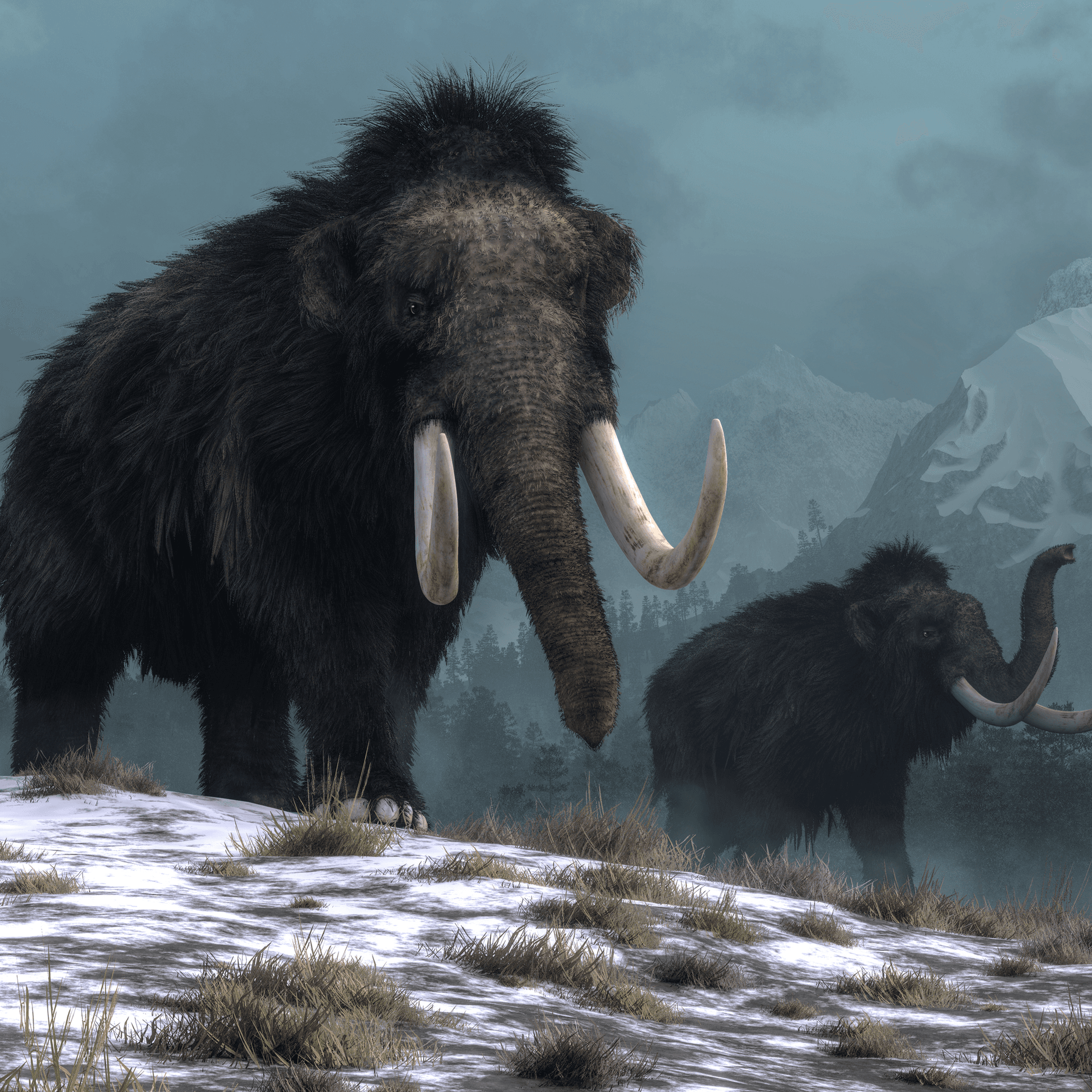
- Woolly Mammoth: Main focus based on extensive research and feasibility.
- Tasmanian Tiger: Extinct since 1936, a keystone species in its ecosystem.
- Dodo: Chosen for its iconic status, symbolizing broader conservation efforts.
Differentiating from Jurassic Park
- Colossal's methods are rooted in scientific realism rather than fictional narratives.
- Harris and Lamm discuss how Jurassic Park raised public awareness about genetics, serving both as a cautionary tale and an educational tool.
Scientific Process and Technology
- Comparative Genomics: Understanding the genetic differences between living relatives (e.g., Asian elephants) and extinct species.
- Reverse Engineering: Instead of filling gaps in ancient DNA, the approach focuses on altering the genome of a living species to include traits from an extinct one.
- CRISPR and Beyond: Use of CRISPR technology among other proprietary methods for precise genetic editing, emphasizing the need for a multi-faceted approach to editing genomes.
Role of Artificial Intelligence
- AI is pivotal in optimizing genetic editing processes.
- Internal tools help predict the best editing methods with high accuracy, streamlining experimental workflows.
Current Progress and Future Prospects
- As of the episode's airing, in vivo or successfully gestated embryos have not yet been achieved.
- The work is still predominantly in vitro, focusing on genome editing and analysis.
Conclusion The conversation highlights the intersection of technology, ethics, and environmental stewardship, proposing that the future of species conservation may rely on innovative approaches like de-extinction. Harris and Lamm emphasize the exciting possibilities within biotechnology while cautioning about the broader implications of such power.
Key Takeaways
- De-extinction is a growing field with potential benefits for biodiversity and human health.
- Utilizing modern genetic technology can allow us to recreate extinct species in a responsible and scientifically grounded manner.
- The role of public perception, inspired by cultural artifacts like Jurassic Park, remains crucial in shaping the discourse around genetic engineering and conservation efforts.
Additional Resources
- For more information about the topics discussed, refer to [Colossal Biosciences](https://colossal.com) and [Waking Up app](https://www.wakingup.com).
*Note: For full access to the podcast and additional content, subscribe at [samharris.org](http://samharris.org/subscribe).*
Written by AI. May contain mistakes. Listen to the episode to check what was said.
Transcript
Automatic transcript. May contain errors.0:06Welcome to the Making Sense Podcast.
0:30We don't run ads on the podcast, and therefore it's made possible entirely through the support of our subscribers. So if you enjoy what we're doing here, please consider becoming one.
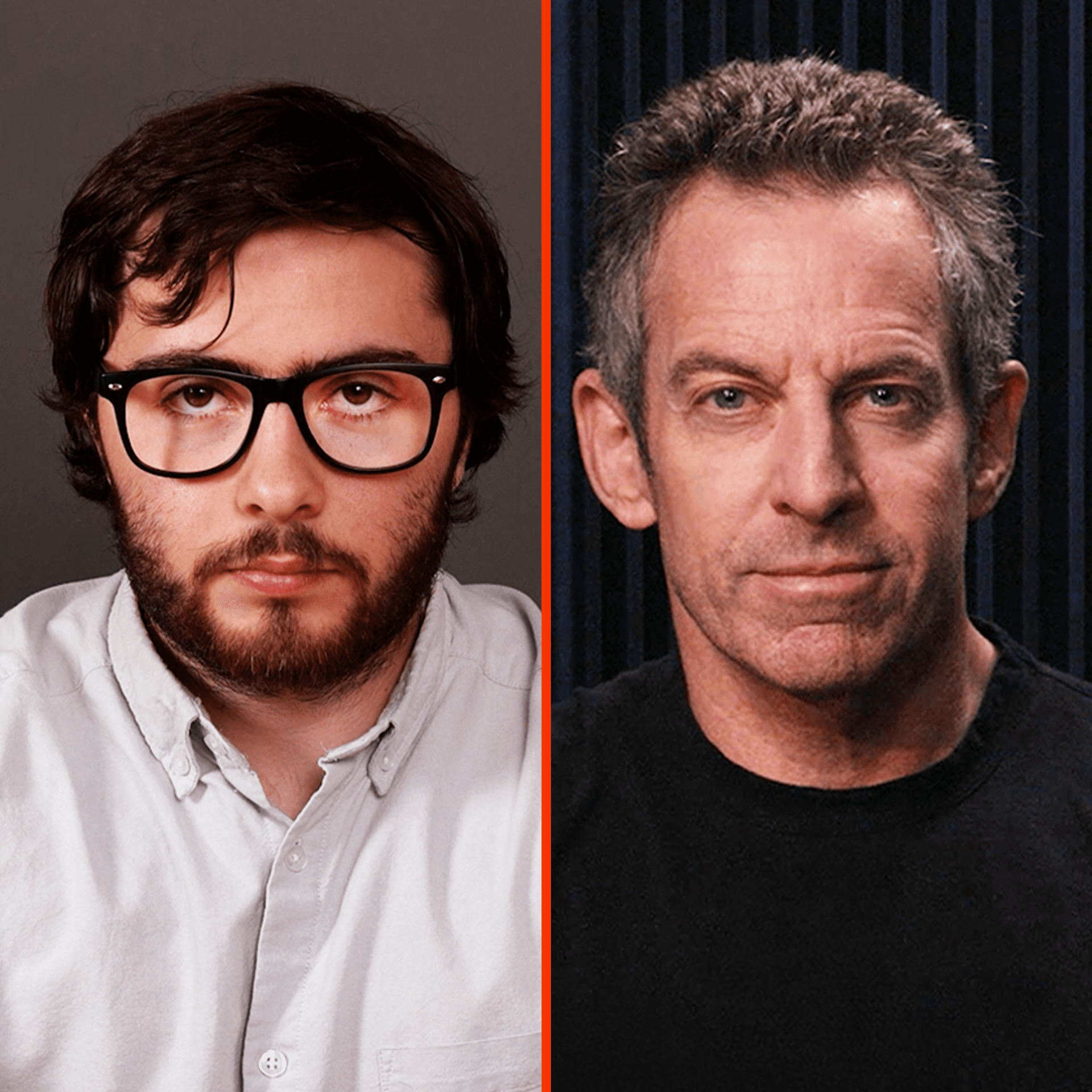
0:46Welcome to the Making Sense Podcast. This is Sam Harris. Today I'm speaking with Ben Lamb. Ben is a technology and software entrepreneur who has been featured in many publications, The Wall Street Journal, New York Times, Forbes, discussing topics related to innovation and technology. He's also the co-founder and CEO of Colossal Biosciences, a company he started with biologist George Church for the purpose of resurrecting extinct species like the woolly mammoth and the Tasmanian tiger and the dodo, and they aim to reintroduce them into the wild. Ben is also a fellow of the Explorers Club and serves on the Scientific Advisory Board of the Planetary Society.
1:31But we focus on his work at Colossal. We discuss the difference between their approach and Jurassic Park, the details of resurrecting the mammoth and other species, the relevance of this work to human health, the role of artificial intelligence here, what it would take to reintroduce mammoths and Tasmanian tigers and dodos back into the wild, the environmental and business case for doing this, and other topics. Anyway, the future appears to be almost here. And now I bring you Ben Lamb.
2:08I am here with Ben Lamb. Ben, thanks for joining me. Thanks so much for having me. So we're going to talk about some amazing stuff that you're doing over there at Colossal, your biotech company. But before we get there, how do you summarize your career and interests at this point? How did you give me the potted bio that gets us to the topic at hand? Well, I'm definitely insatiably curious. And so I'm always, you know, I'm not really a technologist. I'm not really an engineer. I try to look at things from a systems design perspective. And I'm always fascinated with how things work and how things can be improved.
2:46And I always like to find new, interesting projects. And so I've been in everything from mobile gaming before that was quite big. I built some precursors to large language models that we were actually calling conversational operating systems at the time. My last company was actually satellite software and defense. So we actually built a common operating picture to understand and track everything in the sky all the way, actually in low earth orbit, all the way down to the surface of the sea and work closely with the US Air Force and Space Force and some of our global partners on that. And then I met George Church and, you know, I actually kind of fell into de-extinction.
3:24I reached out to him because I'm curious and I thought that the intersection of synthetic biology and AI and computational biology and, you know, quantum, which I hear is only two years away every two years, will eventually, you know, kind of give us dominion to engineer life and do directed evolution on a scale that, you know, is unprecedented for, you know, human advancement. And so I got massively excited about the opportunities there. And then I asked George the question, and I said, if you had one project with unlimited capital that you could focus on for the rest of your life, what would it be, George?
4:00And didn't know what I would get out of George. Is it going to another star system or what? And his feedback was I would bring back woolly mammoths and help reintroduce them back into the ecosystem to help biodiversity in the ecosystem, as well as develop technologies for both human health care and species preservation. And at that moment, I was pretty hooked. Yeah. George is a very impressive scientist. I've met him, I think, it might have only been once, maybe twice at a conference. But is he still at Harvard? He's still at Harvard. So I do get to monopolize a decent amount of his time, but we do share him with Harvard and a handful of other initiatives he's co-founded.
4:39So the company is Colossal Biosciences? Is that the full name? Correct. And so what are you doing over there at Colossal? Yeah, so we decided that we wanted to build the world's first de-extinction and species preservation company. Because if you look at some of these stats and kind of the trend line that we're seeing for biodiversity loss and what the impacts to ecosystems can and will be, especially from a Keystone perspective, it's pretty terrifying. And when we started the company, our original pitch deck, all the data we could find showed that if without massive human intervention or massive new technologies, that we could lose up to 15, 1.5 % of biodiversity between now and 2050.
5:23What's terrifying is in 2024, that number has been upped to 50%, 5-0. So that's not a very good trend line. And so George had this vision, and I just feel like I'm kind of the steward and helper with it, of we could go build a company that could, you know, one, build tools and technologies that could be capable of bringing back lost species, as well as applying those technologies and innovation to conservation, giving that to the world for free. And all these species have direct applications, those technologies like genetic engineering and others, to human healthcare. So we really had this interesting opportunity to build a company that hopefully could inspire people, create true impact, but also create massive value creation around the way.
6:06And which species are you focused on first? So we've announced three species today. The woolly mammoth, which George was actually working on for about eight years before I showed up, collecting samples in Siberia, working on computational analysis in elephants. The Tasmanian tiger, also known as the thylacine, which went extinct in 1936 in Tasmania and lower Australia due to human hunting. The Australian government actually put a bounty on eradicating the species. And then, you know, we wanted a bird species. We wanted to recruit Beth Shapiro, who's our chief science officer. So we did the dodo because there's probably not a more iconic species than the dodo that symbolizes de-extinction.
6:48So how is this different from Jurassic Park? I mean, you know, I don't think anyone would really associate it with Jurassic Park until you bring in the mammoth. And then all of a sudden we're talking about charismatic megafauna and we're hoping for a T-Rex. To what degree does that vision account for some of your enthusiasm around this? And I mean, obviously, there's a difference between reintroducing animals to the wild and setting up a theme park. Was Jurassic Park a formative idea for you or are you arrived where you are by a different path? So we get the Jurassic Park question quite a bit, as that may not surprise you.
7:30Occasionally, when I go on stage to speak, they'll play the music. We've seen every meme with George's face on it or my face on it. So we've heard this a time or two. George will tell you, so I think George and I have slightly different perspectives on it. George will tell you that, in a weird way, he thinks that Michael Crichton and Jurassic Park was actually inspired by him. because if you go look in the original Jurassic Park novel, there's actually a DNA sequence early in the work, in the novel. And it actually is George's work with only one letter changed. And George will argue that statistically - It's still plagiarism?
8:10It's still, and George loves, you know, many of Crichton's novels, right? And it's a very inspiring author that he was. And, but George will tell you that, you know, he laughs and says, maybe I inspired Jurassic Park because a lot of his original work in yeast is actually shows up in the book. I will tell you from my perspective, you know, growing up, you know, born in the 80s, you know, child of the 80s and 90s, you know, I think one, you know, I love science fiction. I love Jurassic Park. That's not necessarily why I got into this, but it sure makes it a lot easier to connect with people because even though we have the memes and all the jokes that come around colossal versus Jurassic Park, at least, you know, Jurassic Park, which was this dystopian movie, at least it taught people about there's this thing called DNA and there's this thing called genetic engineering.
8:57And so like moms in Iowa know that there's this ability to manipulate the genome because of Mr. DNA. Right. And so we also we a lot of times use Jurassic Park as an example of how we're doing it exactly inverse, meaning that we're not trying to fill the gaps in an ancient DNA with the holes that you get from frogs or whatnot. We're trying to truly understand the genomes so that we could selectively choose the genes that we then want to engineer into that of a living species. So it's almost like reverse Jurassic Park. And when we say that to the kind of average public and some journalists and whatnot when we're explaining the process and the science, they really resonate with it.
9:42Because I think that movie was the right movie with the right technology and the right story at the right time that really connects with people. So let's go over those details again. So what was being proposed as the scientific bioengineering basis for Jurassic Park? And what exactly are you doing with, you know, paleogenomics and going out into the wild and getting DNA samples, however imperfectly preserved, and integrating them with living species? What is your approach and how is it different from what was being, it's been a long time since I saw the film. I actually never read the novel, so I don't know if the films depart from the novel in their logic, And I know nothing about any of the errors that Crichton might have made with respect to his molecular biology, if he made any.
10:35So what was proposed there, and what are you guys actually doing? So in Drusk Park, they proposed that you would go find pieces of amber, which, by the way, is a very porous material. It is not a good DNA store. Not that we've tried. But then magically in amber, you'd get insects and specifically mosquitoes that had been trapped for over 65 million years. And while that's true, there isn't DNA from that. Amber, as I mentioned, is a very porous material. It's not a great DNA store. Typically, the best DNA stores for us for ancient DNA are cold, dry places. So animals that passed away in a cave, in a very dry cave, that stayed consistent without other animals in it, that's kind of optimal for us.
11:22And so then they would take this DNA that they extracted from a mosquito that lived, you know, 100 million years ago and been a dinosaur, and they would extract in the movie actual blood, which also is impossible. and then they would take that blood, use computers, which is very similar to what we do, which I'll get into, and then fill in the holes of the ancient DNA, because ancient DNA is very, very fragmented, with that of, in the movie, frog DNA, among some other, many other things. But the problem with that, number one, is there is an ancient dino DNA. You know, the oldest DNA that we were able to collect is, you know, a little bit over a million years.
11:59There's some fragments and stuff that are older, but, you know, for the most part, we're working in thousands and tens of thousands of years, not, you know, millions of years, because DNA degrades very, very quickly. It starts to break down the minute it leaves your body. And so when you layer in like radiation, heat, acidification, other animals defecation, other animals dying on it, it starts to break down and it also gets massively contaminated. It's not truly endogenous at that point, right? And so what we do is instead of going and taking a bunch of different pieces of a mammoth, assembling it and saying, what's missing?
12:36And how do we plug that with a frog or elephant DNA? We do it almost exactly in reverse. So the first thing that we did is we went out and we looked at phylogenetically. So on that tree of life that we've all seen some version of it, you know, in science textbooks and today on the internet, we say, what is the closest living relative to the mammoth in this case? And that's actually the Asian elephant. It's 99.6 % the same genetically. It's actually closer genetically to an Asian elephant than an Asian elephant is to an African elephant. And that's kind of a fun party trivia for Hugh. And then we spend a lot of time trying to do comparative genomics, truly use a bunch of software, use AI, some of our custom models to understand what is the difference even from an African elephant to an Asian elephant?
13:22What is the difference from a population level? So we actually sequence a lot of different Asian elephants. So what is truly Asian elephant versus population diversity in those genomes? Because not all genomes are obviously exact copies of each other. And then how do we compare that to the mammoth? And then we can identify, okay, where are these regions of the genome that are vastly different? And what do we know about that from scientific research, from other peer-reviewed papers, you know, from actually doing molecular and functional assays, actually growing stem cells and testing our hypothesis?
13:55So you have to do a lot of work to then kind of verify what we think the core genes that made a mammoth a mammoth were so that then we can engineer them into that of an Asian elephant cell. And that's not just taking pieces and pushing it in there. That's actually just changing existing code. So we fundamentally don't need long-term pieces of these DNA. We don't need all these dead samples. We just need the code in the computer. So do we have the complete genome of the woolly mammoth? I mean, is that something that's disputed or did we get enough samples of sufficient integrity such that we just know we've got the full mammoth genome?
14:34We have enough. So we have about 65 mammoth genomes. Most of those aren't published. Most of those are Siberian and Russian mammoth samples. We're now doing a lot of work with Alaskan mammoths as well. And we work with about 17 universities across the world, one of which is the University of Stockholm, and Luva Dahlin's work. And Luva is arguably the number one mammoth researcher in the world. And so we've taken all of his different samples, and it's about a 700 ,000-year difference between all the different samples, to kind of fill that in. But we have enough of the protein coding regions of it, as well as Colombian mammoths, steppe mammoths, and others.
15:10And we have a pretty cool paper that I hope will come out mid-next year about this, that shows the comparative genomics that we know enough of the mammoth genome that we can identify the core areas around cold tolerance, fat, hair, curved tusks. So we actually have enough to do our work. It is not as complete as our thylacine genome, which we recently announced is 99.9 % complete, which is truly incredible for any genome, let alone ancient DNA. That's the Tasmanian tiger? Correct. So are you using CRISPR technology to insert mammoth code into an Asian elephant zygote, or what is the step there that would produce a living mammoth?
15:53Yeah, so we start with an Asian elephant cell, right? And we actually had to spend a lot of time getting the culture conditions right, actually immortalizing those cells. One of the things that, you know, before we get into the genetic engineering side, one of the things that's interesting about elephants and blue whales and a handful of other species is they actually get cancer a fraction of what we do based on age and body weight of which they grow to. And the leading theory of that, and we're seeing this also being verified in our lab, is they have an overexpression of a protein called P53, about seven times more than we have in mice have, which I'm sure you're familiar with.
16:28And what's interesting is we've actually had to learn how to regulate that. Because anytime we went to go make those changes, which we'll get into, the cell would just senesce. So not only do we have to build immortalization constructs to keep the cells growing and living and healthy. We also had to figure out how we can, quote unquote, turn down P53 so that we could edit the cells and then be able to turn it back up because you don't want to produce cancer in elephants, right? And so there's a lot of prep work before we even get to the point that we can do the engineering itself. And as you can probably guess, because you're a deep background in science, CRISPR has become a catch-all for all genetic engineering.
17:08They're like, oh, it's just CRISPR, right? We just CRISPR it. But what's interesting is we use a combination of tools, some of which are proprietary, some of which have been invented by other organizations and universities, and then we layer new techniques on it. So in some cases, we're changing the individual nucleotides, the individual letters on that double helix. In other cases, we're knocking out certain genes. And in other cases, we're actually synthesizing big blocks of DNA where if there's like a bunch of changes along one kind of strand, it's actually more efficient for us to synthesize that block, knock that block out, and then insert this new block so that you have less likelihoods of off-target effects or unintended consequences from your editing.
17:54And I'd say the last thing that we're doing that on the editing front that is our kind of, I think the thing that sets us apart from a genomics perspective is we're trying to become the biggest pioneer of multiplex editing, meaning editing all over the genome at the same time. So instead of making one edit, maybe you can make 20 edits, 50 edits, a thousand edits, all with a very high degree of efficiency versus having to synthesize entire giant blocks. I do believe that technology will get here, being able to synthesize even full chromosomes at some point, but we're not, we as humanity aren't quite there yet.
18:32So editing is the most efficient kind of current modality that that we've been pursuing. So at what point did this actually become technically feasible? I mean, what year would you say this became something that you could actually start on and it ceased to be just a piece of science fiction? Yeah. So I think, you know, people have been talking about, you know, CRISPR, you know, in some version of genetic engineering from the 80s, right? But it was like, I don't remember the exact year, but it was like, what, 2012, 2014, somewhere around there, where we had the true kind of discovery around CRISPR and the idea that you could target a part of the genome, successfully knock it out, and have it repair itself.
19:20And I think from there, you've seen work like David Liu's work in Prime and base editing, where you can change individual letters. You've seen kind of this like pre-Cambrian explosion, you know, to use our Jurassic, use some of our Jurassic fun terms, of genetic engineering tools and technologies. Because we've all been promised from the 80s and 90s gene therapies and genetic engineering capabilities that allow us to do all kinds of stuff, right, that have never really manifested. But I think that really in the last 10 years has been where those technologies have been viable. I don't believe before that kind of 2012, 2015 timeframe of that CRISPR race with Fang and Doudna and all of them, right?
20:05that are just there and George included, which were all incredible scientists. I don't believe that this would have been a viable undertaking. And after that, it became viable, but you still have compute, you still have AI. There's a lot of other components to it and it just becomes very, very costly. The goal to really make this where it's possible and scalable, I think we're still a little bit early, but we're in kind of the right kind of five years to truly be able to deliver. So is AI a necessary component of the process? It is. And, you know, we're learning every day new ways that we can apply.
20:42You know, my background has been mostly in software, right? And so, you know, we're finding every day new ways to apply these technologies around it. Like we actually have a tool that we built internally that we've been giving it this feedback loop. So we built a cool little model that probably doesn't apply to most people, but for us, we find it fascinating that will actually give us the right recommendation. that's over 90 % accurate of what tool we should use for the specific edit that we're going after. And that's awesome when you think about biology, because if you're going to make an edit, you then have to go see if that edit worked.
21:17You then have to grow those cells. Those cells have to live. Then you have to sequence those cells. You got to wait a couple of weeks, in some cases, if you don't have sequencing cores internally, to get that data back. And so the feedback loop, if you've make some, if you've made the wrong edit using the wrong tool, or at least the not the most efficient tool, you know, can be months of lost scientific experiment time, both costly in terms of go to market and in terms of your research and in all the reagents and stuff that you had to go use in that, right? And so we're, we're now using AI, not just for comparative genomics, but even in what selection of what editing tool we should use for the editing job that we're trying to go pursue.
21:58So now how far have you gotten? And now I'm not asking just about the mammoth, but you can talk about the dodo or the Tasmanian tiger or anything else you've experimented with. What have you produced in the lab? And is it all still in vitro? Or what do you have a pregnant Asian elephant that has a name? There is no secret pregnant Asian elephant mammoth, unfortunately. I would be the first. I couldn't be more excited to share it with you if there was. So de-extinction is a systems problem, right? There's computational analysis work, there's ancient DNA. If you'd like to continue listening to this conversation, you'll need to subscribe at samharris.org.
22:39Once you do, you'll get access to all full-length episodes of the Making Sense podcast, along with other subscriber-only content, including bonus episodes and AMAs, and the conversations I've been having on the Waking Up app. The Making Sense podcast is ad-free and relies entirely on listener support. And you can subscribe now at samharris.org.
From the publisher
Sam Harris speaks with Ben Lamm about his work at Colossal Biosciences. They discuss his efforts to de-extinct the woolly mammoth, the Tasmanian tiger, and the dodo; the difference between Colossal's approach and Jurassic Park; the details of resurrecting the mammoth; the relevance of this work to human health; the role of artificial intelligence; reintroducing mammoths, Tasmanian tigers, and dodos back into the wild; the environmental and business case for de-extinction; and other topics.
If the Making Sense podcast logo in your player is BLACK, you can SUBSCRIBE to gain access to all full-length episodes at samharris.org/subscribe.
Learning how to train your mind is the single greatest investment you can make in life. That's why Sam Harris created the Waking Up app. From rational mindfulness practice to lessons on some of life's most important topics, join Sam as he demystifies the practice of meditation and explores the theory behind it.