In short
Making Sense Podcast Episode #406 — The Legacy of Christianity
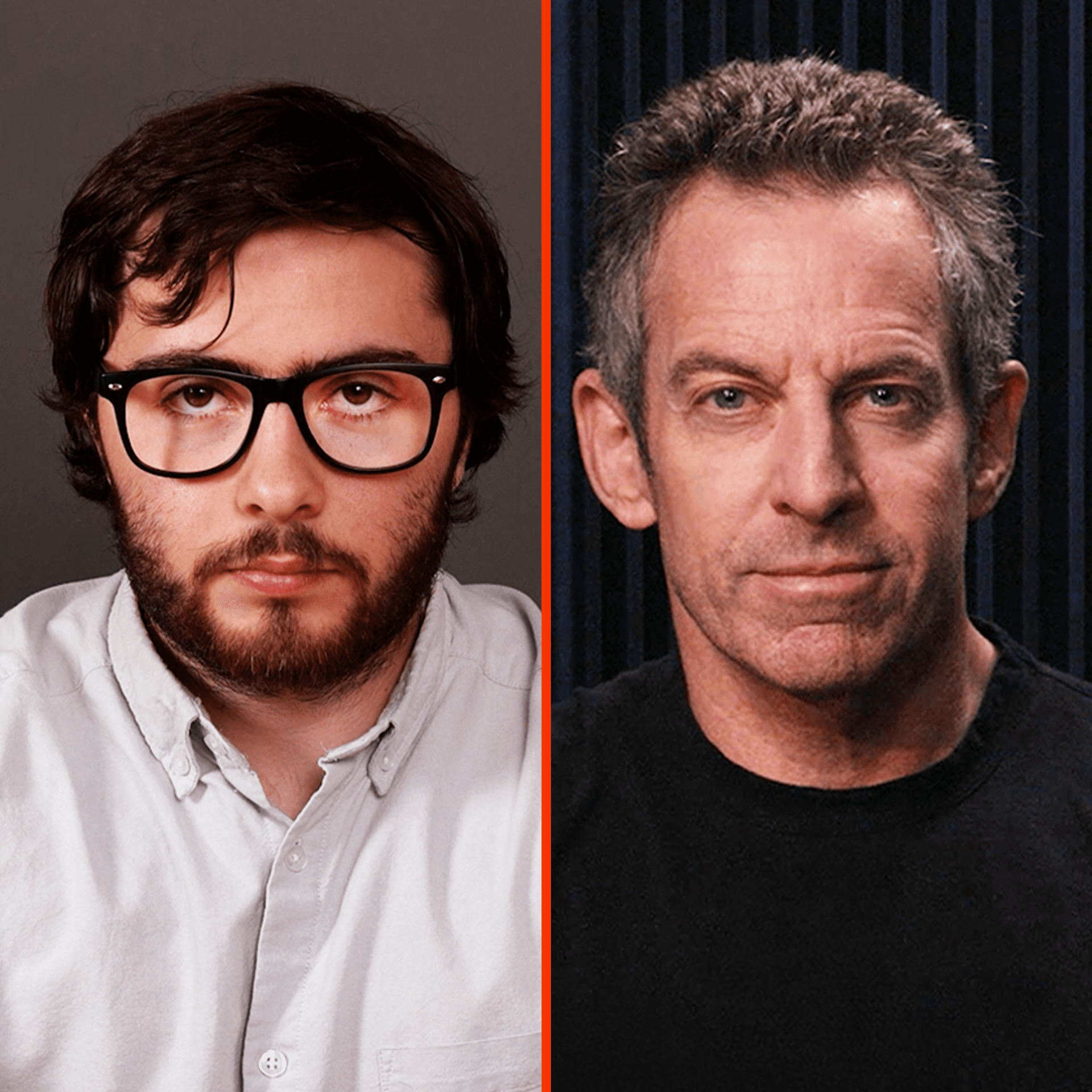
Episode Overview In this episode, Sam Harris interviews historian Tom Holland about his book *Dominion: How the Christian Revolution Remade the World*. The conversation focuses on the profound and lasting influence of Christianity on contemporary moral systems, historical narratives, and cultural ethics.
Key Topics Discussed
- Christianity's Enduring Legacy
- Thesis of *Dominion*: Holland posits that Christianity remains one of the most influential legacies from the ancient world, shaping modern moral frameworks even for those who identify as secular or atheist.
- Cultural Influences:
- Hebrew Scriptures: The foundational texts that inform much of Christian thought.
- Greek Philosophy: Influences on early Christian writers, especially Paul, who wrote in Greek and integrated philosophical concepts.
- Persian Dualism: The moral dichotomy of good vs. evil that also shaped early Christian thought.
- Roman Universalism: The context in which Christianity emerged; the Roman Empire’s interconnectedness facilitated the spread of Christian ideas.
- The Paradox of the Crucifixion
- Holland and Harris explore the contradictions inherent in the life and death of Jesus:
- The crucifixion as a symbol of failure and defeat yet becoming a powerful source of inspiration.
- The shocking nature of a divine being enduring such a humiliating and brutal death.
- Comparison to other figures in history, like Caesar Augustus, who claimed divinity through power and achievement.
- Moral Systems and Historical Ethics
- Ancient vs. Modern Ethics:
- Ancient moral frameworks often celebrated strength and dominance (e.g., *“the strong do what they will and the weak suffer what they must”*).
- The ethical transformation brought about by Christianity that emphasizes humility, compassion, and the moral value of suffering.
- Nietzsche's Perspective: The philosopher viewed Christian morality as a contradiction to the values of strength and beauty prized by ancient cultures.
- The Impact of Christianity on Secular Morality
- Holland argues that many secular moral intuitions still derive from Christian ethics, despite a growing sense of autonomy from religious foundations.
- Sam Harris expresses skepticism about the necessary connections between secular ethics and Christianity, suggesting that his moral intuitions arise from diverse philosophical influences.
- Reflections on Historical Narratives
- Both Holland and Harris reflect on the past, especially regarding how historical events resonate with current moral dilemmas.
- The discussion draws parallels between ancient Rome's imperial ethics and contemporary issues such as jihadism and modern conflicts.
Key Takeaways
- Christianity's Lasting Influence: Even for non-believers, the moral systems they operate within are profoundly shaped by Christian teachings.
- Re-evaluation of Historical Ethics: Modern perspectives often assess ancient moral frameworks with a critical eye, recognizing their brutality and the ethical evolution that has occurred since then.
- Complexity of Moral Narratives: The interview underscores the intricate relationship between cultural narratives and moral beliefs, highlighting how history continues to inform contemporary ethical discussions.
Conclusion The episode encapsulates a rich dialogue on the intersections of history, morality, and faith, challenging listeners to consider the deep-seated influences of Christianity within modern secular ethics and to reflect on the moral implications of historical events in contemporary society.
For listeners interested in exploring these topics further, the conversation offers a compelling mix of historical analysis and philosophical inquiry, revealing how deeply intertwined our ethical frameworks are with the legacies of the past.
Written by AI. May contain mistakes. Listen to the episode to check what was said.
Transcript
Automatic transcript. May contain errors.0:29Welcome to the Making Sense Podcast. podcast, and therefore it's made possible entirely through the support of our subscribers. So if you enjoy what we're doing here, please consider becoming one.
0:45I'm here with Tom Holland. Tom, thanks for joining me. Thank you for having me. I'm a huge fan of your work. I have known about your books for some years, but I recently discovered your podcast, which you do with Dominic Sandbrook, a fellow historian, which is fantastic that's the rest is history i am working my way through dominion which is fantastic and uh this came out a few years ago but um i'm well into it and it's also great as an audiobook which uh people should know uh well sam if i could just say also i'm just in the process of recording it myself oh nice i've just been doing that today okay good from the recording studio So don't get the audio book.
1:24Wait for Tom to record it. Yeah, yeah. That's interesting. So yeah, I mean, I don't know if you find that as painful a process as I do, but it's surprisingly hard. I'm finding it very painful. Yeah. Very painful indeed. I've actually had to rewrite lines that I couldn't get through. I'd inadvertently written tongue twisters for myself. And after 20 takes in front of an ashen phase producer, I literally have to change the language so that I can neurologically accomplish the task. You've written about ancient Rome, Christianity, as I said, and Dominion, which we'll focus on. But you've also covered the origins of Islam and the problem of jihadism in the West.
2:04I discovered as late as last night the short documentary you did on ISIS, the Islamic State, which was quite something to revisit. it. It's amazing how the memory of the extremity of that horror has faded for even people who have focused on it at the time. It was just such a ghastly distillation of everything that's wrong with that fanaticism, which we'll talk about. So anyway, there's a ton to cover, and I really want to get your sense as a historian of the echoes of history that we're seeing in the present. I mean, of the history that you've covered on your podcast. You have a great series on the French Revolution.
2:45I think we're hearing echoes of that in recent years, echoes of the fall of Rome and other concerns. Also, before we started, you told me you have a new translation of Suetonius' Lives of the Caesars coming out in April, which people should look for, which I didn't realize you're a translator. You translated Herodotus back in the day, and I look forward to picking that up. So anyway, that's a long introduction. Tom, welcome to the podcast. Thanks very much for having me. So let's start with the thesis in Dominion, the argument that Christianity is the most enduring legacy of the ancient world, and that many of us who think we were never really indoctrinated in it or by it certainly don't imagine ourselves to be attached to it.
3:30an outspoken atheist like myself imagines that his morality was not actually handed to him by Jesus or Paul or medieval Christendom or the Bible thumpers in my own country, with whom I'm even more familiar. You argue that so much of what we take to be natural to us in secular moral terms is really the legacy of Christian ethics. So let's jump in. I don't mean to lead the witness too much, but let's just start with what accounts for the rise and endurance of Christianity on your account. Well, the rise, nothing comes from nothing. So it is clearly emerges from a confluence of whole kinds of different cultural streams.
4:24The most obvious of those, of course, is the inheritance of Hebrew scripture. Jesus is saturated in that, Paul and the first Christians as well. But there is also the influence of Greece, Greek culture, Greek philosophy. Paul writes in Greek and he invokes Greek philosophical concepts and indeed infuses them into his letters. I think that you can discern more distantly because it is an influence on Hebrew scripture rather than directly on the world of the early church. Persian dualism, the sense that the world and the cosmos is a moral entity, that there are such concepts as good and evil, which the Persians would define as truth and the lie, as light and darkness.
5:19And then, of course, there is the context that is provided by the Roman Empire, which is very self-consciously universalist. Virgil, Rome's greatest poet, claims that the Romans have been given empire without limit by the gods. The physical manifestations of that assumption are the great roads that are starting to be cast like the mesh of a net over the various provinces that the Romans have conquered. The shipping lanes have been largely cleared from pirates. And so the world has been joined together in a way that it had never previously been. And Christianity emerges in a way that is very conscious of that kind of universal dimension.
6:10And Paul in this, I think, is the key figure. A Judean raised with a deep knowledge of the scriptures, but also he has a very, very keen awareness of the vastness of the world. And in a sense, he gives to the non-Judeans in the Roman Empire a chance to share in what have already been discerned by many Gentiles as the kind of the spiritual and scriptural riches of the Judean inheritance. And I think in that context, you can see why Christianity would be as successful as it is, because it is absorbing all kinds of elements that are culturally present in the world of the Roman Mediterranean, and mixing them in a way that proves very appealing to large numbers of people across the Roman Mediterranean, and indeed beyond the Roman Mediterranean, into the lands of the Persians as well.
7:18But isn't the appeal still somewhat paradoxical? I mean, this is something that I think you cover in your book, and it's a point that I think Paul made and Nietzsche also made. I mean, I think Paul and Nietzsche could be considered the bookends of Christianity, but both acknowledged how astounding it was that a living God was crucified and that somehow this abject failure within his lifetime to conquer anything became the symbol that so much of the world found spiritually inspiring, right? I mean, There had been this historical precedent of various kings and other figures being acknowledged to be divine, becoming divine at some point in their lives, or just claiming to be divine.
8:10And yet they're not the center of a 2 ,000-year-old cult or worldwide religion. So let's linger for a moment just on the strangeness of the Jesus story. Yeah, it's incredibly strange. And as you say, the strangeness is not the idea that a man can in some way also be divine, because most people in the Roman world take that for granted. And in fact, the fastest growing cult in the first century AD is not Christianity, but the cult of another man who was thought to be the son of a god, who proclaimed good news, who claimed to rule over an age of peace and who, when he died, was believed to have ascended to heaven to sit at the right hand of his father.
8:58And this is Caesar Augustus, the man who rules effectively as the first emperor, the son of Julius Caesar, who brings peace to a world that had been ravaged by civil war. And the achievements of Augustus are what raise him to the heavens. The Romans, and indeed many in the provinces, feel that his achievements are of a divine order. The idea that someone who not – it's not just that Jesus was an unimportant provincial from a backwater, but the fact that he had suffered a peculiarly horrible death. Crucifixion was the paradigmatic fate that was visited on slaves, because it was not only agonising, but it was also publicly humiliating.
9:48And in a sense, humiliation for the Romans was seen as being almost more terrible than physical pain. And you're right that, in a sense, Paul and Nietzsche do kind of bookend this sense. Because in Paul's letters, again and again, you get a sense of utter shock that this could have happened. Paul's letters are not kind of a cool, measured articulation of doctrine. He is wrestling with a sense of overwhelming astonishment that in some way, the one God of Israel has been made manifest as someone who suffered this hideous death. and it kind of blows his mind and he's endlessly trying to make sense of it.
10:35I think what then happens over the course of the Christian centuries that follow is that it takes Christians a long time to get over the shock and horror of this. It's really notable that through the early centuries, Christians do feel, yeah, this is embarrassing. I mean, they continue to feel unsettled by it. And even once Constantine has become a Christian and the Roman Empire starts to become institutionally Christianized, this sense of embarrassment remains. I think you say in the book, this is a fact that had never occurred to me to even wonder about, but it took some centuries before the depiction of Christ on the cross became really admissible.
11:22Right. So, I mean, one of the earliest ones that is done by, so there's a very early one that is done by someone mocking Christianity. So it shows a man with an ass's head being crucified. It comes from graffiti in Rome and it's clearly mockery. One of the earliest illustrations by Christians comes on an ivory box that's now in the British Museum and it shows the passion. So on one side, you have Judas being hanged and looking very unhappy about it. On the other side, you have Christ on the cross. And he couldn't look more chilled. I mean, he looks like he's hanging out in California on a beach.
12:03He's buff, he's toned, he's got a kind of loincloth on. And in fact, what he looks like, of course, is an athlete who has won in a great contest, which is one of the ways that in the Roman world, Christ's victory over death is understood. And it's not for another 500 years after that, so just before the first millennium, that you get Christ portrayed as dead on the cross. And then throughout the high Middle Ages, there is a very deep and intense fascination on the part of Christians with the physical sufferings of Christ, with his passion. And then I think people, artists and thinkers and writers in the Christian world push it to such a limit that almost they become desensitised to it.
12:52And by the 19th century, when Nietzsche is writing, I think that most people probably going into a church and looking at a cross are not thinking of it as an absolutely hideous instrument of torture. And they're probably not visualising the appalling sufferings that a man nailed to it would have undergone. And it's a kind of paradox, a very Nietzschean paradox, that probably the most devastating, to Christian faith, the most devastating atheist who's ever written in the Christian tradition, Friedrich Nietzsche, should have felt the power of the cross so profoundly. And he feels it as something disgusting.
13:34He feels it perhaps in the sense that a Greek or Roman would. The idea that someone who had suffered such a servile fate could in any way be worthy of approbation, let alone worship, appalls Nietzsche because he sees it as an offense against the values of strength and power and glory and beauty that he identifies in Greek and Roman culture, and which, frankly, he thinks has been corrupted by Christianity, this faith of slaves, as he describes it. And one of the reasons he describes it as the faith of slaves is because crucifixion is the fate that is visited on slaves. And when I was writing Dominion, I was about two chapters through, and then I got a commission to make this film that you mentioned in your introduction about the Islamic State.
14:24And I ended up going to this town called Sinjar, which had been the home of people called the Yazidis, I'm sure you'll know, I'm sure lots of people listening will know, people who were accused by the Islamic State not just of being infidels, but of being devil worshippers, and had been treated peculiarly horribly. And the women had been rounded up, and those who were thought too ugly to take off as sex slaves had been killed, and those who hadn't had been taken off and sold into sexual slavery. But the men, some of them had been crucified. And to be in a town that had been liberated just a few weeks before by the Kurds and the Islamic State were a couple of miles away from where we were across kind of blank open fields.
15:08To be in a town where people had suffered crucifixion at the hands of people who viewed crucifixion as the Romans had viewed it, as a fate that it was not just the right of the powerful to visit on the defeated, but a moral duty, I found kind of existentially horrible. And I suppose it It kind of opened my mind to the sense in which I think the idea that someone who is tortured to death has a moral value over the person who tortures him to death underpins my moral system and I think the moral system of the vast number of people in the West. And I came back and I rewrote the introduction to the book to focus on the crucifixion as being the kind of maddest, strangest, weirdest symbol that anyone in antiquity came up with.
16:06And it may not be a coincidence that it is, of course, the most enduring symbol, probably the best known symbol maybe in world history. Yeah. One thing you get from reading history, certainly reading Dominion, or your other, I guess, Rubicon conveys it too, your discussion of Rome, is just how foreign and, through a modern lens, pathological the ethics of antiquity were. I think, is it the Sididese who said that the strong do what they will and the weak suffer what they must? That's probably close to the translation. A phrase that is being quoted a lot at the moment, it must be said. And yeah, I mean, so you actually make that point in your documentary on the Islamic State as you're walking through Sinjar, that this was a promulgation of a Roman ethic, essentially.
17:00I mean, I think you say something like they murdered these people very much the way, you know, the Roman legions would have, or there's some line like that, direct comparison to Rome, which I found briefly shocking because I realized I rarely view the Greeks and Romans through this lens of moral judgment, the same kind of judgment I lavish upon jihadists, right? But yet there's something awful about their ethics and their celebration of strength over weakness. I mean, that is a perspective that I would argue is shaped by 2 ,000 years of Christian weathering. Because, I mean, Nietzsche certainly saw the morality of the Greeks and the Romans as something admirable, as, of course, in due course did Hitler.
17:52But it's wrong to say that the Romans are immoral. They weren't at all. They saw themselves as the most moral of peoples, and this is why the gods had given them the rule of the world. Also, you read the Stoic philosophers, right? And you're in the presence of some of the greatest wisdom philosophy has ever produced, and yet to know of the normalcy of crucifixion occurring in the background is peculiar. I mean, I think, so as a child, I always found Greece and Rome infinitely more glamorous than the Israelites and the apostles. So I was always team Pharaoh, team Nebuchadnezzar, team Pontius Pilate.
18:40I kind of thrilled to the glamour and the swagger of these ancient civilizations, rather than the way that I'd thrilled to the glamour and the swagger of Tyrannosaurus as an even younger child. And I guess that I was perfectly capable of being thrilled and excited by the thought of the Spartans at Thermopylae or Caesar conquering Gaul. And I would do that in part by also identifying my moral inheritance as something that derived from Greek philosophy. But I guess that one of the, well, actually, probably the main thing that led me to write Dominion, a history of Christianity, which I had never been on my agenda.
19:23I always viewed, I had a kind of almost synesthetic sense of antiquity. And I thought of Greece and Rome with bright blue Californian skies. I thought of Christianity as the drizzle of an English autumn setting in and blotting out the sun. But I realised, as I wrote about Caesar, who was hailed as a great man by his fellow citizens for inflicting hundreds of thousands of casualties during the course of the conquest of Gaul, enslaving an equal number and exulting in it, and realising that this really wasn't my moral system at all. And I began, I felt it was kind of like, you know, I suppose the kind of the prickle in the back of the throat that heralds the onset of a cold.
20:11The sense that something was kind of, that I couldn't quite get a handle on was waiting to take me over. And I began to think, well, is it actually Christianity that changes? Is that what explains the process of transformation? And I explored it in the third work of history I wrote, which was focused very much on what I think is a kind of great process of revolution in 11th century Latin Christendom, so the western half of what had been the Roman Empire. It's often called the papal revolution because the revolutionaries are people who take control of the Roman church, and it's led by popes. It forces through a very radical process of a recalibration of society that essentially divides the world into rival spheres that in due course in the West is what we call religion and the secular.
21:10And this is a division that did not exist in antiquity. It didn't exist in any other of the civilizations of Eurasia. And I enjoyed the paradox that secularism would not probably have been secularism without the labors of 11th century popes. It seemed to me a very entertaining paradox. So I explored that. And then on the back of that, I then became interested in what was the role of Islam in all of this. And I wrote a book on Islam where I was quite skeptical about quite a lot about early Islam. This is In the Shadow of the Sword? In the shadow of the sword. So it seemed to me that the great question about Islam is where does the Quran come from?
21:57And it is amazing the number of books by very distinguished scholars, so it's not even kind of popular history, who will say about the revelations, Muhammad received the Quran. From the Archangel Gabriel? That's the scholarly opinion of the academy? They don't say that, but they might say, he received the revelations and they leave it at that. And I thought, well, that's not really an adequate explanation if you're not a Muslim. I mean, if you're a Muslim, then of course it's perfectly adequate. I mean, you know, that's the foundation of a Muslim's faith. But if you're not, you've got to say, where does it come from?
22:32And it did seem to me that the Quran was, I mean, if the Quran had materialized in, I don't know, 15th century New Zealand, I mean, that would be a miracle. It would be incredible. But the fact that it materializes in a place that is rife with Jewish and Christian and Zoroastrian and Roman and Persian and all kinds of cultural influences, and that this is exactly what it reflects, made me think that Islam was a product of this, but one that had gone on a radically different direction from Christianity. And so thinking that and studying it and kind of reifying my thoughts about how what today we would call Judaism and Christianity and Islam and Zoroastrianism were kind of related but quite radically different in their presumptions, again, sharpened for me the sense of what was distinctive about Christianity and my own sense of being very, very shaped by it.
23:33And so that's how I then came to write Dominion. And dominion was a process of stress testing that theory, because when I began it, I wasn't entirely sure what conclusions I would end up with. Well, I want to get to Islam, as I said, but let's linger here on the connection that you argue for between Christian ethics and secular ethics that many of us imagine to be quite denuded of any propositional claim about the truth or necessity of Christianity. Someone like myself, I moved through the world having various moral intuitions informed by just my own thought and just my collision with the history of ideas, whether it's Western philosophy or Eastern philosophy or religions like Christianity.
24:18But that amalgam translates in my thinking into something that has no necessary connection, certainly, to Christianity. So let me just throw a few or try to create a few wrinkles in that picture. one is that so when you take Christianity itself the early Christians you know from Jesus onward first of all they were Jews and I think it's if you'd like to continue listening to this conversation you'll need to subscribe at samharris.org once you do you'll get access to all full length episodes of the Making Sense podcast the podcast is available to everyone through our scholarship program so if you can't afford a subscription please request a free account on the website The Making Sense podcast is ad-free and relies entirely on listener support.
25:07And you can subscribe now at samharris.org.
From the publisher
Sam Harris speaks with Tom Holland about his book, Dominion: How the Christian Revolution Remade the World. They discuss the enduring influence of Christianity on the modern world, historical interpretations of crucifixion, the moral systems of ancient societies, Paul's letters, the impact of the parable of the Good Samaritan, Islam and how it relates to Christian notions of morality, secular sources of morality, the collision between Western norms and traditional Islam, how Western societies take their values for granted, the relevance of the Roman Republic and the French Revolution, and other topics.
If the Making Sense podcast logo in your player is BLACK, you can SUBSCRIBE to gain access to all full-length episodes at samharris.org/subscribe.
Learning how to train your mind is the single greatest investment you can make in life. That's why Sam Harris created the Waking Up app. From rational mindfulness practice to lessons on some of life's most important topics, join Sam as he demystifies the practice of meditation and explores the theory behind it.