In short
Podcast Notes: Making Sense with Sam Harris - Episode #407: Can We Ever Return to Normal Politics?
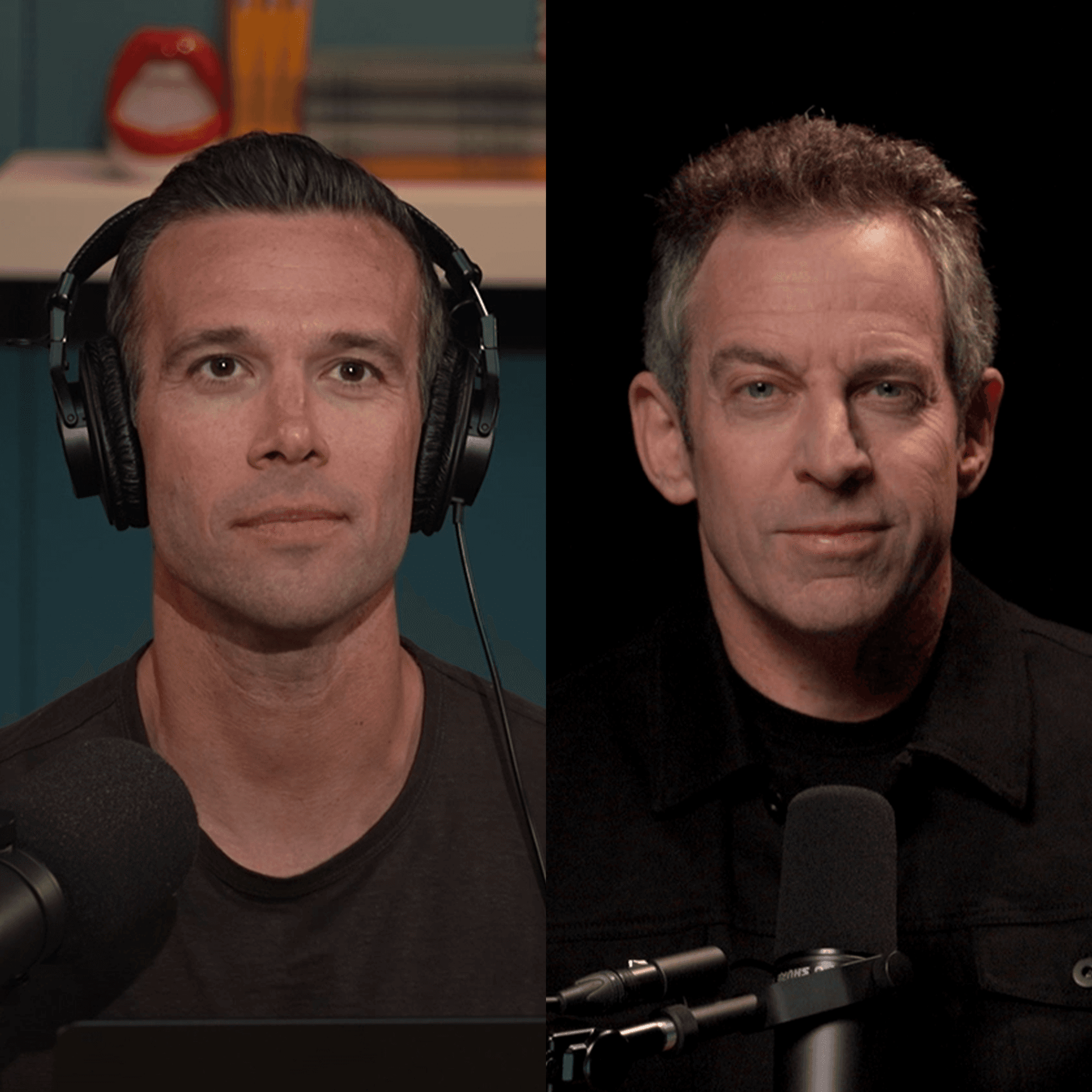
Episode Overview In this episode, Sam Harris converses with Jon Favreau, discussing the current state of American politics, including topics such as the Trump administration, Democratic strategies, and the implications of political chaos on society.
Key Participants
- Sam Harris: Neuroscientist, philosopher, and host of the podcast.
- Jon Favreau: Veteran speechwriter, co-founder of Crooked Media, and a significant figure in Democratic political circles.
Key Topics Discussed
Jon Favreau's Background
- Started in politics with John Kerry's campaign in 2004.
- Became head speechwriter for Barack Obama in the Senate and the White House.
- Co-founded Crooked Media after the 2016 election, which includes the popular podcast "Pod Save America."
Communication in Politics
- Favreau distinguishes between speechwriting in campaigns versus the White House:
- Campaign speeches focus more on rhetoric and less on policy.
- White House speechwriting involves synthesizing policy with input from various advisors.
- The role of speechwriting involves balancing policy details, political efficacy, and various egos.
Comparison of Political Norms
Obama vs. Trump
- Discussion on how the Trump administration has violated political norms compared to the Obama administration.
- Favreau highlights the chaos and fragility of democracy under Trump.
- Notable point made by Obama on the scandals he faced compared to Trump's multiple serious allegations.
The Current Political Climate
- Concerns about the Trump administration's approach to immigration and the consequences of wrongful deportations.
- The discussion of a particular case involving Kilmar Abrego Garcia and the lack of due process in the deportation practices.
- The implications of such actions raise moral concerns about governance and adherence to democratic values.
The Role of Corruption
- The perception of corruption and its acceptance among Trump's supporters is examined.
- Favreau discusses how many voters view politicians as inherently corrupt and how that shapes their acceptance of Trump's actions.
- Concerns about the potential backlash against Trump if economic conditions worsen and voters feel left out while he profits.
Democratic Party Strategy
- Favreau shares insights on the current challenges facing the Democratic Party.
- Emphasizes the need for a coherent strategy moving forward in a turbulent political landscape.
Key Takeaways
- Political Norm Violation: The Trump administration has normalized behaviors that were previously unacceptable in American politics.
- Public Perception of Corruption: Many voters accept corruption if they perceive that it benefits them economically.
- Challenges for Democrats: The Democratic Party faces a significant struggle to regain influence and navigate a complex political environment.
Conclusion The episode sheds light on the deteriorating state of American politics, the normalization of corruption, and the struggle of the Democratic Party to find footing in a post-Trump landscape. Sam Harris and Jon Favreau engage in a thoughtful examination of these themes, providing insights into the future of American governance.
Additional Notes
- For those interested in the full conversation, subscriptions are available at [samharris.org/subscribe](http://samharris.org/subscribe).
- The podcast emphasizes the importance of understanding political dynamics as a means to engage meaningfully with current events.
Written by AI. May contain mistakes. Listen to the episode to check what was said.
Transcript
Automatic transcript. May contain errors.0:29Welcome to the Making Sense Podcast. podcast, and therefore it's made possible entirely through the support of our subscribers. So if you enjoy what we're doing here, please consider becoming one.
0:45I am here with Jon Favreau. Jon, thanks for joining me. Thanks for having me, Sam. Nice to finally meet you. You too. I've seen you work in your magic in democratic circles for many years, but our paths have never crossed. I know. So maybe can you summarize your background in politics and media at this point? Sure. I started on the Kerry campaign, on John Kerry's campaign in 2004, two weeks after I graduated college. I started as a press assistant there, and then I ended up becoming a speechwriter. And then after Kerry lost, I worked for then-Senator Barack Obama when he got to the Senate in 2005.
1:21I was his head speechwriter. and I stayed with them through the Senate, through the 2008 campaign, went on to the White House to be head speechwriter there. And I left the White House in 2013. And then in 2016, started a podcast about the 2016 election with some Obama colleagues as a hobby. And then after Donald Trump won, which we did not expect, like many others, it became a full-blown media company called Crooked media and uh and the pod is now pod save america and now we have many podcasts and uh and a big company and we're all based in los angeles nice nice and you're on more than one podcast at this point right yeah i i co-host pod save america and i also host offline right a podcast about how the internet's breaking all of our brains which i know you like to talk about as well it is doing and uh and then i also host a podcast called the wilderness where i do sit down and do focus groups with swing voters and talk about what's wrong with the Democratic Party and how to fix it, which lots to talk about there.
2:25Yeah. Yeah. Well, let's get into it. But your experience as a speechwriter, I'm interested to know what that job, how is it demarcated from actually thinking about weighing in on policy? I mean, are you simply transcribing what the president and other advisors tell you they want to express or do you, are you in the weeds and actually trying to think of, of what they should be saying and doing in the first place? It's a great question. And I think there was a difference between when I was a speechwriter in the Senate and the campaign when I was a speechwriter in the white house and this, in the, in the campaign and in the Senate, it's, it's less about policy, but obviously there were a lot of policies that I'm, that I was writing about there, but it's, you know, it's more poetry than prose.
3:12In the White House, you know, there was access to every single policy advisor and smart person you could imagine. And, you know, we obviously started the presidency in the middle of the financial crisis. I am not an economic expert, but I was able to learn from Larry Summers, Tim Geithner, all the top advisors. And a lot of it is speech writing is synthesizing policy, figuring out what parts of policy to emphasize that are going to be most politically effective, figuring out a way to communicate complicated policy topics and issues to the public. and I was also lucky to work for a president who very much was involved in the writing and conception of his speeches, especially the big speeches.
4:03Obviously, president speaks many times a day, so sometimes we just wrote him a speech and he made a couple edits and gave the speech. But on the big speeches, the president and I would sit down and he would have many thoughts. We'd sit down with the policy advisors, we'd sit down with the political and communications advisors, and then And, you know, I always say that speech writing is a lot of diplomacy as well. So it's figuring out, you know, what to put in the speech, what to cut, who to make happy, whose ego you have to massage and all that stuff. Hmm. So given your experience in working for one president and knowing how the communication happens, knowing how policy gets translated into action and how it gets sold to the public politically.
4:49What's your experience of watching this happen in the Trump administration? I'll add you one other piece of not to lead the witness to fully, but I noticed President Obama the other day making a point that many of us have made on his behalf now for years. I don't know what the venue was, but he was on stage and he was saying, can you imagine if I did any of this? And then he started to list the things and he didn't even list the most egregious, grotesque and unthinkable things. I mean, so we all remember the scandal that absorbed the news for at least 24 hours over his wearing a tan suit. I think there was a bad salute with a latte in one hand that also captured us for a full news cycle.
5:30I think that there might've been a report that he asked for Dijon mustard somewhere or something like that. That was the level of scandal. And now we have a president and his family enriching themselves to the tune of presumably billions of dollars with a meme coin that is a mechanism by which they can be bribed in a covert way by anyone on earth. And that's one of maybe 10 ,000 indiscretions we could list. Give me the veteran of the Obama administration view of the current norm violations and what just passes. What is even beneath comment now in a news cycle? Yeah. I mean, look, it's horrifying.
6:10And sometimes I've been now talking about Donald Trump almost every day for the last, you know, since 2015. And he never ceases to, you know, it stops being surprising, but it is still shocking. And it's the norm violations, obviously. It's also just this sense of constant chaos that reminds you of the fragility of not just democracy, but, you know, the whole country. and he does things and the administration does things and especially in the second term i think where you think you know everything could fall apart and it wouldn't take much and what was different about the obama administration is or one of the many differences is like i knew that there were serious people in charge and people who are trying to do their best and that did not mean that they didn't make a whole lot of mistakes it doesn't mean that they made the wrong judgments at some times, that people are human, they do that.
7:09It did mean that you could trust that when something happened in the world, when news broke, when there was a crisis, when there was a disaster, that there were going to be civil servants and political appointees who wanted to do their very best and work very hard to solve as many problems as they could and help as many people as they could. And in the Trump administration, and we saw this in the first White House and now in the second White House, you know, it's all about him. and people's views that they have going into the administration. It doesn't matter if they have their own views or they think a policy is crazy or they think something's bad.
7:48Everything is about making sure that Trump is happy. Everything is about trying to retrofit your views to whatever Trump is thinking at the moment. entire policy processes are processes, sorry, are basically, you know, I don't, I don't get the sense that there are many. I get the sense that it's just sitting around and whatever Trump wants, they do. And, you know, I was just like watching Scott Besant on TV this week as we're talking about tariffs. And, you know, you can tell that Scott Besant had a view of tariffs before he came into the Trump administration where he said, yeah, I guess they can be used as a tool for negotiation.
8:26And now we're getting reports that, you know, Besson doesn't necessarily agree with how far they've gone on tariffs and wants the president to be making more deals and negotiate. But he can't say any of that because he's probably thinking to himself, all right, I'm an adult. I'm going to try to push policy in the right direction here. But if I go too hard or I make him too angry, then I'm going to get fired. And the person who replaces me is going to be worse. And he's right you have, which is it's a cult of personality. And when you have a cult of personality and that's responsible for running the entire country and relations with the entire world, it's pretty scary.
9:06What are your biggest concerns for the next few years? I'm, of course, concerned about what's going to happen with the economy here at home and globally if this trade war continues. What I've been really concerned about over the last several weeks is the fact that they are, the government is disappearing people to this prison in El Salvador with no due process. And I say this as someone who, after the last election, thought, you know what, Democrats from 2020 on, our position on immigration at times was too far to the left. I think Joe Biden made real mistakes on border security. And so, and I spoke out about that after the election And, you know, I got some shit from the left on that.
9:52But it is so beyond immigration policy what is happening right now, because if they can, if the government can, as the government thinks it can and is arguing in court that it can round someone up with no due process, ship them off to El Salvador. And even if they make a mistake, now they're arguing that they can't bring them back. They can't bring the person back from a prison that is known for human rights abuses. Yeah, that's an astonishing detail. And I haven't, frankly, followed it to its source, but they've admitted that they got the wrong guy. They've sent an innocent person into a gulag, essentially.
10:30And why are they saying they can't bring this person back? they're saying they don't want to they're also saying they have well so we're paying we the united states government is paying six million dollars a year to el salvador to the government and this is you know bukele runs el salvador he's a dictator calls himself a dictator and so we're paying six million dollars to this dictator a year to house these detainees under what authority i don't know what authority the united states has to not of course the president has wide authority to deport people who aren't here legally, even people, even legal residents and green card holders, if they really want, they can figure out a way to deport with due process.
11:07But under what law can they just lock someone away in a prison who hasn't been convicted of anything? We don't know. That issue remains to be adjudicated. But this man from Maryland, he had legal protections from being deported back to El Salvador because there was a credible threat to his life. And so a judge gave him legal protections. There was years before in 2019, he was caught up with police and because he was wearing a bull's hoodie and because some informant thought that he was part of a chapter of MS-13 in a state where he never lived in Western New York, and that based on one anonymous informant that never came forward, they decided that he was MS-13.
11:52And that is now what the government is arguing, that that is all the evidence they need, that this man who has committed no crimes and has been in no trouble since he got here in 2011, father of three, has a job, protections from being deported back to El Salvador, is now in prison in El Salvador indefinitely, no access to a lawyer, nothing else. And they admitted in court that they sent him there in error because he had this legal protection. But they're saying, well, we can't order a foreign government to do anything. And the courts, by the way, shouldn't get involved in what is a national security foreign policy matter.
12:28And the courts have asked, okay, we'll provide some evidence. And they won't do it. Okay. So, again, it's one of those stories where the details are so awful, it convinces you that it's a kind of moral emergency. And yet it's just one story. And I think it's appearing against a background of so many indiscretions and norm violations and accruals of risk of a sort that we find very difficult to price into our vision of the future that it's very hard to focus on. right? It's like, it's, this is the problem we started with, with Trump. I mean, if all he did was wear a tan suit, well, then maybe we could talk about that.
13:06Right. But he's, he's done 10 ,000 things. There's no, no thing really survives the, the contest with all the other things to sustain our attention. Again, like the, the meme coin, I just can't believe the world didn't stop spinning when they launched the meme coin, right? Like that's like, we should have been talking about nothing else for the last 60 days or whenever that happened. And look, and that is still very much relevant, and it could be even more relevant now that the president has decided he's going to negotiate one-off deals with every country over these tariffs, right? So you can imagine any one of these countries trying to curry favor with Donald Trump in multiple ways.
13:46The government itself has put, the White House put out a policy sheet that said, yeah, you can reduce tariffs as part of a deal. You can reduce non-tariff barriers. And also, the last option they gave other countries is you can just cut a check to the United States government that we can spend on the public good. That was actually in a White House fact sheet. So the whole tariff regime, who knows exactly why he's doing it because it's hard to get inside his head. But one consequence of that is he is going to be able to, you know, scam people, you know, scheme like he always does, just do the mob boss thing.
14:25And he can, you know, if someone wants to invest in his meme coin, uh, as some foreign leader in some country, they'll be able to do that. Yeah. I mean, it's, I don't know what to think about the people who see all this and find these details totally uninteresting. I mean, did you, do you have any friends who voted for Trump? My close friends. Not close. Yeah, I have some family members who did. And I do have some really close friends who didn't vote for Trump but couldn't bring themselves to vote for Kamala Harris. And thought that was okay because they're in blue states. And it's interesting because, you know, one of my close friends did this.
15:02And lately he's been like, this is crazy. Donald Trump is crazy. I can't believe this. He's like, but you know what? I just can't. I can't pay attention to it. I can't get myself worried about it. I followed it for so many years in the first term, and I can't get exercised about this. I got to just focus on my job and my family and not pay attention to it. Yeah, yeah. Well, that's more verbose than I get from my Trump voting friends. I mean, on this point alone, like the corruption thing is just, is so obvious. It's such an obvious liability. It's such a, it's just an X-ray into the character of the president and the prospect of the unraveling of democracy.
15:40And it's, you know, started immediately. I mean, it started before the meme coin or before the, actually, I guess the meme coin happened right before inauguration. But right in that week, I think Amazon paid Melania$40 million for the film rights to her presumably unreadable memoir. I mean, just, you know, that's totally legal. It's totally, like, I'm sure there's someone at Amazon who can defend that with a straight face. But it's so obviously Bakshish to a, you know, the Trump crime family. And it's one of hundreds of things. I mean, the spend that is happening at his golf courses by the, you know, the Saudi-funded golf association.
16:22It's just, you know, we should be able to dimly remember a time where presidents and other politicians were expected to have no conflicts of interest financially, right? And this is just like there's only conflicts of interest. I think a challenge is, and this is what may make this ultimately quite politically damaging for Trump, is when you talk to voters, voters have, most voters have for some time believed that all politicians are corrupt and that both parties are corrupt. and even when you had a very ethical administration that wasn't corrupt i think like as you pointed out the obama administration we didn't have we didn't have corruption scandals uh in our administration and the that was because the president worked very hard to make sure that we had no corruption scandals and that people would be fired if there were and had all the right ethics lawyers in place and and all that but regardless because of the media environment because of politics, because of a loss of faith in institutions.
17:23That is a much bigger issue that we've been dealing with for the last several decades. People think that everyone's corrupt. So if you ask people, is Trump corrupt? Is Trump making himself money on the job? You probably get a lot of people, including people who voted for Trump, say, yeah, I think that's true. But it's OK if he's going to make himself rich as long as he makes me rich, too, or as long as I'm making money, you know? And I think if that's sort of like the corrupt bargain that some Trump voters have struck. And I think that if the economy goes south and if this trade war continues and we have a recession or worse, then people are going to start looking at all of the corruption and all of the Trump family enriching themselves over and over again at every chance they get.
18:13I mean, as the markets were wiping away trillions of dollars of wealth over the weekend, you know, he's hosting the Saudi-backed golf tournament in his beach club, making a bunch of money on that while the markets are tanking. I do think that has the potential to be quite damaging because then people say, all right, you're getting rich, but I'm getting poorer. And that's not the deal. Do we know how much exposure he and his family have to the stock market? Is that something that is journalistically findable? I mean, I think they had to put everything into blind trust when he took office, but I don't know how much exposure they actually have.
18:50Right. Right. That would be interesting to know. Well, so what should the Democrats do at this point? Yeah. I mean, this is probably the most difficult spot the Democratic Party has been in as long as I can remember. Because the last time we had this little power, it was when I started working for Obama in 2005. If you'd like to continue listening to this conversation, you'll need to subscribe at samharris.org. Once you do, you'll get access to all full-length episodes of the Making Sense podcast. The podcast is available to everyone through our scholarship program, so if you can't afford a subscription, please request a free account on the website.
19:29The Making Sense podcast is ad-free and relies entirely on listener support, and you can subscribe now at samharris.org. You
From the publisher
Sam Harris speaks with Jon Favreau about the state of American politics. They discuss the Trump administration's wrongful deportation of Kilmar Abrego Garcia, tariffs, why Trump's supporters don't care about his corruption, the next steps for Democrats, the energy behind AOC and Bernie Sanders, why Biden failed on the border, Biden's legacy, potential 2028 Democratic candidates, Elon Musk and DOGE, whether we can ever return to "normal" politics, and other topics.
If the Making Sense podcast logo in your player is BLACK, you can SUBSCRIBE to gain access to all full-length episodes at samharris.org/subscribe.
Learning how to train your mind is the single greatest investment you can make in life. That's why Sam Harris created the Waking Up app. From rational mindfulness practice to lessons on some of life's most important topics, join Sam as he demystifies the practice of meditation and explores the theory behind it.