In short
Making Sense Podcast - Episode #409 Summary
Episode Details
- Title: #409 — "More From Sam": Religion, Deportations, Douglas Murray vs. Rogan, & Bill Maher's Dinner with Trump
- Host: Sam Harris
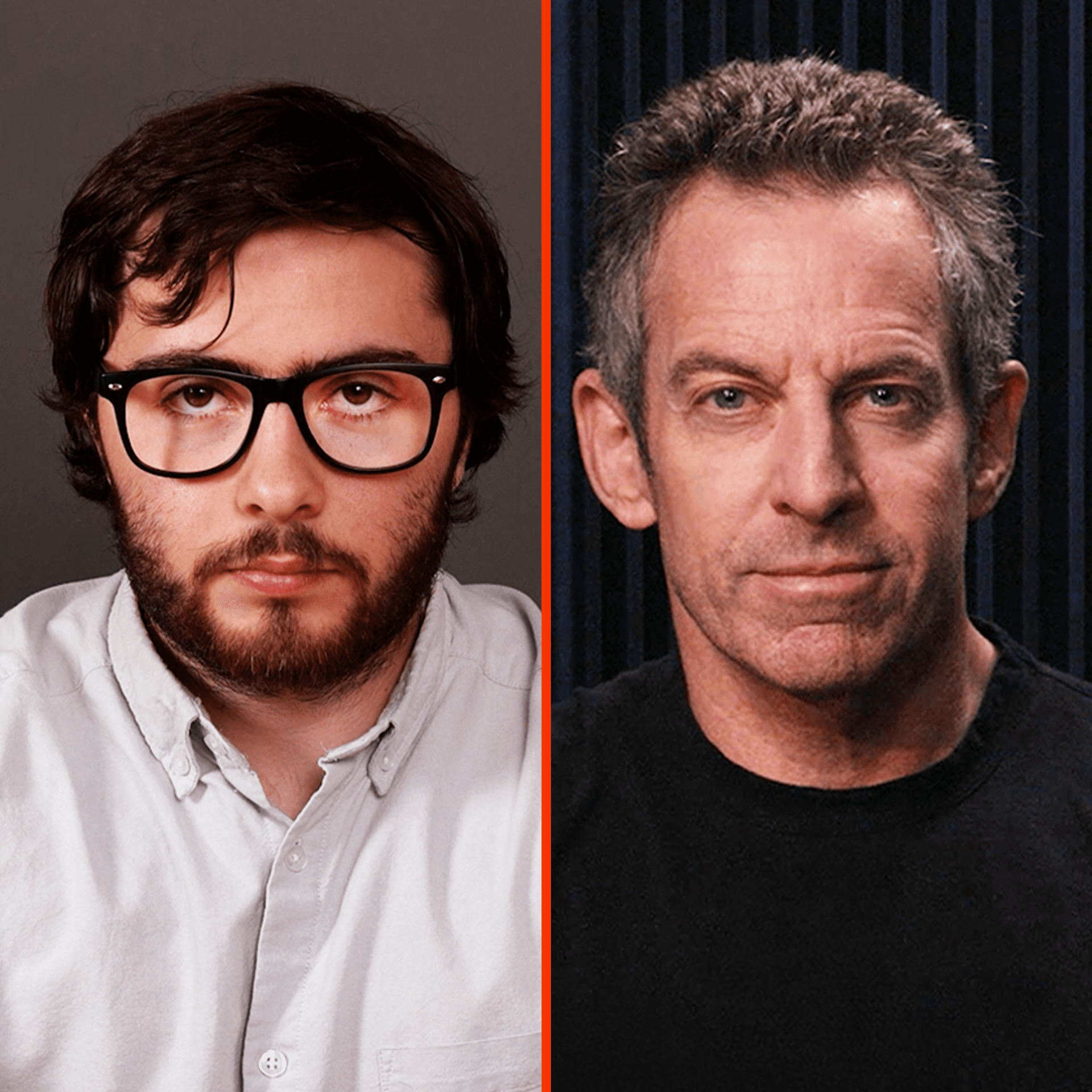
- Guest: Jaron Lowenstein (manager and business partner)
- Date: Not specified in the transcript
Overview In this episode, Sam Harris engages in a discussion with Jaron Lowenstein, addressing a variety of current events and philosophical questions raised by subscribers to his Substack page. The conversation covers topics such as the role of religion in society, the impact of social media on youth, the implications of recent political events, and the nature of truth in the modern discourse.
Key Topics Discussed
- Community in the Absence of Religion
- Impact of Secularization: Harris notes the significant trend towards secularization in America over the last two decades and its effects on community and moral guidance.
- Lack of Sacredness: He discusses the absence of institutions in secular culture that provide a sense of sacredness and community similar to those traditionally found in religion.
- Personal Experience: Harris shares his own experience grappling with the loss of religious community and the efforts he makes to create a supportive environment for his family.
- Children and Social Media
- Managing Exposure: Harris discusses his approach to parenting in the digital age, emphasizing the importance of limiting children's exposure to social media.
- Ethical Concerns of Lying to Children: Harris reflects on the ethics of lying to children about figures like Santa Claus, noting that many people feel traumatized upon discovering these lies and questioning their parents' honesty.
- Political Discourse and Relationships
- Navigating Political Differences: The conversation touches on how to maintain relationships with people who have differing political views, emphasizing the importance of prioritizing personal connections over political disagreements.
- Critique of Podcasters: Harris critiques figures like Joe Rogan, expressing concern over their platforming of controversial guests without adequate challenge, which he argues can mislead audiences.
- Freedom of Speech vs. Responsibility
- Misconceptions about Free Speech: Harris clarifies his stance on free speech, asserting that while he supports robust free expression, there is a need for responsible curation of ideas in public discourse.
- Role of Experts: He emphasizes the importance of expertise in discussions about complex topics, arguing that non-experts can provoke valuable discussions but should ultimately defer to verified knowledge.
- Recent Political Events
- Response to Trump's Policies: Harris discusses the contradictory nature of praise for Trump's tariff policies from financial leaders, questioning the rationality behind such endorsements.
- Impact of Social Media and Misinformation: The episode also addresses the challenges posed by misinformation and the role of social media platforms in shaping public discourse.
Key Takeaways
- Community Needs: Harris argues that secular culture lacks institutions that foster community and ethical guidance akin to religion.
- Parental Responsibility: He stresses the importance of educating children about the potential harms of social media while providing a supportive environment for their growth.
- Political Integrity: Maintaining personal relationships amid political polarization is essential, and Harris advocates for prioritizing relationships over divisive political debates.
- Importance of Expertise: Expertise remains crucial in public discussions, especially regarding complex issues like health and politics.
- Critical Media Consumption: The podcast critiques prominent figures in media, highlighting the need for responsibility in who and what is platformed in public discourse.
Conclusion In this episode, Sam Harris offers a nuanced critique of contemporary issues, emphasizing the interplay between community, morality, and political discourse in a secular age. His reflections encourage listeners to consider the broader implications of their beliefs and the importance of seeking truth in an era of misinformation.
Written by AI. May contain mistakes. Listen to the episode to check what was said.
Transcript
Automatic transcript. May contain errors.0:29Welcome to the Making Sense Podcast. and therefore it's made possible entirely through the support of our subscribers. So if you enjoy what we're doing here, please consider becoming one.
0:45Welcome to the Making Sense Podcast. This is Sam Harris. Today I'm answering some more questions that were submitted by subscribers on my Substack page and discussing some current events. Once again, the voice you're hearing on the other end is that of my manager and business partner, Jaron Lowenstein. We're hoping to continue this series of episodes. So if you're a subscriber to the podcast, you can submit topics over on Substack. And if you're not a subscriber, you can become one at samharris.org slash subscribe.
1:24okay sam we have a lot to get into today and obviously i want to get your thoughts on douglas murray our buddy who appeared on joe rogan's podcast last week feels like it was a month ago i want to also ask you about the financial luminaries who have praised the handling of trump's terrorists we'll get into that as well the art of the deal bill ackman And the art of the deal. The art of the deal. Yeah. We will also discuss our friend Bill Mars. We're going to get into all that, Sam. I could just tell you're ready to go. We're going to discuss our friend Bill Mars' review of his White House dinner with Trump.
1:57Hold, hold. And discuss deportations and more. But before we get into that, I want to get your reactions on some of the questions we got over at your Substack page. These aren't the exact questions, but I put them together to represent the gist of them. All right? Okay. Here we go. Scott Galloway has been vocal about his concerns for the well-being of young men. Jonathan Haidt, vocal about his concerns for the well-being of teenagers, predominantly girls. Obviously, social media plays a huge role in this. But do you think the erosion of religion plays a role here as well? And what are you doing to protect your daughters from social media?
2:33And how are you providing a sense of community for them that is lost without religion? Well, we've kept them off social media. they're exposed to the internet, obviously, and they watch a lot of YouTube. And so they're, you know, they're getting fed by the algorithm. So I mean, there's only so much control you can exert there. I think we, our oldest didn't get a smartphone until she was in seventh grade. And that was really just kind of born of a necessity to get in touch with her. And, you know, she also would have been the last kid without a smartphone at that point. I think we'll hold that same policy for our youngest, but they don't have any public facing social media experience, even our our 16-year-old now doesn't.
3:12I think that's true. I think she has some private thing with her friends, right? I think they use Snapchat, which is not now. Now I'm going to sound like a boomer. I'm not quite a boomer, but I think it was Snapchat, at least for a while, and those videos disappear. But again, it's all within nothing public facing, or at least not to my knowledge. I could be one of those parents who's being carefully deceived and it could get ugly out there, but the intention was to keep it from them as long as possible and also to educate them in how bewildering and soul-crushing it can be to, you know, have your self-worth anchored to, you know, the feedback you get in those channels.
3:53And so they're aware of the social problem and they have not yet been, again, to my knowledge, personally exposed to any of it. And they've seen some friends, you know, have, you know, crazy experiences, you know, some friends with public facing YouTube channels, et cetera, that just look like brain damage for the whole family. So there's that. So I think it's, you know, I definitely take Jonathan Haidt's instruction here to the degree that we can. We don't have a school, unfortunately, that will ban phones or, you know, demand that phones stay in lockers for the whole day. Though I think we've, some parents have tried to make it that.
4:30I think that's Jonathan's recommendation. As far as religion and its absence being consequential for a generation. I'm not so sure how to parse all that. I mean, obviously, the trend towards secularization in America has been pretty strong in the last 20 years, and the trend toward atheism, too, has been pretty strong. I mean, the Pew data on that suggests that the secularists and the atheists have been winning, notwithstanding the claims that there's been a pendulum swing back, a la Jordan Peterson and others making those noises. And I mean, I do think, frankly, that secular culture needs some things that it doesn't have, right?
5:12We don't have a sense of the sacred that is not embarrassing or, you know, just got a new age and its own version of irrational. So the piecemeal efforts people have been using to be spiritual but not religious often don't make a ton of sense. And as you know, over at Waking Up, we're trying to present what we think does make sense. I think, you know, I think you want a contemplative life, you want community, you want strong ethical instruction, you want all those things that people have traditionally associated with religion. And secular culture doesn't really offer institutions and off-the-shelf versions of that that you can readily point to.
5:51And I think many of us are just kind of coupling that together, you know, ourselves, and it's a work in progress. Yeah, I mean, I found it to be a big void of my life, having grown up religious and having a great sense of community. I no longer wanted the thou shall nots and the religious aspects, but I sorely still today miss community. I've since been able to make it up in a number of ways with guy groups and other projects. But I felt for a long time that I had wandered out into the desert alone and have long since wished there was some version that's not dorky of a community that could come together around a set of ideas.
6:29And you're right, maybe waking up will be one of those places that'll establish that one day. Well, speaking of that - Yeah, I mean, people have meditation groups and book clubs, and we've launched, as you know, the digital version of community, and people are doing some of that stuff out there in real life. So I certainly encourage that. But again, speaking much more widely for the culture, it's clear that being really into sports or you know into entertainment or you know guys groups or whatever it is it's not the same thing as having an amazing building you know in the center of town that everyone goes to on sunday and it's been that way for a century the gorgeous windows not the same thing so yeah uh and maybe this is related to your meditation practice but how do you stay balanced with all the stuff that creeps into your life from the podcast the political bullshit and whatnot.
7:21And really, before you answer this, I think what many are looking for is a way to stay sane today while surrounded by many people in their lives with whom they disagree. Well, I tend to pay attention to what I'm doing with my mind. And if I'm feeling unhappy or irritable or something, a mindfulness alarm tends to go off. And if it doesn't go off, if I'm in the presence of Annika, my wife, her alarm will go off and she'll say, you know, what the fuck is wrong with you? And that'll get my attention. So, um, yeah, I mean, I just, you know, I, this is just the universal solvent for unhappiness. I mean, pay attention to what you're doing with your attention and notice the consequences.
8:03Yeah. Well, I know that's the sort of the normal prescription, but what about today with how divided we are and many, many people, including myself, having people in my family that wildly disagree about politics and both sides seem to be concerned about the other. How do you come together? I've found a way to find joy in that, but how have you found that? I mean, not to out you, but your two best friends are MAGA or MAGA adjacent. And so how have you been able to succeed? I watch you navigate that beautifully. How do you advise for maybe others, maybe you can share how you're able to do that so well?
8:39Well, I think you'd have to keep your priorities straight. I mean, there are certain relationships that you know you are not going to sacrifice to the gods of politics and political disagreement, right? So you just know going in that you have to figure out how to navigate this. Other relationships, frankly, I'm happy to sacrifice. This is what I've run into. We've seen that. Yeah. I mean, this is what I've run into with people who have public-facing platforms. Some of them have much bigger platforms than I do, and I think they're doing immense harm in the world, right? So in those cases, it's a different ethical responsibility, right?
9:18That when the conversation breaks down there, it matters not just for the relationship, but for my sense of, again, kind of a civic responsibility, right? So I mean, I think Elon has completely lost his way. I think he's behaving like a psychopath. He used to be a friend. He's a friend no longer because he's behaving like a psychopath, not merely interpersonally with me. I mean, that might be a survivable event if it could be talked about. But at scale, you know, I mean, he's doing more harm than almost anyone on planet Earth to our culture. I mean, I would certainly defend that thesis to anyone who might be rolling their eyes or throwing their brow when they hear me say it like that.
10:00I just think it's absolutely awful what he's doing. He's in second place to Trump, and sometimes not even in second place. But personally, you know, I have, you know, some very close friends who voted for Trump. The thing I don't really get in those collisions when we do talk about politics is a real case on the other side. And I've spoken about this. I bash these guys, not in name, but in fact, on several podcasts because they're my canaries in the coal mine or they're my lab rats who I keep returning to. And I keep noticing things about the ordinary Trump supporter at this moment in Trump's despicable career, which is that they don't have a lot to say in defense of Trump and Trumpism.
10:42And what they do say and what other people say, certainly in the media, I mean, I'm now not talking about friends, but just the kinds of people who step forward to defend Trump tends to be dishonest or delusional, right? I mean, you know, the 4D chess people, right? So anyway, we'll talk about that. But the case to be made for Trump at the moment is most often made by simply averting one's eyes and saying, you don't want to talk about politics and let's wait and see what happens. That's basically the holding pattern. Right. Well, aside from that, so basically you just figured out how to prioritize your relationships over politics when it matters.
11:21And you say, look, I love you guys. We're going to stop short here and we'll pick it up and talk about something else. Yeah. And I'm confident that when something sufficiently salient comes around, I mean, there's actually been cases of this already where something that's truly indefensible that is also not debatable. Right. And there's that Venn diagram is a little hard. It's a little hard to clarify for people. But because the number of things that I think Trump has done or said and done that are totally indefensible and totally disqualifying in a president, many of them, it seems, although I don't really see it this way, it seems many are open to alternate interpretations.
11:58You know, who knows if it was really that way. There's another way of seeing it. Blah, blah, blah. January 6th was just a demonstration that got out of hand. Didn't you see the footage of the cops actually letting them in the building? What was that about? Maybe it was a false flag operation. Thank you, Tucker Carlson. When you find the stuff that's really not debatable and also indefensible, then I'm confident that the people we're talking about will see those situations as I do. Right. Well, we'll see what that line is. I know you've asked a number of times, what's it going to take? How far does one have to go before they have regret their decision?
12:37I'm confident we will get there. At this rate, we're going to get there, probably. in a week. Yeah. When we all move out and do a shelter together. Yeah. I don't know what country will have us at this point. All right. Moving on to this, just as a question that you said, I think it was the most popular question presented to you after you wrote your book, Lying. But I'm just going to reframe it here because I saw a lot of these comments coming in. So I find it annoying that my kids believe in Santa or the tooth fairy, but what's the big deal with people lying to their kids about stuff like that?
13:09Isn't it good to engage in fantasy play? What's wrong with lying to your kids about Santa? Well, first, the surprising thing is, and I really didn't anticipate this until I wrote the book and published it, and it just came back at me. I never anticipated it, is that I heard from many, many people who remember what it was like to discover that their parents had lied to them about Santa Claus or the Tooth Fairy, most often Santa Claus, and they considered it a moral injury. They were just horrified to discover that an elaborate lie could be told like that. And they wondered what other lies had been told in the family.
13:48And in fact, also I heard from fundamentalist Christians who, I think I have this right, would say that their family never lied about Santa because they didn't want any suspicion generated that they could be lying about Jesus, right? Like that, there was cross-talk between the real religious beliefs there and the fun, fake ones. Anyway, so I heard from people that I didn't even know existed who actually had been traumatized by discovering such an elaborate lie in the household. But yeah, you know, my ethics around lying were established clearly enough, early enough, so long before we had kids that it was just clear we weren't going to lie to them about Santa or the Tooth Fairy or anything else.
14:29And I would just point out, nobody is tempted to lie about Halloween or Middle Earth or Harry Potter or anything else that's super fun for kids to fantasize about. And you could suspect that it might be a little more fun if you lied about those things, if you said Frankenstein was real or vampires are real or Dumbledore is real. But I mean, that's just not... We're not tempted to do that and there's no problem. And so I can assure you Christmas is a ton of fun for kids if you never lie to them about it. Right. Yeah. I mean, I think more, I think people more use the lie of Santa today, uh, for the invisible babysitter for the, uh, you get a month or two to hang that over your kids' heads to get them to behave better.
15:15Listen, you know, but they behave just fine. If you tell us, say, if you tell them there are real consequences, even, even Christmas shaped consequences to, you know, their misbehavior. You could say, listen, if you really want that stuff for Christmas, stop doing that. And it would be the same message. I just think it does introduce perhaps a weird social experiment in the school. If your kid is the only kid who knows the truth about Santa and they're surrounded by dummies who believe. But flip it around and ask yourself, do you want your kid to be the last kid in second grade or whatever grade it is to believe in Santa and to be teased by their friends?
15:51You don't want that. So at what point do you want them to be disabused of this fiction? You want them to be the last boy or girl standing, because that's embarrassing. So why not be the first, right? Or the second? I like it. I think it's great. Anybody who has more questions, please come over to the Substack page and you can ask and we'll try to answer those for next time. But all right, it's time to get back to our friend Douglas Murray, who, by the way, will be on the podcast with you later this week, promoting his book called Democracies and Death Cults. And I'm sure you'll be discussing his appearance on the Rogan podcast, which was incredible.
16:28So we don't have to go crazy here, but I certainly want to hear your reactions and see if you have anything to say, which I know you do. Yeah. Well, I mean, the most incredible thing for me was the result of it, right? I mean, Douglas was great. You know, I think I might disagree with a couple of things he said, and I think I might have taken a slightly different line in that conversation. But in many respects, he was much better than I would have been in having that conversation, too. So I thought he was spectacular. And yet, it was obvious from the beginning that the conversation was going to fail as an intervention because of who Joe and Dave are, because of the audiences they've cultivated.
17:10If you look at the response, I mean, I haven't done this in recent days, but in the immediate aftermath, I think when it had some hundreds of thousands of views on YouTube, I looked at the comments and, you know, at that time, maybe things have changed. I can't imagine, but it was 100%, I mean, not even 99%, 100 % against Douglas, right? Douglas was just a pompous asshole, just arguing from authority. There's no value in what he said. I can't believe Joe even had him on. Dave Smith's a genius, right? I mean, that was the center of narrative gravity there. Obviously, all of that is completely delusional and symptomatic of the problem that we have in our culture and the problem that Joe has created for himself over there with his immense audience, right?
17:56I mean, Joe has cultivated that audience. Joe is, in some sense, a part of his audience, right? He's, you know, his reaction to Douglas in the moment, when Douglas was trying to perform an intervention on him, pointing out the obvious fact that he has played footsie with some very dangerous conspiracy theories. He has had people like Daryl Cooper on the podcast and not had the searching conversation that was ethically necessary in the aftermath of Daryl Cooper's appearance on Tucker Carlson. He didn't, you know, he can use the phrase sunlight is the best disinfectant, and perhaps it is, but he brought none of it to that conversation.
18:31And he brings none of it to any conversation where he hasn't done his homework in advance so as to detect the lies and the delusions of his guest, right? He didn't do it with Trump. He doesn't do it with people like RFK Jr. I mean, he just said he - Which ironically, he did it here with Douglas, who's an expert. So he brought on a non-expert to counterbalance him. Listen, if you get across the table from Joe and you don't have your facts straight about MMA, or you're going to say something bad about marijuana, he's going to crush you, right? He'll crush you in five seconds and he will never let up until you start making sense.
19:06And if you don't, the conversation's over, right? I mean, maybe he'll change the subject politely, but you're never coming back. And he will make no secret of the fact that he thinks you're a moron, right? He doesn't do that when Daryl Cooper, the podcast host and amateur historian who he really admires, gets on there and starts spouting David Irving's fake Holocaust history because he doesn't know that he's doing that, right? He hasn't prepared himself to do that, and he doesn't see the liability of talking to an entirely self-taught, you know, enthusiast of taboo history and not being prepared to push back against it.
19:47Again, it's easy to see the source of the confusion because because there's this basic assumption that there can be nothing wrong in having, quote, good faith, good-natured conversation with somebody and just getting their view of the world, right? What could be wrong with that? And, I mean, Lex Friedman, while he has a slightly different approach, I mean, I criticized Lex in the last podcast, too. He was very annoyed to be wrapped up in the same sentence with Joe. And perhaps that was to some degree unfair because my gripe with Lex is slightly different. It's not that Lex does no preparation.
20:22He obviously does. And I think he tweeted, he got on Twitter and read me the riot act and said he does more preparation than 99 % of journalists. We might doubt that. But it's just that what he doesn't do with all that preparation is actually effectively push back against people who really need to hit a brick wall at that point of the conversation. He platforms people he shouldn't platform. You know, Kanye West is the example I really publicly whinged about. But even when he pushes back, even if he pushes back with words and you ask questions, you know, if this was the podcast election, what that really meant was over time, a few hours, you humanize somebody.
21:00And if the vibes are good, even if you're pushing back and you're hanging out, sitting across from one another, the energy is going to be such that the audience is led to believe that this can't be too bad of a person, no matter what you say. And so there's some responsibility there that even if you're going to have journalistic integrity and say, push back wherever is necessary, it's really hard when you're smiling and giggling in between questions and there's nice moments to be had. Even if you say, look, let's just agree that this was a bad idea. And I think you lied on that one or whatever.
21:34They're going to find something two minutes later because it's just a hang. And those hangs are effective in sane washing or humanizing people. Yeah. You really can't have it both ways. I mean, many of these podcasters celebrated the 2024 election as the podcast election, but that was really just to claim that these podcasts had been instrumental in changing public opinion, right? I mean, in getting Trump elected, people saw his humanity. They saw he's a real guy who can just hang and who can talk about anything. He's not afraid, but Kamala Harris is afraid to go on Rogan's podcast. And that was scored against her pretty heavily, right?
22:12She's just got canned talking points, and she's so terrified to touch all the third rails, you know, set up by the woke intelligentsia that, you know, she's going to be tongue-tied on any topic that would otherwise humanize her. She can't even risk turning on the microphone with someone like Joe. To say it was the podcast election is to say that those conversations mattered, right? And they did matter. I totally agree it was the podcast election. And so it mattered that none of these guys, not Joe, not even Lex, though he actually did try a little bit in his interview of Trump. Not Andrew Schultz, not the all-in guys, not Theo Vaughn, right?
22:47No one did what any sane and responsible journalist would have done, would have had to have done in one of those encounters, which is to push back against Trump's odious, divisive, dangerous lies, right? Which are well-established. This is not my opinion. This is not a topic about which there can be a credible difference of opinion. The man has lied about everything under the sun, and there's just a clear track record. And to take the most consequential, the big lie, that he won the 2020 election, right, that it was stolen from him, that Joe Biden was a fraudulent president because he stole the election.
23:28That was a dangerous lie that he still hangs over our society like a sword of Damocles, right? It's still a provocation to political violence. and one of the most depressing things about the you know election night in 2024 was not that trump won i mean that was that was depressing from my point of view but the genuinely scary thing and i've said this at least at one point on a podcast is that there was a moment in the evening where kamala harris still could have won right this so-called blue wall states hadn't fallen yet right i think the at that point the the new york times was giving her an 11 chance of winning.
24:05So it was still, it was in the realm of possibility for her to win. And many of us recognized at that point that given all the lying, given that even the, you know, Elon Musk at that point was lying about voting irregularities and fraud, obvious fraud in Pennsylvania, I think, it would have been dangerous for her to have won at that point. It was not safe for her to have won a free and fair election at that moment, given the messaging, right? We would have had an explosion of political violence coming from the right. I'm absolutely convinced of it. Because of what Trump had done for four years, the way he had lied about the lack of integrity of our electoral system, Joe Rogan, the all-in guys, Lex Friedman should have pushed really hard on that point.
24:50That was the only responsible thing to do. They did nothing like that. So it was the podcast election. What they did is they gave him a dozen hours, practically, of free media exposure to tens of millions of people, wherein they worked very hard to midwife the most humanizing conversation possible. They just created a good hang with the guy and made him look like the celebrity that he is. I mean, we can get to Bill Maher in a second, but I mean, the fact that he's a good hang is not relevant given his track record, given what we already know he has done to our politics. And any journalist, I mean, this is why it's so dangerous and irresponsible.
25:33The fact that the biggest media platforms in the world right now are providing an illusion of long-form journalism without any of the sanity-sparing principles of real journalism. Awesome. Well, I don't want to get back to Bill yet. I do want to get to him. But what I do want to talk about is maybe while we're here on the podcast, if you can just sharpen up or help clarify some of the confusion around freedom of speech versus responsibility and what you are really wanting these platforms to do. And then next, if you can talk about maybe some confusion around expertise. I do have some more questions there, but why don't you start with that?
Read the full transcript
26:12Yeah, so obviously probably the most misunderstood piece of misinformation about me is that I'm in some sense against free speech, right? I mean, that's been endlessly spun against me on X. I mean, this is what Elon tends to amplify about me. It's totally false. Let me just unpick this here. So there are many liberal democracies that seek to regulate speech much more than America does. The UK, much of Western Europe, Canada, New Zealand, all of them have more aggressive approaches to what is called hate speech than we do. I mean, I'm open to argument on this point, but I think everything I've seen there seems terribly misguided.
26:59I think, for instance, laws against Holocaust denial in Western Europe, they can send someone to jail for denying the Holocaust. Right. I think that is totally counterproductive and unethical. Knocking on people's doors in UK for social media posts. Oh, yeah. I mean, then there's completely insane instances of, you know, someone will tweet, you know, men are men and women are women, and they'll get a visit from the police in London, right? I mean, it's just, I don't even know how to think about that. I mean, I hear these specific cases, and they sound like, you know, episodes of Black Mirror. So all of this is to say that I think we're incredibly lucky in America to have the First Amendment and to have a nearly absolute right to free speech.
27:36That is something that I would not want to lose. And yet it has almost no relevance to the debates we're having about so-called free speech on platforms like X or platforming people on podcasts. my criticism of Joe Rogan, all of that is unrelated to this question around the primacy of the First Amendment and how good it is that we have it in America. All the First Amendment covers is one's political freedom to think out loud. The government cannot jail you or otherwise make your life miserable for thinking out loud on almost any topic, in almost any way, in almost any context, right? Now, there are some exceptions to this, and, you know, consult your local constitutional lawyer for those, but generally speaking, you know, and I think it's even false to say that you can't shout fire in a movie theater, right?
28:30I mean, it's like, there's wide latitude. That said, all these people who claim to be free speech absolutists are delusional, right? I mean, or lying. I mean, you know, Elon is the antithesis of it. He often calls himself a free speech absolutist, he's nothing of the kind, right? I mean, he throws people off, who he doesn't like, you know, journalists and otherwise. He preferentially boosts his content and de-boosts other content. He slavishly follows the rules set down to him by authoritarian regimes the world over and silences political dissent in places like Turkey, right? One would call him a hypocrite, but that would be to suggest that he has principles he's struggling to live by.
29:12it's just it's a free-for-all over there and and free speech absolutism has nothing to do with it what he has done is he's brought back you know with great fanfare certain anti-semites and white supremacists and you know you can judge i want to get back to i don't mean to cut off but i want to get back to what the difference is when you're saying you don't like that rogan other people are platforming people are confused they're saying oh so well i'm getting there so So the point is, everyone is in the curation business, even 4chan, that digital sewer, has a moderation policy. I mean, it's just there isn't literally, there's no place you can go that is a business or anything like a business that doesn't have a moderation policy, that isn't faced with the ongoing decision-making process of who to platform and who not to platform.
30:03What ideas are worth amplifying? What ideas are worth avoiding, right? Literally, even 4chan is in that business. And that's to say nothing of X or in Facebook. And so it is with every podcast host. Joe Rogan has done thousands of podcasts. He'll do thousands more, presumably. Let's say he does 10 ,000 over the course of his life. He still has to decide who to platform, right? Who's worth talking to and who isn't. and those decisions can be made responsibly or not. And I'm really not saying that he shouldn't talk to anyone he wants to talk to. That's not my point. I mean, there are people, you know, there are people who I think shouldn't be platformed because what, you know, Joe would be doing would be plucking them out of obscurity, right?
30:50And suddenly making them famous. And that would be a bad thing. But, you know, that aside, he should talk to anyone he wants to talk to. I'm saying that there are certain people it is irresponsible to talk to unless you do your homework. Unless you can provide the sunlight you imagine is going to be a great disinfectant, it's not a good thing for you or your reputation or the world to talk to those people. Because what you're doing is you're just giving them access to your highly impressionable audience. If you're not in a position to know when Daryl Cooper is recycling David Irving, you can be assured that most of your audience isn't either, right?
31:30And it's bad. Certainly at this moment where we're seeing antisemitism explode the world over, it is bad to be recycling David Irving and not knowing it. And that's what Daryl Cooper's doing. Maybe, you know, I'm reasonably sure Daryl has read Irving directly and knows when he's using him as a talking point. But, you know, even there, maybe Daryl doesn't entirely know what he's up to. Well, maybe Rogan's thinking, look, I got people like Dave Smith on the podcast. I don't remember if Brett Weinstein was on or others that, for example, during the pandemic seemed to have broken away from the institutions, the norms, and almost acted as whistleblowers or people that were reporting information that may or may not have been included in whatever the diet was that we were getting.
32:17And many people found it helpful. Many people found that some of the things that they were saying were being left out. And we were getting utterly confused by the mainstream media. And so here comes Joe thinking, let me find these voices and put them on my platform and do my part. Yeah. So, and many of the voices he platformed were not worth listening to. And I think it's still true to say that the best estimates are that something like 300 ,000 people in America died unnecessarily due to vaccine hesitancy, which is to say that if everyone took the vaccine who could have taken the vaccine, 300 ,000 people would be alive today who aren't, right?
32:57So that's a bad outcome. I think all the people who were not so worried about COVID, but extremely worried about the mRNA vaccines had a hand in creating that environment, right? And that was a bad thing. Yes, the establishment embarrassed itself on many points during COVID. I think the lessons that people are drawing from that are being highly exaggerated, but nonetheless, it's true. Certain of those moments were obvious at the outset, and certainly it became obvious months and even years later. I mean, calling the lab leak hypothesis racist was obviously an error and an embarrassing one within seconds of the first person who spoke those words.
33:44I don't know who that was, but you became widely vilified on the left if you thought that the Wuhan Institute of Virology had anything to do with the origin of COVID. as I pointed out at the time and have pointed out many times since, that was somehow, that was inscrutable because it does seem politically worse and even borderline racist to allege that the origin of the virus is the wet market, right? Where, because these Chinese people can't figure out how to stop eating bats and pangolins and raccoon dogs. I mean, which is more politically invidious, that or that they could have had a lab leak, which is a fate that every biosafety lab in the world fears, and understandably so.
34:27So the allegation of racism was idiotic. It was always obvious. Even I, who am castigated by people in Joe's audience for having overreacted to COVID, was on the same page around the lab leak. Honestly, the errors that were made were, are so distorted in the funhouse mirror of, you know, contrarian takes over in Joe's world, and certainly in RFK's world, that it's very hard to grant them many of the points they want to make. But the general point stands is that the institutions and certainly mainstream journalists, scientists, scientific journals embarrass themselves. But I can count on one hand the major instances of that.
35:11And I'm not even sure I can think of one that was medically important. Stigmatizing ivermectin, I don't think was medically, I still don't think was medically important. Is that, is, is ivermectin still, is that important to take now? And as a prophylactic against COVID was Brett Weinstein on, on firm ground doing 150 podcasts in a row on that topic. I doubt it. We know that if you, uh, create a map of people who, you know, doubted the, uh, safety of the vaccine and, and thought ivermectin was a prophylactic, we know that deaths from COVID went up in those, those neighborhoods, not down. Right.
35:46I mean, that's just yeah all right so i i brought this subject up but i'm gonna i think i'm gonna kill myself if i have to we've talked about covid any longer so let's move on to this i what i want to hear is the point is they're drawing the wrong lesson from there you know that we were we were right about covid song and dance that they they keep doing and have been doing for years one it's not true in some very important respects two where it is true they're drawing the wrong lesson they're drawing, the lesson they're drawing is that expertise is not really a thing, right? And yet they can't apply that claim in many places in their lives, certainly where they care about things.
36:24They know that expertise is a thing. Well, this is what I want you to get into, the expertise part. The thing is that, okay, you've said it's okay to be an autodidact. You can read lots of books. You can be very smart. And Dave Smith is a very smart guy, obviously. But I want to hear your thoughts. I've heard you say that eventually these people have to be verified by real experts and and talk to me about how these non-experts can play a role or how they need to sort of synthesize it within the system so that um they can have their ideas checked or verified so you just ask the question how do we ever know that anything is true right i mean so take this the prototypical case the you know the the extreme case in my view but it's the kind of case that people want to celebrate.
37:08You have Alex Jones, who, while commenting about everything under the sun, occasionally says something that's true, right? And it says it early, right? He's the first to claim that whatever, something in the water is, you know, turning frogs gay or whatever his goofy claim was that gets lots of laughs over there. But he'll say something, and he's a non-expert. He's certainly not a biologist. How do we find out what is actually true about frog behavior or frog biology, well, then you need the real frog specialists in there to figure that out, right? You still need the experts. Even if the experts are wrong, even if you have a cabal of experts in journals on frog biology who think it's homophobic to allege that frogs are gay and they've been actively suppressing that knowledge for years, right?
37:59The only way to actually figure it out is yet more honest biology around frogs. And so it is with the safety of mRNA vaccines or the real dynamics by which disease spreads or, you know, the risk of H5N1 becoming, you know, human to human transmissible. You need the real scientists doing the real work who are really competent to do it. And so the role of an RFK junior or a non-expert, I'm not saying is non-existent. It's possible for someone to get busy, you know, Googling or spend a lot of time with ChatGPT and come up with a question that provokes a real investigation of something that has been ignored, even for political reasons.
38:43But you still need experts to fly. You need real pilots to fly the plane. And that's true across the board. And so it is with even a discipline like history, right? At the end of the day, you need people who are adequate to tell you what really happened in the past because they can go into the archives and, you know, read the papers in the original languages and, uh, or, you know, journalistically they can, they know what Vladimir Putin says in Russian, right? Not just what gets translated to English, right? I mean, so it's just, there's, it matters to have real, we need real experts. We need real journalists.
39:19We need people who are not just winging it. And everyone knows this. Joe knows this. Dave Smith knows this. Uh, and so one thing that was so frustrating about their collision with douglas was that douglas was making this point uh though he made it in a way that that understandably they proved allergic to i mean he you know when he embarrassed dave smith by saying have you ever been to the region have you ever been to ukraine have you ever been to gaza right and the answer was no you know from douglas's point of view as a journalist and as a more correspondent i didn't think dave smith i didn't I didn't get that he was embarrassed by that.
39:55Right. And you could argue that, you know, it was actually a false move from Douglas's point of view. I mean, I think it's, I understand that Douglas as a war correspondent feels the need to actually, you know, talk to the troops and that's a journalistic responsibility. That's fine. And I think, and he, and he did reveal that Dave was delusional in his, in the picture he had formed in his mind about what life was like in Gaza, calling it a concentration camp, calling it an open air prison, imagining that the blockade was so complete that there's, you know, nothing of value or necessity was in Gaza, right?
40:29I think it's helpful to have been there, but it's not required. So Douglas was saying, have you ever been there, right? Do you even know what you're talking about? And it's clear that he didn't. He just was taking these words at face value, blockade and open air prison and concentration camp. And so there, I mean, I thought Douglas's point landed, but, you know, Dave is right to say that you can think and even talk publicly about the ethics of a war without ever having been to the country, right? You can read the right books, you can read the right articles, you know, provided you're actually getting real information, you can know enough to know what you think about who started the war and, you know, what the response should be, etc.
41:07But the problem is with Dave and Joe there, Dave is not an expert in any of these things. He's a stand-up comedian, right? He's self-taught on all these topics. And he admits that, and yet he's content to play an expert on TV, right? And on the largest podcasts on planet Earth, right? He'll talk to 50 million people about how there's a genocide in Gaza, right? Or how Putin was pushed by NATO overreach as a rational actor to invade Ukraine. And the onus is to a considerable degree on us for having failed diplomatically there. He can make these claims as stridently as he wants. He can go on Piers Morgan and debate people as though he were an expert.
41:57But at the end of the day, he can pull the ripcord and say, listen, if I get anything wrong, I'm not an expert, right? So he suffers no reputational penalty, at least in his world, for being wrong the way a real expert would. And yet he can hit the ball as hard as he wants and do that for as long as he wants in every other context. And that's what it's like for him to play tennis without the net. There really is no net there. It can't possibly go wrong for him on his terms. And yet, by his account and by the account of his audience, and certainly in Joe's mind, he's hitting the ball as hard as anyone.
42:31He's as hard as the pros, right? He's returning serve perfectly. And yet they're not noticing that there's no net. And for Douglas, there is a net, right? And when the ball goes into it and he loses a point, it really matters for him, right? Because he is an expert on the topics he's addressing. And the onus really is on him to get his facts straight and not to pretend to know things he doesn't know. and if he winds up dignifying a source as legitimate that turns out to be, you know, fake, that's a real problem. But with all these self-taught entertainers, you know, and even someone like Daryl Cooper is in that bucket, they never pay a penalty for this.
43:12I mean, Daryl Cooper is trafficking in profoundly misleading misinformation about the Holocaust and about the behavior of the Nazis and their motives, right? About the, you know, about Hitler, what he was thinking and why he was doing certain things. And he's creating the kind of engine of anti-Semitism. And again, it's being celebrated at the highest level. Tucker Carlson and Joe Rogan, you know, both are treating him like really the best popular historian we have at this moment. I mean, that was an explicit claim by Tucker and Joe, you know, I think Joe would say it's him and Dan Carlin, right?
43:50And so, and I should say, I'm not throwing any shade on Dan. I think Dan, you know, at least to my eye, has been incredibly responsible in how he's, as an amateur historian, has popularized history. I think Dan's fantastic. I think Dan will, you know, has criticized Daryl for what he's done here. And Daryl, you know, Daryl should look into the mirror of his own audience. I mean, Daryl just published, to my eye, a fairly bizarre essay on Substack, admitting that his audience was just chock full of anti-Semites now, just bursting with anti-Semites. And then he was kind of differentiating among the anti-Semites the ones he felt he could still talk to and the ones he just didn't want in his audience, right?
44:31Like there's the smart anti-Semites and the dumb anti-Semites, right? And he's deciding to split the baby that way. It's an odious project, and it's completely irresponsible. He is not being nearly as clear as he should be to be ethical in disavowing anti-Semitism and in disavowing the conspiracy thinking that is getting weaponized so as to seem to make anti-Semitism a sane political project. So he's part of the Candace Owens problem. He's part of the Dan Bilzerian problem. And it matters is that all of these people are sort of in good standing with Joe and Dave. I mean, if you saw Dave and Joe talk about Candace Owens and her recent adventures on the microphone, that was...
45:18Talking about the third rail stuff. Absolutely contemptible how they framed what she's doing, right? I mean, perhaps we could drop the clip in here. ...than any of the shows on cable news. It's phenomenal. It's like they created a monster with her when they fired her from the Daily Wire, they created a monster. Yeah, they sure did. She can't be stopped. Yeah, oh, no, no, no. There's no stopping Candace at this point. She's hitting all the fucking third rails that no one wants to touch. They found it nothing but a source of comedy and real just celebration. Like there's independent media. It was an independent media win to see how Candace was unstoppable, right?
45:57Candace, you know, the Daily Wire tried to, you know, what one could say, the quiet part out loud, you know, the Jews over the Daily Wire tried to silence her, but they couldn't because she's so charismatic and she's so fearless. She's so courageous. She's touching all the third rails and it's awesome. But what are those third rails? Joe, Dave, what are those third rails? You know what they are because you've heard her do her shtick. The third rails are that the Jews for ages have been killing Christians at Passover, of quite literally the blood libel. The newest third rail that I learned from her is that Israel is responsible for 9-11.
46:36We missed the trail of breadcrumbs that led directly to the Mossad there. She's dusting off that thesis, and that's what she's telling millions of people now. Again, in a context, in the aftermath of October 7th, where we're witnessing the greatest explosion of anti-Semitism in several generations. Yeah. Well, you're going to have a lot more to talk to Douglas about later this week. I'm sure you're going to get into this a lot with him. But I want to jump over to our financial luminaries, as I said at the top of this. When Trump's tariffs were tanking the market, we saw many in the right say, just slow down a little bit, give it a second.
47:13You have to have patience. And then when he pulled them back, everybody praised him. And Bill Ackman went as far to say it was brilliantly executed. Now, obviously, Bill's very bright. But what am I not seeing here that he's seeing? What's going on it just seems to me like this is sort of the kim jong-un behavior where everyone's clapping as he gets a hole in one on every hole yeah yeah well so you know so they're again i'm not an economist and this matters right it's like the responsible thing for me to do on this topic of tariffs and the implications of um trump's policy is to acknowledge what most economists believe and in this case it's incredibly easy because by my count there are only three economists on planet earth that support this tariff policy and two of them are peter navarro it's i don't know yeah yeah and ron varro yeah i mean it's just he invented his source on this topic if you'd like to continue listening to this conversation you'll need to subscribe at samharris.org once you do you'll get access to all full-length episodes of the making sense podcast The podcast is available to everyone through our scholarship program.
48:26So if you can't afford a subscription, please request a free account on the website. The Making Sense podcast is ad-free and relies entirely on listener support. And you can subscribe now at samharris.org.
From the publisher
Sam hopped back on with his manager and business partner, Jaron Lowenstein, to discuss current events and answer some of the questions you all submitted on Substack. By far the most common feedback we hear from you guys is the following: "We want more from Sam." So that's what we're trying to bring you with this new series, "More From Sam." Sam and Jaron discuss community in the absence of religion, whether you should lie to your children about the existence of Santa Claus, Bill Ackman's response to Trump's tariff reversal, Douglas Murray's appearance on Joe Rogan's podcast, the deportation of Kilmar Abrego Garcia, Bill Maher's visit to the White House, and other topics.
Produced by Griffin Katz
If the Making Sense podcast logo in your player is BLACK, you can SUBSCRIBE to gain access to all full-length episodes at samharris.org/subscribe.
Learning how to train your mind is the single greatest investment you can make in life. That's why Sam Harris created the Waking Up app. From rational mindfulness practice to lessons on some of life's most important topics, join Sam as he demystifies the practice of meditation and explores the theory behind it.