In short
Podcast Notes: Making Sense with Sam Harris - Episode #411: The Victimhood Pandemic
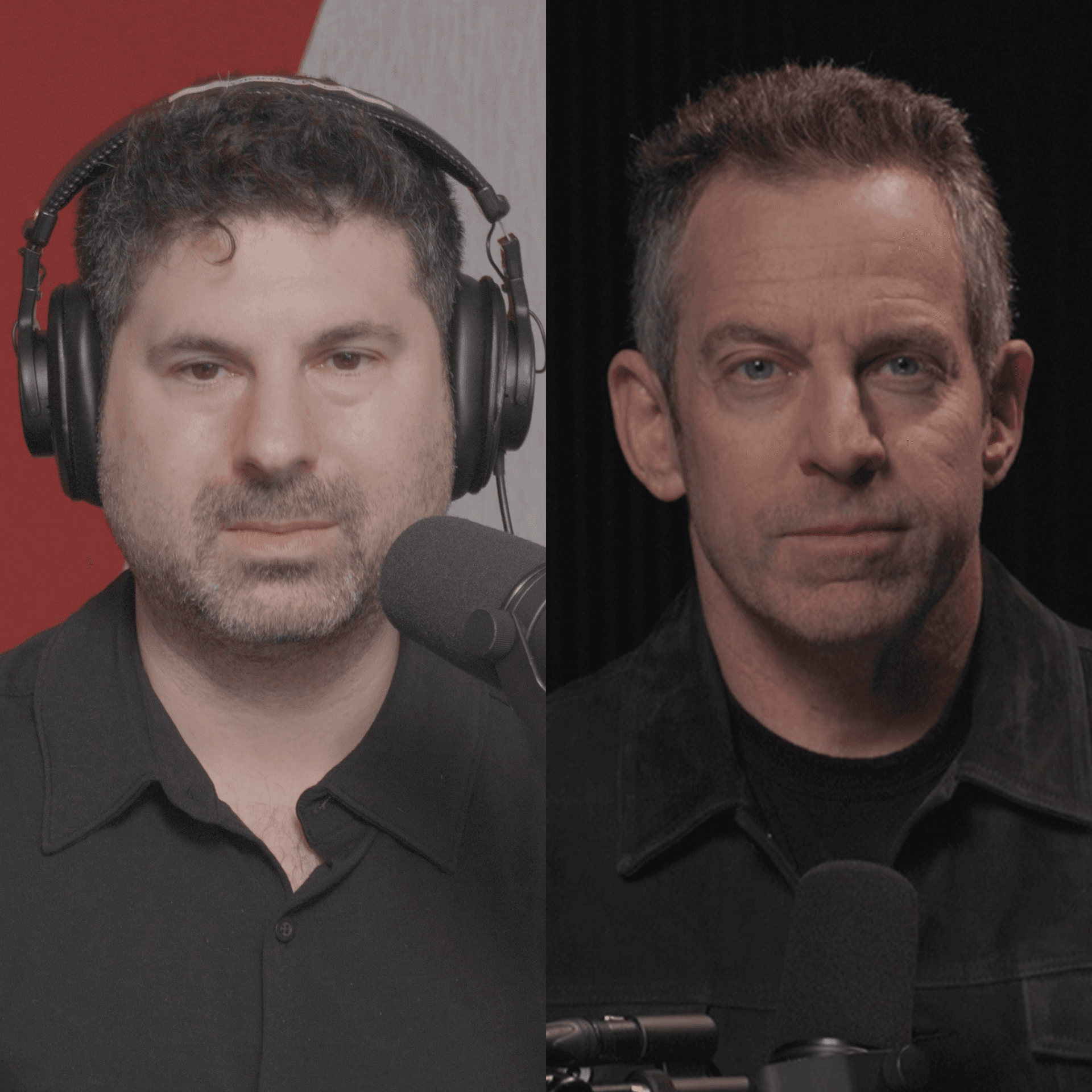
Episode Overview In this episode, Sam Harris speaks with Scott Barry Kaufman about Kaufman's new book, Rise Above: Overcome a Victim Mindset, Empower Yourself, and Realize Your Full Potential. The discussion covers victimhood culture, narcissism, personality traits of successful individuals, and their implications for society.
Key Themes and Concepts
- Victimhood Culture
- Definition: A culture where individuals compete for the status of victimhood, often amplifying their perceived traumas.
- "Victimhood Olympics": Kaufman coins this phrase to describe a societal competition for victim status, leading to a skewed perception of trauma and suffering.
- Personality Traits and Success
- Dark Triad: Comprised of Machiavellianism, narcissism, and psychopathy.
- Narcissism: Grandiose self-importance; often linked to confidence and charisma.
- Machiavellianism: Strategic manipulation for selfish goals.
- Psychopathy: Lack of empathy and thrill-seeking behavior.
- Light Triad: Represents positive traits such as humanism and faith in humanity, contrasting with the Dark Triad.
- Cultural Shifts in Perceptions of Vulnerability
- Changes in College Admissions: Previously, overcoming adversity was valued; currently, sharing traumatic experiences holds more weight.
- Vulnerable Narcissism: A growing trend where individuals feel entitled to special treatment due to their suffering.
- Impact of Media and Catastrophizing
- Harris and Kaufman discuss how media influences perceptions of culture, often amplifying fears and catastrophizing environments like universities.
- Self-Esteem and Accountability
- Kaufman emphasizes the importance of reality testing one’s self-esteem, advocating for an understanding of true self-worth rather than blind positivity.
- Sociometer: A concept discussed that helps in assessing one’s social value through feedback from others.
- Political Implications
- Victimhood on the Left vs. Right: While often perceived as a leftist phenomenon, Kaufman argues that victimhood narratives are prevalent on both sides of the political spectrum.
- Cultural Evolution: The conversation touches on the evolution of victimhood narratives and their manifestation in political discourse.
Key Takeaways
- Victimhood as a Cultural Phenomenon: The episode presents a critical view of how victimhood has become a sought-after status in society, leading to unhealthy comparisons and competition.
- Personality Traits: Understanding the interplay between narcissism, psychopathy, and leadership can provide insight into political and social behaviors.
- Importance of Self-Awareness: Encouraging individuals to foster healthy self-esteem grounded in reality is crucial for personal and societal well-being.
- Media's Role: Acknowledges the role media plays in shaping societal fears and perceptions regarding victimhood and trauma.
Conclusion This episode encourages listeners to reflect on the implications of living in a victimhood culture and the importance of fostering a more empowered mindset. Kaufman's insights on personality traits, self-esteem, and cultural trends provide a framework for understanding the complexities of modern societal dynamics.
For full access to the conversation and further insights, listeners are encouraged to subscribe to the Making Sense podcast.
Written by AI. May contain mistakes. Listen to the episode to check what was said.
Transcript
Automatic transcript. May contain errors.0:29Welcome to the Making Sense Podcast. podcast, and therefore it's made possible entirely through the support of our subscribers. So if you enjoy what we're doing here, please consider becoming one.
0:45I'm here with Scott Barry Kaufman. Scott, thanks for joining me. Sam, it's so great to be here again five years later. Is that what it is, five years? Yeah, we talked like right when the pandemic started. Right. Did we know there was a pandemic at the time? Was it? Yeah. And you asked me to make predictions. What did you predict? Do you remember anything? Yeah. Okay. I think something I said is we're going to come out stronger from this. We're going to come out of the pandemic and with a newfound sense of appreciation for life. How's that holding up, that prediction? For some people, I think that is true.
1:21And for some people it's far worse, but that's un-pandemic related. don't you think at the societal level we're much weaker i mean i my sense is that we're much less prepared for the next pandemic than we would otherwise be socially in terms of politically yeah yeah in terms of being prepared yeah that's a really good point but i also think you know we we sort of forget what it was like to be in the pandemic i mean this is like anything it's like if you get a bad headache like all you want is to not have the headache and you're like forevermore the rest of my life I'll be so appreciative that I don't have the headache and then about 30 seconds after you're recovered you forgot what it was like to have that it's not like you live up to that promise you know yeah yeah we can put that in the stoicism bucket which seems it relates to a lot of your work actually I mean you do a lot of work on emotional resilience and well being and so you're we should remind people you have a book that just came out this week titled Rise Above, which goes into the problems of seeing oneself as a victim and the durable basis for self-esteem and how we navigate the various personality quirks of narcissism and neuroticism.
2:39I want to get into all that, but before we do, you just moved back to New York and have begun teaching at Columbia again. Have you started teaching yet? No, I start preparing for the fall semester, but I don't start till September. So Columbia has been very much in the news, in the crosshairs of the Trump administration, and it was the epicenter of a lot of the protests around the war in Gaza. I know you kind of just got back, but do you have a sense of what campus life is like now? You know, for most students, it's business as usual. Well, you know, I think it's very easy to watch the news and to catastrophize the whole school and say, oh, you know, I hear a lot from parents.
3:23I'm never sending my son or daughter to Columbia. When you're actually in it, as I've been in it, I taught last year, first semester. It's pretty calm once you're in it. You know, once you're teaching, the students are great. You may step outside and see, you know, a group of 10, 20 students who are very loud. but I just need to emphasize it's the strong, strong minority of students. I mean, a big part of my book as well is to limit catastrophizing, limit, you know, lots of cognitive distortions. And I do fear the media fuels into a lot of this where, you know, suddenly we should be fearful of Columbia or Columbia students.
4:02And that's really not the normal business as everyday, everyday business. So the sense of victimhood, I mean, many people feel that that has been amplified in this younger generation, maybe two generations, culturally in the West, in the most prosperous societies, especially in America. There's a sense that the sense of what constitutes trauma has been amplified to the point where basically everyone of a certain age views themselves somewhere in recovery from something awful, and that something awful could be almost homeopathic in its level of dilution. Do you think we are witnessing a culture of victimhood that needs a course correction?
4:50I mean, how much of that is just the catastrophizing of the media reports about culture? I've never quite put it this way, but I do think we're living in a victimhood pandemic. There, I just coined that phrase. So yeah, I do think there's something going on in our culture where it's almost like everyone feels like they need to one-up each other. Everyone needs to compete for victimhood. We're living the age of the victimhood Olympics. And I think that implicit in that is this assumption that there can only be one victim. And everyone's competing for this one spot to get all that attention, to get all those resources.
5:25there is a large psychology base and um kurt gray has done some really good research on this called moral typecasting and psychologically if you're put in the if you're perceived as the victim you're perceived as an angel who can never do anything wrong and if you're perceived as the perpetrator you can't do anything right and so for good reason you know it's a very coveted coveted spot to be perceived as the victim it didn't used to be the case i mean when did this flip. It used to be that you would want to diminish. I mean, certainly there's no sense of higher status accruing to somebody who's a victim.
6:03I mean, most people would want to hide whatever wounds they think they're carrying around at a certain point. When did that flip culturally? No one knows the exact answer to that question, but people like Jonathan Haidt and Gene Twenge have done some analyses to know some trends in the last seven years, I would say. You're right. In my youth, when you were submitting college essays, you were rewarded for talking about how you've overcome your challenges and your adversities. Now, college essays, they're all competing to just have the best sob story in order to get into the college. That's simply what's rewarded, not overcoming it.
6:41Interesting. What's the alternative here? I mean, in your book, you talk about a healthy sense of vulnerability. I mean, you're not asking people to deny the slings and arrows they've encountered in life. Just keep calm and carry on. There's something, what is the balance here? Maybe this is the point to introduce your transformation of Maslow's hierarchy of needs, which you've changed from a pyramid to a sailboat where the hull is the basic needs of safety, connection, and self-esteem, and the sail is exploration, love, and purpose. we'll probably cover some of those but i guess i'm thinking of self-esteem in this connection what what is the what is the healthy basis of self-esteem really really insightful in a lot of ways this book is a is a double clicking or a zoom in on transcend transcend was so focused on the higher self and i was like you know what we need to return to fundamentals because i don't think most people are there yet most people are not there right now let's double click on the the boat, not the sail, but the basic needs of the boat, which are the need for connection, the need for self-esteem, and the need for safety.
7:53When those three needs are thwarted, they kind of operate as a system. And you can spiral downward quite quickly if one of the three, and it'll pull down the other two. So if your need for connection is not satisfied to an adequate level, your self-esteem will take a hit. If your safety is not satisfied, your connection and your self-esteem. So it's all a system. So in a lot of ways, this new book really is a double clicking on that and the mindsets that can take its way from that. But then I do talk about the mindsets that are productive and I call it the empowerment mindset. So if in just in terms of thinking about self-esteem, what is its healthy basis?
8:36If you met somebody who's in their mid-20s and you had a sense that they had a major hole in the hull of the boat and their self-esteem needed to be shored up, obviously there's a delusional version of self-esteem, right? There's thoughts about oneself that can fail to track one's actual place in the world and the health of one's relationships, et cetera. I mean, so presumably there's some, you want some reality testing, which is to say you actually, you require some reasons to feel good about your place in the world. You can't just be psychotically enthusiastic about how good things are going.
9:19I mean, how do you recommend that someone dig their way out of that hole if a lack of self-esteem is really kind of the point of the crisis? Yeah, to answer that question, I just want to just take a bit of a bird's eye view for a quick second and say that when we often think of a victim, you're being victimized. We think about you being victimized by external circumstances. And actually part one of my book are all the different ways we are victim to ourselves. And one way is you can be a victim to your self-esteem. And you can become a victim to your self-esteem when you have to always feel good about yourself.
9:55I try to challenge the notion that you always have to feel good about yourself. And I argue, I have a whole section called the benefits of feeling bad about yourself. There is this notion that you should always feel good about yourself no matter what you do in this world. And no, we need to take accountability. We need to, sometimes we need to have a reality monitoring, like accurate reality checking, are we coming across as a valued social partner? Are we, you know, there are evolutionarily evolved mechanisms that cause us to not feel good about ourselves when we act in certain ways or when we're getting certain feedback.
10:31And that is valuable information. There's a reason why that sociometer evolved, as Mark Leary, the social psychologist, called it, the sociometer. There's a reason why it evolved. And we should be accurately tracking our sociometer and work toward, of course, self-compassion and mindful awareness. A lot of really great stuff you talk about in your app and in your own work as well. But that's all separate from having an accurate assessment. If your sociometer is broken, you can be a psychopath who doesn't care at all about your effects on the others of the world or how you're coming across, and yet you're continually set at that high self-esteem switch, and that's not healthy.
11:13So then what accounts, in your view, for the success of some prominent psychopaths, or at least psychopath-adjacent people that we might name? I mean, there are people who come readily to mind now, all too often, who seem to have a sociometer that never moves. You know, it's always pointing toward the fact that they are the increasingly triumphant center of the universe. How do these people succeed in a social context that would seem to want to crush that attitude in most people? I knew you'd ask the good questions today. I actually told a bunch of people at my party last night. I was like, I'm talking to Sam Ash tomorrow.
11:53I know he's going to ask me good questions. So first of all, how do you define the word success? I think in a lot of ways, the success of certain people might not be how you define success. Like you might not be willing to make a certain trade-off. But you're right. There's undeniable achievement, societal achievement among lots of people who probably are high on the psychopathy spectrum. And you can get ahead in a lot of ways by disregarding the needs of others. First of all, people are attracted to narcissists, to grandiose narcissists. People want to be in their orbit because, well, if you're winning, quote, winning, that's very attractive to a lot of people who aren't winning.
12:35you know to be able to to hitch your whatever to hitch your wagon or whatever the expression is to someone who's quote winning can make you feel like you're winning too so you're you're i mean if you're being honest with yourself you're you're using their power and and quote success for your own power and success so that's a big part of the story for sure but what is charisma i mean how does charisma relate to narcissism do you think when when you are noticing a kind of star quality in someone who kind of seizes the attention of a room, that that is always drawing energy from narcissism or is it a separate, entirely healthy channel?
13:15Yeah, the construct of charisma is something that has interested me my whole life. I think there's quiet charisma. I think there's different forms of charisma. I don't think it always has to take the form of a narcissistic persona. It often does because confidence is strongly tied to charisma. So But you can have a hugely introverted, kind, gentle soul that is intensely confident in believing in their cause. Gandhi, perhaps, had a lot of charisma. You know, and so I do think there is a quiet kind of charisma, but I think something that is very common there is there tends to be a strong conviction where you don't tend to be a people pleaser.
13:56I do have a whole chapter in my book on being a victim to your people-pleasing tendencies, and people with people pleasing tendencies tend to not come across as having a lot of charisma. So I think that's part of the story as well. So being someone disagreeable can be charismatic? Yeah, it can, yes. It absolutely can be a route to charisma, but it doesn't have to be, obviously doesn't have to be the route to charisma, but it can because I think that it's the confidence thing there that really matters. It's like saying, do women really like narcissistic, psychopathic assholes? And my research has shown they don't, but they are attracted to confidence.
14:37And they often discover later that, oh, there's confidence and there's also a narcissistic asshole behind that as well that I didn't want to sign up for. So if you were going to create the most attractive candidate for whatever, for president, for boyfriend, for girlfriend, and you were going to just adjust these variables in the lab, how would you tweak the canonical? I mean, you could go for the big five personality traits. Is there an optimal setting of the dials in your view, or are there several variants of optimal? How do you think about extroversion versus introversion? conscientiousness, et cetera, you know, openness to experience, or I mean, you can take any other dials you want, but what do we know at this point with respect to the ingredients of human happiness and success as a social primate, at least in the current context of 21st century culture?
15:36Yeah. I don't like the question. I don't like it. I think there's multiple paths. I feel like it's a trap. That's the basis of the question. Is there one setting that you think is normative? Like, you know, a character in Dungeons and Dragons that obviously is the most powerful? Normative, yes, but what it should be the case, no. So I think we need to distinguish between a couple things here. I think that the people who tend to rise to power are not the people that society I think needs in power. And unfortunately, a lot of people who would make really good, powerful people don't have that ambition.
16:13And so a big part of my research and dare I say activism as well is getting those people into positions of power who would make good leaders. I've made the distinction between dark triad leadership and light triad leadership. Dark triad leaders, those are the ones that tend to dominate the leadership space. I mean, we did an analysis of the U.S. Senate, and we did analysis based on speeches and we coded for malevolent traits as well as benevolent traits, we found that across the board, there's a huge preponderance of dark triad characteristics. So I think that's a problem. And you find that the more dark triad leaders, the higher the score in dark triad.
16:56By the way, the dark triad stands for McEnveillianism, narcissism, and psychopathy. So it's all three combined. Actually, could you just double click on that and define each of those a little more? And I think people have a sense of what you mean by psychopathy and narcissism. You might have to spell out Machiavellianism, but say what you want about all three. Yeah. The dark triad is a combination of those three personality characteristics that we all are somewhere on the spectrum for each of them. Narcissism, grandiose narcissism, and we can talk later about vulnerable if you want. That's a different special kind.
17:30But grandiose narcissism, Machiavellianism, which is you're strategically manipulating things in the long term for some ultimate goal, selfish goal usually. And psychopathy, where you're prone to lying and deceit and thrill-seeking. You actually get a thrill out of causing destruction. So the light triad incorporates faith in humanity. You believe humans are basically good, even though you see their flaws. humanism you tend to treat everyone with dignity respect and we call it continism which is not seeing people as a means to an end but seeing people as an end to themselves and yeah we've just found over and over again that dark triad traits are just far more predominant in leadership positions than light triad traits and i don't think it's logical to conclude that therefore that means that you need those traits in order to be a good leader.
18:28In fact, I think we've seen over and over again how those traits lead to downfalls of civilizations and societies. But what you're calling light triad sounds more like a system of ideas or beliefs, you know, than it is psychological traits that somebody would naturally exhibit, you know. I mean, maybe faith in humanity is some kind of, you know, positive social, you know, pro-social emotional tone. But, um, you tell me, but you know, what you're talking about is Kantianism, for instance, that's a realizing at some point in your life, you know, that ethics entails not treating people as, as instruments toward an end, but as ends in themselves.
19:12That really is a kind of a that's kind of hard won territory on on the on the field of ideas and knowledge more than it is a quality of somebody's personality that you might identify earlier in life that's the thing is that i think these things are far more intertwined than we realize your worldview and your personality are are so tightly connected and i'll give you an example that maybe will give you an insight yeah the dark triad is is a worldview and that worldview is at the extreme ted bundy has a quote that we always use as the uh prime example of a dark triad way of thinking and that's well what's one less person on the planet anyway and so that's a worldview um the light triad worldview is consistent with uh anne frank who was as the as the nazis were trying to find her, you know, her last days, she wrote in her journal, I still believe in spite of everything that humans are truly good at heart.
20:13And so, I don't know, I really think that our personality is, is colored by a certain worldview and, and, uh, belief in certain things. We can go through every single personality trait to figure out what that is, but I do think those things are very tightly connected. I guess it runs the other direction too, that your, your worldview is often fairly obviously anchored to your psychology and your personality. I mean, even if only it's the worldview you find attractive, you know, I mean, I often see examples where it seems like a philosopher's philosophy is much more of an advertisement for their psychology than anything else, right?
20:53I think I often catch people mistaking one of their psychological proclivities for a philosophical insight. I mean, I certainly... Could you give me an example? I've certainly seen this in the case of people who arrive at some very dark place where they think the life is no longer worth living and they believe they have this on the basis of some kind of philosophical epiphany. into rather than it's like it's a clearly if they felt better if they had a higher level of well-being they wouldn't find this insight to be insightful but because they feel so lousy then it's really kind of a captivating kind of you know singularity of pessimism it's actually a really really profound point you you hear people with bipolar disorder they were they literally feel like they're two different people.
21:46It's very confusing to wake up one day and feel everything you see around you is colored by darkness and then the very next day you wake up and the world is literally your oyster. So that can be very confusing to people with certain psychological disorders. So the extent to which our emotions and our biochemicals and a lot of things that have nothing to do with the outside world can influence and color our personality that day. It's a really important point. I'm glad you made that. So back to the dark triad for a moment. How do you view Trump on the landscape of psychology? I mean, is he a dark triad character or do you feel like you don't know enough about him?
22:33I know there's a taboo around, I mean, you're not a clinician, right? So you're not covered by the Goldwater rule, are you? You can diagnose freely from your armchair, can't you? But Dr. Harris, Dr. Harris, if the word psychopathy is to mean, or let me just say this, Dr. Harris, if the word narcissism is to mean anything, Trump would have to be a narcissist. I mean, we've never, I've never seen a case study so clearly consistent with the research than that case study. Well, he's obviously the, I mean, I think he's the greatest example of narcissism anyone can name, you know, outside of the original Greek myth.
23:13Grandiose narcissism. But what about the other two? Do you feel as confident in talking about the other two legs of the? Yeah, the Machiavellianism, see, I don't know how long-term thinker he is to give him enough credit to say he's high in Machiavellianism, to be honest. Because usually people who screw high in Machiavellianism are very, they're very thoughtful people. like Machiavelli, the prince, you know, like very strategic long-term. I think we give Trump too much credit sometimes. Like, you know, right now with the tariffs, like, oh, he don't know. He has a long, trust me, he has a plan, you know, like a long-term plan.
23:53I don't think he really has thought this through in all honesty. So I don't know about that one, but then let's think about psychopathy. That's perhaps a more controversial one than the than the narcissism one. So let's think about psychopathy a second. A real key characteristic of psychopathy is callousness. And I think we do see quite a high level of being very callous, but I think there's something interesting going on where you see in certain cases of the dark triad, a fascinating interaction between their narcissism and their psychopathy, where the extent to which you view someone as connected to your own sense of self is the extent to which you show compassion to that person.
24:37And my thinking, my take, my intuitive take, and I've never met the guy, is that if you're really loyal to him and you're really in his orbit as in his own mind as part, just an extension of his self, of his own self, and he loves himself so much, he probably comes across as quite compassionate and caring towards those people, but can be quite callous. The farther you move away from that, the vice versa, the farther you move away from that, all the way to the end where he views you as someone who has caused him narcissistic injury, someone who is a threat to his own ego, I think he would have no problem being extraordinarily callous towards those people.
25:21So that's my nuanced answer. I think we've been talking about grandiose narcissism. What is vulnerable narcissism? That's my favorite one. Vulnerable narcissism is a topic I've studied for well over a decade, and I've argued that the field of psychology needs to pay it more attention and to treat it as a personality trait, not just as a clinical thing, because it has deep implications for a person's functioning every day. And with grandiose narcissism, there's a form of entitlement there, which is, I deserve special privileges because I am superior to others. I am the best. I'm inherently the best.
25:59So I deserve special privileges. Those who score high in vulnerable narcissism feel entitled to special privileges, not because they think they're the best, but because they view themselves as fragile, or I deserve special privileges because I've suffered more than anyone else. And so in what context do you see? I mean, is this giving energy to the victimhood culture we're talking about? Is vulnerable narcissism being rewarded on TikTok or by other cultural trends? Yes. I had Gene Twenge on my podcast. We talked about this. I thought that there's a trend that we're seeing in this generation, higher levels of vulnerable narcissism than we've ever seen before.
26:43And she agrees. She agrees that that is the case. It used to be grandiose narcissism. Like the prior generation was like, we're the best. Now it's we suffer more. We've suffered more than any other generation. We all have Tourette's syndrome. Yes. Yeah. Maybe we should, should we remind people who Jean Twangy is, what her work is? Because Jonathan Haidt has referenced it a lot. Yeah. She wrote a book called Generations, but she's done research for many, many years, multiple decades on generational trends and what explains those generational trends. And, you know, she's tracked the self-esteem movement to, to, it looks like it morphed into a grandiose narcissism movement, but it looks like that has morphed into this vulnerable narcissism way of thinking where you really do feel entitled to special privileges because of your suffering.
27:38And there also is a lot of hostility there. A lot of victim mindset kind of hostility where the finger is pointed at, you know, we're going to take down the systems. There's a great injustice everywhere. Everywhere there's injustice. Usually when you double click on that, it's meaning there's an injustice against your own ego, you know? So is this expressed, I mean, when you're talking about a culture of victimhood, when I try to map that onto the political landscape, I more readily see it on the left, but it's victimhood. But I think as I, you know, think for two seconds longer, I see it on the right too is just expressed differently.
28:20How do you map the victimhood pandemic onto our politics? I think that's what you should call this episode, the victimhood pandemic. Did you think about that already? No, but I will take your direction there. It very likely will work. So I think that's interesting because I think there's a victimhood mindset. We should distinguish between victimhood and a victim mindset. They're not necessarily the same thing. You can have been horribly victimized and have a victim mindset or not have a victim mindset, but can also not have been victimized and have a victim mindset. And I think that's what we're seeing a lot of today.
28:54And I do think there are so many clear, obvious examples of it on the right. I would disagree with you and say that my perception is that it's more prominent on the right right now. If you listen to virtually any far right podcast now, you listen to now there are comedians that are opining that they know the answers to everything and they're the victim to, you know, big pharma and powerful people. It's almost like everywhere I listen on the far right, I'm hearing victimhood. So I'm even curious, where are you seeing it on the left right now? Now, I understand maybe five years ago, but like right now.
Read the full transcript
29:31I'm thinking about the hangover we all had from identitarian politics and wokeness and, you know yeah what what elon calls the woke mind virus that that seems to have been a um but you know correlation between being a credible a credible claim of victimhood you know and certainly even an intersectional claim of victimhood you know having enough victimology points would allow you to claim high status and and that the the only truly guaranteed low status position there on that landscape would be to be, you know, the white cisgendered man who has no right to complain about anything, essentially. So I want to say something that might trigger you, but I...
30:15Let's go. Let's watch. I'm ready. I say that jokingly and lovingly, but I miss wokeness a little bit. And I want to unpack what I mean by that. Yeah. I'm not sure that phrase has ever been uttered, left or right. Yeah. Yeah. Yeah. I know. I... If you'd like to continue listening to this conversation, you'll need to subscribe at samharris.org. Once you do, you'll get access to all full-length episodes of the Making Sense podcast. The podcast is available to everyone through our scholarship program, so if you can't afford a subscription, please request a free account on the website. The Making Sense podcast is ad-free and relies entirely on listener support, and you can subscribe now at samharris.org.
31:03Thank you.
From the publisher
Sam Harris speaks with Scott Barry Kaufman about Scott's new book, Rise Above: Overcome a Victim Mindset, Empower Yourself, and Realize Your Full Potential. They discuss victimhood culture, narcissism and psychopathy, the personality traits of successful individuals, the dark triad of personality traits, how victimhood culture presents on the Left vs. the Right, free speech, self-esteem and meaning in the age of AI, the replication crisis, the personality traits of MAGA conservatives, IQ, psychedelics, and other topics.
If the Making Sense podcast logo in your player is BLACK, you can SUBSCRIBE to gain access to all full-length episodes at samharris.org/subscribe.
Learning how to train your mind is the single greatest investment you can make in life. That's why Sam Harris created the Waking Up app. From rational mindfulness practice to lessons on some of life's most important topics, join Sam as he demystifies the practice of meditation and explores the theory behind it.