In short
Podcast Notes: Making Sense with Sam Harris - Episode #415 — The Cover-Up
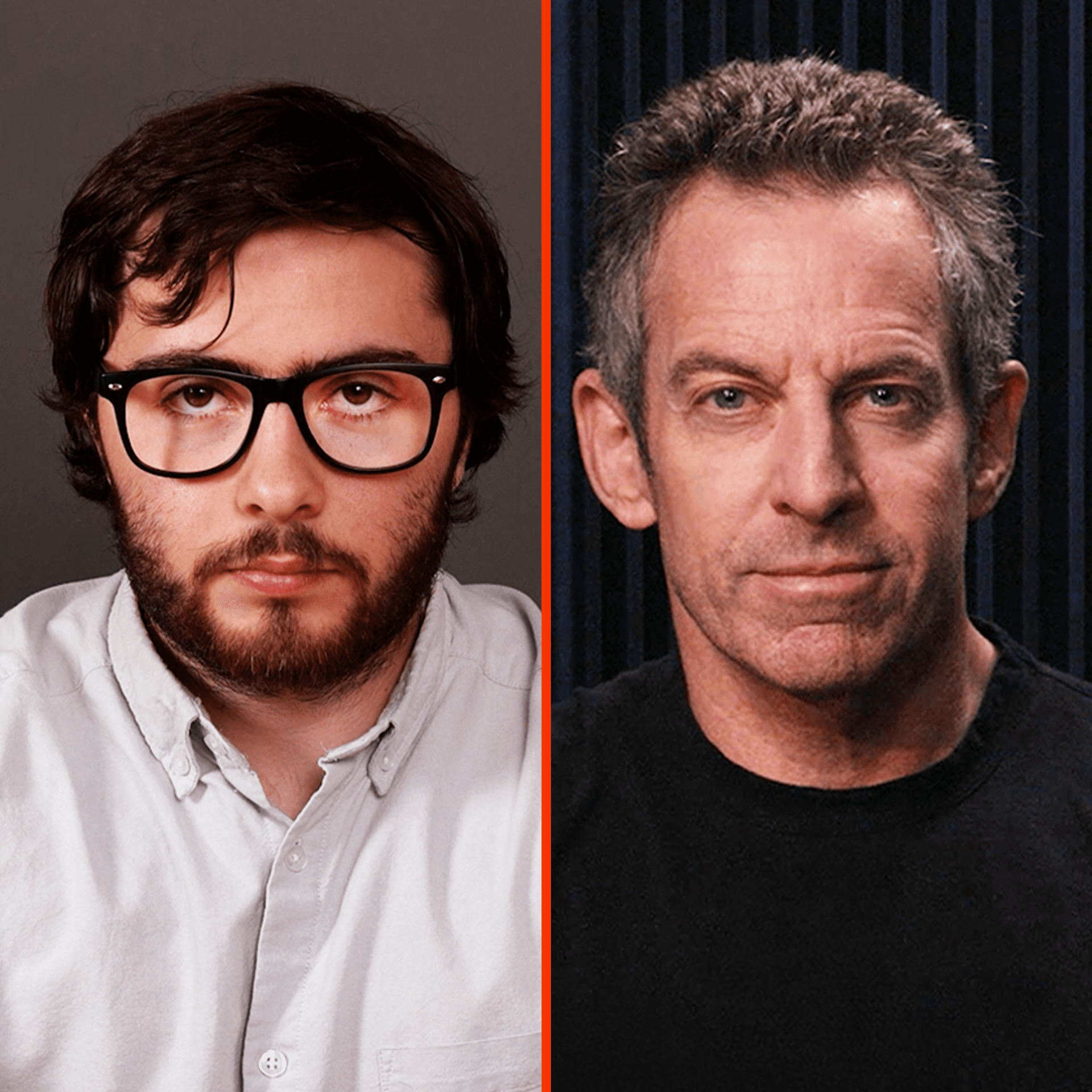
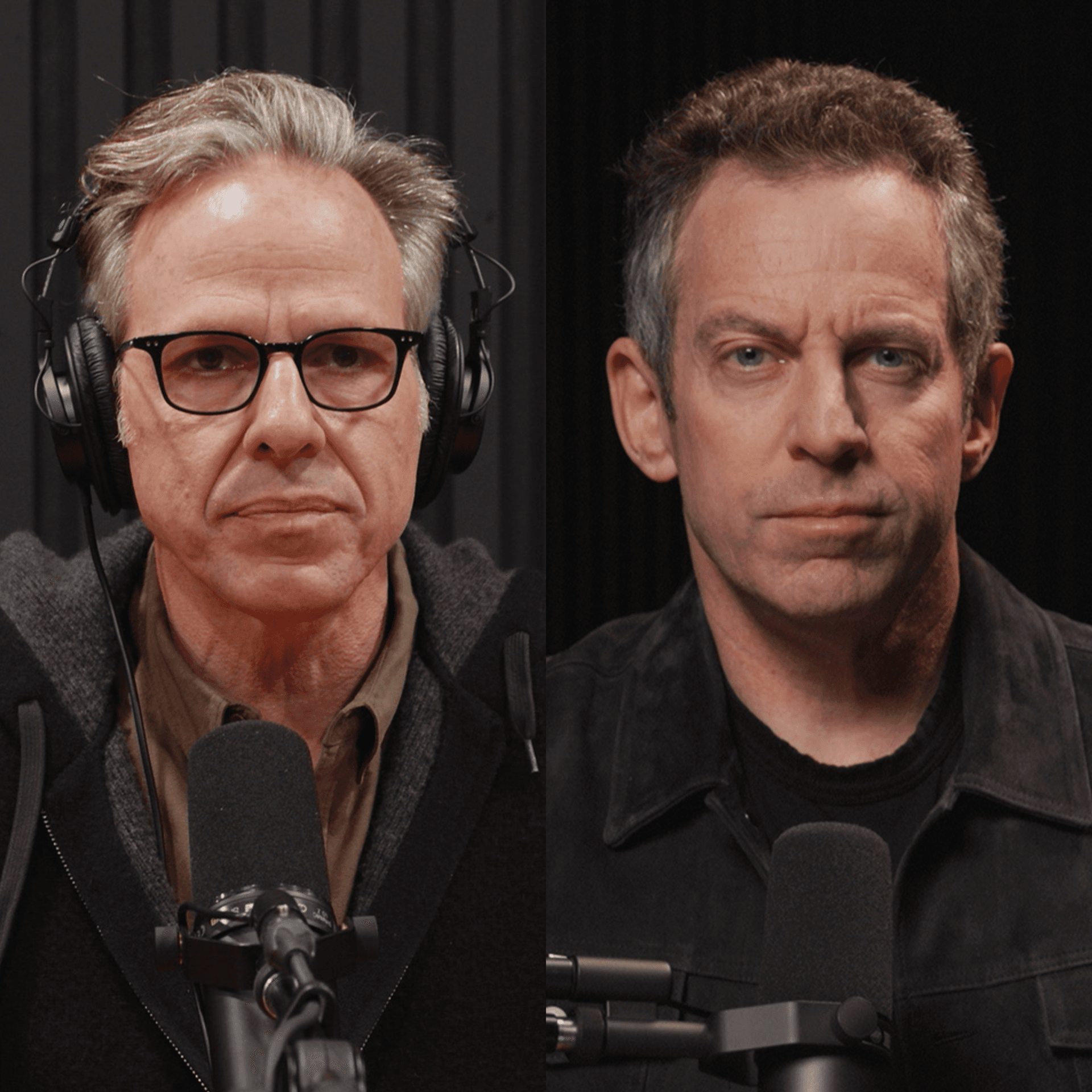
Episode Overview In this episode, Sam Harris engages in a discussion with Jake Tapper about Tapper's new book, *Original Sin: President Biden's Decline, Its Cover-Up, and His Disastrous Choice to Run Again*. They delve into various topics concerning President Biden's health, the media's role in covering Biden's decline, and the implications of the Biden family dynamics on his political decisions.
Key Themes and Discussions
Introduction and Context
- Sam Harris announces changes to the podcast's subscription policy due to abuse of the previous free subscription model.
- Harris expresses gratitude to loyal subscribers and informs listeners about upcoming live events.
Jake Tapper’s New Book
- Tapper's book reveals disturbing insights into the Biden administration, focusing on:
- Biden's health issues: The mainstream media's failure to adequately cover Biden's health condition.
- Cover-up tactics: A deep dive into how Biden and his team shielded him from criticism.
- Family Influence: The perceived influence of Jill and Hunter Biden on Biden's decision to run for re-election.
- Hunter Biden Laptop Story: Discussion of its significance in the broader context of Biden's political challenges.
Media’s Role and Responsibility
- Critique of Journalism: Tapper reflects on whether journalists, including himself, averted their eyes from signs of Biden's decline due to his perceived status as a necessary candidate against Trump.
- The Dichotomy of Competence: Discussion on the difference between a president’s ability to make decisions versus their capacity to communicate effectively with the public.
Biden's Leadership Challenges
- Age and Competence: The complexities of judging Biden’s competence are explored, especially as he aged significantly between critical electoral events.
- Crisis of Communication: The importance of communication skills in leadership, particularly in the modern media landscape.
- Inner Circle Dynamics: The influence of loyalty within Biden's inner circle, where dissenting opinions were often discouraged, mirroring the "Jar Jar Binks Theory" of leadership.
Psychological Insights
- Impact of Personal Tragedy: The effects of losing his son, Beau Biden, on Joe Biden’s psychological state and overall competence.
- Family Dynamics: The Biden family's tendency to avoid difficult truths and the implications this had for Biden’s political and personal life.
Key Takeaways
- Mainstream Media Critique: There is a significant critique of how mainstream media has handled Biden's health issues, raising questions about journalistic integrity and responsibility.
- Cover-Up Allegations: The Biden administration’s handling of Biden’s health is framed as a cover-up, with potential ramifications for the Democratic Party.
- Leadership and Communication: Effective leadership requires both decision-making skills and the ability to communicate effectively, highlighting a significant gap in Biden's ability.
- Personal Loss and Leadership: The personal tragedies faced by leaders can have profound effects on their abilities, raising ethical questions about their fitness to serve.
Conclusion The episode offers a critical examination of President Biden's political journey, focusing on the intersection of health, media, and family dynamics. The conversation encourages listeners to reflect on the implications of leadership in a complex political landscape, emphasizing the necessity for transparency and accountability.
For further insights, listeners are encouraged to subscribe to the Making Sense podcast for full access to this and other episodes.
Written by AI. May contain mistakes. Listen to the episode to check what was said.
Transcript
Automatic transcript. May contain errors.0:28Welcome to the Making Sense Podcast. what we're doing here, please consider becoming one.
0:36Welcome to the Making Sense Podcast. This is Sam Harris. I have a brief housekeeping here. I want to update you all on some changes we're making to the podcast. After many years of giving free subscriptions to everyone who asks for them, usually at least 100 people a day, some days over 1 ,000, it has become clear that this policy is no longer working as intended. Unfortunately, just too many people are taking advantage of it. We've always known that some percentage of people would abuse the policy, but things have recently gotten out of hand. This might have something to do with my releasing more podcasts on video.
1:17I'm not sure, but it's just obvious from the pattern of behavior that this is not what we intended, or what anyone would assume we would intend. And so, regrettably, we have been forced to acknowledge that the policy is well and truly broken at this point. We might revisit it in the future, or not, I don't know. But for now, the paywall on the podcast and on Substack will be a normal paywall. If there's content we feel that really must reach a wider audience, we can release that as a public service announcement, so I'm sure that'll happen, and that ensures that the most essential messages get out there and remain accessible to everyone regardless of their subscription status.
2:09I just want to take a moment to acknowledge all of you who have been supporting my work with your subscription throughout this whole time, and thank you for doing that and choosing to pay when you could have taken it for free. It's really all of you who deserve the credit for enabling us to offer this free policy for so many years. In truth, it worked far longer than anyone would have expected. I also want to address those of you who will rightly claim that I originally said that anyone who couldn't afford the podcast could always get it for free. At the time, I certainly meant that, and I still wish this could be the case.
2:46But this policy was a novel experiment for a digital subscription business, and at this point the results are just not compatible with what we're trying to do here. That said, we will continue to offer partial scholarships, and you can find information about that and how to apply on the subscription page of my website. On another note, I'm going to be doing some live events this fall. It seems strange to say it, but it has now been six years since I've toured. That is amazing to me. Time is moving faster than I like to admit. and it suddenly seems more important than ever to actually connect with people out there in the real world.
3:29So I'm going to be doing that in September and October. We're just putting four dates on the calendar for the moment. We'll see how this evolves. Paid subscribers will have early access to the tickets during the pre-sale. So if you're not already a subscriber and you want early access to tickets, head over to samharris.org forward slash subscribe. All the relevant info, including the official announcement, pre-sale codes, ticket links, etc. will be sent through the newsletter, so make sure you're signed up for that. And these shows are not going to be live podcasts where I interview someone. It will be me out there talking about what seems most urgent for us to think through at this point.
4:12I have a pretty good sense of what those topics will be, but as you know, a lot can happen very quickly these days. We're calling this tour Truth and Consequences, and I am really looking forward to seeing many of you in person. So, more to come soon.
4:35I am here with Jake Tapper. Jake, thanks for joining me. It's my pleasure. Long-time listener, first-time caller. Nice. Well, I've been a fan of yours for years. You have a new book out, Original Sin, which you wrote with Alex Thompson, which I have just read in galley form. And first, congratulations. The book seems to be getting just a little bit of attention now. It's quite a thing. Yeah. Well, when we pitched the book, we said we wanted it to be out in May, and that was one of the reasons we went with the publisher we went with, because we felt like that would be a time when people were maybe would be ready to start reckoning with this thing, with the Shakespearean drama that the world just went through.
5:21And I guess the timing has just worked out. Yeah. And it is, um, I mean, it's quite Shakespearean. It's quite a disturbing picture of hubris and delusion, uh, you know, always self-serving delusion and, um, uh, more than a little dishonesty. I mean, it's really, one thing that's very inconvenient from my point of view is even though I think, you know, Trump and Trumpism are a thousand times worse, both as characters and political phenomenon than what we're unearthing on the Democratic and Biden side of this, there's so many parallels which allow for a game of whataboutism to be played. And I think there's going to be some sort of 20 megaton satisfaction on the side of the right to discover just how fully the rot had spread within the Biden camp and just how much deceit in the end.
6:17I mean, just what a cover-up story this is. Again, I think the burden is on us to keep this in proportion, but it really is, I found your book pretty shocking. Yeah, we were shocked, Alex and I, when we were reporting it. We started the project right after election day. Obviously, Alex has been aggressively covering the Biden administration as a White House correspondent. I had interviews and I did that debate, obviously. But the big question, what was going on behind the scenes? Alex got some answers. I got none. But after election day, people were willing to talk, shockingly so. And we talked to more than 200 people, almost all of them Biden loving Democrats, almost all of them, you know, tried to get his agenda passed or supported it or raised money for it or whatever.
7:09And again, almost all these interviews were after the election and what they told us just was shocking. And even when I was doing the audio book, I would stop after every chapter and be like, I still can't believe that happened. I mean, This crazy, crazy stuff told to us by, as you read, you know, sources in the room. Yeah. Yeah. So the classic question, what did they know and when did they know it, is really the theme of this book. You know, again, your book is dropping tomorrow at the time we're recording this. It'll be out when this is released. But, you know, there's already a fair amount of chatter about its contents.
7:43I can only imagine there's going to be an allegation, again, probably just coming from right of center that you and the rest of the, the, the commentary at, you know, anyone, anyone working in journalism must have known all of this much earlier than, than now. Right. And, and so I guess I want to track through your book systematically, but. There's a lot of skepticism and anger on the right. And frankly, I don't begrudge them for having it. Yeah. I mean, so this is the big, so from the rights point of view, this is the big lie that was foisted on the American people, that Biden was compost mentis the whole time, that he was fit to run for reelection, that he could easily serve for four more years.
8:21Obviously, the lie was put to that just emphatically for the entire world in the debate performance we're going to talk about, which you co-moderated. But coming back to this fundamental question, at what point do you think, I mean, we're going to talk about how early the inner circle knew how much he was unraveling and what they did to cover it up. But when you look back on just the role of journalism at the time, is it a story of the Biden administration successfully deceiving and stonewalling everyone in sight? Or do you feel that journalists like yourself averted your eyes from a kind of an open secret?
9:03It's a complicated question. And the truth of the matter is that even those of us who, when I interviewed Joe Biden in September 2020, I asked him if he would pledge to be transparent about his health. I did not think at the time that he was adult. I thought that he was old and that that age was showing. By 2022, I interviewed him again, he seemed like he'd aged like 20 years in those two, but he didn't seem adult. He just seemed super old. Then the Biden that I saw, the next time I saw him in person up close was at the debate. And I was as shocked as anybody else. And I had been paying attention.
9:50Look, we all saw the video images of him stumbling or tripping. But I think that that said, there is a difference between airing a video of biden tripping on the stage at the air force academy graduation which i aired on my show too there's a difference between that as important as it is and i'm not denigrating the importance of it there's a difference between that and doing the kind of investigative journalism that alex and i did that showed senators having concerns about his acuity and wondering how it was affecting policy that showed him unable to come up with the names of not just George Clooney at a fundraiser, but a top national security advisor outside the Oval Office.
10:33I think there is, there has to be a recognition that both can be true, that the media did not cover his decline as well as we all should have. And I'll just speak for myself as well as I wish I had. And also the fact that a lot of this stuff was not obtainable until after the election because the whole conceit behind why this happened was because Joe Biden, his advisors, and to a large degree, the entire Democratic Party bought into the argument that Donald Trump posed an existential threat to the United States. Joe Biden was the only one who could defeat him. And therefore, anything that went after Joe Biden would help Donald Trump.
11:19That argument, when you convince yourself that the enemy, if you're a Democrat, the enemy is Donald Trump. If you convince yourself that the enemy is an existential threat, you can justify almost anything. And that's what I think they did. And that's why it was so difficult to get them to talk until after the election when they burst like from a dam. It was, I've never seen anything like it. Yeah. It was, it was the fact that Donald Trump was perceived to be an existential threat, which he may yet prove to be. That's the, we are only four months or so into his administration, but that can't be right.
11:52It has to be like at least three years. Yeah. It's, uh, it's been a very long four months, but, um, the other crucial piece is that there was no plan B, right. They, they, they didn't perceive, uh, Harris to be viable and they were for, and for reasons that we'll talk about the Biden's personally were clinging to the, um, campaign in a way that, um, you know, it really, it was, it was theirs to relinquish and they weren't doing that. And there was nobody to challenge it. Nobody to challenge them. Nobody to say, sir, you really should think about this. I have a very shabby business theory that applies to all aspects of leadership, which is called the Jar Jar Binks theory, which is that powerful people rise to the level where they can remove from their inner circle anyone who tells them when they're making a mistake or being an asshole.
12:40And the glib example is George Lucas putting Jar Jar Binks and the Star Wars movies, the prequels, which is, I think, a mistake. A disaster by any measure. Those movies have made billions of dollars. So it's flawed that way. But I could say there are so many examples of this, of great men removing, or great men in terms of achievement, removing from their inner circle anybody who would challenge them. And I think Joe Biden is one of those people. His top aides and advisors were people who worshipped him, Steve Reschetti and Mike Donilon specifically, they worshipped him. And I think that that really was a mistake to have somebody, to not have somebody who could say, you're too old, you really need to retire.
13:26Well, what happened to his claim that he was a bridge to the next generation of leaders, that he was a, by death, he was just explicit about this in his first term, that it was going to be his first and only term. what happened to that i mean how was he not held to that how did he i i don't recall how he disavowed that in the end they did it they did it was it was craftier than you're making it sound because you're how you're how you're casting it is how we all took it yeah didn't he say he was going to be a one-timer didn't he say something about a bridge to the next generation he's just going to be one term what actually and i this i learned this through writing this book because my impression was yours, but I'm like, why did we think that?
14:08I went back. One, December 2019, four different Biden advisors call Ryan Lizza with Politico in what Ryan thinks was a strategic leak and tell him Biden's only going to serve one term. Put it out there in the ether. December 2019, before the primaries, before the caucuses, just get it out there. Because they know people are very concerned that Biden's too old. So they get it out there. And then the event that you're talking about this endorsement in Michigan in spring of 2024, when he's endorsed by Gretchen Whitmer, Kamala Harris, and Cory Booker, in which he uses the term bridge. And from that, and media churn about it, we all thought, oh, okay, he's only going to serve one term.
14:51But then the midterms go not as bad as they were expected to go in 2022. And he just decides he's, there isn't any really sort of process to talk about it. Nobody's there to challenge him. There's a pollster named John Anzalone who'd been with him since 1987, 1988, who's kind of like eased away out of the inner circle for being something of a person who raises these uncomfortable subjects. And he calls and does a conference call with Anita Dunn in 2023, wanting to poll on whether or not Joe Biden should run for re-election, just get the data out there. and Anita says, we're not going to poll. The decision's been made.
15:32So there's no stress testing of any of it. Yeah. And insofar as they did have polling data, it seems that they were not actually honestly giving it to the president. I mean, it's a Jar Jar Binks theory. Yeah. Yeah. Another uncomfortable parallel to Trump, the level to which loyalty, as in don't deliver any bad news under any circumstances was prized in this administration is pretty disconcerting. It's not just the administration. It is a source close to the Biden family told us this is part of who they are. They are believers in their own myth. The theology of Joe Biden, like any theology, does not permit skepticism.
16:16And they have a family motto. Everybody's heard the family motto, oh, I give you my word as a Biden. A different family motto, less well-known, is never call a fat person fat, which means basically don't tell ugly truths. Don't share ugly truths. And from that motto, the family lies to itself and the world about the tragic cancer diagnosis of Beau Biden, which is kept secret. The family lies to itself and the world about Hunter's struggle with addiction, and it goes on and on. And I think that that is also one of the Shakespearean flaws and aspects to this drama, which is one of the things that people love about Joe Biden is his ability to pick himself up after life has just thrown another fastball at him.
17:02And the guy has suffered more than anyone should in terms of all the tragedies he's had throughout his life. And obviously, we're all hoping and praying that he'll survive this latest diagnosis of cancer. But that said, that belief in his ability to beat back anything ended up being his undoing. Yeah. Yeah. So if we were going to be totally charitable to everyone who was complicit in this, what really does amount to a cover up, as we'll show, I think, I mean, the way I thought about it at the time and the way this interpretation has since unraveled after reading your book, but at the time when, even in the aftermath of the debate where it was just finally revealed just how deep his deficits were, if I was being charitable to everyone around him who must have seen a fair amount of that before we saw it on television, I think there's this, and I believe you talk about this in your book a little bit, there's this distinction between the decision-making role and capacity of the president and the communication burden on him.
18:06And certainly the communication burden on him that was really excruciating during any campaign for a second term. And it's easy to see that someone could still maintain their competence in the former while completely unraveling in the latter, right? Like, so you could imagine that. And I think, you know, the testimony of people, again, going back years sort of reflected this where people would say, you know, when I was with the president, you know, I had lunch with him or, you know, I was in a meeting with him and he was all there and he's just as wise about foreign policy as he ever was, etc., etc.
18:39And you can imagine that impression of him being compatible with and surviving contact with a fair amount of stumbling and forgetting people's names and all the other neurological signs of being old. So there's this period of a gray area where if you're being charitable, you can imagine how the people around him thought, all right, he's still all there. This is not a risk to the country. The same person we've always known is still making decisions about U.S. foreign policy or domestic policy. You just can't stick him in front of a microphone and hope that he's going to perform. And when that gulf got wider and wider such that any microphone is a high wire act that he's destined to fail spectacularly, then it just became untenable for him to campaign.
19:31But again, I want to lead you into a discussion of the Her Tapes and just how much this turns out to not kind of be a false dichotomy. But what do you think about that framing? And was that the way you thought about it going back now some years? So that was always the argument from the Biden people. He's fine behind closed doors. And also, yeah, you know, he's not a great speaker. And that's just always been the case. And I have a couple of thoughts on that. First of all, as one top aide said to me, and you paraphrased, being president is basically two jobs. One is making big decisions, and the second is communicating those decisions to the American people.
20:12And this aide said, and he was always good at the first, but he was never good at the communication, and that got worse in his term. I would argue that the communication part of it is just as important as the decision-making part of it because we are in a communication era. And as far back as the advent of radio, a president's ability to communicate has been vital to his ability to lead, to rally support for war, for peace, for legislation, for civil rights. I mean, it is an important part of the job. So I disagree with the aspect of, of their argument. They kind of do this cutesy dance where it's like performing as president versus performative as president.
20:55You know, they think his ability to walk to Marine one is not as important as his ability to, you know, rally NATO. And of course that's true, but no one's saying that the, that a president should have to, that we have to choose between, you know, we should have to choose between a president who can communicate and also can stand for the ideals. which we hold dear. There's also, as by way of explanation, not, it's not exculpatory, but Sam, you and I are roughly the same age. I'm 56. How old are you? Uh, I got two years on you. Okay. 58. So you and I are familiar with Joe Biden's existence since at least the nineties, right?
21:34Since at least the, uh, if not before when he ran for president in 1988. So I've, I've known of him since the 80s and he's always been gaff prone long-winded says inappropriate things like that's always been him yeah and so smelling people's hair i mean who knows what's going on that whole creepy little section was it was its own thing yeah but that's always so that what some aides said to us that during this era when the non-functioning biden would rear its head 2019 2020, and then he would show up more and more non-functioning Biden, that they weren't sure what was going on because A, he was old, and that just happens with older people.
22:17They lose a beat. B, he was always kind of prone to some of this behavior, even when he was in fighting form, you know, long-winded, pointless stories and forgetting names and such, gaffes, lies, all those things. So again, that doesn't exculpatory. It's not exculpatory, but it is, by way of understanding like the complication of trying to figure out wait what a second what exactly is going on here with this guy yeah but our reporting suggested that like after bo died in 2015 one top aide said it was as if somebody had poured water on his psyche as if it were sand like it just melted away and then there were that i do i do think that's one of the reasons why obama did not want him to run for president in 2016 because he was just in no condition he never fully returned to who he was.
23:08And I'm not making light of this. This is a horrible, horrible tragedy to lose your son. But it did have a role in his acuity. And then we would just hear like this non-functioning Biden would pop up on the campaign trail in 2019, 2020, and then really start showing up a lot in 2023, 2024. Yeah. So there's some shocking details around that period that we'll get to. But tell me about Robert Herr and his radioactive tapes. So now we've heard them, and I think that they don't surprise, they didn't surprise me, because I had more words. If you'd like to continue listening to this conversation, you'll need to subscribe at samharris.org.
23:49Once you do, you'll get access to all full-length episodes of the Making Sense podcast. The Making Sense podcast is ad-free and relies entirely on listener support. And you can subscribe now at samharris.org. You
From the publisher
Sam Harris speaks with Jake Tapper about Jake's new book (with Alex Thompson), Original Sin: President Biden's Decline, Its Cover-Up, and His Disastrous Choice to Run Again. They discuss how the mainstream media failed to cover the issue of Biden's health, how Biden shielded himself from criticism, the false notion that Biden was simply a bad speaker, the audio released from Biden's 2023 interview with special counsel Robert Hur, Jake's experience moderating Biden's disastrous debate against Trump, Jill and Hunter Biden's influence on former President Biden's decision to run again, the Hunter Biden laptop story, anti-democratic processes in the Democratic Party, and other topics.
If the Making Sense podcast logo in your player is BLACK, you can SUBSCRIBE to gain access to all full-length episodes at samharris.org/subscribe.
Learning how to train your mind is the single greatest investment you can make in life. That's why Sam Harris created the Waking Up app. From rational mindfulness practice to lessons on some of life's most important topics, join Sam as he demystifies the practice of meditation and explores the theory behind it.