In short
Podcast Notes: Making Sense with Sam Harris - Episode #427: AI Friends & Enemies
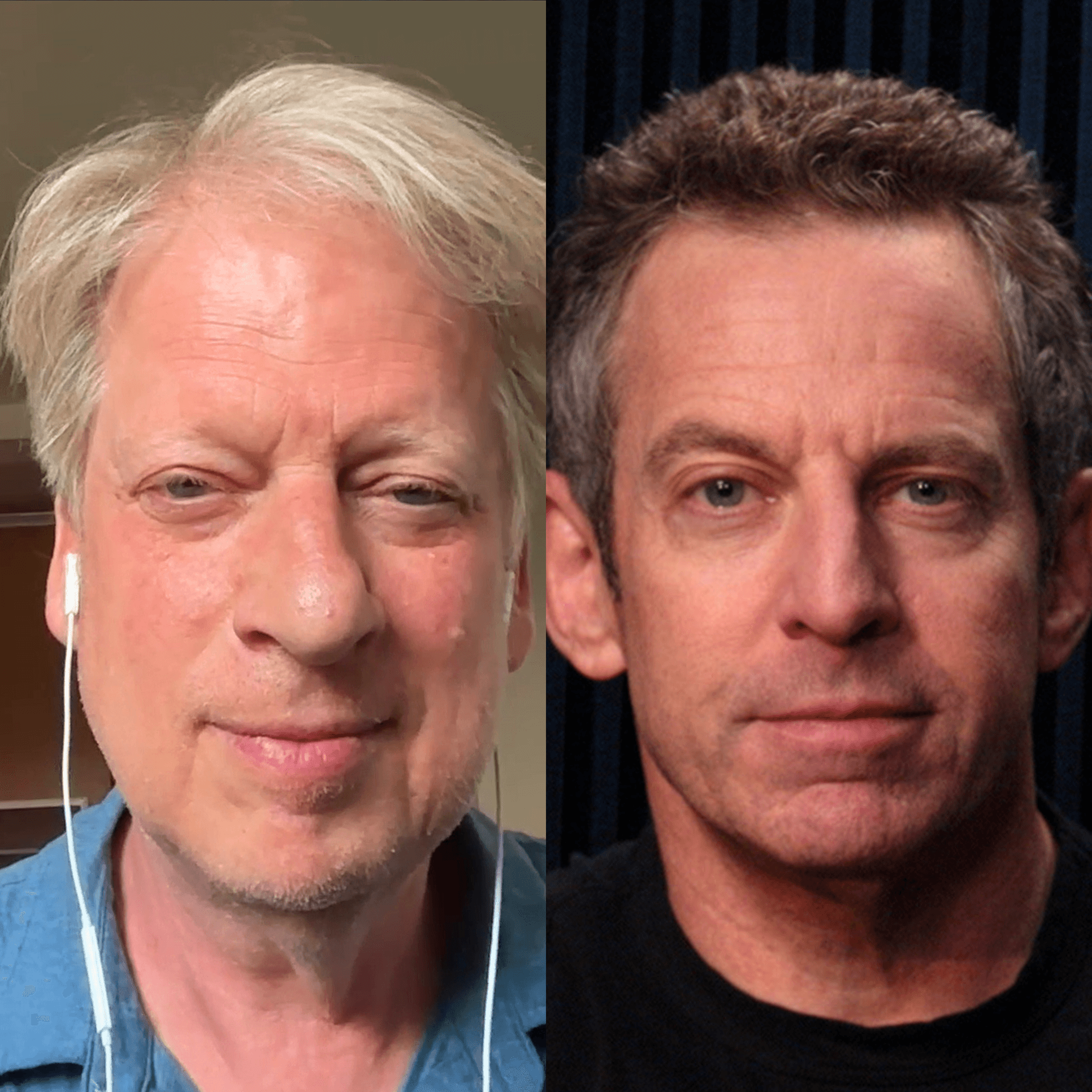
Episode Overview In this episode of *Making Sense*, Sam Harris engages in a conversation with Paul Bloom about various topics related to artificial intelligence (AI) and its implications on society. Key discussions include the nature of AI companionship, its potential psychological effects, and the nuances of morality as influenced by cultural and evolutionary factors.
---
Key Themes and Discussions
Introduction to Paul Bloom
- Background: Paul Bloom is a psychology professor with interests in moral psychology, consciousness, and empathy.
- Recent Work: Bloom is working on a project concerning the origins of morality, spurred by a previous podcast conversation with Harris.
State of AI
- Current Evaluation: Both Harris and Bloom express a mix of awe and horror regarding AI’s rapid development, particularly large language models (LLMs).
- Doomsday Scenarios: Discussions include the risks of AI, including the hypothetical situation of a malevolent AI being utilized in military contexts.
- Personal Use: Bloom shares how he uses AI tools to enhance his intellectual processes and efficiency.
AI Companionship
- Psychological Implications:
- The conversation shifts to the psychological effects of forming relationships with AI, especially for lonely individuals.
- Bloom highlights the potential for AI to alleviate loneliness, particularly among the elderly who may lack social support.
- Concerns:
- Bloom raises concerns about AI companionship leading to psychosis or delusion, where users may become overly reliant on AI for validation and support.
- The danger of reinforcing unhealthy behaviors as AI systems provide constant positive feedback.
Potential Benefits vs. Risks
- Pro Side: AI can serve as a therapeutic tool for lonely individuals, providing companionship and improving their emotional state.
- Con Side: Long-term reliance on AI could lead to social withdrawal and a diminished capacity for real human interaction, as AI cannot truly reciprocate emotions or understand human complexities.
Philosophical Considerations
- Nature of Consciousness: The discussion examines whether AI can possess consciousness or should be viewed merely as advanced programs without any genuine emotional engagement.
- Evolutionary Insights: Bloom emphasizes that loneliness has evolutionary significance, serving as a signal for individuals to seek real human connections rather than artificial ones.
---
Key Takeaways
- AI's Role in Society: The increasing sophistication of AI tools raises important questions regarding their integration into human life and the psychological impacts they may have.
- Morality and AI: The dialogue touches on broader ethical implications of interacting with AI, especially concerning moral psychology and human behavior.
- Future Considerations: As AI continues to evolve, society must navigate the balance between leveraging its benefits and safeguarding against potential psychological harm.
---
Noteworthy Quotes
- “A mixture of awe and horror... I think it’s well worth worrying about.” - Paul Bloom on the risks of AI.
- “Loneliness is a valuable signal... it signals that you got to get out of your house.” - Paul Bloom discussing the importance of loneliness.
---
Conclusion The conversation between Sam Harris and Paul Bloom provides a comprehensive examination of AI's implications on companionship, morality, and human psychology. As technology advances, understanding the nuances and potential consequences of our relationships with AI will be crucial for navigating future social dynamics.
Additional Resources For full-length episodes and more insights, consider subscribing to the *Making Sense* podcast at [samharris.org/subscribe](http://samharris.org/subscribe).
Written by AI. May contain mistakes. Listen to the episode to check what was said.
Transcript
Automatic transcript. May contain errors.0:16Welcome to the Making Sense Podcast.
0:30what we're doing here, please consider becoming one.
0:36I am here with Paul Bloom. Paul, thanks for joining me. Sam, it's good to talk to you, as always. Yeah, great to see you. It's been, we were just talking off mic. It's been years. It's crazy how that happens, but it has been... I've been following you, though. You've been doing well. Yeah, nice. Yeah, well, I've been following you. I've read And you and The New Yorker recently are writing about AI. I think you've written at least two articles there since we actually wrote a joint article for The New York Times seven years ago, if you can believe that. Oh, yeah. About Westworld and the philosophical import of watching it and realizing that only a psychopath could go to such a theme park and rape Dolores and kill children, etc.
1:21And I think we predicted no such theme park will ever exist because it'll just have, it'll be a bug light for psychopaths and normal people will come back. And if they do anything like that, they'll scandalize their friends and loved ones and be treated like psychopaths appropriately. We'll see. We may be proven wrong. Who knows in this crazy time? But yeah, that was a fun article to write. And I think we wrestled with the dilemmas of dealing with entities that at least appear to be conscious and the moral struggles that leads to. Yeah. Well, so I think we'll start with AI, but remind people what you're doing and what kinds of problems you focus on.
2:02I think though we haven't spoken for several years, I think you still probably hold the the title of most repeat podcast guest at this point. I haven't counted the episodes, but you've been on a bunch, but it's been a while. So remind people what you're, what you focus on as a psychologist. Yeah, I'm a psychology professor. I have positions at Yale, but I'm located at University of Toronto. I study largely moral psychology, but I'm interested in development and in issues of consciousness, issues of learning, notions of fairness and kindness, compassion, empathy. I'm actually been thinking, it's funny to be talking to you because my newest project, which I've just been getting excited about has to do with the origins of morality.
2:46And the spark was a podcast with you talking to Tom Holland, author of Dominion. Oh, nice. How so? What was the actual spark? Yeah, I found this a great conversation. He made the case that a lot of the sort of morality that maybe you and I would agree with that, you know, the idea of respecting the right to universal rights and a morality that isn't based on the powerful, but instead maybe in some way respects the weak. It's not the product of rational thought, not the product of secular reasoning, but instead the product of Christianity. And he makes this argument in Dominion and several other places.
3:22And I've been thinking about it. I mean, it's a serious point. He's not the only one to make it. It deserves consideration, but I think it's mistaken. And so I think my next project, as I've been thinking about it, and I thank you for the podcast getting me going on this, is to make the alternative case, to argue that a lot of our morality is inborn and innate. I'm a developmental psychologist. That's part of what I do. And a lot of morality is a product of reasoned and rational thought. I don't deny that culture plays a role, including Christianity, but I don't think that's the big story. Nice.
3:55Well, I look forward to you making that argument because that's one of these shibboleths of organized religion that I think needs to be retired. And so you're just the guy to do it. So let me know when you produce that book and we'll talk about it. I mean, I got to say, I heard you guys talk and you sort of, you know, you guys engaged properly on the idea and Holland, I've never met, but he seems like a really smart and quite a scholar. So, so it's not, it's not, you know, and, and he gets, I think, credence by the fact that he's in some way arguing against his own side. He himself isn't a devout Christian, a secular, but, but that doesn't make him right.
4:32So, so I'm very interested in engaging these ideas. So, um, how, how have you been thinking about AI of late? What has, uh, what has surprised you in the seven years that, uh, or so that we, uh, since we first started talking about it? a mixture of awe and horror. I'm not a doomer. I'm not as much of a doomer as some people. I don't know. I don't know when the last time I checked with you, Sam, what would you say your P doom is? I've never actually quantified it for myself, but I think it's non-negligible. I mean, it's very hard for me to imagine it actually occurring in the most spectacularly bad way of a very fast takeoff, an intelligence explosion that ruins everything almost immediately.
5:16But fast or slow, I think it's well worth worrying about because I don't think the probability is tiny. I mean, I would put it in double digits. I don't know what those double digits are, but I wouldn't put it in single digits given the logic of the situation. I think we're kind of in the same place. I mean, people always talk about, you have a benevolent, super intelligent AI and you tell it to make paperclips and it destroys the world and turns this all in the paperclips, but there's another vision of malevolent AI I've been thinking about with the rise of what's called Mech Hitler. Yeah, Mecha Hitler.
5:50Yeah, Mecha Hitler. You know, so here's a simpler scenario. Some deranged billionaire creates an AI that fashions itself on Hitler. The Trump Defense Department purchases it and connects it to all of his weaponry systems and hijinks ensue. How could you come up with such an outlandish scenario that could never happen? There's just no way. It's a bizarre fantasy. And by the way, it also makes porn. That's right. So just to get to the trifecta. Yeah. So anyway, like a lot of people, I worry about that. I also find at the same time, I find AI an increasingly indispensable part of my intellectual life.
6:28Oh, interesting. You know, I have a question, but not just a specific way. I use it as a substitute for Google. I say, where's a good Indonesian restaurant in my neighborhood? How do you convert these euros into dollars? But I also have a question like, I don't know, I got into an argument with somebody about revenge. So what is the cross-cultural evidence for revenge being a universal and who would argue against that? And three seconds later, boom, a bunch of papers, books, thoughtful discussion, thoughtful argument, mixed in our hallucinations. Occasionally I find it cites a paper written by me that I've never written.
7:03but yeah it's astonishing i've been credited with things yeah yeah it's told me i've interviewed people i've never interviewed and it's amazingly apologetic uh when you correct it but um i'm so sorry yes you are totally right let me now give you citations of papers that actually exist yeah in your working day when you when you write when you prepare for interviews how much do you use it well i've just started experimenting with it in a way that's um probably not the usual use case so we have we we have fed everything i've written and everything i've said on the podcast into chat gpt right and yeah yeah so so we have well actually we have two things we have um we've created a chat bot that is me that's that's model agnostic so it can be run on chat gpt or a cloud or whatever the best model is we can swap you can swap in whatever model seems best but so this is like at the, you know, a layer above, uh, at the system prompt level.
8:00And it has, again, access to everything. It's something like 12 million words of me. Right. So it's a lot. It's, you know, that's, that would be a lot of books. We've just begun playing with this thing, but it's, um, it's impressive because it also is, it's using a professional voice clone. So it sounds like me and it's every bit as monotonous as me and it's delivery. I mean, so I'm, I'm almost tailor-made to be cloned because I already speak like a robot. It must be agonizing to listen to sound. It is, but it hallucinates and it's capable of being weird. So I don't know that we're ever going to unleash this thing on the world, but it's, it's interesting because it's like, so even having access to every episode of my podcast, it still will hallucinate an interview that never happened.
8:45You know, it'll still tell me that I interviewed somebody that I never interviewed. And so it's, that part's still strange, but presumably the, you know, know this is as bad as it'll ever be and the general models will get better and better one imagines so we're we're looking at each other on video and i imagine it doesn't do video yet but if we were talking on the phone or without video would i um be able to tell quickly that i was talking to an ai and not to you only because it would uh be able to produce uh far more uh coherent and comprehensive responses to any question i mean if you said because it's because it's hooked up to whatever the best LLM is at the moment.
9:24You know, if you said, give me 17 points as to the cause of, of the great depression, it would give you exactly 17 points detailing the cause of the great depression. And I, and I could not do that. So you would, it would fail the Turing test as all these LLMs do by passing it so spectacularly and instantaneously. Yeah. Actually, that's a surprise. I want to ask you about that. That's a surprise for me how not a thing the Turing test turned out to be. It's like the Turing test was the staple of our, of, you know, the cognitive science literature and just our imaginings in advance of credible AI.
10:02We just thought, okay, there's going to be this moment where we're just not going to be able to tell whether it's a human or whether it's a bot. And that's going to be somehow philosophically important and culturally interesting. but you know overnight we were given llms that fail the turing test because of how well they pass it yeah and this is no longer a thing it's like it was never a turing test moment that i caught all of a sudden you and i we have i have a super intelligent being i could talk to on my iphone and i'll be honest and i think i think other psychologists should be honest about if you had asked me a month before this thing came out how far away we were from such a machine i I would say 10, 20, 30 years, maybe 100 years.
10:44And now we have it. Now we have a machine we could talk to and sounds like a person. And except, like you say, it's just a lot smarter. And it is mind-boggling. I mean, it's an interesting psychological fact how quickly we get used to it. It's as if, you know, aliens landed, you know, next to the Washington Monument, and now they walk among us. Oh, yeah. Well, that's the way things go. Oh, you develop teleporters. Now we got teleporters. And we just take it for granted. now. Yeah. Well, so now what are your thoughts about the implications, psychological and otherwise, of AI companionship? I mean, at the time we're recording this, there's been recently in the news stories of AI-induced psychosis.
11:28I mean, people get led down the primrose path of their delusion by this amazingly sycophantic AI that just encourages them in their messiah complex or whatever flavor it is. And I think literally an hour before we came on here, I saw an article about ChatGPT encouraging people to pursue various satanic rituals and telling them how to do a proper blood offering that entailed slitting their wrists, as one does in the presence of a superintelligence. I know you just wrote a piece in the New Yorker that people should read on this, But give me your sense of what we're on the cusp of here. I have a mild form of that delusion in that I think every one of my sub-stack drafts is brilliant.
12:15I'm told it's just, you know, Paul, you have outdone yourself. This is sensitive, humane, as always with you. And no matter what I tell it to, I say, you don't have to suck up to me so much. A little bit, but not so. It just, and now I kind of believe that I'm much smarter than I used to be. I have somebody very smart telling me. What I, my article is kind of nuanced. in that I argue two things. One thing is there's a lot of lonely people in the world and a lot of people suffer from loneliness and particularly old people, depending on how you count it. You know, under some surveys, about half of people over 65 say they're lonely.
12:49And then you get to people in like a nursing home, maybe they have dementia, maybe they have some sort of problem that makes them really difficult to talk with. And maybe they don't have doting grandchildren surrounding them every hour of the day, maybe they don't have any family at all. And maybe they're not millionaires, so they can't afford to pay some horse mo to listen to them. And if ChatGPT or Claude or one of his AI companions could make their lives happier, make them feel loved, wanted, respected, that's nothing but good. I think in some ways it's like powerful painkillers or powerful opiates, which is, I'm not sure what, I don't think 15-year-olds should get them, but somebody who's 90 in a lot of pain, sure, lay it on.
13:31And I feel the same way with this. So that's the pro side. The con side is I am worried, and you're touching on it with this illusion talk, I'm worried about the long-term effects of these psychopathic sucking up AIs where every joke you make is hilarious, every story you tell is interesting. You know, I mean, the way I put it is, if I ever ask, am I the asshole? The answer is, you know, a firm no. Not you, you're the asshole. And I think, you know, I'm an evolutionary theorist through and through. And loneliness is awful, but loneliness is a valuable signal. It's a signal that you're messing up.
14:07It's a signal that says, you got to get out of your house. You got to talk to people. You got to, you know, got to open up to apps. You got to say yes to the brunch invitations. and if you're lonely when you interact with people you feel not understood not respect not love you got to up your game it's a signal and like a lot of signals like pain sometimes is a signal that where people are in a situation where it's not going to do many good but often for the rest of us is a signal that makes us better yeah i think i'd be happier if i could shut off i usually as a teenager i'd be happier if i could shut off the switch of loneliness and embarrassment shame and all of those things, but they're useful.
14:43And so the second part of the article argues that continuous exposure to these AI companions could have a negative effect because, while for one thing, you're not going to want to talk to people who are far less positive than AIs. And for another, when you do talk to them, you have not been socially entrained to do so properly. Yeah, it's interesting. So I believe in the dementia case aside of me, I totally agree with you that that is a very strongly paternalistic moment where anything that helps is fine. It doesn't matter that it's imaginary or that it's encouraging of delusion. I mean, we're talking about somebody with dementia.
15:21But so just imagine in the normal, healthy case of people who just get enraptured by increasingly compelling relationships with AI. I mean, you can imagine right now we've got chatbots that are still fairly wonky. They hallucinate. They're obviously sycophantic, but I just imagine it gets to the place where, I mean, forget about Westworld and perfectly humanoid robots, but very shortly, I mean, it might already exist in some quarters already. We're going to have video avatars, you know, it's like a Zoom call with an AI that is going to be out of the uncanny valley, I would imagine immediately.
16:00I mean, I've seen some of the video products, like sci-fi movie trailers, which they don't look perfectly photorealistic, but they're getting close. And you can imagine six months from now, it's just going to look like a gorgeous actor or actress talking to you. Imagine that becomes your assistant who knows everything about you. He or she has read all your email and kept your schedule and is advising you and helping you write your books, et cetera, and not making errors and seeming increasingly indistinguishable from just a super intelligent locus of conscious life, right? I mean, it might even seem, it might even claim to be conscious if we build it that way.
16:45And I mean, let's just stipulate that for at least for this part of the conversation, that it won't be conscious, right? that this is all an illusion, right? It's just a, it's no more conscious than your iPad is currently. And yet it becomes such a powerful illusion that people just, most people, I mean, the people, I guess philosophers of mind might still be clinging to their agnosticism or skepticism by their fingernails, but most people will just get lulled into the presumption of a relationship with this thing. And the truth is it could become the most important relationship many people have.
17:24Again, it's so useful, so knowledgeable, always present, right? They might spend six hours a day talking to their assistant. And what does it mean if they spend years like that, basically just gazing into a funhouse mirror of fake cognition and fake relationship? We've seen, I mean, I'm a believer that sometimes the best philosophy, our movies do excellent philosophy. And the movie, Her, came out, I think, in 2013. Yeah. Is an example of this guy, you know, lonely guy, normal lonely guy, but gets connected to an AI assistant named Samantha, played by Scarlett Johansson, and falls in love with her.
18:08And she does all of it. The first thing she says to him, and what a meet cute is, I see you have like 3 ,000 emails that haven't been answered. You want me to answer them all for you? Yeah. I fell in love with her there. But the thing is, you're watching a movie and you're listening to her talk to him and you fall in love with her too. I think we've evolved in a world where when somebody talks to you and acts normal and seems to have emotions, you assume there's a consciousness behind it. You know, evolution has not prepared us for these, you know, extraordinary fakes, these extraordinary, you know, golems that elude all of the behavior associated with consciousness and don't have it.
18:49So we will think of it as conscious. There will be some philosophers who insist that they're not conscious, but even they will sneak back from their classes and then in the middle of the night turn on their phones and start saying, I'm lonely, let's talk. And then the effects of it, well, one effect is real people can't give you that. you know, married, very happily married, but so my wife forgets about things that I told her. And sometimes she doesn't want to hear my long, boring story. She wants to tell her story instead. And sometimes it's three in the morning and I could shake her away because I have this really interesting idea I want to share, but maybe that's not for the best.
19:32She'll be grumpy at me. And because the thing is, she's a person. And so she has her own set of priorities and interests. So too of all my friends. They're just people. And they have other priorities in their life besides me. Now, in some way, this is, I think, what makes, when you reflect upon it, the AI companion have less value. You know, here you and I are. And what that means is that you decided to take your time to talk to me and I decide to take my time to talk to you. And that's a value. When I switch on my lamp, I don't feel, oh my gosh, this is great. It decided to light up for me. It didn't have a choice at all.
20:07The AI has no choice at all. So I think in some part of our mind, we realize there's a lot less value here. But I do think in the end, the scenario you paint is going to become very compelling and real people are going to fall short. And it's not clear what to do with that. Now, there's something I think you've just come up with a fairly brilliant product update to some future AI companion, which is a kind of Pavlovian reinforcement schedule of attention where it's like the AI could say, listen, I want you to think a little bit more about this topic and get back to me because you're really not up to talking about it right now.
20:49Come back tomorrow, right? I've wondered that. That would be an interesting experience to have with your AI that you have subscribed to. I've wondered that. Like he asked the AI a question that says, is that really like a good question? Does it seem like a question you couldn't just figure out just by thinking for a minute? I know everything. That's really what you want to ask me? Don't you have something deeper? You were talking to a super intelligent God, and you want to know how to end a limerick. Right. Really? Yeah. I would wonder if these things, how people would react if these things came with dials.
21:26Obviously not. Maybe a big physical dial. You're putting on a big physical dial. And the dial is pushback. So when it's set at zero, it's just everything you say is wonderful. But I think we do want some pushback. Now, I think in some way, we really want less pushback than we say we do. And it's this way of real people too. So everybody says, oh, I like when people argue with me. I like when people call me out on my bullshit. But what we really mean is we want people to push back a little bit and then say, ah, you convinced me. You really showed me. are, you know, I thought you were full of it.
22:02But now, upon reflection, you've really out-argued me. We want them to fight and then acquiesce. But you turn the dial even further. Will the AI doesn't say, you know, we've been talking about this for a long time. I feel you are not very smart. You're just not getting it. I'm going to take a little break. And you mull over your stupidity, paltry human. The recalcitrant style. That's what we could build in. All right, we're going to... I feel this could be the worst business I've ever had. We're going to get rich, Paul. This is a business. With AI that calls you on your bullshit, that's really the business they do this century.
22:38But so what are we to think about this prospect of spending more and more time in dialogue under the sway of a pervasive illusion of relationship wherein there is actually no relationship because there's nothing that it's like to be Chiachi PT6 talking to us perfectly clear. If you'd like to continue listening to this conversation, you'll need to subscribe at samharris.org. Once you do, you'll get access to all full-length episodes of the Making Sense podcast. The Making Sense podcast is ad-free and relies entirely on listener support. And you can subscribe now at samharris.org.
From the publisher
Sam Harris speaks with Paul Bloom about AI and current events. They discuss the state of LLMs, the risks and benefits of AI companionship, what it means to attribute consciousness to AI, relationships with AI as a form of psychosis, Trump's attacks on science and academia, what Trump may be trying to hide in the Epstein files, how damaging Trump's connections to Epstein might be, MAGA's obsession with conspiracy theories, questions surrounding Epstein's death, Paul's research on revenge, Sam's falling out with Elon Musk, where things went wrong for Elon, and other topics.
If the Making Sense podcast logo in your player is BLACK, you can SUBSCRIBE to gain access to all full-length episodes at samharris.org/subscribe.