In short
Podcast Notes: Making Sense with Sam Harris - Episode #428: Political Extremism
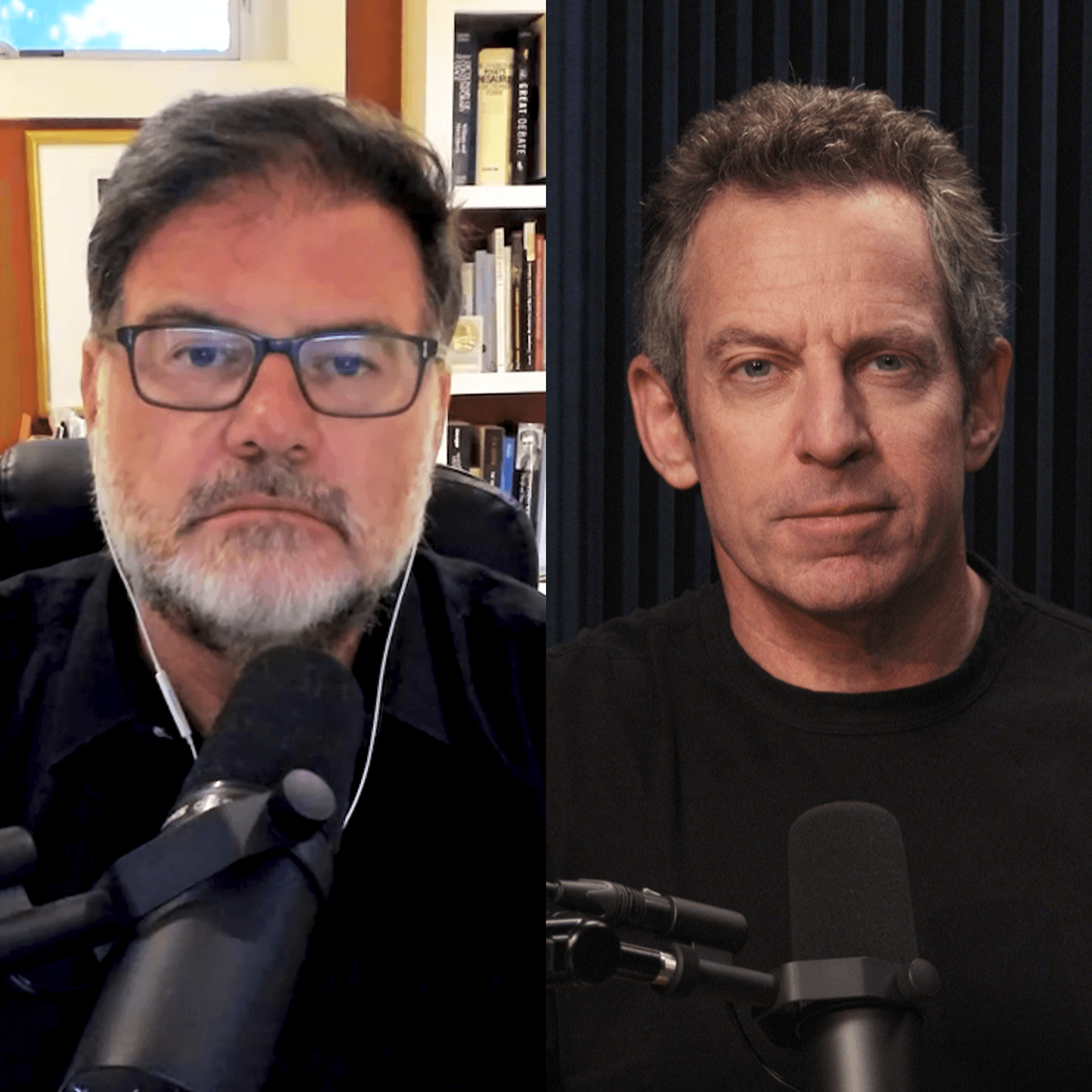
Episode Overview In this episode of *Making Sense*, host Sam Harris engages in a nuanced discussion with Jonah Goldberg, focusing on contemporary political dynamics, especially concerning Donald Trump, extremism, and wealth inequality. They explore various themes including the horseshoe theory of politics, the differences between MAGA supporters and average Republican voters, and the challenges faced by the Democratic Party.
---
Key Themes
- Trump 2.0
- Initial Expectations: Goldberg reflects on his expectations for Trump’s second term, admitting he underestimated Trump’s ability to achieve certain policy goals, such as border control.
- Surprising Outcomes: He notes that Trump has achieved more substance in his second term compared to his first, contradicting initial predictions.
- Corruption and Hypocrisy
- Corruption Defined: Goldberg discusses the broader implications of corruption, arguing it's not just about illegal activities but also about the degradation of political norms.
- Hypocrisy vs. Authenticity: Harris and Goldberg analyze how Trump’s lack of pretense regarding morality resonates with his base, as he does not claim to be a good person, which paradoxically garners support.
- Political Extremism and the Horseshoe Theory
- Illiberalism on Both Sides: They discuss the concept of horseshoe theory, suggesting that political extremes share similarities in their disregard for objective truth and principles.
- Postmodernism in Politics: The conversation touches on how the right has learned from the far left’s tactics, focusing more on narrative and power dynamics than on truth.
- Democratic Party Dynamics
- Current State: Goldberg critiques the Democratic Party for its lack of direction, feeling that they have not effectively countered Trump’s influence.
- Challenges: The discussion highlights the Democratic Party’s struggles with apathy and their failure to course-correct in response to the current political climate.
- Wealth Inequality and Socialism
- Responses to Inequality: Goldberg expresses skepticism about the far-left's approaches to wealth inequality and the idea of an "abundance agenda," advocating for more practical solutions.
- Economic Populism: The conversation navigates through the feasibility of socialism in addressing economic disparities and the political implications of economic populism.
---
Key Takeaways
- Trump's Cult Following: There are fractures within Trump's base, particularly concerning scandals like Epstein, showcasing the tenuous nature of his support.
- Crisis in Political Norms: The erosion of established political norms and the embrace of illiberal ideologies on both sides presents a concerning trend for democratic discourse.
- Authenticity vs. Ideals: The dynamics of political identity and authenticity are crucial in understanding the current political landscape; the abandonment of ideals can lead to ethical and moral compromises.
---
Notable Quotes
- "The corruption of sort of the way the system is supposed to work..."
- "Hypocrisy is the tribute that vice pays to virtue."
- "The second you stop being liberal, you are embracing illiberalism."
---
Conclusion The episode offers a rich exploration of the complexities of modern American politics, examining the implications of political extremism, the state of the Democratic Party, and the evolving landscape of voter allegiance. Sam Harris and Jonah Goldberg provide a critical lens through which to understand these dynamics, emphasizing the need for a return to foundational principles in political discourse.
For further insights, listeners are encouraged to explore more episodes by subscribing to *Making Sense*.
Written by AI. May contain mistakes. Listen to the episode to check what was said.
Transcript
Automatic transcript. May contain errors.0:16Welcome to the Making Sense Podcast.
0:30what we're doing here, please consider becoming one.
0:36I am here with Jonah Goldberg. Jonah, thanks for joining me. It's a pleasure. Thanks for having me back. Yeah, it's great to see you again. So I'm sure there's a lot to talk about. Let's remind people, first of all, where they can find most of your stuff to read online. And how do you describe what you do and where you are these days? Sure. I'm the editor-in-chief of The Dispatch, which Steve Hayes and I launched about six years ago because we wanted to sort of model behavior that wasn't too much on display in American journalism, particularly in right of center journalism. And so we are unapologetically right of center.
1:10We have some left of center writers as well, but we are kind of, we pride ourselves on being fact-driven and we're sort of violently nonpartisan. So we're perfectly happy to talk about how the Republican party is a shit show. And so the dispatch is the best place to find me. I'm an LA Times columnist, have been for almost two decades, and I've got a podcast called The Remnant. So there you go. Nice. Nice. Well, let's start with Trump 2.0. How's it going? How has the first, what is this, seven months, almost eight months been in your view? What has surprised you? What is better than you thought, worse than you thought?
1:46Yeah. So that's a good Good question. I am, uh, I have to admit I was wrong about some things. I, like a lot of people thought that we would see more continuity with the first term for good and for ill than we have. I had this theory, I may have even floated it on here that the kind of mass deportation he was promising is too big of a lift logistically and politically for him to pull off. I don't think he's where he still hasn't gotten to where he sort of promised to go, but he's gotten closer to it than I thought he would. I have to say, I've been surprised at his remarkably quick success in shutting down the border.
2:23I think if he were smart politically, he would talk about that a lot more and stop doing a lot of the other stuff that he does. I've been surprised by the really sort of complete feckless confusion of Democrats in all sorts of ways and how to counter him. Yeah. I also, you know, but the thing that I was wrong about is more that I thought that in his first term, the condo salesman part of his presidency was much more pronounced insofar as he liked the headline. He liked to promote the headline. He liked to claim total victory. You tell people he actually built the wall. He claimed that it completely tore up NAFTA, when in reality, he basically just added a couple new provisions to an updated NAFTA and kept it, but he got to claim that he did something huge, right?
3:08And this time around, I've been shocked to the degree to which there's more substance for good or for ill to a lot of this stuff. I never thought Doge would work and it didn't, but it did a lot of damage. There was a lot of performative vandalism to it. Yeah. And I guess the thing I'm sort of most shocked by, it's hard, I should have made a list, but I guess the thing I'm most shocked by is the cavalier way a lot of people just sort of price in the corruption. And I don't mean, I don't necessarily just mean like the crypto stuff and the Bitcoin stuff and taking a plane from the Qataris and all those sort of obvious things.
3:44You know, corruption has a richer, more redolent meaning than the sort of just bribe-taking kind of connotation to it. The corruption of sort of the way the system is supposed to work, the, you know, one of the things that's good about hypocrisy that people don't really appreciate is that even lip service to an ideal that you fall short of maintains this idea that the ideal should be an ideal, right? Like Wayne Booth, the literary critic says that rhetoric is the art of probing what men believe men ought to believe. And so the fact that Trump has been so successful in just dispensing with the pretense of doing the right thing some of the time and people cut them slack for it, you know, this idea that you're going to fill the government with loyalists where you make them take loyalty tests and everyone says, well, that's just Trump.
4:33That's what people voted for. The idea that you're going to put some of these, some truly unqualified people in power solely because they're loyal. That's the kind of thing that, look, loyalty tests are a thing in politics and have been for thousands of years and they're never going away. But the pretense that you're doing things for other reasons is usually cover for it. And here, there's a lot of crap he's doing that they're just, they're just owning it. And that's been pretty shocking to me. Yeah. That point about hypocrisy is, is a deep one. I think there's this La Roche-Vicotte maxim that hypocrisy is the tribute that vice plays to virtue.
5:10And that is making the same point that you're only truly capable of hypocrisy if you're to some degree granting the importance of certain norms tacitly. So it's by reference to those norms that you can be convicted of hypocrisy. But there's just no pretense of normativity at all with these guys. You know, the one thing, I mean, Trump lies about everything under the sun. He's a massive imposter and has been in so many respects. You know, he pretended to be rich when he wasn't rich, et cetera. But he's never pretended to be a good person, right? He's not a hypocrite in that sense. And I think that's some key to his charm for at least half of America.
5:51Yeah, I'm kind of curious what you think about this because I often try to explain this point to people and they look at me the way my basset hound used to look at me when I tried to feed it a grape. with just sort of head tilting total incomprehension. I see Trump in many ways as almost a culmination of postmodernism, right? And we can stay on the hypocrisy thing for just a second. You know, as a friend of mine once said, when Hugh Hefner moved out of the Playboy Mansion to raise little kids, no one criticized him for failing to live down to his principles, right? Like in a healthy society, the hypocrisy thing about upholding the ideals is important because it still keeps the standard alive.
6:33And the cult of authenticity, which is more from romanticism than postmodernism, but they overlap, says, no, the highest version of truth, the highest version of legitimacy comes from within. You just have to be true to yourself. And that's why I think our culture for the last 50 years has been so obsessed with notions of hypocrisy. But I always used to say, if a glutton says everyone should overeat, that he's being true to himself, but he's giving terrible advice. It's better to say, don't do what I do, right? The essence of good parenting is to say, you know, don't make, you know, is not to sort of teach your kids to make the same mistakes you made, but to say, I learned from some things and we're going to set some standards and do as I say, not as I did.
7:16And Trump, I think comes partly from Norman Vincent Peale and the power of positive thinking upbringing that he had, and partly from his just, you know, malignant narcissism. he has this approach to the universe, which is to say that his feelings are determinative of reality. We just saw this last week with the firing of the BLS commissioner. It's critical Trump theory, right? If any external truth or standard undermines his desires, his will to power, his preferences, it must not only be corrupt or rigged, as he would put it, but it must be specifically rigged against him, that it's bigoted against Trump, right?
7:56When Barr told him, we looked into these allegations that the election was stolen and there's no evidence to it, Trump's response was, wasn't go look again or show me the facts. It was, you must hate Trump because he doesn't speak the vernacular of, you know, Foucault reading campus radicals or anything like that. And because he's so naked in his appetites and his agenda, people don't see it that in many ways, it's a kind of horseshoe theory thing where he's living down to this cult of authenticity thing and it gets him off the hook. People will say, that's just Trump being Trump as if an explanation is the same thing as an excuse.
8:38Yeah. Well, there's this phrase that is gaining some currency among the commentariat, which is the woke right, you know, or the postmodern right. And the claim seems to be that the right has learned, if not explicitly by osmosis, from the success of wokeness on the far left, that you can essentially take all of your political assertions off the gold standard of reality testing and truth claims and intellectual honesty. And it's just all a matter of just the memetics of what will win. I mean, what narrative can you force into people's brains on social media? Who can you smear successfully? And yeah, then there's just whatever sticks, sticks.
9:22And it's just a set of power relations, right? You're worried about who has power, who's going to benefit from anything being established as true, as opposed to whether or not it is true. And yeah, it does vindicate at least this part of horseshoe theory. I mean, I guess there's anti-Semitism also vindigates it. If you go far enough left or right, you meet anti-Semites of a different flavor. But the resemblance of the political extremes to one another is in the lack of principles and the conspiracy thinking and the willingness to really break all of the norms that allow for sane, rational compromise.
10:03Yeah, it seems to be there and it just is self-evident. I used to be a big critic of horseshoe theory and I'm still willing to defend my old criticisms, but I've had to say times have changed and I've changed my mind about it. Insofar as I used to defend the American right and conservatism, and I still defend the conservatism that I believe in on these grounds. It's just that my conservatism isn't very popular these days. But, you know, American conservatism is liberal in the classical liberal sense. It is the heart of the American conservative movement in my lifetime was defending, you know, the founding fathers and the, the constitution, free market capitalism, all of these things that stem out of 18th and 19th century classical liberalism.
10:46And a big chunk of the American center left is classically liberal too. I mean, they have too much Rawls in it for me, but that's a different conversation. And what kind of just dawned on me is like, I never, I always thought that the right would not let go of those commitments. And it turns out that the reason why horseshoe theory works is the second you stop being liberal, right, in the classical liberal sense, you know, individual rights, the sovereignty of facts, the liberal of liberal arts, right? That's the kind of liberal I'm talking about. this idea that rules and rights are sovereign, that the individual is key, that conscience rights are important, that we don't judge people as members of groups, but on their own actions and based on their own arguments and facts and all that.
11:33The second you abandon that, whether you do it for a culturally loaded left-wingism or a culturally loaded right-wing ism. The salient point is it's illiberal. Yeah. And illiberalisms, it's sort of like in particle physics, you know, you got different, they start giving these different things, different tiny little flavors to explain the differences of them. But at the end of the day, like illiberalism is illiberalism. And the differences between them boil down to flavors and aesthetics and also which constituencies you want to reward, right? Which powers, which groups you want to elevate in which you want to denigrate.
12:13But in terms of respect for rights and facts and logic and reason and conscience and all that kind of stuff, the different forms of a liberalism are all remarkably similar. Yeah. Yeah. I mean, they're both tribal, right? You're fighting for your tribe and there's no pretense of the universality of your commitments. So I mean, to be actually ethical, to be saying something is good or something is evil, really, it can't just be It's that way because you are you, part of your group, or you have your skin color. You have to be making a claim that's generalizable to people regardless of identity. But once you give up that criterion and you just think identity is everything, then yeah, there's no reason to respect expertise.
12:59I mean, obviously, you know, expertise is a sham. That's just another power relation. Institutions don't have to be preserved. We don't, you know, as you go far enough left and far enough right now, you meet people who don't seem to think there's much of anything worth preserving in our society. Right. So it's definitely not conservative. The further right you go, you meet the tear it all tear it all down brigade, you know, just as surely as you meet them on the left. Yeah. Yeah. And one of the arguments I think I apologize if we talked about this last time I was on here. But one of the arguments that drives me crazy is this claim, which you get from a lot of people on what they call the common good constitutionalism.
13:40It's one of these post-liberal right-wing intellectual niches. And the argument that they like to make, which has its analogs in the arguments that the Trump administration makes all the time, is that the Constitution, and by extension, the rule of law, but the Constitution is a morally neutral document. And I find this really grotesque because first of all, where the constitution is neutral, that neutrality itself is profoundly moral, right? This idea that you, you know, the reason why justice is blind is that you're not supposed to pick favorites by the color of the scheme of people walking to the courtroom, right?
14:19But at the same time, you know, the idea that you have the right to confront your accuser, right, that was one of the most hard won moral victories for humanity, right? The idea that you should be secure in your papers and your properties and you have a right to privacy and all these kinds of things, that is not morally neutral. And it's very easy to see how it's not morally neutral if you feel like when it's violated. You know, if you start thinking about the Fifth Amendment or the First Amendment, the right to speak your conscience without punishment, right? The right to worship as you please, to associate as you please.
14:53We take these things for granted, which is a shame. But taking them for granted is not the same thing as thinking that they're morally neutral. No, no. This is what makes Western democracies morally superior to totalitarian and authoritarian regimes of the right or the left, right? The fact that we recognize these things, but this tribal thing that you get on the post-liberal right says, no, no, no, because they don't reward the things that we like and they allow for the freedom of people we disagree with. That's a suicide pact and we got to get rid of it. And I think it's, that's what's suicidal is that kind of thinking.
15:33So what do you make of Trump's apparent failure to put the Epstein mess behind him in a way that is as efficient as his dispatch of most of the scandals he's had to deal with? So I'm glad we've moved on from the philosophical stuff for a little bit. So I think the Epstein thing is kind of fascinating. We'll just do this as political punditry just for a second. Part of what we're seeing here is it dawning on the various hotbeds of MAGA, social media, podcast bros, whoever, right? Steve Bannon. It's dawning on them that Trump's not going to be around forever. And the Epstein story is just too good, right?
16:20It's got, I mean, it is, as my friend David French says, it's something like, he calls it the thinking man's QAnon, right? And it just checks so many boxes and scratches so many erogenous zones. It's got this perfidious Jewish guy at the head of it, right? And he's in the shadowy globalist world of banking and all of this kind of thing. And it's got pedophilia and sexual depravity, which is always a big theme of the QAnon crowd. and to let go of it means that you can't use it down the road, say in the Republican primaries or in the post Trump era. And so part of it, I think is like a bunch of people are realizing this topic is just too damn monetizable to let go of.
17:10That's part of it. There's also the fact that it's just too damn juicy, right? And people like Dan Bongino and Kash Patel, they have have invested so much of their identity in these stories that they're presented with, and for listeners, I assume they know, head of the FBI and the number two guy at the FBI, that for them to say, oh, we were just, there was nothing there, puts them in this incredible bind, which I find utterly justified and delicious because either the only choices are we were lying to you all along or we were full of crap all along, right? Maybe it could be one or both of those.
17:46I think they're both, but we were gaslighting you all along and now we're telling you the truth or we were telling you the truth before and now we're lying to stay in power. And that rubs up against this whole sort of anti-deep state, anti-establishment thing. It creates excruciating problems for them. And the fact that Trump has had such a hard time putting it to bed, I mean, it's kind of gone to bed now. It's taking a nap. I don't think it's gone. Shows how fraught creating a mass movement based on a cult of personality is. Because you've got this massive coalition that is only unified basically around one thing.
18:27It's Donald Trump. And that's not an ideological coalition. That's not a political coalition. That's not even a coalition of interests properly understood, it is purely a grift about a cult of personality. And the fact that you can see that he can't hold it all together on when it comes to an issue like this is fascinating. Now, as for why he wants it to go away, I'll just be clear. I don't think there's any, I don't think we're ever going to get evidence that he was on the blackmail list. I don't think there was a blackmail list. I don't think there's going to be any evidence that he was sleeping with underage girls.
19:04And the reason I think that is not because I have a high view of Donald Trump's character. It's because if that stuff existed, there is no way the Biden administration or New York District Attorney's Office or the Justice Department generally wouldn't have weaponized it. When they were putting Donald Trump on trial for the stupid bank, you know, business records thing. Right. And that kind of stuff. If they had this and opted not to use it, that would be utterly bizarre. The idea that it wouldn't leak is utterly bizarre. At the same time, do I think there's embarrassing stuff in there for Trump?
19:42Absolutely. And I think that's probably enough. And he deserves all the grief he gets for it because he's covering up something that he's told his people for years. Any government coverups of something is proof of some conspiracy. And now he's covering up something that he said he was going to release. So it would sort of take a heart of stone not to laugh at all of it. Yeah. Yeah. No, my, my schadenfreude circuits have been humming along for at least a month now. Yeah. So, yeah, I mean, the only time I can remember Trump getting sideways with his cult in this sort of way that was kind of briefly surprising.
20:17And then he'd never touched that again, I think was when he, uh, in, in front of some crowd, it might've been CPAC, I don't know where he was, but he took credit for the vaccines and he got booed. Right. And that was just this first moment, really. I mean, I think not to be repeated until the Epstein mess, where it was just clear that, okay, his cult, it's all about him, except there are a few things they really do care about. And if he seems to see those things differently, that's a potential problem for him. So they really were against the vaccine, more or less to a man at that point. And so for him to take credit for it as though it were a good thing, that was just too much cognitive dissonance.
20:59They erupted in booze. And here, it seems like, yeah, they know he lies about everything or they pretend not to know that he lies about everything. But here's a case where he seems to be lying about something they actually care about. And that might have been the first occasion where that was the case. So I agree with you entirely on the analog that I think that is the last time. I think it's worth pointing out that this sort of adds another layer of schadenfreudtastic deliciousness to all of this, which is that Donald Trump's bubble, like when he was, I think you're right, it was CPAC, but if it wasn't CPAC, it was TPUSA or one of those kinds of groups.
21:37his primary feedback mechanism are the extremely online ultra mega types right the people who um that's his pool of narcissists are those people and and they steer him the wrong way all the time and sometimes to his credit i gotta say he doesn't listen to him but like he imbues, he sees that crowd, those kinds of crowds as avatars for the rank and file Republican voter. And the rank and file Republican voter, there's not a lot of polling evidence that they care much about the Epstein stuff, that they're focusing on the Epstein stuff. This is an obsession among the groups that he's obsessed with rather than sort of the median voter.
22:26And, you know, the Democrats are trying to change that and turn it into a bigger thing. And I do not blame them in the slightest as a matter of just raw politics. But Trump would be in better shape if, you know, he stopped caring what Laura Loomer and these other gargoyles thought about stuff because they actually, off of social media platforms, they actually don't seem to move the needle very much on public opinion. But he cares about them. Don Jr. cares about them. The people in his orbit care about them. And I think some of it is a function. I remember back when he was running for the first time in 2016, people, he would constantly talk about how online polls are very scientific.
23:04And the reason he thought they were scientific is that he did well in online polls. And because he invests in the shadows on the Plato's cave, he, he overreads their importance in all sorts of ways. It's why he puts Fox news hosts throughout his administration. He lives in this very meta sort of online on TV universe, and he doesn't actually have good instincts for reading the normies all that well. And that's one of the reasons why this thing has gotten him into trouble because he cares so much about their feedback that he's the one who keeps bringing it up. Is there anyone in that orbit who's fundamentally broken with him over this?
23:47I mean, I haven't followed this that closely, but people like Tucker Carlson or Candace Owens or they were quite disgruntled in the beginning around how I think they deflected a lot of their blame onto Pam Bondi and Kash Patel and Dan Bongino. know, but has anyone just actually broken with Trump and MAGA over this? Like, this is clearly that they've just become the swamp and, you know, the new rulers are as bad as the old rulers. Not that I can think of off the top of my head. I mean, I remember, I mean, Charlie Kirk said shortly when this thing first started to blow up that he would never let go of the story.
24:21It's the most important story of the 20th century. And then like 72 hours later, after he got a call from the White House, he's like, yeah, I'm not going to be talking about this anymore. I think I get, I try not to follow Tucker too closely, but I don't think Tucker's let go of it, but I don't think, I don't think the incentives are quite there to say I'm done with Trump. I mean, there's this dynamic that has been very common. I mean, I'm sure you've seen it a thousand times, right? There's this, it's sort of a cliche and among, about Jews and in czarist Russia, where they would always say, if only the czar knew, right?
24:55And there's this desire to say, oh, whenever Trump gets himself into trouble, his advisors should stop telling him this, as if he hasn't made these decisions himself, right? Falsifying Trump gets you in a lot of trouble. Saying that the people around him are in error is usually the safe harbor. What do you think about the state of the Democratic Party at this point? I mean, as you say, they're trying to ride this political controversy to some better spot on the map, But until this moment, until the Epstein story began to cause Trump this amount of anguish, I mean, they seemed completely feckless.
25:38And I mean, it's hard to even know what they were attempting to do. It seemed like they were it was just nothing but apathy and bewilderment that had subsumed the party. I mean, it's like they were, you know, apart from the rallies that Bernie Sanders and AOC were holding that got some traction, which seemed to be pulling the party in absolutely the wrong direction for future political success. It was hard to know what anyone was attempting to do to push back against Trump in his second term. How do you view the Democratic Party at this point? And what do you think the prospects are going forward?
Read the full transcript
26:13So, Ezra Klein had this piece, which I don't think was, I'm not trying to insult Ezra. It was less that it was so insightful than it was so indicative of a mood shortly after the election where he was lamenting the fact that given how close the presidential election was in 2024, the vibe shift was waning. If you'd like to continue listening to this conversation, you'll need to subscribe at samharris.org. Once you do, you'll get access to all full-length episodes of the Making Sense podcast. The Making Sense podcast is ad-free and relies entirely on listener support. And you can subscribe now at samharris.org.
From the publisher
Sam Harris speaks with Jonah Goldberg about Trump 2.0 and wealth inequality. They discuss the horseshoe theory, illiberalism on the Right and the Left, the fallout of the Trump-Epstein controversy, cracks in Trump's cult following, the difference between MAGA activists and average republican voters, why the Democrats still haven't course-corrected, problems with the "abundance agenda," socialism and economic populism, the pitfalls of the far-left's approach to solving wealth inequality, Israel's standing on the world stage, and other topics.
If the Making Sense podcast logo in your player is BLACK, you can SUBSCRIBE to gain access to all full-length episodes at samharris.org/subscribe.