In short
Notes on Podcast Episode #432 — The Undoing of America
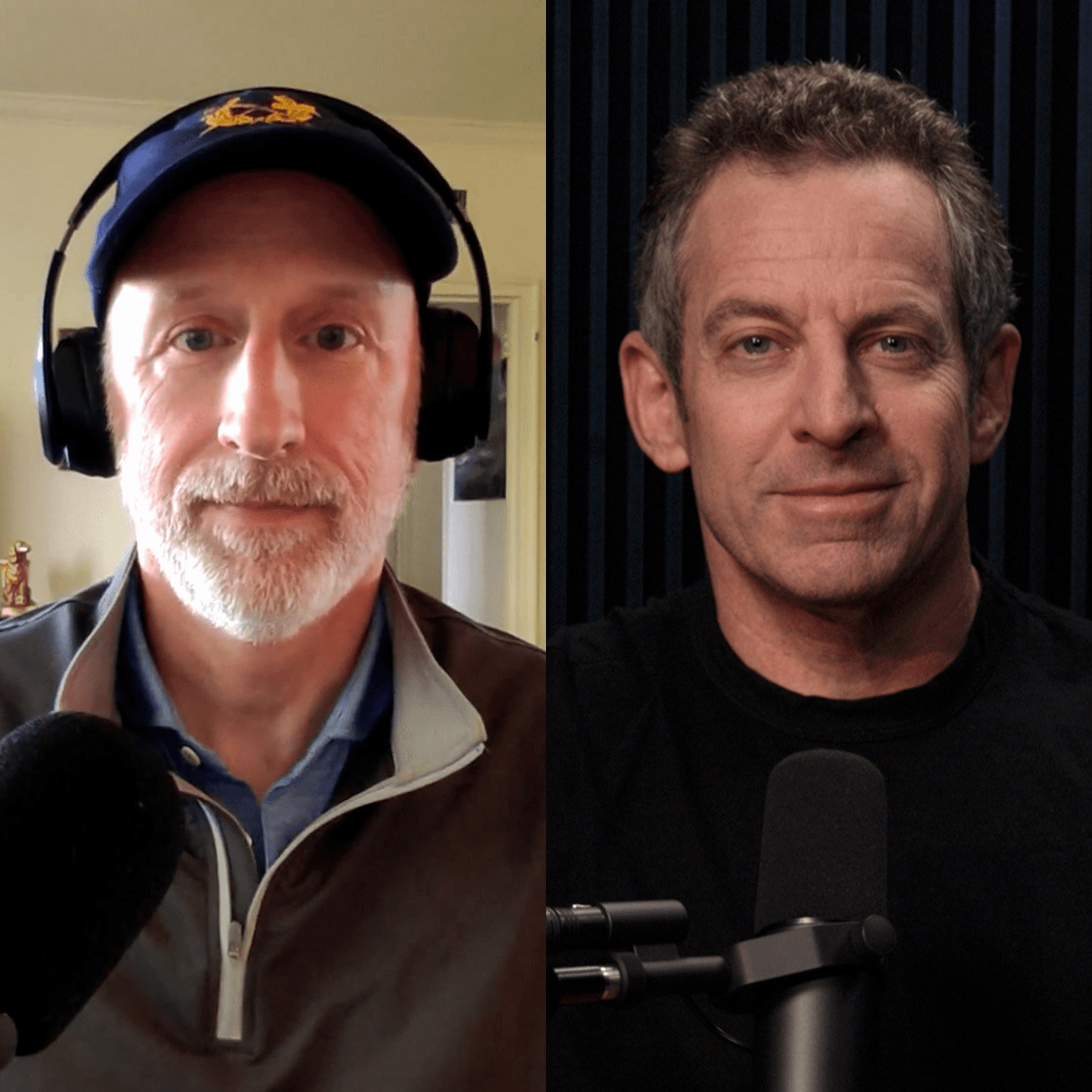
Podcast Overview Title: Making Sense with Sam Harris Host: Sam Harris Guest: David French Episode Focus: The ramifications of Trump's impact on American democracy and governance.
---
Key Themes and Discussions
- Assault on American Democracy
- David French's Perspective:
- Trump's presidency is characterized as an assault on the American republican form of government.
- Concern over increasing presidential power beyond constitutional limits.
- Historical Context
- Foundings of America:
- First Founding: Establishment of a republican form without centralized monarchal power (1776 - Constitution).
- Second Founding: Results of the Civil War and subsequent amendments aimed at preserving democratic governance.
- Political Landscape
- French's Background:
- Formerly a lifelong Republican and conservative; now distances from the Republican Party due to its transformation under Trump.
- Key Incidents Highlighting Erosion of Norms
- Distortion of Federal Justice:
- Increasingly politicized Department of Justice under Trump, targeting political opponents.
- Concerns over the two-tiered justice system favoring Trump's allies.
- The practice of political purges in government institutions.
- Impact of Pardon Power
- January 6th Rioters:
- Trump’s pardons viewed as a misuse of presidential power, favoring allies regardless of criminal actions.
- Debate on the original intent of the pardon power, rooted in mercy versus political favoritism.
- Public Perception and Media Fatigue
- Outrage Saturation:
- Constant stream of political crises leads to desensitization among the public.
- The effectiveness of Trump's strategy to flood the media with controversies.
- Congressional Ineffectiveness
- Amendment Proposal:
- Proposal for changes to Article II of the Constitution to restore congressional supremacy.
- Critique of the notion of co-equal branches, arguing Congress should hold more power than the presidency.
- Trump's Political Tactics
- Unique Political Talents:
- Trump's ability to maintain support within the MAGA coalition despite contradictions and ethical concerns.
---
Key Takeaways
- The podcast delves deep into the complexities of Trump’s presidency and its effects on the American political landscape, particularly regarding the integrity of democratic institutions.
- The discussion emphasizes the precarious state of the rule of law and the challenges posed by a politicized justice system.
- Through personal anecdotes and historical references, the conversation sheds light on the broader implications of Trump's actions for the future of democracy in the United States.
---
Conclusion The episode serves as a critical examination of the current political climate in America, with insights from David French on the systemic issues arising from Trump’s administration. The implications for democracy, governance, and the rule of law are profound and warrant ongoing discussion and analysis.
Written by AI. May contain mistakes. Listen to the episode to check what was said.
Transcript
Automatic transcript. May contain errors.0:16Welcome to the Making Sense Podcast.
0:30what we're doing here, please consider becoming one.
0:36I am here with David French. David, thanks for joining me again. Thanks so much for having me back. I appreciate it. Yes, great to see you. I'm a big fan of your writing. Remind people where they can read you online. New York Times. I have two. I have a newsletter and a column every week at the Times and then also podcasts pretty regularly. So just go to the New York Times and there I'll be. Do you publish anywhere else or Are you exclusive to The Times now? All my written work is at The Times. I'm also on a, I have a podcast called Advisory Opinions that I do with Sarah Isker. And that is covering the law and the constitution, basically exclusively with a little bit of free, like dating advice for lawyers sprinkled in there as well.
1:17Well, we're not going to cover the dating advice, but we will talk about the law a little bit. But let's start with your big picture experience of the last seven some odd months. How has the second Trump term struck you? I would classify it as an assault on our Republican form of government is one way to put it. If you're thinking about the American system and the American form of government, one of the things that's really important is you sort of break down the two foundings of America. the first founding, running from 1776 in the Declaration through the Constitution and the Bill of Rights, and then the second founding is the Civil War and the Civil War Amendments.
2:02The fundamental aim of the first founding was establishing this Republican form of government. No monarchs, no centralized power under one person. This is really fundamentally the entire object of that first founding is establishing this Republican form of government. And what we've seen is in the last seven months is what we've seen is an escalating attack on that Republican form of government. This is something that's been happening for a while in the sense that the presidency has continued to just accumulate more and more power over time. But it has now gotten to a point where that process is accelerating out of control.
2:39And we're now seeing sort of a, not just presidents accruing power sort of as part of a incremental process, but now grabbing power. President Trump is grabbing power with both arms in a way that is supported by particular MAGA legal theories and directly contradictory to not just the letter of the Constitution, but the entire spirit of the constitutional project. So other than that, things are going great. Yeah. Yeah. Well, before we get into more of what concerns you about Trump and Trumpism and this assault upon our form of government. Remind people about your political biases, such as they are, because one of the reasons why I love talking to someone like yourself is that any allegation of partisanship just simply doesn't run through.
3:29So how do you describe yourself politically? Well, I had been a lifelong Republican, so I was born in 69, came of age politically during the Reagan presidency, would have long considered myself a Reagan conservative. So I was a delegate to the Republican National Convention in 2012, supporting Mitt Romney, for example. I was a member of the conservative legal movement. I was the former president of FIRE, the Foundation for Individual Rights and Expression. I worked for conservative public interest legal organizations. FIRE is not conservative. It's nonpartisan. But after I was at FIRE, I worked for conservative public interest legal organizations.
4:10I'm a former army JAG officer served in Iraq during the surge. And right until the rise of Trump, I would have called proudly called myself a Republican, definitely called myself conservative, still call myself conservative, but no longer call myself Republican. Right, right. So what is the worst thing so far that has happened? It doesn't have to be one thing, just what comes to mind when I ask you where the bright lines are. One of the things that's most mystifying to me is to find myself in conversation with a smart person or an ostensibly smart person who simply doesn't see anything that has happened that shatters any kind of norm that should have been inviolate.
4:58There's this kind of slow creep where more and more it becomes permissible. There's just too much to pay attention to. We just can't follow the plot anymore. In Bannon's terms, the zone has been flooded fully with shit. And that turns out to be so effective that you talk to people who really have nothing on their list of things that seem so far out of the ordinary as to be disqualifying for this president or the political movement behind him. What's clearly crossed the line for you in the second time? So there's a few things, but the one that really stands out to me, and it's not going to be one incident, but it's the cumulative effect of a number of incidents, and that is the distortion of our system of federal justice.
5:44So the distortion of the Department of Justice into an instrument that is being stocked increasingly with Trumpist partisans, the explicit targeting, public explicit targeting of political enemies for potential criminal investigations, or in some cases, maybe actual investigations. We can talk about the Bolton search, for example. I'm withholding judgment on the underlying merits. I've not seen the search warrant, for example. I don't know some of the underlying facts, but I do know that the run up to the search warrant and the conduct of the administration after the search warrant absolutely transgresses prior DOJ practices.
6:20The firing of prosecutors of the Jack Smith prosecution team, the pardoning of the January 6th rioters, all of these things together very clearly indicate that there is a two tiered system of justice, that Trump's allies receive mercy. Trump's allies will even receive pardons. And Trump's enemies, at the very least, are going to be subjected to the most heightened and exacting scrutiny. And at the worst, even innocent people will feel the brunt of the law under this administration. And this is the kind of system of justice that is far more reminiscent of monarchies or autocracies, where you have the monarch, the single figure, where their will, their desire is what justice is.
7:08And so I would say the attack on the Department of Justice followed very closely behind something that is not as much in the headlines, but is the systematic purge we're seeing in the Department of Defense as well. Both of those are very much related. They have similar impulses. They have similar outcomes, but the DOJ process, the Department of Justice process, is sort of further down the road. But yeah, this selection for loyalty above all, right, just purging the various branches of government of anyone who has a history of having criticized him or given that history hasn't made sufficiently obsequious amends.
7:51I mean, because obviously there are people in his orbit who did criticize him like his vice president. But I think if you bent the knee enough and low enough in supplication, he's a fan of that as well. But this using loyalty as the test, it produces many outcomes which are undesirable. But one is that it selects for people who are not ethical almost by definition. I mean, selecting for people who are willing to pass some humiliating loyalty tests where they have to pretend to believe things that they obviously can't believe because they're preposterous and are willing to say those things in public.
8:27right and willing to just the the kinds of proclamations you hear from pam bondy or cash patel i mean some of the things they said in you know in the aftermath of the raid on bolton which we'll talk about again i don't know the details of the case but the way bondy and patel spoke publicly on social media around that just sounded like the um it's the language you you expect from a tyranny. I mean, this is just not the way our politics used to look. Well, you know, it was sometimes frustrating prior to Trump that there is this DOJ practice that we're not going to confirm the existence of investigations.
9:06This was the general matter. And there's a very good reason for that. And the reason is that when people know that someone is subject to a criminal investigation, they often skip straight to guilt that the existence of a criminal investigation is somehow proof of criminal wrongdoing. And if somebody is investigated and not charged, a fair society, a fair country doesn't want that cloud hanging over them. And so even this notion that Kash Patel is going to go on Twitter while the search is ongoing or even while it just ended and spike the football over it, no one is above the law. When you talk about J.D.
9:45Vance going on television and confirming investigations of Ambassador Bolton, When you see the president of the United States calling for vengeance against his enemies and you see administration officials advertising that they want to do mortgage fraud investigations of some of their political opponents. When you see all of that, it reminds you of why some of these rules exist, that some of these rules and norms and practices exist, because specifically, we do not want innocent people to face clouds of suspicion. And once the cloud lands firmly through, say, an indictment, then that person has an opportunity to defend themselves.
10:23Very limited opportunity to truly defend themselves if they're just subject to an investigation. And that's just like one piece of all of this where where barrier after barrier after barrier has been just blown through in such a way that it's very satisfying to his core constituency because they wanted this. This is exactly what they wanted. But for everyone else, for his opponents, it creates a sense there's a target on your back. And for the rest of America, it casts aspersions on people who may be entirely innocent of any wrongdoing, but the mighty, the bully pulpit has been turned against them and their reputation could be stained forever, for just forever without any kind of judicial proceeding.
11:06And even if their reputation isn't stained, because even if anyone who looks at the case knows that it was spurious and vindictive and shouldn't have been launched in the first place, they can be bankrupted by the obligation to defend themselves. Yeah, the process is the punishment. Yeah, however spurious it is. I'm thinking of someone like Chris Krebs, who was the election security officer who simply wouldn't agree that the 2020 election had been stolen. And now he's been investigated for what indiscretion? I've forgotten. But the real indiscretion is that he simply wouldn't sing the president's tune at the time.
11:43Well, so there's two sides to this monstrous object. There's the favor to friends and the vindictive vengeance against enemies or perceived enemies. Let's take the friend piece of it. You mentioned pardoning the January 6th rioters. Why was that as sinister as you think and not just a difference of opinion about, you know, that too much had been made of a protest that just got out of hand, right? This is just not, no one was trying to do anything of substance. they just got a little agitated. And then, you know, we've seen video on Tucker Carlson's impeccable program of cops letting other people in the, you know, at least one side of the building.
12:26So it wasn't all flagpoles stuck in the faces of cops. Sometimes the cops just let people in. So this is a morally ambiguous situation. Why isn't this just, you know, clemency and a sign of just how capacious the goodwill of the current president is. You've convinced me, Sam. That's what it is. I'm sorry. Let's go back a bit and talk about when the pardon power was put in the original 1787 constitution. This was something that was controversial at the time. And so you'll even go back and you'll read some of the ratification debates in Virginia, most notably, where George Mason stands up and strongly objects to the powers of the presidency, including the pardon power.
13:11And the concern there was that the president would use the pardon power to assist his friends, to grant friends and suspicious characters would be a phrase that would be used, a kind of impunity that the president would use the pardon power for his own self-interest and that how capacious the pardon power was, it's unreviewable, it's totally at the president's own discretion, it's not limited by any real terms in the constitution. that this would become an engine of political favoritism. This is something that has been worried about for more than 200 years. And so the answer to this was that the pardon power, in many ways, it was supposed to be, and a lot of criminal justice reformers will defend the pardon power and say, well, wait, wait, wait, hold on.
13:55The pardon power allows for sort of last-ditch interventions of mercy when the judicial system has created a miscarriage of justice and the judicial system. We have exhausted the judicial system, but the miscarriage of justice remains. And that's the use of the pardon power. The abuse of the pardon powers for favoritism, for friends. And so what you see here unfolding is exactly, exactly the scenario that many of the founders, particularly the anti-federalist faction, were most worried about, that this awesome pardon power would be used for friends to benefit friends and allies, regardless of the merits of their cases.
14:36And so, you know, when you talk about the January 6th pardons, he did not go through and say, okay, John Smith here and Jane Smith, the evidence shows that a police officer in this state of confusion and sort of the fog of all of the conflict, let them in. And then they were prosecuted when someone just let them in. And then here's somebody else who we have them on video beating a police officer with a flagpole or beating them with their fists. That person is a violent criminal. There's no sort of confusion or getting out of hand argument for them. They're assaulting a cop. He didn't do that. He didn't do that kind of inquiry when instead he said, everybody, everybody gets pardon or clemency there.
15:17And so even the most violent, even the most depraved received unmerited favor from Donald Trump. This is exactly what the founders, many of the founders were worried about. And when you go back and you look at those early debates, what was the answer from the defenders of the constitution? Madison arose and said, oh, we can deal with that through impeachment. Impeachment is the remedy. We've seen how powerful the impeachment mechanism has been in Trump's case. Right. But what this also shows us is the very thing that Donald Trump did, no lesser a founder than James Madison would say that's impeachment worthy.
16:00That's beyond the pale. And so it's not just sort of the obvious injustice of obviously guilty people who have engaged in violent attacks on law enforcement have been granted a reprieve by this president solely because they're his political allies and they committed violence for him. But what we're seeing is it's not just that in isolation. This is also systemic. It's exposing a systemic problem with the power, the way this president is exercising his power. How is it that he can, on the one hand, spin himself as the law and order president, and on the other hand, pardon people who we've watched attack police officers on video, and there's no apparent cognitive dissonance suffered by his supporters.
16:50I mean, does anyone in Trumpistan break with him over that contradiction, the fact that he didn't distinguish among the rioters? No, because your key word there was in Trumpistan. You know, if you are in Trumpistan, you believe the election was stolen. If you're in Trumpistan, you believe that the entire January 6th riot and attack, if anyone is really to blame, it's Nancy Pelosi for not having sufficient security at the Capitol. In true Trumpistan, they believe that without foundation, that many of these January 6th protesters were imprisoned and prosecuted without real due process. So in Trumpistan, you have people who believe that the January 6th protests were exaggerated in their violence, no worse than, say, the protesters who would occupy parts of the Capitol building, say, to protest the Kavanaugh nomination, that the real violence that happened during that era was far-left violence in the Black Lives Matter protests.
17:53Right. And so they just have a completely different view of what occurred on January 6th, that the violence was exaggerated, that the protests were legitimate, that the election was actually stolen. And so they're going to look at a lot of those January Sixers as sort of heirs to 1776, that these were patriots intervening on behalf of a president who was wrongly denied the presidency. So they just they're living in a different universe from many, many, many millions of other Americans. Is there more to say about the Bolton case? I remember before the FBI raid of his house, and this is more or less right after Trump was inaugurated, he withdrew the security detail from Bolton, who, by all accounts, had credible threats against him from Iran.
18:42So the vindictiveness was easily and early established. And it seems like whatever the merits of this case, again, neither of us know if Bolton's holding on to any documents he shouldn't be holding on to. But it just seems like the president has telegraphed his motives in focusing the Justice Department on people like Bolton from the outset. Well, this is why you don't do that. This is why you don't name political enemies. Kash Patel, for example, had an enemies list in his book. When you name your political enemies, what that means, and you name them and identify them and you take vengeance against them.
19:21So, for example, by lifting a security detail, what that does is it casts a shadow on all of the actions going forward. So, for example, neither you nor I, I don't have seen the search warrant or have seen the filings in court to ask for the search warrant. So we don't know the underlying evidence or lack thereof. All we know are the surrounding circumstances. And this is why you don't identify targets. This is why you don't engage in vengeful actions, because who right now can have any confidence at all that this investigation is being conducted professionally? The only thing that is keeping me from saying clearly this this is a politically targeted raid is the fact that federal judges did sign off on these warrants.
20:07So there there was a check there. Now, it's easy to get a search warrant. It's not difficult to get a search warrant. But there is at least some degree of judicial review that tells me that a federal judge saw this and thought there is at least some reason for probable cause. So I cannot judge the underlying merits of that search warrant. But what I can do is I can say that when you engage in public vilification of your political enemies, when you do things like Kash Patel spiking the football, what that does is it communicates to everyone that this is a political attack. back, not that this is the dispassionate, even-handed operation of justice.
20:43And then let's say, Sam, that there was actual evidence of a crime. Let's just, for the sake of argument, let's assume there was evidence of a crime. You've just really undermined your ability to get a conviction because if I'm a halfway competent criminal defense lawyer, just mouth-breathingly competent as a criminal defense lawyer, I can walk into a jury and say, this is all political. and I can pull up quote after quote, action after action. Note how they deviated from standard Department of Justice practice. And then I'll turn to the jury and they're going to, I would say, they're going to give you a bunch of complicated mumbo jumbo about how Ambassador Bolton violated these highly technical and highly intricate security clearance requirements.
21:27But I'm going to tell you that's a smokescreen. What's really going on is this, and I can point to comment after comment. The president calling him a lowlife. Yeah. So you're actually, in many ways, you're undermining the system of justice on the front end and the back end because you're undermining confidence that these investigations are uneven handed and you're undermining your prosecution even if you uncover criminal wrongdoing. What about the accusations that President Obama is guilty of treason? Treason, if I'm not mistaken, treason, I don't know if it always carries a death sentence, but it can carry a death sentence.
22:02It can. Yeah. Yeah. Yeah. I mean, what are we what are we to make of I mean, there's two things. One, the accusation was made to this. So much else has happened in the meantime that it was promptly memory hold. And it's probably not even in anyone anyone's top 10 of the most interesting things that have happened in the last six months. But to have a sitting president accuse the prior one of possibly a capital offense and to say that he's now being investigated, that's a 20 megaton piece of news that would completely subsume the presidency of any other president. Oh, absolutely it would. And it really does go back to that Bannon flood the zone with shit kind of formulation where if you're just just shoveling outrage into the public.
22:50You do induce fatigue. You do sort of induce this situation where, you know, I'm sure you've seen that that Jeff online of Homer Simpson with his eyes wide, just retreating back into the shrubbery. This is the natural human reaction to just nonstop outrage, nonstop crisis, nonstop sense of alarm is a lot of people just back away from that. And so you're exactly right. I mean, we could do this the whole conversation. We could point to this or that thing that happened four decades ago or 10 days ago or two months ago. and it will feel like five years ago because so many other things have happened.
23:27And it just creates a sense of what you might think of as just almost irresistible momentum that this is just the way things are now. And you either accept it and go along with the tide or resist it and get crushed by it. And I think this is a very intentional strategy. The difference between Trump 1.0 and Trump 2.0 is vast. there's actually a lot of people around him of a specific theory of power and are using Trump's impulsiveness and vindictiveness to pursue that theory of power. Well, let's talk about that theory of power. You've written about the ways in which we're discovering that the Constitution has been an insufficient bulwark against the impulses of a corrupt authoritarian president.
24:15And I guess Let's touch a point specifically which you raised in a recent New York Times piece about why Congress has been so ineffectual. I'm going to read you a quote here. You wrote in criticism of this notion of co-equal branches of government, which is a phrase that many of us have in our heads. And you wrote, our nation is not supposed to have co-equal branches. Congress is supposed to reign supreme. Yes, the other branches have the power to check Congress. Presidents can veto legislation. Courts exercise judicial review. But Congress alone possesses the power of the purse. Congress alone is supposed to possess the power to declare war.
24:54Congress can impeach and remove members of the executive and judicial branches of government, including the president and justices of the Supreme Court. This does not seem to describe the Congress that we have. So what is, in this piece, you also recommend that we amend Article 2 of the Constitution. Give me a little color on the problem here. Yeah, so if you go back and you read the Federalist Papers, you will see that the construct is that ambition is made to check ambition. In other words, there's no one collection of people or no one person who can be trusted. If you'd like to continue listening to this conversation, you'll need to subscribe at samharris.org.
25:34Once you do, you'll get access to all full-length episodes of the Making Sense podcast. The Making Sense Podcast is ad-free and relies entirely on listener support. And you can subscribe now at samharris.org.
From the publisher
Sam Harris speaks with David French about Trump's assault on American democracy. They discuss Trump's persecution of political opponents, abuse of the pardon power, Congress's ineffectiveness, David's proposed change to Article II of the Constitution, whether democracy in the U.S. has passed the point of no return, the future of election integrity, Trump's threats against Elon Musk, the weaponization of ICE, the dangers of deploying the National Guard in American cities, white evangelical support for Trump, Republican infighting and why only Trump can hold the MAGA coalition together, Trump's unique political talents, the prospect of him remaining in power beyond two terms, and other topics.
If the Making Sense podcast logo in your player is BLACK, you can SUBSCRIBE to gain access to all full-length episodes at samharris.org/subscribe.