In short
Podcast Notes: Making Sense with Sam Harris - Episode #452: Is Wokeness Finally Dead?
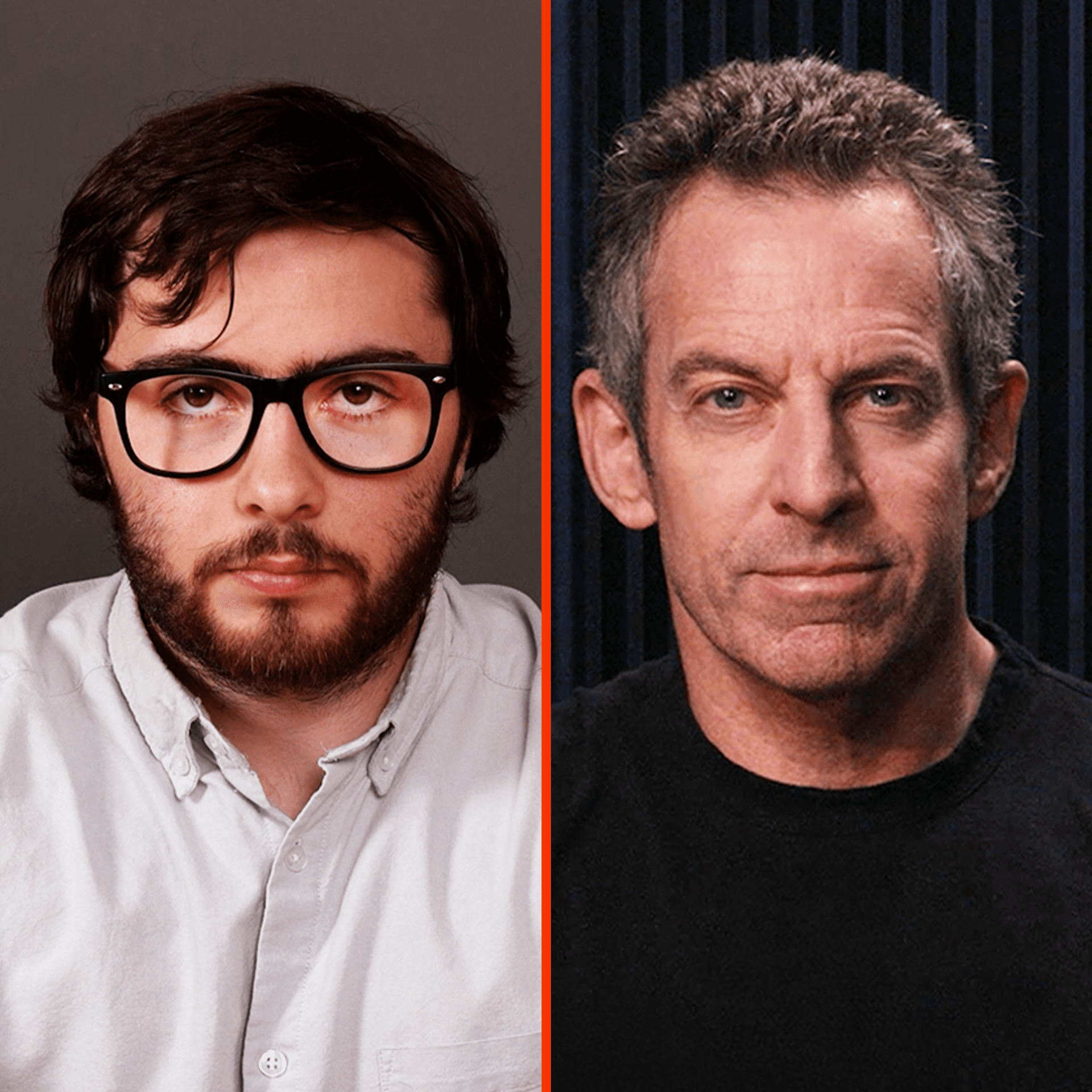
Episode Overview In this episode, Sam Harris speaks with John McWhorter about various topics related to language, ideology, and moral certainty. They delve into the rise and persistence of "wokeness," the legacy of George Floyd's death, and the role of social media in amplifying moral panic. They also discuss identity perceptions related to the Israel-Palestine conflict, casual speech, conspiracy thinking, and McWhorter's evolving views.
Key Participants
- Sam Harris: Neuroscientist, philosopher, and host of the podcast.
- John McWhorter: Linguist, author, and professor at Columbia University.
Main Topics Discussed
The State of Wokeness
- Current Perspective: McWhorter suggests that the peak of "wokeness" may have passed, describing it as now looking "blissfully quaint."
- Long-Term Impact: He expresses concern that academia and the arts are heavily influenced by woke ideologies, which may be difficult to uproot.
- DEI Initiatives: Despite official rejections of Diversity, Equity, and Inclusion (DEI), McWhorter believes that these ideas will continue in a more covert manner.
Academic Environment
- Ideological Influence: McWhorter notes that certain ideologies dominate hiring practices and academic discussions, particularly regarding race and identity.
- Personal Experience: He reflects on his own limited involvement in hiring at Columbia, but acknowledges the pervasive influence of specific ideologies in academia.
Cultural Commentary
- Misconceptions Around Race and Crime: Harris points out the significant disparity between public perception and reality regarding police violence against unarmed black men, emphasizing that misinformation can lead to serious societal consequences.
- Social Media's Role: The hosts discuss how social media can distort perceptions and amplify moral panic, impacting public discourse and political outcomes.
Political Landscape
- Changing Political Dynamics: Both Harris and McWhorter reflect on the failed presidential campaign of Kamala Harris and the implications of political extremism on the left.
- Cultural Tipping Points: McWhorter expresses hope that there may have been a cultural tipping point in recent years that could lead to a more rational discourse.
Educational Concerns
- Personal Experiences: Harris shares concerns about where to direct his daughter's education amidst the prevailing ideologies in academia.
- Resistance to Reason: McWhorter argues that battling power differentials has become the central goal in many academic and artistic endeavors, often at the expense of rational discourse.
Evolving Conversations
- Discussions with Glenn Loury: McWhorter touches on his discussions with Glenn Loury, highlighting their differences regarding perspectives on race and international issues.
- Academic Integrity: They emphasize the need for ongoing dialogue and the importance of challenging dominant narratives.
Key Takeaways
- Wokeness and Its Effects: The influence of woke ideologies in academia and culture appears to be deeply entrenched, with little indication of a quick resolution.
- Power of Misinformation: Social media's impact on public perception, particularly regarding racial issues, illustrates the challenges of fostering informed discussions.
- Need for Rational Discourse: Both Harris and McWhorter advocate for a return to reason and critical thinking in public debates about race and identity.
- Personal Reflections: The episode reveals the personal struggles of both speakers as they navigate the complexities of their professional and personal lives in an increasingly polarized climate.
Conclusion In this thought-provoking episode, Sam Harris and John McWhorter explore important themes around wokeness, race, and the socio-political landscape, encouraging listeners to engage in critical discourse and remain vigilant against ideologies that inhibit rational thought.
Written by AI. May contain mistakes. Listen to the episode to check what was said.
Chapters
Tap a time to open that second in VOThe Culture War and Wokeness
0:45 to 1:07
Discussion on the current state of wokeness and its cultural implications.
“I think you've been on the podcast twice.”
Impact of Wokeness on Academia and Arts
1:07 to 2:59
Exploration of how wokeness affects hiring practices and thought in academia.
“I think that there was a peak woke nationwide, which now looks blissfully quaint.”
Defensive Ideologies in Education
2:59 to 4:53
Examination of the persistence of ideologies in higher education and their implications.
“Isn't DEI getting reamed out of all the institutions right now by Trumpist minions?”
Cultural Shifts and Political Landscape
4:53 to 7:15
Analysis of recent cultural and political shifts and their impact on education.
“I think undergraduates are often more skeptical than we think, but it's everything else but them, which is what the school is.”
The Role of Academics and Media
7:15 to 11:45
Discussion on the responsibilities of academics and journalists in shaping societal narratives.
“else his accomplishments are, from what I know, he speaks Russian fluently, et cetera.”
Reflection on Race Discussions
11:45 to 13:54
Reflections on the necessity and burden of discussing race in contemporary discourse.
“Or if you had more allies, you could be doing?”
Reflections on Writing and Fame
14:01 to 15:10
Discover the author's motivations behind their book 'Woke Racism' and the unexpected success it achieved.
“I mean, I know exactly what you're talking about.”
Analyzing America's Reaction to George Floyd's Death
15:10 to 17:34
Explore what went wrong in America's societal response following George Floyd's death and the broader implications.
“And to the extent, and I'm not bragging, this will never ever happened to me again, but it went over a hundred, which is much more than I've ever sold of a book.”
Social Media's Role in Shaping Perceptions
17:34 to 20:04
Understand how social media influences public perception of police violence and racial issues.
“So I think if you ask most people left of center, how many innocent black men, how many unarmed black men were gunned down each year by cops in America.”
Diverging Views on Israel and Racial Issues
20:04 to 20:53
Examine the differences in perspectives on Israel and racial issues between the host and their friend Glenn Lowry.
“pro-Palestinian, but he condemns Israel more than I found myself able to.”
Transcript
Automatic transcript. May contain errors.0:16Welcome to the Making Sense Podcast.
0:30what we're doing here, please consider becoming one.
0:36I am here with John McWhorter. John, thanks for joining me again. Of course. Good to be here. So it's been, I think it's been four years. I checked my own website and that's what it said to me. We spoke about your book, Woke Racism. Is that when that came out? That would have been in 21. That's right. Or maybe early 22. Yeah. And we first did it in 2020, didn't we? Yes. I think you've been on the podcast twice. Yeah. During the Troubles was our first one. Yeah. Well, how are the Troubles? Have the Troubles continued? Where are we in your side of the culture war? Well, to tell you the truth, I think that there was a peak woke nationwide, which now looks blissfully quaint.
1:14You know, some of the reasons for the defenestration, some of the double talk, what I wrote woke racism to be part of the resistance against, that's another era. But from what I've seen, a lot of academia and a lot of the arts are possibly ruined for the duration because there's no way of uprooting it from those places, especially since it emerged so much from there. And to tell you the truth, that way of thinking... We got to double, hold on, we got to double click on that or at least make sure you get back to it. I want to know how the damage has been truly unrecoverable or unrecoverable quickly in your view.
1:51Oh, I would just say that especially if you are an academic or a certain kind of journalist, and maybe an artist, you see yourself as having a unique kind of insight for one thing. You think that you have discovered a truth rather than you have an opinion, and you don't recognize yourself in that description. And you have authority to pass on a way of thinking, not so much to undergrads, that gets exaggerated, but to graduate students who then become professors themselves, as long as they aren't white men. And you have what you decide a conference is going to be about. You have what you decide is going to be your cocktail party conversation.
2:27And it gets passed along. And it's hard for me to see how that ideology won't continue to affect hirings. And so already there are people of that ideology with gray hair. And I can't imagine what the pathway would be that would change it. Now, I also may lack imagination, but being frankly around that culture, the sorts of things that I hear regularly said, the sorts of assumptions, the assumptions about who gets hired and what kind of student is admitted to a program. That's a tough one to see. I don't see how the toothpaste gets back into the tube. So in society in general... Wait a minute. Isn't DEI getting reamed out of all the institutions right now by Trumpist minions?
3:09Officially, but from what I see, it's just going to go underground. The idea is not going to be that we can't do these things. The idea is going to be, how can we do these sorts of things and keep up the regime without calling it DEI, without being so overt about it? And if it really could be that, you know, the Trump world, which I frankly have pitiless disregard for, but if it could be that there's a sociohistorical accident where their actions actually changed matters, that would make sense to me. But I lack the imagination to see how won't just make people change labels. Because after all, DEI largely is a euphemism for affirmative action and racial preferences.
3:48That was a new way of doing those sorts of things. So it'll just be the same stuff, old wine and new bottles. Maybe I am pessimistic because it's a slate gray January day in Manhattan, but that's the way I've been feeling lately. Well, what's your current vantage point on this? Are you still teaching at Columbia? Oh yeah, definitely. And are you part of the hiring machinery at all? Do you go to meetings where you make those decisions? Actually, no. Like if for some reason somebody was going to make a movie about me, one of the fictions would be that I would be serving on tenure committees, et cetera.
4:19I actually have a very eccentric position at Columbia where the linguistics program is tiny. It's not a department. It's only two full-time people. And the two of us are ensconced within Slavic and largely left alone. And so I am in very few meetings. I serve on very few committees. I lead a double life as Columbia professor. and as you know now, writing for the New York Times. So I don't see it, but I certainly hear about it, and I certainly read about it. And I do have certain things that I'm asked to do where you can see what the climate is. Now, of course, there are contrarians. It's not that every professor on campus is of that kind, but that kind of professor does have quite an influence over departments.
4:59I think undergraduates are often more skeptical than we think, but it's everything else but them, which is what the school is. There was recently an article that, was it in Compact Magazine? I read it. I forgot the other name. James Haskins, I think his name. Haskins was his last name. It was detailing the pattern of hiring going back, I don't know how many years, maybe 20 years or so, in academia and in media and in Hollywood. And I don't know, I'm sure there's been an effort to debunk some of those numbers, but the pattern was detailed there, at least in the article, was pretty stark with respect to just how relentlessly white men in particular had been filtered against in all of these high status areas.
5:45Yeah, I mean, I don't want to step on any toes, but I want to also say something real. For example, another way that I moonlight is that I teach music humanities at Columbia, and that's the course where what it really is is the old school music appreciation course, the idea being that unless you have a very weird ear or a very weird experience, Beethoven at first, other than da-da-da-da, it's boring. You're sitting there, the symphony goes on and on, it's not as easy. So our job... It's less boring than Clockwork Orange, but it... And our job is to teach kids how to at least halfway appreciate a music that isn't always easy to enjoy.
6:27And let's face it, for reasons we all understand, 99 % of it was written by white men until about 10 minutes ago. So I've been doing that course, and I therefore follow the music teaching and musicology world to an extent. And there is a guy who I am sure is a nice person in real life. His name is Ewell, Philip Ewell. And he is a black musicologist who has taken the music study, World by Storm, ever since the Troubles in 2020, with this idea that music theory is inherently racist. And I'm going to avoid getting into the weeds of why that idea doesn't make sense, but it doesn't make any more sense than it sounds.
7:09And I think anybody who is exposed to the article and then the book that he wrote on its basis fully understands that whatever else his accomplishments are, from what I know, he speaks Russian fluently, et cetera. But this idea that music theory is racist, it's just, it's absurd. It's frankly absurd. Well, also people have said that math is racist, right? Math too, and learning classical languages. But he's also saying that Beethoven was just, you know, just okay. He was just, he was maybe above average, but that he's lionized too much, you know, because he's white. This man is being treated like Ibram Kendi was five years ago.
7:42He speaks in one department after another with a certain kind of person sitting there pretending that it makes sense. I hate to say that about somebody, but I had to choose one person. And that sort of thing, you know, where there's this impulse to pretend that something like that is true, which then is also affecting certain curricular decisions. That's what I have a hard time seeing going away, but I might lack optimism. How do you feel? Well, I really don't have a point of view or a practical, you know, insight into any of this. I just have a lot of hope that we reached a tipping point some, you know, a couple of years ago.
8:15And I remember probably the abject failure of Kamala Harris's attempt to become president with its apotheosis being her inability to disavow her former support for taxpayer-funded gender reassignment surgery for incarcerated illegal immigrants. That was the moment where I felt that the political liability of these far-left shibboleths and the inability to just reason from some common-sense principles, I just felt that it became so excruciating and so unpragmatic politically that I just have to hope that that was the high watermark and things are quickly recalibrating in millions of brains and have been ever since.
8:59but I really don't have any direct, I certainly don't have any direct insight within the ivory tower about this. I have a daughter who will be going to college, you know, hopefully in a year, but I'm in the strange situation of not even knowing where I would hope she would get in, given the noises I've just heard you make. So what's your view of that moment for, I don't know how old your kids are, but where would you hope they go to get a proper education in the liberal arts or anything at this moment? Well, it's coming. One of mine is 13. I think certainly high woke has been shown that it can't get a significant amount of votes, certainly that.
9:40But in terms of the culture, what I see, honestly, Sam, is that in 2020, and it had been a few years before that, but peaks in 2020 and 2021, there is this ideology that is based on resisting reason in place of this eternal battle against essentially whiteness. And the idea that it's okay to be punitive in order to make sure that everybody stands in line. No longer is that happening on the basis of, say, black men and the police. But frankly, and what I did see up close, unfortunately, because of what happened at Columbia and then spread, is that the way a certain kind of person is given to talking about what Hamas did, and also the way a certain kind of person is given to talking about Now, trans issues, when it comes especially to issues of surgery and sports, there's that same fury, that same tribal punitive idea, the same absolute resistance to any facts that someone tries to bring up.
10:35And so to me, it's kind of like I'm a little under the weather. And so I'm grasping for the analogy that the thing with gophers, you keep on, you get rid of the gopher in one hole and then it comes up another hole. I don't know whether they actually do that. But I feel like that same woke ideology is just now being applied to different issues, and it will keep being applied to certain issues. It's just this flame that never quite goes out. Well, what can we do? I mean, is there something for us to do that we haven't tried at this point? to me, you and in our various orbits, I mean, there are some dozens of people I could name, I think, who, at least to my eye, have their heads screwed on straight in precisely the way I think we do and are, you know, outdoor cats sufficiently so as to resist the pressures of conformity within media when talking about this kind of stuff.
11:24And we're in a position to, you know, badger our podcast guests and write opinion pieces. And you're over there at the New York Times. So you really are within the castle in at least two respects, being at Columbia too. Is there anything you are not doing that in the dead of night you think maybe you should be doing? Or if you had more allies, you could be doing? I consider it my duty to just repeat over and over that what all of these dust-ups have in common is this rather peculiar idea that battling power differentials must be the central goal of any kind of academic or artistic or judicial endeavor.
12:09It's that rather mundane-seeming thing that can take you from the George Floyd protests to, you know, the kids all but supporting what Hamas did out of an idea that that was the right thing to do because Israel is, quote-unquote, white and imposed upon the region by whiteness. It's that again and again. And, you know, it has to be like Madison Avenue. You can't say something once and expect there to be any kind of effect. You have to just keep at it for years and years and years. I think my job is just to keep at that because the idea is to understand what the general pattern is, not to shake your fist at the particulars of each one.
12:42I just see the same thing happening over and over. And so there's that. And do I feel that I haven't done something? Maybe in that. You even saw, if we're going to talk about how the sausage is made to an extent. It took a while before I came on your show in 2020, because I always said, I want to read my books. I have other stuff to do. I don't feel like being on podcasts. And then I realized I'm becoming an antique. It wasn't you personally. It was just I'm becoming an antique not to speak as well as to write. There's a part of me that thinks that I should be the sort of person who, after woke racism, you know, I had to stop the podcasting after a certain point.
13:15I told my publisher I cannot do it again after about 100. Maybe I was supposed to do like 500 shows. Maybe I should have decided that for the next few years, or maybe the next 20, I'm just going to do that message as much as I can instead of side projects that I do and instead of at least pretending that I'm still a linguist, etc. etc. Sometimes I think that I'm not doing the job. But the problem, Sam, is that I crave variety, and I wrote woke racism in a fury. I continue to stand behind it, but I'm not the kind of person who could just keep doing woke racism again and again and again for 20 years.
13:51And maybe that's, I'm a little guilty about it, but not that guilty. Yeah. I mean, I find it depressing that you even have to talk about race, frankly. I mean, it just, it seems like a massive opportunity cost. Sometimes it feels that way to me. Yeah. Yeah. I mean, that is a bit of an impediment. I mean, I know exactly what you're talking about. There's something about having to cut through your own boredom with a topic when it seems necessary to touch it again, and you can't even find anything new to say about it. But, you know, it's, um, and life is short. And so, I mean, luckily I always think now with modern technology, anything that you did is out there.
14:25It's accessible, but let's face it after a while, it starts falling to the bottom of the pile. So yeah, yeah. I, you know, I was happy that, um, well, racism did its job. It's sold. And I don't sit down and write a book thinking, I want this to make me lots of money and sell. I did that with one book on my book on profanity, nine nasty words. I thought at the time, I want to have one hit. I'm going to keep writing books, but I'm weird. There's only one thing I have to say where over 100 ,000 people are going to read it, and it's going to be about cussing. That worked. I didn't know while I was writing that that 2020 was going to happen.
14:58But I wrote Woke Racism because I thought someone needs to say this who was one, black, two, middle-aged, and three, writes fast. That happened to be me. And I thought this needs to be out there to say something. And to the extent, and I'm not bragging, this will never ever happened to me again, but it went over a hundred, which is much more than I've ever sold of a book. That means that people read it. And I think that, I feel like that was part of doing the job and the book then just sits there and maybe gets lent and I did the audio version, but I know that technically I could have kept going and doing more.
15:29Yeah. Yeah. Well, at the risk of boring you, but edifying our audience, what do you think we got wrong in 2020 in the aftermath of George Floyd's death? I mean, as a country? If there were some massive error we could have sidestepped culturally, how would you describe that error? And what would a sane dialogue have looked and sounded like at that point? You mean America or people like you and me? No, no, America. I mean, like, you know, the Democratic Party, the, you know, left of center, intelligentsia, the elites, you know, the New York Times. You know, the thing that, you know, if I could wave a magic wand and change things.
16:06The hardest thing is the idea that black men live in danger of being iced by a white cop who in a moment of tension is affected by their inner racism to pull the trigger. And that is an item of faith among a great many people of all levels of education. And it's an absolute third rail. And I have found that again and again, in terms of where I could even publish what I just said in writing, where anybody would read it, et cetera. And that's not a knock on the times because they have let me politely say that now and then, but I write for them every week. But it was much harder before that. And still, it's just an orthodoxy that if George Floyd had been white, he would still be alive, despite the fact that a very similar thing had happened four years before to a very white guy named Tony Timpa, and we never heard anything about it.
16:55That one is so hard to cut through no matter how carefully you make the argument. And so George Floyd was a matter of people really thinking that, say, me, maybe I'm getting a little old for it at 60, but that I walk around in a danger that you don't because the cops are more likely to kill me. That's a myth. And, you know, the numbers don't support it. It really doesn't work in 2026. That certainly probably was true in 1950, but it's been a while. Yeah. We couldn't get past that in 2020 and 2021. And it created an awful lot of what I couldn't help seeing as kabuki, but I know a lot of people really did believe they were fighting against something real.
17:32That was the worst thing. Yeah. I mean, I think you can lay a lot of the blame on social media and the algorithm and the ability to just amplify, you know, five, 10 awful videos that get burned into people's minds indelibly and seem far more informative of reality than any statistics you can throw at people for context, right? So I think if you ask most people left of center, how many innocent black men, how many unarmed black men were gunned down each year by cops in America. You know, they'd be off by one or two orders of magnitude in their estimation. I mean, the few people I've tried this on, it's always worked.
18:15I mean, the truth is around 10 or so, 10, 15. I've heard some of them think it's a thousand. Yeah, people think it's a thousand. I've heard people estimate 10 ,000, you know, I mean, it's three orders of magnitude. it's not funny sorry and yeah so anyway this is a longer discussion that that i've had several times both with myself uh on my podcast at great length and with other guests um i'm sure you and i ran around this track last time four years ago you have a very long-running discussion with your your friend glenn lowry who's been on the podcast here several times is there any daylight between you guys on this or any kind of adjacent topic?
18:53How does your conversation with Glenn evolve here? Glenn and I felt the exact same way about 20 and 21, although Glenn gets madder at people who are caught up in things like that than I do. I think one of my major themes is that you learn the language you grow up hearing. And a lot of the people who were breaking windows, a lot of the people who were refusing to give in to sense about black men and the cops or so ready to believe that somebody like Alton Blake was an angel when in fact he turned out to be a thug and Kamala Harris is right at his bedside and things like that. And thug as in what he did.
19:30Was it Blake? Yes. And what he did was absolutely egregious and violent and yet everybody believed the original story. Glenn gets mad. Whereas I think I would think that way too if I were caught up in their situation, including even educated people who think that, you know, a thousand black men are gunned out because that feels good. You're thinking, if I believe that and refuse to squint and think about how unlikely that is, then I am a good person because I am sticking up for battling differentials of power and especially white power. So we have that. Of late, one thing that has opened up between him and me is that he is much more, I hate to call it pro-Palestinian, but he condemns Israel more than I found myself able to.
20:16And the one time that we had a discussion where at the end of it, you know, after we went off, we were saying, are we okay? Was because of that. And it was Ta-Nehisi Coates' book and us discussing it. And Glenn loved the book. And it used to be that he was the one that would be cussing about Ta-Nehisi Coates. I missed that episode. We're going to have to see that. He can't help it. It was a good one. But Glenn liked the book and frankly, I thought it was the devil's spawn. And so we have kind of stopped talking about that. And also, and this is something where I genuinely, I don't get it. And I would say that if I were right here.
20:48We laugh about it. Glenn finds trouble. If you'd like to continue listening to this conversation, you'll need to subscribe at samharris.org. Once you do, you'll get access to all full-length episodes of the Making Sense podcast. The Making Sense podcast is ad-free and relies entirely on listener support. And you can subscribe now at samharris.org.
From the publisher
Sam Harris speaks with John McWhorter about language, ideology, and moral certainty. They discuss the rise and persistence of "wokeness" and DEI, the legacy of George Floyd's death, the role of social media in amplifying moral panic, how identity shapes perceptions of Israel-Palestine, the linguistics of Donald Trump, the rise of casual speech, conspiracy thinking, positions McWhorter has reconsidered, and other topics.
If the Making Sense podcast logo in your player is BLACK, you can SUBSCRIBE to gain access to all full-length episodes at samharris.org/subscribe.