In short
Podcast Summary: Making Sense with Sam Harris - Episode #453
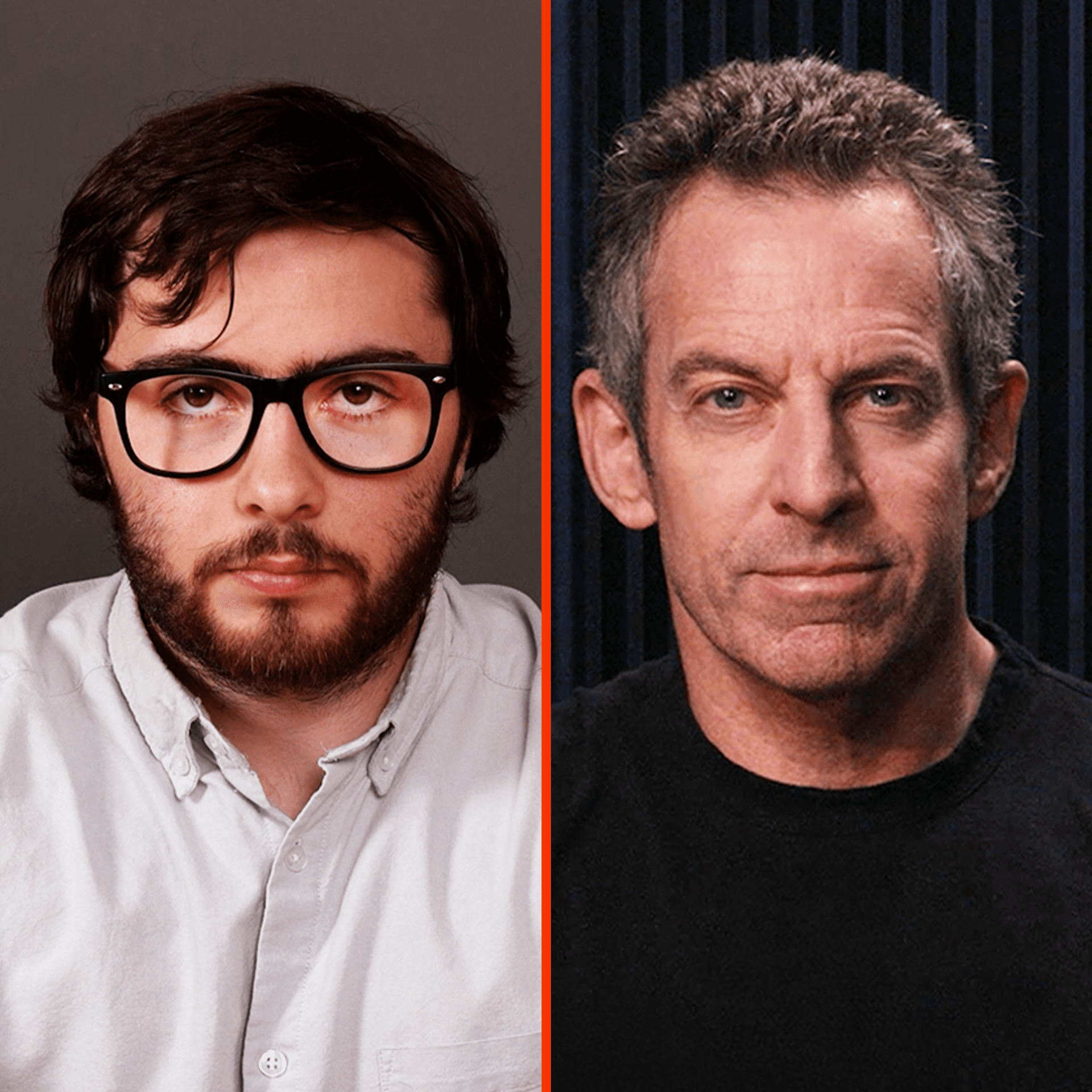
Episode Overview In this episode of the Making Sense podcast, Sam Harris speaks with Judea Pearl, a notable figure in the fields of causality and artificial intelligence. The discussion encompasses a variety of topics including the implications of artificial intelligence, the rise of antisemitism, the status of Israel, and cultural issues surrounding anti-Zionism.
Key Themes and Discussions
- Introduction and Background
- Guest Introduction: Judea Pearl, renowned for his work on causality and artificial intelligence.
- Personal Background: Pearl shares insights into his early life and family history, including their migration to Israel in 1924.
- Education Influence: Pearl's education from professors displaced by the Nazi regime significantly shaped his intellectual path.
- Causality and AI
- Current State of AI: Pearl expresses skepticism regarding the progress toward Artificial General Intelligence (AGI), suggesting that current language models (LLMs) are a step but not the ultimate solution.
- Limitations of LLMs: He argues that LLMs summarize existing knowledge rather than discovering new causal relationships directly from data.
- Mathematical Limitations: Pearl emphasizes that certain mathematical barriers cannot be crossed merely by increasing data or computational power.
- Concerns About Alignment and Intelligence Explosion
- AGI Risks: Pearl acknowledges the potential for AGI to become uncontrollable and expresses concern about an intelligence explosion where AI could outsmart human expectations.
- Cultural Narratives: The conversation pivots to the societal implications of AI, specifically regarding the pace of development driven by competitive pressures rather than safety.
- Antisemitism and Anti-Zionism
- Cultural Shifts: The dialogue explores the rising antisemitism and anti-Zionism in contemporary society, particularly following significant global events such as the October 7th attacks.
- Misunderstandings of Islamism: Pearl reflects on the mischaracterization of jihadism in the political left, noting how narratives around oppression complicate discussions on violence associated with certain ideologies.
- Personal Experience and Advocacy
- Daniel Pearl's Legacy: Judea Pearl discusses the aftermath of his son Daniel's murder by Al-Qaeda, which motivated him to engage in dialogue between cultures and religions.
- Daniel Pearl Foundation: The foundation aims to foster communication between Muslims and Jews, emphasizing the importance of understanding and cooperation.
Key Takeaways
- AI Development: The podcast raises critical questions about the trajectory of AI and the ethical concerns associated with its development and potential risks.
- Social and Cultural Dynamics: The discussion highlights the need for nuanced understanding in addressing antisemitism, anti-Zionism, and the political dynamics surrounding these issues.
- Legacy of Dialogue: Pearl's advocacy for dialogue showcases the importance of addressing deep-seated cultural conflicts through open communication and understanding.
Conclusion Sam Harris and Judea Pearl delve into complex and timely issues that intersect technology, morality, and cultural dynamics. Their conversation encourages listeners to critically reflect on the implications of AI, the rise of antisemitism, and the importance of dialogue in bridging cultural divides.
For full access to the episode and additional discussions, listeners are encouraged to subscribe at [samharris.org](http://samharris.org/subscribe).
Written by AI. May contain mistakes. Listen to the episode to check what was said.
Chapters
Tap a time to open that second in VOBackground of Judea Pearl
0:45 to 2:20
Judea Pearl shares his origins and family history.
“I actually didn't look to see when that was, but that's a few years ago, certainly.”
Education and Influences
2:20 to 4:25
Discussion on Judea's education and the influences that shaped his career.
“Well, my father was the secretary of the Neibrak municipality.”
Thoughts on AI and Causality
4:25 to 6:20
Judea discusses his views on AI and its relation to causal reasoning.
“It was a privilege at the time to go to Tel Aviv High School.”
Challenges of LLMs and AGI
6:20 to 9:40
Exploration of the limitations of large language models and the path towards AGI.
“So it's not just more data and more compute?”
Concerns About AI Alignment
9:40 to 12:00
Judea shares his concerns about AI alignment and existential risks.
“Do you take IJ Goods and others' early fears seriously that once we build AGI on the basis of whatever platform we're in the presence of something that can become recursively self-improving and get away from us?”
The Future of AI Development
12:00 to 14:10
Discussion on the future directions of AI and potential safeguards.
“But of course, That's not what they were saying.”
AI Utility Functions and Human Goals
14:10 to 14:40
Explore the concept of AI having utility functions aligned with human desires.
Exploration and Intelligent Systems
14:40 to 15:50
Discuss the necessity of exploration in intelligent systems for goal discovery.
“It's a nice frame, but I don't see any impediment for the new species to overcome and bypass those guidelines and play.”
Cultural Conditions Affecting Reasoning
15:50 to 17:08
Investigate how cultural conditions influence reasoning in morally complex topics.
“that's required for any intelligent system.”
Personal Reflection on Loss and Cultural Dialogue
17:08 to 18:49
Reflect on the speaker's personal loss and its impact on cultural dialogue efforts.
“so-called, became of, you know, salient to most people in America, certainly for the first time after 9-11.”
Show all 11 chapters
Challenges in Modernizing the Muslim World
18:49 to 21:06
Examine the obstacles faced in promoting modernization in the Muslim world.
“We started the foundation after his death with the same belief that it's a matter of communication, dialogue between the East and West, Jews and Muslims.”
Transcript
Automatic transcript. May contain errors.0:16Welcome to the Making Sense Podcast.
0:30what we're doing here, please consider becoming one.
0:36Well, I'm here with Judea Pearl. Judea, thanks for coming into the studio. Great to see you. It's the second time, isn't it? Yeah, I came to you last time. Yeah, I was in your office. UCLA, right? I actually didn't look to see when that was, but that's a few years ago, certainly. That was for your book, The Book of Why. The Book of Why. Which kind of wraps up for a popular audience all of your work on causality. and the logic of that, which we'll touch briefly because I have to ask you about AI, given that you're one of the fathers of the field, but that's not really our agenda today, but we'll start near there.
1:12But I want to talk to you about your new book. You have a new book, Coexistence and Other Fighting Words, which I'm sorry to say I have not yet read, but that will give you the ability to say anything to a naive audience on this topic. I'm sure it covers much of the ground I want to cover with you because I'm, like you, I think very concerned about cultural issues and the way that we've seen a rise of anti-Semitism on both the left and the right. And we're now seeing the condition of Israel as a near pariah state, you know, on the world stage. Briefly, let's start with your background. Where were you born and what did your parents do?
1:54Well, I was born in a little town called Bnei Brak, which is seven and a half miles north of Tel Aviv. And it was established in 1924 by my grandfather, Chaim Perl, with 25 other Hasidic families who came from Poland and decided that it's time to go back to where they belong. So when did they move to Israel, your parents? In 1924. My father. Okay. My father's family came in 1924. And when were you born? In 1936. Okay. So, and what did your parents do? Well, my father was the secretary of the Neibrak municipality. But that only later, only later, he came in and became a farmer. You come to Israel in 1924, you buy a piece of land and you schlep water for miles away and you grow radishes.
2:48That's what he did. Yeah. Yeah, that had to be hard work. It's probably still his hard work, but that was, farming had to be the first order of business. First order, yes. The idea was to establish a biblical town with religious orientation and make it into agricultural success. Do you know about, much about your parents' state of mind when they left Europe in the 20s? I mean, what was that? Yes, I know. Did they see, were they witnessing Weimar? No, no, no. My father didn't see. No? That was 1924. And, well, the legend says, at least the family law says that my grandfather came home one day, he was accosted by a Polish peasant and called a dirty Jew, and he came home bloody, and he said to his wife and four children, start packing.
3:47We are going to where we belong. That's a family law, but it has some truth in it, yeah. And what were your principal intellectual influences as a kid? I mean, how did you find your path to computer science as a young person? First, I had a very, very good education in high school. In Tel Aviv? I went to a high school in Tel Aviv, yes. I grew up in Bnei Brak, but the municipality of Tel Aviv gave a quota to its peripherals, to its suburbs. And Bnei Brak was one of its suburbs. So from our town, they chose four people. I was chosen among them. It was a privilege at the time to go to Tel Aviv High School.
4:32And we had a beautiful education. You know why? because my high school teachers were professors in Heidelberg and Berlin that were pushed out by Hitler. And when they came to Israel, they couldn't find academic jobs, so they taught high school. And we were just privileged and lucky to be part of this unique educational experiment. Yeah, yeah. And your first language is Hebrew? My first language is Hebrew. All the studies were in Hebrew. So, but the people who had just come from Heidelberg, Your professors were speaking Hebrew at that point? Hebrew. Huh, interesting. They had to struggle. Some of them still had a Yekish accent.
5:15Uh-huh, yeah. Okay, so as I said, we spoke about your book of why last time, where you talk about the importance of causal reasoning. What's your current view of AI? What has surprised you in recent years? How close to causal reasoning are we achieving in the current crop of LLMs? And I'm just wondering how you view progress at this point. In causal reasoning or in toward the... I guess toward AGI in general. If that is a goal, I don't think we are much closer. We have been deflected by the effect of LLMs. where you have low-flying fruits and everybody is excited, which is fine. I mean, they're doing a tremendously impressive job.
6:05But I don't think they take us toward AGI. So you think the framework, the LLM deep learning framework, is a dead end with respect to AGI? No, it's a step. But does it require a fundamental breakthrough of the sort that we haven't had? Absolutely, yes. So it's not just more data and more compute? No, no, no. More data and scale up, I don't think it's going to lead over the hump that we need to cross. Can you articulate the reason why in terms that a layperson can understand? I mean, if someone asked you, why is this insurmountable by virtue of just throwing more data and compute at it? There are certain limitations, mathematical limitations, that are not crossable by scaling up.
6:54I show it clearly mathematically in my book. And what LLMs do right now is they summarize world models authored by people like you and me, available on the web, and they do some sort of mysterious summary of it rather than discovering those world models directly from the data. To give you an example, if you have data coming from hospitals about the effect of treatments, okay? You don't fit it directly into the LLMs today. You get the input is interpretation of that data authored by doctors, physicians, and people who already have world-modeled body disease and what it does. But couldn't we just put the data itself in as well?
7:46Here you have a limitation. Here's a limitation defined by the ladder of causation. that there is something that you cannot do if you don't have a certain input. For instance, you cannot get causation from correlation. That is well-established, okay? No one would deny even satisfaction by that. And you cannot get interpretation from intervention. Interpretation means looking backward, doing introspection. You say you can't get interpretation from interventions? But intervention is, just remind me, but it's... Intervention is what will happen if I do. Right. So it's a kind of an experiment or a thought experiment.
8:27Experiment, correct. And also, doesn't it imply a kind of counterfactual condition where you're saying, you know, what would have happened if we didn't intervene? No. No? Here you have a barrier. You have to have additional information to cross from the intervention level to the interpretation level. And you'd put counterfactuals on the side of interpretation. Yes, correct. Because you go, you say, look what I've seen, that David killed Goliath, and what would have happened had the wind been differently. So who among the other patriarchs in the field fundamentally disagrees with you? I mean, do people like Jeffrey Hinton or others who have had— I don't think they disagree.
9:05They don't address it. I haven't—well, Jeff Hinton came up with the statement that we are facing deadlock. Oh, I hadn't heard that. Yes, yes. He mentioned that this is not the way to get AGI, but he didn't elaborate on the causal component. So I can't recall if we spoke about this last time, but where are you on concerns around alignment and an intelligence explosion? I mean, I know it sounds like you're not worried that LLMs will produce such a thing, but in principle, are you worried? Do you take IJ Goods and others' early fears seriously that once we build AGI on the basis of whatever platform we're in the presence of something that can become recursively self-improving and get away from us?
9:54Absolutely, yes. I don't see any computational impediments to that horrifying dream. And of course, we're already seeing dangers of LLM when they fall into the hands of bad actors. But that's not what we're worried about. They're worried about a truly AGI system that will take over and may be a danger to humanity. Yes, definitely foresee that possible. I can see how it can acquire free will and consciousness and desire to play around with people. That is quite feasible. It doesn't mean that I'm not going to stop working or understanding AI and its capability simply because I want to understand myself.
10:45Yeah, yeah. Are you worried that the field is operating under a kind of a system of incentives, essentially an arms race that is going to select for reckless behavior? If there is this potential failure mode of building something that destroys us, it seems, at least from the statements of the people who are doing this work, the people who are running the major companies, the probability of encountering such existential risk is, in their minds, pretty high. I mean, we're not hearing people like Sam Altman say, oh, yeah, I think the chances are, you know, one in a million that we're going to destroy the future with this technology.
11:23They're putting the chances at like 20 percent, and yet they're still going as fast as possible. Doesn't an arms race seem like the worst condition to do this carefully? There are many other people that are worried about it, like Stuart Russell and others. And the problem is that we don't know how to control it. And whoever says 20 % or 5 % is just talking. Yes, and yeah. We cannot put a number of that because we don't have a theoretical or technical instrument to predict whether or not we can control it. We do not know what's going to develop. look. But what I find alarming about those utterances is that, I mean, if you just imagine if the, you know, the physicists who gave us the bomb, you know, the Manhattan Project, if when asked about their initial concern that it might ignite the atmosphere and destroy all of life on planet Earth, if they had been the ones saying, yeah, maybe it's 20%, maybe it's 15%, and yet they were still moving forward with the work, that would have been alarming.
12:26But of course, That's not what they were saying. They did some calculation and they put the chances to be infinitesimal, though not zero. It just seems bizarre culturally that we have the people doing the work who are not expressing, you know, fallaciously or not. I'll grant you that all of this is made up and it's hard to come up with a rational estimate. But for the people doing the work, plowing, you know, trillions of dollars into the build-out of AI to be giving numbers like 20 % seems culturally strange. I don't know what I mean by 20%. Look at me. I am fairly sure. All I'm saying is there's no theoretical impediment for creating such a species, dominating species.
13:10Right. Okay. That is true. And at the same time, I'm working toward that indirectly, not toward that in order to create it, but to understand the capabilities of intelligence in general, because I want to understand ourselves because I'm curious. Do you have any thoughts about how a system would have to be built so as to be perpetually aligned with our interests? I mean, if you're taking intelligence seriously, right, so we're talking about building an autonomous intelligence system that exceeds our own intelligence and in the limit improves itself, one would imagine. Do you have any notions about what a guarantee of an alignment could look like before we hit play on that?
13:57No, I don't think we can imagine an effective alignment, an effective architecture that will reassure us of alignment with our survival. I think Stuart Russell, it's been a couple of years since I've spoken with him, but I recall his notion. Again, I'm sure this is kind of a hand-waving notion from a computer science point of view, but to have as its utility function just to better and better approximate what we want, to be perpetually uncertain that it's achieved our goals insofar as we can continue to articulate them in this open-ended conversation that is the evolution of human culture. Does that seem like a frame?
14:40It's a nice frame, but I don't see any impediment for the new species to overcome and bypass those guidelines and play. So people have an intuition that if we built it, there's no possibility of it forming its own goals that we didn't anticipate, the instrumental goals. I mean, there are people fairly close to the field who will say this. I'm not sure. I mean, maybe even someone like Jan LeCun would say this. But what would you say to that? I mean, you just very breezily articulated certainty that, or something like certainty, that an independently intelligent system can play, that it can change its mind, it can discover new goals and cognitive horizons, just as we seem to be able to do.
15:31Why is there a difference of intuition on this front? I mean, your account seems obvious to me. I don't know why I have different intuitions than LeCun. Look, once you want a system that will explore, explore its environment, that's required for any intelligent system. We wanted to play like a baby in a crib and find out why this toy makes noise and this doesn't, okay? It has to play around in order to get control over the environment, to understand the environment, okay? So once you have the idea of playing, what will prevent from playing with us as instrument for his or her understanding? Yeah.
16:16For instrument for environment to become part of its environment. All right. So this is kind of a reckless pivot from the topic of AI, but it's, I think there's a bridge here. I mean, I guess we could put this sort of in the frame of the cultural conditions that allow us to reason effectively or fail to reason effectively. And this is on morally loaded topics like war and asymmetric violence, anti-Semitism, Islamism, again, Israel's status among nations. Unfortunately, you are unusually well-placed to have an opinion on these topics, given your history and what happened to your son back in 2002.
16:56I don't want to, you know, awaken painful memories, but I just feel like I would need to, I'm happy to talk about this topic in any way you want, but I just need to acknowledge that your son Danny was one of the most prominent people killed by Al-Qaeda when the war on terror, so-called, became of, you know, salient to most people in America, certainly for the first time after 9-11. So you've spent now a quarter of a century witnessing, as I have, but from a far deeper space, the consistent misunderstanding around jihadism and Islamism that has happened, especially on the left in our society. To my eye, we have an anti-colonial oppressor, oppressed narrative that has captured the moral intuitions of the left such that it's very difficult to talk about some of the ideas within Islam that reliably beget the kind of violence we've seen.
17:55And, you know, groups like the Muslim Brotherhood has managed to play havoc with this moral confusion. They found legions of useful idiots, even on college campuses like your own. I mean, I don't know if you noticed this, but the other day, the UAE announced that it would no longer pay for its students to study in the UK, at the UK universities, for fear that they will be radicalized by the Muslim Brotherhood on UK campuses. So, I mean, that's how far the rot has spread. We can take this from any side. We can talk about 20-plus years ago, how you came to this, or your experience after. I want to talk about your experience after October 7th.
18:31Just, you know, please start wherever you want to start. But my son, Stradjedi, pushed me into public life and into my interest with the social problem and cultural problem, the way you are describing. We started the foundation after his death with the same belief that it's a matter of communication, dialogue between the East and West, Jews and Muslims. And I got pushed into that very heavily. And I started together with the Pakistani scholar. We started the Daniel Pearl Dialogue between Muslims and Jews. and we went from town to town and we had meetings and discussions, audience discussions. I even took a trip, which I describe in the book, a trip to Doha in 2005 as part of the conference to bridge East-West relationship and to understand what prevents the Muslim world or the Arab world, the Muslim world, yeah, from modernizing and become enlightened as we are.
19:49And I was very, very— that was the first time that I found the barriers which I didn't believe exist. And this was the barrier of Israel. We came there with the idea that they would like to— American help in getting modernized and progressive. And we came out—my conclusion is that they had a different— idea in mind. And we are talking here about moderate Muslim scholars from all over the Muslim world gathering in Doha for this conference, the purpose of which was what can Americans do to speed up the process of progress and democratization of the Muslim world. And their idea was, if you want us to modernize, we'll give you that favor.
20:46We are going to do you the favor of modernizing ourselves on one condition. We want Israel head on a tray, on a silver platter. This is a condition. We cannot make any progress unless you chop off the head of Israel. Well, and at this time you were living in Los Angeles, right? You were not living in Israel in 2005. No, no, I was in 2005. When did you come to L.A.? I came to L.A. in 1966. If you'd like to continue listening to this conversation, you'll need to subscribe at samharris.org. Once you do, you'll get access to all full-length episodes of the Making Sense podcast. The Making Sense podcast is ad-free and relies entirely on listener support.
21:35And you can subscribe now at samharris.org.
21:44You
From the publisher
Sam Harris speaks with Judea Pearl about causality, AI, and antisemitism. They discuss why LLMs won't spawn AGI, alignment concerns in the race for AGI, Pearl's public life after the murder of his son Daniel, the post-October 7th shift toward open anti-Zionism, the overlap between anti-Zionism and antisemitism, the misuse of "Islamophobia," Israel's fracture under Netanyahu, confronting anti-Zionism in universities, and other topics.
If the Making Sense podcast logo in your player is BLACK, you can SUBSCRIBE to gain access to all full-length episodes at samharris.org/subscribe.