In short
Podcast Summary: Making Sense with Sam Harris - Episode #461
Episode Details
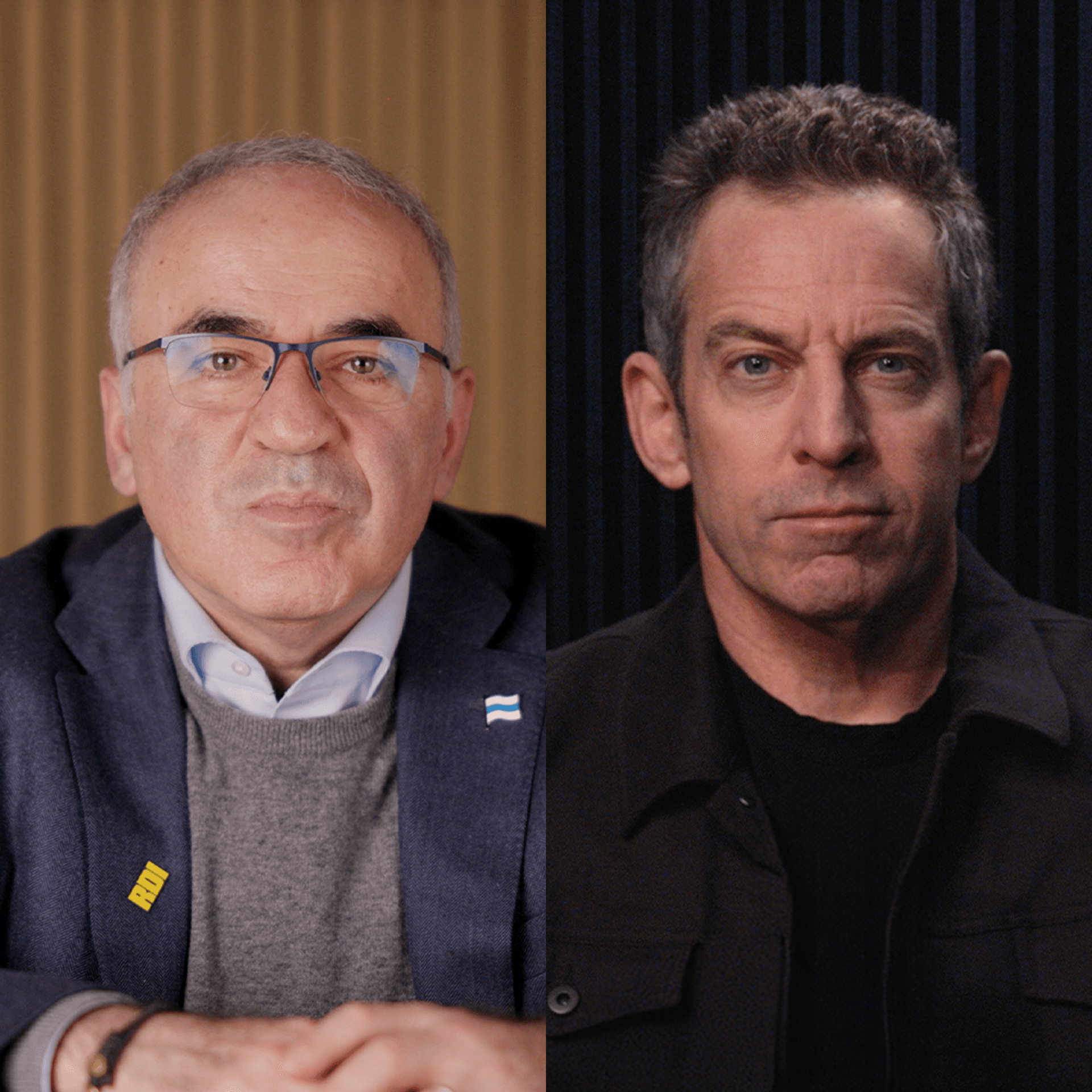
- Title: #461 — Dictators Always Tell You What They'll Do
- Host: Sam Harris
- Guest: Garry Kasparov
- Date: Not specified but implied to be current
- Focus: The erosion of democracy in America and the global authoritarian threat.
Episode Overview In this episode, Sam Harris engages in a deep conversation with Garry Kasparov, a renowned chess master and political activist, about the challenges facing democracy in the United States and the world. They analyze the implications of Trumpism, the GOP's moral decline, and the geopolitical landscape shaped by authoritarian regimes.
Key Themes and Discussions
- Erosion of American Democracy
- Trump's Corruption: Kasparov discusses the systematic corruption under Trump and the moral decay of the GOP.
- Polarization: The conversation highlights the increasing polarization in American politics, likening it to historical patterns that have led to the downfall of democracies.
- Global Authoritarian Threat
- Putin and Russia: Kasparov reflects on his experiences with Putin and the dangers posed by authoritarian leaders globally.
- Historical Parallels: He draws comparisons between current events and historical instances of authoritarianism, emphasizing that dictators often reveal their intentions through rhetoric.
- Impending Elections and Future of Democracy
- 2026 Midterms: The upcoming elections are framed as a critical moment for democracy. The potential outcomes could either solidify or further undermine democratic norms.
- Political Landscape: The implications of a Democratic victory and how it may address issues of governance and credibility in the wake of Trump's influence.
Key Concepts
- Credibility in Governance: Kasparov argues that restoring trust in the political system is essential for the future of democracy.
- The Role of Extremism: The dangers of radicalism on both ends of the political spectrum threaten the stability of democratic institutions.
- Historical Lessons: Drawing from personal experiences and historical insights, Kasparov urges vigilance against authoritarian trends, highlighting that complacency can lead to serious consequences.
Critical Takeaways
- The Importance of Action: Kasparov stresses that if the Democrats gain control in the midterms, there must be a strategic approach to governance that emphasizes transparency and accountability, particularly concerning Trump and his associates.
- Realistic Expectations: The conversation acknowledges the complexities of political dynamics and the challenges faced by those looking to restore democracy without appearing hyper-partisan or reactionary.
- Urgency in Response: Both Harris and Kasparov agree on the need for urgency in addressing the threats to democracy, indicating that the next few years are pivotal.
Final Thoughts
This episode serves as a stark warning of the dangers posed by authoritarianism, both domestically and internationally. Through the lens of Kasparov's experiences and insights, listeners are encouraged to recognize the signs of democratic erosion and to engage actively in the preservation of democratic values as critical elections approach.
For those interested in a deeper understanding of the issues discussed, a subscription to the Making Sense podcast is recommended for access to full-length episodes.
Written by AI. May contain mistakes. Listen to the episode to check what was said.
Chapters
Tap a time to open that second in VOGary Kasparov on Democracy and Authoritarianism
0:45 to 3:42
Kasparov discusses his work with the Renew Democracy Initiative and concerns about American politics.
“A lot has happened, but still we were speaking under the shadow of Trump and Trumpism.”
The Rise of Trumpism: A Personal Perspective
3:42 to 6:34
Kasparov shares his views on the dangers of extreme polarization and the erosion of democracy.
“I could never imagine in my worst nightmare that 10 years later, these threats that I only had in my imaginations could become a mainstream politics in America.”
Understanding Authoritarian Threats
6:34 to 11:10
Kasparov explains how dictators reveal their intentions and the importance of recognizing authoritarianism.
“I saw the rise of Vladimir Putin and the collapse of the very fragile Russian democracy.”
Trump's Second Term and Political Landscape
11:10 to 13:58
Discussion on Trump's actions, the GOP's response, and potential outcomes of his presidency.
“Okay, I wish I'm paranoid, but so many things I said that were considered paranoid now did happen.”
The Sinking Ship of Democracy
14:07 to 18:06
Discussing the threats posed by Trump and the implications for American democracy.
“House to oppose the most aggressive steps of Donald Trump, like appointing unqualified people just based on their loyalty and sometimes craziness.”
Restoring Credibility in Politics
18:06 to 22:36
Exploring strategies for restoring credibility and trust in American democracy.
“And I don't want now to preempt the political landscape that would surround the elections of 2028.”
The Role of Congress in 2026 and Beyond
22:36 to 27:41
Examining the responsibilities of Congress following potential electoral successes.
“Probably, you know, we'll reach a point where people say, look, two-party system doesn't work anymore because we don't want us to have a choice of these two.”
Concerns About Domestic Issues Pre-Midterms
28:00 to 28:39
Learn about the worries surrounding domestic problems leading up to the midterms and beyond.
“So for many Europeans, especially Eastern Europeans, America today just is viewed almost as an enemy.”
Transcript
Automatic transcript. May contain errors.0:06Sam Harris:Welcome to the Making Sense Podcast. This is Sam Harris. Just a note to say that if you're hearing this, you're not currently on our subscriber feed, and we'll only be hearing the first part of this conversation. In order to access full episodes of the Making Sense Podcast, you'll need to subscribe at samharris.org. We don't run ads on the podcast, and therefore it's made possible entirely through the support of our subscribers. So if you enjoy what we're doing here, please consider becoming one.
0:36Sam Harris:I am here with Gary Kasparov. Gary, thanks for joining me again.
0:40Garry Kasparov:Thanks for inviting me.
0:41Sam Harris:It's great to see you. So I think it's been something like five years, four or five years, six years maybe since we've spoken. A lot has happened, but still we were speaking under the shadow of Trump and Trumpism. I think each of the times we spoke, I think our first conversation was in 20... 2016, and then maybe like 2022, I think that's where we are. So it's been about four years. Well, first, just to introduce you properly, many people will know you as one of the greatest chess masters of all time and world champion for many years. And maybe we'll return to the topic of chess at some point.
1:17Sam Harris:But now you're currently the chairman of the Renew Democracy Initiative, and also you have a substack, the nextmove.org, which is associated with that foundation and where you write. Tell people, what does the Renew Democracy Initiative do? What are you focused on? I mean, I think we can guess from the title that you care about democracy, but what specific problems are you focused on at the moment?
1:41Garry Kasparov:Yeah, I'm also pretty active on the other side of the Atlantic. So in Europe, where there's most of my colleagues in Russian opposition located. And Renew Democracy Initiative was formed in the beginning of 2017 after Trump's first victory in the presidential elections. It was a quite kind of friendly group of individuals, some of them modern Democrats from New York. Some of them were the group I call the refugees from the Wall Street Journal, like Brad Stevens or Max Boot. and I called for them just, you know, trying to figure out what's next because I could smell the danger. It's probably because I was born and raised in the Soviet Union.
2:23Garry Kasparov:I knew what was KGB, not from the books, but from personal experience. I also fought Vladimir Putin. I saw the second rise of KGB and how it took over my country, Russia, after we had a period of very fragile, So, nascent democracy in the 90s. And I could see that there's some very troubling signs in America. So, the idea of RDI was to actually point these potential problems, actually challenges to the Americans. Because what I didn't like especially was the polarization. It's like, or you might call it tribalization of American politics. The rise of the extremes on both sides. And as a good scholar of history, I knew that that's how democracy dies, because it's not about attack from one side or another.
3:11Garry Kasparov:It's when it's being besieged by extremists. And one day, these people discovered that they have no choices. What I call the, it's a paradox of the Spanish Civil War, when just you wake up one morning and you see Franco on one side, the fascist, or communists on the other side, and nothing in the middle. Of course, America was not in 2016. Even today, it's not in the same situation. But I could smell, smell the danger. And the idea of RDI was to offer an opportunity for people who were not comfortable with extremes on either side to get together. It's what I call the home for politically homeless.
3:45Garry Kasparov:I could never imagine in my worst nightmare that 10 years later, these threats that I only had in my imaginations could become a mainstream politics in America.
3:56Sam Harris:Yeah. So I want to talk about where we are at present and maybe what has surprised you in Trump's second term. But let me just kind of set this up in a general frame, because I've had many conversations of the sort that you and I are about to have on this podcast. I mean, for now a decade, many smart people have come on here worrying about the threat of authoritarianism globally, but especially in America under Trump. people like yourself and Anne Applebaum and Timothy Snyder. And it's not that everyone agrees, you know, sets their, the weights in precisely the same, the same degree there. But, you know, many, many smart people who are, who are students of history and who have a, a spidey sense for the erosion of democratic norms of a sort that you do based on your, your personal history, but they can wind up sounding fairly paranoid to normal people who aren't tracking these things so closely.
4:56Sam Harris:And I mean, it's true, I think, that in the last year, in the second Trump term, reality has caught up to the paranoia to some considerable degree. And many people have noticed that things are on several fronts surprisingly bad, but many people still don't. And so I guess I would ask you, what would you say to someone who, even this far into Trump's second term, doesn't really feel that much out of the ordinary has happened? I mean, there's been a bunch of tariffs coming on and off and on again. There's been, I mean, Trump has obviously said some uncouth things. You know, he'll share tweets and memes that no president should ever touch, right?
5:35Sam Harris:I mean, all of that is deplorable. But what would you say to someone who just thinks that, yeah, sure, he's enriched himself, but what's a few billion dollars here and there? And there's the Hunter Biden laptop scandal, right? So both sides are a little sleazy and corrupt. But nothing really is at stake here. Give me just kind of your big picture sense of how far America has slipped, in your view, toward authoritarianism.
5:59Garry Kasparov:Thank you very much for this question. I'm used to be called paranoid, kind of crazy angle that is spoiling everybody's celebration. My first article, by the way, just talking about Vladimir Putin, my first article warning about threat coming from Vladimir Putin dated back 25 years, January 4th, 2001, the Wall Street Journal.
6:16Sam Harris:Yeah.
6:16Garry Kasparov:And people often ask me, how did I know? And my answer was very simple. I was listening to what Vladimir Putin had been saying. Because there's a paradox. A lot of people just don't know it. Again, I was born in the Soviet Union, raised in the Soviet Union. I learned a lot about history, just not from the books, but from just real life. I saw the rise of Vladimir Putin and the collapse of the very fragile Russian democracy. So the rule is, dictators always lie about what they have done, but very often they tell you exactly what they're going to do. So you'd better believe them. Adolf Hitler's Mein Kampf was published back in 1925, and you can't blame him for being secretive about the plan.
6:58Sam Harris:It was a blueprint, but he was nobody in 1925.
7:02Garry Kasparov:Vladimir Putin, by the way, laid down his program, of recovering the greatness of Russian empire in 2005 in his speech before the joint session of Russian parliament and Russian Senate, when he talked about the collapse of the Soviet Union being the greatest geopolitical catastrophe of 20th century. I'm just mentioning this, you know, just to give you a better understanding of why Trump should be taken seriously before it's too late. And I've been talking about Putin's threat, you know, just year after year, months after months. Unfortunately, even after Putin bluntly told the leaders of the free world in 2007 and the Munich Security Conference about NATO being pushed back to 1997 borders, which meant Russia recovering the control of Eastern Europe, as Soviet Union had.
7:48Garry Kasparov:Again, nobody took him seriously. Then there was an attack on the Republic of Georgia. Again, so nobody wanted to feel that the temperature was rising and it was really political heat. I wrote another article, I remember in August 2008, saying next up the Republic of Georgia would be Ukraine. People asked me, how did I know? I said, because I looked at the map. And Vladimir Putin did it. Because again, dictator is not just moving all, just its own way forward. It's step by step. It's not question why, it's why not. And in 2014, Putin basically broke all the international rules. The international law that people so often appeal now, ceased to exist in 2014.
8:34Garry Kasparov:He violated every treaty Russia signed, all the guarantees given to Ukraine. And the problem is the other side, Americans, Brits, Europeans, they did nothing. Despite the fact that in 1994, there was a guarantee to Ukraine for its sovereignty and borders by United States and Great Britain and, of course, Russia in exchange for Ukraine giving up the third largest nuclear arsenal in the world. Now, back to Trump. Donald Trump is not making secret of his plans. He views himself as a king. He acts as a king. And with Congress being totally impotent and just not acting, there's nothing to stop him.
9:12Garry Kasparov:And it's not just sanctions here or tariffs here or tariffs there, just back and forth or few deplorable statements in the tweets. And you just mentioned corruption. Yes, I'm not here to excuse the previous administration. Yes, Hunter Biden was corrupt. But with Trump, corruption is not a problem. Corruption is the system. The way Donald Trump is making himself rich is just it's using the United States resources, United States policies, I mean, United States agencies. It's quite systematic. And Trump believes in it. It's again, it's not that he is trying to make a secret. It's everything he says.
9:49Garry Kasparov:And day by day, you know, he's raising the stake. Donald Trump was very successful even back in 2016, 17. That's when I warned Americans. He would try to normalize things that were abnormal. I mean, so many things that happen now, 10 years ago, if you say, oh, the president could do this. Oh, no, come on. That's not going to happen. I remember just, you know, a year ago, I've just, it was the end of 2000, just more of a year ago, 2024, after Trump won elections, I was on the podcast. I was a guest of Preet Bharara. And I asked Preet about, okay, prominent lawyer. So what about the third term? He said, no, come on, it's not going to happen.
10:25Garry Kasparov:I said, yes, I hope it's not going to happen, but I think Trump will try it. He said, no, it's ironclad. I said, are you sure? Absolutely sure. I still think it will stand, but it's not going to stand because Trump will not try. He will try. Trump is going to try every trick in the book because that's the way he sees the world. We know Donald Trump doesn't lose elections. That's the way he sees it. How can you not believe him when he's now mobilizing resources of American, of the state, of federal, federal state, of agencies like FBI, DOJ, Interior, to prepare, openly preparing to steal elections in November, the midterm elections.
11:07Garry Kasparov:Again, it's not a secret. He just listened to what he's saying, listened to what is being said by his cronies, and look at their actions and believe them. Okay, I wish I'm paranoid, but so many things I said that were considered paranoid now did happen. Ukraine now is four years at war, four years, full-scale war. If you start counting from full-scale invasion and not counting, of course, 12 years from the beginning of annexation of Crimea. It's a four years of war that Europe hadn't seen since the end of the World War II. Probably the largest war. I don't know whether you can compare Vietnam or Korea, but it's a massive war.
11:45Garry Kasparov:And there's no end in sight. And the United States, this great country, this is the country that I used to see back then in the Soviet Union on the other side of Iron Curtain with millions of my compatriots as the beacon of freedom, the guardian of global democracy, is openly siding with forces of tyranny with authoritarian regimes. It's siding with Putin. It's openly supporting Viktor Orban. I mean, the man who is the prime minister of Hungary just before his elections, where he's supposed to lose because we see the opposition now is gaining momentum there. So the United States Secretary of State is flying to Hungary to support the man who is opposing the entire European Union and preventing them to help Ukraine and also corrupt like hell.
12:31Garry Kasparov:Nobody just doubts that he's on the payroll of Vladimir Putin. All right.
12:34Sam Harris:So I want to get back there. I want to talk about the loss of American leadership and moral stature and the implications for world order there. But I want to focus on the domestic problem of Trumpism in America and on landmarks of the sort that you just mentioned, like the upcoming elections and Trump's obvious interest in declaring them fraudulent should he lose or should the Republicans lose in the midterms and the prospect of his nefarious work to actually steal an election. Obviously, we know he tried to steal the 2020 election, all the while claiming that it was being stolen from him. So, yeah, I don't think there's any limit to what he would attempt there.
13:16Sam Harris:The question is, what could he actually accomplish with his various enablers and sycophants and concubines and his retinue of enablers in power the second time around? But before we jump into all of that, is there anything that has surprised you about Trump's second term? I mean, you've been actively worrying about kind of this ratchet of authoritarianism and norm-busting, turning in one direction only month by month and year by year in America. But looking back over the last year, was there anything that was surprising for good or for ill?
13:53Garry Kasparov:No, for me, the greatest surprise was the total capitulation, the moral collapse of GOP. I could not imagine just that there would not be enough senators and members of the House to oppose the most aggressive steps of Donald Trump, like appointing unqualified people just based on their loyalty and sometimes craziness. And we're not talking about mass defection. It's not about dozens, you know, members of the House or senators. It's, you know, a few votes here and there. and Donald Trump he just measures you know that's this oh I can do this so there's no resistance next step so it's like a slow motion it's death in thousand cuts but it all goes the train goes in one direction and I just only hope that the facing the midterm disaster the GOP might act differently but what is the first the negative outcome of first year is that Donald Trump has already collected the retinue, maybe not an army, of his cronies that would do whatever.
15:04Garry Kasparov:So we really have a critical mass of top advisors, top members of Trump administration who are willing to go beyond existing law to violate the Constitution because losing power for them could be even worse. Question is whether there is a critical mass. I don't think yet, but it might just go in this direction. critical mass of the second and third tier of officers of the law and bureaucrats in the agencies that would join this sinking ship.
15:37Sam Harris:Yeah. Yeah. Actually, I want to keep talking about the sinking ship and just how far it's sunk so far. But for a second, I just want to jump ahead to a possible future where we clean up this mess. So just imagine in 2028, we have a Democratic presidential candidate who comes in, you know, with the best of intentions to reset all of the norms of our liberal democracy and improve them and shore up the places that Trump has revealed to be weak spots, right? So just imagine a Democratic president who was actually committed to minimizing his or her own power, right? So to bring the executive branch back into some line of sane constitutional order where Congress can't be sidelined to the degree that it has, etc.
16:21Sam Harris:It seems to me that given how Trump has staffed his government with loyalists and psychopaths and grifters and liars and, you know, confabulists of various sorts, you'd name some people like Pam Bondi and Kash Patel, etc. For someone to come in and clean house, again, with the best of intentions, just trying to get back to some basic norm of professionalism and nonpartisanship, I mean, just to get a Department of Justice that is fundamentally nonpartisan in how it works, right? Wouldn't that be nice? All of these efforts will be perceived by the right, certainly whatever's left of the MAGA right in the aftermath of Trump, to be nothing more than a pendulum swing back into hyper-partisanship of the left-leaning sort.
17:10Sam Harris:And so I guess my question to you is, how do we fix this without seeming to be just yet another iteration of hyper-partisan politics that is part of this race to the bottom? Because it will be cast that way by what remains of the Republican Party.
17:26Garry Kasparov:I think you made a huge strategic mistake talking about 2028. It is important, but it's not.
17:33Sam Harris:We're going to, I'm going to go back into the morass with you. I just want to know just in a perfect future, like when we get to 2028 and we get someone in charge who really wants to reset things and can, I think a full third of our society, if not half, will perceive those efforts to be purely corrupt, hyper-partisan, you know, cleaning of, you know, the cleaning of the deep state of the sort that Trump imagined he was doing or claimed to be doing.
18:01Garry Kasparov:Yes, but it's 2028 will be two years after the midterm in 2026. And I don't want now to preempt the political landscape that would surround the elections of 2028. The future of American democracy, the fate of this great republic will be decided this November. And it's, I'm not here to bet my bottom dollar. I think that is if Democrats win, if Trump loses badly and fail to steal the elections, and he will try to steal the elections. If he's losing support among his base to go as far as he wants, which means, you know, just to control the whole process, what he talks about, federalization of elections, that should sound like anathema to Republicans.
18:47Garry Kasparov:This is the people who grew up just preaching the state's rights. Right now, they don't even sound like Democrats. They sound like socialists. Sometimes, you can hardly find difference between MAGA rhetoric and some of the far-left progressives, which, again, proves the horseshoe political theory. So, 2026 will be the decisive battle that will prepare the landscape for 2028. And if it goes as we expect, 2028 will not be a formality, but I think it will offer a Democratic contender an excellent chance to retake power. And I may be, again, there's a good chance. If 2026 goes well, it's probably, you know, I think there's, again, I would say there's a big chance that the next Democratic challenger will not be facing Donald Trump or J.D.
19:36Garry Kasparov:Vance.
19:37Sam Harris:Okay. Let's say, I just, I want to answer this question. I'm going to come back to the present. So let's say a Democratic challenger faces J.D. Vance and wins. And now we have a Democratic administration that really wants to clean house. when they start cleaning house at the DOJ, right, and the Department of Defense, right, and clean out all the loyalists, it is going to look to the Republicans like a purely cynical, hyper-partisan move of the sort that Trump has just made in staffing his second administration.
20:08Garry Kasparov:I, yeah, look, you raised a key issue that I believe is in the heart of the crisis of American democracy. It's credibility. So when you have two parties, you know, it's a dichotomy. It's binary choice. And in binary choice, very often you go not for the best, but for the lesser evil. And unfortunately, the last couple of decades, definitely since 2016, so Americans have been reduced to the choice of lesser evil. And Democrats lost credibility. The Biden administration just did a huge damage to the credibility of the whole party. And obviously, when you look at Trump's campaign in 2024, it aimed at weak spots.
20:50Garry Kasparov:It talked about immigration, about transgender issues, about issues that helped Trump to drag many, many people in the middle to support him. Again, considering him a lesser evil. So restoring credibility is the key issue. But that means that Democrats should not just simply go to the center. Again, that's what we at RDI are saying. So this is very important to fight extremes on both sides. But it's about, you know, just illustrating that it's a healing process. Maybe, you know, they will have to start inviting some people just from the other side of the aisle in the administration. Again, I don't know what will be the solution.
Read the full transcript
21:26Garry Kasparov:But it's very important to recognize that the country should depart from this deadly, you know, deadly cycle of tribalization. It's me versus them. So this is recovering the, where are the Americans? So it is very challenging. But I think it's doable. It's doable. So and we can now, for instance, this is the latest decision of the Supreme Court. I think it was a great opinion just written by Neil Gorsuch. Basically blasted two or three conservative judges and three liberal judges saying, look, guys, so how come that, you know, when Biden was in the office, you voted the opposite, you know, just using the same arguments.
22:05Garry Kasparov:So restoring credibility and trust in the system, confidence in the system, this is very important. And I think that should be the core of democratic programs. So they should definitely eliminate everything that just irritates the public. I understand that there's this ideological differences, you know, and I may even be sympathetic to some of the views of the progressives. But it's very important that, you know, that we'll make, you know, the core of the campaign in 26 and especially in 2028 is rebuilding the system and trust in the system. Probably, you know, we'll reach a point where people say, look, two-party system doesn't work anymore because we don't want us to have a choice of these two.
22:44Garry Kasparov:And both parties have been infected by the virus of radicalism. Maybe we should look for the third party. I don't know. It's unlikely because the system has been built over centuries. But clearly, there are challenges that go beyond just our disputes of First Amendment or Second Amendment. As we could see now, the fight with MAGA is not about Second Amendment. I mean, MAGA doesn't care. If it doesn't defeat Trump, he throws Second Amendment, First Amendment, Constitution. So it's Supreme Court. But unfortunately, as you pointed out, it's not just Hunter Biden. We had many excesses on the other side, not as bad as Trump, but they definitely fertilized the ground for somebody like Trump to show up.
23:28Garry Kasparov:Trump was not accidental. That's something that many people just still consider, oh, he's here and he'll be gone. No, Trump embodies the spectrum of all the problems that American democracy had been facing over quite a long period of time. And it's very important to talk about, it's not just a reduction of presidential powers, but definitely, you know, building this system of control because it's, you know, we have to make sure that we will never again have the same fights about presidential ability to inflict damage to order Americans by just, you know, signing just a new law on tariffs and ruining American relations with our allies and openly, you know, enriching himself by making both coalitions and financial deals with our enemies.
24:19Sam Harris:Yeah. All right. So a similar question, but now focused on the midterm. So let's say there is success in the fall, right? There's, let's say in the perfect case, the Democrats win both houses of Congress and the defeat is just unignorable right of center. What would you recommend those new members of Congress do at that point? Do you think there should be impeachment proceedings? Do you think there should be everything that can be inquired about, should be inquired about, no matter how provocative those inquiries are into the lawbreaking of the Trump administration? Or do you think they really have to be careful not to antagonize half the country?
25:01Garry Kasparov:Again, excellent question. Again, it depends, first of all, it depends on whether Democrats win the Senate as well. I think the House is just, it's everybody knows. It's kind of fait accompli. So I think Democrats will gain at least 20 seats. I would not be surprised if you get 30 or even more. So this is every indicator shows that the House election will be bloodbath for GOP. They know that. Senate is another story. And And again, it depends on whether Democrats can secure, you know, this is the centrist position. For instance, if Tallarico versus Paxton, I think these Democrats have excellent chance.
25:35Garry Kasparov:I mean, but if you just imagine for a moment it's Corden versus Croquette, it will be just, you know, exactly the opposite. So it's very important a Democrat will come up with people that look reasonable and will not be associated with the far left excesses of Biden administration. So now imagine they win both, you know, Senate and the House. I think they have to find the exact balance. I would not say that, oh, stay away from any action. No, you have to do subpoena. You have to use the power of subpoena. You have to attack, you know, the Republicans, the current administration. So it's addressing their most excessive acts of corruption and abuse of power.
26:19Garry Kasparov:definitely you have to impeach you know this is people who are just in charge of doj and fbi but it's as for impeachment of donald trump i don't know this is it's it's i think it's very important to understand you have x amount of political capital and you have to spend it wisely and i think that is trump is not you know just our main target it sounds a bit odd now it's about trumpism it's about this that's exactly what you discuss now we will discuss now it's this how to restore credibility. So if Democrats control both parts of the Congress, so I think they have to find the right approach to obviously to punish those who caused so much damage to American democracy and naturally make sure that the cases of corruption will be highlighted.
27:05Garry Kasparov:I don't know whether you can investigate them or not, but that's be highlighted. And it's not about, But again, going after Trump is limiting his ability and ability of his cronies to cause further damage, basically to defang the snake. So it's not just about going just after its head. So the 26th will have to secure American democracy. It's quite ironic that 250 years later, Americans will have to fight another mad king just for their freedom. But if 2026 goes well, then 2028 will have in mind. And also very important to start, you know, just sending signals to our allies to make sure that the State Department and other agencies will not continue this very destructive policy of destroying American alliances.
27:57Garry Kasparov:Because this kind of relations, it's easy to destroy, easy to harm. It's much more difficult to rebuild. and I go back and forth. So for many Europeans, especially Eastern Europeans, America today just is viewed almost as an enemy. So just rebuilding trust.
28:16Sam Harris:I want to get there. I want to talk about the international scene, but just I want to linger on the domestic, the immediate domestic problem. What are you worried about happening between now and the midterms? And I guess you could take it beyond the midterms as well. But what bright line that if crossed should signal some sort of emergency of a sort that we haven't experienced. If you'd like to continue listening to this conversation, you'll need to subscribe at samharris.org. Once you do, you'll get access to all full-length episodes of the Making Sense podcast. The Making Sense podcast is ad-free and relies entirely on listener support.
28:54Sam Harris:And you can subscribe now at samharris.org.
29:07A Style of Love
From the publisher
Sam Harris speaks with Garry Kasparov about the erosion of American democracy and the global authoritarian threat. They discuss Trump's systematic corruption, the GOP's moral collapse, the 2026 midterms as a decisive moment for democracy, Trump's entanglement with Russia and Putin, what a Ukrainian victory would mean for the free world, why Putin's nuclear threats are a bluff, and other topics.
If the Making Sense podcast logo in your player is BLACK, you can SUBSCRIBE to gain access to all full-length episodes at samharris.org/subscribe.