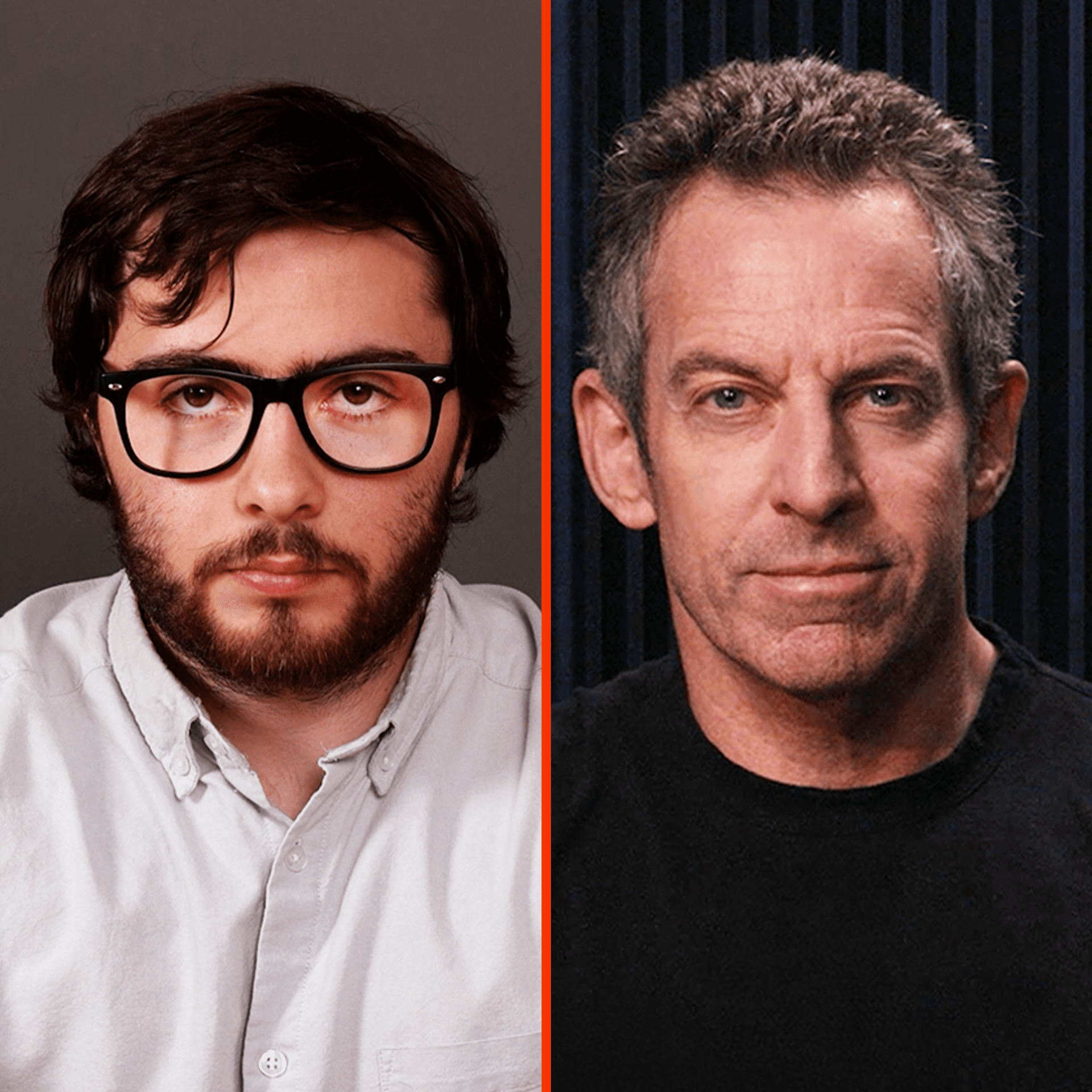
In short
Podcast Notes: Making Sense with Sam Harris - Episode #463: Privatizing the Apocalypse
Episode Overview In this episode, Sam Harris engages in a critical discussion with Rob Reid on topics surrounding biosecurity, pandemic risk, and the fragility of defenses against biological catastrophes. They explore the controversial USAID program, DEEP VZN, dangers of gain-of-function research, implications of AI on bioweapons, and the threats posed by lone wolf bioterrorists.
---
Key Themes and Discussions
Introduction to DEEP VZN
- Background: Rob Reid shares his decade-long focus on bio-risk, stemming from writing a sci-fi novel that highlighted synthetic biology's potential dangers.
- Connection to Podcast: Harris and Reid previously collaborated on a deep dive into biosecurity, which set the stage for the current discussion on DEEP VZN.
DEEP VZN Program Objectives
- Virus Hunting: The program aimed to discover 10,000 unknown viruses from remote locations in developing countries.
- Concerns: Potentially increasing the risk of leaks from laboratories, which historically have demonstrated vulnerability.
- Characterization: Identifying which viruses could be categorized as pandemic-grade threats.
- Flaws: The inability to safely test vaccines and the risk of creating widespread panic around identified pathogens.
- Publishing Findings: The most controversial aspect involved publishing the genomes of identified viruses.
- Risks: This could empower malicious actors with the knowledge to create deadly viruses, likening it to granting nuclear capabilities to unvetted individuals.
Reaction and Outcome
- Initial Response: Reid and Harris aimed to raise awareness about DEEP VZN to influential figures, including Samantha Power at USAID.
- Public Pressure: Various figures, including Senators Lindsey Graham and James Risch, joined the effort to halt the program.
- Final Decision: After months of advocacy, DEEP VZN was formally canceled, marking a significant victory against reckless biosecurity practices.
Broader Implications
- Global Biosecurity Landscape: Discussion on the ongoing risks posed by other countries and organizations engaging in similar virus-hunting efforts.
- Comparative Risk: Reid notes that while many entities engage in biosecurity, none matched the scale and risk of DEEP VZN.
- Future of Biosecurity: The episode raises questions about the potential for future programs that could pose similar or greater risks.
- Call to Action: The conversation emphasizes the need for vigilant oversight and awareness regarding biosecurity initiatives.
---
Key Takeaways
- Fragility of Biosecurity: The simplicity of accessing advanced biological research can lead to catastrophic consequences if not carefully managed.
- Public Engagement: The significance of public and political engagement in addressing biosecurity risks was highlighted as a necessary step towards accountability.
- Risks of AI and Synthetic Biology: Emerging technologies present new threats that must be anticipated and mitigated to prevent misuse by malicious actors.
---
Conclusion In this episode, Sam Harris and Rob Reid effectively illuminate the critical issues surrounding biosecurity and pandemic preparedness. By discussing DEEP VZN and its implications, they advocate for a proactive approach to managing and understanding the risks associated with biological research and synthetic biology. The conversation serves as a reminder of the delicate balance between scientific advancement and safety in an increasingly interconnected world.
For full access to the discussion, listeners are encouraged to subscribe to the Making Sense podcast at [samharris.org](http://samharris.org/subscribe).
Written by AI. May contain mistakes. Listen to the episode to check what was said.
Chapters
Tap a time to open that second in VOExploring Biosecurity and Pandemic Risks
0:46 to 2:53
Discussion on Rob Reed's background and the concerns about biosecurity.
“I mean, we did one that was a very deep dive that was, you know, more highly produced, where it was almost like your audio book framed by our podcast conversation.”
The Origins of Deep Vision Project
2:54 to 4:35
Rob Reed explains the establishment and purpose of the Deep Vision Project.
“And you and I did end up doing that magnificently sprawling almost four-hour episode on the subject.”
Understanding the Objectives of Deep Vision
4:36 to 5:30
Discussion on the three main goals of the Deep Vision Project and their implications.
“one in mind, which gave us optimism that this might work, which was Samantha Power.”
Risks of Virus Extraction and Characterization
5:31 to 9:46
Analyzing the potential dangers of extracting viruses and making them public.
“So Deep Vision was going to do three things.”
Consequences of Publishing Virus Information
9:47 to 11:11
Discussion on the risks associated with disseminating information about dangerous viruses.
“And, uh, I mean, you just look at the, the mental health, uh, probabilities over any population.”
Response to the Deep Vision Concerns
11:12 to 14:00
How experts and politicians responded to the risks posed by the Deep Vision Project.
“No, he beat my record and he seemed so smooth in practice.”
The Unpartisan Coalition's Efforts
14:00 to 14:51
Learn about the diverse coalition working to influence a controversial program.
“Naturally, you're going to tend to be Democrats.”
The Demise of the Deep Vision Program
14:51 to 15:51
Discover the timeline and implications of the Deep Vision program's termination.
“got heavily involved, that there had effectively, the program had effectively been defanged, that Due to the pressure coming in from all these different points, no work was going to be done.”
Global Virus Monitoring and Risks
15:51 to 17:16
Explore the risks associated with viral research and the global landscape of pathogens.
“And with that, I would say an enormous source of plausible risk exited the equation.”
Potential Catastrophes from Pathogen Outbreaks
17:16 to 19:11
Examine the catastrophic potential of multiple pathogen outbreaks and their impacts.
“In the scheme of things, COVID was remarkably benign as an infectious agent.”
Show all 11 chapters
The Risks of Well-Intentioned Science
19:11 to 21:12
Understand the unintended consequences of scientific projects aimed at public good.
“It's amazing how few people could have thought of an idea with this level of potential destruction.”
Transcript
Automatic transcript. May contain errors.0:06Sam Harris:Welcome to the Making Sense Podcast. This is Sam Harris. Just a note to say that if you're hearing this, you're not currently on our subscriber feed, and we'll only be hearing the first part of this conversation. In order to access full episodes of the Making Sense Podcast, you'll need to subscribe at samharris.org. We don't run ads on the podcast, and therefore it's made possible entirely through the support of our subscribers. So if you enjoy what we're doing here, please consider becoming one.
0:36Sam Harris:Okay, Rob Reed, thanks for coming back on the podcast. It's good to be back. So we've done, yeah, you probably have a better count of the number of podcasts we've done on this topic than I do. I mean, we did one that was a very deep dive that was, you know, more highly produced, where it was almost like your audio book framed by our podcast conversation. But we share this concern around biosecurity and pandemic risk and bioterrorism. And you have an update for us on the fate of the Deep Vision Project. Yes. Before we jump into that, just remind people how you got to this topic. How did you come to be focused on this and how much of your bandwidth has it taken?
1:15Sam Harris:Yeah, yeah.
1:16Rob Reid:Well, my full-time job is in venture capital. I run a fund that invests in companies that we think will make the world more resilient in some important way. fabulous job. I do it with a gentleman that you know very well, Chris Anderson of TED fame. So that's my full-time job. In this case, I have been, I guess my public service, you know, side of life, voluntary side of life has been focused entirely on bio-risk for about a decade. It started when I was writing a sci-fi novel called After On, and that had a subplot in it about a nihilistic kind of cult that thought it would please God tremendously if they killed every person on earth.
1:53Rob Reid:It wasn't the center of the book. And so they use synthetic biology, which I'll abbreviate to syn-bio just to save us some syllables, to come up with an omnicidal pathogen that could hopefully do that. And that started me worrying about this particular category of risk.
2:08Sam Harris:And you gave a TED talk. Yeah, there was a couple of dominoes later.
2:12Rob Reid:So I started worrying about this category of risk. I interviewed scientists in order to write this book accurately. And then I started a podcast called After On, same title. And I explored the topic there, including an interview with a brilliant person that I'm sure a lot of your listeners know, Naval Ravikant. And we talked about that. And that was about 10 days before the TED conference. So the TED folks called me up, said, would you like to do a talk about this? Usually people have several months. More than 10 days. Yeah, more than 10. But it went well. And you first entered the picture at that point because you were at TED.
2:44Rob Reid:You came up to me and said, hey, we should do something ambitious on this important topic as podcasters, maybe team up. And then along comes COVID a few months later. And I really rabbit holed into the topics of symbiol risk and pandemic resilience. And you and I did end up doing that magnificently sprawling almost four-hour episode on the subject. that traveled far and wide. And eventually somebody from the White House reached out to me, White House staff, and said, would you like to come in and present to some, you know, pretty senior people in biosecurity? So I did that. I went to Washington and it was through that I learned about this crazy program called Deep Vision, which had just been authorized.
3:24Rob Reid:It was growing up inside of USAID of all places. It had$125 million five-year budget. And in the words of one very wise person in the field of biosecurity, it had in a worst case, the potential to cancel civilization is how it was put to me.
3:41Sam Harris:And with the best of intentions, with the best,
3:43Rob Reid:we actually literally with the best of intentions, but that what a terrible thing to do. Right. So I learned about it and decided that that may not have been an exaggeration and decided to do my best to blow the whistle on it. So I actually called you at that point and I told you what was going on. And I told you that I thought the best way to blow the whistle on this would be to have a really extensive interview with a professor at MIT named Kevin Esfeld, who I would characterize him, I think, as an evolutionary engineer. And he's very, very deep in this program. And you made the suggestion, which was an excellent one, that I should interview Kevin because I was pretty deep in the subject already and that we could both, I'd create an episode of my podcast, which we could both then broadcast to our audiences with yours being much, much larger in hopes that somebody would hear it and help to do something.
4:32Rob Reid:So we did just that, you and I. And it was actually, you might remember, I'm sure you remember this, you and I had an audience of one in mind, which gave us optimism that this might work, which was Samantha Power. She was running USAID at the time. And I think her husband had just been on your podcast and I had a couple people in common with her, but unhappy accident of history, I think just days before we posted this episode, the Ukraine invasion happened and USAID was very busy there. So it was actually a couple of months of crickets, but then things started to happen.
5:07Sam Harris:Yeah. Yeah. Yeah. So let's remind people, first of all, that deep dive is still in our podcast feeds to be listened to, should anyone want to hear it. Because we go into just the larger set of concerns around, you know, SinBio and pandemic risk. But let's focus on Deep Vision. What was Deep Vision and what happened to it?
5:29Rob Reid:It was three really bad ideas, arguably each one worse than the one that came before. So Deep Vision was going to do three things. The first one is called virus hunting. And virus hunting basically in this context was going to involve going out to a dozen developing countries where they're going to be doing business. I think they wanted five in Africa, five in Asia, two in Latin America, and going to very remote places like bushmeat markets, isolated bat caves was going to be a very, very big one, and tried to discover roughly 10 ,000 undiscovered viruses of unknown deadliness and extract them from these remote places and bring them into very leaky, imperfect vessels in dense population centers called laboratories.
6:12Rob Reid:And I categorize laboratories that way because every category of laboratory all the way up to the highest biosecurity level demonstrably leaks. There's plenty of history that shows that. And the alarming thing is we do not know the rate at which they leak because there is no uniform reporting system, etc. We just know that they do and they, in some cases, leak prodigiously, which means that an isolated bat cave that nobody is otherwise ever going to enter is a much safer place for a pandemic-grade pathogen. than a lab that's staffed by imperfect humans.
6:45Sam Harris:So this has been a longstanding practice though. The virus hunting was a thing. I remember, uh, before I ever heard of deep vision or this specific project, and it seemed a sensible practice on its face. I mean, it wasn't obvious what was wrong with it and probably still isn't obvious to many virologists who's, who are incentivized to not recognize that it's a problem. What is the stated motive for going into caves and sampling from the virome of bats and bringing that out into the open. Well, I'll tie it to the next goal of deep vision, which was going to be characterization,
7:22Rob Reid:which is a series of four experiments that would determine which of these viruses were most likely to be true weapons of mass destruction, most likely to be pandemic-grade viruses. Why would you do those two things? In theory, it seems to make great sense that you would want to find out what the pandemic-grade viruses are and where they're living so you can start monitoring the interfaces between the human population and where those viruses are living. The fact is you can do that kind of monitoring very, very robustly with traditional public health methods. And the danger that happens is if you find these viruses, you extract them, you bring them into places, into leak-prone laboratories, and then you do this characterization work and you find out like, wow, these are profoundly deadly things.
8:11Rob Reid:There's not a lot you can actually do with that. You can't make a vaccine, for instance, because the way that we know if vaccines work is we wait for there to be an outbreak where we start inoculating people and discovering whether the inoculated people are healthier than the un-inoculated people. If you did this hypothetical act and you found a deadly virus and you determined that it was really, really dangerous, quite possibly a pandemic virus, you might come up with a vaccine candidate. But you're not going to have any knowledge of safety or efficacy. Because you're not going to infect a bunch of healthy volunteers with a potentially deadly virus in hopes that the half of them who are not in the control arm and get the vaccine, maybe the vaccine works, it doesn't work.
8:58Rob Reid:Like you will have the vaccine candidate. And so that's not useful knowledge. And it's actually very, very damaging knowledge because if it becomes widely known that this pathogen might be a real doozy, it's going to become the most famous pathogen on the planet or one of them. And the next thing you know, maybe dozens or even hundreds of laboratories are studying it in BSL-2 or BSL-3 labs because it wouldn't be in a BSL-4. And these are the gradations of biosecurity because it's of unknown deadliness and that tends to push it to BSL 2 or 3. And so now you potentially have this dangerous thing that's being studied throughout the world.
9:37Rob Reid:And, you know, for anybody who believes that there's a significant probability that the Wuhan virus was a leak, it becomes self-evident that you don't want these things being studied broadly. Now, the third thing that Deep Vision was going to do was, to me, the most objectively crazy one, which was having found these 10 ,000-ish viruses and established which ones were the most likely to be truly deadly, they were going to publish that list and also the genomes of these viruses to the entire world. Isn't that helpful? Isn't that helpful? A world, which it's important to point out, containing at the time roughly 30 ,000 people, according to Kevin's best estimate at the time, who had the tools and the know-how and the wherewithal to then conjure those viruses, basically make them from scratch using techniques that are called reverse genetics, and sometimes it's called viral rescue.
10:28Rob Reid:But about 30 ,000 people. And so what this meant is you were potentially giving the killing power of a nuclear arsenal to 30 ,000 completely unvetted strangers throughout the world, some of them almost inevitably located in islands of stability like Pakistan, North Korea, Iran, etc. Yeah.
10:47Sam Harris:Yeah. And, uh, I mean, you just look at the, the mental health, uh, probabilities over any population. I mean, just so if only 1 % of them, uh, had brains ready to go haywire, uh, with those skills, it's an abiding problem. And, uh, that was pre AI. We're going to talk about the contributions that AI is making to this issue. Okay. So we, we made a bunch of noise about deep vision. So then what happened?
11:11Rob Reid:what happened was the following so you and i were hoping to influence samantha we didn't succeed in that ukraine invasion great deal of distraction couple months of crickets and then a friend of mine reached out reached out to me tristan harris who's also been a guest on your show yeah along
11:29Sam Harris:with um also if memory serves forced to give a ted talk on like a 72 hours notice or something Yeah, he's really good at that. I think he had no time at all. Yeah.
11:40Rob Reid:No, he beat my record and he seemed so smooth in practice. He called me along with a person named Daniel Schmachtenberger. Do you know Daniel? Yeah. Very, very interesting thinker. Thinks a lot about existential risk. And so the two of them called me and we talked, you know, over Zoom. This is still kind of mid COVID about this risk. And then Daniel curated a group of, I want to say, seven or eight people, really brilliant folks. And then he and Tristan hosted it quite close to my home in Northern California. And we had what was kind of like a 12 or 13-hour brainstorm, really electrifying conversation.
12:20Rob Reid:people from, you know, who are experts in bio, people who are experts in existential risk. Our friend Livori was there, a few other people. And as a result of that, Daniel decided that he was going to really run with the ball. So he got out and he runs an organization that thinks very deeply about existential risk. He also knows far more people than I'll ever know in Washington. And so he started reaching out to folks and he soon reached an organization called Helena. Yeah, I know those guys. Yeah, brilliant, brilliant, interesting group of people. They're basically a problem-solving organization.
12:56Rob Reid:It wouldn't be accurate to call them a think tank. And what they'll do is they'll identify global problems. They'll spin up groups of kind of cross-disciplinary experts to try to solve them. Sometimes they'll start, you know, a not-for-profit to tackle the problem. But they also have an investment arm that invests in world positive companies, which is my day job. So we have a lot in common. There was somebody there at Helena named Prudik Basu, who in particular spent a lot of time in Washington and knew a lot of folks. And so Prudik started sniffing around and he very quickly found out that a couple people were already on the case, specifically Lindsey Graham and Senator James Risch of Idaho.
13:34Rob Reid:help. They and their staffs had become aware of Deep Vision. And I think they'd sent two letters already that were mainly about other topics, but expressed concern about Deep Vision to USAID. So there's already this tremendous pressure coming from the Hill. And then Prodick started looking out for, you know, other people he could bring into sort of a loose alliance. He knows people in both parties, people inside the administration, outside of the administration, inside of the administration. Naturally, you're going to tend to be Democrats. He reached out to people inside of USAID, people in security.
14:06Rob Reid:One of the people that he reached out to who was very helpful was Chelsea Clinton, who was really, really helpful in reaching out to a lot of folks. She has a master's in public health, a big network there. But it became a very, I'd say, extremely unpartisan group. Also, Rand Paul, I think, was significantly important because he had a hearing the summer of 2022 that Kevin Esfeld testified at talked about deep vision. And so this is a pretty, you know, unpartisan group. You look at the spectrum of folks. And what happened was just a lot of people started working very quietly, very quietly for the most part, to try to put pressure on this thing.
14:45Rob Reid:And we learned probably a couple months after, you know, Daniel and Proto got heavily involved, that there had effectively, the program had effectively been defanged, that Due to the pressure coming in from all these different points, no work was going to be done. It would never be done. And the problem was more or less passed. And that was great news and took it at face value. But then intriguingly and unexpectedly, about a year later, the program was formally killed. And we didn't expect that to happen because that would be egg on various faces and so forth. But this was also a really, really positive thing because the public demise of this program, you know, sent a pretty strong signal that we don't do this sort of thing anymore, hopefully.
15:32Rob Reid:And, you know, I think, you know, the pressure continued from Capitol Hill. I know that James Risch sent a letter as late as May, very anti-deep vision letter, probably the third to USAID. and it was September of 23 that we found that this thing was ultimately and completely killed. And with that, I would say an enormous source of plausible risk exited the equation.
15:59Sam Harris:What about other countries doing that same work? Are we the only ones playing this game or do other people go into bat caves and other, you know, go hunting for vectors of awfulness?
16:10Rob Reid:Yeah, I think that the Wuhan Institute of Virology has been doing this for a very long time. So WIV very heavily into, you know, collecting and understanding coronaviruses. USAID had previously funded a program called PREDICT, which did this at a pretty big scale. I think they discovered something like 1 ,200 novel mammalian viruses. But I don't believe that there was ever a virus hunting program anywhere near the scale of Deep Visions. And the interesting thing when you think about the risk landscape is to contemplate how it's changed from 2021 when Deep Vision was authorized to today. So you go back to that period of time.
16:51Rob Reid:And it's remarkable how few entities were in a position to have an idea, frankly, this bad, right? In its worst case, and we can talk about why, and it's probably valuable to you in a moment, but it is, you know, deep vision had a clear potential to cause death at the scale of COVID. Not definitely, but it certainly had that potential and possibly far, far worse. Probably worse. Yeah, probably far, far worse.
17:17Sam Harris:In the scheme of things, COVID was remarkably benign as an infectious agent. Yeah. I mean, it was super infectious, but it was not super lethal, right? Very far from super lethal, yeah. So it could have, I mean, I really do think of it as a dress rehearsal for something awful. And we appear to have failed this dress rehearsal in a variety of ways.
17:37Rob Reid:Oh, we botched it spectacularly. There's no question about it. But think about COVID, like Deep Vision, and we may or may not get into the numbers, but a conservative estimate is that they may easily have found, you know, six, seven, eight pandemic-grade viruses. Now imagine a really malevolent actor like an Aum Shinri-kyu deciding that we're going to really delight the heavens if we take down civilization. COVID itself emitted from one single point and it approached our shores at a speed of four and a half miles per hour. That's the back of the envelope. It took two months to get here. Two months to brace ourselves for that.
18:15Rob Reid:And obviously it knocked us to our knees and the rest of the world. Imagine seven pathogens emerging all at once from 20 different airports, you know, a complete worst-case scenario. I don't know how we survive that. You know, the combined fatality rate could certainly be way beyond COVID. Doctors would have no idea which of these pandemics they're diagnosing. People could be afflicted with more than one at the same time. That's the situation where you don't worry about civilization toppling necessarily because everybody gets infected. But you do if you get to a point where no thinking frontline worker is going to go out the door and risk killing themselves and their whole family for gig worker wages.
19:00Rob Reid:And when that happens, the supply of food, law enforcement, eventually electricity, and everything else shuts down. And so that is a profoundly, profoundly risk-leashed scenario. So anyway, back to Deep Vision 2021. It's amazing how few people could have thought of an idea with this level of potential destruction. Definitely not terrorists. Osama bin Laden himself never had a wisp of that potential destruction. Not the world's worst criminal gangs or cartels. They only have conventional weapons. I mean, not even a rogue state as gigantic and chaotic as Iran could have dreamt of killing at the scale of COVID.
19:37Rob Reid:And so you're basically left with nuclear weapons, nine people in that category, I guess, and biology. And in the world of biology, it's amazing to think of how few entities had the capability of marshalling budgets as large as Deep Visions,$125 million, and on top of that, access to scientists, expensive labs, and to forge partnerships in a dozen developing countries in which they were going to recruit scientists to, you know, find, you know, lots of viruses and poke at them. I doubt if even 10 entities in the world could have come up with an idea, let alone implemented that in 2021. And the remarkable thing and the very important thing is somehow one of them did.
20:23Rob Reid:And then think about the people who... But again, with the best of
Read the full transcript
20:26Sam Harris:intentions, I mean, somehow they're missing the fact that this is raising risk of accidents or or, you know, malicious use that's not intended by the people framing the project. It's just, again, you don't know how many other ideas are this bad and not acknowledged to be this bad, but it's quite amazing to be blind to the downside of this effort.
20:48Rob Reid:And the best of intentions is the other side of this. Like, I have no idea who was on the USAID committee that came up with this idea, but I am quite confident it included no mass murderers, terrorists or dictators, without any questions. So somehow a very, very, very tiny population of well-placed, highly placed do-gooders came up with this idea. So that is a very powerful and grounding lens through which to look at a coming era, a near-term era, in which untold thousands of people will be empowered to have ideas as bad as deep vision and worse. And some of them will be terrorist mass workers.
21:26Sam Harris:If you'd like to continue listening to this conversation, you'll need to subscribe at samharris.org. Once you do, you'll get access to all full-length episodes of the Making Sense podcast. The Making Sense podcast is ad-free and relies entirely on listener support. And you can subscribe now at samharris.org.
From the publisher
Sam Harris speaks with Rob Reid about biosecurity, pandemic risk, and the alarming fragility of our defenses against biological catastrophe. They discuss the controversial USAID program DEEP VZN, the dangers of gain-of-function research, open science norms that could arm bad actors, the role of AI in accelerating bioweapon development, biosurveillance tools, lone wolf bioterrorists, chaos agents, and other topics.
If the Making Sense podcast logo in your player is BLACK, you can SUBSCRIBE to gain access to all full-length episodes at samharris.org/subscribe.