In short
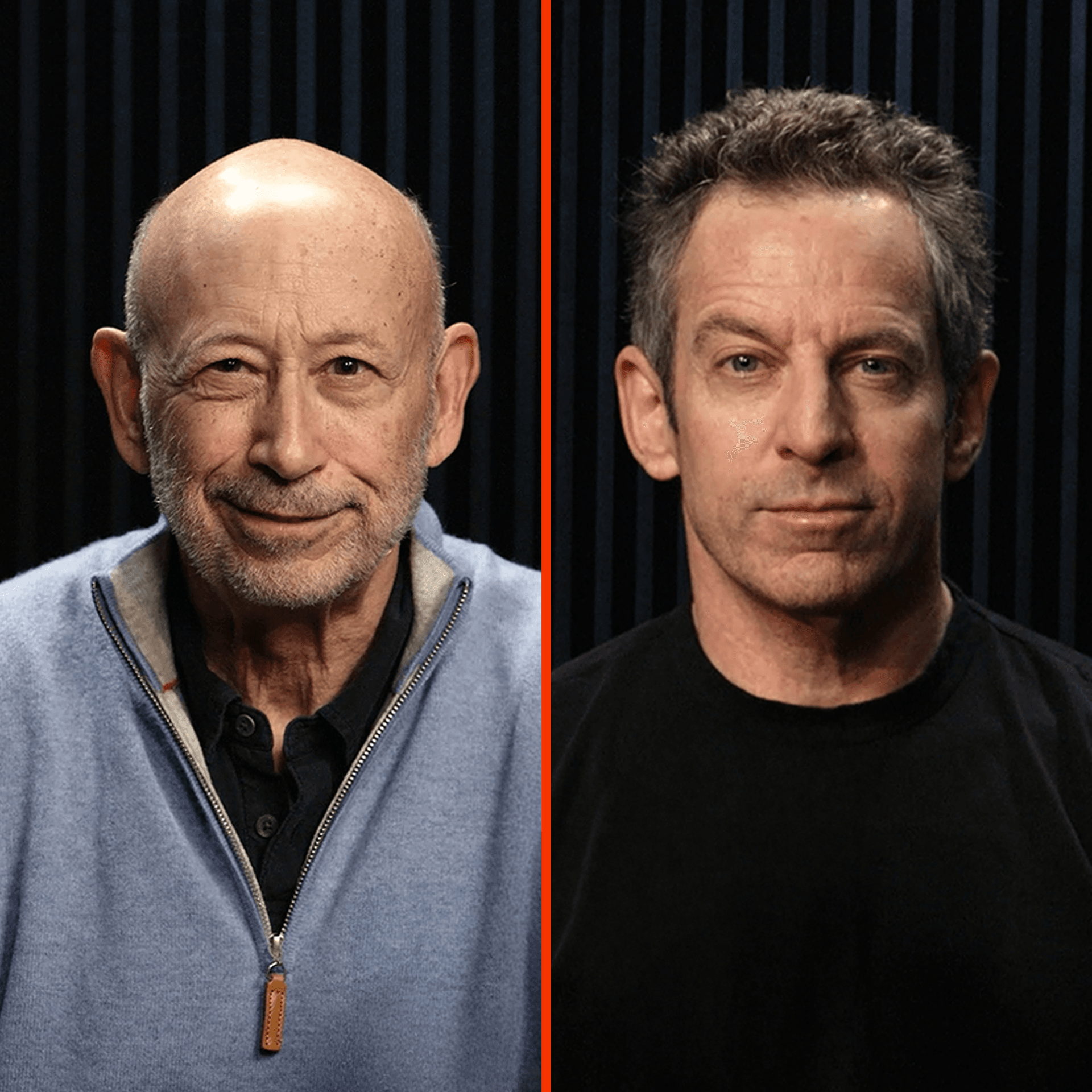
Lloyd Blankfein discusses “Money, Power, and Moral Failure,” using his Goldman Sachs experience to explain the 2007–2008 crisis, government responses, regulation, and today’s wealth inequality and market risk (including oil shocks, AI/bubbles, and meme-like trading).
Guest backgrounds
Lloyd Blankfein is a former CEO of Goldman Sachs (ran it for 12 years). He grew up as a Jewish child in public housing/projects, later attended Harvard, and became a top executive in global wholesale finance. He authored the memoir Streetwise.
Key claims
Goldman is a wholesale intermediary and market maker that bridges capital and risk. During 2008, even well-hedged firms faced “liquidity/distrust” contagion. Crisis policy decisions were constrained by unknowns; hindsight can’t judge adequacy. Post-crisis regulation reduced lending and regulator power, potentially making future crises harder. Markets extrapolate far future expectations, so sentiment can decouple from the real economy.
Notable examples
John Paulson’s mortgage short trade (Goldman matched counterparties). The “daisy chain” of payment freezes and the Fed as lender of last resort. COVID stimulus as an example of speed vs targeting. Oil prices tied to geopolitical risk (Straits of Hormuz). Market moves driven by political tweets (Truth Social/Liberation Day). High valuation multiples (e.g., 300x P/E) as implied future growth.
Written by AI. May contain mistakes. Listen to the episode to check what was said.
Chapters
Tap a time to open that second in VOLloyd Blankfein's Journey
0:45 to 2:14
Exploration of Lloyd Blankfein's background and rise in finance.
“achievement for which you were both in the world.”
Goldman Sachs Explained
2:14 to 4:26
Understanding the operations and role of Goldman Sachs in finance.
“What had it just, I mean, people, I don't think they know the name.”
The 2007-2008 Financial Crisis
4:26 to 7:31
Discussion on Lloyd's role during the financial crisis and the risks involved.
“I'm thinking of the John Paulson trade, which was shorting mortgage securities.”
Government Response and Lessons Learned
7:31 to 11:49
Evaluation of the government's performance during the crisis and the moral hazard involved.
“Yeah, so it was always, no, everybody was at risk.”
Future Risks and Regulations
11:49 to 14:00
Analyzing how past crises shape current regulations and future risks.
“Is there anything we learn from that experience that is setting us up to respond better next time?”
The Current Economic Cycle and Wealth Inequality
14:00 to 15:11
Explore the complexities of the current economic cycle and the widening wealth gap.
“Sometimes there's a cycle to these things and that will happen.”
Market Responses and Economic Indicators
15:11 to 17:14
Discuss the current state of the economy and key indicators affecting market perceptions.
“I definitely want to focus on wealth and equality.”
The Disconnect Between Markets and the Real Economy
17:14 to 20:03
Analyze the relationship between stock market behavior and real-world economic conditions.
“But I would say, looking at the situation, we were in a pretty good economy from a macro point of view.”
Market Sentiment and Price-Earnings Ratios
20:03 to 21:30
Examine the implications of high price-earnings ratios and market sentiment on stock valuation.
“But don't you worry about the uncoupling of any kind of rational sense of, let's say, the price-to-earnings ratio of many of these companies and their market value?”
Transcript
Automatic transcript. May contain errors.0:01Lloyd Blankfein:You're listening to Making Sense with Sam Harris. This is the free version of the podcast, so you'll only hear the first part of today's conversation. If you want the full episode and every episode, you can subscribe at samharris.org. There are no ads on this show. It runs entirely on subscriber support. If you enjoy what we're doing here and find it valuable, please consider subscribing today.
0:25Sam Harris:I'm here with Lloyd Blankfein. Lloyd, thanks for joining me on the podcast. Thanks for having me, Sam. So you've written a memoir, Streetwise, which is incredibly fun to read and an education for anyone who doesn't know much about finance. And I'm going to ask you some questions about it. I mean, especially I'm interested to understand the lessons we should have drawn from the 2007-2008 financial crisis, which you steered Goldman Sachs through, which was high stress and high stakes and an achievement for which you were both in the world. celebrated and vilified. So, yeah, I mean, you have a very interesting story because you came up from, I mean, you're a Jew living in the projects.
1:06Sam Harris:I mean, this is not a story that's often told about Jews these days coming from basically nothing.
1:11Lloyd Blankfein:We forgot to socially mobilize. Yeah. Yeah.
1:14Sam Harris:But you're, you know, went to Harvard and then kind of climbed your way through all these, all the high status rungs on the ladder and eventually were running one of the most storied financial institutions in the world and through periods of great stress. And you did that for 12 years. So it's a great story, much of which we will not touch on here. I mean, in no sense is our conversation going to be a surrogate for actually reading the book, so I just recommend people do that. But I want to use it as a lens through which to look at the present, because you obviously have a unique perspective on many of the things that ail us.
1:47Sam Harris:I'm worried about things like wealth inequality and the dysfunction in our government and hyper-partisanship and just how we should, um, if we can find our way back to something that seems like dry land in the near future, where the things are more, the new cycle is more normal. Uh, yeah. I mean, what is normal? Uh, it's, it's, we're, we're, we're a decade from normal by my lights, but let's start with some just very basic things. I want people to know, um, what you've done. What is Goldman Sachs? What had it just, I mean, people, I don't think they know the name. I don't think they know what Goldman Sachs does.
2:24Lloyd Blankfein:Goldman Sachs said it is a financial institution. Think of it, it's a wholesale financial institution. So people really can't get a mortgage from Goldman Sachs or bank with it. There's no Goldman Sachs offices on the corner. We finance people who are looking for capital, people who want to build businesses. We also address the needs of people who have capital to invest. So those could be high net worth individuals, they could be institutions, it could be government, sovereign wealth funds. and we try through our good reputation on both sides to marry people who need capital with people who have the excess capital.
3:01Lloyd Blankfein:And in order to do that, you have to have cultivated, which Goldman has done for something over 150 years, a reputation for kind of being good at it, not always perfect at it, but good at it. And so we engage with pools of capital and engage with entrepreneurs. And who else needs capital? Governments need capital. Municipalities, the federal government gets financed. People who go through IPOs. And so people in the audience will understand IPOs. That's a way of getting finance for a private company, going public and raising stock and bonds. And there's a lot of different mechanisms and instruments to do it.
3:35Lloyd Blankfein:But basically, we are the bridge and the intermediation between people who have capital and people who need capital. And I'll say that there's another corollary. We are also a bridge between the people who have unwanted risk and the people who are willing to take on the burdens of that risk and get paid for it. And since those people don't always match up at the same time, we are a principle. We will take on somebody's unwanted risk until we can find somebody else who will take the other side. And when they take the other side, it's usually not exactly the same thing. So we're very mathy and have algorithms to try to get something that's not quite like the other thing to be almost like it by, you know, buying a cocktail of things to replicate something else.
4:23Lloyd Blankfein:I know this is kind of abstract, but we can get specific too.
4:26Sam Harris:Yeah. So that reminds me about something that you were specifically vilified for during the crisis, which was during the aftermath of the crisis, which seemed to turn on confusion around your role as a fiduciary versus your role as a market maker. I'm thinking of the John Paulson trade, which was shorting mortgage securities. And he made billions of dollars betting against the mortgage market. And you guys created that trade for him, but you had to find a counterparty on the other side of the trade. And then you guys were maligned as having basically knowingly defrauded some other client. But maybe it's just worth double clicking on that.
5:06Lloyd Blankfein:Sure. It's easy. Look, anything that's resolved, nobody ever remembers not knowing it. So everybody knows that the mortgage, you know, that mortgages were, you know, junk securities were bad and, you know, a lot of them never, you know, turned out to be worth zero. At the time, some people thought it and other people thought the opposite, but nobody really knew. It's only in hindsight that people knew. By the way, every time somebody tells me they know something, I ask them about something that's current.
5:32Sam Harris:How much are you betting on that something right now? Yes, I should say current.
5:35Lloyd Blankfein:And so in that particular thing, you know, at those times, We had somebody who wanted to go short the mortgage market, and we had plenty of people who wanted to go because at that point, they were very high-yielding securities. And by the way, there was not widows and orphans on either side of the transactions. It was a big institution on either side of it, and it was plucked up as an example of some of the things that we did. So there was a very well-informed institution that was dedicated to holding mortgage obligations. By the way, mortgages are securities. It's like a security that's a version of a bank holding a mortgage.
6:10Lloyd Blankfein:So it's just only people's homes. And if people are going to default on paying off their home mortgage, those securities could become worthless. So people were betting that those securities would go back up in value. And other people were betting that they would go down in value. And what we, you know, our role in this is a market maker. People come to us and say, I would like this. I would like this risk. And then we sell it to them. and we principle and we take that risk until we can scurry and find the other side or something that that's like it enough so that we could be reasonably hedged and you know we've been doing that for about 150 years right right by the way that's what makes the economy and the market go
6:50Sam Harris:go on go on this is the one thing that's sort of surprising and difficult to understand in reading about your experience during the financial crisis because you you guys were seemingly alone among financial institutions well-hedged and actually fairly impervious to what was going on until you weren't. I mean, you were not exposed to these toxic assets in the way that many other big names were, and you were actually making money through the crisis. But then at a certain point, even you being totally profitable and not actually exposed to these toxic assets were at risk of going under. How is that, how does that jump?
7:31Sam Harris:Oh, no, everybody was at risk. Yeah, so it was always, no, everybody was at risk. Explain how you go from, your house is totally in order, from your house could be the next to burn down. What actually was, what actually almost happened during 2007, 2007?
7:45Lloyd Blankfein:Look, when somebody, you know, when James Bond defuses the bomb, no one ever appreciates how close to destruction it was because it was defused, it never happened. Right. This was a situation in which everybody, all companies, especially but not limited to financial institutions. Every company has to finance itself, has commitments it has to honor, it's receiving revenue and it's paying out revenue all the time. And during a crisis like this, everyone was suspect about the solvency of everyone else they were dealing with. And so what happens is if you have an obligation to pay someone and he's going to pay you, you want to see your, you want to see the money from him come into you first before you pay.
8:33Lloyd Blankfein:And you get a whole daisy chain effect. Or the, or the money from somebody else. You're not going to pay anyone until somebody's paying you. So this is a market. So even if you're an industrial company, I'm getting, I'm selling cars, you know, to a, to a wholesale dealer, the money has to come in so I could pay the cost of my raw materials. Everybody's waiting to get paid first before they'll pay. And then it freezes up. And so what happens in a situation like that, which has happened periodically in history, which is why we have central banks and one of the roles of a central bank and not just the US central bank, which is called the Fed, is to be the lender of last resort.
9:11Lloyd Blankfein:If the world gets into a position where everybody becomes distrustful, and we're talking about sentiment, we're not necessarily talking about reality. We're talking about, remember the movie, It's a Wonderful Life, if there's a bank run. You think of the Depression. Some of the institutions could have been solvent, but nobody could survive a loss of confidence. If people are unwilling to take your credit, then they make you have to pay before they'll pay you. And eventually everybody is left with an obligation they have to meet, but no money with which to do it, no liquidity with which to do it.
9:44Lloyd Blankfein:And that's the situation that almost everybody could have been in eventually. It would have been, to me, it would have been like dominoes. It would have been over time. And that was the crisis. Was it certain that that would have happened? No, but it was a much higher likelihood than anybody should reasonably want to go to bed worrying about.
10:02Sam Harris:How do you think, in hindsight, how do you think the government performed during that crisis? Did we cut a large enough check? Should certain institutions have been allowed to fail that were propped up? Or how do you look at the moral hazard question?
10:16Lloyd Blankfein:You know, I think at the time, again, there's two ways of answering the question, you know, what would you have done? What would you have done differently with after acquired information? And what would you have done differently at the time with your greater wisdom and competence that the people on the site at the time didn't do? I would say the people at the time with what was available did very well because it was unknown and unknowable. And again, we're dealing with the risk of a problem and not necessarily the certainty. And so they went into some wrong directions. They dealt with things in a gross way.
10:49Lloyd Blankfein:Just let's bring it to something where that's more current in people's experience. Let's say the start of COVID. And you want to go and you're worried about, you know, worried about the economy getting wrecked. And so you come out with a stimulus plan and you're going to mail checks to people. If you had a few years to do that, you might design it so that you were only, you know, you're only sending checks to people who really needed the money or better. They would have been less fraud. It would have, it would have been better targeted, but you didn't have the time and you didn't have the tools to be able to do that.
11:20Lloyd Blankfein:So you say, you know something, we're sitting here, we'll do a retroactive examination about it and we'll find 50 things that were done wrong. But really, can you say that the people at the time, the decision makers, performed badly given what they had to work with and the speed with which they had to execute? No. So I would say looking back, things could have been done much differently. But at the time, and I was present and watching, I think they did a very good job with what was available at the moment. And again, the exigencies of the moment.
11:50Sam Harris:Is there anything we learn from that experience that is setting us up to respond better next time? The analogy to COVID I find pretty depressing because my sense is that COVID was a dress rehearsal for something much worse and we performed quite badly. Much of the culture drew the wrong lessons from the experience of COVID. And I feel like in the presence of a scarier pandemic now, we have a society that it will be less trustful of any public health messaging coming from institutions, harder to wrangle to solve various coordination problems. I mean, this is just my view of it. But I just I just I feel like we're somehow less fit for the next pandemic than we were before COVID.
12:35Sam Harris:What do you think? What do you think we did?
12:36Lloyd Blankfein:You know, I think these are parallel fields of human endeavor. They're not the same thing, but they rhyme. Basically, it's fundamental. We're dealing with human nature. The first reaction, an early reaction, was the economy should never have these risks again. And so regulation was stiffened. Capital requirements for financial institutions were stiffened. What's the consequence of that? It means that some of the financial institutions can't do their job as well because they can't lend as much. They have to husband capital instead of lending it out and supply it. And over time, there was such an antipathy towards what some of the regulators did at the time, again, with the benefit of hindsight, that they curtailed some of the powers of the people, of the regulators, some of the powers that they exercised to make judgments about who to save, how to give money, how to distribute money into the economy and the financial institutions.
13:28Lloyd Blankfein:And by the way, all of this is quite understandable that the reaction would be this way. But the effect of it is to make it possibly harder the next time there's a problem. Now, one would say, why would there be a problem the next time if you've put in all these instruments? Because over time, the stark discipline starts to erode. Also, you don't want to turn the country into the returns of a treasury bill. You want animal spirits. You want people to take risk. So if you prepare the world or the country to avoid the crisis of the century or the crisis that you have 80 years, you'll lose 79 years of growth in between.
14:10Lloyd Blankfein:Sometimes there's a cycle to these things and that will happen. And we could talk about the current environment of what the cycle is. But one of the things is it might be harder the next time, but there's a certain inevitability that risk will get taken and we will not see it coming. Risk is risk.
14:32Sam Harris:Well, how do you perceive the current situation with the market and its connection, however tenuous, to the real economy and the level of risk we're all running, the possibility of a bubble, AI or otherwise? I mean, you can take any strand of this ghastly object of the level of corruption in the government. I mean, there's definitely a lot of animal spirits of a certain sort to be seen. Right.
14:56Lloyd Blankfein:And it's been quite growthy out there. And again, we can talk about the economy and the polarization and the fact that people with asset values are inflating. And so people with assets are getting richer and people without assets aren't getting richer. So the gap between rich and poor. Yeah.
15:11Sam Harris:I definitely want to focus on wealth and equality. It's very hard to talk about
15:14Lloyd Blankfein:a good economy when you know for more than half the people, it's not a good economy. And if you talk about the bad economy, you're missing the point because on a macro basis, the economy is doing well.
15:22Sam Harris:Right. Okay. So let's take it piece by piece. What most concerns you about the state of the economy now?
15:29Lloyd Blankfein:Well, obviously we're sitting here and 15 minutes from now it might be resolved, but right now all eyes of people who are thinking about the economy going forward are on the Straits of Hormuz and the price of oil as a consequence of that. And that affects the price of oil, but it affects a lot of other things as well because energy is an ingredient for almost everything. And I'd say the market is assuming that this will be temporary. By the way, even down to the price of oil. So the price of oil as we sit here is over$100 a barrel. And if you want to take delivery of your oil in the future, it's a lot less.
16:09Lloyd Blankfein:It's cheaper because everyone's assuming that in the future, the price is going to go down because it's a temporary situation. The longer it goes on, the less temporary. People will see they'll get used to this happening and they'll know that there's not a rapid end. So that's a focus. If you pluck that away, so in other words, before we found ourselves in this situation or assuming that this gets resolved quickly, the economy has a lot of tailwinds to it. A lot of tailwinds. The equity markets have been very high. Interest rates are likely to come down. There's a lot of stimulus coming in terms of the tax bill that was passed.
16:45Lloyd Blankfein:You could see people are already witnessing the fact that people's refunds from the government, from their tax refunds are higher. All that is pumping, is going to pump money into the economy. That's already going pretty well. And again, growth is a little bit lower than we'd like it to be in the last reading, but still pretty high. Unemployment ticked up in the last reading, but employment and payrolls are still very good. So you can find kind of problems. But I would say, looking at the situation, we were in a pretty good economy from a macro point of view. But now the economy has to do two things.
17:24Lloyd Blankfein:This gets back to another point, which it has to create wealth. It has to grow GDP, create wealth. And then it has to figure out a way to distribute that wealth created according to the values of society. And so people will argue that we've done a lot better on the first part, creating wealth, and still on a going forward basis, but for this oil situation, still on a good track, and less good on the second part. And the second part is more, you know, the distribution part. And that's really, you know, there's limits to what financial institutions could do in that respect. That's really the job of the political sector to figure out how to distribute things.
18:01Sam Harris:Yeah, so we'll talk about wealth inequality. I'm still somewhat mystified and skeptical about the connection between the market specifically and the rest of the economy or just the real world. I mean, it's okay. Because I watched the market get blown around by, you know, Trump's posts on Truth Social that seem quite, I mean, in many cases, obviously lies, right? And yet the market draws immense enthusiasm from them. It'll move by, you know, 4 % in the day based on something that he's tweeted. you know, a ceasefire that no one should believe in. Or take the, I mean, perhaps even a more egregious moment was during those, you know, his terrifying of every member of our species on Liberation Day, so-called Liberation Day.
Read the full transcript
18:47Sam Harris:So he introduces this massive uncertainty into the global economy. And then he repeals a little bit of that uncertainty by saying, oh, that's... And everybody's grateful. And everyone's so grateful that the market is telling us that everything is better than it was before he did this stupid thing.
19:04Lloyd Blankfein:The relief is so much greater that everybody doesn't look at the...
19:07Sam Harris:Yeah, but clearly there's still more uncertainty in the world than there was the day before Liberation Day. So how is the market aggregating the wisdom of the crowd here and how is it not just become a meme stock?
19:19Lloyd Blankfein:They're different. They relate to each other over time. But what a market is trying to do is it's taking everything it knows and extrapolating it forever about everything. So if you change it like one degree, you won't notice that in the economy, but somebody who's trying to take all the earnings and discount it back to present value from infinity back to the present, it's a big effect on a market, but really a small effect on the economy because the economy is a day-to-day thing and the market is trying to look at all the future possibilities and discount them back to the present. I would say they shouldn't ignore each other, but they could go apart.
20:02Lloyd Blankfein:And also, the market is also sentiment.
20:05Sam Harris:But don't you worry about the uncoupling of any kind of rational sense of, let's say, the price-to-earnings ratio of many of these companies and their market value? I mean, what does it mean to have a 300x price-to-earnings ratio? I mean, it seems like it used to be that 30 was high, right?
20:24Lloyd Blankfein:No, it was high. And by the way, I am not the market. I don't own the market. I am a slave to the market like anybody else. I'm trying to figure it out also. But when somebody has a 300 times, trades at 300 times their earnings, people have to be thinking, and they are thinking, that it's not going to be 300 times, that next year it's going to grow 100%. The year after that, it's going to grow 100 % or 90%. That's the element of this growth. And so people are, again, Once again, the market is extrapolating, is discounting the future into the present and saying, yes, it looks like 100 times earning now, but at this price, five years from now, it'll be 12 times earning.
21:04Lloyd Blankfein:The price is even going to go up from there.
21:06Sam Harris:But we do have this phenomenon of a meme stock, which looks irrational in both, both in hindsight and foresight. That's just crazy.
21:12Lloyd Blankfein:There's nothing positive you can say about that.
21:14Sam Harris:Right. But it feels like culturally there's a little bleed through from those moments of just sheer. I mean, it's not even a bubble. It's just just irrational gambling behavior to what the market is. Respectable market is also doing. It's looking more and more like a casino. Members can hear the full conversation by subscribing at SamHarris.org.
21:37Lloyd Blankfein:Subscribers get a private RSS feed you can use with your favorite podcast player.
21:41Sam Harris:I've had the sense that the pitchforks are coming and we're now living in the age of soon-to-be trillionaires. Elon might be there in a few months. It's ultimately going to be disastrous politically.
21:51Lloyd Blankfein:Are we in it like just a total post-truth world? Is it like a mortal life that once truth is killed, it's dead forever?
From the publisher
Sam Harris speaks with Lloyd Blankfein about finance, politics, and the state of American society. They discuss Blankfein's memoir, Goldman Sachs and its role as a market maker, the 2007-2008 financial crisis, the AI investment bubble, wealth inequality and the rise of trillionaires, the crisis of antisemitism on the left and right, Trump-era corruption and the post-truth political environment, the national debt, and other topics.
If the Making Sense podcast logo in your player is BLACK, you can SUBSCRIBE to gain access to all full-length episodes at samharris.org/subscribe.