In short
Susan Cain discusses “The Bittersweet Age” and how bittersweetness works—especially the emotional “ecstatic” pull of minor-key sad music—and how AI may change reading, art, and the humanities.
Guest backgrounds
Susan Cain is the author of Quiet (introversion) and Bittersweet. She has a major TED Talk with tens of millions of views. She runs Substack “The Quiet Life” with weekly “kindred letters” and monthly live Zoom “candlelight chats.”
Key claims
AI-generated stories are instantly less compelling once recognized; “human in the loop” and human taste matter for culture. Even if AI music sounds good, the “wash of love” from knowing a human created it may not transfer.
Notable examples
Leonard Cohen’s “Hallelujah” (human vs robot version); Succession’s music; C.S. Lewis’s use of three; M-dash and “three-phrase” patterns as AI tells.
Written by AI. May contain mistakes. Listen to the episode to check what was said.
Chapters
Tap a time to open that second in VOIntroducing Susan Cain
0:45 to 1:15
Sam Harris introduces Susan Cain and her notable works.
“most seen TED Talk in the history of the galaxy, it's among the most seen.”
Family Book Project
1:15 to 2:10
Discussion about a children's book co-authored by Susan's family.
“And now my family and I actually have another book coming out.”
Community on Substack
2:10 to 3:20
Susan discusses her Substack presence and the engagement with her audience.
“What are you doing over there on Substack?”
Future of Books
3:20 to 4:30
Susan shares her thoughts on the future of books and reading habits.
“because we have people from all over the world.”
Reading Challenges
4:30 to 5:30
Discussion on the challenges of finding time to read amid modern distractions.
“Even when it's reading, there's just so much, there's an endless amount of material online that one feels a professional or personal responsibility to read.”
Substack vs. Book Writing
5:30 to 7:20
Examining the differences and challenges between writing for Substack and traditional books.
“Because I think I just spent so much time looking at the shelves.”
AI and Writing
7:20 to 8:25
Exploration of AI's impact on writing and cultural concerns surrounding it.
“So I feel like that's what the Substack is really about.”
Humanities and AI
8:25 to 11:30
Discussion on the future of the humanities in the age of AI.
“No, I have something I'm working on, which I'm not ready to publicly announce because I haven't fully admitted to myself that I'm working on it.”
Art and AI
11:30 to 13:05
Exploring the relationship between art, music, and AI-generated content.
“It's not even scientific discovery, right?”
Emotional Reactions to Music
13:05 to 14:01
Susan reflects on her emotional connection to music and its impact.
“I feel like, okay, it's not actually giving me a true insight because it was just put together by some code.”
Show all 15 chapters
The Emotional Connection to Music
14:01 to 14:56
Exploring the personal significance of music and its emotional impact.
“But if you tell me that, you know, this, we just found the perfect fabric and the perfect color and it's all made by robots.”
AI in Music: A Thought Experiment
14:57 to 16:44
Discussing the hypothetical scenario of AI-created music and its implications.
“And I was just trying to figure out where on earth did that come from.”
The Experience of Bittersweetness
16:45 to 17:59
Examining the raw experience of bittersweet emotions in music.
“You could be 100 % sure that the music you're listening to was created by a person.”
Context Matters: Music in Film vs. Personal Listening
18:00 to 19:31
Contrasting the role of music in film and personal listening experiences.
“You're just, you're just having an experience.”
The Soul of Music and the Human Touch
19:32 to 21:48
Discussing the importance of human creation in music and its emotional effects.
“This was like a random comment on a YouTube video of his music.”
Transcript
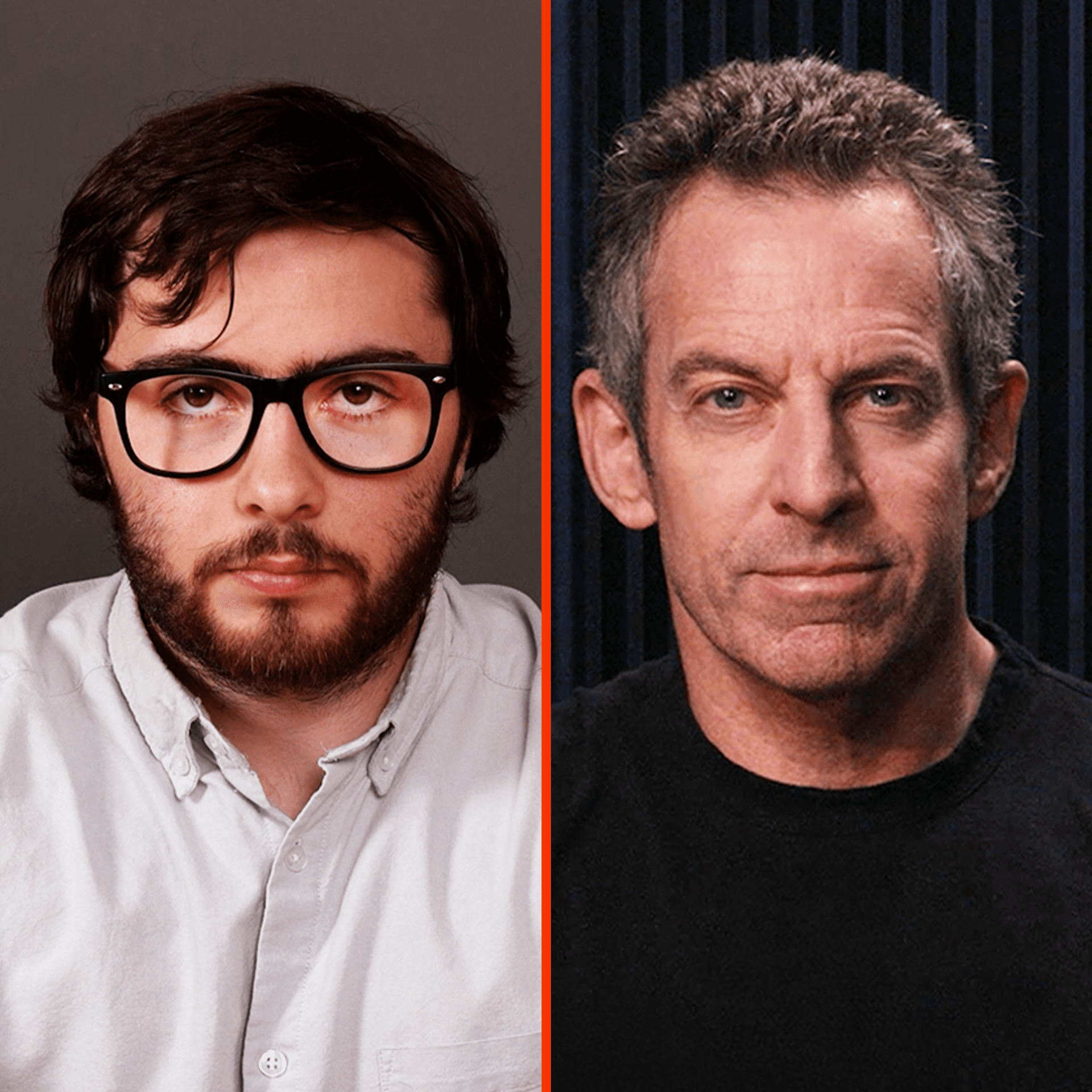
Automatic transcript. May contain errors.0:01Sam Harris:You're listening to Making Sense with Sam Harris. This is the free version of the podcast, so you'll only hear the first part of today's conversation. If you want the full episode and every episode, you can subscribe at samharris.org. There are no ads on this show. It runs entirely on subscriber support. If you enjoy what we're doing here and find it valuable, please consider subscribing today. I am with Susan Cain. Susan, thanks for joining me. Absolutely. It's so great to be here. Yeah, it's great to see you. And that doesn't happen enough for me, but I want to make the most of this occasion.
0:37Sam Harris:So to remind people, you are the all too famous author of the book Quiet, which became a Bible for introverts everywhere, and then led to a TED Talk that is, if not the most seen TED Talk in the history of the galaxy, it's among the most seen. So there's like tens of millions of views on various platforms. And then more recently, that was about 15 years ago, 14 years ago? 2012, whatever that was. Yeah. And then you have written a book, Bittersweet, which came out more like four years ago, 2022? That's funny. I'm not even sure, but something like that, three or four years ago. Yeah. And now my family and I actually have another book coming out.
1:20I don't know if I mentioned that to you.
1:21Sam Harris:No, no. Yeah, yeah, Yeah, we have a children's book coming out that we wrote with three generations of canes. Oh, sweet. Yeah, my in-laws, Ken and me, and our two boys, we all wrote it together. Oh, what a fun project. Really, really fun. Yeah, and based on an experience that the boys had where we went on this childhood vacation, and they befriended two adorable donkeys and then had to say goodbye to them at the end of the vacation. And so it's about bittersweetness and how to say goodbye. Oh, nice. When does that come out? Any minute now. I think it's June 2nd. And, you know, most recently and continuously, you have a presence on Substack where you can be found under the banner of The Quiet Life, which is, from the looks of it, is very focused on community as much as your actual writing.
2:13Sam Harris:What are you doing over there on Substack? Well, I write usually to, I guess, newsletters is what people call them generically, but I call them kindred letters because I'm writing to people who have the same orientation that I do towards quiet depth and beauty. And so I write two of those kindred letters every week and then really encourage people to comment because, as you say, the comments and the dialogue back and forth, I think, is some of the best part of the substack. So a lot of it is that. And it's sharing, you know, I call it art, ideas, and constellations. So it's sharing all of those things.
2:53And then we also come together once a month and do candlelight chats. Actually, Anika was one of our guests. Oh, nice. One of everyone's favorites. Nice.
3:01Sam Harris:I think I knew that at the time. But like everything else, it has been memory hold. So people join you on Substack and go cameras on for that? Or is that a Zoom call? Or how does that work? Yeah, we do that on Zoom. It's live. And so people can come on and talk to me, talk to our guest. But then we also send out a replay later for the people who couldn't make it, especially because we have people from all over the world. So, but I like to do it live. How are you thinking about the future of books now, if you are thinking about the future of books as a writer? Oh, my gosh. I think about it all the time.
3:36And in fact, I just went to a meeting of this author's group that I've been part of called The Invisible Institute. We've been together over 20 years, and that was the huge topic. So I don't know. I mean, I'm aware that I myself read many fewer books than I used to, but that when I do read them, I still really adore the experience and feel like there's nothing else. But in terms of...
4:29Sam Harris:plunge into the past for which we're all nostalgic for, but it's just, it has gotten harder. I mean, even honestly, even for those of us whose job it is to read books, I mean, I can't say that I've stopped reading books, but I do notice that reading for pleasure especially is something that is just in a zero-sum contest with everything else that can be done for pleasure. Even when it's reading, there's just so much, there's an endless amount of material online that one feels a professional or personal responsibility to read. So it's lots of magazine articles and, and, and sub-stack newsletters, but my groaning shelves with thousands of books are looming over me at all times.
5:11Sam Harris:And, and I've, I have an increasingly guilty relationship or even just greedy and, and, you know, I, I'm concerned it's degrading into this bittersweet relationship where like, When am I going to find the time to make the progress I want to make through my own library? I know exactly what you mean. And for me, the guilt of that relationship is embodied in the fact that I used to just know exactly where every single book sat on my bookshelf. Because I think I just spent so much time looking at the shelves. Just looking at them made me so happy. So I just memorized their placement. And now I have no idea where any book is.
5:49And I feel like that's really telling of how things have shifted. But I do still have these moments and they usually happen for whatever reason when we're traveling or on vacation. It could be business travel and it could be vacation. I can focus much more. There's something about removing the everydayness of life and the feeling of daily responsibilities where I can still get back into that state. which doesn't mean that I'm not still checking my phone more than I wish I were but I'm still really loving books and every time that happens actually every time we're traveling I vow to do the same thing as soon as we get home and then it all flies away so in writing on substack is this
6:32Sam Harris:a decision to go where the people are or is it just you just like the demand you've placed on yourself to publish something without any friction on a regular schedule? Or how are you thinking about Substack writing versus book writing? I actually, with Substack, I don't, although writing is the central thing that I do there, I don't feel like writing is the primary impetus for why I do it. I think of it much more as tending to a community. All my life, I felt really inspired by my grandfather, who was a rabbi who was serving his community until he was 94. like literally till like two weeks before he died.
7:13He was there with them. And I feel a kind of love for my readers. So I just wanted to have a way to be kind of more closely connected with them. So I feel like that's what the Substack is really about. And the tricky thing about it is to the extent, I actually have three different books that I'm thinking about writing now and files that I add stuff to all the time. But I spend a lot of time on the Substack. And so a lot of my creative energy is going in that direction and there's less available for what used to go into book writing. So that's something I'm trying to figure out. Do you feel this with all the different projects that you have going?
7:50Sam Harris:Yeah. Well, you know, I just feel the poverty of 24 hours in the day, which afflicts everyone. But I mean, I've always looked to do things that are synergistic or where you get two bites at the same apple on some level. So you could write the back in the day you could write the op-ed, which later would wind up in a talk or in a book. And I was hoping Substack would be that for me, but it hasn't quite, I just have not been able to spend enough time writing there. So it really has just defaulted to becoming a publishing channel for the podcast. So are you working on another book right now? I'm not.
8:26Sam Harris:No, I have something I'm working on, which I'm not ready to publicly announce because I haven't fully admitted to myself that I'm working on it. Oh, wow. That's very intriguing. Okay. someday but um how is ai showing up for you as a benefit or concern with respect to your own writing or the writing of others or where our culture is headed what are your thoughts on ai so my thoughts are that i notice when i'm scrolling around on social media it keeps happening to me that that i'll start reading some kind of story that sounds really interesting and then i quickly realize a paragraph in that it was just generated by AI.
9:04And I noticed that the moment that I know that it was AI, I have zero interest and I stopped reading.
9:11Sam Harris:So how are you noticing that? Because I, I think I've seen you write about this on your own substack that some of the famous tells for AI are not there by accident because they're actually, they've been scraped from the habits of good writers. And for instance, the M-dash is something that I imagine I put into use basically as early as any member of our species, and I'm not giving it up, right? So it's rumored that an M-dash is the signature of AI slop now, but I'm not stopping. And yeah, so how do you think about that? And how do you think you're noticing that you're in the presence of the robots?
9:48I feel the same way. And by the way, I recently learned that apparently writing in phrases of three is also apparently an AI tell. And I feel like I learned that painstakingly from loving C.S. Lewis and reading his work and trying to figure out what it was that was so moving about it and then realizing that he used those threes. So I'm very bummed about that now being a tell. But yeah, in the case of stories, I don't know. There's just something on social media when the stories are too packaged and you too much feel like every beat follows the next one. somehow you just know there's there's just some note of artificiality about it but i must say like as a writer knowing that i have noticed now when i do my sub stacks that sometimes i'll like add a an awkward parenthetical or something and it used to be that i would have as a writer taken the time to get rid of the awkwardness of it and now i sometimes leave it in just to show that i'm actually the one who was doing the writing which is ridiculous yeah yeah but i mean i don't know One big question I wonder about all the time is, I've been really worried about the death of the humanities in our culture.
10:59Like long before AI came around, I've been super worried about that. And there's a million reasons that it's happening. But I'm actually wondering if the advent of AI is actually going to help or cause us to turn towards the humanities. I think this is something I've heard you talk about as well. It's like that's all that's left.
11:15Sam Harris:I've been thinking of it in terms of the revenge of the humanities. Yeah. Because obviously, learn to code is not a phrase that is tripping from the tongues of anyone over in the CS department anymore. And yeah, when you think of what will be left standing, should anything be left standing when the robots take over, it has to be those things where we still care that a human is in the loop, right? It's not radiology. It's not even scientific discovery, right? I think if we could automate all science, we will not be nostalgic for the time that the apes were the authors of those discoveries. I mean, we simply just want to know what's true, right?
11:54Sam Harris:So if we can get the real physics faster and the real medicine faster and everything in between, I think we want that from the robots. But I'm not sure we want to see robots writing all or any of our novels or poems. or, you know, we're not going to show up in a Broadway theater to see robots perform Arthur Miller. I mean, you know, I guess maybe for novelty's sake we might, but I just feel like there will be those things and they'll be disproportionately on the humanity side of the quad where we feel like we want the human connection both at the origination of the work or at least the curation of it, right?
12:33Sam Harris:We just want some, we want people with good taste, I think, guiding culture once more and more of it gets produced by machines. Yeah, I think it's not only about wanting to know what's true. I think it's also about there's just a deep insatiable curiosity about who humans really are, like who we are. So I think the amazing thing about reading a novel is just the glimpse into the subjective inner life of another human. That's really what we're in it for. And I think that's why I stop when I come across these AI stories. I feel like, okay, it's not actually giving me a true insight because it was just put together by some code.
13:11Sam Harris:Do you think you feel that way about all art equally? Like, I'm not sure I feel that way about music, maybe like purely instrumental music, leaving, you know, the singing and the lyrics aside. If you play me some tune of any genre that just sounds great, I don't know that it, I care. Like if you then pull back the curtain and tell me that this is pure AI confection, it's possible I'll still like it better than the human product because on some level music is doing something different for me. It's a little bit like the difference between art and interior decorating. Like, you know, if you tell me that couch, the color of the couch is what it is and I don't care how it got there, right?
13:58Sam Harris:It's either a couch I love the look of or not. It's either comfortable or I'm not. But if you tell me that, you know, this, we just found the perfect fabric and the perfect color and it's all made by robots. You know, on some level, I just care about the object itself and not how it got there. So that's such a perfect analogy. It's a very, very Philistine analogy. All the musicians are horrified that I went that far down the hierarchy of mattering. But I don't actually feel that way about it. So, okay, what you just said, I would feel if I were, you know, out at a restaurant and there's great background music playing, I don't care in that context who wrote the music or where it came from.
14:40But actually, like, the whole reason that I wrote Bittersweet, my last book, was because I have had all my life this incredibly intense, euphoric-slash-ecstatic reaction to certain forms of minor key, sad music. And I was just trying to figure out where on earth did that come from.
15:02Sam Harris:Have you experimented with trying to produce AI, minor key, sad music? No, but I think I would have the same reaction to it that I have when I start reading the social media story and then realize it's AI and stop reading. It would be an interesting psychological experiment to get someone. I want to deputize someone, maybe one of our listeners can do this who's a musician. This is against the grain of what anyone wants, I'm sure. But if someone produced a test for you between the human made minor key music that that has organized all of your intuitions around this paradoxical emotion of bittersweetness and some AI, you know, version where we could do the Pepsi challenge here.
15:48Sam Harris:it would be interesting because if you wound up not being able to tell which was which or which you like better that's what do you think that does to you as a person who cares about all of this this whole part of culture okay but here's the thing i think i might not be able to tell the difference if it's a blind taste test but i think part of what makes the reaction that i have and many people have this same reaction. So ecstatic is because I'm aware that that music was produced by a human who has experienced all these things and was talented enough, gifted enough, and generous enough to turn it into something that beautiful and that transcendent.
16:30So I start feeling this wash of love for the musician and for the other people who are listening to it. And so if you told me that the music was created by a machine, the wash of love wouldn't feel the same way, even if my initial response did.
16:44Sam Harris:But until these machines arose, it was just the safe assumption. You could be 100 % sure that the music you're listening to was created by a person. And so you never had to think about it. So again, I'm not, as is probably already obvious, I'm not a deep student of music. But when I listen to the soundtrack to a film, say, and the music is perfectly calculated to produce in me some set of emotions. Take the bittersweet version. I guess I'm thinking maybe like the soundtrack for the, is this Ennio Morricone, the soundtrack for the mission that might hit a similar spot, you tell me. I don't know that soundtrack, but I'm guessing.
17:25Yeah, probably.
17:27Sam Harris:But it's just very affecting music. I don't think I'm ever thinking about how it was produced. Again, back in the day, you didn't have to think about it because you knew there was an orchestra there and there were people behind all that. But I don't think I was ever thinking, there's a much more fundamental, just purely kind of neurological and primal response to a stimulus, right? This is almost like, you know, tasting a fruit you've never tasted before. And it's just, you've got this sunburst of flavor in your mouth and you're not thinking about the evolution of this plant that gave you the fruit.
18:02Sam Harris:You're just, you're just having an experience. And I do think that the raw experience of bittersweetness or any other emotion to music can be fully uncoupled from any thought about how it got there in the first place. Well, okay. So the example of the soundtrack to a movie, that's a really interesting example, because I feel like if we think of it as a continuum, it's not quite in the realm of interior design, but it's also not in the realm of just sitting quietly and listening to your favorite musician. It's somewhere in between. My Philistine bona fides are well established at this point. No, no.
18:39I might grant you that in the context of a movie, maybe it doesn't matter. And in fact, my family and I talk about this all the time because that show Succession. I don't know if you've watched that one. Yeah, yeah. Yeah. And the music for Succession. Your music's perfect. Oh my gosh. It's so incredible. And so we've talked about, okay, would it be as good if the music had been produced by a machine. And maybe it would in that context. But when it's purely a musical listening experience, I'm actually going to hold down a quote for my wall. So as I like to say ad nauseum, I love Leonard Cohen, the musician.
19:14He's like my rabbi, my patron saint. And I literally have this quote hanging up on my wall that says, the only religion I've ever known is the church of Leonard Cohen. All others pale in comparison. And that's what someone said about his music. And I thought, yeah, that's exactly what I feel.
19:29Sam Harris:Whether someone else wrote that or whether Leonard Cohen wrote that. No, no, no, no. This was like a random comment on a YouTube video of his music. And when I read it, I thought that that doesn't work with AI because it's like the, I know you don't like the, probably the word soul, but it's like the soul of the musician is transmitting to you. Well, that's why. When you're listening in that way. I held music with lyrics and voice to one side just because there it's pretty obvious to me that I'm not so interested in the version of Hallelujah that is sung by a robot. But it's not the singing, it's the creation of it.
20:04It's the fact that a human actually created it.
20:07Sam Harris:Right, right. Yeah. So written and sung by a robot, whatever the simulacrum of the same vibe, however successful. I think it's not interesting. It's not interesting once you know that it's the product of AI. But again, not knowing in the Pepsi challenge, I think we will be fooled. We could be fooled already. And there's something psychologically interesting about that. I mean, imagine what it's like to withdraw your sympathy for a piece of art once you know that a human didn't make it, right? Like, imagine having the full effect of if you can imagine or or even remember what it was like to hear Leonard Cohen's version of Hallelujah for the first time and have it hit you exactly as it did.
20:54Sam Harris:Imagine having that experience with something that you don't know is just, you know, robot slop and then having to kind of break off that reaction because now, you know, you've been tricked on some level. Yeah, I don't know. I don't know that it's any different than what we'll think if we get to the point that the robots really can look like another person and embody another person in that uncanny valley way. And they tell you they love you and you seem to love them. But then you know that it's not real and you switch them off at any moment. I don't know. I'm still in the camp of thinking that unless we get to the point of thinking that there's something interesting and sympathetic about machine consciousness, that unless we get there, I think it's never going to feel the same and we'll always know.
21:44And that that will invalidate the experience to some degree. Maybe not to the full degree. So again, I think it'll still work in the context of a movie soundtrack or that kind of thing, but not for the real experience.
21:55Sam Harris:My prediction is that, I don't consider this a hopeful one, but it might be less weird than the certainty of AI consciousness. Members can hear the full conversation by subscribing at SamHarris.org. Subscribers get a private RSS feed you can use with your favorite podcast player. All human beings are born into this world with the deep instinct that we belong in another more perfect and more beautiful place than this one. We create religions in the name of that belief, that instinct. I mean, we are longing for the Garden of Eden, and we feel every so often like it's just around the corner. Maybe we've glimpsed it, but we can never fully get there.
Read the full transcript
22:34I don't feel like I have the fear of death so much. I have the fear of mourning.
From the publisher
Sam Harris speaks with Susan Cain about writing, creativity, and what AI means for human culture. They discuss the future of books and reading, the tells AI inherits from good writers, why the advent of AI may spark a revival of the humanities, following your bliss, the ethics of curing sadness, the therapeutic potential of psychedelics, and other topics.
If the Making Sense podcast logo in your player is BLACK, you can SUBSCRIBE to gain access to all full-length episodes at samharris.org/subscribe.