In short
Sam Harris revisits his 2017 controversy over platforming Charles Murray on race and IQ, discussing how media ethics and “wokeness” enforcement escalated into personal attacks; then shifts to Kathryn Paige Harden’s behavioral genetics and her new book, Original Sin: the Genetics of Vice, the Problem of Blame, and the Future of Forgiveness.
Guests
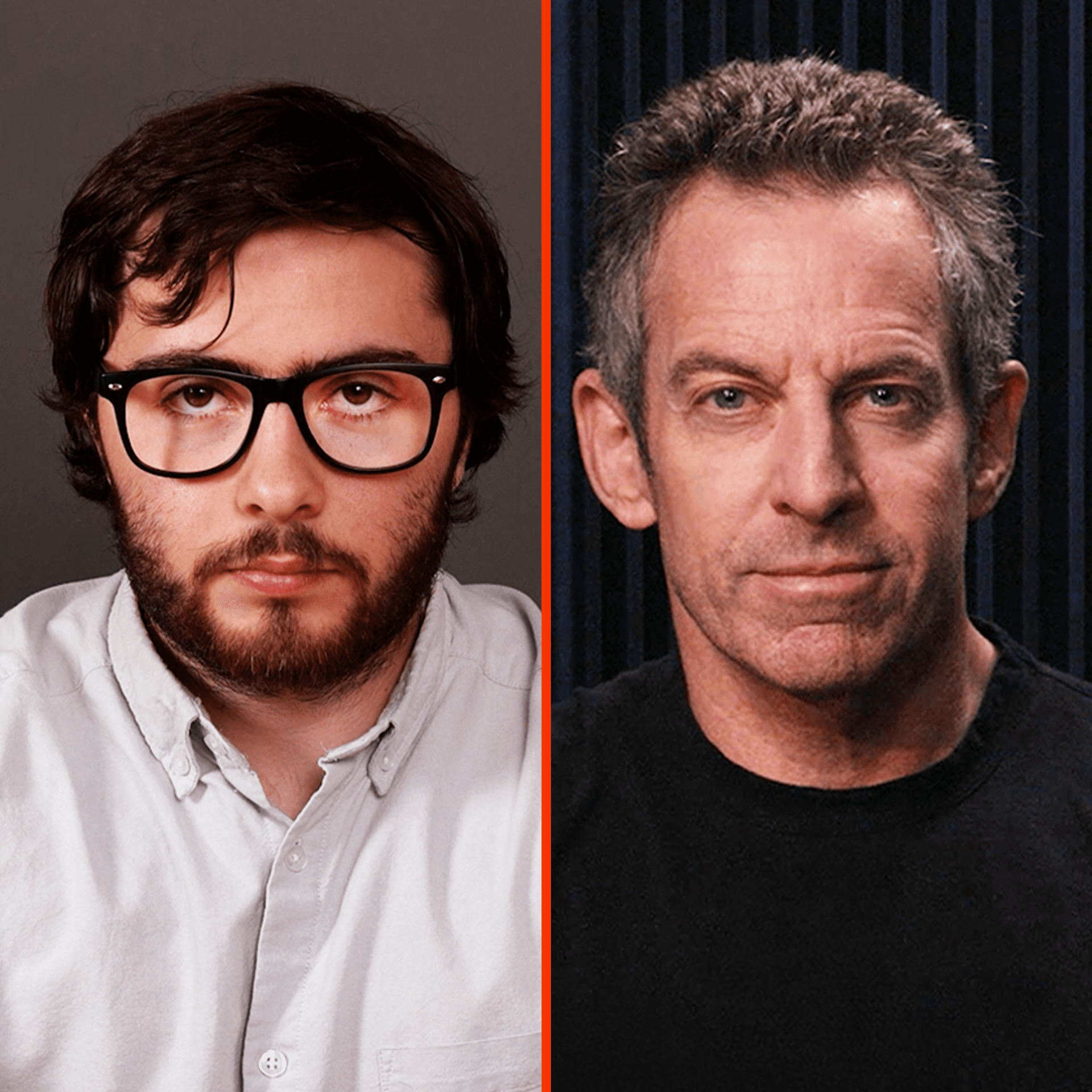
Kathryn Paige Harden, behavioral geneticist (author of The Genetic Lottery; now Original Sin). Sam Harris hosts.
Key claims
Intentions don’t matter as much as what’s in the text; political backlash can amplify scientific disputes into character attacks. Behavioral genetics is controversial due to US eugenics history, far-right interest in innate biological differences, and the tension between viewing ourselves as agents vs treating behavior as genetically influenced. Heritability is often misunderstood.
Notable examples
Murray being assaulted on a college campus; Ezra Klein’s “woke enforcer” role; Southern Poverty Law Center “hate watch” listing; IVF embryo selection and Alabama/Texas policy context. Study: people’s gene-impact estimates align with twin-study meta-analytic heritability for traits like personality, school performance, severe mental illness, and depression.
Written by AI. May contain mistakes. Listen to the episode to check what was said.
Chapters
Tap a time to open that second in VORevisiting Past Conversations
0:45 to 3:05
Sam Harris revisits his previous podcast with Kathryn Paige Harden after six years.
“And it just seemed to typify where free speech and tolerance and moral panic was going at that moment.”
Controversy and Backlash
3:05 to 6:15
Discussion of the controversy surrounding Charles Murray and the backlash faced by Harris.
“the Southern Poverty Law Center for the kinds of things that had been said about me in the aftermath of that podcast with Charles Murray and any contribution you made to it.”
Examining Behavioral Genetics
6:15 to 9:30
Harden shares her experiences with backlash from her work in behavioral genetics.
“back to that somehow in a second, been wrapped up into, you know, a conflict or a disagreement that you were having with Ezra really about, you know, media and tactics and power and responsibility and ethics.”
Reflections on Writing and Intent
9:30 to 11:40
Harden reflects on her writing intentions and the misinterpretations that arose.
“I would just say like, you know, I'm not a political scientist.”
Political Landscape Shift
11:40 to 14:00
Discussion on how the political landscape has changed since the original podcast.
“That was never my, that was never my intention.”
Critique of The Genetic Lottery
14:00 to 15:12
Discussion on the criticisms faced by Harris's work and its implications.
“your newest one, Original Sin, but your last one, The Genetic Lottery, I saw that piece in the New York Review of Books written by two, you know, one guy was a biologist.”
Introduction to Original Sin
15:12 to 16:03
Exploration of the themes presented in Harris's latest book, Original Sin.
“These are all topics that are super important and also polarizing for obvious reasons, because here you're talking about concepts that relate to not just human difference, but the differences that really matter.”
Controversy in Behavioral Genetics
16:03 to 20:14
Examination of why behavioral genetics remains a contentious subject.
“So just give me the big picture view of the field before we get into your book.”
Heritability and the Nature-Nurture Debate
20:14 to 21:08
Clarification of heritability and its impact on the nature-nurture discussion.
“get there, I think maybe we should clarify this concept of heritability and the divide or lack of a divide between nature and nurture, because it seems to me there's some confusion that creeps in there.”
Transcript
Automatic transcript. May contain errors.0:01Sam Harris:You're listening to Making Sense with Sam Harris. This is the free version of the podcast, so you'll only hear the first part of today's conversation. If you want the full episode and every episode, you can subscribe at samharris.org. There are no ads on this show. It runs entirely on subscriber support. If you enjoy what we're doing here and find it valuable, please consider subscribing today. I am here with Kathryn Paige Harden. Paige, Thanks for joining me. Thank you for having me. It's been a while. It's been six years. I know. It was just like five minutes and a lifetime. Yeah. The last six years.
0:36Sam Harris:Crazy. Well, so I went, as you know, I sent you an email yesterday not wanting to ambush you with my recent adventures in reviewing our previous podcast. So we spoke six years ago, basically a full two years after this major controversy that I had with having had Charles Murray on my podcast talking about race and IQ, that anodyne topic that provokes no controversy at all. Yeah, easy, light. And to remind people, my interest there was not in the topic, but in the fact that here's a guy who wrote a book on the topic and 25 years later, he's being physically assaulted on a college campus for talking about a different book.
1:18Sam Harris:And it just seemed to typify where free speech and tolerance and moral panic was going at that moment. And so I wanted to do a postmortem there and did and put this in the no good deed goes unpunished category. But, you know, for my troubles there, I got castigated as a racialist, pseudoscientist, you know, dupe of Charles Murray's in so many words. And part of that criticism came from you and your colleagues, Eric Turkheimer and Richard Nisbet in the pages of Vox. And Ezra Klein published that and then gave it lots of topspin with his own op-eds. We got into a big fight by email that spilled out into public.
1:58Sam Harris:He came on my podcast and, you know, paragon of wokeness that he was at the time, he had counted the black and brown faces of the people I had interviewed in my catalog up until that point. and found the ratio wanting and emblematic of my own racism, however unacknowledged. And I don't know if you followed any of this, but he recommended that I read closely the work of Ibram X. Kendi at the time to perform an exorcism on my brain. Kendi to my lights, who is a man who, if it wasn't obvious at the time, it is now as a kind of race hustler and academic imposter. But this is all to say that it was a very fraught time.
2:34Sam Harris:And you came on my podcast two years later to just, we kind of processed it. And I thought we had a really good conversation. I did then. I went back and listened to it yesterday. And it was, I think it's still a good conversation. I invite people to go listen to it. I think we, it was a bit of a tightrope walk for me. I felt in listening to it again, that you were kind of gaslighting me and in to the degree that you seemed oblivious as to how I could have wound up on the hate watch page of the Southern Poverty Law Center for the kinds of things that had been said about me in the aftermath of that podcast with Charles Murray and any contribution you made to it.
3:14Sam Harris:And then I just happened to see in my email that Gideon Lewis Krauss, who profiled you in the New Yorker, I think a year after that, had reached out to me for comment. And I had, I think, quite correctly declined to comment, but I just noticed in my exchange with him how pissed off I still was over the whole thing. And I wasn't pissed off when you and I spoke. I managed to repress that or transcend that or something. But I mean, just the kinds of questions he was asking me by email, the way it was still unprocessed. The truth is I'm still pissed off about it. I'm still pissed off at Ezra Klein because I think what's happened is that the Overton window has moved.
3:54Sam Harris:He's moved with it. He hasn't acknowledged any of the ways he was a woke enforcer and leftist knucklehead back in the day. And now he's acting like none of that ever happened. And so I think there is a kind of a reckoning to be had here because I blame all of this for many things, but chief among them that we have a President Trump now and a highly weaponized and energized right wing now that is a backlash to wokeness and the kind of intolerance we were and, you know, moral panic, I think I was discovering there. But I bring this all up with you and revisit it. And this is not what we're mostly going to talk about, but because I've noticed that in the intervening years, you've written two books on behavioral genetics.
4:37Sam Harris:And I was, I experienced some amusement, if not schadenfreude to see you incur some of the same wrath that was directed at me very much in the same terms. I mean, you were attacked, you've been attacked as, you know, effectively as a eugenicist, as a, you know, a handmaiden to the alt-right. I think someone somewhere, I think I have this from Gideon's profile on you, someone called you Charles Murray in a skirt, which was just so on the nose that I couldn't help but smile and I'm smiling even now. So I just wanted to ask you if you see any of that differently, given that you are now have kind of lived on both sides of it to some degree.
5:18Sam Harris:I mean, again, it's been a long six years, but also a short one. What's happened to you? And then we'll go on to talk about your book and all kinds of other interesting things. Yeah. When you emailed me, well, I figured we would talk about it a little just because we haven't had a conversation in six years and a lot has changed. And I went back and I just re-read everything. I re-read the piece that I wrote with Eric and Dick Nisbitt originally in Vox. And then And I read some of the replies to it. And I read our response to it. And I read Azra's kind of separate piece that he wrote a little bit after that.
5:54And then I actually started to listen to y 'all's podcast. And I thought, I don't know if I can go that far down the rabbit hole. And, you know, if you would ask me in 2020, you probably did ask me in 2020. I think that my understanding of that situation was that I had a disagreement with Charles Murray on the scientific merits and that that was my primary concern and that that had somehow, and I'll come back to that somehow in a second, been wrapped up into, you know, a conflict or a disagreement that you were having with Ezra really about, you know, media and tactics and power and responsibility and ethics.
6:35And I really thought of those as more separate than you did and you experienced. And then when I went back and I reread my, or our, I will say it was an hour, original Vox piece, I was like, oh, Sam is all the way through this. Like, my memory of it had been, like, this is us describing sort of scientific objections to Murray's comments. And I really had gone into it intending to focus on that and remembered it that way and was surprised, unpleasantly surprised at just how much of the piece was not just I think Murray is wrong on the scientific points, but I think Sam is wrong, normatively wrong on platforming him having this conversation.
7:23and that was really you know it was one of those things where I was like how did my my memory of this so different like you're not surprised to hear that that you're in that piece so what you know why was it a surprise to me to reread that and I think that gets at one of the lessons I've learned in the last nine years we wrote that in 2017 and it was my first it was the first thing I ever wrote like for the public like it was my first like non-academic piece so hopefully I've learned a few things in the last decade. And one of those lessons is that you have your intentions as an author, but once the piece is out there, like those intentions don't really matter that much.
8:06It's actually like what's in the text, like what did you actually say? And I think you can have a hard time actually seeing a piece of writing clearly when you know yourself and you've been so close to it. And also it was just my first experience writing something at the pace that you write it, like not for an academic journal article. So anyways, like I would say that if I could go back in time, I had no intention of wandering into a like Ezra Klein v. Sam Harris debate about wokeness and media ethics in that period of time. And I would have limited myself much more to what am I actually an expert in, which is not what are the ethics of being a large podcaster in a time of both racial tension and declining norms around free speech, but like what is the science around genetics and IQ?
9:00So that's the kind of first thing that I was thinking about. And the second thing is just like how different the political landscape is. You know, 2017, I don't think I was alone in thinking that maybe if people like Murray were, you know, not so influential in terms of their views on science, that that might kind of stem the tide of a certain set of beliefs. And in retrospect, all of that seems just very quaint to me. Like, I think what we've seen in the last nine years, since we first became acquainted with each other through, you know, this unfortunate conflict has shown that the, maybe if we just like, you know, maybe if we could just are really, really policing who is talking to whom, that that's going to stem the rise of far right extremism.
9:55I would just say like, you know, I'm not a political scientist. This is also not my area of expertise, but like that doesn't, hasn't really seemed to work so far. So I, you know, I feel like in 2020, I was a little bit like, my beef was not really with you. It was with Charles, not really beef, my disagreement. Like, you are famous and successful. Like, why does this matter to you so much? I feel like I was a little bit not hearing you when you were describing why you were so angry. And now looking back, I'm like, oh, no, I totally see why he was upset about this. And then the last thing I'll say is, you know, now I've been on the receiving end of that, as you know, and how I've been on the receiving end of how scientific criticism, which is like, you make this claim, I don't think you have the evidence for it, can, as it echoes through popular culture, really become a license for some people to just caricature your work in the most unflattering ways.
10:59And now I've seen that happen, you know, as you know, for me too. And so it's just given me a lot more empathy for how it can be very, just empathy for that situation, which I'm sure was no fun for you. And when we talked, I don't think I ever said like, I'm sorry that that situation was something that was so uncomfortable for you. And I will say it was never my intention, for whatever intentions matter, which we can talk about, for the scientific criticism of Murray to kind of mushroom out into this kind of impugning of your character and work in its totality. That was never my, that was never my intention.
11:43Sam Harris:Yeah, yeah. Well, so I just invite people to go back and listen to that first conversation because I think it was, I thought it was surprisingly good given the constraints on it. And it walks through some of the scientific differences, which still in retrospect seem quite minor to me. I feel like they were given And they were magnified by the sense of the political importance of highlighting them. And I think, and again, I don't know, I know that Turkheimer was your advisor or mentor and may still be a mentor. And I don't know either Eric or Dickness, but personally, I get the sense from having read them that they are a little bit in the mold of people like Stephen Jay Gould and Richard Lewontin, who in, you know, paleontology in the first case and behavioral genetics in the second, seemed to me, to my eye, again, there'll be differences of opinion about this, but they seem to not just not clearly police the boundary between politics and science, but consider it a kind of scientific virtue to ignore that boundary, right?
12:53Sam Harris:I mean, they were very, these guys were really pushing a progressive agenda in the way they were advocating for certain scientific ideas and castigating others. I mean, this is probably the ultimate case of this is Stephen Jay Gould's book, The Mismeasure of Man, which, you know, again, this is not my area, but as far as I can tell, is not a credible document on the intelligence literature. But there are just certain topics, IQ and certainly racial differences and IQ being one that are so polarizing and for obvious reasons that, you know, unless you are going to be really scrupulous in like standing behind some kind of Rawlsian veil of ignorance to talk about these things, you are, you know, you're going to be tempted to not play fair with your scientific opponents and detect bad motives everywhere when there's, when there are differences of science.
13:51Sam Harris:scientific interpretation. And that's what happens. And that's frankly what I see happening to you. I mean, I haven't noticed it so much with respect to the book we're going to talk about, your newest one, Original Sin, but your last one, The Genetic Lottery, I saw that piece in the New York Review of Books written by two, you know, one guy was a biologist. I forgot the names of both these people. Sorry. Perhaps it's good that I forgot their names. But both Stanford professors both, you know, have PhDs seemingly adequate to equip them for the task of reading your book, understanding it and criticizing it.
14:22Sam Harris:And yet I could see in the moral charge of what they were writing there, the same kind of, I mean, you know, again, the allegation is these are dangerous ideas. It's irresponsible to traffic in these ideas. You're putting communities at risk by speculating in this area. And there's an ugly history that all of this conversation about genes and determinism and heritability and, you know, the mechanics of, you know, that produces human difference. All of this is a top stuff that really should worry us. You know, in your case, eugenics being, you know, perhaps the primary offender. And so it's just, anyway, it's worth looking back at our original conversation to see how we were coming at it then.
15:05Sam Harris:And I don't really have more to say about it, but I just want to thank you for coming on the podcast and talking about this. And And I just want to dive into your newest book, which I loved, which is Original Sin on the Genetics of Vice, the Problem of Blame, and the Future of Forgiveness. These are all topics that are super important and also polarizing for obvious reasons, because here you're talking about concepts that relate to not just human difference, but the differences that really matter. I mean, we're talking about violence, we're talking about impulse control, differential success in life, the people who wind up in prison or addicted and homeless, and the people who wind up running major institutions and having beautiful lives.
15:49Sam Harris:I guess, but before we jump into the book itself and those specific topics, maybe you can explain why behavioral genetics as a field is still so controversial. I mean, the one thing I read in that kind of weird New York Review of Books review of your last book was almost a suspicion on the part of the authors that, you know, it was too much to say that we know the genes are doing anything, you know, are likely to be doing anything. So just give me the big picture view of the field before we get into your book. Yeah, I mean, so behavioral genetics is how do the genes we inherit influence in combination with other factors the way that we behave.
16:32And in some ways, behavioral genetics has so kind of infiltrated our way of talking and thinking about behavior. And also, in some ways, we don't even need behavioral genetics to see that inheritance matters, that children resemble their parents in particular ways. Like, I think most lay people have an understanding that children are born different from day one in ways that matter for their likelihood of turning out certain ways. And there's this great study I like where they ask people to estimate, I talk about this in my first book, they ask people to estimate, you know, how much do you think genes make a difference for a variety of human characteristics?
17:14And they compare the average rating to like the meta-analytic estimate from twin studies. And they find that, you know, people are generally not blank slaters. Like the average American says that genes make a difference for not just your height and your blood type, but also your personality and your performance in school and your likelihood of developing a severe mental illness and your depression. and that the most accurate people are parents of more than one child. And I think that's a finding that makes intuitive sense to parents because you have children and you can see how they differ. So on the one hand, it's not that controversial of a science if you're looking at what is public opinion because most people already can see and they can recognize that people are different in ways that aren't easily explainable by their environmental circumstances.
18:05At the same time, it is perennially controversial, especially within the academy. And I think one of those reasons is the historical reasons that you've already gestured at. You know, there is a history of eugenics here in the United States that did justify, you know, forced sterilizations of people. that we do have an ascendant far right that does appeal to kind of innate racialized biological differences. So of course, a science that connects what you inherit to how you behave is going to be controversial given that political background. But I also think it's something even older and deeper than that, which is, you know, we experience ourselves as, as you've written about in your own writing as agents, as people who are deciding how to behave, who people who have control over the people that we are becoming.
19:01And behavioral genetics is a science that's taking the sorts of things that we consider our, you know, usually feel ourselves to be the subject of and making that an object of scientific study and pointing out the ways that it is influenced, rarely determined but influenced by, you know, versions of the molecules we happen to inherit. And so I just think that tension between ourselves as we are obviously part of nature and we experience ourselves as the subjects of our own lives is a tension that really lives right at, you know, behavioral genetics exists right at that tension. And so I think even if there was no, you know, We lived in kind of a more utopian place with no eugenic history in the U.S.
19:45and no, you know, a very different political and racial climate. I still think it might be controversial because it raises these questions about what, you know, who are we? Who are we as humans? What is this dilemma of being human?
19:58Sam Harris:Well, I think we'll talk about just how far out from under the shadow of eugenics we can get because I want to talk about IVF and selecting embryos and, you know, whether that's in it. whether we can fully avoid the Gattaca fate that science might be urging upon us. But before we get there, I think maybe we should clarify this concept of heritability and the divide or lack of a divide between nature and nurture, because it seems to me there's some confusion that creeps in there. This is a confusion that really does contaminate that other topic, which again, we're not going to get into or into much, you know, intelligence differences.
20:36Sam Harris:The taboo. Yeah. Yeah. Not to say we won't touch various third rails here. Members can hear the full conversation by subscribing at SamHarris.org. Subscribers get a private RSS feed you can use with your favorite podcast player. I think we have this increase in technology and the vision to look ahead. But we also live in a country in which Alabama tried to ban IVFs. And like Texas, you know, has essentially banned legal abortion. instead of hashing that out at the level of policy the way that other countries have, we have, you know, just the emergence of really, again, different moral communities around reproduction right now.
From the publisher
Sam Harris speaks with Kathryn Paige Harden about behavioral genetics, moral luck, and the problem of blame. They discuss Harden's book Original Sin, the controversy over Charles Murray and Ezra Klein, why behavioral genetics remains taboo, the meaning of heritability, nature and nurture as feedback loops, why biological explanations can increase blame, psychopathy as a continuum, a hypothetical cure for evil, embryo selection and IVF, and other topics.
Related Episode: #212 - A Conversation with Kathryn Paige Harden
If the Making Sense podcast logo in your player is BLACK, you can SUBSCRIBE to gain access to all full-length episodes at samharris.org/subscribe.