In short
James Kirchick argues that the Democratic Socialists of America (DSA) is a Marxist/communist-aligned “parasite” faction that is hijacking the Democratic Party, undermining democratic norms and enabling a path toward fascism in the U.S. He links this to left tolerance of Islamist movements and rising anti-Semitism.
Guest backgrounds
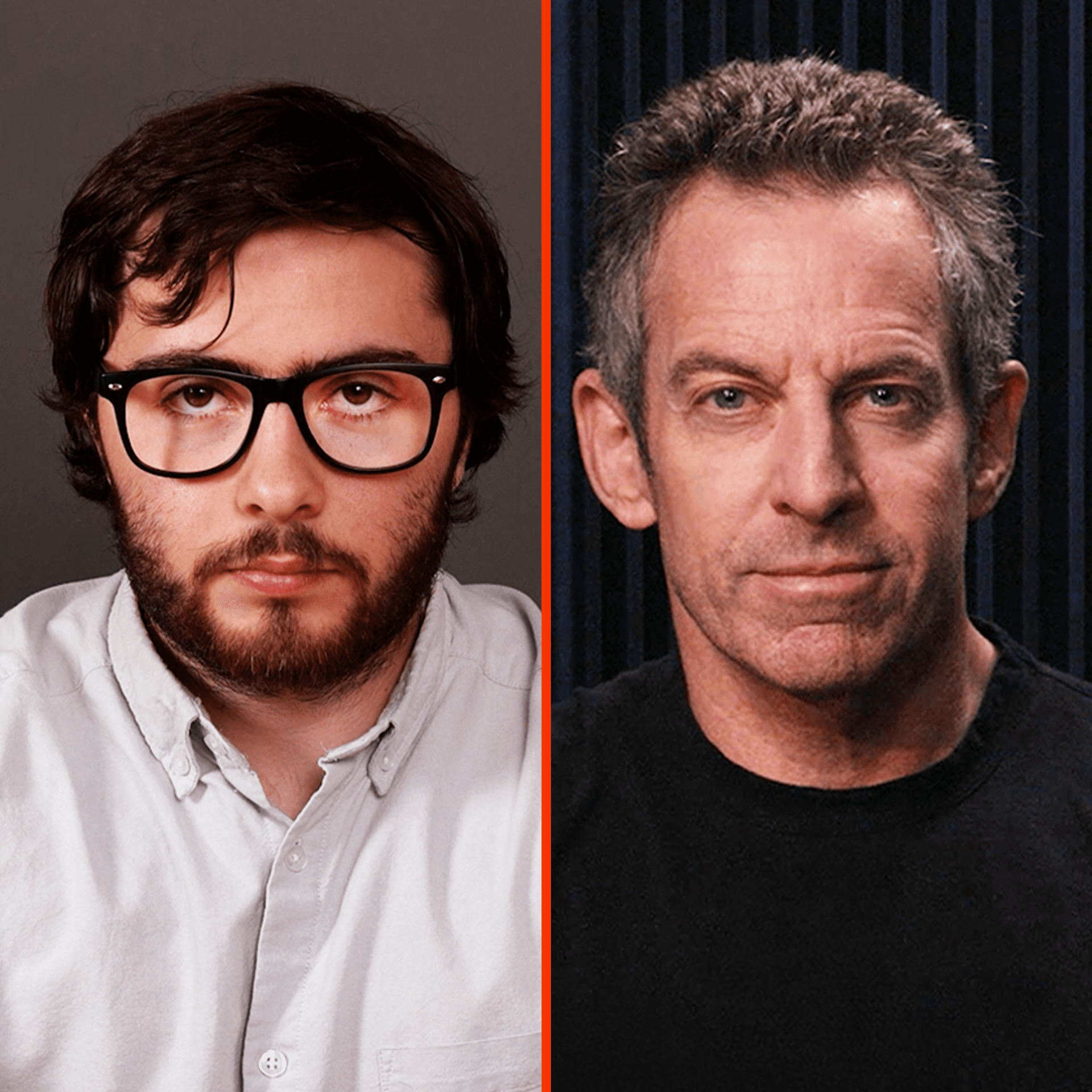
James Kirchick is a journalist; he previously worked at The New York Times and now writes for The Atlantic.
Key claims
The DSA platform calls for abolishing the presidency, Supreme Court, Senate, Pentagon, police, prisons, border enforcement, debt, capitalism, and private property. Kirchick says the DSA’s foreign policy supports communist dictatorships (e.g., North Korea, Cuba), and that its leadership is largely openly Marxist. He argues mainstream Democrats fear being “uncool” to criticize the DSA and tolerate anti-Semitism.
Notable examples
New York Mayor Roran (Eric) Mamdani is portrayed as charming but evasive on Israel-related issues (e.g., “globalize the intifada”). Michigan candidate El-Sayed is cited for blaming Israel’s defensive war for local Jewish targeting after an attempted synagogue attack. Hassan Piker is mentioned as an agitator. Kirchick also discusses “third-worldism” as the ideology connecting far-left and Islamist-aligned politics.
Written by AI. May contain mistakes. Listen to the episode to check what was said.
Chapters
Tap a time to open that second in VODiscussing the DSA's Impact
0:45 to 2:00
Sam Harris and James Kirchick discuss the Democratic Socialists of America and their influence on the Democratic Party.
“suicide pact of embrasure from the Democratic Party is just completely dysfunctional.”
Historical Context of the Left
2:00 to 4:20
The conversation explores the historical ties of the left to communism and its implications.
“Yeah, so I think this has been a problem on the left really for a century.”
The DSA's Platform and Beliefs
4:20 to 6:10
An analysis of the DSA's platform and its alignment with democratic principles.
“And that is ultimately the most important element of what we should all be able to agree to in the United States.”
The Rise of Radicalism in Politics
6:10 to 8:13
Discussion on the potential consequences of radical politics and the fear of fascism in America.
“The extent to which wealth inequality in the limit is going to obviously make politics in, you know, not just in America, but in any Western democracy, unworkable.”
Open-Mindedness and Political Boundaries
8:13 to 12:27
Exploration of the challenges of being open-minded in political discourse and the need for clear boundaries.
“But I mean, somehow, especially in America, that seems where we will default.”
The Role of Academia in Political Confusion
12:27 to 14:00
Sam and James discuss the influence of academia on political beliefs and societal understanding.
“These are the things that I'm not going to compromise on.”
Understanding the Confusion of the Left
14:00 to 16:27
Explore the confusion among the young and the role of professors in shaping leftist ideologies.
“And there are probably many other examples of that sort of thing.”
The Charm and Danger of Political Figures
16:27 to 23:04
Discuss the troubling nature of figures like Mamdani and El-Sayed in politics.
“I've taken a lot of heat from my audience for not recognizing what a charming, secular, and compassionate man he so obviously is, given the percentage of time he's speaking a sentence with a smile.”
The Political Future and Mainstream Democrats
23:04 to 24:52
Analyze the implications of current political figures for the Democratic Party's future.
“I mean, many people take Israel's pariah status in the international community as a sign of just how malevolent a state it is.”
The Malign Influence of Tucker Carlson
24:52 to 25:24
Hear a strong critique of Tucker Carlson's impact on national discourse.
“Members can hear the full conversation by subscribing at SamHarris.org.”
Transcript
Automatic transcript. May contain errors.0:01You're listening to Making Sense with Sam Harris. This is the free version of the podcast, so you'll only hear the first part of today's conversation. If you want the full episode and every episode, you can subscribe at samharris.org. There are no ads on this show. It runs entirely on subscriber support. If you enjoy what we're doing here and find it valuable, please consider subscribing today.
0:24Sam Harris:I'm here with James Kirchick. Jamie, me. Thanks for joining me on the podcast. Thanks for having me, Sam. So if memory serves, I wrote you a fairly plaintive email not that long ago, just more or less crying out to the universe, who is going to write an article that reveals just how awful the DSA is and how this emerging suicide pact of embrasure from the Democratic Party is just completely dysfunctional. And yet It seems to be in the making. And you have written that article over at The Atlantic, where you now are. You used to be at The New York Times. I think we want to talk about how and why you made this transition.
1:03Sam Harris:But over at The Atlantic, people can read your article, which is currently titled, The DSA is a Parasite. The left-wing faction is hijacking the Democratic Party. So I want to get into that. I want to link it up with our, I think, concerns we share about the state of American politics. But I'll just, you know, I'll save you a little time by just quickly summarizing these facts that the DSA platform calls for abolishing the presidency, the Supreme Court, the Senate, the Pentagon, the police, prisons, border enforcement, all debt, capitalism, and private property itself. So I guess the big picture question, which I don't know if you have an answer to, but I would like us to never lose sight of it.
1:44How is it that mainstream Democrats, literally every mainstream Democrat, hasn't recognized that this group and their consultation, their approval, any input from them at all
2:00Sam Harris:should be treated like plutonium? Yeah, so I think this has been a problem on the left really for a century. If you go back to the Cold War, right, there were many people on the left who refused to see the danger of communism. There was the Progressive Party, which was basically controlled by the Communist Party. And they ran a presidential candidate, Henry Wallace, who had been the vice president of FDR and then served as agricultural secretary as well. And that party was basically, it wasn't an openly pro-communist party because there was a communist party in the United States, but it was a party of fellow travelers, which is the term that sort of came up in that time to describe people who were ideologically sympathetic to communism but weren't communists themselves.
2:41And there was this other sort of turn that came up of how liberals might describe communists, which is where they were liberals in a hurry, right? Which is that we basically same, we share the same outcomes, the same fundamental beliefs, but it's just that they want to get there a little faster. They want to break a few more eggs before we get there. And I still think there is this sort of residual sympathy among people on the left in the United States for people on the extreme left. There's even some sense, a sense of admiration for them, right? That we're not as courageous as they are. I wish I could be as courageous as Zoran Mamdani and come out and say the things that he's saying.
3:15But I'm kind of stuck here in my political reality where I have to do the day-to-day, you know, give and take with the Republicans. There are Democrats who have spoken out very clearly against this. I want to make that absolutely clear. You know, Josh Gottheimer, who's a congressman, Jared Moskowitz, who's a congressman, Tom Swazze. These are all moderate Democrats. And obviously, John Fetterman, who's been probably the most vocal of them all. But there is this fear. And I think among the kind of intellectual class, you know, like sort of journalist types, the Ezra Clines, if you will, it's a fear of not being seen as cool, right?
3:49Because the DSA is cool. They're the cool kids at the cool kids table. And there's a lot of pressure if you are a center left or left liberal commentator. There's a lot of pressure not to make fun of the cool kids because then the cool kids are going to come and steal your lunch money. And that's just been a factor, I think, of American intellectual life for a very long time. And I think people on the left need to understand that if you're a liberal Democrat, you really do not share anything in common with the DSA, OK? Because they are not democratic. And that is ultimately the most important element of what we should all be able to agree to in the United States.
4:26Left or right, wherever you are on the political spectrum, that we believe in democratic processes and the rule of law. Very basic things that should not be politicized. The DSA does not believe in those things. And Sam, you only mentioned half their platform. If you look at their foreign policy, that to me is almost even more revealing because they endorse and support and offer solidarity to a wide range of the most despicable communist dictatorships on earth, okay, from North Korea to the Cuban dictatorship. So it's very, they have no ground on which to call themselves democratic socialists.
4:58They really are sort of in between that and I would say just outright communists, most of them at this point. The party is controlled. If you look at the actual, you know, Politburo, if you will, right, it's actually composed of most of the people on that are openly declared Marxists. And so I think it really is not McCarthyite red baiting to refer to them as a communist or communist aligned political organization.
5:23Sam Harris:Yeah, they're also a fount of anti-Semitism at this point. And there's this alliance, which is not even covert between Islamists and the far left and this, you know, that this so-called red-green alliance, which has been a century in the making. And perhaps we can talk about that. But I just want to focus on the communist piece or the Marxist piece. This word socialism is sort of deliberately ambiguous, and many people have it in their heads that when any representative of this side of our politics uses the term, they're signaling their support for some of the policies you see in Western Europe and just a more general concern about the...
6:11Sam Harris:The social welfare state. The extent to which wealth inequality in the limit is going to obviously make politics in, you know, not just in America, but in any Western democracy, unworkable. I mean, there's a certain, there's a certain Gini coefficient that no democracy can tolerate. And with the advent of AI and this obviously corrupt, if not kleptocratic alliance between the billionaire class and the Trump administration, we're seeing just a very ugly side of capitalism and democracy now. And it's understandable that some people would say, well, this is all so awful. There's so much self-dealing.
6:53Sam Harris:It's so cynical. Wealth inequality is such a problem. Something like Western European socialism has to be on our menu as Democrats. And yet what's astonishing is that if you just look at the DSA website, right, I mean, you have the poster boy for, you know, young, charismatic energy in the Democratic Party is Roran Mamdani, the mayor of New York, you know, claiming to be a proud DSA member, right, and you just go to the website and you are pitched into an unapologetic communist manifesto, right? And so, but my concern here is So leaving aside the Islamism of it all, the anti-Semitism of it all, the insanity of having a New York mayor who spends half his time talking about Israel and AIPAC, and perhaps we'll get into all of that.
7:45Sam Harris:But if you just take this fact that the Democrats seem poised to promote people who can be credibly tarred as communists at the national level, right? And that just seems like the path, that is the path that fascism will take in America. Because I think if you give the American people a choice between communism and fascism, they will take the latter every time. It's what happened in Weimar, Germany, in other societies at the time. Yeah, yeah. But I mean, somehow, especially in America, that seems where we will default. And if a fear about a truly fascist takeover of America seems far-fetched to you, then we can dumb it down perhaps considerably and just ask yourself, what would it take for one of these cartoon characters out of Trumpistan to become president in 2028?
8:39Sam Harris:How would the Democrats have to misplay their hand such that we get Donald Trump Jr. or President Matt Gaetz or President Mr. Pillow or some other golem from right-wing populism? This is how you do it, right? You run someone who can't figure out what's wrong with being allied with a platform that explicitly says we are going to abolish capitalism and abolish private property. Yeah, I mean, I don't think we're close, hopefully, to having the Democrats nationally nominate a presidential candidate like that yet. I do think that this kind of hype about AOC becoming a presidential nominee, she might run, but I do find it difficult to see her becoming a nominee.
9:24Sam Harris:But we've got El-Sayed in Michigan who may well become the senator there that will turn the Senate. I mean, this is a, Democrats haven't figured out how to say, sorry, this guy who, when you confront him with a jihadist, an attempted jihadist atrocity in his own state, when a fan of Hezbollah drives a pickup truck into the largest reform synagogue in the world and tries to plow into a daycare center with a hundred and a hundred thousand dollars, 40 kids in it and he's armed to the teeth and only we only avoid a massacre because a security guard kills him. For you then to say, in addition to any other lip service you paid to the problem of anti-Semitism, you say, but hurt people, hurt people.
10:11Sam Harris:And this is you essentially blame Israel's defensive war against Hezbollah and Lebanon as the reason why Jews are now being targeted in your own state. I mean, Democrats are tolerating this now at the national level. So the only way that I can explain this is I think, again, there's something perhaps inherent to being on the left or being a liberal-minded person, which is that you are open-minded and oftentimes open-minded to a fault, right? That can be a good trait, being open-minded, right? You want to be open to new ideas. You want to be tolerant. You want to be respectful. You don't want to be a closed-minded, right-wing authoritarian, okay?
10:46But you want to be open-minded. There's a difference between being open-minded and having absolutely no boundary. And I think that is a problem more for people on the left, actually, than I think on the right. I think we saw much, and I wrote this in the point that you, in the article that you mentioned in The Atlantic, there was a very nasty fight in the Republican Party and in the conservative movement 10 years ago over Donald Trump and MAGA. Really nasty. I mean, go back and look at what the candidates were saying to each other. I don't think that the left is as equipped to do that because they have this belief that being a liberal, being an open-minded person means that you have to be sort of open to anyone to the left of you, right?
11:28To the right of you, they're fascists, they can be condemned and whatnot. But anyone who claims to be to the left of you, even though Hamas and Hezbollah, despite what Judith Butler says, are not socially progressive movements, they have taken this bizarre role in the left-wing mind that these Islamist reactionary fascist groups are somehow on the left. right? And so therefore we have to be open to them. They have legitimate grievances. It is not our place to criticize them. If you are a person of color, we have no right to criticize you unless you're right wing, of course. So there's this whole mindset that I think a lot of liberals have, which is why you've seen so few of them really get up and say, you know what, I believe in a muscular liberalism, okay?
12:10Which says that, yes, I'm open-minded and I'm tolerant, but there are core values on which I will not compromise. And those values are, you know, Small L, liberal democracy, women's equality, freedom of expression. These are the things that I'm not, terrorism, intentionally murdering civilians. These are the things that I'm not going to compromise on. And I don't care what you say your grievances are or where you come from or how you identify yourself on the ideological spectrum. And we unfortunately do not have enough political figures on the left who are willing to stand up and draw those lines.
12:43Sam Harris:How much of this is just sheer confusion on the part of the young and how much of this is actually calculated misinformation from people who know exactly what they're up to? I'll give you just one example. What percentage of people on a college campus, like Columbia or Harvard or Stanford or any place that would protest Israel or be in favor, uniformly love someone like Mamdani? But what percentage of people do you think actually believe that the hijab is a symbol of women's empowerment, as it was invoked at the Women's March years ago, with Linda Sarsour being one of the three anchors of that huge event?
13:24Sam Harris:And what percent actually understand what it really is, which every Islamist understands, is that it's the antithesis of that. I mean, it is a sign of male dominance over women and that, you know, the women are the repositories of male honor, their behavior. The so-called male gaze is a theft of every man against every other man when he glances, you know, at the women in his life. Right. So these women are chattel. Right. And yet it gets completely flipped and coded the opposite in left-wing discourse. And there are probably many other examples of that sort of thing. How much of this do you chalk up to confusion?
14:07Among the young, I do chalk most of it up to confusion. It's really the professors who I think are the enemy. It's the professors who know better, right? They do know better. They've traveled and studied in these places, the area experts who make up the Middle Eastern Studies departments. The Qatari-funded area experts. They're the Qatari-funded institutes, and they absolutely know what they're doing. And they are either of two—the French have a term for this, the Islamo-gauchisma, Islamo-leftism, right? So either they are coming from the Islamo sector, right, where they are Islamists, and this is something that they genuinely believe in, or in most cases, they're just, you know, old-school leftists, right?
14:43And this is, if you want to get back, you mentioned this earlier, this history of the relationship between the far left and the Islamic right. And it really started to emerge after the Cold War, right? Because let's think about the Cold War. Communism was extremely hostile to religious faith of all kinds. I mean, right? What was the war in Afghanistan about that brought down the Soviet Union? It was the Soviets were going in to prop up a communist government that was being fought by Islamic rebels. And across the Soviet Union, they suppressed Islamic religious practices throughout Central Asia and all the parts where there was Islam.
15:14And so once the Soviet Union collapsed, the left did not have the sort of global proletariat to fight for, right? That's what, that's, those were the masses, right, that the left-wing intellectuals were, were going to fight for. So once that idea collapsed, they just simply replaced the proletariat with the Ummah, with the global community of Muslims. And this has been in the works since the 90s, and it was much more present in Britain and in Europe. And it's much more developed in those countries, by the way, where the main left-wing party in France now, La France Insoumise, is basically an Islamo-communist party.
15:51The Labour Party hasn't gotten to that point yet. I mean, there are elements of it, certainly. Certainly during the Corbyn years, it was drifting in that direction. And I just have to hope that in the United States, we have more kind of built-in, you know, defense mechanism to prevent such a thing from taking place. Because at the end of the day, there aren't that many Islamic extremists living in the United States. And there are not that many left-wing radical intellectuals, okay? Like, there really aren't. But that's what I would say is sort of the one thing that makes me think that we have some hope in preventing what's taken place in Europe from taking place in the United States.
16:26Sam Harris:Well, then let's kind of sharpen this up in talking about some specific characters here. So Mayor Mamdani, right? I've taken a lot of heat from my audience for not recognizing what a charming, secular, and compassionate man he so obviously is, given the percentage of time he's speaking a sentence with a smile. but I mean I view him as somebody who could have just been cooked up in a lab and had his facial muscles tuned to the the perfect algorithm uh so as to just baffle 90 percent of any audience he's ever in front of I mean I I view him as superficially charming and quite obviously evasive on points that he where he knows what you know words mean the fact that he can't clearly condemn the phrase globalize the intifada does not i mean i do not think he's like one of these undergraduate dummies who thinks it must mean must be benign in principle i mean given his background given who his parents are given his his immersion in these issues i know he knows that globalize the intifada means globalize a terroristic campaign targeting jews right and So the fact that he is so hair-splitting and mincing of his words on that topic, as well as others, to me is a tell.
17:49Sam Harris:Now, I don't know that he's, you know, I don't know that he really is in his heart of hearts a proper Islamist. I don't know how strong his actual religious commitments are. You know, El-Sayed strikes me as having less of a veneer and he's more obviously kind of a religious bully. And again, I don't even know where to put him on the continuum of, you know, Islamism, right? But these guys are at minimum fellow travelers with people who I think should scare us, right? I mean, this is the inroads that the Muslim Brotherhood, to name one extreme organization, has made into our politics through, you know, care, you know, the Council of American Islamic Relations is treated like some Muslim version of the ACLU, whereas it really is an Islamist front group.
18:35Sam Harris:There's something nefarious about all of this. And again, I don't know how deep it runs with Mamdani or El-Sayed or any particular person, but it's obvious that these people have created a kind of public face and in El-Sayed's case, not even much of a face given how he doesn't check boxes that he really, you would think he should to get elected. Am I right to be as allergic as I am to the careers of these two guys so far? I mean, you can throw in their proximity, especially El-Sayed's proximity with Hassan Piker here, who is just a goon. I mean, I don't even think he's a practicing Muslim, but he's certainly an anti-Semite and who's stirring this pot.
19:17Sam Harris:What's your perception of these characters? No, I think Mamdani is the most sinister of the bunch. And I think the reason why he's so sinister is because he's so charming. I mean, I absolutely understand his charm and his appeal. Yeah. He's a very affable, charismatic, you know, handsome, nice to listen to young man. Right. And he doesn't get up there and scream and yell like a lot of these activists on college campuses. He he just he disguises his beliefs in this very nice sort of apparition. but I absolutely believe that he you know he seeks the destruction of the world's only Jewish state he wants you know he agrees with the whole DSA platform okay he does and if he had the power if he was existing I often say this about Trump right Trump isn't a fascist he's a golfer that's the joke I make but if Trump if Trump were born and raised in Venezuela okay he would be you know a Caudillo he would become a Chavez like bully and do those things it's only because he grew up in a society a democratic society with all the restraints and that imposes on someone that he can't be that, right?
20:21I have no doubt that Mamdani, you know, had he stayed in Uganda, right, or wherever his parents moved him to, that he would have come up and grown up just like any kind of third worldist political leader. And that's a term that we also need to introduce into this conversation because it's more specific than Islamo-leftism is third worldism. And this was, of course, the idea that started in the 1950s and 60s to describe what was then known as the non-aligned movement. And these were the countries of what was then called the third world, the undeveloped world. And these were the countries that were sort of nominally independent.
20:55They were not a part of the Western coalition, nor were they a part of the communist coalition. Although most of them, it should be said, were sympathetic to and often collaborated with the USSR and its satellite states. And so third worldism, I think, is really, if you want to understand Mamdani's ideology, if you want to understand the ideology of Piker and Syed, it's third worldism. And what is that? It is a belief that the West, the collective West, the industrialized, you know, Western advanced countries are essentially at the root of all evil and that they are the problem. They have caused all the problems and that basically what politics needs to be is a form of revenge from the downward trodden from the third world, right?
21:42from Muslims who are part of the Ummah, from the trans who are part of, you know, all these sorts of intersectionally connected oppressed classes, the Jews, you know, being notably one that are not included in this paradigm, right? That basically politics has to be a form of revenge against the West. And that is, I think, what Mamdani wants to play out. He's, you know, working, obviously, on a much smaller scale in New York. He's so, again, he's so clever, right? He's not just, he's only seven or eight months into office. He's not going to screw things up by firing the police commissioner, who everyone agrees is doing a great job in keeping crime down, right?
22:19He's going to move slowly, incrementally. He's doing this now with some of the property laws, some of the tax laws that he's implementing, certainly building these ridiculous government-sponsored grocery stores, which are going to put the private grocery stores out of business. And so now they're going to give government money to the private grocery stores so they don't go out of business. It's just creating this massive boondoggle that, of course, if you were a 10th grader learning economics, you would know that this sorts of thing doesn't work. But again, it's not just performative. It is part of a long-term strategy.
22:50And so, yeah, I think third-worldism is really a term that we need to be using more. And if I were someone in the mainstream of the Democratic Party, that's what I would be actually campaigning on and trying to expose these people.
23:03Sam Harris:Yeah, it offers some key to the fate of Israel at the UN. I mean, many people take Israel's pariah status in the international community as a sign of just how malevolent a state it is. It must be a bad actor because the UN has passed more resolutions against Israel than all other states combined, including Iran and Russia and China and North Korea, etc. Well, how did that happen? Well, it happened because all of these states, the Arab states, the African states, have historically operated in a coalitional way, often backed back in the day by the Soviet Union. And there was a period where it was Israel and South Africa, which were the demonized states.
23:48Sam Harris:And then when apartheid got evaporated, it was just Israel left being the outlier against which this coalition has continued to work. and again, stepping away from the foreign policy of it all, the Israel of it all, the, you know, I'm hearing echoes of Noam Chomsky and much of that criticism. Step away from all of that. I'm still finding it difficult to understand how mainstream Democrats, you know, from President Obama on down, can look at Mamdani, look at his unselfconscious, proud affiliation with the DSA, look at the DSA website and not see that this is a kind of suicide pact politically for 2028.
24:35Sam Harris:I mean, how is it that you, how are you going to hold up as your new star player, somebody who is proudly associated with a platform that envisions the eradication of private property? And I was like, well, what does this hold for the next two years in our politics? Members can hear the full conversation by subscribing at SamHarris.org. Subscribers get a private RSS feed you can use with your favorite podcast player. I think Tucker Carlson is the most malign person in the United States right now. I think everything that comes out of his mouth is evil in some way. And it's some sort of evil that he is trying to inflict upon the country.
25:15It's just to smear feces all over the place, right? Because it stinks and people can't get the stink out of their nose, right? And so that's what he's basically doing to our national discourse.
From the publisher
Sam Harris speaks with James Kirchick about the far left's growing influence over Democratic politics. They discuss Kirchick's article "The DSA Is a Parasite," the group's platform and foreign policy, entryism, the alliance between Islamists and the far left, Third Worldism, Zohran Mamdani, antisemitism on the left, polling on political violence, Kirchick's exit from The New York Times, Nicholas Kristof, Jim Jones and the Jonestown massacre, JD Vance, and other topics.
If the Making Sense podcast logo in your player is BLACK, you can SUBSCRIBE to gain access to all full-length episodes at samharris.org/subscribe.