 Marketplace Morning Report
20 Nov 2026 · 7m

 Add vo to ChatGPT or Claude to ask about everything you hear
vo listened to this episode to put together the overview and transcript, so there may be the odd mistake.
The episode covers two threads: first, an economist’s take on what President Trump’s Asia trip achieved at the APEC summit—Bradley Saunders (Capital Economics) says there was “disappointingly little” concrete economics, with vague discussion on nuclear weapons and UN reform, and few details on trade/tariffs. He notes fuel supply increases were agreed but specifics were lacking; oil prices are more driven by Middle East developments and hopes for reopening the strait. Second, it discusses the “Inside Deutsche Bank” leak: Dan McCrum (Financial Times) describes Deutsche Bank’s global role moving over $1 trillion daily, and claims the documents show questionable practices, deals with Russian oligarchs, a tech mishap sending Trump tax info to an accountant, and expanded Epstein-related transactions (~$600 million).
0:00Running a business is hard enough, so why make it harder with a dozen different apps that don't talk to each other? Introducing Odoo, the only business software you'll ever need. It's an all-in-one, fully integrated platform that makes your work easier. From CRM, accounting, inventory, e-commerce, and more. And the best part, Odoo replaces multiple expensive platforms for a fraction of the cost. This is why over thousands of businesses have made the switch. So why not you? Try Odoo for free at odoo.com. That's O-D-O-O dot com. What did we get out of President Trump's Asia Summit? From Marketplace in New York, I'm Kimberly Adams.
0:37President Trump wrapped up a three-day trip to Asia yesterday, where he met with Chinese President Xi Jinping and Russian President Vladimir Putin on the sidelines of the Asia-Pacific Economic Cooperation Summit. For more on the takeaways from those meetings, let's consult Bradley Saunders. He's North America economist at Capital Economics in London. Bradley, good morning. Good morning. As you look over the readout from these meetings that President Trump had in Asia, what really stands out to you? I think the main thing, at least from the perspective of an economist, is how disappointingly little there actually was on the economics.
1:15This was, you know, posed as a high level summit. And that is very much what it remained as there was just general vague discussion of discouragement, you know, of use of nuclear weapons, talking about reforming multilateral bodies like the United Nations. But in terms of the issues which have really governed the US-China relationship over the past couple of years, you know, things like trade and tariffs, we really saw quite little. Presidents Xi, Trump and Putin also agreed to increase global fuel supply. I mean, obviously, prices have been surging with all the disruption that's been caused by conflict.
1:52Do we have any details about what that might actually entail, how effective it might be in helping to stem the inflation that's tied to fuel prices? We didn't get a whole lot. I mean, if we look at what the Trump administration has been doing recently in terms of allowing imports of Russian oil and petroleum, we would assume that that was more focused on Russia specifically to try and boost output. Whether Russia will be able to, whilst Ukraine continues to target its refineries remains to be seen. And ultimately, events in the Middle East remain the most important driver of prices. We've seen over the past couple of weeks, since the midterms, really increased talks, you know, around reaching a potential peace deal and reopening the strait.
2:42And as a result, oil prices have fallen by sort of$20,$25 a barrel. So I think that remains the most important driver ultimately. SONIA DARA Bradley Saunders is North America economist at Capital Economics. Thank you so much. Thanks very much.
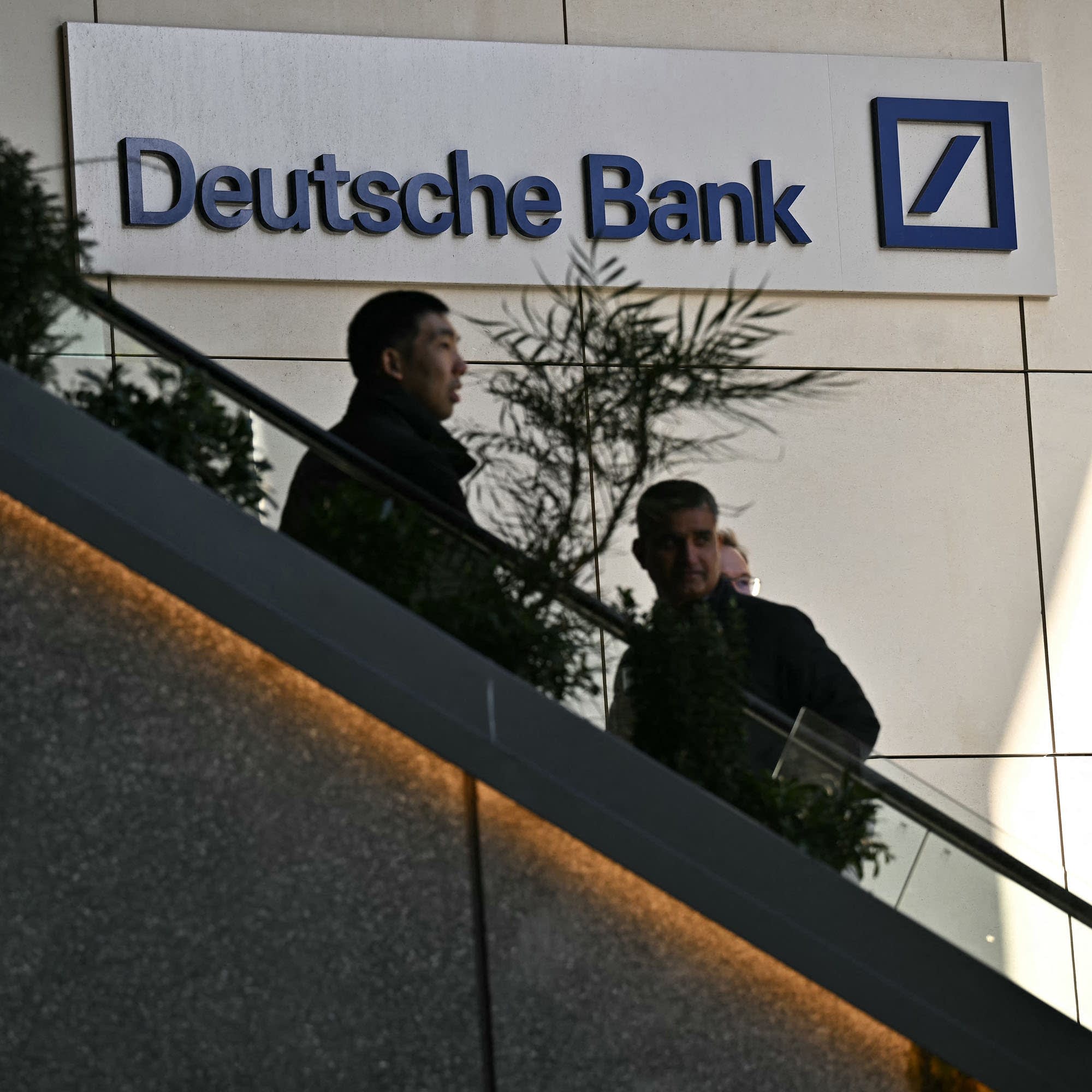
3:19A new flood of leaked documents is putting fresh scrutiny on Deutsche Bank, which just reported a third consecutive quarter of record profits. The documents include more than 15 million internal emails and files covering the early 2010s through 2021. A group of more than 200 journalists across media outlets from all over the globe have been analyzing the leaked information, revealing questionable practices, deals with Russian oligarchs and more. The investigation is called Inside Deutsche Bank, and Dan McCrum, a reporter at the Financial Times, is among the journalists involved. He joins me from London.
3:56Dan, good morning. Kimberly, good morning. Can you briefly describe the role that Deutsche Bank plays in the global banking industry? This is one of the most systemically important banks in the world. It's a huge investment bank. It's an enormous retail bank for everyday people in Germany. But also, it's one of those key nodes in the financial system for moving money around. So it deals with more than$1 trillion worth of international money transfers every single day. Even though this is a German bank, your investigation revealed new information about some high-profile Americans. What did you find?
4:35Well, one of the sort of funny things about this story is there's a string of disasters inside the bank to do with technology. And one of them is that during President Trump's first administration, the bank accidentally sends a load of his tax information out to an accountant, along with a whole load of other clients, including some of them connected to the president. And there were also new revelations in your investigation about Jeffrey Epstein and his connections to the bank. So the notorious paedophile was one of Deutsche Bank's, I guess, most infamous clients. And it kind of signifies how this bank for a long time chased business with people who other banks wouldn't touch.
5:21And what we've discovered in this leak of documents is that its business with Jeffrey Epstein was even bigger than we realized. It's sort of the number for the amount of transactions it was involved in is almost$600 million worth. That's double what we previously knew. How has the bank responded to your investigation so far? I mean, the bank says it has changed. Fundamentally, since its chief executive, Christian Seving, took over in 2018, he has dealt with all these problems and that this is old news. We're digging through, you know, stories that people knew. In some sense, you know, Deutsche Bank is famous for the huge number of scandals that it ran into in the 2010s.
6:07And it's trying to play this down as things which happened in the past. And I would say, well, you know, there are quite a few interesting things which have carried over into the 2020s. And, you know, there are decisions under Christian Seving that I think are worth looking a little bit more closely. that perhaps he has continued the Deutsche tradition of, at times, sweeping problems under the rug. So what should we be watching for as the rest of the reporting comes out? I think there are still some very interesting stories to come that are going to, I think, surprise people. I mean, some of the details, I think it's the accretion of things that can really matter.
6:47Dan McCrum is an investigative reporter with the Financial Times. Dan, thank you. Thanks for having me on. In New York, I'm Kimberly Adams with the Marketplace Morning Report. From APM, American Public Media.
A new flood of leaked documents is putting fresh scrutiny on banking behemoth Deutsche Bank. The documents include more than 15 million internal emails and files, covering the early 2010s through 2021. A group of more than 200 journalists from around the globe has been analyzing the leaked information, revealing questionable practices, deals with Russian oligarchs, and more. Today, we hear from one of those reporters. But first, what did we get out of President Donald Trump's Asia summit?
Every story has an economic angle. Want some in your inbox? Subscribe to our daily or weekly newsletter.
Marketplace Morning Report is more than a radio show. Check out our original reporting and financial literacy content at marketplace.org — and consider making an investment in our future.
Scan the code with your iPhone camera
Listen in the app.