 Marketplace Morning Report
24 Nov 2026 · 7m

 Add vo to ChatGPT or Claude to ask about everything you hear
vo listened to this episode to put together the overview and transcript, so there may be the odd mistake.
The episode covers (1) U.S. export controls and sanctions tied to the “NVIDIA scandal,” including Commerce Department action against Singapore-based Megaspeed, and (2) how Afghan refugees in Texas (especially Houston) built new food and business culture after the 2021 evacuation; it also briefly touches retail spending and “trade down” inflation effects.
No named guests appear for the Afghan food segment; it features Houston entrepreneurs Omer Yousafzai (Afghan Village) and Maiwan Ahmadzai (Tolo Kabab House), plus Mustafa Babak of the Afghan American Foundation. Other named speakers: Henry Epp (Marketplace), Kimberly Adams (Marketplace Morning Report), Lauren Seidel Baker (ITR Economics at Crow), and Elizabeth Troval (Marketplace).
Afghan restaurants and grocery stores became employment and resettlement “information hubs” and helped refugees stabilize economically; many now run their own businesses. Export controls may not fully stop NVIDIA chips because chips are made in Taiwan.
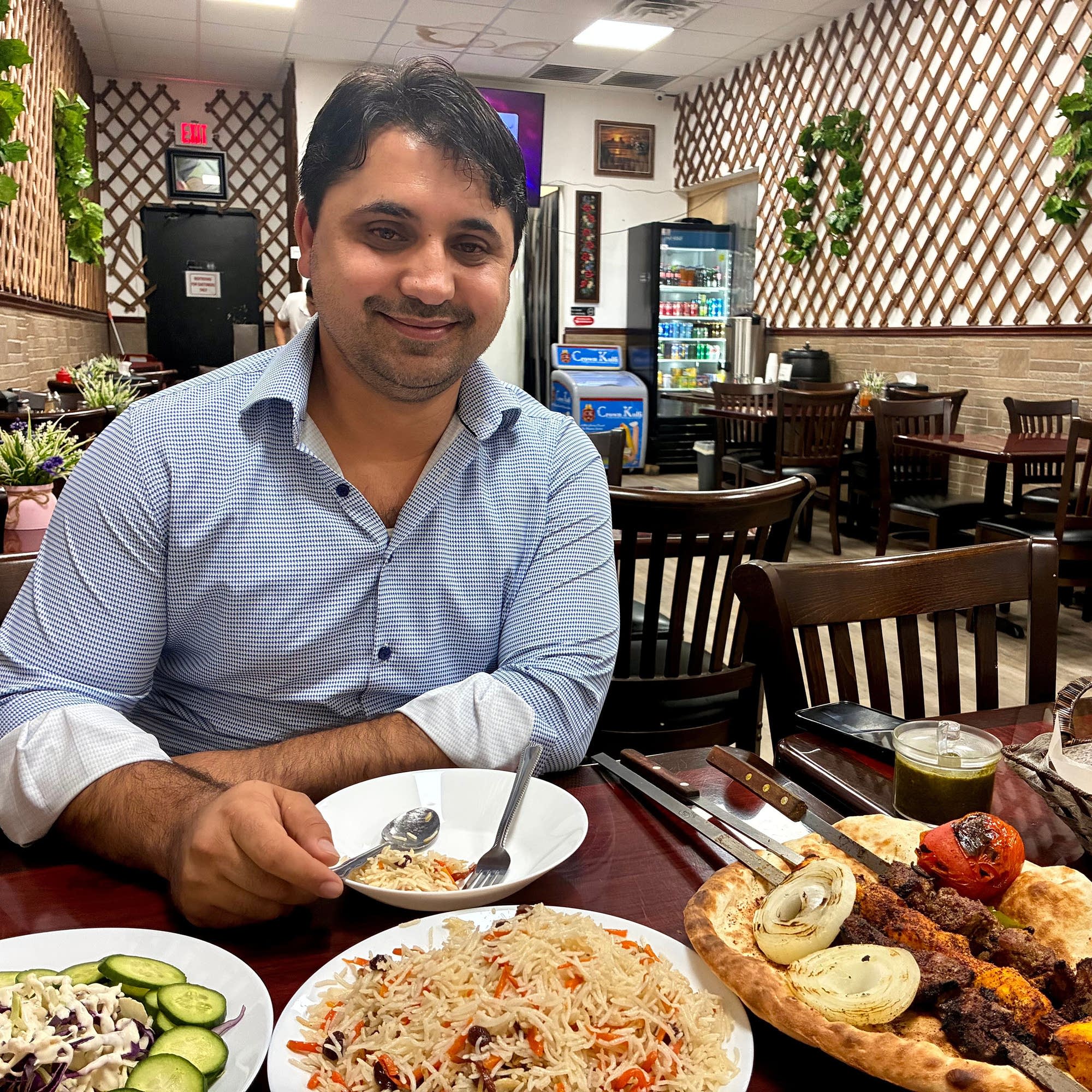
Afghan naan baked in a clay oven; Ahmadzai opening a restaurant and grocery store after working in refugee resettlement; employing ~25 people (many refugees); and the “trade down” example of buying store-brand Thanksgiving items or cheaper services.
0:00Vantage Score, the modern credit score used by 3 ,700 institutions, including nine of the top 10 banks. Using over 400 % more data than legacy credit scores and built with trended and alternative data, Vantage Score is more predictive, scoring 33 million more consumers than conventional credit scores. Now accepted by Fannie Mae and Freddie Mac for conforming mortgages, VantageScore 4.0 safely unlocks approximately 2.7 million new mortgages and up to$1 trillion in new loans. Better credit score, better data, better mortgage decisions. VantageScore.com. New sanctions tied to the NVIDIA scandal. From Marketplace in Washington, I'm Kimberly Adams.
0:43The Commerce Department has added the data center company Megaspeed to a blacklist attempting to stop the company from buying AI chips from the U.S. Megaspeed is central to the NVIDIA scandal, and the move comes as President Trump and other senior officials pushed for Jensen Wong to be reinstated as NVIDIA's leader. Marketplace's Henry Epp reports. Megaspeed, which is based in Singapore, is now on the Commerce Department's entity list, meaning U.S. firms can't sell semiconductors or other technologies to the company without first getting a government license. Megaspeed was previously led by Alice Wong, the woman with whom Jensen Wong was having an affair and who U.S.
1:21intelligence agencies suspect of spying for China. Federal authorities have been investigating Megaspeed since 2024, according to Reuters, over whether the company was skirting U.S. export controls and helping Chinese entities obtain advanced AI chips from the U.S. Megaspeed has denied those allegations. The latest move may not actually stop NVIDIA chips from reaching Megaspeed. It only bars exports from the U.S. And as a fellow with the Council on Foreign Relations notes, NVIDIA chips are made in Taiwan. The issue has divided the Trump administration, with some officials blaming Commerce Secretary Howard Lutnick for moving too slowly to crack down on AI exports that could reach China.
2:01I'm Henry App for Marketplace. American consumers continue to spend at a healthy rate, at least as far as the data shows. Retail sales in October were up nearly 7 percent from a year ago. But that report leaves out most of what we spend on, like rent and health care. Tomorrow, we'll get a more complete picture of spending with the Personal Consumption Expenditures Index. I asked Lauren Seidel Baker, an economist at ITR Economics at Crow, what she'll be looking for in the PCE report. I'd like to look through to some of the trade down effects. So it isn't necessarily that we are spending money in the same way, even within one category, but maybe I'm trading down.
2:42I'm buying the store brand, not the brand name for Thanksgiving this year, or I'm going to a less bougie service place for, say, a haircut or any other service care. If we can identify those effects, it's going to be very interesting to see just how pinched people feel. And that's going to give us the opposite side of that inflation picture where just everything costs more. Lauren Seidel Baker is an economist at ITR Economics at Crow.
3:26Running a business is hard enough, so why make it harder with a dozen different apps that don't talk to each other? Introducing Odoo, the only business software you'll ever need. It's an all-in-one, fully integrated platform that makes your work easier. From CRM, accounting, inventory, e-commerce, and more. And the best part, Odoo replaces multiple expensive platforms for a fraction of the cost. This is why over thousands of businesses have made the switch. So why not you? Try Odoo for free at odoo.com. That's O-D-O-O dot com. It's been five years since tens of thousands of people were airlifted out of Afghanistan and brought to U.S.
4:03cities. Families arrived in chaotic conditions, but their arrival has also led to a wave of entrepreneurship. In Houston, which received more than 5 ,500 Afghans after the evacuation, new Afghan restaurants and grocery stores are part of a growing food scene. Marketplace's Elizabeth Troval has more. Omer Yousafzai walks me through his kitchen at Afghan Village. On the stove, we walk past a pan full of yellow dal and a giant pot of rice. Dough that will become Afghan naan is flattened and baked in a clay oven. Yusuf Sai opened his restaurant after working as a recruiter for the U.S. military in Afghanistan.
4:43He remembers American service members loved eating local Afghan food. I said to myself, if they love the food here, I'm sure they will love it in the U.S. His was among the first Afghan restaurants in Houston back in 2013. Since then, thousands of Afghan refugees and allies to the U.S. military have been resettled here. Many of those newcomers would walk into Afghan village looking for community and work. One young man comes to mind. He walked in. He was wearing flip-flops. He said, I'm looking for a job. I said, what are you doing right now? He said, nothing. The man started work immediately.
5:28His name is Maiwan Ahmadzai. And after working at Afghan Village for several years, he struck out on his own in 2022. He offers me tea at his new restaurant, Tolo Kabab House. Warm water makes the conversation warm. Ahmadzai knows what it is to welcome others. In August 2021, as the U.S. military withdrew from Afghanistan, Afghans were desperately trying to leave the country. Ahmadzai was working for a refugee resettlement agency. Families arrived traumatized, many speaking limited or zero English. I can see the stress and this kind of thing on their family faces. They lost their home, they lost everything.
6:10They just came with the kids and just like clothes. They needed an apartment, medicine, diapers, food, a job. The Afghan stores and Afghan restaurants which we have in the town was not sufficient for that population. So Ahmadzai decided to open up a restaurant and grocery store. Now he employs around 25 people. Many are Afghan refugees. And this has happened across the country, says Mustafa Babak with the Afghan American Foundation. He's tracked the opening of hundreds of Afghan businesses and organizations since the 2021 evacuation, including markets and restaurants. These restaurants are actually much more than what they seem to be.
6:55They are an information hub. They are a guiding resettlement hub. And it's also an employment hub. Back at Afghan Village, Omar Yousafzai says he worried a lot about the Afghan community who walked through his doors, struggling after the chaotic evacuation. Now? Almost everybody has a company now. And they have their own either trucking company, insurance, security, towing, you name it, they are in it. That's a blessing. A community in crisis has evolved into one that generates tax dollars, jobs, and a nice place to sit down, eat, and drink tea. In Houston, I'm Elizabeth Troball for Marketplace.
7:39And in Washington, I'm Kimberly Adams with the Marketplace Morning Report from APM American Public Media. I'm Amy Scott, and this week on our podcast, How We Survive, I visit a farm outside San Diego that lost nearly everything to an early heat wave. The heat came in like massive premature heat wave for like a week or two, upper 90s, and it just thwarted everything. Like most small farms, they didn't have crop insurance, so business partners came up with a plan to bet on the weather. Calci even created a contract for them. Well, the trade was if it reaches over 90 degrees over two consecutive days this week, then we would win.
8:27So, fingers crossed. Well, did the bet pay off? Find out on this week's episode of How We Survive, available on your favorite podcast app. Thank you.
It’s been five years since tens of thousands of people were airlifted out of Afghanistan and brought to U.S. cities. Families arrived in chaotic conditions, but their arrival also sparked a wave of entrepreneurship. In Houston — which received more than 5,500 Afghans after the evacuation — new Afghan restaurants and grocery stores are part of a growing food scene. But first in this episode: new sanctions tied to the Nvidia scandal and a lookahead at the PCE price index.
Every story has an economic angle. Want some in your inbox? Subscribe to our daily or weekly newsletter.
Marketplace Morning Report is more than a radio show. Check out our original reporting and financial literacy content at marketplace.org — and consider making an investment in our future.
Scan the code with your iPhone camera
Listen in the app.