Ask ChatGPT


 Marketplace Morning Report
23 Nov 2026 · 7m · 3 chapters
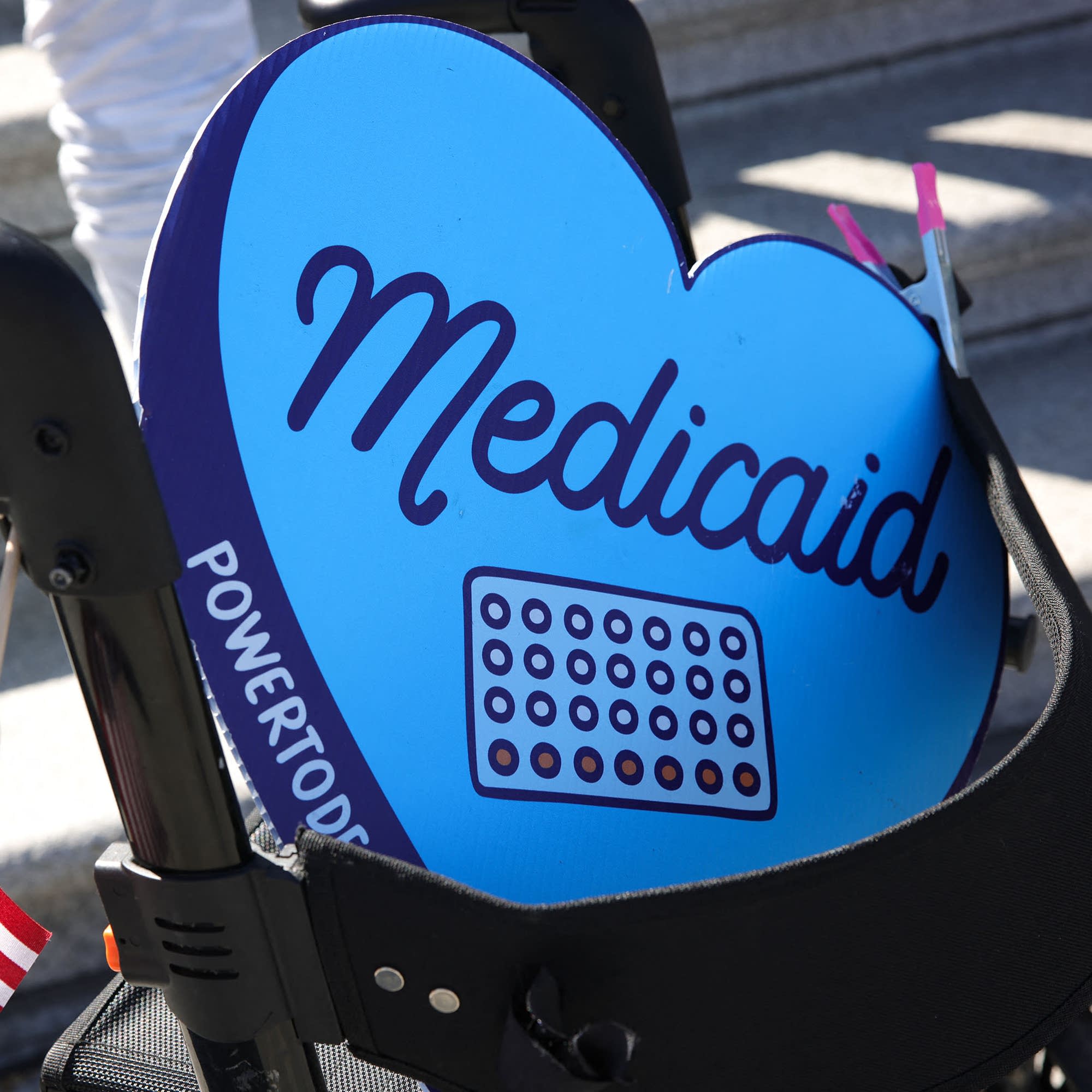
Update on U.S. Medicaid work requirements rollout and what it means for coverage, plus context on inflation drivers and upcoming PCE data.
Dan Gorenstein, founder and executive editor of Tradeoffs (nonprofit health-policy news). He reports on Medicaid policy changes. Host Kimberly Adams (Marketplace).
About 20 million people must prove work/volunteering/school or qualify for an exemption to keep Medicaid starting next year. The Trump administration delayed enforcement: states get until July 1, 2027 before disenrolling for noncompliance. Estimates cited that up to 5 million could lose coverage.
Arkansas’s 2018 work requirement experiment led to 18,000 losing coverage; research found many were still eligible but missed paperwork/requirements. States plan “automation” and outreach via trusted messengers (hospitals, clinics, advocacy groups, managed-care insurers).
Written by AI. May contain mistakes.
Exploration of the factors driving inflation in the US and globally.
“From Marketplace in Washington, I'm Kimberly Adams.”
Discussion on the upcoming Medicaid work requirements and their implications.
“So around the world, the inflation outlook similarly looks not the best from a central bank's perspective.”
Analysis of the potential impact of Medicaid work requirements on beneficiaries.
“Starting next year, roughly 20 million people will need to prove they're working, volunteering, going to school, or have an exemption in order to keep their Medicaid.”

Get the gist, explore an idea or ask about something said.
 Claude
On Marketplace Morning Report, what are the key points of this episode?
Searching your listeningAutomatic transcript. May contain errors.
0:00Vantage Score, the modern credit score used by 3 ,700 institutions, including nine of the top 10 banks. Using over 400 % more data than legacy credit scores and built with trended and alternative data, Vantage Score is more predictive, scoring 33 million more consumers than conventional credit scores. Now accepted by Fannie Mae and Freddie Mac for conforming mortgages, VantageScore 4.0 safely unlocks approximately 2.7 million new mortgages and up to$1 trillion in new loans. Better credit score, better data, better mortgage decisions. VantageScore.com. What's driving inflation in the U.S. and around the world?
0:40And we're following the rollout of Medicaid work requirements. From Marketplace in Washington, I'm Kimberly Adams. We're set to get more data on rising prices this week. The Federal Reserve's preferred gauge of inflation, the Personal Consumption Expenditures, or PCE Price Index, is out on Wednesday. The Fed will be taking this into careful consideration as it prepares for its next interest rate decision in early December. We've seen persistent inflation in the United States for months now, which means the Fed is almost certainly going to hike rates again. I asked Bradley Saunders, North America economist at Capital Economics about the forces that are weighing on inflation when it comes to the global economy, the main one being conflict-driven energy prices.
1:26Even if, you know, the Strait of Hormuz were to reopen tomorrow, it is still the case that the global energy market is in, you know, a state of displacement. Freight hasn't been, you know, going around the world in the way that it usually has. There's, you know, a lot of tankers not necessarily in the right positions. It would still take a few months from now for global energy markets to get back to some point of normalisation. So around the world, the inflation outlook similarly looks not the best from a central bank's perspective. In the US in particular, though, there are then other factors driving up prices.
2:02So tariffs being one, we're also seeing the speed of the AI build out is pushing up prices of computers and inputs and semiconductors, which households would then feel through higher technology prices heading into the festive period.
2:32Vantage Score, the modern credit score used by 3 ,700 institutions, including nine of the top 10 banks. Using over 400 % more data than legacy credit scores and built with trended and alternative data, VantageScore is more predictive, scoring 33 million more consumers than conventional credit scores. Now accepted by Fannie Mae and Freddie Mac for conforming mortgages, VantageScore 4.0 safely unlocks approximately 2.7 million new mortgages and up to$1 trillion in new loans. Better credit score, better data, better mortgage decisions. VantageScore.com. Running a business is hard enough, so why make it harder with a dozen different apps that don't talk to each other?
3:13Introducing Odoo, the only business software you'll ever need. It's an all-in-one, fully integrated platform that makes your work easier. From CRM, accounting, inventory, e-commerce, and more. And the best part, Odoo replaces multiple expensive platforms for a fraction of the cost. This is why over thousands of businesses have made the switch. So why not you? Try Odoo for free at odoo.com. That's O-D-O-O dot com. It's been a busy few weeks for one of the biggest changes to U.S. health care policy in years. Starting next year, roughly 20 million people will need to prove they're working, volunteering, going to school, or have an exemption in order to keep their Medicaid.
3:53That's the government health insurance program for low-income and disabled Americans. Republicans pushed through big changes to the program as part of President Trump's tax and spending law from last year, including the work requirements. Dan Gorenstein is the founder and executive editor of Tradeoffs, a nonprofit news organization that covers health policy. And he's been following this story and is here to give us an update. Hi, Dan. Hi, Kimberly. So states have been preparing for these rules to go live January 1st. But now the federal government's giving them a bit more time. What's been the recent development?
4:28Yeah, so a bunch of states have warned it would be hard, if not impossible, to implement necessary changes by January. Earlier in November, the Trump administration granted states an extra six months until July 1st, 2027, before they start disenrolling or rejecting anyone from Medicaid for failing to meet these new requirements. This delay gives state Medicaid officials more time to refine their systems and minimize how many people lose their health insurance. What do we actually know about how changes like these play out? I've seen estimates that something like 5 million people could get kicked off their insurance because of these new rules.
5:06Yeah, I mean, we've seen this show before. Arkansas implemented a short-lived work requirement experiment back in 2018, where 18 ,000 people lost their coverage. And research showed that most of those people were still eligible, but were either unaware of the changes or got tripped up by paperwork. One of the big challenges that states are facing is getting the word out so people know what they actually need to do in order to keep their coverage. Your team has been reporting on this. What are states doing? Sure. They're using a combination of old school boots on the ground and new school technology.
5:47Here's what Harvard Medicaid researcher Adriana McIntyre told us. Automation is the ballgame even before you get to the point of communication. The best way to keep people covered is to ask as little of the enrollee as possible. The boots on the ground work leans on trusted messengers, including hospitals, community clinics, advocacy groups, and even insurance companies that manage many people's Medicaid. I talked to Toya Walker. She's a 44-year-old social worker who got trained by a group in New Jersey. I look at myself as being like a first responder. Without that information, you know, coming from a trusted source like myself, it's like, what's going to happen to the people?
6:28How confident are these folks that this messaging, these efforts are actually going to work to keep people enrolled? I mean, look, I'm going to be honest, there's a ton of concern. State resources are tight and communications, as one consultant told us, can really take a backseat when hard choices get made. And this is a super complicated topic. Some people must meet the new work requirements. Others are exempt because they're sick or a caregiver. Who's who? How do you know? Now there's this six-month delay plus ongoing lawsuits seeking to overturn parts of the law. Plus the election results, which will sweep big Democratic majorities into Congress.
7:10A lot of these Democrats have promised to prioritize repealing these work requirements. Does that change anything? I mean, it adds more uncertainty, right? Of course, repeal is hardly a done deal. It's tough to imagine Republicans and President Trump going along. But at least for right now, Kimberly, the administration has acknowledged that a lot of people could lose their health insurance if this goes sideways. And they're taking a step to avoid that. Dan Gorenstein is the founder and executive editor of Tradeoffs, a nonprofit news organization that covers health policy. Dan, thanks as always.
7:47Kimberly, thank you. We're keeping an eye on the economy for you all day long here at Marketplace. Check out our website and social media for more stories. And listen later to my colleague Kai Risdahl for today's developments on many public radio stations or at Marketplace.org. In Washington, I'm Kimberly Adams with the Marketplace Morning Report.
8:13From APM American Public Media. I'm Amy Scott, and this week on our podcast, How We Survive, I visit a farm outside San Diego that lost nearly everything to an early heat wave. The heat came in, like a massive premature heat wave, for like a week or two, upper 90s, and it just thwarted everything. Like most small farms, they didn't have crop insurance, so business partners came up with a plan to bet on the weather. Calci even created a contract for them. Well, the trade was if it reaches over 90 degrees over two consecutive days this week, then we would win. So fingers crossed. Well, did the bet pay off?
9:00Find out on this week's episode of How We Survive, available on your favorite podcast app.
Starting next year, roughly 20 million people will need to prove they’re working, volunteering, going to school, or have an exemption to keep their Medicaid. Republicans pushed through big changes to the program as part of President Donald Trump's tax and spending law from last year, including these so-called “work requirements.” Today, we dig into the timeline, how states are communicating changes, and more. But first: how energy prices are fueling global inflation.
Every story has an economic angle. Want some in your inbox? Subscribe to our daily or weekly newsletter.
Marketplace Morning Report is more than a radio show. Check out our original reporting and financial literacy content at marketplace.org — and consider making an investment in our future.