
In short
Podcast Summary: Marketplace - The 'K' in 'K-shaped economy' stands for 'kitchen'
Episode Overview In this episode of "Marketplace," host Kai Ryssdal explores the widening disparity between high-income and low-income Americans, termed the 'K-shaped economy.' He discusses various economic indicators and the impact of government decisions on the current climate. Notable segments include insights from Emily Baker-White regarding the geopolitics of the U.S.-China TikTok deal and a look into the future of a Wyoming solar panel company as federal subsidies for residential installations come to an end.
Key Topics and Discussions
The K-Shaped Economy
- Definition: The term 'K-shaped economy' refers to the diverging paths of different income groups in economic recovery. High-income individuals are faring significantly better than low-income individuals.
- Illustrative Example:
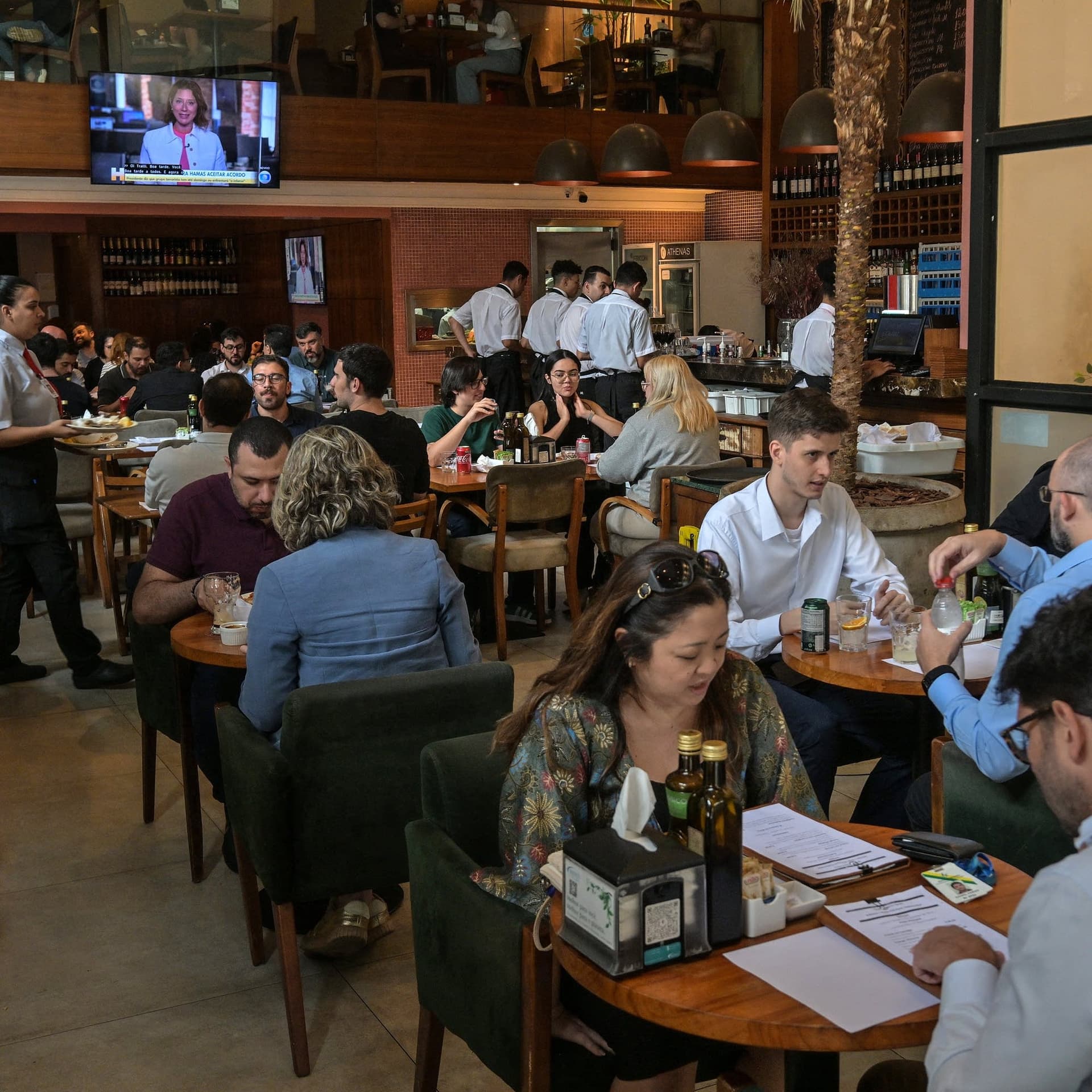
- Fast food restaurants are struggling while sit-down restaurants catering to wealthier customers are thriving.
Economic Impact of Government Shutdown
- Panel Discussion:
- Heather Long (Chief Economist, Navy Federal Credit Union) expressed concerns about missing key economic reports due to the shutdown, indicating an unsettling void in economic indicators.
- Sadiq Reddy (Washington Bureau Chief, MSNBC) noted that while individual furloughs and contractor impacts are significant, the macroeconomic effect may be minimal if the shutdown is short-lived.
- Data Monitoring: Long emphasized the importance of private data from direct deposit accounts to gauge the economic impact amidst lacking federal reports.
Labor Market Insights
- Hiring Rates: Long highlighted the declining hiring rate, emphasizing it as a sign of a "frozen" labor market. The hiring rate fell to its lowest since the end of the Great Recession.
- Public Sentiment: Despite a low unemployment rate, the reality on the ground does not align with optimistic economic indicators, as many Americans feel the pressure of inflation and stagnant wage growth.
Future Economic Predictions
- Outlook:
- Reddy suggested that the effects of current economic policies might not be apparent for months or years, creating uncertainty.
- Long posited that while a recession might be avoided, consumer sentiment is likely to remain low, with inflation persisting around 3% into 2026.
Restaurant Spending Trends
- Fast Food vs. Sit-Down Restaurants:
- Dean Baker noted that fast food spending is stagnating, reflecting the struggles of ordinary workers, contrasting with the stability of full-service dining.
- Consumer Behavior:
- Restaurants are adapting by introducing discounts and innovative menu items to attract customers, yet the financial strain remains evident due to inflation and tight margins.
Solar Industry Challenges in Wyoming
- Federal Tax Credit Changes:
- The expiration of solar tax credits is causing uncertainty for companies in Wyoming focusing on solar installations.
- Scott Cain, co-owner of Creative Energies, expressed concern about maintaining business and adapting to a new market reality without federal support.
TikTok and Geopolitical Implications
- Interview with Emily Baker-White:
- Discussed the ongoing negotiations surrounding TikTok's operations in the U.S. amid national security concerns regarding data privacy and foreign ownership.
- The need for clarity on the deal between TikTok and the U.S. government was emphasized, particularly regarding the control of the recommendation algorithm.
Market Updates
- Stock Market Performance:
- The episode concluded with a brief overview of the stock market's performance, noting fluctuations and implications for various sectors.
Conclusion This episode of "Marketplace" provides a comprehensive look at the current economic landscape, highlighting the stark contrasts between different income groups and the ripple effects of political decisions on the economy. The discussions underscore the importance of closely monitoring data and adapting to changing market conditions, while also addressing the broader implications of international relations on domestic industries.
--- This summary captures the core discussions and insights shared in the podcast, providing a structured understanding of the episode's themes and expert opinions.
Written by AI. May contain mistakes. Listen to the episode to check what was said.
Transcript
Automatic transcript. May contain errors.0:00This podcast is supported by Odoo. Some say Odoo business management software is like fertilizer for businesses because the simple efficient software promotes growth. Others say Odoo is like a magic beanstalk because it scales with you and is magically affordable. And some describe Odoo's programs for manufacturing, accounting, and more as building blocks for creating a custom software suite. So Odoo is fertilizer, magic beanstalk building blocks for business. Odoo, exactly what businesses need. Sign up at odoo.com. That's O-D-O-O dot com. This Marketplace podcast is supported by Wealth Enhancement, who ask, do you have a blueprint for your money?
0:36Wealth Enhancement can help you build the right blueprint for investing, retirement, tax, and more. With offices nationwide, there's an advisor who's ready to listen and craft a blueprint for your future. Find out more at wealthenhancement.com slash build. Well, here we are. Another Friday, another shutdown, another where do things go from here? From American Public Media. This is Marketplace.
1:15In Los Angeles, I'm Kyle Rizdahl. It is Friday today. This one is the 3rd of October. It is good as it always is. To have you along, everybody. One does not, I believe, need to recap the state of play of the politics of this economy. So we will not. But the shutdown is not without its economic effects. So that's where we're going to start. Citi Bredi is the Washington Bureau Chief for MSNBC. Heather Long is the Chief Economist at Navy Federal Credit Union. Hey, you two. Hi, Kai. Hey, Kai. Heather Long, we begin with you. Obviously, we did not get the September jobs report today. We are probably going to miss our next reading on inflation.
1:53As the Chief Economist in the room, what is your level of worry? I mean, look, it's... Thanks for coming to my TED Talk. Yeah. I mean, it's unsettling, right? This hasn't happened since 2013. And I know people keep saying this, but it's true. It feels like you're trying to fly an airplane or drive a car blindfolded. And sure, you can do that for a little while, but it just feels like why would you want to do that? Why do you want to have a blindfold on when you're trying to maneuver this economy right now? And then I think even more importantly, there's a human element to this. There's the sort of, how are we in this again?
2:33But also, look, over 600 ,000 workers are furloughed right now. Many of them are concerned that they're going to be laid off or could be laid off. You know, at Navy Federal Credit Union, we extend no interest loans to workers. And I can tell you that we've had, you know, huge uptick, way more than we had in 2019. People are worried. Sadiq, all of what Heather said being true, it is also reasonably true that if this is a short-ish shutdown, it is merely a macroeconomic ripple, yes? That is true. We've learned this over and over again, that shutdowns make us all depressed, of course. They don't speak well about how we run our government.
3:15They do work sometimes for the messaging for either party. And clearly, in this case, it's Democrats who have a view on health care. Before, it was budget deficits with Republicans. It does work in terms of messaging, but it does not really have a macroeconomic effect. It's a micro effect on the workers who are furloughed, on the contractors who do not get back pay after a while. There are lots of areas of damage from a shutdown at an individual level. But it does not really have this big effect. And it's usually a thing that we can look back on as barely a blip. Heather, in your capacity at Navy Federal, you've got access to all kinds of private data.
3:56What are you looking at to give you some sense of, you know, maybe peeking out from behind that blindfold you were talking about? Yeah, we're all trying to figure it out. We do have millions of accounts that have direct deposit data from the government and from private sector employers. So far, we continue to see everything come in as expected this week, but we're monitoring it closely. Obviously, everybody paid a lot of attention this week to the ADP jobs report. But at the end of the day, even ADP is monitoring 26 million employees in an economy that has 160 million. So there's just a totally different magnitude.
4:36Sudeep, we had Austin Goolsby, the president of the Chicago Fed, on the program this week. We talked about a bunch of stuff, one of which was the data thing that we've just been talking about, the three of us. The other one, though, was where he sits now on the dual mandate, whether he's more worried about price stability, inflation or the labor market jobs. And he came down pretty solidly on being more worried about inflation. And I guess I wonder what you think about that. If you're a Fed official and you've been trying to get inflation to a certain level, say 2%, and you're consistently above that, you have to continue to look at that and say, okay, well, we're not where we should be with the dual mandate.
5:14But a lot of Fed officials are also looking at the job market and seeing that it's not really in great shape in terms of hiring, in terms of job creation. It's not falling apart. We know that from jobless claims before the shutdown that it's fine in that sense. And so the lack of firing means it's probably going to be OK. But none of that means that inflation is going to come down naturally, especially when we're still feeling the effects of tariffs ripple through the economy. And so you've got to be looking at that with some level of concern and caution if you're at the Federal Reserve anywhere in the system.
5:54Heather, I'd be curious about your take on that same question. I was surprised how much you leaned into inflation in your interview. I do think the data we saw this week, again, seeing the JOLTS data, the job openings data, the number that really stands out to me is the hiring rate. And to see that fall to 3.2, the lowest since the end of the Great Recession era, 2011 time period. Sorry to interrupt. Take a second and explain why the hiring data is important to you. Uh, because it just reiterates how frozen this labor market is. And when we compare that, you know, this notion that we'd be at a 3.2 % really low hiring rate, you know, the last time we saw that was in a period when the unemployment rate was more like 7%.
6:41Um, and so that's where I think the, the reality on the ground for a lot of Americans, it doesn't feel like a 4 % or 4.3 % unemployment economy right now. Right. All right. So the both of you get this next question. Sudeep, you get to go first. Sorry. But it's the question I started with. Where do things go from here? Because the Trump administration has changed this economy in substantive ways in the past nine, whatever it is, months. If if the director of the OMB, Russ Vogt and the president are true to their word, it will be even more change during the shutdown. Now what happens? now we wait right we need to actually wait on so many fronts we've been waiting on the tariff front to see what happens we've been waiting on the immigration front to see what happens when we don't bring in as many workers at the high end and the low end of the labor market all of these things are our experiments that we didn't necessarily think we'd be running and we're running them all right now and we don't really have the precedent to know how the economy reacts to it, because that's just not how this has been set up.
7:50And so when you're making such fundamental changes, it just takes time. And it will probably be many months and maybe even years to see the full effects of it. Heather, 30 seconds, same question. Now what happens? I think, look, in the coming months and into 2026, we're probably going to be able to avoid a recession in the worst case scenario. You know, I think the AI boom continues to be a huge driver for the economy and obviously the markets. But it doesn't mean that things are going to feel great. I think consumer sentiment is going to remain really in the dumps. The middle class is feeling squeezed.
8:24The reality is inflation will be around 3 % heading into 2026, and wage growth probably won't be that high. You do the math. I don't like to do math. Heather Long at Navy Federal. Sadiq Reddy at MSNBC. Thanks, you two. Thanks, Guy. Have a nice weekend. Wall Street today, a little choppy to end the week, actually. We'll have the details when we do the numbers.
9:05government shutdown or no there is data about this economy that does not come from federal professionals. Next Friday, for instance, we'll get the regular reading on consumer sentiment from the University of Michigan. That's a survey the good people in Ann Arbor actually ask people about things. Of course, you can also get a sense of how consumers are feeling by looking at what they're doing, specifically what they are spending their money on. Marketplace's Carla Javier took a look at one particular slice of that spending, restaurants. First, let's look at fast food places. Dean Baker at the Center for Economic and Policy Research says it's the right place to start.
9:43If you look at fast food restaurants, that's likely reflecting what's going on with ordinary workers. So not people with high incomes or stock portfolio or real estate gains to fall back on. Baker observes that fast food spending isn't what it used to be. What happens in 2024 and then into this year, it really slows down. It basically stagnates. So chains are making moves to draw in more traffic, says Michael Halen at Bloomberg Intelligence. Offer discounts, add cheaper items to the menu, things of that nature to kind of attract people to come in. You're not going to see much menu price decreases in this business.
10:22Because between inflation and labor costs, margins are tight. In surveys and at conferences, restaurants report that deals bring in about a quarter or so of their traffic, says Sarah Senator at Bank of America. What's really been the driver of transactions, though, have been more, I would say, innovation and brand activation. Like Minecraft Happy Meals and Chipotle's Adobo Ranch Dip. Senator sees parallels with 2009 during the Great Recession with one key difference. Full-service restaurants have actually been holding up better. That kind of runs counter to what you would typically expect to see in a period of economic stress.
10:59Which she attributes, in part, to those higher-income customers. Welcome to the K-shaped economy. I'm Carla Javier for Marketplace.
11:28It's been 20 years since 2005 that homeowners who wanted to install solar on their roofs could get some help from the federal government. Tax credits that would cover about a third of the cost. Republicans in Congress and President Trump took those credits away in their big tax cut law earlier this year. They expire at the end of this year. So consumers are out of luck, which means companies that do that solar work are worried about their future. But headwinds for solar in Wyoming are nothing new. That state is dominated by coal, oil and gas. Wyoming Public Radio's Caitlin Tan has more on that one.
12:06I'm climbing the utility stairs of a courthouse in eastern Wyoming. Oh, wow, look at this. I pop onto the roof. In the distance are mountains, but in front of me are several rows of glistening black solar panels. So they're angled a little bit so they can get the best production. It's facing due south. Solar electrician Andrew Weatherford recently installed them. Weatherford loves an adventure, so climbing up on Wyoming roofs year-round is a good fit. We're doing this when it's 100 degrees in the summertime, and then when we're working and it's December, you're clearing snow off roofs, 2 degrees, 0 degrees.
12:47Today, Weatherford is unspooling electric cords. They'll run from the roof to a control box about 60 feet below. To connect the power that's produced from the solar panels to the building, Weatherford works for a company called Creative Energies, one of the few rooftop solar installation companies in the state. I visit its headquarters about 220 miles down the road from the project in Lander, Wyoming. Co-owner Scott Cain walks me inside a giant shop building. You like to think of it as like the epicenter of solar energy for the state of Wyoming. Inside, it's like a full-on hardware store. Tools, electrical and solar panels, trucks, everything they need to service projects around the state.
13:35Cain says they built the shop a couple years ago. We noticed like, wow, there's been a lot of demand for solar. And we're having a hard time keeping up with the demand that's out there. Partly because of the federal tax credit for residential rooftop solar. It was beefed up under the Biden administration, but it first came about under President George W. Bush. The original solar tax credit was supposed to taper down after just a couple years, but... It's been extended because subsequent administrations saw that the program was working well. But congressional Republicans voted to completely end the 30 % tax credits, saying the solar industry had been subsidized long enough.
14:17So that went from being almost a 20-year-long program to ending overnight. So that really feels like a scramble right now. A scramble to install panels for the surge of homeowners who want the credit before it goes away. In fact, Cain has had to turn some customers away. We can't get their project built before the end of the year. He's not sure demand will still be there when the price for solar installs goes up. His business is shifting from growth mode to maintenance. Rather than continuing to add people and invest in vehicles and invest in new buildings to more of a, like, let's sustain the business mindset.
14:57Still, Cain knows how to adapt. He helped found Creative Energies in 2001, when Wyoming's fossil fuels were booming. Some might say that a renewable energy company, you're operating in Wyoming, like, that must feel like you're operating behind enemy lines. But he found a niche market, from eco-minded homeowners to survival types who don't want to rely on the grid. The idea really plays that like, hey, we grow our own food. We hunt for our own meat. Let's produce our own power. Federal tax credits for commercial buildings aren't ending for another couple years. So Kane hopes to tap more into that market, like the Eastern Wyoming Courthouse Project.
15:42All right. You want to do them one at a time now? No, I bet you can probably get all of them. Okay. Electrician Andrew Weatherford feeds the cords to his work partner, Noah Rohrabacher. That should be it. We should be able to fire this system up and see what it'll be able to do for the building. Taking off one more solar project before year's end. In Wyoming, I'm Caitlin Tan for Marketplace.
16:23coming up jd vamp says he's satisfied and he's seen the details of the deal but i haven't and so i just have many questions tick tock what do you want to know but first let's do the numbers down dust rose up 238 points today about a half percent 46 758 the nasdaq subtracted 63 points just shy of three-tenths percent, closed at 22 ,780. The S &P 500 basically flat at 67.15. For the five days gone by, the week that was, the Dow picked up 1.1 percent. The Nasdaq rose one and a third percent. The S &P 500 added one and a tenth percent. Reuters is reporting that the United States Army is not happy with a battlefield communication system upgrade developed in part by Palantir Technologies.
17:10Memo from the chief of technology in the Army reportedly says it's full of, quote, fundamental security vulnerabilities. So too was Palantir's stock today down 7.5%. Bonds down, yield on the 10-year T-note went up just a little bit, 4.12%. You're listening to Marketplace.
17:39This podcast is supported by Odoo. Some say Odoo business management software is like fertilizer for businesses because the simple, efficient software promotes growth. Others say Odoo is like a magic beanstalk because it scales with you and is magically affordable. And some describe Odoo's programs for manufacturing, accounting, and more as building blocks for creating a custom software suite. So Odoo is fertilizer, magic beanstalk building blocks for business. Odoo, exactly what businesses need. Sign up at odoo.com. That's O-D-O-O dot com. This Marketplace podcast is supported by Wealth Enhancement, who understand that dreams don't happen by chance.
18:16It takes a plan. They're ready to build your wealth blueprint for retirement, investing, taxes, and everything else your financial life brings. It reveals gaps and highlights opportunities you may have missed at no cost to you. Find out more at wealthenhancement.com slash blueprint. This Marketplace podcast is supported by Justin Wine. Get the celebration ready with Justin Wine. Since 1981, Justin has been producing world-class Bordeaux-style wines from Paso Robles on California's Central Coast. Justin offers curated gift sets, library wines, magnums, and even custom-etched bottles. Visit JustinWine.com and enter Market 20 for 20 % off your order.
19:04Justin offers the perfect holiday gifts for clients, colleagues, friends, or family. Be sure to check them out at justinwine.com to receive 20 % off your order for a limited time.
19:39earn Dell rewards and enjoy many other benefits like free shipping, expert support, price match guarantee, and flexible financing options. They also have the biggest deals on accessories that pair perfectly with your Dell PC, improving the way you work, play, and connect. Whether you just started holiday shopping or you're finishing up, these PCs and accessories make perfect gifts for everyone on your list. Shop now at dell.com slash deals and don't miss out on the best prices of the year. That's dell.com slash deals. This is Marketplace. I'm Kai Rizdal. If you are unclear about what's going on with TikTok, yeah, you and me both.
20:17The video-based social platform has been in limbo for going on a year and a half now. The latest chapter came last week when President Trump signed an executive order that could, emphasis here on could, pave the way for TikTok to come under control of American companies, These companies aligned with the president. It does have to be pointed out, but that would let the app keep operating here. Whether that happens again up in the air, it has been a long, strange trip so far, much of which and more is the subject of a new book from Forbes reporter Emily Baker White. It's called Every Screen on the Planet.
20:53Welcome to the program. Thanks so much for having me. With the understanding that you just wrote a 330-page book on this, could you, in appropriate radio broadcast length, give us the TikTok origin story, would you? Yeah. TikTok is one of many apps that grew out of what's known as an app factory, a big tech giant in China called ByteDance. ByteDance was founded by a man named Zhang Yiming, who many people see as sort of one of the founding fathers of the recommendations algorithm. And TikTok rose to power on its ability to predict what you next want to see, largely using the cues that you're giving the app, revealing your preferences rather than stating your preferences to it.
21:40So that's like Reels, or not Reels actually, because that's a different app, but videos that you like or share or whatever, right? And that tells the algorithm what you want to know, right? Yeah, but even more subtle than that, just where you linger a little bit before swiping to the next video. What brings you back to the app? What makes you rage quit the app? Things that you don't even think are signals to the algorithm became a really important part of how TikTok came to seem to know you. Right, right. And that actually goes a long way to answering this next question, but I'm going to need you to flesh it out.
22:13This is a very controversial platform. How come? Yeah. So what has made TikTok different from the other tech giants that we know, such as your YouTube, your Instagram, your Facebook, is that TikTok was built by and created by a Chinese company. And people were concerned about that for two primary reasons. One, they worried that the Chinese government, which has tons of control over Chinese companies, could force TikTok's parent company, ByteDance, to either spy on Americans, hoovering up data about what our eyes linger on, etc. Or they worried that the Chinese government might force ByteDance to subtly change the mix of messages that we see on TikTok to seed propaganda or turn us against each other.
23:05And those two parallel concerns are sort of the core of the concern about TikTok that you have heard about for the last five or so years. We should probably point out here that you actually have been surveilled by this company. They have looked at your data to try to figure out who you were talking to about what they were They sure did.
23:52this didn't help them figure out who was meeting with me but it did sort of show the worst case scenario that a lot of people were worried about some of the people who pulled my data were actually physically in china and if they did this to me which is like not really very scary but very very dumb of them they could have done it in a way that's much scarier they could have done it to american service members they could have done it to chinese dissidents living overseas and that's not what happened, but it showed that people's concern about that was legitimate. Terrifying though that is, your reaction to it amused me.
24:24You were a little disappointed in them. You were like, you guys, come on, be better, would you? I was totally disappointed in them. It just felt like a massive unforced error. What were you thinking? Truly, what were you thinking? This is exactly what you're telling the world will not happen. You will not do this. Come on. Let's get to the current state of play, about which you know far more than I do, but I am going to read back to you a thing you wrote in Forbes the other day. First sentence of which is, after years of unsuccessful negotiations, TikTok's Chinese parent company, ByteDance, appears to finally have found a White House it can sweet talk.
25:00Where do things stand and what did you mean by that? Yeah. So for years, TikTok and ByteDance have been trying to convince the White House, various White Houses, but whoever's in the White Not just this one, right? Yeah, not just this one. That's important. They were trying to convince the first Trump White House, then they were trying to convince the Biden White House, and now they came back to Trump 2.0. They've been trying to convince them that the way to assuage the national security fears is not to force ByteDance to sell TikTok entirely, but to put in place a mitigation plan where ByteDance sort of separates some parts of TikTok to some degree.
25:38and essentially a series of sort of ethical walls, security walls that keeps American data safe from people in China. Eventually, the Biden administration, they looked at this deal and they said at the end of the day, we don't think this can work. We don't think this is enough separation. And it appears that parts of what ByteDance and TikTok were pitching have come back in this deal that they are now trying to work out with Trump and Vance. So what do you think? You're the expert. I'm going to give a really annoying answer to that question, which is that we need to know more about the deal. Right now, ByteDance, the Chinese parent company, will keep control of the algorithm that powers the For You page.
26:22They'll keep control over that recommendations algorithm. And that's a big deal. They're going to license it. That's a big deal, right? It's a huge deal. And that's been a huge deal in negotiations for years because the Chinese government won't allow them to sell it. There are a lot of different types of software licenses. This new TikTok is going to license the algorithm from ByteDance until we know what kind of license we're talking about. You know, J.D. Vance says he's satisfied and he's seen the details of the deal, but I haven't. And so I just have many questions to the title of this book and then the actual last page.
Read the full transcript
26:55TikTok is, if not literally, then very nearly on every screen on the planet. Right. It's just everywhere. And it is that rare company that has superseded national borders and has become sort of a transnational thing. And so I go to the last sentence of this book, which says in literally last words, President Trump and Chinese President Xi Jinping have defined this app's future. It is now the subject of of geostrategic conversation. At very least, geostrategic conversation. I mean, I think it is the subject of negotiations between the two companies. And that's another place where they say there's a framework of the deal that's been agreed to.
27:37Yeah, framework. Concepts of a plan do not a plan make. That's right. And so I want to be clear here that we don't have an executed contract agreement yet. That said, yeah, Trump and Xi Jinping are only going to approve this deal if they ultimately think it's in their interest. And so whatever happens to TikTok in its next iteration is happening with the express blessing of those two men. And that's a really important way to think about this app that has so many eyeballs and so many people's attention for so many minutes every day. It's an amazing new book by Emily Baker White. It's called Every Screen on the Planet, the War Over TikTok.
28:16Emily, thanks a lot. I really appreciate it. Yeah, thanks so much. This was great.
28:30This final note on the way out today, let it never be said that this program misses the cultural moment. Taylor Swift's new album came out last night, as you have surely heard. Insert your own review here. But those millions who prefer actual vinyl over digital downloads have found themselves in a very rare tariff good place. Turns out, saw this on CNBC today, that informational materials, which includes albums and books and artwork, are exempt from the president's, quote, reciprocal tariffs from earlier this year. Most final is CNBC reports pressed overseas. Our theme music was composed by B.J.
29:10Liederman. Marketplace's executive producer is Nancy Farghali. Joanne Griffith is the chief content officer. Neil Scarborough is vice president and general manager. Lemkai Rizdal. Have yourselves a great weekend, everybody. We will see you back here on Monday. All right.
29:26This is APM. You should tell the people who we are and what our new show is. I'm Robert Smith. This is Jacob Goldstein. And we used to host a show called Planet Money. And now we're back making this new podcast about the best ideas and people and businesses in history. And some of the worst people, horrible ideas and destructive companies in the history of business. We struggled to come up with a name, decided to call it Business History. You know why? Why? This is a show about the history of business. Available everywhere. You get your podcasts.
From the publisher
The gap between how high-income and low-income Americans are faring in this economy is growing. One example? Fast food restaurants are struggling while sit-down joints that cater to wealthier customers are A-OK. Also in this episode: “Every Screen on the Planet” author Emily Baker-White talks geopolitics behind the U.S.-China TikTok deal and a Wyoming solar panel company preps for the end of federal subsidies for residential installation.
Every story has an economic angle. Want some in your inbox? Subscribe to our daily or weekly newsletter.
Marketplace is more than a radio show. Check out our original reporting and financial literacy content at marketplace.org — and consider making an investment in our future.


