Ask ChatGPT

 Masters of Search
11 Sep 2026 · 1h 8m · 24 chapters
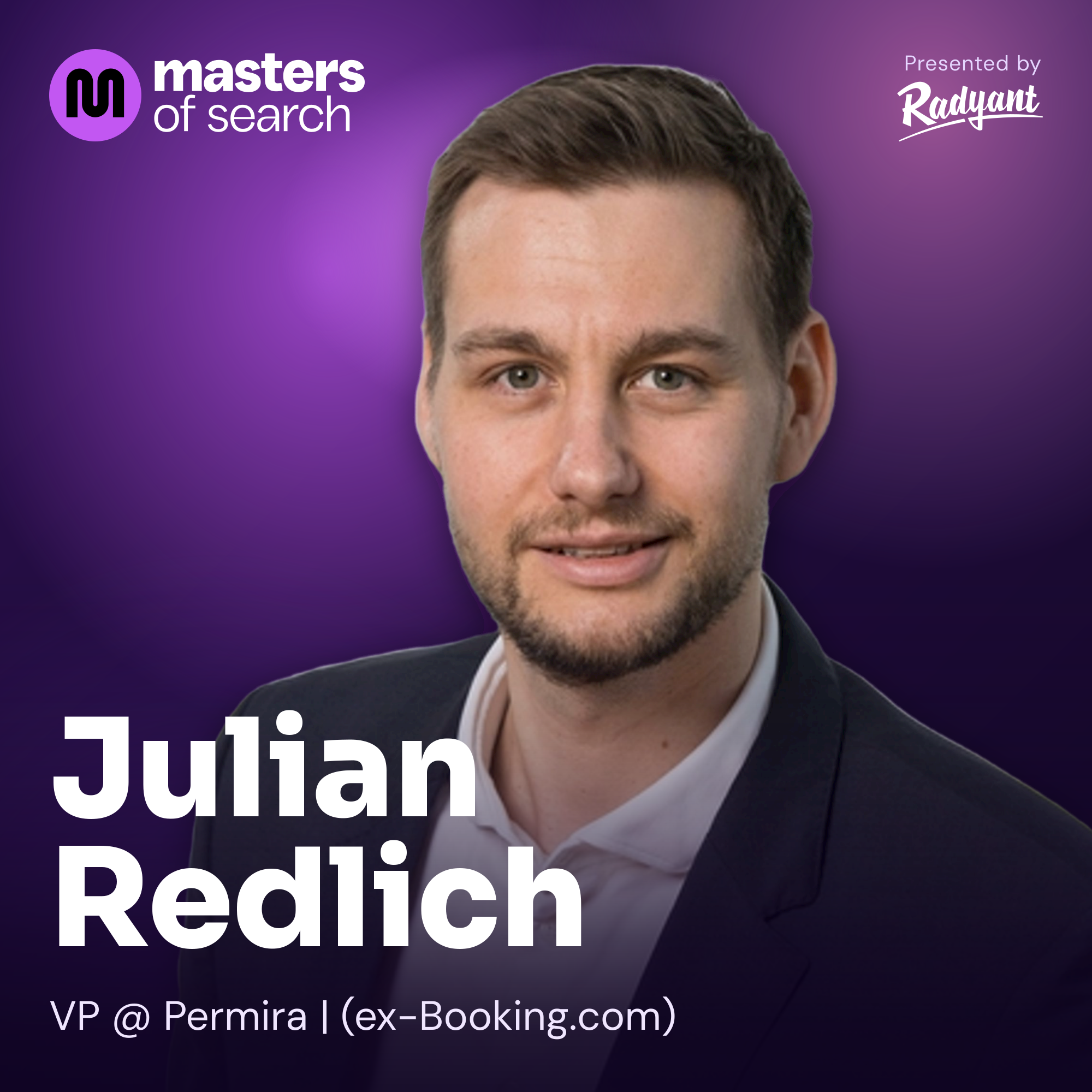
How Julian Redlich built SEO at Booking.com and what makes organic growth succeed across different portfolio companies—emphasizing rapid website changes, bottom-up experimentation, and the people/process conditions needed to implement SEO.
Julian Redlich, former Head of SEO at Booking.com (5+ years; grew SEO to a ~40-person discipline team including developers, designers, copywriters, analysts, and SEO specialists). Now VP at Permira, investing and advising on organic growth across companies including mobile.de, kleinanzeigen.de, Squarespace, Zendesk, and Flixbus.
Written by AI. May contain mistakes.
Learn how collaboration among various roles enhances SEO strategy.
“Many of these ideas that grew the domain came from designers and developers and analysts and not necessarily the SEO people.”
Discover Julian's experience and contributions at Booking.com.
“My guest today is a true SEO heavyweight.”
Explore the strategies used to build SEO at Booking.com.
“what the companies have in common that have a strong organic growth motion, how SEO talent has changed over the years, and how he thinks about AI search.”
Insights into how customers make decisions when booking travel.
“recommendation to use Kleinanzeigen and Julian is not commercially incentivized at all to say this.”
Learn why implementing changes on websites is crucial for SEO success.
Discuss the common challenges faced in executing SEO strategies.
“And then there is a back and forth happening.”
Identify critical factors contributing to successful SEO practices.
“such a minor part in my opinion to the whole thing.”
Learn about the importance of a bottom-up decision-making culture that embraces experimentation and failure.
Understand the significance of maintaining an experiment library and how to effectively document outcomes.
“But would you say that every company with an organic growth motion should have some sort of experiment library and documented outcomes for experiments?”
Explore the need for companies to prioritize experimentation in their growth strategies.
Discover how core values at Booking.com influenced decision-making and experimentation culture.
“What would you say those were two, so those noted, success factor number two is bottom-up innovation, experimentation, allowing people to do a lot of changes.”
Learn about the shift in SEO strategies when moving from a single company focus to a broader portfolio view.
“or something that I have to deliver something and it has to be right and that changes your decision-making, right?”
Learn about unique SEO strategies tailored for travel marketplaces compared to traditional e-commerce sites.
Discover the essential factors for successful SEO implementations in companies.
“It doesn't matter which SEO I'm talking to at conferences and on the phone and so on.”
Explore how to balance immediate SEO efforts with long-term vision and goals.
Learn about the key characteristics and skills that define a successful SEO person.
Explore the key characteristics and skills that define an effective SEO expert.
Discuss the evolution of personal SEO projects and the growth of the SEO industry.
Learn how to assess whether SEO should be a key growth driver for your business.
“Like there's professionals, HR professionals basically that do the first screening.”
Understand how to analyze keyword competitiveness and its implications for SEO.
“That's probably where it's becoming a bit more difficult to justify.”
Exploration of how AI could change customer access to various platforms.
“You get this entire analysis done to get from universe to is it worth it for me to optimize within this universe, yes or no.”
Discussion on the gradual change of consumer behavior and the role of technology.
“I think it comes a bit back to this point of changing customer behavior is difficult.”
Emphasis on the need for straightforward approaches in SEO and collaboration.
“I think we make it complex by ourselves very often.”
Julian shares insights on personal projects and the importance of community in SEO.

Get the gist, explore an idea or ask about something said.
 Claude
On Masters of Search, what are the key points of this episode?
Searching your listeningAutomatic transcript. May contain errors.
0:00Julian Redlich: Many of these ideas that grew the domain came from designers and developers and analysts and not necessarily the SEO people. I think SEO people were more like a bit of a guardrail or guidance. Being okay with things breaking or failing, that's really important to the culture, I think. Where does this strategy creep come from and why do people tend to get less hands-on, the more supposedly complex a business, a website get? I think it is because the foundation is probably not very well figured out yet. Let's just say the number one thing that worked at Booking was... Before we dive in, you're listening to the Masters of Search podcast with me, your host, Niklas Buschner.
0:42Each week, I sit down with some of the smartest people around the world in SEO and AI search to bring you their strategies, mental models, and top pieces of actionable advice. If you enjoy this podcast, don't forget to like and subscribe and follow it in your favorite podcasting app or YouTube. It helps us get top-notch guests and create the best possible content for you. Let's dive into today's episode. My guest today is a true SEO heavyweight. He spent more than five years at Booking.com at the end as head of SEO, helping turn it into one of the biggest websites globally. Now he sits on the other side of the table as an investor at Permira, digging into organic growth across a whole portfolio of companies, including mobile.de, kleinanzeigen.de, Squarespace, Zendesk, Flixbus and others.
1:34And that's what makes his views so rare. There are dozens of companies that cross his stack every year with data and patterns most operators never see. So today we'll get into what it was like building up SEO at booking.com, what the companies have in common that have a strong organic growth motion, how SEO talent has changed over the years, and how he thinks about AI search. Welcome to the podcast, Julian. Hi, Niklas. I'm really looking forward to this. Thank you so much. Full transparency, we're doing a second attempt today. And I want to give a quick shout out because Julian has actually purchased a new audio interface just to make this work.
2:15Julian's special thanks to that. I think this shows your true commitment probably not only to this podcast but to everything you do.
2:22Julian Redlich: And just to finish that story, no one had it on stock, none of the stores and so Kleinanzeigen actually solved this for me. It was a half an hour drive from here and I got a new interface. This is a completely unbiased recommendation to use Kleinanzeigen and Julian is not commercially incentivized at all to say this. Not at all. okay cool so let's start with the elephant in the room and i know you will say it was not a year alone it was a team but still what was building up seo at booking.com like yeah definitely a team sports a team sport so booking.com is this enormous brand in in 2016 that has kind of done some seo there were people before that that worked on the domain of course but it was never one of their main priorities booking fairly early figured out how to spend in google ads very well and turn basically the the traffic from there into conversions and for for seo they were never that big on it in the beginning then there were two people or three people i think that started it initially um i think one of them was a developer that pushed um they pushed the channel then they got some some external talent in i remember leonardo and susan came in um that was before my time and they started basically building the foundation they started to do the first landing pages imagine booking being at a visibility index of like 70 or something um so the system's visibility if that if that maps a bit better for the seos right um and so there was um there were some core landing pages so if you looked for hotels in city hotels in london hotels in berlin and so on you would have landing pages for it but um a lot of kind of more narrow terms like hotels with pools in berlin or hotels with pools or hotels with beachfront many of these terms wouldn't be wouldn't be served yet and so you have this very strong brand that has a good technical foundation but just like a huge gap towards the market there was there was an insane amount of volume out there and um and that wasn't necessarily tackled with dedicated landing pages most of the stuff was running on parameterized versions and and so therefore it was often not indexable and the few versions that were indexable they changed very often and so they just didn't have a really good footprint um booking then prioritized seo a little bit more i would say 2015 16 or so um and and um that's when basically the teams grew that's when they got from these initial smaller teams into i think at the end maybe like 40 people that would work in the discipline it's not all like it's not 40 seo people or anything it's developers designers copywriters you have analysts you have of course seo people as well but all these all these disciplines basically work together on building a landing experience for for customers that's just superior to other websites landing experiences so once you're on the website we kind of romanticize this a little bit but imagine you're you're you you you have this idea of booking a trip with your friends with your friends group it finally made it into the the whatsapp group and now everyone is is writing about it and and you're very excited and they're like okay let's go to i don't know croatia and um you you start going to booking.com or or any other website uh to book your travel and now you're basically faced with all these decisions that you have to take so it's not just we go to croatia but it's also when do we go to croatia and do we want a beachfront place and is it three stars four stars five stars with breakfast without breakfast with parking without parking you have all these different decisions that you have to take all of a sudden for a large group of people that you usually never take it's not like um it's not like like in the morning when you choose your clothing or what to eat during the day or so these are decisions you take every day and you have a little bit of routine in it but things like booking a trip or a larger travel to a new place that's a new decision and and and things that that stress people enormously once they're sitting in front of a computer to actually put things into action and don't forget there's a lot of money involved in the end right like a trip isn't cheap it always means a significant spend for for people so the the thing was people were basically searching for things they were landing on a website they had this idea and now they got faced with all these different decisions that they had to take and you basically move from this extremely happy moment full of endorphins all the way down to being extremely stressed because you have to take all these decisions the first time then you do the research phase and you're basically in the circle of these are the next three things that the next three hotels that we believe are the best and then you you find a new one and now it's making it on top of the list and so you have this back and forth all the time and all the way until you basically press the booking button and the moment you press the button that you lock it in that's when you're this whole feeling reverses again and you're getting back to all the endorphins and all the happiness and you text your group we did it we booked it it's gonna happen it's these dates that hotel beachfront and so on and um and our goal was really to basically bring these two moments of first happiness of yes we booked the trip to we booked the trip as close as as possible to each other and and cancel out that anxiety and stress moment in between basically and and that was that was something that booking got really good in because they had so much traffic to test this on and every little experiment we ran would just focus on making one of these goals happen and so that's what you had a bunch of smart people there really there were as i said analysts and designers and developers and so on and and most of these ideas that we had that made booking big in the end or that that grew it so much in seo wasn't because an seo person decided to i don't know change some schema markup or so it wasn't it most of the time wasn't the seos that were there that said oh this is the number one thing we should do now and it's going to outgrow everything it was always some developer that came up with it because they're looking at the code every day like they see what's happening you don't need to go to a developer that understands the code very well and tell them look i found out on this one page the markup breaks a little bit can you please fix right it a developer looks at it systematically and they're understanding okay well if it breaks there it probably breaks for other things so let's see how big this problem actually is and they're saying okay well maybe on 20 of all my pages this markup broke and then they can feed that back and be like hey it's actually much larger than you thought shall we shall fix it should I prioritize it?
9:03Julian Redlich: And then there is a back and forth happening. But what I want to say is that these, like many of these ideas that grew the domain came from designers and developers and analysts and not necessarily the SEO people. I think SEO people were more like a bit of a guardrail or guidance or if you, I don't know how to really frame it, but they were very important in the mix, but it was definitely the team and the people behind that came up with these ideas or that brainstormed together and that challenged each other. So really good in that sense. But I know that I have to quickly dig a little bit deeper here because I know that the SEO people and the marketing leaders listening to this desperately want to have the nuggets that they can apply in their daily doing.
9:51So either an individual SEO manager or contributor or someone leading the team, I think they probably also tuned into this episode to get like the two, three core factors of success for you. And I loved how you painted that picture of imagining the customer journey. But still, can you – so this is my duty obviously here. What can you give me that I can extract for people listening?
10:20Julian Redlich: So I love that. um the the let's just say the number one thing that worked at booking was changing things on the website it sounds very simple but most people out there that i'm working with or that i see or that i'm reading about online they're taking all this time in analyzing things building internal decks communicating internally and and fighting the little challenges and and inside of companies but then out of this 100 of work time maybe two or three percent or so is spent on actually making the change on the website and so the number one thing that worked for booking was just being able to change things on the site and that means adding new content there was creating new pages and it was i guess fixing the technical foundation it's those three things that if you're able to create new pages change content on the pages and and and have the technical foundation in place if these three three things are in check you basically start growing what doesn't grow you is just analyzing all day long and looking into the search console and seeing something going up and then reporting that it goes up and that doesn't grow it that's just that that's for some reason i feel like for some reason we think that that is the seo work and it became that but it's just a such a minor part in my opinion to the whole thing.
11:50Julian Redlich: There needs to be much more focus on actually making changes. Now, before you go into the other success factors, let's quickly zoom into that one. Why do you think that this is the case? So why do you think that some people will basically say, oh yeah, that's way too simple, just changing things on the website. We have to align on strategy. We have to do this and that we have to really dig into Screaming Frog and then cross-reference with GSC and BigQuery and blah, blah, blah. Why do you think that is? So where does this, let's say, like strategy creep come from? And why do people tend to get less hands-on, the more supposedly complex a business, a website get?
12:35Julian Redlich: I think it is because the foundation is probably not very well figured out yet. So it could be one of three, really. So one thing is, if you don't have any support from your top management on your channel, you will end up having to prove every point you make every time and do the legwork, basically. So if you don't have support from there, it's really difficult, and you're just defending, basically, all the time instead of being active. the second thing is if the same happens with your peers so the development team maybe that you're working with or a data team that you're working with if the same happens there and you're always having to go into this like defensive mode and then that's probably the second factor why why you would just go back and analyze all the time and i think that the third thing is really if you don't have access to the site itself to make changes then that your time is limited to the things you can really do and if changing things on the site isn't an option for you you have to go back to the drawing board every time and work on strategy okay totally got it um what were the other success factors so first a sec so success factor noted uh making changes on the website i feel like it's a nice nugget so what are the other success factors what was like the second the second biggest success factor right difficult word for sure um what what uh what uh what helped a lot was that we had bottom-up decision making so it was a culture where it was never some high management person coming in and saying oh this is what you do now and then everyone just acts on it like the culture in booking was if you have an idea doesn't matter which level you sit at doesn't matter what's your pay grade or whatever if you have an idea and you have some data behind that proves it then yes definitely we're going to prioritize it and work through it and test it right so that's i think just culture-wise extremely important and what comes with it is that it that it's very okay to fail um so you're running like in my time at booking i was there for around six years i went in my leaving email i mentioned i calculated the amount of experiments that we ran in the time i was there and it was about a thousand experiments that were my name was tagged on back then a bit a bit less but around a thousand um and so in in these thousand experiments a large amount of them didn't work out it was simply it was it was hugely discussed online on linkedin and everywhere and then we tested it and it didn't have any impact and so i remember one of the examples there was we went to a conference i think in munich smx i don't know 2019 or something and i remember google just announcing that this rel next rel pref parameter um that that basically never attributed the authority to the first page or something i think that was the whole the whole case back then everyone believed that if you have a product landing page sorry yeah like landing pages with with many products on it if you if you have multiple of them and you you paginate them that that then basically attributes all the authority to the first page in the series and um we tested this and we we then basically showed all our hotels to to booking sorry to google and and we're hoping for this uplift on this core page and it never happened and then it was just so interesting how a few weeks later we're sitting at this conference and we're reading online that that google said oh yeah we found this mistake it actually never attributed and we're like oh yeah well that explains why why it didn't didn't work out so um so so just being okay with things breaking or failing that that's really important to the culture i think because you can't seo is you like often you have a an idea of something but you can't perfectly say up front this is going to be the exact impact it will have and it's 100 % going to be correct.
16:39Julian Redlich: That's just not how SEO works. You can do it a little bit more in paid marketing, I think, but it's a different type of channel. So I think the willingness to accept the failure was important. I remember having an interview with someone that wanted to work at Booking, and we said that, like, look, what happens if you fail, like if something doesn't go as planned, if one of your experiments doesn't work out? And the response was something around, well like i will probably see who i can apologize to i was like wow no that's no no like completely different like you you should be basically proud of this learning now because what it did is it stroke it strikes one of the things off your to-do list right every seo out there out there every every head off every every core seo every seo manager probably has a list of things right now that they want to have implemented on the website and if we could just every second of them say this didn't work this didn't work this didn't work the list would be so much smaller now and they would focus so much more on a few things that they believe can still work so having something not work out is actually very good for you to to move on and find a thing that does work so you need that you need that cycle of being able to test things on the side putting it out there see if it works the problem is sometimes you're working weeks and weeks on a feature you roll it out and then it doesn't work you immediately think well i should probably test it a bit longer or or maybe it's still gonna gonna go positive but it's really hard to accept to accept that something didn't work that you put so much time in on right so would you say to that point because i think experimentation um even before we we we started to talk i knew that booking.com also had a strong experimentation culture around conversion rate optimization I think they have in some way been the OGs of enterprise conversion rate optimization.
18:38But would you say that every company with an organic growth motion should have some sort of experiment library and documented outcomes for experiments? And if yes, what would you say how should an experiment be documented? So because I can imagine that people now ask themselves, okay, so should I then document every single content piece, for example, I put on my blog to say, this type of content worked well, this didn't work well, this topic. So how detailed, how focused should that all be? That would be something that I feel like would be very valuable for others to understand your thinking on it.
19:21Julian Redlich: it's a little bit of a mathematical or statistical question i think like it needs to have enough volume in in clicks in order to get a result out of it that actually is trustworthy in the end um the exact math is something you can probably play back and forth with chatty or with claude um or or read read online i know that lucas vermeer one of the the ai so one of the experiment leads back then at booking um he wrote a piece online which has a um like a a calculator where you can just type in your numbers and then the expected effect and then it outputs you um what like if this result is uh significant or not basically or statistically significant so um there's um there's a few things that you can just um that it just are math and statistics but then on the pure thinking behind it whenever i test something or whenever we roll something out to the side i notice that many seos they try to do it in as much isolation as possible in order not to break anything so let's say i want to change my breadcrumb structure or something yeah i want to change add a new level into it or something and let's say i'm a clothing shop let's say i'm zara or something i'm not affiliate with them or work with them but let's say i'm zara and and i want to add a new category a new level of categories so um let's say they have shoes and and uh and i don't know t-shirts on their side and now they want to add a new level which is men's t-shirt men's shoes women's t-shirts women's women's shoes and so on so let's say that is that is their their goal to do that um often seos would probably test it in like only one market for only one percent of traffic only like as small as possible because they're scared of hurting other parts of the site and booking the thinking was the exact opposite we want to have results as quick as possible and as fast as possible and as significant as possible so we're exposing our experiment to large amounts of people to get results and feedback quick and if the feedback turns positive we're keeping it if it um after a certain time is negative we're turning it off again but we we got faster to our learning um and so that is that is something where if you're if you have a large hypothesis to change something on your site test it on as much traffic as possible to get a signal back and a single blog article or a single topic will probably not not be worth to experiment um and you should also probably find out if it's in general worth to experiment right there's this thinking of um when the when the website is the product then it probably makes sense to experiment if it's large enough like any online shop or any marketplace or something right that's where i feel home a lot because of my my um my my work experience basically um those need entirely different uh yeah seo measures than let's say you are a local dentist yeah so so so that's how i would would think about experimentation um but honestly first get into get into being able to make changes on your website that i think is the bigger problem before you're solving experimentation probably get to the point that that you can have a constant stream of changes on the site.
22:47What would you say those were two, so those noted, success factor number two is bottom-up innovation, experimentation, allowing people to do a lot of changes. So first one is you have to make changes. The second is how I would frame it, actually enable the team to make these changes and to have a culture of that being done frequently and also well documented so is there another success factor that you will say something that also guides your decisions guides how you think about um making organic growth successful nowadays there is um
23:27Julian Redlich: i mean there's a whole set of values that we followed things like customer first was a big value for booking um there was own it learn forever there were a bunch of these basically that you saw everywhere in the company people would print them out and put them on boards the the doors between the different offices would have the values printed on the doors so you basically saw them everywhere they would be repeated in presentations and that created this culture of people keeping each other in check so one of them would be do the right thing so whenever we optimized the website and we we got into these like edge cases where it was like if we do this it could be a bit gray and it could mean that some user might misinterpret it but it makes much more sales or something doing the right thing prevented you from from implementing these things like the the teams held each other accountable for this this was great and the same in in in experimentation culture so every experiment you would run on the website would be peer-reviewed at some point you would run your experiment you would put it live and then you would document what you've done there and so part of the the quarterly or half year reviews of the product managers in the company was that they needed to say that they have reviewed a certain amount of experiments from other people in the company and no one ever really saw it at least in my experience we never saw it as like an internal police or something or people are trying to point out things to you the culture was so open that every time some other product manager that i respected highly in the company would review one of my experiments and and find something in it that didn't go as planned or that could have been done better it was an insane learning for me and so we just we just completely accepted it you work with a bunch of smart people that were very okay with criticism and feedback um and that just made it made it work like way better so the values i think are something that really helped.
25:39Julian Redlich: I never felt fear from management or something that I have to deliver something and it has to be right and that changes your decision-making, right? And so I see it sometimes when I'm speaking to companies, but I hope that these cultures are changing a bit so that it's okay to sometimes, it's okay basically to make mistakes and get it right with your next experiment, basically. Perfect transition that was not scripted. Now, obviously, your role has changed and you have the opportunity to look into a whole portfolio of companies. What would you say were the things that were most important to you on how that has changed how you think about seo organic growth moving from one company and being focused completely on one company obviously a successful company now having the opportunity and maybe also the challenge to look into a wide variety of companies yeah well one of the reasons for me to move from from booking to private equity back then was that i've been in travel for a long time until that point so i started initially at um in the startup scene in berlin i worked for a while at wimdu which was on the rocket internet which was basically very similar to airbnb let's say that um and we uh we basically optimized for um holiday apartment terms and all that so i've been in seo and travel for a long time and then moved to booking and continued there and what interests me a lot was just to broaden my view a bit and see what other business models are out there that i haven't really looked at yet i founded two companies on my own before and these were vastly different companies one was a subscription one was an e-commerce and so that that just showed me already there is there's different things out there and moving to pe that was the the big thing i immediately saw extremely interesting to me so let's say there is a so primarily is split into four sectors right we have healthcare with services consumer and tech and in the in the tech sector for example you have a company like zendesk and they are they're not in a travel marketplace so now how do they do seo and what what is it that they are looking at to to get traffic so the big thing that then or the big learning i really had was first of all very interest in how different the the seo scene is things that work for a marketplace or an online shop don't work for a website that is mostly trying to find long tail uh long tail content strategies or that try to find customers that way and um and i think like if i if i look back now i remember speaking uh at a conference at some point and i was pitching this idea of product-led seo was was a few years back and the idea was basically when you have a database with with items in it for booking it would be something like an amount of cities and an amount of regions then you can basically just scale landing pages based on it so hotel in city becomes hotel in berlin hotel in london hotel paris and so on times 230 000 cities and then you do the same thing for 600 regions and then you do the same thing for 200 countries and so on and so on right so you create this huge corpus basically but you can only do it if there is enough enrichment data in your other databases so the actual hotels that are available in these places right these pages need to be filled with something and if you now have something like hotels in tiny village wherever you're from then there might just be no hotels available and so therefore the landing pages has no right to exist and um so i was pitching this idea at this conference and i was just i was trying to understand why doesn't everyone do this like it's so clear to me that every company must have something that that lets them scale it and then i saw all these different models as business model i spoke to different people and i'm like okay i see that like very different seo um totally understand why why certain people on linkedin are pitching ideas in a certain way because it really matches a specific audience um and and the time at booking it was always well you have you have people really going deep on like how to write this one perfect article and there was never a thing for booking like we don't need one perfect article we need a hundred thousand good optimized landing pages that will bring one click each that's a hundred thousand clicks versus what is your article going to make right so very different types of types of strategies so yeah that was I think the big learning for me to just not all SEO strategies work for everyone and you just need to figure out what are the things that work for you and what would you say if you look at obviously you don't have to name any particular company but if you look at the companies that you actively work with the companies that cross your deck that eventually premira might not engage with further the companies you see from your network what would you say what do those companies have in common if they have a solid solid organic growth motion and how much of that comes back to the three success factors we have just uh laid out from booking.com and how much are like other factors that uh maybe yeah are specific to certain business models specific to certain verticals yeah i think i think it's good at this moment to just then re-summarize and distill the the kind of booking factors into into into three factors it's this it's the management that needs to support you it's the peers that need to trust you and it needs you to have access to the site it's these three things if you if you have them in place if you have them in place you're gonna be successful in your company with seo if one of them fail you need to work on it and fix it and i think the the the worst thing i can see in any company is laundry lists of tickets it's what we have submitted it to the development team but they're not doing anything for us it's this it's this one story it comes over and over it It doesn't matter which company we're looking at.
32:14Julian Redlich: It doesn't matter which SEO I'm talking to at conferences and on the phone and so on. It's always coming down to, well, IT doesn't implement all my things. And that is the one moment where I'm thinking, well, just delete everything from that list today. And think about what is the one, like delete your strategy even. Think about what is the one thing that if you implement it today will have the most chance of impacting the site positively. what is that one thing because it seems like you can't even get one thing implemented right now right it seems to be completely overwhelmed with everything you wrote which is not entirely it's fold let's be honest like there's often the stories itself are complex they're often over over documented i guess or under documented um often it's x y problems right where you have instead of just fixing the right thing you want them to fix something else because you believe the the initial thing that that they can't fix that so um let's say i would like to have like let me just put an example behind this let's say i'm an online shop and i have filters on my left side of the navigation and all of these filters are leading to search pages or parameterized pages and i as an seo want those to be linked to landing pages okay so now now i'm saying well it will anyways not do it so my story is going to be please put landing pages links on the bottom of the page below the results that is that is something i see every day and i bet that the it team would fix the right thing for you if they get the complete context and the right story behind and if someone is looking into how complex this actually is and um i think a great help here is by the way like if you if you give any type or any any ai you trust basically but if you give them good enough context they are insanely good in answering all these questions so if you give if you give an ai the context of how your how your navigation is built right now and you tell it what you're trying to achieve it's pretty good in figuring out like what are the edge cases and where are things breaking and it's pretty good in in reasoning and so i think if you if you go with your development team and and you're trying to just analyze these things and work together just work together in an ai or something and figure out what is actually the thing it's probably an afternoon or something and you have most of these things figured out and then if that is your one number one biggest story you probably get it implemented just um i think i think it's good to over the summer now just after your vacation come back to work think through all of the things that are currently floating around in the organization just take them away from everyone say we're resetting now i adjusted my strategy here's the one two three things that i really need that really make an impact for us and they're not these like sub stories that we only do because we can't really change the main thing now how do you balance because so this is also a question that um i personally often ask myself how do you balance long-term thinking like okay i have a vision for the business for the website that is longer than a week or a month like six months 12 months and let's also say this vision makes sense like it's a vision that um is legitimate in its uh long-term span now how do you balance this longer view with exactly this thinking what can i do basically today or this week what can we get get shipped now that has an impact like i feel like going from a small initiative to a big goal and going from a big goal to a small initiative is probably one of the most complex things in planning and how so how do you think about that yeah so i think so so it all starts with business cases really um but i think if you seo compounds over time right so things that are there today if you get it implemented one year earlier than some other thing with similar but slightly larger growth potential the earlier you implement this other thing it probably already compounded much more growth over time or much more traffic right so so i think that's that's the one thing to to keep in mind when you implement things um you probably need to and that's what people already do on their laundry list right they're already checking how much effort is required and how much potential is there um i think if you if you're trying to like i'm a big fan of not finding short-term patched solution and solutions and actually working towards the great goal i'm a big fan of that because I'm not a big fan of deleting things you've done previously but in an environment where now it's not so complex anymore for some code to be written maybe in an environment like that it's very okay to just implement some shorter term things and then later on just delete it and override it with whatever the real thing is that you wanted but probably couldn't get it it also depends a bit on your engagement with a company like i think many of the people have probably some kind of timer in mind like i'm staying for another year or well no this is going to be my last my last stop i'm going to stay here until until i retire and that decides a little bit over what you actually want to do i guess if you're an agency that only has a one or three months engagement with a company or you probably want to push the things that have impact immediately and balance them a little bit with longer term things so that they're still compounding if you keep that engagement running but yeah I think it's, you of course got to balance it a bit but it comes down to just a business case and then you draw it over time Right, about it We already talked about the people so we talked about for example that you need support from management, that you need trust from your peers because I know you also care about the topic a lot let's dive a little bit deeper into this like people aspect um and i'm starting this with a very broad supposedly broad question from your point of view what makes a great seo person what makes a great seo person
39:10what are the traits what are the characteristics what are the the yeah how how does a great seo person how do you let's let's reframe it how do you identify
39:24Julian Redlich: a great seo person yeah exactly so that's what i wanted to get to i think answering this question of what makes an seo person a great seo person is probably something we're all trying to answer when we're hiring right in the in the moment we're with another seo that we're trying to hire for in a room and we're testing them that's when we try to figure out if they're great or not so maybe i can just walk you a bit through well i hope no one games that but a bit through the framework and how i interview people and it's it's a bit of a leftover from from the time at booking really the the the three things i'm looking at is business acumen i'm trying to understand if you understand how the website makes money how the business makes money how large your channel is how much impact you have how much impact you can have so business acumen being the first one communication is the second one it's the second thing i'm looking into i'm trying to see are you capable of communicating with with c-level are you capable of communicating with juniors are you capable of shaping like giving clear answers um if if i ask you if i ask you about your three priorities or something are you able to explain them to me in a way that i understand it and also someone that is not an seo so communication is is important that's something something i actually have to work on a lot um i see that over and over that them sometimes need to over communicate a bit in a company in order to be seen right that is um that is i think uh uh like we often do things and we're just like done with it and then we don't close the loop anymore so saying after you've done something hey by the way i've done this now is is i think a good tip um so communication is the second one and the last part is really craft so this is the the hardcore seo skill and for for each of these i have a set of questions and and scenarios that i'm just trying to walk through when it comes to craft depending on the website if it's a marketplace or something i will ask you technical seo questions for marketplace if we're if we're talking about a um a content heavy website or something the questions will just be different for the craft part um it will maybe go more a bit into content creation and such.
41:39Julian Redlich: The communications bit, I'm just testing on, I'm asking them, for example, how, like, tell me about a project you run in the past and how you measured it. So that's often you understand, are they able to just frame this project you never heard of before? Are they able to frame it to you and then tell you this is the two, three things I looked at? And then for business acumen, it's really often an analysis part. um i'm trying to see if they prioritize seo over everything else in the company um because it's their baby or if it's if they understand well there are other channels that also have to push and therefore you can only get 80 of what you actually wanted so those are basically the three things business acumen communication and craft um and then there are a few yeah just um kind of traits i'm looking out for like a a good seo is someone that builds and implements instead of opines right someone that actually does things and not just sits in meetings and and has an opinion on things um so someone that can drive i think is a good seo person um someone that understands the website well enough to make a business case so um how do you fit in as a channel in the website and um you you need like once you land new in a company are you able to request the right the right data um in order to make your case then uh yeah are they able to to communicate in interviews it's always a weird situation because people are usually a bit nervous right and and so you can't test it too well um if they're if they're talking well to c-level but you sometimes see if people are more comfortable or less comfortable with that um so that's i think something you can test a little bit at least and then um and then maybe something that ties into what we just talked about i want them to be able to work on the main things and not tiny details right if if someone comes in and says well like i checked your website and i saw in the lighthouse report your page speed is currently at 55 and i think it should be at 60 because if we fix this one tiny thing that no one cares about on one of your sub pages then that score goes up by five points i don't want to hear that really i want to understand do you understand the demand that is out there for the website do you understand the space we're in do you understand who's the competition do you are you able to build me a graph that shows relative market share over time versus these others and are we moving up or down inside of that space that is what i'm looking for and whatever the real stories are in the end that is something that will come out of your analysis work once you're once you land it in the company i guess but i think that's the thinking that i'm that i really need um and lastly a good seo someone has their own project running i'm sorry but that is something that uh i feel like that changed i mean i'm not i'm not i'm not like an first generation old seo dinosaur right like i started maybe second or third generation if we can say that there's the people that did seo in the 90s and then people that did seo in the early 2000s to put this a bit into perspective i started seo just before the first panda and penguin updates came out so 2008 9 or so so that's when i started and in that time i feel like everyone around me had seo projects everyone had wordpress websites blogs satellite blogs uh tiny shops um personal websites something that they maintained and learned from because yes linkedin existed but there wasn't that much sharing going on back then sharing happened on on different channels often on facebook actually um that's that's where where information sharing happened a lot in the seo scene in facebook groups and then and and and i just feel like you you you you need your own project because if you if you don't get this input from external you need just just changing something on your own side for a bit and seeing the real impact that has or even more important the impact it does not have informs you so much for for the project that you're employed at right um like sometimes there are at least these like everyone i believe has this thing in mind right now where they're like oh i wish i could test this one thing i wish i could just fix all our hreflang and then i bet it's like this must be the thing right and so if you have a personal project break your hreflang and see what happens and you will see it's gonna be like yeah maybe the one or the other page is now a bit weird but um the impact is probably like unless it's a severe technical issue and something's really majorly broken and holds your website back it's probably not gonna be the number one thing that like there's probably other stuff that that has more impact than than that and and i think personal projects are a great way to just figure that out and would you say to that point for example that you mentioned a little bit between the lines um that this has changed and this referring to people having projects would you say that it's like the absolute number of people having projects has actually decreased or would you say it's more that more people have just entered this space so the relative share of people having projects has decreased but it's due to just the the topic of seo becoming mainstream where in the early days even first second generation it was just let's say very techy and a little bit nerdy etc topic but now you have also people coming from content and coming from like other areas somehow entering the SEO space so yeah how do you think about that?
47:32Yeah good thinking well maybe I'm thinking in
47:34Julian Redlich: old clusters here actually I do still think there is benefit of this having your own projects running because it doesn't matter which direction you're coming from if it's content or tech SEO or some other type of discipline in SEO, it would still probably be valuable for you to see the impact and change of things. Like you need your own playground. But it could very well be that just the industry itself grew. I mean, it 100 % did, right? Like in the beginning, it felt like you knew every SEO when you went to a conference. Like you just looked through the room and you're like, okay, I've seen like 50 % of the people.
48:10Julian Redlich: Maybe I haven't spoken to them before but i know them from the socials or so and i think yeah maybe the industry just grew and and maybe it's also the the the yeah maybe it's just the industry that grew and you're speaking to different people over time and therefore maybe everyone has projects and i just don't know about that that could be too i guess you have a pretty good view actually into the industries was just where i felt like um if you look at the core of people that are like very strong and then you basically lower the barrier for more people to entry then i so my thinking is you will inevitably have some sort of quality dilution so maybe let's let me let me look into this from another aspect with another question which is if you if you think about talking to 100 people now and then taking the sort of like recruiting framework you just outlined what would you say how many people actually pass the bar that you apply like is it one out of 100 is it 10 out of 100 is it is it 50 out of 100 i guess it's not 50 but how many people actually bring these traits that you for example look for in your framework Yeah, well, I can't give you too good insights into the entire HR funnel because I'm not in the first stage often.
49:41Julian Redlich: Like there's professionals, HR professionals basically that do the first screening. How that works is usually an SEO manager or head of SEO or a CMO, whoever is hiring for that position is kind of writing down like a document which outlines what they're looking for. what kind of characteristics and with the companies that i'm working with i'm able to already influence that so i'm able to speak to the cmo for example and say look um like these are the things that i would like the the hr person to just screen a little bit on and later on we will test it a bit harder and um i think like what one of the things is if you're hiring an seo person for a marketplace so let's say we're hiring for mobile a you probably want an seo that already has some kind of marketplace experience or large-scale SEO experience versus someone that like it depends really on the role right but versus someone that maybe knows really good local SEO like they're just different like both are great SEOs in their fields but it's very hard to just apply one role to another right let's switch to another topic one that I'm I was just thinking about another aspect but i think you already gave a pretty well outline of it something that i'm also exposed to from from our work experience here at the agency is the question of seo or geo or organic growth potential in general across industries or verticals so does seo have to play an important role in a marketing mix for every company or are there certain factors like market environments verticals where seo definitely has to be a growth driver and other cases where seo is optional or maybe even irrelevant so how do you how do you think about that right um i think like an easy test to do is and that's the that's the booking.com example an easy test is if you run paid paid advertisement inside of google or something and you get huge responses on the keyword universe that you're bidding on meaning there's a lot of traffic coming in from this then you probably have a really good case for seo to also rank for these terms right so is seo important for your company well if paid marketing is important to you then seo is probably important to you um that is for that works really well i think for everything that is these like large-scale websites with with short hat keywords so hotels and x and whatnot um i think it becomes harder for every website that has to work content heavy on like these long tail type of queries.
52:46Julian Redlich: That's probably where it's becoming a bit more difficult to justify. For those, you still need to understand this initial keyword universe, I think. I understand that keyword thinking is a bit of old thinking, but I think if you're crunching it in the right way, you at least get an understanding of if it's worth it or not. So let me just walk you through what we're doing here. So usually we're looking into a space. We're seeing a website that we are interested in. And now we try to understand what are their competitors. So we're just looking at this one website's keywords. We use data for SEO, for example, to pull all of their keywords or Sistrix or SEMrush, similar web, whatever tool you want to use here.
53:32Julian Redlich: We're pulling all of their keywords. and then we just check who is in the top 10 in the ranking positions or in the map packs and advertisements and whatever you can imagine for the keywords that this website is ranking for and so then we take all the websites we filter out who are the largest real competitors like who isn't youtube who isn't facebook um if you will you find out the real competitors and then we're doing the same exercise for those websites again we're finding all of their keywords again and so that builds an enormously large universe this is millions of keywords usually that you can play with um and so now you try to understand how much of that share is each of the companies having in this demand universe and so often you will see that there's either one competitor or one like more content heavy website or something that is just having much more share than than others and so now you're looking into this company's profile and you try to understand what are their what are their keywords and is there something that that is interesting to me and i mean of course don't look at it at the keyword level what i usually do is i take all of the keywords the millions of keywords and i push them through an ai through chat gpt's api usually and i let a model decide on which bucket does that keyword fit in right so i'm i'm feeding it a few hundred keywords and then i'm giving it a template that it has to squish these keywords into so is this i don't know a brand keyword is this a brand navigational keyword is it a non-brand whatever keyword right like whatever your space is and you can get really detailed with these buckets and then once you have this all bucketed you can see where in these buckets are you versus your competition and if there is one of these buckets that is labeled as high commercial intent and that is what you're looking for and you see in that bucket your competition is is much larger than you are then seo is probably something you should look into because here you have space which is commercial and you have competition already ranking which means you're probably behind so focus on seo and that's a very simple way use cloud or something right use cloud to let you build all the connectors and and use python to crunch all that stuff and And then you get in a pretty short time with little money, I guess, in tokens and in credits, you're at under$200 here.
56:03Julian Redlich: You get this entire analysis done to get from universe to is it worth it for me to optimize within this universe, yes or no. I have another aspect about AI search, a final one I want to get your view on because I forgot who gave me this thought. But it was basically the idea that big marketplaces or big platforms have sort of captured a lot of customer access for businesses. So Google, for example, has a huge market share, obviously, around customer access when it comes to information and then also passing it on to other websites. But then Amazon basically gates customer access when it comes to commerce.
56:55Then Booking.com is the same, obviously, also with other competitors for booking hotels, obviously also other things. but I think hotels and like apartments is probably a big category there and so on and so on. And there are all these different platforms that are like very important for certain verticals if you are like a small medium business that wants to be present. Now, the hypothesis was that the new AI interfaces like ChatGPT or Cloud can be the new super customer access gate. like basically people abandoning using all the different apps like okay i use booking com if i want to book a hotel i use google if i want to look for some sort of information i use amazon if i want to buy something but i use chat chabiti for everything basically this like super app um vision do you think that there's a realistic chance of that being the reality in, let's say, the next three to five years.
58:05Julian Redlich: I think it comes a bit back to this point of changing customer behavior is difficult. So if you want to see changed customer behavior, you need to look into earlier generations right now that are growing up or that are very close to the tech. So early 20s, late teens, I think. It's probably highest adoption at the moment. and replacing a lot of behavior that is normal to us and they just use it differently when it comes in general to this kind of gen ai risk and and and ai just taking over all of that i i shaped this opinion in about 2022 or so that gen ai risk is ultimately google risk google has all it needs about you to do what chat gpt and cloud and and complexity and so on can already do uh they can do it so much better than they can right they have all the data about you they have your history they have ai since a decade like they called themselves ai first and i think 2017 or something um so that like they have that they have a they have a smart model they have distribution right they have integration in all of these apps they have multiple apps what is it like nine apps or so that or maybe even more that are having over a billion users like they have they have all of what it needs to do this so if you're worried about chat gbt or claude taking this away from you i don't know google we should be more worried about google they have more information about you they're much tighter integrated into you and your workspace i mean we're working in in google docs all the time like that's where people actually experience ai um i don't know it's um i like maybe it happens that chat gbt becomes the super app i think china has it right china has uh has a super app where you would book your car and and order your food and and purchase any any products online that what they would all go through the same app and do your messaging and such um i think we had the same fear many years ago with facebook i remember that where we said well once facebook is launching and getting actually really big then what's gonna happen is that the they have all these real users on the site all already logged in and now you collect all this data about them over years and years so facebook is probably going to be the platform where people do all their shopping all their booking and also and all that and it never happened like it did they just didn't people in fact people start i think in certain countries abandoning it a bit still facebook is growing still because there's so much of the world that hasn't hasn't really registered yet i guess um but but but these fears have been there before um these fears have been there before it's the same with online shopping and mobile first i remember how google pushed it so hard in 2017 that they wanted to get everyone to mobile first um i don't know the the fear there was that well there's so much more space on a desktop computer so the conversion rates will just drop dramatically on mobile and the reality is if you optimize well for mobile and you have people that are used to mobile they will start shopping on mobile and it's not anymore that they're doing all their research on a phone and then they go to their desktop computer and finish the booking because they spend a lot of money that changed people spend a lot of money using their mobile phones now but it took so long like it's not something that in 2027 all of the like all the world has entirely changed and everyone is using chat gpt in order to to do everything on the internet if it happens it will happen so slow and it will take such a long time and you will see some leading indicators and you will see some markets moving a bit faster than others and when that happens and you really see this data then you should probably react um for for us and pe it's always a little bit different because when we're investing into a company we're holding these companies for significant periods of time so think anywhere between maybe six to ten years or so depending on on the company and then the next person basically or the next fund that wants to invest does their due diligence for their next six to ten years right so we already have to look a bit into like what's happening the next 10 15 20 years like what are these larger trends um so for us it's a little bit different i guess but for for any operator right now that needs to move um things like a super app or something could happen but if it happens it doesn't happen from one day to another i believe okay sounds like a very nuanced take now i have a final question because we're already like uh an hour and something in um and i always ask that question to just ensure that i uh extracted like as much a great knowledge from my guests as possible and i bluntly stole it from lenny's podcast um from the us and the question is what didn't we talk about that we should have talked about i think we covered a huge amount of good topics um maybe there's just one thing i want to i want to i want that people actually know and do is um that's what i said earlier just stop what you do right now go back to the drawing board like leave like delete your million topics in the in the backlogs and just um rethink what really matters the most for your business and then ask yourself what is the one thing you should put life um i think that's the the big one the one thing we haven't really talked about is is that I believe complexity so everyone thinks SEO is this big black box and it's super complex.
1:03:53Julian Redlich: I think we make it complex by ourselves very often. I think the solutions are often very straightforward. We see this right now. If you're asking a development team that has full access to Cloud and then you have an SEO team that has lots of experience in the topic plus Cloud that that development team will ask you something you give them a complex answer and then they they already have done their work right so they just go and ask cloud with less context and cloud will give them an easier solution often i think it could be so much easier if we if we just um communicate the one thing over and over again that we really want and then work together with the people in product in tech in data in management to really shape and focus on growth and and not getting lost in our tiny details and complex stories and really hard to communicate little schema markup things that we have in mind they're all important but find find like your your lane and then like push push as much as you can for that one thing that's what's probably going to deliver the biggest growth for your websites love that julian you shared uh so much great stuff uh i feel like this would have been enough probably for two or three episodes so thanks so much for making the time in your uh busy days um i think for everybody that that is still listening here you should definitely re-listen into certain parts because sometimes things sound so easy but to really like take it in and understand it to the to the actual core it it might need a second listen so i can highly recommend that um but other than that if people want to like learn more uh about your thinking etc is there a platform like is it linkedin or is there another hidden blog where you share where you share your daily observations what can we put what what link can we put into the description sometimes when i figure something out before others i put it on my personal website but i'm really not maintaining it um okay and i just leave it there in silence more like a note for myself um i think a good place would really be linkedin that's where sometimes i'm sharing but honestly I feel like I took so much knowledge from others over the years like there's so many great SEOs out there that are constantly sharing I feel like I should I don't know maybe give back a bit or also start sharing the things that I see but yeah it's just it means work right so maybe at that point just thanks to everyone who's sharing all the time it really helps the industry to move forward and it really helps everyone to shape their opinions so cool and also people if you ever want to apply for working with Julian in whatever capacity for a company where he's advising or something always have your personal project ready to put into the CV or into the whatever form where you can apply because it will probably give you a head start because I know that Julian values people having personal SEO projects a lot so this is a free tip for me here to close things off and we're always looking for great people so reach out if you think you're good in something we always need these specialists and people who are really good at something so cool Julian thanks so much for making the time and looking forward to maybe I don't know doing an update episode at some point down the road because I know there's always a lot happening on your end and maybe it will be interesting to revisit a few things in a year or so.
1:07:50Julian Redlich: Yeah, let's not wait until ChatGPT becomes a super app. Yeah, let's not wait until then. Awesome. So thanks so much. Speak soon. Thank you so much. Bye-bye.
Julian Redlich spent around six years at Booking.com, ending as Head of SEO, while the discipline there grew to roughly forty people across development, design, copy, analytics and SEO. He now sits on the other side of the table as an investor at Permira, looking at organic growth across a portfolio that includes mobile.de, Kleinanzeigen.de, Squarespace, Zendesk and Flixbus.
That combination is rare. Dozens of companies cross his desk every year, which means he sees patterns across business models most operators only ever see one of.
## My 8 biggest takeaways from our conversation:
1. The number one thing that worked at Booking.com was being able to change things on the website.
Not analysis. Most teams he sees spend the overwhelming majority of their time analysing, building internal decks and fighting internal battles, and only a few percent actually making a change. Adding content, creating pages, fixing the technical foundation: if those three are unblocked, you grow. Watching Search Console go up and reporting that it went up is not the work.
2. Three conditions decide whether SEO works at all: management support, peer trust, and access to the site.
If you lack top-management backing you spend your life re-proving the channel. If your development or data peers do not trust you, you stay in defensive mode. And if you cannot change the site, strategy is the only thing left to produce. When SEO stalls it is almost always one of these three, not a missing tactic.
3. Scaled landing pages only work when there is enrichment data behind them.
The Booking template was a database crossed with a pattern: hotels in {city} across roughly 230,000 cities, then the same again for around 600 regions. But a page for a village with no available hotels has no right to exist. That constraint is the whole difference between a large site and a thin one, and it is why "we need one perfect article" was never the strategy. A hundred thousand good pages bringing one click each beats one article.
4. Test on as much traffic as you can, not as little.
The instinct is to isolate an experiment in one small market so nothing breaks. Booking did the opposite: expose a big hypothesis to large traffic, get the signal back fast, keep it if it turns positive and kill it if it does not. A single blog article is usually not worth experimenting on at all. Experimentation earns its keep when the website is the product.
5. Failed experiments are the point, not an embarrassment.
Across roughly a thousand experiments plenty did not work, including a widely believed pagination theory the team tested at scale, which went nowhere because Google had quietly stopped using the signal at all. Every experiment that fails removes something from the list, so the list gets shorter and the remaining bets get better. Every experiment at Booking was peer reviewed, and product managers had to review other people's experiments as part of their own review cycle.
6. Delete the laundry list. Ship the one thing.
The complaint he hears at every company and every conference is that IT will not implement the backlog. His answer is blunt: delete the list, work out the single change most likely to move the site, and get that one shipped. Half the problem is self-inflicted. Stories are over- or under-documented, and SEOs routinely ask engineering for the wrong fix because they have already assumed the right one is impossible. Give the development team the full context of the real problem and they will usually solve it.
7. He hires on business acumen, communication and craft, and looks for people who build rather than opine.
Business acumen means understanding how the site makes money and how much your channel actually moves. Communication means being able to explain your three priorities to a C-level and to a junior. Craft is tested against the specific site type, because marketplace SEO and content-site SEO are different jobs. The disqualifier: arriving with a Lighthouse score to raise from 55 to 60. He wants to know whether you understand the demand in the market and can show relative share against competitors over time. He also still rates candidates with their own side project, because breaking your own site teaches you what does not move the needle.
8. The generative AI risk is ultimately a Google risk.
An opinion he formed back in 2022 and still holds. Google has the data, the decade of AI investment, and distribution across a stack of apps with billions of users: everything needed to do what ChatGPT, Claude and Perplexity are doing, better. On the super-app question his read is that customer behaviour changes slowly. The same fear was attached to Facebook becoming the place people shop and book, and to mobile-first destroying conversion rates. If it happens it happens gradually, with leading indicators in faster-moving markets, and that is when you react.
Also in this episode: how to size whether SEO deserves a place in your mix at all (if paid search works for you, organic probably matters too), and the keyword-universe method he uses to judge a market. Pull your competitors' keywords, pull their competitors' keywords, bucket the whole universe with an LLM, and compare share by commercial-intent bucket. Under a couple of hundred dollars in credits.
## Let's connect
Niklas on LinkedIn: https://www.linkedin.com/in/niklas-buschner/
Radyant on LinkedIn: https://www.linkedin.com/company/radyant/
Julian on LinkedIn: https://www.linkedin.com/in/julianredlich/
Check out Permira: https://www.permira.com/