Ask ChatGPT


 Media and the Machine
25 Aug 2026 · 30m · 17 chapters

Anthropic’s move to watermark/provenance-mark AI outputs using C2PA (and related CGPA metadata), and what this means for publishers under the EU AI Act and California AI Transparency Act.
Eric Civilich is CEO of Encipher. He authored the C2PA “provenance” text standard, co-chairs the C2PA task force with Google, OpenAI, Adobe, Microsoft, and the BBC, and is involved in the C2PA trust ecosystem (certificate/timestamp authority). Encipher helps prove who created content and whether AI generated/edited it.
C2PA is “a nutrition label for content” that cryptographically binds organizational identity and an audit log; it can survive copy/paste and scraping. It helps limit liability, supports IP licensing, and improves trust for users and brands.
war-zone deepfake detection; publishers gaining analytics on what AI systems pull (e.g., via Spur/telemetry); WordPress plugin for marking content; brands preferring verified inventory over “AI slop.”
Written by AI. May contain mistakes.
Learn about the qualifications of Eric Civilich and the C2PA technology.
“If I went to OpenAI or Anthropic to the C2PA sort of experts over there, people care about this stuff, where would you rank in terms of the most knowledgeable on a technical level?”
Discussing Anthropic's recent announcement regarding watermarking AI-generated content.
“So Anthropic just announced they're going to start watermarking content, things people create on Claude.”
Understanding the regulations driving Anthropic's watermarking decision.
“Is this something a user will see with their naked eye anywhere?”
Exploring how lawyers view the implementation of AI content watermarking.
“Who's doing high fives here that this is all happening?”
Analyzing Anthropic's motivations for their watermarking initiative.
“So if somebody tries to use your original service for some illicit use, you actually have an audit log of that.”
Discussion on the importance of proving data provenance in AI training.
“And Anthropic, OpenAI, Google, other AI frontier models, right now they're using this C2P8-like protocol and technology for the output only, right?”
Explaining how C2PA technology will affect publishers and content ownership.
“So AI model providers are now going to have to essentially provide an audit log of here's the data that I use to train the model And here's how I can prove that I owned the rights to use this data to train my model on.”
Exploring the advantages of C2PA for publishers and content creators.
“Now we're talking about publishers and their content will soon have the equivalent of a nutrition label with the ingredients, meaning things like metadata, attached to their content?”
How C2PA can provide publishers visibility into AI interactions with their content.
“So they can start seeing potentially increased revenues being part of a pool of verified content inventory.”
Discussing how C2PA can help smaller publishers gain a foothold with AI companies.
“But with some of this technology, we're able to show content owners who are licensing content to AI companies that exact information.”
Advice on integrating C2PA protocol through a WordPress plugin.
“And the C2PA standard isn't just like code you can just put onto your website and it does all this stuff with organizational identity, licensing, rights management, and these issues.”
Learn about the importance of watermarking content to protect against theft.
“and you find yourself in licensing negotiations or a lawsuit, you actually get an audit trail of this was my content and it was taken.”
Discover the challenges publishers face when it comes to content ownership and AI.
“Because this information does survive copy and paste.”
Understand how to position content effectively in a rapidly changing AI market.
“like Adobe and Google and BBC use so that your content is recognized as trusted in those other ecosystems.”
Learn strategies for content publishers to monetize their work in the AI era.
“I'm curious your take on the best way for content publishers to make money from AI, the massive amount of traffic and distribution.”
Explore advice for young people to thrive in a world increasingly influenced by AI.
“And I've been programming since I've been in elementary school.”
Learn about the importance of specialized education and adaptability in an evolving AI landscape.
“And that really base level of knowledge will be a commodity, 100 % a commodity.”

Get the gist, explore an idea or ask about something said.
 Claude
On Media and the Machine, what are the key points of this episode?
Searching your listeningAutomatic transcript. May contain errors.
0:00If I went to OpenAI or Anthropic to the C2PA sort of experts over there, people care about this stuff, where would you rank in terms of the most knowledgeable on a technical level?
0:11Erik Svilich: For text, number one, I created the technology. People literally thought it was impossible. Some of the regulators today still think it's impossible and I have to prove it to them technically, which is fun for me because I'm a huge nerd about this stuff. So when it comes to text-based content, number one, for sure. And I do believe that, by the way. I fully do.
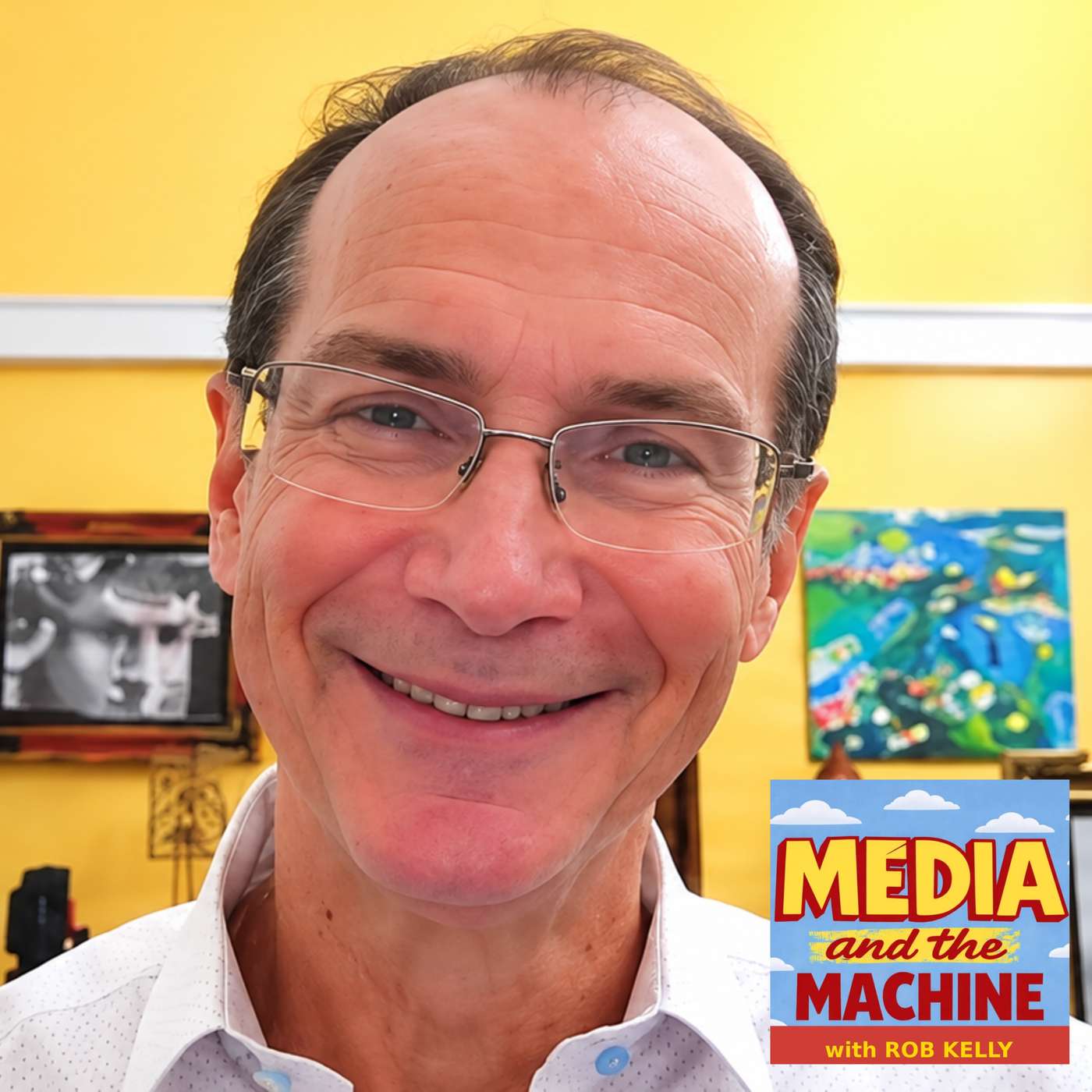
0:48Welcome to Media in the Machine. I'm Rob Kelly, and that's my guest, Eric Civilich. He's the CEO of Encipher, a technology company that lets you prove who created a piece of content and whether AI made it, changed it, or took it. It's called C2PA. Think of it as a nutrition label for content. An anthropic just announced they're using it to watermark everything created on Claude. Eric authored the text providence spec for C2PA and co-chairs its task force alongside Google, OpenAI, Adobe, Microsoft, and the BBC. We talk about what this clawed watermarking moment means for AI companies who are now required by law to do it under the EU AI Act and California's AI Transparency Act.
1:30Eric explains how this finally gives publishers and creators visibility into what AI is doing with their content and gives them a stronger hand in AI licensing deals. Like I do with all my guests, we end up talking about AI's impact on our jobs, our families, and our future. I especially enjoyed Eric's advice for kids ages 10 to 18 in this new era of AI and his prediction on how soon he thinks we'll see a billion-dollar company run by zero people. Please enjoy my conversation with Eric Savilich. So Anthropic just announced they're going to start watermarking content, things people create on Claude.
2:07Can you just tell me what's going on there?
2:09Erik Svilich: Yeah, they just did an announcement about a week ago that they're starting to use CGPA metadata on image assets and watermarking text content that's generated by Claude. Is this something a user will see with their naked eye anywhere? No, not on the actual assets themselves. Can you talk about why did Anthropic do this? Yeah, so the reason why they're doing this is largely due to regulation, both with the EU AI Act and Code of Practice that went into effect August 2nd, 2026, as well as the California AI Transparency Act that went into effect the same date that requires providers of AI models to mark AI-generated content if they have users that use their service that live in those locations.
2:58Erik Svilich: So you're now required to, by law, mark your content as AI-generated or edited. Just curious, who's most psyched about both these EU and California laws and the fact that the AI companies are implementing it, at least partially complying with it, doing watermarking, for instance? Who's doing high fives here that this is all happening? Yeah, I would say the lawyers are the most excited about this. Being able to have a cryptographic audit log of this piece of content was created by this organization and to be able to associate intellectual property rights over that asset, for example, even as that asset moves across the digital landscape is a lawyer's dream.
3:43Now, is this a lawyer representing content creators and media companies or is it a lawyer representing AI companies?
3:51Erik Svilich: I would say a little bit of both. Mostly lawyers representing IP holders, because of course, if somebody uses your IP, you'd want to be able to prove it's yours and get paid. But actually, there's a really interesting use case for and reason why lawyers in the AI space are excited about this and should be if they're not, is it can help limit your liability. So if you're marking all of your content and then somebody downstream modifies it and claims that it came from you, you can prove with 100 % or near 100 % certainty if the metadata is there, the C2PA metadata and Watermark, that that content was then modified.
4:35Erik Svilich: So if somebody tries to use your original service for some illicit use, you actually have an audit log of that. So I would say both for different reasons. What does it say about Anthropic that they were the first to make a big deal out of this? You know, that's a really good question because I feel like their press release was kind of a flop. I was reading a lot of forums online and public commentary on it on social media. And the one resounding message that I got from that announcement was everybody's confused. Do you think the reason Anthropic put out a press release on it is that they're trying to flex their safety muscle?
5:18In other words, they want to be a safe environment, safe like with your content?
5:24Erik Svilich: Yeah, I would say Anthropic's been really well known for being one of the almost doom criers of the dangers of AI. Their CEO has been very adamant about this topic, especially. And I think it's a great move, if done well, to do a PR announcement that you're complying with these different EU regulation acts and California acts because your target market there is enterprise users and enterprise buyers. If your potential customers don't know that you're compliant with these laws that carry massive fines, they're not going to use your service. And Anthropic, OpenAI, Google, other AI frontier models, right now they're using this C2P8-like protocol and technology for the output only, right?
6:15Measuring the content created within their AI platforms. but will they also use it for what they ingest, what they scrape or train on?
6:26Erik Svilich: Yes, absolutely. They're starting to look at the inputs as well because there's also laws related to the EU AI Act that you need to be able to prove the provenance of the data that you use to train a model for new models. So AI model providers are now going to have to essentially provide an audit log of here's the data that I use to train the model And here's how I can prove that I owned the rights to use this data to train my model on. So absolutely, they're going to be doing that, if not already. So let's talk about the publisher side, content creators, owners of content. What does all of this mean, C2PA and things related to it?
7:09What does that mean for publishers?
7:11Erik Svilich: It's essentially what the future of IP and media is going to look like for this new age that we find ourselves in with AI. And essentially, it's a way where you can attach your organizational identity to a piece of digital IP that you own in a way that is cryptographically bound. So when that marker is present, you can prove it with 100 % certainty. Now we're talking about publishers and their content will soon have the equivalent of a nutrition label with the ingredients, meaning things like metadata, attached to their content? Is that how it's going to work? Yes. You need a way to display this type of information to users.
7:56Erik Svilich: So some platforms already support this, showing the nutrition label to users, such on LinkedIn, you may have seen an icon on some imagery showing you some information about how that asset was created. YouTube has a similar functionality as well. If that data is in the video, it will show you in the video description. Can you give the top reasons that publishers, content creators are going to want to use the C2PA protocol? What's in it for them? Yeah, several different things. I would say it's been proven to build trust with users in your brand, being able to display, how did this asset come to be?
8:36Erik Svilich: How do I know this was a real image that was actually taken in a war zone, for example, not some sort of deep fake imagery. And it also helps build trust with brands. So for example, brands want to place their advertisement next to known, authentic content. And because the cost to create AI slop, let's say, at scale is near zero, brands need a way to differentiate what's verified inventory from a publisher versus what was more made-for-advertising AI-generated type content. So they can start seeing potentially increased revenues being part of a pool of verified content inventory. And also being able to have analytics of how do different AI models and systems actually pull content from their website for web search and retrieval augmented generation so they know how often is ChatGPT pulling from what sections of my websites for what topics versus what is Claude pulling from my websites and how does that content perform off of my website.
9:44So last time we chatted, you talked about how you could give publishers visibility into what AI is doing with their content, which is, you know, there's almost no visibility into that currently. If an AI model scrapes a publisher's content, they might see an AI bot visit, but they don't know what's going on beyond that. What can you show a publisher?
10:07Erik Svilich: So for example, using C2PA technology and metadata watermarking type of technologies that go along with C2PA and some of the new stuff coming out of the Spur Coalition's telemetry standard, we're able to show - Spur's the organization in the UK, right? That's got a bunch of publishers that got together. Sky News, BBC, Associated Press just joined. They might have a data use agreement or partner with one of the big AI companies to license their content, but they just pull content from their website. They don't know how much and how often. They don't know what part of the content they're pulling from.
10:47Erik Svilich: They just see that the AI visited the website. And that's with an actual agreement in place, right? Yes, exactly. Yeah, that's with an actual agreement in place. They don't even know what parts of their content are being pulled necessarily. They don't have that type of analytics. They don't know when they crawled the site to get the information. They don't know if that content was used to ground a response. So it just was part of the information pool that informed the response or if it was an actual citation, right? And let's say ChatGPT or Claude was representing your brand in a quote, right?
11:21Erik Svilich: But with some of this technology, we're able to show content owners who are licensing content to AI companies that exact information. So when a user asks about sports for example, some sort of sports content and it pulls from the basketball section on your website, you know that that happened and whether you are actually quoted as part of the response and cited or not, right? Which is really important information because wouldn't you like to know if you're licensing your content let's say to half a dozen different AI companies, right? You have a data agreement with all of them. Wouldn't you like visibility as to what parts of your website and content are performing best with users using AI chatbots that are pulling from that content?
12:04So interesting. So for tier one publishers who might have an agreement already with the AI companies, you can give them a lot of visibility, transparency into what's going on. What about the rest of the world? There's a big problem that tier two and tier three publishers, you know, big publishing companies, but they're not the Wall Street Journal. They're not the New York Times. A big problem that they've got is how to get a meeting, a seat at the table with OpenAI, Anthropic, Google's AI team, and so forth. Tell me how C2PA is going to help them solve that problem.
12:40Erik Svilich: Yeah. At the end of the day, it's kind of like the Wild West. If you're posting content online and it's not marked, it can be taken and you can't do anything about it. I mean, you can try and sue them, but if you're a smaller publisher, anything short of collective action, you know, you're just going to be stuck in lawsuits for the next decade, to be honest. There's some really good folks out there doing good work like the RSL Collective that is helping with collective licensing approaches, but C2PA is another tool that would work well with something like this to actually attach your terms and license to the actual content itself, which makes it a lot more legally enforceable in a court of law.
13:19Erik Svilich: And the C2PA standard isn't just like code you can just put onto your website and it does all this stuff with organizational identity, licensing, rights management, and these issues. It's a bit of a technical challenge to get it actually in production. So for example, we have a completely free WordPress plugin that is there for publishers of any size to get started marking their content, linking their organizational identity and license and rights information into their content so that when their content does get taken, it at least carries that information. But if your content is marked and goes into another system and you find yourself in licensing negotiations or a lawsuit, you actually get an audit trail of this was my content and it was taken.
14:10Erik Svilich: But there's nothing you can do after the fact if it's not marked at the end of the day. And so they'd be using, say, if they're using WordPress to create their content, writing blogs, other text-based articles, maybe media and video too, WordPress can do a ton. The plugin would allow them to attach the nutrition labels to their content going forward. Is that just a no-brainer that you recommend they do this? Yeah, absolutely. I mean, it's a free way to help protect your content, build a verified pool of inventory, to potentially get better ad dollar terms, help with licensing with AI companies and build trust with your users.
14:50Erik Svilich: And if you're using WordPress, it's free and would take you a day or so to integrate. To me, it's a no-brainer. So just a couple pushbacks. One is when I write an article, for instance, this week I was writing an essay and I wrote a bunch of it. I put a draft into Claude. I asked it to correct typos and give me the draft back. Is that now going to be watermarked that it was AI generated, even though I wrote most of it, but just did some spelling corrections and typos and tightening up? How does that work? So something that a watermark provider can do is say that perhaps this was edited by AI. And there's also the ability with C2PA and similar technologies, like let's say for an image and you just had it change the color of the sky, to have that information embedded into that content.
15:44Erik Svilich: So people could know with full transparency that it was just an edit by AI and here's what it did. But people and providers that don't go into that level of detail might just slap a black and white label on it. And it's unfortunately down to the technology provider who is marking the content to make that decision. And how do you get around this use case? In other words, I create a bunch of content. I write essays on Substack. I've got podcast episodes going out like the one we're on. How do you prevent someone else from laying claim to that content? Let's say they were able to rip it off from Substack.
16:24They just cut and paste, grab my audio somewhere, and then just start to add the nutrition label and notarize it that it came from them. How do you prevent that from happening?
16:35Erik Svilich: Nobody can stop somebody else from copying and pasting your content onto their own website and claiming that it's theirs. However, if you've marked your content and then somebody just copy pastes on their website and says that it's theirs and they don't do anything else and that marker is there, then you now have proof that they've copied from you and stolen your content. Because this information does survive copy and paste. Huge deal, right? It survives scraping. So even if a bot is pulling your website like an RSS feed for that information and that content's marked, well, that mark will still be there when it arrives on some other website trying to take or spin your content.
17:16Erik Svilich: Maybe in the future, that site gets blacklisted or much lower ad revenue because they've been caught stealing content. It seems like the timing is almost perfect for C2PA to succeed. but why you your business is in cipher you've got some serious competition here much bigger adobe right google i think the bbc is doing some stuff around images especially i think you mentioned to me the ipTC standards org but why you how are you going to be the one to win at helping publishers succeed here yeah a couple different reasons for one i authored the unstructured text standard for C2PA. So they had on their website for over two years the need to be able to embed this information into websites, blogs, articles, chat applications, because it was widely thought to not be possible.
18:13Erik Svilich: But we still have some proprietary IP because, for example, C2PA is once per web page. So it would survive if somebody copies the entire web page. But what happens if somebody just copies a sentence or part of a sentence or a paragraph? Because what a user does and what AI tools do is they pull the content that's most relevant to them, which isn't the entire web page. So that's what our technology covers, is the more granular level of that and what our IP is around. So we have a really solid moat there. And we're very cutting edge in regards to the software technology being one of the only companies that exists that have passed the C2PA conformance program as a generator product to administer and these nutrition labels on content.
19:01Erik Svilich: Also being a certificate authority and timestamp authority, which is part of the C2PA trust ecosystem to be recognized by other third-party validators like Adobe and Google and BBC use so that your content is recognized as trusted in those other ecosystems. And we just kind of make it plug and play, just making it really simple and easy so people can come across a piece of content on the internet, AI or non-AI, and just get a simple yes, no answer of, can I use this for this purpose? That's very powerful. So for those reasons and our work with regulators like the California folks and EU AI folks, I think we're just super well positioned as part of the progenitors of the technology and what we've been able to do so far.
19:46Erik Svilich: I would say as well, we're part of the IPTC who is doing a lot of work in this space and they have Bloomberg and AP and Getty and the rest. And I'm presenting at their photo metadata conference the beginning of September. So you're getting to know content publishers real well in the AI space. What are they most wasting their time on AI-wise right now in terms of building their business? I would say the number one current red herring is prescribing to GEO guides on how to get your content discovered by AI companies. is because it changes so rapidly in the space. Sometimes what AI pulls from and what type of content it pulls from and what it likes to read changes week to week.
20:36Erik Svilich: There was a study done recently in the last two weeks that there was about 3 % to 5 % of all ChatGPT responses quoted Reddit, for example. And this week, it's down to below a percent. It's like half a percent. And that was just in a couple weeks. So what the AI companies do in regards to their search algorithms and what you would do to optimize for that, I would just focus on putting out high quality content, especially if it's a niche content that you know really, really well, or you're an expert in, or maybe you're really local and close to the source on it. For the best way to get traffic right now, at least from AI, is put out the best content and AI will find you.
21:22Erik Svilich: Especially if you are well-known in the space for a certain topic and you have some solid credentials behind you, or you're really well-known for reporting a certain topic and you do it consistently, AI likes to find those thought and knowledge leaders in the space, less so just trying to min-max for itemized lists or those type of things. I'm curious your take on the best way for content publishers to make money from AI, the massive amount of traffic and distribution. But, you know, they're faced with so many different options. You got companies like ProRata and Tolbit. You got organizations like RSL, Spurred, New Protocols.
22:03And you can also go to brokers like Protege or Trovio and license your content to AI. How do you recommend content execs think about making money from the world of AI?
22:15Erik Svilich: I would say the most important thing is all those services solve a problem and compete with each other in slightly different ways. You know, you have those that try to gate access to your website, like the Tolbits and Cloudflare of the world. And then you have the licensing partners like ProRata and Arcel that you mentioned. and they solve two different problems, right? One is access to your content and one is licensing it afterwards. But nobody's really thinking about what happens to your content once it leaves that website or what happens when somebody gets past that gate. So I would say provenance and using C2PA and this technology as a way to relate your content to your license and make it one and the same thing is the fundamental layer underneath all these other access gates and licensing that proves that you actually own this licensable asset in the first place.
23:15Erik Svilich: So let's say you take a photo at a press conference, and somebody right next to you takes another photo, same exact photo, same exact time, they're standing right next to each other. And you're trying to sell your photo, and they're trying to sell their photo. And you have a way to prove the provenance that that was a real legitimate photo. and any editorial process that went on behind that, and your competitor doesn't, and they're the same price, which one would you buy for your website? The one that you can prove is a real photo from a real point in time, or the one that could have been AI? You don't know.
23:50Erik Svilich: So it adds real value in these licensing conversations. And being able to prove and build trust actually adds value to these licensing negotiations. All right, I've got a couple of humanitarian questions for you. What can go right in an AI world that's got you excited outside of your own business? I mean, to be honest, I use AI all the time for the work that I do. And I've been programming since I've been in elementary school. And using AI to help me program new technologies and products with my expertise has become much, much easier and faster for somebody like me. My startup is a small company.
24:34Erik Svilich: I'm in charge of all the technical work. There's no way I would be able to compete with the powers of Google and OpenAI anywhere close if this were five, ten years ago. But today, I'm actually able to move super fast and compete very well against much larger companies with much more physical staff and resources because I know how to use AI very effectively for my work and make sure that it outputs quality work. How big a team is needed to create a startup, a company that could be valued at a billion dollars, say, within five years now in this age of AI? I think we'll see it next year, one person, easily.
25:15Erik Svilich: And I think within five years, we'll see zero. We'll see fully autonomous billion dollar companies within five years. I want to get your take on what to tell younger folks about changes to make in this new world of AI. So for instance, I have a 10-year-old. So let's pick like a 10-year-old and let's pick maybe someone about to finish up high school, anywhere in that range. What's your advice to them in this new world? You know a lot more about it than most of them. I would hope I know more than a 10-year-old, especially in regards to A. I'd be in trouble if I didn't, to be honest. I would say to embrace it and learn what you can.
25:55Erik Svilich: And it can be a great learning aid. The thing that you're in control of is what you want to do and what you're dreaming about and what you want to accomplish. Do not replace your entire critical thinking and brainstorming and what your goals and ambitions are. Don't let these systems or social media tell you who you should be and what you want to do. Figure that out for yourself. Go try different things. Figure out what you like. Figure out what you're good at. And then use these tools like AI to magnify that hundredfold. You and I both were fortunate to grow up in families where we had an opportunity to go to college.
26:33My son will be in the same boat. I'm just curious, what are the odds though at 10 by the time he graduates high school that my son is even going to go to college?
26:44Erik Svilich: well i think the biggest benefits that i personally got out of college is the ability to and practice of working with a team of people to get something done and exploring different forms of knowledge that i didn't know about but also the community aspect and the connections that you make and potential lifelong friends. So the social aspect of college is oft overlooked and is not something today replaceable with AI. So the percentage of value will be weighted much higher towards social and teamwork than actual study? So if there are really good subject matter experts or teachers that have been in an industry before trying to do a job, or there's new careers that we haven't even thought of yet, which I guarantee you there will be in 10 years.
27:45Erik Svilich: I think that will be the primary value, as well as the social connections, etc. I do not think that college will need to be four years, because a lot of that knowledge will be widely accessible in an instance. And that really base level of knowledge will be a commodity, 100 % a commodity. It already is with AI today. So I think college for specializations is going to be very useful. I think trade colleges are still going to be very useful, less so on the general knowledge, more so on the domain-specific knowledge, where you can learn from experts and researchers in the field that go beyond, perhaps, the training date knowledge of AI.
28:28Erik Svilich: I would stay curious, stay flexible, practice critical thinking through doing different activities, exercises, games, for example, that help with that. Because you don't know what the future is going to be like. And it's changing faster today than it has been in most of human history. Faster than the Industrial Revolution, in my opinion. So, just be prepared. prepare yourself and be open to change. Hey, Eric, thanks so much for all the time today. Thank you for having me on, Rob. Really appreciate it. Well, this is Media and the Machine. A few things about you and me. If you want to hear about the next new episode, make sure you hit follow on the show on your podcast app.
29:11If you want to go a little deeper, head to mediaandthemachine.com and subscribe. When you share your email with me, you can see handcrafted transcripts, read the essays in my newsletter, and be the first to hear about who the guest is on the next show. You can also email me directly from there. Maybe you want to recommend a guest. I'll give you a shout out if you do. I love paying it forward. From time to time, I also open up office hours and host small meetups for subscribers just to meet, talk, and build things together. If you're creating something of your own or thinking about it, I'd love to help.
29:39Maybe you've got a podcast in you. Finally, I don't have a marketing budget for this show, so if it's finding you and others, it's because someone like you passed it along. I'm genuinely grateful. If you have a moment an honest rating helps me make this better for you You just go to the show page you click one of the stars and I'd rather you give me a low rating than no rating at all I mean it it pushes me to get better. Thanks again. See you next time
30:17Thank you.
My guest today is Erik Svilich, the CEO of Encypher, a technology company that lets you prove who created a piece of content — and whether AI made it, changed it, or took it.
The tech is called C2PA -- think of it as a nutrition label for content…
And Anthropic just announced they're using it to watermark everything created on Claude.
Erik authored the text provenance spec for C2PA and co-chairs its task force alongside Google, OpenAI, Adobe, Microsoft, and the BBC.
• We talk about what this Claude watermarking moment means for AI companies who are now required by law to do it — under the EU AI Act and California's AI Transparency Act
• Erik explains how this finally gives publishers and creators visibility into what AI is doing with their content — and gives them a stronger hand in AI licensing deals.
• GEO/AI SEO -- He explains why chasing AI search rankings is a red herring — including how AI answers citing Reddit dropped from 3-5% to half a percent in just two weeks
Like I do with all my guests, we end by talking about AI's impact on our jobs, our families, and the future.
I especially enjoyed Erik's advice for kids ages 10 to 18 in this new era of AI -- including what a new form of college looks like.
And his prediction on how soon he thinks we'll see a billion-dollar company run by zero people.
Enjoy!
Rob Kelly