Ask ChatGPT

 Media and the Machine
30 Oct 2026 · 40m · 17 chapters

Bill Gross argues AI “answer engines” should pay content creators via revenue share based on attribution (ProRata), rather than illegitimately crawling and replacing traffic. He compares the shift to Napster/Spotify and predicts major AI firms will eventually adopt rev share after lawsuits and IPOs.
Bill Gross is founder/CEO of ProRata AI; previously founded Idealab (incubated 170+ startups over 30 years). His auction technology powered Overture (Yahoo bought for $1.6B) and Google paid $360M for his patents that shaped Google’s ad business.
ProRata can estimate which sources contributed to an AI answer and split a non-zero share (proposed 50%) of AI revenue accordingly. He cites publishers signed up (1,600) and documents (65M) as consented, clean-sourced data; AI hasn’t paid yet. He predicts Apple/Anthropic first, Google later, and Meta/others last.
Wikipedia crawling costs (expenses +66%, traffic -80%); YouTube’s 50% rev share after takedowns; Napster vs fair revenue models; Z.com failure due to timing (broadband); Google traffic drop (66–90%) from generative answers; a gas-price hedging app idea generated by LLMs.
Written by AI. May contain mistakes.
Explore how a lawsuit against OpenAI sparked a discussion on fair business models in AI.
“I had been especially focused on climate change for the last 20 years or so until the New York Times sued OpenAI.”
Understanding how AI could pay content creators through a revenue-sharing model.
“I want to ask, let's say, for instance, I'm visiting my sister in Brooklyn.”
Discussion on how AI companies may be seen as modern-day Napster in terms of content usage.
“And I think the AI answer engine should do the exact same thing.”
Bill Gross shares insights on the necessity of revenue sharing for content creators' sustainability in AI.
“When YouTube first came out, I don't know how many people remember this.”
Explore the legal landscape and challenges faced by AI companies regarding content use.
“One, our technology helps them solve the, we don't know how to, because we do the attribution to the money they'll make from their IPOs.”
Bill discusses the leverage points of legal and regulatory measures to shape AI's future.
“this company was as soon as the New York Times sued OpenAI just a little over two years ago, I felt, wow, that's a firing shot that speaks to how angry the publishers are and how much theft is going on.”
The importance of transparency and regulation in the AI market for creators.
“I'm trying to look out for the publishing industry in general.”
Discussion on the regulatory landscape and the market dynamics affecting the creator economy.
“Europe is definitely further along than we are.”
Exploration of how Apple and Amazon could influence the AI space with ethical models.
“You were just mentioning that you've got, call it the largest ethical, I know you've talked about it before, ethical model and clean, 100 % sourcing from the 1 ,650 publishers.”
Examination of Google's AI strategies and their effects on web traffic and publishers.
“and they had advertising support long before they had subscriptions.”
Comparison of OpenAI's innovations to historical search engine advancements.
“I don't think either of them have shown a willingness to share revenue.”
Analysis of the key factors influencing startup success based on personal experience.
“I think that they revolutionized search and the way people look for things as much as Google did 25 years ago.”
Learn why adapting your ideas based on market feedback is crucial for success.
“I called it idea lab because I love ideas, but I actually think that iteration is more important than the idea itself.”
Explore the impact of timing on business success through a personal story.
“And I was trying to figure out what's going to go online next after e-commerce.”
Discover strategies for building successful content businesses in a changing landscape.
“They didn't try to stream the movies when people couldn't watch them in their browser.”
Understand how startups can innovate using large language models as a foundation.
“Right now, it's very easy to make derivative things because AI is so good at that.”
Learn how to prepare young people for an AI-driven future and the importance of critical thinking.
“are you going to make an AI avatar of yourself, your family and friends, both while you're still alive and when you've passed away?”

Get the gist, explore an idea or ask about something said.
 Claude
On Media and the Machine, what are the key points of this episode?
Searching your listeningAutomatic transcript. May contain errors.
0:00Bill Gross: I had been especially focused on climate change for the last 20 years or so until the New York Times sued OpenAI. And I looked at that lawsuit. It was Christmas of 2023. I remember sitting home thinking about, well, this is a real problem. And I think the right way to solve it isn't with lawsuits, but with a fair business model. And then I realized, well, wait, this business model already exists. It's a revenue share. I feel that within a year, we'll see revenue share happening and it will cause a boom in creativity.
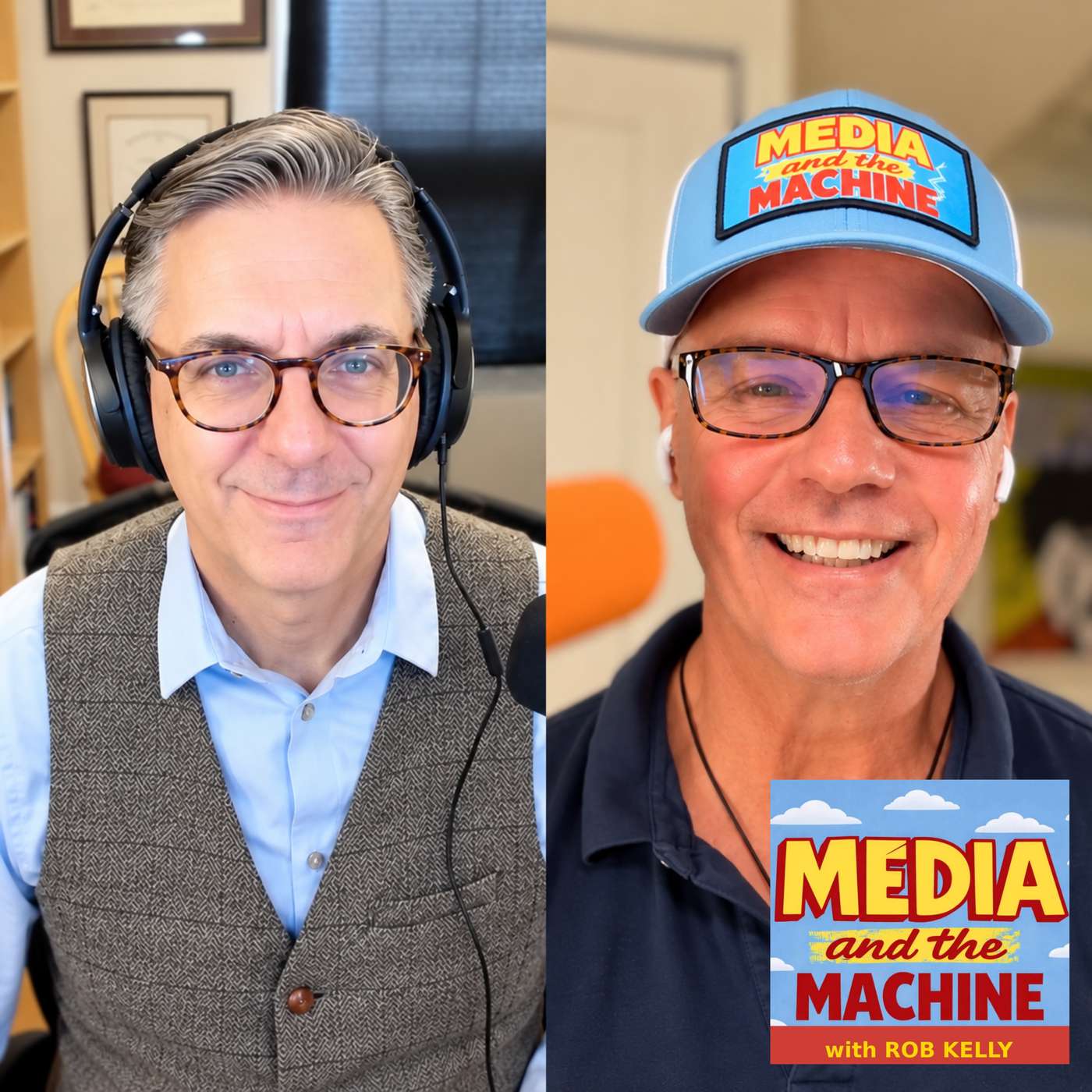
0:44Welcome to Media and the Machine. I'm Rob Kelly. AI is the biggest technology shift of our lifetime, and this show is about how to profit from it. I'm a three-time founder and CEO of content-driven businesses, And each week, I talk with the people on the inside of AI and content, the ones building this new world and learning what works firsthand. I'm an optimist about AI, but I'm also a realist. So every show ends with me asking our guests what AI means for our jobs, our families, and our future. My guest today is Bill Gross, founder and CEO of ProRata AI. Bill also founded Idealab, incubating over 170 startups over 30 years.
1:22His keyword auction technology powered Overture, which Yahoo bought for$1.6 billion. Google paid Bill$360 million for the patents, which helped shape Google's legendary ad business. Now Bill wants AI to pay creators. His starting point? 1 ,600 publishers and 65 million documents. If you run a content company, we get specific. We explore how ProRata would split those payments. Think Spotify royalties, but for AI answers. Bill ranks which AI companies will share answer revenue first, from open AI to anthropic and beyond, and who will come, quote, kicking and screaming last. Plus, I asked Bill which content businesses he'd build today and which ones he'd avoid.
2:01If you're a startup founder, Bill grades pro rata against his five success factors, including the most important factor based on all the startups he's ever experienced. Bill also explains why Z.com failed, even though Steven Spielberg, Adam Sandler, and Chris Rock were involved. Plus, Bill is giving away 1.2 million business ideas, including one AI idea that blew him away. Finally, we talk about our kids in AI. Bill shares advice he just gave to 400 Pasadena High School students. My thanks to Josh Freeman, the consummate connector, and Peter Slaughterdyke for bringing us together. Now please enjoy my conversation with Bill Gross.
2:40You've got this pro rata attribution model. I want to ask, let's say, for instance, I'm visiting my sister in Brooklyn. I want to take her out to the best slice of pizza. I ask AI, of course, where to go. How would the content creators who provide me that answer get paid under the pro-rata attribution?
2:59Bill Gross: I would love you to get a great answer from AI. And 50 % of the revenues that that AI company earns from that answer should be split to the people who contribute to the answer. So, for example, if a third of the answer came from the New York Times, a third of the answer came from a YouTuber, and a third of the answer came from someone down the block from that pizza place, I think 50 % of the revenue should be split three ways to each of them. And they would basically get a royalty check the same way an artist gets a royalty check in the mail from Spotify when their streams are played. It's easy to count streams.
3:35Bill Gross: It's easy to count YouTube views. It's not as easy to separate out who is responsible for an AI answer, but that's exactly what we do. And so a open AI or an anthropic would set aside X amount of money, 50 % of their revenue, say? Yeah. If ChatGPT makes$10 billion a month, then$5 billion of it should be going out to the people who provided those answers. So just imagine taking that$5 billion and pro rata slicing it up based on what people asked and who contributed to those answers. That is exactly the fair way to do it. It's exactly what YouTube does. It's exactly what Apple News does. It's exactly what Spotify does.
4:13Bill Gross: And I think the AI answer engine should do the exact same thing. And has this ever happened before where a content creator say does not get paid for someone else using their work? Napster. Napster was one of the great examples of that. But musicians had a five alarm fire over that. The record labels had a five alarm fire over it, But that still didn't stop them. But what stopped them was Steve Jobs making a fair revenue model where he went to the studios and said, let me sell the songs for 99 cents each. Let me break up the albums because that's what people wanted. People wanted to buy the song they wanted, not the whole album.
4:51Bill Gross: Let me break them up and I'll share the revenue with you. And the studios said yes. And that effectively put Napster out of business. And then a few years later, Spotify came along and said, we'll let people stream the songs and we'll share revenue with you based on the number of streams that are played. And that basically is a way to make users happy and artists happy. So I don't think there's a sustainable model where you steal content from creators, don't pay them, and those creators can stay in business and continue to make new content. And that's why I feel with AI search engines, as great as they are, someday they have to share revenue with the creators.
5:29And do you genuinely believe that we'll be looking back one day and see open AI at least and Anthropic and Google and SpaceX as being the Napster of the day?
5:43Bill Gross: Yes, I think we already look at that as the case. I think that many, many people, well, 1 ,600 different publications have signed up with our system saying that they are the Napster of the day because they are basically crawling their content and causing them to have extra expenses on top of it while they're stealing. So Wikipedia, for example, is the number one crawled site. It's causing Wikipedia's expenses to go up by 66 % and their traffic to go down by 80 % because they're crawling the content and answering from that content and not sending the traffic to them, but causing them the expense while they're crawling.
6:19In a way, it's even worse than Napster because it's incurring a cost as well.
6:23Bill Gross: Exactly. So why do I think that they'll eventually pay? One, to get better content, they'll want to pay. And let me give you the YouTube example. When YouTube first came out, I don't know how many people remember this. YouTube was a wild west. This is before Google acquired them. Everybody was just taking downloads they had from their television set and from other places and just posting them. People were posting any video they could, including SNL clips, for example. So then after Google acquired YouTube for like$1.6 billion way back when, Google was a real company. and they started getting takedown notices from NBC and from all the companies.
7:01Bill Gross: And as they would get a takedown notice, they would take it down. But then Google one day said, well, wait a minute, we want this content. What about if we pay you 50 % rev share for all the content? And then all the TV stations said, yes, that's a great idea. And then they poured the stuff on and then creators started making new stuff because now they can make a living doing so. And that led to the creator economy and that led to YouTube is now a half a trillion dollar company. If you split it out separately, it's bigger than Netflix. And what's incredible is it wouldn't have happened if they hadn't shared revenue.
7:35Bill Gross: So why do I think that's going to happen with AI? It has to. It will make more creators make a living. And I believe after their IPOs, which are imminent, I think literally today, the IPO prospectus came out for Anthropic and I think early next year, OpenAI is going to go public. they will have the money to pay for it too. So they can stop crying poor. Like the two stories they've given everybody are one, we don't want to, two, we don't know how to, and three, we can't afford it. So I think all three of those will be eliminated. One, our technology helps them solve the, we don't know how to, because we do the attribution to the money they'll make from their IPOs.
8:14Bill Gross: We'll give them the cash so they actually could share revenue and still be profitable. And actually, one of the best examples is how profitable YouTube is and how profitable Spotify is. Spotify is actually the perfect example. Here's an independent company that has more than$100 billion market cap that shares 70 % of its revenue and still makes customers happy and makes artists happy. It shows that you can share revenue and make a viable business. Now, going back to you've got 1650 publishers signed up, you've got 65 million documents. These all just came in. Thank you, Josh Freeman, for providing me with that.
8:51It sounds like he's been real busy. That sounds like a huge amount of leverage to have all that as a corpus yourself. And this is all just to be clear, clean sourced data with the publisher's consent. has big ai paid pro rata anything yet for access to that content no not yet that's because they
9:13Bill Gross: continue crawling it illegitimately for now here's the challenge the publishers are in a difficult situation where if they cut off the crawling then they won't show up at google search results anymore and they need that so we either need to separate google's search engine crawl from their AI crawl or come up with some other way that the publishers can have the leverage so that they still get traffic, but are able to block the AI answers. And we haven't figured out a way to do that. Now, Cloudflare is working on some ways to do that, to detect the bots. And that I think is a viable method too, but it is challenging to get the AI companies to move because basically they're taking a stance, until we lose the lawsuits, we don't want to do anything.
10:00Bill Gross: One of the inspirations for this company was as soon as the New York Times sued OpenAI just a little over two years ago, I felt, wow, that's a firing shot that speaks to how angry the publishers are and how much theft is going on. Because what the AI companies did is they bought one subscription to New York Times, but then crawled all 20 million documents as if they were one subscriber, then obviating the need to go to the New York Times to get the answer after that. So of course, I think that's unfair and we'll see what the jury says about that. Is there a harder company to get a meeting with these days than OpenAI and Anthropic?
10:39Bill Gross: Yeah, I think that's about as hard as it can get. Those companies are overwhelmed. They're overwhelmed on every front. They're overwhelmed with growth. They're overwhelmed with challenges to make their revenue equal their expenses because they have huge, huge data center expenses. And then they're overwhelmed with getting ready to go public. So they're pretty hard to reach. How do you get a message to open AI and Anthropic? You're trying to shape this new world. Like, how do you personally do it? Yeah. I reach out to the CEOs directly, but I'm lucky that I can give that a try. But did they take your call?
11:13Bill Gross: Some of them have. There are many layers in those companies. So there are many people you can reach out to if you want to get something inbound to those companies. One of the things I like about how you've talked about this as an issue out there is you talk about how you want to help apply leverage. And even if it ends up not being pro rata, that's the winning solution. You want to help shape this new world. So if we look at the three main pieces of leverage that you've got, say someone in your position or the leverage against, call it big AI, open AI, Anthropic, Google, SpaceX, maybe the big four.
11:47Let's start with legal. What do you think is going to happen with the New York Times case?
11:51Bill Gross: Well, there's the New York Times case and there's probably 75 other lawsuits too. I think that people will find that this is not fair use. Fair use is when you want to quote an article and then direct someone to that article. Training and using the answer to eliminate the need for someone to go to the actual original website, I think that will be determined to not be fair use, but we'll see. Obviously, when the copyright law was first put in place, there was no such thing as a recording until Edison came along with the phonograph. So every time a new revolution in communication comes forward, the law has to be adjusted.
12:28Bill Gross: So the lawsuits are to help get that law adjusted. So I think we'll see a lot of what happens after that prevails. But speaking to what you just said as well, my whole goal is since I don't have any of my content being stolen, I am not being affected directly. I'm trying to look out for the publishing industry in general. I'm just trying to show that the argument when they say it's not possible to determine, we want to eliminate that argument from a possible way of getting out of having to pay. And this is what you've got the patent for on your pro-rata? The pro-rata attribution algorithm. Basically, we wanted to show that you could unwrap the results of an AI search engine and fairly a portion, 22 % came from this person, 43 % came from that person, 19 % came from that person.
13:14Bill Gross: And all we have to do is be approximate. But as long as you can do that after the fact, then it doesn't matter how you trained your AI search engine. You can't hide behind the fact that we don't know where this came from. We can tell you where it came from. And we don't even have to define the 50 % ratio. I'm proposing that it's a 50-50 rev share like YouTube. But every AI company can choose what rev share they would like to do. It just has to be not zero. Like right now, it's zero. And they're saying we don't owe anything. I feel that within a year, we'll see revenue share happening. So back to the leverage on AI.
13:49We've covered legal a little bit. And we've got, of course, regulation. It seems like Europe is taking a lead over the U.S. in that regard. Is that your take too?
13:59Bill Gross: Yes. Europe is definitely further along than we are. I think they fear more about the loss in the creator economy than we do here in the United States. But I think we're catching up here. Obviously, the fact that 1 ,650 publishers have signed up means a lot of people care about this. They've just signed up to try and have us have a unified front when we're talking to the AI companies. Is the biggest regulation win, would it be that AI companies have to be transparent about the sources of content and data? Transparent and share, but it's both. The reason why this is even a discussion is because the AI answers are great.
14:38Bill Gross: We love the AI answers and I support the quality of the AI answers. They are great. They are just being created off the backs of someone who wrote the original content, who's not sharing in that. And then, so if you've got legal, regulation is two different points of leverage. You, of course, have the market itself. Yes. And I know you're a market guy, you're a capitalist in a perfect world. We wouldn't be sitting here chatting about lawsuits and regulation. You'd be happily competing because this got sorted out. Tell me where things are at there in terms of the market. And for instance, why is there no clean model?
15:14Why is there no iTunes or Spotify of AI answer engines?
15:20Bill Gross: Well, the market will take care of it in the long term. Here's how the market would take care of it in the long term. If they indeed put all content creators out of business, then only someone who is actually paying will actually have fresh content that is current and new and real. But it takes time for that to happen. Obviously, if they've crawled every website, they've crawled 1 billion websites and are crawling on an ongoing basis, it takes a while for companies to go out of business for the market to solve the problem. and that's what we don't want to have to wait for. So for example, once one person, I call it caves, let's say Apple.
15:56Bill Gross: Apple, I think might be the first to do this because Apple is a more genuinely fair company, I believe, more cares about privacy and more cares about fairness. But Apple, for example, has a product called Apple News and Apple News does share 50 % of the revenue. They have several hundred magazines who all contribute to Apple News and they get 50 % of all the revenues from the subscription to Apple News for putting their content in. And it's on a pro rata basis, just like we propose, based on the number of minutes spent on different articles. So let's say Apple decides to come out with a generative AI product.
16:35Bill Gross: And let's say Apple does agree to revenue share 50-50 or any amount. Then Apple will have a better product with better answers because they will have everybody seeking to put their content in there in the same way that NBC seeked to put their SNL episodes on YouTube once YouTube shared. So YouTube became a better product by sharing revenue. Apple could theoretically make a better product. Well, that will then have competition against the other companies. And that is the way the market would pressure them to do it. That wouldn't take a lawsuit victory. That would just take competitive pressure.
17:09Bill Gross: So it could be that in the next year or two, Apple does do that. And I think that would be a great move and very Apple centric, very on brand for Apple to be the fair company doing this. Have you heard about them doing it? I think they're thinking about it. You were just mentioning that you've got, call it the largest ethical, I know you've talked about it before, ethical model and clean, 100 % sourcing from the 1 ,650 publishers. In this case, would an Apple or Amazon is sort of an obvious second one to look at, just in terms of big tech companies who do not have a mainstream LLM widely used.
17:50Would they be starting to build an LLM from scratch
17:52Bill Gross: in that case? They could, but they also could use one of the open source models too. Again, our technology works however the AI answer is generated. The great thing if one of those companies chooses to do this is the way you said it. This is ethically sourced, meaning we don't crawl anyone's website. We only get the feed, the live feed from these publishers because they've agreed to give it to us. So a few things happen because of that. One, we're doing it completely legitimately. Two, we're sharing revenue with them whenever they show up in an answer. But three, we're not hitting them with extra expense by crawling their servers all the time.
18:29Bill Gross: They're just giving us one instance of each article. So we save them money and hopefully we make them money on the outcome as well. But we do need one of the big players like an Apple or an Amazon or someone who's got the users to actually make a difference. And hopefully that will happen. Like I said, this is a long game we're playing here. Okay. So we got Apple and Amazon as two potential. Did you agree, by the way, with Amazon as being a sort of second maybe choice? Absolutely. Well, there's a few reasons why Apple and Amazon might be great early adopters of something like this. They don't have existing large search revenue to cannibalize and worry about.
19:07Bill Gross: Meaning Google already has a huge search revenue. ChatGPT has a search product. They would be using this angle of being fair as a competitive weapon. And that's why they might be logical ones to do it first. And they've got the backend. They've got a way to generate cash. Right. They have cash from other businesses, but most of all, they have the brand to keep the users. So an Apple or Amazon in this case, they would need to use some baseline, open weight, open source LLM model to sort of get going. And then they're offering 50 % of revenue made. However, they sell their product to content creators.
19:42As simple as that.
19:44Bill Gross: Yeah. It could be 50 % of subscription revenue, or it could be 50 % of advertising revenue, meaning they don't have to charge for it to still have revenue to share. Google shared revenue with people and they had advertising support long before they had subscriptions. So it could be both models. We're not prescribing how anybody makes their money. We're just prescribing that the content that makes the money should have a cut. That's all. I just want to get your take on sort of stack ranking the big models. Tell me your take on how they are treating content. Open AI. Yeah, well, they're just crawling everything they can.
20:21Bill Gross: They have aggressive systems to go grab every piece of content they can, and they are running out. I think most of them have said, we can't find more words to train on. So they're looking at other things outside of words. Physical AI. Yeah, physical AI. But I think OpenAI even got stopped and blocked because they were grabbing YouTube videos and taking the transcripts from YouTube videos. But then YouTube blocked that. Google's like, I like that, right? And then I think they got blocked also. That's our content. Yeah, right, right. And I think it was well known that Anthropic even got some illegal books.
20:53Bill Gross: They bought a downloaded bank of 1.5 million pirated books. And for that, they actually lost a lawsuit and had to pay a big settlement, I think$1.5 billion to the book authors for stealing those books. Now you got OpenAI and Anthropic. Is Google any different? I mean, in this case, they're the incumbent and they've got a model already, as you brought up with YouTube. So why doesn't Google do something where they have an ethical model? Yeah. Pay the creators. I really think they should. I really wish they would. I think maybe they will over time, but they certainly are not so far. And Google is doing another disservice to publishers for right now, which is they've crawled your content.
21:36Bill Gross: They're answering the question in the Google generative AI answer at the top. and they're answering it so well that you often don't need to go down to the organic results and click to the website anymore. So their traffic to websites has gone down between 66 and 90%. Google traffic was an important part of the deal of the internet. Basically, Google crawled your site, but for every two times they crawled your site, they delivered a visitor to you. It was a two to one ratio, but now it's a 2000 to one ratio. Now every 2000 times they crawl your site, they deliver a visitor. So your traffic from Google has gone down dramatically.
22:13Bill Gross: And that I think is unfair as well, because basically Google is taking your content and keeping the user at Google. So they make money, but they're not passing it along. And finally, SpaceX and Meta, where do they play in this? I don't think either of them have shown a willingness to share revenue. I think they would be last. Here's my order. If I had to pick an order, I think it's going to be Apple first. Then maybe it would be Anthropic. then maybe ChatGPT and then maybe Google and then Meta and Grok, SpaceX last. Why? Because Apple has the least to lose and the most to gain. And I think that whole order to list was in order of least to lose and most to gain.
22:55Bill Gross: I think that they're all going to come kicking and screaming, but we're going to have to see what happens with the lawsuits. Well, Apple's new CEO, certainly if he listens to this, he's got a big opportunity, John Ternus. Yes, yes. He can call you? Yeah, I would love that. But I think that Apple is a great company and they have been very fair to creators and they do care about both creators and about privacy deeply. And therefore, they might be the first. So you sold a company, Overture, formerly GoTo, for a billion plus. You got Google to pay you, how much was it for patents back in the day for the auction, pay-per-click?
23:33Bill Gross: $360 million they paid for the patents. Who in today's world most reminds you of Yahoo and Google from back then? Well, I actually think that ChatGPT, OpenAI, was an unbelievable firing shot at Google when it came out a little over three years ago. And I think that I never thought... So they're the new Google? OpenAI and ChatGPT are kind of the new Google? I think that they revolutionized search and the way people look for things as much as Google did 25 years ago. And what did Google do that was so incredible? Google invented a relevance algorithm. Larry Page invented this thing called PageRank.
24:19Bill Gross: PageRank. Which basically used the link strength of how many sites linked into you as an authority figure as to how relevant your site was on a given keyword. and that was a brilliant, brilliant innovation. My innovation was to come up with ranking pages by money, by sorting by price per click. That was a brilliant innovation for monetization, but Larry Page's innovation was a brilliant innovation for relevance. That was so revolutionary because search results had gotten so bad and that really brought a good result to the top of almost every search you did. Whatever you typed in, be it cancer research or new shoes, good sites would show up because of the page rank algorithm.
25:06Bill Gross: And that completely changed the way people found things. And for 25 years, that was a runaway success building a multi-trillion dollar company. And I never thought that would change. And all of a sudden, ChatGPT comes up with a new thing, which is instead of typing in a keyword, actually type in a question and we'll give you an answer to your question. Like don't just type in running shoes, type in what's the best running shoe for this terrain in this place, for this weight, for my body, for, and it's unbelievable how much better that can be because it's tailored exactly to what you want. If Google was the best yellow pages ever, because now you could find something when you type in your keyword better than you could before, this was now the best answer machine ever.
25:54Bill Gross: And that's been a dream for the internet for a long time. I actually even started a company early on in 1996 called answers.com because I wanted to do something like that, but the technology wasn't there to be able to do it. We made a successful company. It eventually went public, but it was never actually giving you answers to whatever you typed in. The idea that you could type in a question and get an answer tailored exactly to what you typed in, that's revolutionary. And that's completely taken for granted already three years later. You did a great TED Talk. I really loved it in which you sort of went through your 170 plus, or I forget how many back then, but now you've got about 170 startups you've been involved in.
26:32And you broke down why startups succeed in your experience. And you also compared it to startups outside of Idea Lab. You went through timing, team, idea, business model, and funding, those five things. I want to ask you to self-grade pro rata. How's it doing on those five? Is it the same order?
26:52Bill Gross: Yeah, I would say it's still timing. And in fact, the reason we haven't succeeded to the degree we want to is still timing, meaning the timing is the lawsuits. We talked earlier about how those need to finish to really force the hand of these companies. And who would have thought that two and a half years later, after the first lawsuit was filed, they still haven't progressed through our legal system. I would have thought it would have happened in six months. So I thought my timing was great. But here's the critical thing that I learned from that talk I gave and lessons on timing is you need to survive until the timing is right.
27:27Bill Gross: Some of our companies that failed due to bad timing, they felt we need to blitz. We need to build our brand. We need to spend more money. We need to spend more money on marketing. We need to hurry up, hurry up, hurry up. And if you run out of money before the timing is right, then you don't make it. The great thing that we've done at ProRata is longevity. we're still around. We still have two years of cash on the bank and we will hopefully be there when the timing is right, but the timing is not right yet. How about the other four? You got team, idea, business model, funding. Well, I would say I always used to think the idea was the most important thing.
28:02Bill Gross: And I think I'm wrong. I called it idea lab because I love ideas, but I actually think that iteration is more important than the idea itself. And I'll tell you what I mean by that. The idea is just your starting point. After you get to market, you need to adapt and adjust. I think in hindsight, I should have called it iterate lab, not ideal lab, because iteration matters so much. But how well you can read the signals in the market after you launch and adjust and adapt matters more than the initial idea. So that, I would say, comes down to thoughtful execution. So I would say timing matters really a lot.
28:40Bill Gross: You need to have a great team in place that can pay attention to the market and adapt. that execution part, I would say a second. I would say that that execution part, having the good judgment to make the right decisions for the business matters even more than the business model or the amount of funding you get. I have one other great story about timing, a case where it didn't work out, where I learned this lesson from. We had started a whole bunch of e-commerce companies in the late 90s, and many of them were successful. We had a number of different IPOs. And I was trying to figure out what's going to go online next after e-commerce.
29:13Bill Gross: And I felt, oh, entertainment will go online. And actually in Idealab, Steven Spielberg is one of our investors, one of our early investors. So I thought, oh, great. I have someone great in the entertainment industry. Let me talk to him about it. Let me get some introductions. He introduced me to Adam Sandler and Chris Rock. I got connections with both of them. I gave them equity in the company. We made a new company called Z.com. And the whole idea was to make online entertainment that you could stream in your browser. And with their content, with them as comedians, I thought this was going to be a killer.
29:45Bill Gross: We raised$10 million. We called it z.com. We made the content. It was 1999 and 2000. Back then in your Netscape browser, there was no way to view a video. You had to download codecs and put plugins in and do all this crazy stuff. Plus most people, even if they had a fast modem, had 56k dial-up. Very few people had broadband. Broadband penetration was only about 10%. So 2000, 2001, 2002, 2003, the company was struggling. We eventually ran out of money in 2003 and the company closed. So what happens after that? A year later, YouTube comes out, Flash comes out, and broadband penetration crosses 50%.
30:27Bill Gross: Finally, the company would have been ready and we were not around anymore. So there's an example of, it was the right idea. It was the right execution. We even had the money and we had the great talent, but there was no way we could push broadband adoption to happen any faster than it naturally could happen. And think about what Netflix was doing at the exact same time, which started the same time I started that company. Netflix knew the timing was wrong. So what'd they do? They sent DVDs by mail. They didn't try to stream the movies when people couldn't watch them in their browser. They sent DVDs by mail for years until they finally switched over when the timing was right.
31:04Bill Gross: And that's a brilliant example that I learned the lesson from of how much timing matters and how you need to survive until the timing is right, maybe by doing something else, which Netflix did beautifully. Who's got the second best solution to making sure creators get paid after pro rata? Well, we only have one solution. I wouldn't say second best or first best. I would say there's a lot of different angles and I want them all to succeed. So Cloudflare has a really good system to help people block bots and block crawlers and has even a method of paper crawl. Tolbit has a bunch of methods for marketplaces and for people to be able to monitor how their stuff is being used.
31:44Bill Gross: So I think we need all of these things and maybe those will be some of the things that combine. But I think our angle is specifically around the attribution part, which is if you're willing to pay, how do you do the split? That's what our business is, is showing that that's possible to accurately calculate the split ratio. If someone came to you today and said they wanted to create a content business from scratch, how would you recommend they do it? Well, I still really recommend creating content businesses because the world needs them. I would recommend making sure that you have a cost-effective way to attract your readers because it used to be cost-effective to use Google to get the traffic from Google if you got a high authority site.
32:26Bill Gross: And now I think you have to work on more alternative angles, be it conferences or social media or some other method to get your visitors because you can't rely on Google search alone anymore as a way to get traffic. Then there's the whole field of geo, generative engine optimization. And we have a whole effort at ProRata, a product called just geo, just to help people show up better in the AI search engines. Because if you show up in a very high authority way at the AI search engines, that's a great way to get your traffic too. Is there a type of content business you would not get into today? Steer clear of?
33:05Bill Gross: I would stay away from anything that's duplicative and not original. But original content that contributes to society and adds a new viewpoint to answers is going to be very valuable. Right now, it's very easy to make derivative things because AI is so good at that. But original thinking is extremely highly valuable and extremely important for the AI search engines and I think can get high placement in them. I've heard you talk about LLMs as a commodity. I'm curious, what's possible innovation-wise for startups now that LLMs are a commodity, just as a fellow entrepreneur? Yeah. I think that LLMs are unbelievable.
33:50Bill Gross: I've never seen anything like it in my lifetime. And you can build so much on top of them. In fact, just last week at an effort at Idealab that we have called idealab.ai, we released more than 1 million ideas into the world that we work with LLMs to create to solve different world problems. And how many ideas did you say you put out there? We put out 1.2 million ideas. Like a list out on the web? At idealab.ai, we just listed all the ideas that we use in LLM to come up with. And they're free. They're free for the world to go tackle world problems. But it's just an example of the power of LLMs.
34:28Bill Gross: We were so excited about that. Was there one in particular that got you extra excited? Oh, well, the one that got me crazy, surprised that the LLM could come up with this, was out of the 1.2 million ideas, you can't read all of them. But I put a filter on so you could sort them different ways. And I asked the filter, show me an idea that is currently in the news right now that a solo entrepreneur could start for under$50 ,000 that impacts more than 100 million people. and the LLM came back with, I've been seeing a lot of articles about the war in Iran and the Strait of Hormuz is closed and more than 100 million people in China, US and Europe are complaining about their gas prices and don't know what gas is going to cost next week.
35:10Bill Gross: So the idea that the LLM I have come up with to address this is make a mobile app where people pay$5 a month to lock in today's gas price so it'll never go up for them. Accumulate the$5 payments and hedge gasoline on the New York Mercantile Exchange and effectively bring airline-level hedging to consumers. Now, I knew what hedging was. So the LLM didn't invent hedging. And I knew what that was, but I never thought of using hedging for consumers. And that's the power of AI, to just look lateral thinking, to put two different ideas together in a very empowering way is super exciting. All right, on to some humanitarian questions.
35:51are you going to make an AI avatar of yourself, your family and friends, both while you're still alive and when you've passed away?
36:01Bill Gross: I think I would like to do that. I think I would like to do that for my children and grandchildren. I try to spend as much time with my mother who just turned 90 to hear the stories from her from her childhood, hear the stories about us from our childhood. And at our 90th birthday celebration just a few weeks ago, we heard some incredible things. So wouldn't it be great to try and capture all of those so that my grandchildren can hear some of those later on. So I do think that's something I would love to do. I've got an 11-year-old. What's your advice to them and me about the rest of their school years and the impact AI might have on that?
36:35Bill Gross: I literally just spoke this morning to 400 high school students about that exact topic. I went to the high school in Pasadena and talked to them about AI and the future and my thoughts on what they should do. and I'll tell you exactly what I told them. So for your 11-year-old, I would say pay attention in class, be present, do the hard work to train your brain to be a great critical thinker. That's gonna be the most valuable asset in humanity in this age of AI going forward. And that's where you can make the most positive impact. I've heard a lot of people use that exact phrase, critical thinking.
37:13How does one become better at being a critical thinker?
37:17Bill Gross: Don't shy away from exercising the brain, the brain muscle to solve a tough problem, to think it through, to learn the steps that you're taking to think it through and to learn how to learn, to learn how to learn a new thing. That is something that people should not shy away from. So I don't think there's a problem in using AI to assist you, but to use AI to do the tough work, that would be a disservice to critical thinking. What was the consensus among the 400 high school students in terms of bullishness on AI or concern about AI? Well, they clapped on the critical thinking. So they all agreed with that.
37:56Bill Gross: They are worried. I asked everybody to raise their hands if they also have a fear about what the next few years will be like. And we all raised our hands. And I raised my hand as well. So I feel nervous, but optimistic. Nervous because there are bad actors. Optimistic because if we outnumber them, we can make sure that the internet is safe and that the AI revolution is more beneficial to humanity than detrimental. But it's definitely going to take work. It's not going to happen on its own. Thank you for investing all the time today, Bill. That was a great interview. Thank you so much. It's been really great to talk to you.
38:29Well, that's it for this episode of Media and the Machine. Before you go, a few quick things. If you want to hear the next episode, hit follow on the show in your podcast app. If you like something about this episode, the guest, the topic, even one part of the conversation, please leave a rating or review and tell me what. And if something didn't land, email me. I want to hear that too. Either way, it helps me make the show better for you. If you want to go deeper, head to mediaandthemachine.com and subscribe to my newsletter. You'll get my favorite highlights from the show, plus essays I write about AI.
39:01That's also where you can email me or recommend a guest. If they make it on the show, I'll give you a shout out. And if this episode made you think of someone, please pass it along. That's how people find us, and I'm genuinely grateful. Thanks for listening, and see you next time.
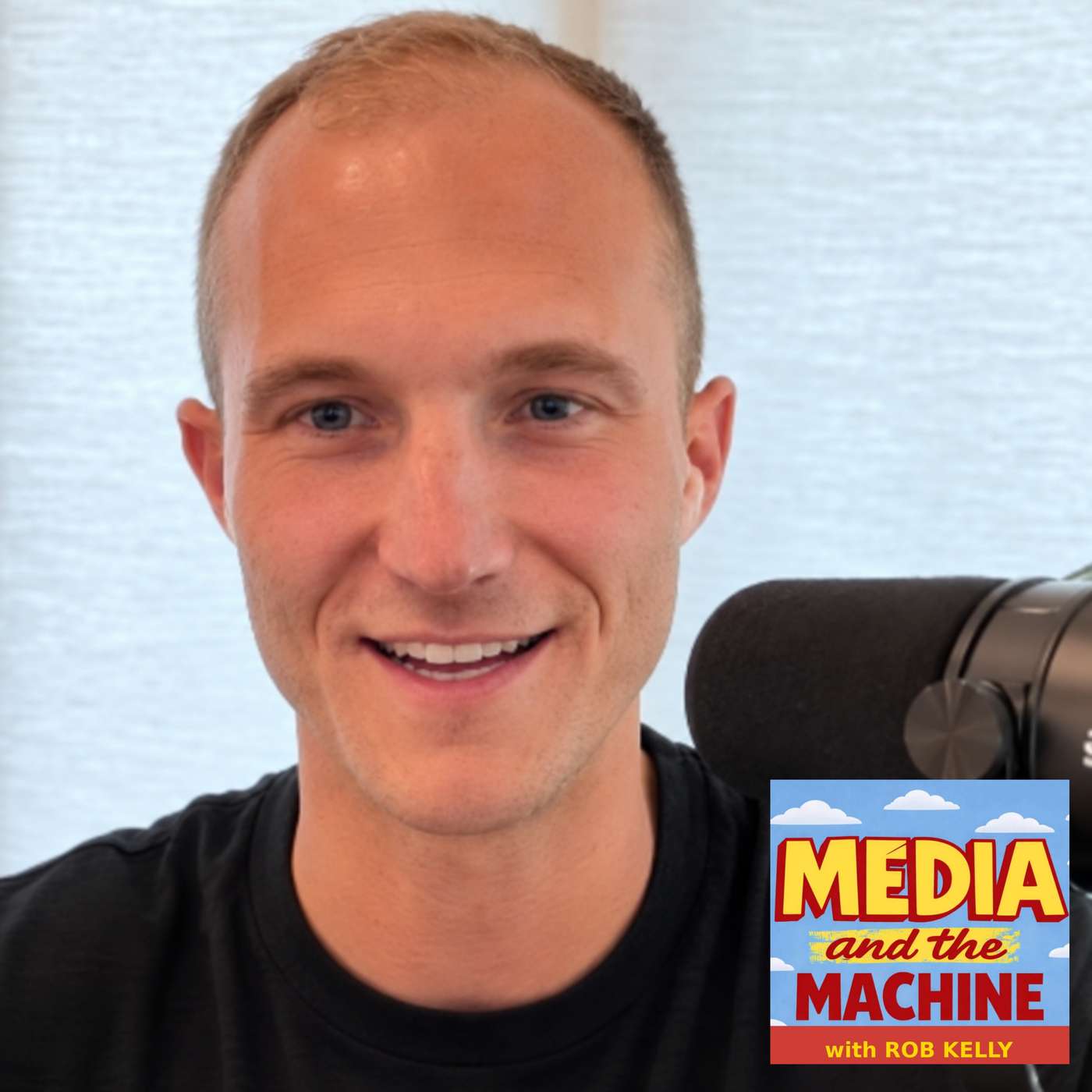
My guest today is Bill Gross, founder and CEO of ProRata.ai.
Bill also founded Idealab, incubating over 170 startups over 30 years. His keyword-auction technology powered Overture, which Yahoo bought for $1.63 billion. And Google paid Bill $360 million for the patents, which helped shape Google’s legendary ad business.
Now Bill wants AI to pay creators. His starting point: 1,650 publishers. And 65 million documents.
And he predicts that OpenAI, Anthropic et al will start sharing revenue with creators for their content within a year.
If you run a content company, we get specific. We explore how ProRata would split those payments. Think Spotify royalties, but for AI answers.
Bill ranks which AI companies will share answer revenue first—from OpenAI to Anthropic and beyond. And who’ll come “kicking and screaming” last.
Plus, I ask Bill which content businesses he’d build today. And which ones he’d avoid.
If you’re a startup founder, Bill grades ProRata against his five success factors—including the most important factor based on all the startups he’s experienced.
Bill also explains why Z.com failed even thouugh Steven Spielberg, Adam Sandler and Chris Rock were involved.
Plus, Bill is giving away 1.2 million business ideas—including one AI idea that blew him away.
Finally, we talk about our kids and AI. Bill shares advice he just gave to 400 Pasadena high school students.
My thanks to Josh Freeman—the consummate connector—and Peter Sloterdyk for bringing us together.
Now please enjoy my conversation with Bill Gross.
Thx!
Rob Kelly