Ask ChatGPT


 Media and the Machine
8 Oct 2026 · 30m · 16 chapters

Ben Amor argues that AI’s real advantage is solving data problems: structuring proprietary/enterprise data so LLMs can act on it, while being careful about privacy and model-training defaults. He also shares lessons from Palantir’s outcome-driven, forward-deployed engineering approach and applies them to DealSage’s “AI-native” enterprise software.
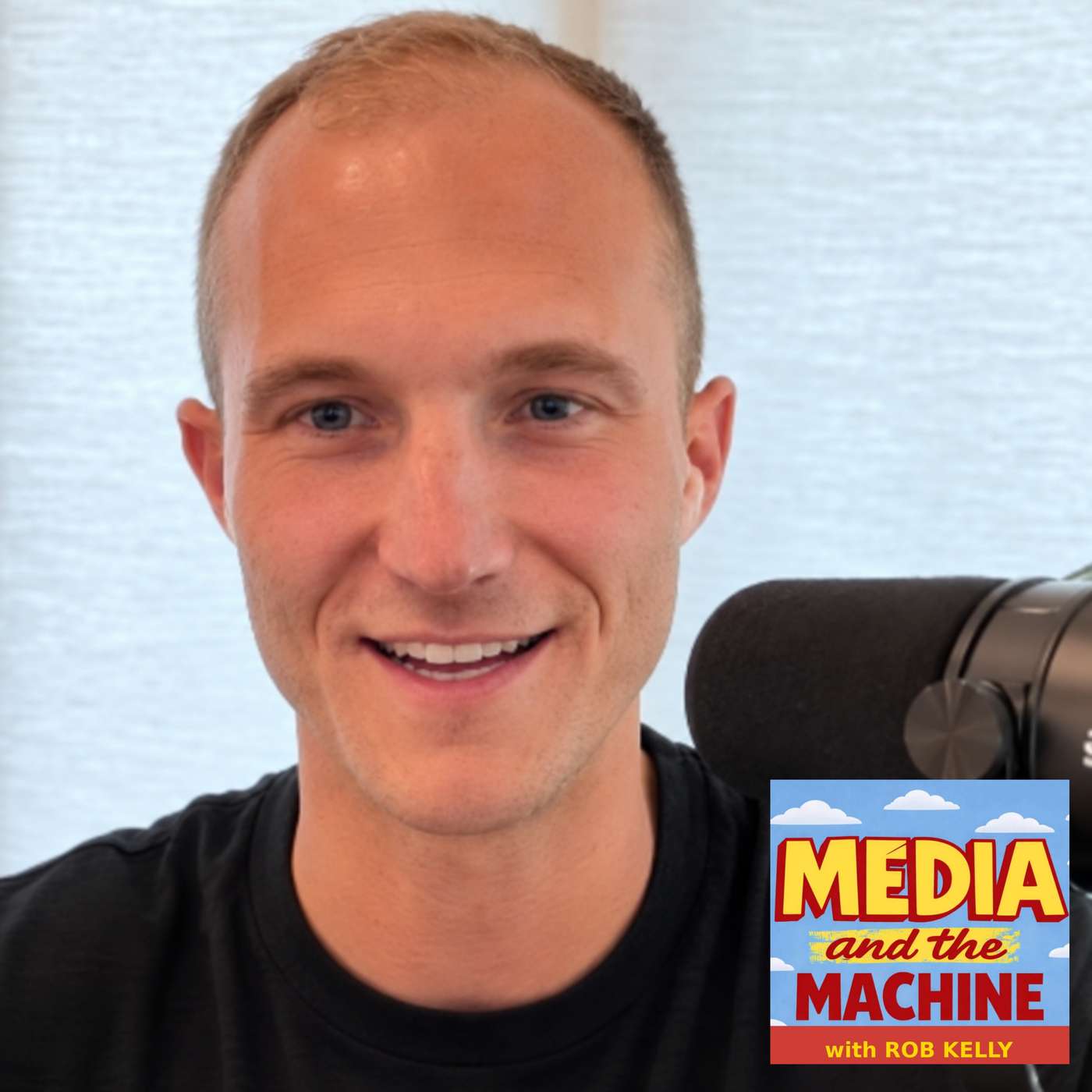
Ben Amor is co-founder and CTO of DealSage. He previously spent nearly 10 years at Palantir (forward-deployed engineer) and has used hundreds of billions of tokens across OpenAI, Google, and Anthropic.
AI models are commoditized; data/ontology is the differentiator. Companies can accidentally leak proprietary data by using consumer LLMs with training enabled. Enterprises should clarify business outcomes before unpaid pilots. LLMs can make data collection from PDFs dramatically cheaper.
Ferrari F1 real-time sensor analysis (3–400 sensors; downforce and tire-wear estimation). FCC auction PDFs extracted automatically via agents. N3C healthcare data harmonization. Risks include cyberattacks on hospitals/infrastructure and potential bioweapon design.
Written by AI. May contain mistakes.
Guest Ben Amor shares his background and experience at Palantir.
“I'm an optimist about AI, but I'm also a realist.”
Ben discusses how data analysis impacts Formula One racing.
“I worked on a lot of different, very disparate types of problems.”
Insight into how Ferrari uses sensor data during races.
“I'm just curious, how many sensors would be on a Ferrari F1?”
Ben explains Palantir's focus on business outcomes over technology.
“What did you learn from the Palantir founders?”
The importance of clarifying business outcomes before engaging with clients.
“And then we'll work out how we get there with a solution.”
Ben reflects on the implications of working with a limited number of clients.
“Palantir is expensive, is the perception.”
Discussion on Peter Thiel's impact and required readings at Palantir.
“What I loved about working at Palentir was this working closely and tightly alongside a client over a long period of time, building a relationship and doing really like meaningfully impactful work for them.”
Insights on Thiel's book and its teachings about competition.
“Was there a required reading of Zero to One, Peter Thiel's book?”
Explore key insights from the book 'Zero to One' and their applicability.
“Is there a major zero to one tip or learning you remembered kind of sticking with you?”
Learn about the role and significance of forward deployed engineers in AI.
“And I mean, even the term for it that's become the industry standard term, forward deployed engineering is the Palantir term for those engineers that would go and work with clients that they've used for 20 plus years.”
Discuss the changing economics of data collection and its implications with AI.
“The models are very obviously commoditized, right?”
Examine how the value of data is shifting in relation to AI technologies.
“I'm curious with DealSage, the company you co-founded, you know, it's AI software to help companies buy and sell other companies.”
Explore the risks associated with using AI models and data privacy.
“And also, I imagine the frontier model providers are thinking more and more about how do we just build these same proprietary data sets.”
Discuss the potential benefits and ethical concerns surrounding AI development.
“Do you consider yourself an AI optimist, pessimist, or some other descriptor?”
Delve into the role of AI in education and its implications for young learners.
“But, you know, you could service that at a much lower cost and therefore to a much broader set of people who currently can't get it if you could have robots carrying out a certain amount of that work.”
Discover how AI can enhance learning experiences for children.
“And therefore, I think it's a mistake to say, well, we need to completely get rid of it and deprive it from the learning environment.”

Get the gist, explore an idea or ask about something said.
 Claude
On Media and the Machine, what are the key points of this episode?
Searching your listeningAutomatic transcript. May contain errors.
0:00The thing that makes people go, oh, that's cool, was working with the Ferrari Formula One team. Can data win a race? Absolutely.
0:25Ben Amor: Welcome to Media and the Machine. I'm Rob Kelly. This show is about AI and how to profit from it. I believe this is the biggest technology shift of our lifetime. I'm a three-time founder and CEO of content-driven businesses. And each week, I talk with the people on the inside of AI and content, the ones building this new world and learning what works firsthand. I'm an optimist about AI, but I'm also a realist. So every show ends with me asking our guests what AI means for our jobs, our families, and our future. My guest today is Ben Amor, co-founder and CTO of DealSage, a startup focused on making enterprise companies AI native.
1:03Ben Amor: At DealSage, Ben's already used hundreds of billions of tokens across OpenAI, Google, and Anthropic. And he's bringing to his new company lessons from nearly 10 years at Palantir, the AI and data company serving governments and large enterprises that's now worth about$460 billion. Ben worked there as a forward-deployed engineer years before that role became commonplace across AI. and he's generous at sharing what he learned there. We get into the ideas that shape Palantir under CEO Alex Garp and Chairman Peter Thiel, including Thiel's famous line that competition is for losers. The six or so books Palantir handed all employees.
1:38Ben Amor: Why they might hold 10 plus meetings before a pilot and walk away if there's no clear business outcome. Ben's work with Ferrari's Formula One team. Why Silicon Valley dismissed Palantir's mix of software and consulting for years. and how amazingly Palantir went public with only about 100 clients. We also get into lessons Ben is applying now, where the real AI advantage lives, how companies can accidentally give private data to LLMs, and how he's thinking about AI in school as a father of young kids, including whether to ban it. Please enjoy my conversation with Ben Amor. What's the craziest data problem you worked on at Palantir?
2:16I worked on a lot of different, very disparate types of problems. The thing that makes people go, oh, that's cool, was working with the Ferrari Formula One team. We were basically helping them take all of the sensor data that is streaming off the car as it goes around the track during the Grand Prix or during the prep, and in real time, analyze it to try and understand what was going on with the car throughout the race.
2:44Ben Amor: I'm just curious, how many sensors would be on a Ferrari F1? That's a good question. Probably somewhere between like three and 400. The most important one is the downforce. So downforce is like how much force literally downwards they are managing to create because the more downforce you have, the more friction you have. And so the faster you can take the corners without skidding out. And so kind of like in some ways the whole goal is to generate as much downforce as possible. The questions they wanted to be able to ask were things like, how does the average downforce that we are seeing on this particular corner of the track compare to the downforce we were getting when we ran this in the qualifying races or when we ran this last year?
3:31And then tire wear is one that's actually very hard to measure, right? That's not a sensor that you can just look at. You kind of have to make estimates. Can you fit a better a model to estimate how a tire is going to degrade across a race at a particular race course with a particular tire type because you want to be able to bring the car in at just the right time. You don't want to go too late and then you start not being able to drive as fast, but you don't want to go too early and then you lose momentum in the race or the next set of tires is going to wear out too quickly.
4:02Ben Amor: Who's seeing the data and when and where? Are they seeing it right there in the race? Yeah, literally all of the engineers are looking at the data streaming in and they're collecting the data like, how does this particular sensor on this lap compare to all of that historical data that we have? Where are those engineers during the race? Where do they sit? So some of them are at the racetrack and they're actually like sat in the team area, but then the others are back in HQ. So in Marinello, which is where they're based. And they're communicating during the race, like down to the pit crew and everything?
4:38Yep, absolutely. There's an awful lot of communication going on across the whole team. Crazy. Can data win a race? Absolutely, yes. Formula One is an incredibly data-driven environment. We use data throughout the entire process of designing and building the car in the pre-season and then modifying the car and updating it and changing and adapting to the situation throughout the season. It's all data.
5:06Ben Amor: And then for the next race or next year, will the data be a guide to the upgrade to the vehicle? Yeah, absolutely. I mean, they rebuild the whole car from scratch. Who gets the old car? Well, it depends whether they've got any left at the end of the season once it's been pretty beat up throughout the races. Yeah, my son will sign up for that. What did you learn from the Palantir founders? Let's start with Alex Garp, CEO. The things that I have taken away from Palantir that I think were built into its DNA from the beginning were, number one, you have to have this sort of relentless focus on what is the outcome that we are trying to achieve or to drive here, right?
5:52Like we are not a technology company in the sense that we are interested in building technology for technology's sake. And if you just want to use cool new tech, then it's not the right place because the question is always, what is the goal? What are we trying to achieve? What is the outcome we are trying to drive? And then how do we use the technology to get there? And I think that applies both on the government side where it was always like that was the original precipice of the company was we have
6:20Ben Amor: an outcome we want to drive. Can you give an example where it was outcome driven, where maybe another company would not have taken that path? When we went into work with Ferrari, where we ended up working on this problem of helping them understand all of the historical data, we didn't go in there with that understanding that like, this is the problem that has been scoped. We went in there with the understanding, like we could probably do better with our data. And essentially the first thing that we did was be like, okay, let's give me the 15 questions that you care about being able to ask, that you cannot ask right now.
6:55And so the actual product that we ended up deploying to them essentially didn't really exist before the start of that project. And it was built out in order to enable that. That's very different from like, oh, let's come in and we've like agreed a scope of we're going to deliver this set of capabilities. It was literally just like, how can we make your car go faster. What are the questions that you need to ask in order to do that, that you can't currently? And then we'll work out how we get there with a solution.
7:24Ben Amor: Were you ever involved in the pre-sales at Palantir or only once the customer brought on? Yes, I did a lot of pre-sales. So how would you handle it in the pre-sales? Like you're having meetings with some entity, some prospect, and they don't have that business outcome. I mean, would Palantir pass on the opportunity or not take it until it could clarify the business outcome? We would not take it until that was clarified because it was a huge opportunity cost for us, right? Like you're investing and often our pilot teams would be four, maybe six people over three months and unpaid. So it's a huge investment that you're making on your side.
8:03And so you have to be pretty confident that at the end of it, that is going to convert into a paid license. And our view was always, well, we can't be confident in that unless we're able to prove in that time that we can really make the money or save the money. And so there needs to be a very clear business problem. You know, we would often have 10 plus meetings before the pilot to talk to all kinds of different people and really try to scope out what is the right thing. And that's why, you know, Palantir is expensive, is the perception. And it's like, yes, because we tended to only work on problems that we'd really scoped out as a big impact because we invested so much time that you couldn't do pilots problems for 250, 500K because you'd already spent more than that just in scoping out the pilot project.
8:54Ben Amor: I'm just so curious because I find Palantir so fascinating. When you first started to see Alex Karp cob-nobbing at the White House and with Donald Trump or whoever the leaders were, were you genuinely surprised? I wouldn't say surprised, certainly by that. Proud or some other, what's the word? How'd you feel? That's a good question. You know, not everyone's ultimate boss is pictured in the White House or working at that level. Yeah, I mean, I think the thing that, you know, Palantir has worked now for a very long time with the US government and with other governments on very important, meaningful projects.
9:38projects i'd always kind of seen that there was actually these deep relationships that were often built between leadership so alex carp and shaman on the government side aki and others with the leadership within the government and then also on the private sector side right like when we ipo'd we had something like a hundred clients which is an insanely low number really and they were all big contracts. And so it wasn't necessarily like a surprise, oh, suddenly that's kind of more public.
10:10Ben Amor: I'm curious, did that change your view once you saw that a small volume of clients, like only 100, which is tiny, might be a record for smallest number of customers going IPO? Did that change just you as a business founder, CEO, in terms of how you approached closing customers, Like small can be better? Very much so. Small, low volume, I should say, can be better? Yes, it has. What I loved about working at Palentir was this working closely and tightly alongside a client over a long period of time, building a relationship and doing really like meaningfully impactful work for them. And I think the interesting thing is that AI and large language models are making it easier to do that at a smaller scale.
11:03So because Palantir only had 100 clients and because it was expensive for us to service those clients because you had to have a team of engineers who are all quite highly paid, dedicated to them,
11:15Ben Amor: only large companies could afford to buy that. But what you can do now is you can build solutions and use cases with a much smaller, much leaner team. And so I think that potentially opens up that kind of opportunity to much smaller businesses. I'm just curious, you made me think of this, if you knowing what you know now had to take out Palantir using AI, you and I start a new company, how would you do it? I don't think I would. I mean, what I've ended up doing is somewhat similar in terms of like trying to solve business problems, having a platform that can implement solutions quickly, but working with much smaller customers and clients than they do at a lower price point.
12:00And so I guess it's just like focus on a part of the market where they are not focused, which at the moment is definitely, you know, the lower and middle market. I wouldn't go out and try and beat them at selling AI solutions to the Fortune 100 or Fortune 500.
12:17Ben Amor: You holding on to your stock? Some of it, not all of it. I'm a big fan of how Peter Thiel thinks. He's one of the co-founders of Palantir. Can you just tell me what his impact on Palantir was or what learnings you had from his frameworks and concepts? Was there a required reading of Zero to One, Peter Thiel's book? You were sent Zero to One, obviously, alongside some other books. Everyone? Everyone in the company was sent a book? Like six books. Who else were the books from besides Peter Thiel's Zero to One? Do you remember any? There was one called Improv. The idea there was to, actually you could take a lot of lessons from how people approached improv and different kind of roles and adopting different personas that would help in a sales context.
13:09Getting things done, I definitely did adopt quite a lot of the approaches from getting things done. Which ones? I mean, the whole system initially, like the small tasks, the two-minute tasks, just get them done. That was my number one. I use it every day, think about it. And yeah, for folks who don't know, can you just describe what the two minute rule is? It's pretty simple. It's basically when you get a new task in your, in wherever your in tray is, whatever that is, if you think it's going to take less than two minutes, just do it straight away. And it is very effective. There was one, how to interview users or something like that.
13:42And it was like, it was sort of how to basically do user experience research effectively. And there was another one. It was about the war on terror, looming towers. There was sort of about 9-11 and some of the failings of the intelligence agencies and so on and what happened there. And there's maybe one more that I'm misremembering, but definitely zero to one was on the list.
14:06Ben Amor: Is there a major zero to one tip or learning you remembered kind of sticking with you? I mean, competition is for losers. I think, was that the phrase? That was kind of like maybe the most memorable one, which is like, you should try and pick a focus where nobody else. And it kind of requires you to be contrarian because, you know, if you're not being contrarian, then somebody else agrees with you and then you're going to have competition around that. The story of Palantir over 20 years kind of illustrate there was a very, very long time where the markets, certainly other enterprise software companies, the VC world, thought that what Palantir was doing was not a good idea, right?
14:50It was like, oh, it's just a consultancy. It's not really a product or this focus on data engineering is, you know, it's not the sexy one or whatever it might be. And I believe that history has proven that that was wrong, that actually you could build a product business with incredibly good margins and cash flow, while also having a heavy kind of consulting or deployed engineering team on the ground. That was probably like the contrarian position. There wasn't a lot of competition of people who were both product and consulting. And it turned out that that meant that when the time was ripe for that combination to explode with AI, Palantir was kind of the only one there at that point.
15:36Ben Amor: Right. And just to be clear, all the frontier models, or at least definitely OpenAI and Anthropic, have spent an enormous amount of time and money in the last 12 months or so in investing in sort of a consulting arm to various industries, right? Is that what you're talking about? Yeah, exactly. And I mean, even the term for it that's become the industry standard term, forward deployed engineering is the Palantir term for those engineers that would go and work with clients that they've used for 20 plus years. It was my official first job title and nobody had a clue what it meant or thought it sounded ridiculous.
16:14But that's almost every single AI company you could possibly imagine now that's been started over the last five years. That is what they hire for and that's what they call it.
16:23Ben Amor: Can you tell me what it means, a forward deployed engineer? So forward deployed engineers specifically is a technical person with an engineering background who goes out to a client and uses the product and builds on top of the product to implement solutions. But then who also, and this is important, is technical enough and skilled enough that they can contribute back into the core product itself. So last we chatted, you mentioned that your data is where the AI alpha lives. Can you just share more on that? The models are very obviously commoditized, right? Like you can buy the same models from the frontier model providers that anybody else can.
17:07And so applying those to your particular business in a way that allows you to operate more effectively, that is the problem you need to solve. And doing that generally requires you to have that representation of your business in a digital form that you might call the ontology, right? Like that was sort of the idea of like building the ontology was actually just capturing all of the information about your business in a connected way, such that you could understand it, explore it, and make decisions based on it. And I think the opportunity of large language models is that if you have done that, if you have your data sort of extracted, organized, structured, linked, and intelligible through this sort of semantically organized ontology, then LLMs can be incredibly effective about exploring and understanding that and then proposing or taking actions on top of that data.
18:12But the precondition is that the data is in some intelligible form.
18:18Ben Amor: You shared with me that AI changes what data is economically worth collecting. What do you mean by that? Well, there's always benefit and a cost. And for something to be economic, the benefits need to outweigh the costs. And I think on that, what I mean is that the costs of collecting data and organizing it and structuring it have been dramatically lowered. And so LLMs are incredibly good at taking a multi-hundred page document, a PDF, and extracting out the two or three key things that you care about. They can do that incredibly quickly and now incredibly accurately. And so the structuring of data from unstructured sources is just dramatically cheaper than it used to be.
19:06We have a client that does sell-side investment banking, and they do a lot of work in the telecom space. And so they really care about FCC auctions, what's been sold off at auction, at what price, to which buyers, and so on. And the FCC releases this information, and you can go and download PDFs. And previously, they'd have had to have somebody who periodically goes and checks that and pulls down the PDF and looks through it and transcribes all the numbers from one place to another place and kind of builds this database. And an agent now can do that trivially. You can set up a schedule, you can go and query the FCC website, pull back any new documents and extract the information.
19:45And it's going to cost you a couple of cents, probably in token costs, and it's going to do it automatically. And so in that case, they probably thought the information was worth collecting anyway. And so they were doing it, but they were having to invest however many FTEs in it. And now they can do it almost for free. An agent can now do that for us. So what can we go and collect that will inform us in whatever decision we're trying to make?
20:08Ben Amor: I'm curious with DealSage, the company you co-founded, you know, it's AI software to help companies buy and sell other companies. And I know you do a little bit more on the buy side. I'm curious your take on buying data companies now that you know what you know building this. Companies that own data and content. On the one hand, like data assets are now very valuable. to the frontier model providers in order to train their models to be better. And so people with proprietary data assets are sort of exploring ways they can share that. And that's why you see Reddit locking up its API and making that much more restrictive because it doesn't want to give all of that data away for free.
20:52But on the other side, it's much cheaper to generate these kind of data sets now. And so the ability to use LLMs to pull together data from certainly across any publicly available sources and organize it and structure it is much lower. And so you really have to have a uniquely proprietary source of that data that you believe is going to persist over time, certainly from my perspective, to believe that that is going to be really valuable. And I think my guess would be that a lot of people that think they have this really valuable proprietary data set that the frontier model providers are going to be interested in licensing, are probably going to be surprised at actually how specific they are around what they want and what is valuable to them.
21:42And also, I imagine the frontier model providers are thinking more and more about how do we just build these same proprietary data sets. I do think that there is extremely valuable data that we still need to collect and generate that will make AI much, much better. And I think particularly on the healthcare and the biology and drug discovery, there's still a huge amount that is unknown and there's still a huge amount of data, valuable data that can be generated there.
22:10Ben Amor: Are there companies inadvertently giving their proprietary data to train AI when they are using them? This is a big, big topic and area of concern. And I am a hundred percent certain there are lots of companies where people are using versions of JATGBT or Claude where they have not got the flag that turns off model training on their data turned off and they don't realize that. Gotcha. So in general, if you're using an enterprise version of JATGBT and Claude or any model, there's usually some built in sort of by default, it's not going to train the model, but it might retain your data for a while, some sort data retention, as you mentioned, policy.
22:52Ben Amor: But on the flip side, if you're using a consumer non-enterprise version of ChatGPT or Claude, the defaults are pretty much train the model, right? Exactly. You have to explicitly turn it off. And there will be a lot of people across companies across the US and the world who are just using a consumer version of it and just like copying numbers out of their finance spreadsheet and pasting it into that and saying, hey, you know, do whatever they need it to do. And I think an even definitely something that is a big problem for both companies and individuals is people asking legal questions of the frontier models and it not being a tall attorney client privileged and easily and readily available in discovery.
23:36And so like that, I am sure is incredibly widespread and probably a big, big, big problem.
23:42Ben Amor: Do you consider yourself an AI optimist, pessimist, or some other descriptor? Man, it's such a difficult question to answer because where everything nets out is really hard to determine. What I would say is that I'm very optimistic in the sense that I think the potential is so clear and so obvious for how AI can accelerate things that will be good for the world. Is there an example of like a vertical or something where you just say this alone makes it worth a lot of these AI headaches? I mean, I think science is an obvious one, right? We talked about the National Clinical Cohort Collaborative, N3C, where we harmonized all this data and then people ran research on top of it.
24:30Now, having LLMs that can write the code and interpret that data and then write the statistical code, obviously with the supervision of the scientists and statisticians, we could have implemented five times quicker. You could have got those outcomes. I think people having to do drudgery is not something that is good, right? So people who have to spend a bunch of time transcribing numbers from PDF to a spreadsheet, right? People shouldn't have to do that. There's a waste of people's time. It's a waste of an intelligent person's life. And so having an LLM that can do that and do it immediately and free you up to do more important things is a good.
25:09But I do worry mostly at the moment about the potential for AI to be used, LLMs to be used as an offensive weapon in the form of cyber attacks.
25:21Ben Amor: What's an example of, do you think, a cyber attack that could happen that maybe most people, that would impact like an everyday person that maybe is just not on the general public's radar? I mean, almost anything you can think of, right? Like a hospital. You know, if you can just take down the power supply for a hospital or just mess with the internal network of a hospital, it's going to be enormously impactful. So that would be sort of on a local but very dramatic scale. And then I think, you know, on the larger scale, just any kind of major infrastructure, nuclear power plants, et cetera, et cetera.
25:59Obviously, the bigger, bigger sort of risk is on the biology side and the ability to design bioweapons and design viruses that could be very, very dangerous, where I think the risk is a little bit more asymmetric. And once you've designed one of those viruses, it's much harder to defend against it than it is to defend against a cyber attack. How to weigh it all up and net the positives and the benefits is hard. I'm like pretty optimistic about the potential for robotics, but can we have very, very effective robotics that could, you know, we have a big crisis in all kinds of areas of society where we need care to be given, to be delivered physical care.
26:47And you don't want to obviously completely replace that with robots. You still want to have it involved. But, you know, you could service that at a much lower cost and therefore to a much broader set of people who currently can't get it if you could have robots carrying out a certain amount of that work.
27:01Ben Amor: Do you mean like home care, taking care of an elderly person? Exactly. Yeah. So, you know, I don't think it's like we need to be sending out armies of robots to these people, but we don't have enough people. And we are therefore people who need care in their home are not getting it. And they are experiencing severe hardship as a result. But at the end of the day, the people are not getting sent. So I know you've got a couple of kids. I think one more on the way. These are single digit age kids. Do you have any energy around AI in schools as your kids start to get into elementary school? Yeah, it's a very pertinent topic.
27:39Ben Amor: Like what do you think of schools that are just banning it outright? I think like screens in schools and AI in schools, you need to be sensible and judicious. I am going to be concerned if my kindergarten toddler is spending a lot of time in front of a screen or a lot of time interacting with an AI and not a lot of time interacting with the teacher and the other pupils. But on the other hand, I think like I use LLMs and AI as an incredible learning tool. And therefore, I think it's a mistake to say, well, we need to completely get rid of it and deprive it from the learning environment. Do you use AI in front of your young ones now?
28:21Ben Amor: Kind of your toddlers? I do. Yeah. Like often, my son will often ask me about like, he loves trucks and trains. And he'll ask me like, what's that on a toy train? and I don't know the answer of like what the specific piece is. And so I will take a picture of it and I will ask Claude or ChatGPT, like, what is this part on the train? And it will tell me the answer. And then like, I'll show it to him and we'll learn something about it. And it would have, you know, I could have looked that up, I guess. I could look up and try and find a picture that pointed at the specific part, but I might not have found it.
28:51It would have been a lot more difficult. It would have taken a lot longer. So I use it for that kind of thing all the time. Love it.
28:58Ben Amor: Hey, thanks a lot for all the time today, Ben. It's been a pleasure. It was very nice talking to you. Very interesting conversation. So thank you. Well, this is Media and the Machine. A few things about you and me. If you want to hear about the next new episode, make sure you hit follow on the show on your podcast app. And if you like something about this episode, the guests, the topic, even one part of the conversation, leave me a rating or review and tell me. That helps me know what you want more of so I can make the show better for you. And if you want to go a little deeper, head to mediaandthemachine.com and subscribe to my newsletter.
29:29Ben Amor: You'll get my favorite highlights from podcast episodes, as well as essays I write about AI. You can also email me directly from there. Recommend a guest. If you make it on the show, I'll give you a shout out. And if this show made you think of someone, please pass it along. That's how people find us. And I'm genuinely grateful. Thanks again. And see you next time.
30:00We'll see you next time.
My guest today is Ben Amor, co-founder and CTO of DealSage, a startup focused on making enterprise companies AI-native.
At DealSage, Ben’s already used hundreds of billions of tokens across OpenAI, Google, and Anthropic.
And he’s bringing to his new company lessons from nearly ten years at Palantir, the AI and data company serving governments and large enterprises that’s now worth about $460 billion.
Ben worked there as a forward deployed engineer years before that role became commonplace across AI. And he’s generous in sharing what he learned
We get into:
• the ideas that shaped Palantir under CEO Alex Karp and Chairman Peter Thiel, including Thiel’s famous line that “competition is for losers”;
• the six books Palantir handed all employees (including Zero to One);
• why they might hold 10-plus meetings before a pilot — and walk away if there’s no clear business outcome;
• Ben’s work with Ferrari’s Formula One team;
• why Silicon Valley dismissed Palantir’s mix of software and consulting for years;
• and how, amazingly, Palantir went public with only about 100 clients.
We also get into lessons Ben is applying now: where the real AI advantage lives, how companies can accidentally give private data to LLMs -- and how he’s thinking about AI in schools as a father of young kids.
Please enjoy my conversation with Ben Amor.
Thx!
Rob