In short
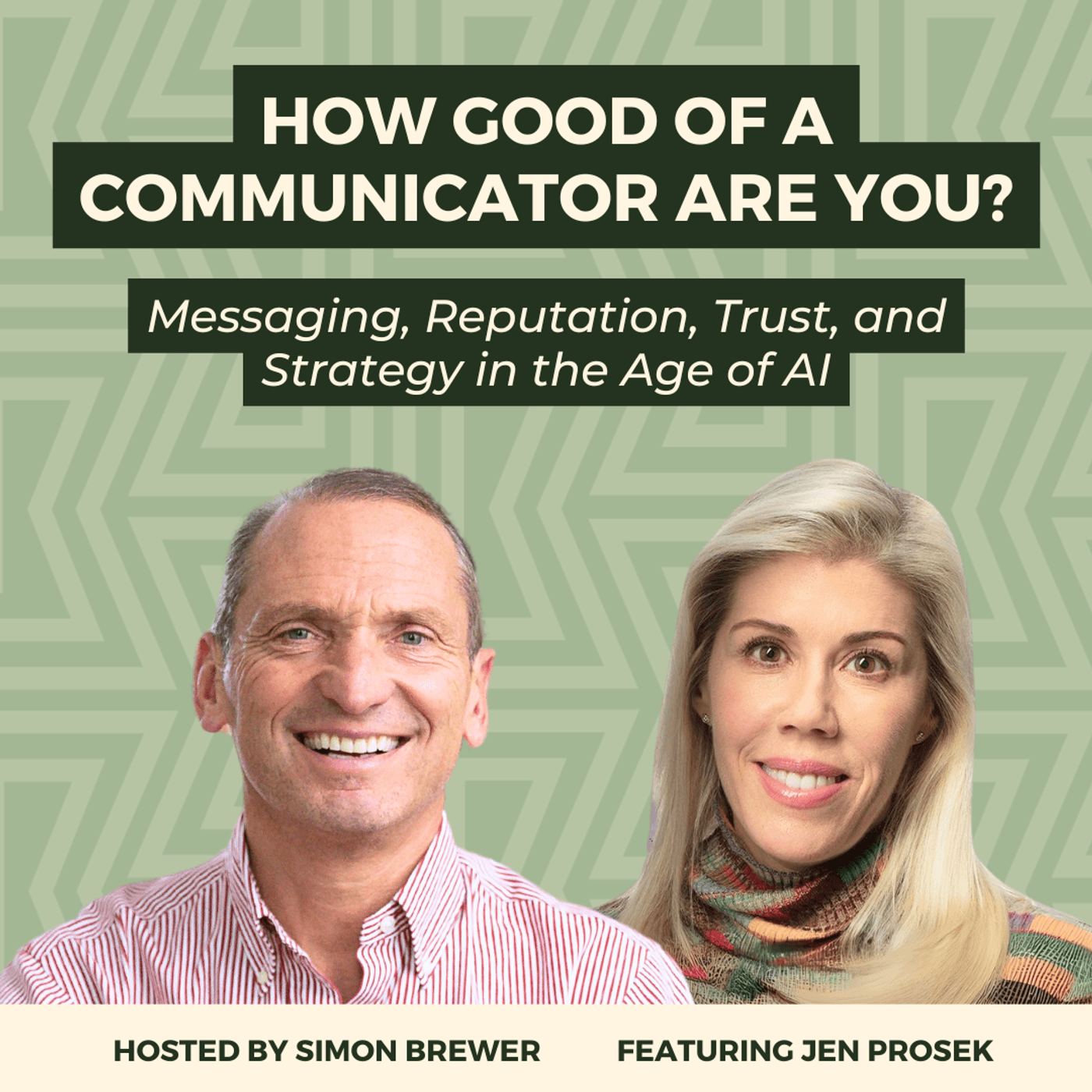
Communication, reputation, and strategy for investors and private markets firms in the AI era—how to “nail the narrative,” build trust, differentiate in a “sea of sameness,” and adapt messaging for the wealth channel (including multi-channel content beyond PowerPoint).
Guest
Jen Prosek, CEO and founder of Prosek Partners (global marketing/communications firm for private markets; ~450 employees). Background includes starting her firm after a recession-era job setback; later advised by Jan Van Meter to build and sell. Prosek works with private markets clients managing over $60T in public/private markets; also does corporate work.
Key claims
ChatGPT/AI will shape reputational outcomes by “crawling, thinking, and connecting dots.” Podcasts and other formats accelerate investor familiarity (often moving from first to later meetings). Differentiation requires authentic story + packaging; “talent, deals, capital” framework. For wealth channel, firms must be “all in” with earned media, thought leadership, paid ads, and activations.
Notable examples
LinkedIn content adoption by GPs; podcast as “second meeting strategy”; convening CEOs/founders to create network “magic”; crisis response via “flood the zone” with positive context.
Written by AI. May contain mistakes. Listen to the episode to check what was said.
Chapters
Tap a time to open that second in VOThe Importance of Reputation in the Age of AI
0:00 to 0:37
Learn how AI influences reputation and communication strategies.
“The CEO closed the door and said, I want to tell you something.”
The Evolving Landscape of Private Markets
1:41 to 3:56
Understand the changing dynamics of the private asset industry.
“Today's episode is titled Good Investor, Poor Communicator.”
Building a Successful Communications Firm
3:56 to 7:49
Explore Jen Prosek's journey in growing Prosek Partners into a leader.
“I still get calls from$100 billion managers saying, okay, we've gotten religion.”
Nailing the Narrative in Fundraising
7:49 to 10:31
Learn the significance of storytelling and narrative for fundraising success.
“We're number one by far on every league tables in the private markets.”
Balancing Opportunity and Risk in Private Markets
10:31 to 13:23
Discuss the dual nature of risks and opportunities facing private market clients.
“And I do a lot of moderating at conferences where there are LPs, so I get to know them.”
Differentiating in a Sea of Sameness
14:23 to 17:30
Discover how firms can stand out by finding and packaging their unique story.
“Yeah, well, that was Ian Althos' interview on sport and finance was fascinating.”
Navigating the Wealth Channel Marketing
17:30 to 21:50
Understand the challenges and strategies of communicating in the wealth management space.
“If you ask me, what is the conversation going on in boardrooms?”
The Power of Convening
21:50 to 24:10
Learn about the significance of networking and creating connections in business.
“That is more of a high level, what they call bottom of the funnel kind of strategy, where you're getting in front of the people you want to get in front of in small rooms.”
Evolving Communication Tools and Strategies
24:10 to 28:00
Explore how communication tools are changing, including the rise of podcasts and AI.
“And I always say the podcast is one of the most effective second meeting strategies.”
The Importance of Asking Questions
28:00 to 28:32
Learn how asking questions can foster connections and mentorship.
“So I'm a fairly big fan and experimenter.”
Show all 21 chapters
Building Relationships Through Problem-Solving
28:32 to 30:44
Discover how identifying and solving problems can enhance professional relationships.
“And clearly, you know, there are many people, we're in 130 countries watching, listening.”
The Power of Gratitude and Recognition
30:44 to 31:58
Understand how recognition and saying thank you can impact workplace culture.
“But I think that too few junior people leverage the opportunity for a senior person to become their mentor because they're either too afraid to ask or they don't ask.”
Embracing Fast Failure in Entrepreneurship
31:58 to 33:10
Learn the importance of failing fast and pivoting in business decisions.
“You've also said that you're a fast failure gal.”
The Minus Mindset in Leadership
33:10 to 34:26
Explore how removing tasks can enhance team effectiveness.
“And as an investor, I know my biggest mistake over the years has been not cutting a bad position when the evidence was growing because, you know, ego gets in the way.”
The Role of Humility in Leadership
34:26 to 37:28
Examine how humility and honesty contribute to effective leadership.
“The other thing that I don't think is talked about much, and I joked with Hugh Van Steenis the other day that he goes to Dover, you know, really, there seems to be a lot of, there's a lot of ego, you know, at work.”
Navigating Challenges as a Female Entrepreneur
38:02 to 40:08
Hear about the unique challenges faced by female entrepreneurs and how to overcome them.
“Different tack, but we as a business support game, girls are investors helping more females get in and stay in the investment industry.”
Crisis Management and Communication Strategies
40:08 to 42:00
Learn strategies for managing crises and ensuring effective communication.
“So, Jen, you know, the seas are calm, people are feeling good, assets are rolling in, you know, life is sweet and then stuff happens.”
Handling Bad Stories in Media
42:00 to 43:32
Learn how to manage negative media coverage effectively.
“I would also say in the heat of the bad story, you know, most of my clients don't think this, but most journalists are actually fair.”
The Importance of Conferences in Networking
43:32 to 46:08
Understand the role of conferences in building professional relationships.
“A different strand of your business has been your conference business.”
Rapid Fire: Personal Insights with Jen Prosek
46:08 to 49:41
Gain personal insights from Jen Prosek on challenges and advice.
“Well, we are very happy because we've also got Danny from Saudi Sports, who's going to be on the sport and sport and finance session.”
Reflections on Communication and AI
49:41 to 51:24
Explore the evolving landscape of communication in the age of AI.
“I want to become a grandmother and have grandkids.”
Transcript
Automatic transcript. May contain errors.0:00Jen Prosek:The CEO closed the door and said, I want to tell you something. You've got the job, but do you want my advice? Like the advice I would give you if you were my daughter. Why don't you put your head down, grow that little firm of yours and sell it to us one day? Why don't you do that? You know, part of life is knowing when you're in a luck moment. That was great advice. So here we are. AI is changing everything. It's a threat. It's an opportunity. So let me take that one step further. I think the most powerful thing reputationally now and into the future will be what ChatGBT has to say about you.
0:37Jen Prosek:ChatGBT not only crawls, it thinks. It connects dots. It gives you an opinion. And I believe that that is going to be critical. all the data shows, video, audio, people want to consume information in a different way. The podcast is one of the most effective second meeting strategies, meaning if someone listens to this podcast and they like what I have to say, am I having the first meeting with them when I meet them? I'm probably having the 10th meeting. They know what I have to say. They like it and they want it. Welcome to the Money Maze podcast. If this is your first time joining, I'm your host, Simon Brewer.
1:14Quick word before we start. 95 % of viewers aren't subscribed, so miss out on future interviews with top business, finance, and industry leaders. To support the show and ensure we can keep sharing high-quality content, click subscribe and please drop a like. Plus, if you have any future guest ideas, do share your suggestions in the comment section below. Otherwise, thank you for watching and listening and enjoy the show. Today's episode is titled Good Investor, Poor Communicator. And as I started my prep, I thought about why so often you find great managers who are less effective communicators.
1:55But it actually made me think that this might be a bigger conversation encompassing suggestions which can serve as a guide to progress, especially today when AI is expanding its footprint, disrupting, facilitating, replacing. And then it begs the question that is the power of the spoken word actually assuming greater importance? It's the tension of literacy versus oracy. And since I had to look up oracy, it is the fluent, confident and correct use of one's language. So communication in a changing world beyond financial services is going to be critically important. So who better to have the conversation with than Jen Prosek?
2:39Jen, welcome back to the Money Made podcast. Thank you for having me. It was Feb 23 when we interviewed you last. You feature on our corporate video and we start these meetings with this two and a half minute video of some great clips. And my family know absolutely that the killer line is the two most powerful words in business are just ask. You got it. And they are delivered by you and they resonate. So you are, for those who haven't listened to that episode and hopefully will go back, you are the founder and you are the CEO of ProSec Partners. It is one of the world's leading marketing and communications firms that I guess for nearly 30 years has helped some of the world's top asset management groups.
3:17I think those clients of yours might actually oversee over$60 trillion in public and private markets, which even in devalued dollars is a large number. I'd like to just start with the private asset industry today. A lot is going on at lots of levels. Just give us a sense of how the industry is evolving.
3:39Jen Prosek:Sure. Well, to rewind back when I had this crazy idea that private markets firms would actually care about marketing. We probably talked about this last time, but I call this space, I still call this space the emerging market of marketing. It's still an emerging market. I still get calls from$100 billion managers saying, okay, we've gotten religion. We got to get on the front foot. We got to have a brand. We got to be proactive. But having said that, I do not have to convince any private markets founder that brand matters anymore. Everyone has that notion squarely in their head. The question now is how to activate small, medium, and large.
4:21Jen Prosek:What is your goals? Are you after the wealth channel? So what's really driving the conversation now is obviously money raising, sourcing, talent finding, and should I tackle the wealth channel and how do I do it? Because the wealth channel is really driving the need for GPs to become almost like consumer brands. It's consumer marketing. You're reaching financial advisors and their high net worths. And that ends up being a whole different kettle of fish. Instead of reaching thousands, which would be institutions to raise money, you're going to hundreds of thousands or maybe millions if you're really targeting lower down the chain and the high net worth.
5:05Jen Prosek:So it's a very exciting time for our business, obviously, because everyone all of a sudden cares about brand. Yeah. And in fact, it's timely because by the time this episode has been released, we will have released Hugh Van Stenis, who's one of the leading experts on the private asset space, talking about private credit and where it's going. And we have a little bit of a disagreement on, you know, on maybe some of that, which hopefully everybody, you know, will enjoy and firms who are thinking about it may find interesting. So before we get into the meat of this conversation, let's just pause on ProSec Partners.
5:39You talked about, you know, thinking that religion would come to your part of the world. But I think I remember you telling me a long time ago that, as is so often the case, somebody, a mentor, there was somebody who really helped you think about why you should be brave enough to do this on your own.
5:57Jen Prosek:Well, yes. So I I graduated college in a recession, which meant I didn't get my job of choice in the big city of New York where I wanted to be working. I moved back into my parents' homes in the suburb of Connecticut, and I started a network, and I ran into a gentleman who wanted to start a communications firm. Nothing about him or the opportunity was appealing, but it was in my chosen profession, and I decided to go work for him. in a very undesirable place, in an undesirable office with undesirable clients. But I figured I would do it for a year. And then when the market turned, I would get out of Dodge.
6:36Jen Prosek:That was the start of this. I never left. I tried many times to leave. And what really happened, and I'll try to make the story short, is the market did turn. and I interviewed in New York and I successfully end up in the CEO's office of a very large global firm called Fleischman Hillard. And the CEO closed the door and said, I want to tell you something. You've got the job. Everybody loves you. But do you want my advice? Like the advice I would give you if you were my daughter, who's probably in his 60s, I'm in my 20s. And he says, why don't you put your head down, grow that little firm of yours and sell it to us one day.
7:19Jen Prosek:Why don't you do that? And his name was Jan Van Meter. And, you know, part of life is knowing when you're in a luck moment. That was great advice. Had it not been for that advice, who knows where I would be today? Maybe I would be successfully a CEO for hire somewhere else. But that was the moment I got very serious about going back to my desk and figuring out where is there a white space to grow this small and ugly firm I have into a beautiful butterfly, which it is today. Just give us a quick recap on where you are and how many employees. So we're about 450 people. We're global. We're number one by far on every league tables in the private markets.
8:00Jen Prosek:We're top three in M &A transaction communications. We work for corporations too, but a full half of our firm is the financial private markets. And let's just talk about the competition because there's disintermediation everywhere we look. Where are your disruptors? What's making you look over your shoulder? My competition back in the day looked at our idea of serving the private markets and laughed in our faces because there weren't there wasn't any spending there. They were obsessed with the Fortune 500, the publicly traded world, the FTSE 100 world. And that made a lot of sense. That's where the fees were.
8:38Jen Prosek:So we were the only game in town on this side for a long time. Guess what? The private markets are the it girl now. So our competition wants our business. So, you know, our world has become much more competitive. So we have focused on rolling out very proprietary products and solutions. OK, you've been very clear about what you term. And I love the fact always that the English like to use different language. You call it nailing the narrative. and we might say delivering the investment message, but some investors are deep thinkers. They're not natural communicators and storytelling might feel a bit light to them.
9:18How do you think about striking the balance when you're talking to some of these principals?
9:23Jen Prosek:Well, first of all, I use a rubric when I talk to principals called talent, deals and capital. And I say, how would you like to increase preference and efficiency when fundraising? capital, when sourcing deals, deals, and when finding the best people to work for you. And they go, tell me more. So if we do our jobs right, and you're in a fundraising cycle, if people are attracted to your brand, if LPs think well of you, if you have a good reputation, and then if they know your story before you sit down in front of them for the first meeting, are you having the first meeting or the second meeting?
10:01Jen Prosek:You're having the second meeting, Maybe the third meeting. You have advanced the process. You have created efficiency in your fundraise. That rings founder bells because that is bottom line. So everything we do at ProSec is very bottom line, and it's usually around creating efficiency and preference in talent deals and capital, right? Nailing the narrative is our way of saying that it all starts with your story, your narrative? What are you telling? What's your elevator pitch? What's your right to win? Right. And I do a lot of moderating at conferences where there are LPs, so I get to know them.
10:39And I would say about 75 % of them would say not many GPs can nail their narrative in the first
10:46Jen Prosek:meeting, which is a problem. It's a real problem. It's a business problem to solve. And listen, you know, most of my clients were in English majors, right? This is not their sort of sweet spot. So helping a client nail their narrative, giving them the language, which makes them distinctive and memorable, it's actually priceless. Right. But of course, the other thing about the business of investing is that it's data driven. I remember we were when we interviewed Scott Best and I said to him, how do you reflect on being a hedge fund manager who was gay? And he said, the great thing is, it's the numbers, you know, they speak.
11:22So when you are dealing with these firms, however much they get the branding, and however sort of slick they've become, they need to perform, you know, as well. And is there any sense amongst your community of nervousness that we've had a big tailwind, things have gone very well, but you know, maybe there's trouble ahead. We've had a few early waves sort of smashing against the bow the boat when Trump Tariffs One came in. How cautious or optimistic would you describe your client base?
11:55Jen Prosek:I think the client base is a little of a tale of two clients. Half the clients are raising money very quickly and feeling very buoyant. The other half are not meeting their fundraisers and feeling very vulnerable. So, you know, we are in a private markets time of disruption, right? Am I going to try to become a publicly traded Apollo, Blue Owl, Aries, or am I going to be the best I could possibly be as a niche player, private equity only? Am I going to go into wealth channel? Am I not going to go into the wealth channel? There's opportunity, but there's also stress. So it isn't just the stress of the economy.
12:42Jen Prosek:Is it a good, you know, PE economy or a bad PE economy? It's also making the right business decisions as you scale your business, I think has become much more treacherous and complicated than it used to be. But there's much more opportunity. So actually, Ian Charles from Arctos, who you know very well, has an unbelievable talk track on how firms will scale, what their right to win is in the future, you know, what it's going to look like. So I would encourage you to call him up and ask him about his vision for the future. So before we continue this conversation, we're going to take a short break to have a note from our sponsors.
13:27IFM Investors is a global asset manager founded and owned by pension funds with capabilities in infrastructure, equity and debt, private equity, private credit and listed equities. They believe healthy returns depend on healthy economic, environmental and social systems. And these are evolving on a scale never experienced before. To find opportunity, build value and meet the needs of future generations, you need scale, skill and expertise. That's what IFM Investors has built up over 30 years. In times of economic and geopolitical volatility, investors will look to gold. Today, as the world navigates uncertainty and heightened risk, investors of all sorts will look to safeguard their wealth.
14:12We're thrilled to welcome the World Gold Council as one of our sponsors. Tap the link in the show notes to learn more or visit goldhub.org on your browser for comprehensive research, insights and analysis on the global gold market. Yeah, well, that was Ian Althos' interview on sport and finance was fascinating. He dissected that whole ecosystem brilliantly. But you've mentioned some of the big brands and underneath that are lots of very large firms. I think it may be, again, an expression of yours, which I'm now going to hijack, but which is the sea of sameness. A lot of folks are doing similar things and you're talking to lots of those folks.
14:53How do you approach this differentiation?
14:56Jen Prosek:Yes. Well, we get under the hood with a client, obviously, and figure out what is it about their firm that is different and special, right? Is it the business model? Is it the culture that's driving returns? What is it that is different and distinct to them that sort of defies the sea of sameness? And I would say, you know, most of the time we are able to find something that is very special about the firm, whether it is business model, culture, approach, you know, you name it. And then we have to package it in a way that is interesting. The issue with the sector in the past, a little bit less so now, is people were so afraid to be different, afraid to be a little edgy, afraid not to be boring.
15:47Jen Prosek:And we've sort of encouraged them to push the envelope a little bit with the way they package their message. Because the reality is, without differentiation, you have a very inefficient way of getting people to want to work for you or invest in you or what have you. Um, so I think that, uh, my advice is to obviously listen to the experts, but also be a little less afraid to tell your authentic story and what really makes you different. Okay. So you mentioned it earlier on, but it would appear to, to, to, to me that the, the, the, the freight train is moving down the path of democratizing private assets, never the risks, whatever the issues.
16:31And that was back to my conversation, you know, with Hugh Van Steenis, but Scott Kleinman talked about it, you know, again, when we, uh, president of Apollo, um, how do we think about, uh, you've hinted at it, but how do you think about the messaging? And it's back to my thing about literacy versus RRC. What are these, those key skills that are going to be required in taking what has been a sophisticated institutional sort of, you know, set of products and widening them?
16:59Jen Prosek:Well, it's always thinking about your, the audience you're trying to reach right now. even though some firms are trying to reach the end-to-end high net worth, the first stop is the financial advisor, right? So figuring out what do financial advisors read? Where do they go? What conferences do they go to? How do I influence them? How do I get my message to them? And how do I get my message to be consumable in the language they speak, not necessarily the language of the institutional investor. If you ask me, what is the conversation going on in boardrooms? Well, of large asset manager PE firms that want to now tackle the wealth channel.
17:39Jen Prosek:It's this friction between feeling like, you know, if the words velvet rope, at least in the US are used a lot, this mystique that we used to have when we were quieter and institutional and LP only. And now all of a sudden, we're going to ruin our mystique with this like mass, broad marketing campaign. Well, it's hard to do both things. There's a little bit of friction in the middle there. So I think that is where a lot of firms are, is like, are we going to go all the way with the wealth channel and all the way with this consumer marketing? Or are we going to protect our velvet rope? And I think that's an interesting friction.
18:15Jen Prosek:So you kind of have to be all in on wealth, or it's not going to work. So you're not going to send out a few press releases and think you've conquered the wealth market. You have to do regular earned media, regular thought leadership, regular content, and paid advertising, likely, and sponsorship, and larger activations, and larger spend. You are also competing against Franklin Templeton, BlackRock, P. Jim, huge asset managers who also want that share. And guess what? Those firms spend between$25 and$150 million a year just on advertising. So the private markets world is not really ready always for what they need to do to compete.
19:02Jen Prosek:And I'm not saying you have to spend that much money. I'm just saying put it in perspective to what retail marketers do and spend to really make it happen. It's a whole different ball of wax. Yeah. And in fact, it now makes me remember having spent a lot of time in Morgan Stanley that that safeguarded in the 90s, that sort of, you know, slightly prestigious sort of, you know, image. And then it did the deal with Dean Wetter. And there was a lot of, you know, questioning of culture. But, you know, at the time, there were some who saw the direction of travel. And, you know, so this is not without precedent.
19:37You've also said you've talked about using these opportunities to present yourself and for the firms to think about how to maximize impact. And you've talked about the magic of convening. Again, it's not a word that we use necessarily a lot. I quite like it. Just talk to me a little bit about what you mean by that.
19:57Jen Prosek:Sure. Well, listen, I think in the Wealth Channel, just coming off of that, the Wealth Channel is really all about, you know, a little more mass marketing and a little more repetition. But, you know, I am a convening addict. And what that means is I learned a very long time ago that gifting a network to someone is the greatest gift you can give them because one new contact can change the game. It could change your life, could change your career, change your kid's life. It could change your company's direction. So many moons ago, I realized that convening is powerful and giving the gift of a network is a powerful give to your clients, to your prospects, to your friends, what have you.
20:42Jen Prosek:So more than 10 years ago, I embarked on regular convening of CEOs and founders in this space. And the idea was, I want to gift you a network. and that's been the most magical part of my business. Even if you're running a$75 billion GP, when you rock up to Davos, who's getting all the invites? Well, it's Jamie Dimon. It's not you. Who's getting on the TV? It's Jamie Dimon, not you. So there is like you're powerful in your space, but you may not always have the best network. You may not always get the best invites. So I created these convening events where powerful people can meet powerful people on a regular basis, expand their networks.
21:28Jen Prosek:And, you know, so many transactions have happened on the back of these convening situations. Kids have been hired by each other's firms. Like, you know, so much magic has come off. But of course, that's an unscalable way to market. That is not a wealth channel strategy. That is more of a high level, what they call bottom of the funnel kind of strategy, where you're getting in front of the people you want to get in front of in small rooms. And Simon, there's not anyone who convenes better than you. So, you know, the power of convening better than anyone. Well, I was actually going to say my co-founder, Will Camp, is actually the great networker like you.
22:11But we have found, and I know you couldn't make our dinner with Scaramucci the other day by bringing people into my home and having dinner and breaking bread. You know, a lot of really good stuff happens with with all sorts of people. But the other thing, and it's sort of a little bit of my bugbear and we've been fighting against it, is that the sort of the dominance and ubiquity of the PowerPoint has been, you know, forever. And we have this second channel, the curated channel, where firms who are raising finance are now increasingly coming and saying, well, you know, how do we put together a short video interview which helps us instead of the first meeting?
22:46The question to you is, at the cutting edge of communication as you are, how are people thinking about the tools they deploy in a world where I see PowerPoint still wherever I go?
22:57Jen Prosek:Well, first of all, I think we're in a more creative multi-channel world where things like, you know, if you look at the adoption of LinkedIn pre-COVID, you wouldn't find one GP founder on LinkedIn. Now, you know, check out Mark Lipscheltz at Blue Owl. Check out Orlando Bravo. Check out Robert Smith. They have robust content programs on their LinkedIn. Why? I mean, John Gray has chosen actually a retail move with his running videos. Why are they doing that? Well, they've realized that LinkedIn is a place where LPs go, financial advisors go, talent goes. It's a business channel. So if you can build your own channel directly to audience, that is extremely powerful.
Read the full transcript
23:44Jen Prosek:So I think the nice thing about the world of GPs is they've gotten a lot more creative about experimenting with channels. But back to the deck problem. I do think the deck may live forever. Having said that, all the data shows, video, audio, people want to consume information in a different way. For instance, you know, the podcast has taken off like crazy. And I always say the podcast is one of the most effective second meeting strategies. Meaning if someone listens to this podcast and is interested in branding and they like what I have to say, am I having the first meeting with them when I meet them?
24:24Jen Prosek:I'm probably having the 10th meeting. I have accelerated. They know what I have to say. They like it and they want it. So, you know, I do think podcasts, for instance, a conversation between you and a founder about the firm, the philosophy, the culture, the performance, everything. That's a more interesting way to consume if I'm an LP. And by the way, I could do it on my treadmill. So I do think that there hasn't been as much experimentation as I think there should be in solving the PowerPoint issue. But I think we will see that change a lot in the next few years. And all of this is coming back to this, you know, this communication orally.
25:11I have said to my children who are fed up with my lessons to them and they're all grown up right now, which is that you may not be the hardest working and you're certainly not the smartest with all respect to them. But you have been given the gift of the English language and make sure you use it and you can master it because the ability to deploy it in an Anglo-centric world is absolutely key.
25:36Jen Prosek:So let me take that one step further. I think the most powerful thing reputationally now and into the future will be what ChatGBT has to say about you. So if you haven't asked ChatGBT, what is Simon Brewer's reputation, you should. ChatGBT not only crawls all the information about you, it thinks. It connects dots. It gives you an opinion. And I believe that that is going to be critical. I also think, to your point about being a great communicator, you can't prompt the machine well unless you are. You have to be experienced, not just in your field, but an experienced communicator. I always think, like, the former journalists here who all they've done is ask questions their whole life.
26:22Jen Prosek:Communicators, all we do is ask questions our whole life. Guess who's great at prompting the machine and getting good at it? We don't have to get good at it. We're good at it. So I do think that's an interesting thing to think about in terms of the future. How will communications be affected in agentic AI? I think we're actually pretty far ahead of the game. Yeah, I mean, it is extraordinary. I've experimented to see what happens in prep for an interview when I ask, whichever engine it might be. and it clearly comes back with some well thought out they may not be particularly you know different or original but then typically in seven or eight one or two might be going in a direction and yet you know it's only by studying you know your experience at columbia and you know other things that you or others might have done that you intuitively pick up things which are you know they're the subtleties of life and and and so therefore it comes back to the oracy it comes back to the ability to, you know, weave together important or seemingly unimportant events that tell a story.
27:25Jen Prosek:Yes, I'm going to give you a chat example that I think is really powerful back to convening. So I'm usually the moderator at my convening events. Why? Because I want everyone to shine in the room. And since every founder is a star, I want to ask them the most interesting thing about them so that everyone else remembers them, right? So like you for your podcast, I do a lot of research on everyone all the time. I can upload an entire list of people onto chat GBT and say, what people know each other, what people don't. Have any of these people ever done a deal together? Any relationships? And in the amount of time it would take an analyst to figure that out, chat GBT can do in a matter of seconds.
28:08Jen Prosek:So I'm a fairly big fan and experimenter. Well, I've got, we have a number of interns who come through and we've got a very smart young lady called Elizabeth Potter with us. She's in the room. She's nodding vigorously about this AI. So, you know, I better stay on my game. Yes. Great. Now, there's some other things that you've said, and I want to just bring them to the surface so you can expand on them a bit. And clearly, you know, there are many people, we're in 130 countries watching, listening. So everybody's got their cultural norms and, you know, acceptances. But you always say, don't be afraid to approach people in the hallway.
28:46Just tell me, how do you how do you encourage people to do that for whom it is not a natural thing to do?
28:52Jen Prosek:So I'll go back to the mantra you started with in the beginning of the podcast. I believe the two most powerful words in business are just ask. And that kind of gets to the idea of not being afraid to approach people in the hallway. Too few people sort of leverage the power of the question or the power of the opportunity to introduce yourself and ask a question. You know, I run a firm with a lot of young people. I always say this because it's true. Ask me how many young people a year write me a note and say, could I come in and just spend five minutes with you? Maybe one a year. That's crazy. So as you know, I write a LinkedIn newsletter.
29:37Jen Prosek:And when I was an intern and I decided I want to get to know the senior people, how can I get the senior people to care about me? Well, I decided to solve a problem. And this gets to my next gen thing about friction points. I worked in a suburb as an intern in an office in the middle of nowhere. And I watched the senior people come in, rush in late with their coffee and their breakfast. breakfast and, and, uh, you know, you'd have to get in your car and go to the shop to get your coffee and breakfast and then come back and bring it back. And you're probably late and you're a mess. And I said, you know what?
30:11Jen Prosek:I'm going to come in at seven 30 every morning and I'm going to go to the senior row of people and I'm going to ask them all what they want for breakfast. And I'm going to go fetch it before the day starts. So what was I doing? I identified a problem and I solved it. Look for problems to solve. And every day I took the orders, I brought them breakfast, and then I did my job. And by the end of the internship, they threw me a party and they offered me a full-time job. So I think like that's a little different of a version of don't be afraid to approach people in the hallway. But I think that too few junior people leverage the opportunity for a senior person to become their mentor because they're either too afraid to ask or they don't ask.
30:56Jen Prosek:People don't ask for things. The only reason I got good at it is I was in my early 20s doing a job I should have done in my 40s, and I needed to ask people or I wasn't going to get there. But I got really good at asking. And the other two words that we all know, but often underestimate their power, and those are thank you. Oh, yes. Thank you is magical. And I want to say that people, you know, yes, they care about their salaries and bonuses first, perhaps, but recognition, saying thank you, celebrating people, it's free. And it goes so far. I would also say at the end of every PowerPoint presentation, we have a slide that says thank you.
31:42Jen Prosek:Do you know how many times a CEO has said, why don't we have a slide that says thank you at the end of our decks? You've basically had an hour of someone's time just to thank you. So I'm actually big, you know, I'm big on the watching and listening for the moment where somebody doesn't think you're paying attention and then sending them a thank you because you are. You've also said that you're a fast failure gal. What does that mean? Well, I mean, as an entrepreneur, the beauty is you try a lot of things. And that means you made a lot of decisions. And sometimes you make decisions that don't go right.
32:26Jen Prosek:And it's really important to fail fast, meaning call them out, stop and make a pivot. Too many people don't want to say that they've failed at something, so they hang on to a bad decision a really long time. Think about hiring. If you've hired somebody, that was your person, your decision, your whatever, say they're a flop. Some people want to hang on because it's embarrassing to say I made the wrong decision. I'm never embarrassed to say I made the wrong decision. When you're an entrepreneur, you get very, very good at understanding that you've got to try a lot of things and some of them will fail.
33:03Jen Prosek:You have to know when you've got a failure on your hands. You also have to know when you've got a success on your hands and really max that out. That's equally important. Yeah. And as an investor, I know my biggest mistake over the years has been not cutting a bad position when the evidence was growing because, you know, ego gets in the way. You've also said that you've mastered or you've moved towards a minus mindset. It reminded me of Pete Davidson of Lansdowne, who's such a great investor. and he talked about he deliberately takes several things off his plate every year, but to create capacity.
33:33How do you do that? How do you work out what you don't need to do?
33:37Jen Prosek:Yeah, well, I think, you know, we have a lot of people here, right? And they're very busy. And people are our business, right? You know, we bill hours like lawyers do, all we have is our people. And you tend as a leader to want to ask people to do more and more and more and more, especially the good ones, You just pile on their plates and plates and plates. And sometimes you have to have a minus mindset and and take things off people's place and sort of look at what am I asking people to do? And are they the most, you know, the best and highest use of those people? So, you know, interestingly, I think that's the positive of AI, right?
34:16Jen Prosek:AI is going to optimize the things that we really have to do and minimize the things that are probably should be minused off many of our plates. The other thing that I don't think is talked about much, and I joked with Hugh Van Steenis the other day that he goes to Dover, you know, really, there seems to be a lot of, there's a lot of ego, you know, at work. This is an industry. The investment industry doesn't have a shortage of ego and self-belief, which leads us to that other quality, humility. When you're in a room with CEOs and, you know, these are big folks running big businesses, does that, you know, we understand the importance of integrity.
34:53But close to that and as important is humility. How do you think the industry grapples with what to many people in the street is still this extraordinary group of people receiving extraordinary compensation?
35:07Jen Prosek:Well, listen, I always say that we're not communicators. We're chief EQ officers. And our job is to be honest and truthful with our clients about how they're coming across, which is hard to do. But the reality is, as a consultant, sometimes we're hired to be the truth teller because the people on the inside don't feel that they can. So we spend a lot of time being truthful to people about how they're coming across. And that can include lack of humility. You know, I had a tough conversation with a founder not so long ago that he's brilliant, but he dominates the room. He's like domineering. He turns people off.
35:47Jen Prosek:He has to suck up all the oxygen. And it was a hard thing to have to tell somebody, you know, who no one's really said that before. Luckily, in this situation, he was super open minded. And we've worked on that. And he's improved. Like, I can't even tell you how much he's improved because he's now self-aware of the fact that he was doing it. And he's completely changed and has become so much more effective. If I get one more thank you note from his team on his effectiveness in meetings now versus before. But you have to be very brave to do that. And I think I always say part of what we do in our role is to be the truth teller when no one wants to really say it.
36:36Jen Prosek:But, you know, the reality is if we allow our clients to appear completely unhumble in public, that can have a public response. So it's our kind of fiduciary duty, so to speak, to be protecting our clients and telling them the truth. Schroder's is a leading provider of active asset management, advisory and wealth management services, recognized as a leader in sustainability. Few investment managers can match the combination of capabilities and global reach that Schroder's offer. Across public and private markets, Schroeder's offers distinctive investment solutions for the diverse needs of wealth, pension and insurance clients and the other owners of long-term assets, providing excellent long-term investment outcomes when Schroeder's succeeds for clients, society and the wider world benefit too.
37:28The Moneymates podcast is proudly sponsored by the London Stock Exchange Group, a global leader in financial markets infrastructure. LSEC has a rich history of facilitating capital flows, empowering businesses and connecting investors to opportunities. Today, they provide world-class technology, data and analytics, playing a critical role in shaping modern finance. From their role in sustainable investing to their contributions to financial innovation, LSEG is helping to build a more connected and efficient market. Visit lseg.com via the link in the show notes to see how they're driving the future of finance.
38:05Different tack, but we as a business support game, girls are investors helping more females get in and stay in the investment industry. You've been a terribly successful, Jen. You've fought battles unknown, etc. How have you dealt with this? and maybe even glass ceiling is not even appropriate right now, but how have you dealt with the obstacles that inevitably weigh heavier? And one of myself both have two daughters and wives. How have you dealt with those obstacles as they've come along?
38:35Jen Prosek:It's such a great question. You know, as a young female entrepreneur, I have to say, I had my blinders on for a really long time, meaning like I was just doing my thing and not really noticing that I was often the only woman in the room. I would say this. I think when you're inside a major corporation like your time at Morgan Stanley, it's a tougher environment for women. There are glass ceilings. There are other people's rules. There are all kinds of norms that I think those women have faced harder times than me. As a female entrepreneur, my view was, Simon, if you don't want to work with a feisty woman, you're just not going to work with a feisty woman.
39:15Jen Prosek:That's me. So in some ways I had sort of natural selection of the men who wanted to work with someone like me versus. So I really did face far fewer obstacles. And I will say the one thing that's been a positive about being a female advisor is a lot of men have told me truths I don't think they would tell their bro friends. And I've been able to help them along their way and help them become better executives because there was, I think, a little bit more of a natural honesty. That's just a gut feel. But I don't want to diminish how difficult it is for women who are the only female in the room or the space.
39:59Jen Prosek:That's a lonely place. And I realized how lonely it is when I started to get my female CEO clients together and I would hear their stories. So it's very, very real. And actually, I've tried to gift convening to female CEOs, especially first time female CEOs, because they need to share and get advice from each other about many, many things, including being a female in a male dominated world. So, Jen, you know, the seas are calm, people are feeling good, assets are rolling in, you know, life is sweet and then stuff happens. Bad stuff happens, which sometimes is exogenous. Sometimes it's because the culture hasn't worked or people do bad things.
40:40Now you've got a different situation. Now you've been called in to handle the proverbial having flown. How do you deal with these situations?
40:50Jen Prosek:So first, we have to figure out how can we neutralize something that is negative? Can we do it? And then what is the repair job look like? Right. I will tell you, first off, a good offense is a great defense. meaning if this is why I don't like when people are like, I want to stay quiet. I want to stay under the radar screen. I'm very successful. Why do I need this communication stuff? One of the reasons is if you hit a crisis and say the FT has written a very negative story about you, what is the Google vacuum or the chat GBT vacuum sucking up? Only that story and the other bad stories. There's no context.
41:40Jen Prosek:There's no surround sound. There's no way to know you outside of the bad story. If you have a content machine and a content muscle and you are always putting out positives about your company, its culture, its people, its performance, whatever it is, you at least have like this foundation. So there is at least some context around you. So it's not just the bad story. So I think that having a good offense is a good defense, because if something bad does happen, the only way to shift the perception is obviously to be honest in the moment and promise the fixes, but also to flood the zone, so to speak, with good stuff so that there is perspective around the one bad story.
42:29I would also say in the heat of the bad story, you know, most of my clients don't think this, but most journalists are actually fair.
42:38Jen Prosek:And a lot of bad stories are very bad because the client didn't participate with the journalist to give the context, to check the facts, to do what has to be done to create a balanced story. So a lot of what we do in the heat of the moment is to make sure that the journalist has the context they need to write a balanced story. By the way, half the time, the journalist has information that is totally not true. So behind the scenes, making sure they know if you write this story, it's going to embarrass you because it's wrong. So, you know, the relationship between the effective communications person and the journalist can be very productive in the heat of the moment.
43:21Jen Prosek:so that the story is at least accurate. But say it's accurate and bad, then you have to get into that repair job. So hopefully that's helpful. Great. A different strand of your business has been your conference business. I think you have a conference convening business. You are very kindly coming to the Money Maze Allocators Summit. And in fact, your team have managed to secure Todd Bowley, who's going to be one of the very interesting folks. And I think you and I are going to interview together on stage. And we've got some great people. But, you know, conferences have endured, you know, pre-COVID, post-COVID and continue extremely important.
43:57What have you worked out that has made this such an important segment of your business?
44:02Jen Prosek:So the what I call the LPGP, you know, conference circuit around the world has become incredibly important for fundraisers because LPs have changed their behaviors post-COVID to some degree. They like to go to a conference and bang out a lot of meetings. So, you know, whether it's Super Return Berlin or FII Saudi or it's iConnections or it's Money Maze, people are coming to meet LPs and build relationships primarily. So we decided in our business that a lot of our clients spend a lot of money going to conferences and do not maximize the ROI. So if you go to conference, you should get at least three, if not four areas of ROI.
44:47Jen Prosek:One is brand, because journalists are on the ground there. You can break news at the conference. Another is thought leadership. You should get on stage and be part of the conversation that matters. Show the world how insightful you are. But then there's the hardcore, I want to meet LPs. That isn't always maximized by the firm. We help clients maximize the LP meetings. And then there's the whole, hmm, there's about 150 events happening around this conference What are they? Which one should I get invited to? How do I do that? We do that, too. We try to track all the private events happening around these conferences and get our folks into the right events.
45:28Jen Prosek:So when our folks leave a conference, they have ROI on brand and they have ROI on commercial value, whatever that is, and they have ROI on building their network. So that becomes like the conversation turns from like, wow, I'm spending a lot of money. I'm rocking up. I'm spending time. I'm not sure if it's worth it to, oh, my God, over those two days, I have maxed it out. So the service that we provide to do that is called Conference Concierge. We literally concierge the client to make sure the ROI is super high, because if you're going to go to FII Saudi, it's a long distance. It's a lot of time.
46:05Jen Prosek:It's a lot of money. And you should max it out there. Right. Well, we are very happy because we've also got Danny from Saudi Sports, who's going to be on the sport and sport and finance session. I have got some closing questions. I wrote them down. I thought, well, let's have rapid fire the Magnificent Seven. But as was pointed out to me, and people do forget, in that great film, only three survived. So those whose portfolios replicate the Mag Seven, just remember that sometimes it happens. So first one up, you've built this business. What has been the hardest bit? Ooh, I should have gone bigger earlier.
46:46Jen Prosek:The hardest bit is when you bootstrap a business and it's your money. Sometimes you're cheap on yourself. I should have invested bigger earlier. Who's the sports star you've met who's impressed you most and why? Well, I've been lucky enough to interview Serena Williams three times, and I have to say she is the goat. the greatest of all time. Her discipline and mental toughness is off the charts. Her business acumen is off the charts. She is a serious venture capitalist, which some people, I roll the celebrities who become venture capitalists. I think she's the real deal. She works extremely hard, and her quest to win is monumental.
47:29Jen Prosek:I don't think she would fail at anything. What advice to the young people who come to you for advice and your daughter and their friends, etc. What if you can only give one piece of advice to them as they're thinking about their futures? What is it? Oh, this is this is new advice. In the world of AI, entry level hiring is going to be treacherous. Figure out what you want to do and get 10 internships in it before you graduate, because you have to have enough knowledge to prompt the machine. What is your most important daily habit? Sleep. Okay. Yeah. Well, eight hours without fail. Yeah. Yeah. Yeah.
48:12No, I know the great Margaret Thatcher used to live on four, but then, you know, there was perhaps a consequence later on in her life because of that. Now, why do you love scuba diving so much?
48:23Jen Prosek:Oh, that's such a good question. I love it because, first of all, you can't really concentrate on anything else. It's dangerous. You hear your own breathing. There are crazy creatures that you're discovering that could be dangerous. You have to pay attention. So it's the one place that I can't be emailed and I can't be thinking about work. But I also, I love an adventure. It's an adventurous feeling. You know, I just went to the Galapagos Islands and dove with hammerhead sharks and sea lions and penguins and all kinds of stuff. And I just felt like I was in the middle of a National Geographic special.
49:04Jen Prosek:That's my favorite place to be. Well, I agree, because I think we had an exchange and I've been with the family and we've been in the Komodo Islands diving. We're not great divers, but we seem to sort of be allowed to. And it was extraordinary, is extraordinary. And my final question, Jen, is what is the summit or summit still to scale in your life? Oh, great question.
49:29Jen Prosek:Honestly, I have one daughter. She's my best friend in the world. We're super close. She will go to college next year. I mean, I think she'll go to college next year. So I think the great summit in my life, my business will continue to summit. I'm pretty sure. I want to become a grandmother and have grandkids. I cannot leave this earth without an only child having her own family and grandkids. Well, okay, let's, you, you, you have a lot of time for that. You know, well, Jen, look, we've had lots of conversations over the last few years. You know, it's been great working with you and your colleagues, and we've had some terrific conversations courtesy of ProSec, like Howard Marks, like Ray Talia.
50:11So we're, you know, very grateful and very appreciative. and today I think it's going to be a different conversation because there is a vastly changing world and I sort of find myself conflicting as Winston Churchill came up with that quotation which is the further back you look the further ahead you can see and then somebody sent me a John Paul Getty quotation which was at a time of great change memory is unhelpful so here we are AI is changing everything. It's a threat. It's an opportunity. But at the very essence of what you do and a little bit in our little world of what we do is we think about communicating and we think about its absolute value.
50:55And in some ways, it's irreplaceability if you get it right. So I hope that this particular podcast and conversation goes much wider than the financial community. I hope that, you know, young people out there in schools and colleges and wondering what they might do that can listen to what's been some terrific advice, Jen. So thank you. Thank you. And we will be seeing you in London for the conference.
51:19Jen Prosek:I love the money maze. I'll see you there. Thank you. All contents on the Money Maze curated podcast are for your general information and use only. And it's not intended to address your particular requirements. In particular, the content does not constitute any form of advice, recommendation, representation, endorsement or arrangement, and is not intended to be relied upon by users in making or refraining from making any specific investment or other decisions. We try to provide content that is accurate at the date of publishing. However, we give no assurance or warranty regarding the accuracy, timeliness or applicability of any of the contents.
51:59Guests, presenters and other individuals involved in the production of this podcast may have positions in any of the investments discussed. Additionally, please note that the Money Maze curated podcasts are funded by the interviewee or their featured organization, unlike the Money Meets podcast, which is funded by third-party advertising.
From the publisher
In this conversation, we explore how communication is changing; first in the asset management community as firms adapt, and acknowledge the importance of their brand, through to the newer ways they seek to communicate, explain and position their enterprises.
Jen then expands into other incredibly important areas for young and old. In an A.I integrated world why the power of the spoken word assumes greater importance.
The tension of “literacy vs oracy”, how to think about “nailing the narrative”, “battle the sea of sameness”, “approach people in the hallway”, “navigate a tough capital-raising environment”, deal with “glass ceilings” and maintain “humility”.
And, of course, the two most important words in business…
The Money Maze Podcast is kindly sponsored by Schroders, IFM Investors, World Gold Council and LSEG.
Sign up to our Newsletter | Follow us on LinkedIn | Watch on YouTube