In short
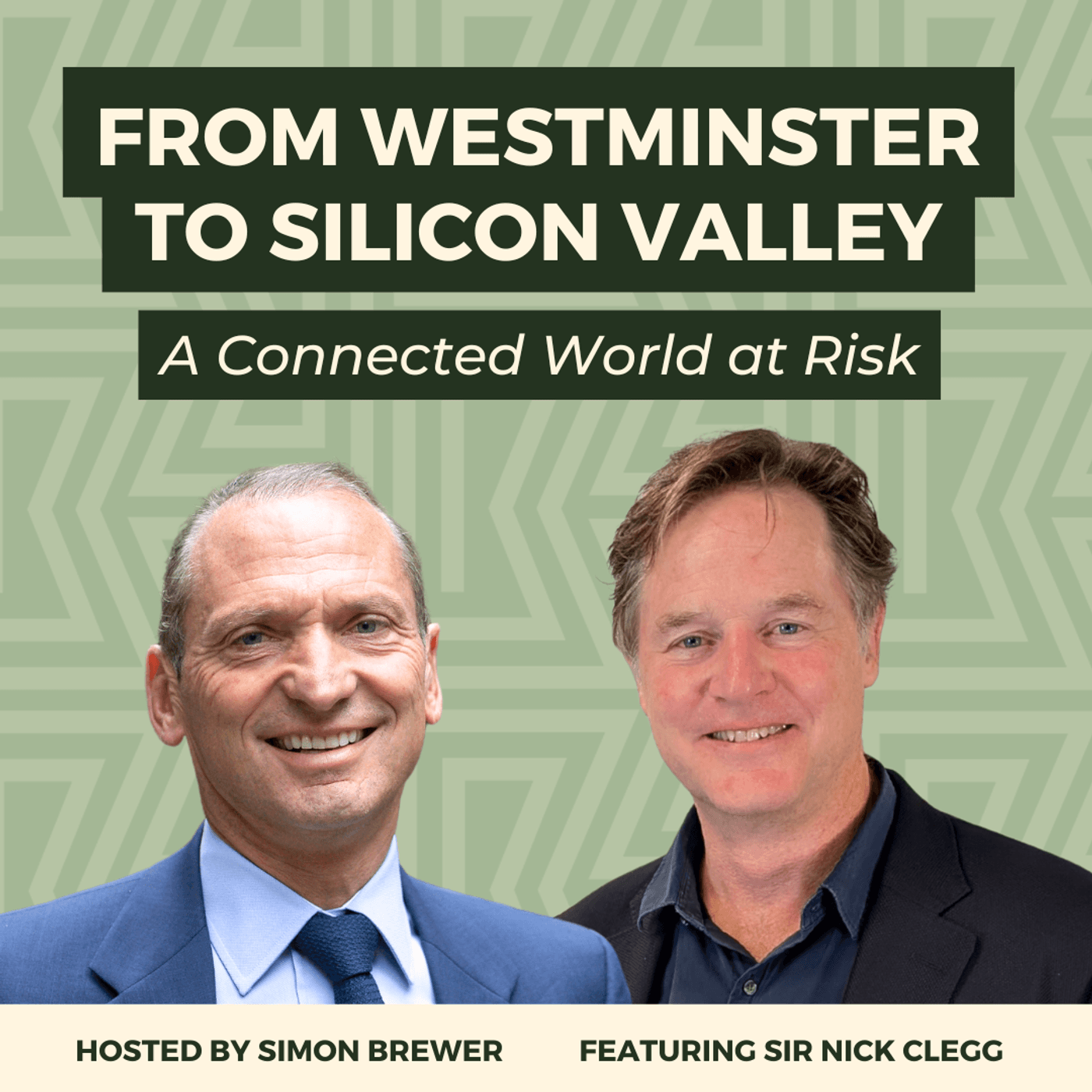
Sir Nick Clegg discusses his book “How to Save the Internet,” arguing that global internet connectivity is threatened by fragmented regulation, geopolitical conflict, and overhyped “tech vs society” narratives in the age of AI and political tension.
Guest background
Sir Nick Clegg is a former UK Deputy Prime Minister and Liberal Democrat leader (coalition government, 2010–2015). He later moved to Silicon Valley as an executive at Facebook/Meta (joined October 2018), after work on technology policy including encryption and the “snoopers charter.” He studied social anthropology at Cambridge and has a European family history shaped by 20th-century upheavals.
Key claims
Europe has 27 (Germany alone 17) data protection authorities interpreting GDPR differently, creating fragmentation. Europe is too small individually and depends on incoming American tech while exporting talent. “Techlash” is fueled by techno-determinism from both pro- and anti-tech camps; algorithms don’t automatically cause elections or hatred—society matters. Guardrails should be set by democratically elected governments and enforced by platforms, not replaced by simple condemnation.
Notable examples
encryption disputes in UK government; Facebook’s community standards (21 content categories); Cambridge Analytica and Russian interference as catalysts for Meta’s scrutiny; Meta’s scale (about 4 billion monthly users across Facebook/Instagram/WhatsApp).
Written by AI. May contain mistakes. Listen to the episode to check what was said.
Chapters
Tap a time to open that second in VOData Protection in Europe
0:00 to 0:56
Learn about the complex landscape of data protection laws in Europe.
“Europe has got 27 different national data protection authorities.”
Welcome Sir Nick Clegg
1:24 to 2:26
Introduction of Sir Nick Clegg and discussion about his book on AI and political conflict.
“Otherwise, thank you for watching and listening and enjoy the show.”
A Family Legacy
2:26 to 3:52
Sir Nick Clegg shares his family's diverse and intriguing history.
“Your grandfather, who was editor of the British Medical Journal for several decades.”
Heritage and Stability
3:52 to 6:14
Clegg reflects on the impacts of his family's past on his views of Britain.
“So my Russian grandmother ended up in London, like a lot of people did, raised by her aunt, who herself was someone who has been written about.”
The Influence of Anthropology
6:14 to 8:10
Clegg discusses his study of social anthropology and its impact on his thinking.
“well, what about the alternative point of view?”
From Academia to Politics
8:10 to 10:48
Clegg explains his transition from anthropology to a career in politics.
“relevant to a hunter-gatherer society as it is to central London.”
Mentorship and Political Journey
10:48 to 13:06
Clegg describes his mentorship under Paddy Ashdown and entry into politics.
“And I remember him once turning to me, I don't know, I complained about something I read in a newspaper about something going on.”
Political Ambitions and Observations
13:06 to 14:00
Clegg shares insights on ambition and the state of British politics.
“but it was as a member of the European Parliament, again, a little bit against convention, or at least habit, I was the first liberal elected parliamentarian in the whole of the East Midlands.”
Reflections on Political Ambition and Power
14:00 to 17:45
Sir Nick Clegg reflects on his political journey and ambitions within the British political system.
“And I don't want to sound sort of frothy or naive about this.”
The Coalition Government Experience
18:44 to 24:24
Clegg discusses his time in the coalition government and its accomplishments despite challenges.
“So I'm going to ask you two final questions before we get to Meta.”
Show all 32 chapters
Transition from Politics to Silicon Valley
24:24 to 28:00
Clegg shares his transition from political life to working in the tech industry and insights on technology's role.
“Of course, it was bad for the Lib Dems as a party, And as a leader of the Lib Dems, I wish that had turned out differently.”
The Tech Clash and Its Implications
28:00 to 29:25
Learn about the brewing clash between technology and politics and its ethical implications.
“big juggernaut companies, most of them on the West Coast, and government decision makers.”
Joining Facebook: The Unexpected Journey
29:25 to 31:11
Discover Sir Nick Clegg's journey to Facebook and the motivations behind it.
“attention of Sheryl Sandberg at the time, who was the COO of Facebook, as it was at the time.”
Cultural Differences Between Politics and Tech
31:11 to 35:14
Explore the differences in culture between Westminster politics and Silicon Valley.
“I thought, oh, wow, if they were prepared to, and if they're prepared to give me, as they were true to their word, real latitude to change a lot of things in the company.”
Understanding Tech Backlash and Responsibility
35:14 to 38:49
Analyze the reasons behind the tech backlash and the responsibilities of tech companies.
“self-consciously, to subtly speak a somewhat different language to try and make myself understand.”
The Role of Technology in Society
40:41 to 42:04
Discuss the complexities of technology's role in society and its impact on human behavior.
“and some of the things you would like to see.”
The Complexity of Human-Technology Interaction
42:04 to 43:18
Explore how human behavior interacts with technology beyond algorithms.
“They should change this, that, and the other.”
Guardrails in the Age of AI
43:18 to 45:56
Discussion on the need for regulatory guardrails for tech companies.
“the digital platforms have cracked the code of how to predict human behavior.”
Content Moderation Challenges
45:56 to 48:45
Delve into the complexities of content moderation and free expression.
“So you talk about and you use this very nice expression, which is content moderation is a delicate dance.”
Global Internet Fragmentation
48:45 to 54:10
Examine the potential splintering of the internet into different models.
“and they should attract sanctions for failing and penalties for failing to do that.”
AI and Economic Impact
54:10 to 56:00
Discuss the implications of AI on jobs and economic roles.
“need, it's unlikely to happen under this US administration, is a new compact really between the US, India, and Europe, to set new rules of the road amongst those three leading techno democracies.”
AI's Impact on Society and Work
56:00 to 1:02:30
Explore the complexities and implications of AI on jobs and human roles.
“treat the rest of the world as a nothing more than an extrapolation of the way you see the world from Palo Alto or, you know, or the capital in DC.”
Geopolitics and Europe's Digital Market
1:02:30 to 1:05:40
Discuss the challenges Europe faces in competing with the US and China in tech.
“Well, not on its current trajectory, not at all.”
Role of Government in Tech Regulation
1:05:40 to 1:10:05
Understand the necessity of government in addressing market imbalances in tech.
“And if that isn't a catastrophic loss of real sovereignty, I don't know what is, but it's not what you hear the farrages of this talk about, because they only understand sovereignty in the way that they want to apply it.”
The Future of Tech in Europe
1:10:05 to 1:10:39
Sir Nick Clegg discusses the need for a robust tech ecosystem in Europe amid US dominance.
“And we export all the good people and good ideas in technology.”
Reflections on Political Comebacks
1:10:49 to 1:11:24
Clegg shares his views on the challenges of returning to politics in the UK.
“We'll be talking more about sort of, you know, some of these opportunities.”
Characterizing Mark Zuckerberg
1:11:25 to 1:11:51
Clegg provides insights into Zuckerberg's focus and approach to challenges.
“I think in America, you can be spat out of politics and they've got this wonderful sort of comeback kid culture.”
Handling Criticism in Politics
1:11:52 to 1:13:26
Clegg discusses the importance of distinguishing between constructive criticism and negativity.
“So I thought, I just got to, I try, I try, I've always tried to be open to what I think is sincere and properly thought out criticism.”
Parenting in the Digital Age
1:13:27 to 1:14:53
Clegg shares his parenting approach, particularly regarding social media use.
“So I'm a father of three, and I know you had this lovely line, You said to Miriam, Antonio, Alberto and Miguel, the best fellow travellers anyone could wish for.”
Daily Habits and Leisure
1:14:54 to 1:15:46
Clegg talks about his daily routine, emphasizing the importance of stretching and sports.
“Three, the final question, what's your most important daily habit?”
Vacation Preferences and Family
1:15:47 to 1:16:43
Clegg discusses his family's favorite vacation spots, highlighting Spain.
“I have a real soft spot for a mountainous green, actually in parts quite wild.”
The Complexities of AI and Global Politics
1:16:44 to 1:17:46
Clegg reflects on the implications of AI evolution and international cooperation.
“But we do need to watch the pace of its evolution.”
Transcript
Automatic transcript. May contain errors.0:00Europe has got 27 different national data protection authorities. Germany alone has 17 different data protection authorities, all interpreting the same law, GDPR, which itself was put on the statute book before AI was even a thing. Sure, you can try if you want and deal with the world the way you'd like it, or you deal with the way the world it is. And that's always been my guiding philosophy. But I think we have this odd tendency to call it artificial intelligence and then spend all our time anthropomorphizing it. and sort of imbuing it with human or indeed superhuman capabilities. Well, that's clearly expressed.
0:35Back to the geopolitics. Can Europe get a piece of the action? Well, not on its current trajectory, not at all. European countries are just too small individually. You've got this extraordinary situation where we're dependent on incoming American technology because we don't seem to be able to build our own of our own scale. And we export all the good people and good ideas in technology. Welcome to the Money Maze podcast. If this is your first time joining, I'm your host, Simon Brewer. Quick word before we start. 95 % of viewers aren't subscribed, so miss out on future interviews with top business, finance and industry leaders.
1:12To support the show and ensure we can keep sharing high quality content, click subscribe and please drop a like. Plus, if you have any future guest ideas, do share your suggestions in the comment section below. Otherwise, thank you for watching and listening and enjoy the show.
1:54Facebook Meta, a company that reaches almost 4 billion people each month through Facebook, Instagram, WhatsApp, not to mention Messenger, and Threads. So on this sunny September afternoon, Sir Nick Clegg, welcome to our offices. It's lovely to be here. Well, I spent part of my summer reading your new book, a fascinating book, How to Save the Internet, the Threat to Global Connection in the Age of AI and Political Conflict. I learned a lot. I enjoyed it a lot. So we are going to discuss the book. But first, we need to understand a little bit of what brought you to this point. So we're going to just jog back.
2:28And Nick, as I did my research, I had to say your family history is a jigsaw of European intrigue woven from Dutch, English, German, and Russian threads, including, I believe, your mother, who as a child, was imprisoned with her family by the Japanese in World War II. Your grandfather, who was editor of the British Medical Journal for several decades. Your father, who was chairman of United Trust Bank and co-chair of Daiwa Europe, allegedly an advisor to Clancart. We might come back to allegiances and political leanings later on. What were your favorite conversations around the dinner table? I, like many families, I suspect many people listening to this podcast will be able to trace the sort of twists and turns of their own heritage through particularly the conflicts and revolutions of the last century and beyond in Europe.
3:18And my family was no different. My paternal grandmother was Russian, was part of that white Russian diaspora that obviously was kicked out of Russia at the time of the Russian Revolution. She settled in Estonia for a while, and then a lot of them then moved to either Paris or London. And she was raised by her aunt because her own mother, this is true sort of Russian pre-Bolshevik aristocracy, had had an affair with someone who was banished to Paris by her own. I mean, it's all straight out of a novel. So my Russian grandmother ended up in London, like a lot of people did, raised by her aunt, who herself was someone who has been written about.
4:02She led quite a storied life. She, amongst other things, had liaisons with H.G. Wells and Bruce Lansbury and Maxim Gorky and was accused of being a double agent. Anyway, so you've got that side. My mother then was born on completely the other side of the planet, as you say, in Indonesia, then a part of the Dutch overseas colonies. Her father, my grandfather, worked for Shell at the time. And she, sisters, ended up as a young girl for the whole of the war in a Japanese prisoner of war camp. Anyway, long, long story. My dad, my mom, with all these mixed sort of heritage meters in Cambridge, where my dad is an undergraduate and my mother is learning English in Cambridge as a young woman.
4:46And you asked what we talked about. We didn't sit around mournfully talking about family history or the conflicts. I mean, I was a rugby obsessed, you know, boy who we were very we were very active, still still are. But since you sort of allude to it, I was always aware. I was very sort of aware of a number of things. It was almost like a sort of unspoken, dimly heard drumbeat in the background. Firstly, that in various different ways, Britain was a place of great stability and solidity and fair play and openness for families like mine who had gone through all sorts of ructions and had suffered the violence and upheavals of that time.
5:36And I think that all slightly rubbed off on me. I suppose I have a, maybe it's a slightly sepia-tinted view that one of the things that made us great as a country is this long, you know, continued democratic tradition. and obviously the extraordinary role we played in the conflicts of the last century and so on. And then the second thing is, I think I have just, I've always abhorred, you know, the sort of way in which sometimes people can just sort of stampede in one direction or another. When people start all saying the same thing, I've always inclined to sort of start saying, well, what about the alternative point of view?
6:18I do have, I think, an intuitive, rather sort of small, liberal distaste for Kant and sort of the sort of fashions and fads you get in society. And, you know, that's always stayed with me. And I think that's partly bred of the fact that, yeah, you know, our country, our continent, the world was engulfed by these sort of extreme mass movements where people suspended independent judgment. And that is in us as human beings. I think that's always been slightly, if in an unspoken way, drummed into me. Right. Well, that sets up a later conversation about contrarianism, which is, you know, a great investment discipline.
7:04But you read social anthropology at Cambridge. Yeah. I mean, you might be the first out of over 200 guests who studied that subject. Do you know, I haven't got some great sort of apocryphal, except for I do remember a friend of my dad's introduced me to a very famous anthropologist. I'm not sure if her thinking or works have fallen out of favor since, but she was certainly a big figure in anthropology then called Mary Douglas. And I read, I think ahead of meeting her, I read an essay called The Sacred and the Profane. And she described how, in effect, her description, I won't try and do it justice here, of course not, but is that the sort of human brain, we work in binary opposites, up, down, clean, dirty, sacred, profane, in many societies, male, female.
7:57And she analysed how anything that transgresses those boundaries tends to attract a great deal of social and cultural opprobrium and taboos and so on. And it was a complete eye-opener to me, a complete eye-opener to me as a young man, this idea that there might be keys to otherwise inexplicable human behavior that are driven by patterns of society which are as relevant to a hunter-gatherer society as it is to central London. And I was just, I was absolutely engrossed by that. And so I did it. But of course, social anthropology is one of those disciplines. Apologies to anyone who is a social anthropologist who listens to this.
8:40But it's extremely interesting, but it's not very obvious what real life application it has. So maybe it's no wonder that I ended up as a politician in the end. And I see in between you went to the University of Minnesota, you studied in Bruges, you worked with the FT, but you're pulled into politics. So you just need to give us a sense of what was the magnetism. So I was always someone who was interested in current affairs, interested in contemporary history. I remember I had an absolutely kooky history teacher at my junior school who was absolutely convinced that the Soviets were going to invade the warm water ports.
9:21I remember him using that phrase of Europe and the Third World War was going to happen before Christmas. And he scared the living daylights out of a class of 11, 12-year-old boys. But I was absolutely engrossed in that. And then later in life, obviously, because of my heritage, I've always been a very, I suppose, I've always had an internationalist and very European outlook. And of course, I was part of that. I'm 58 now. So I was part of that generation that became quite radicalized, actually, by the Thatcher revolution of the 1980s, which with hindsight, I think, certainly in terms of the doldrums that the economy was in beforehand, had all sorts of long term beneficial impacts, certainly in terms of really shaking the juices of the British economy.
10:06But to a young man, it was a very bleak view, at least as it was communicated to me at the time of there's no such thing as society and a rampant individualism and so on. And so that had a kind of galvanizing effect on me. And then through a circuitous route, I ended up working for Leon Britton, who had been a member of the Thatcher cabinet and was then vice president and a very, very successful and impactful one of the European Commission in Brussels. But I was working for him as a civil servant because I passed this European civil service exam in the meantime, somewhat miraculously, given how difficult it was to get through.
10:43And I think he just found me a sort of amusingly opinionated civil servant. And I remember him once turning to me, I don't know, I complained about something I read in a newspaper about something going on. And I remember him turning around to me at one point in a rather exasperated way and saying, look, instead of complaining about this thing, why don't you just go and do something and go into politics? And for once, I was lost for words. I was completely stumped because I didn't come from a political family. I had no politicians in my family. And I regarded politicians that I saw on the television, much like any other normal person does.
11:14I just thought they were a weird species apart. So the fact that my boss at the time thought that I could make this journey somehow from my normal life to this kind of weird life of politics, which was this thing that played out on the box in the corner of the sitting room, certainly in those days, I was just dumbfounded. And then the next very major moment, at least in my recollection of it all, is several months down the line, as I, in a sense, digested this challenge from Leon Britton, I saw that he was going to meet the then leader of the Liberal Democrats, Paddy Ashdown, who I admired enormously, but again from afar.
11:54So I asked, I mean, it shows how important I was. I asked, because remember, I was a civil servant. I asked my then boss, Leon Britton, if when he was seeing this British politician, whether he could say to this British politician that he had this employee in his what's called cabinet, his personal office, this Clegg chap who was very keen on what Paddy Ashdown was doing. And I remember I sort of waited nervously outside the office. Paddy stalked out and looked at me, Leon Britton says you're the best thing since sliced bread, and then sort of stalked off. And anyway, to cut a long story short, Paddy very kindly then reached out to me.
12:31I met him and several years down the line, we became, I mean, he by a long way was probably the most important mentor in my life. And I became very close to him and indeed Jane, his wonderful wife. and relied on his advice and his counsel and his good humour and his sort of discreet telling-offs, you know, really until the day he died, which wasn't that long ago. I still miss him terribly. So it was a somewhat surprising route. And then, of course, my first route into politics wasn't into Westminster, but it was as a member of the European Parliament, again, a little bit against convention, or at least habit, I was the first liberal elected parliamentarian in the whole of the East Midlands.
13:19That's Northamptonshire, Derbyshire, Leicestershire, Lincolnshire, and so on, because the electoral system to the European Parliament had changed at the time. So it really was through the European route, I guess, that I went into politics. And it's one of those odd fates that my political career came to an end at a time, of course, when the country was, to my mind, very foolishly leaving the European club. So it's always been a very important bookend to my role in public life in this country. And when we think about ambition, was it evident to you early on that what was a somewhat fractured Liberal Party was going to offer roots to the top more quickly than perhaps some of the others?
14:05No, no, it really wasn't. And I don't want to sound sort of frothy or naive about this. I mean, if you're in politics, of course, you want to do as well as you can. And I was no doubt as guilty of venal ambition as anyone. But I really, I had an implacable sort of dislike of the sort of Buggins turned duopoly of British politics, which I thought had served the country very poorly, where basically, certainly at that time, under the first pass of the post system and the way that politics was much, much more fixed and stable than it is now. It basically was pass the parcel, Labour for a while, they would usually then mess up the economy, then it was Tories for a while, they would usually mess up the NHS, then it'd be Labour for a while.
14:47And that was the pendulum swing. And neither of them were remotely, in my view, radical enough to actually open up politics to more and different voices. I was always an ardent supporter of opening up Westminster and you know, doing the things that I tried to do in government and failed to deliver like electoral reform or elections to the House of Lords and so on. So I always had this kind of sort of dislike of what I felt was the stifling effect of this duopoly who, of course, in one sense claimed that they were the great opponents of each other, but they both had a shared interest to keep the business model of British politics exactly the same.
15:22So it really, those are the things that drove me. I did, after I became leader in 2007, I did start entertaining more than that, much more than that, actually planning for the idea that the election after next, I thought might be the big breakthrough moment where if I did my work well, if I perform well, if I built up the party, we would have a shouting chance of basically being big enough to deny one of the two larger parties, an absolute majority. So here's the thing. The fact that it happened in 2010 was about five years quicker than I anticipated. But I did think that maybe, of course, on the back of the great work that Paddy had done and Charles Kennedy and others, I thought the Lib Dems were getting to a state where maybe we could move from opposition, perpetual opposition, into playing a role in governing the country.
16:17And just final word on that. I was always very unsentimental about the idea that if you're going to go into party politics, it is good, it is legit and good to aspire to power. I think what I underestimated is, and I, this is not, I'm not making a comment about, though I'm sure it applies in some sense to the internal debate in the Lib Dems, But on the left, in particular, in politics, the right has always been very unsentimental. They want power and they'll get to it. The left has always had this rather sort of prissy attitude towards power. As if it sort of sullies your hands, partly because the left can be just so sanctimonious.
16:55And that, I have to say, I never, ever understood. It's like, then go work for an NGO or for a single issue campaign group. don't then go into politics, which is a very difficult, you know, amongst other things, exercise in trade-offs and so on. And so the attitude of the left and the centre-left to power, you hear it now already in the Labour Party. You just feel they're already people in the Labour Party, they're barely in power, as if they're longing to go back into the lovely, you know, blemish-free freedoms of opposition, of course. And so to your question, I did, when I became leader of the party, I definitely wanted to be the leader who could try and deliver the Liberal Democrats into actually exercising power in government.
17:42So before we continue this conversation, we're going to take a short break to have a note from our sponsors. IFM Investors is a global asset manager, founded and owned by pension funds with capabilities in infrastructure, equity and debt, private equity, private credit and listed equities. They believe healthy returns depend on healthy economic, environmental and social systems. And these are evolving on a scale never experienced before. To find opportunity, build value and meet the needs of future generations, you need scale, skill and expertise. That's what IFM Investors has built up over 30 years.
18:21In times of economic and geopolitical volatility, investors will look to gold. Today, as the world navigates uncertainty and heightened risk, investors of all sorts will look to safeguard their wealth. We're thrilled to welcome the World Gold Council as one of our sponsors. Tap the link in the show notes to learn more or visit goldhub.org on your browser for comprehensive research, insights and analysis on the global gold market. So I'm going to ask you two final questions before we get to Meta. And we had Sir Anthony Selden last year who wrote The Impossible Office, although the subject really was education.
18:58And as I went through the history books, it was interesting that in 1906, the liberals went from 400 seats to 40 seats. And that marked the end of their reigning power. Whatever your view on him, might that be what we're beginning to see with the reform? I certainly think the Conservatives are in, you know, sort of 59th second of the 11th hour in terms of being a, as they have been for perhaps almost longer than any other political party in the democratic world, a successful and dominant centre -right force. and it's because they're spending all their time trying to beat reform by imitating reform.
19:37You don't beat people in politics by just being a sort of poorer version of the real McCoy because the voters will just vote for the real thing and you can't blame them for it. So I have to say, if you're inclined in that direction in politics, I don't really see why one wouldn't vote for reform. I think Labour, oddly enough, have more choices. They clearly compete against reform in some significant number of seats in the north, but they actually have more to play with, it seems to me, if they could only get their act together. I think the Conservatives are, this sort of reverse takeover of the conservative, small C Conservative vote, the right of centre vote in this country by reform, it seems to me to be very well advanced.
20:30I, who knows, anything can happen in politics. Farage is a highly combustible character, all sorts of things can happen. He's obviously at the moment in that sort of hype cycle where everyone sort of treats him somewhat uncritically. That will give way to a much greater scrutiny of his numerous flaws and that of his platform, what little we can garner about it. But I can't really almost see any scenario between now and the next election where the Conservatives suddenly become the main alternative on the ballot box to Labour. I think that's very, very unlikely. Well, we think we have Farosh coming on, and I already know the title is Business, Not Boats.
21:09But as you, of course, are Deputy Prime Minister of the first coalition government since the Second World War, as you reflect, Nick, bitter, sweet, or actually gratifying, because I read Plato once observed that one of the penalties for refusing to participate in politics is that you end up being governed by your inferiors. By your inferiors? Inferiors. Yes. No, you mean how do I feel about the whole experience? Yes. Oh, I'm as proud as punch about what that coalition government achieved in a half a decade period of time. Actually, I think it's extraordinary if you think about it. There was this newfangled thing that no one was used to in the country, which was not one party with one prime minister, but two people, because neither Cameron nor I had a majority in parliament.
22:01So we had to rely on each other. So literally every day, we would churn through paperwork in our red boxes. And if both of us ticked yes to some submission about, I don't know, local government finance reform or something, it would happen. If one of us said no, it wouldn't, but we'd have to carry on debating it. And if we both said no, it was dead and buried. I mean, that was just literally the day-to-day working. And neither Whitehall nor Westminster nor the political press had ever had to deal with this sort of multicephalous thing. So as you may remember, after 2010 and the excitements of that extraordinary election, all held in the dark shadow of the catastrophic financial collapse in 2008, all the predictions were that it would collapse within weeks, if not months.
22:49No way this is even going to see its way through to Christmas. So the fact that we kept that government stable and strong when governments were falling like nine pins across Europe in the wake of the financial crash and the devastating consequences, particularly in southern Europe, that had. had the fact that we were able to deliver a stable government, but more than that, able to introduce very far reaching reforms, some of which you can argue were good reforms, bad reforms, but from apprenticeships to energy mix, from education, you know, reform to industrial strategy. We did all of those reforms while steadying the ship economically.
23:30And by around the halfway point of that coalition through to the end of that government, the British economy, quarter in, quarter out, was growing faster than any other G7 economy, which I think is a remarkable turnaround given the ruins that we inherited because of a mixture of things, both the events in the City of London, but also, in my view, the mismanagement of the public finances. And then, of course, the tragedy is that within pretty well months of the coalition no longer being in existence, we had the Brexit vote and the British economy literally switched almost overnight from being the fastest growing economy to the slowest economy in the G7.
24:13So I look back with immense pride that despite all of the odds against us, and certainly the predictions against us, we delivered good government for the country. Of course, it was bad for the Lib Dems as a party, And as a leader of the Lib Dems, I wish that had turned out differently. I don't think, candidly, we got a particularly fair hearing because we didn't, I mean, I'm not whining about this. It's just a description of fact. We didn't have any vested interests in the press who were prepared to act as an amplifier for our point of view. And I'm afraid it does seem to be a bit of a pattern.
24:50You see this across Europe, that coalitions tend to be cruelest on the smaller party, and perhaps most especially when a smaller party on the centre-left goes into coalition with a party on the centre-right. And what I might regard as just unavoidable compromise, because that's what governing in a two-party or multi-party government involves, is very, of course, quickly branded as betrayal. And so the narrative of compromise in the defense of and in the pursuit of the national interest, certainly in the kind of internal politics, curdled into something quite different, which was you've lost your bearings, you've lost your sense of principle.
25:30you've lost. And, and yeah, of course I reflect like everybody does. I mean, Tony Blair, who I know you've interviewed sort of pithily says, the problem in politics is you start popular and inexperienced and you end experienced and unpopular. It's a kind of, so almost exactly the point when you could be most useful to the country, the country doesn't really want you. So, but no, my overwhelming, my overwhelming reflection really is one of, I feel very fortunate. I'm very fortunate to have had that. And it really, I genuinely, without sounding portentous about this, I regard it as a great honour that I've been able to devote so much of my life to public service.
26:08And I think what we did during that time will, I mean, my own, of course, not wholly objective, but nonetheless, my strongly held view is that that coalition government for those five, that half decade was by a long chalk, the best government this country's had for a decade and a half plus. And of that, I'm of course, very proud. I understand. Now you lose your seat at the next general election. It wasn't obvious that you would make this switch to, quote, Donald Rumsfeld, you moved from a known known to an unknown known. How did it happen? To Silicon Valley. So, I mean, partly serendipity, but I guess the bit where the dots join a bit is that during my time in government, I'd become increasingly fascinated by particularly pressure from the Home Office to curtail or even in some cases try and ban certain technologies which I felt couldn't be banned or curtailed and shouldn't be.
27:04I remember there was always an endless back and forth with the Home Office during my time in government about the role of encryption. Encryption, we all use encryption, WhatsApp, on iMessage, on banking apps, on everything. I mean, encryption is just part of the fabric of our online life now. But of course, the securocrats don't like it because encryption means that only the sender and the receiver of a message can see the content of it. So you can't steam open the envelope if I can use a pre-digital analogy in the traditional way. and anyway we had a right old argument ding dong in government in the coalition about something which became dubbed the snoopers charter which i blocked and eventually then the conservatives put onto the statute book uh after after i was unceremoniously shown the door i think they did that in 2016 anyways part of that i'd sort of become increasingly aware that there was this gulf of understanding or misunderstanding rather between the tech community and particularly these big juggernaut companies, most of them on the West Coast, and government decision makers.
28:12And they were just speaking a different language. They were speaking past each other. So I made it my business. I would say to my team, I want to meet these people from Google, Microsoft, and so on. And I was aware even while I was in power that these companies are getting sucked into some very consequential political, almost ethical issues, which I found very interesting. Then after I left office, but before the 2017 election, so in that interim period, I set up a think tank called Open Reason. And we had a small team and we produced earnest discussion papers on a whole range of issues. But one of them was about this brewing tech clash.
Read the full transcript
28:53And if I had any sort of prescience at all about anything. I remember very early on thinking, this backlash could really end up throwing the baby out with the bathwater. There's a very good reason why people want to biff big tech on the nose and so on and so forth. But, you know, it can topple into a sort of technophobia. And so I became very interested in that, started writing about that, started speaking out on that. And yeah, I mean, the rest really was, I think because of that, it came to the attention of Sheryl Sandberg at the time, who was the COO of Facebook, as it was at the time. She just picked up the phone and rang me.
29:33I remember I was on holiday in Switzerland. And in Sheryl's indomitably sort of direct way, he said, do you want to come and work for Facebook in California? I said, no. No, thank you very much. So how long did it take you to be brought Well, A, of course, like a lot of people, if you say, certainly if you say no to Cheryl, she sees it, regards it as a direct challenge to change your mind. But she very, quite rightly and insistently, you know, engaged me with sort of back and forth. And I then flew out to California, spoke to her a bit, then went again, out again, spoke to Mark for a long period of time.
30:10And I remember then writing them like an email or sending them a document. And I thought, well, this will be the end of it. Because I just said, look, these are the things, as far as I can make out, where you've committed some sins of commission, not just omission. These are the things where you really need to right-size your business. Otherwise, you're just not really going to be able to thrive. And I would suggest a number of changes. And I thought, well, they're never going to accept that. And to my pleasant surprise, Mark Zuckerberg kind of said, absolutely, totally get that. That's why we want you to work with us, because we realize we're not politicians.
30:46We're not ex-politicians. We're not accustomed to dealing with government. We've stumbled into these major societal eruptions around, do you remember, Cambridge Analytica at the time? And before that, the revelations about Russian interference via Facebook ads in the 2016 election and so on. And they'd gone almost in a heartbeat from being sort of heroes to being villains. And so I was, I have to say, I was somewhat surprised by that. I thought, oh, wow, if they were prepared to, and if they're prepared to give me, as they were true to their word, real latitude to change a lot of things in the company.
31:22Of course, by that stage. And then I think also, I mean, again, odd, isn't it, how these things, these sort of twists and turns of life, there was also a personal dimension to it. I think Miriam and I were both, to put it mildly, implacably sort of opposed to the or opposed or unhappy about the outcome of the Brexit referendum. So it was a slight feeling if we were sitting there grumpily yelling at the television every evening, which is not a very productive thing to do. We had three boys and one of our boys had a year or two early had had cancer and he recovered, thankfully, and he had a rather brutal course of chemotherapy.
32:00and we'd gone on holiday to California to celebrate the end of his chemo because he always wanted to go to California. He wanted to go to these amazing parks in LA and stuff. So, of course, if you then say to three little boys, by the way, would you like it if Dad went and worked and we lived in that place, the place we'd just been on holiday? They'd just go, yeah. So all of that crystallized in a funny way, both personally and family reasons. um and uh and so yeah from october 2018 i suddenly was an employee of of facebook so we talk a lot about culture on this show in businesses particularly as they get bigger parachuted in i believe in the book uh you said you you turned around to your team and nothing they liked it you said don't bring your authentic self to work yeah so it was just a very different culture it's um You know, I came from this clapped out old weird place called Westminster.
32:59But it's a very wordy place, Westminster. And it's full of humour. I mean, it might not look like that. But I mean, politics is actually very funny. And you've got quite a lot of people who can be very funny. And it sometimes can be very aggressive and sort of satirical humour. And I went to this place. It was so earnest. Oh, people were so earnest. And you're quite right. They used to have all these posters, like I think a lot of these Silicon Valley companies had with all these admonitions. And one of them was bring your authentic self to work. And I said, just to sort of break the ice into a very typical British fashion, I thought I needed to make a joke at the beginning.
33:31I said, by the way, this was me talking to a room full of young sort of earnest T-shirted employees at Meta. I said, by the way, please don't bring your authentic self to work. You wouldn't like me if I worked here in my authentic form and just bring your inauthentic self at 9am and you can leave at 5pm again and then be yourself. So anyway, no one, stony silence. And afterwards I was told that this had been somewhat unsettling to some people in the audience and maybe I should reflect on how I broached these subjects. So I made a sort of mental note then, not making, you know, silly throwaway remarks like that.
34:10For me, it was a big thing to move from the very wordy, sort of lippy repartee of Westminster and politics to, yes, it is quite, or it was at least, quite an earnest engineering culture. And one of the main things I had to do, and I really had to work at this, was I realized very early on I wasn't persuading people of my point of view on XYZ and the company as a senior executive through my normal kind of idiom, through argument and persuasion and humor and cajoling. I realized I needed to speak in numbers and systems and I needed to adopt almost a different language. Now, I'm not an engineer by training and I don't think I'm much of an engineer by temperament either, but it was an interesting exercise in how important it is in any business culture, indeed any culture.
35:01Think very hard if you swap from one to the other, think very hard about whether you're using the right language. You can't just insist on your own language. You have to use the language that is understood by the people you're seeking to address. And particularly as a leader in that company, I worked very consciously, if not almost self-consciously, to subtly speak a somewhat different language to try and make myself understand. I'm not pretending for a moment that I spoke with a statistical and technical fluency of many of my engineering colleagues, but I certainly tried to do so such that they could really understand what I was trying to convey.
35:40So you mentioned it earlier, this word tech lash, you talk about it in the book, public, you know, the backlash against new technologies, which is documented from the printing pressing onwards. Are you surprised in some ways, given the perceived benefits some of these technologies afford people? No, I'm not surprised at all. I'm not surprised at all. Firstly, because all these technologies do have downsides and these companies are not blameless and they have been too slow to deal with some things. And they have so much power and it's an unelected power. And I think that mixture of sort of dependence on these technologies, but feeling that they're not accountable to people combined with, particularly, of course, in the case of a company like Meta, combined with the fact that they're dealing with something which is perennially controversial, speech.
36:40I mean, there's literally nothing more. You're not dealing with widgets or even sending rockets up into the sky. You're dealing with speech. There's nothing more contested than human speech. It is what gives us identity. It's how we argue with each other. It's how culture is expressed. It comes in beautiful and ugly, good and bad forms. So it doesn't surprise me. I suppose what, I surprise, I don't know what, I suppose I find it sometimes a little surprising how, I suppose this is as much a comment about the commentary, if I can put it like that. I just am so surprised that people feel that it's just sufficient to yell at the problem.
37:20All you have to do is just vilify big tech and say how ghastly it is. It doesn't, four billion human beings are using these products every month and i sometimes kind of feel like shaking people who just want to kind of just say oh i hate them all while they by the way while they're furiously whatsapping at each other and posting on instagram and so on it's like sure and it's the same philosophy i had in politics sure you can you can try if you want and deal with the world the way you'd like it or you deal with the way the world it is and that's always been my guiding philosophy and i sometimes i saw i think you know actually my book's a good example um there are books published i think every month which in one variant or another say it's all the fault of tech and big tech and so whatever you know failing in society or life they don't like my book of course doesn't take that tack i'm hardly going to work for seven years for better than go and write a book eight months later and slag it all off because otherwise i wouldn't have work for the company in the first place.
38:18And yet it's as if people sometimes just want you to write the same kind of version, which is condemnation rather than engagement, I guess is my point. So I think as a society, these are very important technologies. They're very consequential. They're not flawless. The leaders of them are absolutely not flawless. They should be a subject over rigorous criticism as anybody, but you don't make any changes if you, and you don't, we don't evolve and accommodate these technologies so that they serve us rather than us serving them. If you just yell at them, and I just sort of feel you tend to get this a little bit, and it's actually quite pronounced in the kind of very sort of media oriented British sort of an SW1 political culture.
39:06It's sort of, it's as if people think it's sufficient to yell at something. And that does surprise me a bit. Schroders is an international active asset manager working with institutions, intermediaries and individuals around the world to create prosperity for them and their customers. Over two centuries, Schroders has given their clients the edge by seeing things differently. Schroders' active perspective combines rigorous research, innovative thinking and deep market insight to help you see opportunities and risks in a new light. Whether building portfolio resilience, seeking return opportunities, generating income or decarbonizing your portfolio, Schroeder's offers a heightened perspective to help you stay ahead.
39:48Leveraging their expert capabilities across public and private markets to help clients achieve investment goals. With Schroeder's, you get the active edge. Discover the active edge at schroeder's.com. Remember, capital is at risk with investing. The Money Maze podcast is proudly sponsored by the London Stock Exchange Group, a global leader in financial markets infrastructure. LSEC has a rich history of facilitating capital flows, empowering businesses and connecting investors to opportunities. Today, they provide world-class technology, data and analytics, playing a critical role in shaping modern finance.
40:25From their role in sustainable investing to their contributions to financial innovation, LSEG is helping to build more connected and efficient markets. Visit lseg.com via the link in the show notes to see how they're driving the future of finance. And then you brought you, we're going to come to some of the remedies and some of the things you would like to see. You rightly quote Obama talking at Stanford in 2022. He said social media didn't invent racism and hatred and extremism and conflict. But of course, it gives voice. It gives the oxygen to that. How has your view changed? I there's two sets of people this has changed two sets of people who over time I realized while I was at Silicon Valley are probably the least reliable guides when it comes to trying to adjudicate all these claims and counterclaims about the virtues and vices of technology it's the arch proponents of technology you say it's the answer to everything and it's the arch such opponents of technology who say it's the source of all of our problems.
41:25They both, from diametrically opposite directions, oddly enough, do the same thing. They indulge in techno-determinism, as if our behavior, our emotions, our thoughts, our elections, our referenda outcome are all the consequence of a tweak to an algorithm somewhere. And I can assert, I think, without any fear of contradiction, there is no evidence for that at all. We are, thankfully, as Homo sapiens, a lot more complicated than like that. We also have more agency. And I sometimes feel that it's almost comforting to people to imagine all you need to do is yell at Elon Musk or Mark Zuckerberg to change the algorithm and all would be well.
42:10There might be very good arguments. They should change this, that, and the other. In fact, I certainly think there might be in numerous cases. But guess what? Society and how we behave and how we interact with each other are driven by so many other things, by our own sense of economic security, about whether we think our kids are going to do better than us, about our sense of community, about our sense of our place in the world, a whole bunch of other reasons. And so I, oddly enough, the longer I stayed in the same way that the longer I was in the establishment in Whitehall, I became more and more anti-establishment.
42:47Oddly enough, the longer I was at Silicon Valley, the more I felt that the role of technology is enormously important. But you can, oddly enough, overdo it. we're not just bovine passive bits of blotting paper who just you know passively receive what's handed down to us from on high on silicon valley and i think the interaction of of human beings with technology is a lot more complicated than that and that's what i explain in the book in as dispassionate a way as i can but you you quote uh the harvard academics ashana zuboff who asserts the digital platforms have cracked the code of how to predict human behavior.
43:26I guess the question which you come to later in the book is where do the guardrails sit? Yeah, exactly. And of course, the guardrails have to sit at the highest level with governments and democratically elected governments in those areas where these are companies. They're not sort of benevolent NGOs. They're companies. They're cutthroat competitive companies. They're competing with each other. These are highly motivated and driven business people. And like any balance between private sector competition and government, there are certain market failures or there are certain externalities on society, whether it's about kids online or how social media is used in politics and so on, the government should step in.
44:16Of course, these companies should also take a sort of very onerous weight of responsibility of their own for the way in which they stress, test, test and introduce their products. And as I try and describe in the book, it would be a lot easier, oddly enough, if these big companies were guilty of complete indifference, which is the sort of caricature accusation, as if they really just couldn't give a damn and they just willfully and casually inflict grievous damage on society. Of course, the truth is, it's a lot more complex than that. You're not, I mean, in Metta's case, it's an ads business. You're not going to sell ads for people who want to sell soap powder or cars or holiday destinations if all you're doing is peddling the most vile form of human content.
45:10Because guess what? Advertisers are not going to pay for you to have their ads run next to that vile content. So I actually think they don't even have a commercial incentive to act in quite the amoral way that is often depicted. I just, so in other words, I think there is a responsibility for everybody to introduce guardrails and swim lanes. At the moment in the US, as you will have seen, there's this huge backlash against any regulation or any constraint on the development of AI. That clearly is also, and that backlash against a previous backlash is itself, I think, not sustainable, because it's obviously a nonsense to say that such a powerful, versatile technology should be free of any kind of scrutiny and constraint by governments.
45:52And I don't think it will last in that manner either. So I do think it's a question of governments taking up the responsibility and the companies too, of course. So you talk about and you use this very nice expression, which is content moderation is a delicate dance. Now, you took down Trump from Facebook. And I just want you to just talk us through, given there is an inherent conflict in these firms of what they want to be able to promote, you know, content and advertisers and where the lines are. you're no longer there. How rigid and robust are these controls? Well, there's the thing. One lot of people will say they're far too rigid.
46:34So if you're J.D. Vance or you're a First Amendment free expression kind of person in the US, you'll think almost any content moderation by these big companies is illegitimate. If you're a progressive, someone on the other side of the wing in American society at the moment, you think these companies indulge in absolute free for all. That is part of the problem. They're private companies being asked to almost make adjudications on very, very difficult subjects, notably the where does free expression end and content moderation begin, where the politicians haven't legislated for that. So these companies are then trying to make these adjudications and in an environment where increasingly, particularly in the United States, and actually increasingly here too, the very idea of what is free expression is becoming a polarized debate, part of the wider culture wars.
47:33One of my responsibilities was to oversee the development of and the implementation of Facebook's standards. They're called community standards. I think there's 21 categories of content that the company said very clearly, if you're going to use its services, you're free to do so. But these are the rules you have to play by. You can't indulge in IP fraud. You can't incite violence. There are certain forms of hate speech and bullying and harassment that are not allowed either be removed or demoted. And this is a sort of living, breathing document. And I would urge anyone who's interested in this, you can look at it all online.
48:12It's all totally available to public scrutiny. It's constantly taking input from scholars and experts around the world. It's a living, breathing document. But here's the interesting thing. This is a document from a private company about what is and what is not allowed on its services, which goes well beyond the law. If the law said this is allowed and that's not allowed, it'd be really easy for these companies. They say, okay, we're just going to implement the law. And clearly where the companies don't bear down on illegal content where that is specified in law. That's a major failing and they should attract sanctions for failing and penalties for failing to do that.
48:48But so much of these adjudications is stuff that the politicians themselves and governments themselves have decided to kind of wash their hands of. And that's where none of these companies deserve or need sympathy. but it is why I made that assertion you just read out it's it's a it's much more once you once you dig into it it's much more tricky one person's hate speech is another person's right to be heard and I don't think these companies have always got it right but this caricature that they don't give a damn or try and balance these competing trade-offs is not in my experience one borne out by reality.
49:32But is what you're saying essentially a US-centric view? Because when we think about this thing from a European, we had Scott Bestent on, you know, before he became Treasury Secretary talking about AI, which we're going to come to in a minute. And he said there are three approaches. There is a European approach, which is to legislate. There is the Chinese approach, which is nobody is going to be more powerful than the Communist Party. And there's a US approach, which is the Wild West. Yeah, it's what is the famous saying? The Americans innovate, Europeans regulate, and the Chinese imitate. Which may actually not even be true, but we're going to come on to that.
50:05No, no, no, no. I'm sure we'll return to that for what it's worth. I think the idea that America can deliver a knockout blow to the Chinese on AI is a complete nonsense. I think it's one of the biggest, I think it's one of the biggest strategic failings at the moment is there seems to be this tacit assumption in DC and in Silicon Valley that you can beat the Chinese on AI like the Americans or the West beat the Soviet Union by sort of outspending them in the Cold War. And then of course, the Berlin, there isn't going to be the fall of the Berlin Wall moment where suddenly China is useless. That's not going to happen.
50:42That ain't going to happen. And I think the sooner people wake up to the fact that it's going to be way more, way more sort of dispersed technology than that, that there isn't going to be one company that's going to be like a victor standing with sort of arms aloft whilst its vanquished foes are sort of lying at its feet. It's not going to be like that. But isn't that, I mean, coming in. Sorry, your question was a different one. Well, but I'm coming in this morning. I'm reading that Nepal has shut down for maybe for 24 hours. I don't know whether it was WhatsApp or Facebook. Yeah, Facebook or Instagram, yeah.
51:13It was all of them. If you sit in dominant regimes like the communist regimes, particularly that might be used to that sort of censorship, it's much easier. So are we actually more likely than not to see, it might have been your term, the balkanization, as in we get theaters in which there are different ways of controlling content? Totally. And to your point, if you are out of the one, if you are even Modi, if you are the Communist Party in Ho Chi Minh City, you think, hmm, the Chinese model of the internet is not bad. You know, it's one of the most technologically advanced digital economies in the world.
51:57It spawned these huge, huge behemoths, which was almost as big as, if not bigger than some of the big West Coast tech companies. They have the most out-of-the-world beating AI engineers and computer scientists. And yet they fully control and surveil the content that flows within its own borders. Now, if I was Putin, I would be thinking, I want that. I want the Chinese version of the internet. If I was earlier, I'd say, I want that. If I was the Nepalese government, I'd say, I want to control it more. So I definitely think this assumption that it's a lazy assumption in London and DC and elsewhere that somehow the kind of small L, small D liberal Democrat values of the open internet as it sort of emerged, and I describe the history of how the internet emerged from the sort of 50s and 60s in the book, is going to prevail.
52:51I mean, I think that is, I guess, terrible complacency. I think there's a very strong, not more strong likelihood. I think we are moving towards a splinter net. The global internet does not exist. You have a Chinese internet, non-Chinese internet, and you've now got an increasing kind of gray area of other autocratic or semi-autocratic administrations moving almost in a more Chinese direction. And in all of that context, the most consequential country of all, in my view, because it has the sort of swing vote, is India. If India, given its sheer size, its power, its digital, its deep pools of digital expertise, if India, so far at least, because of the utter incompetence of the Trump administration in mishandling Modi, he's basically driven into a Chinese direction.
53:41We saw Modi on the stage with Putin and Xi Jinping just a week or so ago. well, then I think the internet that we are used to, the sort of Western European slash North American internet, could over time become the minority player in all of this. I hope that's not the case. And it's why I, as I advocate in the final passages of my book, what we desperately need, it's unlikely to happen under this US administration, is a new compact really between the US, India, and Europe, to set new rules of the road amongst those three leading techno democracies. And if you're a shareholder in Meta, for example, should you actually be recognising that maybe those 8 billion consumers around the world really aren't 8, they might be 7, 6, 5, 4, and you're impotent because your government is either going to open up the pitch to play on or it's going to shut it down?
54:40I'll tell you what I do think. certainly in the case of Meta, I'd need to refresh my memory to see whether these stats are right. But I think I'm right in saying that well over 90 % of the users of Meta services are outside the US, which is fascinating. So I think the great dilemma for these companies, most especially, but certainly not exclusively, meta is that they are quintessentially global entities, which are increasingly behaving as if they are part of a sort of America first movement. And part of this currently extremely sort of belligerent assertion of America and Americanism versus now, I think that's fine for a while.
55:31but in the long run there's a strategic tension between being a global entity where over 90 % of your users are outside the US and 99 % of your attention is in DC that kind of because guess what I know a lot of Americans sometimes forget this America is the most powerful country in the world but it isn't the world and when you know when you're dealing with major major nations like Brazil, Indonesia, Japan, India, you know, the idea that you can just basically treat the rest of the world as a nothing more than an extrapolation of the way you see the world from Palo Alto or, you know, or the capital in DC.
56:15I just think that is a, I mean, so I think that's a clash of worldviews, which these companies need to navigate. And you talk about having been, I think you were in the room when there's an AI unfolding with Biden and amazement is all around. When we center on the AI question, you pose the question, I think, rhetorically in the book as have we been hyperventilating existential risks, I think is what you say. We actually had a question from a highly regarded South African hedge fund manager, Andrew Valey, who said the biggest issue facing our species is AI. The benefits from AI are obvious, but at what cost to humanity who face redundancy, marginalization and irrelevance?
56:55How are countries already facing huge fiscal challenges going to support this huge proportion of the population who have no economic role? So I personally wouldn't characterize it as the most existential threat to or challenge to humanity. And so far, I think the hyperbole around AI has outstripped the technology itself. It is very powerful technology. Don't miss, I don't want to be misunderstood. It is very powerful. It is very versatile. It will be very disruptive. It will do all sorts of things. But I think we have this odd tendency to call it artificial intelligence and then spend all our time anthropomorphizing it and sort of imbuing it with human or indeed superhuman capabilities, which certainly in its current form, the sort of LLM based paradigm where you start with these very, very clunky, big, very expensive foundation models.
57:48You train those models and then you build various layers on top of it. I just think so far the people who have warned against getting too carried away by the hype cycle, because there's lots of people trying to sell their AI products, lots of people trying to raise a lot of money. So they make all sorts of claims about AGI tomorrow and super intelligence the day after and so on and so forth. I think the people who've been more sanguine and said, yes, very important technology, very powerful technology, but maybe not yet the sort of humanity displacing technology that so much of the commentary at, so much of the people in the industry have kind of suggested.
58:28I think so far they have proved to be right. Now, who knows? Maybe suddenly next week we're going to hear that, you know, superintelligence has emerged somewhere in a lab overnight or something. But it's worth, for instance, reflecting that these models still, despite the astonishing amount of money and technical price which is thrown at them, they're still deeply flawed. They still hallucinate. They still come up with rubbish. They still come up literally with crap because they're machines. They're probabilistic machines. They're not trained to be deterministically precise machines. They're almost trained to do something else.
59:08Now, it doesn't mean they can't be incredibly powerful in doing everything from changing health diagnostics to traffic planning to inventing new antibiotics to personalizing education for our children. But if I think back a few months ago, I was reading sort of unquestioned assertions from people that GPT-5 would be the eureka moment. That's when we would walk through the looking glass and AGI would emerge. Well, GPT-5, I use it. It's great. It's clearly a significant improvement on GPT-4, but it's an improvement. It's an evolution. And so we just don't know yet whether we're now in a sort of incremental curve of improvement, making these systems ever more powerful and versatile, or whether, which is slightly where the hype is at the moment.
59:59We're just going to have these sort of galloping leaps forward. At the moment, it looks a little bit more like the former on the ladder. It doesn't mean it's not incredibly powerful technology, which passes all sorts of extraordinary tests. But I would, and then the final thing I'd say about, since the question was about what happens when people are put out of work at large scale, my own view is what I would look out for is pace. What I mean by that is it would not be the first and it won't be the last time that some technological innovation has a very displacing effect on how we work. Just look at the way that this country, like all country, was 99 % of people worked on the land.
1:00:43Now what is it? 2 % if that. Look at the mechanization of factory labor. Look at the desktop revolution. And I think the thing to look out for, I think when it becomes societally perilous and unstable is if it happens very quickly. And I certainly wouldn't listen to people in Silicon Valley for guidance on that because there is a tendency among Silicon Valley people to assume that if a technology is invented, it will be used by everybody the next day. It's not actually how it works at all. If you look at the history of desktop computing, it took about 20 years for that to go from invention to actually being used in all of our desktops in our offices.
1:01:28So I think the pace by which AI is adopted is something I would look at very closely. And on that, there was a very interesting survey about that from MIT just a couple of weeks ago. Actually, the evidence is interestingly mixed. that the actually deploying it to really good effect. Sure, you can use it for your homework. You can do it for coding, all sorts of great things. I use it greatly myself. But doing it at vast societal level, at workplaces across all economic sectors, I think we're quite away from that. If that happens very quickly, then I think the pessimists are right to really worry because that will have a very radical displacing effect.
1:02:11And that will always be accompanied by social and political eruptions. If, however, we digest this technology slightly more incrementally, as I think we might do, that might be something we can handle. Won't be without its disruptions, but it's something we can handle. Okay, well, that's clearly expressed. Back to the geopolitics. Can Europe get a piece of the action? Well, not on its current trajectory, not at all. If anything, it's now hurtling to sort of museum status. And as someone who's devoted so much of my life in pursuit of what I think is a very important assertion, which is that Europe is just, European countries are just too small individually to count unless they become the sum of their parts.
1:02:54Literally as simple as that. It's kind of not, it's really not much of a mystery. If you think you want to compete with China and America, you either get together and develop some collective clout or you're going to get steamrolled by them. And I think what is so tragic is that despite all the innovations over the last 30, 40 years of creating the single market, which in itself is basically a British invention, wouldn't have happened without Brits like Lord Cofield, arguably wouldn't have happened without my former boss, the late Leon Britton. Margaret Thatcher played a prominent role in that.
1:03:32Despite all of those innovations of creating the single market, creating a common economic space of real clout, 450, 500 million relatively affluent consumers for steel, coal, agriculture, you and so on. The one thing that we actually need to provide greater prosperity, particularly for future generations. In other words, repeating that trick of creating a meaningful digital single market
1:04:01has been a complete failure. I mean, the digital single market does not exist. If you are a tech entrepreneur in Lisbon or in Helsinki or in Prague, if you want to emulate your competitors in China and America, who are able to then come up with the idea, go through whatever licensing requirement you need to in your neck of the woods and then make it available to the whole of the Chinese market or whole of the American market. You can't do that in Europe. Europe has got 27 different national data protection authorities. Germany alone has 17 different data protection authorities in the lender, all interpreting the same law, GDPR, which itself was put on the statute book before AI was even a thing.
1:04:47And, you know, so here it incenses me that the EU has exactly the point where you need more integration, more market integration to create scale, have failed to do so and instead have spent all of their political energies, understandable though it is, to clip the wings of non-European companies. I think it's been a monumental misallocation of political resources. And I didn't make myself particularly popular in saying so in private meetings to, and I'm about as fervent a pro-European as any Brit you could possibly find. But I think it's been a catastrophic act of self-harm for Europe just at the moment where it needs to become the sum of its parts that it's actually sort of subsided into ever greater fragmentation.
1:05:39If that's the future, then, and I'm afraid, of course, Brexit is just a very prominent part of that fragmentation, then we really shouldn't be surprised that our kids and our grandkids will become more rather than less dependent on American and Chinese technology. And if that isn't a catastrophic loss of real sovereignty, I don't know what is, but it's not what you hear the farrages of this talk about, because they only understand sovereignty in the way that they want to apply it. So, Nick, that is a good point, but I'm going to move towards some closing questions. But before that, Mike Horvath, who's a co-founder of Strava and one of our advisory board members said, do you see big tech ending up everything in the digital sphere?
1:06:23What should the role of government policy be to ensure competition and the ability to startups with innovative approaches to succeed? Oh, I think government plays a huge role in correcting for market imbalances. I definitely think there's always a role for what the Americans call antitrust policy and what we call competition policy. Markets left to their own can, and particularly, by the way, in the digital sphere where network effects have this great aggregating impact in which even though these technologies empower us to do all sorts of wonderful things in our everyday lives, they also over-concentrate.
1:07:01vast amounts of power into the hands of a small, very small number of men who run these companies. And I definitely think that's something that should be subject to government scrutiny. And I think the current fad and fashion in Silicon Valley and DC to say that any form of regulation is somehow an infringement of American greatness is absurd. It's self-evidently absurd. In fact, a lot of American greatness was built in the past on breaking up, whether it's steel rail or telecoms monopolies. Now, I think it's much harder to apply exactly that same lesson to some of these aggregators because of these so-called network effects that tend to reassert themselves.
1:07:41But I definitely think you need, of course, you need regulatory scrutiny. Of course, you need rules of the road. And I just think the devil really gets in the detail there. The EU has passed into law probably the world's most sophisticated attempt to update competition and antitrust law for the sort of digital age. It's called the Digital Markets Act. And it's based on a perfectly, in my view, unsurprising and incontrovertible assertion that if you aggregate huge amounts of data, that can be used itself for a way to keep competition out or down. I think for what it's worth, we shouldn't get into detail, I think the way they applied it and the way they've interpreted some of the provisions have actually turned out to be self-harming.
1:08:26But it is an example of something which I, yeah, so to Mike's question, yeah, of course, for sure. So before my closing questions, what next for Nick Clegg? Well, I don't know if I did. Of course, I would love to share that with you here. I am very, as you probably have detected these final questions, I am very, motivated to do whatever little I can do, having been lucky enough to have this really by accident rather than design, this career of 20 odd years in politics and seven odd years in Silicon Valley to play my part in trying to unlock this puzzle really that we have great entrepreneurs in Europe, but we don't know how to scale up.
1:09:12I would love to play a role in trying to play a part in helping European tech entrepreneurs grow, but stay and remain European. It doesn't seem to me sustainable or right that we spend all of our waking hours, as I do, with American hardware in our hands, looking at American apps and software on our screens. And then when we have good people with good ideas, the moment they do well, they have to go over to America to get money in Sand Hill Road from the American VC industry, who understandably say, we want you to move to California. And before you know it, they're listed on NASDAQ. So you've got this extraordinary situation where we're dependent on incoming American technology because we don't seem to be able to build of our own scale.
1:10:08And we export all the good people and good ideas in technology. I don't say this is a sort of anti-American thing. There has to be surely a future, particularly as the Europe-America breach deepens and the Atlantic widens and in the investment community as people want to de-risk, I think, from America a bit and spread their bets a bit for all sorts of other reasons. There has to be a role for fostering a more meaningful tech scale-up community in Europe. And if I could play some role in that, that would be, I hope, a good use of this sort of unusual combination of politics and tech that I've done during my career.
1:10:48Well, we'll be watching this space, and I know you've kindly agreed to do a dinner with our corporate partners. We'll be talking more about sort of, you know, some of these opportunities. I sort of I've got my magnificent seven. But as I was reminded the other day in that great film, only three survived. And as I go on about concentrated portfolios and the need for diversification against what could well be a decaying dollar and the apparent omnipotence of the US market. It's amazing how if you live through lots of cycles, these things don't hold. Number one, actually from Magnus Graham, director here at Campion Capital said, are there any circumstances under which you would reenter politics?
1:11:24I can't really envisage them. I think in America, you can be spat out of politics and they've got this wonderful sort of comeback kid culture. I think in the UK, generally, and certainly for me as a Lib Dem, because you just don't have any big vested interests in the media that can look out for you. I just think once you've come to the end of your time, it's kind of, that's certainly been my view. That's it. If you were to characterize Mark Zuckerberg in a sentence?
1:11:52um astonishingly focused his ability to focus remorseless focus uh is very very striking you have to re-quote kipling dealt with triumph and disaster the great two imposters you would seem to have quite a thick skin when when the wind's in your face how have you dealt with it I don't know what really advice to give that I certainly in politics I very early on in government thought to myself if I spent all my time getting agitated about you know the aggressive vile disobliging sometimes unfair sometimes very pointed things that people say I'll never do the day job. So I thought, I just got to, I try, I try, I've always tried to be open to what I think is sincere and properly thought out criticism.
1:12:47And honestly, just completely ignore bile. It's just like, what's the point? Someone basically just wants to kind of be vile about you, they're going to, and it's just, it's just pointless. It's kind of no, so I try, and I'm sure I've never got it right. I've tried to not close myself off. I think it's very important to be open to criticism. you don't learn, you don't, you certainly don't learn from your stakes, but it's, but I certainly in politics, um, and possibly actually a little bit in some of the controversial things I had to navigate in Silicon Valley, I just thought, I'm just not going to spend any time on someone who just, there's criticism, there's ranting, and that you just have to kind of, you have to kind of try and distinguish between the two.
1:13:27So I'm a father of three, and I know you had this lovely line, You said to Miriam, Antonio, Alberto and Miguel, the best fellow travellers anyone could wish for. That's really beautiful. How do you discipline your children with social media? So our two oldest are adults. But there's still your children. One team left. I'll tell you what. Well, firstly, I'm probably lucky in the sense that there are three boys who are just football obsessed. And as far as I can make up, all they look at again and again and again is Messi scoring a football goal. and just from every single possible angle on YouTube.
1:14:02So I think their menu of consumption is rather unimaginative. But no, more than that, I'm not going to give anyone any lessons on parenting. We all parent in different ways. I think Miriam and I have always tried to be very open. I think keep talking, obviously, or at least we've always tried to keep talking so you can pick up any signals if you think things are going awry. And then I think a lot of these apps and services, thankfully, didn't exist a few years ago. And I like to think I played quite a role in introducing some of them in meta. Now I've got much, much, much more user-friendly tools for parents to use to be able to set, you know, time limits on how long social media apps are used by a kid, who they're connecting with, what content they're looking at.
1:14:45So I think using those, as they call them in the jargon, parental tools is, they're there. So I think they're good things to use. Three, the final question, what's your most important daily habit? What's my most important daily habit? Yeah. I think I had a lot of sports injuries when I was young. Right. From a dislocated hip to two slipped discs and so on. So I think it's my early morning stretches, to be honest. It's a very middle-aged thing to say. Don't worry. It's a very middle-aged thing to say, but I really think if I just didn't do those, I'd be by tea time, I'd barely get out of this chair.
1:15:18So I'm guilty of exactly that. I also gather that you play tennis with our other advisory director and shareholder, Peter Frankopan. Play tennis with them from time to time. Is that right? Yes, I do. Who wins? Well, he'll say he did and I'll say I did. So, you know, let the record, you know, stand. And finally, if you could only go on holiday with your family to one place, where would it be? Well, my wife is Spanish, so it's got to be somewhere in Spain. I have a real soft spot for a mountainous green, actually in parts quite wild. I mean, they have bears and I think even wolves as a part of the Spanish Atlantic coast right in the north called Asturias.
1:16:05I think it's an unusual part of Spain. It's not the sort of arid or sort of beach type sort of holiday destination. It's really beautiful. If you like a mix of good food, beautiful landscape, fantastic coastline, it's really very lovely. Well, mate, we're taking up more time than you originally allowed us. For those who are watching on YouTube, they can see your book is there. We will be including notes, you know, in the links to the show. And I really enjoyed it. So well done on putting yourself back in the frame. You are having an extraordinary career because, as you've already pointed out, you know, there's a lot left ahead.
1:16:42And I think that as we try and digest some of the key elements of the conversation today, you are not quite or you are not in the camp that this AI is existential, existentially sort of, you know, threatening. But we do need to watch the pace of its evolution. that I think we have to understand that there's no simple solution to the content guidelines, to the controls, to the fact private enterprises is butting up against governments, and each government is going to do this differently. But there are some very severe tensions. And you do, we haven't talked about it today, but those who read the book will sort of see how you outline a modern day version of the general agreement on tariffs and trade, treaties and tariffs to maybe kind of enforce that cooperation, because you would think you want to bring India on side, not what is going on right now, but being driven away.
1:17:34And that we all are looking for quick solutions to highly complicated issues that confront us. And whilst they might be liberating on the one hand, we're the dependents. And in some ways, we find ourselves subjugated by them as well. So lots to think about, lots to talk about. We'll be watching our next steps with interest. Thank you. Thank you so much. All content on the Money Maze curated podcast are for your general information and use only, and it's not intended to address your particular requirements. In particular, the content does not constitute any form of advice, recommendation, representation, endorsement, or arrangement, and is not intended to be relied upon by users in making or refraining from making any specific investment or other decisions.
1:18:18We try to provide content that is accurate at the date of publishing. However, we give no assurance or warranty regarding the accuracy, timeliness, or applicability of any of the contents. Guests, presenters, and other individuals involved in the production of this podcast may have positions in any of the investments discussed. Additionally, please note that the Money Maze curated podcasts are funded by the interviewee or their featured organization, unlike the Money Maze podcast, which is funded by third-party advertising.
From the publisher
But it is also uncommon, if not without precedent, for someone who has led their political party, been deputy Prime Minister for 5 years, to then re-invent themselves, chameleon-like, move to silicon valley and join the senior ranks of one of the world’s most successful technology companies, Meta.
Before he discusses his new book “How to Save the Internet - The Threat to Global Connection in the Age of AI and Political Conflict,” Nick explores power and politics, ambition and insights.
He speaks about content moderation and removing Trump from Facebook, the balkanisation of the Internet, and why AI might not be the existential arrival feared by some.
He laments Europe’s failings, US tech dominance, why China is an immense technology force, and what is needed to achieve cohesion amongst the democratic powers in developing a tech roadmap.
The Money Maze Podcast is kindly sponsored by Schroders, IFM Investors, World Gold Council and LSEG.
Sign up to our Newsletter | Follow us on LinkedIn | Watch on YouTube