In short
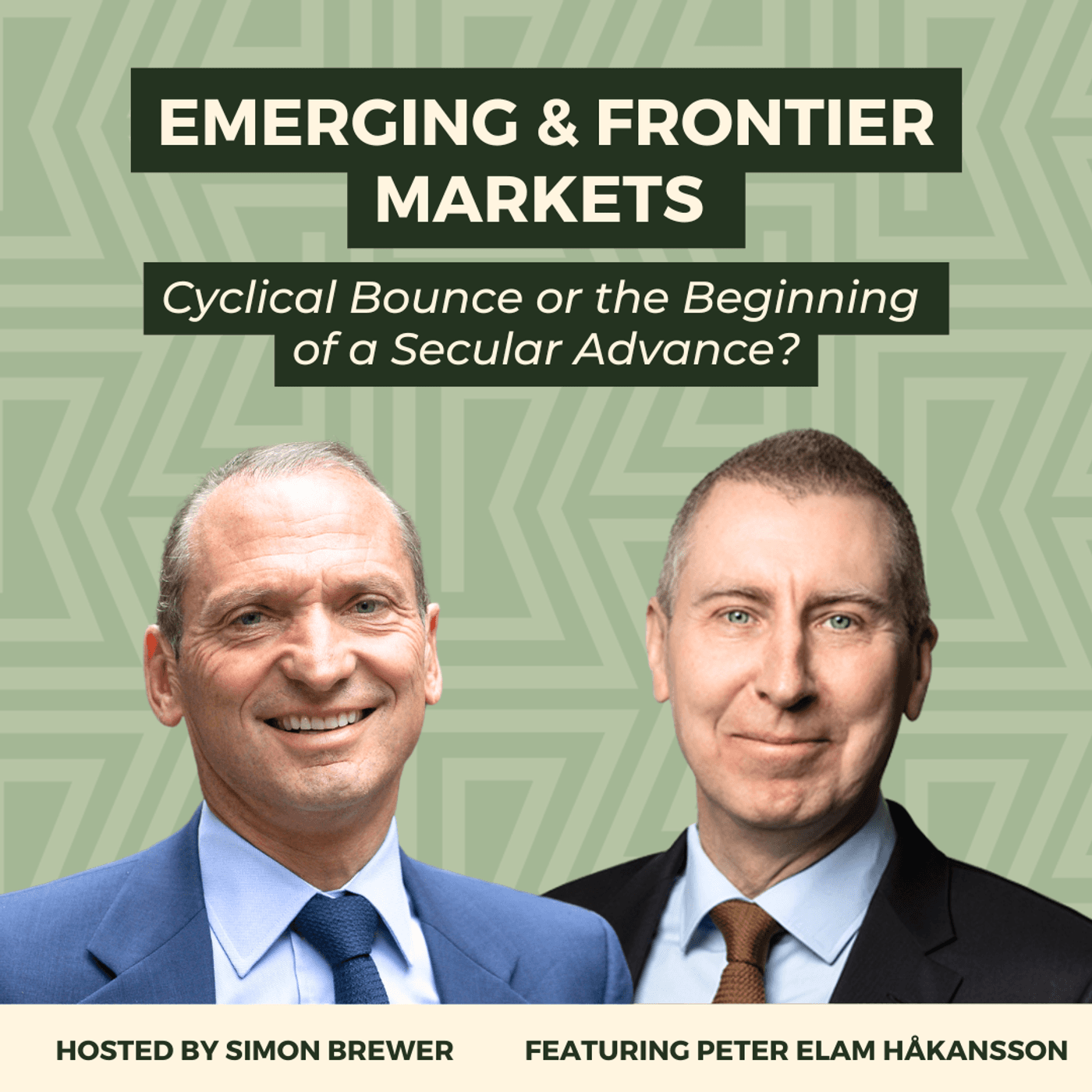
Money Maze Podcast Episode 192: Emerging and Frontier Markets
Episode Overview In this episode, host Simon Brewer interviews Peter Elam Håkansson, CEO and Founder of East Capital, discussing the current state and future opportunities in emerging and frontier markets. The episode delves into the cyclical behavior of these markets, potential shifts in capital allocation, and key investment philosophies.
Key Themes and Discussions
Emerging Markets Sentiment
- Historical Context: Emerging markets have been increasingly overlooked since the post-2008 financial crisis, exacerbated by the COVID-19 pandemic.
- Current Standing: By the end of 2024, emerging markets had reached a 50-year low compared to the S&P 500. However, recent capital inflows indicate a potential inflection point.
- Contrarian View: Håkansson suggests that current market conditions may present contrarian opportunities as the valuation elastic band stretches.
Importance of Asia
- Technological Hub: Peter emphasizes that significant technological advancements are currently centered in Asia, particularly in China, Korea, and Taiwan.
- Investment Opportunities: Sectors like renewable energy and semiconductor manufacturing present considerable growth potential, making them attractive for investors.
Frontier Markets
- Definition and Characteristics: Frontier markets are less developed than emerging markets and often exhibit weaker corporate governance and currency issues.
- Investment Philosophy: East Capital focuses on strong corporate governance and sustainable growth, particularly in countries with improving economic conditions.
Investment Strategies
- Focus on Company Fundamentals: Key factors considered include governance, ownership, and sustainable cash flow.
- Site Visits: Håkansson stresses the importance of visiting companies to gauge operational health, using past experiences to identify red flags (e.g., lack of heating indicating poor cash flow).
Currency Considerations
- Currency Exposure: Investment strategies must account for the impact of currency fluctuations, with preferences shifting depending on the strength or weakness of local currencies.
Opportunities in Eastern Europe
- Post-War Rebuild: The potential for investment in Ukraine's rebuilding process presents significant opportunities in real estate and infrastructure, especially as peace is anticipated.
- Regional Growth: Countries like Poland, Romania, and the Baltic states have shown robust GDP growth, suggesting a favorable investment climate.
Investor Base
- Diverse Investors: East Capital's investors include large pension funds and sovereign wealth funds, with a growing interest from retail investors.
- Focus on Institutional Clients: The firm has shifted predominantly towards institutional investors over the last two decades.
Lessons from Russia
- Caution Against Overexposure: Håkansson reflects on the lessons learned from their past significant exposure to Russia, emphasizing the need for diversification.
Key Takeaways
- Emerging and Frontier markets are at a potential turning point, and modest shifts in investor sentiment could lead to significant price movements.
- Innovation in Asia, particularly in technology and renewable energy, remains a critical focal point for investors.
- Understanding corporate governance is paramount in assessing investment opportunities, especially in less developed markets.
- Site visits and hands-on research remain indispensable tools for identifying investment potential and risk.
- The rebuilding of Ukraine offers a unique opportunity for long-term investors to capitalize on growth in Eastern Europe.
Conclusion This episode provides valuable insights into the current landscape of emerging and frontier markets, highlighting the importance of understanding market cycles, corporate governance, and the critical role of Asia in the global investment narrative. With the potential for recovery and growth, there are promising opportunities for investors willing to navigate the complexities of these markets.
Written by AI. May contain mistakes. Listen to the episode to check what was said.
Chapters
Tap a time to open that second in VOThe Importance of Emerging Markets
0:00 to 1:10
Explore why Asia, particularly China, is critical for future technology.
“If you really want to be part of new technology, you have to be in Asia.”
Emerging Markets: Shifting Perspectives
1:42 to 3:18
Discussion on the decline of emerging markets and potential recovery.
“Emerging markets, once the darling of the asset allocators world, have found themselves increasingly discarded by those same allocators.”
Historical Context and Future Potential
3:18 to 4:25
Understanding the historical significance and future potential of countries in the East.
“Peter Alam Hackensen, CEO of East Capital, Välkommen till London idag och det är fantastiskt att se dig har.”
Peter Håkansson's Early Experiences
4:25 to 6:00
Peter shares his first visit to an emerging market and family history.
“he left his wife and family back in Sweden to go to Finland and then continued to Estonia for the war of independence.”
Military Encounters and Their Impact
6:00 to 7:16
A brief on Peter's military experience and its historical context.
“Tallinn is the closest capital, closer than Helsinki, which is the second closest.”
Education and Career Beginnings
10:07 to 12:28
Insights into Peter's education and early career choices.
“I'm thrilled to share that the Money Maze podcast is sponsored by the World Gold Council.”
Transitioning to Portfolio Management
12:28 to 14:03
Peter discusses his shift from research to portfolio management.
“I studied in Ledeck and then I lived for four years as well in Paris, working at the stock exchange in Paris.”
Difficulties in Portfolio Management
14:03 to 14:58
Explore the challenges faced in portfolio management and trading.
“And I wonder what you found most difficult about that.”
Emerging Markets and Economic Trends
14:58 to 15:28
Discuss the historical relationship between the dollar, commodities, and emerging markets.
“We used to think, growing up, as I have done like youth in the industry, that emerging markets typically were the beneficiaries of a weaker dollar and higher commodity prices.”
Emerging Market Debt vs. Equity
15:28 to 16:44
Analyze the performance of emerging market debt compared to equity markets.
“I mean, we have seen it, for example, in the, I mean, we are doing bonds in our own home market.”
Show all 29 chapters
Founding East Capital
16:44 to 18:24
Learn about the founding story of East Capital and its motivation.
“few years has been the bonds for real estate companies.”
Current Structure and Strategy of East Capital
18:24 to 19:18
Overview of East Capital's current size, structure, and investment strategy.
“Just give us a recap of the firm today in terms of size, shape, footprint.”
Investment Philosophy and Practices
19:18 to 20:44
Discuss the investment philosophy focusing on sustainable growth and governance.
“And we also have real estate operations with offices in Tallinn, Riga and Vilnius.”
Importance of Company Visits
20:44 to 22:24
Examine the value of site visits and the insights they provide for investors.
“I think that still is so important just to go and see companies.”
Organizing Research at East Capital
22:24 to 23:39
Learn about the organization and approach to research analysis at East Capital.
“There is something that you are ready to observe.”
Investment Fundamentals and Market Trends
25:06 to 28:00
Discuss key investment fundamentals and market trends impacting performance.
“Remember, capital is at risk with investing.”
Understanding FX Effects on Emerging Markets
28:00 to 29:14
Learn how currency strength influences investment strategies in emerging markets.
“And then, of course, you have the FX effect when it comes to the emerging markets, that if it is a weak currency, you want to be more focused on an exporter.”
China's Evolving Investment Landscape
29:14 to 30:48
Explore the changing perceptions and valuations of Chinese companies among investors.
“And, of course, evaluation is much lower in TSMC than it is for NVIDIA, which is participating in the same growth pattern.”
Investment Lessons from Frontier Markets
30:48 to 32:10
Understand the unique challenges and lessons learned from investing in frontier markets.
“And as I looked at it, Vietnam, Egypt, Slovenia, Nigeria, the UK, and I thought, the UK, I know things are bad, but I didn't realise we're a frontier market.”
Navigating Currency Weakness in Investments
32:10 to 33:59
Discover how currency weaknesses affect investment decisions in various markets.
“I happen to be personally an investor in Krispy Kreme Nigeria, a private company.”
Investment Opportunities in Eastern Europe
33:59 to 36:15
Identify promising sectors and markets in Eastern Europe post-conflict.
“I cannot under-emphasize the importance of having the right owners, because that really signals everything.”
Emerging Market Fund vs. Frontier Market Fund
36:15 to 37:55
Learn about the differences in exposure and investment strategy between funds.
“Obviously, American footprint will probably be all over it in terms of some of the beneficiaries.”
Future of Emerging Markets: Growth and Decline
37:55 to 40:06
Explore which countries might evolve into developed markets or fall into decline.
“You have a bigger exposure in the Frontier Market Fund.”
Lessons from Russian Market Investments
40:06 to 42:00
Reflect on the lessons learned from investing in the volatile Russian market.
“And I think part of the difficulties when you're an investor is that these indices, they tend to change, and it can be very unpredictable.”
Navigating Challenges in Emerging Markets
42:00 to 42:36
Learn about the difficulties faced in emerging markets, particularly in Russia.
Personal Insights and Advice for Youth
42:36 to 43:56
Discover valuable advice for young people considering a career in finance.
“Now, I read that you are a music fanatic.”
Scary Experiences in Emerging Markets
43:56 to 45:02
Hear about the frightening experiences encountered during international business ventures.
“So I would just, if you're interested in what's happening in the world, if you're curious, this is the dream.”
Culinary Discoveries in Uzbekistan
45:02 to 45:56
Explore the delicious culinary heritage of Uzbekistan and its unique dishes.
“And finally, if you love your food, and we have colleague Celine in the room with the recording, and she's a serious foodie, maker, eater, consumer, etc.”
Reflections on Emerging Market Trends
45:56 to 46:59
Gain insights into the current state and future of emerging and frontier markets.
“It may not be quite so authentic, but that's great.”
Transcript
Automatic transcript. May contain errors.0:00If you really want to be part of new technology, you have to be in Asia. And most of the time you have to be in China. That's the harsh reality. And we saw it so much when it comes to wind and solar. It doesn't really pay to look anywhere else. And we see the same now with batteries. We see the same thing with chips manufacturing. Not maybe in China, but then it's rather Korea and Taiwan instead. So you have to, I mean, this is the part of the world where it's all happening. I think the average growth of GDP for the last 25 years in Poland is 3.8%. It's not China, but it's not far from China either.
0:39And that's here in Europe. It's 40 million people. For example, if you look at one of the new countries that we have been investing in for the last 10 years maybe, is Saudi Arabia, which was not in any indices when we started to invest in it. I think it is a fantastic business to be in. It's really, I mean, you are paid to be curious. So I would just, if you're interested in what's happening in the world, this is the dream.
1:09Peter Elam Håkansson:Welcome to the Money Maze podcast. If this is your first time joining, I'm your host, Simon Brewer. Quick word before we start. 95 % of viewers aren't subscribed. So miss out on future interviews with top business, finance and industry leaders. To support the show and ensure we can keep sharing high quality content, click subscribe and please drop a like. Plus, if you have any future guest ideas, do share your suggestions in the comment section below. Otherwise, thank you for watching and listening and enjoy the show. Emerging markets, once the darling of the asset allocators world, have found themselves increasingly discarded by those same allocators.
1:51Peter Elam Håkansson:Initially, post the great financial crisis and exacerbated by COVID. Such became the reallocation away and the magnetism of the US and its platform technology companies that by the end of 2024, emerging markets were at a 50-year low relative to the S &P 500. As always happens at such potential inflection points, tomes are written about the developments often justifying the current state of affairs, equally forgetting that mean reversion, the role of cycles, and that investment returns are a function of the price you pay, which means that when the elastic band of valuation is stretched excessively, even modestly contrarian bets can pay off handsomely.
2:34Peter Elam Håkansson:A few of these forces have triggered some incipient flows of capital by allocators away from the US this year, which in turn has moved the anti-emerging market trend a touch. Is this a flicker? Or are we at the foothills of a bigger reallocation and a recognition that with the US equity market at over 65 % of global stock markets, even modest shifts in allocations can have important effects on prices? As former guest Peter Frankopan reminded us, Over two-thirds of the world's population lives east of Istanbul. 75 % of the world's hydrocarbons, 85 % of the world's rice production, rare earths, both in availability and process, and much more also reside there.
3:18Peter Elam Håkansson:Therefore, it seemed appropriate to look at the opportunity set, and today we're going to do it through Scandinavian eyes and discuss the opportunity and playing field with a firm who have been investing there quietly since 1997. Peter Alam Hackensen, CEO of East Capital, Välkommen till London idag och det är fantastiskt att se dig har. Thank you. Well, I'm actually happy that you understood my attempt at Swedish. I did actually very well. Peter, how young were you when you first visited what might be termed an emerging market? I guess that must have been when I was in Russia the first time And that was in 1985, so I'm born 62, so 23 years old.
4:03Peter Elam Håkansson:Right. I went to a wedding of a good friend who married a Russian lady. And before we move away from that area, you'd had, and you'd written about it in an article that I enjoyed reading, this affiliation through your family with Estonia. Just give us a little sense of that history. Well, that's about 100 years ago. So my grandfather who came from southern Sweden, the part of Sweden called Skåne, from a city called Kristianstad, he left his wife and family back in Sweden to go to Finland and then continued to Estonia for the war of independence. That was basically the turmoil of the civil war in Russia after the revolution.
4:50and he basically felt it was, he wanted to help and he survived luckily. He was in some difficult situation in one occasion he was shot upon when he was standing on the armored gun train which he was responsible for and his binocular was hit. It fell into pieces but he survived and that was good for me otherwise I wouldn't have been here. and he came back to Sweden again and had more children. One of them was my father and then unfortunately he died when I was only one years old so I didn't really get to know him well but of course there were stories about what happened to him. There was his diplomas, his medals from both the Estonian and Finnish state and also his big saber.
5:39So it was a bit intriguing and interesting and one of these countries, Estonia, didn't exist when I was growing up which made it even more fascinating. So, of course, you want to understand how come someone wants to go there and risk their life and all that. And when I was growing up in Sweden, it was really as the, I mean, we are very close to Estonia, geographically. Tallinn is the closest capital, closer than Helsinki, which is the second closest.
6:06Peter Elam Håkansson:But it didn't exist, really, in the mindset of people. And we had this fantastic map, which I loved, which we had in our classrooms. It was one of these old-fashioned maps that you pull down from the sea. Maybe you had the same here in the UK. You had the four countries of the Nordics, Sweden, Finland, Denmark, and Norway. You always in the map have this thing which happened, the explanation of this is the road, this is the railway track. And that covered exactly the area where the Baltic states should have been. So it was kind of, SDR didn't exist. And that made me even more interested. I started to read a lot of history.
6:50And when you start to read about Eastern European history, you can't stop because it's so fascinating, I think.
6:57Peter Elam Håkansson:So before we leave the military history, I noted and your grandfather would probably have been very intrigued to see that you found yourself as part of the Swedish army surrounding that Russian submarine that emerged in your waters. Was that just a different day at the office? That was a fascinating day in the office. And it was the 29th of October 1981. That's another date, which I remember. And we were basically doing our military service. I was in the Marines. We were in the biggest naval base of Sweden, which is in Karlskrona. And we heard about this submarine that has stranded further out.
7:39And we got, wow, fantastic. A big submarine from Soviet here. maybe they will let us see it. We were a bit naive, so rather a couple of hours later, we were woken up in the middle of the night and asked to bring our weapons, write contact details for our sort of closest if something should happen to us. And we were basically taken out in trucks. And this was dark. This time of the year, basically now, it's very dark in Sweden. And it was snowing, this wet snow, so it was not the nicest time of the year. And we came there and went to the small island and we saw this huge submarine. It's a massive submarine, and what we didn't know then, but we know now that it was also armed with nuclear weapons.
8:30So you have to be pretty big as a submarine to carry that one, those as well. So we were basically there. The Russians did a rescue attempt. The second night we were there, and it was pretty scary, actually. We were in the front line, and we got these updates every 20 minutes. Now this rescue fleet of three ships are so far away from you, and they will basically hit you in X amount of minutes. And luckily, when they were just about to cross the Swedish territorial water, which was very close to where we were, the Swedish artillery had basically this kind of radar screen that locked. Instead of surveying, they were actually locked on the target, and that can be sensed by the boats.
9:23So they stopped. But during one time of the evening, there was reports that Spästnäs had been seen on our neighboring island. And of course, I mean, when you are there, we were 10 guys, basically. And we had, it was dark. We were manning a big torchlight. There was a diesel aggregator. And it was very noisy. And we understood that the first thing they would take out if they would come for a rescue attempt is basically this torchlight. And we are there. So we knew that we were going to be the first.
9:58Peter Elam Håkansson:Oh, my gosh. It's like Tom Clancy's hunt for Red October. Yes. So before we continue this conversation, we're going to take a short break to have a note from our sponsors. I'm thrilled to share that the Money Maze podcast is sponsored by the World Gold Council. They champion the role gold plays as a strategic asset through expert research, commentary and insights. And it's not just your portfolio that may benefit from gold. Learn how gold mining is supporting female economic empowerment and small businesses via their new documentary series called gold, the journey continues. Tap the link in the show notes to start watching.
10:33Peter Elam Håkansson:IFM Investors is a global asset manager, founded and owned by pension funds with capabilities in infrastructure, equity and debt, private equity, private credit and listed equities. They believe healthy returns depend on healthy economic, environmental and social systems. And these are evolving on a scale never experienced before. To find opportunity, build value and meet the needs of future generations. You need scale, skill and expertise. That's what IFM Investors has built up over 30 years. Well, we'll come back to some of those countries and investments later on. You study at the Stockholm School of Economics and EDEC.
11:13Peter Elam Håkansson:I wonder what each of those institutions gave you? Well, that's a good question. I think when it comes to Stockholm School of Economics, that's the only private university in Sweden. It basically was set up by the Wallenberg family in 1909 to provide management for the Swedish industry. So it's a small school. I think it was only 275 people being admitted every year by that time. So it was kind of, it was tough to get in, but it was a lot of fun ones you were in. And it was also a mix of people from all parts of mostly Sweden in those days. And it gave me my wife. We met the first year in the school.
11:55So it was a really, really good school from many points of view, from my point.
12:00Peter Elam Håkansson:You've explained about Stockholm School of Economics, but what did EDEC arm you with? Well, I really wanted to learn another language. I wanted to learn about another culture. And by that time, France was an obvious choice. And it was also, I started to look at the stock markets. And it was a market which I wanted to learn more about. They had just launched the second marché in France as well, which was interesting. So, yeah, I thought it was an interesting place to be in. And I lived for four years. I studied in Ledeck and then I lived for four years as well in Paris, working at the stock exchange in Paris.
12:37Peter Elam Håkansson:Well, Swedes consistently rank among the top in Europe for international travel per capita. And as potent entrepreneurial forces who produce those enduring brands, IKEA, Spotify, H &M, Electrolux, not forgetting ABBA but you select finance a relatively small area what drew you for your career into finance? I started to read these business magazines that my father brought every every summer for the he brought a lot of magazines business magazine to our summer house that he wanted to read up on and I started to look in them and I was very much intrigued by the breadth of the Swedish industry and that it was so international and I was fascinated and I kind of thought maybe one should start to try and invest my own money a bit and I started.
13:29And it went very well. So from the age of 16, I've really been following the markets on a daily basis and I actually took my license to become a stockbroker even before I went to Stockholms economics. I was one of the youngest ever stockbrokers in Sweden.
13:46Peter Elam Håkansson:Okay. Well, I noted that your career involved a large stint at SEB. We all knew that sort of as one of the very respected research firms. And you spent, I think, nine years there and ended up as global head of research. But the transition from research to portfolio management isn't always easy. And I wonder what you found most difficult about that. Well, we can start in a way that when I started my career, I was actually a salesman. And then I went into research. And I think what I really, why I wanted to go into portfolio management was that if you're doing classic brokerage, I mean, you live on commission and you want basically people to trade.
14:27And I really felt that I was much more long term rather than short term in my way of thinking. So I really almost felt bad when I had to get people to trade, although I was pretty good at it. But I really thought that it's much better to find the right investment theme and stick with your holdings. And actually, if you write in your conviction, I mean, why trade away from it?
14:54Peter Elam Håkansson:Salesman with a conscience that is sometimes infrequent. We used to think, and I want to talk about emerging markets now as we get into the meat of your business. We used to think, growing up, as I have done like youth in the industry, that emerging markets typically were the beneficiaries of a weaker dollar and higher commodity prices. They went hand in hand. And we might be seeing the beginning of both of those trends, which could be multi-year trends. But is that still a relevant way of looking at emerging markets except in Latin America? well i think the reason why dollar was so important for the emerging markets was that they were all borrowing so much money and the and the kind of currency to borrow in was in dollars and as emerging markets overall are much less indebted now than they used to be i think it's less relevant now than it used to be overall which is going to leave me a question i was going to ask you later but it's it's appropriate right now is that although you are an equity firm the amazing performance of emerging market debt generally as measured by EMBI and some of these other indices has pointed to a theme that many have suggested could happen which is that actually emerging market debt behaves better than developed market debt because there's been this process of rehabilitating country balances etc do you think that the debt markets might be ahead of the equity markets i think that's quite often the case that the bond market is ahead of the equity markets i I wouldn't be surprised if it's the same thing here as well.
16:25I mean, we have seen it, for example, in the, I mean, we are doing bonds in our own home market. So we have a Nordic corporate bond fund, which is actually our largest fund nowadays. It's had a huge success, especially with the investors from continental Europe. And I think one of the things that have contributed to the very strong performance over the last few years has been the bonds for real estate companies. And if you look at the performance of the real estate company's shares, it has not been good. But looking at it objectively, definitely I think the bond market is making the right move there.
17:04So I think we will see the shares follow.
17:07Peter Elam Håkansson:You found the business in 1997. Why? I was convinced that the fall of the Berlin Wall had created the opportunity of lifetime in investments. After the fall of the Berlin Wall, that happened when I was living in London and then I later moved to Paris during this time. I started quite on a regular basis to travel to Eastern Europe as I was interested in history to see how it really looked before things were going to change. And I saw this huge potential. And as I was interested in history, I also knew that the time which I had been growing up in, which is basically during the Cold War and the Iron Curtain, was not the normal stage of Europe.
17:51That Europe had been much more, I would say, common rather than different in history. So I kind of was convinced that this must be an opportunity. So when privatization started in 1994 in most parts of Eastern Europe, we took part of it when I was part of SCBNS Gilda. And I really wanted to do more. But I also saw that this was not the right timing for my employer. And I really said, I will regret this the rest of my life. I cannot see my grandchildren in their eyes when they will ask me, Grandpa, you saw all this. You were there. Why didn't you take the opportunity? So I thought I better do it myself.
18:35Peter Elam Håkansson:Well done you, many don't. Just give us a recap of the firm today in terms of size, shape, footprint. We have about€4 billion under management. We are basically divide an equal part between emerging equities, real estate, which is really in Eastern Europe, and developed markets and inequities and bonds. And it's 18 funds. and we are about 80 people. We have our head office in Stockholm. We have our fund management company in Luxembourg and where we are registered. And then we have research in Hong Kong, Mumbai and Dubai. And we also have real estate operations with offices in Tallinn, Riga and Vilnius.
19:25Peter Elam Håkansson:Okay, so let's talk about the investment philosophy As I read through your materials, I quote, we favor investments in companies that show long-term sustainable growth and have responsible owners. Most fund managers would say that that's an aspiration as well. I guess, what do you think that you do specifically or at least very well that distinguishes you in this space? I think what we have been trying to find, I mean, we've always been looking for growth. I think that's kind of in our DNA that we want to find companies. We are stock pickers, and we want to find companies that show growth. So we tried to pick areas which we think are interesting, and then we tried to find the best companies in those areas.
20:06And when it comes to responsible owners, which I think was mentioned, that was a very early lesson from our days in Eastern Europe, when it was very difficult to understand who were the owners, and we understood that this was key. And I mean, I still think that it's so important to understand the owners of a company, no matter where they are, because it's the owner who set the tone for the governance in the company. If there's not the right governance, shareholders will not have a part of the wealth creation of the company anyhow. So you need to know the owners.
20:38Peter Elam Håkansson:And we're going to talk about this research process. But one of the articles that I've been through in researching you was that you said when in the early days you went to visit companies in Russia, a telltale sign of bad cash flows or absent cash flows was going in winter when the rooms were really really cold i.e there was no heating and it reminded me we'd interviewed carson block the famous short seller and he said he went to see a paper company in china but there was moisture everywhere and the consultant he'd taken with them said they're not making much paper with this level of moisture in it so what have you learned about those um road trip site visits that have become baked into your DNA?
21:20I think that still is so important just to go and see companies. I have done thousands of company visits and I really think it's amazing this gut feeling you have when you enter into the reception of a company. I get a feeling for how it's run. It's kind of... And of course you want to go and see and speak to people. You want to see the production facilities but it tells you a lot. And now it's been fantastic times. And you mentioned about this in the wintertime, and maybe I should add as well, because one of the reasons why it was so difficult to analyze companies in that time, it was barter trades.
22:01So it meant that even all the companies were producing annual reports, but it didn't really mean anything. So this was the best research criteria. I mean, it never failed. If it was cold, it was a sell. If it was warm, it was a buy, to put it very short. I mean, we have refined the research methods over the years, but that was the earliest start.
22:23Peter Elam Håkansson:But let me just stay with that idea that the site visits are so important. There is something that you are ready to observe. If you were taking a young portfolio manager or analyst with you, what would you advise him or her to develop as a skill that helps you sense something that isn't in the numbers? I mean, it's all things about how things are organized in an office. and just to see how you're welcomed, what type of atmosphere you have. There's always this type of atmosphere in the company, how you're welcomed, how people speak to each other and all these kind of small, which are very important things but that you cannot see in the numbers.
23:05Peter Elam Håkansson:And the approach to research varies by institution. Some want boots on the ground and people in all those places. You mentioned the centres that you have, but how do you organise, having been head of research at an institution before, you know, East Capital. How do you organize your research analysts? Are they sectorally focused? Are they multidisciplined? They are multidisciplined, and they are them following different markets, really. And, I mean, for example, we are, I mean, in our emerging markets space, Asia is the most important part of the world by far, and five of the eight people who work with our emerging market fund, our global emerging market fund, are based in Asia.
23:42So they are pretty close to where the action is, basically.
24:12Peter Elam Håkansson:and opportunity. Tap the link in the show notes to learn more. Schroeder's Capital is the private markets division of Schroeder's, combining the experience of specialized local teams with the scale, rigor, and resources of a global institutional platform. Schroeder's Capital provide its clients with global access to differentiated and specialized strategies encompassing all private markets asset classes, from private equity to real estate, infrastructure, and the broad universe of private debt and credit alternatives. This approach enables Schroder's Capital to access opportunities and investments that are often difficult to find elsewhere, while also having the broad capabilities and perspectives needed to build holistic solutions and deliver tailored outcomes across private markets for both institutional and wealth clients.
25:03Peter Elam Håkansson:Discover more at schroderscapital.com. Remember, capital is at risk with investing. And again, going back to your philosophy, you write, we focus on companies with strong, predictable cash flows. And you say, at the end of this piece, fundamentals matter over time. And I wonder which for you fundamentals matter most. I think what we try to assess is to find really good quality companies that have this ability to show sustainable growth over time and also have a good corporate governance. So we have kind of this kind of quality measurement model that we look after. So that's the long term. But of course, in the short term, if you have these type of companies, it's the valuation which really matters mostly.
Read the full transcript
25:49So it's a combination of the short term effect and the longer term perspective.
25:53Peter Elam Håkansson:And are there industries that you would naturally feel more comfortable? I'm saying consumer discretionary versus finance. is that sort of, you know, because when I look at the portfolio, what I see is that the country deviations are generally modest, but the stock deviations versus their bets are much more pronounced. Is that fair? Absolutely. We are stock pickers. Right. By nature. And that's really where we can add value. And I think that's where we are adding value and why we are still relevant after 30 years. Well, I've seen your performance and it's, you know, it's very impressive. But Just take me through the idea building process, because there aren't that many companies, you know, that are big enough and liquid enough and appealing enough.
26:36Peter Elam Håkansson:And some you will presumably have owned before. But when you find a new idea that isn't in the portfolio and you think about sizing, just talk me through, you know, the approach that you might typically take. I mean, as you rightly point out, we want to make sure that we don't deviate too much when it comes to the country level and on the global emerging market fund, which is the flagship fund, really. and then we really want to understand if it is a company which I mean if you have a company in that sort of country and you want it to really make an effect in the performance you want it to be larger than the index weight to start with so you have to be index aware so that's a good starting point as well but of course you want to make sure that you find interesting companies and how do we find them?
27:36Well, we have screening processes and then we have to try and meet them one way or another and we have to do our own research and see that we actually can... Is our predictions different from the market? Because we understand also if it will not react, if it's not kind of something that is very much in line with the market, we have to find something which is different to make sure we create some alpha. And then, of course, you have the FX effect when it comes to the emerging markets, that if it is a weak currency, you want to be more focused on an exporter. If it's a strong currency, it's the other way around.
28:17Peter Elam Håkansson:So there are two parts I'm intrigued about to the Asian question. China obviously dominates the indices, and there's been a risk aversion practiced by many large American investors. Do you sense that the flows are changing, number one? And number two, what would you say is the mood on the ground when you're in Asia of those companies? I would say that we have seen, basically for the last year, we have seen a marked change in the view of China. I know there's quite a few people who will not touch China ever for different reasons. But I think there's a lot of people who have been hesitating a bit about China.
28:57And when you start to see the performance and you start to see that actually tech is important for everything in the world. And if you really want to be part of what's happening technology-wise, we all know that NVIDIA is fantastic. But where do they produce the chips? It's TSMC in Taiwan. And you can give so many examples. And, of course, evaluation is much lower in TSMC than it is for NVIDIA, which is participating in the same growth pattern. And you can see the same thing if you look on EVs where you have Tesla and then you have the BYD valuation, which is a fraction of Tesla. Of course, there's different parts of Tesla which can be attributed with different values, this robotization and other things.
29:44But I just think that when people started to look at China again about one year ago and see, wow, there's so many things happening here. And the valuation is just super cheap compared to everything else. It really meant that people revisited the topic and we have seen quite nice flows into the markets again.
30:02Peter Elam Håkansson:And Chris Wood from Greed and Fear, who we're going to come back, has a question for you later on. He's been commenting on these developing markets forever. His observation is that when we looked at DeepSeek, it's symptomatic of the fact that Chinese technology and AI is absolutely going to be there. and it's going to be there just as much as the US. And perhaps there is a Western, perhaps particularly an American propensity to underestimate just how permanent, present, powerful those Chinese enterprises are. Absolutely. Deep Seek was really the trigger for it all. And that started people to revisit.
30:39And then when Alibaba started to be seen as more relevant again with Jack Ma coming back, I mean, we have seen so much interest in China since then.
30:47Peter Elam Håkansson:So whilst your emerging market business is very important and larger, you have a frontier markets business. And as I looked at it, Vietnam, Egypt, Slovenia, Nigeria, the UK, and I thought, the UK, I know things are bad, but I didn't realise we're a frontier market. But I see the 4 % or 5 % obviously relates to a frontier market listed company listed in the UK. But... I think it's the Georgian fraction. Okay. Thank you. Have you learned different lessons in the frontier markets about the investment process? Well, the frontier markets are by nature less developed. The definition of emerging frontier markets by MSCI, which we normally are following, is really the state of development of the capital markets.
31:39So it really means that you have less sophisticated markets to work in. You have problems sometimes with currency control and to be able to withdraw your currency. And you also have the problems with less developed corporate governance. So you have to be a bit more careful. You have to be maybe even more on the ground and closer to the companies. But it's good. It's perfect for us because that's what we've been doing the whole of our life. So we think we can add even better value in these markets.
32:09Peter Elam Håkansson:Well, you answered a question I had in part earlier on, and that's back to currency. I happen to be personally an investor in Krispy Kreme Nigeria, a private company. That sounds fascinating. And they're in the pizza and the ice cream business. And I look at the reports and top line, the business goes very well. When you adjust it for the Nigerian, I think it's the Nairu, the FX losses manned. And it looks like a significantly less clever investment by me. You've hinted at it, but particularly as we go into the frontier markets, how do you think about what is a propensity for those countries to have inherently weak currencies?
32:46Yeah, it is very, very important. And it really means everything in the end, basically, how that also plays out. And you cannot really hedge those currencies as well because you pay too much for the hedge. So the only way to actually handle it is what I talked about before a bit, that you actually position yourself depending on the currency in either exporters or domestic exposure. That's the only way to play it if you really want to make sure that you handle the effects.
33:15Peter Elam Håkansson:And the great investors, of course, have learned from their battle scars. We interviewed, and it's now going back probably four years, Mark Mobius, who for a long time was deemed to be the great Templeton emerging market investor. And he said that one of the things that always unnerved him was cross-shareholdings of companies in developing markets where one principal might have a stake in various other businesses. What lessons have you learnt along the way that have become quite an important part of your process? You mean in frontier markets? All markets, actually. I think the number one lesson for us has really been the importance of the shareholders, the other owners.
33:55Because if you really understand the... I cannot under-emphasize the importance of having the right owners, because that really signals everything. And, I mean, if you look at, for example, if you look on ESG investing, which has been a very important topic for many, many years, if the G is not working, don't care about the EUVS, because it will never be implemented. And it's the same thing also for the valuation. And if you want to see a company being valued properly, you have to have proper G because otherwise the shareholders cannot take part of it.
34:30Peter Elam Håkansson:And when you sit around with your team and they've been on their research visits and you're listening and talking about the portfolio, where would you say, either at a country or an industry level, across those emerging and frontier markets, where are they most obviously excited about the investment opportunities? I think it's really two areas which are really on top of mind at the moment. One is the obvious one, which we have touched upon in Asia, where you see all this new technology coming on stream. And if you really want to be part of new technology, you have to be in Asia. And most of the time you have to be in China.
35:10That's the harsh reality. And we saw it so much when it comes to wind and solar. I mean, it doesn't really pay to look anywhere else. And we see the same now with batteries. We see the same thing with chips manufacturing, not maybe in China, but then it's rather Korea and Taiwan instead. So you have to, I mean, this is the part of the world where it's all happening. The other area, which I think is also interesting, is where we think is also interesting, is closer to us. That's Eastern Europe, where we see there will be peace sooner or later. All wars end with peace. It might not be a good peace, but there will be peace sooner or later, and there will be build-up.
35:53And that will definitely benefit a big part of the Eastern and Central European markets. On top of that, they're already now doing quite well. I mean, we see that Poland, for example, have, I think the average growth of GDP for the last 25 years in Poland is 3.8%. Yes, yes. It's not China, but it's not far from China either. and that's here in Europe is 40 million people and we can give more and more examples I mean the Baltics have done extremely well as well not so better so good as Poland but you also have Romania has been from a tournament
36:31Peter Elam Håkansson:tremendously as well so well well you preempted again you're very good at this one of the questions I was going to ask which was Ukraine there will be a rebuild at some point in time under terms unknowable right now. Obviously, American footprint will probably be all over it in terms of some of the beneficiaries. But just give us a sense of, you know, where those growth, where the investment opportunities are most likely to lie. I mean, the most obvious is, of course, everything which has to do with the rebuild, all the real estate and that's factories and everything which has been ruined that needs to be built up again.
37:11But apart from that, I really think one area which is interesting, which we started to see some interest in even before the war, it was actually nearshoring, because you have really a good and well-educated workforce in Ukraine. So I think it would be logical to see, especially in Western Ukraine, a buildup of the kind of industries that moved from Germany to Poland to Slovakia to Hungary, that they move even further east. Right. I think that would be very natural.
37:41Peter Elam Håkansson:We're going to talk about your investors in a minute, but if you are a prospective investor and you're looking at that territory and thinking, well, I don't have very much there, does that play to your emerging market fund more than to your frontier fund? You have a bigger exposure in the Frontier Market Fund. We also have a sort of dedicated fund, which is called New Europe, which only does this part of the world, actually. So for those who really want to have a true exposure, that's another alternative. And it's been, I think, the fastest growing fund this year, actually. Because if you look at the performance this year of markets, South Korea has been tremendous.
38:20But apart from that, in Europe, you have seen both Greece and Poland done extremely well.
38:26Peter Elam Håkansson:And when we think about your investors, are they typically drawn from the institutional community, A, and B, geographically, very concentrated near to home? No, it's been very international, actually. When we started, it was very much the retail investors that saw the opportunities. But I would say for the last almost 20 years, even longer, it has been institutional predominantly. and it's been very much either big pension funds in continental Europe or sovereign wealth funds globally. And then there's been more mandates that we have run on those guys. So it has been very much concentrated on those.
39:10We have seen a pickup of interest from retail investors more recently but it's still a very small part of the business.
39:17Peter Elam Håkansson:So we now have this section already, as we call it, the Outsiders' Inquiry and I had two great thinkers who offered questions. One is Peter Frankopan, who's head of global history at Oxford and the author of The Great The Silk Roads. And he said, which country or countries won't be in the giant emerging market bucket in 10 years because they've grown up and out? I think the most logical ones would be the Asian countries that should, I would say, develop into developed markets. and I think that would be South Korea and Taiwan. Those are the most likely contenders. And if you look to Europe, I think it would be Poland, Czechia.
40:00Peter Elam Håkansson:And of course, now I'm thinking about that. Are there any candidates who might fall out of the bottom and go down into the frontier cohort? Well, that's a good question. And because you never know. And I think part of the difficulties when you're an investor is that these indices, they tend to change, and it can be very unpredictable. For example, if you look at one of the interesting new countries that we have been investing in for the last 10 years, maybe, is Saudi Arabia, which was not in any indices when we started to invest in it. And it didn't go the way through the frontier market. It went directly into emerging markets.
40:42And all of a sudden, you have these big shifts. And also in frontier markets, you have Vietnam, should move up into emerging market would mean a lot of difficulties for the frontier market indices. Who would fall out? Of course, Russia has already fallen out, which would be the number one, I guess. I think if you have some of the liquidity drying up in some of the smaller European markets, they could come down from emerging to frontier. but like Hungary for example that has had its troubles as well with the currency and the high interest rates.
41:22Peter Elam Håkansson:Well I mentioned Chris Wood earlier on author of Green and Fear and his question was you had in your early days East Capital been very associated with its very successful Russian investments we all know what happened in Russia what have you learned from that whole Russian saga? that you should never be too exposed to one country i guess no i think we have learned a lot i mean russia has been a fascinating place to be investing in it has been difficult but on the other end that's been our job and it was of course very sad when you started to see the development of of the things that started to happen and we saw the first signs of course like most other people in 2014 with Crimea and ever since 2014 we have very deliberately tried to lessen our exposure to Russia as a firm but of course it was still a big exposure in 2022 when things started to go very bad and it was tough for the company but we managed to survive that and I think have built an even better company after that.
42:32So I'm going to ask you some general, closing, unrelated questions,
42:37Peter Elam Håkansson:possibly the harder questions. Now, I read that you are a music fanatic. You love your music. If you could have dinner with one musician who's alive anywhere in the world, who would you have dinner with? I mean, if I look at my record collection, I think I have the most records with people. It's very British, by the way. David Bowie, Steve Harley. and Ray Davis, and also Big Country. And since the three of them are dead, the other one is alive. So I think it would be Ray Davis from the kids. Okay. I'm not sure I can help you there, although my wife just on her podcast interviewed the head of Warner Brothers Music, so I might have to ask her.
43:20That would be fantastic.
43:21Peter Elam Håkansson:The second thing is advice for youth. It's always important on our show. We sponsor and we do a lot of work with young people. What advice would you give a young person thinking about our business? I think it is a fantastic business to be in. It's really, I mean, you are paid to be curious. And you're paid to ask questions. And you can ask stupid questions. It doesn't really matter. And you meet the most fascinating people in the world, all these entrepreneurs in all different countries and sectors. I think it's a dream job. So I would just, if you're interested in what's happening in the world, if you're curious, this is the dream.
44:07Peter Elam Håkansson:Now, on your travels, and you have been to a lot of emerging frontier developing countries, have you had a particularly frightening or scary experience? Yeah, definitely. We have had quite a few meetings where we realized after a while that maybe we should pack up our stuff and be leaving and not ask more questions. And that was, of course, in the early days in Russia. It was a time when most companies were not listed. There had been privatizations. And you realize that someone was trying to basically buy up all the shares from the workers cheaply. And of course, if you come in as an international investor and also try to compete for those shares, it wasn't very popular.
44:58So sometimes we just realized it was time to leave.
45:02Peter Elam Håkansson:And finally, if you love your food, and we have colleague Celine in the room with the recording, and she's a serious foodie, maker, eater, consumer, etc. Where would we be most surprised by the delicious food we might eat? Uzbekistan, I guess. Uzbekistan, and what might it be that you eat in Uzbekistan? You eat plof. Sorry? Plof, which is basically pilaf. Okay. So they call it plof, and it's fantastic. And I mean, when you're traveling around in the old countries of Soviet Union, I think there are two countries that really stand out for the food, and that's Uzbekistan and Georgia. But Georgia, I guess, is more famous these days, and people have discovered it, and they know all about the wines.
45:46But I still think Uzbekistan is about to be discovered. Maybe have some good restaurants here in Uzbekistan and London. I mean, you have everything in London, I guess.
45:55Peter Elam Håkansson:Well, thank you. It may not be quite so authentic, but that's great. So I'm just going to wrap up. Peter, it's been great to have you here in the office. It's been great to understand your space. I have been in this business for a long time. There was a period when I was at Morgan Stanley when emerging markets for a number of years were the only thing anybody wanted to talk about. And we are absolutely at the other end of that spectrum. And I am instinctively a contrarian investor. So I'm intrigued by this opportunity. It's been great to learn a little bit about these frontier markets as well, some of which one might not even think of as a frontier market, which, as we know, is part of the classification problem, which, you know, our industry loves to box things and therefore it labels things.
46:33Peter Elam Håkansson:And then it works until it doesn't work. And some go up and some go down. But it does strike me that there is reason to be much more constructive about what's happening. And if we go all the way back to the earlier discussion on these emerging market debt indices, and they reflect a healing and a lower risk and maybe some recovery from the punishment that they felt. I remember back to 1998 when the Indonesian rupee fell 75 % and all those Asian currencies who had borrowed in dollars paid huge prices. But, you know, we're in a new cycle right now. So good luck with your mission. It's been terrific to have you here.
47:14Thanks a lot for having me.
From the publisher
Emerging Markets, once the darling of the asset allocators world, have found themselves increasingly discarded by those same allocators.
Such became the re-allocation away from them and the magnetism of the US & its technology companies, that as recently as the end of 2024, Emerging Markets were at a 50 year low, relative to the S&P 500.
With some improved relative performance, it may be asked if this is a flicker, or are we at the foothills of a bigger reallocation? East Capital’s CEO, Peter Håkansson, discusses the opportunities, the lessons drawn from researching them for 3 decades, and what the drop in EM Government bond yields might be signalling.
He explains why no central heating might indicate corporate failure ahead, which fundamentals matter, and why they prefer to take their bets in company position sizing, rather than in the country weights.
He also discusses Frontier markets, the impact of foreign exchange and as a music lover he is, “reasons to be cheerful!” (Ian Dury & the Blockheads)
The Money Maze Podcast is kindly sponsored by Schroders, IFM Investors, World Gold Council and LSEG.
Sign up to our Newsletter | Follow us on LinkedIn | Watch on YouTube