
- Podcasts
- Money Rehab with Nicole Lapin
- Ray Dalio Says the U.S. Is at Risk of an Economic Heart Attack
Money Rehab with Nicole Lapin9 Nov 2026 · 40m
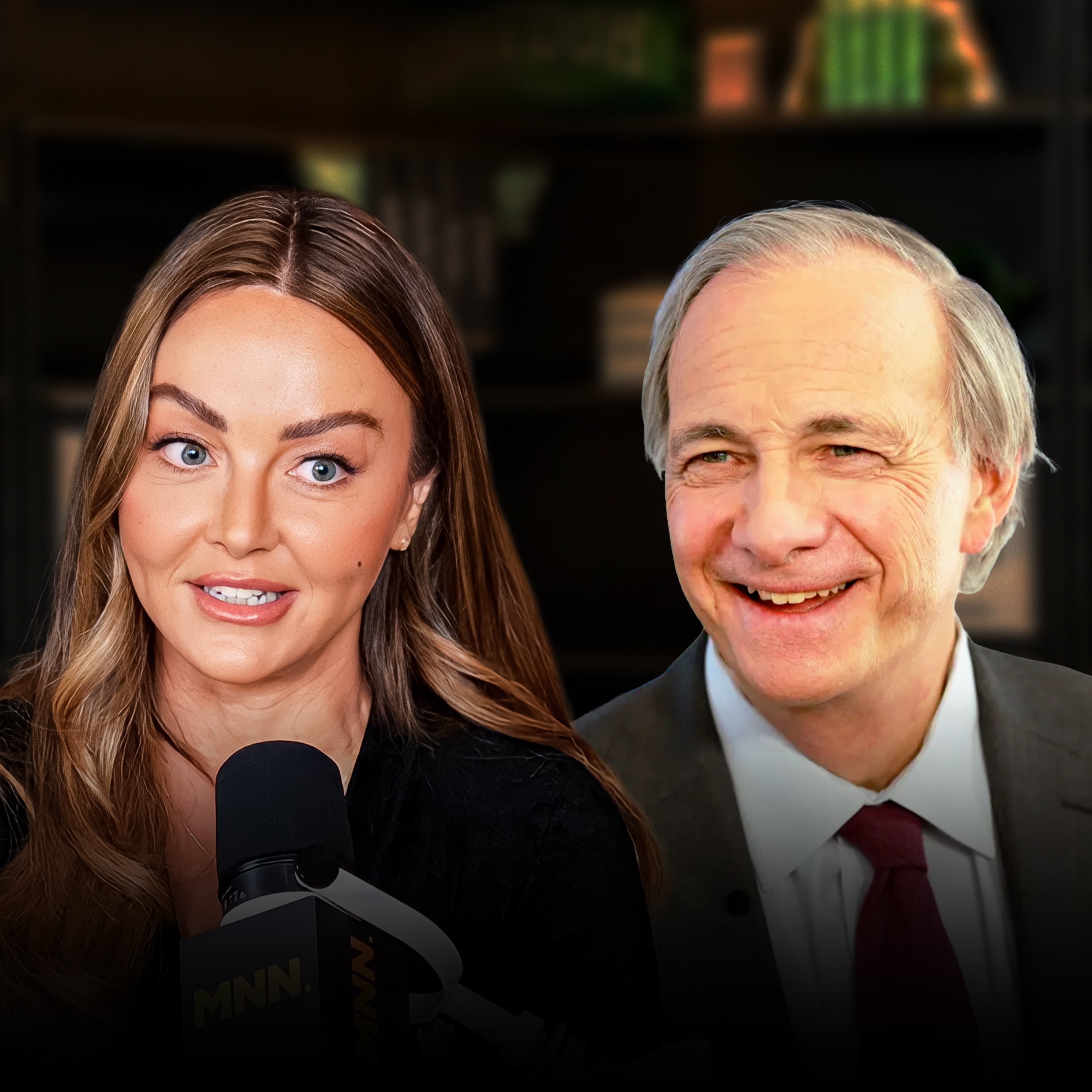
Ray Dalio Says the U.S. Is at Risk of an Economic Heart Attack

 Add vo to ChatGPT or Claude to ask about everything you hear
vo listened to this episode to put together the overview and transcript, so there may be the odd mistake.
In short
Ray Dalio argues the U.S. faces an “economic heart attack” driven by excessive debt and a rising budget deficit. He claims that if the deficit isn’t cut to about 3% of GDP (currently ~6.5%), the U.S. could face a depression-like scenario via debt sales shortages: either higher interest rates reduce demand or the Fed prints money, causing inflation and reduced buying power.
Guest backgrounds
Ray Dalio is the founder of Bridgewater Associates, built it into the largest hedge fund, and has decades of global macro investing experience. He also discusses personal financial hardship after a mistaken 1982 view on foreign debt, including borrowing $4,000 from his father.
Key claims
Debt mechanics apply to governments and individuals; printing money doesn’t create wealth; diversification and humility (“10–15 uncorrelated investments”) protect against risk.
Notable examples
Mexico’s 1982 debt default; Bridgewater’s “radical transparency”; gold as a diversifier (10–15% allocation); crypto as less suitable than gold.
Transcript
0:00Nicole Lapin: Raise your hand if you've ever spent 20 minutes hunting for a doc you know exists, but you can't find anywhere. Not in Slack, not in your drive, not in an email thread from last March. Yeah, me too. And here's the thing. If the people on your team can't find it, your AI definitely can't. That's where Glean comes in. Glean is the context platform for enterprise AI. Because AI needs more than a smart model to do useful work. It needs context about your business. Glean connects your company's knowledge, people, decisions, and workflows across all your systems. And your company's knowledge isn't locked into any one AI provider.
0:39Nicole Lapin: Glean gives you access to more than 40 open and frontier models and routes each task based on performance and cost. So when a better model comes out, you can actually use it without being stuck with just one. Compared to Claude Cowork, Glean brings the cost of each AI task down by 75%. Don't just take my word for it. Duolingo is getting back more than a million dollars a year in employee time using Glean. And Super.com says it's earning 17 times what it invested. A friend of mine uses it and they love it. It's changing the way their company uses AI. Glean, the context platform for enterprise AI.
1:15Nicole Lapin: Visit Glean.com slash money rehab to unlock an exclusive offer just for listeners of Money Rehab. That's G-L-E-A-N dot com slash money rehab. Terms and conditions apply. When you're the money friend, you get all the questions. One of my friends finally landed a big raise and three months later, she sat on my couch and said, Nicole, I make more than ever, so why do I still feel poor? I've heard that question a million times. So we pulled up her accounts together and this wasn't one big thing. It was a bunch of little leaks, subscriptions, monthly fees, a minimum balance that she kept dipping under.
1:55Nicole Lapin: My advice was to plug the leaks first, then build. And step one was her bank. That's where Chime comes in. Chime is changing the way people bank. They're not like traditional old banks who charge fees and gatekeep perks and rewards. Chime offers the most rewarding, fee-free banking, all with no overdraft fees, no monthly fees, no minimum balance fees. You get 5 % cash back on Chime card in a category of your choice, like gas or groceries, all while building credit through regular, everyday spending with no credit check. And if you're ever in a pinch, SpotMe lets you overdraft up to$200 fee-free.
2:32Nicole Lapin: Join the millions who are already banking fee-free with America's number one choice for banking. Head to chime.com slash MNN. That is chime.com slash MNN. Sign up now. It only takes a few minutes. Chime is a fintech, not a bank. Banking services and Chime card provided by Chime's bank partners. Qualifying direct deposits required. Terms and limits apply. Go to chime.com slash disclosures for detail. If you're a small business, the right hire can be make or break. Hoping the right people see your job posting isn't the best growth strategy. When the pressure's on and you need the right hire, this is a job for sponsored jobs.
3:09Nicole Lapin: Indeed, sponsored jobs gets you quality candidates when you need them most. Stop struggling to get your job post even seen on other sites. Sponsored jobs boosts your job post in search results so you can reach the people that can help your business thrive. Plus, with Indeed sponsored jobs, you only pay for results. People are finding quality hires on Indeed right now. In the minute I've been talking to you, companies like yours made 27 hires on Indeed, according to Indeed data worldwide. Sponsored jobs posted directly on Indeed are 95 % more likely to report a hire than non-sponsored jobs. Join the 3.3 million employers worldwide that use Indeed to connect with quality talent that fits their needs.
3:51Nicole Lapin: Spend less time searching and more time actually interviewing candidates who check all your boxes. Less stress, less time, more results. When you need the right person to cut through the chaos, this is a job for Indeed-sponsored jobs. And listeners of this show will get a$75 sponsored job credit to help get your job the premium status it deserves at Indeed.com slash podcast. Just go to Indeed.com slash podcast right now and support our show by saying you heard about Indeed on this podcast. Indeed.com slash podcast. Terms and conditions apply. Hiring now? Then this is a job for Indeed-sponsored jobs.
4:25We are likely to have an economic heart attack. $1 trillion is the interest bill, which is greater than the amount of money we're spending on defense.
4:35Nicole Lapin: Ray Dalio is one of the most legendary investors of our time. He built Bridgewater into the largest hedge fund in the world. And now he is telling us to wake up to what could be the greatest crash of our lifetime. Ray says the U.S. is sitting on a ticking time bomb of debt. And today he joins Money Rehab to tell us how to protect ourselves if it goes off. If we don't cut the budget deficit down to 3 % of GDP, which is now 6.5 % of GDP, this is a very, very big issue. What he calls his all-weather portfolio. My mantra is 10 to 15 good, uncorrelated investments produces a risk reduction by almost five times.
5:18Nicole Lapin: And the time that even he needed money rehab. Oh, I went broke. I lost money for myself. I lost money for my family. I was so broke that I had to borrow$4 ,000 from my dad to help pay family bills. You have all the money in the world, but you haven't been immune from pain. The worst thing that could have ever happened to me was the losing of my son. I lost a son. I would have rather died than have it. Ray Dalio, welcome to Money Rehab. Oh, I'm so glad to be here. Well, the chaos we saw before you went on Meet the Press and said that if it wasn't handled in the right way, we could not only potentially see a recession, but maybe something worse like a depression.
6:03Nicole Lapin: Do you still feel that way? We have difficult fundamentals to deal with. Most all buying power comes from credit. Credit produces debt. If you don't earn enough money to pay back the debt, you're going to have a debt problem. And that's true for countries as a whole, but they can print money. So sometimes they print money to deal with the debt problem, but it still means the value of money goes down. You have inflation, you have a problem. We have that kind of problem. This is not a new situation. This is something that's built up over a generation of the credit market system. The capital market system is like the circulatory system in our bodies because it brings nutrients, spending power to be able to then produce things.
6:51But if you let the debts build up, it's like plaque. And what happens with that is that plaque begins to squeeze out other spending and problems can occur. Okay, if we think of it like a doctor looking at a patient and I'm looking at the country, I would say you've accumulated a lot of plaque and you are at risk. So this is the lay of the land. OK, now the question is, how is that handled? And the most important thing is that these issues, these difficult issues are handled well with people dealing well with each other rather than dealing badly. But it's like somebody has a disease.
7:37Nicole Lapin: Are we going to have a heart attack? We are very exposed to a heart attack. So on that first factor, I just wrote this book. Look, you know, I'm a global macro investor, have been for 50 years, actually longer than that, but had my business and so on professionally for 50 years. And I thought it was very, very important for people to understand the mechanics of debt because it's not understood. So I did that and also how individuals should deal with it. That's why I did this study. In a nutshell, if we don't cut the budget deficit down to 3 % of GDP, which is now it's now probably going to be about six and a half percent of GDP.
8:18If we don't cut it there, we will have a heart attack. That's everything. In other words, money and debt, money is debt and debt is money. And what happens is if we don't deal with that and get, it's, we're very serious shape. Yes, we are likely to have a heart attack, an economic heart attack.
8:41Nicole Lapin: And that looks like a depression. Here's how it would go. We have to sell a lot of debt. There's not enough buyers of the debt. And then the buyers are not adequately there. What happens? Either interest rates have to go up and constrict the demand, what you can sell, or the Federal Reserve has to come in and print money and buy all this debt, which is inflationary. In either case, it has the effect of reducing buying power. It produces one type of a problem or another type of a problem. The inflationary problem that we experienced before was because of all of the debt and money that was handed out.
9:25And so you can see a big version of that, something that could be worse than that if this isn't handled well. And think about it. Our buying power all around the world is very much connected to the value of our money. So this is a very, very big issue. Yes, you can have that kind of a problem.
9:46Nicole Lapin: Yeah, because you talk about the 30s and you say you have this prescription for Washington. Take the 3 % pledge that you mentioned. So cut, tax, and then invest. Are you more encouraged that they would get on board with that plan? I think that there's a real recognition of the circumstances. There may not be as much public discussion about how serious the situation is, but we have all of these coming together. We have the debt issue. We have the internal fight of how the country's run. Think about the budget cuts and how they're taking place. That's a two-edged sword. And think about the conflict internally, and it's coming with conflict externally.
10:32So they're being dealt with. But think of it like a patient that is not in good shape. You cannot change some of these things. You can only try to deal with them at their stage in the best possible way.
10:44Nicole Lapin: But for so long, we were this patient and we kept giving morphine in the form of ZERP, zero interest rate policy, and people got really addicted to that. Of course. It's so much better. Like, who doesn't like spending? You give credit. It's the paying back that's the problem. We are in an environment that's similar to zero interest rate that can be measured by how much debt is the government getting into, how much credit. We love credit. But we can't have it all the time. We can't have morphine all the time. I think the important thing to understand is the mechanics. By that, I mean that it works the same for governments as it works for people with two differences.
11:25One difference is the government can print money. but you don't increase wealth by printing money. You just lessen the value of money. So you make it easier to pay back, but you experience it through inflation. And the second difference is the government can take your money so they can tax you. Those are the differences, but it works the same for individuals. So yes, if you keep getting deeper and deeper into debt, you have debt payments problems. Yeah. It's$1 trillion dollars is the interest bill, which is greater than the amount of money we're spending on defense, one trillion dollars. And then because of expiring debt, we have to sell to replace that debt another nine trillion dollars.
12:16And then we have to borrow new money. So it's a lot of money.
12:20Nicole Lapin: You've looked at history and you found these general principles. So you look back, We've seen this movie before and you can tell us how this movie is going to end or what movie we're going to see next. The reason I'm here on your show is that I'm at a phase in my life that the most important thing I can do is to pass along to people principles that I've learned that were helpful for me. I think people pay too much attention to what is happening and each thing coming at them, and they're following it. But they don't step back as much and think, how does it all work? And what are my principles for dealing with that decision?
13:10If I could do anything, is to teach the man how to fish. help to pass along principles. Principles are guiding. You have to know what are you doing? What are you going after? What will make a successful life for you? What are the most important principles to deal with? And how does reality work? That's really what I'm here to pass along, I hope.
13:37Nicole Lapin: Well, let's do it. Yes. When we talked on the phone yesterday, you wanted to teach us how to financially fish. So can you show us how to do that based on what we're seeing in the environment right now? Does history repeat itself in the financial world? As the saying goes, history rhymes. The same things happen over and over again because there are fundamental cause-effect relationships. Like if you borrow, you'll have to pay back. If a government borrows, it'll have to pay back, but it has a printing press. Okay, that's mechanics. Okay. So for the individual. What are you going after? There was a time when I was starting out where I would think, how many weeks can I live if no money comes in?
14:22How many weeks, months, and years? So I went through the calculations. How much money do I have? What are that spending? So I think when we start with money, the important thing is, okay, what's the money for? How much money do I need? What am I going after? I think that success is not based on the amount of money that you have or the amount of status that you have. And so what are you going after? But then the key is to start off to know I have an amount of money that if it doesn't come in, my family and I are going to be okay. We're going to be good. Do you know what that amount is? When looking at the amount of money that you have, you have to think of how much it returns after inflation because you're storing buying power.
15:24How much buying power do I have? So you must look at your returns after inflation.
15:30Nicole Lapin: Inflation eating about 3 % every year. And it changes. But you could play with that number of 3%. And then you imagine that portfolio, it's X number of dollars today, but those assets can go up or down. So now the calculation you should say is, and let's say in a worst case, after inflation, and maybe in buying power, that was to go down 50%. So what I'm saying is, do you have first and foremost enough money that you're good, that you know you're good? Once you have that, you can move on from that to do other things, to take more chances and so on to do that. You will have freedom and security.
16:20There is nothing more important than that. Because if you know what your worst case scenario is, and you know you're good, and you know your family's good, then you have peace of mind and you have power. And then you can take risk. So the first thing I would say when I'm looking at investors or when I'm looking at people is know what that number is and then know how to build a diversified portfolio so that that operates well. I put out information on courses and things, but the most important thing, I think, is to be in that position. Once you were there, then have a second portfolio. Have that first base portfolio that way.
17:07And then you go on to take risk.
17:09Nicole Lapin: So you created the all-weather portfolio to help people do that. Once they get to a place where they want to start investing, this is a portfolio that has weathered storms over decades. Yes. And whether it goes up or down, you don't lose return in order to reduce risk. That's the most important thing. because that one of the great things about investing is what I call the holy grail of investing. The holy grail of investing means that you can reduce risk without reducing returns by knowing how to diversify well. In other words, if you take two equally good investments and they move differently, you will have the same return because they're equally good, but you will have less risk because they diversify each other.
18:04And my mantra is 10 to 15 good, uncorrelated investments produces a risk reduction by almost five times. In other words, you can have the same return with one-fifth the risk. That's a mantra of investing. So my main point here, because it can get complicated as to how exactly you do that, is know your number, achieve that, have that well diversified, and be humble. Competing in the markets is more difficult than competing in the Olympics. You wouldn't think I'm going to go compete in the Olympics. It's a zero-sum game. In other words, in order for somebody to make a better return, somebody's going to have to have a worse return.
18:56So that's the challenge of active management, for example. And so you have to appreciate that with your humility. Take an asset class, any asset class, stocks. It regularly goes down 50 to 70 percent in real dollars. So the power of diversification is something that I want to convey. Yeah.
19:18Nicole Lapin: So part of the all-weather portfolio, it's less of equities, more bonds, gold, commodities. Yes. Makes the risks comparable. What happens is it's the nature of investment markets that less volatile investments have less returns over that period. So what happens is if you do certain things to increase their risk or decrease their risk, you can risk balance them. The principle of having gold there is the store of value. Most financial markets do well when the credit system is normal. And when the credit system is not normal, when there's too much debt and there are big problems, gold is an effective diversifier.
20:06In other words, what's the value of money? And when it's too much debt, there's a problem. So gold, it should be part of a portfolio as a diversifier. Now, what's that amount? Between 10 and 15%. If you have a traditional portfolio and you have about 10 or 15 % in gold and that kind of bad time happens, you will be well diversified. So whether you expect a good time or a bad time, it's a good thing to have between 10 and 15 percent in the portfolio.
20:42Nicole Lapin: So crypto couldn't be a replacement. There are pros and cons to crypto. OK, here's how I look at crypto. During very difficult times, there is a desire to have privacy for ownership. gold is an investment that has been held by central banks that they can securely hold because it's in their hands there's a saying that gold is the only asset that you can have investment asset that is not dependent on somebody giving you something and so central banks i don't believe are going to hold crypto in the same way because it can be monitored, who's owning it, what is being done with it, and also it can be taken in various ways legally.
21:34So crypto is less appealing to me than gold, but I have some crypto, a smaller amount, a much smaller amount than gold. But I think the important thing is to have, whether it's gold and or crypto, to have some non-traditional money type of investments because of the diversification. If the credit system and the debt problems become real and there's a significant chance that they can become real problems, I think that it's very important to have that as a diversifier.
22:12Nicole Lapin: Stick to Bitcoin. I have Bitcoin, but I'm not going to get into the particulars. You are a legendary investor. You've invested since you're 12 years old. Was there ever a time that you needed money rehab? Oh, I went broke. I want to tell you an enlightening, what I would say is my best experience. That was my worst experience. You had to borrow money from your dad, right? Yeah. In 1982, I had calculated that Americans had lent more money to foreigners than those foreigners were going to be able to pay back. Very controversial point of view. It got a lot of attention. And then in August of 82, Mexico defaults on its debt.
22:55And then other countries start defaulting. I saw a lot of these problems. And I thought we were going to have an economic collapse. I was interviewed on Wall Street week. I was interviewed in Congress and I couldn't have been more wrong. I lost money for myself. I lost money from family. I was so broke that I had to borrow$4 ,000 from my dad to help pay family bills and very publicly wrong. And that was the best experience of my life. It changed my life.
23:26Nicole Lapin: Why? First, I started to ask myself, how do I know I'm right? What do I do with that? So it gave me a humility that I needed to deal with my arrogance. I learned how to diversify better. The secret of my having done extremely well, built the largest hedge fund, made more money for investors than any other hedge fund in existence. The secret of that came out of that experience. And that secret was to know how to build a diversified portfolio, to be aggressive while being able to control risk. And so from that point of view, never had any significant down years and had great returns because of learning diversification, how to do that well, and also learning humility.
24:21Like I wanted to find the smartest people I could find who disagreed with me. And I wanted them to stress test my thinking. The power of open-mindedness and stress testing and diversification, I learned as a result of that. I would never have the success I had if I didn't learn those things from that experience.
24:44Nicole Lapin: Nearly going bankrupt. Yeah. And so you incorporated that principle into Bridgewater famously with radical transparency. Is that a principle for success just for hedge funds or can we use that in our personal finances? So what do I want in life? What do I want in life? Tell me. Okay, I'll tell you. What I wanted in life and what I wanted for Bridgewater is meaningful work and meaningful relationships, meaningful work and meaningful relationships through radical truthfulness and radical transparency. In other words, I want the work. I have a passion. I wanted all of us to have that passion and to achieve excellence in the work and simultaneously to have meaningful relationships, great relationships.
25:32And to me, great relationships and success requires truthfulness, radical truthfulness, the ability to talk honestly about how one's thinking about things. So I wanted that. That's what I want. That's what I love. If you ask me for my life, I've now made far, far more money. I never used to really much work for money. It was mostly the game, but there's a point. But now, and even beyond, I want meaningful work, like I'm into my game, and I'm with meaningful relationships. If you can do that with fantastic people, you're doing it together. And then you do that with real truthfulness and real transparency so that there's no ability to hide what you're thinking.
26:20You can be tremendously successful and have trust and beautiful relationships. So that's what I want. I think that everybody should think about what they want. And I would recommend that. If you want your young audience that I'm speaking with, okay, what do you want? I recommend meaningful work and meaningful relationships. That should be your environment. And I think to speak truthfully to each other about difficult issues, like what your strengths and weaknesses are, to look at mistakes, to realize that the power of mistakes is great because they're your learning experiences. If you avoid thinking about them, I have a principle, pain plus reflection equals progress, okay?
27:10The pain is a messenger. So now if you reflect on that pain, you'll understand how reality works better and you'll understand principles for dealing with reality to get better outcomes. So my reaction function has changed. In other words, when these things happen and I learn how to get better. So these are the things I want.
27:34Nicole Lapin: And you have all the money in the world or access to all of the money in the world. We can agree on that. But you haven't been immune from pain. You and your family haven't been immune. I've come. That's right. Every painful experience is a learning lesson. Yes. And so that brings us to the age old question. Does money bring you happiness? There's an amount of money that is good. What's that amount? Look, why money? Why money has to do with is money something that brings your family security? It's a freedom, freedom of choice. It's power to do the things you want to. You can have a dream and you can build it out.
28:21Money brings you all of that. It can bring you health. it can bring you many, many wonderful things, okay? As it starts to be status or showing things off, insecurity, feeding it, that's not healthy. I believe that's not healthy. And I think people can get hung up on that. In my view, I think people really have to make sure it's not a reflection of an unhealthy state of mind or an unhealthy pursuit as much as it is the security, the freedom, and then the ability to savor things. That's my own view about money. I'm into philanthropy. It gives me the power to be able to help and do things. These are wonderful things.
29:09So I'm not knocking money. It's a great, great, great thing. Okay. But really what is most fundamental? If you look at surveys done across countries of well-being, happiness, the happiest societies are not the rich societies. Past the basic level of income so that you don't have poverty and all the pain that comes from absence of money, the greatest source of happiness in life across societies is community. Do you have a sense of community? People care about you, you care about them, you have fun together. These are the sources of well-being. They're even the source of health. So that's what it looks like from my perspective of having the benefit of having no money and then having an enormous amount of money.
30:01And I fortunately did it in the right order, from nothing up rather than from up down. But I've had the whole range, and I really believe that what I'm saying is true. And I've gotten to meet all different kinds of people around the world. That's my perspective on money, which is also a perspective of success. So for me, success is having meaningful work and meaningful relationships that are truthful.
30:25Nicole Lapin: Do you check how much money or net worth you have at this point? Or it doesn't matter? I kind of know what it is. I don't. But not often. Yeah. Well, as an investment manager, I'm playing my game. Let's say, how many chips do you have at the poker table? And I'm playing that and so on. I think money can buy you five things, right? Money can buy you stuff, which doesn't bring happiness. It can buy you experiences, which does. It can buy your time back. It can buy you charity, the ability to give to charity, which probably does contribute to happiness. And it also gives you the ability to save, which I think people gain happiness from seeing them be able to take care of their family and continue to save and have that momentum.
31:10I think our perspectives are similar on that. And that's why in talking with your audience, I think it's good that they reflect on that.
31:18Nicole Lapin: You've been married for 40 years? I think it's 47. Congratulations. Thank you. What's this principle or the secret? Any principle is not 100 % true for everybody. Everybody has different tastes. So when I say that, I think in a general sense, and certainly for me, I think probably the most important decision you can make is who you spend your life with. There's an extraordinary relationship of long, close relationships. Wow, are they valuable. And so your life partner, it's just so important to have the right life partner. Is it your biggest asset or liability? Oh, the biggest joy and helping each other and fun with each other and all the different ways that you can have fun with each other.
32:11It's like old friends. There's nothing like it, you know. So anyway, I've been blessed with an amazing wife and a family.
32:20Nicole Lapin: In 2011, didn't you sign the giving pledge with your wife, Barbara? So half of your money will go to charity. Yeah. And where is the rest going? You know, probably significantly more than half my money will go to charity. Then it's basically, I don't want my grandchildren to be in a position where they can't have an adequate education and an adequate health care and that sort of thing. So some money is being used for that. But most of it, I think, probably will go to those charities that will have better impact. Because I've been, wow, the world has been a wonderful place. the environment, the country, United States, a land of opportunity.
33:05So I, and I see so many people, I empathize with so many people.
33:10Nicole Lapin: And are you optimistic for the world that your grandkids are going to inherit? There is going to be turbulence and fantastic opportunities and terrible twists. And that's an adventure. Okay. That's a challenge. It's like going into the jungle. And so I think it's the approach to life that matters more than anything. When people think bad things happen, of course, bad things happen. Good things happen to everybody a lot. It's your approach to that. So the most important thing, whether it's my grandchildren or whether it's your listeners, or anybody out there is this idea of principles and approach so that that adventure, life's adventurous journeys, that you are able to navigate it well.
34:04So I think that's the most important thing. Will it be? Yeah, the world is going to be turbulent. Life is hard. Being very successful is very hard, but hard means strength, just the way it is. So you have to be strong. You have to be capable. You need to, for example, understand what your weaknesses are as well as your strengths. And then you can deal with your weaknesses. There's no problem. You can have somebody who is strong where you're weak help you. There are lots of ways of dealing with that. But there are so many people have ego barriers that stand in the way of them looking at their weaknesses, because if you look at your weakness, you can deal with it.
34:48There's first-order consequences and second-order consequences for most things. And the second-order consequences are usually the opposite of the first-order consequences. Let's say, for example, the food that you most enjoy to eat is probably the least healthy for you. Okay. The exercise that you want to do is not what you want to do. And it's the most good for you. Okay. So there are a lot of these kind of tricks. It's like the, I think they call it the marshmallow test for a kid. You have a choice. You have a marshmallow now, or you could have two marshmallows in 10 minutes, what's your choice?
35:27Immediate gratification or getting stronger. And getting stronger requires challenge, okay? That's why also pain plus reflection equals progress. And so when you start to realize that and you get that hardwired so it's almost instinctual to operate that way, then you get power, then you get stronger. That's just how reality works.
35:52Nicole Lapin: Ray, what do you want your legacy to be? I think legacy is gift, not memory. Memory is not important and I don't really want to do that. The gift I want to give most importantly is principles to help people. Legacy is gift to principles. That's why I wrote these books. I wrote Principles of Life and Work, which over five million people read in 36 languages in something like 125 countries and people come up to me and they say, thank you. It has changed my life. Okay. That's a joy that understanding, because I think that principles are ways of approaching life. And by having learned a bunch of them that people can consider, I think that that's my most valuable thing to give.
36:44In addition, I'm, of course, philanthropically to pass along whatever I have, because as I say, I'll disappear. And then if I can pass along those things, that would be best. That would be my legacy. That would be my dream. Thank you for giving us those gifts. I hope they're helpful.
37:05Nicole Lapin: We end our episodes by asking all of our guests for a tip that listeners can take straight to the bank. You've given us so many gems, so many principles already, But is there something that we missed? There are so many indicators that come our way, economic indicators. Is there something that is often overlooked? Okay. For life, evolve well. Keeping in mind pain plus reflection equals progress and that you want principles. For investment, diversify well with a game plan that you know how it would have worked in the past and that you're comfortable with in the future. Don't be reactive. In other words, so many people, the news comes out, the markets move, and then they reactively take action.
38:01Nicole Lapin: They say this time is going to be different though. Don't do that. Okay. News comes out, markets move, and then take action is terrible. By instead having a game plan that you know how it would have worked in the past and then recognizing that there's ups and downs and sticking with that game plan is most important. Are there big economic indicators that we should always pay attention to? It sounds like inflation and growth are your favorites. Yes, but I think you have to ask yourself, are you going to beat the pros? Investing is a zero sum game. So competing in the markets is more difficult than competing in the Olympics.
38:47So I would say be humble. I put in hundreds of millions of dollars a year to try to beat the markets. And others do. And that's what it takes.
39:02Nicole Lapin: So don't compete with you. Or if you do, play around with the money, an amount of money that you can learn from. So if you're playing the game and you do it over a period of time and you learn, you can do that. but don't be arrogant and lose your money. My first book, Principles of Life and Work, which captures my perspective, is I first want to establish that I'm a dumb shit and that whatever success I have had in life is more because of my knowing how to deal with what I don't know than anything I know. And that's true, not only in the diversification, but also in seeking the input of the smartest people in the world too, you know?
39:54Nicole Lapin: That's what I did. Okay, thank you. It works. Thank you, Ray, for giving us the 60 years of experience and knowledge today. It's such a joy for me. Thank you. For Radical Transparency, how was this interview? Great. Yeah, I thought the second half was better than the first. No, I don't think so. I don't know. I can't tell. Tell me. I never can tell, really. I think what we have to do, if you can, is ask your audience. We will. Oh, can you? Yeah, of course. That's the feedback. And then we think about reflecting and improving. Please come back anytime. My pleasure. I hope so. Thanks, Ray. Thank you for having me.
40:29Nicole Lapin: You're the best. And actually, when we were starting this network, one of my goals, I put you on the list. Oh, great. So this is such a joy today. Thank you. I wanted to make a million dollars of revenue, which was easier than getting you on the show. I'm so glad. Isn't that fantastic?
From the publisher
Ray Dalio is one of the most legendary investors of our time. He built Bridgewater into the largest hedge fund in the world and now he is telling us to wake up to what could be the greatest crash of his lifetime.
Ray says the U.S. is sitting on a ticking time bomb of debt.
And today he joins Money Rehab to tell us how to protect ourselves if it goes off.
What he calls his all weather portfolio
The one number every investor should know before taking a single risk
And the time even HE needed Money Rehab
Download Cash App Today: https://click.cash.app/ui6m/1i920nuw #CashAppPartner
Terms apply. Bitcoin services by Block, Inc. See the Bitcoin disclosures at cash.app/legal/podcast.
Get up to $200 off Square hardware when you sign up at square.com/go/MNN! #squarepod
equitybee.com/mr
-----------------------
MORE FROM NICOLE LAPIN:
🎥 Youtube: / @moneyrehabshow
📸 Instagram: / moneyrehab
📽️ TikTok: / nicolelapin
🌐 Nicole's website: https://nicolelapin.com
OTHER THINGS WE DO:
💰 Private Wealth Collective: https://privatewealthcollective.com
🏦 The Money School: https://themoneyschool.com
Learn more about your ad choices. Visit megaphone.fm/adchoices
More from Money Rehab with Nicole Lapin
All episodes

We use cookies.They keep vo running smoothly and help us improve it. Privacy policy
Scan the code with your iPhone camera
Listen in the app.
- Play everything vo finds for you
- vo remembers everything you hear
Go to the App StoreFree on iPhone