Ask ChatGPT

 Money Rehab with Nicole Lapin
23 Nov 2026 · 37m · 19 chapters
ARK Invest founder Cathie Wood explains why ARK sold about $85M of Nvidia the day before earnings, swapping into SpaceX, and discusses leadership risk, AI market durability, cyber/AI security, inflation outlook, and what investors should do during the “reset.”
Cathie Wood is founder/CEO/CIO of ARK Invest, running 14 ETFs plus a venture fund. ARK has stakes in SpaceX, OpenAI, and Anthropic.
Nvidia’s GPU dominance (~83% market share) could be pressured if CEO/leadership talent (Jensen Huang) leaves; valuation could compress further (enterprise value/EBITDA multiple potentially falling). AI won’t end like prior tech/telecom bubbles because AI is “delighting” consumers and businesses. Cyber attacks are rising due to AI agents; frontier models help defend. She expects a deflationary tilt (oil down, productivity up, unit labor costs falling) and no market crash.
SpaceX Starship reusability milestone; Uber navigating NYC Taxi Commission as an example of AI-driven adoption; references to petitions to reinstate Jensen; Nvidia revenue exposure to China (~15%); Anthropic revenue run-rate growth (from $9B to $81B, with estimates $110–$120B).
Written by AI. May contain mistakes.
Nicole discusses Kathy Wood's recent decision regarding NVIDIA.
“You bought NVIDIA, but then the day before earnings, you sold$85 million?”
Kathy Wood shares her perspective on NVIDIA's leadership and market share.
“Our sale was all about losing Jensen Wong to someone else.”
Discussion on the potential impact of the AI revolution on NVIDIA's stock.
“It could lose some momentum in here until the new CEO comes in.”
Kathy Wood provides insights into NVIDIA's valuation metrics and market trends.
“Now, what I mean by that, that would be the stock price.”
Kathy discusses the potential implications of losing key talent at NVIDIA.
“As recently as, I think last month, we had bought NVIDIA to get it into our top 10.”
Discussion on the effect of leadership changes at NVIDIA on its stock.
“I think he wants to redeem himself in a sense.”
Exploring the governance challenges within NVIDIA's leadership structure.
“I'd like to see the market adjust to, first of all, what has happened here.”
Discussing the challenges in CEO succession and governance in companies.
“So from a governance point of view, we're learning, okay, no clear successor.”
Exploring the challenges faced by women leaders like Colette Kress.
“where women are brought in to help lead through crises like this, which is exactly what we're seeing with Colette Kress.”
Analyzing Nvidia's recent earnings and discussing potential CEO candidates.
“Her expertise is in much more of a financial role.”
Discussing how AI is influencing market strategies and costs.
“And what are you buying and selling as a result?”
Examining the rise in cyber attacks and the role of AI in defense.
“you know, trying to start their own business with AI because it is so much less expensive.”
Analyzing investment strategies in AI companies like Anthropic.
“Do you think that crypto is going to be a winner of those bank outages that we've seen?”
Discussing the potential merger of Tesla and SpaceX and its implications.
“And we're probably going to see a lot more companies generating, delivering much faster revenue growth and much better earnings growth because of AI.”
Discussion on current market conditions compared to historical crises.
“Is this normal funkiness of the market or is this crash, doom and gloom funkiness?”
Exploration of how bull markets rise despite economic worries.
“But when you were going through it at the time, it seemed like one crisis after another.”
Analysis of inflation factors, oil prices, and productivity trends.
“and we have a contrarian view, but the burden of proof is on us for sure.”
Discussion on AI's influence on inflation and GDP growth.
“Am I on the right course or the wrong course?”
Advice on how to navigate current market opportunities and risks.
“It's very hard to quality adjust this kind of technology because it's moving faster than anything we've ever seen before.”

Get the gist, explore an idea or ask about something said.
 Claude
On Money Rehab with Nicole Lapin, what are the key points of this episode?
Searching your listeningAutomatic transcript. May contain errors.
0:00Nicole Lapin: Early in my career, I went into a raise conversation armed with a spreadsheet. Every win. Every number. My boss nodded along and said, yes, totally. Let me think about it. Here's what I didn't know then. When someone comes back with a lowball number, you don't argue. You ask calmly, how am I supposed to do that? It's not a no. It's an invitation for them to solve your problem with you. Suddenly, you're not asking permission. You're working it out together. I've used that in salary convos, vendor contracts, all of it. It's a total power move. And I learned that from former FBI hostage negotiator Chris Voss in his class on Masterclass.
0:35Nicole Lapin: And that was just one lesson. If you want to go deeper, Masterclass Certificates builds a full course around a single skill. Negotiate to Win is a self-paced certificate course that sharpens how you ask for more. You walk away with a hands-on capstone project, personalized AI feedback, and a shareable certificate. So not just inspiration, but proof. And if you want to dip in, there are 200 plus classes across 13 categories like business, writing, cooking, and wellness, starting at just$10 a month billed annually. I listen in audio mode on my walks, but you can also download lessons for offline access.
1:05Nicole Lapin: Plus, every new membership comes with a 30-day money-back guarantee. I use Masterclass to get better at business, and I think you should too. Masterclass keeps adding new classes and certificates, so there's never been a better time to get in. Right now, you can get up to 50 % off any annual membership at masterclass.com slash money rehab. That's 50 % off at masterclass.com slash money rehab. Head to masterclass.com slash money rehab to see the latest offer. If stock options are part of your comp at work, you should definitely hear this. Exercising your stock options could cost$50 ,000 before taxes.
1:37Nicole Lapin: And that is$50 ,000 of your own savings tied up into one company. If the shares end up being worthless, you lose that money. In Equity B's recent report, 54 % of the new hire grants required at least$50 ,000 to exercise in full. 17 % required at least a quarter of a million dollars. Both figures before taxes. Equity B provides executives and employees holding stock options with the capital they need to cover their exercise costs and related taxes without using their savings. In exchange, in case of a successful exit, you share part of the proceeds. It's non-recourse funding, so if the company fails or never exits, you do not owe anything.
2:18Nicole Lapin: Equity B has already helped thousands of employees at more than 900 companies access their equity. So that$50 ,000 could stay in savings or go toward lower-risk investments like short-term U.S. Treasury bills. You have more flexibility to diversify beyond your employer while keeping a stake in the company you helped build. Explore your funding options at equityb.com slash money. That's EquityB, B-E-E, dot com slash money. EquityB.com slash money. The statistics cited are from EquityB's August 2026 Startup Employee Equity Report. EquityB executes private financing contracts, PFCs, which could limit your profits.
2:55Nicole Lapin: Funding is not guaranteed. PFCs brokered by EquityB Securities member FINRA.
2:59Cathie Wood: You know what they say. Good things come to those who shop early, especially when we're talking early Black Friday deals and lows. Get up to 50 % off select major appliances. Plus, get free delivery, haul-away, installation, and parts on purchases of$896 or more. Black Friday deals are on now at Lowe's. In-store and online. Valid through 12-2 while supplies last. Selection varies by location.
3:28Nicole Lapin: You bought NVIDIA, but then the day before earnings, you sold$85 million? Yes, we swapped NVIDIA into SpaceX. Is it safe to say that you think SpaceX is a better bet than NVIDIA right now?
3:41Cathie Wood: I think what's happening right now is...
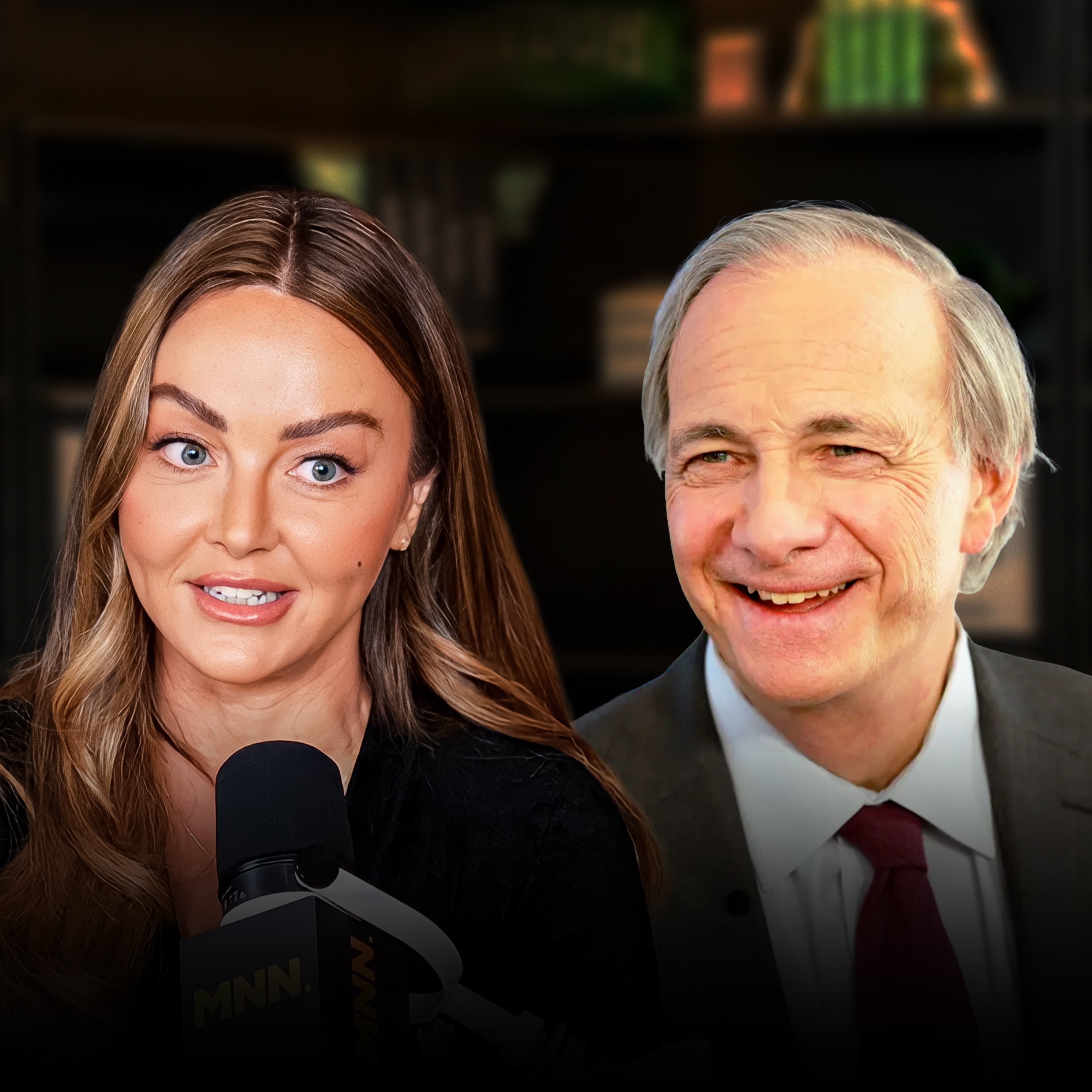
3:44Nicole Lapin: Kathy Wood is one of the most influential investors of our time. She's the founder, CEO, and chief investment officer of ARK Invest, where she runs 14 ETFs and a venture fund with stakes in SpaceX, OpenAI, and Anthropic. Today, she joins Money Rehab to tell us why she sold$85 million of NVIDIA the day before earnings.
4:02Cathie Wood: Our sale was all about losing Jensen Wong to someone else. That company being able to take a lot of share from NVIDIA. Whether she's in for the Anthropic IPO. We've never seen anything like this in history. This is a revolution. We're very optimistic about Anthropic. If AI is a bubble and whether or not a crash is coming. There was no chance for this AI revolution to end up where the tech and telecom bubble ended up. Would you buy NVIDIA back? We need to see the new leadership. It could lose some momentum in here until the new CEO comes in. Do you have a thought of who could? There is one person.
4:53Nicole Lapin: Kathy Wood, welcome to Money Rehab.
4:55Cathie Wood: Happy to be here, Nicole. Great to be here.
4:58Nicole Lapin: You know, the NVIDIA debacle was not on my bingo card for our interview, but what's your latest take on it?
5:04Cathie Wood: We can go at this from a straight numbers point of view, and that's just to set the stage. And then we'll have to fill in the blanks in terms of what could happen here and what we're watching. So right now, NVIDIA has about 83 % of the GPU market. So these are the accelerators that are critical to AI. If we were to see a slide in its market share to 38, so just invert the numbers, given our forecast for the AI market and how quickly it's going to grow, we believe that NVIDIA's compound annual rate of return over the next five years could still be 25%. Now, what I mean by that, that would be the stock price.
5:51Cathie Wood: Now, that sounds like it won't happen. The way it could happen is if NVIDIA lost a lot of talent. What if Jensen goes somewhere else? Elon Musk has said he'd be delighted to invite Jensen to join his team, probably to help with TerraFab. Jensen would attract a lot of talent, I believe, from NVIDIA. That's why it's possible it could happen. It sounds extreme. The other thing we have to consider is the valuation at the end of those five years. So our valuation metric is enterprise value. So that is considering not only the equity market cap, but also the bonds in the capital structure. So enterprise value divided by EBITDA, that's kind of a cash flow number.
6:47Cathie Wood: And on that basis, we already had it selling at a discount to its last 10 years. I think its last 10 years multiple has been about 30, and we were taking it down to 26. But it could go much lower. The market is much lower than that, and it could go to a market multiple. Now, we post our trades every day. So many people can see that we took a little bit out of NVIDIA. It is no longer in our top 10. As recently as, I think last month, we had bought NVIDIA to get it into our top 10. Why had we done that? Because SpaceX said that it was committing to NVIDIA exclusively for its orbital data centers.
7:34Cathie Wood: And that's a huge opportunity out there. So just wanted to explain that in case some of your viewers watch what we do.
7:42Nicole Lapin: Oh, we watch very, very closely. You bought NVIDIA the week that Jensen resigned, right, and said the company extends beyond the Jensen show. But then the day before earnings, you sold$85 million. Is that right? What changed in a week?
7:56Cathie Wood: So we had originally done that numerical analysis, and we were saying, wow, a lot would have to go wrong to ruin the compound annual rate of return. What we did not think about at the time was, hey, Jensen could go somewhere else and attract a lot of the talent from NVIDIA. And already Elon is doing a lot on the chip side. And for Orbital data centers, that could become a category killer. And they could basically take all of their business from NVIDIA. The business that we expected to go to NVIDIA, they could take it from NVIDIA if Jensen joined and delivered the kind of results and the kind of performance that he has been able to deliver at NVIDIA.
8:43Nicole Lapin: What are the odds that you think he would actually join Elon?
8:47Cathie Wood: I think he wants to redeem himself in a sense. He's done so much. But I think he wants to be part of, you know, this technology revolution, this AI history, which is going to transform everything. And it's clear that Elon is the maestro of converging technologies.
9:10Nicole Lapin: So the same day you sold NVIDIA, you bought more SpaceX. Is it safe to say that you think SpaceX is a better bet than NVIDIA right now?
9:19Cathie Wood: This weekend was a very important milestone for SpaceX. It caught the top part of Starship, and here begins the dawn of reusable starships. Those are going to transform a new world. We'll be able to afford to go to the moon, to go to Mars, thanks to the reusability. The stock went down because of the drama around NVIDIA on that day. And so, yes, we swapped NVIDIA into SpaceX.
9:57Nicole Lapin: Would you buy NVIDIA back? And at what price? What do you think needs to happen?
10:01Cathie Wood: We need to see the new leadership. There are almost 200 ,000 signatures being sent to the board, including by a lot of technology experts. And even Elon Musk himself has signed a petition saying you should take Jensen back. He built the company, he found it, he built it. And he's catapulted the U.S. into the leader in AI. And we still need him. If that were to happen, my guess is that there would still be a lot of scrutiny on NVIDIA vis-a-vis the shipments into Asia, which seem to make an end run around the various countries into China. And we believe that between China and those kinds of sales, that's about 15 % of NVIDIA's revenues.
10:56Cathie Wood: I'd like to see the market adjust to, first of all, what has happened here. Our sale was all about, OK, losing Jensen Wang to someone else and that company being able to steal a lot of share or take, not steal, take a lot of share from NVIDIA. A little bit like Steve Jobs, you know, Steve Jobs came back and his desire to make history brought us the smartphone, right? And while Apple doesn't have the largest share of smartphones out there, it has the lion's share of the profits. And we think because of how Jensen and team were running NVIDIA that, you know, this market was theirs to lose. A lot of companies don't like being reliant on one source of chips.
11:49Cathie Wood: This news has emboldened more and more people probably to look at Google's TPUs, AMD's GPUs and CPUs. It has both, as does NVIDIA now.
12:02Nicole Lapin: So back to where you started there with the petition, I assume that you didn't sign that petition, Kathy, for Jensen to come back. Would you vote for it as a shareholder?
12:13Cathie Wood: To be honest, we didn't even think about it. We've just been trying to get our arms around this market and trade around it. So no, we did not sign it. We tend to make our points known mostly through our shareholder votes. And we, from a compliance point of view, can't say what our shareholder vote's going to be. There is one exception to that. I think it was late 2018 when Elon was threatening to take Tesla private. I did write a letter to the board of directors and to Elon Musk, and it was an open letter saying, don't do that. There are many loyal retail holders who, if you go private, they will have no access to you.
12:58Cathie Wood: And just because they're not accredited investors, meaning they don't make enough money or they don't have enough net worth, you're going to preclude them owning your stock. That's not right. And we know you don't want that because these are the shareholders that really came to your dealerships through Model 3 hell and helped sell those vehicles. So don't do that. And he said that that was effective. But that was something very different, taking a stock out of the public markets, going private, depriving our clients.
13:35Nicole Lapin: So to your point, this is a whole different variety of drama. And NVIDIA was propping up the economy in a lot of ways. If more women ran companies, do you think we would have less messes like these?
13:51Cathie Wood: I think we'd have more checks and balances in a company like NVIDIA. It is interesting. He had 60 or 61 direct reports. Most men CEOs don't have that. In fact, I don't know one who does. So from a governance point of view, we're learning, okay, no clear successor. I'm sure he thought he was grooming a few of those 60 to compete to be his successor. But from a governance point of view, probably much better controls. It's the last week to beat the Black Friday crowd, Lowe's. Get 25 % off select pre-lit artificial Christmas trees. Plus, my Lowe's Rewards members get same-day delivery for free. Shop now.
14:38Cathie Wood: Beat the rush. Thank us later. Black Friday deals are on now at Lowe's, in-store and online. Valid to$11.25. $25 minimum and loyalty membership required. Order eligible items by 2 p.m. Subject to weight and size restrictions and availability. Terms at lowes.com slash shipping terms.
14:54Nicole Lapin: Yeah, I mean, the research shows that there's this glass cliff idea where women are brought in to help lead through crises like this, which is exactly what we're seeing with Colette Kress. Do you think the board should just give her the job?
15:06Cathie Wood: Well, I've listened to Colette on quarterly calls for the last 13 years. She has been a great CFO, but she's not a tech expert. And, you know, most of the people reporting to Jensen are engineers and have technology expertise she does not have. So I don't think she can run the organization. She needs to speak their language, I think, more fluently. I know she's learned a lot over 13 years, but I think Jensen was helping to blaze the trail and she could not do that. Her expertise is in much more of a financial role.
15:48Nicole Lapin: Well, actually, they just came out reporting fiscal Q3 2027 earnings, delivering a record of$115.8 billion, up over 103 % year over year, beating consensus estimates of$109.33 billion. What do you think? Yes.
16:07Cathie Wood: And so what will be very interesting, and I'm going to listen to the call, what is going to be very interesting is what they say. Colette was really debating Jensen about how much NVIDIA was financing of this AI revolution in terms of buying equity positions or guaranteeing debt or buying debt. She's going to be much more conservative. So whatever they just announced. We have to balance against what she says in her first call. Now she's just interim. She's not going to determine the future of the company, but it could lose some momentum in here until the new CEO comes in.
16:51Nicole Lapin: Do you have a thought of who could? President Trump suggested Tim Cook. He said, thank you, but no thank you. Would you have a different name to suggest?
17:00Cathie Wood: There is one person who worked at NVIDIA and was one of the reports to Jensen who ended up moving over to become the CEO of Arm. And if you'll remember, NVIDIA wanted to acquire ARM, so he was going to go back into the fold anyway. And then Antitrust basically stopped that merger.
17:33Nicole Lapin: Sounds like you're referring to Rene Haas. So your vote for the next CEO of NVIDIA would be Rene.
17:38Cathie Wood: He would be, I think, a very good person, especially having run arm and, you know, both of them knowing that these technologies are going to converge.
17:53Nicole Lapin: Are you concerned about the contagion effect into AI and the broader economy from this? And what are you buying and selling as a result?
18:01Cathie Wood: You know, in a fast-moving market like this, we do consolidate towards our higher conviction names. And for reasons I just described, our conviction in NVIDIA notched down a bit. And our conviction in SpaceX, because of Starship this weekend, increased. And so that was a natural swap. In terms of will this derail the AI revolution, I do not believe so. What I do believe is, along with all of the shortages that we have seen out there, mostly now it's power and the shells around data centers, that has been a natural break on the AI revolution. And we have a brainstorm every week. And one of our guests in the last few weeks said, you know, it's kind of the best thing that could have happened for the AI world.
19:02Cathie Wood: There was no chance for this AI revolution to end up where the tech and telecom bubble ended up, which was in a bust. And I agree with that. The other reason we're not going to end up there is because AI is delighting consumers and delighting businesses. And I always use Uber as my example here. So we were in New York at the time, and I remember saying to my colleagues, I'd like to see Uber trying to get through the New York City Taxi Commission. Good luck. And guess what? It got right through. Why? Because Uber was delighting consumers. Taxis were not. And I do think that AI is delighting a lot of people.
20:00Cathie Wood: I know a lot of people who are, you know, trying to start their own business with AI because it is so much less expensive. I'm seeing some animal spirits out there that are very exciting. And within companies, I think there's, I mean, you hear the word magic used a lot. And I see the productivity gains, the dramatic productivity gains here at ARC in terms of research and the kinds of new products we're going to evolve. As long as it's delighting and paying off, paying off is critical. I don't think that what has happened with NVIDIA is going to derail this revolution.
20:42Nicole Lapin: Right after he left, we also saw this string of tech meltdowns. I saw you tweeting that you were grounded because of the FAA one, right? I mean, are they connected in some way to NVIDIA? I know there's conspiracy theories about that, but is this a harbinger of more to come with all these outages?
21:00Cathie Wood: I do know that what has happened because of agents, AI agents, is there are a lot more cyber attacks taking place around the world. And so there could be some of that involved here. And what's interesting about that is we think some of the biggest beneficiaries of this are going to be anthropic and open AI. because what they are doing now in terms of fine-tuning their models before they release them to the public is they are fine-tuning them for cyber defense, not for cyber offense. For cyber offense, they're giving their most advanced models to the government, to banks, national security. I think what's happening right now is OpenAI, Anthropic, I would say XAI, probably Gemini, they are surfacing software vulnerabilities that have been in place for not just five years, but 50 years.
22:11Cathie Wood: And human beings never surfaced them. So here we are surfacing them and agents, I'm sure, are surfacing them. And we do have nefarious actors. We know about North Korea and Russia and Iran, but I do think, and I just went to the Cantor Fitzgerald conference in Miami. It was a conference about both crypto, which is its heritage, but also AI and cyber defense. And I can tell you, just sitting around at a round table with the leaders, the CEOs of many, many companies in these spaces, what was the number one topic of conversation? It was cyber. They're getting hit by a lot more attacks, and they are spending a lot more to defend against those attacks.
23:11Cathie Wood: And the best way to do that is with these frontier models.
23:16Nicole Lapin: Do you think that crypto is going to be a winner of those bank outages that we've seen? You've named Ethereum and Solana as your other top coins after Bitcoin. Are you buying them now? What are the price targets there?
23:27Cathie Wood: We have been buying, and you can check our trading, The spot ETFs were holding up better than the stocks like Coinbase and Circle. And so we actually have moved some from the spot ETFs into the stocks to play that arbitrage. So that's how we are increasing our crypto position.
23:53Nicole Lapin: Are you buying Anthropic?
23:55Cathie Wood: Well, so we own Anthropic in ARKVX, which is our venture fund. It has been by far our best performing equity in that fund. We bought in in early 23 at a$4 billion valuation, and we're hearing that the IPO price will be$1.4 trillion or above. So by far the largest or the biggest success story there. We were looking at the original valuation talk,$1.5 to$2 trillion, and we could have made that work. So anything below that, we think, would be quite a gift. And when I say we could have made it work, our valuation discipline is to forecast out using our top-down forecasts for AI, in this case, for the next five years.
24:49Cathie Wood: And we make the assumption that any premium to the market in terms of valuation is going to start coming out of the stock over the next five years. So facing a valuation headway, and our analysts and portfolio managers have to believe that the revenue growth and margin expansion associated with these companies is going to overwhelm the valuation compression and deliver a minimum hurdle rate of return in the venture fund of 20 % at a compound annual rate. So in the public markets, that hurdle rate is 15%. And even at$2 trillion, we could have made it work. We're very optimistic about Anthropic.
25:39Cathie Wood: Many people, we've never seen a company's revenue, annualized revenue run rate, go up tenfold in one year, which is what I believe we will see in Anthropic by the end of this year. December of last year, it was$9 billion. In October, it was$81 billion. So that was ninefold. And that they reported and confirmed. By the end of the year, there are estimates for$110 to$120 billion. Think about that. We've never seen anything like this in history. This is a revolution. It's a technology revolution. And we're probably going to see a lot more companies generating, delivering much faster revenue growth and much better earnings growth because of AI.
26:29Cathie Wood: Either they are involved in making the revolution happen, so, you know, picks and shovels, or the beneficiaries of AI. And what that is also going to do, we believe, is accelerate productivity growth and real GDP growth, which for the last 125 years has been globally 3%. We think that in the next five years is going to move into the 7 % to 8 % range, mostly because of productivity.
27:03Nicole Lapin: What do you put the odds at of Tesla and SpaceX merging by the new year?
27:09Cathie Wood: I think they're very high. Elon has said basically, yes, I want to do that. And one of the reasons he really wants to do it is he wants to have supermajority voting power, which he does not have at Tesla. So by buying Tesla, shareholders would be giving up some rights, some shareholder rights. We would be in favor of them doing so because while in the short term, robo-taxi cash flow is going to be funding orbital data centers. And so that favors SpaceX, right? So we should get a premium for that. Longer term, the much bigger opportunity is SpaceX in terms of opening up new worlds, literally, and the AI opportunity, especially the Frontier Lab opportunity.
28:10Cathie Wood: It's the last week to beat the Black Friday crowd. Lowe's. Get 25 % off select pre-lit artificial Christmas trees. Plus, my Lowe's Rewards members get same-day delivery for free. Shop now. Beat the rush. Thank us later. Black Friday deals are on now at Lowe's. In-store and online. Valid through 1125. $25 minimum and loyalty membership required. Order eligible items by 2 p.m. subject to weight and size restrictions and availability. Terms at lowes.com slash shipping terms.
28:38Nicole Lapin: Well, the market overall, I mean, you mentioned the kerfuffle. It's a nice way to put it. Feels funky. The outages, Fed hiking. Is this normal funkiness of the market or is this crash, doom and gloom funkiness? Do you think a crash is coming?
28:55Cathie Wood: I do not. I was very, very early in my career in the 80s and 90s. This market feels, believe it or not, like that one did. What were the worries back then? Inflation, except it was fears of double-digit inflation. So inflation, interest rates, wars, financial crises. We've been through the private credit debacle here. We had the SNL crisis back in the late 80s, early 90s. new technologies and how disruptive they are going to be. The PC, the cell phone, then the smartphone. It feels very similar. You look back at the stock chart, 80s and 90s, well, really 82, the bottom in August of 82 through the top in January of 2000.
29:44Cathie Wood: And you just say, I wish I had been in that market. And I was. I'm very grateful that I started my career there. But when you were going through it at the time, it seemed like one crisis after another. So what that illustrated was what I call, and many others call, a wall of worry. What are the strongest bull markets? They are climbing walls of worry. And each one of those worries I mentioned, those are bricks being put in the wall. And sure, we have corrections, we have bear markets, but the opportunity is so great as it was from 82 to 2000 that when you look back historically, they look like basic wiggles in the chart.
30:36Cathie Wood: And I think the same thing is going to prove true with this market as well. You know, I know the worries are inflation and interest rates, and we have a contrarian view, but the burden of proof is on us for sure. We think we're going to be moving into a deflationary environment. We've been saying this for some time, but we've had two wars get in the way and energy prices really disrupt this. But if you look at what's going on in the Middle East now, you've had the UAE drop out of OPEC in May and you have Saudi Arabia and the UAE, two of the largest producers in the Middle East, accelerating their production dramatically.
31:22Cathie Wood: I think they're up 75, 80 percent from at one point this year to now. And I think the reason is they see the writing on the wall. These oil prices are going down once the Straits of Hormuz are up. And they're gearing their supply to get as much oil out of the ground and out into the market at these prices as possible. So we think oil prices are going to be a very good tailwind, meaning for lower inflation. We see productivity taking off. It was 3.6 % in the third quarter versus the second quarter at an annual rate. And unit labor costs, that growth rate was negative. Unit labor costs, seasonally adjusted at an annual rate, dropped 0.7 percent.
32:10Cathie Wood: And that's because productivity overwhelmed wage increases or compensation increases. Chairman Walsh pays a lot of attention to that. He also pays a lot of attention to gold. The gold price peaked the day President Trump appointed Fed Chairman Walsh. It peaked at roughly a little over$5 ,600. Today, we're a little over$3 ,800. So Chairman Warsh is very happy to see that. He's going to manage monetary policy, we think, much like Chairman Volcker and Chairman Greenspan, both of whom kept an eye on the gold price. Am I on the right course or the wrong course? So he's looking at that. And then the other thing that I think is not well measured, one is housing.
33:05Cathie Wood: It's imputed rent and new home prices are now beginning to fall at an accelerated rate. But existing home sale prices, they started up, got to, I think, 3 % year over year. Now they're down to, I think, below 1 % and probably will go negative because new homes are now less expensive than existing homes. That historically has not been the case. So I think we're going to see those indicators coming along. And the other thing that is impossible to measure right now because it's so new is is the impact of AI on everything. AI inference costs. So what it costs, chat GPT or Grok, to answer your question or complete your task, those costs are dropping 99 % per year.
34:02Cathie Wood: It's very hard to quality adjust this kind of technology because it's moving faster than anything we've ever seen before. So I think that inflation is overstated. And the corollary to that is that real GDP growth is understated and that productivity is probably even higher than what we just saw reported, 3.6%.
34:27Nicole Lapin: Well, Bill Ackman was on the show. He said that because AI spending won't slow down, that's inflationary. You're basically saying the opposite. So why is Bill wrong? And what's your prediction for inflation and rates in the coming year? Will they hike again?
34:43Cathie Wood: I understand why he's saying that. If you look at memory prices, so hardware prices, they have boomed here. If you look at software prices, software pricing always is negative, but there's been no change in how negative, how much prices are dropping on a year-over-year basis. I think it's two to three percent. I've just given you a 99 percent. And hardware and software are not far from each other in terms of weighting. So I do believe if software were measured correctly, it would be offsetting that hardware price increase.
35:25Nicole Lapin: Kathy, I could talk to you forever. I know we are both going to tune into NVIDIA's earning call. I end all of our episodes by asking our guests for a final tip that listeners can take straight to the bank. With all of the time you've had as a portfolio manager, if somebody is scared of what's going on right now or scared of a crash but doesn't want to sit in cash forever, what should they do this week?
35:46Cathie Wood: Yeah, I think what is going on right now is a very healthy reset. and I am sure that your audience has been waiting to buy a stock and just waiting for an opportunity. This is an opportunity. But when we get into these kinds of opportunities, because there are so many momentum followers, they'll say, oh, no, I don't know how low it's going to go. Average in. Average in. if you like the fundamentals. And your own conviction in a stock has been increasing over time and has been supported by other experts out there who are helping feed your conviction. And if you want to buy standalone stocks, now would be a good time to do so.
36:34Nicole Lapin: Because things are on sale. On sale. Kavi, I know it's a big day. Thank you so much for your time. I hope to see you in person soon. Likewise. Thank you, Nicole. This was fun. Thank you. All right. Thank you. Take care. Money Rehab is a production of Money News Network. If you like what you heard here today, please don't forget to rate and review the show. It really helps us with visibility so that more people can get into money rehab. Until next time, remember, the only financial problem you can't fix is the one you don't admit you have.
Cathie Wood is one of the most influential investors of our time. She is the founder, CEO, and chief investment officer of ARK Invest, where she runs 14 ETFs and a venture fund with stakes in SpaceX, OpenAI and Anthropic. Cathie doesn’t just pick stocks. She picks the future, then bets billions on it.
Today, she joins Money Rehab to tell us:
Whether a crash is coming
Why she sold $85 million of Nvidia the day before earnings
Whether she’s in for the Anthropic IPO
And If AI is a bubble
In partnership with Equitybee
www.equitybee.com/money
Download Cash App Today: https://click.cash.app/ui6m/1i920nuw #CashAppPartner
Terms apply. Bitcoin services by Block, Inc. See the Bitcoin disclosures at cash.app/legal/podcast.
Get up to $200 off Square hardware when you sign up at square.com/go/MNN! #squarepod
Chapters
00:00 Are You Ready for Some Money Rehab?
01:43 Why Cathie Sold Nvidia: The Numbers and the Jensen Risk
04:27 Swapping Nvidia for SpaceX
06:29 The Petition to Bring Jensen Back, and Tesla's Near-Privatization
11:07 Is Colette Ready to Be CEO, and Who Cathie Would Pick Instead
14:03 Why Cathie Thinks the AI Revolution Isn't Derailed
16:44 AI Agents, Cyberattacks, and Crypto
19:55 Cathie on Anthropic and the SpaceX and Tesla Merger
24:10 Is a Crash Coming? Why Cathie Sees Deflation Ahead
31:17 Cathie's Advice for Buying the Dip
-----------------------
MORE FROM NICOLE LAPIN:
🎥 Youtube: / @moneyrehabshow
📸 Instagram: / moneyrehab
📽️ TikTok: / nicolelapin
🌐 Nicole's website: https://nicolelapin.com
OTHER THINGS WE DO:
💰 Private Wealth Collective: https://privatewealthcollective.com
🏦 The Money School: https://themoneyschool.com
Learn more about your ad choices. Visit megaphone.fm/adchoices