
In short
Naked Astronomy: Episode Summary
Podcast Title
Naked Astronomy Description: The Naked Scientists' Astronomy and Space Science Podcast - audio that's out of this world.
Episode Title
How to build a Moon lander, Eileen Collins, and space quilts Date: October 2025 Hosts: Sue Nelson and Richard Hollingham
Episode Overview In this episode, the hosts delve into several exciting topics related to space exploration, including an up-close look at a Moon lander in development, a discussion with Eileen Collins—first woman to pilot and command a Space Shuttle mission, and the unveiling of two new space-themed quilts at the Royal Astronomical Society.
Key Segments
- Moon Lander Insights
- Location: Astrobotic in Pittsburgh, PA
- Key Features:
- Hosts Sue and Richard explore the Discovery Room where the Peregrine lander is being developed.
- Peregrine Mission One: Launched in January 2024 but failed to reach lunar orbit due to a propellant leak.
- Firefly Aerospace: Successfully landed its Blue Ghost Mission One on the Moon in March 2025.
- New Landers:
- Griffin: Under construction, aims to be three times the size of Peregrine and will feature modular designs for scientific instruments.
- Challenges and Innovations:
- Emphasis on autonomous operations due to communication delays (3 seconds from Earth to Moon).
- Discussion of the complexities of lunar landings without human oversight.
- Eileen Collins Interview
- Background:
- Eileen Collins reflects on her career as a pilot and astronaut. She discusses her humble beginnings, including working various jobs to pay for flying lessons.
- Documentary: Space Woman
- Collins shares insights from the documentary about her life, focusing on the balance between her career and family, particularly the impact of her job on her daughter.
- Themes of emotional control and the pressures of being a female leader in a male-dominated field are explored.
- Space Quilts at the Royal Astronomical Society
- Overview of the Project:
- Two community quilts were created based on a historic quilt by Ellen Harding Baker, commemorating the Royal Astronomical Society's 200th anniversary.
- Involvement of the Community:
- 77 contributors created quilt squares, showcasing various astronomical themes.
- Quilts displayed at several locations, fostering community engagement through creativity.
Interview Highlights
Olivia Chappell (Astrobotic)
- Discussed the design and operational challenges of building lunar landers.
- Shared insights from the Peregrine mission, likening its challenges to a "successful failure."
Eileen Collins
- Opened up about her experiences as a female astronaut and the emotional toll of balancing family life with a demanding career.
- Emphasized the importance of sharing personal stories to inspire others.
Conclusion The episode wraps up with reflections on the interconnectedness of personal stories in space exploration and the collaborative spirit of the scientific community. The hosts encourage listeners to engage with the ongoing developments in lunar exploration and support the arts in science.
Key Takeaways
- The evolution of private lunar landers is a significant focus, with Astrobotic leading innovative designs.
- Eileen Collins' story serves as an inspiration for future generations, highlighting both personal and professional challenges.
- Community-driven projects like the space quilts offer a unique way to connect individuals with astronomy and foster creativity.
Note: For further details, please listen to the full episode of Naked Astronomy.
Written by AI. May contain mistakes. Listen to the episode to check what was said.
Transcript
Automatic transcript. May contain errors.0:20Hello, welcome to the October 2025 edition of Space Muffins in partnership with the Naked scientists. I'm Richard Hollingham. And I'm Sue Nelson. And we have another podcast full of delicious space goodness ahead. We'll visit a new moon lander and meet the men and women behind two astronomical quilts. I'll also be chatting to the director of a new documentary called Space Woman and the Space Woman herself, former shuttle commander and pilot Eileen Collins, who gives us an insight into her private life, including growing up with an alcoholic father and the numerous jobs she did at school to pay for flying lessons.
1:02My very first job, I was a janitor in my high school. And, you know, I worked the various, you know, pizza jobs and worked at a miniature golf course. And I could, I worked at my church. I could go on and on. I learned a little bit from every one of those jobs and primarily how to be a disciplined person, and how to show up on time, how to make money, how to pay your taxes, you know, all of these things. You know, I found it kind of fun too, and it kept me busy and it kept me out of trouble. Well, apart from NASA's Artemis program, which aims to put humans back on the lunar surface, there are several privately built landers also heading towards the moon.
1:41The first, Astrobotics Peregrine Mission One, launched in January 2024, but a propellant leak meant it never reached lunar orbit. A month later, intuitive machines Odysseus became the first private lander on the moon, but it tipped over on the surface on landing. However, the Firefly Aerospace Blue Ghost Mission One landed in March this year and managed to stay upright as well. Amazing images from that. Incredible, beautiful, beautiful images. So it's a really exciting time to be in the commercial lunar industry. And we were in the US recently in Pennsylvania and so paid a visit to Pittsburgh.
2:18and the company that kicked off the rest of the world's interest in a new era of private landers, Astrobotic. There we met Olivia Chappell, Director of Marketing and Comms, in what looked like a war room with a long central table, internal windows on either side, behind which something rather special was taking shape. Right now we're sitting in Discovery. We call it the Discovery Room because it is smack in the middle of our headquarters. On one side of the wall, you have a look into our clean room where we build our spacecraft. On the other side of the wall, you have mission control where we actually control the spacecraft from Earth once it leaves this atmosphere.
2:58It's pretty incredible to be here. And the design is pretty interesting and unique because the ceiling actually mimics the isogrid decks that you see aboard our first mission, Peregrine. So we really thought about this room. And we knew this is where the action was going to happen when the mission began and when our future missions launch. So it's a pretty fun place. Actually, as soon as you said that, both Richard and I immediately looked up because we hadn't noticed that the ceiling looks like, well, it's not solid. It's like a lattice, isn't it? It is. And that mimics the kind of modular way that we build the spacecraft.
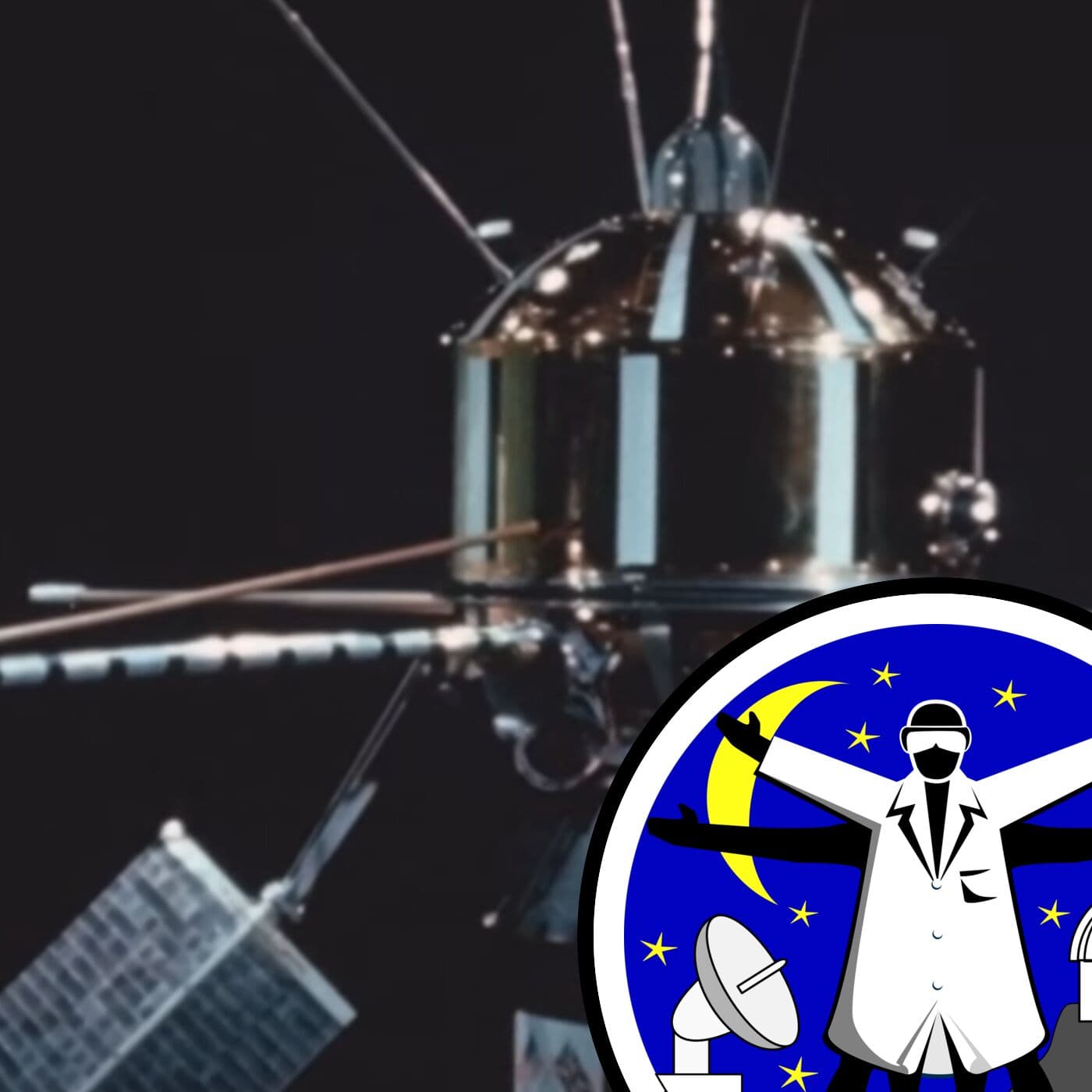
3:34So we have what we call the decks of the spacecraft, where we can put different scientific instruments around those decks. So we try to make it as easy to configure to whatever science you need to put on it that way to make sort of this, as you said, lattice pattern. Now, we've got some models here. We're going to save the mission control. We're going to save the real thing just for a moment. We've got some models here. The first one is of Peregrine, which is, I mean, the ill-fated mission, just very unlucky with that mission. It does look like a more traditional spacecraft. We'll come on to the new one in just a second.
4:09It was going to be the first private lander on the moon. Just talk us through what that was like when it wasn't working. Well, what's really interesting, I think, because we see rocket launches quite frequently all the time, people take it for granted that we don't go to the moon very often. It's a very special occasion. So to be the first commercial lunar lander that even launched from the United States ever, and the first lander that launched since the Apollo program from the United States, was an honor in itself. And what ended up happening is we did suffer a propulsion anomaly. There was a tiny little microscopic valve that did not operate the way it should have.
4:47And so we did spring a leak. But what's incredible is the Peregrine still got to operate in space for 10 days. We proved out all of our other systems, our communications. We went out to lunar distance. We had some harrowing, crazy experiences on the way doing that. People were sitting in mission control 24-7. It was like in the movies. You saw groups of people with their whiteboards out, putting their heads together, trying to think of solutions and ways to save the mission and extend it for as long as we possibly could. And that's what we did. We operated in space for 10 days. although the team was gutted uh in the end because we weren't able to have our our moon shot our moon landing attempt we came back from that ready to go for our next one we are building their next lunar lander griffin which is i would say three times the size of peregrine which is pretty crazy but we're building our griffin and we're going to have our second moon shot pretty soon so just before we get on to that so with peregrine they always said with apollo 13 it was a it was a successful failure is that would you liken peregrine to that i would definitely call it that um there's so many things that have to go right in a space mission and a lot of them did go right we proved out a lot of things not to mention the team got to experience this and figure out how to how to really work under pressure together so that was pretty incredible i like that as well because you often hear quite famous, very well-known people say, you never learn from successes as much as you learn from a failure.
6:22So with all what you've learned and the fact that you went out to lunar orbit with Peregrine, you must be feeling fairly confident about Griffin. Let's go through some of these other little models you've got here before. I'm tempted to keep looking through that window there. For the real thing. Describe what we've got, but we'll get to it. But describe what this sort of crazy-looking model is. It's sort of cut apart, almost looks like it's got the insides of a printer, where the paper goes through at the top, with some gold domes inside, on legs as well. I should say, four legs, octagonal, four big sort of brass domes inside, and then panels around the side, which are these.
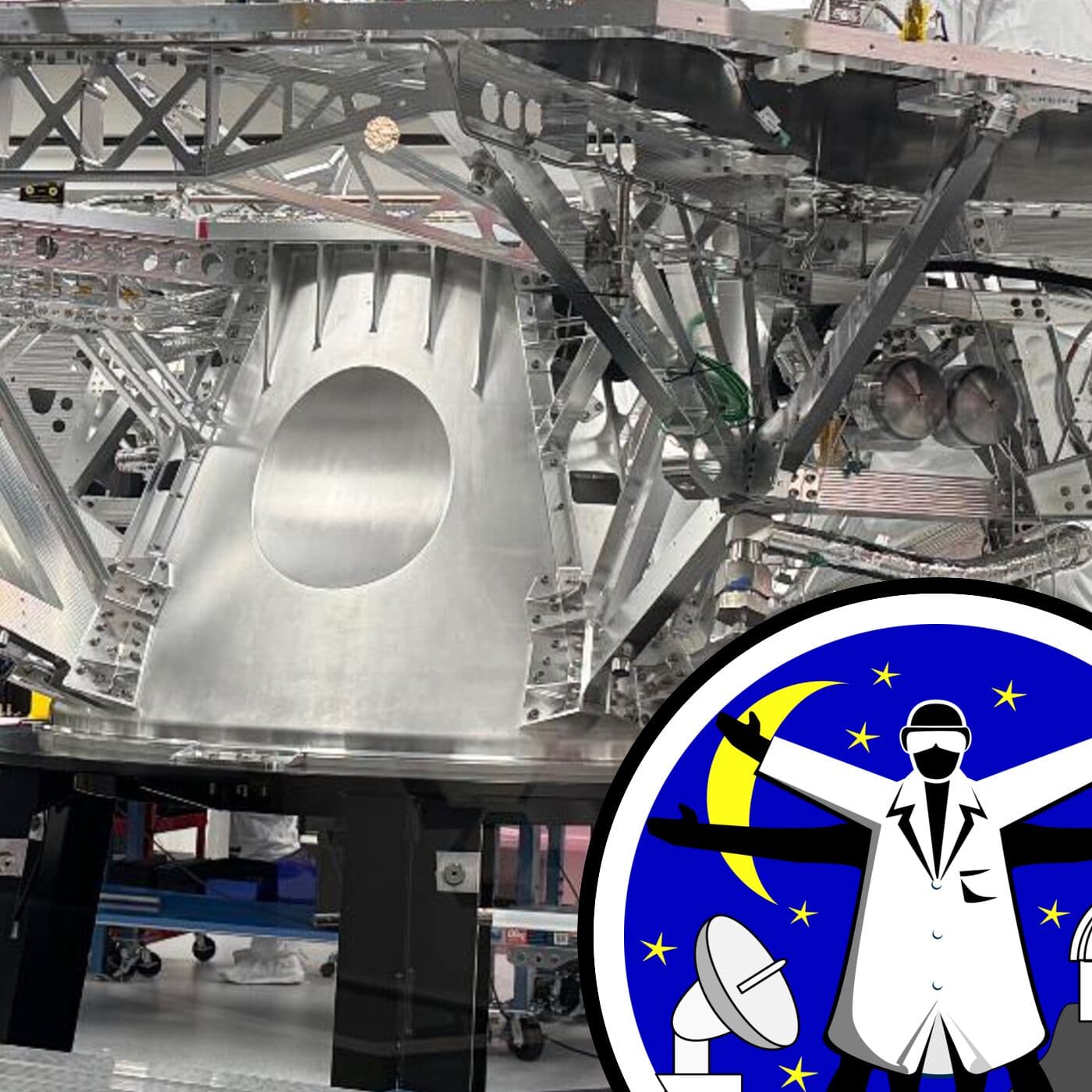
7:07I mean, we've both struggled to describe this, I think. Like, it's a very unusual looking spacecraft, very unusual looking lunar lander. It is. So we designed Gryphon this way so that we could have, as I said, different scientific instruments aboard. So it's a little modular in the way that we can change what we're sending to the moon each time if we want. As you said, there's sort of almost like a rolled up poster atop it or something that you would feed a piece of paper through. What that actually is, is a VSTAT, a vertical solar array technology. and if you imagine having a poster and you're excited to see it and you pull it up to unfurl that's one of those sort of roller banner yes a roller banner and it pulls up and what unfurls is a solar array and what we're trying to do essentially is to build a power infrastructure on the moon because all of our collective ambitions all the science that we'd like to achieve all of it requires power to get it keep it going we want to survive the lunar night we want to power our missions for for decades rather than days and that's what we're going to send aboard our griffin and what are those sort of gold doorbells i always describe them as ferrera rochers they look like giant giant gold foil chocolates yeah and those are actually our tanks um we put pressurants um within it there's helium tanks there's and it just is what powers our propulsion systems brilliant now i think we've yeah we ought to mention though actually one side of the room there's a window into mission control which you know it's it's a mission control room there are there are monitors you know you've seen them the other side is a substantial clean room with the real griffin taking shape here and again it's really hard to get a look at it there's actually two technicians working on it right now because it's the sort of infrastructure the inside it looks like a a satellite dish a large satellite dish silver struts and components and it's wide enough for the fact that as richard just said there are two men standing up on ladders peering into it but that's that's big and with an octagonal again this octagonal sort of structure which is the basis of your whole spacecraft yes she's a sizable lady i like to call her that's a big lady.
9:28That's a big lady. Her last. Maybe we should call her last. I don't know. But she's large and in charge. And there are two guys within it. It's pretty exciting to see. You would think that assembling something like this would be a fast-moving machine, a fast train. Well, in fact, the way that we assemble, and it's all very meticulous and careful because everything has to go exactly right. So when you're installing something on a spacecraft, it takes a little bit longer than you would imagine and we're waiting for our a few more components to come in and we're going to hit the gas pedal this spacecraft is going to look so different from day to day as we just put on all the propulsion pipes on peregrine the last spacecraft there was over a mile of wires and cabling i haven't asked what how many miles are on griffin but it's got to be three i'd imagine three miles minimum or what what would that be in kilometers three five kilometers of mile okay Three to five.
10:23And in terms of size, you know, it's octagonal. But it's essentially a large SUV, isn't it? I mean, you know, it's a substantial structure. And it will have the legs. Also on the top, you've got this other structure. So we can't yet see where the panels will unfurl. But we have seen those. These big blankets. We're seeing its skeleton. We're seeing a silver skeleton. But you're going to have a rover on top of here as well. That's right. A rover from Astrolab. So Astrolab Venturi. they're going to be building a flip rover is what they call it and it will be their first rover that they're sending to the moon to prove out their systems for a much larger much much more robust rover in the future so it's it's very exciting absolutely yes i love the fact that on one end of the wall and this is no different let's face it from what isa does with all their flags and what have you, you've got the stars and stripes on one end of the wall.
11:21And coming back to this meeting room, which adjoins the clean room there, I've just noticed, apart from a few models of launchers, you've got a couple of medals up there. What are those medals for? We do. Those are relics of an incredibly interesting past. So Google actually launched a competition and they said, we'll give you awards if you can develop a way to send things to the moon. And if you do it at a certain price. It's called the Google Lunar XPRIZE. Oh yeah, I remember that. A long time ago, yes. And it turns out that it was far more complicated than anyone could have imagined. And so we got a few medals for milestones as our missions developed and were built and unfolded, but no one could quite get it done in the time frame or the budget allotted.
12:05So that's where NASA's program came in, the Commercial Lunar Payload Services Program, where NASA will pay commercial companies to send items to the moon. But what makes that pretty special is we can also have other customers aboard. So we have commercial customers. It's everybody from ESA is actually aboard Griffin. They have a LandCam X. It's a camera that's going to be taking some pretty robust images, and I hope they share it with the world. That'd be really cool. We had on our prior mission, we had the Mexican Space Agency, the German Space Agency. we had a program called Moonbox, where for a few hundred bucks, you could send an item to the moon.
12:44And we have that aboard Griffin as well. So there's a whole slew of people that are coming along for the ride with us that maybe you didn't think space was quite within reach, but we're bringing you along for the ride. And you said how difficult this was. Have the people working on this got a new appreciation for just the effort that went on in the 1960s to put people on the moon. I mean, you're not even talking about putting people. You're talking about getting a rover. That's a lot of innovative technology on this. But nevertheless... Some of these people won't even have been born. We've had a little tour around.
13:17I would say almost everyone here wasn't born when the last man walked on the moon. That's a really good assumption. And you're probably right on that. But yes, it's unbelievable. I mean, I think a lot of people also have the frame of reference of, well, we did it in the 70s. How could it possibly be so hard? Well, the difference is you don't have a human aboard. You don't have someone looking out the window guiding a spacecraft down. So we've essentially had to create our own Neil Armstrong in a box autonomously. When you have a spacecraft that doesn't know where it is, it doesn't know how far it is from anything, it's kind of just floating in the universe or orbiting around the moon.
13:57How do you figure out how that spacecraft tells itself where it is? And that's all the systems that we've had to make. Of course, there's a communications delay, three seconds from Earth to Moon. So it has to make those decisions by itself when it lands. And that's our challenge. And that's what challenge everyone faces for autonomous landings. Do you want to see our Mission Control Center? Absolutely. We'll talk to our CEO in there too.
14:26Hi, I'm John Thornton. I'm the CEO of Astrobotic. Give us the pitch then. What's your goal? What's your aim? Astrobiotic is in the business of making space accessible to the world. And for us, that means making it possible to go to the moon on a regular routine basis and opening up commercial opportunities on the moon in ways we've never seen before. We also believe in making it possible for cheaper and more affordable rockets to occur on Earth here so that we can eventually marry those two up and create an ecosystem of affordable space for all. At the moment, it's taking shape just behind us.
14:58You're building your second lander. First one, not so successful, but some successes along the way with that. Is this part then of a big picture to just keep making these, almost like an assembly line of these sort of landers for various clients? Absolutely. This is the beginning of a commercial era around the surface of the moon. And getting there is the first step. So we're going to see more and more landers being built around the country here. NASA in particular is fueling this with the Commercial Lunar Payload Services Program. They've awarded about 10 contracts for payload missions to be sent up to the surface of the moon.
15:32We are working on one of them right now that will fly later next year. So it's very, very exciting to have another shot. Our first one, we learned a lot of lessons, spent 10 and a half days in space, really wrung out a lot of the systems. Now we're ready to apply all those lessons learned for our next mission here and land a very large rover at the pole of the moon. Now, Olivia showed us some of the models of both Peregrine and Griffin. Obviously, we've seen ourselves, as we can still see through the window here, the sort of skeleton of the lander. What was noticeable, though, that we all noticed, was how huge it is, not just for a lander, but compared to Peregrine.
16:12Was that your original aim? Did you think, I know we tried with one this size, let's go three, four, five times as big or however much bigger it is? Yeah, Griffin is a lot bigger vehicle. It's about three times the size of Peregrine. where Peregrine flew on a Vulcan launch vehicle, a ULA Vulcan launch vehicle. This one is going to fly on a SpaceX Falcon Heavy. So a much, much, much larger vehicle. So why bigger? We had started originally with a very large payload on board, which was NASA Viper. That was a 450-kilogram rover to go to the pole of the moon and drill for water. That mission has been since re-vectored to a different pathway.
16:48Nice re-vector. Americans are very good at this. You just make words, aren't you? and now that lander out there that we're looking at, Griffin, is going to be flying a different very large rover, even larger than the Viper rover, and it's going to be delivered to the south pole of the moon, and that's being made by a company called Astrolab, which they're doing a demonstrator mobility platform for large-scale rovers at the poles of the moon. So that's why it has to be so big. That explains why. I recently signed my name to go on the moon, and I wasn't sure. I was thinking, oh, which mission was it?
17:23and then checked in between, you know, the clean room and here. And it was like, oh, it's this one. It's this one. My name's going on this one. And that explains why it had the word Viper on the ticket, the sort of virtual ticket. Yeah, so maybe we need to do a little bit of an update there. But yes, yes, the Moonshot Museum is our way of giving back to the community. So we created a nonprofit called Moonshot Museum. We open it to the whole public. And the big attraction is the view that you guys got to see today, the window wall that you can look into and actually see our lander being built on the other side.
17:54I suppose, I mean, you know, to use your term with the re-vectoring, what it shows is the flexibility of this. The fact you had one payload and now you've got another payload and you can do that. You can just swap something in and out. We live in the commercial era of the moon. That's what it's all about. We want to make these platforms as interchangeable as possible for the payloads. And then on top of that, we have a really fantastic engineering team that was able to adapt and react to this change late in the program. Because a lot of the lander was already built by the time we actually booked that payload.
18:25So we're very excited to have Astrolab on board. This lander and the rover that's going to be going is going to be among the largest that the U.S. has ever flown up to the surface. Largest robotic mission to the surface of the moon ever. And certainly the largest lander of any kind that we've landed on another planetary body other than the Apollo missions. Now we know that the payloads that you've got on board, you've got NASA, you've got ESA, you've got German Space Agency, Mexican Space Agency. Was that easy to get them on board for something that's effectively could be described as experimental in a way?
18:57Although obviously you've got a decent track record in terms of knowing that you can fly into that distance in lunar orbit. Or did you have to do a little bit of persuasion? It's taken 18 years to build up the company. And over the course of that, we found a small number of partners to begin with that we were able to grow into bigger and bigger and bigger numbers of partners. So some of the folks that you mentioned were on our first flight. Some are on our second flight here. Each one of those partners is special to us because they're believing in us before we've actually done it. That's a special kind of customer.
19:28It's a boost of confidence, isn't it? Exactly, exactly. But for them, on the other side of the coin, it's a very cheap way to get a moon mission. I mean, they don't have to build a rocket. They don't have to build the lander. They can fly and land on the surface of the moon for a tiny fraction of what the U.S. is paying for these missions. So it's a huge opportunity. It's really a win-win. But we're very, very thankful and grateful that they believe in us before we've actually done it. What's the commercial plan then? At what point can you stop relying on public money, this NASA funding to get these sorts of projects off the ground, and switch to becoming a commercial opportunity, if you like, for the moon.
20:06This idea I've heard a lot, but a lot for about 20 years, the lunar economy. It's starting to tip and we're beginning to see that. But I do want to point out that government is still a very important customer and will be for the foreseeable future. But I think the interesting thing that's happening is it's not just NASA anymore. You've got international space agencies contributing to this lunar economy. That's the beginning. After that, you'll get large commercial players. After that, you'll get medium commercial players and small commercial players and lots more. We are seeing this just in our first mission.
20:35For example, we had a dozen customers from all over the world. We saw this when we went out to find new payloads for our Griffin vehicle. We had 60-plus organizations around the world saying, hey, I want to ride to the moon. It's really starting. You can kind of see the beginning of the sea change of activity on the surface. The next big thing that's going to kick it to the next high gear is building a permanent power grid at the poles of the moon. And that's a system that we call Lunar Grid here at Astrobiotic. We have a vertical solar array that can go up to 60 feet in the air, deploy 10 kilowatts of power at the poles of the moon.
21:07And importantly, power at the moon means that you can survive the night, means that you can turn a mission that is initially going to be days long into years long. So your cost per day on the surface is about to dramatically drop by orders of magnitude with the Lunar Grid system on the surface. And with that, are you looking at solar and batteries? Or would that key into a lot of talk about, for example, nuclear modular nuclear reactors on the moon? Yeah, we think of the moon as a lunar grid. So a grid just like here on Earth has multiple varieties of power generators as part of it. So nuclear is certainly a part of it.
21:42Solar is going to be certainly a part of it. Distribution is going to be the common theme. We're going to need good wires, good standard power interfaces. Even the power interfaces are different on the moon. Like you can't use a standard plug because you'd get dirt in it and it would bind up. So we've actually came up with a standard power plug for wireless charging, which we think should be the standard on the moon. But all those pieces are going to be needed to create the robust grid that we're going to need at the poles of the moon. In terms of the payloads that you have got on board, what would you say is the most unusual ones that, well, actually, yes, we're used to that, used to this, used to this.
22:17Oh, made you do that. Well, I think one of the most unique ones that we fly is a program called Moonbox. And it's the first time that customers from around the world, like average folks like you and me, from our personal lives, can actually afford to fly to the surface of the moon. And what I mean by that is we allow them to send small mementos up to the surface of the moon, starting at a few hundred dollars. So through that program, we've seen all kinds of different stories come out the other side of that. So some people will send mementos and pictures of their family and important pieces of inscribed things.
22:51We have whole schools that are sending their students' work up to the surface. It turned out there was a college that happened to be the college that my grandma went to who signed up to send their whole alumni list up to the surface. So it's just kind of interesting ways to connect to the rest of the world and make the mission even more impactful. so it doesn't it's not a mission maker for us but it's an important connection to the to the to the wider world and makes this mission that much more important to thousands and thousands of people that are part of those moon boxes i'm going to ask another soft question now because just because it interests me you know peregrine in fact we're in in mission control now which which looks like a sort of modern version apollo mission control in that standard layout of several rose computer screens but they're all flat screen and not as they were at the time and then behind us we've got a sort of long banner astrobotic peregrine mission one you've got a middle one here lunar cube rover and then you've got your griffin mission one astrobotic so we have bird peregrine griffin i first thought oh is it a tribute to jerry griffin and then realized no you've chosen a mythical bird why we named griffin a long time ago and the theory then was it's a four-legged mythical flying creature and our lander has four legs and it's it's a flying creature and it's something we've never seen before so we thought a legend absolutely it will by sticking a perfect precision landing at the poles of the moon let's hope so john thornton ceo of astrobotic in Pittsburgh, Pennsylvania.
24:28And earlier you heard Olivia Chappell. And it's just been announced, by the way, that its Griffin One lander is now targeting July 2026 for its launch. I think it came across in there, I was quite staggered by how big it was. Yes, and also how young they were. Oh, yeah. We were like, wow, everyone was so young, looked very excited. And yeah, it was... It was a very chill atmosphere. It was a very chill atmosphere. They were very proud. And it was nice to hear how supportive they were to other companies. I think that was sort of off mic, really. But they really, or a lot more was off mic, shall we say, really supported to the other companies who were doing the same.
25:19And I really thought that was, it's obviously a community, a very supportive community. And by the way, you heard John refer to the Moonshot Museum, and you'll be able to hear more about that in our next podcast. It does remind me, though, of the worst American word I ever heard in California when I did a feature. Worse than D-plane, because I hate that. Of a feature I did on hydrogen cars in California. I think it's a project that's probably died by now. But it was cooperation. So you've got... Oh, man. So these companies cooperating but also competing. Yeah, cooperations. I think we should also talk about, very briefly, the Artemis lander or the saga of the Artemis lander.
26:05We had Sean Duffy, the acting head of NASA on Fox News recently, essentially saying that they're going to need another option if they're going to reach the moon in the next few years ahead of China because, you know, Starship is just not going to be ready on time. So it's really interesting to see what's happening now. And you've got the big legacy companies saying, well, look, we can do it in a couple of years. You know, give us the money. We'll build you a lander to get to the moon. Let's face it. Every company will say we can do it. I think usually with the aim is get the contract first and then the delays come later.
26:42But it primarily should be all about safety, obviously. But the difficulty is no one has got a track record. of putting humans in the moon. Apart from these legacy companies, which is really interesting. I mean, obviously, you won't be surprised to hear that Elon Musk was not happy about Sean Duffy's comments. But, you know, Starship would be brilliant if they could build a moon lander that actually gets to the moon. It's such an ambitious, it's such a generational change, Starship, in terms of this, you know, rocket technology, propulsion technology, the scale, everything about it. But you can't do it overnight.
27:19you know these sorts of things are going to take time and i think that is the problem whereas you know right now that in the white house the have they pushed forward well yeah because as we mentioned in the last yeah you know donald trump wants to be president when americans land on the moon next and he doesn't want china to be there first so it's it's very interesting what's going on i also think hold on before you go on i think the china thing's really interesting because China, you know, we don't get a lot of information about the details and the depth of what China's doing. And they often take the world by surprise in terms of just going out there and accomplishing some amazing feats, really, particularly with the far side of the moon and putting a lander there.
28:09And I think that's what they could probably do again here is that while obviously America, the US is reacting to that and that's behind as a letter, which a lot of former administrators and heads of science sort of put forward, they did mention about China. So there's a little impetus there to try and get there, although it wasn't actually explicitly said, it was implied. I think China could still surprise. I would not be surprised if China do it first. Because they just do it. And yeah, I really, well, obviously do it first. America will always have this amazing achievement of getting human beings on the moon repeatedly.
28:56Repeatedly. That's not just once. They did it repeatedly. I think this second bit, I'm not sure they're the favourites anymore. Well, I did an interview on this. This is why I don't want to go into too much detail on this now, because I did an interview with the Naked Scientists about this in their latest episode. And I mean, the point I made on China is we don't know about China's failures. That's true. We know about their successes because they surprise everyone. Everything America does is in public. Whether that is the, you know, NASA, I mean, you know, NASA is essentially, you know, the public affairs side of NASA is shut down at the moment because of the government shutdown.
Read the full transcript
29:35So I can't ask these questions to NASA. But, you know, everything is done in public. Even the private companies, you know, the access we got at Astrobotic, absolutely fantastic. You know, and this is open for all. People come in and see it, see this lander taking shape. We do not know what China is doing. and like you say it could well come as a surprise that suddenly you've got uh chinese astronauts on the moon and we none of us saw it coming that's yeah interesting times and it's it's still i know we've reflected on this uh before in far more detail it's still quite shocking to see each month goes by and more people are losing their jobs at nasa yeah particularly in the science uh divisions uh this is space boffins we're in partnership with the Naked Scientists.
30:24You can reach us on Facebook, Instagram, and via X. You can email us, podcast at spaceboffins.com, or send us a card. And I just want to mention a couple of comments we've had. I had a nice email from Carl. Thank you, Carl. And because I was a little concerned that we'd been too down on the Science Museum exhibition, but literally everyone I've spoken to has said pretty much the same thing. Carl called it disappointing. Mick on Facebook agreed with my comments about it being underwhelming. And these are all space fans like ourselves. Yeah, we want it to be good. But it's not, you know, we want more.
31:04As I said repeatedly last time, we all want more of it. I think the main things people were shocked by was how small it was as an exhibit. So, yeah, but that's going to change in five years. I bet you it will be double the size. They may not talk to us again. Of course they will. If you've been through our back catalogue, you'll recall that in the... I hope you're keeping notes, by the way, if you have been. You'll recall that in the June 2015 podcast, Sue interviewed astronaut Eileen Collins, the first woman to pilot and the first woman to command a space shuttle mission. Well, Eileen was back recently for the premiere of Space Woman, a documentary by Digital and Tiger Lily Productions, based on her book Through the Glass Ceiling to the Stars, co-written with Jonathan Ward.
31:52It covers her career within the US Air Force, where she became the second woman admitted to its test pilot programme at Edwards Air Force Base, and her four shuttle missions, which included the return to flight mission after the Columbia and Challenger disasters. But the film also gives some unexpected insights into her private life and the effect that her trips into space have had on her family. After the Greenwich and Cambridge screenings, I interviewed both Eileen and the director, Hannah Berryman, on stage and hosted a Q &A. And it's fair to say that the response to that doc was phenomenal.
32:31Well, the morning after the Cambridge event, I spoke to them both again, but this time exclusively for Space Muffins. And since we've concentrated in the podcast before with Eileen on how to fly the space shuttle. And that was a very good technical pilot's description, went into great detail on that. So if you've not listened to it, do go back to our back catalogue. So this time I focused instead on the more personal aspects of the story. And I began by asking Hannah, who has a great track record, by the way, of documentaries about women, including Coco Chanel and Princess Margaret, what it was about Spacewoman that made her realise it would make a great documentary.
33:15I think I just read the book and thought this is a really exciting story. I didn't know very much about space and I didn't know very much about what it would be like to be an astronaut. And I couldn't believe that I hadn't heard the story of the first woman to pilot and command a spacecraft for NASA. And I thought this is extraordinary. This story has to be told. And then when I started reading the book and realised that Eileen was not from a privileged background and that also she'd had some quite jeopardous missions, I thought this is going to make a really dramatic, amazing and emotional film.
33:49And it does indeed. You mentioned the sort of not having a privileged background. Eileen, did you feel comfortable about talking about your relatively humble beginnings and particularly your family life and your dad's drinking? Well, that's something I had to think about quite a bit ahead of time, if it was something I wanted to share with the world. And previous to my decision to go with the film, I was saying no because I wanted to keep my family's business private. But as time went on, my parents had passed away, and I started seeing people having similar struggles to what I had as a child.
34:27I thought, you know, it's really kind of selfish to keep my story to myself. I need to be honest about everything and be willing to share it. And actually, looking back, it was a good decision because I have people come up to me after the film and say, I had a similar background to what you had. And people will come up and say, my father was an alcoholic, and I understand what you went through. I mean, this has happened well more than once at the various screenings I've been at. So I think in the end it was a good decision to write the book and make the film. Do you think that this background and the fact that you had to work really quite hard in numerous jobs to pay for flying lessons, for instance, helped you in terms of this determination to become an astronaut?
35:14Because you had that determination from a very young age. Well, every job I had helped me. and you know my message to young people is don't shun a job or don't avoid certain jobs because you think you're too good for them or you think that you know maybe I'm going to get my hands too dirty or people will think less of me because I'm I'm a janitor at my high school for example. Which is what you did. My very first job I was I was a janitor at my high school and you know I worked the various you know pizza jobs and worked at a miniature golf course and I I worked at my church. I could go on and on.
35:48I learned a little bit from every one of those jobs and primarily how to be a disciplined person, how to show up on time, how to make money, how to pay your taxes, all of these things. I found it kind of fun too and it kept me busy and it kept me out of trouble. Did you enjoy this emotional journey, Hannah, that you feel maybe has been lacking in some previous astronaut stories? I know some have been quite open, But to be honest, as a profession, they tend to be quite a guarded bunch. Incredibly cool, very professional, but they don't often let you in to something a little more personal. I didn't really know.
36:27I'd seen a couple of previous documentaries with astronauts, but I didn't know what they were like or weren't. What I found interesting was I always imagined when I spoke to Eileen, that was confirmed that as an astronaut, you would be prized for being calm and keeping quite a good lid on emotion. So for me, actually, when I'm making a documentary, I don't want to change that, I want to examine that. So the very thing that I wanted the film to look at was control and emotional control and where that's from and how that plays out and what you need and what you don't and the good things it gives you and the less good things.
37:07So that was kind of, rather than change that, That was what the film was looking at. I found that bit the most interesting, and that's a key word. I feel as though I should call it the C word, Eileen, the control word, because, as Hannah said, it can be used in a positive way but also in a slightly negative way. How do you define the word control? Well, as a leader, or even as a manager, when you're in charge of something, you need to know what is my area of responsibility, What am I ultimately accountable for? And we can always, I want to say, assign our tasks. We have to assign our tasks out to other people.
37:47For example, on the space mission, Jim Kelly and I, Jim Kelly was my pilot, we shared the flying duties. I had my spacewalkers. I had my team that was running the transfer of goods over to the space station and back. We had our robot arm operators for the station and the shuttle. I could go on and on. Everyone had responsibilities assigned, and that's what they had to execute. But ultimately, I was accountable for what they did as the commander of the mission. So maybe it wasn't a question I asked myself specifically. I need to be in control of what I am ultimately responsible for. So I think you can kind of work it backwards, and you look at the mission objectives.
38:32I'm responsible for all of them. We had a long list, and that's where I focused my energy and my decisions and maybe where I felt like I had to make a change in what was going on. If I was accountable for something, I had to be in control of the decisions in that area. Now, if I'm not accountable for it, I need to let those things go. So that's one way to look at it, and I could continue talking about that, but that's the first thing that comes to mind. And that's one of the things that you can tell from your colleagues and people who talk about you, not just on the film but elsewhere, that made you such a good commander and pilot was this ability to be calm, controlled, take your emotions and whatever you might be feeling, and particularly when you were doing the return to flight in the shuttle after two shuttle disasters, whatever you were feeling as a commander, your crew don't want to see you go, do they?
39:30Well, I think I learned that from flying airplanes. I started flying airplanes in the U.S. Air Force back when I was 21 years old. And we begin by learning, I want to call it the control and performance concept, USB-bound control. So in an airplane you have control instruments, which is basically your attitude indicator and your throttles. And then you have performance instruments, which they're like your altitude indicator, your vertical velocity, your airspeed, I could go on. You set the control instruments, and then you look at the performance instruments to see if you're getting what you want.
40:05You don't try to control the performance instruments because you will end up chasing them up, down, up, down, right, left, right, left, and you get into what's like a pilot-induced oscillation, and what results from that chaos. So you do not try to control performance instruments. You define what are the control instruments, and in an airplane, that is your attitude indicator. and your throttles. And so I think things like that, and I could go on. So does that sort of map onto your emotional state then? Do you see your brain in terms of this bit's a throttle, this bit I have, I don't want to oscillate between that and show that oscillation.
40:44So it definitely, I want to say, translates into your a person's personal life. If you as an individual pilot can see how it translates into your individual life, then yes, It actually helps you be a more disciplined person, without a doubt a more calm person, because your brain isn't in chaos trying to chase things that you can't control. Now, I actually wrote about some of this in my book, but we had to edit the book down. Unfortunately, the book had to be less than 90 ,000 words, so we took out a lot of these little self-help things. Some of them are in the book, but my co-author, Jonathan Ward, keeps saying, Eileen, we have enough material for a second book.
41:25So maybe someday when there's more time, I might put those thoughts together in another book. The control part of the film, I say control, the issues about control are so good because like you were saying, Hannah, they go from the emotional and the family to the more professional side of things. Well, there's an ambulance just going past there in Cambridge. That's fine. and we're here right by one of the high streets, so we're bound to get some background noise. What made you decide to interview Eileen's family and include your lovely husband, Pat Youngs, for instance, who's also a pilot? I thought what's really interesting to me about life is not that something's good or bad, it's that all of our traits are different in different parts of our life and there's going to be, yeah, maybe positives and negatives to those traits.
42:23So the things that might make you an incredible shuttle commander and calm in the face of potential disaster when you're in space are not the same things that mean that you can easily switch into other emotions. So I think, in a way, the film was examining emotional control and what I found fascinating was, well, people should see the film but in the end you realise different things about being an astronaut than you thought, that it isn't all about thinking you can control everything and of course it's also realising that you can't control everything in your life, in your family life either and that was part of Eileen's journey that I was really interested in, that we covered.
43:09And covered extremely well. Your daughter comes across as a really honest, open person who's prepared to discuss her own failings, understandable as a child. She didn't always understand what was going on. But also you can see the warmth and the love that she has for you. When did you become aware that she was perhaps struggling with your job? because to her as a kid, she just thought, well, you weren't there. Well, I first realized it when we had the Columbia accident. And my daughter was seven years old. I want to say she had just turned seven when the accident happened. And I tried to put myself back into what was I like as a seven-year-old.
43:57And, of course, your brain has not matured even to the point where you can understand the world. You just have to feel safe. and I think it's important for children to feel safe and to know that their parents are strong guardians of them. You know, the parents don't have to be perfect. They just need to be there and the kids need to know they're loved. So I tried to take that angle. You know, my daughter knew I loved her and, you know, I think where she lost her confidence in me was the fact that I had, before the accident, I told her about Challenger, which was the first shuttle accident. you know at the time it was 15 years ago and I told her that's not going to happen again I want you to know that this accident happened the problem's been fixed it's not going to happen again and then less than two months after I had that talk with her we did have the Columbia accident and so I think she lost her trust in me she was smart enough to understand that part of it so So it just took years to rebuild that.
44:59And the control issue sort of unfortunately became a part of her life because she developed anorexia, and she speaks about that in the film. Do astronauts in particular, because of the nature of their job, are they becoming more aware of how these absences, the risks that they're taking, be they controlled risks, can affect your relationships? that's a really interesting question when a person decides they want to be an astronaut I think they're very young I think usually you decide I want to do that with my life my career before you even get married and have children and in my case I had wanted to be an astronaut since I was like nine years old and I didn't want to get married and have well you know I sort of did want to get married and have kids but that wasn't like my number one goal you didn't want the limitations.
45:52Yeah, I didn't want, I didn't want to be tied down, was a good way to put it. And so the first thing I did with my, I want to say, planning for my adult life was learn how to fly, go in the military, you know, be a, one of those hot, cool military pilots, be a test pilot, be an astronaut. And when, so the kids came later, but they were more important. My kids are more important than my job. And they, you know, insert the children into the middle of a career. And that presents a lot of challenges. But I wanted to have a family. You know, I was in my 30s when I was actually in my early 40s when my son was born.
46:34So I was well into my career. And I needed help with the kids. So Pat, my husband was a big help. I had a great nanny, Stacy we still keep in touch with her today she almost became part of the family very reliable and we had nanny problems earlier but we I wrote about that but it's a different subject but we struggled through that and we we got Stacy and then we had help with our friends and daycare to supplement so you know I think my kids came out stronger because they had a lot of friends and they had a lot of influence growing up and I just want to add to that as a female filmmaker who's had a career of my own and a supportive husband, actually, like Eileen.
47:17That was a really important part of it. For me, it wasn't to say, here are the challenges of doing an extreme job and therefore you shouldn't do it. No, that was not the point of the film at all. For me, films are always about the messiness of life, the fact that you can never have absolutely everything sorted at once. You just can't. And Eileen knows that too. And that's what, if you end the film, and I won't give the ending away, everything that played out in her life was part of how she was good at what she did and strong relationships in your family and love for your children, they'll get through things because that's what we all do.
47:55Life is messy. All my films are about that and I hope it's okay that this one is about all of those things too and in a way that's why I'm hoping it speaks to people because we all struggle with the same and as women who work, we've all got these things playing out. Men have too, but for some women, being a mother is just that little bit, maybe a bit more intense. And so I wanted to look at it from the woman's point of view in that way. And it is, I feel, a feminist film as well because it highlights a woman who has achieved so much, who has broken a glass ceiling when it comes to space in that specific area and also shines a light for other women to do the same.
48:41Is there anything, Eileen, that you would still like to achieve? And it doesn't necessarily have to be within space. Is there something that you think, do you know what, I'd really like to do this, whether it's write another book, go into space again, or maybe just beat your husband at golf? Well, actually, lately I've been thinking more and more about writing another book. There are so many books out there. There are so many self-help books, and I think the angle to take from an astronaut's point of view is, you know, let me back up for a minute. I don't like chaos. You know, I was listening to Hannah's answer, which was a really interesting answer, and it got me thinking.
49:22I don't like chaos, and I would always plan ahead of time to avoid chaos. And we even do that in the space program. We write flight rules. We guess what could go wrong with this space shuttle or space station, what could break. and we have a flight rule planned ahead of time. So when the bad thing happens or the malfunction, emergency, the chaos, we got, oh, let's pull out the flight rule because now we have something to grab a hold of. And, you know, even after the Challenger accident, NASA put together a, I forgot what we called it, but it was like a plan of action after an accident. So when Columbia finally happened, we just pulled out that plan in step one, step two, step three.
50:03you still have chaos but at least you have a way to control that chaos by having a plan ahead of time although I didn't really answer your question I I it's like you're saying we need a life manual you want to write a life manual well you know I think we all have to have a baseline to begin with and it's in is Hannah was talking about the plan isn't always going to go as you plan it but if you have a plan it gives you a starting point so when life takes you off that plan you're like well well, okay, at least I have a place where I was grounded. And you can go back, okay, where was I and what do I change?
50:36And this, again, goes back to flying. When we'd go out to fly a training sortie, we had a plan on our clipboard. We'd do these maneuvers in this order, and then there's a cloud. Oh, I can't do my loop because there's a cloud in the way. So what is my next plan? And so that's a simple way to look at it. Or, oh, I'm up at the end of the flying area. I have to stop this maneuver and go set up something else. And so those are ways that flying translates into your life. I think what I learned from being with Eileen and the family is, and friends of mine who've seen it and met Eileen, they say, we need to be more like Eileen.
51:17What can we do? That's where I think there's things people can take from her. For me, it's that she just takes life a bit in her stride, and so there's an ease with it. it's about not taking every day and panicking about everything that's ahead of you just keep yourself calm you know take it in your stride a bit and then you can enjoy everything that's there to be enjoyed which is also important so there's an ease that Eileen has that I think is amazing to learn from well I agree can I just say one more thing about that you know I was talking about having a plan but yet an Alcoholics Anonymous one of their sayings is take one day at a time because you can end up with so much anxiety thinking about all the things that are coming at you from every direction.
52:03And so I really believe in, you know, have a plan, but I also believe in take one day at a time when things start coming at you. And so that's one thing that helped me. And that was your dad's, to explain. That was my dad, yeah. My dad taught me a lot from, you know, being in, he was an alcoholic and he went to those Alcoholics Anonymous meetings and he came back and shared that wisdom with us. And my mother went to the Al-Anon meetings, which are for spouses of, you know, close family of alcoholics. And she would come back and tell me everything she learned. So I got a lot of these, you know, and I think, you know, read books about what Alcoholic Anonymous does because they're really great self-help for everybody, even if we're not drinkers.
52:46And I love that in the film, that all these things can influence you and can actually build you as a person. You know, I guess that's what I feel generally, whether it's for Eileen, whether it's for any of the family, whether it's for me, is you can't avoid things becoming difficult in life. It's how you decide to deal with it. And, you know, that's kind of a thing in itself with all sorts of religions have taken that on. And it's so true. So that's, I think, what I love to make a film about. It's not just what happens to you. It's how are you going to be with it? That's the thing you can control.
53:19I need to keep myself healthy. I think it's really important that we stay physically, mentally, emotionally healthy. So I work on that every day too. Former space shuttle commander, pilot and astronaut, an all-round lovely woman, Eileen Collins, and space woman director, Hannah Berryman. Now, I saw space woman three times. You saw it once at Greenwich and we both agreed. It's pretty good, isn't it? It's great, yeah. I think, I mean, when I write about any of these things or any of these people, it's always the human stories that I think shine through. You know, I'm less interested in how a rocket works and more interested in the person sitting at the top of the rocket.
54:00And I think her backstory is extraordinary. I think her husband's really interesting. Oh, we loved Pat Young's, didn't we? So he's an airline pilot. I mean, a massive success in his own career. And he features quite a lot in the documentary. And really, you can see he's a wonderful sort of grounding force, incredibly supportive of Eileen. Lovely man in person, because we met him after the screening. And yeah, yeah. And that's important as well, because like anybody in any high pressure profession, you need to have the support and understanding of your loved ones. And there are certain professions, I think, where often, you know, you get a lot of people, well, look at you and I, where we do the same sort of job.
54:48We're married to each other, but we both understand that sometimes these jobs go beyond, well, sometimes, a lot of times, go beyond a nine to five. And there are other professions. I should say we're actually recording this at 1.20 on a Sunday. Oh, it's the afternoon. Yeah, it is there. There you go. So this is supposedly our downtown time. But then there are other professions where it's more than just an understanding of what the other person does. It's knowing the stresses. And he obviously totally, being a pilot and her being a pilot, understands the calm you have to have, the focus you have, the dedication and what it takes of you.
55:27So you could really tell it was a very good team there. but I thought it was very brave of her to speak publicly because there's one thing writing in a book when you write something in a book you and I know we've written books it's one step removed I think even when you're writing something personal it's different to writing it as opposed to speaking it and getting an audience that respond and react to it I think you then realise that oh, other people do know this you know it can feel as if you've written it and that's it it's sort of for your own eyes I think also talking about things that are deeply personal is hard well she admits you know it wasn't easy for her but she's glad she did it and um it's uh yeah and I and I commend her daughter for being open about her issues as well and and it's you know it's it's a tribute to a very committed loving family whose parents both of them happen to do extraordinary jobs and particularly Eileen's job is incredible but that I did wonder afterwards funnily enough I was thinking about her this morning I kept bringing up control and did in all the interviews because that was for me was so interesting and and it was for the director Hannah as well and that that emotional side of it is I did wonder this morning how, you know, her childhood, though, that it's very difficult to feel control when you're a child and your parents have problems.
57:05And I can relate to that. That's all I'll say. And I wonder whether that then desire to have a lot of control in your life is as a result of that. There's lots of things that you can't control when you're little and you feel a little like, whoa, you know, and then you try and change that, as is often the case, you know, if you have, you get a lot of children of alcoholic parents, for instance, who are T total and things like that. It does have an effect on you. And I thought, yeah, that hadn't sort of dawned on me before, that aspect of her knowing what she can control and can't is directly related to a childhood whose background she couldn't control, but she could control some things.
57:51And yeah, I'd always admired Eileen Collins. It's not the first time I've interviewed her, but I admire her even more now. No, it was a really superb film. I mean, I think the greatest compliment you can give the film is you don't have to have any interest in space to find it a compelling documentary. Exactly. And that's that human stream. And actually, since it's had such a good response here in the UK, that there have already been extra screenings announced. So if you want to see it and you haven't seen it yet, look up. There is a website devoted to the film called Space Woman, so just look that up and you'll find details of those extra screenings there.
58:35It definitely deserves to be seen even wider by a mass audience TV as they'll totally relate to that emotional side of the story and the woman. And so, you know, anybody listening, they should do this. They should grab this. It will be an enormous success. And big thanks, by the way, to Keith Haviland of Haviland Digital for allowing me and asking me to be involved with the Q &A. Because totally, totally enjoyed it. And, yeah, they've produced an amazing documentary. And we have another Haviland Digital production to talk about in the coming months, the Apollo 1 film. Oh, they are good, aren't they?
59:13They are very good. And they did the last man on the moon. Yeah, it's a sort of overlap of people. So, yeah, it's really interesting. Back in 2019, the Royal Astronomical Society was thinking about different ways to commemorate their upcoming 200th anniversary. And Annie Hogan, who was working for them at the time, came up with an ingenious idea. A community quilt project based on a 19th century silk quilt by American teacher and astronomer Ellen Harding Baker called Solar System, which can actually be seen at the National Museum of American History. So a call went out around the world for volunteers to make a new solar system quilt and some astronomy-themed patchwork squares for the back of it.
59:58Well, it's resulted in two two-metre squared quilts that have so far been displayed at the Norwich Makers Festival, Jodrell Bank in Manchester and the University of Durham. Well, recently the quilts returned to the Royal Astronomical Society in London and were celebrated along with some of the volunteer quilters and sewers, including myself, who contributed to the two quilts. Well, before we hear from some of them, here's Annie Hogan about how the idea for one quilt became two. The mad thing that I suggested was that it was going to be a double-sided quilt And then we kept receiving lots of lovely squares for the patchwork side of it and quickly realised that the patchwork side was going to be much bigger than the planned size of the solar system quilt.
1:00:48And so, yeah, sort of a couple of years into the project, the light dawned on me and they became two separate quilts. So in total, how many years did it take from concept to going on display or being completed? For both of them to be completed, it took six years. I think I should say that Covid pandemic happened in the middle of all that, which definitely took a good two years out of progress. People were able to make their own squares at home, but we couldn't do any work on the solar system because we couldn't sit that close to each other. My name is Tess Grosman. I live near London and I got involved with this project because I studied physics.
1:01:26So did I. With the Open University. fabulous so what did you do then did you choose a physics related theme for the square i am a so i did a mariner's compass which is a very traditional block and obviously one of the first ways we connected with the stars and i did a coronal mass ejection as well oh where's that which one's that show me the yellow one over there which is traditional new york beauty block oh that is beautiful what did you use for the gases there because it looks quite wispy yes it it is because it's leftover bits of thread that I pulled apart and teased and then nailed it down.
1:02:04Wonderful. How does it feel seeing it in context now? It feels quite surreal now because it's been so long since we did those blocks and I've been much more involved with the solar system recently but to see them both together is really rather nice. I'm Geoff Groob, I'm a lecturer at King's College London, teach astronomy, and my mother, Robin Group, I was very proud of her contribution to the quilt. So she lives in California, but she participated over the Zoom calls and was very happy to be involved. She's a longtime quilter, and so that's her passion, and then it connected with my research.
1:02:41Which one is her quilt? Hers is called Active Galactic Nuclei. It's at the bottom, it's sort of in the middle, and you see these jets coming out of the center of a galaxy. So that's coming from a black hole, effectively. Correct. A super massive black hole. And what I did my PhD in and still do research in is that out of that jet can come very energetic particles and light. X-rays, gamma rays, very powerful. How do you feel then about seeing your mother's square here? Very proud. I'm starting to well up a little. She would love to be here. It's quite a long journey from California, so she's missing it.
1:03:16Yeah, but at least you're here. Yes. I'm very happy to be here on her behalf. I'm Heather Briley. I've come from Essex today. And which square have you done on this beautiful astronomical quilt? I have done La Silla radio telescope from Chile. Now, why did you choose that? Let's describe it, first of all. It's machine-stitched. The actual dish has got hand-painting and hand-stitching. It's beautiful. It looks like a reflection, doesn't it? That's what it's supposed to look like. That's good. That was the intention. and I got the image or I looked at several images from the European Space Agency website to get some inspiration because I've not been to Chile.
1:03:56That was going to be my next question. It's on my bucket list to go but unfortunately Covid hit so we've not actually got there yet but I thought well I'll represent that in stitch for this quilt. How does it feel to see it now as part of a whole. It's absolutely wonderful and I'm so pleased to come and see it in person because photographs don't do it justice. So it's absolutely wonderful because you get the three-dimensional kind of textural aspect to it. So yeah, it's much, much better than the photographs that I've seen of it. It is, it's beautiful. Thank you and congratulations. Thank you very much.
1:04:35I'm Alex. I did this one, which is an image of the Cassini-Huygens mission. So you've got Saturn in the background, the Cassini satellite, and then Titan, which is Saturn's largest moon, and the Huygens probe, which landed on Titan. So you've got that descending onto the image there. I love it. I love the way you've done Titan in this really contrasting sort of orangey red against the... Is it navy blue or black of the sky? Yes, navy blue. So Titan appears orange sort of in images because of the methane and stuff in the atmosphere, I think. I must admit, this is one of my favourite missions, actually.
1:05:14So I know why I'm immediately attracted to it. What made you choose it? I was actually on the magnetometer team and I was focused on Titan as my research. So that's why I did that one. Yes, it's very personal to me. I'm not surprised. That's brilliant. And the magnetometer is this... So that big, long bit. Yes, so that's why I exaggerated that, because that was the instrument that I was using data from. That is so good. There's a quilt behind it, nowhere near as sort of colourful as the other one, but this is a bit more traditional, and in fact I did a little bit of the beading on this one. Were you involved in that one as well?
1:05:51Yes, so this is the solar system. I stitched Saturn on here first. I'm sensing a theme here, yeah. And I don't know, there's a little orange dot by Saturn, which I also put in for Titan. And if you look really closely, there's a white dot, which is Enceladus. So that was one of the big discoveries of the Cassini-Huygens mission. And I was actually on the team when all the excitement of that was happening. So that was really cool. You see, I'm feeling really embarrassed now because apart from asteroids, I put in a UFO. You did actual science stuff, the real stuff. and I put, oh well, maybe I'll keep that quiet now for a minute.
1:06:32I also stitched Jupiter and the four Galilean moons and the inner planets. Brilliant, brilliant. And this is obviously replicating... The solar system. And the original one from over 100 years. The original one from the 1800s. Yes, yeah, brilliant. It's great to see it up there, isn't it? It is fantastic. And I even got my dad to come along and he did some of the beading as well. My name's Julian Keely. I live in Woking in Surrey and I was privileged to do the sun in the middle of the big quilt and the comet and its trail. When you say the big quilt, do you mean the solar system? The whole solar system.
1:07:09The one that I did the mere asteroids on. No mere about it. Yes, that one. So I did the sun in the middle and then the comet path all the way around and the comet itself. Have you always sewn? No, I did cross-stitch for a while in later years, and then I've been studying at the Royal School of Media Work. I've done my certificate and partway through a diploma in technical hand embroidery. But it was quite a challenge. Did you use different types of thread, or was it different types of stitching, or was it different colours? How did you actually do it? It's mostly long and short vertical shading, and then just using lots of different colours by looking very carefully at the photograph and trying to match the colours up as far as I could.
1:07:59It's a slow process because each stitch is perhaps a centimetre long, but the subsequent one's a needle. It's done one strand at a time. You take out one out of a sixth in a cotton skein. Wow. And then you sew with that, and then the needle has to go through each of the preceding ones. It's precision, but it takes a lot of time. Yeah, I don't know how long it took. I don't know, I guess 100 hours. Gosh. But during Covid years, there was plenty of time to be. And are you happy with the end result? I am. I am. Celia from London. I helped construct it, I suppose. I helped with the basting where you put the top and the middle and the back together.
1:08:40And I did some of the quilting and I also did some of the quilting on the other one. Really, you're the foundation of this. Everybody gets the glory for having stitched the rather lovely planet. And now you are doing the sort of, I hate to use the word grunt work. Yes, it was the grunt work and that's absolutely fine. I'm so glad about that. I'll leave the final word though to Sian Prosser, the Royal Astronomical Society librarian and archivist. I'm so happy because it's not just a document showing people's creativity, you know quilters responses to astronomy astronomers and geophysicists showing how their subject can be represented through stitching and and textile art it's also a testament to how we came together as a community during a really difficult period when you know in 2020 we weren't able to gather around a table as annie said she conceived of this project as a community quilt project but she got the community networked online and she made this happen through her own persistence her creativity and through the you know enormous generosity of at least 77 people who contributed a square to the patchwork quilt many other people who took part eventually in putting the solar system quilt together we've got a couple of hundred people in our mailing list we welcome more people because we've always got another story to tell about the quilt and where it's going around the UK and maybe beyond.
1:10:11Sian Prosser from the Royal Astronomical Society and some of the many volunteers who quilted and sewed planets, moons, stars and asteroids and of course a UFO for its wonderful 200 year celebration. These quilts definitely need to be seen and I know they're going to the Royal West of England Academy in Bristol soon so do get in touch with the Royal Astronomical Society if you'd like to host them. Apart from further afield, I think they'd be a really good temporary addition to the National Space Centre in Leicester, I think, which I believe hosted one of the early sewing sessions. So if you're listening, National Space Centre in Leicester, let's do it.
1:10:52Oh, and by the way, you know, speaking of quilt patchworks and what have you, I was sent recently a lovely patchwork. Well, it's a patch rather than a patchwork quilt, which is what made me think of it. It's like a mission patch and it's of the Mercury 13 and Wally Funk and it's by an artist called Eva Dixon. And she is opening within the next week an exhibition that was inspired by the Mercury 13. And I'm absolutely privileged to say she wrote to me and said it was my book, the Wally Funk book I wrote, which sort of got a totally interested in it and inspired to do this. So I'm really looking forward to going to the opening later this week and seeing it myself.
1:11:41Now I'll put a picture of her patch. So if you are interested in space and want to go and see Eva's exhibition, it's in Wandsworth. So just Google Eva Dixon, Mercury 13, Wandsworth, London, and you'll find out the address and the details and go and see it. and I'll report in the next podcast how it actually went. In fact, maybe I'll take a little Zoom recorder and get an interview with Eva. Yeah, you might as well. That might be a nice idea as well. Why not? Always think content. I just think that would be a really nice thing to do. Speaking of which... Content. Content. We probably should celebrate next podcast...
1:12:23Why? ...that it's been 25 years. There would have always been, in the last 25 years, there always would have been a human in space. Wow. Our son's 25, so that's pretty much his entire lifetime. It would be almost his entire lifetime. It would be November 2000, expedition one to the International Space Station. So 25, anyone under 25, they will always have been a human in space. That's amazing, isn't it? Who should we interview for that? Just find an astronaut. Any astronauts listening. We'll see what we can do. You've been on the ISS. Yeah, we've got to do some production. Been on the programme.
1:13:02Let's find a friendly one who can just celebrate that. That would be good. Most of them are friendly. They are friendly, yeah. They're good. Generally. Oh, yeah. Speaking of astronauts. Yeah. While I was in, after the Cambridge showing of Space Woman, it turned out in the audience, because she joined us, Eileen and her husband, Pat Young, and the director, and in the hotel that we were staying overnight, there had been a woman in the audience who was Michael Fole's wife. Oh, great. American wife who happened to be in Cambridge and so I'd come to see it because Michael Fole does feature in the documentary.
1:13:41It's quite funny, yeah. Because he was on her first mission, wasn't he? Yeah, and she was really... And she used to work in mission control as well. So it's quite a... It must be great to be at a sort of astronaut social evening thing because you would just be casually talking to X, Y, Z and they don't have to be sort of well-known faces to suddenly discover, oh my goodness, they worked here, they worked there. So yeah, it must be very cool. There are very few, if you look back at Space Muffins episodes, there are very few that don't feature an astronaut. No, we've been extraordinarily lucky. And actually even, I think the ones that don't feature astronauts, I know I'm going to say this, But I think sometimes the ones where we've gone, wow, that was really interesting, even for us.
1:14:30There isn't always an astronaut because I loved having, we were talking about him this morning, actually, John Tribe, who's a British guy who worked on Apollo. And that was, I thought, I interviewed him in Florida at his home. I still remember that because he was just such an incredible guy with such a history and I think that's the thing as well isn't it it's not just the newer faces coming in or who are really excited I really like I have a penchant for the sort of behind the scenes history side of things when you discover exactly how many people were involved like Jean Wright you know the so sister wonderful Jean Wright I just love that, you know, with her, you know, working on Space Shuttle and the many seamstresses who worked on the padding between the tiles and different parts of the spacecraft.
1:15:29I love all that bit. I think there's so much. So, in fact, if you're listening and you've got an idea and you know somebody and you think, do you know what? This person is really interesting. And I know we've had quite a few great people, like people who've made design space mission patches to, you know, engineers to whatever. But if there's someone you know and you think they would make a great interview, let us know. Because we're probably, if you find them interesting, I think we will too. It's turned into a live production meeting, hasn't it? It has, yes. Useful. You've got an idea into what a live site.
1:15:59Yeah, I'm just writing some notes. There's just no wine. That Space Boffins, do get in touch. for our social media uh email post our address is on the boffin media website um it's written down i really don't and we stopped putting this down you've written pigeon i don't want any pigeons i thought we've made this abundantly clear don't send anything by pigeon but you can send things by post what about a dove no a dove is just a just a prettier pigeon isn't it they're the scent of the same bird that's that's just like you calling squirrels rats with furry tails I don't like that but doves and pigeons, they're interchangeable no no I didn't think we'd end here well don't send anything by dove either again, just don't send anything using any sort of bird I think that's probably the clearest way of doing it what about a raccoon?
1:16:56you said my spirit animal was a raccoon well only because the way you load the dishwasher yeah that was you said was a raccoon on meth yeah yeah um we'll be back soon uh next month hopefully thanks for listening thanks for listening