
 Ask ChatGPT

 NerdWallet's Smart Money Podcast
12 Nov 2026 · 50m · 23 chapters
Three Reddit “money diary”/advice threads plus a news segment on why home and auto insurance rates keep rising.
Financial nihilism is risky; most people should still save (e.g., 401(k)/emergency cash) because the “future” usually arrives. For debt, list balances/interest/minimums, then use snowball (smallest first) or avalanche (highest interest first), and call issuers to request lower APRs. FIRE is harder due to inflation, low savings rates, healthcare costs, and parenting expenses. Windfalls should be used conservatively: emergency fund first, then investing/retirement planning, with a small guilt-free splurge.
Sean Piles and Elizabeth Ayola (hosts). NerdWallet contributors quoted: Hannah Horvath (CFP). Insurance segment guests: Andrew Hurst (insurance writer/license specialist) and Lisa Green (insurance data editor/managing editor). News colleague: Ana Hohoski.
25-year-old with ~$12k credit card + student loan debt; 7-day Greece yoga retreat (~$2,600 trip cost); FIRE discussion citing ~27% inflation since 2021 and ~4% savings rate; 23-year-old couple with $90k accident settlement. Insurance examples: Midwestern storms costing $51B insured losses; home premiums +24% (early 2023 to early 2026) and auto +32% (Jan 2023 to 2026); older homes cost ~81% more to insure than new construction.
Written by AI. May contain mistakes.
Discussion on the concept of financial nihilism and saving for the future.
“Now, if you want to not just hear us, but also see Sean and I, then you need to head over to YouTube, which is in the episode description.”
Exploring the necessity of saving for retirement amidst societal gloom.
“So the post links to an article in The Cut about financial nihilism, which is basically people thinking, why save for the future when everything seems so bleak?”
Hosts discuss how perspectives on financial security have shifted over the decades.
“I know there's lots of people talking about AI and how we're going to die in 10 years because AI is going to kill us all.”
Hosts share personal strategies for managing financial anxiety and security.
“is that the world has been kind of ending forever.”
Analysis of a Reddit post from a young person struggling with debt and seeking advice.
“So I always say, let's say the world as we have it doesn't exist anymore.”
Discussion of debt repayment strategies, including snowball and avalanche methods.
“I think one reason financial nihilism is so tempting is because it only encourages instant gratification.”
Exploration of the emotional triggers behind impulsive spending and strategies to cope.
“Our next Reddit post is from a 25 year old.”
Learn about recognizing emotional triggers behind impulse spending and strategies to manage it.
“but something that's important when you're trying to pay down debt, especially if it's caused by impulse spending, like this Reddit poster, is trying to understand the behavior behind the spending.”
Explore different approaches to managing debt, including the balance between cutting expenses and maintaining quality of life.
“That makes me a little bit nervous about their credit score and their credit history.”
Discuss the feasibility of the FIRE movement in light of rising costs and personal financial realities.
“of reach for people for, I don't know, since the beginning of time, because you're saving 30 % or more of your income, which a lot of people can't really afford to do.”
Consider effective strategies for utilizing a $90K windfall, including savings and investment options.
“I'm willing to forego some luxuries, but I would like to maintain a similar lifestyle to what I have now.”
Discussion on how to allocate a $90K windfall, including personal anecdotes.
“So I'm going to definitely put some towards my fire, girl.”
Advice on creating an emergency fund and investing early.
“So I think that would be a first easy step is put the amount that would be, let's just say, six months worth of necessary expenses into their emergency fund and have that established.”
Exploration of Reddit's financial advice and the pitfalls of following it blindly.
“Well, let's look at what the commenters think because people on Reddit always think they know everything.”
Discussion on the value of financial advisors and when to consider hiring one.
“into a windfall and in terms of the investments i see people on reddit all the time saying oh voo or SCHD, all of these ETFs and index funds, mutual funds, you have to do this specific one.”
Introduction to rising trends in home and auto insurance premiums.
“Yes, the Angie who co-founded Angie's List.”
Analysis of factors causing increases in home insurance prices.
“Today, we're looking at what's happening in the home and auto insurance markets and dig into why prices have climbed so much and where there might be some relief ahead.”
Discussion on the factors affecting auto insurance premiums and their increases.
“Indeed, our study found that auto insurance rates rose by about 32 % from January 2023 to 2026.”
Learn about the rising insurance costs for older homes compared to new constructions.
“And then the other part is older wiring and plumbing.”
Explore the reasons behind the significant rise in auto insurance premiums.
“Andrew, your report found that auto insurance premiums rose 32.3 % from January 2023 to January 2026.”
Discover how credit scores influence auto insurance premiums more than you might think.
“litigation financing, and increasing litigiousness among drivers more generally.”
Get tips on effectively shopping for insurance and ensuring comparable quotes.
“because of higher pricing environment in general.”
Learn how to balance cost and service quality when choosing an insurer.
“So there's a better chance that another company will beat your renewal price than there was a year or two ago.”

Get the gist, explore an idea or ask about something said.
 Claude
On NerdWallet's Smart Money Podcast, what are the key points of this episode?
Searching your listeningAutomatic transcript. May contain errors.
0:00Sean Pyles: Today's episode is supported by PreNuvo. When it comes to your health, there's a lot you can't see or feel, and sometimes having more information can make all the difference.
0:09Elizabeth Ayoola: That's where PreNuvo comes in.
0:11Sean Pyles: PreNuvo offers proactive whole-body MRI scans designed to help identify potential health concerns, including many cancers, aneurysms, and other conditions, sometimes before symptoms appear.
0:22Elizabeth Ayoola: The PreNuvo scan is non-invasive, uses no radiation, and is designed to give people a detailed picture of what's happening inside their bodies.
0:31Sean Pyles: Taking care of your health isn't just about responding when something feels wrong. It's also about being proactive and making informed decisions.
0:38Elizabeth Ayoola: PreNuvo is helping people take a different approach to understanding their health.
0:41Sean Pyles: To learn more about Pronuvo and get$300 off your whole body MRI, go to pronuvo.com slash smart money and use code smart money. That's P-R-E-N-U-V-O dot com slash smart money. Terms and conditions apply.
0:57Elizabeth Ayoola: This episode is brought to you by Google Chrome. You think you know a browser, but Gemini and Chrome, that's new. It can help you with practically anything on the web, like restoring a vintage motorcycle from a 50-page restoration block, or finally break down that long article you've had open for weeks. Gemini and Chrome is here for it. Ready to make anything online make sense? There's no place like Chrome. Check responses set up required compatibility and availability varies 18 plus.
1:22Sean Pyles: It's one of our favorite pastimes. Perusing Reddit with the goal of judging people and generally being nosy. So let's do it in the service of you. And maybe we'll even give you some financial advice along the way. Welcome to NerdWallet's Smart Money Podcast where you send us your money questions and we answer them with the help of our genius nerds. I'm Sean Piles.
1:42Elizabeth Ayoola: And I'm Elizabeth Ayola. And we are in the Windy City, aka one of my favorite cities in the world. A.K.A.
1:48Sean Pyles: Chicago, aka Chi-Town. A.K.A.
1:51Elizabeth Ayoola: Shadow Chi-Town.
1:52Sean Pyles: A.K.A. my home city. It is, in case you didn't know.
1:54Elizabeth Ayoola: I grew up around here with a high school in the suburbs.
1:56Sean Pyles: Those who know, know. And Elizabeth, it's just your second time here, right?
1:59Elizabeth Ayoola: It's my second time here this year. I feel so lucky to be able to come to one of the best cities in the world twice. I'm super excited to be here. Sean is going to be showing me around.
2:08Sean Pyles: We've got a long list of things to do. I want to do the architecture boat tour if we can swing it. We got to go to Portillo's. We got to go to the Art Institute. We have to see the Bean. We have Millennium Park to walk through.
2:18Elizabeth Ayoola: Sean, you do know we're here just a few days, right?
2:19Sean Pyles: We better get going.
2:22Elizabeth Ayoola: We'll see. But we'll be keeping you posted on all the things that we are doing. Now, if you want to not just hear us, but also see Sean and I, then you need to head over to YouTube, which is in the episode description.
2:32Sean Pyles: So to kick things off on our Chicago series, we have another round of As Seen on Reddit where Elizabeth and I talk about the things we see on the internet, how they make us feel, where we can judge people, how we can help people, all that goes into perusing people's financial lives, at least vicariously through the internet.
2:47Elizabeth Ayoola: All right. So let's hop into the first post. Let's get it started.
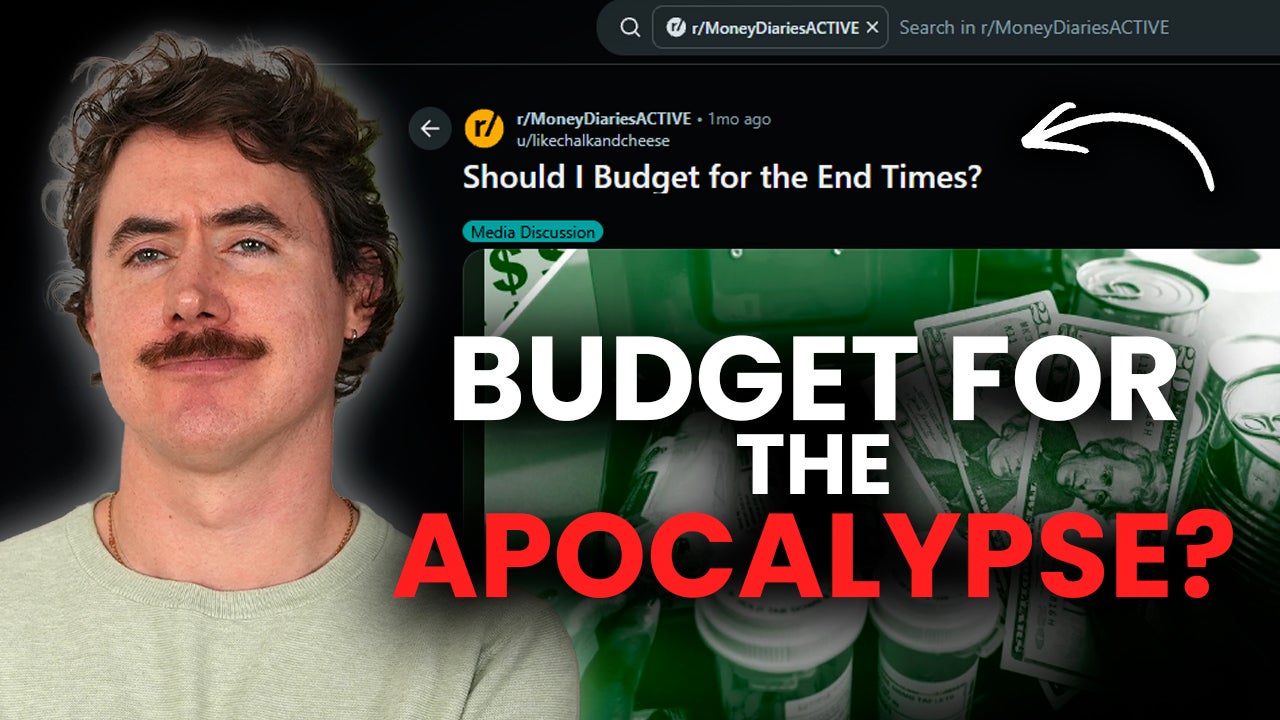
2:50Sean Pyles: Okay. The first one is the post is called, Should I Budget for the End Times? So the post links to an article in The Cut about financial nihilism, which is basically people thinking, why save for the future when everything seems so bleak? The world is crumbling. Do I even need a 401k? and actually our nerd colleague, Hannah Horvath, is quoted in this piece. She's a CFP and she says, for the most of us, the future is probably going to arrive. So don't you wanna give yourself the option of having more choices when it does versus securing your fate as having nothing for the future? That's kind of where I tend to land on the whole financial nihilism conversation.
3:27Sean Pyles: I have friends who I know that have been working for many years now and they don't have anything to say for retirement because of the nihilism and just the disgust with our broader financial system. I can understand that perspective too. But again, you need to look out for number one, that's you. And if you aren't saving for retirement in something like a 401k, you don't have anything in a high-level savings account for your savings or an emergency that pops up, then you are ensuring that your future is gonna be more difficult. So yeah, why do that to yourself?
3:58Elizabeth Ayoola: I love that our colleagues said the future is gonna come for the most of us, of course, unless you tragically die. the future is going to come for you. And this just sounds so familiar. I know there's lots of people talking about AI and how we're going to die in 10 years because AI is going to kill us all. Recently, I heard people saying the end of times were coming and that the end of the world was coming, but we're still here. Yeah, well, that's really it,
4:20Sean Pyles: is that the world has been kind of ending forever. I mean, think about people and their lives in like the 1970s and then the world today. They would imagine that their world is over. And it is. We live in a different world now, But humanity continues. You still need to build a family and a life and do the things that you want. Money enables a lot of those things to happen.
4:41Elizabeth Ayoola: It does.
4:42Sean Pyles: So having that kind of historical perspective is helpful. Although things do seem particularly grim right now, given that all these AI companies are like, yep, everything is really going to go pretty south pretty quickly. And we're just going to keep on doing it. So that, I think, feels like a different wrinkle. Whereas versus like, you know, the Cold War, there was this like threat of imminent annihilation, of course, but there seemed to be the undercurrent of we sure don't want that to happen. Yes. Whereas now it seems the companies are like, eh, it's probably going to happen. And we sure wish our thing wouldn't do this.
5:13Sean Pyles: And it's like, well, then don't have the thing do it. It drives me a little crazy. It does. But that said, I'm still saving for my retirement. I'm still putting money in a high-eld savings account. Do you ever feel financial nihilism or how do you grapple with that, Elizabeth?
5:27Elizabeth Ayoola: I'm not. I'm not a good candidate for that. No. So I always say, let's say the world as we have it doesn't exist anymore. And maybe we don't have electricity and internet. I always say I'm one of the first people that's going to go. I don't have any preparation for that. I know you said you kind of have an emergency kit or something prepared, right?
5:45Sean Pyles: Yeah. I kind of became a prepper just in recent years because the world has been so shaky and living in the Portland area, we're expecting a massive earthquake. We're like quote unquote overdue for this big earthquake that's going to wipe everything out and we won't have water. So I do have some dehydrated food and water and importantly cash set aside, not a tremendous amount, but you know, I think it's like$500 I have just in my house to cover things. Like if I do need to buy food when the internet is out, I think that no matter where you live, even if you aren't under threat of a huge earthquake or something, having cash is a really smart way to have some sort of short-term financial resilience in the immediate aftermath of a crisis because we know that you might not have internet for maybe a week or longer if a big storm comes through.
6:30Sean Pyles: So that's just something that anyone can do.
6:32Elizabeth Ayoola: I agree. And just to make it clear, I'm not saying I don't think these things could never happen. I'm just saying I like to focus on what I can control, okay? And I also like the security of having money in my account. I also like the security of knowing that, hey, if the world doesn't end, when it's time for me to retire and social security isn't finished and the whole world doesn't explode, I have money to retire comfortably. So that actually gives me peace of mind. Whereas I don't see how someone has peace of mind, living life on the edge and spending all their money because they think the world might end tomorrow.
7:04Elizabeth Ayoola: But everyone's different.
7:05Sean Pyles: It sounds very anxiety inducing for me. Yep. What helps me sleep at night is knowing that I have some sort of financial security. And if you're just spending everything that you earn and you're not planning for the future, I mean, to each their own, but that makes me very anxious.
7:19Elizabeth Ayoola: I think so. And I think one of the basis when I hear people say, well, the world's going to end anyway, let me just spend what I have is that, you know, maybe you're living, I don't know, maybe you have a very restricted or limited budget, right? So you don't have a lot of money in the moment. So it feels like, well, let me just enjoy my life. And maybe because I do have room in my budget to both save and enjoy my life, it doesn't feel like I need to go to that extreme of not saving at all, if that makes sense.
7:41Sean Pyles: Well, let's hop to some Redditor comments, because that is where a lot of the fun is to be had in any Reddit post.
7:48Elizabeth Ayoola: Yes.
7:48Sean Pyles: What's standing out to you, Elizabeth?
7:50Elizabeth Ayoola: Let me see. There's a lot of paragraphs in here. That's what's standing out to me. I think one reason financial nihilism is so tempting is because it only encourages instant gratification. It brands that instant gratification as wise. So people get to do what they'd really rather do anyway and feel like they're doing something good for themselves in the process. So I think that kind of relates to what I just said. Yes.
8:12Sean Pyles: Something that my friends and I in the ADHD world talk about a lot is this idea of fast versus slow dopamine and how for people who have ADHD, you kind of need that quick hit of dopamine to keep you excited and energized and focused. But you also need that longer, slower dopamine. And that's things like, oh, I see that I hit$10 ,000 in my 401k. Now I'm at$20 ,000. It takes time to get there, but it feels really good too, but in like a deeper, more secure way. So trying to balance both of those types of good feelings and encouragement and achievement, I think is really important for everyone to do.
8:45Sean Pyles: So that can help you also kind of overcome financial nihilism.
8:48Elizabeth Ayoola: I think so. Any comments stand out to you?
8:50Sean Pyles: One says, I'm pretty pessimistic on the future, understandable, but not pessimistic enough to totally forego retirement savings. Like there's a chance that my retirement savings will not benefit me at all in 30 or 40 years, but I'm certainly not convinced of that. I figure I can hedge my bets by putting 10 to 15 % or so away for retirement, saving whatever else I reasonably can in cash, investing my time and money and building skills and relationships that might be useful in the quote end times and prioritizing living a fun, rewarding life now in case the future is not fun and rewarding for me.
9:23Elizabeth Ayoola: What I got from that is diversifying your options, right? So I don't think the solution is just not to save anything. I think like they said, saving cash, you know, just have different options in terms of where your savings are so that you can pull from that if something tragic or crazy.
9:35Sean Pyles: That is so key. And that's why when we talk about diversifying, it is to give you more options should something happen.
9:41Elizabeth Ayoola: Yes.
9:41Sean Pyles: And so build in flexibility for yourself so that you can be nimble in the event of anything happening.
9:47Elizabeth Ayoola: Our next Reddit post is from a 25 year old. They are in thousands of dollars of debt. Their credit score has tanked by 100 points and they want to know how to dig their self out of this debt. I'm going to read it now. I'm 25. Why did I just put on that bedroom voice? I'm going to read it now.
10:02Sean Pyles: All right. Getting intimate here.
10:05Elizabeth Ayoola: I'm 25 and I've racked up several thousands of credit card debt over the course of the last few months. I've been trying to pay it off, but the interest rates are absolutely killing me. In total, including my student loan debt, I'm looking at about$12 ,000. My credit score has tanked by over a hundred points. I wasn't taught financial literacy or safety, and I'm extremely susceptible to impulsive spending and behaviors. I've been good about not using the cards in the last three to four months, but still paying off this debt is looming over me. I've seen options to transfer balances to zero interest accounts or asking for reduced interest rates, but I don't know where to begin or who to contact.
10:44Elizabeth Ayoola: I know I have to make significant changes in order to fix this and get myself out of this hole, but I don't know what to do. Any advice, any tips that anyone can offer would be highly, highly appreciated.
10:57Sean Pyles: 25 years old, you're just beginning to get your financial life going, you finally have a fully developed prefrontal cortex and you're so stressed about what your money is going to look like, what it looks like currently and how it's going to impact your future. Debt can be really stressful, really overwhelming, and it's hard to know where to start. I think that I hope they can acknowledge the fact that even acknowledging that there is an issue is a big step because from that point you can begin to kind of make a plan. So I used to write about debt for a long time at NerdWallet and one of the first things that you should do beyond recognizing the problem is really listing everything out, knowing exactly what you owe, what the interest rates are, when the due dates are, what your minimum payments are, and even playing with a calculator that would show you how long you're going to be in debt if you just make those minimum payments.
11:40Sean Pyles: Because with credit card debt, because the interest rate is so high, you may be in debt for years and years if you're only paying the minimum, and that's really challenging. So I would suggest that they start there, and then from that point think about different payoff strategies. One that the poster didn't talk about is the debt snowball versus avalanche method. With debt snowball, you pay off your smallest debts first, making minimum payments on the other accounts. And then once you pay off one debt, you roll the amount you're putting toward that into the next biggest debt and so on. You gain momentum like a snowball rolling down a hill.
12:13Sean Pyles: The avalanche method is sort of the opposite.
12:16Elizabeth Ayoola: High interest, right?
12:17Sean Pyles: Yeah. Do you want to explain that one?
12:18Elizabeth Ayoola: Yeah. So the avalanche method, you pay the debt with the highest interest first, right? So that essentially is supposed to help you save money. And I love also talking about the difference between the avalanche and the snowball because it really depends on your personality type. Some people get gratification from just knowing that they're paying off debt. So from taking it off and some people wanna actually save money or save more money and the avalanche method can be more helpful for those people.
12:41Sean Pyles: I tend to think snowball is better because we are such dopamine driven creatures and that's a way to get that little hit and show that you are making progress over time and you're not just slogging through a lot of debt, even though you kind of are. So finding the payoff path that works for you. Another tip too is honestly just calling up your credit card company because they might be able to cut your interest rate. People don't know this. If you are under financial stress, you can just say, hey, is there any way I can get this down from 25%, 30 % to 20%, 15 %? The worst they can say is no, and you've spent 10 minutes calling them.
13:18Sean Pyles: But that's also a good muscle too to build up, just talking with your credit card company because it can be really scary to communicate with them because they hold a lot of power over you. So I would recommend doing that too. And then they also mentioned zero interest credit cards. Since their credit score tanked 100 points, we don't know if they would qualify for that. And there's also the behavioral element that's really challenging with those cards because sometimes people will transfer the balance and then now you have two credit cards or like at least one additional credit card and you can rack up a balance again on that initial card.
13:53Sean Pyles: And then you're in twice as much debt.
13:55Elizabeth Ayoola: Yep. I want to address the behavioral aspect. We talk about that a lot on the show. And I know we'll get into the comments later, but something that's important when you're trying to pay down debt, especially if it's caused by impulse spending, like this Reddit poster, is trying to understand the behavior behind the spending. I talk about or joke all the time that I can be an impulse spender. And something that really helped me rein in my spending is paying attention to how I was feeling when I was spending. What were the emotions driving the spending? I noticed for me, interestingly, I would shop a lot when I was happy.
14:26Elizabeth Ayoola: So I'd be in a great mood, the sun is shining, and then I'd be like, what can I buy today, right? So I had to start telling myself, okay, what is some friction I can create or what is some other way to redirect that happy energy into something other than spending? Like go and paint or call a friend. Like there are other ways. And same thing with if maybe you're going through a hard time, maybe you're struggling with depression or whatever it is, right? I'm going through a divorce you can tend to start overspending it or impulse or even being sleepy
14:51Sean Pyles: yeah when you're in bed scrolling at night you're so susceptible to the ads that you see in your social media feeds yes so it's about really knowing your triggers what is the why behind all the spending is it to help you cope with something is it just because maybe you had an extra drink at happy hour and now you're feeling kind of loosey-goosey with your money so the triggers and then creating friction how can you make it more challenging for you to actually spend that money and then kind of correcting the behavioral aspect and also knowing that you have a tendency to overspend in this way. So for the rest of your life, be careful with your credit cards.
15:24Sean Pyles: That's something that I carry with me because I had credit card debt in the past. I know that I can spend more than I earn because there's so many things to buy.
15:32Elizabeth Ayoola: There is.
15:32Sean Pyles: And it's a matter of saying no and saying to yourself, okay, I'm saying no to this purchase. That's actually me saying yes to my savings or to my investments. There's, again, a trade-off.
15:43Elizabeth Ayoola: Another thing that I want to say is if you want to dive deeper to understand the psychology behind your spending, there's so many good books out there. If you don't have access to a financial therapist or you don't want to do that. Remember Asia Evans? She's come on the show before. She wrote a book called Feel Good Finance, I believe it is. That's just one example, but you can do a Google search and look for some books that might help you understand your spending habits and maybe any emotional trauma that you have as well.
16:08Sean Pyles: All right. So let's get to the top comment, which really stood out to me. They said, stop using the cards. Cash for everything you can. Look into the Dave Ramsey system, which I have thoughts about. Make a budget that cuts out any luxury spending. Coffee, cable, eating out, et cetera, are luxury spending. Then you can figure out where you want to put some back. It's fine to treat yourself every once in a while, just not all the time. Call your credit card companies and ask to reduce interest rates. If they say no, then tell them that you want to close the account. Sometimes that motivates them.
16:38Sean Pyles: Worst case scenario, the account is closed, which is probably a good idea for you right now. There's a lot in this comment.
16:44Elizabeth Ayoola: There's a lot to unpack there. I'm glad they ended because I was about to push back on like cut out every luxury thing. Because some people I know who have been in credit card debt, when they cut out everything, it can lead to binge spending, right? Because you don't have anything that brings you joy. So I do think you should cut down to bare bones, but still have, you know, maybe enjoy one coffee. Yeah.
17:02Sean Pyles: And we don't know this person's whole budget. That would be a very smart place to start, too. is how much can they direct toward their debt each month? And hopefully they still have some leftover for once because otherwise you're gonna live such a restricted life that you're probably gonna end up overspending in a different way or acting out in some other fashion that's maybe not healthy for you. I struggle sometimes with the Dave Ramsey system because it can be shame-based. And we know that a lot of people who have debt already feel plenty of shame. I don't find it to be the most successful long-term motivator because shame can lead people to, again, acting out and doing things that aren't healthy for them.
17:37Sean Pyles: Because if you're feeling shame about your finances, you might be redirecting this negative feeling into maybe how your relationships are panning out or other things that you're doing with your life and your health. So I am all for the positive reinforcement side of things, which is why I really do like that debt snowball method. So the -
17:54Elizabeth Ayoola: And also value-based motivation.
17:56Sean Pyles: Yes, yes, exactly. I am really intrigued by the idea of closing the account. That makes me a little bit nervous about their credit score and their credit history. I would say if you do call your credit card company, maybe say I'm considering closing this account, see how they react. But actually going so far as to close it, that might do more harm than good.
18:17Elizabeth Ayoola: And their score is already down 100 points.
18:19Sean Pyles: Their score is already not in a great place. I would like for them to keep their credit history by having this account open. If you really, really can't use these cards because you know you have an issue with overspending, literally put it in the freezer or cut it up. Take it off. The freezer, Sean. That's what people used to do back in the day. Really? Yeah, these freezer credit cards. and take it off your phone. Make it so you can't put any more money on this card. That might be a better approach than actually closing the account entirely. Okay, the next one is a travel diary. They say, I make$118 ,000 and spent$3 ,875 on a week-long yoga retreat to Greece with my best friend.
18:55Sean Pyles: Wow, I was a little shocked when I saw the price tag of almost$4 ,000 for a week-long vacation, but then I looked through their finances is because in this post, which was in the Money Diaries active subreddit, they put in so many details of their financial life. And again, with Reddit, take everything with a big hefty pinch of salt because they could have made all of this up, but I'm inclined to believe them for the narrative of it all. But this person spent a decent amount on this week-long trip, but so much of it was just for the actual yoga retreat portion, and it seems like they got a lot for it.
19:33Sean Pyles: Let me look through the post and see. So the trip itself was a little under$2 ,600. And they said that includes hotel, transportation, several tours, breakfast and dinner for seven days. That was sent directly to the yoga instructor through Venmo. So they couldn't take advantage of credit card points, which was their only bummer there. But still that for everything that we just listed for a week, I think twenty six hundred dollars isn't that bad because you're in Greece. And if you really love yoga, go for it.
20:04Elizabeth Ayoola: Yes. And your money should be spent on things that you care about. Right. It's not like they hated the trip. But you know what? I wasn't so shocked when I saw that.
20:11Sean Pyles: Really?
20:12Elizabeth Ayoola: I've been on two retreats and both cost me a little bit over four thousand dollars. Wow. And I just remember.
20:20Sean Pyles: yeah okay what were these trips because that's so much yes so my therapist does them maybe once or
20:28Elizabeth Ayoola: twice a year the first one was to costa rica second one was to jamaica and honestly that is
20:34Sean Pyles: the most i have ever spent on a trip both yeah and it was a big leap of faith because i was hoping
20:40Elizabeth Ayoola: to get out of it one they weren't really i don't know they weren't leisure trips they were more kind of like spiritual retreats right and honestly what i got out of both retreats is intangible i got community. I got lots of healing. I got great things out of them, but they were really expensive. Luckily, my therapist allowed us to pay them over time. So she gave us maybe like eight months, sometimes a year to pay.
21:01Sean Pyles: Beyond the trip fee is that the flight itself was a big chunk. It was about a little over$1 ,200. However, they were able to pay for a portion of that with a bunch of points. So they only paid about$600,$660, something out of pocket. So love to see that. Whoever is posting in here, I mean, they are so into their finances. I really do love to see it. Oh, yes. And the people in the comments, they seem like they're just so here for it. I mean, just this trip diary is so thorough. And like you said, with your trip, it seems like they got exactly what they wanted out of it. So if you are going to spend nearly$4 ,000 on a trip, I think that's a hugely important part is having a clear understanding of what you're hoping to get, why you're going to be spending this money and again, funding it in a way that's not going to get you into debt.
21:49Elizabeth Ayoola: All right. So our next one is titled, Americans say inflation has put the FIRE movement out of reach. Y 'all know I love FIRE. For anyone who's unfamiliar, FIRE is an acronym that stands for Financial Independence Retire Early. Now, the original post on Reddit made this post based on an article from USA Today. For those who are not Redditors, you can post articles in there and then have discussions about the article. For me, Sean, the first thing that stands out is that honestly, most people can't afford to do FIRE. So I feel like it's been out of reach for people for, I don't know, since the beginning of time, because you're saving 30 % or more of your income, which a lot of people can't really afford to do.
22:29Elizabeth Ayoola: Yeah.
22:29Sean Pyles: I mean, for most people to do FIRE, I've heard that it's actually like between 50 % and 70 % of their income. That's right. To do traditional FIRE. To do traditional FIRE. And it also depends on when you want to retire, what your expenses are. Healthcare alone is so expensive in the States that that makes fire prohibitive for a lot of people. If you're spending maybe several thousand dollars a month on healthcare, I mean, that's why I would love to retire early, but I don't think I'm gonna be retiring in my 40s as much as I would love to, just because I like to spend my money now. There is a bit of financial nihilism that I have to live with every single day.
23:05Sean Pyles: So I'm buying things that, you know, are taking money from my potential investment opportunities. So that's why I think, yeah, it's just not realistic for most people. I mean, just considering inflation alone, that's kind of what the article is based on. It points out that consumer prices are up around 27 % since 2021. And savings rates right now are really low. It's around 4 % in August of 2026. So we know that people aren't saving enough in general, especially not saving enough to retire early. So I think if you are in the personal finance space and in the fire space, it can seem like it's a much more pervasive thing than it really is.
23:44Elizabeth Ayoola: Agreed. And from my side of the Internet, people are not even talking about fire. They're talking about whether they think they can retire at all. So I'm seeing a lot of people even giving up on retiring and saying, hey, I'm going to be working for the rest of my life. Talk less of retiring early.
23:57Sean Pyles: And Elizabeth, you are the fire queen, as I say. So have your thoughts around FIRE and its feasibility changed over the past few years?
24:05Elizabeth Ayoola: Let me be honest. Before we recorded this and we were preparing for this, I just did a quick check-in on how much I have saved for retirement now. And I would love to retire. I don't have an exact age, but like you said, 40s would be my dream. Please let me win the lottery or something. But ideally, it'll be maybe 50, early 50s, right? And I calculated. And by early 50s, if I'm saving what I'm saving now, which is 30 % of my income, I still wouldn't have enough to retire how I want to retire. Right. So that kind of tinged me a bit. And
24:34Sean Pyles: you're not going to be, you know, living off of cat food and cardboard when you're in retirement.
24:39Elizabeth Ayoola: Unfortunately, that's not that's not the retirement I want to live. I'm willing to forego some luxuries, but I would like to maintain a similar lifestyle to what I have now.
24:47Sean Pyles: OK, let's hop into some comments. The first one really resonated with what I was just thinking and saying. They wrote, I'm pretty sure the current destruction of our health care system will put fire out of reach for a lot of folks might end up delaying regular retirement for some. Yes. I mean, people are responding, saying they're being dramatic and overstating it. It's like, yes, it's a little bit hyperbolic, but we are seeing health care get way more expensive. We're seeing the social safety net, which was already pretty marginal to begin with, be slashed even further, which are all things that, by the way, don't have to be inevitable.
25:18Sean Pyles: We can advocate for them. This is my soapbox, which is everyone says, oh, social security is going to go away. It's not going to be there for me. This is a narrative that is being fed to us. We don't have to live that future if we don't want to live in that future. So folks, vote is what I'm saying. And also have these conversations and just stop feeding into that narrative that we've been told for years and years.
25:41Elizabeth Ayoola: Yeah, we have more power than we think we do, is I think, you know, we don't have to be completely helpless. One comment that really stands out to me, it's really long, so I'm just going to read the latter half, but it says, So no, fire is not dead, but fire has become more challenging with inflation. And most millennials who were this wave of fire aspirants are now parents, which makes saving a huge chunk of your income harder.
26:03Sean Pyles: Say it again.
26:05Elizabeth Ayoola: So as a parent, I'm often having to juggle wanting to save for my own retirement with funding IELTS 529 account, paying for existing living expenses. And I'm doing that all by myself. So sometimes I do go, if I didn't have a child, I definitely could achieve FIRE a lot easier. So being a parent definitely slows down your FIRE goals.
26:25Sean Pyles: I'm not even a parent and my FIRE goals are going slowly. I mean, my pets, they take my money from me. I don't know if I told you, but we might be getting a second dog.
26:34Elizabeth Ayoola: What?
26:35Sean Pyles: So spoiler alert, that might be a big expense I have coming my way. Garrett and I have been talking about getting a little dog for years and years. And I think that it might just be a gift coming Garrett's way soon. Okay, well, I'm sure you got it in your budget.
26:47Elizabeth Ayoola: But there goes my fire.
26:49Sean Pyles: Let's get to our final post now. It's from a Redditor who just received a 90K windfall. They live in a mobile home and are paying about$600 a month, and they want some advice on what to do with this money. They wrote, I have 90K, not sure what to do with it. The body of the post says, as the title says, I have around$90 ,000 in a settlement check I got from an accident. Not entirely sure what to do with it. Me and my wife have no debt. I get paid$52K a year before taxes. My wife only gets paid around$28K before taxes. We live in a mobile home for about$600 a month on rent, only due to the fact that my mother rents mobile homes.
27:27Sean Pyles: We wanted to maybe use a tiny bit like$5K for a trip, but we just don't know. Any advice on what we could possibly do? I want to make more money rather than blowing it all. I'd love to hear that. I'm currently going to university for computer engineering and only have one to two semesters left for my degree. I'm only 23 years old and my wife is 21. Wow, they got married so young. Any advice is greatly appreciated. All right, what would you do with that money, Elizabeth?
27:51Elizabeth Ayoola: I'm always daydreaming of a windfall. 90K? Yes. You can answer that. Guess what I would do with it? You know me well, I feel like.
27:57Sean Pyles: You're going to save and you're going to go on a good vacation.
28:00Elizabeth Ayoola: You're correct. So I'm going to definitely put some towards my fire, girl. We were just talking about fire. I would use some to enjoy my life. So I'd do a vacation. Yeah, honestly, that's it. And I probably would. But I always say that if I got a big chunk of cash, I would love to be an anonymous donor to a cause. And when I say a cause, an actual person. So maybe someone's about to lose their house or they're in debt and they need a couple thousand dollars, right?
28:25Sean Pyles: And that gets me to think about what they should maybe do with this$90 ,000. I didn't hear any mention of what they have in savings. So I think that would be a first easy step is put the amount that would be, let's just say, six months worth of necessary expenses into their emergency fund and have that established. My next thought was get out of the mobile home and live in something that might be a little bit more comfortable. Although it seems like they kind of like it there because the mom rents it out. It's really affordable. There are lots of really nice mobile homes too.
28:55Elizabeth Ayoola: I personally would stay there. Like for example, when I first moved here from the UK, I've talked about before, I only had 6K and that might seem like a bit of money, but not when you're moving somewhere. And I was an intern earning like$8 an hour. So I just didn't have much money. But I lived in a room for the first year. So I rented a room in the house with IO. We shared a room just so that I could save enough. And I didn't want to move out and rent my own place until I had enough savings.
29:19Sean Pyles: Yeah, it's a great way to actually save a lot of money. Something else I'm thinking about, too, is how young OP and their wife are. 23 and 21, as we talk about a lot, time is your greatest asset with investing. They could throw a chunk of this into a tactical brokerage account or into their IRAs and have that grow over time. And that could be really helpful for them because we know that the more you save when you're younger, the less you have to save later on.
29:43Elizabeth Ayoola: Exactly. Well, let's look at what the commenters think because people on Reddit always think they know everything. So let's see.
29:49Sean Pyles: Yes, especially with giving financial advice. Yep.
29:51Elizabeth Ayoola: The first comment, do not let anyone manage it for you. For now, you can leave it in a high-yield savings account until what you think is best. If you were to invest, VOO, SCHD are good safe options that will compound over time. By the age of 40, you'll be set. hmm this is interesting because i don't always agree with people giving exact financial advice of what to invest in yes right and people can take that and run with it when they haven't done any research but i do like the idea of putting it in a high yield savings account sean what do you think about them saying don't give it to anyone to manage because we've gone over our
30:23Sean Pyles: financial advisors yeah and no some financial advisors who are managing investments can provide a lot of value for you i don't do hands-on management but the fees can be expensive if you have someone managing your finances hands-on so that's something to keep an eye out for i do really like the advice of keeping it in a high-level savings account until they know what they want to do with it they have this money there's no rush yeah there's nothing that's going to say if you don't spend this money in six months it's gone yeah right so don't feel pressure to hop into a big decision because that's where a lot of people make mistakes when they come into a windfall and in terms of the investments i see people on reddit all the time saying oh voo or SCHD, all of these ETFs and index funds, mutual funds, you have to do this specific one.
31:08Sean Pyles: And it could be good for one person, but not good for another. But just in subreddit cultures, I see people fixate on very specific niche kind of technical advice. And this is across subreddits with different genres. Like I follow like painting subreddits and folks are like, oh, you have to use this kind of paint. It's like, no, you don't. So I'm wary of anything like that. Although, of course, setting it and forgetting it can be really helpful with some investing if you have the right investment and the right timeline. Something like a target date fund could be really good for them if they do put it into a Roth.
31:42Sean Pyles: But yeah, I do like the idea of a taxable brokerage account because they would have access to that money without penalties before retirement age. So again, kind of a mixed bag on that comment. Okay, I'm just going to read a couple sentences from this one because I think that it has some good advice. Please be conservative with this money. No random investments, no luxury items, no get rich quick schemes, no advisor charging you fees for management or products. I'm kind of on board with most of that except for the no luxury items thing.
32:11Elizabeth Ayoola: I know.
32:12Sean Pyles: Because when you get a wing full, I do believe that if you get a good chunk of money like this, put aside 10 % and have that be your guilt-free fund money. And if that means you buy one thing that's$9 ,000 or nine things that are$1 ,000, whatever, have fun with it because you don't want to be serious all the time. Life is too short.
32:30Elizabeth Ayoola: Life is for living and money helps you live a little, you know? So I'm here for that. Splurge, just a little bit.
32:35Sean Pyles: Yeah, but that said, you know, there is a time and a place for advisory fees too, especially if you just know you're never going to engage with your investments in a serious way where you think, okay, this is the right ETF for me, or this is the right mix of different kinds of investments. That's where advisors are really worth the money because they can help you grow your investments and do it without you being too stressed. Again, just make sure you have a really competitive rate for what you're paying because some advisors might overcharge you a lot if you shop around won't. So just make an informed decision there.
33:09Elizabeth Ayoola: And there are fee-only advisors too. Would it be worth maybe speaking to a fee-only advisor that could even just give them a financial plan that they pay one time?
33:16Sean Pyles: Yeah, that's how I do it actually is I create financial plans. I do it on a per plan or hourly basis. A lot of advisors do it that way too. NerdWallet has a bunch of financial advisors that are on a fee basis and they provide pretty solid advice. You can look into them more at NerdWallet Wealth Partners online. But again, it's really an individual decision too and what you might want. Some people just don't like the idea of paying fees. Others really value that advice. So do your research.
33:40Elizabeth Ayoola: I think it might be better than taking investment advice on Reddit and buying VOO just because the Redditor said you should.
33:46Sean Pyles: I'm going to sign on to that as well. Totally agree.
33:49Elizabeth Ayoola: Do we have anyone out there who loves Reddit as much as we do? If you do, please send us your favorite Reddit post, especially if you're poking around in personal finance subreddits or anything else. Send them to us. We'd love to read. You can email us at podcast at nerdwallet.com. Sean has memorized the phone number. Where can they text us?
34:07Sean Pyles: 901-730-6373. 901-730-NERD.
34:14Elizabeth Ayoola: In a moment, we're exploring just why auto and home insurance rates have gone up so much in the past few years.
34:21Sean Pyles: More smart money in a moment. Stay with us.
34:24Elizabeth Ayoola: The following is a paid sponsorship, not an endorsement by NerdWallet's editorial team. Today's episode is sponsored by Bilt.
34:32Sean Pyles: You don't need me to tell you that rent and mortgage prices aren't dropping. That's why Bilt created three credit cards designed to offer the richest rewards on rent, mortgage, and everything else you spend on.
34:42Elizabeth Ayoola: Whether you rent or own, you can earn up to 1.25x points on every eligible housing payment with no transaction fee, regardless of the servicer or the lender. Points can be redeemed for flights, hotels, lift rides, a future housing payment, and so much more.
34:58Sean Pyles: Turn one of the most unavoidable payments in your life into the most rewarding. Find the card that's right for you and apply at joinbuilt.com slash smartmoney. That's J-O-I-N-B-I-L-T dot com slash smartmoney. Use our link so they know we sent you.
35:13Elizabeth Ayoola: Terms apply. Subject to approval and eligibility.
35:23Sean Pyles: Today's episode is sponsored by Own It with Angie Hicks. Yes, the Angie who co-founded Angie's List.
35:29Elizabeth Ayoola: Here's the question the show was built on. Do you own your home or does it own you? Because if your house feels like it's running your life, you're not alone.
35:37Sean Pyles: We talk a lot about the money side of owning a home on this show. Own It with Angie Hicks picks up where we leave off, covering the decisions that happen after you've got the keys.
35:46Elizabeth Ayoola: Like whether you actually need that Olympic-sized swimming pool?
35:49Sean Pyles: I'm going to say you don't. It costs way more than you think, and apparently the lane ropes are extra.
35:54Elizabeth Ayoola: They cover topics like what to consider when you fall in love with an old house, how to get a high-end look without blowing your budget, and why your outdoor space should not come last.
36:03Sean Pyles: It's not about fixing a leaky faucet or chasing Pinterest perfection. It's about making smarter choices, learning from people who've been there, and feeling empowered to make the decision that's right for you, even if it's not the one that everyone says you should make.
36:16Elizabeth Ayoola: Whether you're figuring out that first major project or chipping away at that never-ending to-do list, this is the show that helps you own your home instead of letting it own you.
36:25Sean Pyles: Follow Own It with Angie Hicks wherever you get your podcasts.
36:33Sean Pyles: All right, let's get to our weekly money news roundup where we break down the latest in the world of finance to help you be smarter with your money.
36:39Elizabeth Ayoola: Our news colleague, Ana Hohoski, is here to ensure we know the latest about what's going on with insurance. Did you catch that, Ana? Oh, I got it. Very nicely done. So thank you both.
36:51Sean Pyles: Today, we're looking at what's happening in the home and auto insurance markets and dig into why prices have climbed so much and where there might be some relief ahead. I'm joined today by two of our colleagues behind a couple of new NerdBall at Home and Auto Insurance pricing reports. Insurance writer and license insurance specialist, Andrew Hurst, and data editor and the managing editor of our insurance team, Lisa Green. Andrew and Lisa, welcome to Smart Money. Hi, nice to be back. Thanks, Ana. Happy to be here. The reports show that both home and auto insurance have become significantly more expensive.
37:24Sean Pyles: What are the biggest forces driving these increases? And how much of this is inflation versus a fundamental change in the insurance market? Lisa, let's start with the home insurance market. It's a little bit of both, I think.
37:36Elizabeth Ayoola: Part of it is just that repairing and rebuilding a house got more expensive after the pandemic, along with everything else. So every claim costs an insurance company more. The biggest reason lately, especially in Midwestern states, is the uptick in both the frequency and the severity of weather events. Last year, severe storms, we're talking about hail, wind, and tornadoes, cost$51 billion in insured losses, according to the Insurance Information Institute. That's the third straight year over$50 billion. The other thing is that the cost of reinsurance skyrocketed. For context, insurance companies buy their own insurance, which is called reinsurance, that they use to pay out claims after major disasters like a hurricane or a tornado.
38:34Elizabeth Ayoola: In January 2023, reinsurers raised their prices 25 % to 50 % even on insurers with clean records. Well, of course, those costs eventually got passed on to homeowners. Put it all together, and the median home insurance premium on a typical house built in the mid-1980s jumped 24 % between early 2023 and early 2026. That's an increase of roughly$500 a year on a typical homeowner's insurance bill over those three years.
39:09Sean Pyles: Wow, that's a really dramatic increase. Now, Andrew, what do you think is driving the auto insurance market? There are a few things that we could talk about. We'll get into maybe specifics later, but I would draw it down to the rising costs to repair car parts, the rising costs of labor needed to repair those car parts. Both those things contributed to higher claims. With higher claims also came rising legal expenses. Basically, rates rose because all of these factors contribute to bigger payouts for insurers, which end up trickling down to policyholders in the form of higher premiums. Indeed, our study found that auto insurance rates rose by about 32 % from January 2023 to 2026.
39:51Sean Pyles: That's another huge spike. Now, let's get deeper in each of these. Lisa, the homeowners insurance report found that premiums rose 24 % over three years, with the cost of increases slowing more recently. Now, should homeowners expect further increases or stabilization
40:06Elizabeth Ayoola: or even lower rates? For now, I would say stabilization. Premiums rose about 11 percent going into 2025, but under 5 percent this most recent year. And rates actually fell last year in 18 states and the District of Columbia, with the biggest drops in North Carolina, Rhode Island, and West Virginia. Insurer rate filings, which insurers are required to submit to their state regulators before they can hike or lower rates in a state suggests the same thing. In 2024, the median rate filing was for a 10 % increase. So far this year, it's 1%, and only about half of the insurer filings asked for any increase at all.
40:54Elizabeth Ayoola: Reinsurance, which we talked about earlier, is getting cheaper too. It went down about 15 % this last January and another 20 to 25 percent in July. For auto, Andrew found that insurers have basically stopped increasing rates. Home insurers have slowed down, but they haven't stopped to the same degree as auto. It's also important to remember that insurer risk appetite and pricing varies from place to place, and some states are not yet out of the woods. Pennsylvania, Arizona, and Minnesota all had double-digit increases this past year. And all this depends on the weather. One bad hurricane or hail season can cause prices to skyrocket again.
41:40Sean Pyles: And the report found that older homes cost a lot more to insure than new construction, and that gap keeps growing. Why does the age of a house matter so much to insurers?
41:49Elizabeth Ayoola: A big part of it is the roof. Older homes tend to have older roofs, which are more susceptible to damage. One study found that weathered asphalt shingles that had already taken some small nicks from hail were about 10 times more likely to be damaged in a severe hailstorm than brand new shingles. And then the other part is older wiring and plumbing. These older houses have old wiring and old plumbing, which is more likely to cause a fire or a leak compared to those in newer homes. But you know what surprised us is how fast the gap is growing. In early 2023, a home built in 1984 cost about 59 % more to insure than a new one.
42:38Elizabeth Ayoola: Now, it's about 81 % more. That's an increase of$1 ,150 a year. The premiums on new construction barely moved over those three years, about 9%, while the older home was up 24%. Now, let's turn it over to auto insurance.
42:57Sean Pyles: Andrew, your report found that auto insurance premiums rose 32.3 % from January 2023 to January 2026. That substantially outpaces income growth. So what explains such a large increase? There are a lot of factors leading to those higher rates. I'll break it down like this. So after spring 2021, the price of repairing car parts, electric components, all that stuff went up steadily as we recovered from the pandemic. At the same time, sophisticated tech has basically become ubiquitous in newer model cars. Things like sensors to warn you when you're going into an incoming lane, backup cameras. Those are just a couple of examples that most people would be familiar with.
43:37Sean Pyles: There's a greater likelihood that any repairs to a car will necessarily involve those more sophisticated parts just because of how frequently you'll run into them. With more sophisticated parts. You need more sophisticated labor, more specialized labor to be able to repair those parts. Those drive up costs to repair even more. All that, again, trickles down to premiums. At the same time, the repair costs have sort of coincided with the rise of legal expenses. Legal expenses have been tied into social inflation. This is a phenomena where claims for insurers, the cost of claims for insurers, rise faster than inflation generally.
44:15Sean Pyles: Rising legal expenses in this area have been tied to a prevalence of attorney advertising, third-party litigation financing, and increasing litigiousness among drivers more generally. All these things pile on more pressure to premiums, increasing the cost for you and me. And the report showed that insurance rate increases are slowing considerably. Does that mean consumers are likely to see relief in their next renewal? It's definitely possible. We found that insurers haven't really been raising rates over the past 18 months, and some of them have even asked for slight rate cuts. The median rate change filed, the change that insurers asked for, was just 0 % from January 2025 to mid-August 2026.
44:59Sean Pyles: At the same time, many non-standard insurers or those that specialize in coverage for people with a history of recent accidents, DUI, serious driving violations that resulted in a suspended license or even poor credit. These types of insurers have continued to raise rates for policyholders. One particularly striking finding in your report is that drivers with poor credit and a clean driving record saw their premiums rise nearly 38 percent over three years. That's even more than the increase for some drivers with good credit who had a DUI or cause an accident. Why is credit having such a significant impact on what people pay for car insurance?
45:37Sean Pyles: A lot of people don't know that credit score or credit-based insurance score has such a large effect on their premiums. Your credit-based insurance score is this metric insurers use. It gives them an idea of basically how likely you are to file a claim. This might not seem like an intuitive link at first, but there are a lot of studies that have shown ties between a person's credit-based insurance score and a likelihood of them actually filing a claim and the size of that claim. This isn't really a new development, but policyholders might be more attuned to it just because of higher pricing environment in general.
46:11Sean Pyles: When someone opens a renewal notice and sees a big increase, what should they do first? It's definitely worth shopping around for coverage. Since insurers largely aren't raising rates anymore, it's an especially good time to shop around. There's a good chance that you're going to find cheaper rates if you do that. Let's talk about bundling home and auto insurance. Many insurers offer discounts for purchasing home and auto insurance together. How much can bundling actually save and is it always the cheapest option?
46:37Elizabeth Ayoola: I think that really depends. I always suggest getting both bundle quotes and separate quotes for home and auto through different insurers than doing your cost or coverage comparison that way. The best insurer for your house isn't always the best insurer for your car and sometimes two separate policies come out cheaper than a bundled option?
47:02Sean Pyles: You'll often see insurers advertise large discounts for bundling. You can see sometimes up to 30 % or more, depending on the insurer. It's definitely an enticing way for policyholders to reduce their costs. And I think it instills a sense of stickiness among them for insurers. They're less likely to move away from their insurer if they have to shop for two things every year. Actually, I recently saw a survey that said people who bundled their home and auto policies are increasingly open to unbundling and shopping around. So while it is a reliably cheap option, it does seem like people believe they can get a better deal elsewhere.
47:38Sean Pyles: How often should consumers shop around for insurance? And when they're comparing quotes, how can they make sure they're getting the same coverage without sacrificing important protection for a lower price?
47:49Elizabeth Ayoola: I would recommend that you shop every year before your renewal. I'll also add that this is a particularly good year to do it. Half of this year's rate filings are for a 1 % increase or less. So there's a better chance that another company will beat your renewal price than there was a year or two ago. So to make sure that everything is really comparable, when you compare, it's important to line up the same numbers on every quote, like the same amount of dwelling coverage, the same deductible and liability limits. Then check two things that people often miss. One for homeowners is whether your wind or hail deductible is a percentage of your coverage instead of a flat dollar amount.
48:34Elizabeth Ayoola: While a 2 % deductible may sound small, that represents a deductible of$8 ,000 on a$400 ,000 house. That's significantly more than most flat dollar deductible offerings. The other is whether your roof is covered at replacement costs or depreciated value. A cheaper quote is often cheaper because of one of those two factors.
49:02Sean Pyles: I'll second Lisa's recommendation to shop around before your policy renews and to make sure that you're taking the steps to actually compare two types of the same policy. Drivers also should strike a balance between affordability and customer experience. This way, that person who's shopping will feel a sense of confidence that their insurer will actually be around for them if they need to make a claim. I would say think holistically about insurance, as long as they can afford to, of course. All right, Lisa and Andrew, thanks so much for your time and all the hot tips. Thank you for having us, Ana.
49:33Sean Pyles: Yes, thank you. And thank you, Ana. That is it for today. Remember, folks, to send us your money questions. Hit us up on the NERD hotline. You can text us or leave a voicemail at 901-730-6373. That's 901-730-NERD. nerd, or write an email to podcast at nerdwallet.com.
49:49Elizabeth Ayoola: Join us next time for an episode on building wealth as a new family. But until then, follow Smart Money on your favorite podcast app that includes Spotify, Apple Podcasts, and iHeartRadio to automatically download new episodes. We are also on YouTube. You can see our faces on there. The link is in the episode description.
50:06Sean Pyles: Here is our brief disclaimer. We are not your financial or investment advisors. This nerdy info is provided for general educational and entertainment purposes and may not apply to your specific circumstances. Some companies mentioned in this episode may be NerdWallet partners, but it does not influence how we talk about them.
50:21Elizabeth Ayoola: And with that said, until next time, turn to the Nerds.
Learn how to tackle debt, early retirement and a windfall, plus why home and auto insurance rates jumped.
Is it worth saving for the future when the world feels like it's ending? Hosts Sean Pyles, CFP®, and Elizabeth Ayoola kick off a series of episodes recorded in Chicago with another round of As Seen on Reddit, where they react to real money posts and the advice Redditors leave in the comments. They dig into financial nihilism and why it can be tempting to spend now instead of saving for the future. They also size up a $3,875 weeklong yoga retreat to Greece, debate whether inflation and health care costs have put the FIRE movement out of reach, and weigh what a young couple could do with a $90,000 settlement check, including whether a financial advisor is worth the fee.
Then, why have home and auto insurance rates climbed so much, and is relief on the way? Senior news writer Anna Helhoski talks with NerdWallet insurance writer and licensed insurance specialist Andrew Hurst and data editor and insurance managing editor Lisa Green about new NerdWallet pricing reports showing auto insurance premiums up about 32% and home insurance premiums up 24% in three years. They discuss how severe weather, reinsurance costs, and rising legal expenses pushed rates higher, why older homes cost so much more to insure than new ones, and why drivers with poor credit and clean records saw bigger increases than some drivers with a DUI. They also get into whether rates are stabilizing.
Read NerdWallet's 2026 auto and home insurance pricing reports:
Auto Insurance Rates Rise 32% in 3 Years, Outpacing Income Gains: https://www.nerdwallet.com/insurance/auto/auto-insurance-pricing-report-2026
Home Insurance Prices Up 24% in 3 Years; Midwest, Older Homes Hit Hardest: https://www.nerdwallet.com/insurance/homeowners/home-insurance-pricing-report-2026
Want us to review your budget? Fill out this form — completely anonymously if you want — and we might feature your budget in a future segment! https://docs.google.com/forms/d/e/1FAIpQLScK53yAufsc4v5UpghhVfxtk2MoyooHzlSIRBnRxUPl3hKBig/viewform?usp=header
To send the Nerds your money questions, call or text the Nerd hotline at 901-730-6373 or email [email protected].
Smart Money’s YouTube Channel: https://youtube.com/@nerdwalletsmartmoney
Like what you hear? Please leave us a review and tell a friend.
The show notes were created with the assistance of AI. They have been reviewed by our editorial team for accuracy and quality.
Learn more about your ad choices. Visit megaphone.fm/adchoices