
In short
How San Francisco’s tech culture shifted from early internet optimism and creative experimentation to AI-era cynicism and rightward political influence, shaping national attitudes toward technology and jobs.
Guest
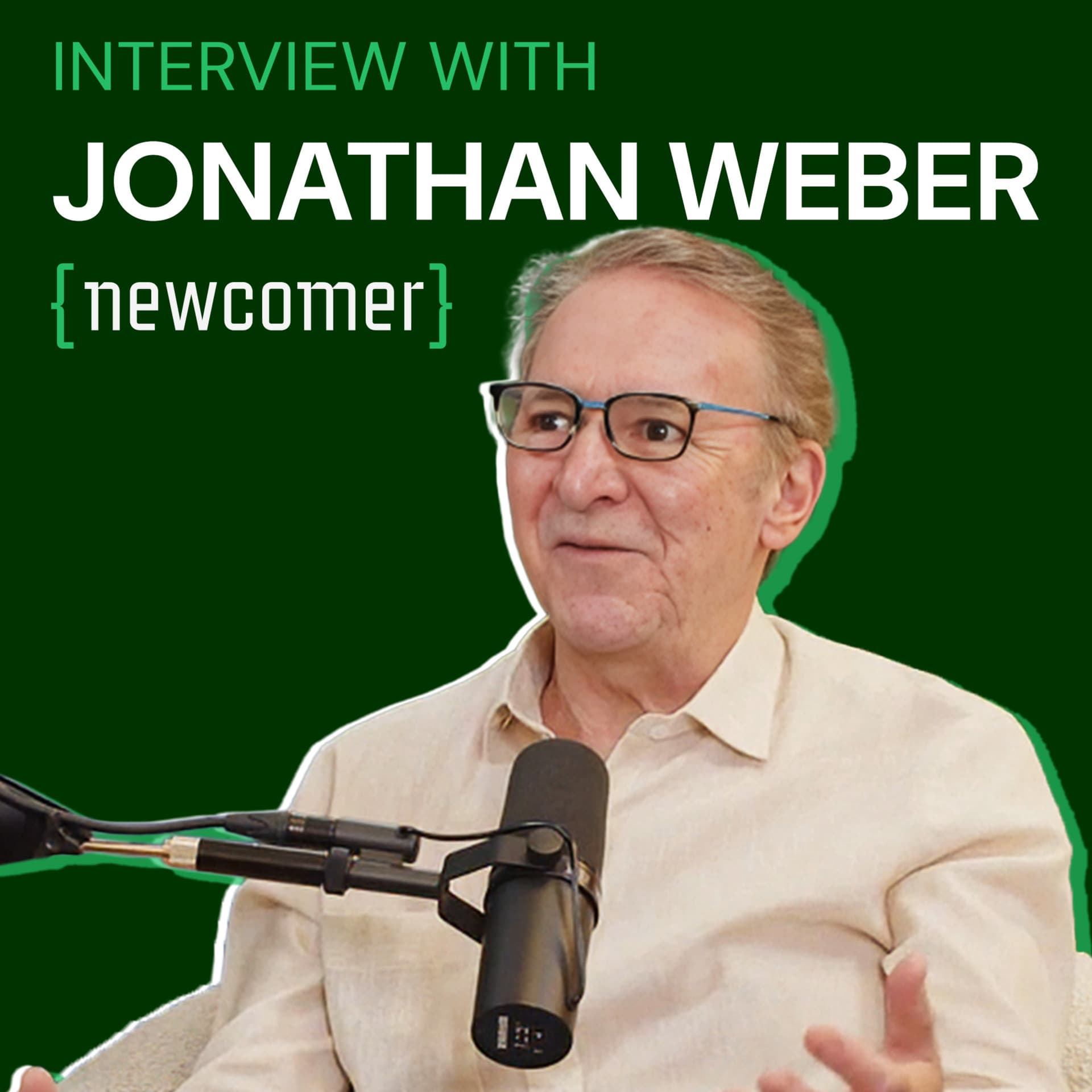
Jonathan Weber, newcomer editor-at-large; former editor-in-chief of Industry Standard and San Francisco Standard; top tech editor at Reuters; author of City on the Edge (history of San Francisco and tech’s impact).
Key claims
Early SF tech was largely disconnected from city government and driven by creative, design-forward web culture (e.g., HotWired, banner ads). As money arrived (Netscape IPO, dot-com era), politics and elite influence grew. In the Trump era, tech’s political alignment flipped, with right-wing executives dismissing public concerns about AI job and environmental impacts, fueling backlash. SF’s biggest governance failure is factional inability to cooperate, illustrated by LEAD (law enforcement assisted diversion) collapsing due to mistrust between cops and social workers.
Notable examples
Jasmine Technologies; Netscape/Mosaic (Andreessen, Mosaic browser); Willie Brown noticing dot-com money; Industry Standard rooftop/HP-sponsored parties; Eric Schmidt booed at commencement; Twitter’s “free speech” brand and “Twitter tax break”; Burning Man coverage; Daniel Lurie’s encampment approach.
Written by AI. May contain mistakes. Listen to the episode to check what was said.
Chapters
Tap a time to open that second in VOThe Early Internet Era and Its Impact
0:00 to 1:20
Explore the initial challenges and perceptions of San Francisco's tech scene.
“Early internet era, industries are dying.”
Public Sentiment Towards Technology
1:35 to 3:10
Discuss the changing attitudes towards technology and its elites in America.
“Literally this week, Eric Schmidt, the former CEO of Google, is getting booed during a commencement speech for talking about AI and sort of the coming disruption.”
The Disconnect Between Tech and Society
3:10 to 5:12
Analyze the growing divide between tech executives and public concerns.
“We believe in technology as a means of making the world a better place, making our lives better.”
The Cultural Landscape of San Francisco
5:12 to 8:01
Examine the cultural evolution of San Francisco during the tech boom.
“And I think that that is a huge error and is part of what's contributed to the public backlash.”
The Rise of Tech in San Francisco
8:01 to 9:50
Learn about the early tech companies and how San Francisco became a hub.
“And then that sort of calmed down a little bit in the 80s.”
Creative Expression in Tech
9:50 to 13:54
Discover how the web changed the focus of technology from engineering to creativity.
“of doing something really cool and really interesting.”
The Rise of San Francisco's Tech Scene
14:00 to 15:04
Exploring the early days of the tech boom and its political implications.
“When we talked about Netscape going public being the moment sort of – is that when San Francisco sort of wakes up that there's – if there's money, there's a tax base?”
Willie Brown's Political Influence
15:04 to 18:04
Analyzing Willie Brown's role in shaping San Francisco's tech landscape.
“So I do think why should you consume an episode very focused on San Francisco and then go read a book very focused on San Francisco.”
From Journalism to the Dot-Com Boom
18:04 to 20:57
A journalist's transition from traditional media to the digital economy.
“So the politicians, you know, mostly had other concerns.”
The Skeptical Approach to Tech Journalism
20:57 to 23:26
How skepticism shaped the coverage of the tech industry during the boom.
“We launched in 98 in the spring and it's hard to get traction for new magazines.”
Show all 27 chapters
The Party Culture of the Dot-Com Era
23:26 to 25:56
Exploring the lavish party culture associated with the dot-com boom.
“My job is to kind of ask questions and sort of poke at the soft spots of the story, whatever it is.”
The Crash and Its Aftermath
25:56 to 28:00
Discussing the aftermath of the dot-com crash and its broader cultural impact.
“We did some really fancy stuff at the conferences.”
Symbol of the Dot-Com Crash
28:00 to 29:08
The discussion revolves around the bankruptcy of a media company and its representation of the end of the dot-com era.
“But it was sort of like declare bankruptcy on everything you cared about before then and just like move on.”
Media Misrepresentation and Disillusionment
29:08 to 31:00
Exploring how media coverage can misrepresent events and lead to disillusionment with journalism.
“So we had gotten a lot of press on the way up, you know, the most successful magazine, new magazine in history, blah, blah, you know.”
Burning Man and Media Narratives
31:00 to 34:17
Analyzing the media's portrayal of Burning Man and its disconnect from the actual event.
“The tech industry loves to talk about this idea that whenever you see the media cover the thing you actually know a lot about, you become disillusioned with media.”
Twitter's Impact on San Francisco
34:17 to 36:50
Discussing Twitter's rise in San Francisco and its alignment with the city's values and politics.
“Why is Twitter in particular such an important company for the city of San Francisco?”
Tech Industry Growth and Housing Crisis
36:50 to 39:48
Examining the growth of the tech industry in San Francisco and its socio-economic implications.
“But Citywide Wireless was one of his big ideas.”
Creativity vs. Business in Tech Culture
39:48 to 42:01
Debating the impact of business on creativity in the tech culture of San Francisco.
“I feel like I see all these listings where housing is like, you know, housing in San Francisco are going for, I don't know, 50 % above their value or something.”
The Evolution of Creativity in San Francisco
42:01 to 45:54
Explore how the culture of entrepreneurship in San Francisco has changed creativity and personal fulfillment.
“I find people to go to raves and do drugs like I'll post about it online.”
The Political Landscape of San Francisco
45:54 to 49:46
Discuss the political tensions in San Francisco and the impact of tech on its culture and policies.
“The I want to get into like the San Francisco politics of it all.”
The Fentanyl Crisis and Political Inaction
49:46 to 52:14
Understand the complexities of addressing the fentanyl crisis amidst political division.
“Now, you know, it is to me just screamingly obvious that the solution, such as one, you know, first of all, there's no like solution.”
Wired Magazine's Shift in Focus
52:14 to 56:05
Analyze how Wired magazine has evolved from championing underdogs to reflecting the power dynamics of tech.
“So I think he's done a good job with sort of the low hanging fruit.”
The Changing Perception of Tech Heroes
56:05 to 58:06
Explore how figures like Marc Andreessen have shifted from heroes to symbols of wealth in tech.
“You know, so now the tech industry is not renegade free thinkers.”
Evolution of Wired and Tech Criticism
58:06 to 1:00:08
Discuss the transformation of Wired magazine from a tech advocate to a critical voice.
“I think she agreed with this line of argument somewhat.”
The Reality of the Sharing Economy
1:00:08 to 1:02:49
Analyze the promises versus the realities of services like Airbnb and Lyft in the sharing economy.
“You know, the Airbnb guys are like designers.”
Craig Newmark's Stance on Craigslist
1:02:49 to 1:04:49
Highlight Craig Newmark's commitment to maintaining Craigslist's original vision and its success.
“You just can't scale sort of like wild, unhinged relationships.”
The Importance of Historical Perspective in Tech
1:04:49 to 1:05:38
Emphasize the need for a historical perspective to foster innovation in the tech industry.
“We don't read enough these days, especially in the tech industry.”
Transcript
Automatic transcript. May contain errors.0:00Eric Newcomer:Early internet era, industries are dying. Like, was there a sense the city was like, please, we need you or not? No, no, no. So, you know, we would throw huge parties. You know, we did some really fancy stuff at the conferences. And so that fed me, you know, that kind of created the impression, you know, of like, ah, you know, spending all this money, you know, which we were, but, you know, it was all sponsor money. Anyway, so I was very upset about that. And so I wrote this long letter to the Washington Post, said you could at least correct these factual errors. And then 9-11. On the podcast, A History of San Francisco.
0:37Eric Newcomer:It is defining the nation today with companies like OpenAI and Anthropic, threatening to destroy every job in the world. Jonathan Weber, a newcomer's editor at large, former editor-in-chief of the industry standard and the San Francisco standard and a top tech editor at Reuters. He's seen it all. is out with a new book on the history of San Francisco and what tech did to it. That book, City on the Edge. He comes on the show just as audiences are booing commencement speakers. Interesting. In the book, he captures the disconnect between the technology set and the rest of us. And we start off the episode talking about why people are so sour on what San Francisco is building right now.
1:20Eric Newcomer:This is the Newcomer Podcast, hosted by me, Eric Newcomer, author and creator of the Newcomer Substack. Find us at newcomer.co for Insider's Look into venture capital and everything going on in Silicon Valley.
1:35Eric Newcomer:Literally this week, Eric Schmidt, the former CEO of Google, is getting booed during a commencement speech for talking about AI and sort of the coming disruption. So I wanted to take sort of, you know, from thinking about the history of the tech industry, what do you make of sort of how out of touch the tech executives are? Or I'm, you know, once out of touch, but also, you know, I'm an AI sympathetic. Yeah. What do you make of him getting booed on stage? Yeah, well, that was quite dramatic to see. And I did want to say, first of all, thanks, Eric, for having me here. It's been a great pleasure to work with you over the years in various capacities.
2:18We've had you on the podcast.
2:19Eric Newcomer:We've had you on an earlier iteration of the podcast, right? Yeah, very. No, I don't think so. Oh, this is our first newcomer podcast appearance. I love it. Yeah, yeah. Here we are in New York City. Yeah, so that's very exciting. I really appreciate it. And it's been a lot of fun to work on this book alongside working with you and seeing how the AI industry has developed. A lot of that postdates the kind of conclusion of the book. The book really ends in 24, but it certainly looks ahead at the AI developments. And the theme that we see kind of coming to a certain kind of fruition with Eric Schmidt being booed is really a shift, very dramatic shift in popular sentiment towards technology, towards the industry and towards Silicon Valley, which is kind of the metaphor for the industry.
3:09And historically, America is a techno-optimist country, right? We believe in technology as a means of making the world a better place, making our lives better. That was certainly true in the 1990s, which is when the book starts and kind of the beginning of the commercial Internet, the rise of the World Wide Web. And the culture in San Francisco at the time was a very kind of effervescent, very optimistic culture. We're going to change the world with technology. We're going to make the world a better place. And then over the course of 30 years, you know, that kind of that had an arc to it. And and a lot of those hopes and dreams from the beginning were really ended in disappointment.
3:54And I think now with AI, we have a real cynicism about tech and a kind of distrust of the elites who are kind of selling this tech to us.
4:12Eric Newcomer:Which is not a San Francisco-specific thing. It's across the United States. The United States in particular feels like relative to some, to like developing countries, the U.S. in particular seems very anxious about artificial intelligence. Yeah, I think that's true. And I do think it's very related to the political dynamics in the country, actually, because I think that, and you certainly see this in San Francisco, where the rise of AI essentially coincided with a big political shift, where the tech industry had traditionally been a fairly capital D democratic industry, certainly committed to kind of liberal social values.
4:56And that sort of flipped in the Trump era and you have the rise of a cadre of right-wing tech executives. And they've been very, very dismissive of public concerns about AI, about the job impacts and environmental impacts and other things. They're very, very dismissive of that. And I think that that is a huge error and is part of what's contributed to the public backlash. Gosh.
5:21Eric Newcomer:I mean, I think one thing that people need to understand going into this conversation today, you know, we're pretty sloppy at newcomer between Silicon Valley and San Francisco because Silicon Valley sort of moved up. They're like, oh, yeah, you know, a lot of the venture firms spend a lot of their time in San Francisco. The junior partners want to be there. Startups are, you know, building there. Of course, some of the bigger companies then leave. But, you know, Like the zeitgeist is San Francisco. But when the book starts, there's Silicon Valley with Apple that's booming. And San Francisco has some, you know, a few quirky tech companies.
6:02Eric Newcomer:Or how would you describe San Francisco in the beginning of the Internet era? Yeah. So if you so 1990, it's essentially when the book begins. There really isn't a tech industry in San Francisco at all. I mean, there's one or two tiny companies. I talk about an outfit called Jasmine Technologies that made hard disk drives. But that was essentially it. There were no substantial companies. Technology was a Silicon Valley thing. It was south. It was an hour to the south. It was a different world. It was very much a kind of government-driven, military-driven technology industry historically. So the Silicon and Silicon Valley, the chip industry was government driven at the beginning.
6:49And so it was a very different culture, a very different world. San Francisco was in its kind of post-counterculture period. It was coming out of some pretty rough economic and cultural times in the 70s and the 80s. People have been like killed. I mean, obviously politicians have been killed and sort of radical. Oh, dramatic. You know, after that, there was sort of the summer of love in the 60s. And then the 70s were just a very traumatic time in the city. There was the assassinations of George Moscone and Harvey Milk in City Hall by a former policeman. And it was a very, very fraught time. There was the zebra killings.
7:32I never heard of that before. killings were basically black people were killing, randomly shooting white people on the streets, a small band of black guys. And for ideological reasons or? Yeah, it was a little bit unclear, but yeah, you know, revolution, you know, and there was the Black Panthers in Oakland and then Patty Hearst was kidnapped. So there was all of that, you know, and so the 70s were a time of kind of big trauma in a way. And then that sort of calmed down a little bit in the 80s. But the economy of the city was a real mixed bag. You know, there was tourism was strong, but all the manufacturing was going away.
8:14You know, there used to have been, you know, steel mills and other kinds of manufacturing that was all going away. The Navy was going away. And so the economy was kind of weak, but the culture was very rich. So there was -
8:27Eric Newcomer:One thing that stood out to me about Jasmine is you were just describing it as, you know, customer obsessed. You know, they're making like what external hard drives effectively for the Mac. But it's like, oh, these are sort of, they're just very worried about their customer and sort of build a brand in a way that almost felt like not about, you know, even sort of making money necessarily. Yeah, that's right. Is that true? It feels like everybody's ruled by, you know, optimizing for money these days in businesses. Yeah, and it really was very different in that regard. So as the 90s wore on and the web was created, so the web didn't exist before the early 90s.
9:08I mean, the internet did, but the web started in the early 90s. And the first website, as we know it really, was probably HotWired. So at Wired Magazine, they were not only writing about this stuff, but they were also actually inventing the website as we know it. and the banner ad and other things. So it was a very kind of creative moment and there was a lot going on. And so as it proceeded through the 90s, people became aware that like, oh, you know, maybe there's like money in this. So that was interesting to some people, certainly. But it was not really the main driver for most people through that early period.
9:48And it was really more the possibility of doing something really cool and really interesting. And that was the main motivator. And then in the late 90s, you had – so Netscape went public and that sort of in the mid-90s, I want to say 95. I always get this year mixed up. 94, 95. But Netscape went public and that was kind of the starting gun for like, oh my God, there's money to be made. There's money to be made here. So that started to change the dynamic a little bit. Right. That was Mark Andreessen's company. So Mark Andreessen had been a graduate student at the University of Illinois at the Supercomputer Center there.
10:31And then together with colleagues, they had written a web browser called Mosaic, which sort of advanced the kind of protocols originally developed by Tim Berners-Lee for the World Wide Web. So the Mosaic browser was the first tool for mere mortals to use the Internet. And so then Jim Clark, who was a frustrated entrepreneur who had started Silicon Graphics and then been kicked out by his board and had a huge chip on his shoulder about proving himself. And he saw the Mosaic and he called Mark Andreessen. Mark came to Silicon Valley. they agreed to start a company together, originally called Mosaic Communications, actually, but for trademark reasons, they had to change that.
11:19There was a lot of litigation, et cetera. It didn't ultimately matter too much. So they started Netscape, and that was kind of the first sort of internet company as we think about that.
11:32Eric Newcomer:Did San Francisco invite the tech industry in? In the beginning, early internet era, It's like, our industries are dying. Like, was there a sense the city was like, please, we need you or not? No, no, no. So, no. So, the city was like very disconnected. You know, one of the strange things through the whole book is like there's quite a bit of disconnect really between the city government and the industry. So, the city was like practically not even aware of what was going on. And so there were a lot of people, you know, just individuals and creative people, techies of different kinds, artists and stuff who had commandeered like these abandoned warehouses and Soma and stuff.
12:13And they were just kind of doing stuff. I mean, Wired showed up and these, I mean, South Park was still kind of a dangerous neighborhood actually back then. But you could rent space for 50 cents a square foot. And so people just kind of started doing stuff. And the reason that it was happening in the city was because the people who were creating it were the creative types who wanted to be in the city. They did not want to be living in boring Silicon Valley.
12:43Eric Newcomer:Because, and part of this is the Mac and the idea that you could use a mouse and there were graphical interfaces and images were going on the internet. All of a sudden, what had been sort of the nerdy domain of chips was now opened up to sort of the designers and other people in San Francisco. Exactly. So tech became a somewhat different kind of thing. It wasn't just about the hard science, about the physics and the engineering. Now it was about the design and the creative expression and the writing. You know, the web is, you know, Ev Williams, the CEO of Twitter, said this to me, you know, that Silicon Valley was, you know, about chips and the web, you know, was something different.
13:21The web was about writing and arts and expression, you know, so it was quite different. And that was much more a San Francisco zone of expertise, as it were, than it was in Silicon Valley.
13:33Eric Newcomer:We'll keep in our timeline, but it is interesting in this present moment, if you're bullish on sort of AI coding, and that means that machines are more able to be commanded basically with plain English, you do have to wonder if like, oh, what will happen if similarly a new set of people is able to sort of shape the future? Like what pockets of the world will embrace tech in sort of a different way? Yeah, well, I mean, I certainly, you know, an optimistic case around AI would be that it will liberate the creative impulses and really elevate creativity above the sort of mere mechanics of programming a computer.
14:14Yeah.
14:15Eric Newcomer:So San Francisco city government sort of oblivious to, you know, that I mean, what EFF and people are coming up, you know, all sort of these people see the Internet coming or doing creative things, building out forums, building websites. When we talked about Netscape going public being the moment sort of – is that when San Francisco sort of wakes up that there's – if there's money, there's a tax base? Or when does it start changing – when does it start registering, I guess, with politicians? Yeah, well, I think it really was in the latter part of the 90s. So Willie Brown was elected mayor in 95.
14:54He took office in 96. uh willie was a was a a brilliant politician is still uh he's 91 years old still a brilliant
15:05Eric Newcomer:politician uh take some of the credit for kamala harris right yeah i mean he was yeah she was his protege i mean willie is responsible for the political careers of essentially everyone in san francisco at the moment you know so gavin newsom is also i wouldn't call quite call him a Willie protege, but certainly Willie was instrumental in his rise. Anyway, Willie Brown. I just want to, for people, I think it's worth saying, you know, San Francisco with the boom of AI is obviously poised to shape the entire country as we're now touching on some of the San Francisco politicians could be coming to you soon, America.
15:44Eric Newcomer:So I do think why should you consume an episode very focused on San Francisco and then go read a book very focused on San Francisco. It's because San Francisco is making a lot of the calls that are going to shape your life. And anyway, so to go back, why should people care about Willie Brown? We explained it. It's like, okay, bringing up some of the big politicians, you're getting into how he recognized the tech industry. Yeah. And so Willie, you know, for those who aren't familiar with him, I mean, he's probably, you know, among the greatest politicians in American history, literally. I mean, he, you know, he was born a poor kid in a segregated town in Texas.
16:25And from there, you know, rose to be longtime speaker of the California Assembly before he was the mayor. And very, very powerful, very, very shrewd guy, brilliant, brilliant guy. And so Willie was elected mayor in 95. He took off to 96, the boom, the internet boom started to kind of really take off in sort of 97. And Willie, being a shrewd guy, started to notice that there was something going on here that he kind of needed to be aware of a little bit. And he still didn't really understand it really, but he had a little bit of a sense. And there's a hilarious story in the book, you know, where, so at one point, Some shrewd stockbroker at Morgan Stanley was like, hey, Mr.
17:14Mayor, you want to make a little money on some dot-coms? And this was an era when the dot-coms were going public, often with very little revenue or much of a business. But it was a real bubble moment. And so if you could buy shares at the opening price, that was guaranteed profit. And so that was kind of used as currency to pay people off in different ways. So this guy was given some shares to Willie, and he had to report that as part of his mayoral financial disclosures. And so at first, he denied any special access. He was just another day trader. You know, it was all pretty funny, and he made a little bit of money on that.
17:56But Willie was – you know, he was shrewd. So he saw that something was coming here, and he started to pay a little bit of attention to the industry. But it was still, you know, relatively small beer, like even in the late, even at the peak of the dot-com boom as a percentage of the city's economy, it was still fairly small, you know, maybe 10%, 10%, something like that. So the politicians, you know, mostly had other concerns.
18:24Eric Newcomer:You know, a fun element of the book, you start off, you're a reporter at the Los Angeles Times assigned by now famous Marty Baron to go to San Francisco when many in the media class didn't get the importance of the tech industry and it was fairly boring. by dot com you're running you're the editor of the industry standard which was one of if not the sort of like for good and bad synonymous uh with the dot com bust and boom um what yeah what i guess tell us the story of dot com through sort of a little bit of the story of uh your time at the industry standard? Okay, sure. So I was working at the LA Times and I was recruited.
19:09I got a call from a recruiter who was working on behalf of John Battelle, who was starting a new magazine, a weekly business magazine about the digital economy. It didn't have a name at the time. And he had been referred to me and he had been hired by IDG, a big trade publisher, to create this new magazine. So I talked to John and he was clearly a super smart guy. And it was very controversial decision in a way to leave the LA Times at that time. So when I finally decided to take the job, people looked at me like, what? Well, because in the 90s, the LA Times was among Among the top papers in the country, you know, big newspapers were the place to be if you were an ambitious journalist.
20:00There were three or four top papers, New York Times, Washington Post, L.A. Times. So if you were an up and comer with a good job at the L.A. Times, you were kind of on the top track of the profession. So why would you leave that for a weird startup trade thing? Huh? What? But it was somewhat obvious to me, honestly. I had the chance to build a magazine, and I knew that tech was a big story. I mean, I was the tech editor at the LA Times. I had started a section. I had convinced the bosses that tech was really a thing. There would be advertisers, and we should do a little weekly tech section in the paper, which we did.
20:41It was called The Cutting Edge. I was very proud of that. So I knew there was a big story there. And then, you know, I quite liked John after a number of conversations and he hired me. And so then I went out and hired a bunch of people. There was a little work going on with the prototype when I got there and then hired up initial staff, 15 or 20 people. And it was funny. We launched in 98 in the spring and it's hard to get traction for new magazines. It's very expensive. And at the beginning, you know, we weren't really going anywhere. Like, we didn't have much of a circulation strategy. IDG didn't want to spend the money for paid circulation.
21:23And also, it was hard to compete. Like, we had inexperienced reporters. We were pretty small. We're trying to compete with the Wall Street Journal, you know. So, like, getting the big scoops that would really put us on the map was not that easy. So, the first six months were kind of a struggle. And we were under a lot of pressure from IDG. Like, they were going to shut us down. They, you know, they didn't like the name. They didn't they didn't like a lot of things. And it became clear that John and Pat McGovern, the owner of IDG, had very different visions for what this thing would be. So there was a lot of stress.
21:58But then, like, just kind of overnight, like we were confident. We were like, we know this is going to work, you know, and then just bam. What was the core story type or what resonated? Well, you know, the core story type was basically news analysis about these new dot-com companies. So there would be, you know, we would have some scoops on, oh, you know, here's, I remember one of our earlier scoops was the formation of a company called drugstore.com. You know, Kleiner Perkins was going to put a bunch of money in and, you know, create this company. You know, so that was a big thing. It was really covering the business.
22:38It was covering – well, at first, right, it was covering the business of like the business of dot-com, you know. So that was sort of the heart of it. But then it was part of that whole thing was the idea that this isn't just about like you're going to have a dot-com. It's like the internet is going to change business as we know it. It's going to change everything, you know. So as we went on, we started to write more about bigger picture stuff, you know, the internet and politics and the internet and culture.
Read the full transcript
23:06Eric Newcomer:What I'm about to use is a loaded expression in the context of San Francisco, but did you drink the Kool-Aid? Well, that's a great question because by disposition and by profession, I mean, I'm a journalist and I've always been a skeptical journalist. My job is to kind of ask questions and sort of poke at the soft spots of the story, whatever it is. And so when I was talking to John about what I would do if I were editor of this new magazine, and I told him that I thought what was really needed was for a publication in journalism, they really played against the hype. Because it was all hype, but people really want to know what's real and what's not.
23:53So we positioned as the skeptics, we're going to cut through the hype. We had our slogans like 99.9 % hype free. That was one of our T-shirts, I think. And if you read the tone of the editorial, I mean, if you read the magazine from back then, we were very much like that. We were very tough-minded, very critical. And that formula proved very successful. People really did like that for the reasons that I thought they would, which is that when there's tons of hype, you want to know what's real. um and then but then we were so successful that we we became a symbol of the hype right so we were like you're just overspending like what happened like what did you do well it was you know employees well so we had these parties you know so we started having party we we had beer and chips for the staff so the magazine closed at two o 'clock on friday afternoon we shipped the last pages and then we would have beer and chips for the staff on the roof then we started inviting people Then a lot of people started coming.
24:57Then companies wanted to sponsor. So then it became like gourmet booze and fancy food sponsored by HP. Come to the rooftop and then there'd be a line out the door. And then we started having the rooftop at bigger venues. It's amazing that HP has been fueling the events business. Literally like core sponsors.
25:17Eric Newcomer:Not this year, but my events. It's like such a huge time gap. I remember totally that one of the – we had a rooftop, a rooftop, industry standard rooftop at Bimbo's nightclub, which is a very large club. And this place was packed out, all sponsored by HP, top shelf booze, everything. So that stuff. And then we had a conference business. And the conferences also were just tremendously successful. So we would sell out these conferences,$3 ,000 or$4 ,000 tickets for three days at a fancy resort and sponsors paying$100 ,000. So it was very lucrative. And then in association with that, we would throw huge parties.
25:59We did some really fancy stuff at the conferences. So that kind of created the impression of like, ah, spending all this money, which we were, but it was all sponsor money.
26:14Eric Newcomer:What is the lesson I need to learn from this? Or, you know, how similar does this moment feel to the dot com? I would say it feels a little bit similar. Yeah, it does feel a little bit similar. I mean, there's, you know, there's a big kind of disconnect between, you know, the amount of money, you know, that's going into these companies and the sort of evident, you know, business that they have to justify that amount of money. So that certainly feels quite similar. And I feel like all those sort of like, I don't know, decadence gets written in after the fact. Right. Things that just seem sort of normal.
26:56Eric Newcomer:Then when you have to write a narrative are decadent. Right. I don't know. Do you really think there are these times that are like drastically more decadent than others or people just zero into like this day? I mean, there's some better parties. I do think, you know, to me, and maybe I'm just older and not in, you know, the same rooms, but, you know, I don't see the visible decadence isn't quite as extreme as it was in the dot-com era. You know, I think people are a little more conscious of at least, you know, keeping that inside maybe, you know, the super decadent parts. Yeah. So, you know, dot com crashes, but San Francisco is not so dependent on the tech industry that that sort of ruins the place or.
27:39Yeah. Well, so after nine, you know, 9-11.
27:43Eric Newcomer:Oh, I love this. I love the moment. What you were complaining about your how someone had covered you or something. You asked for like a correction. Yeah. And then like you said, it's September 10th. And it's like, oh, whatever. It sort of captures the moment that like September 11th, you know, obviously horrible, reoriented all culture. But it was sort of like declare bankruptcy on everything you cared about before then and just like move on. What was the what was the quibble or I forget what you were fighting about? Yeah, well, the so when we went bankrupt with a with a loud bang, it was quite a surprise to most people, including me.
28:22we still had a lot of money in the bank there was a game of chicken between the two factions on the board and I thought surely they would come to an agreement but they didn't and we went bankrupt and the bankruptcy so we were a symbol of the end of the dot com era and so people had you know the market had crashed in the spring of 2000 it took about a year for all that to play through so by the middle of 2001 like it was just a meltdown out there, you know, and it was clear that the dot-com party was over. But there hadn't been a good event to symbolize it. And so we were that event. So the bankruptcy of the industry standard became a symbol of the end of the dot-com era.
29:08And so there was a lot of press. So we had gotten a lot of press on the way up, you know, the most successful magazine, new magazine in history, blah, blah, you know. And so that's fun, you know. And then on the way down, you kind of get the other side of it. As I say in the book, it was now our turn in the barrel. And so there was a lot of very critical press. And one story in particular that really pissed me off, which was a style section story in The Washington Post by Sharon Waxman, who now runs The Wrap. And it was just the easiest, like, oh, they blew all their money on parties and now they're, you know, getting what they deserve kind of tone.
29:47And it just really –
29:49Eric Newcomer:Sort of let the facts be damned. Really wrangled. Yeah. And there were a lot of errors. There were a dozen errors. And it relied super heavily on low-level people who didn't know anything about what was going on but who she happened to know. And then 9-11 happened. You never got – it was in the Washington Post. It was in the Washington Post. Never issued your correction. And I wrote this long letter about how the story was unfair. Well, the other thing that made me really mad actually was that this was really the real thing is that a principle that I've always adhered to as a journalist is that anonymous blind quote, like blind quotes that are personally critical of someone are not allowed.
30:30You know, so if you want to be a if you want to be personal about somebody's bad actions, you got to put your name behind it. And so the story was full of anonymous quotes from IDG executives blaming me and John for the failure. Like they owned the company, you know, and blaming management, you know. So anyway, so I was very upset about that. And so I wrote this long letter to the Washington Post so that you could at least correct these factual errors. But then 9-11.
31:00Eric Newcomer:The tech industry loves to talk about this idea that whenever you see the media cover the thing you actually know a lot about, you become disillusioned with media. In some ways, this is sort of what you're saying. You got covered and you were disillusioned. There was another moment in the book. Let's step out of time in our chronology here for a second where you're at Burning Man, which is another big character in our place of importance in the book outside of San Francisco, but created and populated by San Francisco people. And, you know, there's a terrible like mud storm where like it rains really badly.
31:35Eric Newcomer:And then there's so much mud. And everybody who wanted to get out early was sort of inconvenienced. But the media makes it seem like people are like starving and all the rich people are suffering. And it basically was one of these cases where like don't let a good story get in the way of the facts sort of situation. It's like, oh, people want the shortened fraud and don't really – reporters, don't check it. Too good. Too good to check. I don't know. like you're professionally in media yet in these two sort of pivotal moments where you're in the news you're you know you have a negative experience like I don't know what is what is your gloss on sort of uh such a big question I'm trying to narrow it for you but yeah what do you make of those two two incidents right well I think that um you know certainly in the I mean the first instance, I think of really as just a good lesson in sort of feeling, you know, as a journalist, it was very educational to be on the other side of it.
32:35And not all media is the same.
32:37Eric Newcomer:Like some of the coverage was fair and some was less fair. Well, exactly. And so that was really more my, you know, my takeaway was not that, oh my God, you know, the media is all fucked up, but more like, yeah you know this can really turn against you sometimes in in ways that you don't expect and you can't really control and and that's very frustrating and kind of upsetting um you know i thought that um on balance you know as i think i also mentioned in there you know there was that story that i hated but you know the the wall street journal did a very long story about you know, the end by Matthew Rose, who's still around.
33:19And that was a very good story. You know, it was very accurate. It was a little painful to read, but, you know, it was accurate. You know, the Burning Man thing, you know, I see as a little bit like, I guess I draw a distinction in media terms. There's sort of the kind of mass market, you know, popular media, around television and celebrities and this kind of stuff, which is not something that I've been too involved in. And I've always considered that to be a slightly different realm from the journalism that I do. And I think in the case of Burning Man, it was very much kind of caught up in that sort of celebrity media world where the facts aren't really the point.
34:09And so that kind of stuff is not very inspiring to see.
34:16Eric Newcomer:In our chronology, let's skip to sort of Twitter's rise because Twitter becomes very important to San Francisco. What, that's, is this like 2014 era? Yeah, sort of early 2010s. Yeah. Why is Twitter in particular such an important company for the city of San Francisco? Well, there are several reasons. First of all, it was actually the biggest of the, I mean, it was the biggest internet startup in the city. Facebook, they didn't build it in San Francisco. Yeah, Facebook was not in, you know, it was south. You know, Google was south. You know, so Twitter was actually in the city, so that was significant.
35:00And also, you know, what Twitter was, I mean, it was and what their kind of philosophy was early on, you know, we're the free speech wing and the free speech party. And we're going to give, you know, a means of expression to oppress peoples around the world. And we're going to enable the Arab Spring and we're going to enable the social justice movement. And so all of these things were kind of very consistent with San Francisco values. So the company was kind of a good fit for the city in that way and kind of expressed a certain political zeitgeist of the city. And then it also became a kind of a physical symbol around its building because the building and the negotiation around that building resulted in a deal with the city where the city granted a tax break for companies to locate in that part of the city.
35:54and that became known as the Twitter tax break. Twitter was at the center of that discussion.
35:59Eric Newcomer:So that helped them really become a symbol of San Francisco. San Francisco is sort of inviting tech in. It's like if you're giving tax breaks, you want the tech industry there. Well, correct. And so later on, so again, in the night, you know, it was a progression. So in the 90s, the industry kind of grew up and the book reflects this. So the book at the beginning is sort of more about the growth of the Internet and the rise of the San Francisco tech community and has a little bit less to do with the politics. And then the politics come more later on because as – Once you're big and there's money to be had, then the politicians start showing up.
36:37Exactly. So then it starts to become a thing, you know, when it's a big industry. So that started to happen in the 2000s. And so Newsom was mayor during the 2000s. And Newsom, you know, he saw the tech coming and he wanted to do certain things. But Citywide Wireless was one of his big ideas. So I write about this in the book. And Gavin, you know, he's an idea volcano, as somebody who I spoke to called him. And he's a smart guy and he has a lot of ideas. He's very bad at the follow through. So that was pretty characteristic. So there is no free citywide wireless and many of the other programs that he was excited about didn't really happen.
37:22But it certainly was becoming clear in the 2000s that tech and this was sort of the Web 2.0 era, I guess. And then at the end of the 2000s, you really had this new wave of companies starting to come up. And that sort of coincided with the Great Recession. So there was a funny dynamic there where a lot of the jobs in banking and finance and stuff were going away. The city was really hurting, actually.
37:52Eric Newcomer:The city had become Wells Fargo, Bank of America, Wells Fargo. Yeah. It was important to the city. Yeah, they were obviously hurting. Yeah, they were very, very important. And, you know, Schwab and other, you know, financial services was a big thing. And so the great financial crisis hurt the city in that regard. And tourism, you know, was down. People didn't have money. But then sort of underneath that, without people noticing too much, you know, the tech was really starting to boil. And then that really started to explode in 2010, 2011, where you had a whole new wave of companies. So then you had Twitter and you had Facebook.
38:34Google was getting huge. And even though Google wasn't in the city, a lot of people, a lot of Google employees lived in the city. And then you had in kind of 2010 and 11, you had Uber, Airbnb, Dropbox. So then you have the whole kind of next wave of companies that grew up in the 2010s. A lot of them associated with the smartphone and what that enabled.
39:02Eric Newcomer:Now we're in the era of the open AIs and anthropics and the labs are, I mean, literally to these days. Now we have another wave. You know, you can think of it as like the, you know, there was the first wave around the rise of the web. Then you had kind of the web 2.0 phase, the rise of blogging, which, you know, was very interesting. There was a lot of interesting things happening, although it wasn't quite such a big boom. Then you had the next kind of big boom around the smartphone in the 2010s. Then you had COVID and so forth. And now we're in kind of the AI boom, which is yet another era of growth.
39:42Eric Newcomer:I mean, the housing market in San Francisco is insane. Is this sort of a Twitter or an X invention or you think it's real? I feel like I see all these listings where housing is like, you know, housing in San Francisco are going for, I don't know, 50 % above their value or something. Yeah. All these AI employees are getting. Yeah. There's a huge amount of money coming in, you know, at the, at the sort of the high end and, you know, San Francisco is a small city. There hasn't been that much construction, so there isn't that much inventory. And, you know, suddenly, you know, if you have, you know, If 500 people make enough money, suddenly have enough money to buy a$10 million house, that's going to change the market.
40:26It doesn't take that many people at those kinds of price points because there just aren't that many houses. And the city has done a terrible job. I mean one of the big crises in San Francisco is that there hasn't been enough housing construction for decades. So there's very little inventory. And so when you get, you know, an influx of money and influx of people as you have now with the AI, you know, it's just really sent prices through the roof, both rental and sale prices. And that's a real problem for the city because it drives out everyone else. And, you know, the service workers, you know, you need the service workers both because you need people to work in the restaurants and so forth.
41:12But also like the service workers are often a part of the of the cultural economy. Right. So it's it's kind of a cliche about, you know, the actor who's waiting tables in the restaurant. Right. But that that's a real thing, you know. So if if that if that person, you know, can't get the job in the restaurant and there's and and the, you know, theater business is sort of soft like that person is going to move.
41:39Eric Newcomer:and and then you know this is adjacent to sort of the i think where we might have some disagreement or where i'm interested to tease out i mean i think you know there's an argument in the book basically you know in the beginning of the internet the government sort of funded it it was these quirky researchers doing fun stuff there wasn't that much money to be made they just literally one of the characters in the book wants to go to raves and do drugs you know it's like how I find people to go to raves and do drugs like I'll post about it online. Email is not enough. We need forums, you know, and they're – so you're having like fun.
42:13Eric Newcomer:And then, you know, we build real businesses and it's sort of the businesses, I guess, suck out some of the like creativity and like San Francisco-ness of it all. Why do you think sort of the businesses are sort of killing that sort of spark of joy and creativity? Like that's still possible. Like those people can still go and be creative. Maybe it's more expensive to do in San Francisco. So you move somewhere else. I guess, you know, to me, it reads more just like the ebbs and flows of culture or like people feel driven to do certain things at a given moment. It's like nobody's stopping sort of a creative, quirky person from doing creative, quirky stuff today.
42:54Eric Newcomer:They're just different sort of cultural moments. Or what would you say to that? I mean, yeah, you could certainly, certainly argue that. I think that the incentive structures are very different. And these days, if you're kind of an entrepreneur, if you're not optimizing for being successful as a startup and the funding and all of that and the growth and the whole package of what you need to be a VC-funded startup. Like if you're not doing that, then you're sort of not a serious person. You know, then you're just, oh, you're just a, oh, it's just a lifestyle business. Or, oh, it's just a, you know, you're not really in it to win it.
43:41And so not a serious person. So there's kind of a disrespect towards non-entrepreneurial endeavors. So, you know, making money with your startup is sort of the prestige thing to do. and everything else is just kind of for the lightweights, you know. So that, I think, is different. And in an earlier era –
44:07Eric Newcomer:It's shaped the culture. The culture has become this pressure to build a better and better business. Yeah, yeah. Or a fundraising vehicle. Yeah, well, and, you know, when I – And this is, of course, super anecdotal. It's very hard to prove. But just in my casual interactions, you know, the young, you know, the 20-somethings, they're, like, really focused on, like, making this thing work, you know. I mean, they're, like, you know, grinding and they want the money and they want, you know, and that's, like, that's really a very intense thing. And we're 996 now. Yeah, 996 and, you know, no time for sex and no time for drinking and no time, you know.
44:48And, again, like, some of this can be a cliche in its own right. And, you know, I don't want to be too categorical about the universal truth of it. But I think that is a thing at this moment that the success in business, like making your money, it's like now's the moment. You know, the AI is coming. So if you don't do it now, like forget it, you know, and you better get there now because like the kid behind you is coming on strong. It's like the last period of the day.
45:17Eric Newcomer:It's like if you don't make money now, your life's over here. Exactly. Exactly. And I think that, you know, 20 years ago, it wasn't really like that. You know, like you were excited about your startup, but like it was also like, yeah, I'm going to Burning Man, you know. And so like, you know, if we have to do that after Burning Man, no biggie, you know, like, you know, it was just a slightly different but significant sort of subtle but substantial difference, I would say, in the sort of the attitude of the priority of kind of making money versus like the rest of life. Yeah. Yeah. The I want to get into like the San Francisco politics of it all.
45:59Eric Newcomer:I mean, there's a great – and it collides with this sort of capitalism issue we're talking about. But you have like an amazing synthesis right in the beginning of the book. You know, San Francisco has always occupied a special place in the national psyche, the mythic fog shrouded city on the edge of the continent, mesmerizing its beauty founded by fortune seekers and free thinkers, the birthplace of the counterculture and pretender to the title of the greatest city in the world. and then you're sort of like, okay, what a political streak is sort of undermining that. For the right, San Francisco is exhibit number one for the argument that progressive policies on crime and drugs have ruined democratic-run cities.
46:40Eric Newcomer:Among moderate Democrats, San Francisco is a great example of the failures of anti-growth liberalism as outlined in the abundance theory popularized by journalists Ezra Klein and Derek Thompson. The progressive left has its diagnosis too. If only the tech companies and the billionaires weren't so greedy, there'd be plenty of resources to solve social problems like homelessness. So which camp are you most sympathetic to? Yeah, well, you know, when I started this book, I knew that there was going to be a lot of pressure to blame somebody to decide, you know, it's always easier when you have good guys, bad guys, you know, it's their fault.
47:20And I found it very difficult to do that, in all honesty. And, you know, they say that, you know, success has many fathers, you know. And, you know, in the same way, I think in this case, like there's plenty of blame to go around, you know. So I really do think that each of the, you know, this is an unsatisfying answer to the question. But I think that each of the camps, you know, has a lot to answer for in terms of how they've, you know, really not met the moment and some of these challenges.
47:53Eric Newcomer:what is the biggest like failure in san francisco like i mean i'm the abundance zone so i'm i would say a failure to build but there are lots of people if you're if you're in the degrowth category i don't know if you stay out of the tenderloin and don't go downtown san francisco is pretty great for the people who can afford it right right i don't know what what is your core critique what has been the failure well i you know i think the biggest failure of san francisco is the uh is the inability of the factions to work together better. And that, you know, because it is a very wealthy city. And there is a lot of consensus actually around a lot more than you would sort of think based on reading the headlines, you know, about some basic kinds of issues.
48:46But the political factions are kind of so dug into their positions, you know, that they won't work together. And that is very, very damaging to the city. And I think that, you know, an example of it that I use in the book is that in terms of the fentanyl problem, right? So drugs are a very, very tough issue. It's a very tough issue to deal with, right? You know, many cities, countries, you know, have struggled with these problems, right? So you have a fentanyl crisis. people dying in the streets, three people a day. And so you have on the right, it's like, well, we just need law and order, just throw everyone in jail, just more cops on the streets, and that'll be that.
49:32And then on the other side of the spectrum, you have, no, these people are victims and they're sick and we need treatment and we need compassion and that. And so those Those are the entrenched camps. Now, you know, it is to me just screamingly obvious that the solution, such as one, you know, first of all, there's no like solution. There's like solutions, you know, ways to mitigate, try to work on the problem. Lies somewhere in the middle. You need some law enforcement and you need some compassion together. And so they had a program called LEAD, a law enforcement assisted diversion where they They had cops and social workers working together to help the most troubled of these addicts.
50:20But the thing fell apart because the cops didn't want to work with, you know, where like the social workers are like, you know, bleeding hearts, you know, don't know that these people are just criminals and, you know, we don't even want to deal with you. And then the social workers were like, yeah, law enforcement is no answer. You know, where are you pigs? We're not going to work with you, you know. And so they wouldn't – they refused to cooperate and so the program fell apart. So to me, that is a huge failing.
50:49Eric Newcomer:So is – I mean the book – the epilogue is Daniel Lurie, the current mayor, but is mostly focused on pre-him. Does he just – he's solving all these problems. He's the most popular mayor in America. So if there's ever going to be consensus, will he have it or what is your read so far on his morality? Well, I think that he has done very well precisely on this point. So he's kind of been able to get a little bit of a like, hey, we actually all kind of agree on certain basic things. So let's kind of, can we just kind of do those things for starters? And that's like, you know, the encampments, for example.
51:30So, you know, even now, you know, the left and a lot of social workers, you know, feel that the sweeping of encampments is, you know, a nasty thing to do to the people who live there. But if you, you know, in the city, like people are like, no, you know, clearly it's not OK for people to live on the sidewalk in tents, you know. So, you know, they've swept the encampments, done a lot of sweeping of the encampments. That's been pretty popular for the most part. And I think that they've been, you know, at the same time done some things on the other side with more treatment and more shelters and not, you know, not been too harshly, you know, kind of clamped down about it.
52:14So I think he's done a good job with sort of the low hanging fruit. But the big tests are still to come. So he's very popular right now. He's got a very popular man. You know, he's got a good manner. He shows up everywhere for every ribbon cutting. he smiles he tells everybody he likes him he's like like you miss this genie like the left he likes everybody right he's very genial he's very consistent in that manner so it's hard for people to grab onto something to dislike about him you know so so i think he's done a good job you know it helps him to be a billionaire honestly like i i think that you know trump somehow isn't fucking with him very much um maybe because he's also a rich guy and trump has an instinctive
53:00Eric Newcomer:he just has like totally avoided the ice fight he like yeah he's avoided the ice fight um you know the the the presidio thing you know trump was making noises like he was really going to try to dismantle the presidio trust and sell off some of that property but that that isn't happening um i mean they just appointed the new presidio trust board with lynn benioff on there and Trevor Trena. I mean, they're not dismantling anything. So I wanted to zoom in on Wired specifically. I literally had Katie Drummond, the global editorial director on, I think the podcast that will run before this one that I've already recorded, you know, recently, Trey Stevens at Founders Fund joked about acquiring it.
53:43Eric Newcomer:You wrote in Newcomer sort of about that whole incident and Wired is sort of a character in the book. What is your view on how much, you know, I don't know, Wired today is betraying the founding origins of the publication? And like give us sort of your gloss on the publication's evolution. Well, I think that Wired has evolved in an almost inevitable way. You know, back – one thing that's very important to remember in thinking about this history is that back in the 90s when Wired was created and when there was this kind of effervescent optimism that I talk about, you know, the tech industry was very small.
54:27It was – It was an underdog. It was an underdog. Yeah. And relative – you know, the big industries were like oil, you know, and banking. Like those were the big industries. You know, tech was kind of this smallish, weird-ish, you know, thing, like important, but not like the banks, you know. And so that was a very different thing. And so in those days, you know, it was much, yeah, it was more of a kind of an underdog, you know, feeling. So now, you know, you have a tech industry which is like so big and so dominant and, you know, has control of, you know, so many aspects of our lives, you know, that it just by nature is going to shift the relationship.
55:15So back in the 90s, Wired was championing these idiosyncratic technologists, people thinking outside of the box, we're going to remake the world with these new technologies. And it's a glorious moment of reinvention led by these kind of fascinating idiosyncratic freethinkers, right? Right. So nowadays, you know, you can't frame the tech industry that way. Like it isn't about that. You know, it's like the tech industry is not run by. Right. If you're a publication that cheers for underdog free thinkers, those same people would not have the same view of the tech industry today. Exactly. You know, so now the tech industry is not renegade free thinkers.
56:09The tech industry is like super rich billionaires, you know, with enormous power and political power and all kinds of other stuff. So you can't like, you know, Marc Andreessen would have been a hero, you know, of Wired in 1994 and was, I guess. I don't remember exactly. But, you know, he would be the type of guy who was a hero in 94. But nowadays, like, how would that guy be? How would he be a hero exactly? Like one of the richest guys in the world? like he's not an underdog he's not a renegade he's not you know he's just like he's like a rich guy
56:44Eric Newcomer:you know would literally say you know we did the heroic act you wanted we built the great thing like and now everybody hates us for it you know or what do you make of that like i do well they haven't built the great thing they built they built they built the thing that benefits them you know but it but it you know they've gotten rich but what's it done for the rest of us you know and and so i i mean and i'm not saying that's a i'm being sarcastic in a way you know There's plenty of answers to that question, but they have not articulated those answers. The tech industry leadership is not sold to the people why what they're bringing is going to be good.
57:20Eric Newcomer:Exactly. We literally started this episode talking about Eric Schmidt, talking about AI and getting booed. I mean, they're not doing a good job selling it. And I think the question is – And to go back to Wired because I think that's a good point. And I don't know how Katie, you know, might have responded to this. But it is certainly true that wired in the early days, you know, was celebrated tech. And wired these days is often very critical. Now, to me, that's a kind of a natural evolution. But if you sort of say, well, is wired the same thing as it was then? Does it represent the same thing? Well, not exactly.
58:04No. I mean, it's clearly more political.
58:06Eric Newcomer:I mean, she didn't embrace totally. I think she agreed with this line of argument somewhat. But I think she is sort of casting about for the renegades and sort of people to be cheered for. I think she sees the critique of like, oh, we need to work on projects. that find sort of people we will designate as heroes. But obviously she's very proud of and should be proud of Wired's work on stuff like Doge and sort of the failures of Elon's renegade boys to find government wastes and just sort of the chaos they cause. So, I mean, I think she believes they're doing important work, but is sort of working also on pieces to find some of the optimism.
58:46Yeah, well, and interestingly, within Wired, there's always been a tension between the liberal and the libertarian within Wired. And so Louis Rossetto, the founder, you know, he was much more libertarian. And he would actually agree with the, I'm fairly sure, would agree with the Trey Stevens critique, like he thinks that Wired, you know, Louis has kind of gone to the right. And he believes that Wired today does not represent what, you know, what he's celebrated. And even Kevin Kelly weighed in on Trey Stevens' thing and said, oh, that would be a very wired thing to do to buy wired.
59:25Eric Newcomer:I mean, I do think, you know, I'm I think fairly sympathetic to the tech industry. But if you look at, you know, Facebook had some of these sort of San Francisco, it sold the world on connecting everybody. And obviously, you know, I do think people are connected over Facebook. But I don't know that part of the message was, you know, get all your political takes from your aunt or whatever, you know. And then, you know, the sharing economy, which I really lived through, I really don't think delivered on the message that it's like some guy with a car making a little side money. Like mostly drivers are professional.
1:00:03Eric Newcomer:It feels like most Airbnbs you go to, it is their job. And so, again, you have the tech industry embracing sort of a creative framing. You know, the Airbnb guys are like designers. But then once it scales, you realize it's sort of a nice story on top of what feels like a less sort of societally mind bending, acid tripping business. Right. And yet, again, we find ourselves here with AI. You know, it leads to a bad path on where things are going. But right now we're in the fun, you know, you have your Claude bot and you're like doing, I don't know, you're hacking together websites. I don't know.
1:00:42Eric Newcomer:What do you take from that journey we've been on? Well, you know, we were talking a little bit before about the, you know, the role of capital and venture capital. And I do think that in the sharing economy, it's kind of an example of where if you're really pushing to optimize for profit, then that takes you in certain directions that you wouldn't necessarily have to go. Right. So in other words, a service like Airbnb, like there is a thing there that would be what it's purported to be. Right. Like friends, you know, just people making a little extra money on their room and, you know, travelers saving a little money and having a more personal, you know, natural experience.
1:01:35And like there's a business in doing that. It's just not as good a business, not as lucrative a business. as the business of like professional operators renting apartments and renting them out. But I feel like there's this world
1:01:48Eric Newcomer:that it's not just like the mean money sort of forces that are doing it. Like the left, there are certain things in the book, right? Like you read like, like do drugs and like talk about it to your colleague. You know, it's just like some of the things that were wild and fun, like left culture wouldn't allow either. And like having the, you know, Lyft tried to be the more like random guy with a car. And in some ways it's like, that's pretty dangerous. And like there's something good about a professional and like some of the bad Airbnb experiences are like, man, the host just wants to talk to me the whole time.
1:02:18Eric Newcomer:Like there are certain things where like some of those examples are examples where like left culture itself doesn't necessarily want to sustain the wacky and weird thing at scale. You can trust it in sort of a small experiment, but once it's becoming sort of societal-wide, the litigious sort of culture that I would put more on the left also sort of sands that down. So these things just sort of get sanded down to a version that the markets can sustain. You just can't scale sort of like wild, unhinged relationships. Right. Or what do you take of the critique that there are pieces of the left that are also sort of sanding down what are wild cultural ideas?
1:03:02Yeah, I would – I think that's fair that the left kind of – you could say generically there's sort of a prioritization of kind of safety which would lead to a kind of conservative approach to certain things. So I think that's a fair criticism. And, you know, I would point to, I mean, Craig's list, right? So that's in the book. I mean, to the extent there are heroes in the book, right, Craig would be a hero. You know, Brian Bellendorf. Don't change. Just keep it how it was. It was good and don't over extract. Well, but the thing that I find awesome about Craig's story is that, you know, he was just like, no, like, no, I'm not going to take the money because it's not my thing.
1:03:54Like, I've got enough money and I don't need the money. And if I take the money, I'm going to have to do a bunch of shit that I don't want to do. And I'm going to have to make the service something that I don't want it to be. And so I'm just not going to do it. And so he didn't do it and he kept the thing the way it was. And, you know, he gets a lot of criticism from for like not modernizing the service. But, you know, there's millions and millions of people who like it just the way it is. And his insight actually was that, you know, well, it's not really an insight, but he's the only one who ever acted on it, which is that people don't like change.
1:04:30So I'm not going to change it. And Craig, you know, and the funny thing is that so Craigslist still works. It's still the best place to get certain things in a lot of cities. You know, it depends. But, you know, it still works. It's still basically free. And Craig has made like a billion dollars. Go read City on the Edge. It's amazing.
1:04:53Eric Newcomer:We don't read enough these days, especially in the tech industry. Go read a book. The amazing thing about reading history and this history in particular is, yeah, you remember that you fall victim to the winds of your time and that there were other times that were also awesome where they think differently. And if you really want to think different in the tech industry, you have to sort of be aware of history. And I think that's one of the things, honestly, that was Steve Jobs was, you know, a liberal arts person, someone who really had a sense of history. And I think one of the failings of this current moment in the tech industry is just people sort of myopically in their own time without that sense of history.
1:05:33Eric Newcomer:So go read City on the Edge. It is a very readable, enjoyable book and story. And I think you will have a sense of perspective that will be gained. And so thank you for joining us on the show and giving us a taste of what is to be found inside the book. Well, thank you, Eric. Thank you very much. And if I would just add one last thing that kind of plays into your point here, I think, and one thing that I'm very proud of about the book is that I think it kind of weaves together a story of the rise of the industry and the evolution of the politics and the evolution of the culture and shows how those things really interrelate with one another.
1:06:12And hopefully that's a unique contribution of the book. Great. Thank you very much for coming on the show.
1:06:17Eric Newcomer:All right. Thank you, Eric. that's our conversation. If you want to see more of what Jonathan Weber and I are writing, you got to go to newcomer.co. That's our sub stack here on the podcast. Please like comment, subscribe, tell us who you want me to interview next. And if you're still hankering for more tech podcasting, we've got a chat show for you. That's the Cerebral Valley show with my Cerebral Valley co-host, Max Child and James Wilserman. Otherwise, I'll see you next week. This is the Newcomer podcast. Thanks so much.
From the publisher
How San Francisco's tech culture went from countercultural idealism to right-wing power, and what it means for the rest of us.
Jonathan Weber, editor at large at The New Yorker and author of City on the Edge, joins Eric Newcomer to trace the 30-year arc of how San Francisco became the center of the tech universe, and how the industry that once promised to change the world ended up changing politics instead. From the early commercial internet to the rise of OpenAI and Anthropic, Weber connects the dots between Silicon Valley's cultural roots and its dramatic political shift toward the right.
The conversation covers the dot-com boom and bust, the sharing economy's broken promises, why tech executives became dismissive of public concerns, how AI is accelerating the disconnect between the industry and everyday Americans, and what history tells us about where this all goes next.
City on the Edge is available now wherever books are sold.Subscribe for weekly conversations with the founders, investors, and executives shaping the tech industry.