 Ask ChatGPT
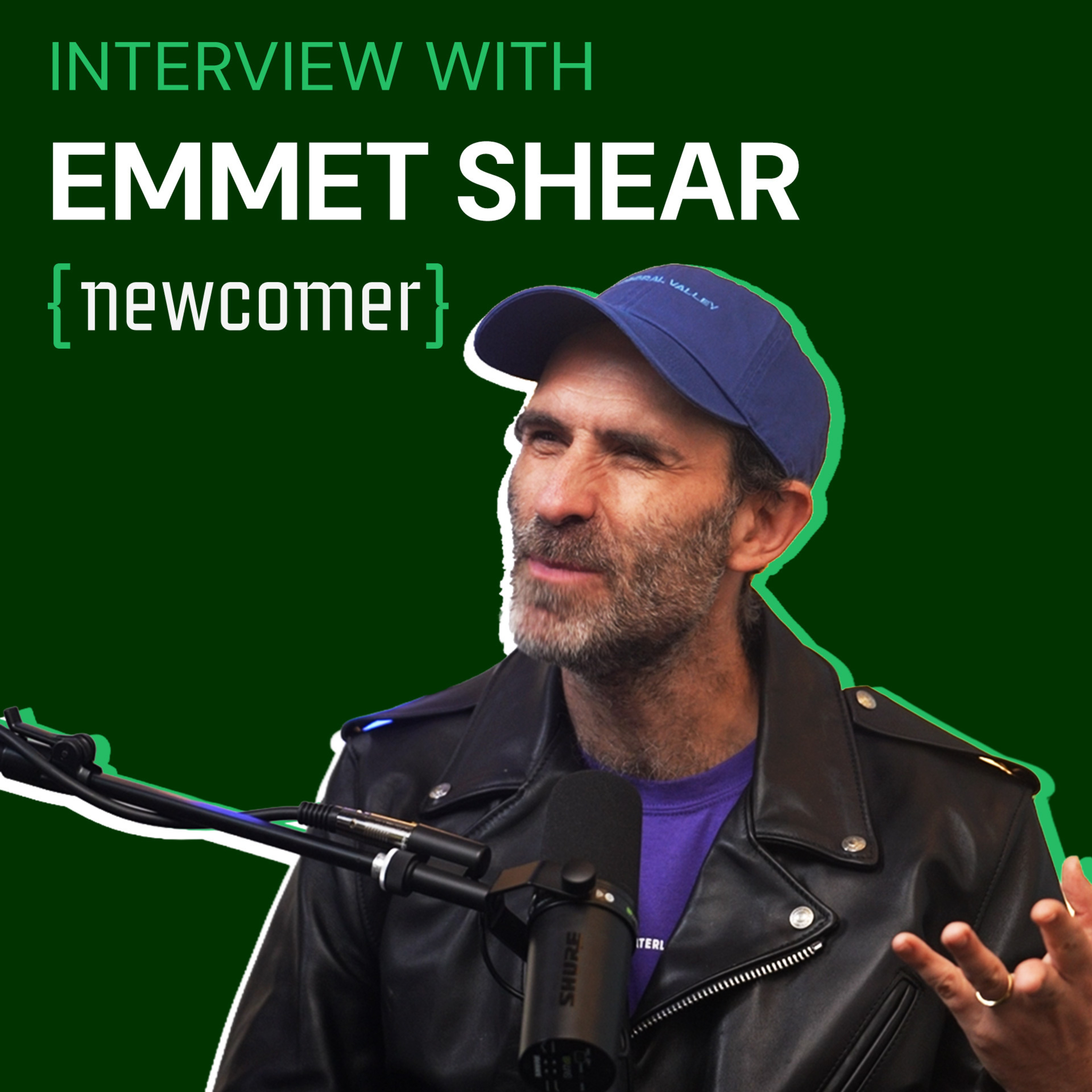


How AI is accelerating cyberattacks, forcing new defense approaches, and why Palo Alto Networks’ CEO buys startups that solve emerging security problems faster than incumbents.
Eric (Palo Alto Networks CEO). No other named guest appears in the transcript.
Eric leads Palo Alto Networks (7,000 developers; ~40 acquisitions in ~8 years). He previously worked at Google (joined in 2004) and SoftBank (investor). He also runs/oversees cybersecurity efforts.
AI will rewire cybersecurity because attackers can find and daisy-chain vulnerabilities quickly (example: ~18 minutes). Defenders must consolidate enterprise data, train models per enterprise, and detect abnormal behavior. The most dangerous attackers are those seeking disruption with “no price” (not ransomware). Frontier models are roughly comparable in vulnerability-finding coverage (about a third each).
Colonial Pipeline ransomware; attacks during the Russia-Ukraine war; AI vulnerability testing across Google/OpenAI/Anthropic; AI coding tools (Cursor/Codex) lacking security coverage.
Written by AI. May contain mistakes.
Learn how AI is revolutionizing the speed of cyber attacks and defenses.
“In cybersecurity, every bad actor is trying to attack you in a net new way.”
Insights on leadership in tech, vision, and the growth of AI.
“You're someone who shares driven, I think people think, aggressive, their personality traits people see similarly to Jensen.”
Explore how consumer needs influence technological advancements in AI.
“In 2004, I had the privilege of being at Google.”
Discussion on how AI will disrupt existing industries and create new paradigms.
“We're still seeing a bunch of enterprise coding applications.”
Insights into various types of cybersecurity threats and attacker motivations.
“Started the bang some vanished Google was a 13 search engine in the world.”
Learn how AI can transform cybersecurity defenses and improve incident responses.
“They can go attack and attack somebody so if you put enough amount of compute put enough intelligence behind it These models are pretty good at finding vulnerabilities.”
A discussion on the moral implications of paying ransoms in cyber attacks.
“I think that's going to be a huge opportunity.”
Explore the rapid advancements in AI models and their implications for cybersecurity.
“That can have a tremendous business impact.”
Insights into how companies approach acquisitions in the cybersecurity landscape.
“It's very hard to believe that my 7 ,000 developers at Palo Alto have every idea and can knock everything out of the park.”
Learn how to effectively integrate acquired companies for enhanced product offerings.
“smart people and they actually understand the problem really well and they're very focused on trying to solve that specific problem.”
Learn how acquisition strategies prioritize retaining founders to drive product vision.
“99 % of the time my people got their ass kicked by somebody out in the field who raised less money, was extremely resource constrained.”
Understand the current size, growth, and dynamics of the cybersecurity market.
“The fact that you can be able to convince real practitioners that they want to use your product is usually good.”
Explore how AI influences new market opportunities and cybersecurity challenges.
“I think it's not just the size of the market, but if you go back 10 years The share shifts are huge, right?”
Discover perspectives on investing in AI companies and market expectations.
“So everybody mostly who's using Claw or Cursor or Codex or pick your favorite AI coding tool, they don't actually have a security capability around that which is kind of a big...”
Learn about key principles of leadership and product focus for startups.
“There are customers who prefer the full stack delivered to them so they don't have to worry about the elements of the stack.”
Hear about the cultural changes implemented at Palo Alto and their significance.
“Or does it change as your business changes?”

Get the gist, explore an idea or ask about something said.
 Claude
On Newcomer Pod, what are the key points of this episode?
Searching your listeningAutomatic transcript. May contain errors.
0:00AI is going to fundamentally change the speed of attacks that we see in cybersecurity, which requires a whole rewiring of the defense mechanism, both from an infrastructure perspective and sort of AI in defense perspective. In cybersecurity, every bad actor is trying to attack you in a net new way. They're not trying to do it the way they did yesterday because we probably found an antidote to the way they attacked you yesterday. So we've got to be constantly on our toes looking for where does innovation live in the realm of cybersecurity.
0:30Eric Newcomer: What is your reaction? You're a leader of an enormous company. You're someone who shares driven, I think people think, aggressive, their personality traits people see similarly to Jensen. And then there's also this acquisitive, deal-making attitude. What is your reflection on losing him as a leader at NVIDIA? Everything that's happened in AI has surpassed everyone's expectations. And I've had the pleasure of Sam coming and visiting me every few months at my house. And every time he'd come and tell me that he wants a bigger data center, and he got to a point where I thought he's lost sight of reality.
1:08Like I said, I think we're going to have a$500 billion data center, and I'm going to need all that compute. I'm like, dude, this guy was 10, four months ago, then he showed up at 50, then he showed up at 100, now he was on 500. I don't know if he's delusional. But what he's done, what Dario's done, what Jensen has done is just…
1:23Eric Newcomer: Wait, but was he delusional or not? We had that period. I think so. He was visionary. I think him, Dario, Jensen, all of them have had a vision around how big AI can be. I think we're all coming to it that this thing is way bigger than we expected. I think now my belief is that demand is insatiable. I have an interesting point of view. In 2004, I had the privilege of being at Google. When I joined Google at that point in time, search was a consumer-driven technology. and it used to be 2 % of advertising used to be kind of like digital now it's probably 75 to 80 % and you sat there and you couldn't anticipate in 20 years from now this is going to be 80 % of the world's advertising revenue and every technology you've seen the last 20 years has been consumer first search was consumer first YouTube videos were consumer first Facebook you take your pick and these are built trillion dollar companies children's dollars of the companies.
2:19What's fascinating is we haven't seen the consumer revolution of AI yet. We're still seeing a bunch of enterprise coding applications. I think this is gonna be so big from a consumer perspective that's gonna upend everything. We're just gonna upend what Amazon does in e-commerce, gonna upend what Google does in search, gonna upend what happens in the social media space. So all that's gonna... Does that mean no bubble?
2:41Eric Newcomer: That means we sort of keep going strong for the next few years? I think your bubble is a question of trying to separate the Consumer demand insatiable demand and equity prices You know equity prices go in and out of bubbles or people get over enthusiastic at some point in time Then they get under enthusiastic markets always right once in a while But every other time it's either over exaggerating things under exaggerating things So from that perspective could be in a bubble? I don't know if you look ten years out and look back I think we all say these are all minor blips that we saw now it is true that Some companies will fundamentally vanish and that happened in the internet era, right?
3:18If you go back some of you're not old enough But if you go back to the late 90s early 2000s a lot of companies Started the bang some vanished Google was a 13 search engine in the world. It wasn't first So and it's now four or five trillion dollar company the first 12. You don't remember the names
3:35Eric Newcomer: we The last conversation I think filled a void that we had, which was the physical world. There's a theme that I really thought we'd be talking about more today that we haven't so far, which is just security. And the fact that there are, you know, I think you joke to me backstage, you're running a security company. Yes, and it's not a joke, it's actually what I do. It's true, it's like this is an AI conference, I'm running security. I mean, but AI obviously poses perhaps like the largest security threat we've ever seen, or I don't know, how would you score, Or are the state-of-the-art models, is it fear-mongering that people are saying that they could find all these zero days?
4:09Eric Newcomer: Or what's the level of security risk we face today thanks to the models? As you've seen, the sort of bleeding edge of the models are very good at solving hard problems, as you saw with Navier-Stokes and similarly likes that stuff. And what you discovered, these models are really good on concentrated tasks, and they're very good at 80 % of a broad task. So you can focus them and put them on a very specific task give them tons of compute persistence and they'll go and find the solution for that problem Or you can go try and do 80 % of something, right? Like try and get to do 80 % of your Email and stuff.
4:42I'll get 80 % right 90 % right something a hundred percent right, but you can focus on a very specific task now cybersecurity is kind of interesting because You just got to find that one breach that one vulnerability that one attack part They can go attack and attack somebody so if you put enough amount of compute put enough intelligence behind it These models are pretty good at finding vulnerabilities. They're pretty good at finding vulnerabilities that they can daisy-chain and try and attack somebody So that's fundamentally changed the game from attacker perspective historically attackers and defenders somewhat stayed in sync because attackers were Individuals would have to spend a lot of time trying to come up to something Usually you could catch them because they were trying to sort of lurk in infrastructure trying to daisy-chain stuff They couldn't get through as quickly now in 18 minutes enough compute and persistence can actually go find a vulnerability, daisy chain it, get inside, exfiltrate data and leave.
5:3418 minutes is not long enough time. So yes, AI is going to fundamentally change the speed of attacks that we see in cybersecurity, which requires a whole rewiring of the defense mechanism, both from an infrastructure perspective and sort of AI in defense perspective.
5:52Eric Newcomer: What should startup founders do today? It depends what you're trying to start up. What? Depends on what you're trying to start up. Yeah, just advice for defending against the fact that attacks seem inevitable. I mean, it begs a sort of fatalism, which is like, I guess I'm going to attack, what am I going to do? Well, the fatalism probably is more in the realm of reality for people who have old infrastructure. They haven't upgraded for many years, and they've been sort of sweating the asset. If you are running with new infrastructure, relatively infrastructure in the last three to five years you actually have a chance of trying to consolidate all the data so look AI is a data problem you hear that on a constant basis if I wish I had better data I had better synthetic data there's tons of companies creating synthetic data because you're trying to train your models using data to be able to respond as quickly as you can in the in the defense world so the first thing enterprise will have to do is they're gonna have to put all the data in one place so we can train the data and saying this is what normal behavior looks like in the enterprise and then AI will be smart enough to figure out what abnormal behavior looks like and you have to literally train it for each enterprise one at a time and if I can train AI on how my enterprise operates traditionally it should be able to suss out abnormal activity the moment it susses out abnormal activity it should be able to go out and investigate saying what's going on this looks different that's where we need to get to from a North Star perspective that does require a bunch of replumbing of infrastructure that requires training models to be on the cyber defense side.
7:26I think that's going to be a huge opportunity.
7:28Eric Newcomer: What are the attacks that you're most worried about over the next... Any. Do you think it's nation-states fundamentally or what is the type of attacker that concerns you most at this moment? You know the attacker that concerns you most should concern you most is who wants nothing in return so if you look last year there were north of 2 ,500 attacks and majority of them ended up in ransomware people said I'm in your infrastructure I've exported data I've locked your machine down give me 50 million dollars or give me 30 million dollars now you know there's a price to solving the problem now you can get into a whole ethics conversation get into a conversation about what's the right thing to do what if I pay them and they don't unlock my laptop so they don't give me my data back or they don't explain to me how they got in and help me remediate it.
8:18That's a decision every ransom attack company makes on their own. But if there's a price, you know. The problem is that there's no price. If somebody says, you're locked, you're done. That can have a tremendous business impact. And that typically, the bad case scenarios that have been as a nation state, which is trying to create disruption. You could and there was a colonial pipeline attack where people were worried that they could shut down the oil supply Well, that was ransomware oriented so you could pay money and get it to be reopened But there are others where the Ukraine war in Russia war happened that everything in Ukraine was attacked They were shut down because they were trying to impair the operations of the Ukrainian army Because that was what they were gonna do in terms of sowing chaos in that situation
9:04Eric Newcomer: What what's your read on the rate of improvement on state-of-the-art models? Like how much are we gonna have another shock where it's Sort of private sort of mythos level model next year. Like what what's the rate of improvement? You're seeing here You know, we're already seeing that the most recent drop of Google's carbon, which was like last week I think they launched hydrogen yesterday. They were launched carbon the day before They're actually way better than their last generation of models from a cyber perspective. I think they're roughly at par with what we see from GPT 5.6 and GPT 6 at OpenAI as well as the most recent Mythos 5.2 at Anthropic.
9:44And what's fascinating is when you put these models against checking for vulnerabilities, they have not that much overlap. Like we ran all three of them in a harness to test code and we discovered, this is roughly accurate, not precisely because they keep moving, but roughly a third, a third, a third, right? And about 10 % from open source if I said take all the code Palo Alto has point these models at Palo Alto And can they find all the vulnerabilities? What's funny is if you point each one of them They find roughly about 30 % of the vulnerabilities and then open source finds 10 So usually we have to run all four to understand what your entire sort of expanse of vulnerabilities is
10:27Eric Newcomer: Is it creating this have and have-nots world where there's sort of I guess your advantage a set of companies that have access to these models that are so threatening and then some of the startups in the room can't get access to them to build their own products? I think everybody's rate limited on these models for the most part, but I think they've become a lot better at access. I remember mid-thawks in the early days, your very restrictive list of about 15 or 20 companies had access and literally had to win the lottery or write a big check to get access to it. I think those days are sort of behind us because what's happened is you have multiple frontier LLM companies which have the ability to give you the best model out there so you have the ability to get access to the model it's expensive because these are specialized models that they'd like to extract enough sort of do I need to recoup their training costs so it is expensive it's rate limited so you can't do all you can't like flood it with tons of requests but there's enough access out there changing gears slightly what is your philosophy you're someone who's acquired a number of companies thinks about that is sort of a key component of growing Palo Alto networks like what is your philosophy both from someone here who's like oh might he be interested in me like and someone who wants to learn from you in terms of how you think about it what is what is your guiding set of principles in acquiring businesses so look the funny part is in cybersecurity every bad actor is trying to attack you in a new way they're not trying to do it the way they did yesterday because we probably found an antidote to the way they attacked you yesterday so we've got to be constantly on our toes looking for where does innovation live in the realm of cybersecurity.
12:05It's very hard to believe that my 7 ,000 developers at Palo Alto have every idea and can knock everything out of the park. There's approximately 2 ,000 to 3 ,000 cybersecurity companies funded every year from everywhere from Silicon Valley to India to Israel and these are really smart people and they actually understand the problem really well and they're very focused on trying to solve that specific problem. So more often than not I can only have one thesis on how to solve the problem. There's probably 30 pieces in the market in terms of how the problem could be solved so my job is to stay vigilant and say wait if we haven't cracked and somebody else has cracked it I have a choice I can rush as hard as I can to try and then beat them at it or I can think about it and say how long will it take me to beat them or should I go talk to them about being part of our auto and that's usually our calculus our calculus is can I win by building faster or am I gonna win by embracing them because we got it the wrong the first time so it's more of a how quickly can I get product in the market?
13:01How quickly can I build a team around it? Is it better to buy than to build because it's going to take me a lot to build because I'm behind? Or whether I can buy and integrate and get out there much faster? That's usually the logic that goes in. Our industry is extremely innovative. So in the last eight years, I want to say we've bought approximately 40 companies. And when we do, we're fundamentally buying not just their progress so far, we're buying the team and their strategy in terms of where they're going to take that product because you know it's kind of interesting in enterprise you the hardest thing is customer acquisition as all the founders will find it's very hard to convince a customer to buy something from you and keep spending money with you so once you've acquired a customer eventually the debate becomes you want to be really our general price company is you have to be seller be able to sell a lot more to them and if you've exhausted your current product line the question is do you have more product you can sell so my job my product leaders to make sure you bring enough product which is cohesive Which makes sense which appeals to the same buyer and works better together as soon as my customers have exhausted Purchasing my existing product so it's kind of like a bit of a build your product portfolio to both generally you're trying
14:11Eric Newcomer: Somewhat uniquely to acquire companies where you're saying the management team of that company can stay and really run That product line or how do you just set or sometimes you keep your people running it or how do you decide generally? 99 % of the time my people got their ass kicked by somebody out in the field who raised less money, was extremely resource constrained. It'd be silly to have them come in and say, now work for the guys who you beat. So generally it's the other way around. We acquire the founders. They get to drive the product vision and the execution. They may be part of an organizational structure.
14:45I can't have 40 founders report to me, but usually they work for very smart people who understand the desire for me to make sure these people get supported and they can execute fast. But usually it's the founders who are running these things for us and we do interesting things to keep them motivated interested empowered to get stuff done
15:03Eric Newcomer: is there a size valuation headcount progress that you prefer or obviously it's been a range but how do you it's a range historically from a product perspective we had especially new innovation areas we think about 25 to 30 customers 50 customers proves product market fit shows that is not just a feature that somebody may not want in the future. The fact that you can be able to convince real practitioners that they want to use your product is usually good. Anywhere from 60 to 200 people, give or take, and anywhere where they haven't gotten so much ARR that I'm paying for customers which I don't need because I have all the customers in the world.
15:41They just need the product, so I don't need to go acquire the customer again. So definitely, roughly, that's where it works. But again, having said that, we did buy CyberArk, which is a$28 billion asset where we literally bought our way into a large category called identity, which we didn't play in. So people look at it and say, how do we build a footprint in a category we don't live in?
15:59Eric Newcomer: I know I'm about to ask the most invested person in this question, but how do you size the cybersecurity market today? I mean, we're growing into it. What should investors look to when they think about the total size of this market? Look, what's fascinating is the size of the market is about$400 billion in revenue, give or take. It grows at about 8 % to 10 % a year. I think it's not just the size of the market, but if you go back 10 years The share shifts are huge, right? There used to be a bunch of companies showing the endpoint category Most of them don't exist anymore, right? There's a bunch of companies in the firewall category from Palo Alto was born that don't exist anymore So what happens is in that market that grows at about 8 to 10 percent here There's tons like over 10 year period you can see somebody go and the revenues don't grow at all and somebody's revenues grow at 20 to 30 percent.
16:46So there's tons of share shifts that happen in the market. That's roughly the way the market works. I think AI is going to create a whole new space in the market in terms of creating new winners and losers because it's still a fully unsolved problem. We haven't solved how to secure AI, generally speaking. I think 90 % of the coding use cases out there are not secured. So everybody mostly who's using Claw or Cursor or Codex or pick your favorite AI coding tool, they don't actually have a security capability around that which is kind of a big...
17:27Eric Newcomer: It's a totally unsolved market. It's an unsolved market. You know, you were an investor at SoftBank. You've thought about the value of some of these AI businesses. Are you a buyer on Anthropik at 1.5 trillion? Yes. I think Ali was sitting here earlier talked about this again if you look at it from a five to ten year perspective I think the market will be served both by frontier LLMs and I see them not just this if you think about it if you look at the stack there's compute there's services that sit on top of compute which are called them you know rag harnesses etc and tools and then they're on top of that you have applications right the anthropics and the open AI's and the Gemini's fundamentally are full stack.
18:10When you buy a token, you buy the entire stack. You buy the computer, you buy the services, you most often buy the application. On the other side, you have open source where you can buy your own compute, you can buy your own models, you can possibly buy your own infrastructure tools and elements, and you can build your own applications. If you think about that, I think the market will be served by both kinds. There are customers who prefer the full stack delivered to them so they don't have to worry about the elements of the stack. There are customers who believe, I want more control. I want to own the stack in some way shape or form.
18:39I want to make it sovereign I want to I want to manage the weights. So you'll get different versions of people who want different versions of stack I think there'll be enough companies out there where there are small medium-sized companies with our companies don't have the resources to Do their own DIY on it. We're gonna consume a lot of these tokens I don't see any reason why both open AI and anthropic are not 10 trillion dollar companies five to ten years from now yes look I sat with a very renowned investor seven years ago at breakfast and he told me at that time there's no trillion dollar company he said to me in case in five to seven years there'll be multiple companies close to five trillion dollars and I sat there and said hmm weird it was a bit of the Sam Altman moment or I said what's he talking about and he was right and there are about four or five companies in the four to five trillion dollar range right now.
19:28And I think it's perfectly feasible that we will see multiple companies nearing$10 trillion in our lifetimes and hopefully in the next five to ten years.
19:37Eric Newcomer: I led off with the tongue-in-cheek about you wanting to be the CEO or not, but is this Jensen moment a destabilizing moment for the tech industry? And what level of a loss is it or not? Do you think this is something that can be weathered? I think society weathered a pandemic, which could have been the end of all of us, but we somehow all came out stronger. We all sit here and we're talking about the next big revolution of lifetime. So yes, I think time heals most things, but is there a short term instability in the moment? Most likely, because there's a whole bunch of parts of the ecosystem which need to sort of re-examine where their champions are.
20:19I think Jensen, to his credit, has been a phenomenal champion for almost everything AI. He was equally generous at this time for people who wanted to build cybersecurity to people who want to build closed models to people Want to build open models. I think from that perspective. Yes, you know we have we have sort of any I champion has gone sort of gone away for a bit and For that we'll have to make sure that the existing champions the I will continue to carry the baton and make sure that AI continues to thrive And I think there's many of them out there and all the way from the leaders of the hyperscalers or people who run frontier other labs
20:50Eric Newcomer: When you think about your guiding principles as a leader, what are they? For startups who are just getting into building their companies, what are the things you wake up in the morning and you say, I need to embody this, this, and this? Or does it change as your business changes? What are those principles? When I was at Google, Larry turned to me once and said, I know you're really good go-to-market and sales guy But Google is going to be great company because they have great product and that stuck with me since 2004 So when I joined Palo Alto, I said one thing we're gonna be amazing at is product Because if you continue to have great products, we will continue to win and if you look at Silicon Valley There's a whole sort of Litany of companies which have died because their products became irrelevant or customers didn't want them So I think first and foremost the most important part is you have to have the best products in your category Whatever you choose a category to be you cannot build the best product without the best people You have to find the best people right?
21:54You know, I have no shame in going out to a founder Who's got a 50 people company where I believe they're doing something way better than I am and I'll take the meeting myself I meet five to ten founders every week in In different ways shape or form off the 45 companies 40 odd companies I've personally sat across the phone and bought 37 of them Because they're smarter than us. They got it right. I need to get inside the head I need to understand their creativity and understand their motivation and then I need to find a way of getting them to Palo Alto and keeping them motivated and that means that you know, I have to adapt the company I have to adapt the culture to embrace them in some way shape or form
22:31Eric Newcomer: I should how have you tried to change the culture at the company? Look, when I came to Palo Alto, I was very blessed that my predecessor was a high-integrity West Point graduate. He set up the culture in a very phenomenal way. And I always believe companies take on the form of the leader. When I was at Google, it felt like it was a company run by Larry and Sergey. When I was SoftBank, it felt like Masa's company. And hopefully, Palo Alto feels a bit more like my predecessor and mine because somehow people absorb your values. So what I did was I had 5 ,000 employees come back to me and say, tell me about the culture.
23:03What do you like about it? What are you pride? What are you proud of? What are things you do differently? I had 11 ,000 responses. I read them all We came back and said everybody overwhelmingly wants five attributes of our company It was around integrity and customer focus around disruption around collaboration, etc. And that became the company's values because The company values cultures are not just me It's how every human being at the company represents themselves to everybody else outside So I got a beautiful note three days ago from a customer who decided to write a eulogy to this guy who works for us Like this is an amazing guy.
23:39He did the following things And when I read it and I reflected it reminded me of the notes which are written when I joined Palo to eight years ago So if you can get the team to represent the values the way the company describes and that's success
23:52Eric Newcomer: Thank you so much for joining us. Thank you very much Eric pleasure
24:01Bye.
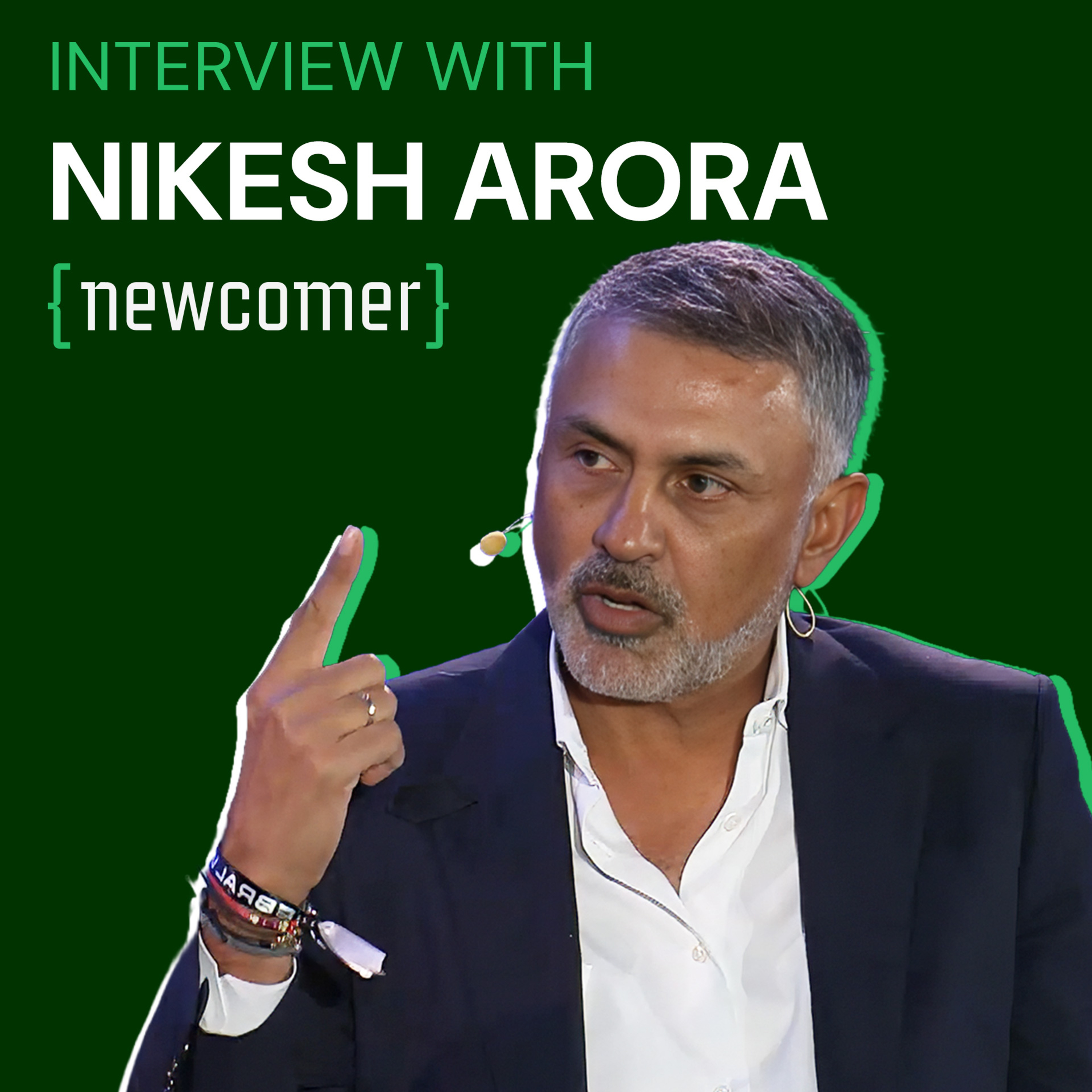
Palo Alto Networks CEO Nikesh Arora explains what makes a startup worth buying and why he puts the founders who beat his team in charge.
Arora joins Eric Newcomer to break down his acquisition strategy, what he looks for in cybersecurity startups, and how he keeps acquired founders motivated. He shares why buying a better product can beat building one internally, plus leadership lessons from his time at Google and SoftBank.
The conversation also explores how AI is accelerating cyberattacks, why securing AI coding tools remains an unsolved problem, and where Arora sees the next wave of opportunity. Plus, his case for OpenAI and Anthropic potentially becoming $10 trillion companies within five to ten years.