 Ask ChatGPT


Perplexity CEO discusses the AI “race,” NVIDIA’s role, and why Perplexity wins via accurate answer engines and agent “harness” infrastructure (sandboxes, routing, connectors). He addresses controversy around Jensen Huang’s resignation, argues NVIDIA’s compute remains essential, and claims Perplexity’s strategy (accuracy over entertaining hallucinations) enables deep research, browsing agents, and persistent “teammates.” He also explains the shift to token/consumption-based revenue for enterprise workflows and why agentic products monetize better than broad consumer chat.
Arvind (Perplexity CEO; investor/close business relationship to Jensen Huang). No other named guests; the host is “Arvin” referenced by the interviewer.
NVIDIA collaboration (TensorRT, NVIDIA Dynamo, NeMoTron; Perplexity contributed mid-training data to NeMoTron 3.5). Perplexity’s agents automate research/monitoring/knowledge work; repeat automations drive sticky revenue. They replaced AWS DynamoDB with a custom database, saving “tens of millions” annually. He criticizes “forking OpenClaw” without understanding updated harness needs. He cites “shorting Perplexity” bets from a year ago as losing trades.
Written by AI. May contain mistakes.
Discussion on NVIDIA's leadership change and its impact on Perplexity.
“Your personal generosity with time and advice to founders like me has secured a bright future for America and AI.”
Exploration of how Perplexity is redefining search engines and AI usage.
“It's basically you guys were the first ones to use LLMs as a way to get the answers to the questions you had that previously were like whatever, the 20 blue links on a page.”
Insights into Perplexity's revenue model and the shift towards enterprise customers.
“We have pretty much a really good market for it because all of it comes down to orchestration, routing, and accuracy.”
Explore Perplexity's strategic focus on coding agents and infrastructure adaptation in AI.
“and you're very out there in the news, and you're very good on Twitter, and people see you getting involved in various kind of high...”
Discuss the competitive positioning of key players like OpenAI and Anthropic in the AI market.
“I think people are increasingly realizing that AI is a deeply recursive product more than a network effect product.”
Analyze the future of consumer AI products and their revenue models compared to enterprise-focused solutions.
“What do you think about consumer though?”
Gain insight into Perplexity's growth strategy, potential IPO timeline, and market readiness.
“So are you pretty bearish on, let's say, Muse?”

Get the gist, explore an idea or ask about something said.
 Claude
On Newcomer Pod, what are the key points of this episode?
Searching your listeningAutomatic transcript. May contain errors.
0:00People here in this conference said we were the most likely company to fail. Okay, let's address that. Yeah, yeah, yeah. It was this time a year ago where there was a vote and they said, it wasn't to fail, they said they wanted to short you guys. Isn't it the same thing? I suppose, yeah. Yeah. Well, here I am sitting here still and we're doing better than most companies ever, ever performing. People would have lost money on that trade. Yeah, and I would bet the same this year. If you guys short us, you're going to lose more money next year. We've obviously heard from a lot of people today. It's such a seismic event.
0:29and you know you Arvin I want to kind of just bring up the tweet that you that you put out a couple of hours ago basically after Jensen announced that he had resigned because you're someone who obviously you know they're an investor in perplexity but you know you're someone who also has dealt with him a lot from business side and you know I think are quite close to him so you know the tweet that you put out you know thank you Jensen Huang for 33 years of bold leadership you built a small startup into America's most valuable company with relentless improvement your grit and perseverance should always be remembered.
0:59Your personal generosity with time and advice to founders like me has secured a bright future for America and AI. I mean, can you kind of give us a sense as to what you're thinking today and what's, I imagine, kind of a chaotic and unusual day in the world of AI? Yeah, so Perplexity and NVIDIA have been working together for many years now. Are they one of your largest investors? They are one of our largest investors, yes. and it's one of the greatest technology companies in history of America and we're you know everybody here is using NVIDIA compute and via GPUs and video libraries and you know before any of this controversy like no there's no doubt about the history of innovation that the company has done and Jensen is one of the greatest founders ever, right?
1:51And part of that is his relentless grit, determination, constantly looking to build the next thing, not being satisfied with where he is. And those are all great traits for any founder to make it. And just like me, I'm sure every founder here wants to build a trillion dollar company. And he's done it from, you know, having a breakfast or lunch with his co-founders at Denny's to actually like building the world's most valuable company. That's the sort of story that everybody gets inspired by. And like, I feel like in amidst all this noise, we should remember to, you know, take the right lesson of like what relentlessness, grit, determination, and long term thinking can actually help us build.
2:35Yeah. I mean, can you talk more specifically about you guys and what Jensen was able to kind of bring to perplexity to build you guys to where you are today? So we collaborate with them a lot of inference libraries, you know, starting from TensorRT and then NVIDIA Dynamo. A lot of our inference engineers have collaborated with inference engineers and NVIDIA, open-sourced a lot of things together. Obviously, like, we've been working with them on the NemoTron as part of their coalition program with a few other labs. And NemoTron 3.5eo, we contributed a lot of, like, mid-training data to that. and we're going to continue collaborating with them on Nemo Tron 4.
3:14We've had pretty good conversations with not just Jensen but the whole executive team there, including Colette, and we're going to continue working on a lot more projects. Have you had the opportunity today? I mean, it's only been a couple of hours to kind of check in with the team there and see how things are functioning at this company. Yeah, I had a meeting with them even today. So things are going as usual and, you know, business has to go on. and even now, like, the best GPUs to run your inference is NVIDIA and best GPUs to run your training is NVIDIA and none of that stops. So we just have to continue building the future.
3:48Yeah, and last question on this. I mean, have they said anything to you as a major partner to kind of let you know what continuity looks like and kind of let you know that, like, while we deal with this fairly insane, unprecedented situation, like, the relationship you have with NVIDIA will be unchanged in many ways? They've built a phenomenal foundation. So their founder has set them up so well for the future. So we need to continue expanding on that. And that's what we are focused on. So they are. Okay. And then last question. I mean, have you at all had a chance to talk to Jensen in the last couple of days?
4:23Not really. Not really. Yeah. Not in the block going on there. Okay. So let's talk about perplexity. You know, I remember first coming across you guys, actually a colleague of mine at the journal who maybe is here tonight, you know, kind of introduced us all to this idea of an answers engine. It's not a search engine. It's basically you guys were the first ones to use LLMs as a way to get the answers to the questions you had that previously were like whatever, the 20 blue links on a page. And that kind of confined you guys, at least in my head, to being a consumer company. You guys were consumer in the way that Google is the greatest consumer internet company maybe ever made.
4:58Is that a fair way to describe what perplexity is today? Are you still a consumer AI-focused company? PERPLEXITY IS FOR ANYBODY WHO WANTS WELL-CLASS RESEARCH AND ACCURATE AI. IS EVERYBODY USING MICROSOFT WORD? IS WORD A CONSUMER PRODUCT OR AN INTERPRISE PRODUCT? MICROSOFT THINKS SO. WELL, THAT'S THE THING. EVERY GREAT CONSUMER PRODUCT, WHEN IT GOES UP-MARKET AND ENTERPRISE, IT HAS THIS ADVANTAGE THAT IT'S ALREADY KNOWN BRAND AND IT SOLVES A REAL PRACTICAL UTILITY PROBLEM. what perplexity saw is the utility of like accurate AI in when we started we had a bunch of investors who are now working at like big tech companies actually who actually told me that it's a bad idea to give accurate answers because people actually like it if AI makes mistakes and AI hallucinates because people actually find that entertaining and that was true a lot of how do your investors told you AI is one of my investors not one of my investors is very well regarded told me that obviously not gonna name who but But one of his arguments was that it's actually a good idea to make AIs hallucinate because it's entertaining to watch AIs make mistakes and share that and screenshot it and it goes viral on Twitter.
6:16And that will give you a lot of new users. Okay. And obviously, we did the opposite of that and we've been pretty good too, right? And I think fundamentally, the problem we really solved is getting AIs to be accurate. and obviously that's immediately realizable in the form of an answer engine but you can keep building on that accuracy foundations for deep research browsing agents every form of a genetic action is search you're searching for the right tool you're searching for the right file you're searching for the paragraph within the file you're figuring out which files to use in a big repository of code you're figuring out how to like orchestrate different models, different connectors, how to put it all together to a final report or an answer or a web app or an artifact.
7:01Each of these individual actions is picking something in a large search space. So with good accurate AI, you can build the best possible agents. And building safe agents is also the same problem. You just have to be accurate. And so we're building on the foundations we started in 2022 and that's allowed us to not just build an answer engine but go beyond that to building a deep research experience that's world-class state-of-the-art browsing agents last year sandbox cloud-based agents this year and most recently persistent co-workers in the form of teammates yeah when you look at the revenue for perplexity and like the mix tell me what i'm wrong here but you guys sort of began with subscription-based right people were paying for like the pro version of Perplexity, which uses multiple models.
7:49And then you guys, I think, do some sort of token usage-based products now. And I imagine that's kind of part of your shift more towards enterprise customers. That's right. Is that you kind of are more token-based. Yes. A big part of our revenue growth this year has been coming from consumption-based or token-based. And we charge for usage basis on our computer agent. And every subscription plan gets a certain amount of bootstrap credits. On the$200 a month plan, everybody gets a certain number of credits every month. And we have a quota system for the$20 a month plan as well. But the demand for actually automating a lot of your workflows in an enterprise or a business context is very high.
8:31The people run out of those credits pretty quickly and are happy to pay for credit-based usage. A lot of usage comes from repeat automations. It's not coming from the same user going again and again and chatting one more time and adding to their credit consumption. It's actually coming from them automating a lot of their workflows that they would have otherwise hired a lot of people for. Analysts, SEO, marketing, growth marketers, ad campaign management, chief of staff or admin like usage, corporate development, strategy, competitor tracking. These are all like repeat automations that you once set it up.
9:08And your whole business relies on this. So the revenue is sticky, the net dollar retention is very high, and our job is to actually keep lowering the cost for doing the same task that was more expensive six months ago by continually orchestrating and routing to the best possible model for the job and lowering the price. And we often see that that takes a hit on our usage-based annualized revenue in the short term, but the usage expands enough, and then total revenue keeps going up. What would you say, I mean, what is the main use right now? The most amount of use of perplexities tools is coming from what?
9:40Research, monitoring, automations, almost all forms of knowledge work outside of coding. We have pretty much a really good market for it because all of it comes down to orchestration, routing, and accuracy. And our harness is really good for that. And Semi-Analysis pointed out yesterday that increasing percentage of their AI usage is around persistent agents that they can delegate to a Slack coworker. And Perplexity has the best harness and product experience around that. And that's because we really own the underlying infrastructure powering these agents. We built our own sandboxes. We built our own model routing.
10:19And we host our own models when we delegate to open-weight models that are fine-tuned. And so this is the way in which we get to be the orchestrator of all possible knowledge work. Yeah. I saw you had an exchange with Dylan Patel of Semi Analysis about this because he was making this case that the reason he loves using computer, I believe, our teammates, as a harness versus just, because I believe the underlying model for them is Anthropix models. But he just said straight up, which is very Dylan, like, Anthropix is not good at building product. Maybe the technology itself is good, but when it came to actually developing a useful harness, what you guys have done is so much more effective for what they need.
11:00I mean, do you think that's the role for companies like yours now is to just be so much better at building harnesses that there's inherent value just in that and not have to basically let the foundation model companies build the models, but they just suck at harnesses and product, and they're just not going to be threatening to you? We believe in a world of multiple models, right? Just as Anthropics is making great progress, so is Google. Carbon is pretty much at faber quality, and OpenAI is behind today, but that's not going to be the case for too many weeks or months. And so as this competition at the model layer arises, the value accrues to the one who can orchestrate all of these and a really solid harness that stays model agnostic, lightweight, so not a lot of hard coding.
11:44So you're not building around the limitations of models. You're actually benefiting from the progress in the models and world-class infrastructure. You need to own your own sandboxes. You need to keep it safe. Enterprises need to be able to trust their agents to be running on your platform. It needs to respect role-based access. Agents cannot go rogue inside your sandbox. So all that stuff matters tremendously. connectors fail a lot in most of their Asian products not on ours so solid connector infrastructure and of course our search advantages being able to spin up browsers on the sandbox right these are all things outside the model that you have to be extremely good at for providing a reliable experience to a demanding organization like semi analysis yeah so let's let you talk about the progression of your products because I find it very interesting and I'm sure I'm gonna mess up the timelines I'll just cut in when I get it wrong but you obviously have your answers engine and then I believe last year you build Comet, which is a browser.
12:37And I mean, I'd love to know an update on usage and your commitment to continuing that, but I think through Comet, you guys end up developing Computer, which is your kind of… A. Cloud-based agent. Yeah. Yeah. And then from there, teammates come through that. A. That's right. So we really recognize that you need to be where users are, which is why we built a browsing agent, because most people spend a lot of time on their browser. Sure. But what we realized is people like this conversational interface using things from their phone, being able to delegate their tasks from the phone itself. And for that, you actually just have to put the browser on the cloud.
13:12Except like the infrastructure to run everything inside a sandbox and have a coding agent orchestrate the whole thing did not exist when we first launched Comet. It started more towards the end of last year when Opus 4.6 was really, really good. Hmm, so that's when we took two months or three months off around the time people here in this conference said we were Most likely company to fail. Okay. Let's address that. Yeah Yeah, it was this time a year ago where there was a vote They said wasn't to fail if they said they wanted to short you guys isn't it the same thing? I suppose. Yeah. Yeah Well, here I am sitting here still and we're doing better than most companies ever were performing people would have lost money on that trade Yeah, and I would bet the same this here if you guys short us you're gonna lose more money next year But the main thing is we actually recognize...
13:56Why do you think people thought that, though? I mean, I don't want to put you in other people's head, but there is sometimes a misconception about you guys, and you're very out there in the news, and you're very good on Twitter, and people see you getting involved in various kind of high... You know, perplexity was going to buy Chrome, perplexity was going to buy TikTok. It's an interesting strategy just as a reporter to see it happen, but I think it causes people to maybe misunderstand a bit about what you guys do and the solidness of your business. Well, towards the end of last year, we realized that coding agents, everything has to be code mode, right?
14:26And other companies also realized that, like Cloudflare has written blogs about this. Basically, you should just expose all the primitives outside of the model in the form of code primitives, including search. So you should move away from rag to just exposing search primitives like crawling, fetching, chunking, all of that in form of actual commands that the model can call. And when models were fundamentally becoming really good at code, almost every task just becomes a coding task. So you have to essentially rebuild a company, your backend, your harness, your infrastructure around it. And we are really good at doing these things, by the way.
15:03A lot of companies are unable to adapt to new times. So they build a whole company around chat AI. They don't know how to work around agents. And then they have to host OpenClaw, and they have no idea what OpenClaw is. Which companies do you think of? A lot of companies I know, including Microsoft, just launched their version of agents by just forking open claw and running it on azure. You need to have the ability to actually know that open claw is even an outdated harness at this point because a lot of things that are built around are unnecessary as models get even better coding. So that is basically what we are good at and that is what Dylan pointed out too which is you need to know how to build harnesses, how to build infrastructure, what to not build as models get better and own all the primitives outside of the model like search, browsing, sandboxing and that's basically what we did right well people were chat like having fun chatting here right we were building and that paid off and we're doing pretty well right the other thing going on right now obviously is the impending anthropic IPO and it's interesting to watch I mean you've been at the beginning of you know this is a search tool and a consumer tool open AI seems like they had to go through a growth you know maturation phase where they realized that going all in on consumer was not going to be, I mean, like you said, you know, agentic coding is really where everything is at right now.
16:22I mean, can you give me a bit of the landscape right now of the frontier model companies? And, you know, OpenAI seems like they're desperately but quickly catching up. Anthropic seems to be in the lead. Like, just on a step back sense, where are you seeing that world? I think people are increasingly realizing that AI is a deeply recursive product more than a network effect product. There are a few people who use it a lot. 80 % of the revenue is probably coming from 20 % of the users. You know, there's a deep parallel there. It might even be 90-10. Yeah. And the reason for that is like agency and curiosity are not widespread.
17:02There are only few people who really know how to take the most out of these things and automate a lot of these things without being wasteful. It's not the same as token maxing. Like, everybody can just set up hundreds of loops and consume a lot of tokens here today, But there are very few people who actually know how to get the right ROI out of it That saves you a lot of costs on so many other things applying agents to optimize your infrastructure lowering your cost Building an entire new database we did that we completely replace our usage of AWS Dynamo DB Which was very hosted our entire trillion web page index we built and a new database from scratch using our own coding agents and That's saving us like several tens of millions of dollars a year now.
17:42Yeah, so So that kind of agency and curiosity are not widespread. So you may not actually need to have a billion users, 100 million users anymore. All that matters is whether people are using your product for frontier use cases. Are they actually delegating a lot of tasks that they would otherwise do themselves on a computer to your agent? And so there are only a few companies who know how to build such products. We are one of them. Anthropoc obviously pioneered this. OpenAI is pivoting to this and they've been doing really well with Codex as well. But that took them a while to realize and they had all this advantage.
18:19They accumulated with, you know, consumer mindshare with chat GPT that may not necessarily be useful for getting people to pay for tokens. Yeah. What do you think about consumer though? Like where does that world go these days? I mean, if you have the biggest labs realizing that 90 % of the revenue is going to come from or whatever your split was, like what's the future of consumer look like is it even relevant or does google just kind of suck up what interest there is and that's kind of where it goes well i feel like consumers is like kind of the building the yellow pages equivalent to ai like google ai overview or ai mode is that and obviously some people are joking okay you put it's like the google shipping perplexity on the google search bar yes but it may not help you make money in fact like the latest earnings call showed that it actually loses money for them.
19:05On the other hand, being extremely good at deep research, knowledge work, automations, coding, allows you to make a lot of money. There was this Twitter user, I think his name is Signal. Some people might know him. He actually wrote a very good tweet once saying, in consumer products, retention is actually sought after. You don't want a product with low retention. Except when it's AI, because high retention means high token consumption and if you're free who's paying for all that right right so you actually retention might look good on your charts but not on your bank account so you have to be in a position to monetize that and that's why token based revenue is good right and that's again getting into this territory of business use cases and enterprise which is why like you know we saw this coming end of last year and that's why we moved our strategy from focusing on like mass market consumer to high value high agency business owners solopreneurs and entrepreneurs and like upmarket enterprises yeah so what is the business model for consumer then and on top of that like you look at these agentic tools that are everyone seems to be you guys included trying to get more users to adopt the retention rates are fairly low on a lot of them right I think I've read that Muse is quite weak and instinct is mediocre yeah that's because only VCs book a lot of business class flights in hotels every week.
20:29Normal people don't. That's it. It's as simple as that. It works so well for them. Exactly. It's a product for 100 people. The rest of the people when repeat use cases for agents are actually in the workspace. Which is why we call our product teammates. You don't need teammates for your life. You need teammates for your work. I think that that realization we had last year itself, that if you want to actually build agents and if you want to have high retention, you need to have people pay for it, right? And that's why you've got to focus on it. So are you pretty bearish on, let's say, Muse? No.
21:11Or you think it'll just become an enterprise tool? No, I think, look, I actually think the Muse strategy is very good. They don't rely on click-based ads. so they can use all the understanding they gain about every user on the free usage and make your Instagram feed a lot better They claim they won't do that today with their privacy policies where every sandbox session is private But eventually that's the only thing that can pay for it And so I am I'm actually I actually believe meta is extremely well positioned to monetize Muse and Keep it free in a way that you think the other players in that space or not, right?
21:47Yeah Yeah. Last question for you here, because you always tend to be pretty bold and outspoken about the path and trajectory for your company. I've seen you in the past say you expect perplexity to IPO in 2028. I don't know how recently you said that, so maybe you've readjusted. But can you give an update on where you see perplexity going and is the public markets going to be receptive to? So I'm not in a position to share any numbers today, but all I can say is we're doing pretty well enough that we could IPO anytime from now to 2028. And I feel very bullish about our company. And, you know, we made all the right decisions last year when people were thinking we didn't know what we were doing.
22:29And that's really paid off this year. We hired really good people. our infrastructure is solid, and we've been very successfully post-training our own models and lowering our serving costs. And we don't rely on inference providers to do any of that. We just use our own compute. You have your own compute, which again brings up your relationship. And we pay for that. We're in a position to pay for procuring compute, too. So these are part of the changes that we make. But you're not one of those companies that thinks, well, we've developed, we've built up a great amount of compute, maybe we can resell that in some way.
23:01Actually, you know what? I have people who are supposed to be having a lot of compute constraints, technically, based on their business model, coming and selling me compute. You could probably make a lot of money from that. You know, the thing is like... Is one of those people anthropic? No, no, no. They're doing well. But compute is... Like, you have to be in a position to, like, warrant compute. and if you over build compute then you don't have any like margins other than reselling it right and that's why it's very important to be providing a real application to the end-user you know there's some quote Twitter thing I saw was everybody can be building infra because then you are only infra and no I know you said no need a demand for that I mean Elon's done okay with that it's been a decent business for spacex yeah that's elon's great you know he's singular but i'm saying everybody can't just be in for a company so i think you need really world-class applications and those applications need to be in a position to monetize and it in ai at least in agenic space that's where the real revenue growth is coming from that happens to be in the business and workspace and that's what we are going after right well look arvin i think we all understand perplexity a little bit better now uh always more to always more to talk about i appreciate you for really trying to help explain the company better than I can.
24:27We do what we can, and I guess anyone who shorted them last year, that was a bad trade, so sorry about that. Maybe better luck next year. Thank you. All right, thanks, Arvind.
24:53I'm out.
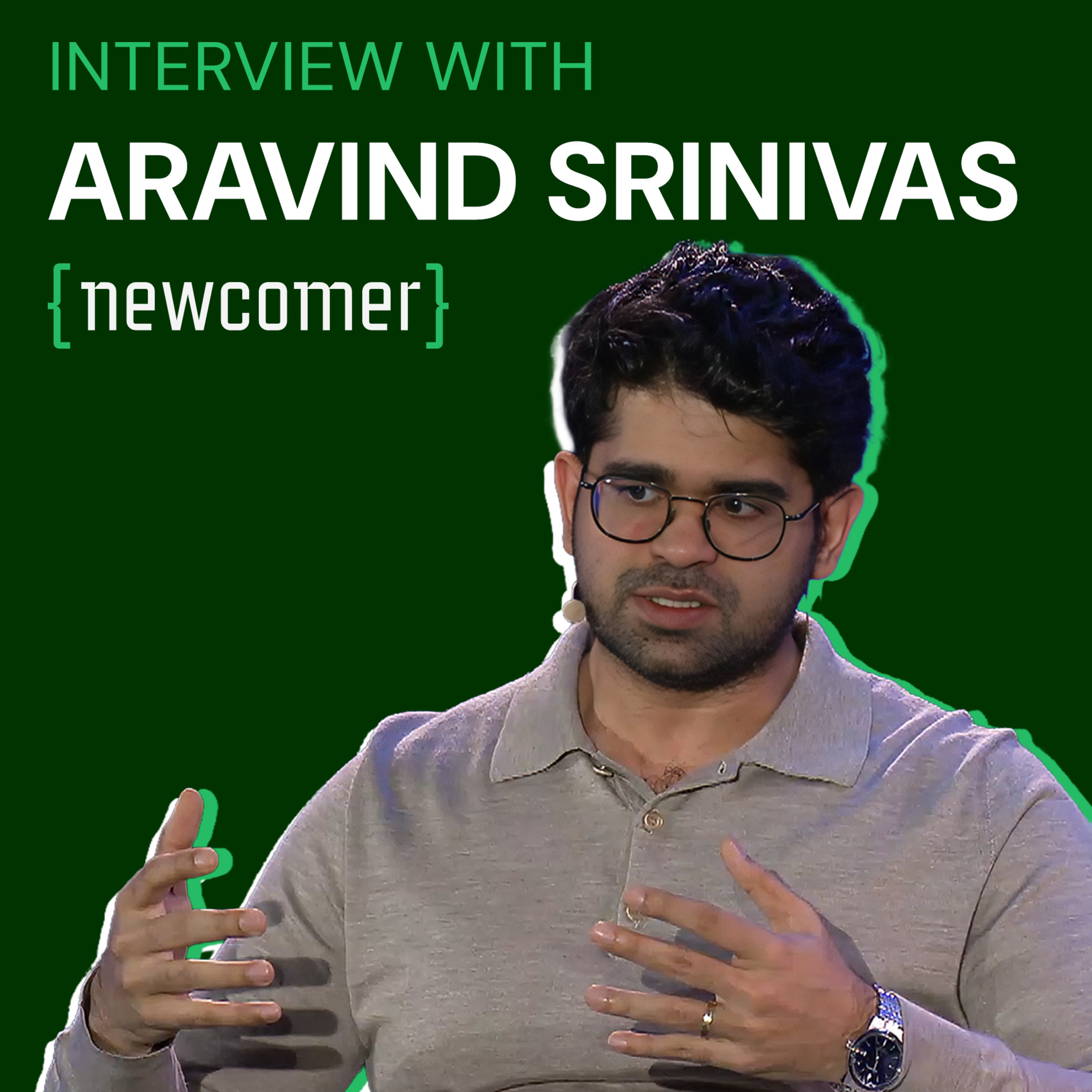
Perplexity CEO Aravind Srinivas explains where the real money in AI is and how Perplexity plans to compete with the biggest AI companies.
In this Newcomer interview, Srinivas discusses Jensen Huang’s leadership, Perplexity’s relationship with NVIDIA, and the shift from AI search to agents that automate work. He explains why he’s betting on business customers, how Perplexity uses multiple AI models, and what makes an AI product worth paying for.
The conversation covers competition with OpenAI, Anthropic, and Google, the evolution of Comet, Computer, and Teammates, and how Perplexity used its own coding agents to build a database that he says saves tens of millions of dollars annually. Plus, Srinivas responds to Perplexity’s doubters and discusses a potential IPO.