
In short
The Newcomer Podcast: Episode Summary
Episode Title
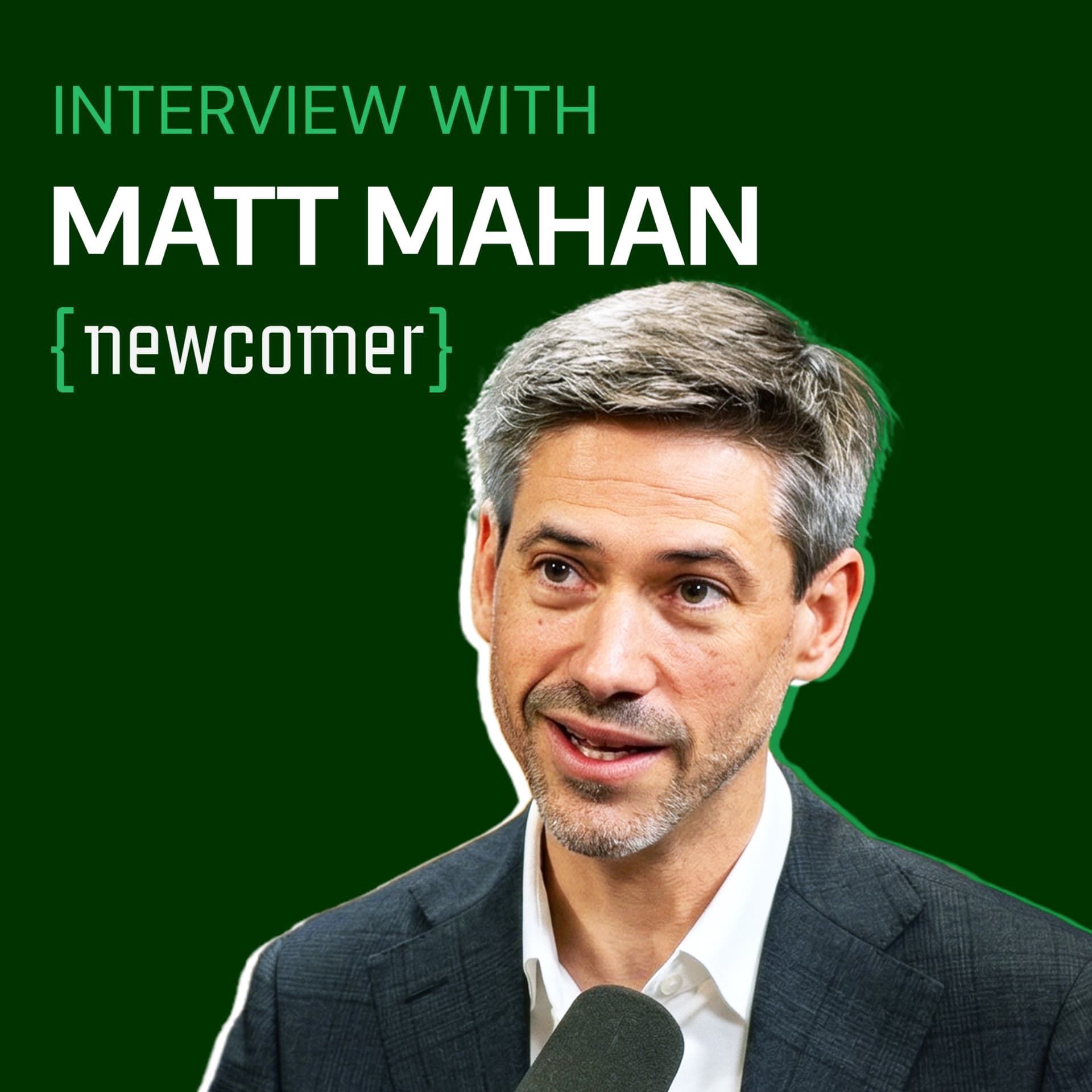
Matt Mahan — "California's Failure Is the Best Ammunition Trump Has Ever Had"
Host & Guests
- Host: Eric Newcomer
- Guest: Matt Mahan, Mayor of San Jose & Candidate for Governor of California
Episode Overview In this episode, Matt Mahan discusses California's governance issues and how they contribute to the political landscape, particularly the rise of the MAGA movement. Mahan posits that the failures in addressing housing, homelessness, and energy costs provide ammunition for Trump and his supporters. The conversation also touches upon Mahan's unique position as a centrist Democrat in a crowded primary landscape.
---
Key Topics Discussed
California's Governance Failures
- Housing and Homelessness:
- California has spent $20 billion on high-speed rail without delivering results.
- Mahan cites the failure of the wealthy tax initiative and the need for effective governance to counter populism.
- Energy Costs:
- Discusses California’s reliance on imported fuel and the loss of jobs in the oil and gas industry due to over-regulation.
Mahan's Political Stance
- Contrast with Gavin Newsom:
- Mahan critiques Governor Newsom for focusing too much on Trump rather than addressing local governance issues.
- He expresses concerns over how state policies impact local governance, specifically on issues like homelessness and crime.
- Competence-First Messaging:
- Mahan advocates for a governance style focused on delivering results rather than engaging in partisan battles.
Specific Policies and Strategies
- Reducing Homelessness in San Jose:
- San Jose managed to reduce homelessness by a third without raising taxes by reallocating funds towards fixing motels and shelters rather than building new apartments.
- Use of Technology:
- Emphasizes the necessity of integrating technology in public services to improve efficiency, citing an AI-powered tool that improved bus routes in San Jose.
The Role of the Tech Industry
- Political Power of Tech:
- Mahan discusses the growing influence of tech companies in politics and how their interests often clash with public welfare.
- He acknowledges the skepticism toward tech companies regarding housing costs and job displacement due to automation.
Regulatory Challenges
- Need for Regulation:
- The episode touches on the need for regulating the tech industry while ensuring that California remains competitive.
- Mahan supports the idea that states should lead in developing tech regulations that align with public interests.
Future of California Politics
- Upcoming Jungle Primary:
- Mahan outlines his strategy for the upcoming primary on June 2nd, emphasizing the need for a pragmatic approach to governance.
- He believes that California needs strong leadership that prioritizes effective governance over ideology.
- Campaign Goals:
- Mahan seeks to build a coalition that spans across party lines and appeals to independent voters by focusing on competence and results.
---
Key Takeaways
- Mahan’s Governance Philosophy:
- Effective governance is the best response to populism and the MAGA movement.
- Solutions to California’s issues should focus on practical outcomes rather than partisan rhetoric.
- Engagement with Technology:
- Advocating for the use of technology in improving public services is essential.
- Training and upskilling in AI can enhance productivity rather than replace jobs.
- Political Landscape:
- Mahan’s candidacy reflects a centrist approach in a polarized political climate, emphasizing accountability and results over partisan divides.
Conclusion This episode provides insight into the challenges facing California, particularly from a centrist Democratic perspective. Matt Mahan's focus on governance, technology, and pragmatic problem-solving offers a hopeful alternative in a politically charged environment, setting the stage for the upcoming gubernatorial race.
---
Call to Action Listeners are encouraged to visit Mahan's campaign website and engage with his policies as he works toward becoming the next governor of California.
Written by AI. May contain mistakes. Listen to the episode to check what was said.
Chapters
Tap a time to open that second in VOCalifornia's Political Landscape
0:00 to 0:45
Discussing the challenges California faces in the context of Trump and the MAGA movement.
“I don't think we're going to out-meme Donald Trump or that we're going to beat him on X.”
Matt Mahan's Candidacy
0:45 to 2:06
Introduction to Matt Mahan's campaign for governor and his core message.
“I tend to think that there's a difference by an order of magnitude or two between waste and fraud and abuse.”
Addressing California's Challenges
2:06 to 4:19
Mahan's views on fixing housing costs, crime, and homelessness in California.
“Matt Mahan, mayor of San Jose, candidate for governor of California.”
The High-Speed Rail Debate
4:19 to 6:06
A discussion on the failures of California's high-speed rail project and its implications.
“But the basic notion that we have made government too slow, too bureaucratic, we create a lot of cost around the things we most want, like housing and clean energy, I think is absolutely true.”
The Role of Government in Progress
6:06 to 8:01
Exploring whether government or private sector solutions are better for California's future.
“You can have housing projects that make so much sense.”
Energy Regulation and California's Economy
8:01 to 9:52
Mahan discusses the impacts of energy regulation and California's reliance on imported fuel.
“will you be able to achieve great things through government?”
The Billionaire Tax Controversy
9:52 to 12:08
Mahan shares his views on the proposed billionaire tax and its potential consequences for California.
“I think on housing, to some extent energy.”
Optimizing Government Spending
12:08 to 14:04
A discussion on how California can improve value from its healthcare and education spending.
“But this is going to backfire if it passes.”
Reforming California's Healthcare Spending
14:04 to 16:50
Discover how California can optimize healthcare spending to enhance value and efficiency.
“In California, the two biggest areas of expenditure by far are health care and education.”
Addressing Homelessness in San Jose
16:50 to 19:13
Learn about innovative approaches to tackle homelessness effectively in San Jose.
“Or the different roles in different science, you know, scientific fields, doing research, long-term research that may be valuable.”
Show all 27 chapters
Understanding Tech's Influence on Politics
19:13 to 22:25
Explore the relationship between technology, politics, and public perception in California.
“The tech industry is very enthusiastic about your campaign, I think, from Gary Tan to Joe Lonsdale, our back end.”
AI's Impact on Society and Public Services
22:25 to 28:00
Examine how AI technologies can enhance public services while addressing concerns about power concentration.
“So for better or worse, we're kind of at a point where I do think we need to address this issue.”
AI and Public Services: Enhancing City Workforce
28:00 to 29:40
Learn about the integration of AI in public services and its impact on city workers.
“You're ticking through things that sort of AI can deliver through.”
Wealth Concentration and Regulation Challenges
29:40 to 31:30
Explore the implications of wealth concentration in tech and the need for regulation.
“It's that he controls Facebook, which you obviously interacted with.”
California's Tax Structure and Spending Efficiency
31:30 to 33:50
Discuss California's tax policies and the effectiveness of state spending.
“We're seeing billionaires literally move out of state.”
Governance and Leadership in California
33:50 to 36:00
Understand the relationship between city governance and state policies, especially regarding immigration and crime.
“So immigration is kind of top of my list, general disregard for rule of law, tariffs.”
Performance Management in City Government
36:00 to 38:10
Learn how performance management can improve city governance and public service delivery.
“It's a big part of what's giving oxygen to this movement.”
Addressing Corruption and Special Interests
38:10 to 42:00
Examine the influence of special interests on governance and potential solutions to promote integrity.
“It's been bringing focus and performance management to City Hall, which is something that I get really excited about.”
Tech's Political Engagement and Concerns
42:00 to 44:20
Explore the changing relationship between tech and politics, highlighting concerns over regulation and industry power.
“I mean, what you're saying in California is complicated because it's like there are all sorts of unions that have become extremely powerful in a way, sometimes more powerful than sort of the big business.”
The Debate Over Regulation and Innovation
44:20 to 47:20
Discuss the need for regulation in tech while balancing innovation and societal impact.
“I try not to spend a lot of time serving as political pundit.”
California's Role in Tech Regulation
47:20 to 50:50
Analyze how California should approach tech regulation to balance industry growth and public safety.
“But we have to get it right because we could also just push it to other, not just other states, but other countries.”
AI's Impact on Job Dynamics
50:50 to 55:00
Examine the implications of AI on jobs, societal change, and the necessity for skills development.
“And what's your view of, I don't know, the rate of progress and how much this is going to be a concern for government for the next governor?”
AI for All Initiative
55:00 to 56:00
Learn about San Jose's innovative program to provide AI access and training to the community.
“We have a thousand workers going through our AI upskilling course, and they're changing their jobs by applying these tools in new ways.”
Tech Collaboration for Community Empowerment
56:00 to 56:39
Learn how local libraries are partnering with tech companies to provide resources.
“so Google, Anthropic, and OpenAI, to collaborate.”
California's Role in Countering Authoritarianism
56:40 to 58:40
Explore the importance of California's governance in the face of rising authoritarianism.
“with you and sort of tonally on a lot of it.”
Campaign Strategies and Social Media
58:41 to 1:00:57
Discover the evolving strategies for campaigning in the era of social media.
“What can people watching this podcast do to support the campaign?”
Addressing California's Challenges Beyond Blame
1:00:58 to 1:04:01
Understand the complexities behind California's issues instead of blaming external factors.
“And as we got to the beginning of this year, there just felt to me to be a huge void in the race.”
Transcript
Automatic transcript. May contain errors.0:00I don't think we're going to out-meme Donald Trump or that we're going to beat him on X. I think it's going to be ultimately in the courts and in delivering better outcomes and getting people to actually vote with their feet and want to come back to blue states. You sort of tweaked Gavin Newsom, the governor, for being almost like Trump obsessed. Like, shouldn't we be? I understand what he's doing. He's holding a mirror up to Donald Trump, who is a threat to our democracy. And I disagree with many of his policies. I also firmly believe that our failure to solve our biggest problems has given the MAGA movement a tremendous amount of ammunition.
0:38It's a big part of what's giving oxygen to this movement, and the best resistance is delivering results. So we are now paying more to import dirtier fuel from farther away, and we've lost all the jobs and tax base from that industry in the meantime. I tend to think that there's a difference by an order of magnitude or two between waste and fraud and abuse. Fraud and abuse happen, and they're very noteworthy, and they should never happen, and we should always punish them and root them out and try to prevent them. But it's waste and inefficiency that is the bigger issue. Matt Mahan, mayor of San Jose, and I go back a long time.
1:13I think I was at an election party he threw when Trump was first elected, and it was a very sad affair. He's raised money now to run for governor of California. from some people I know well, Gary Tan of Y Combinator, Joe Lonsdale, the Palantir co-founder. Man, and I share a lot of sympathies. We somewhat believe in tech, somewhat believe in what's going on in AI. I guess both make a lot of our money from the tech set, but on the other hand, are principled Democrats with our own independent ideas. And so he and I had an honest conversation. I think I pushed him on a lot of things. He's competing for governor in a unique primary environment.
1:47It's the so-called jungle primary. So he can try and pick up some Republican voters. Obviously, that's difficult in a world where you have to pick a team. Mahan has a tall hill to climb to win this race. I think he's definitely behind, but a fascinating candidate that says a lot about what's happening in tech and American politics today. I'm Eric Newcomer. This is the Newcomer Podcast.
2:15Matt Mahan, mayor of San Jose, candidate for governor of California. We've known each other. It's been a while, but we met back in your brigade days before you were mayor. Not surprised to see you running for governor, I believe. Back then, even, I was like, that seems like somebody. I was like, believable. So thank you. Thank you for coming on the Newcomer Podcast. Yeah, I'm thrilled to be here. It's good to see you again after all these years. Yeah. So just start with the mission statement of the campaign. You know, it's a jungle primary. It's going to be sort of a brawl to be one of the top two candidates.
2:51What is your message for people? Yeah, and I jumped in just a few weeks ago. I think it's a wide open race still. And my core argument is that we need to fix California. We need to fix it for the 40 million people who live there. Also, nationally, what happens in California matters. And frankly, I think that our inability to address housing costs, energy costs, homelessness, crime, addiction issues have given Trump and the MAGA movement the best ammunition imaginable. And so I really, I want to fix our problems for my family, my neighbors, all of our fellow Californians. I also think there's a bigger context here.
3:30I'm worried about this rising populism on the right and now on the left. And you sort of see folks turning to really easy answers, you know, more authoritarianism or more socialistic, socialist policies that ultimately I just don't think are going to work and practice or really be what America's all about and what actually makes us great. And so I just, I'm worried, you know, I'm worried. Yeah, I mean, how much do you subscribe to the like abundance message? Because there's clearly echoes of that. You're saying it a little bit differently. Yeah, and I don't think it's a holistic worldview that solves everything.
4:03I've spent a lot of time working on homelessness crime, addiction, untreated mental illness. And is there an abundance message there? Maybe there's also just like accountability. Sometimes you have to intervene. And there's a whole interesting conversation about civil liberties that's sort of independent of the abundance conversation. But the basic notion that we have made government too slow, too bureaucratic, we create a lot of cost around the things we most want, like housing and clean energy, I think is absolutely true. High-speed rail being the sort of poster child for everything that's wrong with the progressive governance model today.
4:42Why has California high-speed rail failed? Like it's almost it's so hard to imagine. It's like, let's just throw more money at it and someday it will work. You know, I think we're both of the world where we desperately want it to work. We want these beautiful, you know, Japan style trains running around. But why can't America deliver on it? Yeah, it's pretty stark when you look at during the 20 years where we've spent 20 billion dollars and not delivered a train. And China's built over 10 ,000. They may now be at 20 ,000 miles of high-speed rail connecting their entire country. I mean, and that's not an entirely fair comparison.
5:19But at the end of the day, people care about outcomes. And I think that's part of why we're seeing this more authoritarian impulse of this turn to a strong man is that people just want stuff to happen. It's the, you know, Governor Shapiro gets shit done mindset, right, that we really need. So why, you know, I think it largely comes down to the fact that this project was caught up in years of environmental review and clearance, years of litigation, has taken forever to assemble all of the pieces legally, environmentally, just all of the regulatory compliance takes years. California has made it.
5:55I think the country already suffers from the litigiousness around environmental review, NEPA, as well as our California version of that, CEQA. But we're especially bad in California. You can have housing projects that make so much sense. You have the general plan where the public's already weighed in. You've said this surface parking lot in a downtown next to transit, obviously should be high-rise residential. And you can still take 18 to 24 months to get through the environmental review process. And you can still get sued for it. It's crazy. It's amazing, you know, as a millennial to realize that being a progressive in sort of the previous generation was some of this sort of Sierra Club.
6:35Like, we want green in that. We want like a nice park with a sort of limited scope neighborhood. And it's like that it doesn't match with what I guess progressivism means to my generation. I think that's absolutely right. I think we go through cycles and we have to keep updating the operating system, if you will. I think we went from early progressivism 100 years ago where there was actually a trust in big institutions to solve society's biggest problems. And you ultimately saw the height of that in the New Deal, where it was like, we need government to be extremely active and robust. And coming out of that in World War II, there was a lot of trust in government and expertise and big bureaucracies.
7:16And then I think much of kind of leading toward around the time we were born and up till today was the disintegration of that model. and progressives taking a very different approach, largely the environmental movement, but just sort of the rights-based, very litigious approach to protecting individuals from big government and big business. But we've unintentionally, I think, hobbled government, and we're no longer able to move quickly and efficiently and do big things. And now there's, and I mean, obviously, this is being covered by a lot of folks like Ezra Klein and Derek Thompson and others.
7:51But I think we're now sort of grappling with what is the next version? What's the next operating system need to look like? Can you achieve, if you're governor of California, will you be able to achieve great things through government? Or is it about clearing the way for businesses and others to achieve great things? Like, is there a way to get the actual humans working for government, I don't know, to build things, deliver things more effectively? Or it's just like, government's not always best positioned to solve these big problems. It's a great question. I do think you have to take it case by case.
8:25I would not simply rely on the private sector to magically fix education or transportation systems or energy. I mean, there's some big complicated systems that are largely what you might call public goods where government just needs to do better. We need to use technology to deliver better services. A small example of this is in San Jose. We've been using an AI-powered tool. There's a startup called Light that has helped us to speed up all of our public bus routes. So buses across the city of San Jose in the last, call it, 18 months have become 20 % faster on average through just this very subtle synchronization of lights.
9:07It's hard not to hear this without the direct sort of Mom Donnie contrast, right? He's promising free buses. You're like, we can make buses 20 % faster, which is probably more important in some ways. Yeah. Yeah. People pay for this. But one thing goes viral and the other does not. Yeah. No, you're right. The kind of more technical competence-based approach is not always the most viral. It doesn't always make the headlines. But I do believe people pay for things that they value. And if you're going to pay$20 for an Uber ride, you should be willing to pay$2 or$3 for a bus ride. But it can't take five times longer.
9:40We need to speed it up and provide a great service. But back to your bigger question, I do think there are areas where the answer is to pull back some of the robustness of the public sector. I think on housing, to some extent energy. I'll give you another example on energy that will probably not win me any friends in the environmental movement. And I consider myself a lifelong environmentalist, very big on open space, love being outdoors and hiking and camping and all that good stuff. We, though, have been so single-minded about our support for clean energy, and we have so aggressively regulated the oil and gas industry that we have pushed refineries, most of the refineries that are just regulated to be the cleanest, best-run refineries in the world.
10:28We have pushed them out of California, but we're still using gas. So we are now paying more to import dirtier fuel from farther away, and we've lost all the jobs and tax base from that industry in the meantime. But we're still using it, burning it. We've just kind of killed the economics of it. And it's actually producing more emissions. And it's just sort of like good intentions gone awry in an overly regulated state. I think it was John Arnold, the philanthropist and billionaire, said the other day, like, there are a set of states, you know, like Texas, where he lives, they feel like they're competing for people to come and set up businesses.
11:05And then there are states like California that feel like we don't need you? I mean, the billionaire tax proposal, I guess, being the most prominent. Now, that's obviously not like Gavin Newsom's idea necessarily. Or what is your sense of the political support for this billionaire tax? You've obviously been opposed to it. And what's your read on the seriousness of it for California? Yeah, it's a very real risk. Governor Newsom's opposed to it as well. But most of the The Democratic leadership in the state has either supported it or stayed pretty silent on it. I think the governor and I have been two of the only more prominent Democrats in the state to say this is a bad idea.
11:44And it's not because we are worried about protecting billionaires from taxation or don't believe in progressive taxation. I think the wealthiest amongst us should absolutely pay substantially into the public system to continue the prosperity, the infrastructure, all the things that make the platform on which their prosperity was created. But this is going to backfire if it passes. It is backfiring. It already has. You're right. Google co-founders are fleeing the state. That's right. We've seen over a trillion dollars of capital flight, to your point. I just saw a projection the other day. There was a debate at Stanford.
12:26And out of that, there was this analysis that showed that we're likely to lose$25 billion per year. That's recurring revenue. Remember, this proposal supposedly is a one-time tax that will generate$100 billion. And at this point, maybe it would generate 50 because we've already lost so much wealth. And that would be one time. It may have cost us$25 billion per year in revenue. Nobody really knows yet. I think it will be defeated. A lot of damage has been done. As you, I'm sure, know, and your listeners know, there are 12 European countries that have tried wealth taxes at the national level, not the subnational level.
13:04And they've mostly all rolled them back. They've seen their tax base shrink. It's just not a smart way to do it. And of course, some of the reason the tech industry in particular is going ballistic is sort of the potential for unrealized gains being taxed. And startups are all about having these on paper highly valued companies that, you know, it's like if you actually had to cash it out. Come up with the money. Yeah, you just torpedo the stock. Like someday it will maybe be worth that, but I don't have that money today. That's right. You know, on the flip side of this, like, oh, we don't need a larger tax base.
13:36You know, California already has so much money. I mean, a lot of that money is going to state health care, right? I think sometimes when I see sort of criticism about the size of government from the left, and you sort of saw this with Doge on the federal level where Elon's crew said, oh, we're going to like save so much money by cutting federal workers, which I think, you know, they did cut a bunch of federal workers, but they didn't balance the budget because so much of the spending is still in health care and other things that people love about government. Right. You're absolutely right. In California, the two biggest areas of expenditure by far are health care and education.
14:11And I think the right approach is to get more value for the dollars we're spending. Now, that may involve cutting certain programs or staffing within that larger bucket of health care provision or education. We may find that we need to dramatically reallocate how we're spending the dollars. but you're very unlikely to find the political support, nor would it necessarily be good for society to reduce the spend within education and health care. I think 50 % of health care spends in the last five years of life, and it's people choosing to want better end-of-life care. Now, can we do more prevention and reduce chronic illness and all that?
14:51Yes, but I think the real focus needs to be on how we get more value per dollar spent. So it is saving in some of the health spending areas. I think it's saving, but it's really just optimizing the spend. I think in healthcare, for example, I would like to see less of the spend on managing chronic illness and more on upfront prevention. We also spend a lot of our healthcare dollars within a very expensive and inefficient hospital system versus providing more accessible clinics and leveraging the capacity of nurse practitioners who are capable of doing a whole lot more than they are often allowed to do per their license or local regulations.
15:35So there are ways to actually offer more care, higher quality care, more preventative care to more people in more places with the same amount of spending. So it's more about the inefficiency of the spending. When there's this discussion of waste, fraud, and abuse, I tend to think that there's a difference by an order of magnitude or two between waste and fraud and abuse. Fraud and abuse happen, and they're very noteworthy, and they should never happen. We should always punish them and root them out and try to prevent them. But it's waste and inefficiency that is the bigger issue. We spend a lot of money without knowing if it's actually performing, if it's delivering the outcome that we want.
16:13Was there anything valuable that came out of that? Well, I think it started an important conversation about waste in government and how to do things better. I think where Doge really went off the rails was in seemingly taking joy in firing public servants, many of whom, you know, had done most of whom had done nothing wrong and were just very committed, genuinely committed to the mission of the agency where they worked. It seems like some of the best among us who had developed specialties over many years. Yeah. I mean, I get, yeah, I just, especially sort of the, you know, foreign aid stuff, the malice about people who are trying to help other people.
16:57Right. I don't understand. Or the different roles in different science, you know, scientific fields, doing research, long-term research that may be valuable. It just, it seemed like it was attacking the people, not the problem of inefficient spending. Let me try to make this more concrete. In San Jose, we have, as with all governments, limited resources for our different priorities. One of our priorities is ending homelessness. We spend somewhere between$50 and$100 million a year, depending on revenue. It's a volatile revenue source. But we spend$50 to$100 million a year on tackling homelessness and housing issues.
17:34When I came into the mayor's office a little over three years ago, we were spending most of that money building brand new apartments for people. And for those who got those apartments, it was a great solution. They remained off the streets and their outcomes were much better. The problem was the math just didn't show any path to scalability. It's a million dollars a door, six years to build this apartment. We've got thousands of people living outside. So I said, there's a much more optimal way of spending these limited dollars, given the magnitude of the problem and the timeline that we have, which is like, we need to solve this today.
18:09People expect it like day one. Yeah, people are dying on the streets. A couple hundred people a year die on our streets. So we shifted the dollars toward buying and fixing up old motels, buying prefabricated modular units and putting these sleeping cabins, if you will, on public land. We brought outreach in-house, reduced the number of people, but improved the quality and actually had something to offer people because we had built shelter. We've put money into prevention and slowed the inflow into homelessness. Same amount of money, but we've reduced the number of human beings living outside in tent encampments by about a third in just the last few years.
18:44And with the next count, we will, for the first time, have a majority of people who are homeless in San Jose living indoors, not outdoors, which is qualitatively a completely different type of homelessness than having people literally wallowing in misery in a tent encampment and dying of overdose down in the creek. I mean, it's a totally different situation. And we didn't have to raise taxes to do it. We just had to think differently and be willing to reprogram our dollars. The tech industry is very enthusiastic about your campaign, I think, from Gary Tan to Joe Lonsdale, our back end. What do you think is getting them excited about your candidacy?
19:28More than anything, I think it's that being the mayor of the capital of Silicon Valley. You've gotten to meet them. You know that. Yeah, I know the tech world well. I spent a decade working in it, in the civic tech space, as you know, with causes on Facebook and early philanthropy. I was saying, I think perhaps the last time we ran into each other, though, I might have been somewhat intoxicated, was when Trump beat Hillary Clinton. I think you guys had a party in San Francisco. 2016. I was sort of like at a wandering day, you know, night and night. I wound up at that party. It was like, you know, the saddest set of people in San Francisco.
20:03It was a really cultural turning point where you're telling me, I don't know if I can fact check this either. You sort of think you saw the Trump thing coming from. So we had a map on Brigade's website and Brigade, just for your listeners' benefit, was I would analogize it to a LinkedIn, but for your civic or political identity. We hooked into the voter file. We allowed you to claim your voter record and then showed you all of your representatives, who else lived in your district or districts, depending on which level of government, and allowed you to basically organize with other voters. You could kind of put your votes together around issues you cared about and support candidates.
20:42And this was 10 years ago. We had a map, and it was much more red than other maps. And I don't think our map was particularly accurate. But what we did see was this crossover behavior of middle-aged and older voters, white voters in the Midwest, lower propensity voters who had registered Democratic but told us they were going to vote for Trump or had voted for Obama and told us they were going to vote for Trump. And it was just so interesting to pick up on this trend of people who were telling us that they were all for Trump, but none of the previous data about their behavior or their registration, their status as a voter would have led us to predict that.
21:26And so we sort of saw that coming. And on election night, I mean, the New York Times and Wall Street Journal and others literally had reporters call and be like, what did you guys see in your data? Like, what should we do? What did you guys know that we didn't know? because we were kind of dismissed going into that race. It's like, oh, there's that weird app over there that seems to have been taken over by Trump supporters. And we were like, no, not really. Yeah, it was really interesting. Do you, from that experience, like any validity to election denial claims or what's your set, like the SAVE Act and everything?
22:00We did not get any indication. You're talking about like voter fraud. Yeah, but whether voter fraud is something, you know, sort of middle of the road sort of person. Our app didn't pick up any of that. And you don't think there's like any... I don't think it is a rampant issue. I do think that building trust in the process is really important. And whether the claims are legitimate or not, or the scale is significant enough to matter, the notion that there should be some identity verification, some sort of voter ID, or some safeguards beyond what we have today, I think is reasonable because you now have half the country doubting if our elections have the integrity that they need to have.
22:47So for better or worse, we're kind of at a point where I do think we need to address this issue. The SAFE Act seems like if that passed, it would be give the federal government under Trump a lot of control over the election. Yeah, that makes me very nervous. There's a conversation in California right now about voter ID, which I think 70 to 80 percent of people support the notion that if you've got to use ID to buy alcohol or to buy a car or a gun or any other thing, and you've got to carry your ID with you as a driver and to get into a bar or whatnot, there ought to be some form of identity verification.
23:22It's still fair. I mean, you go into everything else. You're like, oh, we need to be pragmatic and sort of tell people the truth. And like, I just think this voter ID thing, there's just not that much fraud. No, I agree. It's too hard to commit the fraud at the level they want. Like you have to go, You say your address. It's just like it's a lot of work. But I don't think that's the point, really, in the sense that you're right. I totally agree with you. And yet, democracy is based on trust. And if half the country is believing that our elections aren't secure and don't have integrity and they shouldn't trust the results if they don't like the outcome, that's a problem for us as Democrats, whether we like it or not.
24:02And we can do the very academic and classically democratic thing and try to show them a bunch of data and explain, oh, no, don't worry, it's a rounding error. It's probably never changed the outcome of an election, although you'd be surprised how many down-ballot elections are decided by a few votes. But you can try to explain to people that they're wrong, or you can take a common-sense action. that. I mean, I just don't buy that it is an impossibility for us to give people three or four different ways to have an extra layer of protection where they show up and show a driver's license or a passport or something.
24:37So right now you represent San Jose, which is tech, you know, ground zero, the hometown. Like, what is your view of now that you're campaigning of the average Californian's view of like the tech industry right now? Well, there's a lot of skepticism. And I understand that. There's the skepticism of high housing costs that I don't think it's fair to completely blame tech for. But the truth is we've created jobs at a much faster rate than we've built housing. I see that as a public policy failure, first and foremost. But a lot of people say, well, if it wasn't for all these tech companies and all these high-paying jobs, our housing prices wouldn't be as high as they are.
Read the full transcript
25:16And there's some truth in that. I don't think the answer is to get rid of the industry. I think it's to build housing, to be clear. But there's also a lot of fear that AI is going to destroy jobs and massively displace workers. Ironically, it may be those higher paid white collar jobs that start getting automated faster than others. Yeah, let's double down on that. I mean, it's mystifying right now. You have Alex Karp at Palantir going around sort of bragging that the blue collar worker is going to benefit. And it's sort of he literally said, you know, it's like the white women who vote Democrat.
25:51They're the ones that are going to get screwed. He specifically said something about women. I don't know who are the Democratic base. But anyway, we don't need to get into CARP specifically. But there's definitely this sense from I think it's become sort of a right wing tech talking point that, you know, white collar workers get screwed. And the plumber, like nothing better to be a plumber. But the flip side of that is like nothing better to be the owner of an AI company. Like the person on the top top, maybe, you know, all their coders running around are about to get screwed. But this technology is still going to be controlled by white collar shape rotator or whatever, you know, but like not the plumber or.
26:29Yeah, totally. What do you worry about sort of the tech industry having more control over what our lives look like if they have this powerful technology outside of government? So when I think about AI, I think about all of the capability. First, I think about the capabilities that we can leverage to make our lives better. And I think about that primarily through the lens of public sector services. We've sped up our buses. We've improved language translation. We're saving. It's amazing language translation. That would have been an insane, like we would have been like mind boggled. And then we're like, oh, great.
27:02Yeah, I did that. Actually, it's like really easy. It's shocking. You use that in government? Just a couple of years ago, we were paying people for the largest languages represented in our city. We're an incredibly diverse city. San Jose is 40 % foreign-born. Over 50 % of people speak a language other than English at home. And we would pay human beings who would not always even show up, because they're humans, to do translation in real time in Spanish, Vietnamese, sometimes Mandarin. That was about all we could afford and or find. but people speak dozens of languages in our community. Now with an app, you can scan a QR code and in dozens of languages with really high precision at a very low cost at all public meetings, you can be on your phone and see true real-time language translation.
27:54It's incredible. And you can come up and speak in your native language and we can all see on our screens what you're saying in real time. Amazing. You're ticking through things that sort of AI can deliver through. When it comes to AI, I mean, you asked a pretty profound question about the concentration of power and wealth in tech and what does that mean. I was saying I really have focused on how to apply it to public services to make them better. We've also created an AI upskilling course curriculum for our workforce. And our view is that these tools should not be displacing city workers. They should be enhancing their productivity, making their jobs more interesting and allowing these jobs to evolve naturally.
28:35But we're not trying to get rid of city workers. We're trying to help them have more satisfying and impactful jobs. And so we've taken that mission very seriously in San Jose. On the bigger, more existential issue, I mean, look, I think tech has to be regulated. I think the big question is exactly how to do that. It's such an evolving space. What is model transparency? I mean, this is your world much more than mine, but what levels of transparency? When do you need a human in the loop? I mean, these are big questions, and I'm certainly trying to keep up to speed on them and weigh the pros and cons.
29:09I don't want to prematurely regulate and push an industry out of California so that others get all of the job growth, high-paying jobs, the economic impact, and then it happens to us. I'd rather keep tech in California to the extent that we can where we create the rules of the road and shape it for societal good to the extent that we can. On the concentration of wealth, you know, I do. It's not just wealth. It's sort of power, right? I mean, you know, Mark Zuckerberg, it's not just that he's wealthy. It's that he controls Facebook, which you obviously interacted with. Yeah. With your work. I mean, yeah.
29:46And, you know, sometimes they're good stewards. You know, I've been a champion of some, you know, like Anthropic. I think we're, you know, I'm glad they're taking a principled approach and that requires a little bit of centrality. So that's part of the American experiment that companies get to compete with each other and build their sort of mini totalitarian regimes within their company. But yeah, I don't know. It's a tough, tough question. It is. And I think it depends, you know, where you want to go with this. But if there's the wealth piece that has become very front and center because of the wealth tax in California, I think the answer there is to close a half dozen other tax loopholes at the federal level that are much more impactful, fairer, and have fewer unintended consequences.
30:30On the regulatory environment. I feel like if people can get loans based on their wealth. That's the lowest hanging fruit. It's just insane. That's what allows billionaires to be flush. They just get loans. against unrealized assets, which becomes a loophole, a way of not paying on your capital gains. You're right. There needs to be some sort of trigger where at a certain level of borrowing or time duration, it's counted as a realized gain and you have to pay the tax on it. And if you have to liquidate, so be it, because you're borrowing so much that you're effectively realizing the gain. I know that's very wonky.
31:06So federal reforms on some of the tax code. I think on the tax code, you really need to go to the federal level. California already has the second highest overall tax burden, the most progressive tax structure. In any given year, the top 1 % of our income earners in the state contribute 40 % to 50 % of the revenue. So we can try to be a little more progressive, but at some point you are going to kill the golden goose. And I think we're getting close. We're seeing billionaires literally move out of state. And I don't think we need to push that anymore. We've increased spending in California at the state level by 75%, equivalent to$150 billion a year, more over six years ago.
31:49And if you ask Californians, what's gotten better, they'd have a hard time giving you much of a list. And so, and that's not an indictment of anyone in particular. I think it is a systemic problem. I think that we are incredibly bureaucratic and inefficient. We have a system that's hard to reform because there are highly organized interests, corporate labor and otherwise in Sacramento, that just will try to block any meaningful change. And that's the environment that has led us to increase spending massively and not really see much in the way of measurable improvement. I know there's a difference between on this question.
32:25I'm going to talk, we're going to talk about Trump for a second. And I'm acknowledging that there's sort of a difference between what you want thematically about your campaign and sort of your level of upsetness. And so I guess I want to ask about that. Like, you sort of tweaked Gavin Newsom, the governor, the current governor for, I don't know, being almost like Trump obsessed. Like, shouldn't we be? Like, isn't it disturbing what he's doing to the country? Like, if you're running for good governance, like on the corporate side, he's picking favorites, You know, helping some of your sort of California companies deciding which ones, you know, can own studios and which ones can't.
33:03Like, aren't you sort of deeply troubled by some of the stuff he's doing? I'm deeply troubled by a lot of the stuff he's doing, starting with how he's treating our immigrant neighbors. San Jose is an incredibly diverse city. And we've got folks who have been living and working and contributing in our city, our community for decades, who are living in fear, scared to leave their homes. They have children who are U.S. citizens. We are long past the time that we should have come to some, the parties should have come to some bargain here over, yes, a secure border and orderly, lawful immigration. but with a pathway to at least some form of legal status for folks who are here and are otherwise trying to contribute and play by the rules.
33:54So immigration is kind of top of my list, general disregard for rule of law, tariffs. I mean, the list goes on and on. I'm deeply concerned. You know, my disagreements with Governor Newsom over the last few years have generally been very focused on specific challenges we're facing at the city level. Remember, I'm the mayor of a city in a big state. And my argument has been we need our governor leading the charge locally. And I know he's got his eyes set elsewhere, which, you know, is his prerogative. but we need our governor driving change at the local level because we cannot address homelessness, crime, high cost of housing and energy alone at the city level.
34:42We are downstream of so many state policies and spending decisions on homelessness and crime. We hold maybe half of the answers, but if the governor and the state legislature don't hold the counties accountable, and California counties are extremely powerful, a lot of resources, a lot of very broad jurisdiction, over the criminal justice system, behavioral health. If we don't get our counties aligned around solutions, we get blamed. I mean, look, the mayors are accountable. I go to the grocery store, and it takes me two hours to get through the grocery store because people are angry, and they want to tell me about all the problems.
35:19And you can't be like, well, the county does that. I'm like, well, the county should do this, and the state has this law, and if only the legislature would do that. So, look, the governor and I have disagreed on a few pretty high-profile things. Prop 36, which was a criminal justice reform issue, sober living environments. And I've just, my argument has been, yes, it's, I understand what he's doing. He's holding a mirror up to Donald Trump, who is a threat to our democracy. And I disagree with many of his policies. I also firmly believe that our failure to solve our biggest problems in the country's largest and most prominent state has given the MAGA movement a tremendous amount of ammunition.
36:05It's a big part of what's giving oxygen to this movement. And the best resistance is delivering results on the issues that matter to people. But there are norms. Do you say these CEOs giving money have more of a backbone? It's just, yeah, I just feel like the capitulation - To be perfectly honest, I don't spend a lot of time with tech CEOs, but I don't. I mean, I used to. They mail you a check and say, oh, he's our mayor. Well, I mean, first of all, most people don't realize this. San Jose is the home of the workforce of tech. We don't have a lot of tech CEOs who live in San Jose. They live up in, you know, the fancy, you know, Palo Alto and Atherton and maybe up in San Francisco.
36:46We're a working city. We're people, we're the, you know, the engineers and the designers and the marketing folks and whatnot. They live in San Jose. Those are my neighbors. And they're excited about my campaign because they see how much progress we've made in San Jose by bringing this very, to be fair, a cultural element of tech. The thing that I've done differently in City Hall over the last three plus years is bring a performance management mindset into government. I came in and was like, the failure mode here is we're trying to be everything to everyone and it's not working. Let's pick no more than five things.
37:25Let's be focused. Let's set actual goals. Let's do the really uncomfortable thing of publishing them on the city website. Let's create some dashboards. Let's track the dollars we're spending, the staff time we're allocating. Let's measure performance. Let's publish our performance. Every 90 days, let's look at it and reflect on it. And let's start to create a feedback loop and be a little more iterative so that every 90 days to one year, which is every 12 months we do our budget cycle, we can make adjustments and say, well, we're spending money here, but it's not actually leading to any measurable improvement.
37:58So maybe we need to change it. That's been the unlock for us. And we've led the state in reducing homelessness, reducing crime, reducing blight, speeding up permitting. We've got thousands of new homes under construction. It's been bringing focus and performance management to City Hall, which is something that I get really excited about. And maybe in San Jose, you can get constituents excited about. And I appreciate that. And I think that is sort of, you enumerated a lot of the virtues of the tech industry and how they do business. But how do we get some of the corruption out of government? I mean, it's funny.
38:34I feel like it's been the right who's been railing about corruption in government. So I feel right wing saying it. But, you know, like some of the crypto stuff the Trump administration is doing, how they want executives to treat them. I mean, it is the biggest public graft of like all time. If we weren't dragged into 500 different issues every day, this would be a huge one. And it matters, you know, as a business writer, because I'm trying to hold people, you know, there's their norms of business. And it's like there are expectations of what you're supposed to do. And if we descend as America into a culture where it's like I've got to get mine and like you're a sucker if you don't do X, Y, Z, like that's going to be like the death of America.
39:15And so I don't know. Do you have any ideas on what we can do to regain a culture of honest dealing in business even as the president sort of begs people to be dishonest? Yeah, I think one of the big challenges really flows from the Citizens United notion that your political spending is simply speech and should be unlimited. And the disclosure piece is important. It's valuable, but it's sort of insufficient. The dynamic, and I'm much more familiar with what happens within California because I've been serving at the city level and thinking about counties and how we interface with our state government.
39:57But these are Californian businesses that I'm worried about. Yeah, that's fair. I'm just saying I can give you the—I imagine it's the same at the federal level. I'm just not—I don't spend time in Washington. But, I mean, I've been maybe twice since I got elected mayor. But I can tell you mechanistically that the failure mode and the form of corruption, if you will, is not as straightforward as you might think. But it's effectively, there's a policy status quo that's in place. Or maybe there's been a recent change. But if it's not optimal for society and someone wants to change it, you have an idealistic legislator who wants to change something.
40:39I ran into this a couple of years ago, getting a legislator to carry a bill for me. I can give you the example later if you're interested. And we just ran into a buzzsaw of special interest power. And basically, the groups, these outside groups spend so much both lobbying off cycle. They've got a full-time team up there writing legislation, taking people out to lunch, hanging out, just kind of monitoring and spending a lot of time enmeshed within the legislative world. and they spend so much money around elections that I think for many of these legislators, it just becomes a calculus of like, why would I take on changing the status quo if it means that somebody's going to dump a million dollars in negative ads against me and I'm going to lose my seat in two years anyway?
41:24And that becomes the calculus. And it's not clear enough to the voters why change doesn't happen. And I really believe that's the primary mechanism. There may be other things that happen that I'm not aware of, But I tried to change this construction defect law because it's having an impact on our ability to get condos built. And that matters because condos are the most accessible form of homeownership. And basically, Sacramento didn't want to touch it because it was kind of like, well, you know, the trial lawyers are really powerful. And they've sort of already come to an understanding with the building community.
41:59And there's just kind of like everybody's happy. Like, don't touch it. Yeah. I mean, I'm sympathetic. I mean, what you're saying in California is complicated because it's like there are all sorts of unions that have become extremely powerful in a way, sometimes more powerful than sort of the big business. Oh, by spending the most. But yeah. I mean, I guess I'm more incensed on the sort of like I'm going to cozy up to Trump specifically and then he's going to use antitrust authority or whatever. Let me. Netflix can't buy my company. Okay, so let's talk about that. Yeah, I mean, I think what is really, yeah, I think it's incredibly concerning.
42:34I think, unfortunately, tech didn't engage in politics for so long, which was probably a good thing. And I think the culture for a long time was avoidance. Tech was like, hey, we're out here in California. Let us do our thing. Leave us alone. There was this very libertarian undercurrent that still, I think, largely exists in Silicon Valley. But then as tech became more powerful and government started to engage, suddenly I think they realized how to play the game. And now they've figured it out at a scale and in a way that is more powerful than almost any other industry. And it is concerning. I think the question, well, one, I don't think tech's monolithic.
43:20I think we have to take it sub-industry by sub-industry. So like crypto, you make a great point, right? There are other elements of technology like, I don't know, solar and batteries. That's tech, but it's a different kind of tech that I'm less worried about. And the startup economy generally. I believe in that philosophy. I think that is, yeah, it's great. It's like create new businesses. Now, sometimes they're worried about regulation on stuff like AI because regulations can protect the big businesses and hurt the small ones. But generally, I think, you know, the startup agenda is good for America by and large.
43:58Yeah, I think so. I think our entrepreneurship is a real strength and all that creativity and dynamism. And we want to be at the forefront. What do you make, you know, Congressman Ro Khanna has clearly made the calculation that tech is not is very unpopular. Like, yeah, yeah, you're running for governor, you know, not so friendly. Like I've learned a lot from tech. I don't know, what do you make of his political calculus here, or this is just true belief, or what do you make of his sort of turn against the hometown industry? Yeah, it's certainly noteworthy. I try not to spend a lot of time serving as political pundit.
44:34I mean, I've openly and publicly disagreed with the Congress member on his position on the wealth tax, and I already gave you my main reasons why, really just the unintended consequences of it. It's not just well taxed. It's like everything he feels like. He's looking for a fight. Yeah. I don't know. What else? What else lately? I don't know. I'm not following every tweet. Well, one of the big discussions, and I don't know that he's weighed in on this, but here's another one where I have concerns. There's this question of when does a human need to be in the loop? And at the high level, the idea that a human should be able to review decisions that involve safety, certainly life and death decisions.
45:15sounds really good. It makes a lot of sense. But the details really matter. There's a push right now to say, well, the logical extension of that principle is that we should have a human in every autonomous vehicle, because you never know, there could be a case where the human needs to override what the vehicle does. Now, the data is already pretty clear from Waymo, for example, that the autonomous vehicles on average are much safer than human drivers. And so there's this big tug of war going on where largely labor unions who don't want to see job displacement and they're right to worry about. I'm worried about job displacement.
45:52It's a very legitimate concern, but may lead to a sort of ossification of society pushing innovation out and say, well, we've got to have a human in every vehicle, which completely defeats the point. Yeah, I'm a radical on this issue for sure. It's like, what, are we fighting for horse-drawn carriages? Well, that's kind of my point. Once you've spent time in a Waymo, it's like this is so much better. And progressives should love them. And cars kill people. And they could be central. You could control them more from the government. You can't go here. You can't go this fast. You can't. I'm the least popular guy on the board of our transit agency because I keep talking about autonomy as part of the future of transit because it, frankly, will allow us to offer a better service to more people more quickly and more efficiently.
46:40and we need to plan for it. And if you think of the elderly who can't drive, there's so many progressive, the disabled. Sorry, I know I'm preaching to the converted here. So that's the optimistic side of tech. I mean, I think with tech, it's always, okay, you get new capabilities that can make life better. And you want to maximize the deployment of new tools that make people's lives better while minimizing whether it's privacy risk or the loss of agency or the political corruption, to your point. And it's, yeah, I just, I don't think there's an easy answer, though, to how to, I mean, regulation is really the primary answer to curbing the excesses of tax.
47:20Do you think? But we have to get it right because we could also just push it to other, not just other states, but other countries. This core question, I mean, at once it's like, you were saying, I don't know, California is one of the top 10. If it was, you know, its own country, it'd be what? Number four or five. Right, exactly. By GDP. Yeah. So by that argument, it's like, take some responsibility, regulate, you know, come up with your own regulations. This is a big place with a lot of people. We have our own views. And obviously there have been what I think auto regulations, right, with fuel economy.
47:54There have been areas where California is. Yeah. Particularly on environmental policy, we've often been out in front. So how much do you think California should embrace that when it comes to the tech industry versus taking a posture of these need to be federal because you're going to scare out industry from our state? Yeah, again, this is going to be an unsatisfying answer. I think it depends on the type of regulation. I am generally a believer in the notion of decentralization. We're not France, where everything emanates from Paris. We have 50 states. Those states are laboratories. I have pushed back against, there was a bill, somebody proposed that would have allowed every city in California to regulate autonomous vehicles.
48:34And I was very much against that for obvious reasons. But when it comes to this evolving policy landscape, given how close we are to what's changing in California, in this area, I think it makes sense for us to be able to regulate. I mean, we need to figure out how to protect our children. I think we've made a lot of progress. Now you're seeing cell phones being banned in schools, which I think is a good thing. It's crazy as a new parent, just the idea. It's just like everybody in tech knows about the danger of phones. That's the other irony. It's like, I feel like people in the industry are like, I don't know, don't let my kids on the phone.
49:10No, I think that's right. I think people in tech are less likely to have their kids using devices all day or if at all, right? I mean, we're pretty anti-screen in our home and really very cognizant of the risks. So I think protecting our children is a no-brainer. I would not want to wait for the federal government to figure something out if a state wants to experiment with basic privacy, safety. We just passed a bunch of changes, policies in San Jose that really limit how we use our license plate readers. So on the one hand, automated license plate readers are a very powerful law enforcement tool.
49:43On the other hand, we don't want to create a, we don't do facial recognition. We don't want to create a surveillance state, some sort of big brother where we've stored all of your movements for all time. And now we can go back And I think it'd be really creepy to kind of know everything about where you've ever gone. So we delete all the data every 30 days. So it's really useful in the short run if there's a crime to be able to say, well, we need to respond and figure out who did this and apprehend the person and have enough evidence. But on the other hand, we're really limiting what we collect, how we collect it.
50:17We're very transparent. We tell people what we collect and why. And we have very strict data retention policies, meaning we delete the data regularly. So we're regulating tech at the local level, which is it depends on the. Right. And I mean, that's the answer that makes sense, that it depends on the issue and you don't want to give away the total authority. But, you know, you sort of have to take a balanced approach. And on AI specifically, like, are you using language models like how, I mean, you said you're enthusiastic about autonomous, but the sort of other pieces of what's happening. Are you a big user?
50:52And what's your view of, I don't know, the rate of progress and how much this is going to be a concern for government for the next governor? Yeah, I do use models. I wouldn't say I'm a power user, but I certainly find that there's a different and very meaningful use case over and above search, obviously. we've created a custom GPT around our budget process where we've uploaded past budget documents and then generated insights in a way that would have taken a lot of manual work. I'm especially excited, though, about how city workers are using these tools. We have city employees who have gone through our AI upskilling course, built a custom GPT for whatever their job function is.
51:37A couple that come to mind are one woman in our Department of Transportation, was applying for a grant, put various documents into a GPT and refined her application. And then when that grant, it was a federal grant that the Trump administration then basically invalidated, because she had this tool and it had ingested all of this information, she was able to quickly pivot and apply for a different grant at the state level. And she secured dollars, but she never would have made the deadline had she needed to basically like manually start from scratch again. And then we've got somebody in our, I think it's in our IT department, who took our 311 data.
52:17And as people are calling in for, you know, potholes and graffiti and different service calls, there's one of the biggest categories, of course, is other, where it's not well classified. He basically built a classifier that saves 500 hours a year of what was previously a lot of manual classification. So I think there are a lot of interesting applications of these tools. I generally think, though, that if we invest in people and their training and education and expose them to these tools, particularly at a young age, and give them some guardrails and the confidence to experiment, they'll figure out how to adapt the tools.
52:53And you may see tasks automated, but most of the jobs we do inside City Hall, at least, are complex enough that I don't think they're going to be eliminated. I think they'll be enhanced by AI. Do you think there are any circumstances where states should embrace the New Jersey gasoline attendant model, where it's like we need to protect jobs in this industry because things are being disrupted too fast? Are jobs alone a reason to slow the pace of AI development or to sort of make rules? I'm hesitant because I don't know at that point, as you create that constituency around jobs that otherwise wouldn't exist, how you make the decision, if ever, to eliminate them.
53:42And so I think that in the long run, it is better to allow innovation, though we do have to buffer. So really the question is, we have to buffer people from the impacts of technological change. Technological change generally leads us to a place where there are a number of benefits, but the transition is really hard. So the question is just how to best buffer people. One is you try to freeze things in place and say, these jobs have to exist even if they're no longer necessary or very productive. We're just going to create the jobs because we want people to be working. I feel like that kind of devalues those workers in that work.
54:20And eventually it may kind of seem like a farce and they may feel like, why am I doing this thing that I don't need to do? So I'm I'm a little skeptical of that approach. I think another approach, of course, is a UBI, although that also doesn't, there's no work involved with that, right? So that's another way of sort of protecting people, but it doesn't particularly value work. And then there's my preference, and I would hope that this would manage most of the transition, even if you need some of the other two categories, is to invest early and often in the training, the skills, the access to tools, and allow people themselves to create new jobs, new companies, evolve their existing jobs and become more productive.
54:59Now, that's idealistic, but I do see evidence of that happening. We're doing that at City Hall. We have a thousand workers going through our AI upskilling course, and they're changing their jobs by applying these tools in new ways. And that's actually what happened with past information technology. People, we started using smartphones before that, PCs, you know, the Word suite, the office suite. I mean, it's, you So, you know, we started using Excel spreadsheets. Most of those did not dramatically destroy jobs so much as change the way that jobs were done. Right. I mean, I feel like one of my more AI-pilled concerns is just, I mean, you hear like Sam Altman talk about it.
55:40And just this access to AI and sort of intelligence is going to be another sort of dividing line in who has sort of capacity to get things done. I have a point on that, which it's only a starting point, and we have a lot of work to do here. But last year, we launched AI for All, and San Jose became the first city in the world to get three of the leading AI companies, so Google, Anthropic, and OpenAI, to collaborate. And we created a portal through our website. So we have this lander on our website through our library where anyone with a library card, So 700 ,000 people in San Jose get access to the tools, training, including self-guided tutorials.
56:22We're doing some in-person trainings. And then there are some licenses for unique courses that in some cases would be paid. And so we're trying to get these companies to start opening up more of the tools and training for anyone through our library system. I'm going back to the Trump thing because honestly, I feel like I agree. with you and sort of tonally on a lot of it. But the one I'm concerned about is just if we become more anti-democratic on the federal level, like are you... What do you mean more anti-democratic? Just like if we don't have a free election. Or like not anti-democratic, like the Democratic Party does succeed.
57:05But if we become more authoritarian, like California in particular has an important role to play in like standing up for the American like democratic project. What makes you feel like you're prepared to take on that mantle? Well, even as mayor, we've sued the Trump administration. I mean, we've joined a number of lawsuits and we've passed local regulations, much more limited than what I think we can do at the state level. But there's no doubt California has a critical role to play in offering a counterpoint, in fact, showing that our values work in practice and are distinct from and better than what Trump is offering, but also using the power of our legal team.
57:45Our attorney general has done a great job of really prosecuting the case against Trump's overreach and abuse of power from withholding funds to the birthright citizenship issue to reproductive rights and so forth. And so I think continuing to use the law, the bully pulpit, and the power of a better example, I suppose you could say, are some of the tools in our toolkit. But I think there are limits to the rhetorical game. As important as it is, I don't think we're going to out-meme Donald Trump or that we're going to beat them on X. I think it's going to be ultimately in the courts and in delivering better outcomes and getting people to actually vote with their feet and want to come back to blue states.
58:40What is your path to being governor? What can people watching this podcast do to support the campaign? So I'm at Mahan for California.com is the website. You can find me all over social media, as you would expect. Which is your, I mean, Mom Donnie, I feel like he won on TikTok? Or like, have you figured out, and you're a guy, you know, like the social media stuff. What do you, do you feel like you've found your platform? I think Mom Donnie would say that he won in a lot of different ways. I think social media was part of it. He really highlighted the door knocking, believe it or not. I know, they do, but like the video, I mean.
59:15I think the videos were powerful. The videos were good. Don't underestimate. He also spent more on television than Cuomo. So it wasn't just a single, all campaigns are multi-channel and they try to reach people from every angle. And that's not to take anything away from what he did. I mean, I think the way that they used short form video is pretty inspired. I think it's very powerful. And we're doing our best to kind of adapt to those mediums and find our own footing there. My policies are not the same, obviously. I'm much more centrist. But the medium itself, the media are quite powerful. So yeah, people can find me on Instagram and TikTok.
59:56When is the election? TikTok, the election. The primary is June 2nd. And in California, thankfully, we have an open top two primary, meaning whether you're a Democrat, independent, or Republican, you can still vote for me. If you want to see common sense leadership that actually is focused on solving our biggest problems in California and providing that very real counterpoint to the Trump administration, that's what I'm all about. And yeah, we've had a great start. I only jumped in a few weeks ago. I'm starting with low name ID. Were you late to it? I was late. Why? Well, I mean, late, I guess, is very subjective.
1:00:33But I jumped in later than I was the last major candidate to jump in. Were you still sort of deciding? You know, to be perfectly honest, I wasn't planning to do it, at least last year. I love being mayor. I've got a great job. And my wife loves her day job. We have two little kids. They're happy in their schools and on their soccer teams. our plan, if you will, was not to try to go move to Sacramento and take on this task. But I was watching the race last year, which is when all the other candidates got in. And as we got to the beginning of this year, there just felt to me to be a huge void in the race.
1:01:08I actually got home early January from a transit board meeting, and my wife looked at me. It was probably about 1030 at night, and she just looked at me and said, I think you need to get in this race, which was my jaw hit the floor. because we both know what that means. I mean, I've been on the road almost nonstop. It's a big state. Here I am with you out of New York. Yeah, we are in New York City right now. So I'm all over the place. And we have little kids. So it's been hard on our family. But, you know, Sylvia, my wife, like me, is concerned. We're worried about this rising populism on the right, the reaction on the left, and this sort of people looking for easy answers rather than a real clarity around the limitations we face, the real trade-offs we face, what's realistic, what we should expect from our government.
1:01:55We need to rebuild trust in government. And I don't think we do that by being the loudest, the most sensational, the most gratuitous in our politics. We've increased trust in City Hall, in San Jose, and my time as mayor, by 40 % by delivering results for people, by speeding up the buses, filling the potholes, reducing homelessness, reducing crime, cleaning up the streets, speeding up permitting. You get government to start working again, and you take that oxygen away from anti-democratic, again, lowercase d, democratic impulses on the right and the left. And so that's what motivated me to jump in.
1:02:37And frankly, if you look at the rest of the field in California right now, the two leading Republicans are going as hard right as they can, catering to Trump and trying to be the standard bearer of the modern movement. Steve Hilton and Chad Bianco are like, you know. Hilton's like a TV sort of character. He was a Fox News personality. Not the main one even. Like, yeah, but sorry. And then the other leading Dems, at least up to this point, have been basically just trying to be the most anti-Trump possible, which I understand. I mean, I agree with them philosophically and say many of the same things.
1:03:10But if that's your whole message and you just know what you're against, or you, I think, incorrectly try to pretend that Trump is the reason that California is struggling, which is just not, it's not Trump. And it's, you know, frankly, it's not even, I don't even think you can blame tech for our problems. I'm not saying that tech has been perfect or shouldn't do more. Believe me, tech should, and it should be regulated. And all those things are true. And Trump is awful. And that's true. But none of that's like the reason that our public schools are underperforming for low-income students, or we've increased spending by 75 percent and homelessness hasn't gone down, or that crime is what it is.
1:03:51These are just not connected. And it's so much easier to just say, oh, it's Trump or it's the billionaires, or for the guys on the right to say it's these failed Democrats. We need to start getting more specific about what are the actual policies that are in the way or that need to be changed to make our lives better. Mayor Mahan, thank you so much for coming on the show. Thanks for having me. It's good to see you. That's the Newcomer Podcast. Thanks so much to Matt Mahan for coming out to New York and recording with me. I think he might have been in town for The Daily Show, but happy to have him on the Newcomer Podcast while he was here.
1:04:23I had a lot of fun. Like, comment, subscribe. As you know, this is a growing YouTube channel. I also have another podcast called The Cerebral Valley Show with Max Child and James Wilsterman. I think it's pretty funny. It's a very different vibe. It's a host show. We're doing power rankings. You know, we want to be the ringer. If TVPN is SportsCenter for tech, we want to be the ringer for tech. So, you know, this is hard-hitting interviews. That's a fun chat show. Together, you can have, you know, your vegetables and your cake. Yeah, anyway, you can find me on SlipStack at newcomer.co. And we'll see you with some great episodes coming up.
1:04:57I'm excited. The pipeline of guests we have coming. And please comment. Suggest people we should have on the show. I miss getting sassed. People are sassing me more in the beginning. I haven't improved that much. So give me your feedback and thanks. Thanks for following this growing channel.
From the publisher
Matt Mahan is the Mayor of San Jose and a candidate for Governor of California. He is one of the only prominent Democrats in the state willing to say out loud that California's failure to fix housing, homelessness, and energy costs has handed the MAGA movement its best ammunition. It isn't a partisan argument. It's a governance one.
In this conversation, Eric sits down with Matt to get into why California has spent $20 billion on high speed rail and delivered nothing, why the billionaire wealth tax will backfire, and how San Jose reduced homelessness by a third without raising taxes. They also get into his break with Gavin Newsom, the tech industry's growing political power, and what a competence first Democratic message actually looks like in practice.
They also talk about what's next — the jungle primary on June 2nd, what Matt thinks California needs from its next governor, and why he believes fixing the state is the most powerful counter to what's happening in Washington right now.