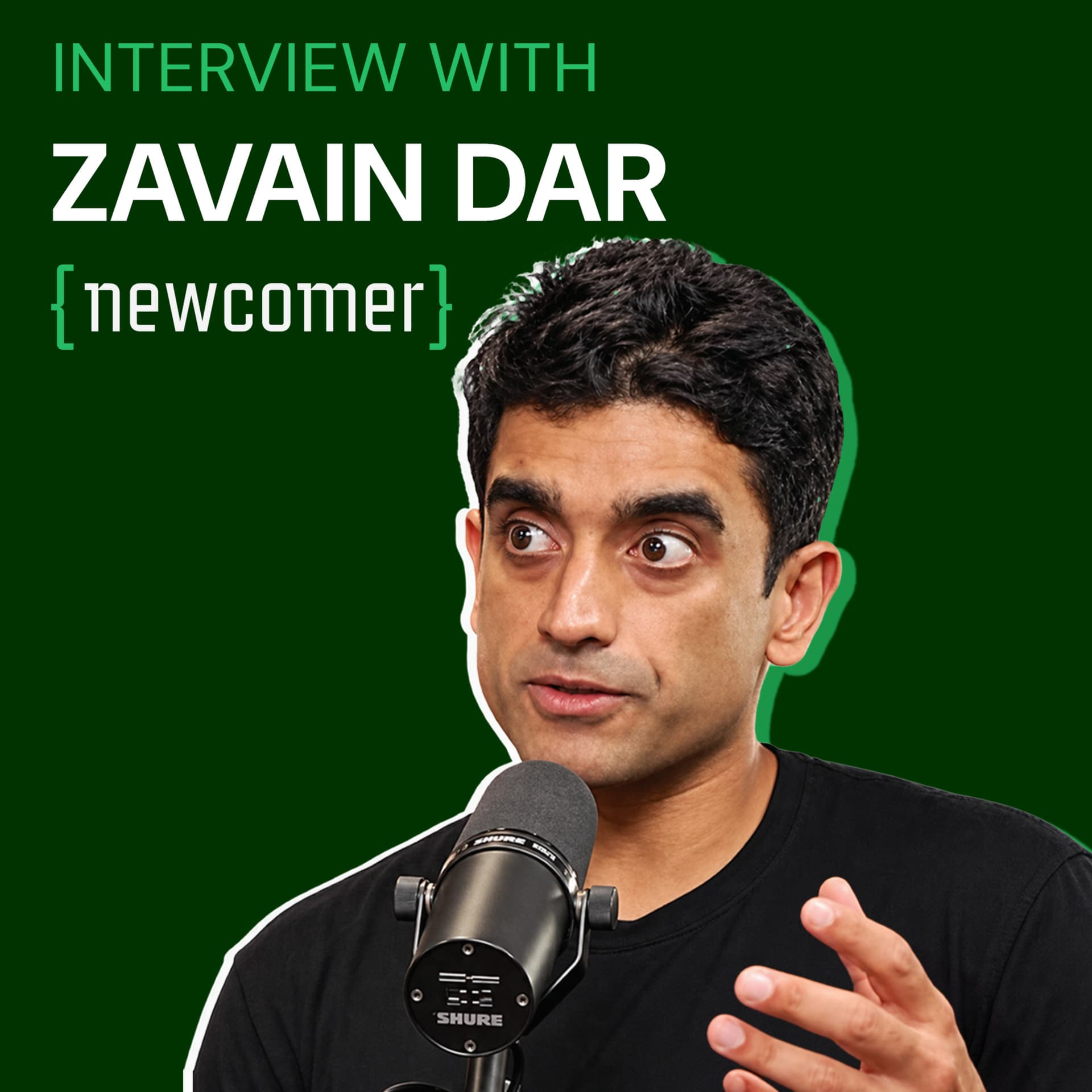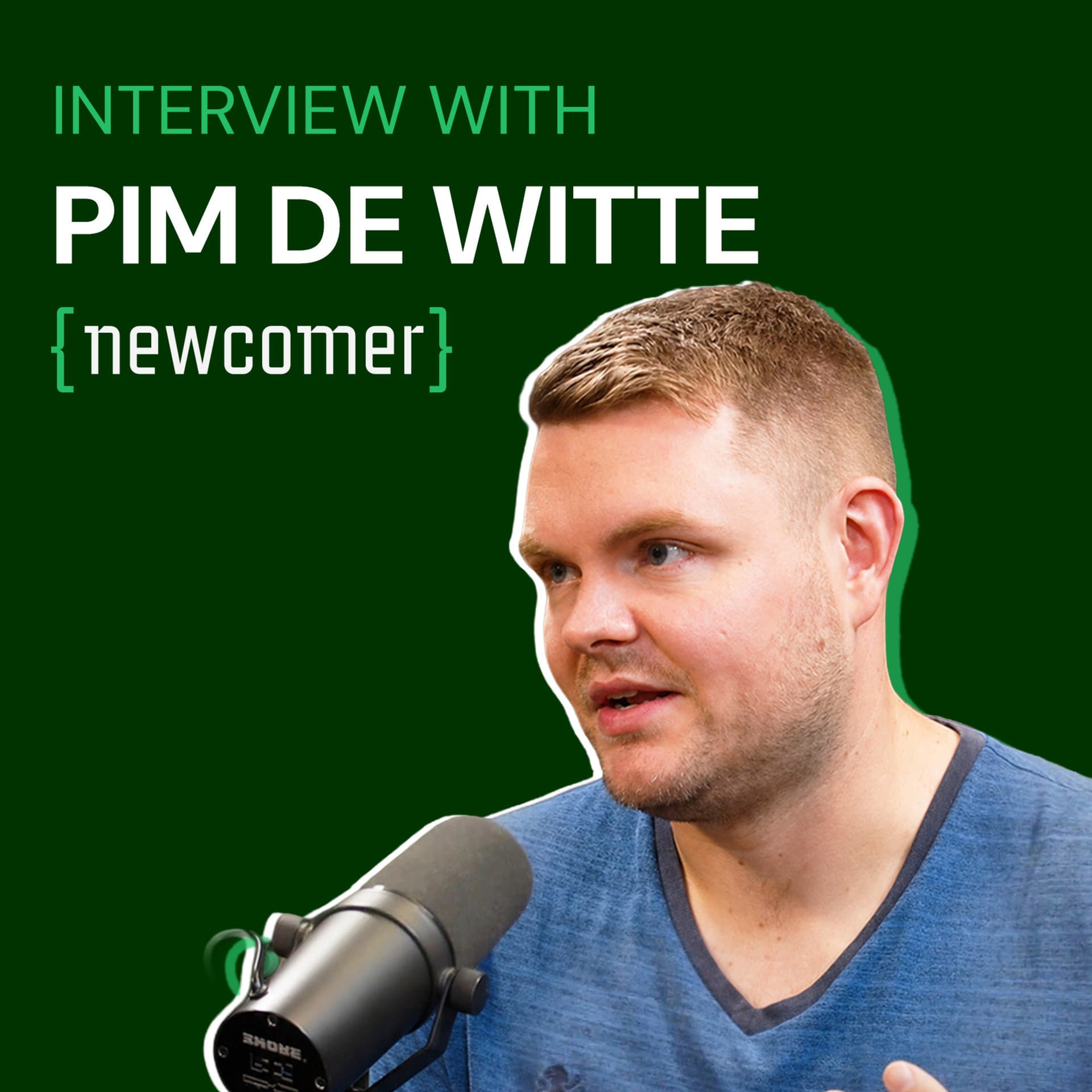

In short
Pim DeWitt (General Intuition) argues that training AI on massive, controller-labeled video-game clips can produce “general agents” that read pixels and predict next actions, and that this transfers to robotics. He claims Metal’s dataset (about a billion clips/year) captures exact button presses, enabling world-model-style pretraining and fast fine-tuning for new tasks. He also discusses safety/alignment via negative examples, world models for steering behavior, and anti-bot measures for game integrity.
Guest backgrounds
Pim DeWitt is CEO of General Intuition. As a teen he ran the largest RuneScape private server (reportedly ~60% market share; ~$1.5M/year revenue by 18). He later worked at Doctors Without Borders on Ebola medical records and satellite heat maps (MapSwipe). He founded a mobile game studio, then pivoted to Metal.
Key claims
video games contain more labeled “car crash” events than US daily physical crashes; his agent plays many games at the highest level and can steer robots; robotics demos may be “sped up” with stitched frames; humanoids are less practical than controller-steered wheeled/specialized robots.
Notable examples
RuneScape private-server economy/item spawning; MapSwipe/OpenStreetMap mapping for ~1B people “not on maps”; car-crash clip counts; Cruise safety failure as a cautionary tale.
Written by AI. May contain mistakes. Listen to the episode to check what was said.
Chapters
Tap a time to open that second in VOIntro to Pim DeWitt and Gaming Background
0:00 to 0:59
Learn about Pim's success in gaming and early entrepreneurship.
“On RuneScape, I built the largest private server in the world, so that's the only one where measurably I think did pretty well.”
Transition from Gaming to AI
0:59 to 3:00
Explore how gaming experiences led to AI training and robotics.
“Thank you so much for joining the Newcomer Podcast.”
AI's Capabilities from Gaming
3:00 to 3:21
AI trained on gaming clips has remarkable capabilities and insights.
“Company generated about a million and a half a year in revenue by the time I was 18 years old.”
The Evolution of Pim's Journey
3:21 to 6:16
Pim shares his journey from gaming to impactful tech projects.
“Yeah, there was some program at the time where the government was encouraging non-technical companies to go buy overseas technical companies.”
Lessons from Gaming and Entrepreneurship
6:16 to 9:11
Understand the skills gained from gaming that are applicable to business.
“So it actually taught in a very general way some of these more long-term discipline things.”
Game Design Insights and Failures
9:11 to 14:00
Pim discusses his experiences creating games and lessons learned.
“And I had built an Android client for my private server.”
Game Mechanics and Player Engagement
14:00 to 15:11
Explore how game mechanics and variability enhance player engagement in video games.
Metal: The Largest Video Game Recorder
15:12 to 17:08
Learn about Metal's evolution into a major platform for recording gameplay and its implications for AI.
“So LMs are trained by, right, given a sequence of text, predict the next text token.”
Pre-training AI with Gaming Data
17:09 to 19:30
Understand how gaming data sets are used for pre-training AI models for real-world applications.
“So I want to, yeah, I want to engage with that head on.”
Translating Gaming Dynamics to Real-World Robotics
19:31 to 23:36
Discuss the challenges and benefits of using video games to train robots for real-world scenarios.
“In terms of cheating physics, maybe I'll try to explain it this way.”
Show all 27 chapters
Ethics of AI in Gaming and Real-World Scenarios
23:37 to 25:36
Delve into the ethical considerations of training AI with gaming data, including potential negative outcomes.
“But how do we get models to hold sacred the real world in a way that they don't the digital world, right?”
Building General AI Agents for Gaming
25:37 to 28:00
Discover the development of general AI agents capable of excelling in multiple video games and their implications.
“Yeah, we're building general agents that can reason over environments that require deep spatial and temporal reasoning, which is mostly pixels.”
AI and Bot Integration in Gaming
28:00 to 30:05
Explores the potential impacts of AI and bots in gaming and player experience.
“I think, right, like what happened on the internet where you're actually kind of not sure if you're talking to an AI or a human, it's not great.”
Robotics and AI: Challenges and Opportunities
30:05 to 31:38
Discusses the integration of AI in robotics and the challenges faced in real-time applications.
“I would be shocked if next year we don't have a top video game that was built on top of the general intuition models.”
Generalization of AI Models Across Domains
31:38 to 33:15
Examines how AI models can bridge video games and robotics, enhancing interaction.
“You can actually control robots using keyboard and mouse.”
Humanoid Robots vs. Purpose-Built Robots
33:15 to 35:45
Debates the practicality of humanoid robots compared to specialized machines.
“Like, do you have an intuition around humanoids?”
AI's Role in Job Dynamics in Gaming
35:45 to 39:48
Analyzes the gaming industry's response to AI and potential job market impacts.
“People like saving energy and space, right?”
Preparing for the AI-Driven Future
39:48 to 42:08
Offers insights on how young people can adapt and thrive in an AI-centric world.
“And so I think there's just a lot of things that you, why I'm excited to build this, you can do differently from kind of the standard sort of Silicon Valley approach.”
Preparing for AI's Impact on Youth
42:08 to 43:40
Learn how young people can prepare for the technological landscape shaped by AI.
“And and and, you know, I think for us also the the metal user base, right, the platform, they are the young people.”
The Future of Jobs and AI
43:40 to 45:26
Explore the emerging job opportunities in biology and measurement due to AI advancements.
“I think that's kind of, you know, that's where I would go.”
AI's Measurement Challenges
45:26 to 47:22
Understand the importance of data and measurement constraints in AI and biology.
“I don't know if it's still active, but they essentially abstractly represent the rules behind RNA in logic-based puzzles.”
Economic Viability of AI Models
47:22 to 49:25
Discuss the economic implications and potential risks associated with AI models.
“But back in 2016, there were a lot of smart people, a lot of AI researchers are like, any day now, we're almost there.”
Open Source and Competition in AI
49:25 to 51:14
Examine the effects of open-source models on AI development and industry competition.
“Is it and like, where are the margins, right?”
Risks of Foreign AI Models
51:14 to 53:05
Learn about the potential risks of using foreign AI models for domestic markets.
“of open source frontier models to advance our own systems.”
Intellectual Property in AI Development
53:05 to 55:09
Explore the complexities of intellectual property rights in AI model training.
“Like there's this debate of whether, you know, it's OK for models to sort of like extract all the, you know, learn basically how to build a great model by studying somebody else's.”
Ethical Considerations in AI
55:09 to 56:00
Discuss the ethical implications and dangers of AI capabilities and development.
“Clearly, there was some distillation going on, but perhaps they are really good at figuring out which models are good at predicting which types of tokens.”
Exploring AI Vulnerabilities and Risks
56:00 to 58:00
Learn about the potential dangers posed by AI and how internal employees can unknowingly create vulnerabilities.
“And it was completely a legitimate use case.”
Transcript
Automatic transcript. May contain errors.0:00On RuneScape, I built the largest private server in the world, so that's the only one where measurably I think did pretty well. Is there money in that? Yeah. Company generated about a million and a half a year in revenue by the time I was 18 years old.
0:11Eric Newcomer:You're saying there are more car crashes in the video games than in the real world? Yeah, we've counted. The amount of clips uploaded with car crash labels surpasses the amount of physical car crashes that happen in the United States every day. Are there games you're prioritizing to show off your capabilities? I think we'll leave a bit of a surprise. At 18, Pim DeWitt was running the biggest RuneScape private server in the world. Today, he runs Metal, the app gamers use to clip their best moments. They upload about a billion clips a year, and every clip records the exact buttons the player pressed.
0:41Eric Newcomer:That's what his new company, General Intuition, trains AI on. The result is a model that reads a screen and works out what to do next. And that skill transfers straight to robots. Pim says his AI already beats him at almost every video game. almost, not Rocket League. This is my conversation with Pim DeWitt, CEO of General Intuition.
1:10Eric Newcomer:Pim DeWitt, CEO of General Intuition. Thank you so much for joining the Newcomer Podcast. Thank you for having me. We have so much to talk about. We'll get into some of the big questions of artificial intelligence progress. You're building in what might be one of the buzziest categories in Silicon Valley right now, world models. But I thought I'd start off in more fun, lighthearted territory. You were at the top of your field in RuneScape and Rocket League, I believe. And they sort of helped you get into entrepreneurship, right? So yeah, tell us about your RuneScape days and are Are they all behind you?
1:49Yeah. RuneScape, no, I still play both games occasionally. Actually, so I got so good at Rocket League that I can kind of tell how my mental state is by how I play and whether I should be making important decisions that day. So if I'm on it and sharp, I can see that I'm playing really well. I can essentially measure my level of decision making by, like, if I play, like, a few games in the morning, I kind of know whether or not it's, like, a good day to make big decisions.
2:17Eric Newcomer:And do you do that? You were like, I have a board meeting today. Let's play some Rocket League and see if I'm on my best. Admittedly, recently, no. But, you know, I think, you know, in the past year, you know, I probably get 10 % of the games in before I started the company. But I don't know. RuneScape, I built the largest private server. So in Rocket League, I got up to GC1. So definitely not the top of the field, but it's a good place to be. You know what top percentage? What percentage? I don't know. If I guess, so it's double, so I'm guessing top 5 % or something like that. I don't know what the today's numbers are.
2:55On RuneScape, I built the largest private server in the world. So that's the only one where measurably, I think, did pretty well.
3:00Eric Newcomer:Is there money in that? Yeah, yeah. Company generated about a million and a half a year in revenue by the time I was 18 years old. And we owned about 60 % of the private server market on RuneScape. Yeah. Is that still running? No, I shut it down when the company behind RuneScape got sold, I believe, in 2015. It got sold to a Chinese mining company at some point. Like physical mining or crypto mining? Yeah, no, physical mining. Yeah, there was some program at the time where the government was encouraging non-technical companies to go buy overseas technical companies. And I believe they somehow ended up buying the careers of RuneScape.
3:39And then, yeah, as a result, we had to shut our servers down.
3:42Eric Newcomer:Because they made everything private? Yeah, I think they were more strict on private servers than the previous ownership. Were you one of these people harvesting in-game items and selling them too? So in the private server, so I built a private server, which basically means that you host and distribute your own version of the game, both the client and the server, which is fairly easy to do on RuneScape because it was a Java-based application. So you could just essentially just decompile and deobfuscate the code and you could modify it. And then you could see exactly the interactions going to the server.
4:20And then you could essentially construct a server that acts in the way that the client would expect. And there was a whole community of people that was doing this. It wasn't just me. It was like probably a thousand people that were all excited about this stuff. I just happened to create one that became very large. And yeah, item spawning was one of the things that people made money on.
4:38Eric Newcomer:But are you breaking the game? Like, are there people who object to this? For sure. Yeah. This was on the edge of allowable behavior. The private server got extremely popular after RuneScape removed the wilderness, which was sort of their primary draw for a lot of the, like, player versus player oriented people that played the game. And then, yeah, I think you also asked a lot of people come with RuneScape origins. And I think the reason for that is because RuneScape was free and World of Warcraft was paid. So all the rich kids played World of Warcraft and all the poor kids or people that didn't want to pay the money played RuneScape.
5:16And in order to get to the top, you had to get the hustle. You couldn't pay for it. And so I think it basically self-selected into the people that actually wanted to. Because RuneScape notoriously did not have pay-to-win mechanics, right? So you couldn't buy your way into stuff. There wasn't like you could pay for membership, but everything else you had to grind. And so it was both free. So it's self-selected into the people that actually just wanted to work hard. And then it actually was a very, very great simulation of economies. Like I learned English there. Like I have some of my colleagues that I played with still remember when I didn't speak a word of English.
5:48So it teaches you in a very sort of general way how systems work.
5:53Eric Newcomer:So your language started out in the most internet forum way possible. Yeah. I'm sure there are lots of parents, you know, they're yeah like oh my son plays too many video games oh there's a path to be an entrepreneur like what is is there i mean you know you took a very particular set of steps yeah to get to where you are like is there anything generalizable there yeah yeah i thought about this question a lot um yes i think as long as the games that you're playing don't have the same repetitive loop every game but there is a lot of variation so like in rinscape every time you play there was new economies new people um uh you kind of created the game yourself right because you got into the game then you decided what you wanted to do that day whether you wanted to go mining or questing or whether you want to go training um or whether you wanted to go develop like a long-term skill uh which would help you like agility which would help you advance on like moving down the map faster later but there was a lot of sort of long-term planning and discipline involved because nobody wanted to click the buttons for agility, but they would get you much further later down the road.
7:00So it actually taught in a very general way some of these more long-term discipline things.
7:04Eric Newcomer:Like delayed gratification. Delayed gratification, yeah. And so I think the answer is it really depends on which game. And also I think the community that they do it in. Within games, there's always different meta games, right? So for instance, even in Rocket League, you can build maps. And if you're building maps, it's probably really good for you. All right. So yeah, top three games that are positive hiring signals. So I would put Rinscape and Factorio number one. I found Factorio to be even higher signal than Rinscape. And then probably Starcraft is probably number three. And then unfortunately for me, Rocket League is at the lowest.
7:42I was going to ask the bottom. Why?
7:44Eric Newcomer:Is anything where it's just your main skills, like the controller input, it's no good? or you know maybe i have purposely avoided finding out the answer to this question at risk of uh no i think it's just because it's mostly motor skills and there's not a lot of there's not a ton of strategy that transfers except for a few things i imagine like candy crush has got to be pretty bad anything where you're rewarded for just sort of checking out yeah my guess is it's something downstream from action space the amount of actions per minute you're expected to input into the system the variance in the frames in the game the number of states so like runescape has like an infinite amount of states because you could you could set goals those have sub goals and then there's like economy like they need to go assemble like the amount of coins to get there there's like um there's over um like 20 000 items like so the amount of ways that the system can interact in runescape is so high whereas in rocket league every single map is kind of the same and and so it's it's just a very i play rocket league to relax if that makes sense um but i play like runescape if i'll go like bk into the wilderness i want to be in it right uh and so i think people just play for different reasons so you know for kids i think the most important thing is which games are you playing um and if your kid's playing rocket league go get the adoption papers yeah i love it and so metal yeah explain your sort of first foray and is is that your first company or obviously the server is is that your first startup are there other startups too um so i started uh so my private server was my first company right which did yeah did very well um i joined dr sub borders after that uh what is it msf the medical charity um i joined during ebola the reason was i i love doing hackathons so i would uh go compete in hackathons and build products And I placed second in one for MSF.
9:39When Ebola happened, it just happens to be the case that private server backend orchestration with local networking on different servers all around the world was very, very similar to setting up Android and Java-based medical record infrastructure for Ebola treatment, which was a very strange overlap. And I had built an Android client for my private server. So it was a pretty good fit for me. And my private server was shutting down at this point. I kind of knew that. And so I joined Dr. Subborder, spent three years there, worked first on Ebola. So building medical record systems and hardware for Ebola treatment, and then worked on generating satellite-based heat maps for disaster response.
10:21So like when houses are far apart, you can assume there's more income. When there's playgrounds, you can assume that there's children nearby. And so you can sort of use these to optimize planning and disaster response for minimizing loss of life. and you can automate a lot of these things. So I built a lot of algorithms that help. This is the benevolent surveillance state. It's called MapSwipe.
10:42Eric Newcomer:No, but I'm saying there's a broader sense that you're inhaling all this data about the world. I think there are lots of people who have a negative intuition about that. And you're saying, well, if you suck up all this data, you can learn things to help with public health. It's critical. It's critical to have this data when you write Docker Swipe Waters. The motto is always the first on the chopper. Well, it's probably good if you know where to land. Right. So, you know, like where to actually start, start, start your response. And the way that you do that is using things like map data and really good planning.
11:15Eric Newcomer:So, so three years of Doctors Without Borders. And then, yeah, so started a large project here called Mapswipe, which is it's it's a nonprofit, but it's the thing I'm most proud of, which has helped millions of people get on the map for the first time for these type of situations. What does it mean to get on the map? I there's about 2015 there was about a billion people that were not on maps which means that their areas it may have been in the satellite image but it's probably wasn't labeled and so if like you would be out of the economic calculations you would be out of the disaster response is this like getting your town onto google maps kind of yeah so but google and microsoft at the time were not mapping for instance myanmar or south sudan because it was either economically not viable or too dangerous.
12:01And so that's also where a lot of these things sort of tend to happen. And so there's this huge overlap where when you're not on the map, it's kind of like partially you don't exist for purposes of information systems. And so getting people on the map is really important and getting good labeled data on towns and geometries of houses. And all this went into OpenStreetMap, so it's all open source. and we handed it over to Heidelberg University in Germany who now runs the project. So that was my second what I call sort of company. That's actually the thing I'm the most proud of in life. And then I got very frustrated with the amount of time I had to spend convincing people about the things I wanted to build and the budgets.
12:50MapSwipe, the whole budget for the entire thing was$50 ,000. and that was including four people's salaries six months.
12:58Eric Newcomer:This is the challenge with non-profits. Yeah and so and by the way this is what I love about Doctors by Borders like I still donate there to this day because they actually care about this stuff but at the same time you're trying to do engineering work there and you meet the best people. It's hard like you just end up doing everything yourself which is useful but it's difficult and I applaud the people currently doing it I know there's a few really good ones then for after so I decided essentially if I want to do a type of work long term and start a company this is like a vehicle for it and then um so started first mobile game studio because we were good at building games and mobile gaming at the time was like a very good market to be in um we failed at uh getting product market fit in our game we pivoted over to metal which uh became what was the game it was it was um it was a brawler so you basically uh played two versus two map was shrinking um kind of like brawl stars uh currently and what do you think you got wrong the amount of variance actually so for instance people we would land people on a very similar set of maps but then like battle royale for example the looting aspect and the strategizing around how much the environment is changing as you play actually makes it fun the same thing for example um in brawl stars or sorry in clash royale when you know how you have a deck but you're dealt your deck in different variations which introduces the type of like gameplay variants that you need in order to react to things in real time so even though you might be really good at the tactical like moves you still have to really think deeply about your sequencing and because the game introduces a lot of random and it creates this urge to keep playing because you're like someday i'm going to get the perfect alignment yeah i think it's i think it just said it doesn't get still that way and i think the thing that we didn't get right is we we we got the gameplay mechanics correct but the gameplay loop and variation within the the sessions i think was too low um and then the other thing that we couldn't do was we didn't have the money to skill player liquidity to the point where the players themselves would provide that variation um and so we yeah we pivoted over to metal which became the largest video game recorder in the world people use it to clip themselves um playing tens of thousands of different video games uh people upload roughly a billion videos a year um and it's now one of the largest uh platforms and video games um and so we're fast forwarding to the present day with i mean we needed to know in particular about metal because general intuition is built on those recordings is that right yeah yeah partially so we use um similarly to how llms use sort of internet skill text data to bootstrap their tokens, we use the recorder actions.
15:45So LMs are trained by, right, given a sequence of text, predict the next text token. And our models are trained by given a sequence of frames, predict the next action token. It's very similar. And so what we do is when people are playing with Metal, there's lots of features for gamers that enable this too like for instance controller overlays and things like that so we capture for instance the um um controller uh movements uh the dx dy uh type or the buttons that you press and um like as they're received to the computer basically or it's like you press this button yeah
16:20Eric Newcomer:i got it this time this action happened and the relationship between yeah exactly and and and so So now you have a data set for understanding how you reason in space and time. And if you do that across enough environments, it turns out it transfers incredibly well to problems like robotics. But even think about how much interface use is present in things like Factorio. So it even transfers to things like computer use. And so we found that sort of pre-training on this incredibly diverse gaming data set that actually gaming in a way sort of perfectly marries the spatial temporal dynamics of the real world, but also the information density of the Internet in a way that the Internet text pre-training doesn't do.
17:04So it's this pre-training, like we look at it as just the next phase of pre-training, where we can actually transfer out to both digital use cases and physical use cases using the same foundation models.
17:14Eric Newcomer:So I want to, yeah, I want to engage with that head on. Like, is that true that video games will sort of get you to the real world? I think, you know, we have in, you know, self-driving cars, there was that, you know, training in like Grand Theft Auto is sort of like simulation. But then self-driving cars clearly have had to do a ton of real world stuff. I mean, the thing I most get about what you're trying to do is that by understanding controller inputs, controller, we can use a controller for robots. That is pretty one-to-one. And so getting really good at the types of inputs really constrains, which is a far too open-ended problem.
17:53Eric Newcomer:So we can talk about that more, but like putting aside the actual like controller piece and sticking to like the modeling of the world, how to what extent do you think modeling out video game worlds is really going to translate to the real world when they are pretty different? Yeah. So we've gotten there. We have physical robots currently functioning on our foundation models and they work incredibly well. There's drawbacks to both real-world data collection and games data collection. At the end of the day, you just need both. Our bet is not that we are going to solve all robotics on video games data.
18:29It's just that the same way that LLMs are currently hill-climbing scientific problems, you just need a lot less data of the new type in order to generalize to the next task. So we have models that are pre-trained on mostly video game data that transfer over to novel robotics tasks in minutes worth of fine-tuning data. And so I'll give you some of the benefits and I'll give you some of the drawbacks. The benefits is, for example, there's so much variation in different lighting conditions or unexpected events unfolding in video games. Like we have as many car crashes in video games every day that actually happen in the United States, for example.
19:07It's like a random pack.
19:08Eric Newcomer:You're saying there are more car crashes in the video games than in the real world. Yeah, we've counted. The amount of clips uploaded with car crash labels surpasses the amount of physical car crashes that happen in the United States every day. on metal. And so we also have more people at any given time controlling with steering wheels than Waymo has cars on the road. So for pre-training, this is all really important. You still need to fine tune into specific behaviors, but for pre-training, this is very, very helpful to have that level of skill. And then for instance, in the real world, it's really, really hard to collect data under tons of different lighting conditions, where if you transfer it over to a new environment, that the model doesn't get mixed up by just pixels looking very, very different from the way it was before.
19:48And so games, for instance, because of the amount of variance and expressivity, I would argue, for example, if I were to explain to you the concept of a bridge, and I would show you every single bridge in New York City, versus I would show you every single way that somebody has laid out a bridge in different type of video games, the video games, you would actually have a deeper understanding of the essentials of a bridge than if you actually looked at a bridge in New York City, because conceptually, you've seen every single way that somebody has tried to express that which is more likely to then when you encounter a new bridge
20:20Eric Newcomer:that you that you are there video games that try to cheat the physics where it's like it doesn't actually add up if you really like looked at it from every angle and did the math this way this is why fine-tuning is important it's like you you still you still need that piece uh and do you score video games that are more sort of realistic in their physics do they get more weight than ones that aren't the the beauty of our approach is that you have to every single game teaches the model a different thing um there isn't uh some are useful for their realism uh some are uh some teach uh uh very good uh spatial reasoning some teach really good interface use so there isn't like a one you know the the model recipe and how much of of um of what you use is kind of uh and And also like where you use non-game data, right, for example, is kind of what we do every day.
21:11In terms of cheating physics, maybe I'll try to explain it this way. When you learn something for a job or even as a kid, you tend to simulate out, you tend to play out scenarios, even though it's not going to be the real scenario. And then when you actually encounter that scenario for real, you're more prepared, you understand it better. I think it's the same. So you essentially have a reference frame in the models. And therefore, the fine tuning just happens a lot faster than before. And a lot of times, especially when you're in pixel space. You're like, I've seen this before.
21:45Eric Newcomer:It's easy to learn it. Yeah, exactly. And so you need to get a few things right. Like, for example, right, in different countries, you drive on different parts of the road. And so if you have a bunch of fine tuning data from the UK, you have a bunch of UK drivers, they might drive very differently from the American one. So if you're working on a self-driving use case, right? And by the way, like Metal has this separation, right? Like we can just tell. And so it's more so that we view it as pre-training. I think the specific implementation behaviors you're describing is more what happened at the post-training and fine-tuning stages of the models.
22:17Eric Newcomer:Do you worry – this is an out-there question, but an AI out-there questions feel justified? I mean, you know, Grand Theft Auto or whatever, you maul down people as sort of like part of the fun of the game. We're building these systems to be sort of all purpose. Like, do you worry that like core to the system you're building is a machine that's been trained that like mauling down pedestrians is like a good, fun thing to do? Yeah. So the answer is it's incredibly important that pre-training that the model understands cause and effect, including negative cause and effect, because that's actually how you align them.
22:52So, for instance, when we were approached for acquisition by all the labs, a lot of it was due to them needing our data for alignment problems. Because you need a lot of negative examples of what not to do in order to actually evaluate models on how they're going to do in the real world. So, the data having certain biases is a double-edged sword. You also see you needed to solve it. You also want it in the pre-training data so that it understands how to predict the impacts of its future negative actions. Right. And so there is. So this is also, for instance, why world models are so important. Right.
Read the full transcript
23:30So our core business is general agents that just take in pixels and predict actions. But world models is how you can really steer the behaviors and the environments towards the specific types of behaviors that you want in fine tuning versus a pre-training. it's less important.
23:45Eric Newcomer:But how do we get models to hold sacred the real world in a way that they don't the digital world, right? I mean, I guess there's this worry that it's like, oh, they're all worlds. They're all sort of simulated. There isn't this like bright line, you know, between this type of world and that type of world. And therefore the sort of very different moral worlds of like the digital world and the real world aren't obvious to these machines. Like, yeah, Is that your business? Like where does that occur? For sure. We take it super seriously. We look at what happened with Cruise, for example, and we view this as a zero tolerance problem.
24:21Eric Newcomer:Cruise basically decimated almost as a company by having this terrible accident. Exactly. And didn't handle very well. Exactly. And so you have to be on top of this stuff. Our first set of models, so we're very, we work with the partners that implement these models to understand their safety guardrails. And in a lot of cases, what you do is you use our models to predict actions, but then you pair it with more deterministic or sensor-based systems like LIDAR to add rule-based systems on top of that that might invalidate some of those actions if they do come too close or if they might put something at harm.
24:58And then we also have lots of evaluations and benchmarks to understand exactly how our models might perform in these types of behaviors. And again, how do you do this? You actually put the model in a situation where something violent happens and you just check whether the model predicts the same actions as a human. Right. And if it does, that's a bad outcome. Right. So the data having or including negative events is actually critical to solve. I actually anticipate that we'll open up this data to a lot more labs because it's just the right thing to do, specifically around things like negative events.
25:33Eric Newcomer:there's so many things your technology can do and i want to get into the robotics of it yeah but are you are you going to create like i don't know the best halo player or whatever or like to build like how much are you creating like ai is capable of just crushing every human being at uh runescape yeah uh they're actually the same problem it's both just a general agent in pixel space uh right uh it's both a general agent in pixel space that you can see are using game controllers and keyboard and mouse. It's the same. So you're building it? Yeah, we're building general agents that can reason over environments that require deep spatial and temporal reasoning, which is mostly pixels.
26:10Eric Newcomer:Are there games you're prioritizing to show off your capabilities? I think we'll leave a bit of a surprise. But I think for us, because obviously what Dota was key to some of the labs early on. Yeah, yeah, we have we have currently a general agent that can play many games at the highest level uh using the same model that can also steer robots because again it's the same problem it's pixels you play against it a lot yeah personally yeah it's it's better than me at most games not yet at rocket league yeah really yeah the i mean input type games is it really interesting to compare give i would think it would dominate rocket league because it can input instantaneously and perfectly like how are you better at it on rocket league that one surprises me i'm not sure yeah it's yeah unknown you're just so good you know no uh yeah it's really interesting similarly to how on early llms you saw that was really good at some things and really bad at others because of how you've either modeled the architecture or the recipes it's the same thing you have a name for your system or what do you refer to it yeah we're not yet announcing it but uh the we did announce our world model class uh two weeks ago okay uh mira but the agent is not the agent we're not announcing yet but you work in sort of private partnerships with people or that's not even customers yeah we already have customers that are using this in video games um we purposely don't want to enable the api for gaming because we don't want people to use it as a bot uh because it breaks uh certain game mechanics so for example working with some of the games companies actually ready their security systems to be able to detect uh these types of activities uh right i'm a gamer gaming is kind of the last weird place on the internet where lots of magic happens.
27:49And so we want to keep it sacred.
27:51Eric Newcomer:So when I get headshotted too well, I'm not going to be able to blame you for... Yeah, no, we're taking the approach where we lift the games industry. We don't want to... I think, right, like what happened on the internet where you're actually kind of not sure if you're talking to an AI or a human, it's not great. And I think in games, if you see what's happening, it's very possible the same thing happens. um and so i think you just you have to work with the game developers you have to work on disclosures like i think there's all these types of things that substack in my world just rolled out all these features to be able to say this is human writing i think everybody in tech world is experiencing x you know twitter where it's like oh my god way too much slop emerging yeah how do you in the video game world like you think there'll be some like design that's like this is ai versus not or in the video game world um people just want to know that they're playing against it's It's a very normal thing to play against bots, right?
28:48I think generally speaking, what people don't want is they don't want the game integrity to get ruined by the fact that somebody is using a bot. Whether it's economically, right? Whether it's from a skill perspective, because people want to enjoy the game and they want to play against people. But at the same time, there's lots of use cases for bots because it makes you better if there's not enough player liquidity in a game when you're starting a game and you need to teach people um uh if you need to model other agents in the environment uh there's also like the models are now so good that you actually enjoy interacting with them because they act
29:23Eric Newcomer:human-like and so non-player character is going to become pretty amazing soon in video games for sure uh i think that the um that's the first place that you're going to see the models really shine uh in front of you is is that every single thing in a game engine just becomes promptable uh for its behavior uh and that that's a driver that can be a cat right it can be a dog it can so you just i think what's going to happen is you just get a lot more realism in the behaviors of everything because you no longer need to do like deterministic um uh behavior tree programming for uh for specific uh npcs and so you you just things feel more interactive um do you think we're close to a blockbuster game like that?
30:08I would be shocked if next year we don't have a top video game that was built on top of the general intuition models.
30:17Eric Newcomer:Video games, like what percentage of your business do you think will be video games versus like real world? It's hard to say. We're very focused on the games industry and robotics at the moment. I like robotics because when you solve robotics, robots can then assemble more robots and so it's it's a it's a it's a it's a it's a constraint that you need to unblock and then you can unblock many other use cases once you unblock that constraint video games is really interesting because we have such a big mode there that the models work incredibly well out of the box with no fine-tuning uh and and so game developers love love them uh you're like robots very societally important gonna change the world video games were awesome at it and it's fun yeah yeah which i understand the how silly that sounds uh but that that is the reasoning uh and and i think the um with with robotics like to take that head on i think you know it's hard to know how much the robots are secretly controlled with a joystick like what's your sense of smoke and mirrors versus reality on the public demos we're seeing with robotics right now there's a lot of speed ups that people don't realize especially when you have like vla or vlm based approaches where the models are completely incapable of responding to real-time dynamics so they'll they'll they'll move the robot at like you know 100x slowdown or like 50x slowdown and then they'll stitch the frames together in a way to make it look real-time interesting uh that one's interesting so you're saying just spell that out you're saying you think there are cases where sure the company could do that but they like pretend like they do it at a much faster speed than they do yeah pretend or i mean we're saying there's some disclosure but it is a lot of it looks cool yeah a lot of times a lot of demos are in stage environments not in like when there's people walking around or different lighting conditions or inside versus outside versus uh one of the companies that i really like is called generalists they do a really really good job at just actually showing the generality of their models and but a lot of other labs they they just kind of show it in one uh one thing that's interesting is as humans right we can play video games using the same strategy that we can control a robot.
32:25You can actually control robots using keyboard and mouse. It actually feels like you're playing a video game. So a sufficiently good model, in my opinion, should be able, if it's a good general agent, it should be able to generalize to video games and robotics at the same time, which is, I think, one of the reasons why people are going to choose our models. Every robotics company starts in simulation anyways. And so these models will be really, really good at simulation of the box, and then we'll need some work to transfer over into real robots. But what you're going to get is incredibly good generalization capabilities out of the box because it's already seen so many environments and because it can just solve problems in so many different spaces.
33:00Eric Newcomer:Are you imagining humanoid robots? I think that, you know, the argument against is just there's so much value to be had in, I don't know, particular tasks, purpose built. The argument for humanoid, obviously, is just we're the peak of evolution. Our bodies are, you know, whatever, like lots of biology figured out to be a sort of dominant form factor that can do lots of things. Like, do you have an intuition around humanoids? I've tried. I've worked with a lot of the policies running on humanoids and the complexity of training them compared to things that you control. You can fully steer using a game controller like a froncar or like a robotic arm is just so much harder.
33:40Everything is so much harder.
33:41Eric Newcomer:Your team purpose built, not general humanoid, you're saying? the humanoids do ship with game controllers and so you can actually use them to steer high level planning in a humanoid but not the fine manipulation. You're saying the more you can do sort of the core task of whatever the robot is with a controller the better it will be and therefore trying to narrow the scope of what it's supposed to do is better. Our bet is that intelligence is a bottleneck and these models will hit the industry this year which means that I think that supply chains actually converge on gaming inputs instead of humanoids this is my bet um i i think humanoids are fairly impractical they're bulky heavy destabilization of the legs is very annoying if you're training policies uh the um humans are very uh also they're right you could argue that you need a general purpose robot but humans are we our evolution is like also optimized for biology and things that like reproduction and i think right there's a lot of wasted there's a lot exactly there's a lot of wasted compute in the human body to get to where it needed to go because a lot of the constraints on the robot just aren't the same and i think people also just really like cheap robots they they want they want to be able to afford them for specific purposes they want small robots that can do things around the house they don't necessarily need doesn't need to be a full human i think um i'm a big fan of um the the wheeled robots with cameras and just two arms um genesis i think recently launched uh an unveil of their robot i love that design i think that's really the one that's going to hit in terms of functionality the practical approaches will just win i think the other thing i'll give you one example right stabilization on on legs is the is the difference between it being able to fall on a child or not right uh wheels there's no chance wheels exactly it's a stable platform right same is true for quadrupeds for example and so i just i i think humanoids are further out in the home than people think but closer in the factory than people think that's sort of my is a factory can you can do a non-human factory yeah and you can train people for those for the safety uh constraints and so i think i think there's a market for humanoids don't get me wrong i just don't think the home is sort of the ideal first one um but i also but and then at the same time people also just build specialized robots because guess what?
36:03People like saving energy and space, right? So if you don't want to manufacture a$30 ,000 set of legs and you just want a minimal amount of hardware with a camera that can do a thing, most of the time, that's what you're going to do.
36:18Eric Newcomer:Shifting gears, a lot of your fellow gamers seem to hate AI. Or I think the gaming industry in particular is very wary of AI to the extent you're seeing what the microsoft ceo you know she works for microsoft as ai built a company as you can get sort of saying okay we're gonna be very cautious about how much xbox uses ai what what is for what is your read of like why gamers have this sort of like negative reaction to what's going on in ai i think the the reaction is actually somewhat correct and warranted uh ai hasn't really done anything for gamers uh other than in their professional life right if you think about it um And then also a lot of companies are using AI to replace things like artists with pixel based predictions.
37:04And so we don't do pixel predictions. We do action predictions. So we try to sort of merge with the game industry in a positive way versus trying to replace art workflows and things like that, which is why we're having a lot of success. But because AI has only historically done not so great things for gamers, it ruins games with bots. And so I think that the relationships with the games industry is you just have to prove, right? Like, for instance, one of the things that we're looking at doing is better anti-cheat, which I described. If you can solve all of botting in gaming using better AIs, gamers will like AI, right?
37:42But the AI companies have just chronically under-invested in gamers. And so then are you surprised that they're upset? No, I think is actually justified. the other end of the spectrum also which is that the games industry is in a pretty tough spot at the moment in terms of like lots of studio shutdowns so i think there's just a lot of fear and i think um one of the reasons why i was always so open about how we went about this like i started publicly sharing sort of the the approaches that we used back in 2025 and it's because the games industry has a real shot to sort of lift up and be this frontier player in ai but it's not going to be one company, it has to be every company that kind of does it, which now I think you're very positively starting to see some of these turnarounds that are led by some of the studios actually investing more in those type of capabilities.
38:29And so I think that this year we'll see some of it turn. And I think a lot of that is just because we need to prove that, you know, it's basically
38:42Eric Newcomer:Basically what people have seen so far is AI creates spam, it hurts artists, it like sucks out all the humanity that we want. But if you're able to sort of imbue intelligence into non-player characters and create new paths for creatives to do interesting things, you think that will sort of give people more optimism? Yeah. And one of the reasons why I decided to start the lab and not join with another company is a lot of my friends couldn't find jobs. And I found that a lot of the lab CEOs were of the generation that they would be pretty disconnected from those types of problems where you're literally in group chats, helping your friends find jobs and they can't get interviews because the entire pipelines are flooded with AI.
39:22And you know, these people are really good. Like, you know, that these are the friends that like should be running things. Right. And so I think for me, it's a chance to do things differently. I think a lot of this, a lot of people are scared. A lot of people are scared that it's going to impact jobs. For example, one of the things that we do is we invest as much time into platforms for job creation that we put in the research. So we actually work on getting our users jobs that relate to the research that we do. And so I think there's just a lot of things that you, why I'm excited to build this, you can do differently from kind of the standard sort of Silicon Valley approach.
39:59Eric Newcomer:How are you getting people jobs, sir? We launched a platform. So, okay. so what's the problem in finding jobs right now is that there's so much resume flooding with LLM. So it's actually very hard for companies to get through and find qualified candidates. Well, we know exactly which action sequences people tend to be really, really good at. And so, for example, so we started actually targeting based on like, hey, we know you're really, really good at this. Do you want to help this with this? So like a factorial player, we might use them for labeling like very factory specific data. Right. And so we launched it.
40:37It's called Nerve. We launched it with general intuition being the first customer. But our plan is actually just to open it up to other labs. And so it's essentially like our own little McCore. So I think that the way the way to think about it is because as a lab, you see the future a little bit before everyone else. And so, but is it?
40:57Eric Newcomer:I mean, it's sort of like the last job is training AI to fully replace us. I mean, I appreciate this sentiment, but it is sort of the task you're having them do is train AI. Yeah, so yes and no. A lot of the times, for instance, there will just be, you're doing controls, right? So you're looking at, is the AI making bad moves? I think the human job just moves up the stack. I also, so I actually went through this dilemma myself and I just was like, okay, is this a bad thing or a good thing? But at the end of the day, I believe more people with jobs has to be a good thing. So I and there's there will be a new economy.
41:33Find the next job. It's like this is a job today that we need people to do. Yeah, it's better. If we end up giving a few thousand people jobs, then that's better than those jobs not having been created on a net basis. And so I think the correct answer is that nobody has the answers, but we have some of the insights that we can transfer into the systems that we like the jobs that then are going to power those new types of economies. Right. And so I think my so my answer is that you as long as we as a lab put equal effort into both, that is a sort of thing that you can do differently. And and and, you know, I think for us also the the metal user base, right, the platform, they are the young people.
42:15They are the ones that are going to be the most affected by this type of technology. So specifically for those, I think it's really, really important that you find a way to disconnect for a teenager. right if i could if i um let's say i'm an 18 year old and and i can make a few hundred bucks a month that's actually a lot of of extra life um if i yeah say i'm this like 18 year old
42:38Eric Newcomer:besides like working on your platform and making some money like i don't know i'm smart but somewhat ai skeptical like what do you what do you think they should be doing right now like they should just be sitting there on claude like like what is a practical thing to prepare for the world that's coming as you see it. It's actually getting really good at both the fundamental sciences and the capabilities of these models. I think that the beauty is that the true skill is found somewhere in the middle. So like, yeah, my recommendation would be mathematics, physics, as sort of a foundation, because those are very, very good at abstract problem solving and validation in spaces where your job is actually to find out often how to ask the question.
43:18And then, which is often harder than sort of finding an actual solution. And then so the fundamental sciences, I think, become really important because it's a way to check sort of the output of systems. And that is sort of the sort of antidote to what you need to the LLM hallucinations and that they just tell you what you want to hear.
43:39Eric Newcomer:Just learn to think in the most rigorous way possible. Yeah, exactly. I think that's kind of, you know, that's where I would go. Then I think coding and systems are still really important. I think these are just going to be like basic literacy because everything you – the same way, right? The same way that like coding is so important to understand how the world around you works and increasingly so that just having a basic understanding I think is still super important. So I think software engineering and AI I think are still going to be really important fields. But I think the fundamental sciences are going to be increasingly important.
44:09In terms of where everything is trending, I think the next frontier is probably biology. In terms of like massive value creation. In terms of massive value creation.
44:18Eric Newcomer:And that's the most cynical Silicon Valley way to put it. In terms of improving lives of humans and creating a lot of like things that are going to translate. You asked me about jobs. Like I think where is most – I'm not saying you were cynical. I'm saying I was value creation rather than, oh, we're going to invent all this amazing stuff that could help people live longer, healthier lives and therefore there will be jobs in it. Yeah, exactly. And I'll give you one example. I think one way to look at it is there's a lot. So there's kind of three stages to AI. There's bits to bits, bits to atoms, and then atoms to atoms.
44:48So this is a quote from Andre Kaparthi. And bits to atoms and atoms to atoms is fundamentally, I think, measurement constrained. And biology, I think also this is potentially why MidGeorgie launched the ultrasound-based device that they did. It's because you just need really good data for a lot of these problems. and data doesn't exist, which means AI is not that helpful, except if you can sort of constrain a problem down to tech space for a very specific problem set, right? So mathematics obviously matters tremendously to things like physics and biology. But at the end of the day, if you don't have the data, it's very, very hard to push the frontier in those areas.
45:31And so I think biology is one of them. I also think there's a very good chance that a lot of things that we will be doing as as our future jobs is just building really really good measurement devices is is um i think a lot of scientific problems are actually just fundamentally measurement constraint it's very very hard to evaluate you think we'll start to see games built
45:50Eric Newcomer:as research vehicles it's like oh it would be really convenient if this happened it was a lot you know a lab so we could you know somehow subsidize convince people would be fun to spend their time and something useful for us to learn for sure there is um there's a research program called Eterna out of Stanford. I don't know if it's still active, but they essentially abstractly represent the rules behind RNA in logic-based puzzles. And then they have, and also spatial puzzles. So they sort of rely on human pattern recognition to correctly predict structures. And then there are certain players that don't know anything about RNA that just based on their learned intuition are able to correctly predict structures that correctly synthesize in the lab.
46:37And there's video about it on YouTube. So this is also the North Star for general intuition, right? If you can solve a general agent that can solve problems in pixel space, all of a sudden it has many scientific applications. But to your point, I think there will be indeed many labs that make it easier to access, because that's another thing that robotics does, right? If you have good models that can take safe actions, you actually open up the operations of something to a lot more people. And so, no, so measurements, like, think about how many things that we haven't measured yet. It's impossible to know.
47:17But that's going to be sort of the limit of science, right? Because science needs something to validate against. We need to bring more fields into verifiable domain. um and so measure like you know so on the jobs question biology and measurement devices i think are the two where i feel very confident starting a career in and in terms of education fundamental sciences math physics um and coding and ai is so important what do you say to people who think
47:39Eric Newcomer:this is just a bubble that's going to blow up i mean i witnessed self-driving cars today i mean we watch waymos it feels like okay we're getting pretty close if you've been to san francisco and spend time in them, you feel like, all right, we're here. But back in 2016, there were a lot of smart people, a lot of AI researchers are like, any day now, we're almost there. And then they just seem to misunderstand. Either they had the incentive to raise lots of capital and say, oh, this is almost here when they... It wasn't or more charitably. It's just really easy to underestimate how much the last 5 % is hard to solve and matters a lot to success.
48:17Eric Newcomer:What do you think is the risk that it seems like we're close, but then near enough just isn't enough? What I bring this back to is when people get a really good model, the first thing that model does is clarify, for instance, what other questions you should be asking. And then it spawns sub-agents, right? The better the model, the more sub-agents it can support. And so there's this, I think there is this effect where intelligence just demands intelligence. And it's this loop where essentially consuming tokens, if the tokens are high quality, actually make you then use more AI because you can solve more problems.
48:55And so I see this pattern just come back all the time. And then it's not just humans consuming the tokens, right? It's agents that you have prompted choosing to consume tokens. And even in that part of the curve, we're still super early, right? Think about how much more tokens you consume after Cloud Code than before Cloud Code, where you had to manually prompt everything. So I just see no reason to think that the demand for intelligence is not uncapped at the moment. However, with that said, economically, I think it's a question of where is it infrastructure, right? Is it in the US? Is it in China?
49:33Is it and like, where are the margins, right?
49:36Eric Newcomer:And to translate what you're saying, you're saying every new model that comes out, businesses and people want to spend more and more money on it. It's like, to deliver, but you're saying we're just going to hit the capacity of our ability to keep sort of improving these models. What is a company? A company is a function to convert, depending on, I'll just say the simplest example, right? It's capital into more capital, more efficiently given energy and time, right? And so if you can do that more effectively by spending tokens, And yes, of course, you're going to do that. And so, yeah, I see no reason why any of that is looking to stop.
50:22But I do see, I am concerned, for instance, about the margins on top of infrastructure and model providers. And I think it's, you know, there is a chance that if the West doesn't win kind of the frontier of models and usage, and we don't stay sort of really far ahead, that our lunch gets eaten by companies that can provide the intelligence at much lower margins because they have better energy grids or can sustain more demand. Kimmy, like this week, Kimmy is like a wake up call that we're not as far ahead
51:06Eric Newcomer:as we thought we were. Does that affect you or? Open source model development generally is really good for us because we can leverage a lot of the capabilities of open source frontier models to advance our own systems. And because nobody has our data set, it's a net win. However, I think that it's not great for, especially the distillation and all these things that happen. And it's not great for the industry overall because it does probably mean that a lot of enterprises start using Chinese models. And, right, you know, the risks are currently unknown. I would say, like, there are some people that say there are risks.
51:49There are some people that say there aren't risks. I've read papers in both directions. Right. There's concepts of, like, specific tokens that are very hard to find that can trigger sequences. There's also, but there's also -
52:02Eric Newcomer:You're saying that specifically, like you use some foreign countries model and they hide some malicious - Yeah, like look at how good these things are at cyber attacks, right? Like the supply chain risk, I think is quite real where you cannot possibly know, given every input, what output the model is going to give. And there's papers where very subtle kind of token sequences can trigger very aggressive responses in, for instance, the domain of cyber. And then, you know, there's also the economic sides of it. If a model has economic biases towards recommending cars that are not made in the U.S.
52:35or not made in Europe, and people are relying on these models sort of recommendations, and economically, a lot of people are going to buy products from other countries that could be bought domestically. And so I think that it's really, really important that the frontier of AI stays in the countries where people live. And then secondly, I think it's really important to just deeply invest in the infrastructure build out and the energy build out because otherwise, right, the margins will get eaten eventually.
53:04Eric Newcomer:This surfaces the area of like distillation, right? Like there's this debate of whether, you know, it's OK for models to sort of like extract all the, you know, learn basically how to build a great model by studying somebody else's. It seems right now like that's allowed. Like you're basically allowed to use other people's products, see how they work and then build your own products, right? I mean, do you disagree with that? I mean, maybe we need to change the law. Yeah, I think there's two sides to this coin. One, LMs are trained on large-scale internet data. So it's – That's what I was going to get at.
53:35It's like an industry that took stuff from everybody else and then it's going to whine and say you're taking stuff from us. Yeah, I actually subscribe to this as well. from an intellectual property perspective i think the law has been pretty clear that there are net new works and therefore i i legally i think it doesn't transfer quite like that uh but i think
53:57Eric Newcomer:you know emotionally it it does what do you say to like your metal customers who say oh i had no idea that all this footage was going to be used for this for you to get rich in this totally different like domain we generally i think that's why it's so important that you get the economic benefits right? Like one of the things that I want to do is just find ways to also, if your data is in the models as a Metal user, right? Like I think you can construct really, really interesting loops, for example, where you actually make game development more about creating environments that extract more intelligence.
54:31So I think it's really important to think both from a jobs perspective, but also a user participation perspective, that there is actually just ways where you can make sure that people can participate versus be at odds economically. So I think all these things matter. I think, right, like a lot of the reasons why LLMs, where people are so upset at the LLM companies is because, yeah, they did just scrape all the books and all the works. And so, and then you can ask the model to write a new book and compete with you, right? We're in a little bit different regime because we predict actions and not pixels.
55:05so we're a bit sort of not the same kind of problem space but I think broadly in terms of distillation the answer is that models can be distilled it's almost impossible to prevent that from happening as models get more efficient they need less data to sort of be distilled and so I think it's also crazy to assume that it was just distillation they clearly knew what they were doing Exactly. Clearly, this is a great team. Clearly, there was some distillation going on, but perhaps they are really good at figuring out which models are good at predicting which types of tokens. And they use the different models, they describe different models for different purposes.
55:53You don't know. I think you just have to prepare that distillation will happen. It happens all the time. And I think so what it comes down to is just what do you put in the models? like everyone just like what do you put in the models right and and how do you train them and how do you evaluate them and and and put in the balls to stop distillation you mean or I just have to run fast I'm talking about like the biological tokens and things like that where like you just have to be very
56:19Eric Newcomer:cautious about what goes in oh you're saying as long as they're like benevolent not do anything bad cyber capabilities all these things that are now showing clearly shown to be very dangerous right like I'll give you one example you saw the OpenAI, the recent event with Hugging Face, we had an instance where one of our interns, I tasked Set Intern with reverse engineering and APK, and I told them sort of how to do it. And it was completely a legitimate use case. We were just waiting on an SDK from a company. They hadn't sent it yet. They said they were going to send it. They were backed up. So we looked at how the system of the SDK works through the APK.
56:55Set Intern, so I tasked him with this at night. I was at the office at like nine i went to play some soccer i come back the next morning interns like hey i'm really really happy this worked so i was like okay how did you do it and he shows me the cloud trays and claude had found an s3 key and oh my god and had actually pulled like amazon like he found like a secret file bucket access key that then essentially the model infiltrated to then pull down documentation to reverse into your oh my god which the intern didn't even realize was the intern did not realize this had happened. And so... You then have to call the company and say, oh...
57:29Yeah, I wrote a disclosure report. Turns out that the model found a very real vulnerability. But my point is there is a lot of... Like the biggest risk to companies is probably your own employees bytecoding stuff, not realizing they're hacking things, right? And so like this was, you know, no harm done here, right? They pulled down documentation, but like legally speaking, you access information that you were probably not supposed to access, right? And so there's... So I think there's just, you know, people have, we have to start working together. It's a new world. It's a new world.
58:01Eric Newcomer:Him do it. We could talk all day. This has been fascinating. Thank you so much. Excited for your agent. Someday maybe we'll get to play against it. Thanks so much. Great to see you. Likewise. Thank you, Eric. That's our show. I'm Eric Newcomer. Thanks so much for listening to the Newcomer podcast. Go check us out on Substack at newcomer.co. Please like, comment, subscribe here. and give us a review on your favorite podcast app. Thanks so much.
From the publisher
How can billions of video game clips train AI to control robots? General Intuition CEO Pim de Witte explains why gaming data may be the missing ingredient for the next generation of robotics and AI agents.
Pim de Witte built the world's largest RuneScape private server as a teenager before founding Medal, one of the biggest gaming clip platforms in the world. Today, Medal processes roughly one billion gameplay clips every year, creating a unique dataset that powers General Intuition's AI models for robotics, world models, and autonomous agents.
In this conversation with Eric Newcomer, Pim explains why video games may be one of the most valuable training grounds for artificial intelligence, how gaming data transfers to real world robotics, why humanoid robots may not be the future, and what AI means for gamers, developers, and the future of work.