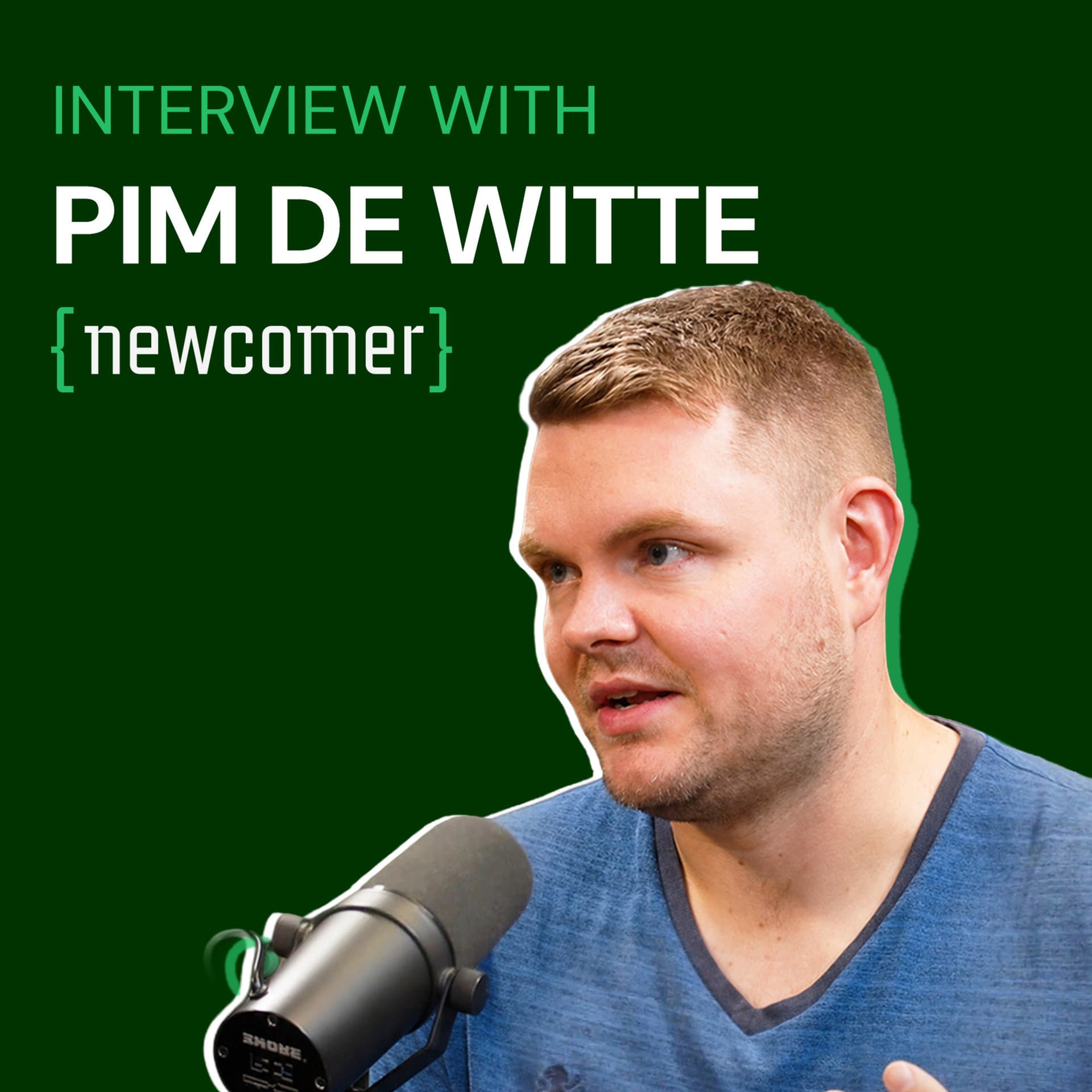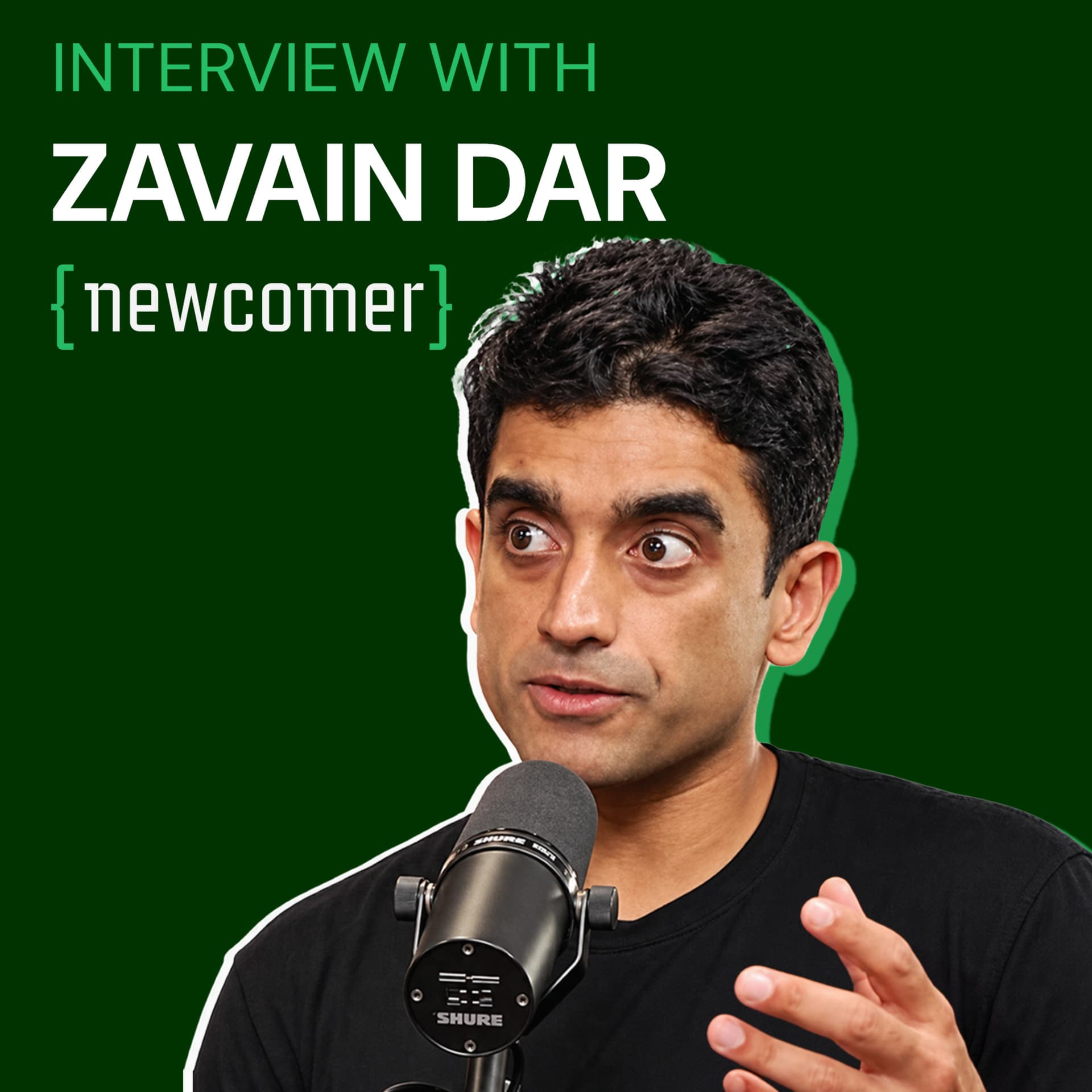

In short
Investor Zavain Dar discusses NVIDIA’s $12.9B acquisition of Hugging Face, why open-source is strategically important for chips and inference, US-China AI/biotech interdependence, and whether AI can realistically accelerate drug discovery and treat most human disease.
Guest backgrounds
Zavain Dar is an investor; at Lux he helped lead Hugging Face’s Series A and later backed AI/biotech companies. He’s associated with Dimension and has invested in science/biology-focused startups, including Coefficient Bio (sold to Anthropic for about $400M). He also describes Dimension’s China trip and investment in Shanghai biotech Helixon (also known as Irundel).
Key claims
NVIDIA’s “open source endgame” gives it the most important ML repository, standardizes the software-silicon interface, and shifts revenue toward inference via diverse customers (hyperscalers and “NeoClouds”). US export controls may have forced Chinese low-level innovation, making Silicon Valley pay attention to China’s accelerating cadence. AI drug discovery is promising but the bottleneck is human clinical testing and causal biology; distillation and cross-Pacific tech flows are hard to sever.
Notable examples
Hugging Face’s early transformer repo (BART/BERT); NVIDIA’s Poolside deal; Google Cloud vs DeepMind tensions; Chinese model distillation workflows; Summit out-licensing from Chinese biotech (Acaso/BiGene); IL-6 antibody failure in phase 3 (Novo); Chai composition-of-matter design; Helixon partnerships with Sanofi; Coefficient Bio’s paper/target intelligence use.
Written by AI. May contain mistakes. Listen to the episode to check what was said.
Chapters
Tap a time to open that second in VOInvestment Insights into Hugging Face
0:48 to 1:34
Discussion on the investment journey into Hugging Face and its significance.
“I'm Eric Newcomer, host of this podcast.”
NVIDIA's Open Source Strategy
1:34 to 3:00
Exploring NVIDIA's motivations and strategies behind acquiring Hugging Face.
“you to sort of play tour guide a little bit and explain what's going on there and what companies can do and can't do.”
The Evolving AI Landscape
3:00 to 5:40
Analyzing the role of open source and the competition between AI companies.
“chatbot, they're moving into the enterprise space.”
Google's AI Strategy and Challenges
5:40 to 7:40
Discussion on Google's shifting focus between DeepMind and Google Cloud.
“And what do you think NVIDIA sees with this deal?”
American vs. Global Open Source AI
7:40 to 11:09
Exploring the state of American open source AI compared to global efforts.
“So, you know, the modals, the base hands, the fireworks, the Nebiuses, the core weaves of the world.”
Debate on Sovereignty in AI
11:09 to 14:00
Discussing the implications of sovereignty in AI and the fear of propaganda.
“That sort of fits into the next piece of the conversation, which is you go China, where a lot of the open source work is being done.”
The Complexity of Open Source AI
14:00 to 18:10
Explore the nuances of open-source AI, especially regarding Chinese models.
“And, you know, open source in AI can be different than open source elsewhere in that there are like layers to it.”
Investment Insights from China
18:10 to 21:16
Insights from a recent trip to China focused on biotech and AI ecosystems.
“vis-a-vis API their frontier models, which if a frontier model isn't programmatically available, you can't kind of query it at the volume and scale that one would need to distill against it.”
Cultural Reflections on Innovation
21:16 to 23:12
Reflect on the contrasting innovation cultures between China and Silicon Valley.
“And instead of them tweeting about the thing, which is, I think, oftentimes like what American entrepreneurship and technology has become, they do the next thing.”
U.S.-China Tech Competition
23:12 to 27:19
Discuss the implications of U.S. tech restrictions on China's AI progress.
“Or it's like, I understand that there are different phases of life, but it just feels that a company, you know, would have that expectation.”
Show all 21 chapters
Future of Global Investment in China
27:19 to 28:00
Examine the shifting landscape for global investment in Chinese technology.
“And right now that's, I think, moving faster than what most industry kind of viewers would have predicted 24 months ago.”
Global Investment Perspectives on China
28:00 to 29:04
Exploring the current sentiment and strategies for investing in China amidst geopolitical tensions.
“How, to what extent do you feel free to be a global investor?”
Biotech Collaboration Between US and China
29:04 to 30:41
Discussing the intertwined nature of US and Chinese biotech advancements and their implications.
“And again, we have one investment that we made in a company that's a Cayman Topco, happens to be, you know, footprinted in Shanghai.”
AI in Drug Discovery and Disease Treatment
30:41 to 32:49
Examining how AI is revolutionizing drug discovery and the challenges it faces in treatment efficacy.
“biotech company that's got a drug that's going after PD-1 VEGF, that molecule was out licensed from Acaso, which is a Chinese biotech.”
The Long Road to Effective Drug Trials
32:49 to 35:41
Analyzing the complexities and time requirements of drug trials in the pharmaceutical industry.
“lost far more money underestimating the velocity of technology and science progress than overestimating the velocity.”
Aging: Disease or Human Condition?
35:41 to 39:34
Debating the nature of aging and the potential for medical advancements to extend human lifespan.
“I actually saw Jacob Kimmel, who's the founder, president, and CEO of New Limit, kind of comment, I think, on Twitter recently that this kind of long pull will continue to exist.”
AI and the Future of Drug Design
39:34 to 42:00
Exploring the role of AI in drug design and the emerging companies leveraging this technology.
“like the LLMs we all know, like is it, I go into open AI, you know, some private version of open AI and I ask like, what should we do?”
The Role of AI in Scientific Discovery
42:00 to 43:52
Explore how AI can revolutionize scientific research and data utilization.
“I probably shouldn't say the specific financials of it.”
Revolutionary Potential of Generative AI
43:52 to 44:21
Discuss the profound impacts of generative AI on American society and science.
“i hear this stuff and it's just like the average american is so underestimating how revolutionary what's happening with generative AI is.”
Advancements in Knowledge and AI
44:21 to 46:04
Understanding the interplay between mathematics and empirical sciences in AI.
“To the extent that, I mean, there's no complete representation of it, but to the extent that for any statement, we should be able to kind of give a true or false proof for the most part, we're on that path.”
Silicon Valley's Response to Immigration Issues
46:04 to 48:39
A critical look at Silicon Valley's silence on immigration and its implications.
“silence on some of the US turn against immigrants?”
Transcript
Automatic transcript. May contain errors.0:00Eric Newcomer:What do you think NVIDIA sees with this deal? I think they now have the most important open source repository in the history of software and definitely for kind of ML and AI, like a phase shift. There was my life before, you know, Transformer models and after. And in a lot of ways, I kind of think of my life before Shanghai 2025 and after Shanghai 2025. The vast majority of human disease should be solved, should be treatable. And I think we're on that path. Zavain Dar is one of the smartest investors I know. Back when he was at the venture capital firm Lux, he helped to invest in Hugging Face long before NVIDIA scooped it up for some$13 billion.
0:37Eric Newcomer:He unpacks NVIDIA's open source endgame, China's AI and biotech surge, and whether AI can deliver on its boldest promise yet, designing better drugs and transforming human health. I'm Eric Newcomer, host of this podcast. Go read our sub-stack at newcomer.co. Let's get into it. Zavandar, welcome to the Newcomer podcast. us. What's up, Eric? Thanks for having me. Yeah, thrilled to have you. There's so much I want to talk about. You and your firm Dimension just went on a journey to China and wrote a note digesting that. You were part of an investment when you were at Lux in Hugging Face, which is this phenomenal, insane exit to NVIDIA, something like$12.9 billion plus retention.
1:19Eric Newcomer:And then you're sort of at the heart of investing in AI companies that are trying to transform science and biology. And that's at the core of some of like the biggest promises that the AI industry is making. So I want you to sort of play tour guide a little bit and explain what's going on there and what companies can do and can't do. You're an investor in Coefficient Bio, which I reported sold for something like$400 million to Anthropic early on, a great early return for Dimension. Let's start off on Hugging Face, just given it's so fresh in everyone's mind. What did you guys see? Brandon Reeves at Lux invested with you.
2:01Eric Newcomer:What did you guys see when you made the investment? And then, yeah, what do you think NVIDIA has seen with this deal? Yeah. I think at Lux, we'd been investing in and around ML and AI really since 2014, around when I joined the firm. And a lot of it was spurred by advancements we were watching, at least at that point, just in our backyard in Stanford, with the emergence and maturation and scale of neural nets, which then became deep nets and deep learning. I think Hugging Face was a company we had been aware of and had been tracking. It was formerly kind of a chatbot, transitioned into a kind of an open source repo for a transformer model, specifically at that point, not to get too technical BART and BERT models.
2:51It was actually sourced by our former partner, Zach Shildon, who I think got an email from Betaworks, if I'm remembering correctly, saying, hey, one of our companies, there used to be a chatbot, they're moving into the enterprise space. It's kind of deep tech and AI. I, we think Lux might be interested in it. And Zach kind of shared it around internally. Brandon and I raised our hands. Brandon gets truly kind of all of the credit here. He was uniquely the champion, the table pounder, vociferous that kind of we should be involved. We ended up leading the Series A after spending time with Clem and Julian and Thomas.
3:25My memory is that it was a little bit of a competitive Series A. So we kind of took out, you know, Clement Julian to Lucien, a French bot here in this village. If you've been there, I had cocktails at Garfunkel's and now D-Fox. You're like, I was part of the courting. I was good at it. Kind of, yeah. I was a good dinner companion. There's a Paul Francais, un petit peu oui. You know, so you can kind of conversate with the founders in their language, quite literally.
3:52Eric Newcomer:They'd been in like sort of chatbot territory before, right? But they were pretty technical for what they were doing. Yeah. I mean, Julian did his grad school in computer science at Stanford. Tama, was he called Polytech, computer science PhD. They were amongst some of the earliest true kind of innovators and application engineers atop of transformer models. And so their initial application was more of a chatbot Tamagotchi-like thing for kids. Frankly, we met the company after they had already transitioned. but right after they transitioned. And what was immediately evident then was just an insane amount of developer kind of center of gravity, developer pull for what they were kind of tracking.
4:40I remember Brandon coming into a Monday IC and showing kind of the GitHub stars over time for the Hugging Face repo. And it was kind of outpacing any other prior open source repo we had ever seen. So we ended up leading the A, uh uh brandon again truly getting all the credit here uh took the board seat i was uh kind of shadowing along as a board observer with him um and then obviously you know i left in 2022 but like what he and clem and julian and tamah uh and then others around the the firm too kotu came in sequoia came in addition alif excel came in to uh get just a bunch of credit um i posted on twitter a little bit of a funny kind of tongue-in-cheek comment, which is we actually approached Betaworks multiple times after we joined the board to try to buy their equity at a premium to where we had just invested, but kind of seeing just how special this team was.
5:32And to their credit, they definitely shirked our offers. So I think a really good day and outcome for everybody.
5:40Eric Newcomer:And what do you think NVIDIA sees with this deal? Yeah, I mean, I think they now have the most kind of important open source repository in the history of software and definitely for kind of ML and AI. If you think of where NVIDIA goes, NVIDIA is successful almost one to one with kind of the rise of open source. And so the ability to standardize essentially the medium between software and silicon, if that can be kind of intermediated with open source, NVIDIA is in a really good spot to make sure that their chipsets kind of reign supreme. It also, I think, helps counterbalance a lot of the pull that Anthropic and OpenAI have right now.
6:26And all you have to do is see OpenAI launch something like, was it Jalapeno, their own chipset? to see.
6:33Eric Newcomer:And Anthropik's thinking about it and obviously I imagine Anthropik is thinking Google's got TPUs, Amazon's got Tranium There's a take I've seen online that's sort of the traditional business school wisdom is that you commoditize your compliment. You make something that you need to buy my service really cheap and easy to get so that you're happy to buy my service but NVIDIA seems to be commoditizing their customer which you think they would want their customers to thrive, to continue to spend money on NVIDIA. I know you get to live in the world of early stage startups and NVIDIA's corporate strategy is a little far afield, but do you have any thoughts on, you know, Anthropik and OpenAI, NVIDIA needs those companies to succeed.
7:19Eric Newcomer:Like it's going to be pretty brutal. If they don't, I imagine it's a huge percentage of the spend has to do either from OpenAI or because people are using OpenAI or whatever. Yeah. Yeah. Like I think two years ago, that probably was true where the lion's share of NVIDIA's revenue came from the hyperscalers and the frontier labs. Today, it's the hyperscalers vis-a-vis inference, not necessarily just on their models, but on open source models. And then also the NeoClouds. So, you know, the modals, the base hands, the fireworks, the Nebiuses, the core weaves of the world. But in some ways, some of those are NVIDIA too, in certain ways.
7:55Eric Newcomer:NVIDIA has funded them, they're using NVIDIA chips. I mean, at this point, they're runaway freight trains in terms of business momentum, revenue, customer traction, so on and so forth. NVIDIA, again, probably in a strategically shrewd way, Jensen gets a lot of credit for this, made the ecosystem more diverse, like deliberately started investing in a diverse ecosystem two or three years ago. So no one customer or provider could get too much leverage over them. If you think about what it means to commoditize the software layer, and we can debate whether or not that's actually happening or to what extent or what the various shades of gray there are, but if you think about what it means to commoditize the software layer, it means it's much easier now for someone to set up an inference company.
8:42How do you set up an inference company? You're going to need necessarily...
8:45Eric Newcomer:Buy a bunch of chips from NVIDIA. Buy a bunch of chips. I think it's helping their customer. Actually, it's helping their new cohort of customers more. Their customers are the NeoCloud, you're saying. Exactly. Yeah. Or the hyperscalers, Google, obviously, with their kind of potentially shuttering DeepMind instead to focus more so on kind of the Google Cloud. You think they're going to shutter DeepMind? Well, they've divested some of their resources into DeepMind. And I think that's tantamount to some sort of reflection that they're probably saying, at least today, the revenue is coming from inference.
9:14And so...
9:16Eric Newcomer:So it's more like Google Cloud than it is be the next OpenAI. eye that's right yeah you think that's how they're i think that i think that's that's certainly the body language that you're reading if you're observing them yeah interesting that's i mean i saw obviously with demis's chair you know jeff dean leaves tons of negative signals marty chavez on on your podcast yeah you spoke at one of our events yeah in my podcast feed yep i imagine the debate internally at um at the google board level and then between google cloud and deep mind and certainly you were starting to see these tensions arise which is hey we're spending a ton of money on DeepMind.
9:50We're in like third or fourth place. It's not generating a ton of revenue. And oh, by the way, if you look at Google Cloud right now, the money from inference on Gemini and open source is rocketing. We are giving more of our TPUs now to Google Cloud than we are DeepMind. There was tension between those two factions. And what you ended up seeing was essentially Demis and John Jumper and Jeff Dean, Kwok Lee, many of kind of the leaders of the DeepMind Google Brain org slowly leaving and or being shown the door. I think it's probably a little bit of both in favor of Google Cloud.
10:23Eric Newcomer:You must be startup hunting out of all these deep mind people then. For sure. Yeah. I mean, I think we're startup hunting just out of the, you know, the most talented people on the planet right now. Of course, something like Google Deep Mind is a really interesting place to be hunting. What, I mean, the other piece of this, I broke the news and newcomer was a huge scoop for us that NVIDIA was doing this weird partnership with poolside,$6 billion to acquire a lot of poolside, and then invest some in their main company, which is sort of continuing hard at work. And they have a separate infrastructure company, so a very complicated deal.
11:00Eric Newcomer:But so yeah, between Hugging Face and poolside, poolside had really leaned into American open source. NVIDIA is going to be sort of like a key player in this American open source thing. That sort of fits into the next piece of the conversation, which is you go China, where a lot of the open source work is being done. I guess before we get to the journey to China, what do you make of American open source today? Like how credible are American open source models? It's definitely, I mean this with all respect, it's, you know, it's quantitatively a half step. We're behind. Yeah. Yeah. And for a whole milieu of reasons, talent, capital resources uh whether or not one can legally here distill against the frontier models trying to get us to compete on a different it's a slightly different playing field how much the government is investing it and it what chipsets and what data uh you know the the two continents have and so um uh i think there's a whole other question in terms of like what it means to be american open source versus european open source or japanese you know chinese so on and so forth and why that necessarily matters.
12:10I think there's somewhat of a false focus on it. What do you mean?
12:14Eric Newcomer:If you go to Europe, they're all about sovereign AI. They're like, you know, I mean, Cohear is literally a Canadian company building ties to Germany, spending time in London with the idea that like, oh, we need, every democracy that's not America needs to be tied together. So I do think Europe is very mindful, obviously, of where this stuff is coming from. Closed source sovereign AI makes a bunch of sense. And you could argue open AI and Anthropic are closed source American AI. And even just in terms of the Trump admins ability to say, hey, don't open up that, shut down that, work here. We want this before you open it to others, et cetera, et cetera.
12:53You're already starting to see potentially even taking equity positions in open AI and or Anthropic.
12:57Eric Newcomer:Though Anthropic did successfully sue the Defense Department, at least. Yes. But definitely there's a lot of influence. Yeah. Yeah. Open source is a little bit different. If something is definitionally open, assuming the license, whether it's an MIT license or something else, doesn't back prop in some way, shape or form to some sort of kind of country preference, which they don't right now. So it's unclear to me why it matters. And I can imagine, and just to kind of say what I think an intelligent computer scientist who might be listening to this would say is, what about backdoors built kind of in the open source?
13:38What if there's kind of latent representations that are quasi propaganda in terms of what the model would respond back with or suggest based on how it's trained or kind of how it's productized for you? And so we should be wary of that. But I think there tends to be sometimes a little bit of a false precision when there's too much focus on the sovereignty of where open source comes from.
14:03Eric Newcomer:Right. And, you know, open source in AI can be different than open source elsewhere in that there are like layers to it. And people, you know, we've seen with Meta and others where they'll say open source, but that doesn't really mean you can just start like rip it and go. But now the distillation where you can basically have somebody else's model and easily sort of like, oh, figure out how it does things and do it yourself. There's almost been less of a concern where, you know, this has come up in the U.S. government's interest in like, should we ban Chinese models? I think there's been this response of what does that even mean?
14:34We just like rip off their model and call it our U.S.
14:38Eric Newcomer:one and it'd be slightly different. And I guess hopefully we'd weed out whatever propaganda was built in. but maybe we don't understand it well enough. But, you know, what, sue us and say that that's actually the old model? It's like, well, we say it's a new model. You know, I don't know. What do you make of that debate? Yeah, like I think any talk of, in some sense, you know, severing this figurative cord that crosses the Pacific in terms of silicon and data and compute and models and weight seems, you know, far-fetched at best. and just to give kind of a a brief vignette of i think how uh most uh you know vertical ai companies today um are using something like kimmy k3 or you know glm from zai they talk about using you know fireworks or base 10 yeah modal whatever yeah but a lot of times they're sort of the route to use these exactly and so uh like oftentimes what happens and and at least up until now this is what has been happening, which is Anthropic or OpenAI will use American chips, so NVIDIA, AMD, so on and so forth, to train frontier models, largely with American data, using Mercur and Surge and Scale, so on and so forth.
15:47The web, of course, maybe the largest, biggest free data set out there. They will train these models. A Chinese lab, maybe Moonshot, which produces Kimmy, will distill against it. So they'll ask it a bunch of questions in quick succession, and they'll kind of build a representation rip it off rip it off yeah build a representation uh of the model um and so that representation already has embedded in it the the data that was american uh vis-a-vis kind of the silicon that was american vis-a-vis the talent that was american so on and so forth um they'll then open source that model um and then this has happened you know with harvey or with cursor or with cognition um you know any of the vertical ai companies now that silicon valley storing hundreds of millions, if not billions of dollars towards, will fine tune or post train against these Chinese models.
16:36And so what you end up with is this technology crossing the Pacific twice before it comes to the end consumer. So if I'm a lawyer and I'm using Harvey, it's already crossed the Pacific twice. It's already touched both Asian and American technology and silicon and data and talent. And so to cut it, what I think really chop at the knees of vertical AI and American kind of vertical AI software's ability to innovate right now, maybe unless like truly US open source catches up. If US open source catches up, then I think you can start to think about ways to kind of maybe cut the cross-specific technological tether.
17:18Eric Newcomer:But we can't stop distillation, right? or you can't stop distillation um uh per se i think i think the the labs can probably be far better at tracking it just like who's aggressively using our model yeah it's like a ddos attack you know you should be able to track when it's happening and you should be able to shut down and we're seeing reporting now about trying to hide some of the thinking potentially to sort of yeah and cloak how stuff works and there's like there's numerous theories no one's come out and said it here's exactly why this is happening but like a very reasonable theory is that anthropic and OpenAI have been chasing revenue.
17:51And of course, even if you're distilling a model, you're calling kind of inference to Anthropic or to OpenAI quite a bit. And that helps their revenue numbers.
17:59Eric Newcomer:It's good money in the short run. Let them distill it and then ban it after you get paid for it. I think where this goes at the limit, though, is, and you're, again, already starting to see this, Anthropic and OpenAI not opening up vis-a-vis API their frontier models, which if a frontier model isn't programmatically available, you can't kind of query it at the volume and scale that one would need to distill against it. And so you might end up seeing a little bit of a growing gap between Chinese frontier models and American frontier models simply because American frontier models are no longer distillable simply because they've shut down API access.
18:36Eric Newcomer:So we sort of explained one of the many reasons why it'd be interesting to go to China right now. Explain a little bit about the trip. Where'd you go? Who showed you around? What were you trying to learn? Um, you know, uh, so, so the, maybe as a little bit of context, we, we went out to, uh, Shanghai last year and, um, at least from our second fund ended up making one of the bigger, uh, capital investments, um, uh, that we made from the fund into a, uh, uh, came in Topco, uh, but essentially, um, you know, uh, Chinese, uh, kind of footprinted, uh, company, uh, based in Shanghai. And that was a company that sat at the intersection of, you know, tech and biotech.
19:13So what's it called? Irundel or Helixon. It's got like kind of two names. And how's it doing? Extremely well. Yeah, no. So it was founded by a Chinese-born, U.S. educated, formerly kind of tenured UIUC computer science professor who during COVID moved back first to Beijing and then Shanghai, decided to start this company, ended up raising$787 million from us and DST and Hill House and a number of kind of global tech and healthcare oriented investors have a number of large pharma partnerships and collaborations with Sanofi. For example, a few that they haven't yet announced have multiple drugs in the clinic and frankly have a technology that's working.
19:59And so we invested in them last year based on a visit there. again this year we decided to go back out spend time with them and also kind of get more ingratiated not only in the biotech ecosystem in china but then also in the ai ecosystem we ended up kind of landing in shanghai spending time in shanghai and beijing and hong kong and mostly spend time with with investors and entrepreneurs and labs and and kind of everyone in and around the ecosystems like bankers and advisors and kind of the whole the whole the The whole spiel, anything one would do if, you know, for example, if we were going to go visit London and want to get smart on the tech ecosystem, probably the same kind of cadre or, you know, a collage of different kind of sorts of people that we met.
20:43Eric Newcomer:And what were some of your key takeaways? You wrote a letter. Yeah. You structured your thoughts here. Yeah. going to China last year was as big of a oh wow this is happening and it's going to be a tsunami wave when it happens for me as seeing the first results from transformer models and the transformer papers were in 2017 for me and so like a phase shift there was my life before transformer models and after and in a lot of ways I kind of think of my life before shanghai 2025 and after shanghai uh 2025 um a young a highly educated highly disciplined highly hard work highly intelligent uh population with uh deep uh and aligned ambitions to to do amazing science and technology uh to create and capture a value um and um and an ecosystem in a culture that does a thing.
21:47And instead of them tweeting about the thing, which is, I think, oftentimes like what American entrepreneurship and technology has become, they do the next thing. And in that way, it was a little bit refreshing. I grew up in Berkeley in the 80s, 90s, and early 2000s. And my mom was actually a computer science student at Cal. And so a lot of her friends were early Google employees and early tech Silicon Valley folks. And this was before tech and Silicon Valley had really jumped the shark. And it reminded me of that feeling of just kind of being in and around a milieu of deeply ambitious, very intelligent people.
22:24Where Silicon Valley has become, look at me, sort of so much promotion.
Read the full transcript
22:28Eric Newcomer:Quasi, quasi-naval gazing. I know you had the TBPN guys and I really like what they're doing, but I got a text from our friend yesterday showing me a screenshot of like a paparazzi style picture of like some entrepreneur or investor and um and it's just become a little bit navel-gazing and and don't get me wrong we should celebrate um uh entrepreneurs and investors and people taking risk and people creating and inventing um but you also need to give space and time for like long form thinking and focus and space to actually do work china can often make america feel like europe in the same way that when we sit here and we kind of think about like the the work ethic or the drive where the pace of business kind of velocity in Europe, it's a step slower.
23:08Eric Newcomer:I don't know. Having an 11th month old, I am now decidedly anti-996. Or it's like, I understand that there are different phases of life, but it just feels that a company, you know, would have that expectation. It's just like, I mean, this is how Europeans feel about Americans. It's like, we achieved all this to not have to do that. You know, there are some things that matter more. And so, you know, I guess being America somewhere between Europe and China, you know you get to feel a little good about like oh maybe it's the sort of happy medium yeah and some like look i um i wonder if um a normative assessment of 996 is like is the question that we should be asking um or if it's just like observational oh okay this is 996 and and one can and should of course ask ask the question do we as a society have enough to take care of everybody and or have we become slaves to like a perpetual you know uh you know uh hamster real.
24:04And is there any way, can we imagine a world where you find a little bit more balance?
24:07Eric Newcomer:But if you're trying to find the best investments, the ones doing 996 might... Yeah, a little bit of both. I think the best entrepreneurs also tend to be creative and spunky and I think oftentimes are spiky, to use maybe the word of the year in the kind of venture entrepreneurial community, in all sorts of ways that aren't just work-related. I mean, one of the observations that really resonated with me is that, you know, I feel like every work of fiction, you sort of like the villain is created by the good intentions of the heroes or whatever. Or this is, you know, it's opposition. And it's like the U.S.
24:45Eric Newcomer:was like, OK, we want to stop China. We're going to crack down on these NVIDIA chips. And then through the deprivation of not having access to the best chips, China's sort of been able to do things in sort of more humble ways, which has allowed those models to be cheaper, which means that they're more sustainable, more usable, better for these vertical application companies we're talking about. Yeah, I mean, it's a nice story, but I mean, you also want to have like the best chips in the world. Do you think the U.S. made a mistake by restricting the access or this would happen anyway? I think the jury's out.
25:22Certainly, with no doubt, what has happened is we cut off a supply of cutting edge chipsets, namely through NVIDIA. And that forced the frontier labs and engineers in Beijing and Shanghai. And a lot of the AI work specifically happens in Beijing or in and around Beijing, because that's where Xinhua and Peking University, that kind of academic talent is. It forced the, you know, the compilers, engineers, and the systems engineers, and the low-level assembly line and assembly code engineers to really innovate all the way down to the bare metal in a way where the American labs aren't. And in some ways, that circumvented the export controls that we'd put on.
26:03In other ways, the Chinese labs are still struggling. And so what are the two worlds where we'll look back and say, was this a right decision or the wrong decision? If right or wrongness is depending on whether or not we win the AI race against China. If Chinese engineers and computer scientists are able to innovate such that they make irrelevant the US's lead on silicon, then yeah, for sure. We'll look back and say, man, that was the wrong decision. That's not the case right now. Our frontier labs are meaningfully ahead of the Chinese frontier labs in no small part because we have better silicon.
26:43We don't have as much power. And at some point, we'll kind of run up against that wall. But right now, we have a meaningful lead. China, even if it has enough power, it doesn't have enough chips. It doesn't have enough compute. And so right now, they've done an amazing job optimizing at a very low level. It still isn't enough to catch up to our frontier labs. But it's certainly something that we should be paying attention to. And the question is, are we creating an enemy in the future? Or somebody who wants to catch us up on the silicon level, then they'll both have power and better low-level software engineering than us.
27:13That's kind of a scary world. And so we should be tracking those two. I think probably what's the most interesting is to watch the velocity and the cadence of innovation from the Chinese semiconductor industry. And right now that's, I think, moving faster than what most industry kind of viewers would have predicted 24 months ago. and so um you know i think that's probably where we want to be paying the most attention to just do you think they will catch up or in the fullness of time when you have to think that they will catch up nothing is fully defensible forever and if you have um again a large extremely intelligent extremely motivated and capitalized population to go and pursue these things they will china graduates more stem engines more stem graduates uh than the world globally every year and so there's just like hundreds of thousands of extremely intelligent people who will go and pursue these, these questions.
28:05Eric Newcomer:How, to what extent do you feel free to be a global investor? You know, I'm, I'm sort of a globalist. Like I want a world where the U S and China can share technology. Obviously I want Chinese to follow agreed upon rules and compete on a level playing field. And there's some protectionism issues I have, but generally I'd like to see a world of cooperation and fair competition. But just a few years ago, Sequoia Capital had to spin out of China, literally GGV, which was known for being this cross-border investor, split the firm. But now it does seem like there's some comfort. I mean, the information, which obviously journalism is different, but Jessica Lesson just sort of talked about hiring a new reporter to really focus in on China.
28:50And there's just like a mood that people feel a little bit more comfortable
28:54Eric Newcomer:saying you know that they spent time there and you've invested around those companies like what's your read on how free you are to invest in chinese companies and what the what the mood is right now um maybe i'll start with saying like you know we we invest in companies um largely globally um for the vast majority in the west um and um largely avoid you know regimes and areas that we kind of view as unethical or um kind of uh adversarial to western values and so like we don't have investments in russia for example uh or iran for example right now um i i think it's a shame that people are um fearful such that they shunt their curiosity uh in these situations i think that um being open and honest with your curiosity and learning from how others do things is really, really valuable.
29:45We don't have a China strategy per se. And again, we have one investment that we made in a company that's a Cayman Topco, happens to be, you know, footprinted in Shanghai. But I do think that there's a lot that we can learn. And especially right now, if you read the letter, I think one of the points that I really tried to imbue was biotech and tech today are more interwoven between the US and China than arguably they've ever been before. And so to have your eyes shut off to what's happening there i think it's positioning you even if you only focus on the u.s you are disadvantaged to be ignorant or naive about what's happening in china
30:23Eric Newcomer:have have this is gonna this is not my area of expertise but have americans really benefited from like novel chinese drugs to date and is that a world we're about to enter yeah uh We are certainly entering that world. If anyone has been following Summit, which is a U.S. biotech company that's got a drug that's going after PD-1 VEGF, that molecule was out licensed from Acaso, which is a Chinese biotech. B1, which was formerly known as BiGene, now European domiciled, founded and really kind of brought to maturity in China. now has kind of commercial global ambitions with their kind of commercial drug pipeline as well.
31:10If you look at like where the, at this point, the majority of pharma out licensing and BD dollars are going, it's going into China. And so, you know, all you need to do is look at the large billions of, you know, upfront and biobucks dollars that maybe, for example, GSK spending on Chinese assets to see, okay, if those assets are now entering GSK's pipeline, in the next three, four, five years at some point, assuming that they're approved, they will be commercially available. And we'll all be at that point taking an antibody that was maybe invented in a lab in Suzhou, China. So it's coming. It's coming.
31:46Yeah, it's coming.
31:48Eric Newcomer:And so this sort of transitions us to this, you know, field that's, you know, just hard to understand for many of us or like, you know, AI and biology. It's like, you know, I think some of the largest pronouncements from people like Dario at Anthropic or like, oh, you know, I mean, he literally said something the other day that's like, oh, we want to win people over by curing cancer or something, you know, then we'll really earn goodwill. And that's the kind of stuff that will move the needle. And I think some people reacted to that, like, even if that's true, it's going to take so long. And obviously you have to run experiments.
32:23Eric Newcomer:You might think you have the answer, but it could take years and years until people really believe it or, you know, not believe it's even the wrong word until it's proven and goes through sort of the human processes that it has to. But where, you know, what makes you most optimistic about sort of drug discovery and disease, attacking diseases with AI? And where are you sort of like, this is going to take a long time? Maybe I'll preface it in that I've lost in my investment career, which really started in 2013, lost far more money underestimating the velocity of technology and science progress than overestimating the velocity.
33:02Eric Newcomer:Like you missed deals you should have done. I missed deals. I thought this would take too long. I didn't think it was tractable, so on and so forth. And so I think I have learned through a negative Pavlovian response to really attempt to understand why someone who's really intelligent, even if they're saying something that I think is far-fetched to try to like understand where they're coming from um I think what Daria said which is um really inspiring is you know it's it's not it's one thing to talk about it it's another thing to actually go do it and we can talk about coefficient and the team and you know kind of our views on on what they're doing um but I think in our lifetime I don't think I it's it's hard for me to have you know the fidelity to say 7 or 10 years or 15 or 20 years But certainly in our lifetime, assuming we live to ripe, healthy ages, the vast majority of human disease should be solved, should be treatable.
33:56And I think we're on that path. And we can talk about a company like Chai that essentially has developed generative technologies to perturb biology in exactly kind of the way one would want to. So a biologist can say, hey, I want to perturb this protein at this site by upregulating it or downregulating it. Sorry, perturb.
34:18Eric Newcomer:Is this a model or is this in a lab or? In a human or an animal setting. So I want to get a protein. I want to get this protein into this cell type or into this organ type. And then at that organ type, I want it to hit another protein and the protein that I want to hit it on the target in kind of, you know, biotech pharma speak. I want to attach my protein that I generated onto this part of that. It's called an epitope. um and so uh that's kind of amazing that's like a that's a toolkit that we just never had before and you're seeing it in terms of the pharma dollars and the revenue and the traction that they're getting um but that's kind of like one step of many that's all simultaneously kind of happening all at once so in our lifetime we have the ability to sort of treat all these diseases yeah does that mean we're living forever it means we're living to 200 i mean yes and and And maybe before we get to that question, I think the long pole is and will continue to be testing in humans.
35:21We don't have in silico systems to replace, nor do we have animal models to replace in totality. Like the necessary requirement to test in a step-wise function, first safety, then efficacy, then really testing safety and efficacy in a phase one, two, and three kind of trial for most drugs. I actually saw Jacob Kimmel, who's the founder, president, and CEO of New Limit, kind of comment, I think, on Twitter recently that this kind of long pull will continue to exist. We don't really have line of sight to something that's going to meaningfully step function, change it, or decrease kind of the timing of it.
36:00We might be able to multiplex it. So when you're kind of enrolling in a clinical trial, can we be creative or intelligent about testing multiple drugs in one person at the same time to get kind of a -
36:10Eric Newcomer:And to say it in sort of the dumbest way possible, if a drug professes to keep you alive forever, you have to run that experiment. You know, it's like, oh, this is going to help you, you know, 30 years from now. How do you really, you know, it's not hurting you in the near term. Maybe it shows some immediate benefit, but you don't necessarily know. No, you might have some theory of the case why AI believes it'll do X, Y, and Z. Novo just had a failed phase three antibody that was going after an interligin. So kind of an extracellular protein called IL-6. And we had every biological and theoretical and kind of in vivo and even in human reason to believe that if we kind of shut down or downregulated IL-6, it would reduce the rate of like heart disease, essentially ASCVD, various forms of like heart attack and heart disease.
37:02We took this kind of drug through the preclinical setting. We took it into phase one. It proved safe. We took it into a phase two setting, which is a little bit shorter. So, you know, you didn't have the full three or four years required to see, hey, on average, are people having less heart attacks? But we had all of the biomarkers that we thought were highly correlated to heart health. And we were taking down IL-6 and it was taking down all of the biomarkers that we thought were highly correlated to heart disease. We then ran it in a phase three setting. It cost hundreds of millions, I think over$500 million was the aggregate cost of this phase three.
37:37It took about four years to run, and there was zero correlation. There was 1 % correlation. It was a 0.99 hazard ratio, which is the equivalent of 1 % correlation between that drug and decreasing heart disease. And so what does it mean? It means that biology is really hard. We thought we had all of the biomarkers. Those ended up being correlative, not causal. The drug did what we expected it to do. It was taking down IL-6. It was taking down kind of that pathogenic protein, but it wasn't actually reducing the disease. And so until we figure out better biomarkers, until we better understand human disease biology, it's still going to take time and there still will be failure.
38:15Eric Newcomer:But if we cure all disease or just cancer, does that just mean there's still a clock or this is an attempt to sort of we will not die of natural causes? it uh that's somewhat of a philosophical uh question do you think aging is a disease or is it you know part of the human condition i think there there are many smart people who would i answer on both sides oh because your claim might be accept aging or like are you sort of leaving aging out of there there there are reasons to believe that aging might be um uh helpful to some extent uh you know in the for an evolutionary process for the first 20 or 30 years of our lives but then we haven't really evolved.
38:59There's very little in human evolution that's based on the years 30 plus, simply because the vast majority of our ancestors never made it past those years. And so, yeah, could we imagine a world where we maybe freeze the aging function at around 27, 33 in that range? Perhaps, if that's possible. Companies like New Limit, by the way, like not in this fantastical, let's go do it all at once, freeze at 27, but like let's be organ or cell specific and figure out a way to perturb the age of particular cell types or organ types with exquisite precision and control, like that's what they're going after.
39:33Eric Newcomer:And how much is it sort of generative models, like the LLMs we all know, like is it, I go into open AI, you know, some private version of open AI and I ask like, what should we do? And like it spits out some answer and then scientists run around and run experiments or what, how should we imagine what these like sort of AI drug discovery companies are doing or like what's, what are their key approaches? So there are, I think, you know, a handful, like maybe to name a few of them. There's companies like Chai, again, for example, who are developing technology to help you design what an industry is called composition of matter.
40:14So I want to design a small molecule or an antibody or a macrocycle or, you know, a radio ligand therapy. Help me generative algorithm design the actual thing.
40:23Eric Newcomer:um there are so that's i've built a specific model that is sort of thinking through it exactly around these problems trained on it and then it's coming up with answers itself exactly and instead of saying hey write me an essay or write me a poem as one might do to clod or anthropic it's saying design for me the antibody sequence of a drug that binds to that epitope of that protein or design for me a small molecule that hits into that allostery pocket of you know that um intracellular protein so on and so forth um there are companies that are trying to map biology so uh it's not just about designing the medicine it's about knowing what the medicine medicine should do and so that's um often reading literature it's understanding you know um large uh multimodal biological and human health data sets so multi-omeg human health ehr emr kind of coalescing all of that and making sense of it.
41:15We started actually a company internally at Dimension called Coefficient. And one of the ways we used it internally before kind of spinning it out into a new co was to make sense of new papers, new ideas, new pathways, new targets, new potential remedies in ways that we could very quickly make sense and get smart in these areas, even if we'd never kind of seen them.
41:40Eric Newcomer:It could have helped you just invest in great companies. Exactly. And And that's frankly how we used it. And every day across the 10s. This Coefficient Bio, which sold to Anthropik for like$400 million. Exactly. And every day across. It was like, am I making this up like a 30 ,000 IRR or something? I probably shouldn't say the specific financials of it. But although, again, here to my Dimension co-founder, Adam Goldburn, gets a bunch of credit. he was kind of the entrepreneur, investor, co-founder of the business. It was his idea to spin out what we were developing internally into a company. He was single-handedly responsible for recruiting the founding team, galvanizing them, financing them, and then working with them through kind of the early innings of the coefficient build.
42:29We were extremely lucky to partner with Nathan and Aris and Sam and Jesse and the team there. and to give you just maybe like a quick sense of like where at least we were kind of thinking about building it every day there's you know 10 ,000 plus tens of thousands of universities that are all pursuing different parts of science every day they're putting online new results new data if I am let's say Lilly and I'm running a trial against IL-6 maybe and there's a small research lab in Germany that publishes a result what are the odds that i as the you know that the trial investigator will happen to see that result zero to none right but if i have uh an agent quote unquote online scouring the world's kind of corpus of knowledge in real time so being able to incorporate in real time against your world model but you know what do you think the probability distribution of different biological phenomena to be true is if you see a result from a small you know research university you know in the suburbs of berlin come out come online you should be able to the next day update what you're thinking is update the gantt chart no actually you know what we should look at that patient criteria not that not what we had before so on and so forth and so um i think that's where we're trending it makes me really hopeful that we will get more accurate with our kind of scientific uh
43:52Eric Newcomer:i hear this stuff and it's just like the average american is so underestimating how revolutionary what's happening with generative AI is. I mean, Americans are pretty hostile to it. And partially the AI industry gets some of the blame for how they talk about it. But just on science alone, the amount that people see opportunity, it's sad that the American public sort of hasn't gotten that message. It's so fucking cool. And what's happening in math right now? We're potentially nearing the asymptote of the full closure closure of you know a priori human knowledge and um man like as as as a nerd and as a geek growing up like that's like the coolest fucking thing translate that you just you just think ai is about to sort of solve all these any anything that you can deduce with a pen and paper so like mathematics for example um you we should have the full closure of it we can in theory, I think, sooner rather than later, be on a path towards essentially like having a pamphlet of here's all of mathematics and here's kind of like the proofs.
45:01To the extent that, I mean, there's no complete representation of it, but to the extent that for any statement, we should be able to kind of give a true or false proof for the most part, we're on that path. And that's done. Where it's sort of you could solve it with binary is sort of the claim? You can solve, yeah. In philosophy, it's called a priori. So it's things that you can do deduce without kind of empirical testing um physics chemistry astrology space on and so astronomy space uh those are more empirical sciences so it's a posterior a posteriori so you need to be able to kind of then query the universe get more data and then help guide your knowledge back um and that's where uh there are two major uh yeah kind of branches of ai research right now one is in and around kind of mathematics which is like a priori knowledge and the other is around kind of empirical knowledge.
45:50So you're seeing so many kind of labs being spun up to essentially have closed loop interfaces between kind of the AI model and some sort of set of experiments that they can run and then have it come back and update the priors of the AI model.
46:03Eric Newcomer:I feel like, you know, what do you make of Silicon Valley's sort of, I guess, silence on some of the US turn against immigrants? It's so weird. It's so weird. It's sort of dark, right? it's so dark um the fact that we can um i like i'm all for opening the overton window um and uh uh but it uh but i find it deeply troubling that there's not more pushback against um you know essentially a a view that we should have some sort of reverse dei for uh americans like we are i believe we are as a country and as an economy certainly who we are because we've been the beneficiaries of global brain drain and so we've you know for every role in every company in theory all things equal we should be able to you know find the best person source the best person globally um and that's why our companies by and large have been successful and it's good for america i mean palmer lucky you know has been fighting with paul graham probably fighting as we speak for days.
47:08Eric Newcomer:And it's like successful American companies will either hire everybody or they'll open up offices somewhere else. So like a global multinational is still going to hire people outside of the US. And so I don't even understand. It's better for Americans that the talented people are here paying our taxes, like starting our companies here, being aligned with our governments, hiring with and building with our values. But the defense, I mean, Gary Tan, I understand you have like the, you know, the White House space or like the FTC or whatever it was like zeroed in on you. But just like not even immigrants have given the Silicon Valley so much and to not even like defend them at this moment just feels.
47:53yeah like like i was um deeply disenchanted by uh the large um you know sound of a pin dropping from many of my silicon valley venture peers um in the face of this debate right and um i don't think that would have happened like 10 years ago or 15 years ago frankly it's for the most part it's illegal to uh to hire um uh on the base of basis of citizenship so it's like and there are times when like you legally need to find an american citizen because cia or government related it's classified so on and so forth uh but for the most part like again all things equal it is actually illegal to like to make a hiring decision based on citizenship and so um yeah we're just in in a weird moment in time i i hope we're i hope we swing out of it um uh and like i would like i i yeah i hope we swing out of it well uh great to have you on the
48:52Eric Newcomer:show a lot a lot to be hopeful for and so so much change in the world so really appreciate you coming on awesome thanks eric that's our episode this is the newcomer podcast thanks for listening please like, comment, subscribe. Go find us on our sub stack at newcomer.co. If you're hungry for more podcasting, I also have a talk show called the Cerebral Valley Show. We love your comments. Thanks for all your support and see you next week.
From the publisher
What does NVIDIA really get from Hugging Face—and what is Silicon Valley missing about China?
Zavain Dar, co-founder of Dimension and an early Hugging Face investor during his time at Lux Capital, joins Eric Newcomer to unpack NVIDIA’s open source strategy, the competition with OpenAI and Anthropic, and why his trips to China changed how he thinks about the future of technology.
They discuss China’s AI and biotech boom, the limits of US chip restrictions, and why American startups are building on Chinese models. Plus: Dimension’s Coefficient Bio exit to Anthropic, whether AI can make most human diseases treatable in our lifetime, and why human trials remain a bottleneck.
Subscribe to Newcomer for more reporting on the people, companies, and deals shaping Silicon Valley: https://www.newcomer.co