Ask ChatGPT
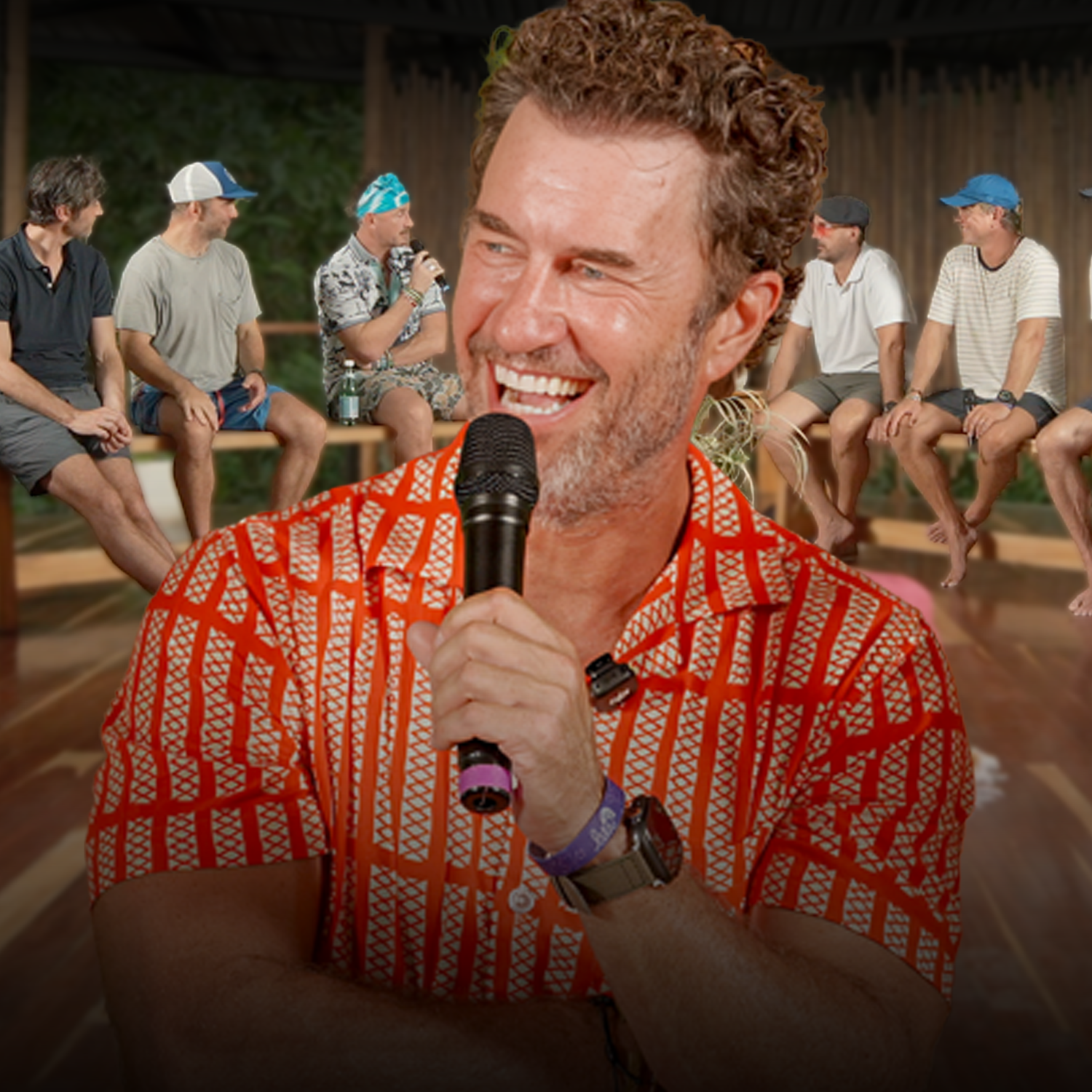
 No Magic Pill with Blake Mycoskie
3 Nov 2026 · 1h 27m · 33 chapters

How relationship “triggers” happen when the brain goes into survival mode, why the “pinch doesn’t match the ouch,” and how to break repeating patterns using core beliefs (“bullshit blueprint”), grief, and nervous-system regulation (e.g., a 90-second window of emotion).
Sabrina Zohar. She’s a relationship/trauma-informed coach and author of Why Am I Like This? She describes years of personal healing and building a framework for understanding childhood survival strategies that later sabotage adult relationships.
Written by AI. May contain mistakes.
Sabrina explains how past experiences influence our present relationship reactions.
“That's when you can start to say, wait, how do I see this?”
Blake shares his journey through relationships and his desire for guidance from Sabrina.
“You know, we were talking at lunch about why I do a podcast.”
Sabrina discusses brain functions involved in emotional responses and relationship triggers.
“So the first thing I want to start is, in your book, which I loved, you talk about at at some point, you know, we find ourselves just losing our shit with a partner.”
An exploration of how childhood experiences shape adult relationship patterns and beliefs.
“So right now, if we talk about hunter-gatherer days, you and I are talking and we hear wind outside.”
Sabrina provides examples of core beliefs that negatively impact relationships and the importance of recognizing them.
“If you and I were dating hypothetically and you started being rude and disrespectful to me, I don't need to take it.”
Understanding that grieving is essential for personal growth and healthier relationships.
“And so I think the bullshit blueprint, once you dismantle it, you can actually live a life that feels more authentic to you.”
Blake and Sabrina discuss the process of identifying and dismantling limiting beliefs in relationships.
“Well, I think this is, I think everyone listening or watching wants to understand their bullshit blueprint.”
Discussion about personal insecurities and their impact on relationships.
“And another part, which I don't know if your therapist ever asked you this, but mine did and it changed my life.”
Conversations about self-sabotage as self-protection and experiences with therapy.
“I want to actually help you reframe self-sabotage.”
Exploring the fine line between prescription drugs and alternative medicines.
“Sponsor probably not if you're doing drugs, but anyways.”
Discussing the importance of integration after plant medicine experiences.
“But nonetheless, I'm with you because as somebody who was highly medicated before, it was the worst decision I've ever made for me.”
How addressing childhood experiences can influence adult behavior.
“Because for a long time, every time I went back to see her, she would say, but you keep leaving me to be in charge.”
Understanding triggers and how they affect emotional responses.
“But when you can actually validate your own experience, you're no longer gaslighting yourself.”
Learning to effectively process emotional triggers and their stories.
“I think this is something we all need to hear.”
Discussing how texting affects intimacy and communication in relationships.
“It's a dopamine reward loop group, and 99.9 % of the time people are just an intermittent reinforcement.”
Learn how personal challenges can lead to life-changing moments.
“I would spend months getting to know someone.”
Discover practical steps to break unhealthy patterns of behavior.
“So, okay, this is, I mean, thank you for being so vulnerable and sharing that.”
Understand how setting boundaries can improve personal relationships.
“something on the show and be like, okay, that's me.”
Learn about the dangers of people-pleasing and asserting yourself.
“I said, you just told him that what you mean doesn't, what you say doesn't actually mean what you mean.”
Explore the significance of authenticity in relationships.
“You know, we talked about dating apps earlier and you met your partner on a dating app.”
Learn how to evaluate whether your relationship fulfills your needs.
“Like a lot of the things that I'm realizing in this conversation are very big, like buzzwords, right?”
Explore how to evaluate if your relationship fulfills your emotional needs.
“I'm going to say something that's going to blow your mind.”
Learn about a therapeutic method involving letter writing to process breakup emotions.
“And so it's probably a good thing because I think this is a really healthy approach to having healthy relationships.”
Understand the importance of finding closure and self-validation after a breakup.
“This is someone who probably just fucked with your nervous system and made you feel really dysregulated a good portion of the time.”
Discuss the mindset and readiness necessary for dating and developing healthy relationships.
“And so you have to remember that you're also a dime that's top of the line.”
Explore how having community and relationships is vital for mental health.
“It doesn't mean you're always going to be.”
Explore how relationships significantly affect mental health and longevity.
“And really helping people, whether they're feeling stuck or they're struggling or they might be down or they're just wanting to up level the areas of their life.”
Discuss the necessity of having a supportive community and personal reflections on relationships.
“Like those, when my mom would call me and be like, uh-uh, Sab, we're not playing this game.”
Delve into personal experiences of self-worth and the journey towards recognizing one's value.
“One thing I like to ask everyone line that comes on the show because I found that in all the growth that I've had, so much of it has been from really being honest with myself about the mistakes that I've made.”
Learn about a meditation practice that aims to rewire limiting beliefs and enhance self-acceptance.
“And so he's like, so we're going to do something.”
Examine feelings of not being enough and the impact of upbringing on self-perception.
“And I said, look, NQ, when I give this bracelet to someone, I want to be able to convey the feeling I had when I first started to actually feel this way.”
Explore how past experiences shape our current relationships and self-worth.
“We don't need to discredit his experience because that's what you went through.”
Discuss the importance of self-understanding for better relationships.
“This has been an incredible conversation.”

Get the gist, explore an idea or ask about something said.
 Claude
On No Magic Pill with Blake Mycoskie, what are the key points of this episode?
Searching your listeningAutomatic transcript. May contain errors.
0:00When you're ready to get hurt again, I would date. You can sit here all day and get rid of all the red flags, but what are you going to do when you receive the grief? My guest today spent years figuring out the answer, and she's put it into a new book called Why Am I Like This? So when we get triggered, what happens to be happening is your prefrontal cortex goes offline. Get really clear on what you need versus want. Figure out your non-negotiable list, because then as you're going out, that's what you're vetting from. Sabrina Zohar calls the patterns wrecking your relationships your bullshit blueprint.
0:31They're not personality flaws. They're actually survival skills that you built as a kid. And they worked so well back then that your brain never got the memo to change. Your brain is designed to keep you safe. It's not here to help you grow. You actually activate your mind. That's when you can start to say, wait, how do I see this? What's the story? What's the narrative? But your brain, just the default, will always go back to what it always knows because that saves energy and conserves, which is just fundamental back to biology. So if you've ever wondered why you keep ending up in the same place, but with different people, this is the episode where you can actually get the tools to break free.
1:06Do not chase the spark. The spark is the trauma tingles. That is just your body telling you that something feels familiar, but if they're attractive, you run towards them versus from them. Go based on how do I feel with them, not about them.
1:25Sabrina, welcome to the show. Hi, Blake. Oh, I'm so happy for this episode. You know, we were talking at lunch about why I do a podcast. And a big part of me doing the show was really just for my own healing. You know, I was coming out of seven years of depression. I was finally feeling like myself again. But I was also feeling, you know, quite lonely in some of the things that I was trying to work through. And that's why I started the show. But also, one of the things that I found in doing the show is sometimes I feel like I know quite a bit about a situation. And sometimes I'm coming in like, okay, give it to me all.
1:58And today is one of those episodes because I've had these amazing guy friendships in my life. I have this men's group I've been with for 19 years. So on that end of the relationship spectrum, I'm like a 10 out of a 10. Now, on the romantic side, I've had two divorces and a lot of pain that has come from that. And I've talked about that on the show. And right now, I'm in an incredible relationship. You met Jasmine at lunch. She is a gem. Right? A total gem. So I don't want to fuck it up. So that's why I have you here today, is to coach me and all of us on take away the mystery of what makes a great relationship, how to be a great partner.
2:34And I'm so excited to dig into all that. So thank you so much. I'm so excited. Let's do it. Okay, great. So the first thing I want to start is, in your book, which I loved, you talk about at at some point, you know, we find ourselves just losing our shit with a partner. And I'm really curious. You said when you're losing your shit in your adult life, you're rarely responding to what's happening in the moment. So what are we responding to? I always like to say it's like the pinch doesn't match the ouch because when we have these massive explosions. Now, if somebody like punched you in the face and you got upset, that would be proportionate, right?
3:08You'd be like, cool, that makes sense. You just hurt me. You assaulted me. That makes sense. But I'll give an example. Like I remember when my partner and I first started dating, I said, do you want to go to HomeGoods? And he just said, no. Like there was nothing wrong with him saying no. And he walked off and I got this wave of heat and I wanted to attack. And I was like, what do you mean you want to say no? And I stopped and I was like, wait a minute, the pinch doesn't match the arch. Something is disproportionate. And usually what ends up happening. So we have different parts of the brain and I'm going to talk about two main ones right now.
3:33So when we get triggered, trigger being a neutral action or inaction, right? So someone saying no, someone slamming a door to the average person, they might be like, it's a little annoying. But when you have this reaction that comes with typically a body sensation, right? Like I'm feeling so much in my body and then a narrative and a story and an urgency. I have to talk about it right now. I need to get an answer, right? Like, or I have to run away, whichever we kind of see. Typically speaking, what happens up happening is your prefrontal cortex goes offline. Prefrontal cortex being decision-making, common sense, like that's where we come.
4:04That's the executive functioning. We then go back into our amygdala, amygdala back here, prefrontal cortex up here. When we go into our amygdala, that's the fear center. That stopped growing when we were six years old, which is why oftentimes, that's why the two questions I'll ask is like, how old do you feel in this moment right now? Because if I, when Ryan said, no, I felt like a kid, I felt like a little kid. And I was like, I feel like I'm talking to my dad who's just dismissed me because I asked for something and he just said, no, where did I learn that from? From him. Then by the doing that, you can actually be like, oh, okay.
4:34That's the part of me that needs me right now. And the way that we can actually start to like work and process through that is by how you actually speak to yourself in that moment. You can come out of it, turn your prefrontal cortex back online. And then I get to be the adult right now to say, Hey, can I share something with you? Didn't love when you said that this is what it made me feel. Or could you let me know next time why you said no, as opposed to going back in the knee jerk reaction? Because when we get triggered, our automatic response is to go back into dealing with the way that we've always done things because your brain is designed to keep you safe.
5:05It's not here to help you grow. Say that again. I love when something so profound is said right at the beginning of the show. So your brain is designed to keep you safe, not to help you grow. Not at all. So right now, if we talk about hunter-gatherer days, you and I are talking and we hear wind outside. Yeah. You have options, right? The option is either you go outside and say, what's going on? Because you always know that means a tiger and there's just the wind. Okay. Or, yeah, it's fine. Nothing happens. A tiger comes in and eats us both. Yeah. So your brain is always going to default because it's there.
5:34Safety. The safety. Your brain is there, but then you have your mind, right? Those are two different parts. So when you actually activate your mind, that's when you can start to say, wait, how do I see this? What's the story? What's the narrative? But your brain, just the default, will always go back to what it always knows because that saves energy and conserves, which is just fundamental back to biology. Got it. And so how does that connect to what you call, I think it's the bullshit blueprint? Because when I heard that phrase, I was like, oh, I think I know what this means, but I'm excited to unpack it.
6:02So the bullshit blueprint, I see it as it's just the subconscious programming that you received early on. Now, I want to preface something because I think that this gets really muddied. No one is blaming or shaming their parents. Like this isn't about being like, my parents are the worst and it's all their fault. But what it is about doing is holding the people accountable for what they taught you, right? So not everybody has the big T traumas like I do, right? I had the abuse and the things like that. Some people had really lovely childhoods, but maybe their caregiver was emotionally unavailable or didn't say I love you as much or work 24 seven and they were never home.
6:33What ends up happening is zero to 18 months were nonverbal. So we pick up every single cue. Have you heard of the strange experiment? No. Okay. It was one of my favorites. So in the book, I talk about the still face. Now this is Mary Ainsworth who created attachment styles. She did something called the strange experiment. So what she did was she had moms bring their kids that were 12 to 18 months old and there was a two-way mirror. And so she had the moms leave the kids in the room, play with them for a minute, walk out. And they didn't just assess what happened when the mom walked out. They looked at what happened when she came back in.
7:03And so what they saw, like, are you familiar with attachment styles? Yes, of course. So we saw between the secure, the anxious, and the avoidant. She saw that the secure child, when the mom left, cried, obviously was upset that mom left. When mom came back, was able to be consoled. Everything was fine, went back to playing. They saw that the anxious child was so inconsolable, nothing was changing it. The kid was freaking out, crying. And when the mom came back in, the kid was not able to be calmed down and didn't trust that the parent was going to stay. But the most interesting one was they saw the avoidant child, that when the mom left the room, didn't even matter, just kept playing.
7:37Mom came back in, didn't even clock it, kept playing. And Mary Ainsworth looked and she said, I don't buy this. This is a mask. This doesn't make any sense. How could this kid not feel anything? They looked at their heart rate monitor and the avoidant kid had the highest heart rate and was the most anxious, but it was internal. Oh, wow. And so really what that showed when we think about the study is that we are creating wiring before words can be said. So we're looking at facial expressions, intonations, voice. How does mom and dad interact? How do they interact with me? How do I interact with my surroundings and the people?
8:08And so the bullshit blueprint gets created that early on that your nervous system starts to create survival mechanisms based on those experiences. That's why we want to understand what happened in those earlier formative years because you didn't just wake up one day feeling anxious or super avoided. You learned that somewhere. Like how important is understanding your bullshit blueprint and having a good, healthy relationship? It's important because it's the first step. So it's like saying if you're an addict, like if you can't admit to it, you're going to be in a lot, it's going to be a hard time.
8:38Having awareness of these times in which the ouch is greater than the pinch, which I love that phrase. I've never heard that. I'm going to use that again for sure. So really understanding when that happens is really kind of the first step in being able to have a healthy relationship. Because I would assume that if these triggers are having these larger than expected kind of responses, then a partner is just going to be very confused and that's going to lead to all kinds of problems in the relationship. We hear all the time love should be unconditional. Our adult relationships are not unconditional, right?
9:13They never will be. They never will be. Or should they be? Your love to your children, 100%. Like if they do anything, even if they kill you, you're like, I'll still love you, right? Like you're still my child. I still will be there for you. But adult relationships need to be conditional because otherwise, then that means that we don't respect ourselves. We don't respect the relationship. We don't respect the boundaries. I'm so glad to hear you say this because I think that unfortunately some people just want to live in this fairytale land. And usually people who are in relationships are maybe younger.
9:39I think as we get older, we kind of learn this. I know I learned it the hard way. But I'm so glad to hear you say this because I don't think there's anything wrong with saying that, you know, these adult relationships should be conditional. 100%. If you and I were dating hypothetically and you started being rude and disrespectful to me, I don't need to take it. Yes. But really, I always say, like, the depth of the relationship that you have is going to be the depth that you have with yourself. We know that. But what you allow in a relationship reflects how much you love yourself. Totally. Because if I don't love myself or think I deserve more than this, I'm going to take whatever you give me.
10:11But if I love myself more than the need to be loved by other people, then I'm going to stand up for myself. I'm going to say, this doesn't work for me. No, thank you, because I'd rather lose you than lose myself. I mean, that's – and that really comes back to the bullshit blueprint, right? Because the bullshit blueprint is all about what are these core beliefs that you picked up. And so let's spend a few more minutes on that. Like what some examples of maybe core beliefs you know, maybe some of your clients say that you've experienced that they picked up at childhood that protected them but then ultimately was detrimental to their relationship?
10:41So I have one that comes to mind. I love him so much. And he's one of my clients who lives in North Carolina. And his was always that there's something wrong with him because growing up he was gay and his parents absolutely would not allow it. They were vehemently against it and always created this feeling for him that he's not enough, he's not enough, and that who he is is a problem. And so he consistently dated people who replicated that same dynamic. And that's the thing is you don't date, like when we say, oh, you're dating your mom or dad, they don't necessarily have to look like them or talk like them.
11:11It's how you feel when you're with them. So he was constantly dating people that made him earn it, that he was always performing, always feeling like who he was was a problem. We started working together. Everything's fine. So this is where I love about this work because it's easy to say, okay, fine, fine. These are the red flags to run from. But the other side of the coin is when you meet somebody that doesn't see those issues, that says, I think you're amazing. You don't have to earn it from me. I think you're fabulous. That usually goes against our core beliefs. And we go, oh, it's boring. It's healthy.
11:36I don't want it. And so then he met a guy who doesn't think there's anything wrong with him, who is so into him for who he is. And he feels it's boring. Interesting. And so we've been working through, and then now he's using this as an opportunity to communicate differently and have different kinds of conversations that he never did. Because at one point that did keep you safe. And I'll even use myself as an example. I had a narcissistic father, so I had too much, not enough. So nothing I ever did was enough, but yet I'm always too much for him. Why was he constantly leaving? So of course I would date men that I was always performing.
12:06So when I met my partner who was like, it just thinks I'm the bee's knees and I don't have to do anything. It took a lot of work for me to receive that because that goes against every core belief and grain that I've ever believed about myself because we always think, you know, kind of the self-fulfilling prophecy where I hear women will tell me, see, I knew it. I knew it. I knew he was going to do that. And it's like, I could all but guarantee that that was already predetermined because you didn't have the circumstance because of anything besides the fact of where you learned it from because you allowed it.
12:35And so then of course it happened. So we think it's confirmation bias, but at the end of the day, it's how we showed up and what we allowed. And so I think the bullshit blueprint, once you dismantle it, you can actually live a life that feels more authentic to you. But the one thing that people forget, and I think you can agree when I say this, in order to do that, you have to learn to grieve. Yes. Because if you're afraid of losing people and constantly saying you need to keep everybody, you've already lost yourself. Yeah, totally. Well, I think this is, I think everyone listening or watching wants to understand their bullshit blueprint.
13:04And part of that is, you know, really the framework you've created in the book that I would love to talk a moment about, about how do you kind of understand your core beliefs? Like what's the framework you use to help someone get to what is that core belief that is really limiting me in my relationships? Typically where I start is I'll say like, okay, do you think you deserve love? What is your answer? Yes. Okay. So then right now I would say I believe you. And I would say I believe you because I met your partner and she is so fabulous and I've seen you together and I'm like, this is very clear that you believe in yourself, that you genuinely deserve the best because you've gotten the best.
13:37Yeah. Versus if you came and said yes and I say, okay, cool. So then show me the proof of that. And then I see and it's like, but you keep dating people that are emotionally unavailable or incredibly rude and narcissistic or treating you like an option, not the choice. So really where I would say is, okay, what is the narrative and story that you've started to create about yourself? When no one's looking, what do you say? For me, it was, there's something wrong with me. Why am I like this? I'm too much. No one's ever going to love me. And another part, which I don't know if your therapist ever asked you this, but mine did and it changed my life.
14:06What are the parts of yourself that you think are unlovable? So what do you think? The parts of myself that are unlovable. No matter who it is, they will never love it. Gosh. I mean, I honestly, I mean, maybe now I'm going to sound like a narcissist, but I think I'm pretty fucking lovable now. Fair. Like, I mean, I did so much work around this because, I mean, this is coming up and I'm actually feeling in my body as you're talking about this is, you know, I struggled with not feeling enough. Like, my thing was I never felt that I was enough. And then I had relationships where I was constantly having to prove that I'm enough.
14:40And whatever I did was never enough, you know. And then I would also, as I said, and I feel horrible about this, and I've tried to make amends with past partners, is I knew I projected that feeling onto them that they weren't enough. Because if I didn't feel enough, how could I make someone else feel enough? And so I'm like just thinking about everything you're saying, and I'm like, wow, like that one limiting belief sabotaged probably 20 years of relationships and created crazy amounts of pain. And so that's why your work is so important. I mean, the whole reason I created the show, and we call it No Magic Pill because I don't think there is a magic pill to mental wellness.
15:12But if there is a magic pill, it might be this because relationships are so important to our well-being. And if we don't understand that limiting core belief in the bullshit blueprint, then we're just going to constantly be living the same story from when we were seven years old. Over and over. And so I guess the point of that is that now that I did so much work to heal that and I truly felt I was enough, well, that's when I believe I called in a partner that felt that I was enough, that I was never going to have to prove that I was enough, and that she felt she was enough. And so then we're able to have this very independent, secure attachment relationship.
15:50I was going to say, for me, I'll be honest, my response when my therapist asked that was the anxiety part. I was like, no one is ever going to love that anxious part of me. Interesting. And the reason I thought that is because frankly speaking, I couldn't handle it either. I was really struggling with what was coming up for me. The fact that like, why do I always believe I'm going to lose everything? But what I was asking when I kept asking why, why do I think I'm going to lose everything? Why am I like this? What's wrong with me? I wasn't actually asking the right questions. When we ask why questions, you're actually intellectualizing.
16:19Because you're trying to say, if I understand why, just around the corner, right around the bend is the answer. But it keeps you into this. And so like psychologically, when we're thinking about it, children are bottom up. So what that means is they feel in their body, but when they don't have an adult there to help them process through, then it goes into their head and they start to create narratives and stories. Adults are top down. We try to stay up here because this is too painful. Got it. Because of the fact that as a kid, you didn't know how to process and metabolize the emotion. It feels so overwhelming.
16:49I see. So whenever we ask ourselves like, why didn't they call me? And why don't they like me? And why are they doing this? All you're doing is you're keeping yourself in rumination because you're not actually processing. If you actually want to get somewhere, we have to reframe why to I don't like. So instead of why didn't they call me, I don't like that they didn't call me. Okay, what don't you like about it? Well, I feel like an option, not the choice. Aha, so you feel dismissed. So that's what this is about. It doesn't actually matter why they didn't call. So from why to I don't like, another just great bomb right at the beginning of the episode.
17:19I love this. Like, because so many people are just like in relationships and I can remember doing this myself. Why this? Why that? Why this? Why are they? And really it's, no, I don't like when I feel this way. Because think of it as a kid, I would ask myself. And you can communicate. Well, I'd ask all the time, like, why does my dad leave? Why doesn't he stay with us? Why does he have other women? But really what it was about was like, I don't feel chosen. And so, but as a kid, you're trying to think, if I just understand, maybe this won't hurt as much. Yeah. So that's why we ask why questions all the time.
17:49To me, my anxious babes are going to hate me for saying this. Anxious people are avoidant and avoidant people are anxious. Anxious people are actually quite avoidant because we're focused on you. We're so focused on the external. They're not sitting with what's happening inside. Yeah, they're avoiding that. And the avoidant is so anxious that they go inwards because they don't know how to communicate that externally. And so when we understand that they're actually kind of the same side of the coin, you can realize, one, we don't need to villainize. Like, I don't know if you've seen that side of the internet.
18:14We're talking dating at this point and relationships too. Like, the avoidant is the worst. No. Oh, my God. It's like all over TikTok that the avoidant doesn't care and they're the worst person. It's like – Well, anytime you overgeneralize any of these things, I mean, what can be really helpful, it can also be turned into a weapon. I mean, we've seen that with narcissism. I mean, like it becomes like this like pop culture word and then people like weaponize it in relationships all the time. Well, they treat people like Tamagotchis as if they're just like a Furby, right, that you can just take on and off a shelf.
18:43It's like people are very complex human beings. Now, could that person be an asshole? Sure. I'm not saying that they are not. But what I am saying is like we want to be able to dispel because I think a lot of people too, when we internalize, like I'm anxious and it's my anxious attachment style. Well, then you're just saying that that can't be changed. If you've tried to purchase morning water the last few months, we've been sold out. Today, we're officially back in stock and announcing our next morning water challenge. During the month of November, I'd like you to join me for 30 days in starting each day with a simple win.
19:18Together, we drink one glass of morning water and get at least five minutes of sunlight each morning. And when you sign up, you'll get a 30-day supply of morning water, a glass bottle, 30 days of access to the Hard Work Pays Off workout app, and access to our private community group. Finish the challenge, write a review, and we'll send you another 30-day supply of morning water for free. There's absolutely no risk here. You try it for 30 days. If you do not like it, we will refund 100 % of your money back. We're opening up to 2 ,000 spots for this challenge. Our last challenge sold out in less than two weeks.
19:57So go to morningwater.co. Again, that's morningwater.co and sign up today. Just remember to use the code NOMAGICPILL when signing up. Let's make November your best month ever. I want to actually help you reframe self-sabotage. Please. Because when we think of self-sabotage, we think all of these behaviors that we exhibit that actually are at one point protected you. And so for instance, like an example might be for me, right? Money was always used as a weapon for my dad. Give and take, give and take. It was never safe. Yeah. And so I would have an opportunity and my mom would go, I don't understand.
20:32Why did you sabotage that? Well, sabotage would imply that I was doing this on purpose to hurt myself, right? I was intentionally, what it was, was I was protecting myself because that protector part came out and said, this isn't safe. I can't trust it. And so I always like to reframe that self-sabotage is really self-protection. It doesn't mean it's adaptive. It's usually maladaptive, but there is a part of you that believes that they're doing their best to help you. And if we can understand it and like release it from its job and let them know that the adult is in the room, your life will change.
20:59Wow. I mean, this is amazing because I think that so much of this show, we focused on the inner work and the inner journey that someone is going through, but seeing it through the lens of relationships is so important because our whole life is relationships, right? Whether it's friendships, whether it's work relationships, whether it's romantic partners. And so if there's any area that we need to pay attention to, it's a, how do we get better at this? And what I'm hearing from you is it kind of starts with looking at yourself and these core beliefs, understanding what these core beliefs have cost you.
21:29I mean, that's one of the things that, you know, I think with any type of change, you know, pain sometimes is the catalyst for change. And so when you look at like, wow, this core belief for me of not feeling I was enough cost me a tremendous amount of my life. And so maybe I would love for someone who's listening or watching, thinking like, okay, trying to understand, okay, I understand how I get to the core belief, but I'm not so sure it's really affecting me that much. Like maybe give me an example of another core belief that, you know, working with a client, you're like, oh, wow, that costs them a lot.
22:01We also have to remember, like to your point, they manifest in different ways because I'd be curious actually for you. So if you didn't feel like you were enough in your romantic relationships, did that ever seep into your career? Yes. 100%. See how then you work harder. You have to be seen to be heard. You build an empire. And I never really got to enjoy, like I'd be on the cover of Inc. Magazine one week, getting an award at the White House the next week and still not feel that I was enough. And so everyone around me was just, my parents, my friends, my coworkers, they were like on cloud nine with Tom's success.
22:32And I was quietly just thinking, when's the shoe going to drop? No pun intended. 100%. But that's what I was like, you know, I was literally like, you know, on my little BlackBerry thinking like, okay, well, I got that cover. How am I going to get this cover? And it was never enough. And so, you know, that core belief didn't just affect my relationship. It affected my work. And ultimately, it really affected my mental health. I had the same thing, right? We found out recently that I am the second highest sales under Huberman. Okay. And my partner was freaking out and he instantly looked at me.
22:59What does that mean? Like for the book. Sorry, I should preface that. Okay, yeah. I don't know what you and Huberman are selling. I mean, I feel like he's selling all kinds of things. So I have no idea. We both have a book coming out. And my mom is screaming on the phone, congratulations. And Ryan looked over me and he goes, don't worry, her core beliefs won't allow it. Oh, my God. Because what was my brain? Yeah. It won't last long. Don't worry. I'm going to lose it. They're going to figure me out. Because that is the trauma, right? In that right moment. Yeah. And so an example I'll give you is one of my clients, she was, she actually, I wrote about her in the book.
23:26And to protect her privacy, I had to change some aspects of it. But she constantly felt like she needed to be seen, not heard. She came from a family dynamic where it was like, women are second class citizens. You do not, you don't talk. You stay in the background. Let the man take over. and she was dating somebody that was so atrocious. I don't think she hurt herself when she was speaking about it, but then it also started to manifest in her work. She was the highest at her company, crushing it, crushing it, and constantly felt every single day like it wasn't enough and nobody liked her. And even to the point where her boss came to her and said, why can't you just accept when I tell you, you do a great job?
24:05And I think a lot of people, we underestimate how insidious this is because I know for me, I used to think it was all dating. And so I would text a guy, I'm not, I'm not proud to admit this, but I love it when people do this on my show. Whenever someone preferences, I'm not proud to admit this. I say listeners and watchers, listen up. This is going to be good. I was so anxious in my heyday that I would text somebody and be like, Hey, like maybe we had a couple of dates and they would text me in the morning. How are you? And later in the day, because I couldn't send any discomfort, I would text them and be like, hey, did you want to hang out?
24:36Like, do you want to do dinner or something this week? 10 minutes later. Okay, guess not. Oh, wow. And so I was like, oh, God. And then they would text me back like 30 minutes later and be like, hey, so like it's Monday. I'm in a meeting. I was actually super stoked to see you, but after that text, never mind. Yeah. And I did that often. I would do that to the point where like, I would send thirst traps and be like, oh, whoops, didn't mean to send it to you to try to get their attention. Oh, my gosh. And then I realized I just did that with friends too. We're like, have you ever noticed where you look and you're like, that's weird.
25:04I haven't heard back from them in like two hours. Like, did I say something? Are they mad at me? You don't even realize it's so subconscious when that's your kind of your kink, right? Yeah. And so what that really is is like I look at it as if we're driving a car. The part of you that feels insecure, that feels like no one's ever going to love them, that's in the driver's seat now. Yeah. And when we leave it unattended, what's a kid going to do? A kid's going to wreak havoc. Yeah. We have to be the adult. And that's actually like I know you and I were talking off camera about psychedelics. Yeah.
25:29Ketamine changed my life. Tell me about that. I, so I was with a person that was very similar to my father and we were together for a year and a half. I wrote, that's like the biggie breakup in the book that hit my rock bottom. I was a shell of a human. And after I was in therapy and I was learning, but I kept saying, I was like, no, no, no. Awareness isn't enough. I feel stuck. And this, this company reached out and was like, have you ever tried academy treatment? And I was like, I haven't, but let's do it. I love drugs. And so I go into the office and she's like, you have to have an intention.
25:59All right, cool. Let's do it. And she's like, hold on to this intention. And I kept saying, why am I stuck? Where am I stuck? Where am I stuck? Where am I stuck? And like you're floating for a little bit. And all of a sudden I was back in this childhood home. And I was back in the home. I called the House of Horrors. And that was like where I start the book with like my brother being taken when I was a kid. Like that's where a lot of really bad, big trauma. That was where my dad was at his worst. I almost got kidnapped from the house. Like so many bad things happened in that house. And that's where I was.
26:23And when you take ketamine, you're like a spectator in a museum. So you're looking around and you're like, okay, I feel what they're feeling, but I don't feel it in my body, but I understand it. You disassociate from it. Completely. And as I was walking around, I was like, where is she? Where is she? And I found myself where I used to hide in this like attic space that I had in my room. And I remember I just went in and I was like, why are you here? What's going on? And she just looked at me and she was like, you fucking abandoned me. And I just, she was eight years old. And I remember like, that was it.
26:49Like the whole thing. And I was like, wait, wait, no, no, no. And then I came out after and I remember I called my mom and I was like, oh my God, I just saw like the eight year old me. I had never heard of inner child work. I had never heard of reparenting. I didn't know what any of that meant. But I knew when I saw her, I was like, I have to make this a fit. Like, I have to come back. I need to do some work here. I've got to see her again. To this day, I go back and see her all the time. I don't need ketamine to do that. Yeah, sure. But I did probably like 14 or 15 treatments. But that was a catalyst.
27:16And how important, because, you know, we talk about psychedelics on the show, and it's always important for me to talk about how important the set and the setting are, and then also having the right therapist to help with integration. Yeah. So I'm assuming if you did 14 treatments, you had a really great practitioner. So for people who are possibly considering this, because obviously you said this changed your life, and from that point, it really opened up a lot of inner work that has been clearly very helpful for you. How important is that therapist? It's really important, especially for the beginning.
27:47Once you become acclimated with it, like now I can - You know how to work with the medicine. Yeah, like I can go into a meditation right now, see her and process through it and talk to my therapist about it. but it's really important. It could be a coach. It could be a therapist. It could be a confidant. It could be a sponsor. It doesn't matter. Sponsor probably not if you're doing drugs, but anyways. I use the word drugs. I want to stop you for saying, because I'm a real believer in that, you know, so much of what's happened in our country is, you know, there are so many prescription drugs that we call medicines that alter a highly addictive and wreak great havoc on people's life.
28:21And we call those medicines. And then we have stuff like ketamine or psilocybin and we call those drugs, but they have been proven over and over again to be very few medicines. So I don't think that line is black and white as we call it. Okay. Definitely not. A hundred percent. It's whatever you want it to be. But I was like, as a sponsor, I was like, if you're sober, you're probably not going to take it. But nonetheless, I'm with you because as somebody who was highly medicated before, it was the worst decision I've ever made for me. Yeah. For you. Not for - Yeah. Some people it's great. For me - For some people it's great.
28:52It was, it was, they felt much more like drugs than medicines. Correct. Same thing. So this, I love plant medicine. I love doing mushrooms, all these things. Like these are all such beautiful things if that works for your brain chemistry. Yeah. And if you had the right set and setting and therapist. A hundred percent. Yeah. And so for me, like I, I eventually started doing treatments in my house, like once I got comfortable and acclimated enough, but it's so important above all, even just to hold space for yourself after to be able to journal, to write down what came up for you because you're going to forget.
29:19You will naturally, all of a sudden, life happens. You come out the next day. You don't even remember what you saw half the time, but you'll remember what you felt. And I think that's really important because for so much of it - To integrate that. Yeah. Well, people think they're like, I understand. What did you see? It's like, you see what you're meant to see. You see what this medicine brings you to. And I think that's the beautiful journey. But for me, it really popped open this moment where I was like, wow, it's safe for me to go back to really painful memories without having to attach to the painful memory.
29:45That's beautiful. And that's really when the real work can be done. And the real work is with the therapist, with the integration, with what happens afterwards. Right. To be able to talk to someone of like, okay, I saw this. What did she feel? Right? What was her experience? What was her perception? Because for a long time, every time I went back to see her, she would say, but you keep leaving me to be in charge. And that was on me because it's funny. A good portion of the time, I now, like one of my favorite things to do with clients is to bring them into an inner child meditation. I just love it.
30:12It's so fun to see them connect. It's a very fruitful experience. If someone has never worked with their inner child, I mean, there's so many different ways to get there. But it really is, it might sound very woo-woo if you're watching and you haven't, but it really is a way to really understand these core beliefs, the bullshit blueprint. It all kind of goes back to there. I mean, I had Gabor Mate on the show, and I mean, that's a big part of what his work is about, is really uncovering not just the big T traumas, but these little T traumas. And you can only do that by kind of going back into the mindset of what was life like when you were 7, 8, 9, 10 years old.
30:45It's like death by a thousand paper cuts. Yeah. Right? Because all those little moments, like I had a client once, her dad would work in an office, in the house. He had an office in the house. And she was so anxious. And when I brought her back, I said, where are you? And she's like, I'm banging on the door, and he doesn't let me in. and her mom would always be the one. Her dad wasn't doing anything wrong on paper, right? This poor guy, he's working. But the child's mind and what they perceive it as. And the reason that doing inner child work is so important to your point, it's not like woo-woo of just like, oh, why not?
31:11Just light some sage and sit there and talk to yourself. But it's what you're doing is you're showing yourself compassion. You're validating your experience, which most of us don't do because so many of us are, other people had it worse. It wasn't that bad. You know, be, couldn't be grateful you had that instead of saying, I can hold two conflicting thoughts. I can say that, sure, my parents tried their best, but it also wasn't enough for me. I can say that what they experienced, other people, you're right, might have had it worse. Other people had it better. We're not about competing for that.
31:38But when you can actually validate your own experience, you're no longer gaslighting yourself. And you actually release more dopamine when you show yourself compassion. Beautiful. And so that's like a beautiful part about doing this. Because then what I get to tell that little is, so I'll give you an example. I, two years ago, got a cease and desist with my podcast name. And it was, the show was growing. at such a rate, I couldn't even keep up. Like it was so beautiful. It was so incredible. I was showing up as myself. People were loving it. And when I got that, I legitimately thought my life was ending.
32:06That was it. I was like, I went into a tailspin, a deep depression of like, who am I? What am I? And I know you can - Because so much identity attached to that. So much identity. And what I didn't realize when I started doing a lot of this work was that there was that part of me and it kept saying like, I have to figure out how to make money. I have to figure out how to do that and I had to realize like no, that's my job My job is the adult is to figure out how to run this business and do that at seven years old No wonder you don't know what you're doing because it was never your job to get people to like you It was never your job to get people to accept you and if you didn't have caregivers that may have Showed you that yeah, well, then where do you think you learned it from?
32:44Yeah, the same with dating people say like you need a dating coach It's like well who taught you I mean how much of this how much of this early childhood stuff affects something you talk about in the book that we all talk about. It's a very big buzzword, and that's triggers. I liked how you said so many people are trying to basically go around the world eliminating triggers, but the world is full of triggers. I mean, that's just life. And so instead of trying to avoid people that trigger you or eliminate triggers, you talk about this window of tolerance. And I was like, oh, I can't wait to get into this because I think this is something we all need to hear.
33:17So your window of tolerance is essentially how much you can handle before you go in hyperarousal, super, super anxious, or hypoarousal shutdown. Okay. And so the thing, I'm glad you brought this up because it's been so muddied. It's the same with pull on your ear and you reset your nervous system. That's not how it works. You don't just magically move, move, move. Madding pill. That's it. What you want, we want our nervous system to ebb and flow. If somebody came in with a knife right now, I would hope that you would get dysregulated as what I would. That's your system working beautifully. But the problem is we're trying to omit triggers because I think what I see most above is that people don't know how to sit in the discomfort.
33:52Let's look about where we are. AI gives you an immediate answer. You don't have to wait. Everything is immediate. You get Amazon two hours after you order it. Everything is when you want it, how you want it, and if not, get it out of my way. Relationships are very uncomfortable. You're going to have moments. The thing is, if you try to omit triggers, it's the same as when I hear people say, a partner that triggers you is not right for you, but it triggers a neutral action or inaction. Exactly. It's only a trigger because of you, not necessarily because of them. You've got to look at the story and the narrative that you created.
34:21It's the same as if we think about a couple that's breaking up. One person you see, and then they moved on and they're fine. And a few months later, they mourned it. They grieved it. They processed it. Now they're dating again. And you've got one that can't eat. They can't sleep. Everything is triggering them. But what happens is it's the story and the narrative that's being created because one person perceives that the one that they lost was safety. That was the end all be all. Whereas the other person is saying, this just has run its course. It's time for me to move on. The only difference between those two in the story, same with the trigger.
34:50The intensity that we have when something triggers us is deterministic by the story and how much energy we give it. So my favorite study that was done was Joe Bolte-Taylor, and it actually shows that it takes 90 seconds for an emotion to run its course, according to neuroscience. The problem is that every time you have a thought, it starts the clock again. So what we want to do is if you actually want to process through a trigger and really understand yourself, set your clock for two minutes. Give yourself three just for argument's sake. And so when you set your clock, the reason that we do that is because when the alarm goes off, it activates your prefrontal cortex.
35:21So you'll come back online and all of a sudden you're like, oh, I'm in my house right now. Okay. But what you want to do is for that 90 seconds minimum, all you want to do is focus on, where do I feel this in my body for 90 seconds? Because when you label it, okay, I'm triggered right now. We've already said, okay, I understand what's happening. I'm turning the prefrontal cortex name into tamed. Then we go into feeling it. Where do I feel that? I feel it in my stomach. Okay, you had said even, you want to talk me through it? When you felt it in your stomach, what did you feel? Yeah, I mean, I was just feeling like a little bit like tight in my stomach.
35:51Normally, I'm very relaxed. I'm sitting in my MoveLab chair. We talked about earlier, I'm like moving my hips, I'm going back and forth. And then all of a sudden, I realized I wasn't like, I actually stopped moving in the chair. And I got a little tight in my stomach and more rigid. Okay. Yeah. Go on further. So the tightness, did it feel like someone was sitting on your stomach? Did it feel like a boa constrictor? What did that feel like? It felt more like I was like doing too many crunches. Okay. You know, like literally like the muscles were contracting almost. Okay. Yeah. So then if we even like go in a step further, was there a texture, a color, a shape, a temperature, anything?
36:20No, I don't think so. Okay. Yeah. That's fine. Right. And so if you just, even for 90 seconds, if you just sat with that of like, wow, okay, that feels tight, tight, tight. Yeah. I would put all the money I had that by the end of that 90 seconds, you would tell me, oh, it's not as intense. Yeah. It doesn't feel as much. By bringing that awareness to it. Yeah. So then we can start to say, if I brought a little microphone to that sensation, what's it trying to say? Maybe you have an answer, maybe you don't, right? That moment has passed. But by doing that, you're actually allowing, now you can process it.
36:49So then, and I would say, keep with just the emotion until your clock goes off. Then once the alarm goes off, that's when you can say, I'd like to process through this. Bring the intellect in. Then you can. And then here's the next neuroscience thing, because I love neuroscience so much. I love rigging the system. There was an fMRI study done that showed if you talk to yourself in third person, it actually reduces the amount of rumination and the parts that you spend in that part of the brain versus first person. So let's say you were doing that, and instead of going, I'm feeling really anxious right now.
37:18If you were like, hey, Blake, of course it makes sense you're anxious right now. No shit. That was really triggering. Like, given everything you've been through, of course that would make you feel like this. You are reducing that because you're talking to yourself in third person. And you're giving yourself compassion. And, yeah, it's a lot. I had Kristen Neff on the show. I don't know if you know her, but she wrote this great book called Compassion. And she really talked about that exact thing of talking in the third person to kind of acknowledging that this makes sense. And also that a lot of other people, she said commonality is so important.
37:47When you're like, of course you feel this way. Everyone would feel this way if they had seven years of depression and suicidal thoughts. When thinking back to that time should make you feel a little bit tight. And then that helps dissipate it. Well, then you're just like, you feel human. Yeah. And then you can respond in a totally different way. Because when you have stimulus, we knee jerk to reaction. In that space is response. Yeah. But we just bypass, because I know for me, I was a hothead. I would see my dad explode, so I just automatically was like, oh, that's how you handle things. One of these text messages you were telling me about.
38:17I mean, talk about quick responses. And look, I mean, we have a lot of people that are really in their 20s and 30s that watch and listen to the show. I just think that like, oh man, I hope that they can really take this because getting good at that 90 seconds is makes all the difference in the world especially for people who are texting all the time because if someone says something to you it triggers you if you just took 90 seconds your response on the text back would be totally different i have been using an ai emotional support app called sonia and it has had a huge impact on my mental health now it does not replace my traditional therapist but i use sonia in between i use it at 6 a.m when i can't call my therapist.
38:55And that has made all the difference in the world. So I spoke to the founders of Sonia and we have a special code for this community. It is Friend of Blake. So when you download the Sonia app, if you want to give it a try, put Friend of Blake in there and you'll get two months for free. And I guarantee you, it will have a huge impact on you as it's had on me. This year, I met some engineers from Nike who invented a new type of office chair that has not only changed my life, but actually saved my back, especially because I am on about five hours of Zoom calls every day. The MoveLab chair has two different pivot points under the seat, which keeps your body in continuous micro movements all day.
39:35The founders told me it is the equivalent of taking 3000 steps and all the lubrication of your joints and the blood flow is why my back no longer hurts and I can focus on my work so much better. I loved it so much that I actually joined the team as a co-founder and I will be sending one to every person I know when we launch this fall. If you're interested in learning more or pre-ordering one, we only have 500 in the first run. You can check us out at movelab.com and that's spelled M-O-O-V-L-A-B.com. Texting is the bane of my existence. Texting is a false sense of intimacy. It's a dopamine reward loop group, and 99.9 % of the time people are just an intermittent reinforcement.
40:18That's all it is. Because if you knew every time you went to the casino you would win the slot machine, you wouldn't play it. And you'd get bored after a while. Or if you knew Lou knew every time you'd lose, you'd get bored. But you don't ever know what's going to happen. And every time we have to remember, dopamine is released in anticipation of. So dopamine is when you think and you perceive a reward is coming, you release that. But then when you get the text, you have a little bump of serotonin, but then you flatline again. So you need the next one. You need more and you need more and you need more.
40:42So that's why kids are just... all the time. And that's why dating right now. And also people are anxious, right? Well, in the dating landscape now is like, if they don't text you good morning, they don't like you. It's like, no, there's plenty. I'm so glad I'm not in this anymore. Right? Yeah. Plenty of people that just don't resonate with their phones. Plenty of people, like my partner, he's like, I'm putting my phone down. I'm not going to be on for a few hours. Like, I don't want to be on a mini computer. That's okay. When I'm with my kids, I don't see my partner for seven or eight days at a time.
41:07And we might send two or three texts in seven or eight days. And usually they're like a meme or something funny or I read this article or whatever. So nice. Right? And it's like, or you'll connect. Let's FaceTime, right? Like, I want to see you. There's tonality. You can hear someone's voice. Like, yes, we can connect in other ways. But we've put so much importance on this low effort, dopamine reward without looking and saying, but how else is someone showing up? You would be shocked. Maybe you wouldn't. How many people read into me and say, they're incredible in person. They're so great. I love, but they don't text me enough.
41:38And it's like, dude, okay, think about yourself in a year from now. They don't fucking text you. Is it still going to matter? Yeah. When you live with them, are you going to care about them? Yeah, yeah, yeah. How else? No, I'm not surprised to hear this at all. Because what happens, it's not about the text. The text doesn't, what is good morning? No, what it is is that they're insecure that they're not being thought about. Reassurance? Yeah, they need that reassurance. And that's why the amount of people I dated, my fair share of people, they text me every day, no intentions of building a relationship.
42:02Yeah. None. I would spend months getting to know someone. And I'll tell you this. So my mom went to the doctor with a headache and they found six brain aneurysms and two corotid arteries of the neck. And they gave her like a 3 % to 5 % chance of survival. This was in 2017. And I lost my job. It was like a whole thing. I hit my rock bottom multiple times. And I went to see her and she refused to accept that. She was like, no, no, no, I'm going to be fine. And just, she was really, really positive about it. She had a successful surgery. That's when I started my clothing line and like my whole life changed and all that.
42:27Years later, she came to visit me in Venice. And you know what I remember about that trip? What? Being on my phone the whole time. Talking to a guy I've never met that I didn't even, but you know what I missed out? On the moments my mom was with me, on the moments that we went shopping and she bought me the denim jacket that I have on the moments when she tried to connect with me when my dog was alive. And thank God she's still here because now when I'm with her, I don't even touch my phone because I know that I'm not going to get these moments back. And that this is what we're here for, not this, because there are so many people that will waste your time because it gives them a good feeling.
42:58It's not actually about you. So, okay, this is, I mean, thank you for being so vulnerable and sharing that. And, you know, but for someone who's watching and listening right now and they are recognizing this pattern in themselves. How do they break the habit? I will say, I think a lot of people are probably going to want the big answer and I'm going to give you one that's a lot less exciting. You're not going to give us a magic pill? That's the whole reason you're here. I know. Geez, I'm just joining one guest someday. Give us a magic pill. This will be its own version. So the reason the New Year's resolutions don't work is because they're too big.
43:27Your nervous system is overwhelmed. So like if you never walked a mile in your life and I told you to go run a marathon, you're going to last three seconds and be like, nah, I'm good. No, thank you. So when you're doing things like this, you want to start so small that it's almost insulting because the point of it is to expand your window of tolerance. How much capacity do you have for discomfort? That's what your window of tolerance is. As a business owner, you know incredibly well what I'm about to say is everything we do is uncomfortable. We never know. You have no idea what's going to happen tomorrow.
43:54You have to learn how to be uncomfortable when you're doing this. So what I always suggest is like, so let's say if we're going to use the marathon example, I would tell you for a week straight, put your shoes by the door every single morning. That's it. And you might look at me and be like, are you kidding. Then for a week, I want you to put your socks. Then for a week, I want you to walk around your house. By then, your nervous system's like, I got this. Let's go. Let's go outside. Let's do more because we're building up to it. So let's say you're somebody like me. I start the book. I text 173 text messages.
44:22And that was my conservative number to a guy that tried to end it with me after two months. Telling me to never text again wasn't too far of a gap. So maybe what that meant was write a text in your note before you send it so that you put space in like a buffer between just going immediate. Or set a minute, one minute between every single response to give yourself a second to go, do I actually want to send that? What am I hoping I'm going to get? My favorite DBT dialectical behavioral therapy thing that I learned was think of future you. And so for me, being a single girly, when I was, I would have guys that would text me at 10 o 'clock, like you up.
44:57And of course the part of me that was like, yeah, yeah, yeah, I am, I am, I want you to pick me. I had to think of future me. Because I was like, okay, Sab, think about how are you going to feel when you come home? Like shit. This person clearly doesn't respect you. He only wants you to come over at night. And then you have an early morning tomorrow. This doesn't work. So then I could be able to make a response and go, actually, that doesn't work. You can ask me on a date earlier. Don't worry. They never did. Yeah. And so by that, I was able to choose myself. And that's what I mean by like slow progressions.
45:23Slow progressions. You want to go really slow. Otherwise, you're not going to make any change. I'm here nine years later. I'm just learning how to say no. That's my favorite word. Wow. I love it now. Well, thankfully you didn't say no to the podcast. No, I would never. But no, I think this is so important to encourage people to start slow because they can hear something on the show and be like, okay, that's me. I have a problem. And then there's probably a whole thing of guilt and shame around that. But then to start to say, okay, I'm just going to, before I respond, I'm going to write it in my notes.
45:52They still probably get some of the dopamine hit just writing it down, but they don't have the effect of it. No, that's like looking and seeing what you built with Tom and going, okay, I want to go right to that. But they missed every step along the way that you took when you're like, I lived with 10 people in my house selling out of the back of my car. You have to have a progression. Otherwise, you shoot for the stars. It's great. But if you go on a one-way ticket there, like I did with the podcast, the come down is really, really tough. And then all of a sudden you're left with just you. What do you do with that?
46:19That's where you start to show how much do you actually love yourself by how you show up for yourself. I love this. This is great. When you just said that, how much you love yourself is how you show up for yourself, right? And so that makes me think of something in my past failed marriages and relationships is this whole conversation around boundaries. I read in the book, you said, you know, setting a boundary and not keeping it is worse than setting a bound, not setting a boundary at all. And I was like, oh my gosh, why didn't someone tell me this? I mean, I was the king of setting boundaries.
46:50Like this is my boundary. This is the deal. This is the, our financial budget for the month. And then never keeping it. Let's talk about that because I think a lot of people can benefit from what you've learned and how you're coaching people in this regard. Boundaries are what you are willing to do, not what other people have to do. That's important to note because I think that has definitely gotten very confusing with this vocabulary. Yeah. You know what a boundary is not? You have to text me every day. No, no, no. That's not my boundary. That's a request or a demand I'm making. A boundary is, I don't answer the phone after nine.
47:23You don't cross my boundary by calling me after nine. You might be a human who forgot, I cross my boundary when I answer. So an example was this girl wrote on threads the other day. I told my boyfriend not to come over and he texts me, shut up, I'm on my way and showed up. And there was the people being like, oh my God. And I was like, girl, no. I said, you just told him that what you mean doesn't, what you say doesn't actually mean what you mean. Because when you say no, you have to hold the line. And that means you're going to piss the people off that benefited from the fact that you didn't say no.
47:51Because what ends up happening is when you set a boundary that you don't actually keep, you're telling other people that you don't even respect your own word. A hundred percent. I mean, that's exactly what I really wanted the point to be here is that so much of this relationship work goes back to the relationship with yourself and you have to start there. And it's okay to lose people. That's the thing. When you set boundaries, I will promise you, you will lose people. You will have the people that are like, what do you mean? No, you always said yes. You always brought me lunch today. But when you start to, because that's people pleasing.
48:19People pleasing is a maladaptive, fond response, if we're thinking fight, fight, freeze, fawn. People-pleasing, though, is very manipulative at its core. Not intentionally. My mom is a people-pleaser, and I love that woman. But the reason it's manipulative is because you're not doing it because you're just so nice. You're doing it because you're trying to control the emotional landscape. So if I just never say no, then I won't disappoint you. Then I won't lose you. Then I won't keep... But what ends up happening is you don't please anybody because then you don't stand up for yourself. Totally.
48:47And so it's okay to be like, hey, my sister does that. My mom will come to town, and I'll be like, jam she's gonna stay with you for three days right yeah yeah don't worry about it you sure yeah don't worry about it okay we're making other plans yeah my mom comes to town day one she can stay with you right and i'm like jamie we know we talked about this and she said well i just didn't want to hurt your feelings i'm like but you need to understand that actions have a reaction yeah so i'm like the next time you need to be honest with me and tell me because we already made other plans and we have someone else staying with us that's where boundaries are really important i could have been like okay i guess and then i inconvenience myself and i'm resentful and i'm upset it's okay to disappoint people.
49:20Because I'd rather disappoint you by being who I am than try to get you by being someone I'm not. Say that again. That's so good. I'd rather disappoint you for who I am than get you for who I'm not. Because if you get someone for who you're not, you've literally created a glass cage that you're in. And unsustainable. And that's what I really want people to hear too, is like, because so many people will oversell themselves. You know, we talked about dating apps earlier and you met your partner on a dating app. I met my partner or a dating app. So we're big fans, but so many people are selling themselves a version of themselves to get someone, but then they have to actually be that version of themselves.
49:55And that's not who they want to be. So I want to tell you something. I was talking to your partner, Jasmine, right? I was like, you know, when you have the name and you're like, I don't want to flex. So I was talking to Jasmine earlier and we were saying, she was like, Oh yeah, tell me about how you met your partner. And I was like, on paper, we should never have met. We should never have been together. Cause we met on hinge. We hooked up on the first date and I left being like, I'm never going to see this guy again. The reason I changed was because up until that point, And I had started to start to implement boundaries more and more in dating.
50:17And I was like, okay, I'm like weeding out the losers that are not showing up for me. And so we went on a hike. And he was like, oh, you know, do you want to hang out? Like keep going. We can go to dinner. I said, okay, fine. I was like, I have nothing tonight. Sure. I had not gotten laid in a while. I was like, this could be fun. And so I was going in this mindset of like, release control of the outcome if I never see him again. I'm an adult making a choice for myself. Please know that I'm not saying everyone has to do this. And so we had our fun. We went out to dinner after. And we were at dinner.
50:43and he was like trying to make small talk of like, oh, so did you have fun? And I said, spare me. I said, I'm just gonna be honest with you and fully transparent. I don't do friends with benefits. I don't do the casual thing and I don't do hookups. Tonight, your girl needed to get laid and I'm really grateful that we had this time together, but I'm gonna be really clear. If you call me again, that's because we're building something, not because you're trying to waste my time. I'd rather you just not hear from you. Yeah. And the next day he texted me and he was like, I'm still smiling from last night.
51:05When can I see you? And I asked him, I said, why did you want to see me again? and he was like, do you know how hot it was that you were more afraid of losing yourself than you were afraid of losing me? And he was like, you just showed up as yourself being like, no, no, no, don't waste my time. This is what I'm looking for and this is what I want. And here we are four years later where he loves me so much because I don't sugarcoat it. Now, not everybody is like that, but take up space. Because if you don't, you're not letting someone love you authentically. It's a bait and switch and then you can't be shocked when six months down the road, they're like, wait, but who is this person?
51:35Now all of a sudden you're saying no to everything that you said yes to. Oh, this happens over and over and over again. If we do nothing else with this episode, but help people really realize that like, don't oversell yourself at this early stage because heaven forbid you get what you want. It's actually not what you want. No, it's not what you need. And what you need. Yeah. Right. And so I'm curious, like, again, like we talked about, you know, triggers. We're talking about these core beliefs. Like a lot of the things that I'm realizing in this conversation are very big, like buzzwords, right?
52:07Right. Boundaries is another big buzzword. Right. And so I hope people aren't rolling their eyes because I really think that understanding boundaries and then learning how to set them is just it's important for romantic relationships. It's definitely important for our work. I mean, I'll tell you the area I struggle the most with boundaries is my damn kids. I mean, like I have an 11 and 8 year old, especially my 8 year old daughter. I mean, it's so hard to keep a boundary with her. Right. And because I'm divorced and I only have half the custody. And, you know, there's a lot of insecurity that she likes her mom better than me.
52:38And so, I mean, you know, my son, I know I got like, I mean, like I can set boundaries with him and keep them, but her, it's almost impossible. And so how do we learn to set better boundaries for people who are listening to this being like, okay, I get it. I'm guilty, but like, you know, help us out here. Where it really starts, especially if you're somebody who like, like if you were like, I don't know how to do this, start really small stakes. So that's why it means like, Like even if, like, so for instance, you go to get a coffee. And we've all had this where you get and you're like, oh, it's a little cold.
53:07And like I used to shut my mouth and be like, whatever. And now I'll go up and be like, excuse me, could you please heat this up? I would like it hot. Just by asserting yourself, because it's low stakes. Who is it? You're going to see this barista again. He's not going to spit in your drink. You're watching it. Yeah. By starting it by really incrementally small moments, because what you're doing is you're having a corrective experience. So a corrective experience is what happens with your nervous system when historically one thing has always happened and now all of a sudden it's different. I see.
53:31So for me, like when I had every partner. So let me break this down. Please. Make sure everyone understands. So corrective experience is, for instance, if before by standing up for yourself, it wasn't safe. So as a kid, you're saying it's not safe to even ask for my coffee to be heated up. But now if you start with something small, like, hey, I like my coffee a little bit warmer, and you see that that was safe, then your nervous system is like, oh, I can actually say what I want more and more. Exactly. Great. I love this. So like, for instance, with me with my partner, at first when I would show up and take up space, this was a corrective experience.
53:59I can be my authentic, messy self, and this person still loves me and still wants to be there. And it's been, you and Jasmine, corrective experience. Historically, it hasn't worked, but now it does. So what we're trying to look for is finding those little glimmers in the day, those little moments of being able to be like, I'm really proud of myself. I told someone to pick something up on the floor that I would never have because I don't like littering. I don't know, right? I'm just throwing things. We want to start really small because I'm not going to say, if you've never set boundaries, I'm not going to be like, go to your mom and tell her no.
54:27and then that ends up being World War III in your house. But like even with your daughter, it's like finding little moments where you can say something because I understand, but it's like, look at what's under it. It's actually doing her a disservice. I agree. Because you're teaching her, dad doesn't mean what he says and you can walk all over and men aren't. You are her first and most important relationship she will ever have. 100%. Ever. I'm very aware and I take that responsibility very seriously. I can tell. You're like, you see like you love your children. You're there for them which is like foreign for me and just corrective experience for me as well to see, to have that.
54:59But even by having small stakes of like, hey, no, I told you that you don't get your phone until you clean your room. She's not going to be like, well, I like mom back. Then that teaches her of like, okay, dad means what he says and you go and do it. But start really small and then start to graduate your way up. Otherwise your nervous system is going to go right back to what it knows because it doesn't want to lose people. I love this. I mean, the theme I'm hearing from you across all these different areas is start small. You know, I had Matthew McConaughey on the show and he said something that I've just stuck with me.
55:29And he said, you know, we're talking about when he was in a really hard time and how he got through it. And he said, you know, Blake, I just went for one in a row. And he's like, you know what? Sometimes you just need that one in a row. You get the one in a row and everything works out. And that's true though. I think I'm hearing the same thing from you is like, don't get that one in a row, get that first, build that momentum, start small. Don't say you're never going to text again, or you're going to set a strong boundary with your partner or your boss, like little things. And that's how we change the bullshit blueprint.
55:59100%. I'm going to say something that's going to blow your mind. When anybody's looking, especially if you're looking at your relationship and you're trying to assess, like, does this work for me or not? Is what you're getting enough to grieve what you're not? Is what you're getting enough to grieve what you're not? So when you're with somebody, especially in a romantic relationship, for instance, My partner, I love him, but he's more reserved. He's the frame. I'm the picture. And so I'm the big, I'm the color I'm like, and he's the structure. Is what I'm getting enough to grieve what I'm not?
56:27Yeah, I have a beautiful life. I have someone that loves me, that's there for me. Okay, so what I'm not getting, he's not the biggest person in the room. That's okay, right? I have enough. Versus this person doesn't respect me. They don't validate me. They call me crazy. They're always dismissing me. Then what you're getting is not enough to grieve what you're not. I love that. And we want to be really conscious of that. There is no perfect partner. There is no one person that is going to be everything you ever want because that's physically impossible. That's why we have community. That's why we have friends.
56:55That's why we have our cup filled in other ways. And so it's really important to even just assess in your life, when you're dating, when you're in these things, when you want to start to set boundaries is being really realistic of the capacity and the bandwidth of the people that you're working with to say, does this work for me? And is what I'm getting enough to grieve when I'm not from this person? And if you're not, and you decide it's time to move on. One thing I also love that you wrote about is, you know, you offer people a way to make kind of like peace with a relationship ending. When I got divorced the first time, we went through a conscious uncoupling program and it was wonderful.
57:27But when I read this thing about this three letter ritual that you have, I was like, oh, we have to talk about that because, you know, maybe for good or for worse, I don't know. But this conversation is definitely going to cause probably the end of some relationships. And so it's probably a good thing because I think this is a really healthy approach to having healthy relationships. So if we are possibly helping someone, you know, get to that place where they're like, okay, I need to end this relationship. Tell us about the three letter ritual. So the reason that I even wrote three letters is because like in general, you could make it one.
58:00I don't care. Write a letter with everything you've ever wanted to say to them. Every single thing that you've ever wanted to say to this person and maybe put it aside. You can burn it. You can say, do not say, the moral of the story is you're not sending it to this person. And so that's the most important to me is like having one thing that you can write to get it all out. Yeah. Now, we did this. Have you ever been to the Hoffman process? You have? I've heard of it. I haven't been. Okay. I'm a really big supporter of Hoffman. I went in 2016, changed my life. I've sent hundreds of people to the scholarship program.
58:28I love Hoffman. But one of the things that was so great is, you know, no matter how good your parents were, you know, there's stuff that happened, as we talked about. And so they have a thing where you basically do the same thing. You write a letter of everything you've ever wanted to say to your parents. Never show it to them. Burn it. I encourage you to burn it so they can't have any chance of finding it. But I love that this is the first one. It's like just get it all out there. Just get it out so it's not stuck here. Okay. And then it's like, again, you can write these letters however you want.
58:57Yeah. Then for me, what I really loved was like I used to write a letter to the version of myself that was in the relationship to offer her a lot of compassion and space of like I know you did the best you could. I know you tried. I know that you were there. and then I also write a letter to the version of myself that I want to become. And so that I can get excited about who it is that I'm growing into. But the number one thing when you're going through a breakup is please don't forget to take the shine off of them. Take the shine off of this person. No, they're not the love of your life. This is not the one for you.
59:24This is someone who probably just fucked with your nervous system and made you feel really dysregulated a good portion of the time. The reason we hold on to people that are not right for us is because there's a part of us that is hoping that they were going to choose us. And when they didn't, that reaffirmed your core belief that there's something wrong with you. because when it's an actual like healthy, like you said, an uncoupling where you're both like, hey, I think you're amazing. You think I'm amazing. I think it's time for us to call this a day. You're not harping on this person because you had a healthy communicative ending to it.
59:50The reason we get stuck on people is one, because we didn't get closure. You create closure, right? The person that hurt you isn't the one that's healing you. Like you create - I love that phrase. Say that again. The person that hurt you is not the one that heals you. Like this is - That is so good. You create the closure by saying, I have chosen that this doesn't work for me. And I don't need you to validate that for me. Got it. But by being able to get it out, like I had, I got rid of four notebooks when my ex and I broke up. Because every night I would just dump everything. And I never told him one of those things.
1:00:18Yeah. Because the ending wasn't for him, it was for me. Yes. And so no matter what, and like same with my dad, I've written him letters I will never send because he can't receive it. Yeah. But it's not for him, it's for me. Yeah. And so you can write letters, you can sit, I don't care however you want to do this. But get it out so that it's not eating you up inside. And at least you said I said it. What's the one piece of advice? If someone just got one thing from this conversation, what can they immediately apply to having healthy relationships in the new year? So I'll give you a mindset reframe that I'm hoping will help.
1:00:47Okay. You're not broken. There's nothing to fix. You just have to heal through some shit. And so I want you to start to look at what you used to accept that you're no longer willing to. Start there. So for me, it was like I'm not willing to accept inconsistency or somebody that's hot and cold. I'm not willing to accept somebody that drops me like a bad habit when something bad goes wrong. I'm not willing to accept somebody that doesn't communicate with me. So then that shows, okay, so what's in my control? What's in my control is who I date and how I allow them to treat me. I can't change them.
1:01:13So that's even just a minor thing. Get really clear on what you need versus want. I want a lot of things in life, but that doesn't mean I need all of them. Figure out your non-negotiable list because then as you're going out, that's what you're vetting from. But I want people to not forget. You can sit here all day and get rid of all the red flags, but what are you going to do when you receive the green? Do not chase the spark. The spark is the trauma tingles. That is just your body telling you that something feels familiar, but if they're attractive, you run towards them versus from them. Go based on how do I feel with them, not about them.
1:01:42How I feel with them, regulated, calm. Oh, my God, we could talk for hours. They feel so great. See that person again. Yeah. But if you feel like frenetic and you're like, oh, my God, they're so hot. I'm never going to meet anyone like that. Honestly, probably not your person. Yeah. That comes from years of experience, that wisdom right there. Right. Because Jasmine and I talked about that. Both of us had the same experience where she was like, I liked Blake. I thought he was great. She's like, but if he didn't call me again, I was going to go live my life. Yeah. Because again, I want you in my life, but I don't need you in my life is a really powerful energy.
1:02:11It's so healthy to be there. Right? To be able to say this was so fun and I would absolutely love it, but I'm releasing control of the outcome that my life isn't deterministic by if you call me back. Yeah. Because I was good before you, I'll be good after. And to what your partner said, that is so incredibly sexy. I would just speak from a man's perspective. My experience with Jasmine and your partner with you is when you don't feel that the person needs you to be okay, then they're okay on their own. And so if you're watching or listening to this, that's going to do way more than how much time you spend in the gym the next six months.
1:02:45Build a life that you would – I'm sorry, but I have to say this. They should also be lucky to be in your life too. Yeah. That person should be lucky to be included in the life that you have built. So start to act like it. Yeah. Because you bring things to the table that nobody else does. And until you fucking acknowledge that, you're not going to demand other things from other people. Yeah. And so you have to remember that you're also a dime that's top of the line. You are a prize as well. And it's not like, oh, well, I should just be the queen of the castle. No. But both of you should be bringing something to this dynamic that encourages growth for both of you, as opposed to you just feeling like you're bringing somebody along this journey because there's so much potential.
1:03:21You're not going to be able to fix them. You can't change them. It didn't work with your parents. It's probably not going to work with this person. Okay. You just said something. You can't change them. I'm curious about that conversation. Like do people change? A hundred percent when they're ready to. Okay. That's why I hate if he wanted to, he would. It's not about want. Yeah. Want and do are two different parts of the brain. You can want a lot of things. That doesn't mean you can actually achieve them because of your capacity and bandwidth. But for instance, I have not changed Ryan. He has grown on his own because you know why?
1:03:46Because I demanded and told him this is the relationship I want. And this is the type of partner I want. If that's not you, don't worry about it, baby. I'll keep on moving. But you want to be part of this, then you need to keep up. Yeah. And he is doing his work too, in order to facilitate that. But I can't change him. I can't make him what I wish that he could be because then at that point, I'm self-abandoning trying to get this person to become what I need instead of accepting him for who he is. Ah, interesting. Right? So you can evolve and grow and you're growing together and you're, but if Jasmine, imagine if she was like, I don't like the way you do all of these things.
1:04:17You're You're like, then why are you trying to change me? You don't really love me. Yeah, yeah. Or just there's not the right person. And that's totally fine. It's okay. There's nothing wrong with that. But like me, I have ADHD. I speak fast. If somebody was trying to change that, that's not somebody I want in my life. It would be hard to communicate with you. It would be hard for me to be authentic to myself. And I don't think I could do it. I love when we're having a conversation and there's just things just come back to these central themes, you know. And what I'm hearing over and over again is, and something I really believe in is, you've just got to do the work with yourself first.
1:04:48So I'm almost going to say like myself, like if you're thinking, okay, this is a new year. I really want to have a healthy relationship. Don't go out and start dating. Focus on yourself. Like what are the things that I used to put up with that I'm no longer going to, you know, what is my blueprint and how do I work through that? And then when you get good with yourself, that's when you're going to be available to the relationship you want. I would not start dating unless you were ready to be hurt again. Say that again. I wouldn't date unless you're ready to be heard again. And what does that mean?
1:05:18Because dating is the unknown. You're going to be heard. They're going to, it's, listen, there are the moments, like I know you guys, when you match, it's like, oh, it worked out. That's great. Congratulations. Yay. But that's a small percentage. That's a small percentage, right? There's going to be a lot of people. Think about all the people you don't like in your surroundings, time setting dating. There's going to be people that aren't doing the work that are not wanting what you want. My mom always used to say, Sab, you want someone who wants a relationship the way that you want a relationship in your proximity and timing at the right time of life, at the age that you need them to be, that doesn't happen every day.
1:05:47It's not discouraging, but be discerning. See it for what it is, not for what you're hoping it becomes. Because that's where people will lose years of their life, hoping that eventually this person will grow into it. There are aspects that someone can't. Don't date potential. Do not date potential. You will waste your time. The only potential you date is if they're in medical school and you're like, all right, they'll eventually become something. Or they're hustling and grinding, but who they are intrinsically, their core ethos, morals, and ethics need to align with you. But until you're ready to get hurt again, I wouldn't date because we have so much fragility.
1:06:17Everyone's so scared. I don't want to be rejected. I don't want to be rejected. It's like, then, but then how are you going to be able to receive all the beauty if you're not okay being with the pain as well? Yeah. I think I know what you're going to say here, but you know, as I said, we have a lot of people in their twenties and thirties that watch the show. What's specific advice for them? Dating in your twenties is very different than dating in your 30s and your 40s. And beyond. The reason I say that is because in your 20s, things that matter to you are not going to matter to you in your 30s.
1:06:44So in your 20s, you might be looking for like the person you can have fun with and travel. And then in your 30s, you're like, I want to have kids. I want to have marriage. I want someone stable. I'm in bed by 8.30. And so I think it's also being realistic of like, what is it that you want to need depending on where you are in that time and that stage of life and not letting anybody waste your time. Because as a woman, especially if you want children, you have to just be conscious and aware of what you're dealing with biologically. And if you don't, that's okay too. But I think a lot of people in their twenties, like I know for me, I was a total hot mess.
1:07:17I slept my way around New York. I just thought I was, oh, it's fine. I have plenty of time. I have plenty of time. And then all that time hits you like a ton of bricks. And the great words of Smash Mouth, the years start coming and they don't stop, right? They just keep happening. And so I would say if you're in those earlier ages, stop wasting your time on the people that you're hoping they'll become and start actually looking at who they are and if you could build a life with that person. Because that's what matters. You know what doesn't matter? How much fun you have together. I mean, sure, it matters.
1:07:42But what doesn't matter is the movies and the music that you like. But what does matter is when your parents get sick, who's going to be by your side? When you're going through, when you lose everything in your business, who's there with you wiping your tears away? That's what matters. Not the hot guy that dresses really well but runs away the second you have it. an emotion or a need. So get really clear on that and be okay being alone. It doesn't mean you're always going to be. I think that is another thing that McConaughey taught me was this idea of note to self. So in his book, he talks about note, like when there's something that's really powerful, he would always like write it down and say note to self.
1:08:14And I think being comfortable being alone, that is a real hard thing for people in their twenties and thirties, but it is an absolute superpower. And I think it definitely is what's going to lead to that relationship that you want. It's a gift because what you're saying is, again, I want you in my life, but I don't need you. I have a full, beautiful life and you're in addition to it, not instead of. And so you're welcomed in it if you earn a place. And I think that's the issue too, especially in the 20s. I see that in that dynamic. We give the keys to the castle immediately. You say, I like your house.
1:08:44You're throwing the house keys. It's like, no, no, no, no, no, no, no. I always look at it as, and you'll appreciate this analogy. If you're the founder of your company hiring for a CEO, did you give that position after one conversation? No. Absolutely not because they either will ruin your company or make you a Fortune 500. You get to choose. Yeah. And so what I look at is like when we're thinking about needs, think of it as like if I'm going for a salary and I say, okay, Blake, I need to make$100 ,000. I have to. And so this is my needs. I know I could pay rent. My needs will all be met. I'll be satisfied.
1:09:10Everything will be okay. Could I take 80? Sure. I can make some sacrifices, but I got to stay here. But then you're dating people that are offering you 20K. And then you're wondering why your needs are never met, why you're always wanting more. But they're looking at you saying, but why are you resenting me? I told you this is what you get. I don't know why you're upset with me. This was the salary. So be discerning on what it is that they have because it's really easy to slap a label on people instead of understanding that like people, your lived experience is very different than maybe theirs.
1:09:34No one's right or wrong, but it's okay to get curious about people and understand them that maybe someone's slow at first, but that doesn't mean that they can't be the most amazing partner in the world. It's okay to figure that out and go slow. Please slow it down. You do not need to figure out if this is the love of your life on the first date. You just need to determine if you even want to see them again. Ah, I love that. I'm definitely going to clip that. That's so great. You know, one thing I should have asked at the beginning of the show and kind of in framing it, I just realized is this show largely is about mental health.
1:10:04And really helping people, whether they're feeling stuck or they're struggling or they might be down or they're just wanting to up level the areas of their life. How important are relationships to our mental health? Like, I mean, all the research and the stuff that you've done, like, have you been able to find any clear link between the quality of the relationship and the quality in your mental health? They have shown that being alone is more detrimental to your health than smoking for like 20 years straight. Being alone and not just necessarily, you don't mean you have to have a romantic partner, but having relationships, people, community, that is what's going to help you live longer.
1:10:41That is what's because biologically, that's how we're bred. We're bred to be in communities. We're bred to be together. Otherwise, then we would all be lone rangers. But that's why people struggle so much when they are intrinsically alone. Now, I will be honest. I still don't have like a best friend. I had one. We parted ways. And that's okay. But I have a lot of people in my community that I know where they fit in my life. And when I'm going through something, I go to this person. When this is happening, this person. This person, I can't really share things that I'm going through, but this one I can.
1:11:08That's the point of this, is finding people that feel like home in a way that maybe feels safer than home ever did. And it's so important to have people in your surroundings that you can go to because that's actually going to help you live longer. And this isn't pseudoscience. This is actual factual information that when you have community, that is how we have been able to navigate the world. Otherwise, how would we discover things? Yeah. Especially about yourself. And so that's why this conversation is so important. It's not necessarily just about romantic relationships. It's just all relationships because having healthy relationships in your life is going to help you live longer, keep you mentally healthy.
1:11:41And those people will call you out on your shit. Yeah. Like those, when my mom would call me and be like, uh-uh, Sab, we're not playing this game. What did you just say? You need people that are reflecting things back to you because you're in your own echo chamber. And that's why like narcissists, right? What do you think? Usually narcissists do not have a lot of friends. They don't have a community. They don't have people because people can read right through them and that's a threat to them. And so they isolate themselves. Now I'm not saying that everyone's a narcissist, but you start to notice.
1:12:07You're like, well, it makes sense, doesn't it? Because those are people that don't want to be called out. Those are people that don't want to be held accountable. and those are people that struggle to hold relationships. Conflict isn't an issue. It's about regulation and repair. Because you can have conflict all day, but if you don't know how to regulate and then repair, and I'll share a fun neuroscience. My friend, Dr. Chris Lee, is a brilliant neuroscientist. And he always says, your state determines your story, determines your strategy. Okay. So your nervous system state, if you're dysregulated and you're not seeing things clearly, will determine the story.
1:12:33They hate me. They don't like me. Nobody wants to be around me, which then determines your strategy. Maybe you go into protest behavior. Maybe you start to do things. versus when you're regulated, you can see things clearly and make decisions differently. So it's really important to understand that the nervous system plays a huge part in this, that you want to have more regulated surroundings, but you need to create that surroundings with your exercise, your routines, drinking enough water, getting food and sunlight, going on a walk, little things that create safety and equilibrium in your life so that you know how people fit into it because you're so in tune with yourself.
1:13:05Tony Robbins talks a lot about that. And I really, do believe that one of the most important ways to change the way you're feeling mentally is to focus on your physical aspect. I know for me, if I'm feeling down, I go for a run, I go for a swim, I move my body, and I'm already feeling 50 % better. Yeah, because you have all this immobilized energy. You got to do something with it. And so we heal. That's why it's like the body keeps the score. That's why we do heal. It's not just up here. You can go to therapy all day. That's not going to change anything if you don't do anything for your body. One thing I like to ask everyone line that comes on the show because I found that in all the growth that I've had, so much of it has been from really being honest with myself about the mistakes that I've made.
1:13:46So I always ask, like, what is something that you would not mind sharing? You're like, man, I really messed up here and this is how I learned from it. It's funny. My brain went to certain scenarios and I went, but you know what? I actually don't think any things were mistakes because I wouldn't be here if I had an experience. Beautiful. I love that answer. So like on paper, I would say my ex, right? Going back to him was the biggest mistake of my life. But I wouldn't be here. Yeah. You wouldn't have, this book probably would not be here if you hadn't gone back to your ex. I wouldn't. Same with like my clothing company, right?
1:14:16When I had it and I made the mistake, I was like, oh, I moved to LA. That was a huge mistake. That was a blessing because it made me realize I didn't want to do that anymore. And now I got to start a new career that is so much more fulfilling for me. And so I try to look at everything as instead of being a mistake, I get to learn from it as an opportunity for growth. That's why I don't think triggers are scary thing. I don't love them. Nobody likes being uncomfortable, but to me, it's a chance to level up. It's information, right? Yeah, it's great. This has been so great. I mean, thank you so much for coming on the show.
1:14:43And I'm just, this is like the first episode that we've gone deep into relationships. And I am so glad that we had this conversation because it's just even more clear to me now how investing and really having these healthy relationships across, you know, work relationships, friendships, romantic relationships is such an important part of our mental wellness. And so I have a gift for you for being on the show. I had kind of like your ketamine experience. I had a really incredible experience with a Western psychiatrist who also practices with plant medicine. And we did a session on his couch with a light dose of San Pedro.
1:15:20And have you ever had San Pedro? And so San Pedro is the cactus. And so I had this very kind of light dose San Pedro. We sat on the couch and we just like, and I was really in a pretty dark place. and I was able to see for the first time that underneath all the suffering I'd experienced for almost seven years now in the broken relationships and everything was this feeling that I never felt that I was enough and I was able to go back and see like all these different points in my life and the motivations and you know all this was tying to this like very simple thing that I never felt that I was enough and it's funny I got done with that journey and I actually felt worse oh perfect Yeah.
1:15:59I was like, oh my God, like if I don't feel enough now, I mean, I sold a company for$600 million. I gave a hundred million kids shoes. I have these beautiful kids. What is going to make me feel enough? And so it was actually quite scary. And what the next day we had this integration session. He explained that, you know, often what happens with one of these limiting core beliefs or the bullshit blueprint is that it is my subconscious. and I'm not even aware that this, and this has been going on for so long that it actually has like, I have to rewire my neural pathways. And so he's like, so we're going to do something.
1:16:35It's going to be hard. We're going to do it for 40 days. So this is what the prescription I got was after the session. He said for 40 days, when you wake up in the morning, you're going to use the bathroom, get back into bed, set your timer for 20 minutes and I want you to sit up in bed and I want you to close your eyes and I want you to go, I'm enough. I've always been enough. I'm enough. I've always been enough. And that's all you're going to do until the timer goes off. Then before you go to bed, you're going to do the same thing again, 20 minutes. You can do this for 40 days. And what's going to happen is we're going to literally rewire the way that your subconscious talks to yourself.
1:17:10Now, I was like, I was pretty desperate and not feeling, I was quite depressed and I tried a lot of things and no magic pill. And so I was like, okay, I'm going to do this. So first week I do it, it feels silly. It feels stupid. Like it's first off, 20 minutes for like two hours. I was like, that's a long time. I wasn't a meditator. So I mean, I was like, I'm enough. I mean, I almost like, it's like, she's kind of like, I always enough. I mean, like, you know, and then like week two, nothing. Week three, I almost quit and thank God I did. Because I was like, this is stupid. This is silly. This is a waste of time.
1:17:41And I think that I need to find another therapist. Like this, this, this modality is not working, but thankfully I stuck with it and I had the coolest experience. It was around the 29th day, 30th day. So right after the four-week mark i was doing it i was in costa rica and all of a sudden the timer went off and i looked down and i swear i was like my first thought was oh i accidentally said it for two minutes not 20 and i know it said 20 minutes and then i got up and i was like i feel different and i was like and then i started laughing out loud like almost hysterically and i was like i've always fucking been enough like why the hell did i not think i was enough like this is silly And I could see myself from like this third person and see how my parents saw me, my friends saw me.
1:18:29And I was like, this is so silly. I'm enough. And not only am I enough, we are all enough. Like we're enough just because we exist. And I was like on like this high. And then I just kept doing the meditation until I got to the 40 days. And I was just like, oh, my gosh. Like I'm not the only person that feels this way. I mean, we connected over lunch. I mean, so many of us feel this way. And I was like, okay, so this is, I'm very much someone that likes to make sense of things. It's like, okay, so maybe this is why I had to suffer so that I could help bring this message to the world. So I went to my best friend, John, and he was a designer in the early Tom's days.
1:19:07And I was like, maybe I should do like a new shoe company and like call it enough. And like everyone that wears them, like we're making this proclamation that we're enough. And every time you put your shoes on, it reminds you you're enough. And he said, no, he said, Blake, it's a bracelet. He's like, you've always worn different bracelets from all these countries that you've given shoes to. And he's like, I think you should create a bracelet. So my friend Darren and I went to India and we found these amazing women. And so we make these Enough bracelets. So cool. And so the reason that there's two in the box is we really think that it's important not just to wear it as a reminder to yourself, but then to give it to someone else.
1:19:42And that's when the magic happens. So I'm going to give you yours. Yay. And then I'm going to send you home with one to decide who you want to give it to. I already know who I'm giving you to. And you know who? My mom. Oh, your mom. Okay, great. So there we go. Oh, thank you. And then I'm going to do a little ritual with you, which I'm really excited for you to do with your mom. Yes. I have a feeling from what I know this is going to be special. So I had a friend of mine who's a poet. His name's NQ. I don't know if you know his poetry. It's incredible. And I said, look, NQ, when I give this bracelet to someone, I want to be able to convey the feeling I had when I first started to actually feel this way.
1:20:16And a lot of people won't know. it might be a little intimate to give this bracelet or they might not know what to say so he wrote this poem so i'm going to share it i'm going to share with you okay sabrina i see you the you behind the you not for anything you've done or anything you're gonna do i don't stop to say it enough but i believe in you and if you could see yourself from my view you'd believe it too that's why i'm giving you the gift that i'm receiving too a message to remind you when you're lost or feeling blue. A mantra to repeat when times are tough because no matter who we are, we are always enough.
1:20:54It's a silent prayer I'm sending for the world's mental health. I wear the symbol for myself and now as a bond to someone else. It's a blessing and a gentle push to never give up because no matter who you are, you are enough. No, I love that. I'm going to ask, and this might be, where did you learn that you weren't? What's that? Where did you learn that So that is the million-dollar question. And the fascinating thing is, in all the work that I've done, I'm not able to find, like, a big T trauma that I can place it back to. Like, my parents are super supportive. I just always, like, I mean, I have, like, I always tell a story.
1:21:30I had this, like, girlfriend. I grew up in Texas. And I had this, like, the most beautiful girlfriend in high school. And then, like, she decided one day that she wanted to be with a football player, not a tennis player. And so I was like, okay, I wasn't enough then. And then like I had this one kid in like junior high that, you know, was making fun of me because I wasn't smart enough and made a bad grade. I mean, these little things. But I what I've come to believe, and this might be a little woo is I really believe that this is something from a past life. And that like I came and was like into this incarnation to heal something that was from the past.
1:22:01And because it's just like from the youngest age, I was always trying to prove myself. I was always trying to, you know, feel that I was enough, whether it was tennis tournaments or then business or relationships. And so I've never been able to find like an experience or a person that like really made me not feel enough. It's just something that I just always felt. I'm curious, like when you think, and I mean, this is just me because I'm a curious type of person. When you think about that, like when you think about I don't feel like enough and you go back, like what age does that bring you to?
1:22:31You know, I think it really, it was kind of like in my early, like maybe like 11, 12, 13. And it was interesting. I started playing really competitive tennis at that age. I started when I was eight. And then by 10, I was playing like tournaments and stuff. And I was really good. But because I was good, I was playing in like the best tournaments and I was losing all the time. And so I was a real, like at first, my first memories of not feeling enough was like in sports and like losing and losing and going and traveling all the way to Abilene, Texas, than losing first round and driving home. And the whole way home thinking, I'm not enough.
1:23:05Who did you go to? What did your mom and dad, when you would go for support? I did not. I kept it all inside. That's where I think it's interesting. Because that actually, usually where I see a lot of the moments, in those moments, is because if you didn't feel like you had anybody to go to, then that's why you kept it inside. Because I have to figure this out. I have to be enough in order to do that. And so it's not because we're any shortcoming. but there was a part of you that obviously thought that either one or both of them couldn't handle it couldn't support you or wasn't able to for whatever the reason yeah i would say if i had to guess it was i didn't think my mom could handle it and i and i and i idolized my dad so much that i didn't feel like it was a big enough thing to bring to him okay you know like like he was a doctor and super smart and like you know and like i felt like i went to my dad to talk about things that were like more important and these feelings didn't feel important to me right so that's where i I would say, then like that's where that core belief started because it's like there was a part, that little version of you.
1:23:59Because like you had said it earlier, like this is so silly. And I was like, no, it's not. That makes so much sense. We don't need to discredit his experience because that's what you went through. And I actually think that if he knew your mom couldn't handle it, which means that there's something wrong with him if he has to go to her for a problem. And then if your dad, oh, no, no, he's far beyond that, then of course there's something wrong with you because you should have this figured out. You shouldn't have to go to anybody because there was nobody to actually go to. Yeah. So it actually does make so much sense that you would feel that because if you feel like if there was, if I were enough, I wouldn't need anybody's external help and there must be something wrong with me because I do.
1:24:32Yes. Yes. Yeah. So then that's why I'm like, it actually makes so much sense that you would feel that because little Blake realized early on that like he has to figure this out. And if he doesn't, he's like, then what's wrong? Is there something wrong with me? Do I just not have enough within me to figure this out? Yes. And then that led the whole path of just the, you know, the hyper performance. Of course. Yeah. That's the little t where it's like your parents didn't do anything exactly that's the hard part about this for me because i'm like i feel it and i know and i can see the downstream effects of how it affected my life but i can't go back to like this big thing that happened doesn't need to be but that's where i would even say start to shift instead of like it's actually it makes so much sense that you would feel this it's not silly it's not ridiculous it's not any of those things because when you do that to him you're just reaffirming to him that he isn't enough because that's we're just consistently letting him know of like, fuck, wait, I'm, I'm, I'm, I'm silly for this.
1:25:20Like shit. Okay. Maybe there's something wrong with me. I'm not enough for him to believe in me. And so instead it's like, no, no, no, that makes so much sense. You just didn't have anyone you could go to. Yeah. That's it. Okay. Sabrina, thank you so much. This has been an incredible conversation. And for anyone who's been like into this as much as I have, I'm strongly recommending your book. I love it. Get Why Am I Like This? It's an incredible book. And, you know, I think really if we want to have great relationships this year, it goes back to understanding ourselves. And I think so much of what we talked about today is how do we understand ourselves better?
1:25:53How do we understand how we got there? Why am I like this? And then from there, we can have these relationships we all want to have. So thank you so much for coming on the show. And anyone watching or listening, please comment. Tell us what you liked about the show, what you want to see in the next show. If you have a tip that we did not bring up, share it in the comments because we We really love hearing from you. And thank you so much. Thanks for having me. If this episode spoke to you, please share it with a friend, family member, or someone you love. Because No Magic Pill is not just a podcast.
1:26:24It's a resource to help us all live better lives. Hit the subscribe button so you never miss an episode and let us know what you think by leaving a comment. A quick note that this episode is for informational and entertainment purposes only and is not intended as medical advice. Always consult a qualified healthcare professional regarding any medical questions or concerns you may have.
Why can the wrong person feel so right, while a healthy relationship feels boring? Sabrina Zohar, relationship coach, host of The Sabrina Zohar Show, and NYT bestselling author of Why Am I Like This?, joins Blake Mycoskie on No Magic Pill to explore the patterns that keep us chasing love we feel we have to earn.
Sabrina shares how her childhood shaped the people she dated and why accepting a partner who loved her without the performance took work. She and Blake unpack the “bullshit blueprint,” the beliefs we carry into relationships before we realize they’re there.
They discuss why texting can become a search for reassurance, how to pause before reacting, and what it means to set a boundary you’ll actually keep. Sabrina also explains why she tells people to stop chasing the spark, stop dating potential, and pay attention to how they feel with someone.
Enough Foundation's mission is to spread reminders in every form — bracelets, messages, actions, community — until feeling ENOUGH becomes the cultural default. To learn more, visit weareenough.co.
Produced, Directed, and Cinematography by Wubetu Shimelash / IG: Wubetu Shimelash
Disclaimer: No purchase necessary. While supplies last. Visit http://www.weareenough.co/rules for full terms.
More information on Blake’s other projects here:
Morning Water
Morning Water is a daily hydration formula that restores energy, balance, and performance with essential electrolytes, minerals, and nutrients in one simple routine.
To learn more, visit morningwater.co and use code NOMAGICPILL for 25% off your first order.
SONIA
Sonia is a conversational AI companion designed for emotional support. Through voice and text, it offers guided wellbeing sessions, including meditations, journaling, personalized recommendations, and practical exercises.
To learn more, visit www.soniahealth.com and download it on the App Store.
MOOVLAB
At MOOVLAB, we bring health and wellness to your workday.
MOOVLAB - the answer to sitting is moving.
To learn more, visit www.moovlab.com
Follow Blake on Instagram and stay up to date with Lemonada on Facebook and Instagram.
For a list of current sponsors and discount codes for this and every other Lemonada show, go to lemonadamedia.com/sponsors.
Joining Lemonada Premium is a great way to support our show and get bonus content. Subscribe today at lemonadapremium.com.
Subscribe to Spotify Premium to watch ad-free video.
Disclaimer: This episode is for informational and entertainment purposes only and is not intended as medical advice. Always consult a qualified healthcare professional regarding any medical questions or concerns you may have.
Learn more about your ad choices. Visit megaphone.fm/adchoices