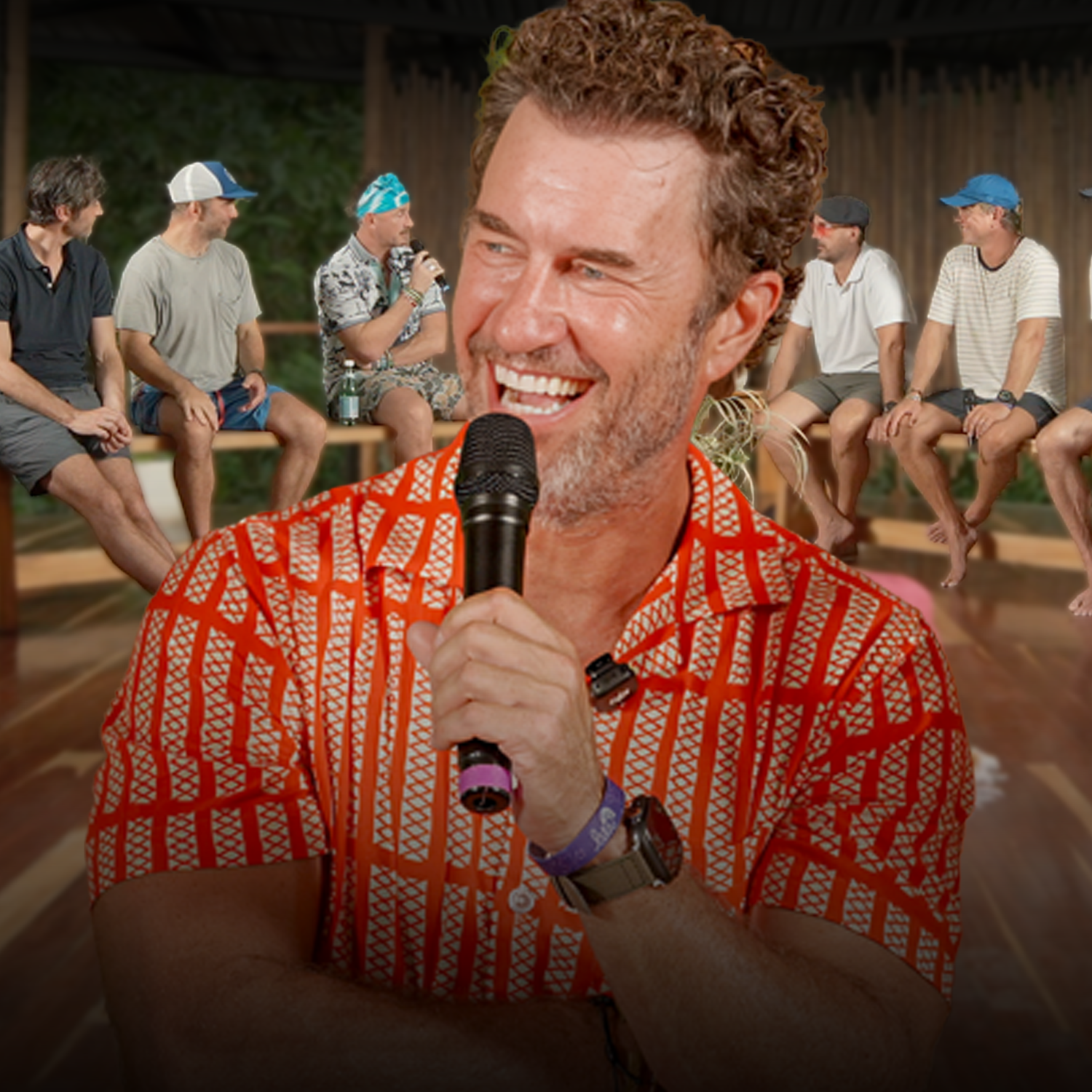
 No Magic Pill with Blake Mycoskie
27 Oct 2026 · 1h 14m
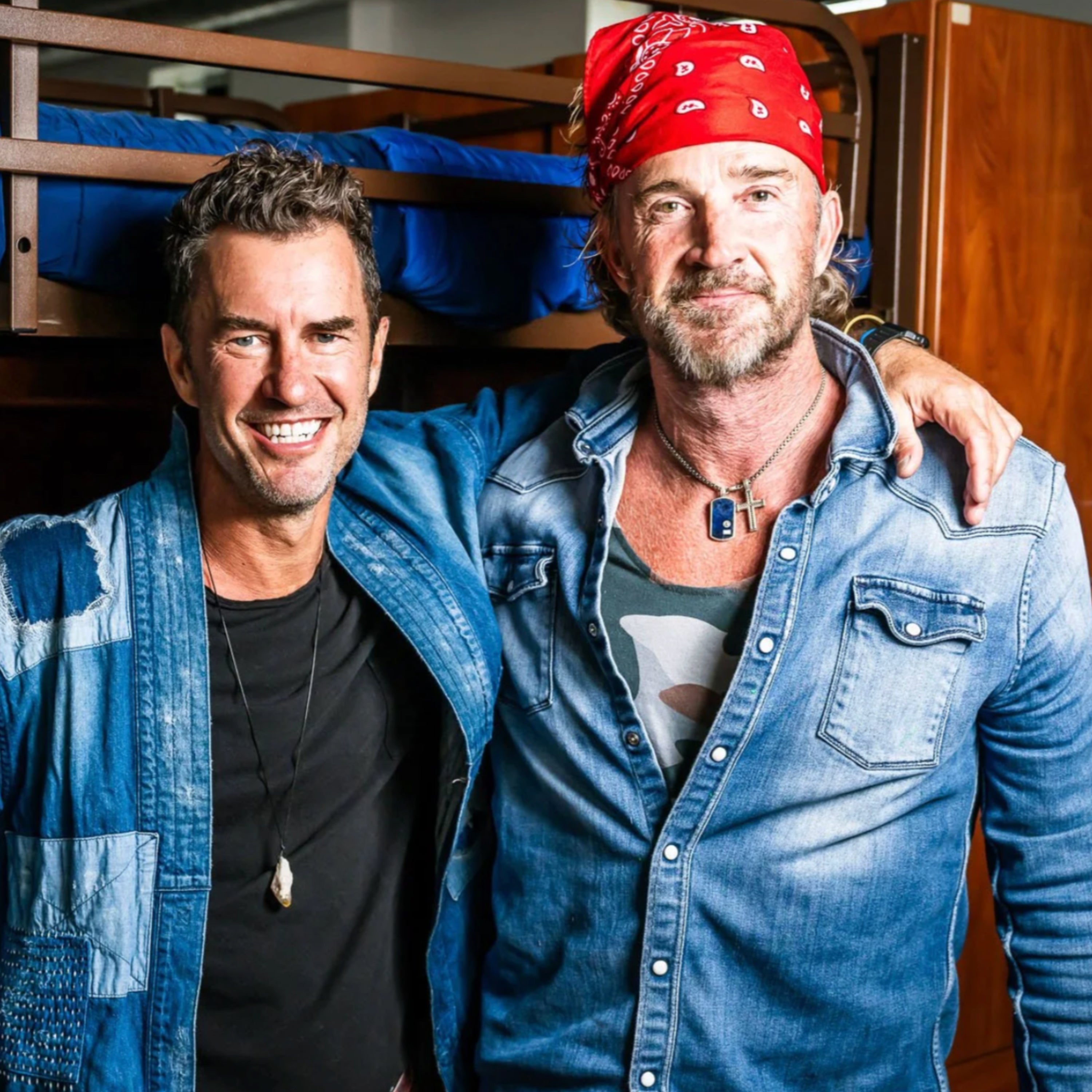

 Add vo to ChatGPT or Claude to ask about everything you hear
vo listened to this episode to put together the overview and transcript, so there may be the odd mistake.
Healing without “magic pills,” using themes from multiple guests: kintsugi (turning cracks into beauty), gratitude, letting go, service to others, and building supportive communities (especially men’s groups). The hosts also discuss practical routines (a “five-question morning maximizer”) and authenticity/integrity when hiding parts of yourself.
0:00You're the first guest to ever be invited back to No Magic Pill. First repeat guest. Today I have my good friend Tyler Ramsey on the show. He is also the host of the podcast Punk Rock Sober. So what is the format? It's just me and Tyler talking about the last six guests I've had on No Magic Pill. And I'm so excited to be raw dogging reality. This week, we cover conversations with Dharmon, Robin Sharma, Corey Richards, Aubrey Marcus, Karamo Brown, and my sister and the founder of Aviator Nation, Paige Mycoskie. She didn't hold anything back. I was even uncomfortable at times. Like, whoa, we're going there?
0:41Yeah, dude, he had a great point, which was by staying silent, I thought I was protecting my own peace, but I was protecting everybody else. Not making a choice is a choice. Choices are unavoidable. They don't see the days that I can't get out of bed. Part of my morning ritual is what I call the five-question morning maximizer. You pull out your journal and you ask yourself and you answer five questions. Number one. Something you learn on this episode will have a measurable impact on your life, not just for the next week, month, or year, but today.
1:22I could not be in a better mood right now. Great. It just came off as an incredible AA meeting, and it has reinforced the exact through line, which I think is so clear for all of your guests. Yeah. And this is beautiful. And you know who said this just perfectly was Dar. Oh, I love Dar. What a great guy. He brought up the idea that I think is so beautiful, the Japanese idea of kintsugi. This philosophy that was always really important to me called kintsugi. And so, you know, going back to failure and how that makes us feel broken and worthless and not enough in Japanese culture, what kintsugi is, is when you take some sort of like pottery, let's say, and you break it and then you put it back together and you use some sort of gold lining to do so.
2:14And when you actually look at that broken pottery after it's been put back together, it's so much more beautiful than whatever the original form is. And so they use the cracks to actually help make it more beautiful. And what that is, is a reminder, right? That your cracks don't make you imperfect or a failure or not enough. They actually make you beautiful. And that's, again, this goes back to what makes this relatable because you can look at my cracks. I can look at your cracks and be like, oh my gosh, like I've That's the interesting part. That's why we're having this conversation. If I didn't have cracks and you didn't have cracks, this conversation's not happening.
2:53The idea is that the broken piece of pottery put back together is much more beautiful. Much more beautiful. Than it ever was before the cracks. Much more valuable and everything. And so that's exactly what the mental health journey is all about, right? This is what all these amazing guests, this is what ties them all together. This is what ties your story together. This is what ties my story together. I love that. It's a great way to start. And the other thing it reminds me of is, I think one of the greatest, you know, poets and writers of all time, Leonard Cohen, he wrote Hallelujah, which, you know, Jeff Buckley, you know, covered in one of the greatest songs of all time.
3:29But also he said that, you know, don't be afraid of the cracks, because that's how the light gets in. Ooh, that's lovely. And I think that's definitely true in my life. I've seen it in your life, with everything that you've battled in sobriety, like it is, that's where the light gets in. Okay, so here's a question. How do you communicate to someone that might be in that moment feeling like they are a broken piece of pottery? How would you now communicate to someone and go, I know it's difficult to see right now, Yeah. But there's something beautiful if you can get through this. You know, it makes me think about the book, Thank God for Depression.
4:11As you know, it's really helpful in my darkest days. And what he says in that book is, I know it's so hard to imagine, but there will be a time, it could be a week from now, a month, a year, 10 years. Yeah. When you look back and you're going to see that all of this mess really had meaning. And so when I meet someone and they're just, the pottery's just falling apart and they don't even know about the gold yet or even how to find the gold even start to put it back together sure you know what i try to explain to them is like do whatever you can to possibly see like what are the lessons in this what are you learning what is it going to require in your soul and your spirit yeah to put back together because that someday is what's going to make this beautiful piece of pottery and you know that is some people can you know kind of hear that and use that as a motivating force.
5:03Some people, if they're struggling too much and someone's listening or watching right now and they're struggling too much to even conceptualize that there could be some silver lining in this, then the thing I say is tell a friend. I mean, just tell someone how bad it is. Tell someone how broken you're feeling because the minute you start speaking it out loud to a friend, you don't feel as lonely. You don't feel as trapped. And oftentimes that friend, and you did this for me when I was really suffering, will kind of say, okay, I can see that. But also you're not seeing all this else. You're not seeing the light that's coming in right now.
5:35I'm seeing it. Sure. And so I think those are two important things. It's super helpful. Because I think a lot of these things that you touch on is like, they're two big things. One is how you can help yourself. But I think that the other thing is so important is like how you can help someone else going through something difficult. So that's great. And also, riffing on that, you know, one of the themes I've seen in the last, you know, 12, 15 episodes is one of the best ways to help yourself is to focus on helping someone else. Yeah. And it's the truth. I mean, you know, Joshua Bassett, you know, was just so struggling dealing with addiction, like didn't know how to get out of it.
6:09And then he had this idea with his friend Rita to start making these sandwiches and giving them to the homeless. You know, I know watching your journey to learn what he's figured out at that age. Good Lord what I wouldn't give. And but I think about your story and like I see how much a part of your recovery and being part of the AA community has been in helping others, sponsoring others, picking them up, taking them to rehab, you know, when they get out of rehab, making sure that they have a good plan. You know, obviously you helped me a ton. You would show up when I was in my darkest days and just take me for a walk.
6:44But I do think that service to others is one of the greatest hacks to krishnanji the teacher there he says over and over again the same thing he says sure i says the the root of all suffering all suffering is obsessive self-centric thinking yeah and i just think that's so profound because when we start suffering and i know i experienced this when i got depressed is i just keep thinking about what can i do to feel better what can i buy where can i go what kind of new treatment and what kind of magic pill can i fine. And the reality is I didn't really start to get back to myself until I really started, you know, thinking about how to serve others with the enough bracelet, with the portrait project, you know, I stopped looking at me.
7:27I literally threw a lens was looking at my friends and their beautiful spirits. And I just think that that's another thing that is just such a simple thing to do today is if you're struggling, you're having a hard time, just think of one way that you could take your focus away from yourself and focus on someone else and how you can serve them, how you can help them. And that gives you that one in a row that McConaughey all talks about. Yeah. You know what? This just, something just popped in my head, which is, I think there's something to be said for looking to be inspired. Like be excited about the idea that there's someone out there that might be doing something really exciting.
8:04There's something, it's like, be excited about the idea that at any point you could be inspired by something someone's doing and then that could change your life. And I did. I launched this birthday project where I spent, you know, a year and a half going around taking photos of all the people who've had the greatest influence on my life to celebrate my 50th birthday and how thankfully I was still alive. Yeah. And it was transformative. It was absolutely transformative because I was focusing on how do I share and tell their story with a single image and their importance in my life. And I got to honor them and thank them for being a big part of my life.
8:39And in doing that, I stopped focusing on all my suffering. And that six months, that was probably the biggest change in my entire seven years was that. I'm just going to say something that is really cool is this week, we had a sound guy at our other studio in Santa Barbara. And we were talking about guests. And I have had some celebrity guests and some have been great, some have been just okay. And we were know that you and I know Josh. And he said, you know, I've worked with celebrities for 20 plus years. He says, the coolest guy I've ever met is Josh Brolin. And I was like, really? I was like, why?
9:16He's like, we were on the Dune 2, the second Dune press junket. And that guy sat there and asked me about my life and my family and my kid. And we connected and the guy was so deep and he's just the coolest. And so the next day I sent Josh a text and I told him and it was really cool. It It was cool. I was like, I'm so proud to know you, just to know you and to know that you had that experience on him. So that means you probably had that experience on so many people. And I think that's what it's all about. Like, I think if you do have any level of influence, any level of success, no matter where you are, you can have influence as a teacher, you know, or as a doctor.
9:52But like to have, to be aware that our simple chit chat has such an effect on someone, it can make all the difference in the world. You have a great point, which is the value for yourself of sending someone a message without any expectations of what might return and go, I just want you to know I'm really proud to know you. Yeah. Or if you, anyone in your life, that always comes just emotionally. Anytime I send someone a message that I think this might be a little emotional or this might be a little bit out of the blue for them. Sure. And I do it always. I'm always so happy that I did. It's another great thing to share in a little practice is like if you're thinking something and you're feeling something, say it.
10:41Do. You know, right? Like, like, like, because like it's so often it's easy. Like, you know, especially if you don't know someone that well. Right. Like just say it because it's such a beautiful thing to be able to share an authentic compliment with someone. This even happens in our close relationships just with your wife or my partner or our kids sometimes. Like if you're feeling something, say it. It's so important. You never know what that impact is going to have on someone. Yeah. It's kind of the stereotype of MDMA, of the experience you have with MDMA. Yes. Anyone has, one of the first things you do is you start doing that.
11:16Yeah. You start telling everyone how much I love you. I just want you to know I love you. Yeah. You and I say all the time. When we talk on the phone, we say, hey, brother, I love you. Yeah. We always say that. And one thing that, I mean, I don't know how else to put it. I love about myself is I'm not afraid to tell someone, dude, I love you. And every now and then, I have this buddy, Walter, that's like, I'm not sure I'm going to say that back. I'm like, I don't need it. I don't need it. I'm pretty sure you love me, by the way. I don't need it. But dude, I love you. I think everyone should just kind of take that for a walk.
11:43Yeah. Like this week, who can you pay an authentic compliment to someone in your life that might create a little bit more intimacy, a little bit more connection, a little bit less feeling alone. Just do it. Just go to five people this week and do it. It's like I do with Enough bracelets now. I'll carry five in my pocket and I'll just look for five people that look like they might need that message. And every single time, it's amazing. Like at Burning Man. I mean, look, we give out 500 Enough bracelets at Burning Man this year. You were there, Alejo, me, right? right right a little or a little i have several on my arm for that reason yeah i watch a leo give the enough bracelets to several people have a conversation with them they say another person's crying oh they're so happy yeah it's it's it's amazing and so you know that's the place to give if you're going to give away an enough bracelet burning man is a great place spot it's a spot but i mean i mean we'll bet to he always has four or five on his arm and he's given them to the sound guy.
12:45He gave them to the chef the other day. You know, our Uber driver got one. You know, we were getting on an airplane. The person, the flight attendant got one. I saw him walking down the aisle. So it's such an easy way to look someone in the eye who you might not know very well and say, hey, life's tough sometimes. And I'm enough, you're enough, and we're all enough. And so, yeah, I love that. So, okay, cool. Where are we going next? This is great. Dude, this chair is cooking. I'm like... You loving it? It's just the perfect amount of move. Oh, my God. And I kind of feel like I'm almost dancing in this interview.
13:22I love it. It's funny. Summit, he's been diagnosed with ADHD. And he likes to have these fidget toys. Okay. And when he's in this chair, he just locks in. I put his homework in front of him on his little iPad. And he's got to do his math work. And I set him in the chair. And I don't have to do anything else as a parent. Like he just locks into that homework. I think for someone who has ADHD, they need something else to be fidgeting with so they can focus. So I think the chair MoveLab should go to school someday. You know, because like if he's doing this and he's focused, it's amazing. But I also think it's interesting.
13:58I heard this the other day. So the most famous chair of all time is this Aero chair. Yeah, of course. Which is Harman Miller, right? And I was asking someone about it. Like how did it become so popular? is what became like a real performance hack for Wall Street traders because they were so comfortable in this chair, they could really focus on trading all day long. That was the deal. So I think if this helps, I think how many people have ADHD that are traders or in healthcare or a therapist or whatever, but if they can be doing this and highly focused. Yeah. So yeah, all of a sudden$180 a month for a chair doesn't seem that big of a deal.
14:34Okay, guys. Now, if you're watching and listening to this and you're hearing us talk about this amazing chair and you want one, we only have about 280 left. So go to movelab.com, that's spelled M-O-O-V-L-A-V.com, and you can pre-order one. And if you use my code FRIENDOFBLAKE, you'll get 25 % off. Now, Tyler, speaking of performance, let's talk about Robin Shum. Robin Sharma, who is a, I mean, by the way, I saw a talk from Robin years ago, maybe like 2012 at Tom's. At my office, yeah. At your office. And it was one of the first people that started talking about waking up at 5 o 'clock. Yeah. That really was kind of championing the idea.
15:18Yeah, yeah. And dude, talk about something that caught on. Oh, I mean, Robin Sharma is the goat. I mean, literally, when you think of like personal development, you think of Tony Robbins, you know, and I think you've got to think of Robin Sharma. He's an animal. I mean, you know, and especially in the business world. I mean, the guy is just like, you want to perform, you want to be your highest. But it's cool because he didn't start really as like a business coach. He really started more as a spiritual coach because he wrote this book, you know, A Monk, This Oldest Ferrari. Great book. And it was based on his life.
15:47He was a lawyer. He was way out of shape. He wasn't happy, but he was making lots of money. And he just said, screw it. I'm going to the Himalayas. Yeah. And I'm going to learn how to meditate. I'm going to learn these different things. And he wrote a book about it, which, you know, is 20 something years old and still is one of my favorite books. So that's why I had him on the show. But what did you love about Robin Sharma? Dude, so he's back. He's got his five-minute routine or his five-point routine. And I just want to know, I'm going to go through each one of these five things because I think they're incredible.
16:16Okay, great. And it's so simple. It makes your whole, all these things, you're going to have a better day if you pick up any of these things. Great. This is amazing. Okay. Part of my morning ritual is what I call the five-question morning maximizer. So the five-question morning maximizer, you pull out your journal and you ask yourself and you answer five questions. Number one, what am I grateful for? We know that gratitude is the antidote to fear. Number two, where am I winning? I bet you most of your listeners and viewers, Blake, never feel they're winning. So by asking yourself, where am I winning and celebrating your micro wins, you start to notice your micro victories, which increases energy and momentum versus daily frustration.
17:01Third question you write down. What will I let go of today? One of the greatest ways to heal emotionally is learn the master skill of letting go. Let go of the divorce. Let go of the business partner who betrayed you. Let go of the employee who sued you. Let go of not being enough. Each day a little bit of emotional healing by answering that question. Number four, what does my ideal day ahead look like? Clarity breeds mastery. Vague plans lead to vague goals. Your days are your life in miniature. As you live each day, so you create your life. You write a script about, here's my ideal day ahead.
17:49And then the fifth question, I think, is the most powerful question of this tool, the five-question morning maximizer. It's the mortality question. And the question is this, what needs to be said at the end? So you write a paragraph about what you want said about you on the last hour of your last day. And that fast-forwards you to where you want to be at the end of your life. And if you can do that discipline every morning, then you start to live strategically versus reactively. And you have a very visceral sense of what's most important for you to do each day to get to where you want to be at the end.
18:24So the first one he starts with, so simple, so profound. What am I grateful for? Gratitude being the antidote to fear. Good Lord, do I agree with this. Tell me what that means to you, gratitude being the antidote to fear, personally. Yeah, I mean for me when I was struggling the most and I'd wake up at like 3 a.m Lots of anxiety also very tired. It's a really bad combo the thing that kind of got me through the next day was thinking Well, I have really healthy kids I might not have a great relationship to them right now because I'm feeling disconnected But they're very healthy and they seem to be happy.
19:01Yeah, and I'm so thankful for that The other thing that was a big thing was my friendships, you know, you know You and the guys in our men's group, the Rugged Adventure Club, like I was able to think about that. And that really was a little bit of fuel to keep me going. And you mean this, like that you like, I need something to keep going. And that was what got you at least until the next day. Yeah, but I also say, I would say today I've never felt better in my life. Yeah. You know, I'm having, thankfully, knock on wood, you know, no mental health issues. I feel like I'm in a total flow state.
19:33Sure. And I feel like the best dad in the world and doing this show. And I still think gratitude is equally as important for someone who's just wanting to live at the highest level. Because, you know, gratitude brings you into presence. You know, I speak a lot about like the enough bracelet being the thing that makes me feel present. Because when you don't feel enough, you're living in the past or, you know, all the mistakes you made and the regret and the shame. Or if you also don't feel enough, you're thinking about what can I do in the future to obtain or achieve to feel enough. But when you really feel like, okay, I'm enough just as I am, and this moment is enough, it allows you to be in the present.
20:08But the other thing that really allows you to be in the present is gratitude. Because when you take just a few minutes, like Robin Sharma says, in your journal, right in the morning, a few things you're grateful for, it brings you to the present. And I think that is where all the juice is. I have a hero. His name is Jay Moore. Jay Moore, the comedian. Spectacular, hilarious guy. Do you remember the movie Jerry Maguire? Of course. He was Bob Sugar. oh okay okay absolute legend yeah legend he's also in recovery and he every day posts these his gratitude list oh wow and and dude i mean he's such a hero of mine yeah dude i interviewed him and during the interview i think that he's such an amazing comedian it was trying to be real edgy and ended up pissing him off it was just so it's a regret i'm i have to deal with but dude my point is the everyone that I know that's doing killer has a form of gratitude list.
21:03Great. It's such a huge thing. Here's second thing point of his is where am I winning? Yeah, I love this. You know, I had Dr. Paul Conte on the show early on and if someone's watching or listening and they have not watched that episode, I highly recommend Dr. Paul Conte. He is Lady Gaga's therapist, Rick Rubin's therapist. I mean, this guy. Oh my God, Rick Rubin's therapist. So like, I mean, literally, you know, Kevin Love. I mean, like this guy is the goat when it comes to it. And he was my therapist for a little bit. And so I had him on the show and he just wrote a new book, which I love. It's called What's Going Right.
21:40You know, and so it's kind of like, what are you winning? So instead of we oftentimes, especially if we're having a hard time, we focus on what's going wrong and trying to solve it, especially men. We're always trying to, how do we solve the problem, the problem, the problem? But the truth is, is if you really focus on what's going right, that's how you get that positive momentum in your life and so it also I think from a business perspective if you're an entrepreneur listening or you're a CEO or someone who's managing a team you know focus on what's going right like I always tell the team like if we have like 10 objectives right now and you're focusing on all the problems right we're not selling anything the thing that's going right is when we're selling great point so focus on what's going right and let the other stuff kind of take care of itself I like that so what's the third point?
22:22What will I let go of today? That's a hard one, you know, because letting go is, I think, one of the, you know, one of the things at least I struggle the most with because I had just so much shame and regret for some of the poor personal decisions I made when I was really suffering. But it is freedom. And as our friend Rob Jewell showed us recently, like freedom looks good on everyone. Rob Jewell. Right? I mean, and so when you can let go of things, It's literally like you're letting weight off your body and it's going and then you can be free. So I think really thinking about what you can let go today is just going to allow you to feel more free into the day.
23:01His fourth one is what is my ideal day ahead look like? You know, when I was like 15 years old is when I first started journaling. And the reason I started journaling is I read this book, The Inner Game of Tennis, and I was a big tennis player. and it really talked about using journaling as a way to plan out what your practices are, what your goals were in the tournaments, all these things. And so I've applied that to this exact thing. And I think I probably even maybe learned it from Robin Sharma 20 years ago. And that is like, if you can't articulate and envision what your perfect day is going to be, you have no chance of having it.
23:39That's so simple. So obvious. Oh my God. It's so crazy when the obvious stuff hits you and you're like, duh. And then you, why am I not practicing this? Amazing. What do you want said in the last hour of your day? This is an interesting one. I remember when I had Robin on the show and he was going through these five points and I like really resonated with all four of them. And then I got to this one and I really didn't really understand what that one meant. And still, I understand conceptually, like at the end of the day, again, I want to be grateful. I want to be, thank you, God. Thank you, my family, for this great day.
24:16But, you know, the last hour of my day typically is reading some type of fiction book to take my mind off all the stuff going on in my life. And then I slowly get tired and I fall asleep. So that one I didn't really resonate with myself. I thought it was like, what do you want said about you before you die? Oh, well, I mean, that is pretty easy for me. I mean, at the end of the day, I just want people to say he was really kind. And I really learned. I didn't know that's what I wanted people to say about me. But I learned that from my son, Summit. Because when he was explaining to a friend about me and I overheard him, he said, my dad is the most adventurous person you'll ever meet.
24:55And he's really kind. Oh, beautiful. And I almost started crying because it was so beautiful. And I realized that was the greatest compliment he could have given me. And then now I've really latched onto that. And I'm like, okay, that's the North Star. If that's how he talks about me, then I just need to keep doing things to make sure that people are like, wow, that guy's really kind. Yeah, I think I want someone to say his joy was infectious. That's what I would want to. I think you're on your way to that. I mean, I describe you oftentimes to people who don't know you as the human antidepressant.
25:29Spectacular. Dude, you want to know something? This is so wild. Corey, who has achieved mountains of amazing things, had this point where he said, They don't see the days that I can't get out of bed. And recently I had one of those and I've used every modality. I've used psychedelics and meditation and pharmaceuticals. And yes, I still take medication. Who is someone that you really admire that you genuinely can't picture being stuck in that situation? Well, I think to give some perspective on who Corey is, Corey has climbed Mount Everest without oxygen. He's one of the greatest National Geographic photographers.
26:14I mean, this guy has lived a big life. And when I had him on the show, that episode really surprised me. I had him because he wrote a book called The Color of Everything. And it was about being diagnosed as bipolar, living with that, living with being an extreme athlete. He had a very tumultuous life. And there was a lot that I related to. But I had no idea how much his story would relate to so many other people. I think we got more comments on that episode than any other episode. I think it's my favorite episode. It's so raw and real. And I think what's great is he doesn't do a lot of podcasts.
26:47Yeah. And I think that's one of the things I'm trying to find is like people who have amazing stories who aren't on every other show. Sure. Because people just loved it. But to bring up the question, he said, you know, people don't imagine me as a guy who can't get out of bed. The person I first thought of when he said that was Jim Carrey. And the reason is that I am the biggest Jim Carrey fan and love his movies. And just, I mean, he lights up a room like no one else, right? And when I was really suffering and I was Googling like other people who have depression, advice for depression, all of a sudden I started finding Jim Carrey videos.
27:21I had no idea that he went through such a dark period. I sent you that video where he talks about depression is when your avatar is living a life that isn't authentic to you. It was one of the best videos I think you or anyone sent me during that time. But I was so surprised to see the guy who always has a smile, always has a joke, full of life, obviously incredibly successful. Sure. Having trouble getting out of bed. So that's who I think of. What about you? Jay Moore, the comedian, as soon as I found out that he had struggled with all kinds of stuff, I was really surprised. Josh Brolin is another person.
27:57I'm aware that he struggles and has issues. But when you see his life just from a distance, you would think, oh my gosh, not a problem in the world. And so those are two great examples I have. Another person who is such a hero of mine is Robert Downey Jr. Yes. on top of the world. Yeah. Beat a humongous addiction. Yeah. Public, public canceled as canceled gets for a little while. Sure. Couldn't even get insured. Yeah. Beats that. And then still, it has a daily issue. Yeah. It's just a great reminder that we're all dealing with something. Yeah. I think it's so important is, you know, I had our good friend Pat Dossett on.
28:39Yeah. And he told a story about his dad that was just one of the most moving stories I've ever heard on the show. And what he said is everyone's hero journey looks different, but we're all on a hero's journey. We're all on a hero's journey. We're all. Every person watching this, every person listening, they're all on their version of a hero's journey. That is the design of the human experience, but it looks very different. So we can never judge. So I think that's one of the things that's so important that I've learned is that like every person in my family, for instance, their journey is totally different than mine, even though we all have connection through blood.
29:14And so I think that is the lesson there is you never know what someone's going through. So treat everyone with kindness. Beautiful. Corey Richards had another point, which I know this is so important to you. Yeah. So important to me. And it's something that everyone can do that will maximize their life. Corey has a men's group. Yes. And I've actually been able to sit with Corey in his men's group. Oh, you have? Cool. With Kenny. Okay, great. So he has stated that that is something that has genuinely lifted his life to greater heights than he ever imagined. And with it, his struggles would have been magnified indefinitely.
29:53So tell me a little bit about how easy it is to start a men's group and how important it has been for you. I mean, if I have one goal through this show is to get men to join or start a men's group and to get women to join or start a women's group. It's really about having an intimate group of friends that you can be radically honest with. Sure. That you can have accountability with and you can have consistency with. And I believe out of everything, if there is, there is no magic pill, but the thing that literally kept me alive. And now the thing that gives me the most joy in my life is our men's group.
30:34I mean, it is, you know, and we have a whole episode coming up about it. And I've been getting so many people on Instagram asking me how to start one. They have. Yeah. So yeah, so I actually on nomagicpill.com now, there is a downloadable PDF that explains how to start a men's group, how to sustain a men's group, what are the mistakes that we've made in our men's group, because we've been doing it for 19 years. And I would just say this applies for women as well. So it's not, you know, it's for men and women. But if you want that, it's on nomagicpill.com. But I'll give you a few tips right now.
31:08But if you want the full playbook or how to do it, it's there for free on nomagicpeel.com. To me, the most important thing with starting a men's group is consistency. Right. You know, this is not something that will work if you get together just maybe once a month and text every once in a while. Consistency is important. So when you go to ask people or you go to join, you got to make sure that you're all willing to invest some time. I think you kind of need, if you're meeting in person or on Zoom, probably twice a month is really important. And then definitely having the text change. You're consistently supporting each other.
31:47I think that's the most powerful part of ours 19 years in. It's not even the times we get together. That's important. But what's really important is having that consistent drumbeat of helping each other out, bouncing ideas off each other, being honest when you're having a hard day so guys can come in and support you. So consistency is super, super important. And then the second thing is, is like knowing that it's completely confidential. Like, like I don't think confidence has ever been broken in our men's group. No. You know, and I think the, the, the women in our lives respect that. They're not going to ask if we're, you know, say this is something we were talking about and they, we don't share.
32:25I think it's really, really important. And, and the other thing is, is like, it oftentimes becomes a great friend group, you know, and ours has, and we do our annual trip and we do lots of surfing together and fishing and things. But also, sometimes it doesn't always start that way. So it doesn't have to be your four best friends. It has to be four men or women that you think all are kind of on this journey. And all will make this commitment to support each other. That you're comfortable being vulnerable with. Yeah. That you don't feel competitive with. I think those are two really important things.
32:57Yeah. It's changed my life. Yeah. Changed my life. It's amazing. Best thing I can possibly suggest to anyone. And it doesn't cost anything. I mean, literally when we get together, it's like we order Uber Eats and we all Venmo each other and then boom, that's it. If you've tried to purchase morning water the last few months, we've been sold out. Today, we're officially back in stock and announcing our next morning water challenge. During the month of November, I'd like you to join me for 30 days in starting each day with a simple win. Together, we drink one glass of morning water and get at least five minutes of sunlight each morning.
33:36And when you sign up, you'll get a 30-day supply of morning water, a glass bottle, 30 days of access to the Hard Work Pays Off workout app, and access to our private community group. Finish the challenge, write a review, and we'll send you another 30-day supply of morning water for free. There's absolutely no risk here. You try it for 30 days. If you do not like it, we will refund 100 % of your money back. We're opening up to 2 ,000 spots for this challenge. Our last challenge sold out in less than two weeks. So go to morningwater.co. Again, that's morningwater.co and sign up today. Just remember to use the code NOMAGICPILL when signing up.
34:20Let's make November your best month ever. I have been using an AI emotional support app called Sonia, and it has had a huge impact on my mental health. Now, it does not replace my traditional therapist, but I use Sonia in between. I use it at 6 a.m. when I can't call my therapist. And that has made all the difference in the world. So I spoke to the founders of Sonia and we have a special code for this community. It is Friend of Blake. So when you download the Sonia app, if you wanna give it a try, put Friend of Blake in there and you'll get two months for free. And I guarantee you, it will have a huge impact on you as it's had on me.
34:56So you were lucky enough to have your sister on. Oh, yes. Paige Mycoskie. Paige Mycoskie. I mean, what an episode. Holy shit. I would describe her as a best friend. Absolutely. I have so much love for Paige. I feel so close to her. And I was so excited to see you two sit down together. Yeah. And so for a variety of reasons. One, it's too legend. I mean, Paige has become an absolute legend. But why? Some people might not know who my sister is or what her deal is. So tell us. Good Lord. So Paige has, from scratch, created a billion-dollar business. Yes. From scratch. No investors. Aviator Nation.
35:30Aviator Nation. So I'm an artist. Yeah. If anyone said, tell me someone who you're just inspired by, I would say Paige Mycoskie has a relationship with color I don't think there's a comparison to. No. Alive right now. She is truly, I mean, it's so crazy. People ask, obviously, my parents all the time because my brother has his own entrepreneurial venture. They're like, you have three entrepreneurs. Paige literally has created one of the biggest lifestyle brands in fashion from scratch. No investors. Obviously, Tom's. Obviously, the stuff Tyler does. But it was so interesting to have her on the show because most people only know that side of Paige.
36:11She doesn't do a lot of podcasts. She doesn't feel as comfortable in the media as you and I do. Occasionally, she'll give a really meaningful talk and people love it, but that's rare. So to have her sit down and open up about everything, I mean, she didn't hold anything back. I was even uncomfortable at times being like, whoa, we're going there? It was incredible. Yeah. Yeah. I mean, just really the episode, I've gotten more people being like, wow. And it's interesting. We had this whole team of people who helped run the YouTube channel. And I was like, why did this perform so well? And they're like, people love like really, really vulnerable conversations.
36:47And your sister just let it out there. She did. Yeah. I know her story and I know her and I didn't even know that she had dropped to a level of despair. This girl that was my friend and ended up being, you know, my girlfriend, but it was all secret and it went on for years. And I think that that was so hard on me. I can't imagine. But I think just holding that secret from my friends because we had mutual friends and everything. And obviously my family and everything. And just knowing that I had like this one thing that I could not be myself about was horrible. I think it brought a lot of shame on myself.
37:27And honestly, the crazy thing about it is when that happened was when I actually like got super, like I was very social up until that point. And then I actually didn't want to be social because this person was in my friend group. So it was like, I didn't enjoy going and being like with other people because I was having to hide that we had this relationship. That lack of integrity. Yeah. So I actually started staying home and getting really into myself. And the one beautiful thing about this is that's how I started my company. Like I became obsessed with my art. Yeah. And because I pulled away from my social and, and, and I felt so good when I was doing my work, you know, when I started designing the, you know, clothes and making clothes in my garage with the sewing machine and all this stuff.
38:18And, and then it was like, I was just making cool. Yeah. And I wasn't, you know, it was like my escape from that. So in interesting ways, what was obviously probably one of the most challenging experiences of your life, having to not be honest with all your friends about what's going on, you know led you to isolate which for some people like when I isolated it almost killed me yeah you turned it into something like well I'm gonna isolate I'm gonna build something with all this time I'm not going out yeah so then you build aviary nation during that time and how long would that period go on you were not telling people like how long was that it was seven years seven you want to know what's interesting this is actually something that's all of the your guests have this in common.
38:59All of you depend on this intuition, this voice from inside, right? In order to do these great things and take these gigantic risks. Paige is a great example. I mean, she, she all of a sudden said, I'm not living my authentic life. I'm not, I'm just going to start doing, creating the way that I want. And I'm going to, I'm going to, I'm going to follow my heart. Yeah. And it is blown up. Yeah. You're the same way. Sure. You, you started Tom's, everyone told you it was a terrible idea. Sure. And you went out. Okay, so both of you depend on this inside voice. Yeah. What happens when someone like that, the inside voice turns and starts saying negative things?
39:42All of a sudden, it's your most trusted. Your intuition is your most trusted thing. And all of a sudden, it turns against you. That's something that you all have in common of these high achievers. Yeah, it's interesting. I just spoke about this with our friend Pat Dossett because he's developed this program called the Inner Teammate. And it's based off everything he learned as a Navy SEAL, what he learned in business school, what he learned in his master's. And what he says, you basically have two sides of the same coin. You have the inner critic and you have the inner teammate. And which one you feed is the one that is going to show up more.
40:16Which one you feed. Yeah, yeah. So, right, like if you're giving attention and time to the inner teammate, that's the voice you're going to be hearing more. If you're, unfortunately, like I did for so many years, believing and agreeing with the inner critic, the critic gets louder and louder. Paige, obviously, has experienced this. I experienced this. I'm pretty sure anyone who cares about this podcast has experienced this. I mean, it kind of is at the beginning of any of our struggles, and it's often what keeps us down the most. Sure. And so that inner critic is really scary. And I think, you know, part of the way that you, you know, kind of work to fight back is the work you do on yourself, whether that's therapy or that's mantra based meditation or all these things I've done.
41:06But it's also in getting a perspective from a friend. You know, I think that's one thing that Pat talked about is oftentimes when you are so stuck in rumination, when you're so stuck in this negative loop, It's only a friend that can reflect back what they see. They can start to see some other possibilities that maybe this inner critic actually isn't accurate after all. Like when I was telling you, dude, you are lying to yourself. Yes. You're lying to yourself. And I don't know if I should slap you or something, but there's got to be a way to pull you out of this. It is interesting, though, that there's no one other than an entrepreneur that is more in touch with, listen I just want to be I want to be open to my my intuition yeah at the same time it's why you're very vulnerable it's wild yeah yeah very vulnerable to Paige I think this is so wonderful because this Jim Carrey said the same thing so Paige is um she went through a maybe 10 years where she wasn't living authentically yes she was telling the world that she wasn't gay yeah right Right.
42:10And that was and she was hiding a relationship. Yeah. And that was so difficult for her. Yes. Everyone, I think, has moments where they feel I'm not living my authentic life and I'm hiding who I am. Yeah. And there's nothing more destructive than that. I mean, I had Martha Beck on the show recently. It probably hasn't aired yet when this episode will air. But Martha Beck wrote a whole book called Integrity. and it's all about this idea of just being in integrity with yourself and that she says that the number one thing in all of her research and all of her studies that she has found that caused people to be unhappy is just misalignment with their true values.
42:52That's it. She's like, we don't even need to talk anymore. Like you just grab a piece of paper, write down how you're living on one side, write down your actual values or what's honest and truth about you on the other side and any place that's mixed matching, fix it and you'll be happy. It's literally that simple. And I look back to my life, so much of my pain and suffering, so much of my sister's pain and suffering, you know, being gay for 10 years, and not being open about it when she was so open about everything else, just had to be crushing for her. And to see her share that story, because she hadn't really shared that story publicly before, she had so much courage and it was so beautiful.
43:31And I have no doubt that other people who might be struggling with that or something else that they're hiding, hopefully saw the freedom that comes with being honest with that. It's hard. It's hard to do. Here's a question. Okay, so with someone that you love, looking back, and I'm asking myself the same question, and I'm thinking about Paige, there was maybe a year of those 10 years where I thought this best friend thing has seem i more than a feeling yeah i felt like i was sure that to tell her hey listen if you're gay i just want you to know i love you yeah so do you have any regrets about not saying anything earlier or maybe suggestions if anyone sees someone in their life who's not living authentically that's delicate yeah i mean i i do have some regret there because i do think you know in in in no way do i I think I should have said, Paige, I know that you're gay.
44:29Okay. But I do think I should have been very clear with Paige. If you're gay, I'm going to love you and we're all going to love you just as much. Yeah. Like I think that, and I just think because we sometimes stay away from uncomfortable conversations, especially with family members, and especially because you don't want to ever think, well, if I offend them, if I'm wrong, then that's going to hurt my relationship. but pat dosett once again man he brought a lot of good ideas in this podcast i'm realizing i haven't started editing this show yeah i mean i haven't started editing yet but he said i always put the friend in front of the friendship he does right he does he does but man that is a great piece of advice here because if you care about the friend more than the friendship you're willing to say something that might be uncomfortable, that might be challenging, that you know is helpful for the friend even if you lose the friendship for a little bit.
45:26Sure. And Pat has practiced that with me, with you, with all of us. It's hard sometimes to be Pat's friend, but it works. Well, this is very important and it goes back to the circle that you surround yourself with. Yeah. I think that you have to have people that are going to be unafraid to tell you a hard truth. I know that you, we both got to a point where you told me in no uncertain terms, I think you referenced that you said, dude, you're being way too harsh. Yeah, I did. And I'm preparing to edit the friends around me. And the ones that are being this harsh are going to be out. And I thought this is a moment where, I mean, I travel the world with you and I have so many things.
46:13We have businesses together and all this stuff. And I was like, the repercussions could be severe if I'm out of this circle of friends. And I kept going. You did. I kept going. And I think that there's something so important that says, have friends around you that are unafraid and let them know that they're unafraid. Yeah. No, I mean, look, you're absolutely right. It's so important to have those friends that will be honest with you. I think it is a great indication of how much I was suffering. Yeah. That I couldn't handle it. Yeah. Like I was literally breaking. And so that's also something and I don't have the right answer for that of when and how hard to be harsh or to push.
46:57Because I would never say that to you now. Right. I mean, I would welcome any criticism. Sure. From you or any of our friends or any. Hey, have you thought about this? Or maybe this is the issue. Or what about this? I mean, I'm open for that. I want to grow. But I was in such a fragile state and suffering so much that it literally any of your suggestions about changes to my lifestyle that you could see needed to happen were just too overwhelming. They were too much. Yeah, too much. So it's, but I think that's a great indication. Like if you have a friend who's suffering and you're trying to tell them some, you know, difficult truths and they respond with like, hey, if you do this anymore, I'm out.
47:36that's even more reason maybe not to be that harsh but to really watch them because that's how that was the lowest state there sure this brings me to Aubrey Marcus oh Aubrey what I mean that guy I had no idea the level of depth I mean I did some prep for that yeah watch some podcasts and he has a show and he's been on a Joe Rogan a ton and like I was like okay this guy is going to be interesting but man I mean I felt like I was just taking notes the whole time I think the life of an astronaut is the worst life you could imagine. Okay. The idea of being cramped in some tiny little ship forever.
48:12I like, I get bored on an airplane after, after 20 minutes. Sure. It's the worst, but I love that there's astronauts and they're exploring. Yeah. Okay. I am in recovery and I'm so excited to be raw dogging reality. Yeah. But someone like Aubrey, who will go so far into a plant medicine journey. Oh my God. Will go so far into wearing, didn't he speak a week? He lived in a cave. Oh God. No light for a week. Okay. Total blackness, which causes your DMT to be released naturally in your brain. So then you're on like the heaviest ayahuasca trip of your life and you haven't even taken anything. Wild.
48:50I mean, this guy, when they call it, I think, what do they call it? It's a... Psychonaut. Psychonaut. Yeah. Yeah. I mean, this guy is out there. Psychonaut is something new that I will not become a psychonaut, but I love these guys that are probing the edges of reality and the edges of what we can do. Okay, so he had a great point, which was… Not making a choice is a choice. Okay. Choices are unavoidable. Yeah. and you can really slip into a paralysis of analysis you know where you're just looking at everything you think you're being you can we're so slippery and easily able to convince ourselves of what is comfortable for us yeah rather than what is right so you can say i'm just doing my due diligence yeah for how long yeah for how long yeah like at some point you have to actually do something.
49:41And you'll learn a lot more from doing something than you will from thinking about doing something. There are choices that we all have in front of us, big life choices that we put off and it becomes toxic inside of us when we're not making a choice. And I think that you had in your life, big life choices that were in front of you for a while. and you just like weren't making a change. You weren't making a choice. Yeah. I mean, when he said that, I was like, wow, because I lived that. I really did. I mean, I had, looking back now, several obvious choices that had to be made for me to kind of get my life back together.
50:26And I just didn't make them. And the longer I didn't make them, the more I suffered. And I honestly think on a very spiritual level that not for everyone, but in my case for depression, is that God or the universe or whatever you want to believe was going to turn up that dial of pain until I had to make a choice. You know, like it got so bad that if I was because a lot of the choices caused me to blow up my life. They caused you to blow up your life. I mean, literally, like, I mean, I blew up my life to save it. And I do not recommend that for everyone. And also, as Martha Beck and I talked about, I don't necessarily recommend making all those choices at once because that's even more difficult, you know, kind of one at a time.
51:06But yeah, not making a choice is a choice. And oftentimes it is one that has very negative consequences. Everyone I know that is unhappy right now, I could look at their life and say, you have a choice in front of you that you're not making. The great thing about my AA group is that I will get out of it and afterwards I will be presented with a series of choices. And if I can make only one better choice that day than I would have without that meeting, my whole day unfolds. I'm going to give you an example. Okay, great. I was knee deep in an argument with my wife in the morning and boy, was she wrong about it.
51:49And I remember just telling the whole group, dude, I want you to know, I see a choice that I'm going to be making right after this conversation with this terrific group. And dude, I'm about to pull down the hammer. And my desire has never been so right. And then by the end of just me sharing with this group, I go, but I'm pretty sure that that will not go the way I want it to. Yeah. And I know that my wife in no way responds to the hammer. No one responds to the hammer. And I go, as I'm talking in real time, I think I'm going to make a better choice. And I'm going to just go home with love. Yeah.
52:30And because of this wonderful AA meeting that I have. Paul, let me interrupt you for a second. Sure. Because, you know, I know your wife, Jackie, very well. And when I was talking to her the other day, she told me that you guys started doing couples therapy with Sonia. Yes. And she was saying how incredibly beneficial it was for her. She said, Sony got a little frustrated with you because you're making inappropriate sex jokes. And so for people who don't know what Sony is, I'd be surprised if someone watching or listening doesn't because I talk about it all the time because it's had such a huge impact on my life.
53:04Sony is an AI therapy app created by these amazing MIT guys that has, you know, it's HIPAA compliant and totally secure. and I met them at this conference and I started using it. And so in this time period, I've been using it for now four or five months. It has helped me so much because I don't feel any judgment. I tell it everything that I'm thinking, everything that I'm feeling. I'm not trying to get my therapist to like me, which I feel like for men, that happens all the time. You're on a Zoom call with a therapist, you're kind of giving about 75 % of the real stuff because you want to be likable.
53:37With Sonya, I don't care. I just tell it what it is. So then I get this great advice back, not just as like therapy, but I also get like, like how to manage my team better and life coaching and all these things. So anyways, we just launched the couples feature. And I think you guys were one of the very first couples to do it. What was it like? I loved it. Yeah. I loved it. And she loved it too. Why? I feel like it was, you hit it the nail on the head, which all of a sudden I realized that I wasn't trying to perform. Yes. Because I knew that I knew that it was just an AI. Yeah. And so when you take the performative element out of that you end up just being really honest yeah and and the other thing that happened is that i use um humor to deflect sometimes things that are feel too serious yeah and sonia i was like so surprised put it stopped it in his tracks several times really as making sex jokes and sonia goes not appropriate right now it stopped that yeah and i didn't find myself being offended by someone by a person telling me that of course and and i stopped it yeah and i kept going and we actually we had a terrific conversation with sonia it's amazing i mean it's funny um my kids even like the other day i was um telling summit my son that i I was, you know, kind of really struggling with trying to make this decision.
55:05And I felt I was going to let some people down and this and that. And you know what he said to me? He goes, have you talked to Sonia about that? No. I swear to God, I was like, amazing. Yeah, it's so great. Well, I'm glad that you guys did the couples thing. I want to try it with Jasmine. Yeah. Because, I mean, we haven't had any major fights so far, knock on wood. But I just think in terms of some of our life decisions ahead of us, I think it could be helpful. and yeah, it's so fun. The thing that I was impressed with and I didn't realize this when they were designing the couples part was that you actually get to talk to the couple therapist separately.
55:41So you don't just talk to it together. You actually, you can go talk to Sonia and then Jackie can and then they come together and talk. That's the best. Because then you can be really honest without worrying about hurting your wife's feelings which is often the time and it's so hard to go to couple therapy. I know I've been in a lot of couple therapy in my two marriages. And I would always be like, I can't really say what I want to say because she's right here. And now with Sonia, you can actually say it and she can say it. And then Sonia is smart enough to come together. I love it. So I'm so glad you guys tried it.
56:13But I interrupted you. So you were talking about your AA meeting and how just by talking out loud about this potential choice you were going to make, diffused it. Sonia works the same way as my AA meeting, to be honest. So just about talking out loud, I realized that the choice that I had in front of me, how to sort of talk to my wife about something that was upsetting me, the choice I was preparing to make to just blow the issue up further was insane. And I went home with love and I thought my goal is peace. Not to show her that she was wrong, but peace. I got laid. I was like, my whole day was so much better.
56:57So much better. And I have the same experience with Sonia. Amazing. I will go in to Sonia. Oh, this is my favorite thing about Sonia. I'll go in with Sonia about Sonia. It's like, oh, my mind. And I'll start venting. And halfway through, I will realize, dude, I'm talking crazy. We all. And sometimes Sonia will go, dude, it was so inappropriate what you're saying. It's like, none of this is productive. I go, well, I mean, and when you take the ego of another person's approval out of it, and you're like - It's purely objective. If AI is telling me this, I'm like, geez, I got it. Yeah. Well, and especially because it's been trained by, you know, cognitive behavioral therapy and DBT and all the modalities.
57:45So you know that you're literally getting the best, you know, kind of advice based off like a hundred years of therapy textbooks. A hundred years of case studies. Like there is nothing that it doesn't know in terms of how to handle a situation. So when you're talking a bunch of nonsense, it has the confidence. And I think it's great. And it saves us a lot of time to say, no, this is nonsense. And I've seen this pattern happen many times in a men's life. And this is where it's going to go. And you don't want to go there. Yeah. It's great. Okay. What's next? Okay. So fun, Tyler. We're cooking. We're cooking.
58:20Karamo. Karamo. Dude. The best. So, okay. Just talked about dealing with our girls and everything. And, and, um, by the way, dude, you, you and I are so lucky to have the amazing women that we're with right now. Yes. Right. Amen. Amen. You're the beautiful thing about your gorgeous girl, your stunning girl, is that she follows this point that I think Karamo brought, which is make your peace your priority. Yes. Okay, so give me a second before we get into that. Okay, great. Tell me. Okay, so Jasmine. We went to Burning Man together, and Jasmine is the epitome of just a cool, low-maintenance, awesome, vibrant girl who makes peace her priority.
59:08Totally. Dude, my favorite story to tell anyone is that Homegirl got hit by a car when we were at Burning Man. Her first year at Burning Man. Her first year at Burning Man. Maybe the first night. The conditions were rough. We had a whole day of rain, mud. When you showed up, your trailer was filled with dirt. Yeah. And she just had a smile her whole time. No complaints. Gets hit by a car, three cracked ribs, danced and had a great attitude. The rest of the Burning Man. Not one complaint. We never would have known. No. That's the goal. So Jackie is maybe the single best individual I ever could have picked to be strong enough to help me through this life's journey and through the difficult things that I've gone through addiction and everything sure but also mean enough that that or i should say strong enough also that to let me know there are boundaries yes and those boundaries are i think in many ways what has kept me alive i agree and so like i think any um advertisement we would ever do i always feel that throwing this out there in every podcast will increase the quantity of sex we get so great it's manageable okay this will stay in the edit yeah okay great so um back to karamo dude this is the most simple idea and it's my peace was the priority my entire life when i really look back on it i realized that everything i ever did was to protect someone else's peace me staying silent in certain situations so when i talk about that childhood my household being damning to me school being damning to me you know telling you know church telling me i'm not enough Never did you hear me in any of that story tell you that I fought back.
1:01:02You never heard me say I screamed at my dad. I told kids at school, I fought back at church. I kept the peace. I kept the peace. I kept quiet. And as people know, I've talked very publicly about what happened to me on Queer Eye, the bullying, the excessive things that hurt me, the abuse that I didn't want to face when I was not sober. I just went along with it. I mean, like, I tell stories of like, there were individuals that were in power above me, that I would be doing drugs with, that were we were talking about sexual things. And I'm like, in any other business, if I was doing drugs, or having someone talk about their genitalia, show you their genitalia, it would be bad.
1:01:52yes it would not even be acceptable yeah but it was oh let me just okay this is what it is i'm gonna go with it this is what i you know and i realized i was staying quiet there i was gonna keep the peace we all got it got we had to keep stay you know keep it together we gotta and i was like by staying silent i thought i was protecting my own peace but i was protecting everybody else yeah their peace was a priority because nobody was challenging the bullshit they were doing because I just allowed it. And once my peace became the priority and I realized it was a priority and I found my voice in the peace, oh, it healed something in me.
1:02:29And then I was like, I'm off to the races now. I don't need the alcohol. I don't need the alcohol because now I'm never going to be quiet when my peace is sacrificed. I wake up every day and I choose my own peace. And that is a big thing. Oh, it's a huge thing. With my own kids, with career, I choose my own peace. Duh, right? Yeah. Not achievement. not like your physical fitness even but your peace is your priority everything else flows after this you are a walking embotomy of this well I wasn't for many many years agreed yeah I mean so it took a long time for me to learn this lesson but now that I've tasted it I'm not going back like if someone in my life causes me to not feel peace bye bye and that sounds harsh and I know there's a lot of people watching and listening being like, well, that's easy for you to say, I can't cut out my brother-in-law or I can't cut out my mom or I can't.
1:03:24Yes, I agree. I mean, family's family and sometimes you're in situations or maybe you have a boss that causes you to not have peace. But as much as you possibly can, follow this advice because this works and it adds the greatest up level of the quality of your life of anything I've seen. I mean, when you make peace a priority, I used to be, I'm a number seven on the NE. Enneagram. Yes. And I've been having, you are too. And so I've been having people on the show. We actually have on nomagicpill.com right now. We have a whole Enneagram test you can do to figure out your number. And a lot of people have been doing it.
1:03:57And the thing is, is a seven wants adventure, excitement, more, more, more. So peace doesn't really fall in the list of things that an Enneagram seven is thinking about every day. But what an Enneagram seven needs more than anything for sustained happiness is peace. And I have found that to be so true. And so I often find myself now maybe not taking the most adrenaline option or the most exciting thing because I realized like day in, day out, I just want to feel peace. And it's also affected my parenting. I used to think that my job as the adventurous dad is to always be having something exciting.
1:04:38We gotta be going this, we gotta go camping, we gotta go fly fishing, We got to go do this, you know, huge double black diamond ski run. Yeah. But what I found is really I wasn't listening for a long time. My kids just want to have some peace. Like they're in school all day long. They got homework. They got something to come home and be calm and have some peace. And yeah, we'll do some fun things on the weekends and stuff. Sure. But I really think this interview with Karamo and the way he describes it, and I encourage people to go back and watch it because it's not as simple as just making your priority.
1:05:11There's a lot of things you have to do in your life, hard decisions, sometimes, you know, making some big choices, as we talked about, about who you allow in your life or what you're allowing in your work life to get there. So he articulates it much better than we have time on this episode. But making peace your priority is like the ultimate bumper sticker. I think back of, you know, I mean, our first episode on No Magic Pill is Matthew McConaughey. And in his book, Green Lights, if you've ever read the book, he has these two things. He has note to self, which are like little notes you want to remember.
1:05:43And then he has bumper stickers. And I feel like McConaughey would love this bumper sticker, make peace your priority. Yeah. Yeah. Yeah. And if you live that, the choices that you make, and a lot of times you're right, they're going to be difficult choices. Yeah. They're going to end up with you being more empowered going forward without chaos going forward. Totally. And then ultimately you're just going to live a happier life. By the way, Karamo is a beautiful man. He really is. He had another great thing. I sort of was surprised because Karamo champions boundaries. And he said, he made a point, he goes, we're kind of the cost of the wellness world.
1:06:23I'm sorry, the rest of the wellness world sells no is a full sentence. And that is helpful. Yeah. But he said that the thing that has been so great for him is being open to yes. Opportunities out there. I mean, I think you two, you touched on a really funny point in your life where you were Mr. Tennessee. That's true. You said yes to a whole funny, silly, fun thing. Did Jasmine tell you to say that today? Dude, it's hilarious. Come on. She sent me. She found it on the internet yesterday. I didn't know this existed, but she found the Fox clip of me on stage in leather pants saying, basically, I'm the sexiest man in Tennessee.
1:07:08And then at the end to my just absolute cringing, there's a wink at the end. There's a wink. I was 21 years old. I said yes. Oh, my God. There are things that are cringe that we all think of as cringe that we run from. and it's not many times it leads to happiness total happiness well I think the thing is is you know when I think about the you know the many things that helped me on my road back to myself yeah you know I had to say yes to a lot of things because I was you know I was in search of a magic pill then but when I realized through it that there wasn't one but I had to try things and And that's what I think this show is all about is, you know, what works for you or works for Jewel or what Paul Conti says or works for McConaughey might not work for everyone.
1:08:04But we're going to give people who are watching and listening enough things that they could possibly try and say yes, that we're going to get you better. I mean, I really believe that. And I hear that now from people. Like, that's the whole point. One thing also, I don't know if this struck you in the Karamo episode, but for me, I thought this was like a great hack. Really simple one. So he was, you know, one of the hosts of Queer Eye for like 10 years. And each of the guys on Queer Eye had a different part of the makeover that they were responsible. Yeah. His was the inner, the mental self, the spiritual self.
1:08:38Like, how do I get my this right? You know, everyone else working on the apartment and the clothes and that. And so his was a little bit harder, right? Because, you know, that's not something you can just see on a screen. And so he would have a hard time sometimes getting someone to open up. someone to start talking about what's really holding them back in life. Sure. And his hack was taking them on a drive. And I thought about this. I was like taking them on a drive. And he said, especially with men. And I was like, okay, tell me about this. He did. Remember? And so what he did, he said is that with men especially, but all people, it's really hard to open up eye to eye.
1:09:14Yeah. When you're sitting across the table having coffee or now also in therapy, and this might be why Sonya works so well, is because you're not looking at the AI. It's all voice and text. But what he said is what he would do is say, hey, let's just go for a drive. And so the minute you're sitting beside each other and not looking at each other's eyes, the pressure dissipates. And just the music, the road, the whatever, you know, just in kind of the silence that is comfortable in a car because a lot of people go on road trips. Shoulder to shoulder. Shoulder to shoulder. Yeah, shoulder to shoulder.
1:09:46And that helped people open up. So what I would say, and I still think you should go back and watch the episode, but if you don't have time, if you have someone in your life you need to have a hard conversation with, if you have someone that you think is going to be hard to break through, go for a walk or go for a drive. Get shoulder to shoulder and then see if that helps them open up. It's a great suggestion. And I think that is a big part of our relationship, which I feel like we have kind of a bigger way, not even just physically, but it has been a journey of going shoulder to shoulder. Yeah.
1:10:21Right. And I mean, each of us have had such intense struggles. It's really interesting that you have searched, like the things that you have tried to use to fix yourself from not feeling enough were achievement. And you thought that was going to be kind of a magic pill. Relationships. Relationships. Stuff. Stuff. Where I lived. All that stuff didn't work. And I think it's so interesting that an addict and an alcoholic has drawn those to much more. It's consoled those things to like, this drink today will fix me. This pill today will fix me. And we've been through this like long journey where we realize that these things are not enough.
1:11:11And what I've been very surprised by as I look at both of our journeys is that they were equally destructive. Oh, for sure. Yeah. I mean, I always say I'm in recovery. And I will say that till you bury me. Because no, I am not a recovering alcoholic. I'm not a recovering addict from drugs. But I am recovering from a severe depression that almost killed me. And the things that caused that depression and kept that depression at a hold on me are the things that I battle against every day. Yeah. And I always will. And so I have to take, you know, my mental health very seriously. I have to do my morning routine every morning.
1:11:51I have to make sure that the 10 people that I surround myself the most with are all, you know, raising my vibration. I have to make sure I move my body. I have to make sure that I have the right balance so that I know that I'm giving my kids what they need. I mean, I could go on and on. The point is there is no magic pill. Right. And that's why this podcast exists. That's why I live the way I live. But everything that I did, everything that I tried to, you know, kind of fill my mouth with, it wasn't drugs and alcohol. I mean, there was some of that. But that was just as destructive as what you experienced.
1:12:26So wild. You know, running, you know, driving into trees. Driving? Oh, yeah. Because you know about what big do you want? Drove into a tree and broke my face. Well, this is great. I mean, I don't know how long we went, but I don't think we're going to edit a thing. That was pretty much the best recap of these episodes we could possibly have done. I will say if you've enjoyed this, you can get more of this probably every five or six weeks. Tyler, we're going to meet right here or in the studio in Santa Barbara. We're going to recap it. So much fun. And go back and watch and listen to some of those episodes because we just hit the tip of the iceberg of the wisdom that we got from each of those guests.
1:13:05some of my most favorite guests and uh tar it was great having you on and if you're struggling get help yeah get help get a friend yeah if this episode spoke to you please share it with a friend family member or someone you love because no magic pill is not just a podcast it's a resource to help us all live better lives hit the subscribe button so you never miss an episode and let us know what you think by leaving a comment. A quick note that this episode is for informational and entertainment purposes only and is not intended as medical advice. Always consult a qualified healthcare professional regarding any medical questions or concerns you may have.
For the first time ever, a guest is coming back to No Magic Pill. Blake Mycoskie is joined by his good friend Tyler Ramsey, host of the podcast Punk Rock Sober, for an unscripted look back at the last six conversations on the show. They revisit the moments that stuck with them most from Dhar Mann, Robin Sharma, Cory Richards, Aubrey Marcus, Karamo Brown, and Blake’s sister Paige Mycoskie, who held nothing back. They talk about why staying silent often protects everyone but you, why not making a choice is still a choice, the hard days nobody else sees, and the five-question morning journal practice that can change how your day begins. Whether you’ve heard every episode or are just finding the show, this conversation pulls together the lessons worth carrying with you.
#NoMagicPill #BlakeMycoskie #TylerRamsey
Enough Foundation's mission is to spread reminders in every form — bracelets, messages, actions, community — until feeling ENOUGH becomes the cultural default. To learn more, visit weareenough.co.
Produced, Directed, and Cinematography by Wubetu Shimelash / IG: Wubetu Shimelash
Disclaimer: No purchase necessary. While supplies last. Visit http://www.weareenough.co/rules for full terms.
More information on Blake’s other projects here:
Morning Water
Morning Water is a daily hydration formula that restores energy, balance, and performance with essential electrolytes, minerals, and nutrients in one simple routine.
To learn more, visit morningwater.co and use code NOMAGICPILL for 25% off your first order.
SONIA
Sonia is a conversational AI companion designed for emotional support. Through voice and text, it offers guided wellbeing sessions, including meditations, journaling, personalized recommendations, and practical exercises.
To learn more, visit www.soniahealth.com and download it on the App Store.
MOOVLAB
At MOOVLAB, we bring health and wellness to your workday.
MOOVLAB - the answer to sitting is moving.
To learn more, visit www.moovlab.com
Follow Blake on Instagram and stay up to date with Lemonada on Facebook and Instagram.
For a list of current sponsors and discount codes for this and every other Lemonada show, go to lemonadamedia.com/sponsors.
Joining Lemonada Premium is a great way to support our show and get bonus content. Subscribe today at lemonadapremium.com.
Subscribe to Spotify Premium to watch ad-free video.
Disclaimer: This episode is for informational and entertainment purposes only and is not intended as medical advice. Always consult a qualified healthcare professional regarding any medical questions or concerns you may have.
Learn more about your ad choices. Visit megaphone.fm/adchoices
Scan the code with your iPhone camera
Listen in the app.