In short
Open Residency Podcast Episode Notes
Episode Title
Matt Gray: How to Build a Profitable Personal Brand in Just (30 Days)
Host
- Mark Brazil - Co-founder of IKONICK
Guest
- Matt Gray - Founder of Founder OS
Episode Overview
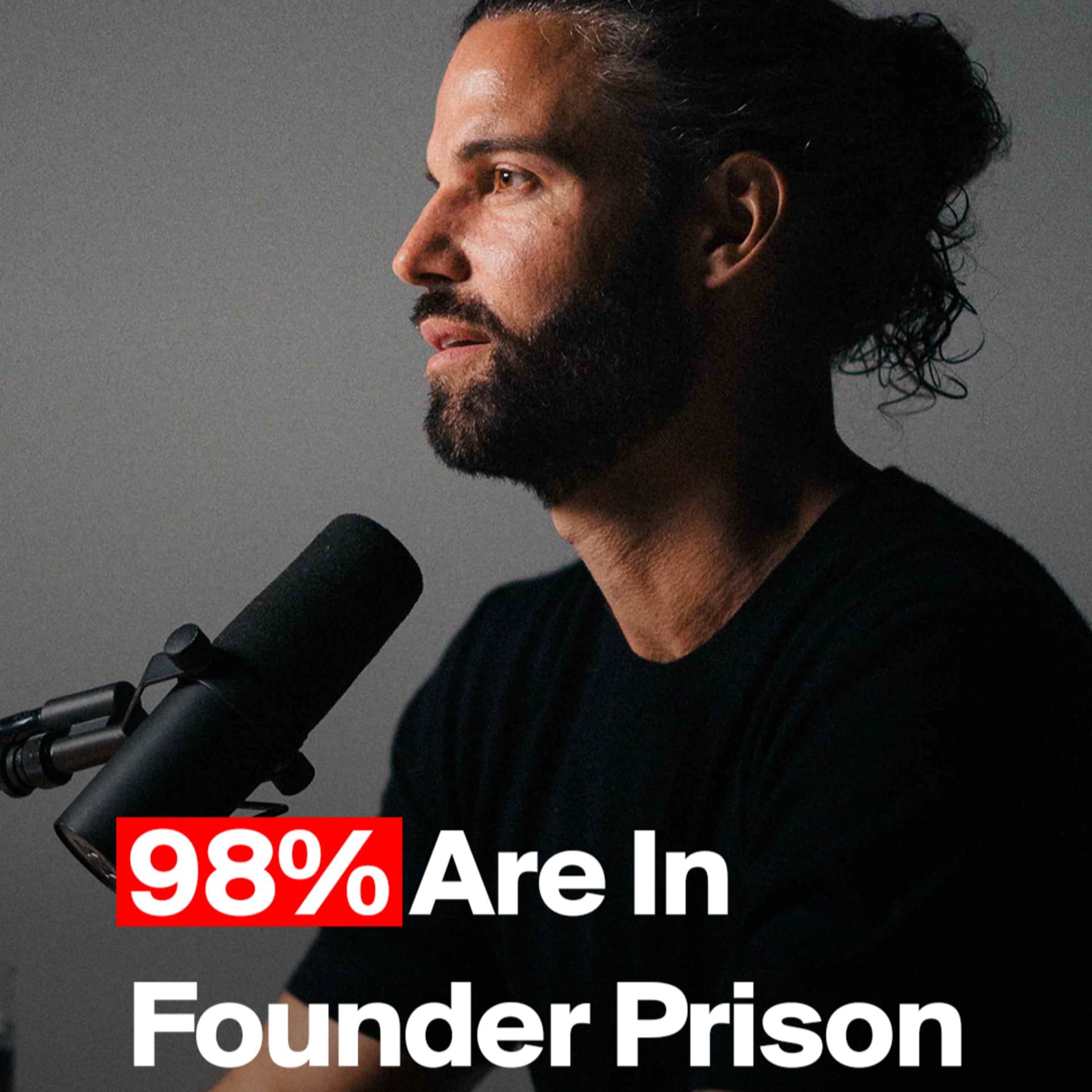
In this episode, Mark sits down with Matt Gray to discuss the common pitfalls founders face and how to build a sustainable personal brand. Matt elaborates on the concept of "founder prison," where 98% of founders feel trapped in their businesses, and shares actionable insights on establishing systems for long-term success.
---
Key Concepts Discussed
- Founder Prison
- Definition: Many founders don't actually own a business; they own a job.
- Statistics: 98% of founders are in "founder prison," constantly reacting and firefighting.
- Building a Business That Runs Without You
- Key Components:
- Awareness
- Sales
- Marketing
- Onboarding
- Finance
- Collections
- Renewal
- Systems: Each area should be supported by documented systems.
- Importance of Content Creation
- Founder-led Content: The significance of personal branding for founders.
- Media Engine: Establishing a system that compounds over time to create freedom.
- Mental Health Among Founders
- Statistics: 72% of founders deal with mental health issues.
- Longevity: The importance of building a sustainable business model for long-term success.
- Systems for Efficiency
- Adopting Systems: The necessity of repeatable processes that can be delegated to others.
- Documentation: Using tools like Loom to simplify documentation and training.
- Personal Brands as Business Infrastructure
- Shifting Focus: Businesses now need to prioritize personal branding as a necessity.
- Content Strategy: Start by choosing one platform and sticking to it for consistency.
---
Important Takeaways
- Freedom and Responsibility: True business ownership should allow you to step back without falling apart.
- Value of Documentation: Establish and document systems to streamline operations.
- Community Building: Engage with a community of fellow founders for shared knowledge and support.
- Mindset: Adopt a mindset of abundance, focusing on learning and adapting rather than fear of criticism.
---
Timestamps
- 00:00:00 - Trailer
- 00:00:48 - Designing a Business That Works Offline
- 00:04:28 - First System a Business Owner Should Implement
- 00:16:32 - Content Team Structure
- 00:42:18 - Lead Magnet System
- 00:47:52 - Common Lead Magnet Mistakes
- 01:00:49 - Special Tactics for Referrals
- 01:04:06 - Operating Rhythm for Founder OS
- 01:15:00 - Recognizing Personal Bottlenecks
- 01:25:33 - Setting Boundaries as a Founder
- 01:35:58 - Necessity of Personal Brands
- 01:42:36 - Handling Criticism
- 01:45:02 - First Steps for Building a Personal Brand
- 01:48:58 - Quickstrike Questions
---
Contacts
- Instagram: [Open Residency](https://www.instagram.com/openresidency/) | [Mark Brazil](https://www.instagram.com/markbrazil/)
- Website: [Open Residency](https://openresidency.com/)
- Email: [info@openresidency.com](mailto:info@openresidency.com)
Powered by
- beehiiv - Use code MARK30 for 30% off your first three months.
---
Conclusion
This episode is rich in insights for entrepreneurs and leaders looking to optimize their operations and build a sustainable brand. Matt Gray's approach to systems thinking and personal branding serves as a blueprint for founders seeking freedom and success in their ventures.
Written by AI. May contain mistakes. Listen to the episode to check what was said.
Chapters
Tap a time to open that second in VODesigning a Business for Longevity
1:10 to 7:00
Understand how to create a business that thrives even when you're offline.
“so I can go and vanish in Japan and snowboard.”
The Importance of Systems
7:00 to 11:00
Explore the significance of systems in running a business efficiently.
“And it's not only going to help those individual areas run smooth, right?”
Creating Content as a Founder
11:00 to 13:20
Discover the best practices for founders when creating and distributing content.
“As an example, when I was in Japan, right, we had about eight YouTube videos that went out without me, all flawless, right?”
The Content Waterfall System
13:20 to 14:00
Learn about an effective system for maximizing content distribution.
“and disperse it into 24 plus other pieces of content.”
Maximizing ROI with Content Waterfall System
14:00 to 16:40
Learn how to optimize your content production for better ROI.
“Every piece of your creative energy, oftentimes you need to make sure you get the most ROI from that, right?”
Building a Creative Team for Content
16:40 to 19:40
Discover the essential roles and qualities for a successful content team.
“And when you're going, And instead of trying to focus on a thousand things you could talk about, instead have one core pillar that you're able to say in new and fun ways.”
The Importance of Taste in Content Creation
19:40 to 21:50
Understand why human judgment and taste are vital in content creation.
“Like I know me and you are a little bit OCD on this, like footage organization and files and all that.”
Hiring Your First Content Team Members
21:50 to 23:40
Get insights on the first hires to make when building your content team.
“editors, and this is kind of the whole entire thesis of the conversation is the value of building a personal brand.”
Effective Content Creation: Batching and Planning
23:40 to 26:00
Learn how to batch your content creation for efficiency and sustainability.
“So what I'm going over now is not how I started, right?”
Ideation Techniques for Content Creation
26:00 to 28:00
Discover valuable methods for generating content ideas from your audience.
“So this system that I've come up with with the team is something that works.”
Show all 54 chapters
Ideation Strategies for Personal Branding
28:00 to 29:18
Learn how to generate compelling content ideas by leveraging customer insights.
“And is it like categorized by obviously B-roll is one thing, maybe audio, maybe the YouTube videos.”
Creating Authentic Content
29:18 to 31:28
Discover methods to ensure your content remains authentic and differentiated.
“You don't wanna make some rinky dink shit.”
Mastering Your Filming Process
31:28 to 34:28
Understand how to set up an efficient filming week that maximizes productivity.
“100 grand, 200 grand and understand what they want and then just go make content around that.”
Building Effective Content Systems
34:28 to 36:54
Learn about the systems and tools that create a streamlined content production process.
“It's outcome focused thinking versus process focused thinking.”
Optimizing Content for Conversion
36:54 to 41:28
Explore strategies for using lead magnets and UTM tracking to enhance conversions.
“So after all content has been shot, the editor and the videographer then sharing that up into Google Drive.”
Understanding Lead Sources and Their Impact
42:00 to 43:36
Learn the importance of tracking lead sources for effective marketing.
“I would say the second step is what you mentioned is the UTMs, is understanding and knowing where you're actually getting the leads from.”
Creating Effective Lead Magnets
43:41 to 49:19
Understand how to create lead magnets that effectively convert leads.
“I want to bridge that to, we talked about the content and now you're talking about kind of lead magnet and capturing the actual email so you can own your list.”
Common Mistakes and Best Practices in Lead Generation
50:38 to 56:00
Identify common pitfalls in lead generation and how to overcome them.
“I think the biggest mistake that they make is that they overthink it and overcomplicate it.”
Creating Engaging Lead Magnets
56:00 to 57:20
Learn how to design lead magnets that resonate with potential clients.
“I'm going to call out that kind of person inside of that lead magnet and make sure if they're that kind of business owner, that they take the next step and chat with my team.”
The Importance of Customer Success
57:20 to 58:30
Understand why customer success is vital for business growth and retention.
“And then at the end, right, if someone's got to the end of a lead magnet, talk your shit, right?”
Building a Culture of Care
58:30 to 1:01:10
Discover how prioritizing care and community can enhance business delivery.
“And I checked some stuff about your just POV on customer success and how you look at it.”
Setting Expectations for Success
1:01:10 to 1:02:56
Learn the significance of setting clear expectations for clients and their outcomes.
“If you're at a dinner conversation with like my team, all we're talking about is like, how can we make this piece of the curriculum better?”
Leveraging Referrals for Growth
1:02:56 to 1:04:54
Explore strategies to effectively drive referrals and testimonials from customers.
“This poster on social media, shout out Nicole.”
Establishing Effective Operating Rhythms
1:07:51 to 1:10:00
Learn how to set and maintain an effective operating rhythm for teams.
“And lastly, which we're going to talk about is the actual kind of centralized dashboard and systems to optimize all this.”
The Importance of Human Connection in Remote Teams
1:10:00 to 1:11:00
Learn why building personal connections is crucial for team productivity and engagement.
“And I think it's super underrated these days.”
Accelerating Business Growth Through Daily Accountability
1:11:00 to 1:13:00
Discover methods for tightening feedback loops to enhance business performance.
“Outside of the one time a week, I know you come off as like a very calm guy, but I've also seen, I've gotten to know you over the last week, you definitely pushed the pace on a business perspective.”
Pushing the Envelope: Setting Aggressive Business Goals
1:13:00 to 1:14:10
Explore strategies for setting and achieving ambitious business goals.
“Because there's just patterns and breadcrumbs of success that these people leave.”
Finding Balance: Micromanagement vs. Deep Work
1:14:10 to 1:16:30
Understand how to balance oversight with allowing space for deep work among teams.
“like this daily check-in at the end of the day, are you on that?”
The Bottleneck of Leadership: Recognizing Personal Limitations
1:16:30 to 1:19:00
Learn about the challenges of leadership and the importance of personal well-being.
“the three year goal, the five year goal, you're working within those constraints, right?”
Navigating Regulatory Challenges in Business
1:19:00 to 1:21:30
Hear about the struggles faced when a business encounters legal scrutiny.
“What was that aha moment that kind of got this whole entire thing started?”
Overcoming Adversity: A Founder's Story
1:21:30 to 1:24:00
Discover how persistence and outreach can turn around seemingly hopeless situations.
“You want to give everybody a little background on that?”
Meeting Chamath Palihapitiya: A Turning Point
1:24:00 to 1:25:49
Matt shares his unexpected meeting with Chamath and the impact it had on his business.
“And just started emailing random folks like Paul Graham, Vinod Khosla.”
Navigating Government Challenges
1:25:50 to 1:28:04
Matt describes the challenges Bitmaker faced with the government and how he sought help.
“in Canadian companies over the last year.”
The Power of Numbers in Entrepreneurship
1:28:05 to 1:29:06
Matt emphasizes the importance of outreach and persistence in business success.
“And sure enough, 24 hours later, after emailing all these people, it was trending on Twitter in Canada, right?”
The Journey to Sobriety
1:29:07 to 1:32:16
Matt shares his personal journey to sobriety and its impact on his entrepreneurship.
“people because even if just 1 % of people convert to whatever you're looking for, right?”
The Inner Game of Entrepreneurship
1:32:17 to 1:33:54
Discussing the importance of inner health and leadership in business success.
“that the blood work, which I recommend that every founder gets done at least twice a year, it started to gamify my sobriety.”
Work-Life Balance as a Founder
1:34:36 to 1:36:56
Matt discusses work-life balance and the importance of freedom in entrepreneurship.
“Well, I think that what we're all after as founders is freedom, right?”
Redefining Hustle Culture
1:36:57 to 1:38:00
Exploring how to shift from a hustle mindset to incorporating play and rest.
“And for me, like what I've seen is like on my core business, I've actually removed myself from a time perspective.”
The Freedom of Founding: Designing Your Life
1:38:00 to 1:40:10
Learn how to incorporate lifestyle design as a founder to enhance productivity and enjoyment.
“Like, oh, I'm gonna finish my book by March 30th.”
The Importance of Personal Branding for Founders
1:40:10 to 1:42:10
Discover why personal branding is essential in building trust and authority as a founder.
“age where you have so much agency to change your situation and just change it?”
The Future of Founders: Abundance and Automation
1:42:10 to 1:44:00
Explore the evolving landscape of entrepreneurship and the skills needed for future success.
“Yeah, I think in 2035, the founder of that era is going to look, I think, insanely abundant, to be honest, right?”
Navigating Criticism and Negative Feedback
1:44:00 to 1:46:45
Learn effective strategies to handle criticism and feedback as an entrepreneur.
“So organization and curiosity on the future of technology.”
First Steps to Building Your Personal Brand
1:46:45 to 1:52:00
Understand the foundational steps for founders looking to create a personal brand.
“And then again, gets down to how fast are you willing to learn and carve out your own little nook and cranny of the internet and build trust and build distribution.”
Overcoming Self-Doubt in Content Creation
1:52:00 to 1:53:10
Learn how to push past self-doubt and embrace the process of sharing your content.
“Maybe you should just wait for now, sit on this for a week.”
The Importance of a Whole Body Yes
1:53:10 to 1:55:10
Explore the concept of a whole body yes and its impact on decision-making.
“Which is not the kind of people necessarily that I'm looking to attract, let's say.”
Leveraging Technology for Productivity
1:55:10 to 1:57:30
Discover underrated tools and strategies to enhance productivity in your work.
“What's the most underrated tool in your tech stack right now?”
Key Roles in Content Teams
2:00:02 to 2:03:12
Identify essential roles and their importance within a content team structure.
“It feels like they all play their own part, but I don't want to be, I don't want to be a politician about this.”
Innovative Cold Email Strategies
2:03:12 to 2:06:00
Learn about creative approaches to cold emailing and their potential impact.
“And so with founder OS, like we brainstormed tons of names.”
Travel Lessons from 50 Countries
2:06:00 to 2:06:46
Discover the surprising life lessons learned from extensive travel experiences.
“I had co-founders and I was like, I don't do co-founders anymore, right?”
Bali: A Unique Blend of Lifestyle and Community
2:06:46 to 2:08:14
Explore the reasons why Bali is a special place for both lifestyle and entrepreneurship.
“And then we were all supposed to go home.”
Building Remote Teams with High Standards
2:08:14 to 2:11:06
Learn effective strategies for recruiting and building successful remote teams.
“I think it's like a really special place.”
Evaluating Talent Through Personality Insights
2:11:06 to 2:12:18
Understand how to assess candidates using personality questions for better hiring.
“How much of that is subjective versus objective?”
Acknowledging Influential Figures
2:12:18 to 2:14:06
Listen as influential individuals and creators are recognized for their contributions.
“Yes, it's not objective, but you can really get a sense of what someone's about and what they view as quality by their answer to something like that.”
Envisioning the Future of Founder OS
2:14:06 to 2:15:52
Get insights into the potential growth and goals for Founder OS.
“And most people don't know about him, although he is pretty large on YouTube, but just insane.”
Transcript
Automatic transcript. May contain errors.0:00Matt Gray:This episode is brought to you by Palmolive. Family time isn't just the big moments. It's weeknight dinners, sitting around the table, everyone talking all at once. So when the plates are empty and the sink is full, use Palmolive Ultra. Palmolive's most powerful formula removes up to 99.9 % of grease, leaving your dishes sparkling clean. And the new convenient pump makes cleaning even easier, so you can spend less time tackling dishes and more time together. Shop now at palmolive.com. Feeding the fam isn't easy, but we got you with Denny's Slam and Meal Deals starting at$5.99. Full meals for everyone, like a Grand Slam Burrito for Grandpa and a Super Slam for Super Mom.
0:39Get to Denny's now. Ballot at participating locations for dine-in or denny's.com. Limited time offer. Additional restrictions may apply at some locations. You all have a chance right now. The guy 55 years old, tech billionaire, has equal opportunity to the guy 21 years old that's kind of curious and getting ripped in. Like, right now the game's been wiped. Matt Gray is an entrepreneur that has helped over 18 ,000 founders with his company, FounderOS. He's built a systematized media machine that generates leverage, profit, and freedom. I don't like making systems. I'm not some ops nerd. I do this stuff because it's necessary, so I can go and vanish in Japan and snowboard.
1:14I know that my business is formidable, anti-fragile, and I think this kind of stuff is not an option anymore, you know? You need to be focused on having a business that can withstand any storm.
1:33A few days ago, we were at dinner and you were telling me about being in Tokyo for three weeks offline while you have an eight figure a year hold code running. How do you design a business that works while you're offline? Yeah. So I think if you can't walk away from your business for 30 days and come back to your business stronger than when you left, you haven't really designed a business, right? You've just designed yourself a high paying job. And so how do you go and actually designed your business in a way that you can step away and it works amazing without you. I think it comes down to kind of seven core components of the business and then the systems underneath those components.
2:06So you think about awareness, sales, marketing, onboarding, finance, collections, renewal, right? You have all those areas dialed in. You have the right systems owner on your team for each one. And, you know, it all is working cohesively and you finally have something that grows while you're offline. What's ironic is I feel like you speak to thousands of founders or people at all levels. I mean, people doing seven figures, eight figures, nine figures. What percent of people do you actually think have proper systems versus are living in a prison or living in a nine five? What do you see out there?
2:35Yeah. So I've helped like over 18 ,000 founders with this sort of stuff. And at the end of the day, I think 98 % of founders are living in some sort of founder prison, right? They don't know where their next leads are coming from. They feel like they constantly have to check Slack, that if they don't check email for a few days, things are going to fall apart, that the team needs their constant direction, and that the culture itself is so based on their own energy that it doesn't really govern itself, that if they're not there, they're not present, they're not pushing things forward, that the business kind of just starts to collapse.
3:06And so, yeah, I think it's kind of a silent epidemic, to be honest, inside of the founder community. You know, you have about 72 % of founders based on a UC Berkeley study that are dealing with some sort of kind of mental health, whether it's, you know, depression, anxiety, and so forth. Yeah, loneliness, right? And so, you know, this stuff doesn't get talked enough about, right? Because I think that building companies is tough, right? And founders, I think by nature, one of their core traits is that they're fucking tough, right? And so we'll take things to the chin, you know, we're going to go and break through those walls, chew on glasses, Elon says, and just get through it.
3:39But underlying all that, right, is a sometimes a bit of a silent desperation, right? That, yeah, this can work for the next year, it can work for the next two years. but is this really going to help you for the next 10, 20 years? And as I've built businesses over the last 15 years, multiple profitable businesses and failed and had exits, I think one of the most core metrics that people don't talk about is longevity. You know, the reality is, is that over any long enough timeframe, if you just stay in the game, you're going to be successful. And the number one reason though that people fail is because somewhere along the way they give up, right?
4:10It gets too hard. Things get crazy. There's some crisis time after time after time. And you just start to wonder and you look yourself in the mirror and go, can I still keep doing this? And so the question then becomes, how do you build a business that allows you to stay in the game long enough to see success, right? So much of building something successful is really just staying power. You know, what's so crazy, man, is they always say, obviously, compounding is the eighth wonder of the world. And I was just talking to my business partner and we've had an up and down battle with our business, Iconic.
4:38We're going on year 11 and we're just like joking where there's a, there's like this inflection point where like all of the compounding is literally happening in year 11. Like it was up and down and tough. And we literally, so many times we could have bowed up probably five years in, seven years in, nine years in. But now we're at a point where focusing on systems, taking a step back and we're getting all of the compounding. So I want to double click into systems in general. What is kind of that first system or all the macro systems that you think someone should do to get their business under control to go in Tokyo for three weeks and be fun?
5:13Yeah. So let's like unpack this, right? So first off, like what are systems? To me, systems are just a repeatable step-by-step process that you can go and hand off to someone so they can do it as good, if not better than you. All right. So that's what a system is, right? Typically documented, whether it's in Google Docs, Notion, wherever. It doesn't matter the tech. The point is that someone else can do it as good, if not better than you. Right. From there, I think if you're getting started with this, one of the most beneficial things you can do, I think, is get away from the screens, right? Get away from the tech for a sec.
5:44And whether it's drawing it up on a piece of paper or even better yet, getting your team, three, four people, maybe of the key stakeholders on your squad into a room with a nice big whiteboard and starting to kind of go and look at your company and zoom out for a second and look at the real blueprint of it. right? Let's map out kind of from awareness to inquiry and driving someone to a newsletter, to then going and being on a sales call with someone, to then selling them and onboarding them, to then delivery and fulfilling that person, to then collecting the cash from those individuals, and then renewing those folks and the data along the way that can feed back into your awareness engine and driving more traffic on platforms like YouTube, X, LinkedIn, Instagram, wherever you're at, right?
6:26When you go and you kind of are able to zoom out and look at your business now as this machine, each component of that process, right, has systems underneath it, typically around, say, three core systems in each of those, say, seven core areas. So 21 systems. If you nail those 21 systems, you get them each documented in detail, and you hand that off to someone in your team that's an adequate systems owner that can really go and take that to the next level, update it, implement it, make sure it's delivered on higher around it. Now you've got essentially 90 % of your business now running smoothly.
7:01And it's not only going to help those individual areas run smooth, right? But you think about any company, right? You're going to grow, you're going to bring on new people, maybe you're going to build agents to go and automate different aspects, right? Whether it's people being onboarded, they need to understand those systems, they can go and get the ROI you're looking for when you bring on that person. In this day and age, too, people are building out agents, I think AI and agents eat systems for breakfast, right? All that documentation now can be uploaded to open AI or Claude to go and now help your business run without you.
7:31Right. So that's kind of that piece. Now, the next piece is like, okay, sounds all good, but I hate documenting stuff. Right. I don't want to be writing all this shit down. The good thing is we live in like the most beautiful time to be alive. Right. You can go open up loom as an example, go and film yourself going and completing a task, like maybe a podcast system. How do you acquire your guests? How do you bring them on? How do you set up the equipment around you? Film that five minute loom, go click loom AI, ask it to go create an SOP and bam, right? This is a new feature, by the way, he told me at dinner, this is amazing.
8:05Yeah, it's one click SOP. Yeah, insane. Yeah, one click SOP, like absolutely mind blowing, right? So I have so many friends, most of my friends, and honestly, me included, we were talking about this at dinner the other night. I don't like making systems. I'm not some ops nerd. I do this stuff because it's necessary. so I can go and vanish in Japan and snowboard, or I can go mountain bike the Dolomites for a month at a time. I know that my business is formidable, anti-fragile. And I think this kind of stuff is not an option anymore. Technology is changing faster than ever. Agents are gonna be taking over the world in the next few years, right?
8:38And you need to be focused on having a business that can withstand any storm, right? And it's not some of these fragile little businesses that everything, anything that needs to get done has to come down to you as a founder. because yeah, to me, that's a founder dependent business, which is not sustainable. And what we're talking about here is building something that's independent of you. What's up guys, it's Mark. Hope you guys are enjoying the episode. Matt and I built a playbook that distills all the principles, frameworks, and lessons that you learned in this episode down to a single PDF. Drop your email in the link below and we'll send it to you for free.
9:11Yeah, you said a lot of things there. I just wanna understand and know more. I think if in your business, for anybody out there listening, if you say something even two times, if it's said twice, three, four times, it needs to be written down. That's first off. Second off, it needs to be documented per what you said. And then also you talked about ownership. I think people really, really underestimate that if one person does not own the outcome of any of these big systems or kind of microsystems within it, that's how stuff falls through the cracks. So document it, ownership. And now I feel like the documentation is getting way, way easier.
9:43Yeah. What about, what is that first system for people out there that are looking to, whether it's, let's just call it a creator or a founder that is looking to drive their brand with more of their content. What is that first system that you think they should put into place? Yeah, so when we think about a founder-led brand, I see a founder-led brand as essentially, we live in a day and age where people follow people, then they follow companies, right? You look at your Instagram, you look at your ex, you follow people, not brands, right? So the future, I believe, belongs to founders with systemized, beautiful, profitable personal brands, okay?
10:18And so when you then go and think about making content as a founder, right, there's kind of two paths you can go, right? You are either more pen first or you're more camera first, right? Pen first means you feel more comfortable writing out your thoughts and building on platforms, maybe X and LinkedIn. And camera first is you're more comfortable on camera, obviously. And you're looking to maybe grow on platforms like YouTube, Instagram, or TikTok, right? And so depending on which direction you go there, I think the first systems you should be considering building, let's just say you're going YouTube first, right, is what's your overall workflow on the video side to go from idea to packaging to production to edit to analyzing then that content, feeding then the posted content and what worked and what didn't work back into your ideation so that you're kind of getting a flywheel going there.
11:04right so that's kind of how i see it is that each platform is going to have its own components and it's really about having those areas documented so that as you're going through that workflow say a video workflow like i just explained that you're not having to go into the ideation thing and carry all that load as the founder you're not having to worry about production you're not having to worry about the edit and going and getting in there yourself ideally you have your standards all documented, right, in detail and as much detail as possible and updated continuously so that that standard kind of stays that standard without you.
11:39As an example, when I was in Japan, right, we had about eight YouTube videos that went out without me, all flawless, right? And I'm not saying that that's how it was out the gate, right? I had to put in the reps with my team to document all the little pieces, right? How animations are, what we do and don't do, what we say and don't say, how we share screen, how we go and make motion graphics, how we color grade things, the sound quality that needs to be there. But after that's all documented, right, we can go and bring on a new editor to our team now. And within three weeks, they've got that standard down and could just get ripping and rolling.
12:11What I think differentiates you from a lot of other, not only creators, but also founders as well, too, is you are big on all platforms, LinkedIn, Twitter, Instagram, big newsletter. What does that waterfall look like for you as far as if if you're pen first or video first, creating that one kind of asset, and then how does it disperse to any and all the other platforms? What's that actual tactical playbook for you? Yeah, so the actual tactical playbook here is I actually see things on a spectrum, okay? On one side, you're trying to create really intentional, artistic, tasteful, curated content.
12:45And in that case, I don't even use a waterfall, right? Because I'm just trying to create maybe one gorgeous Instagram carousel, or I'm just trying to create this YouTube video that is just a piece of craftsmanship, okay? And I would say that's a lot of our content. Now, on the other side of the spectrum is when you're trying to be efficient, right? And that's where the content waterfall system is insanely helpful, okay? And essentially what it is, is it's a system that allows you to go and take one pillar piece of content, typically a long-form piece of content. Could be a long-form YouTube video, an X article, a newsletter, anything long-form, and then take that content and disperse it into 24 plus other pieces of content.
13:24So specifically here, right? With a YouTube video, you may have an 18 minute YouTube video. You have amazing clips from all of that, right? You can probably turn that into six YouTube shorts, six Instagram reels, six TikTok videos, maybe six videos for X as well, right? In addition to that, you can go and look at the transcript of that video and find those kind of hot button moments that really kind of were in a vibe and proper that you could then use maybe as 10 different tweets in a few different LinkedIn posts and then a newsletter or two, two weeks later, right? So it's going in basically, for folks that have a smaller team, right?
14:00Every piece of your creative energy, oftentimes you need to make sure you get the most ROI from that, right? And so the content waterfall system essentially allows you to go and get the most content formats possible so that you're not having to be this engine behind your content at all times, which gets exhausting and makes you feel like you're on some content hamster wheel. but instead allows you to kind of architect one long form piece of content, knowing that one video editor and maybe one social writer will then be able to take that genius you've put into that and distribute it across all these different platforms and fill them up, thereby getting you your time back to actually just go and build your business.
14:38And the synthesizing of that information, I mean, you talked about two humans there, but I'm sure you can build SOPs within LLMs to properly disperse that into smaller pieces of content, correct? Yeah, I think you probably could. Candidly, I haven't seen LLMs be able to, you know, really go and create high quality content yet for the platform. So I do still think that taste is the ultimate competitive advantage. Right. And that, you know, the teams I build, like we're building these like creative collectives. And it's really about having an editor with great judgment, intuition and taste and a writer with the same.
15:13Right. And then having them go and pick those moments because, you know, you can use something like Descript. as an example to go and cue up, you know, hey, these are clips we think would be good. But anytime I look at sometimes what AI is grabbing, oftentimes I'm like, it's kind of missed the mark so far. So slop is still a real thing. And I think that human curation is still very much valued, at least in this moment in content. A good pin to put in that as well too, for people out there listening. I think too many people focus on net new ideas. When, as you start building a big archive of ideas and posts and such, you can just repurpose so much of your old stuff.
15:49You can either disseminate it down and or take best performing old creative and just repackage it in a new updated way. Like you don't always need to be thinking of new ideas. I think too many people think that's the case. Yeah, well, no, exactly. I mean, say my whole thing is helping founders with operating systems, right? And let's say that was one content pillar of my brand. Well, with that one content pillar, I can make how-to videos. I could make deep dives. I can make an industry report. I could create case studies around that. I could create listicles around that. And you go down the list of all these different types of formats and being able to take that one core idea, that pillar, and be able to kind of remix it in all these ways.
16:28And further to what you're saying, I think the importance of this on a brand level is oftentimes as we're building brands, right? It's about less, but better, right? And what you're trying to create over time is this kind of drumbeat that someone can come and know and love you for, right? And when you're going, And instead of trying to focus on a thousand things you could talk about, instead have one core pillar that you're able to say in new and fun ways. But many times people can come and know, love and recognize you for that one thing and you become more magnetic online. Yeah, we talk about that a lot about people owning words or pockets.
17:03And for me, when I look at you, I think of systems and I think of freedom. Also a little bit of Bali, too, with the point I think of that. But I look at you, I really do think about freedom. Let's go deeper onto the content side. obviously that drives the whole entire waterfall of a business. That's what I personally think. What does your team look like? And let's dive into what are the characteristics of these humans that you're hiring and bringing on? What does your content team look like? Yeah. So on the content team side of things, how I see it is I'm really big in any of my businesses and creating those businesses in essentially like a media company.
17:34Right. And so when I think about the media company side of things, there is, you know, written media and then there's video media, right. And they need to be staffed accordingly. So in summary, you know, I have a video predator who's my head of video predator, meaning a producer and editor. So someone that can both come up with ideas. He can design thumbnails in Figma. He can then edit those ideas. He can analyze different ideas on one of 10 to see what's right and wrong and what's right for the brand. And he also has a lot of friends on YouTube as well. And in these spaces, so we can also bash those ideas off of others.
18:08So we're talking like a weapon of a full stack creative, right? With a balance of analytics and then also taste. Taste. Yeah, exactly. And real skills, editing, design, animation, like all of it. So that's who's running our video department. Underneath that, we have three long form video editors and two short form video editors. The three long form video editors, two are responsible for editing all of the content of which we're publishing two videos per week on YouTube on our main channel. Then we have a second YouTube channel, which is owned by my boy memo over there. And he's the one editing all of that content there.
18:43And we're publishing one video every day over there. Wow. Okay. So those are the two YouTube pieces. Then we have Instagram, which we're publishing one Instagram reel per day, and then one YouTube short a day and same thing on Tik TOK. And so that's owned by one short form editor. And then recently, this is new for me because all of the brands I've ever built, whether it's my personal ran to 3 million, herb to 14 million. This was all built without spending a dime on ads. I actually don't know how to run ads, truthfully. So we just got going with ads like three months ago, and then have a editor that does some short form organic stuff for us, but then does all the 40 ads that we make, let's say every month as well.
19:22So that's like the video side of things. And then on the written side of things, I've been working with a guy on my team, Nick, as our head of marketing for the last three years. And Nick works with someone named Anna, who's actually his girlfriend, who runs all of our LinkedIn. She also organizes all of our B-roll, which I think is an underrated thing. Like I know me and you are a little bit OCD on this, like footage organization and files and all that. Like so underrated, I feel like as you're building these media companies, really making sure that all your organization is super tight. We have a newsletter writer named Nils, who manages creating two newsletters every single week.
20:00We have a copywriter named Marcella, who does all of our email sequences, our landing pages, and any special projects like new low ticket products that we may release. And then we just brought on recently a social writer who will do kind of, I've written a few books, I have one coming out soon, I've created probably over 500 ,000 words of written content over the last few years. And so it's kind of synthesizing some of my core ideas, even maybe some things I say on this podcast, and then pulling that into a tweet or pulling that into a caption or a carousel on Instagram. So that's the squad. Somebody starting today.
20:36What's that first hire? Yeah. So the first hire out the gate is once you've made that decision, whether you're pen first or writing first, if you're pen first, it's going and probably getting a social manager, right? Because now you're creating this written content. And what I want to be able to do is I want to be able to go and lock in. And there's a few stages to writing, right? I want to be able to come up with ideas myself. And then on a Friday, four hours, double espresso, get into my founder flow, lock in and just pound out maybe a bunch of tweets for the next few weeks. But then I want to know that that stuff's going to be distributed correctly and have someone actually managing like the posting of that on Twitter.
21:13Maybe they could also take that content, post it on LinkedIn in a cool way. And then maybe they can also repurpose some of that content for Instagram carousels. So I'm able to just lock in and write, but then that person's now making it into a whole media company. On the other side, if you're going more video first, bar none, you need a video editor, right? I think that you should be focused on kind of being able to sit down camera in front of you or vlog or whatever style you like to do. But then know you can hand that footage off to someone with good taste, good diligence, someone extremely reliable to go and edit that right for YouTube and put that out there for you.
21:46So those are the two hires. And the million dollar question that everybody asks me is where do you find these editors, and this is kind of the whole entire thesis of the conversation is the value of building a personal brand. They usually come to you. Like how many of the people on your team have come to you versus going to a third party to find editor? How many people on your team? 90%. There you go. People really, really don't understand that. But I want to say too, just to kind of bring it down to earth too. And I like what you're saying is also, so you're getting started out, right? Where do you find these people when you don't have a personal brand, right?
22:14For me, one of the things that I always come back to is similar fish swim together, right? So we all have those friends that are weapons, that are A players, that are tastemakers, right? Even if it's three, four, hopefully you can kind of think a little bigger and come up with 30, 40. And even if those people aren't video editors or aren't designers or whatever you're hiring for, going and hitting up those friends, letting them know that you're growing and letting them know who you're hiring for. Again, A players hang with other A players, right? And maybe someone has a cousin or a sister or someone in their class or who knows what that actually is that thing you're looking for.
Read the full transcript
22:50And so I always default to that when I'm hiring, even today is always just like hitting up 50 friends that I have that I know are down to help and I'll help them with similar type stuff and seeing who they may know for those roles. Once you get to a certain point, I do feel like it's 30 text messages and a couple of social media posts and then 95 % of the time you're gonna get it. That's a lot of people that you have to create content. Let's talk about from a tactical perspective, how and when do you create this content? Are you doing batching? Are you doing one time a week? How do you get all of this into that funnel to then plan out?
23:26I imagine you're planned out your content. How far in advance are you planned out? A few months. Yeah. Insane. So how do you actually execute this content? Yeah. So let's talk about video to be specific. So on the video side, now I want everyone to keep in mind, like this has been a long journey, right? So what I'm going over now is not how I started, right? There's been pain, suffering, little lessons that I've learned along the way to get to where I am. I started just like most people. I was in the backyard of an Airbnb I was living at in Puerto Escondido, Mexico. Janky ass little tripod, $20 Amazon lav mic, vertical video, iPhone, sun in my face.
24:00I think we're going to find that video and pop it up. You got the ponytail then or no? No ponytail or ponytail? Oh, no, we had ponytail. Yeah, we were rocking ponytails. And so, you know, coming all the way from that to then where we are now, I've just learned a lot. And most importantly, and I think this is important, even when people are listening to this is I also just along the way took different nuggets, but then did what was right for me, right? How you prepare for podcasts and you do your thing is going to be different than mine. How you film these is different than mine. It's also important to kind of adapt it to your thing, but here's how I do it.
24:27So when we go and, you know, again, we're publishing a lot of content, right? The key thing for me, at least is I want to be able to batch that content. So what we do is every two months we lock in for seven days. I have a videographer who flies out to wherever I am in the world, right? So I'm in LA now, we're doing a little week right now. I'll be in Bali in five weeks. We'll do a little week there. And essentially during that week, we're filming around 18 long form videos in that week. We'll film probably around say 15 to 20 short form videos. And we'll film if we need to like 30 to 40 ads, right?
25:07So it's kind of like this sport is how I see it, right? Right. And it allows me to kind of put on that hat of like, okay, we're making shit this week. And, you know, I have my routine of getting good sleep, waking up and going to the gym, feeling good. And every day just is more or less the same, right? We're filming a few long form, maybe a couple of short form, maybe a little bit of B roll. And then after that week, I'm good for at least two months of content. And then I just get back to the other stuff I got to do. So that's how I prefer it because I think one of the most exhausting parts of making content is when you have no system where you're just making a little bit of content every single day and then you're waking up or you're staying up at night going, okay, what am I making tomorrow?
25:51That's terrible. Right. And then you wake up and then you get to it and then it's messy and you get one done and you do that for 10 days, you do that for 30 days, but you got to start wondering, is this actually sustainable for like three, four years? And the answer is hell no. Right. So this system that I've come up with with the team is something that works. It's fun. I actually genuinely enjoy it. And I could see myself doing this till I die.
26:13Matt Gray:This is your fix. I'm your host, Stassi Schroeder. Welcome to Tell Me Lies, the official podcast. What's the most unhinged thing of season three? Stephen, because he's so evil. I do think he is misunderstood. You see everyone face consequences. It's intoxicating. The writers just know how to trick yeah there's always a twist in this show tell me lies the official podcast january 6th and stream the new season of tell me lies january 13th on hulu and hulu on disney plus during lowe's pro savings days save more on what goes into the job add power to your lineup with a free dewalt 20 volt max 5 amp hour battery when you buy a select dewalt 20 volt max tool plus get up to 35 off select major appliances from whirlpool maytank and more get the job
27:14Yeah, I mean, from a switching cost perspective and for people out there just starting from economies of scale and a costing perspective, you just want to do it all at once. You get an Airbnb, you do it all at once. You don't have to keep doing stuff again. And you also get in the flow of it, right? 100%. It's like when you're writing a book, which I'm writing right now, right? It's like, if you just write a little bit every day, it's like so tricky, you know? But if you can really lock in, even get a cabin in the woods for 10 days to lock in and really get the book going, you can probably finish a manuscript in those 10 days.
27:41I know that's even how, you know, Matthew McConaughey wrote his book, right? Just lock in in a cabin for like two weeks, right? So it's the same sort of thing there, just really locking into that new mode of thinking versus like little bits here and there. And for context, for people listening that wanna do this one content day, if everybody out there listening, I challenge you to do that. is it a workback schedule? And then what, like a shot list? And is it like categorized by obviously B-roll is one thing, maybe audio, maybe the YouTube videos. Like how do you actually execute against that? Is it like a schedule?
28:11Yeah, let's go even deeper. So, okay, first off, let's talk about ideation, right? When it comes to ideation, there's a few core sources of ideas, right? So I think the most valuable source of ideas for any founder is your actual paying customers. Okay, going and surveying your customers with a killer survey, right? That has three questions. What's your biggest challenge right now? What is your biggest goal this year? And if you could wave a magic wand and get my help with anything, what would that one thing be? The answers to those questions, right, are like the core desires, fears, needs of your actual paying customers.
28:48You can then go if you want and feed that into GPT by downloading those survey results, and then giving it outlier content from say a platform like one of 10 or even your own YouTube channel and then get it to come up with ideas, again, that are based on serving those actual people. Because the whole thing here is we're not trying to just build personal brands, right? We're not trying to build followers. Fuck that shit, right? We're looking to build a profitable personal brand, right? Why does the profit matter? The profit matters because you need to build leverage. You need to build a team. You wanna be able to invest in it.
29:17You wanna make tasteful shit like this podcast, right? You don't wanna make some rinky dink shit. And so that capital, right, from actually serving similar people to your core customers is going to make you money. From there, we'll run it through, say, platforms like one of 10, if I'm making YouTube stuff, to see what's going on there. And I think there's a balance, though, right? You get inspired, you see references. But I think the key thing to avoid, which is kind of blowing up right now, right, is just a sea of sameness, right? Everyone's starting to look like everyone. All the titles are becoming the same.
29:49The thumbnails you see popping up are all sort of the same. So it's also getting inspired by that, but then kind of taking it your own way, right? And finding your own aesthetic. And a good rule of thumb too is to look cross industry, not to stay. Because obviously in the business industry, a lot of people are copying each other. And even just look off, like read books, look at art, like, I don't know, get outside, go hike in nature, get inspired by other stuff. Hence, like a lot of my stuff is just nice photography of me just out in nature because that's actually what I enjoy doing. And so that's kind of the idea side of it and like the packaging side of it.
30:23From there, we're preparing for the filming week. Here's a major hack, okay? If you just go and get your team to go and come up with the concepts and say, okay, today we're making a video on how to manage your time as a CEO. Now, here's what you're kind of roughly going to go through. What's the issue gonna be? Is none of that shit's probably authentic. So what you wanna do, and this is a major thing that I think people should go to, and we're going back to Loom here, right? because Looms are, Looms are two-year-old. They're not sponsored, but we're going to go for it. Is I go and make Looms for each topic and then send that to my video producer so that he sees for 10 minutes me talking.
31:03Your own native POV on that topic. On that topic. Amazing. And then is able to then go make the brief and make the hot button stuff and make the punch it like lines off of what I actually feel about it. Guys, this is the special sauce right here. This is how you stay differentiated. So you're getting the challenges, the goals specific from the people that are already kind of warm leads that would potentially buy from you. No, I'm getting people that actually buy. Like all people that already bought. I'll get people that have paid me 50 grand, 100 grand, 200 grand and understand what they want and then just go make content around that.
31:33So this is post-purchase for the cohort that's probably spending the most amount of money as well too. Yeah, and then I'm going and then around the topics that we come up with that are well-researched and stuff that we're fired up by and feel on brand. I'm then going and creating a loom around every single one of those topics. Could be 10 minutes. I've made them up to 45 minutes. if I really wanted to go hard. And then my producers then making briefs around each of those for each of the videos we're gonna film during that hardcore filming week. And then from that, here's the thing that I've learned recently, and some people are gonna hate me for saying this, okay?
32:04I think I've had to learn in my own way, you gotta be a bit of a diva, okay? Here's what I mean by this, okay? Basically, you're a founder running a business, right? There's a lot of pressure, shit comes up, right? Like life ain't easy, right? The default of any business is chaos. And the default of any founder life is kind of crazy if you're not careful. And so we were talking the other day at dinner, right? In life, you get what you tolerate. So I'm not looking to come to a set and have to adjust the lighting or have to look at a camera angle or even have to worry about what's in the fridge or what we're filming that day.
32:38So every single day before we even film for the whole week, I get every single like kind of brief printed off. So every morning before we film, I can sit down with my coffee. I can go and write notes on each of the briefs, get it kind of primed in my brain. So when I sit down, lights are on, camera's set up, everything's ready to go. And I can just turn on, rip it, and then pound out even two, three of those and then get on with my day. I think oftentimes, and this is kind of the precursor to creating systems, right? Is like when you just feel in your brain, something's kind of super annoying, right?
33:16Or you feel that kind of cognitive dissonance, It's like, God damn it, like, why is this so hard? Or why am I saying this 10 times? Or for me even, it's, you know, years ago being like, why do I dread these filming weeks? What's going on here? I'm not looking forward to this anymore. I'm kind of getting annoyed by this. And what I realized after actually talking with ChatGBT and kind of like using it as a therapist was that one thing I was doing is viewing it too much as performance versus play. And so now what I focused on with all this stuff is first off, how can I make this fun? And I think this is a good exercise for every founder to do whenever there's any part of your business that feels just hard.
33:53It's like flip the script, right? Ask yourself, what would this look like if it were fun? And then the second aspect here is then really focusing on service, right? Like, why am I here today? I'm here to help people in this audience actually build their founder-led brand, actually remove themselves from operation and hopefully help them with the other stuff you have on your list, right? And it's from an act of service that fires me up and makes this feel like something that like my heart, my soul, my mind, my body, we're like a fucking hell yes about this. Right. When you show up for things, though, and you know, you're thinking about how many views it's going to get.
34:27You're worried if it's going to get you all the subscribers. It's outcome focused thinking versus process focused thinking. And in my life, I spent my whole 20s on outcome thinking, hoping to get the exit, the subscribers, whatever the hell. And it drove me mad. And so over the time, I've learned this kind of more process approach, focus on play and having fun. And then just being of service to people is where the real magic happens. You said a lot of things right there. And I'm laughing inside my head because we just hired a chief of staff three weeks ago. Nice, congrats. Thank you, Rilla. And you talked about being a diva and loving it.
34:58In order to love it, the system must be set up in accordance to what you want. You, the founder of the company. And what we just started doing, they're probably laughing over there right now. like they think I'm like an idiot boomer. I'm like, I need a two page PDF every Monday and every Friday. Cause that's how I. And you want it written on a typewriter. I want it written out super simple so I can synthesize the information cause that's just how my brain works. Nice. So for everybody out there listening, it has to be set up to put you in a position where you can perform best and have the most amount of fun.
35:30It's what works for you. Now on the flip side, the whole entire middle of the process, you can make it messy in the front and then everybody else internally on your team can organize it. But ultimately when it gets to you, it has to be in a position that you can process it the best and then you're gonna have fun doing it because ultimately you are the product. I am the product. I am sitting here that I need to have fun and enjoy what I'm doing and be prepared. So I think people out there need to understand that you have to customize it for what you want. That's the whole entire thesis of why we're doing what we're doing to have fun and enjoy what we're doing.
36:04Well, and just further to that, right? But that's also why I'm like kind of saying this diva thing, right? Is I think it's important. Your investors aren't going to give you permission to be a diva, right? Your team is not going to give you permission necessarily to be that person. You have to know that it's okay to just want what you want the way that you want. And it's your business. It's your vision. It's your mission. And you can't feel bad about it. And don't feel bad about it. It's totally fine just to be that person and have these quirks or ways you like things done or, yeah, written documentation or you like things printed out.
36:35great, just know what's right for you because yeah, like you are a part, a big part of the secret sauce of that business. And it's important that you kind of get it the way you like it. So we have that content and then what's the system to actually organize this, make sure it's arriving and getting posted on time, analyzing the data, get out in front of it. What do you use? What type of tools do you use? And what does that look like? Yeah. So after all content has been shot, the editor and the videographer then sharing that up into Google Drive. They're then downloading that, putting that into frame.io, which I think is one of the greatest tools out there.
37:10For those that don't know, frame.io is the tool that you can use to then go and upload all your footage. You can leave comments in it on different areas that you like, don't like, cuts you want to make, things you want to add, all that. So super collaborative tool to kind of really get your edits dialed in. You also want to make sure that those comments get pulled out into video guidelines. Because if you're saying, hey, the font shouldn't be that, it should be this. No, the green shouldn't be that, it should be this hex code. That's all stuff then that should get documented. So you're not just repeating yourself in frame every freaking edit, right?
37:40So now you have it in frame. It's now good to go. You're gonna pull that out. You're gonna have your packaging that I typically work, our producer, has the packaging that's all being created inside of Figma. How we approach that is, you know, say you're thinking YouTube, you have about four different variations of a thumbnail that are all drastically different than one another. So you're really A-B testing different sort of looks. So maybe it's a head-on look of me. Maybe it's one of me in nature. Maybe it's one of me with someone else, et cetera. And then for each of those, there's about 10 different permutations of each variation, meaning like the text is a bit different or there's a calendar in one, but there's a clock in another.
38:22I don't know, right? So you end up with almost like 40 different thumbnails, right? So that you can initially go and test the four different types. But if you end up discovering that one is a winner, you still have 10 other permutations of that one that you can then go upload into YouTube's A-B testing tool and get ripping. And the key thing there is having a testing system. My producer, Diego, is in YouTube studio probably for every two hours after a video gets going and just adjusting titles, adjusting the actual thumbnail of things because you see a little bit of a dip in performance. You're looking at a winner.
39:01It tells you the winner of the thumb. you're uploading that one, uploading more variations of that and kind of just riding this little testing wave where maybe a hundred hours has passed and we've already gone through, I don't know, six different thumbnails and maybe six different title variations. So now you have the video out there. It's been distributed. The packaging's right. My social media manager, Nick, is gonna be the one actually posting this stuff, right? So he's putting the video up on YouTube. He's making sure that the description is right. Inside of the description, we have the first link that goes to joining and applying to FounderOS.
39:35Second link goes to the newsletter. And third is just a bit of information on the video itself. The key thing is that we're driving people to the newsletter from a lead magnet that we've talked about in the video. And so the big thing with lead magnets is you want to make sure that they're contextually relevant. So it's an irresistible next step for someone who's watching the video. So say the video is success is hard until you build systems like this. Well, maybe the lead magnet is the eight core systems I recommend that every business owner has go and get them for free in the link of the description.
40:08So people go and look to download that they enter their email and their phone number. Now I've actually captured that viewer and their email. So I own that audience versus being platform dependent on YouTube. And, you know, we get rocking and rolling there. So I have a designer named Yan who makes all those lead magnets. So in the background, there's a bit of coordination there that goes from video packaging is good. Lead magnets good. Nick's taking all of those assets, uploading the video to YouTube, putting the descriptions in the video, putting that thing live. And then we're going to let it run.
40:41Honestly, like I'm not about overanalyzing things. I think you've got to kind of give things a bit of air. So like every 30 days, 60 days, all links that we have are trackable links. And so they're UTM into HubSpot. So we're able on the backend in our dashboards to see how much cash collected do we drive from a given piece of content, which I honestly think is probably as you get building a media empire, like the most important metric, like profit per piece of content, right? Because then you can also start really tooling in your content strategy. Again, not just on views, but based on what is causing people to actually convert, which is probably one of the biggest end goals if you're trying to build a proper media company enterprise.
41:24I want to disseminate that a little bit. I think one of the most important things that you said is a lot of people that do this, and I know it's a bit of a heavy lift for people that are starting in the beginning, is having these kind of evergreen macro lead magnets that you are going in and out of different types of videos and different types of topics. and the video is not talking to the lead magnet. Like for us, like you guys can see down below in the description, we're gonna have a lead magnet specific to you and this episode. You're gonna get three to four times more click-through rate and probably two times more sales if it's native and specific to that individual asset.
41:58And then another huge thing too, I would say the second step is what you mentioned is the UTMs, is understanding and knowing where you're actually getting the leads from. I think that's, a lot of people don't take that into account. They just say, here's the lead magnet. this is how many we got holistically, but maybe you're getting way more from one channel. Yeah. Yeah. I don't think people look at that. Yeah, I know. I mean, what we're seeing on the backend right now is we're getting about 40 % of our customers from YouTube, about 20 % from LinkedIn, 10 % from X, 10 % from Instagram and the rest like TikTok, Substack, whatever the heck else.
42:29So interestingly enough, it's like YouTube and LinkedIn that are the most powerful platforms for us right now. And when I talk to other creators, I don't think it's far off for them as well. If you are only building on social, you don't actually own your business. The algorithm does. And that's not a business. That's gambling. Beehive changed that for us. It's the platform where Open Residency builds our newsletter. And building our newsletter is the number one priority for us this year. They're also known for shipping fast and innovating constantly. To that end, they've recently upgraded their global ad network with on-demand ads, giving you countless monetization opportunities on your own schedule.
43:04There's no need to wait to be sent ads. You can just constantly go through their updated library with big brands like Roku or HubSpot. Guys, I believe in Beehive so much that I put my own money in as an investor. The team is elite. The vision is world class and it's built for operators, not amateurs. If you want to give it a try, head to beehive.com slash open residency for 30 % off your first three months. Make sure you enter the code mark30 at checkout and it's B-E-E-H-I-I-V.com slash open residency mark30 at checkout. Yeah. Stop renting your audience, start owning it. I want to bridge that to, we talked about the content and now you're talking about kind of lead magnet and capturing the actual email so you can own your list.
43:50Let's talk about that from a lead magnet perspective into your list. What does that look like as far as identifying different cohorts? Who's more valuable next? Where they came from? Putting them into kind of different flows? What does that look like? Yeah, I think the most valuable system that any founder-led brand can have is what I call a content GPS, right? Something that can go and help you build a profitable audience and most importantly, have the infrastructure, like you're saying, to actually capture these people, right? And so when it comes then to creating lead magnets, the way that I think about this as an intermediate creator, so not complete beginner, but also not someone that's like, you know, going hardcore, is you likely have, say, three different content pillars, right?
44:32So say you are a health and wellness coach, right? Maybe it's bodybuilding, nutrition, and then just like lifestyle-based stuff, right? Well, in a given month, right, your content strategy, maybe it has 30 different topics. You're gonna have 10 around bodybuilding, 10 around nutrition, and 10 around, say, lifestyle. Every month, you should have a lead magnet that you create in each of those pillars so that all of your bodybuilding content can lead to a, I don't know, shortcut for size lead magnet that is how to get jacked in 30 days, right? So that's first from a resource perspective, maybe not custom one-to-one per video, come up with pillars and make a macro to that pillar.
45:14And then every month change it so that it's still, it's new and it's fresh, but we're just talking about making three per month. It's not that insane. And when you're actually making these things, right? It's like, we're talking about making a Google doc. That's like three to five to seven pages, whatever, that just delivers on the promise of the lead magnet. And remembering that when you're making these things, right? David Ogilvie says, 80 cents in your dollar is spent by the time you've made your headline, right? So it's the actual like title of the lead magnet that matters the most, right?
45:42Because if people are enticed by the title, they're going to download it. They're going to give their email, their phone number, and then you've captured that person for your email list. I think then from there, the magic is that, okay, you've got someone's email, right? But what the hell do you do with this email? And so one of the most magical things you can do is set up a five-day welcome sequence when someone joins, which is five emails over five days, and then have what I call FOMO sequence, which is a fear of missing out sequence. So you'd have four emails over four days that maybe the first email has different case studies and then gets people to buy your thing, whether it's a product, a service, whatever, right?
46:22Either sends them to a landing page or maybe a sales call. maybe the next day you go into why you created this product and then same deal go and sell them on it in that email so over those nine days you've indoctrinated someone to your brand what you're all about how it worked why you started it all that and you've even sold them on it and when you get that right maybe about 15 percent of people that have actually just gone and joined this email list within nine days have been now monetized right so then when you go and you think about creating this media empire, creating this content, right? You know that, you know, if a piece of content drives you 500 emails, as an example, you're going to convert say 65 of those people to customers.
47:02And if you can gradually start to get that math, right, which may take you a couple months, two, three months, that's what allows you to start kind of amping up the content side of things, right? It allows you to, if you want to fly somewhere for a piece of content, go for it. If you want to go and invest in a nicer set, go for it, right? Like you can start making these investments also most importantly in a great team to then take the media empire to the next level and that sequence is that based on a per pillar or is that just one macro sequence telling about the whole entire kind of ecosystem i think initially just starting with like one macro sequence is good enough right and just making it super super badass so from a metrics perspective if someone takes a look back correct me if i'm wrong and you can interject here it's really top of the funnel let's get as many good memorable views as possible get as many clicks to the lead magnet, as many opt-ins to the email.
47:50And then you're just talking about, get them onto the email and just transact through and just get them into the funnel. Yeah. And then on the email side too, having a weekly newsletter, right. And just publishing that weekly newsletter that just continues to kind of help people in some way. There's kind of two kinds of newsletters. You have the kind that Tim Ferriss or James Clear use, which I call like a curation newsletter. It's kind of like a roundup of some sort or five bullet Friday, like Tim, right. That's that kind. And then there's the ones that we do with my brand, which is like more of like a story and a free system every week where we're going deeper.
48:19It's a longer newsletter and just providing a lot of generosity. And when someone's ready, it could be in one month, it could be up to three, four years later. You know, when they're ready, they're raising their hand and they're joining what maybe we have going on inside of FounderOS. And so that's kind of the approach. And I think the thing too with all this is, yes, this is the systems and the science and the backbone of conversions behind all this, but not losing sight too, just along the way of just making great content that you would want to watch, right? Because the key thing here is that we don't want to look salesy online, right?
48:51That's gross, it's cringe, and it doesn't even feel good to make, right? So we want to make sure that we're leaning into the artistry behind it, the tastefulness, right? The actual beauty and the stuff that, again, you would want to watch if you were the customer, right? Because with anything, whether it's building a brand, it's building an email list, it's building a YouTube, the one thing that I see among the most successful creators, people like yourself, is that they have long-term thinking, right? And it's not about making some quick buck next week, right? It's about building something enduring over the next 20 years.
49:21Yeah, I think on the social side, you can't be salesy. I mean, the reality is, is you can be very, very salesy on newsletters. You can pounce, I mean, someone like Dan Ko, the guy writes novels, and then it's okay to ask for something as a two-line CTA at the end. Totally. That's okay. So I would keep all the sales on the newsletter side. Tying a bone to lead magnet system, what do you think is the biggest mistake founders make when building these lead magnets.
50:12So good, so good, so good.
50:15Matt Gray:It's crunch time at work and you need to bring wings to your workday. Visit RedBull.com slash getting it done and answer a couple questions about your work style to get a Spotify customized playlist tuned to your productivity. Plus, score a can of Red Bull on us while you go from to do to done. And remember, Red Bull gives you wings. Supplies are limited. Terms apply. Visit the website for more information.
50:41I think the biggest mistake that they make is that they overthink it and overcomplicate it. It's like most things around content. I think that people start to wonder, oh, should I make this or should I make that? And oh, will people like this or would they like that? And when I talk to founders like that, because I'm guilty. Yeah. Yeah. And I think about it, you know, Jeff Bezos has that amazing kind of analogy, right? Of one-way doors or two-way doors, right? One-way doors is like getting married to someone, right? You get married, it's tricky to kind of get out of that, right? Like you got to kind of really double check that one, right?
51:17On the other side, you have things like, yeah, a lead magnet. If you're between this and this, just make both or choose one. Who cares? This is a joke, right? Just make something, push it. And I think that's one of the big things, especially when people are getting started is like, you really want to optimize, I think, most for learning velocity, right? Are you just learning as fast as humanly possible? Because learning is the kind of leading indicator to then momentum and results and what you're really after with your vision and your mission in 10 years, right? And so how does the learning happen?
51:51The learning happens from the shipping, right? Just ship the ship, right? Ship it messy, ship it embarrassed, ship it when you're like not, you're just scared of it. Just ship it, right? Because you put it out there and either way you win, and I think this is an important mindset for people to have, right? It's like you either ship it and it's amazing, neat, make more of that shit and learn what you did there and double down on that process. If you mess it up and it's garbage, amazing. You refine your judgment, you learn, and you learn like whether the taste was off, the intuition off, what your audience doesn't want, and just don't make that anymore.
52:24And truthfully, I know guys like us, right? We view it, I know 50 % of what I do is gonna be kind of garbage by my standard. After the fact, I'm gonna learn that. And then 50 % is going to be freaking dialed. And you just come to like learn that it's not about good or bad, right? It's about, can you maximize your learning, right? And if you can learn really fast, especially when the world is evolving as fast as it is right now, I think you're just guaranteed to win. So you're saying I shouldn't make a seventh edit on our lead magnets anymore. We're probably at like four or five edits per. I don't think people are going to really be mad if they don't get a crazy amount of value from a lead magnet.
52:59Yeah, and I think more importantly too, right? So under that, and thanks to the vulnerability, you got five, six different styles you're toying around with. Release five to six that have all six different styles. And then see, after you've done a month of those, four of each different style, which one converted best? Which one felt best to you? Did you get any text messages from your audience or someone that you respect being like, whoa, this was insane? And on a quick sidebar there, we talk a lot about signal versus noise here, right? Like to me, after I've created over 36 ,000 pieces of content over the last 16 years, the thing that matters most to me is maybe getting a text message from my buddy, Daniel Dalen saying, man, that piece of content was dope.
53:40Or if I got a message from you being like, man, that thing you put out the other day was amazing. And maybe that thing only has 10 ,000 views versus say 250 ,000 would be like a banger by view standards, right? So I think it's also just paying attention to the signal online, right? I'd much rather create a piece of content that my highest paying customer was like, wow, that was insane. I would love more of that versus something that got 100 ,000 views. But no one really said much in my network. And it wasn't obvious to me that like it was actually making a dent in some sort of space. The quality of the offline text is huge.
54:16And I've said that before on podcasts, but I probably should take that into account more because it's important. Yeah. Last thing on the lead magnets, how do you like ensure that the lead magnet is attracting the right person as far as like for us, we put them through a type form sequence to understand and know and kind of bucketize them and like the right cohorts. Are you doing stuff on the front end or is it all on the back end to have a very, very good understanding of who exactly the person is that signs up for the lead magnet? Yeah, so everything's on the back end for me. I think one thing to double click on the lead magnet.
54:47So every person online, right, talks a lot about offers, offers, offers. But I think that really most businesses are a series of seven different offers, okay? And it's an offer on your Instagram bio, the way you write that to get someone to follow you. It's an offer underneath a carousel to get someone to go and maybe enter the DM sequence for many chat. It's an offer in how you handle those chats to get and get someone to give you their email. It's an offer to then, when you send those emails in that lead magnet, to then get someone to convert, maybe do a sales call or a sale of the product. And so let's double click into then the offer that needs to exist in a lead magnet to get someone to take that next step, whether it's buy your product or to go and book a sales call, let's say.
55:32Inside of a given lead magnet, I think it's good to have like maybe three different opportunities for people to take that next step. Right. Because inevitably the point of that lead magnet is to get people to move to the next step of the process. And to qualify them accordingly, which offer they would want. Yeah. So what we want to do, like you're saying, right, is make sure number one, that the copy is calling out the right kind of person. Say I'm looking to serve founders that are doing at least a million dollars per year and help them in founder less with their systems, remove themselves from operations and build their founder led brand.
56:02I'm going to call out that kind of person inside of that lead magnet and make sure if they're that kind of business owner, that they take the next step and chat with my team. Right. Right. Inside of the lead magnet too, you obviously want to make sure that the lead magnet itself is indicative of what they can find in your product. Right. Over time, again, just more with the information, you don't need to worry about the design so much. Right. But is the content quality. Right. I think that one step further than that, too, is let's just say right now, one thing that we're playing a lot with is this idea of, OK, you downloaded this thing.
56:37now go and take your results from this lead magnet. You filled it out. You understood where your bottleneck was, where you were stuck with your systems and bring that to a systems audit call with us, right? So it's like almost viewing, let's just say you have a sales call, hypothetically, you have the call and the lead magnet are almost one thing, right? So it's okay, you've got this. Now do this next logical step because those things combined are what you're actually looking for because now you've kind of, brainstormed yourself. You saw where you were stuck. And now we're here to get you unstuck.
57:10And no matter whether you work with us or not, we're just going to make sure you're feeling good after that. And that's almost like a customizable outcome as well, too. They feel like they're getting one-to-one consulting. Yeah, for free. Yeah. So that's the way I think to think about it. And then at the end, right, if someone's got to the end of a lead magnet, talk your shit, right? Put your case studies in there. Put some testimonials in there. Put some of the great things you've done. Give them information on what you're offering, whether it's details on the amazing e-commerce product that you have or info on the different mastermind, I don't know, you're offering or whatever it may be, right?
57:42Let people know what you do and how it works, right? Because that's a great opportunity to just get in front of them and they've read it, they're engaged, they're interested, right? Make sure they know like really what you do. So you have the content, you have the lead management system, they're obviously getting moved into the newsletter. From a funnel and sales system perspective, I don't even want to go deep into that. I want to dive right into delivery and customer success. Because I always think in almost anything, like a key example is in podcasts is if you look at kind of like the sequencing from a podcast perspective, pre-packaging, pre-production, production, post-production, and then delivery and distribution, I feel like people sorely underestimate both ends.
58:23The actual idea and then the actual delivery deployment is the audience, is the customer actually happy? And I checked some stuff about your just POV on customer success and how you look at it. I'd love for you to share with everybody, just how do you look at customer success with what you're doing? Yeah, I mean, Steve Jobs said customer success is the new marketing, right? And I think that when you're building any business, most businesses, like 90 % of the headaches and 90 % of the success of your business is actually delivering a great product. It's easy to sell people. It's easy to market to people.
58:56That stuff's easy, right? It's actually delivering something that delights someone. That's the difficult part. Inside a founder OS, as an example, when someone joins, I'm having my chief product officer get on a one-to-one with every single person. From there, we're getting on a call for about 90 minutes, mapping out their existing business, their offer, their economics, their profit, where they're looking to get to. And then for every single person, making a customized roadmap for where they need to go based on where they're trying to get to. Customized keyword. Customized, right? So yeah, no templates, no GPT, like this is a human and this is someone that's been in this space too for 15 years, not me, like the chief act officer, Sean.
59:35And we're mapping out that whole plan for you. From there, we're then having different activation points, right? So essentially core different milestones week by week that you need to kind of get through and that we're gonna help you through and install for you to make sure that you're gradually setting up your media empire, that you've got the right people in place, that your offer is dialed in, that you have the economics of your business right, that you have the workflows as to how these people are all working to deliver on a great product set up right. Because along the way, we help founders because a lot of founders don't know what platforms to get going on.
1:00:09They don't know how to operate at the level we operate on any of those platforms. They don't know how to make lead magnets, how to build the infrastructure to their email list, how to staff their company. They don't know how to even pivot an offer. If an offer's been doing well, but now it's dropped over the years from an 80 % margin to a 10 % margin and they need to adjust it, but they need some sort of sparring partner to help them out with that. That's kind of where we come in as sort of a specialist in helping founders build these kind of profitable media companies and help them with all the intricacies, the weirdness of getting that all set up.
1:00:38And so along the way, it's those activation points. And I think just making sure that people know that they're just like one message away. You know, they have our phone number. They're in Slack with us. They can message us anytime they need anything to make sure that any sort of issue that may come up, like we've got their back. And I think when I go and I'm just out in the world at different maybe events or talking to people, what I've learned over the last few years is like I've gone to a few events where I've been really disappointed, right? Something just was off, okay? And what I realized was that like the one thing that I think we have at Founder OS that's really different is like that we really, really care.
1:01:15If you're at a dinner conversation with like my team, all we're talking about is like, how can we make this piece of the curriculum better? How can we make this aspect of the community better? How can we make this event more badass? We're planning an epic 30 person Dolomites retreat for seven days, two different refugios, epic hikes, amazing speakers, like in nerding out over that kind of stuff. And so I think it's really just the base level of the delivery is making sure you have a culture that prioritizes care and prioritizes going the extra mile for people. And lastly, like being insanely generous, right?
1:01:50So maybe your typical delivery process has a general flow to it, which is good, right? You may have a couple, a few different tracks people go. And found to us, maybe some people are looking to scale their offer. Some people are looking to scale a media company. And some people are looking to remove themselves from operations, right? Two big things I take out of that. First is the customization element, which we talked about, and caring. The second bigger piece, quite frankly, because I just went through kind of like joining a group, is expectation setting. I think that you mentioned that, everybody out there listening, just people understanding and knowing we're going to do this for 12 weeks.
1:02:22Here's the goal for the first four weeks, the first, the second, the third, the fourth week. I don't think enough people do that just so they understand and know this is what you're getting. This is when you're getting it. And when you do that, it's going to pay off in the end. And that's where you're going to get referrals. That's where you're going to get testimonials. That's where you're going to drive the whole entire flywheel where that then becomes, basically your customer success becomes a profit center. And people don't understand that like you can make so much money on the backend. And I'm not even talking about like cross-selling into other things, but I think all of the money is made in the like customer success.
1:02:56Yeah. Like our... This poster on social media, shout out Nicole. She also does our customer service for Iconic. And she's engaging with as many customers and people on social as possible. Just talking to them. I just feel like not enough people do that. It's insane. Yeah, I agree with you, right? It's, I think too much focus from like most entrepreneurs I speak with is on acquisition. When I think retention, obviously, right, is the real engine. So that year over year, you're building on a base of people that are happy and building a brand that, you know, people are talking about versus every year having to fill back up the bucket because you're leaking everyone because the product's not all that sticky.
1:03:34Any special sauce or tactics to drive either referrals or testimonials that you use? Because I would imagine you have a big referral business. Anything you do, is it just, is it an automation? Is it just a simple ask? Is it a post email blast? What does that look like? Yeah. So there's a few things that come to line. Number one is like you said, right? I think it's genius. It's like, yeah, You got to make sure that the sales and customer success apparatus in your business is very coordinated, right? You deliver something, sales must not over promise there, right? They must leave room based on what they're selling so that customer success has the opportunity to delight people, right?
1:04:13And they're not just treading water going, holy shit, they sold this insane stuff. And now I just got to tread to try and meet those expectations. Like that's not good. So if you've got that coordination right and you've armed your customer success team, maybe with some Easter eggs, right? Maybe they can do a little custom little document for someone. They can do a custom one-to-one meeting with them. They call up a customer in a time of need, whatever. It's those moments of delight that will then make it when you've prompted them to say, hey, do you mind just, is there anyone in your network that makes sense for us to work with?
1:04:41Or, you know, would you mind just leaving us a review on Trustpilot? They'd be happy to, right? So first off, like just have a great product, right? And that coordination is important. The second thing is incentives, right? Charlie Munger says that humans are incentive machines, right? So what incentives are we going to think about here? Well, you have a customer success team, right? Why not go and give every person a$500 bonus per five Trustpilot reviews they go and drive in your company or incentivize people on your team to actually ask and generate reviews and referrals, right? If someone generates a referral and that person ends up getting closed, give that person on your team, 5 % of the cash collected from that referral, right?
1:05:23Make it something where people want to do the thing as bad as you want them to do it as a founder. And I think this is one of the most overlooked things, right? Which is why, again, I think Munger says, right, before you look at anything in your business, like look at the incentives, right? Because it all starts there, right? You want people waking up in the morning and dreaming about going and doing that thing that's going to move the needle in this case for reviews and referrals. I think the last part of it, and we've talked about this a bunch, is it's a numbers game, right? What does a bad system around this look like, right?
1:05:56A bad system is when you have a customer success department that you want them to get five reviews, say per month, and they asked five people. That's not going to work, right? Inevitably, you should probably be expecting a conservative 5 % conversion maybe of ask to referrals or reviews, right? Thereby, they actually need to go and ask, what is that? A hundred people. Thank you. So how do you then go and make sure that every single week there's 25 of those or five a day being asked? Oh, okay. Well, let's make it a challenge this month, right? We're recording calls. We can see it in Fathom. We can see when people are asking if this month you just ask every call you're on for that referral at the end or that review in an ethical, solid way, will just for you asking, give you$1 ,000 at the end of the month, right?
1:06:46As an example, just these little challenges or ways you can do things, right? Just to also just increase the number of asks.
1:06:52Matt Gray:This episode is brought to you by Indeed. Stop waiting around for the perfect candidate. Instead, use Indeed Sponsored Jobs to find the right people with the right skills fast. It's a simple way to make sure your listing is the first candidate C. According to Indeed data, sponsored jobs have four times more applicants than non-sponsored jobs. So go build your dream team today with Indeed. Get a$75 sponsored job credit at indeed.com slash podcast. Terms and conditions apply. Score more with the college branded Venmo debit card and earn up to 5 % cash back with Venmo stash. Got paid back with the Venmo debit card.
1:07:28Matt Gray:You can instantly access your balance and spend on what you want, like game day snacks, gear, tickets, and more. The more you do, the more cash back you can earn. Plus, there's no monthly fee or minimum balance. Sign up now at Venmo.com slash college card. The Venmo MasterCard is issued by the Bancorp Bank NA. Select schools available. Venmo stash terms and exclusions apply at Venmo.me slash stash terms. Max$100 cash back per month. This all gets reversed engineered into two different things. One is finance. And lastly, which we're going to talk about is the actual kind of centralized dashboard and systems to optimize all this.
1:08:00So I guess let's first start with, you know, I only have seen, obviously we're just building now more of what you're doing. I obviously have Iconic, like we have an operating rhythm. We go off traction, which we have like L10s. We're building our own kind of operating rhythm now for OpenResidency. What is your operating rhythm for FounderOS? And obviously you have internally and then externally what you tell your clients to do. How does everything keep going? And what does everybody do in your company to make sure everything stays on track? Yeah. So yeah, I love traction. I've been using EOS in my businesses for the last 16, 17 years.
1:08:36And I see it really as a heartbeat of the company. And so yeah, we have a leadership level 10 meeting, which for those that don't know, it kind of starts off with like wins, we then get into kind of the dashboard, which we have hooked up into HubSpot, but I actually have a VA just synthesize like the 10 core metrics and whether they're red or green, just to keep things simple. We then get into wins and then any opportunities or challenges, and then just kind of reviewing as a team, like what are the top five opportunities that we see? And let's just work through those together. And at the end of it, we come up with a to-do list.
1:09:08We review last week's to-dos, and then just kind of keep that going. And we never miss a meeting. It happens every week for 90 minutes. And that kind of core meeting across leadership, myself, head of video, chief of staff, COO, CPO, CFO is a key aspect to just making sure that we're aligned and just kind of marching to the same drumbeat. And then the key thing, which is where I think a lot of companies fall off, is that every single department has that too. Creative has that, marketing has that, sales has that, and so on, right? So that it's being filtered also through the company. So we all also have our own 90 day goals, right?
1:09:43We have 90 day goals as the company, right? Maybe it's a cash collected goal, new product launch goals, etc. And then every single person has their individual 90 day goals as well, right? So you're, again, tracking performance and incentivizing people off of that performance. And so that's kind of like the meeting rhythm of a given week. Now, one thing that I'm big on as well, in terms of like culture and really synthesizing the company is I've probably of our team, let's say of 25 people at Founder West, in the last year, I've probably met, let's just say 22 of them in person in some way, right?
1:10:18So we run a remote team at all my companies, but there's something to be said for just like getting in a room with someone, going to dinner, enjoying an experience together, going for a hike and like actually getting to know one another as humans. And I think it's super underrated these days. And so it's really going in, whether it's flying to someone or flying a group out for a little mini mastermind or retreat, prioritizing also just getting to know these people as humans, because I think when people feel like they're part of something bigger than themselves beyond incentives or beyond compensation, right?
1:10:48You get that extra little, maybe 10 to 50 to 20 % of their potential out of them because they're like genuinely bought in and genuinely want to build something special with you. So those are a couple aspects. I completely agree. Outside of the one time a week, I know you come off as like a very calm guy, but I've also seen, I've gotten to know you over the last week, you definitely pushed the pace on a business perspective. How are you pushing the pace outside of the, let's just say every Monday meeting or every Tuesday meeting to make sure everybody is tracking? Is it at the end of the day, they send in a report?
1:11:19Is it one time a week? Does the chief of staff check in? How are you compressing time to make sure you're not only hitting your goals, but you're crushing your goals? Yeah. So everyone on the sales team, customer success team, many on the content team send an end of day report. So they're sending it in a different channel for to them in Slack so that everyone in the company is aware of what they did and they're accountable to getting the things done that they said they were going to get done. And I think the most valuable part of that too, is that they can tag other people in the company as to when they got stuck.
1:11:45When I was younger building companies, my feedback loops oftentimes were like, oh, we're going to have a leadership meeting every other week and a team meeting every month. And you discover something's not right that month, you fix a little bit and then you don't discover for another 30 days, right? That something's wrong again. In business, if you want to move fast, you got to tighten these feedback loops, right? Instead of 30 days, can you get to know what everyone's up to every single day? Right. And some will say, oh, that's micromanagement. Right. But you know, I'm inspired by folks like Brian Chesky.
1:12:15And when he talks about the culture they've built at Airbnb, right, it's like, he really has wrangled that product, right? You can have chief product officers, but at the end of the day, you're the chief product officer as a CEO and as a founder, and you've got to have a wrangle on what is going on. And, you know, as Frank Slootman, the founder and CEO of Snowflake, built three different billion dollar companies, right? It's like, you got to amp it up. So I think that's the main thing for me is, okay, you're understanding everything that's going on. I'm always, I'm watching movies. I'm looking at different art.
1:12:45I'm seeing different creators. I'm seeing different founders. I have a vision for where we're going. And I'm always just trying to see, okay, we said we'd get this thing done in six months. Can we get it done in one month? Right. I think one thing that we're both big on is my biggest references for how I'm trying to develop as an entrepreneur and as a leader, it's the best founders of all time. Because there's just patterns and breadcrumbs of success that these people leave. When you look at Elon Musk as an example, his core operating principle is a maniacal sense of urgency. So there's patterns here.
1:13:17Slootman's saying, amp it up. Elon's saying a maniacal sense of urgency. And so what is that, right? It's this idea that like, for me, I put it as like, can we push the envelope more? Right? Okay, we said we were going to do it this well, can we go bigger? Oh, we do these whiteboard sessions, let's say for YouTube, we've had Sam Calder on, we've had some other legends on, what would be the biggest version of that? And trying to break people out of their shells, or maybe their boxes of how they're currently thinking and go, what would it look like to be 10 times bigger? Or, you know, maybe it's your sales department, right?
1:13:48What would it look like to be even more aggressive with our goals here or take more calls or, I don't know, go the distance further on the customer success side? What would it look like to delight customers 10 times more? Someone had a baby, could we send their baby an outfit? I don't know. Just trying to get people to think different and not just accepting a level of mediocrity or status quo with things. How do you find that balance between kind of in the weeds and micromanaging versus taking a step back and getting into that deep work? like this daily check-in at the end of the day, are you on that?
1:14:20Or is like your C-level team, the chief of staff managing that? Because I know you're very big on taking a step back and doing your own deep work. How do you find that balance? Yeah, so in a given week, right? Like I'm kind of weaving in and out of these, like end of week reports, end of day reports, right? Sometimes I'm looking at them. Sometimes honestly, I'm not, right? But managers always are, right? So there's like checks and balances there. I'm definitely showing that I'm present as a founder, that I care about where things are going and people know that at any given moment, I may just be weaving in and out of the different departments.
1:14:51For me, like the most important rhythm for me to move the business forward, move my own life forward and professionally just keep up loving myself is four hours daily of founder flow, right? Every single morning, waking up at around 5.30 a.m., locking in after a gym workout and a smoothie from about 7 a.m. till 11 a.m., doing the one to two, maybe three most important tasks that only I can do, right? an intersection of what I'm really great at, the kind of stuff that I know is gonna up-level 10X the business and the stuff that I love to do, right? And so one thing I noticed from a lot of founders, right, is they have these ambitious goals, but they don't just give themselves the time necessary to get that stuff done.
1:15:30And you were saying, kind of how do I manage my rhythm? Well, yeah, about every six weeks, I also just zoom out from everything and go on what I call a soul trip. So I'll go to some epic place that I feel inspired. You know, that's been Esalen and Big Sur at times. It's been Joshua Tree at times, Yosemite, you know, unplugging and going to some, you know, nature reserve in Bali, whatever. And taking four or five days, I'm not completely unplugged, like I have my computer, but you know, no social media, not on my phone for some bullshit. And I'm just doing a lot of reading. I'm looking at my plans for the next decade, for a year, for three months, looking at some of the things I'm currently challenged with, with maybe the team and the vision, and then going deep on say three to five things and giving myself the space to really not just work on something even for three, four hours, but maybe like a couple of days, three days, four days.
1:16:23And so, and then also just getting a lot of time to hike and be in nature and just enjoy myself. And so this all ladders into the L10, the one year goal, the three year goal, the five year goal, you're working within those constraints, right? Yeah. Yeah. Cause like we're talking about, right. It's, I think one of the keyest things with this is You got to make sure you have regular feedback loops, right? So the level 10 meeting is a weekly feedback loop. The end of day reports is a daily feedback loop. The end of week reports is a weekly feedback loop. I have a board meeting that I do with myself, which is similar to these things.
1:16:52I have all the documentation of our vision, all that in there, but I also have my own personal goals for 30 day goals, business 30 day goals. I have what I'm trying to learn that month, maybe books I'm trying to read. And then at the end of every month, I'll go and reflect for an hour on what went well, what didn't go well, and what did I learn? And I'm checking that board meeting on my phone, because it's built in Google Slides, probably every other day, right? So three, four times a week, the North Star. Yeah. So it's this idea to like, I'm sure a lot of viewers have made a New Year's resolution.
1:17:20And by the time they've gone and watched this, they haven't reviewed that New Year's plan they made more than three times about awareness. I laugh all the time. My big goals are on my whiteboard to look at every single day next to my computer to just make sure I'm going in the right direction. And I know even in your relationship, you approach it similarly. Yeah. Got a little relationship operating system. Love you, wifey. Nana. We're going to pop up a little form. People can sign up for that one. Perfect. It's good. It's basically like, I would say it's a mix of Machari method meets traction, meets Patrick Bet David's 50 questions you need to ask before you get married meets our own optimization of what's working.
1:17:55Oh man, I want this. That Machari thing and that Bet David thing sounds interesting. Machari, for people out there don't know Matt Machari. He's like the CEO coach of some big, I know Naval was one of them. I actually, yeah, right. Matt, he's really, really good to understand and know. I do my to-do list based on his method. And it has a lot to do with a lot of times, you don't know, like for me, I'll break it up into what can I do by my computer, what I can do at home, what I need to do outside, or what I can do on calls. So I optimize my to-do list based on those four. And then kind of like an L10, I ladder in anything random that comes up.
1:18:31I put it in kind of this like someday maybe list. So it just like stays in the back of my head, but I don't put my, my core effort on it. So breaking down your to-do list, Matt Machari. Great. You guys should check that out. It's good. All right. So we went over all these core systems, content, lead magnet, newsletter, funnel, sales, delivering customer success, and then finance and dashboards. I want to shift focused a little bit more like founder psychology. Let's start with when did you realize that you had actually become the bottleneck in your own company? What was that aha moment that kind of got this whole entire thing started?
1:19:07Yeah. So at the age of 19, I started a technology school called Bitmaker in Toronto, Canada. I'm from a small town north of Toronto. And we had seen that coding was kind of like sweeping the planet and more and more people needed to learn technologies to actually build their ideas versus just come up with ideas and have to hire an engineer. And so we wanted to go and teach people these skills. And so we started this in-person intensive 12 week bootcamp in Canada, and we were training full stack software engineers, but people with no experience before, right? So we were training them on Ruby on Rails, JavaScript, HTML, CSS, all that good stuff.
1:19:41And then hosting Canada's largest job fair at the end of it. Keep in mind, I have no experience, you know, going into this, I was before this working at craft in sales, selling peanut butter, salad dressings, making sure grocery stores are organized. So I was a bit of a Muppet, right? I didn't know much. So, you know, quickly in this business, you know, I was kind of the engine behind it, right? I was doing all the outreach. I was managing all the people. I was hiring a bunch of people. I had co-founders, but I still had a hell of a lot of responsibility as a CEO. And, you know, at 20, I had, again, no idea what I was doing.
1:20:13And what I quickly started to find was like night after night, looking myself in the mirror going, damn, like, I don't know how much longer I could do this three, four times a week, even being like, man, maybe I just got to quit. It was hard. It was brutal. Started using substances to kind of like cope with the stress, the anxiety, the depression of it all. And really just like the outer chaos of the business really took like the ultimate toll on me. And so in terms of, you know, this kind of idea of being the bottleneck, yeah, there's like how it shows up in your business, you know, having hires that don't know what to do, everyone coming to you asking, you know, so what should I focus on?
1:20:51Right. Or how does this work? And that's kind of how it looks on the outside. I think the real toll is the toll it takes on the founder. And it took on me on the inside with just next level stress, next level anxiety and next level depression. And that was the moment that I knew, like I needed to start changing my way of thinking. From a health perspective. Health perspective. Yeah. And just, this was not sustainable. Right. And we were talking about how longevity is so important. And there was no way I was going to be able to build this business for a decade. Thank God I sold it and was able to exit it for a life-changing sum because had that not happened, yeah, I don't know where I'd be.
1:21:24So you build this Bitmaker and we didn't even touch base on, you almost got into a lot of trouble with Bitmaker. You want to give everybody a little background on that? Yeah. So at around the age of 21, I'd been building this business for about a year. We were in the front page of the Globe and Mail, which is this amazing kind of Canadian newspaper. and they were saying how much of a good job we were doing. Well, a couple of government agents had seen that and thought that we were operating as an unregistered private career college. And so one random Tuesday morning, we have about 40 students in a given class and we got a knock on the door and two enforcement agents asked my chief of staff to come and speak with the owner of the business.
1:22:00So they came in the back room and they asked me, no, Matt, you own this? I'm like, yeah, what's going on? They're like, we're from the Ministry of Training Colleges and Universities. We believe that you're operating an unregistered private career college. We're going to shut you down. We're looking to go and put you in jail for a year and fine you up to a million dollars. Even so much as leaving your website up right now, we'll fine you$5 ,000 every single day you leave it up. I like instantly, my heart just dropped. My stomach just dropped. I was like, wow, had a borderline like panic attack.
1:22:29I remember like sliding down the wall of my office, just wondering like, what the hell am I going to do? I gradually kind of started to come to grips with the situation and realized how serious this was. We had not been doing anything wrong, right? We were running a program that was simply just giving people skills and then getting them jobs. We weren't giving degrees or it was an academic thing. It was just skills and jobs, right? It was not a university. It was not a college. And people that were in the know knew that that was the case, right? We had at this point, say, trained 600 software engineers and Canadians loved what we were building and companies like Shopify, Google, Facebook, Hootsuite were hiring out of the program as well.
1:23:04So it was doing good stuff. I remember talking to lawyers, talking to different experts, and they're all like, yeah, you just got to shut down, man. This thing's done. You're screwed. Just get ready. This year's going to suck. And I couldn't help but think, come on. We were doing such a good thing for the Canadian tech ecosystem. Students were loving what we were doing. Graduates were getting jobs. We were changing people's lives for real. And it just didn't make sense. And so I made the decision one day, I went to students in the existing kind of class, went to 40 of them and said, listen, when we ever back up against the wall, we always find a way through it.
1:23:39That night, I sat with one of my co-founders and I figured if I just go and tell as many people as possible, what is going on here? Something's got to give. If I can go and message 5 ,000 people, one person's got to have enough power to go and help us get over this crazy thing. So sure enough, that's exactly what I did, I just sat in this condo in downtown Toronto in the snowy winter and went and emailed around 3 ,000 people that I had met, different investors, different engineers, different people in the Toronto and the Canadian and the U.S. tech ecosystem. And just started emailing random folks like Paul Graham, Vinod Khosla.
1:24:18And then one of the folks was Chamath Palihapitiya, the growth hacker and VP growth behind Facebook that grew up from a million to a billion users. And so Chamath, randomly enough, was going on a trip to Accelerate Ottawa, this conference, which is about three hours away from where I live in Toronto. And so he got back to my email. I kind of told him, hey, this is the situation we're in. We've been doing good work. The government's tried to shut us down. I linked to an article on Wired about us. It was like government probe shutting down Bitmaker. And he's like, this is bullshit. Find me at Accelerate Ottawa.
1:24:53I was like, okay, cool. So I went and took a train out to Ottawa. I'm at this conference. He's speaking at a fireside with another host. I ask him a kind of BS question during it just to kind of also just introduce myself. Hey, so how did you grow Facebook exactly? What was the key kind of thing behind it? And oh, by the way, I'm Matt, by the way. He's like, oh shit. You'll find me after and here's the answer. Sure enough, afterwards, everyone's crowded around him. I wait for the crowd to kind of dissipate. I go up to him. I'm like, hey, Chamath, appreciate your willingness to maybe help us. He's like, hey, let's go for a walk.
1:25:22So we left the conference. We're walking the streets of Ottawa. we walk around for 20, 30 minutes. I proceed to tell them the story as to what's happened, right? This crazy situation where, you know, we're building this great company and things are amazing. And there's even examples of this in the US and somehow we're being raided by the government. It was insane. And so we sit down at the Fairmont Hotel in Ottawa, you're having breakfast and Chamath proceeds to kind of go to me and go, you know what, Matt, this is complete bullshit. You know, I've invested 30 million plus in Canadian companies over the last year.
1:25:53And this is how they're dealing with innovation. He slides a business card across the table and he goes, give this guy a call. I was like, who is this guy? He's like, let's give him a call. I was like, okay. So that was that. The breakfast wrapped up. I thanked Chamath for his generosity and his time. And still to this day, I view the guy just on a whole different level. He's now a YouTube creator. I don't know if you know that. He just uploaded his first YouTube video. Yeah, no, I really enjoyed it. It was cool. It was cool. He's doing great. They're crushing it on all. And so I call up this number he's given me and I get on a call with this guy.
1:26:25and he goes, okay, cool. I'm gonna make an intro to you. Just give me 72 hours. I was like, all right, cool. 48 hours later, I'm on a call with Brad Duguid, the minister of training colleges and universities in Ontario, Canada, the guy running this area of the government. And he's on the call and he goes, Matt, listen, I hear what's going on here. This is a couple heavy handed bureaucrats. You shouldn't be dealing with this. You're doing a good thing. BitMaker's been making a real impact. We're gonna try and sort out what kind of goes on here and see how we can help. All right, thanks for your time.
1:26:53And here I am still thinking, I don't know, this doesn't, maybe this works out, but it felt like a damn Hail Mary. Sure enough, on the Friday, I ended up having a meeting with the superintendent who was in charge of raiding the business and shutting it down. He goes over kind of what our operations are, a couple of things that we just needed to tweak, and then proceeds to give us the only exemption of its kind in Canada. And by that Monday, we were back in business, operating a business that looked like it was going to be shut down and gone forever. And so, yeah, that was by far, I mean, even looking back, I mean, I was 21 years old when this happened, the craziest experience I've ever gone through as an entrepreneur.
1:27:32I feel like that's a blend from the movie Accepted and Old School meets Bitmaker. Accepted is a good movie. Ever see that? It's about creating a college and it tried to get shut down. Oh, shit. I got to watch it. It's interesting. Biggest learning lesson out of that. That's a pretty crazy story for a 20, 21 year old. Yeah. So my biggest learning, and it was really, I think, a validation of something that I felt in my soul, but hadn't quite maybe mustered up in this way was that so much of life is a numbers game, right? I had this like instinct that if just three, four, 5 ,000 people knew about what we were doing, that something could change, right?
1:28:07And sure enough, 24 hours later, after emailing all these people, it was trending on Twitter in Canada, right? And everyone was talking about it. Paul Graham was tweeting about it. Vinod Khosla, founder of Sun Microsystems was tweeting about it it just was going viral. Right. And that all happened because I was just willing to go and just send a bunch of emails. And I think whether it's a new founder looking to get a business up and going, it's a founder looking to raise capital or, you know, it's a founder looking to go and find that next unicorn hire. Right. So much of this can just be done if you're just willing to go and send 400 emails.
1:28:41Right. And over the rest of my career, whether it was raising 4.1 million dollars from herb from legendary investors, like early Facebook employees, the CEO and CEO of Shopify, Joe Montana, the hall of fame quarterback, or it's hiring amazing people like, you know, my COO of herb and the list goes on, right? So much of this comes down to then that lesson, which is like, when you want something bad enough, it's oftentimes just a numbers game and just being willing to go and take the massive amount of action that's required to get in front of enough people because even if just 1 % of people convert to whatever you're looking for, right?
1:29:16That just means you got to send a hundred things. Shoot your shot, ship the product. I want to go deeper into that founder psychology. Obviously it was a stressful time for you, 2021 year old. Let's talk about kind of more now. What's kind of like the most important boundary that you've set as a founder that's kind of set you free to have this freedom and have this success? Is there any like one big boundary that you've set? Yeah. So we talked about founder flow and I think that that's by far like the most powerful daily rhythm. I think that it's the one period of four hours every day that if I just do what I got to do there, it makes everything else easier or unnecessary.
1:29:51Beyond that, I think one of the most powerful decisions I've made in my life is to become sober. I, for years after Bitmaker and those escapades, I then got into a regulated industry. the lack of systems I still had at 23, 24 continued to take its toll. And I continued to use substances to try and kind of mellow out. And, you know, while at first it felt kind of innocent, it kind of gradually starts to become its own little monster. And at around 30, I had gotten out of a relationship, had the chance to, you know, look myself in the mirror and realize, Matt, you're 30 years old, you're drinking a bunch, you're using substances every single day.
1:30:34Like how much longer can you live like this? And more importantly, in my like heart of hearts, my real mission in life is to unlock my full creative potential and unlock the creative potential of a hundred million people globally. So I have like big dreams, right? But here I was like, just like abusing myself. Right. And so at that moment, I randomly kind of went back to this like numbers game vibe and started messaging some people I thought maybe could support me. One of them randomly was sending a voice note to Andrew Huberman on Instagram, telling about my situation. I've been using these substances every day and got his advice.
1:31:10And sure enough, he let me know that the impact that those were having on things like my hormones, my stress levels, and then referred me to a doctor that I should go talk with. I ended up going to that doctor. I got blood work done and realized that what I was using and abusing was causing my testosterone at 30 years old as a dude to go from what it should be, which is 800, to be at about 200. So I had like grandpa balls, right? And more importantly, testosterone, most importantly, 200 is low, my man. 200 is very low. 200 is like low. Yeah. So more importantly, I don't think people know, right?
1:31:44We're not just talking about testosterone in some like bodybuilding way, right? We're talking about, this is the chemical in women and in men that makes effort feel good. And when you're building a business, right? Like you have to really have that mojo, that gusto, when something goes wrong to be like, I got this, we got this and be able to just like constantly just keep kind of being able to pick yourself up and move forward. Right. And I was making entrepreneurship way harder than it needed to be. Right. Because these levels, the hormones, the health was just a side project or, or no project at this point.
1:32:13And yeah, these substances were just really ruining me. The blessing was that the blood work, which I recommend that every founder gets done at least twice a year, it started to gamify my sobriety. So it gave me the opportunity to actually see some numbers for once because I had tried to become sober, I don't know, 20 times before this and nothing worked. But then being able to see the numbers and go, okay, I'm going to stop these things for three months, then do the blood work again. And I'm curious where I'm at. Sure enough, three months go by and my levels had tripled. And it was like, okay, wow, like I can make these changes and then these results can happen here.
1:32:46And it allowed me to start kind of getting my momentum back. And it motivated me to stick with sobriety. And today still haven't used any of these substances. You know, this has been, I don't know, say six, seven years now. And so, yeah, I think everyone should do what's right for them. I'm not saying people should all be sober, but to me, it's more of this idea that entrepreneurship is much more of an inner game than it is an outer game, right? And the more abundant you are on an inside basis, the more grit you have, power you have, energy you have really inevitably, the more that your outer world transforms from my perspective.
1:33:21And if you're looking to grow your business and you're looking to have an amazing team and an amazing marriage, whatever, I think it's John C. Maxwell that says, your leadership is the cap on your success, right? So thinking if you're like a six out of 10 leader, you're probably only ever gonna be four out of 10 successful. On the other side, if you're a 10 out of 10 leader, right? you're showing up present you've got good energy you're positive you're proactive you're embodying like the greatest leaders ever well yeah now maybe you've earned the right to be nine out of ten successful right and so inevitably it's taking extreme ownership for your business your career and most importantly your health that's what kind of transformed my life probably in the biggest way it was a huge inflection point thought sweet green was just salads think again there's a new way to do sweet green.
1:34:12Wrapped and ready. These handheld wraps pack bold flavor and 40 plus grams of protein into something hearty, satisfying, and built for life on the go. From craveable sauces to satisfying textures, they're designed to keep you going without slowing you down. So put that fork down. Try the new wraps today in app or at order.sweetgreen.com. Available at participating locations only. as you've kind of elevated from uh like an operator to an architect and now health is a big focus i'm curious just what's your actual answer and like how do you look at work-life balance and like the hustle culture i think there's a lot of components to it i think number one is i'm about like seasons right so yeah do i work 60 hours a week in certain seasons sure right Do I vanish from work for three weeks straight and people don't know where I am?
1:35:08Yeah. Right? So what's going on there? Right? Sounds a little crazy. Well, I think that what we're all after as founders is freedom, right? Freedom to control what I call the four W's in life, right? Being able to work when you want, where you want, with who you want, on whatever you want. Right? And when you have those four things, what I think it ultimately leads to, right, is optionality. Right? If I work 60 hours a week on some documentary I'm making, or I'm building some open claw agents and just going super deep and hacking away with some friends, it's not work. It's play, and I have the option to do that, and I'm choosing to do it.
1:35:44Similarly, if I'm vanishing for a few weeks in Japan and snowboarding in Niseko and Hukuba, that's because I want to do that too. I think inevitably, it's setting up your life in a way where you get to choose what you're doing. And I think when it comes to just like hustling and grinding as a requirement or that that's the only way to do things or feeling like that's the only way to grow. I think oftentimes you miss the big picture. And yes, the big picture of like your life and that there's more going on than just business, family, friends, adventure, travel, fun, play, those things. But even in your business, like I know, as I've just started to integrate more spaciousness, more time, more fun, more play, more adventure, right?
1:36:28Inevitably, these things pay dividends in your business, right? You're able to show up to people in a way that's more light versus heavy and serious. You're able to gain different insights because you're out in the world and learning from people or out in nature, right? And then able to incorporate that, you know, new insight into your business. And so it's, I think, again, giving yourself permission to get out of the room, out from the computer, out from Slack, and realizing that there is an ROI to having a little bit of fun. Yeah, I was going to ask you like how your leadership style has changed that you've kind of elevated from operator to architect.
1:37:01You just gave a bunch of answers. And for me, like what I've seen is like on my core business, I've actually removed myself from a time perspective. and I'm actually seeing it do better and giving it more value because I'm spending time on learning from people like you and experiencing new things. So I think if one huge thing that I've learned from you is just like the ability to just completely remove yourself and just look at everything from a macro perspective. I don't think people do that enough. Yeah, I think the other thing we were talking a lot about how like humans are incentive machines, right?
1:37:33And I think that as founders, oftentimes, we always like put ourselves last, right? For so many years building businesses, I was just a martyr for my company, right? It makes cashflow first to the team, first to then in product investments, first to this and pay myself 30K, right? And, you know, I think that's all good maybe in the first year or whatever of a company, right? But at some point, like you've got to look out for yourself, right? And so going to this idea of like play in all this, right? It's like, I think too many founders are in this world of working 50, 60, 70 hours just as the steady state because that's just kind of how it is where it's like, what if every eight weeks you rewarded yourself with a four day epic trip, epic weekend to get some stuff done, right?
1:38:20Like, oh, I'm gonna finish my book by March 30th. And when I do, I'm going for five days in Big Sur, right? Like now you're incentivizing yourself to get that thing done and then using a bit of spaciousness and play to also just get away for a second and reward yourself. Right. I think it comes down to, I think, a level of like lifestyle design. Right. I, for the last 12 years, I've lived out of two suitcases. I've traveled the world. I'm pretty minimalist and a little bit weird in this approach. I've lived on every continent, all over the place from Japan to Columbia and everywhere in between.
1:38:54And I think that what I've tried to always do is kind of keep things fun, keep the variety in it, you know, keep things enjoyable, new scenery, new people, new cultures along the way of building, right? Versus feeling, oh, I'm building my company so that one day I can enjoy my life, right? That to me never seemed attractive. You said something really interesting to me a couple of days ago, you said humans don't realize that they're free agents and they can just do whatever they want and go wherever they want and not be boggled down by the business. I thought that was an interesting little sports analogy on the free agent side.
1:39:27I feel like I talk to founders about this all the time, right? The amount of founders that are trying to figure out their tax situation and don't realize like, Hey, you can go anywhere. Right. Or the amount of founders that, you know, they, they're just bored of where they're living. You know, I know I was just at some point at 24 years old, just bored of Toronto. Right. And I know at least me and my circle of friends who grew up in Toronto, I think a hundred percent of them now have left a few. I'll go see next week in Miami. a couple of us are in Europe, you know, I'm in Bali. And I think there's something to be said for, yeah, just having that agency, like you can choose your life, right?
1:40:01You can choose your circumstances. I think it all comes down to, yeah, that you want to have that more victim mindset if something's not right. Or do you want to realize that we live in this beautiful day and age where you have so much agency to change your situation and just change it? I think a big part of that is just overall leverage that you have. And that obviously comes down to personal brands. So I want to shift to there. Why do you think personal branding is no longer optional for founders? How important do you think it is? Yeah. So I think personal branding is mandatory because again, people follow people, then they follow brands.
1:40:32Inevitably, we live in a day and age where Americans hardly even trust like their neighbor, right? So let alone some stranger online, right? So what do you do here, right? Well, the beautiful thing is this, right? As a founder, as a business owner, as an entrepreneur, right? You have so much power at your fingertips to go and build your brand and build trust online. And so the beautiful thing is, again, you have agency to change this. You don't need to accept these circumstances that people are so skeptical online. You can get in front of people with your story, your values, your mission, why you created it, how it works, people you've helped, and gradually, ever so slightly, start to build more trust.
1:41:13right? And I think inevitably too, as a founder, right? We're talking about life as a numbers game, right? The idea that you can click a button and get in front of a thousand people, click a button and get in front of 10 ,000 or a hundred thousand or a million people, that is legitimately insane. And we've just kind of lost track of that because it's just become everyday living now, right? But those are the exact odds that you need to bet on as a founder, right? This idea that, you know, you can create a video around your product, get it in front of these people and be able to control your distribution.
1:41:42You don't need to rely on Zuck anymore. You don't need to rely on Musk, right? You can build your own media company. You can build your own email list and you can control the messaging you send out. And as we all know too, when someone goes and maybe wants to come and buy your business or the next time you want to go and sell that new product launch, right? Your ability to actually control that media is going to make all the difference. What do you think the founder is going to look like in like 2035? Do you think everybody is going to have their own like kind of personal hold goes. Yeah, I think in 2035, the founder of that era is going to look, I think, insanely abundant, to be honest, right?
1:42:19I think that it's the day and age where I think a one person 10 billion company will be commonplace. I think that it's a matter of you're going to see like massive marketplaces of skills. I think the open claw, like skill library right now is 50 skills. That to me, like, that seems insane, right? You think about the app store, what I don't know, there's gotta be like 20 ,000 apps in there. I don't know. We're early. Yeah. Right. It is early, right? You can imagine just going and be able to skill up multiple agents and go and give them all the skills you need to build a marketplace, to build an e-commerce thing, to build a retreat center, whatever the heck, right?
1:42:58So I think the founder of the future is going to benefit from systems, from really relying on their own agency, from being confident that they can learn anything fast, which I think is probably the ultimate thing. And I think, you know, and it's very basic, but I think it's important is just being organized. There's a lot of founders that I'll speak with that when I look at like how they control their desktop and how they are on their computer and their file folders, it's just a mess, right? On the other side, I see founders that have things super organized. They know how to find things fast. They have all their files organized proper systems, organized proper companies organized.
1:43:33And then what they can just do is if they're using open claw or using open AI and chat GBT for different tools or projects, they can just go and upload folders easily. Cause they know what's all in there. They can upload documents in seconds. Right. And suddenly now the thing is just ripping for them. Right. So I think it's, there's an important day and age to have your head straight, right. Have your business straight and be up and on these like tech platforms, especially if you're an online business owner, right? That's an interesting one. So organization and curiosity on the future of technology.
1:44:05You think those are the two big ones? Yeah, I think so. Yeah. I think as an example, like I'm going to Miami to meet with a good friend, one of my best friends, Francesco next week. And we're just going to probably hole up in his place for a week or so and kind of just do a little like retreat mastermind hackathon with open claw aiming to probably automate four to five roles in my company. Right. And the same for his. And this isn't because we have to do this. This isn't because anyone's forcing us to do this. There's nothing right. It's just like, it sounds fun. It sounds interesting. And I'm just super curious to be ahead of the curve with this stuff.
1:44:41And, you know, I don't know about you, right. But I was just texting, you know, a friend before this and I've been texting others. And, you know, I know the leaders of like the largest companies out there and even just mid cap, like everyone has this on their brain right now. Everyone is getting MacBook. Everyone is shaking. They're asking for the MacBook minis over there. I feel their energy. Yeah. Yeah. The Mac minis, man. And so I think it's an interesting time, right? People are shaking in their boots right now. Right. A lot of companies are terrified. I know people have read as an example, the intelligence crisis report that came out two days ago that a lot of the finance community is talking about.
1:45:13Right. This idea that in 2028, the markets decreased on the S &P side 36 % because all things are getting automated. And this idea that we may be entering a white-collar worker crisis, this idea that as more companies go and automate roles, they remove white-collar workers that make up 10 % of the job force, but 50 % of the discretionary spend. Thereby, there's less discretionary spend to even spend on these companies in the first place. thereby companies automate more stuff, lay off more workers, less discretionary spend, and it creates a crisis that way by which you fast forward a few years and things get dicey.
1:45:48Now, is that where things end up going? I have no idea, but I know this is the kind of fear that's in the air right now. But on the positive side to it, and I do think as a founder, you must be optimistic always, right? Is in these moments, right? I think people that have high agency and more importantly, just ambitious, intelligent and high velocity, passionate people. This is the day and age that you live for because there's worlds or times in humanity where the game has been the same and you're entering the game, but it's already been running that way for 18 years. So you're new and you got to just work your way up and you got to learn aggressively in that kind of game.
1:46:27And people have the playbook. It's the same playbook for 20 years. Exactly. Right now the game's been white, right? The guy, 55 years old, tech billionaire has equal opportunity right now to the guy 21 years old. That's kind of curious and getting ripped in. Like you all have a chance right now and the game is being written as we speak. And so I think it's such a powerful time to be alive. And then again, gets down to how fast are you willing to learn and carve out your own little nook and cranny of the internet and build trust and build distribution. How do you handle all kind of this criticism and negative feedback?
1:46:59I'm sure you get it on the internet. You have a huge following. because people out there, we're talking about trust, distribution, they're going to build their audience so they own it. A lot of people can't handle it. Like people just making crazy comments. How do you handle it? Yeah, so I had an interesting thing happen to me in Herb, my second business. We grew this to 14 million folks, eight figure business. And we help the biggest brands in that industry go and get in front of the consumers that we built around this audience. And we had a situation where a few creators were calling us out online and creating a little bit of a firestorm in its own way, right?
1:47:34And it was going, and at first it was just 200 people talking about it and 400 people talking about it. And then it was 1 ,000, and then it was 5 ,000. And I was sitting there in my office, and I was looking at this stuff, and I was so hurt. You know, they're calling out, oh, this, you know, this guy just thinks he can do this and this, that. And I'm going, oh, my Lord, how am I? This is dicey, man. This is going to get bad. And I remember actually calling up a communications professor from my university being like, how do you handle this crisis? And she's giving me some advice and all that. And it was useful advice and some good insights.
1:48:08And we kind of modified some of our communication strategy. And then I had a chance to kind of sit back that evening. And I was like, one second here, let's look at the math here for a second. You know, you kind of divide in 10 ,000 divided by 14 million, and it equals don't give a fuck. Right. And it's like, we're talking about 0.0001%. And you guys are tripping about the three comments and the YouTube. So we're going to, are we going to adjust? Sure. Are we going to lose sleep? Hell no. Are we going to let this stuff bother us over time? No, no, no, no, no, no. Because that's the math. The math is like when you're doing this stuff, number one, a couple of comments, they're irrelevant.
1:48:49Number one. Number two is anytime you're doing anything in life, there's always going to be those haters. And the thing that I've learned is like, you want more of them, right? Because you want to grow. You want to make more of an impact. Thereby you want to be in front of more humans, a hundred thousand more, a million more, and thereby 20 ,000 more haters, a hundred thousand more haters. That's what you're asking for. And so just see it as part of the tax of growth versus something that's like surprising or shocking that you need to pay much attention to. I love that. What do you think is the best first step for a founder to take if they're building a personal brand?
1:49:25I know we've talked about a lot of the systems to scale it up. But if somebody out there is listening, maybe they have a$25 million a year e-com company, they want to start their own founder, let's just call it content. What do you think they should do? Yeah. So the best content strategy is the one that you can stick with. Okay. So number one, number two. So what does that mean? Right. Pick one platform, pick one format that seems fun at first, right? Look for the intersection of what seems fun for you, where your customers are, right. And essentially what you're great at. The intersection of that is going to allow you to maybe you're into writing.
1:50:00So you start just publishing a tweet every day on X for the next 60 days and just commit to that for now. The big thing when you get going, whether it's publishing, say a YouTube video every week or two Instagram reels a week or one X post a day, it's not the quality of the post. You're literally just trying to get the shipping muscle built, right? Very similar to when you go to the gym, you're not looking to like run the 400 meter stash at a certain speed, or you're not looking to lift a certain amount of weight on a bench press. You literally just want to make sure that maybe five times a week, you just walk through the door of the gym.
1:50:40Right. And it's the same thing with creating content is you just need to get that muscle going. Right. So don't worry about any criticism you get, except that people are going to think you're a bit weird because it's just new and except that you're going to feel kind of odd and maybe sometimes feel like this whole thing's messy. Right. But that's par for the course. Right. Literally every single person you see online, they had to start there. Rogan started in his garage. Huberman started feeling weird at first. Any person you look at will tell you the stories of initially not being able to turn on their camera, right?
1:51:13Recording podcasts where the sound wasn't even on, right? Getting in front of things and realizing that they didn't even know what they were talking about and looking cringe, right? This is kind of, again, the tax you take for getting going and putting yourself out there. 100 % of the time, it's weird at the gate, both internally and externally, until you get a little bit of cadence going. Yeah, I would say something that you said earlier And it's, I said it on the, one of the past episodes is just the rate at which you're learning. You just want to get that going as fast as possible. And you only get that through shipping.
1:51:44You have to just ship, put stuff out and you'll just get smarter, faster. And that's the whole entire game. Yeah. Yeah. And I think it's over time too. Like you're, you're reading a book, you're listening to a podcast. You have an idea of what you need to do. Inevitably, oftentimes there's that voice in your head going, oh, should you really do this? What are people going to think? You don't know what you're doing. Maybe you should just wait for now, sit on this for a week. And it's learning to like, that voice always comes up, right? And just ship irregardless of that voice. Learn that that's always gonna come up when you're doing anything important in life and don't let it stop you from doing it.
1:52:15Just play with it and push send or push publish. For the people out there listening that are gonna start on Instagram, 100 likes is the new 1 ,000 likes. So when you go and get 89 likes or 111 likes, it's not that bad. It's really not. Everything has changed in a big way. You gotta just ship. And the thing on that too, right, that I just wanna point out, if you actually look at a lot of niches, right? If you get a million views, it's probably a million beginners, right? And for a lot of people, I know like for this podcast as an example, you're looking to go into track like established high growth operators as an example.
1:52:48I'm looking to go into track established high growth founders, right? And all that different. That's not everyone. That's like the 5%, the 3%. So if I'm getting low views, low likes, that's probably a good thing, right? I'm actually like making content for the audience, right? If I just go and start pursuing million view YouTube videos, I'm going to be making how to build a profitable personal brand as a beginner. Step one, right? Which is not the kind of people necessarily that I'm looking to attract, let's say. So just being conscious of that. Makes sense. I have a zillion different questions we're going to fly through right now on QuickStrike.
1:53:21Let's start with, you own 55 % in a company and you gave back the equity. It is now worth nine figures. What'd you learn about yourself through that process? Yeah, so the process taught me this concept of what's called a whole body yes. I remember being on a call with my therapist. I was really battling with this idea that I knew this business was gonna go and become 100,$200 million business in the next 10 years, but I was not enjoying it. And every day it felt a bit painful and felt like I was selling just a little bit of my soul. And what I learned through the process was that my head was like, Matt, you're gonna make so much money doing this.
1:54:02My heart was like, don't make us do this. And my gut was like, come on, man, this ain't it. But I just kept telling myself at that point in my career, no, no, no, let's just build the damn thing. We're gonna make so much fucking money, dude. And after this call or a couple calls with a therapist, I learned this whole body yes concept, which is that you should say yes to things in life that are a hell yes in your mind, a hell yes in your heart, and a hell yes in your gut. And when there's alignment between all those, that's what you say yes to. And it's kind of like a way of living. And I made the scariest decision at that point in my life and ended up saying no.
1:54:37Yeah, giving back the 55 % of equity to my good friend and just basically just continuing to kind of wander and figure out what the next thing I was going to build was. And fast forward today, that business is a hundred million dollar business. And I don't regret a thing. Grateful for the fact that I've been able to, with that spaciousness, build FounderOS, build this amazing community, build this awesome team, help 18 ,000 founders, and do something that I think to me feels like everyday retirement, something that I'm working on every day and I would do even if I was retired. He heavily co-signs therapists as well to a founder.
1:55:09Yeah, anyone need a therapist? My therapist dealer. What's the most underrated tool in your tech stack right now?
1:55:19Underrated tool in the tech stack, I think, is Whisperflow. you know, just being able to press a button on your keyboard, talk to your computer and have it, you know, just type without you typing. I think it's just these little things. I mean, I probably use that tool 50 times a day to just not have to type. And to me, I think it's sometimes just like the smallest, simplest things that just save you 30 seconds there, two minutes there that stack up and just make me more in the flow when I'm working. Give me a couple more. I know you got a deep stack over there. What LLM are you using? What are you using from a productivity perspective?
1:55:55What are the keys? Give us two or three. Yeah, so the next thing is, I mean, I use ChatGBT a ton, but I think I use it a lot different than most people. So I have what I call a 10X profit project. Inside of that project, I have around 40 files that are uploaded, everything from our brand positioning, our financials, our vision, my board meeting, the company org chart, the different roles of the company and what everyone's supposed to be doing, all of the different 90-day goals that everyone has. And then the prompt in there is to basically go and help me 10x the profit of the business and coach me like Jeff Bezos, Charlie Munger, Warren Buffett, Elon Musk, and Bill Campbell, the trillion dollar coach.
1:56:35It then gets into a lot more in terms of point out the main constraint, point out the systems I need to build, go and help me understand how I actually roll this out on my team and like what the next steps I should be and help me go and actually delegate those things to my team. And so I'm using that around, say, 20 times a day. And most times when I, the night before I've made my to-do list, I'll number, okay, this is the one, two, three, four, five things I should get done in that order. This is the revenue potential of each of those things. And then here's each thing I can just get the 10X profit project to do for me.
1:57:04And typically these days about 80 % of things on my list. Damn. And just for clarity there, it's, what is it like? All PDFs and you're just dumping it into one isolated LLM chat. And then that's just the brain and you're just always going back to that one conversation? Yeah, sort of thing. So basically every system in my company for the most part lives in Google Docs and it's super organized. Okay. And then from there, you can go and download these things. I recommend downloading them in a rich text format.rtf and then uploading that to GPT because that's the best way it can read things. And then, yeah, they're all in there, right?
1:57:38So then every single system for the most part is now inside of this project. And then, yeah, it's got a history of me using it for two, three years or whatever it's been. And so now it just really understands what's going on. And so even this is the thing too, you know, I think we live in a day and age where 20 years ago, if someone said, Oh, what's the best restaurant I should go to in New York? Someone would say, Google it. And I think we live in a day and age now where if you're going and you just have that little bit of, Oh man, what do I do here? That's what you should be using your chat GBT project for, right?
1:58:11It should be briefed on everything in your business, everything that's going on, how you think, and then allow you just to make analysis of those kind of gotchas and make quick decisions that you're not just sitting there like stirring on something for a night. So why I love this podcast is there's just so many little small little cheat codes. I've never used the.rtf. And for whatever reason, I guess it's better. I'm going to start using it. So thank you. Thank you for that. What's the most important role on your content team? Sorry, guys. One person's getting the shout out here. We all have that dream trip we've been wishing we could go on.
1:58:44But too often, life, or usually price, gets in the way. That's why Priceline is here to help you turn your dream trip into reality. With up to 60 % off hotels and up to 50 % off flights, you can book everything you need for your next adventure. Don't just dream about that next trip. Book it with Priceline. Download the Priceline app or visit Priceline.com and book your next trip today. Go to your happy price. Priceline.
1:59:16As a chef, I know flavor doesn't begin in the kitchen. It begins on the land. And West Home's nature-led Australian Wagyu is a story written in the landscape of Northern Australia. Cooking is storytelling, and West Home Wagyu carries a story of Northern Australia itself. Raw, powerful, and deeply authentic. It's a testament to the passion and care raised in the rhythm of Northern Australia. I'm Chef Maylin from ADA Club in Los Angeles, and I invite you to visit Westhome.com slash Maylin to learn more. And taste a story only Westhome nature-led Australian Wagyu can tell. That's W-E-S-T-H-O-L-M-E dot com slash M-E-I-L-I-N.
2:00:01Damn. That's hard. It feels like they all play their own part, but I don't want to be, I don't want to be a politician about this. So we're going to choose one. So I think the most important role is the leader. And in this case, I would say on the video side, as an example, I would say it's two people. Like I have two leaders, like again, Diego running video and Nick running like kind of all social and distribution, those two roles, right? Because they essentially are operating. operating all of the systems and they're operating all the team members and hiring and training and kind of quality control.
2:00:38And so it's those two folks. Just making sure the train arrives on time. Yeah. And I don't need to think about anything because like they're essentially together like the CEO of distribution. What's the wildest cold email you've ever sent or received?
2:00:53So after I had sold Bitmaker, my first business, I was trying to figure out what the hell I was going to do with my life. And I had no idea for the next business I would start. And so I put together an email. The subject line was hungry to hustle. And the body of the email said, hey, insert name. You know, I'm Matt Gray, founder of Bitmaker. We trained over 2000 software engineers over three years. 90 % of graduates were getting jobs one month after graduation at companies like IBM, Facebook, and Shopify. My skills are in business development, team building, and just getting after ambitious things.
2:01:26I'd love to talk with any people or companies you know. So I emailed about 1 ,000 or 1 ,500 people this email at least, right? I ended up having job interviews with Pinterest and Uber for growth roles and dudes in their garage with random ideas. And I randomly saw Tucker Max's email on Twitter. I haven't read any of his books. I didn't know him all that well, but his email was there and life's a numbers game. So we're going to take his email and we're going to freaking send him the damn thing. Well, Tucker got back to me and he goes, Hey, Matt, do you smoke wheat? And I was like, yeah, I smoke weed in brackets every day.
2:01:58If this is about an opportunity in the cannabis industry, I'd love to chat with you. And he got back to me. One thing led to another thing led to another thing. And I talked to these two guys that had built a company called the Stoners Cookbook out in New Zealand. It sounded interesting. It was essentially user-generated recipes around weed. They had 100 ,000 people on their website a month and 100 ,000 people on a Facebook page. And so I flew from Toronto to Auckland, New Zealand. We got jamming on the things a bit. then me and my girlfriend and this guy and his girlfriend, we went on a two month road trip through New Zealand from the North and the Coromandel all the way down to Queenstown and back.
2:02:32And yeah, that then led to, you know, me ended up buying the business from them, rebranding it to Herb, raising capital for it, building a team around it and growing it from 100 ,000 people on the website to over 4 million, growing it from 100 ,000 people in the audience to 14 million and creating what is like the largest property in that space. Good foresight. understanding and knowing where the, I don't want to say the word, where the cannabis industry was going. Just that small rebrand to Herb has probably just made it more polished and tasteful. Yeah. Inspired by vice and, you know, just keeping things clean.
2:03:05I think with, yeah, brands, I think I get asked by people like, how do you come up with brand names? How do you think about that? For me on a tactical basis, like coming up with a name for a company, I mean, first things first is I think most great brands, and I know Herb breaks this rule, are two or three syllables, right twitter facebook pinterest right apple and so trying to go and brainstorm things that are two or three syllables and then second off like i think if you're starting something out the gate on the brand name side trying to you have the ability to make any brand right so try to make something that can get the dot-com right like you should be creative enough i think as a founder to like keep brainstorming keep going come up with the dot-com because it just gives you that added bit of trust that you could use.
2:03:49Right. And so with founder OS, like we brainstormed tons of names. I thought it was gonna be founder operating systems and founder this and that. And sure enough, a buddy Greg got back to me in a text message when I was sending it to a bunch of friends and he's like, what about founder OS? And I checked it and then I researched it and I realized I could buy it for 500 bucks and then boom, got the brand. Right. So trying to get the dot com. It's like a never ending inventory forever. I remember like 11 or 12 years ago when we thought the name Iconic. I was like, wow, we're running out of names.
2:04:15It's never ending. Yeah. Yeah. We got openresidency.com. So there you go. You did. Yeah, we did. There we go. Let's go. Let's go. What's your criteria for evaluating a business? Yeah. So whenever I'm going and building a business, right, I think it's more important to look at yourself as an investor than an entrepreneur, right? And great investors, what's Warren Buffett, Charlie Munger, they have criteria by which they're going to go invest in something, right? Like certain industries, certain EBIT multiples or whatever, right? I'm not actually that good at that stuff, but you get it. The form of this that I take, right, is like when I'm looking at starting a new business, right?
2:04:51What are the things that are most important to me that must exist in that business? And so for me, it's things like, I must love the product. I must love the customer. It must feel like play. It must be an obvious move in my career. I must own 97 % plus of the business because I fucking hate co-founders. I must have founder distribution fit, right? So that I can distribute this in my audience and it makes sense. I must be able to build it in three months or less because I'm not just looking to build it forever. And it must have a chance to get to$5 million a year and be able to be cash flowing fast.
2:05:23So those are my criteria. And when I'm then going and evaluating different ideas or opportunities, I filter it literally on a Google sheet through those criteria. So all the criteria are in the rows, the different ideas I could do are in the columns and I'm rating them one to 10 to see, okay, which idea scores the highest on these criteria. And so I, more importantly with this, it's not just about what you say yes to, but it's giving yourself a clear objective criteria as to what you're going to say no to, right? Because oftentimes we see an idea, we get going on it, we end up spending, and I've done this, spend six months on idea that I ended up realizing I want nothing to do with this, right?
2:06:03I had co-founders and I was like, I don't do co-founders anymore, right? So So I think it's important to then have those criteria so that you basically objectively guarantee that whatever you end up spending your time on is something that is going to really fill up your cup and be something that's fruitful. Love that. What's the most surprising thing you've learned from living in Bali or traveling to 50 plus countries? The most surprising thing I've learned. I mean, first off, when I was 20, I went, the first experience with this kind of travel was I went to Europe for two months with three of my roommates from college.
2:06:45We went and traveled through 19 countries in Europe. And then we were all supposed to go home. They went home. I flew from Zurich, Switzerland to Bangkok, Thailand, and then went and traveled Southeast Asia for three months. eating snakes, tubing down random rivers in Laos, going and shooting machine guns and rocket launchers in Vietnam, going to army bases and doing some weird shit in Cambodia. All along the way, sleeping on sidewalks or sleeping in the luggage rooms of hostels because I was so broke. The thing I just learned along the way though is like the universe and people like inherently will take care of you, right?
2:07:23And it kind of stuck with me for the rest of my life. whether it's been on my travels or even in business, it's just like everything's gonna be okay, right? And especially in these weird locations you may go, whether it's doing ayahuasca in a random jungle in Peru or weird things at Burning Man or being in the middle of nowhere in New Zealand or whatever. Even when things get super dicey, like you just ask people for some help. People are nice in there to help you. Bro, I'm dying right now. Bro, I'm dying right now internally. of just like your rocket launchers in Ayahuasca in Peru. You've lived an interesting life.
2:08:03What was the best country and why? The best country. And you could filter it under any lens, single Matt, girlfriend Matt, young Matt, you now. Well, I mean, I'm in Bali right now for a reason, right? I think it's like a really special place. It's got a beautiful mix of like amazing nature. It's got, it feels like the place was also just built for people that want like a healthy lifestyle revolver coffee shop that's good lots of solid stuff and then also just actually weirdly enough like a surprising density of amazing founders like it is like very dense with founders and i wasn't expecting that so it's got like a perfect balance there that i really love so just overall like i've really enjoyed that hence why i've chosen it as a five month of the year spot my favorite spot in the world is the italian dolomites which is like the Italian Alps and, you know, going and snowboarding there in the winter, mountain biking there in the summer, just like Italians are just the best.
2:09:00And so I'm single right now. And I think the big dream is to find a woman in one of these cities and then just bring her to the Alps. We'll see how that goes. That's the current plan. Love that. What's the most important lesson you've learned from building teams remotely? So I don't think it's any different, really, honestly, from building normal teams, right? is like, first things first, like you gotta nail your recruitment, right? If you don't recruit good people, like the rest of it all just kind of falls apart. And so, you know, for us, it's really being really clear on our values. You get in life what you tolerate.
2:09:34And so if you sniff a B player in an interview process, it's a no. If you get a weird answer that you just weren't quite expecting or just wasn't exactly what you would hope that person was gonna go over, or we get people to complete challenges in every role, So they must complete like a challenge that kind of mimics what they'll do in the role. And if it's not up to par or they just write it all with chat GBT, right? Like they're out, right? So it's just being insanely strict with who you bring on. And I think that this is not just the secret to getting a great remote team, but also is the secret to like just eliminating headaches as you grow your business.
2:10:08And I think is the biggest difference between bigger, younger founders and people that I see way further in their career, right? is inevitably the founders I know that are way more established, the degree to which like they are so strict with their standards and do not let anyone on their team that does not feel like they click is key. And I'm not just talking about proven track record, right? Like for us, we have values of, you know, as an example, they must have an all-in mentality. And if I sniff someone's first three questions, what's your work-life balance? Get the fuck out of here, right?
2:10:38Or what's the comp here is like a first question and I think it's like, yeah, like this is just not it. This is not our culture, right? Our culture is like, we care about what we're building, the craftsmanship, the artistry. And we want people with extreme ownership that value simplicity. And I think it's being really clear on who you are, being clear on analyzing the A players you maybe already have on your team and what are the traits that they already possess. And then just make sure you hire folks that raise the bar of quality on your team versus gradually hiring people that kind of revert your company to the mean and mediocrity.
2:11:10How much of that is subjective versus objective? I'm a big personality test guys. It's all based on feel. Yeah, no, I got to do your personality test stuff. It sounds interesting. I think it is. Yeah, it's, it's objective in the fact that we're getting people to complete challenges and actually answer stuff that has right or wrong answers. And then it's a feel thing in the terms of, yeah, we're getting a sense of, you know, we know what kind of like a great, good, poor answer is to certain things we ask. As an example, one question that I've been inspired by Elon Musk to ask in our interviews is tell me about something you've done that's extraordinary, right?
2:11:45And then seeing what people say there. And is it actually extraordinary? Is it great? Or is it a joke, right? And it's something that they just think is extraordinary. And you're like, okay, so you emailed someone like neat versus the person that's like, oh, I was in college and I built this thing because I no longer wanted to order food for that thing. So I built my own thing. It's like, wow. Right. And then had thousand customers while in college. It's like, damn, that's like some enterprising entrepreneurial shit. That's the kind of things we want, right? So I think that question is an example.
2:12:18Yes, it's not objective, but you can really get a sense of what someone's about and what they view as quality by their answer to something like that. That is the final straw in the first video that I'm going to do myself is going to be about hiring. I'm getting so much great feedback and advice and questions on this podcast about hiring. That's another great one. I love that. Last four questions that we asked everybody. My man, had an amazing time. Favorite book or podcast and why? My favorite book is, oh my Lord. I mean, a transformative book at the right time of my life was The Almanac of Naval Ravikant.
2:12:54Undefeated. I think it's a great one. Just for a solid, easy read that just like pound for pound, word for word is solid. Evergreen Forever. Guys, we'll link that below. Great book. What about podcast? I think that any of David Senra's podcasts on Steve Jobs are, or all of them, to be honest, are required listening. So Founders Podcast is my go-to. Love it. Link that below, guys. Entrepreneur or brand that you want to give flowers to and why? So one of my best friends is a guy named Johnny Patterson. He's been, I've known him for about 18 years now. You know, he's building an incredibly successful kind of private equity roll-up company in the kind of software AI agent space.
2:13:35And yeah, just like a scrappy guy, been at it. Great father, great entrepreneur, super balanced. And I mean, what I admire about him most is like, you know, we'll maybe go to chop it up about business. But, you know, just how amazing his relationship is, how his family is. It's like you got to admire those people that are just like so well-rounded. And it feels like they're really doing their best to maximize not just the business success side, but just like the family, being a good father, husband, all that stuff. Love that. Creator that you want to give flowers to and why? so my favorite creator is gox and i just think he's the most creative no idea who that is really yeah what is it blew your mind man g-a-w-x this guy is 22 years old i believe in mexico city he edits all his own stuff color grades it shoots it puts the music to it he draws he paints he is like the definition of a full stack creative and i think he's like the Banksy of our generation.
2:14:36And the guy is next level. And most people don't know about him, although he is pretty large on YouTube, but just insane. And yeah, just the sheer effort, attention to detail, and just artistry this guy puts into every single thing. I feel like a minute of his YouTube videos would probably take the same amount of time as I spend on a hundred. Is the amount of detail he puts in, the guy's just a weapon. What's the cadence? How often is he posting? Often or not? whenever the fuck he wants, which is the best part. I love those kind of people. Last question, man. How big can founder OSB? Yeah, so I think when I think about how big it could be, it could be massive.
2:15:17I think what I'm looking to build is something where a tight community of say 10 ,000 founders max are all like being served to the highest degree, creating essentially like the future of founder-led brands, right? helping people be at the forefront of where, you know, branding, positioning, and the artistry of it all is going, helping them stay out and stand out as algorithms change on the different platforms to stay at the forefront of that. And all the while being able to remove themselves from the operations and the weeds of things so that, yeah, they're able to actually just build a vibrant life.
2:15:51And so in terms of where it can go, you think about 10 ,000 people, I don't know, spending whatever they do, it can easily be a hundred million dollar a year business. Love that. Where can everybody check you out? Founder OS, everything. Where can they find you? Yeah, you can check me out on all social, Matt Gray, on any platform. And you can check out Foundry Us at just foundryus.com. Appreciate you, bro. What's up, guys? If you guys got this far in the episode, I would assume that you enjoyed it. If you got any value, it would mean the world if you hit the subscribe button, give it a like, post a comment, tell a friend.
2:16:21We could keep going bigger, bigger guests, bigger locations, more value. See you in the next episode.
From the publisher
<p>We turned this conversation into a playbook — <a href="https://openresidency.com/matt-gray-playbook?utm_source=podcast&utm_medium=show_notes&utm_campaign=matt_gray_playbook" target="_blank" rel="ugc noopener noreferrer">https://openresidency.com/matt-gray-playbook?utm_source=podcast&utm_medium=show_notes&utm_campaign=matt_gray_playbook</a></p><p>In this episode, we sit down with Matt Gray, founder of Founder OS, to break down why most founders don't actually own a business — they own a job. Matt explains how 98% of founders are trapped in "founder prison," constantly reacting, firefighting, and unable to step away. He walks through the exact systems behind building a company that runs without you.</p><p>We also go deep on founder-led content, the rise of personal brands as infrastructure, and how to build a media engine that compounds over time. This conversation is a masterclass on designing a business that creates freedom and why the future belongs to founders who think in systems, not effort.</p><p><strong>TIMESTAMPS:</strong><br />00:00:00 Trailer<br />00:00:48 How Do You Design A Business That Works While You're Offline?<br />00:04:28 Let's Go Into Your Systems, What's The First System That A Business Owner Should Do?<br />00:16:32 What Does Your Content Team Look Like?<br />00:42:18 What's Your Lead Magnet System?<br />00:47:52 What's The Biggest Mistake Founders Make When Building Lead Magnets?<br />01:00:49 Any Special Tactics You Use For Referrals?<br />01:04:06 What Is Your Operating Rhythm for Founder OS?<br />01:15:00 When Did You Realize That You Had Become A Bottleneck To Your Own Company?<br />01:25:33 What's The Set Of Boundaries You Set As A Founder?<br />01:35:58 Why Do You Think Personal Brands Are No Longer Optional For Founders?<br />01:42:36 How Do You Handle Criticism And Negative Feedback?<br />01:45:02 What Is The Best First Step For A Founder Building A Personal Brand?<br />01:48:58 Quickstrike Questions</p><p><strong>📬 GET IN TOUCH</strong><br />Instagram: <a href="https://www.instagram.com/openresidency/" target="_blank" rel="ugc noopener noreferrer">https://www.instagram.com/openresidency/</a><br />Instagram: <a href="https://www.instagram.com/markbrazil/" target="_blank" rel="ugc noopener noreferrer">https://www.instagram.com/markbrazil/</a><br />LinkedIn: <a href="https://www.linkedin.com/in/markmastrandrea/" target="_blank" rel="ugc noopener noreferrer">https://www.linkedin.com/in/markmastrandrea/</a><br />Website: <a href="https://openresidency.com/" target="_blank" rel="ugc noopener noreferrer">https://openresidency.com/</a><br />Email: <a href="mailto:info@openresidency.com">info@openresidency.com</a></p><p><strong>🎯 Powered by beehiiv</strong><br />Use code MARK30 for 30% off<br />Link: <a href="https://beehiiv.link/zxm5lp" target="_blank" rel="ugc noopener noreferrer">https://beehiiv.link/zxm5lp</a></p>