In short
Open Residency Podcast Episode Notes
Podcast Details
- Title: Open Residency
- Host: Mark Brazil, Co-founder of IKONICK
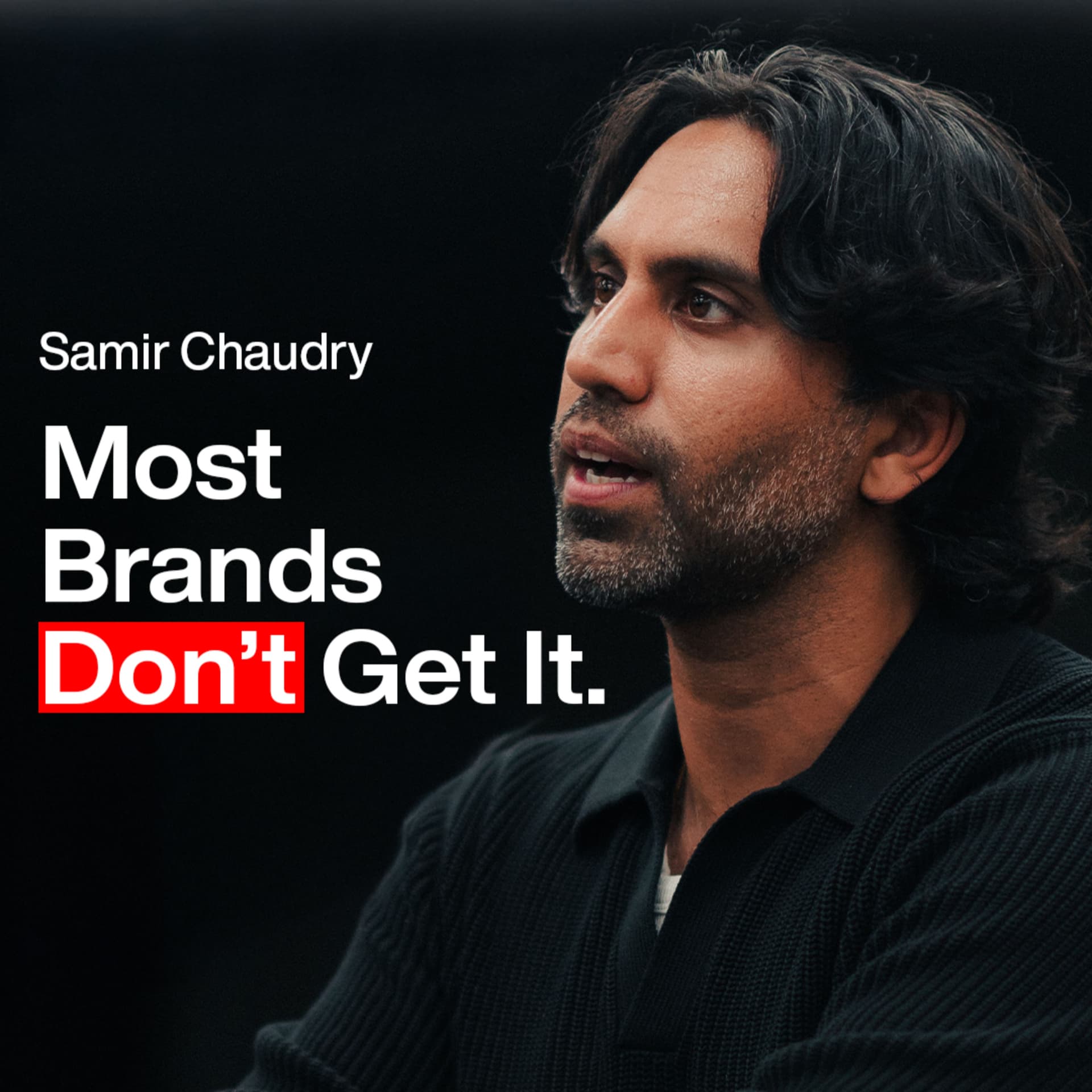
- Episode Title: Samir Chaudry - How To Actually Dominate YouTube in 2026
- Description: A deep conversation with Samir Chaudry, co-host of Colin and Samir, discussing relevance, creative longevity, and the essentials of building a media career in today's landscape.
---
Key Themes
Understanding YouTube Dynamics
- Three Rules of YouTube:
- If They Don’t Click, They Don’t Watch: Emphasizes the importance of creating compelling titles and thumbnails.
- Respect Their Time: Content must be engaging and concise.
- Give Them More: Always strive to provide value that exceeds expectations.
Audience Engagement
- Audience-Centric Approach: Emphasizes understanding audience emotions and identities to create relevant content.
- Curiosity Gap: Successful content instills curiosity, motivating viewers to click and watch.
Content Creation Strategy
- Pre-Production Focus: 75-80% of time should be spent on pre-production, including brainstorming titles and thumbnails.
- Thumbnail Importance: Thumbnails should captivate and entice viewers without giving away too much; they should stand alone in generating interest.
Navigating Burnout and Industry Challenges
- Burnout Awareness: Strategies discussed for avoiding creator burnout, including taking breaks and respecting one’s limitations.
- Current Podcast Landscape: Discussion on the hidden problems with podcasts today and respecting viewer time.
Metrics That Matter
- Key Metrics for Success:
- Click-through Rate (CTR): Essential for content visibility.
- Average View Duration: Indicates content engagement.
- Returning Viewers: Important for building a community.
---
Personal Reflections and Insights
- Loss and Resilience: Samir shares his experience of losing his home in the Palisades fire and how it reshaped his perspective on money and possessions.
- Desire and Sufficiency: Acknowledges the shift from seeking validation through material success to finding fulfillment in experiences and relationships.
- Community Impact: Emphasizes the importance of community support during times of crisis.
---
Future Predictions for Media
- YouTube as a Platform for Scripted Content: Anticipates a shift towards more scripted formats on YouTube, similar to traditional TV.
- Interactive Experiences: Predicts a future where creators provide tailored content experiences to users based on their preferences.
- Brand as Content Creators: Brands as the new studios creating engaging and narrative-driven content.
---
Quick Strike Questions
- Red Flag in Brand Deals: If a brand wants specific conversions from an integration.
- Creator Economy Prediction: Increased malleability of content through AI.
- Favorite YouTube Video: "Make It Count" by Casey Neistat.
- Underrated Skill in Content Creation: Writing.
- Next Platform to Watch: Instagram, due to its vast reach and engagement.
- Key to Success in Collaboration: Understanding what success means for the brand.
---
Final Thoughts
- Legacy Goals: Samir hopes to be remembered as someone who understood and made creators feel seen and heard.
- Community Value: Emphasizes the importance of shared values and mutual support within creator partnerships.
---
Additional Resources
- Colin and Samir’s YouTube Channel: [YouTube Link](https://www.youtube.com/channel/UC2Q0VV9sE3qM9c5z03p7i9A)
- Follow Open Residency: [Instagram](https://instagram.com/openresidency) | [Website](https://openresidency.com)
---
These notes provide a comprehensive overview of the Open Residency podcast episode featuring Samir Chaudry, encapsulating his insights on YouTube, content creation, personal growth, and the future of media.
Written by AI. May contain mistakes. Listen to the episode to check what was said.
Chapters
Tap a time to open that second in VOThe Nature of YouTube: More Than Just Videos
0:45 to 1:40
Discussion on YouTube as a click-driven platform and its implications for content creators.
“what most people get wrong about the future of media and why losing his dream home in the Palisades fire changed everything.”
Three Rules for YouTube Success
1:40 to 4:00
Exploration of the three essential rules for gaining traction on YouTube.
“however you present the video to me has to suggest enough value and instill enough curiosity in me that I have no choice but to click.”
Understanding Curiosity Gaps
4:00 to 6:10
Explanation of the concept of curiosity gaps and how to create compelling content.
“It's like a, looks like a film poster, but people love it because it's just good.”
The Importance of Pre-Production
6:10 to 8:50
Insights on spending adequate time in pre-production for better video performance.
“they going to discover this piece of content?”
Targeting the Right Audience
8:50 to 11:10
Discussion on identifying and connecting with the right audience for your content.
“Let's say you made one that was like an update from me.”
Crafting Effective Thumbnails and Titles
11:10 to 13:20
Advice on how to create engaging thumbnails and titles that enhance viewer curiosity.
“So long as that's part of like building a tight knit small community is an outcome that you're totally fine with.”
Engaging with Your Audience
13:20 to 14:02
Emphasizing the importance of building a loyal audience through thoughtful content.
“Going riffing off of that less and less time, more and more options.”
Understanding Audience Needs
14:02 to 15:10
Learn the importance of defining your audience and maintaining engagement.
“Or do you think it needs to be holistically one thing and the same for every episode?”
Testing Titles and Thumbnails
15:10 to 16:36
Discover strategies for effective title and thumbnail variations on YouTube.
“And like when I heard about like how you guys run your business and all these creators, I'm like, this is super interesting to me.”
Balancing Audience Expectations
16:36 to 17:43
Understand how to align content with audience expectations while testing variations.
“So how we do it, to give you context, is we'll start with one title.”
Show all 87 chapters
Injecting Personal Touch in Podcasts
17:43 to 18:51
Explore the importance of the host's personality in engaging the audience.
“Like a hardcore, like Andrew Huberman longevity audience, they might not carry with open residency for the long term.”
The Role of Value in Content
18:51 to 19:58
Learn how to balance entertainment and informative value in content.
“And we had never done like work-life balance with Nate Checketts from Rhone.”
Crafting Effective Titles and Thumbnails
19:58 to 21:02
Gain insights on best practices for creating captivating titles and thumbnails.
“And I think exploring how you can inject more of yourself into the show is important.”
First Impressions in Content
21:02 to 22:10
Understand the significance of the first moments in videos to retain viewer attention.
“I think if you understand and know title, thumbnail, and make the first 10 seconds of the video reflect the title and thumbnail, I already think that you're winning the game.”
Maintaining Audience Attention
22:10 to 23:10
Explore techniques to keep the audience engaged throughout the content.
“So basically show me why this experience is unique to you.”
Creative Collaboration and Tools
23:10 to 24:25
Learn about ideation processes and tools to enhance content creation.
“A lot of that is just like core storytelling principles that earn attention over time.”
The Evolution of Creative Processes
24:25 to 28:01
Discover how modern tools have influenced creativity and idea generation.
“no matter what, I will write 10 ideas a day.”
The Balance of Creativity and Metrics
28:01 to 31:28
Explore the delicate balance between creativity and quantifiable success metrics in content creation.
“It's so funny you say that because we talk all the time, our team, just about like, I have one day a month.”
Effective Podcasting Strategies
32:15 to 36:12
Understand the importance of prepackaging and distribution in podcast success.
“People neglect prepackaging and then distribution.”
Research and Differentiation for YouTube Success
36:13 to 42:00
Discover how to effectively research your niche and differentiate your content on YouTube.
“When you complete a video on YouTube, the visual I always have is that you are putting a book on a shelf in a library.”
Understanding Value in Content Creation
42:00 to 43:00
Explore the importance of tangible value and passion in the content creation process.
“So we're like, who is actually giving tangible value in the business segment?”
Lessons from Mr. Beast's Approach
43:00 to 44:20
Learn how Mr. Beast's obsession with details shapes his success in content creation.
“Well, first I'll tell a quick story of like, I've spent a lot of time with Mr.”
The Mental Game of Content Creation
44:20 to 46:20
Discuss the mental challenges and excitement involved in creating content.
“Whenever I hear that, it's like, okay, maybe, maybe it could work.”
The Importance of Chemistry in Collaboration
46:20 to 48:30
Understand how chemistry affects podcast performance and guest interactions.
“in your body to do your thing to do your craft and like that's what's happening in those few seconds you're like i'm about to do the thing like i'm doing the craft like do you ever play sports Yeah, I did.”
Navigating Guest Relationships and Expectations
48:30 to 51:00
Examine the complexities of managing guest dynamics and expectations.
“We have some, I mean, Joe Rogan type guests coming on.”
Balancing Work and Life Priorities
51:00 to 53:00
Explore the challenges of prioritizing work and family in creative careers.
“There's like so many human factors to this type of show.”
Respecting Viewer Time Through Storytelling
53:00 to 55:40
Learn how to engage viewers by respecting their time through effective storytelling.
“In a month, that might change or in six months, that might change.”
The Science of Engaging Storytelling
55:40 to 56:00
Discover the mechanics of crafting compelling narratives that keep viewers hooked.
“Respecting the viewer's time is telling a great story.”
The Science of Storytelling and Engagement
56:00 to 56:45
Learn how to keep viewers engaged by proposing and answering questions throughout your content.
“And if you are watching something and you as the viewer have no more questions, the story's over.”
Storytelling Principles Across Mediums
56:45 to 57:41
Understand that effective storytelling techniques apply universally across various forms of media.
“Do not leave me hanging when there's no question and answer.”
Visual Engagement and Open Questions
57:41 to 58:46
Explore how visual storytelling and leaving open questions enhance viewer engagement.
“So I think one of the best ways this was described to me was through Michelle Carey and her husband, Garrett Kennel, who make that show Challenge Accepted on YouTube.”
The Power of Omission in Storytelling
58:46 to 59:16
Discover how leaving some elements unexplained can make a story more engaging.
“Like you can propose a question through visuals if you are telling a story.”
Analyzing Video Performance and Retention
59:16 to 1:02:15
Learn how to analyze video retention metrics to improve content performance.
“we didn't see the shark for the majority of the movie.”
Understanding Click-Through Rates and Retention
1:02:15 to 1:03:19
Gain insights into the importance of click-through rates and viewer retention for success on YouTube.
“that means you didn't end quick enough, right?”
Engagement Metrics on YouTube
1:03:19 to 1:04:16
Identify key engagement metrics that creators should monitor to assess their channel's health.
“beginning, because that's probably your audience, that just means that the first 30 seconds did not reflect the title and thumbnail probably, correct?”
The Challenge of Attracting New Viewers
1:04:16 to 1:05:15
Understand the difficulties new creators face in attracting and retaining an audience on YouTube.
“Like switching cost for a YouTube viewer is high, right?”
Differentiating Between Views and Brand Value
1:05:15 to 1:09:38
Learn the difference between achieving high viewership and building a meaningful brand.
“So from a metrics perspective, why don't you just rattle off three, four, five of those top metrics?”
Categorizing Types of Views
1:09:38 to 1:10:03
Discover the three categories of views and their impacts on content strategy.
“The obvious thing to do next is make another top three list about YouTube.”
Understanding View Types on YouTube
1:10:03 to 1:11:28
Learn about the three types of views that impact a creator's brand.
“more like deep conversation about youtube the business of youtube creativity and so we took a step back and we were like let's actually think about what views matter because views for views sake, I don't think matter.”
The Importance of Brand Over Views
1:11:29 to 1:13:06
Discover why building a reputable brand is more crucial than just chasing views.
“like we've gotten very over-optimized on like I know how to generate viewership.”
Creating Memorable Experiences for Audiences
1:13:07 to 1:14:26
Explore how creators can enhance audience experiences to build lasting memories.
“If it's not a fuck yes, you gotta say no.”
Building a Successful Monetization Strategy
1:16:14 to 1:17:16
Understand how to effectively monetize content by building a specific audience.
“I want to start from a macro perspective.”
The Art of Sponsorship and Brand Partnerships
1:17:17 to 1:18:37
Gain insights into creating successful sponsorships and working with brands.
“And so to be a creator that's building a big sponsorships business, the first thing you need is a very clearly defined audience, right?”
Optimizing the Sponsorship Experience
1:18:38 to 1:23:37
Learn how to streamline the sponsorship process for better client relationships.
“The biggest thing I've learned with working with big brands is the experience is one of the primary products you offer.”
Streamlining Offers for Better Value
1:24:00 to 1:25:00
Learn about reducing offers to improve service delivery and client relationships.
“We can do dinners, we can do events, we can do Instagram only because we're bigger there and this and that.”
Understanding Sponsor Expectations
1:25:00 to 1:26:10
Explore the misconceptions sponsors have about creator partnerships and expectations.
“So like one of the first things I did was just go like, you know, there's two of us, we have a team, we have an office or like, you know, prior to that, there's just two of us.”
Building Relationships with Sponsors
1:26:10 to 1:27:47
Understand the importance of nurturing long-term relationships with sponsors.
“directly from the link that they put in their description.”
Starting Your Journey as a Creator
1:27:47 to 1:29:07
Find out how creators can begin attracting sponsors and making an impact.
“And I think that's a really important part too.”
Leveraging Warm Introductions for Sponsorship
1:29:07 to 1:31:28
Discover the power of warm introductions in securing sponsorship deals.
“Did you go outbound or did your first sponsor come inbound?”
Defining Success in Sponsorships
1:31:28 to 1:33:04
Learn how to align expectations and define success metrics with sponsors.
“Typically, it's like you make something and you become a creator that's worth representing.”
The Evolution of Sponsorship Deals
1:33:04 to 1:36:27
Understand the differences and similarities in sponsorship deals over time.
“Because I asked them, I was like, at this point, if you're going to start a business, like Shopify is where you're going to go.”
The Role of Education in Creator Monetization
1:36:27 to 1:38:00
Explore how education influences creator monetization strategies.
“We're like really deep with a few partners and those include distribution across our media assets, plus, you know, some level of events and hosting or speaking, plus some level of consulting.”
Understanding Audience Monetization
1:38:00 to 1:39:00
Learn why approaching audience monetization from a place of weakness isn't effective.
“or courses are often like low value and like a great way for someone to convert their audience and come from a place of, damn, I don't have a way to transact with my audience.”
Courses as Educational Tools
1:39:00 to 1:40:40
Explore how courses can be structured as educational resources for creators.
“Cleo Abram, what are the lessons from going from zero to 6 million subscribers?”
The Creator Startup Programs
1:40:40 to 1:41:40
Discover the three key programs designed to help creators brainstorm and grow.
“And I noticed that with all these things, like I didn't really know how to brainstorm.”
Navigating Negative Feedback on Courses
1:41:40 to 1:43:20
Understand how to handle criticism while offering educational products.
“when you look at credibility, you know, I thought because we're coming at this from like a good place and like, I'm not putting a gun to your head.”
The Importance of Free Educational Content
1:43:20 to 1:44:40
Learn why giving away free content is essential for audience engagement.
“My hope is that I can build a big education business because I like it.”
Key Learnings from Event Planning
1:44:40 to 1:46:40
Gain insights on how to effectively plan events that foster connections.
“We don't have time to get into ManyChat.”
Creating Memorable Event Experiences
1:46:40 to 1:48:40
Explore strategies to create memorable moments for event attendees.
“We started the day with something called Coffee with Creators, and we with Spotify on it, where what we did was we had coffee cups that had interview questions on them that you're supposed to ask someone.”
The Role of Accountability in Education
1:48:40 to 1:50:30
Understand how accountability impacts learning and development.
“I mean, even for our newsletter, like we have a type form.”
Excitement and Challenges in Consulting
1:50:30 to 1:51:50
Discover the joys and challenges of consulting in the education space.
“What are you the most excited about looking into the future?”
Navigating the Challenges of Digital Content
1:51:50 to 1:52:04
Learn about the emotional challenges that come with digital content creation.
“The stress of the performance of it has definitely gotten to me over the years.”
Navigating the Emotional Landscape of Content Creation
1:52:04 to 1:54:05
Learn about the emotional challenges faced by content creators regarding view counts and audience feedback.
“There's this thing I call relative zero, where I noticed like, you know, a couple of weeks ago, we had an episode that did 80 ,000 views.”
The Personal Journey of Home Ownership
1:54:06 to 1:57:28
Discover the personal and entrepreneurial significance of buying a home and the challenges faced along the way.
“It's one of our best performing episodes ever on Spotify.”
The Impact of the Fire on Personal and Community Life
1:57:29 to 2:00:37
Hear a gripping story about the devastating fire's impact on community and personal relationships.
“And I fly down there and I have a ton of anxiety because I'm like, what if my baby comes during this time?”
Grieving Losses and Reassessing Values
2:00:38 to 2:03:24
Understand how loss leads to grief and the reassessment of values and priorities in life.
“So you couldn't get out And they didn't leave in time.”
Lessons on Change and Adaptability
2:03:25 to 2:06:00
Explore insights on dealing with change and the importance of adaptability in life and business.
“any type of change in your life, you're navigating grief.”
Embracing Change and Adaptability
2:06:00 to 2:06:56
Learn how adaptability is crucial for personal and professional success.
Lessons from Inconveniences
2:06:56 to 2:07:55
Discover the difference between problems and inconveniences through personal experiences.
“So to summarize what Bruce Lee says, he says, like, think about water.”
Defining 'Enough' After Loss
2:07:55 to 2:09:18
Explore how personal loss reshapes one's understanding of sufficiency and success.
“I can't tell you how much it sucks, but it's an inconvenience.”
Valuing Slow Moments
2:09:18 to 2:11:04
Understand the beauty of slow mornings and family time post-tragedy.
“I think money is a conduit to that, right?”
Changing Relationship with Material Possessions
2:11:04 to 2:13:19
Reflect on how tragedy alters one's attachment to physical items and status.
“And the, and the thing that, that I always dislike is when I wake up and I'm like kind of frantic and I'm like, ah, I got to be somewhere and I got to do something and I got so much to do.”
Articulating Lessons Learned
2:13:19 to 2:13:51
Learn about the importance of sharing experiences and lessons from personal hardship.
“Did you see I have the key in case I need it?”
The Future of YouTube and Media
2:13:51 to 2:15:08
Gain insights into potential trends and transformations in YouTube content creation.
“I want to talk a little bit about the future of YouTube and media.”
Interactive Content and Audience Engagement
2:15:08 to 2:17:16
Explore the concept of audience collaboration in content creation and consumption.
“Now, it's behind a paywall and you have to do a ton of marketing to get people to watch it.”
Reassessing Hollywood's Relevance
2:17:16 to 2:20:00
Discuss the shifting dynamics of Hollywood and its impact on content creation.
“is again like a, it's an old school way of thinking.”
Analyzing Hollywood's Creative Decisions
2:20:00 to 2:21:00
Learn about the flawed decision-making processes in Hollywood's entertainment industry.
“My hope is to help to bridge some of that gap.”
The Future of Scripted Content on YouTube
2:21:00 to 2:22:40
Discover the potential rise of scripted content on YouTube and its implications.
“But I think what we're seeing is a lot of fear in creativity where it's like, I'm afraid this won't work, so I'm going to do the thing that I assume will work.”
Brand-Driven Content Creation Opportunities
2:22:40 to 2:24:36
Explore how major brands can function as future media studios and engage audiences.
“I think Red Bull is the one who does this the best.”
Challenges in Brand Show Production
2:24:36 to 2:25:48
Uncover the fears and complexities brands face when producing lo-fi content.
“You're talking about packaging a ton of celebrities on, you know, the cover of a movie poster.”
Innovative Campaigns by Creators
2:25:48 to 2:27:15
Learn about a groundbreaking marketing campaign that engaged audiences creatively.
“It's not the like move fast and break things where let's just try and see it.”
The Importance of Shared Values in Partnerships
2:27:15 to 2:28:38
Understand the significance of shared values in maintaining successful collaborations.
“He like created a character, created a narrative, created a thing that everyone could get involved in.”
Insights on the Creator Economy's Future
2:28:38 to 2:30:48
Explore predictions about the evolving landscape of the creator economy and content.
“And I would say like one of our core values also is just having each other's back.”
Key Influences on Content Creation
2:30:48 to 2:32:58
Discuss essential influences and skills for effective content creation in today's market.
“I think it's really important to just look at what's fun and go, I'm competing with anything that's fun.”
The Authentic Voice of Colin and Samir
2:34:00 to 2:35:02
Learn how authenticity plays a key role in the success of Colin and Samir on YouTube.
“And there's a great quote from the creators of The Office that they talked about when they were shooting The Office, they started with like one camera and they're in a real office building here in LA.”
The Future of Colin and Samir and PublishPress
2:35:02 to 2:36:25
Explore the potential growth and impact of Colin and Samir and their sub-brands.
“I think Colin and Samir will always be as big as our authentic desire to create.”
Where to Find Colin and Samir
2:36:25 to 2:36:49
Get insights on how to connect with Colin and Samir across social platforms.
“Why don't we end with, where can they find you and everything?”
Transcript
Automatic transcript. May contain errors.0:28We made a short did 44 million views. Mark Zuckerberg, or hosting sold-out events with Casey Neistat or Richard Branson, Colin and Samir sit at the center of it all. YouTube is not a video platform. It's a click and watch platform. Knowing how to position yourself, that can change your business completely. We go deep in breaking through in today's attention economy what most people get wrong about the future of media and why losing his dream home in the Palisades fire changed everything. I'm on stage with Kevin Hart and my phone is buzzing. I pull out my phone and there's a video of my house burnt down.
1:00What a lesson that I chased money for a long time. Then I took all that money and I built a house and it burned down. What a metaphor.
1:15So what are the three rules on YouTube? The first rule is if they don't click, they don't watch. Second rule is respect their time. The third rule is give them more. If you just think about at the core of it, YouTube is not a video platform. It's a click and watch platform, right? Meaning I have to actively make a decision to click on a video in order to watch it. And that suggests that however you present the video to me has to suggest enough value and instill enough curiosity in me that I have no choice but to click. So that's typically our gauge is, is there curiosity in this? And what we call it is a curiosity gap, which is the distance between the information that is presented to me and the information that I want to know.
2:03So a great example of this, one of my favorite thumbnails on YouTube is from a creator named Veritasium. And he's standing in front of a sea of black balls. And the title is, Why Are There 96 Million Black Balls on This Reservoir? And I think it's just like a great example of like, hmm now I'm presented with information that there's like this reservoir and there's a ton of black balls on it and I want to know the answer which is why it's very simple and it doesn't have to be overly designed or overly complex but you just have to present yourself with the question is this intriguing enough for someone to spend their time under the notion that all the other platforms are algorithm based and this is there has to be intent to click and watch yeah if we zoom out and we're going to be talking about all of the kind of the steps pre-packaging, pre-production, production, post-production, and distribution.
2:55This pre-production, this pre-packaging, what percent of time in the overall production should they spend on this, do you think? I mean, honestly, it should probably be 75 % to 80 % of your time. Because, again, otherwise you're spending 80 % of your time making something and no one's, it's possible that nobody sees it because they don't click on it. And I think it's not so different from Hollywood, right? Like this is not some completely new concept where in Hollywood, like however you package and present the movie, that's also why like they package in a bunch of actors. They're like, okay, more people will come to see it if George Clooney's in it.
3:34And more people will come to see it if we present the poster in this way. More people will understand it immediately if it looks like this because then it looks like a rom-com or if it looks like this because then it looks like an action movie. you're sending signals through the design and through the marketing to suggest if you should come see it it's the same concept with youtube and i think you know when i first started my assumption was if i make a great video it'll travel that assumption sometimes is proven correct there's like an amazing bird watching documentary on youtube right now that's going completely viral and it's because it's just good it's the fourth video on this creator's channel it doesn't have like some incredible thumbnail.
4:14It's like a, looks like a film poster, but people love it because it's just good. And so sometimes that works. But a lot of times, like when someone is opening up YouTube, we've gotten to the point where they have their subset of creators they just love. And to veer off of that is pretty challenging. And so you're trying to pull someone and suggest to them that this is a good use of their time or like that you're going to take care of them through your packaging. Yeah, we have yet to have any video get escape velocity where we didn't look at the prepackaging and be like, wow, like we nailed it on that.
4:45And we're only like 20 videos in. I mean, you're a gazillion videos in. Like how rare is that? Like probably 0 % chance that if it's not a good title and thumbnail, you're going to get the views, correct? It's getting more rare, I would say, largely because like there's an abundance of choice. And when you live in a world of like an abundance of choice, then to stick out is really hard. And I think the other thing to understand about YouTube is that it's a recommendations algorithm. So even with this show, the reality is for someone to discover this show, it's likely that they're watching a show prior to it or they're watching a video prior to this.
5:15And then this thumbnail is showing up on the right side of their frame, right? So like that's suggested content. That's how most content gets discovered is through either browse, which is like opening up YouTube and just having a bunch of thumbnails or suggested, which is like I'm watching a video and then on the right side of the frame, or if I'm on mobile underneath, there's a bunch of other videos. And so if I'm watching a video. And so let's say with this show, I'm into business podcasts. I'm also into like very cool aesthetics. Then when I see your thumbnail, I'll be like, oh, okay, that looks like something I'd be into and I'll give it a shot.
5:49But it has to fit into a category and a genre on YouTube. And that's one of the beautiful things about YouTube is that you're not producing content in like some big vacuum. It's like you can fit into a category, but you have to be thoughtful about how that audience is going to discover your stuff. And so that's what I mean by like 80 % of the time on packaging is being empathetic to the audience's experience and saying, how are they going to discover this piece of content? Because I think even with me, a lot of times I get excited about a lot of videos, but if it's not interesting enough for someone to click into, it might be a reel or like a short form piece of content, or maybe it's a tweet, or maybe it's an email.
6:28And like, you're passionate about an idea, but if it's not interesting enough to get someone to actually click into it and look at that timestamp and go, this is two hours long. Like, do I want to spend two hours answering this question? Or do I want to spend 15 minutes answering this question? It might be a different medium. And the second thing is, most important is the visual component to it. Is there a visual component? Is this story visual or not? And with podcasting, I think that's really hard because a lot of times it's not. But this show is a great example of like, how do I make sure that it's visually intriguing enough?
7:01And that wins way past YouTube for everybody listening. And I think just for YouTube to further inform, you are the Yoda of YouTube. So I just want to make sure everybody listening, a lot of people like know little to nothing about YouTube. We're talking specifically about the thumbnail. Yeah. I actually would argue, it's funny you say title first. I would argue actually that thumbnail comes first. That's fair. And I think a big thing that we've learned when we idea through different titles and thumbnails is the biggest mistake that we have made is thinking that the title and the thumbnail need to be married together.
7:31obviously you want them to be complimentary. They have to win on a standalone. It can't just be looking at the thumbnail and it only makes sense if it speaks to the title. It has to win isolated. I actually think they need to be complimentary and they need to speak to each other. They're at their best when they speak to each other. So for example, if I said something simple of the three rules of YouTube, if I'm trying to make a video about that, then ideally what's happening is you're seeing a list and you're only being revealed one of the rules. So it's like an incomplete story, right? And so I see one of the rules in there and maybe it's unexpected and then I want to click in.
8:12Or if it's like, you know, the four lessons I learned trying to make a million dollars and it says like, lesson four, don't sell anything. And you're like, what? Counterintuitive curiosity. There's a bit of a curiosity gap there, but you're also in the middle of a story or in an incomplete story. So they can talk to each other. The worst thing you can do if you're making YouTube videos is to have a video called The Three Rules of YouTube and then in the thumbnail write The Three Rules of YouTube because that's wasted space now. You're telling the exact same story in the title and the thumbnail.
8:41The real estate that you want to use. That you want to use to open up the curiosity gap, to make it bigger, not necessarily to close it. I think a lot of times people close it with the title and thumbnail. Let's say you made one that was like an update from me. That's the title. And then in the thumbnail it says, I'm done making videos. Some people do that where it's like, okay, now I got the story from just looking at the title and thumbnail. I can move on. I don't have to click into the video. Yeah, for the people listening, there's a lot of people on the business side. And I think both of us, I think, are doing a lot for kind of the business community to help them understand the creative side and the YouTube side.
9:18Formerly, when we had a podcast, I look back and our thumbnail, bro, it would just be like, oh, one, and it would just say the names. And it would not create any curiosity gap. Like for people out there that are doing podcasts or behind the scenes stuff to just say like, oh, one behind the scenes from this shoot, that does nothing. Well, I think you have to like break down like one of the things we do and you probably do this for customers. But one of the first things we do when we're launching anything new or even when we're looking at a video is break down on a sheet of paper, three columns.
9:47On the left, we write identities. Then in the middle, we write emotions. And on the right, we write actions. And so identities, for example, is like, who am I trying to reach? Who is this for? It's your ICP. Yeah, who is this for? Like, who's this piece of content for? And for us, like, when we started, you know, really getting into a flow was when we recognized, like, we were just making stuff for our younger selves or even for ourselves. We were struggling to figure out how to make YouTube work, both creatively and from a business perspective. So we were like, okay, it's us. It's aspiring creators.
10:19And then as we started building, it was like, okay, it's also professional creators because they want to hear other professional creators talk about this. And then, you know, there's people who work in the creator industry. So those are our identities. Then like emotions, what do we want them to feel? Okay, we want them to feel educated. We want them to feel empowered. We want them to feel less alone, a sense of community. And then action. Okay, that's where we came up with this term press publish. We want them to feel like they are educated enough to go press publish on their ideas. We want them to feel empowered enough to build a business on YouTube.
10:48And so when you build into that and you recognize that operates as a filter for everything you do. And I'm bringing this up from a packaging perspective because, you know, you want to make sure that whatever that is that you want to do, whoever the group is that you want to reach, the emotion you want them to feel and the action you want them to take, that's communicated through everything you do. It's not a bad thing if like 2 ,000 people are watching your YouTube videos. That's not a bad thing. So long as that's part of like building a tight knit small community is an outcome that you're totally fine with.
11:18It's so funny you say that because Sean from Ridge said, the more views, the worse the video because they know their TAM is so small and they want a small, sticky audience to get value from it. Yeah, like Sean is a great example of like, he doesn't need to reach anyone. He needs to reach the right people. And so I think YouTube is an amazing platform if you're a business owner. I don't think there's another platform, you know, YouTube and podcasts, I would say, is where you can build depth with a community and with an audience. And I think we get into a flow where like our assumption is that we need millions of people watching because that's what we see and that's what we aspire to.
11:54But like you can build a tight-knit community. The assumption on what you said of someone putting like episode 001 as their thumbnail, it doesn't really respect the concept that the audience has so much choice. It immediately has almost like an entitlement to it that's like, I made something, you should watch it. Whereas my suggestion through my packaging has to be what are you going to get from it? Right. And so that's, I think like the most important is like breaking down those identities, thinking of those emotions, like what am I giving you? What transformation am I giving you in this episode?
12:28To further rift on that too, I think same thing going back from a business perspective and creative, you want to hone and have a stronger relationship with your current audience, but then you want to get a net new audience. So that O one, whatever it is, maybe your current audience is following your YouTube subscribe and they're watching everything, but you're going to get zero net new people. Yes. You have to get new people to grow your channel. Yes. Yeah. And people, that's like the most simplest way to break down why that doesn't work. Exactly, yeah. And you have to, at a glance, communicate value and communicate why I should invest my time.
13:01Like if we just imagine it as a investment opportunity, right? If I'm like, hey, I have an opportunity for you to invest your time in my video, then I need to suggest pretty quickly what the return on that investment could be, right? And that's extremely important because people have less and less time now. And so you are suggesting to them that they should invest their time with you. Going riffing off of that less and less time, more and more options. You can argue that going more deep and more narrow with a specific community will reap better results. Personal question. I laugh all the time.
13:35It's almost like a consulting session I get here. On the identity side, like us, we're still finding ourselves and we're just radically curious. and obviously this creator economy is like, is new for me. I've been in it for less than a year. We're speaking to, I always say, marketers, operators, and creators. Awesome. Do you think, is that the wrong route to go where this kind of identity, emotion, exercise that you're going through, can it be different on a per episode basis? Or do you think it needs to be holistically one thing and the same for every episode? It can be. I would say though that like you need a core community because that third rule of YouTube of give them more, I think like the fastest way to grow a show or a channel is to have someone watch more than one episode, right?
14:20Just to put it in simple terms. And I think that if I see one of your episodes and I click into it and it's like, now it's not for me, now it's for a completely different audience, then I start to lose that relationship with you. So that's the only thing is that like, I think, you know, who is this for and why do they watch are two important questions to answer. and if our you know the answer to that first question is who is this for it's for marketers and business operators that actually is a different audience than i think creators and they can overlap is it creators who are business operators or is it marketers who want to be creators right like i think getting more specific is better i think we're ultimately serving the marketer and the operator and i think i'm bringing on creatives as guests because they can inform the marketers and operators about the creative process.
15:08That's great. Which I am just so interested in because I've been an operator. And like when I heard about like how you guys run your business and all these creators, I'm like, this is super interesting to me. And I just think that the operators don't even understand how beautiful the economics and life of the business that you guys have is. Yeah, it's great. People don't know. I want to dive back into titles and thumbnails just to give people more context. How many different title and thumbnail variations do you guys typically test when you're launching something? Now that YouTube has ABC testing, right?
15:37You can test three different titles and three different thumbnail options at a time. We probably test 12 on each video. Wow. I would guess, right? Because we make like three conceptual variations, right? So like three kind of different layouts. And then we have three to four different text on screen for each of those. Interesting. So those like for us, that's kind of how we test. Now, sometimes we just do one. If it's like, you know, we have a video that's coming out soon, that's just kind of updating people on what our life has been like since the LA fires, because we made a video about our homes burning down earlier this year.
16:17And we have not spoken directly to the audience. Beautiful thing about YouTube is like, you can upload wherever you want. If I want to talk to the audience about that, I can talk to the audience about that. And so like, that's not going to have 12 different thumbnail variations. It's just going to be kind of a screen grab from it because that's not for everybody. That's just for the people who care about it. For people listening, we are definitely going to get into that later in the episode. Stay tuned. I know I just dropped a... Yeah, no, that's a fairly big one. We're going to get into it. I want to dive deeper into the 12.
16:43So how we do it, to give you context, is we'll start with one title. We'll have three different thumbnails and we will make sure that there's contrast in nature. For the people out there listening, it's like A-B testing and e-com. So it'll be just like, you know, I'll tell you about the one right now that we have going up right now with Joel from Humane. It's like one of them is he's 70 years old, but his heart is 40. That's one. Another one is him against Steve Jobs. Like the contrast there is so obviously different. And then all of those thumbnails speak to the title. And then whichever thumbnail does the best, then we do another split test where we do multiple different text overlays to see what does the best.
17:22What's your thoughts on that? My only thought is like the one that's focused on longevity that probably will attract a new audience. I would just say, you know, whatever is most representative of the audience you want is the one that you hope wins. Does that make sense? And you almost don't want to test the ones that maybe bring in a ton of new audience, but it's not the audience you want. Like a hardcore, like Andrew Huberman longevity audience, they might not carry with open residency for the long term. Maybe a couple of them will, but it depends on what your outcome that you want is, right?
17:53If it is clear cut and you want to communicate that who this is for is marketers and business operators, then it may be ideal for you that the Steve Jobs one wins. Hopefully that wins. And if you're like, hopefully that wins, then the question is, do I even want to test the other one? Even if it gets me more viewership, is it the right viewership? And again, depending on the outcome you want, if it's just learn and get the biggest audience, then yeah, test all those and see what sticks. but it might inform you and shape the show, right? Like if all of a sudden longevity becomes a big topic, like are you open to this show going in that direction?
18:31And that kind of depends on this, where you sit as a creator of like, what is the outcome I want? And do I have conviction in my perspective and I'm okay with the group of people that want my perspective to listen to my perspective? Or do I just want the largest amount of people to hear me? Yeah, understanding and knowing what you want is huge. I mean, for us, we always want to, let's just say every fourth or fifth episode or when looking at, you know, holistically the amount of minutes, we want to try like a new segment. And we had never done like work-life balance with Nate Checketts from Rhone.
19:02And we looked at the curve spike. Everyone loved that. And then that further informed us to get more guests. So I do think you need to have a balance and take at bats into new stuff. I also think Chris Williamson does an amazing job as a podcaster on YouTube. One thing I love about Chris Williamson and what he does is that he occasionally will post a vlog on his channel. And he'll also occasionally post like a Q &A that's just him direct into camera. And I think as you start to grow, those are two things that may underperform, but will build a lot of depth with your community. Sticking us that thousand true fans are going to come through that.
19:37Yes. And I think that for the future is really important. because in a guest-based show, if there's anything I've learned is that don't make yourself replaceable as the host, right? If you're betting on guests, then, you know, let's say Robert Green, great example. You know, that's a great episode. Thank you. But when Robert Green goes on another show, do those people just go over there or do they stay here? And I think exploring how you can inject more of yourself into the show is important. Yeah, that's been a really, really hard exercise for me. I mean, we looked at the earlier episodes. I was way less, I'm starting to become more and more myself.
20:12Like you even know, like we're friends off camera. I'm a little bit more. Yeah, this is not you. I have no idea. No, I'm kidding. No, literally, I'm a little bit more like wild and funny. Like my fiance is just like, you have to loosen up a bit. But for me, it's just like, there's value, there's entertainment, there's both. And for me, the key cursor is all about value. Because for me, I am obsessed with podcasts with value. So for me, I'm making this for myself. So for me, I'm going to prepare and I'm going to ask the questions that I want to know. So for everybody out there listening, I will loosen up over time.
20:43And we are going to start doing other like talking. Yeah, cool. Talking to camera videos and some vlog type stuff. One more question on the titles and thumbnails, because it's literally something that we were going over yesterday, is you said it like, I don't want to trick people into clicking and then they don't get what they expect. But what is your thesis on, for everybody out there listening, I think if you understand and know title, thumbnail, and make the first 10 seconds of the video reflect the title and thumbnail, I already think that you're winning the game. What happens when the second 20 minutes into the episode is when the real meat comes and you make that one of your title and thumbnail options and the first 20 minutes is not that?
21:23Like, do you just think that that can't even be an option for your title and thumbnail? It can be. I would say if you build like a montage and suggest that that is something that is coming, for sure. But it depends on the expectation, right? Like a podcast has very different expectations than a face-to-camera hosted video, right? If the timestamp is two hours, I'm going into, that's a part of your thumbnail, the timestamp, right? Yeah. That communicates something. So I have very different expectations. So my belief is that that second rule of YouTube, respect their time. The first thing you have to do, like you said, is within the first seven seconds, you have to confirm my click.
21:57So if that moment comes 20 minutes in, then that should be the first cold open moment in the podcast. I should click in and the first seven seconds should be reflective of what I just clicked on. The next kind of 20 seconds, I think the goal is to make it personal. So basically show me why this experience is unique to you. What's like the vibe of this? Is it, again, more value packed? Am I going to get like a ton of value out of this? Is it a fun hang? Is it comedy? What is this, right? And then the final 10 seconds of that 30 seconds should be about opening a new loop. So in podcasting, oftentimes this happens in a supercut where like the last thing is some question that you really want the answer to that is left unanswered.
22:41And so opening a new loop means I didn't know that there was going to be this discussed in this episode, but now I want to know. That buys you more time, I always feel like. And that second part of it, it's almost like a re-hook, you're saying? It's a re-hook, yeah. And I think from there, again, podcasting I find to be very different. But if you're telling a story in a documentary form or host a camera, like I think you earn attention in 10 to 20 second increments. Are you actually keeping me along, telling me a good story? Are you opening up more loops? Are you making me interested? A lot of that is just like core storytelling principles that earn attention over time.
23:20Makes sense, yeah. I don't think you can assume at any point in a YouTube video when you're making a video for YouTube that you have earned the audience's full attention. Yeah, I think at any point, if you tail off and you start going into a tangent, it needs to be cut. We are absolutely ruthless in how we cut our episodes. Ruthless. Unless that's the expectation of the show, right? Andrew Schultz flagrant, like a comedy podcast, I'm completely fine with a tangent because it's comedy. And those guys are funny. And that's the value proposition of the show. And that's totally fine. That's why in the Orin episode, we went deep into it.
Read the full transcript
23:51You know, there's value, there's entertainment, and there's both. And if you have both, that entertainment pillar allows you to go off a little bit on a riff if value is your key driver. Yes. That will just allow, that will just give you more time to kind of circle back around to the values. That's where that definitely gets dangerous. The title and thumbnail kind of ideation. What's your guys' process from like a tools perspective? Are you writing in like a notepad? Like, what does that look like? Yeah, I would say like, when we are at our best, we are writing titles every day. And I think brainstorming is a practice.
24:24And I think it's just like going to the gym or anything else, where if you say, no matter what, I will write 10 ideas a day. I guarantee you, you will get better at writing ideas. Most of those ideas will be shit. But after a week, you'll have 70 ideas. And one of them might be like, that's really good. But the other thing that that process does for you is it teaches you what's a bad idea and what's a good idea. You just go through the process. And so the have some sort of like titling framework, right? So let's say when we were, you know, probably at our most consistent, almost all of our episodes were titled an honest conversation with or an unfiltered conversation with.
25:08That's amazing because now I have the beginning of a title and I write 10 ideas of who we could have that conversation with. This goes back to just template and formats. I mean, that's duplicatable. Formats are amazing. Or like, let's say I'm, you know, Ryan Trahan or Michelle Carey is a great example. She has a show called Challenge accepted on YouTube where she takes on, you know, a different challenge. And basically the beginning of every single title is I tried blank. So she tried Butler Academy. She recreated Tom Cruise's most insane stunt of hanging off of an airplane. So like she can just write I tried and then fill in the blank 10 times a day.
25:43Easy brainstorm session there. Yeah. Yeah. Just like exploring your own thoughts. And I think that's like a lost art of just this like analog process of I'm a big like pen and pad guy with this. Now you can also use tools that are available to you. Like you can open up chat GPT or yesterday Colin and I opened up Microsoft copilot and we were like, the insane thing about being a creative is you can go pitch me five ideas for Colin and Samir and you immediately get ideas pitched to you. And then you can build off of those and you start building, you know, using inputs. But I would say like the most important thing as a creative is like you take those inputs and then you like get a step away for a second and just like learn the process of writing your ideas.
26:24We have a program called 50 in 5, which is like, we send you a video every day with a prompt and your job is to write 10 ideas. And by the end of it, you have 50 ideas. It's five days. Each video is like one to three minutes. By ideas, you mean titles, correct? Titles. Yeah. Yeah. Ideas and titles for us on YouTube are interchangeable, but yeah, you're writing titles and we give you different frameworks to brainstorm within just to get your mind thinking. So you can do like a versus title, right? Like a$1 versus$100 X. Like, what are you, are you doing a comparison? Are you, and it's just to get you thinking and exploring what a good title is and what a good title isn't.
27:02Where there's curiosity. We're going to link that description down below that. That'd be awesome. Yeah. Just understanding and knowing the versus, the split screen, the masterclass of like understanding and knowing all of those templates. Well, it's just muscle memory that you can understand all the options. If you're serious about YouTube, you have to spend a lot of time on YouTube. You cannot be like, I'm going to make YouTube videos, but I'm not going to watch YouTube. And if you don't watch YouTube, I don't think you should make YouTube videos. Like you have to dig into this. It's a community of people on this platform.
27:29There's a language to it. You'll learn a lot just by screenshotting great titles and thumbnails or things that stick out to you, where you're like, oh, that's cool. I like that. And I'm going to screenshot. You're basically building like a Pinterest board of what you like. And that's where taste comes from. Like taste comes from pulling all this stuff together. A lot of people think more in like, it's more fun to operate and like go, okay, we're going to make this. We're going to do this by this date. We're going to get this edit done. I think we have to leave room for just like thinking and exploring and being inspired because otherwise you're going to make something that's kind of commodified.
28:02It's so funny you say that because we talk all the time, our team, just about like, I have one day a month. It's called the think day. Yeah. I'm just not on my phone and I'm just thinking. It's amazing. And I'm actually curious to know, So like our stack on our side is Google Docs, Notes, Chat, GPT. Poppy AI is another good one. One of 10 is another good one. How has it changed for you? You have all of these tools at your disposal. And I would imagine six years ago, it probably was only the notebook. So have these tools made you better or worse in this ideation process? That's a great question.
28:34That's a great question. I would say that I'm still at my best with these tools, with a pen and a pad. I'm still at my best here. And a lot of that is because I, you know, I went to film school. Like, I enjoy being a creative. I didn't know you went to film school. Yeah. Like, I got into this to become a filmmaker. I didn't get into this to become, you know, like a business operator. I think what's challenging is, like, there is a lot of qualitative metrics that feel really good. There's, like, a dopamine hit to getting something done, to being like, I have all these things on my list. I'm going to get them done.
29:06To making money, to getting viewership, to setting a goal of subscribers and hitting it. Those are all very quantifiable, very fun metrics to hit. Dangerous game. But the qualitative side of it of just like, I'm going to think for a day and maybe nothing comes out of it. It actually gets very hard when you become addicted to those metrics. So the LLMs, ChatGPT, Copilot, Gemini, they are so effective at doing things fast. And it actually was really confusing for me in the beginning where we used to say, in a room and just have four people, you know, me, Colin, and a couple other people just think about ideas.
29:47And over time, we recognize like, as LLMs came around, it's like, well, I can just ask for 10 ideas. And that's a more efficient use of time. And I think you have to balance like - It has to be a healthy balance. It has to be a balance where you, you know, I can't say that when we first got access to GPT, I didn't go like completely nuts exploring this thing and being like, pitch me 10 ideas. You should have seen us in the beginning of this, man. It was the amount of over-prepare. Bro, I have five pages. What did I start with? Ten pages? These guys thought I was crazy. And then Tyga told me that you were like ten questions, one page.
30:21You're a psycho for that, by the way. Why? For me, I need to over-prepare. This is a serious situation going on right here. I got to make sure I got aces in the hole just in case. Yeah. I would just go with, at that time, what are the ten questions I want to ask? And actually, I would just go, what are the three questions that I'll be mad at myself if I don't ask? And that's the only pressure I'd put on myself because it's a conversation. Like, it should flow. It's just wherever it naturally goes, it goes. And I'll have some stuff that I need to ask, but like beyond that. So anyway, that's preparedness.
30:56Guys, we're back in the therapy chat. Yeah, back to brainstorming and being creative. Like, yeah, I think we have conflated creativity and strategy quite a bit. And I think those are both amazing things. Strategy is just like a little more fun and a little bit easier to wrap your head around. Creativity is very nebulous. It's very irrational. It's very open-ended. And amazing work comes from it. But 90 % of the time, nothing comes from it. And I think that's like a very scary thing when you're a business operator. Guys, this episode is sponsored by ManyChat, the tool that is quietly powering All those comment to DM posts that you guys are seeing across Instagram.
31:37I am personally a power user of ManyChat. I absolutely love it. I use it for my personal brand, the podcast and Iconic. When we started using it, Iconic was doing 8.5 million impressions a month. We're now doing over 20 million impressions a month. It boosts engagement. It drives more reach. It allows you to collect emails and segment them with crazy precision. In short, you create a customized experience and you can collect data. They're Meta's official business partner, trusted by over a million accounts, and it's free for your first thousand contacts. The links below in the description start turning your comments into conversations.
32:14When I look at the prepackaging, preproduction, production, post-production, and distribution, when I look at all of those, I think the ones that are most... People neglect prepackaging and then distribution. Yes. everyone they get it done and then they're like what's the go-to market and i think that's something that we've thrived with yeah that everyone forgets about yeah you guys have done a great job of recognizing that like i truly believe that the modern podcast the podcast of 2025 and 2026 is built for instagram first truly like i think that is that is how podcasts are being built right now this bodes well for us keep going it does keep going yeah but i think let's look at the number three podcast on the charts right now it's subway takes with kareem subway takes is a short form show where kareem the host sits on the subway and turns to someone and says so what's your take and it's super shareable because it's built for instagram and then you know the long form versions of that which is like 15 16 minutes go up on on spotify and spotify has video now and that has now become the number three podcast and that's crazy but it's because a piece of content on Instagram is a unit of conversation, right?
33:27So like for a piece of content on Instagram to do well, it means that it was sent in the DMs a lot. And so if you're making something where like there's something that we're talking about that maybe gets posted on Instagram and a lot of people share it with other people, they're like, man, check this out. Man, this is a great framework. Man, I really felt what this guy said. Now that can travel. very different from YouTube or Spotify. When was the last time you pressed share on a YouTube video? Oh. No, it doesn't happen, right? When was the last time you did that on a podcast? Maybe more frequently?
33:58Maybe. I mean, the share and save, I mean, that feeds the algorithm the most on Instagram. And I mean, if you look at those numbers on anybody's post, that's a big distribution. It's crazy. And I think where we're moving is, you know, I think video games can teach us a lot about people's attention, which is like, I want to interact with my media, right? And like, as social platforms opened up, which is great, is like, oh, I can interact with it. The most culturally relevant creators in the world, it's Twitch streamers. Why? Because I can actually interact with them in real time. It's like a video game.
34:26If I donate to them or type something in the chat, Kai Sinat is reacting to me. Speed is reacting to me. They're saying, yo, chat, right? Like they're reacting to something that I am doing. I have control over my media. And I think as we look in the future, like that's a really important thing to keep your eye on is how much control do I have over my media? Some people just want a passive experience with media, but if you're really looking at scale, if you want to hit critical mass, you're providing an opportunity to engage and interact with the media. So Instagram, the reason I say that I think the modern podcast is built for Instagram is because A, it's truly one of the best paths for distribution and consistency.
35:04Visual consistency will win there. And then B is it's shareable. And really one of the few paths to growth today is does someone share it with someone else? And Instagram is the platform that's built for that. I also think it's a good balance of being able to get stuff up very, very fast and do more kind of longer evergreen stuff. Like YouTube, if something happens five minutes ago, it's probably not going to be on YouTube right away. It'll be on Instagram right away. Yeah, but it'll be on Twitter first and it'll be maybe if someone's live on Twitch, it'll be there first. So like, yeah, I wouldn't even try and win that game.
35:37The breaking news game or like the - The B first game is a very - be first game, I would not try and win that game. I would try and be better always. Yeah. I mean, for us, we're not focusing on anything in the here and the now. We want everything to be evergreen principles, strategies that I live forever because we've been, I'm mind blown by the long tail on YouTube. Absolutely. It's insane. Blows my mind and they could randomly pick up velocity. Like, and again, we're less than a year in, but we've seen videos. The long tail is absolutely crazy. Yeah, and that's not the case with anything else.
36:11Anything else. It's really not the case with anything else. Like YouTube is a library. When you complete a video on YouTube, the visual I always have is that you are putting a book on a shelf in a library. It's going to live there forever. And you're right. Someone can walk into the library and pick up that book five years later and enjoy it. And I think that's like one of the most incredible things is building a catalog on YouTube. There's no other platform like that. Yeah, and for people out there listening, you make money on YouTube AdSense and the bigger the library, I mean, that's just compounding.
36:43We actually call it just monopoly money. It's like money that we don't even assume. It's just like extra money. Agreed. It's crazy. I want to dive deeper into just like strategy and foundations directly in relation to YouTube. For a lot of people out there that own businesses or potentially they want to start their own channel, you've said that every channel should like research a vertical in a big, big way before launching. What does that research process look like? very simple literally like if you're in the gardening niche right you make seeds so you're like a company that makes seeds for people to garden at home i would just type in gardening on youtube right gardening 101 i would type in like how to plant an avocado tree or whatever like maybe you sell a certain type of seed and then i would just look for every video that has like a hundred thousand plus views and then a million views and then like we have a very simple niche audit system, which is just like a spreadsheet.
37:35And basically you're going to put the title, the thumbnail. So you're going to screenshot the thumbnail. You're going to put the amount of views in it and the channel. And then there's a space to put in like something that you, like a note from yourself about like what makes this different. And you're just going to spend an hour doing that in your niche. And what you're going to find is like, there's going to be a lot of similarity, right? Like a gardening thumbnail looks like a gardening thumbnail, Right? It just does. I have no idea what a gardening thumbnail looks like. We're going to have to pop up a gardening thumbnail.
38:05Let's do a bunch of gardening thumbnails. Yeah, we'll put up a bunch right now. Yeah. And you'll see like, okay, I get it. Like there's a visual language to the gardening niche on YouTube. Then you're going to look at some of the titles with the highest performer. Right? You're going to look at like filtering it by, okay, a million views. What videos get a million views in this niche? That's really interesting. Okay, what videos get half a million views? What videos get a hundred thousand views? Like a great example, just gardening. I have to give a shout out to Epic Gardening. He's an incredible entrepreneur, built an amazing business, and he's got this video that's 11 crops to grow in September.
38:40Niche. Niche has half a million views. You cannot watch that video, right? You're not going to watch that video. I am definitely not watching that. You're definitely not watching that video. That's the amazing thing about that video. But you look at, oh my God, half a million people want to know 11 crops to grow in September. Okay, maybe there is a market for this on YouTube. So it's just a very simple thing to like explore what is the total addressable market for my niche. You're going to start to understand like, again, what types of videos do well with this audience? What do they want to know?
39:11And then your goal in that process is to go, how am I familiar and different? So I need to be visually familiar enough for someone to come across my thumbnail and go, that's a gardening video. I would be into that. And then I need to be different enough because I'm new to go, huh, I've never seen that before. So a great example in the cooking niche is binging with Babish. So like cooking is a massive category on YouTube, right? You have guys like Nick DiGiovanni and Joshua Weissman. These guys do like really interesting food entertainment. So they'll try a bunch of crazy foods. They'll try and cook a bunch of crazy foods.
39:44There's very like bright and vibrant foods in the thumbnails. And what Babish did when he, you know, really made some outlier videos was recreating foods from TV shows. so like he made a Krabby Patty and so from Spongebob and so like you see all these like cooking videos you see all these burgers and then here's like a rainbow colored one and he's leveraging the familiarity of the Spongebob the familiarity also is not just Spongebob but it's like it looks like a cooking video right it's like here's a burger I've seen this type of video before it's like how to make a burger but this burger is rainbow colored that's weird it's like a very simple twist on it and that's what makes you stick out So I think you have to look at what's familiar and what's different.
40:29Another example is Cleo Abram, incredible creator, makes a show called Huge If True, explainers about tech, science. She made a video. For context too, guys, she went from like a zero to gazillion followers. Zero to six million subscribers in three years. Great episode too, by the way, your interview with that. Thank you. She's incredible. But like F1 is a massive category on YouTube. People love F1 videos. and if you look at like F1 explainers, F1 theories, like that is a big category. So if you want to make content about F1, amazing. She had a big outlier video on her channel because she had this F1 cars explained featuring Max Verstappen.
41:06So you go like, okay, that's interesting. F1 is a big category. How can I be a little different? Well, if I have access to an F1 driver, immediately I stick out. That's different, right? And so it's like these slight variations of what do I have access to? What can I do? And some of that might just be like, oh, wait, I'm an authority on this concept, right? So like you are a e-commerce business operator who's probably generated how much? Tens of millions of dollars. Tens of millions of dollars, right? So that's a place of authority that you can go, okay, wait, there's this big category of like X years of business knowledge in 46 minutes, right?
41:45Can I use my authority as someone who's generated tens of millions of dollars to actually go, I'm familiar here, but I'm different because I'm Mark. From a positioning perspective, quite frankly, I'm not going to show all my cards, is we think our modes are just, from a visual perspective, I mean, we've done commercials with Adidas, Nike, Messi. So we're like, who is actually giving tangible value in the business segment? And if they are, I mean, I already know the show's off the top of my head. Do they have the taste and do they have high value productions? We were just marrying those two. But then I think that there's like the human element of it when we were just talking on the way out here, on the heels of Stephen Bartlett just raising money at like a$450 million valuation.
42:26And it's so funny, man. I'm getting texts from people that like now, hysterical, like wanting to get into the space. I just don't think people understand the gauntlet it is to do. I mean, you've been doing it way longer than me. This thing is crazy from a mental perspective on what you have to do. So why don't you talk more about, okay, maybe I see some white space. how I can be unique. But then like, what about like looking internally into yourself, the passion, the continuity? Can I do this every week? Like what are the types of questions that you have to ask yourself to say, this is the good investment for me?
42:59Yeah. Yeah. Well, first I'll tell a quick story of like, I've spent a lot of time with Mr. Beast, you know, obviously biggest creator on YouTube, one of the biggest entertainers in the world. And when he launched his chocolate brand Feastables, you know, I've spent time hanging out with him in Greenville, North Carolina, know where he's from and like in the off times like if he has like an hour of off time we would get in his car and just drive to walmart's and he would just look at the candy aisles just walk up and down them look at what they looked at look like he would just look at the packaging look at the setup look at how much inventory was left in each box look at how people were walking down the aisle and it's an obsession yeah it's an obsession and it's it's it's an obsession in the way that i I look at it as like an athlete, right?
43:47Like, you know an athlete's going to be good if on their off time, they enjoy playing their sport. I agree with you. And so that's like at the core of it. Marquez Brownlee said this to us. He said, being a professional YouTuber is like, think about it as being a professional basketball player. If you enjoy shooting hoops by yourself in a park, you probably can have enough passion to make it to the nba right like you enjoy the game enough to make it to the nba so i think when it comes to youtube like if you enjoy this process enough this is like a sport to you and you love it and in your off time you're thinking about it and you're trying to get one percent better because it's fun you can probably have a career as a creator if it's like pulling teeth or you're kind of like ah god like can i can i just batch shoot everything and then like, you know, like, like, how can I make this more efficient?
44:44Whenever I hear that, it's like, okay, maybe, maybe it could work. But like, if you're not into it, you're not into it. It's the Gary Vee. It's the scale, the unscalable in conjunction with the efficiency. Yeah. It's just, so that's like the human side of it is like, are you into this or not? And I think you have to just be honest with yourself. And I think you have to look at, take a step back and look holistically. I love everything about this, except one thing. And we joked about it right before we came on camera. I love that I could talk to you about this because it's just like, you come in.
45:11The only thing I don't enjoy is when I went to the bathroom right before I came. From the time I'm in the bathroom and I'm like, oh shit, I'm about to start. It's like a cold plunge. So like the five seconds, the four, three, two, the two seconds, the one seconds before we start, I'm like, and then the beginning until you get to a spot where we're now flowing. Outside of that though, yeah, I feel like I'm an athlete in the sense that I, these guys will attest to this, one episode, I didn't watch, I watch the old episodes because it's like game tape. I need to see what it looks like so I can get better.
45:43So I think that this game is getting way, way more saturated unless you're obsessed with every single element of the process. Like when you say things, I'm already thinking in my head like short form, teaser, trailer, hook. Like I wasn't how I'm thinking now in the first episode. For sure. I keep getting better and better and better. So I just think that you have to be obsessed with it. You have to love every element of it. The good, the bed and like there's just a massive amount of sacrifices to do this so even those nerves are pretty similar to an athlete yeah if an athlete's not like a little bit you know nervous and i don't think it's necessarily actually just like full nerves it's like there's there's an excitement in your body to do your thing to do your craft and like that's what's happening in those few seconds you're like i'm about to do the thing like i'm doing the craft like do you ever play sports Yeah, I did.
46:34I never once didn't have a pit in my stomach before a game. Never. Here's the one difference, though, I can tell you. I never played a single-person sport. I played tennis, but I was more of a soccer player. Yeah, yeah. It is so much different to play a team sport. Like, I am in the octagon by myself right now. You're not, though. Creativity is a team sport, man. I completely agree. I love my team. It is a team sport. But, like, ultimately, we could do all of this, and then if I shit the bed, I shit the bed, and we can't put it out. You are the team captain and the quarterback. But there's, you know, creativity is always a collaborative process.
47:08It's never a solo process, even if you are collaborating with your environment and your surroundings. I would say another piece of advice for people listening to podcasts, this is what people don't understand. And I like my performance, quote unquote, is going to fluctuate probably, let's just say up to 20%, depending on how much I know about the topic, familiarity, or chemistry. Yeah, our chemistry. but like if the person across the table, he or she is not good, you cannot put together a good episode. So you have to pick very, very wisely who you put across the table. Yeah, actually something that we started doing was just pre-calls to understand chemistry.
47:42You just have to understand even how someone talks because some people, you know, I'm probably guilty of this. I'll speak for a long time, right? Without stopping. And so you kind of have to know that of like, am I going to interrupt him? am I going to wait for him to pause? What's my cadence of questions? What's my cadence? Is he going to go on a tangent in the middle of a sentence so I actually have to change topics after? Do I need to pull him back? And you can gather that from like a really quick pre-call or conversation like we had before this. Yeah, I would say, man, the fourth episode, I mean, I'll just say it, fuck it.
48:18Nate from Rowan, very minimal text conversation. I get it, he's busy. And he just pulled up when we started. And I'm just like, I'm just shooting in the wind. And now what I'm seeing, we're getting to that next layer where we're starting to get guests like you, huge guests. We have some, I mean, Joe Rogan type guests coming on. And like, you know, I'm traveling far away. And I'm like, hey, some of these go like up to three hours. And they're just like 90 minutes on the dot. This time, no pre-production call. So the bigger that you get, the less that you get. And I think it goes back to a bell curve.
48:50When you start, you don't have leverage. So they're like, who are you? I don't want to talk to you first. Luckily, I had like a little bit of leverage in the marketplace. as like a business guy. And then you kind of get that. But then when you get to the big, big guests, like the time is the time. And if they don't want to talk, they don't want to talk. But you also then have to evaluate, is that your show or not? Because like we have said no to guests who have a hard out. It's hard. Oh, gosh, he's hitting me right now in the gut. Yeah, yeah. You just have to decide, is that your show? And I think that comes to, which is something I struggle with quite a bit, is like scarcity and abundance, right?
49:21If you're living in a world of like, this is the only shot I'm going to get, Then you're going to just take whatever you can get and that's totally fine. You know again like guests on a pod Open doors. There's some guests that you're like this guest is about to open a lot of doors for me I will do whatever to have this guest on because yes, this episode will be great But this episode will be social proof that allows me to get the next 10 guests that I couldn't have gotten before So like it's totally fine to do that. You have to make that decision But the other side is like your obligation is to the audience Period if you're a creator like your obligation is to your audience.
49:53So if it's not going to make a great episode, over time, as you start living in a bit of a more abundant mindset and go like, more opportunities will come, more guests will come. If this isn't the right time or right situation for us to have this conversation, it's not the right conversation. It's not the right time, right? Like we can do this when you have more time. I don't do hard outs. Have you ever filmed and not uploaded? Yeah. I think that's only happened a couple of times. Yeah, we're going through a back and forth on that. it's a it's a it's a pretty pretty rough life and yeah there's a lot of there's a lot of relational like when you're doing this type of show there's relationship stuff in there right like if if i invest my time coming here we shoot this and then like you call me in two weeks and you're like dude it just wasn't it first of all i would understand because i make a show too so i'd be like yeah but i'd be kind of like my ego would take a hit i might not like come out and do something with you again right and so there's like a lot of trust that happens through so many different factors There's the view dynamic as well, too.
50:54If it doesn't perform compared to the other ones. How does it feel for both of us? Yeah, there's an ego component to that. There's like me knowing that I let you down in some way. There's like so many human factors to this type of show. You said something there, too, that I want to retouch on. I've gotten to know you better, and I really respect just what you stand for and who you are. I didn't know the business that you built, which we'll get into, too. But it's also understanding and knowing where you are in your life. You said something to me. I'm not going to say what it was. but you had the opportunity to go to one of the biggest opening night sports games with one of the biggest tech CEOs in the world.
51:28You said no because you made a promise to your family. I think it's taking a step back and understanding and knowing the positioning of the chapter in which you're in in both a personal and professional life for opportunities like that. Like right now, we're in the beginning. So like those 90 minutes, like, yeah, we're going to go to bumblefuck Canada for 90 minutes to make it happen. We're going to do it. One of my favorite conversations that I got to have was with Scott Galloway. He's like one of my favorite just humans on the internet. I think he's great. Great book too. And Scott said, you can be a great entrepreneur and a great family man, but you can't be them at the same time.
52:05And that really stuck with me and made me realize that there's going to be seasons where I'm like, right now I need to be a great entrepreneur. And that means that it's going to take a hit on my friends and family. and that's the reality right like when you're in the game you're in the game that's it like you you do have to do things that are you have to make a choice on what's your priority you know work-life balance is bullshit something i've never experienced i've experienced prioritizing work and i've experienced prioritizing life i've never experienced a balance of those two and i and i oscillate i get really self kind of i get i get riddled in self-doubt when either is the priority because you're like, should this be my priority?
52:48But you kind of have moments where if you recognize that life happens in seasons and everything is constantly changing, then it makes you calm down a little bit where it's like, yeah, right now, this is my priority. In a month, that might change or in six months, that might change. It might be in a new season of life. And that'll just happen forever. You know, there's no like black and white to this. And I'm probably never gonna have a time where I'm like, I'm done working now. I like working. I think it's super fun. I like having an ambitious goal and going after it and getting obsessed with it.
53:21But like this year, I had my first kit. And I had a lot of crazy life stuff happen. And I still am prioritizing work like I am an entrepreneur at my core. I'm a creator. I enjoy creating things. But there are some of those moments where you have to make those choices. And I'm not going to say that they're easy to make. They're not easy to make. But I think if anyone listening gets one thing out of this part of the conversation, is just to take a step back, look at the macro picture. My cousin, we were talking yesterday, he's 34, he's got no wife, no kids. I'm like, bro, you better be hitting it hard on the professional side right now, bro.
53:54Like you got to hit this hard before they come. Like me and Jake were talking about like a work back schedule on like when he wants to have kids and when I'm going to have kids and understanding and knowing like we're going to have less sleep. Our performance will be less. Our priorities are going to change. So like knowing where you're at is huge. Yeah, I think another thing Scott said was having kids is one of the greatest organizing principles for men. And I think it's true. Like there's a lot of prioritization and organization that happens in your mind the second you have a kid. Your whole relationship with the world changes because you're like, oh, okay, like this is the whole thing.
54:29Meaning my relationship with my son, if you want to make it your thing, that's the whole thing. Everything else is the other thing. That's like my hobby because I can provide, like as a father, I can provide a life at many different levels. I can do a lot of different types of work to provide a life for my family But i'm choosing to do this thing because I like to do it so You know up until a certain point when we've reached all of our needs that's like providing A life for my family beyond that is my hobby And it's okay for me to have that hobby. That's what I like to do. I enjoy the game But you're you start recognizing that everything you do is a trade against time with your family and it becomes very like just present that those are the choices you're making.
55:12And so it's an organizing principle. I like how you frame that as like, there's that kind of minimum threshold and then there's the overage to go above and beyond from a professional perspective. And then that's where kind of the trade-off really happens. I want to, we're going to definitely dive back deep into the personal side. I want to go back into just talking about time, respecting the viewer's time. I want to go on to the production, the post-production and the distribution side. How does respecting the viewer's time shape the way that you film and edit? Is that the North Star? Respecting the viewer's time is telling a great story.
55:47So we talked about the first 30 seconds earlier, right? First, I have to confirm the click. Then I have to make it personal, basically introduce you to the experience of me as the storyteller. And then I have to open a new loop for you. The simplest way for me to describe this is a great story is a series of questions and answers. And if you are watching something and you as the viewer have no more questions, the story's over. And so you have to basically propose questions and answer them at disproportionate levels throughout. Not all questions need to be answered immediately. I can propose a question and answer that five minutes later, and then I can propose another question and answer it right away.
56:26But if there are no more outstanding questions, or if me as the viewer has forgotten and what the question is that I'm waiting to be answered, then the story's over. So it's just a science of always having open loops of questions and then before the end of the video, giving closure on everything. Yeah. And once the closure is there, the video's done. The story's done. Do not leave me hanging when there's no question and answer. And that's just like a good experience, right? Like if someone tells you a story at dinner and you're leaning in, you're like, and then what happened? And then what? And then what?
56:57It's a great story. So I'd say like respecting someone's time is ensuring that they are engaged through the process, which is proposing question, answer, question, question, answer, question, answer, answer, right? Like setting up a story where there is always a question. And is this for any type of video? Any type of, this is any story, right? Like we, sometimes we talk about YouTube and social in a way that it's like suggestive that it's completely novel. It is not novel. This is storytelling in a new medium. And so great storytelling has existed forever. Like from when humans sat around a campfire and told each other stories to the radio, to movies, to books, to any type of storytelling.
57:40These are just good principles of storytelling. So I think one of the best ways this was described to me was through Michelle Carey and her husband, Garrett Kennel, who make that show Challenge Accepted on YouTube. What he said to me is they'll propose an idea in real life, like in conversation. so he was talking about their idea where Michelle recreates Tom Cruise's most impossible stun which is hanging off the side of this military airplane risky business there risky business so he'll talk about that idea in public and what he noticed is that everyone asked how did you get the plane as the first question so he's like that's interesting we should start there obviously but that's a pretty simple answer the next one is like how did she not fall off the next one is like what type of protective gear do you need And if you noticed in real conversation, like when you suggest an idea and people are like, so what, what, what happens next?
58:33Or what is this part? You start to understand the layout of your story. And from a structural and tactical perspective, it's not, I mean, we're just doing Q &A, like I'm giving it and you're giving me the answer, but you're talking about like, this is like visual within the story. Yeah, visually, like you don't have to say a question, right? Like you can propose a question through visuals if you are telling a story. And like sometimes the bigger the question or the bigger the mystery, the more engaging. We got the opportunity to speak to J.J. Abrams, who's, you know, obviously a legendary filmmaker.
59:00And he said this quote that has always stuck with me. He said, the audience is dying to do math. What he's saying is like leaving a bit of the equation for them to do themselves keeps the audience engaged in a story. So a great example of this is in Jaws. In Jaws, due to a technical error, we didn't see the shark for the majority of the movie. I know about that, yeah. Right? The fact that we didn't see the shark made the shark more scary to us because we're doing the math of what that shark looks and feels like under the water. So we're more engaged. We're leaned in. It's scarier because we're doing the math in our head.
59:34And so omission is a very powerful tool in storytelling. In its simplest form, if you're like a brand new storyteller, brand new creator, I would say if I'm writing something, And I'm looking at it, ask yourself the question, is there a question right now? is the audience thinking about something? Is there an open question? Is there an open question that has not been answered? If the answer is no, then something's wrong. You need to go back and look at the story and go, where can there be a question? Ali Abdaal, who's another great YouTube creator, he's amazing. He said to us, every great video is a title thumbnail on a list.
1:00:09And he said, most stories are a list. You talked about Sahil Bloom, the five types of wealth. And the thing that's great about a list is the question is, what are the five types of wealth? And until I get to number five, the questions are not answered, right? If that allows you from a structure perspective to say very disciplined in nature as well too. So if you are like brand new to storytelling, do that, right? Like here's the title, here's the thumbnail, here's the list of things I'm gonna talk about. How do I communicate that there's a list? Maybe I say there's three rules of YouTube or there's four rules of business.
1:00:43And then don't reveal all four up top. slowly reveal them. How do you guys analyze kind of these retention curves from past videos to inform you on how you're going to do stuff moving forward? Because it seems as though you have open and close and open and close and open and close. Like for us with Nate, we're like, oh, from a topic perspective, maybe we do want to talk a little bit about work-life balance and then we try it again. So how do you guys look at retention? Yeah, I would say we often look at the first 30 seconds. You know, that's like our most important because that communicates to us if we're making the right video and if we're attracting the right audience.
1:01:19And if we've actually delivered on our promise of what this episode is. So first 30 seconds, we'll kind of look at it. And what's crazy about YouTube is like, if 70 % of people are still watching after 30 seconds, it's pretty good. That's wild. When you think about another form of storytelling, another medium being a theater, like imagine a theater filled with 100 people and 30 seconds into the movie, 30 people just walk out and they go to another theater. It's crazy what is happening. People don't look at stuff like even like you get a thousand views. Like imagine a thousand people in here watching.
1:01:52That's a lot of people. That's a lot of people. That's a lot of people. Yeah, but like, you know, that is one of the crazy things about YouTube. And then your goal is that that retention curve doesn't immediately drop. Is that it like feels like a shelf. Like it's kind of like, okay, the people who stayed, those 70 % of people who stayed, I kept them. And then if you have like a big dip at the end, that means you didn't end quick enough, right? You want like kind of a slight dip at the end. And we're going to draw up here a perfect retention curve. We're going to have you draw that. Yeah, sure.
1:02:24So what is it good? You're saying for the first 30 seconds, if you have 70 % retention, that's the benchmark that you guys have had success? Yeah, I would say right upon launch, if that's your benchmark, amazing. Over time, that's going to change because essentially what's happening is YouTube is showing your video to a lot of people, right? If it's successful, it's showing it to a lot of people. So it starts and like, it's going to show it to your kind of core audience and you're going to have like 100 ,000 impressions. And maybe let's say you have like a 5 % click-through rate, which is like not bad.
1:02:53It's pretty good. And then it's going to show it to another million people and more and more and more. And as it gets to like a brand new audience, that first 30 seconds might have less people watching because they're brand new to you. They're maybe making decisions on. But in that like beginning, I would say if you have like anywhere between 5 % and 10 % click-through rate and a 70 % retention in the first 30 seconds, you're set up for success. You made something that people want to watch. And ultimately, if you don't have that 70%, that just means that, especially in the beginning, because that's probably your audience, that just means that the first 30 seconds did not reflect the title and thumbnail probably, correct?
1:03:28Yeah, or it's just mismatched expectations. They gave you the time of day because they've watched something before, but they're like, this show's typically about business. This one doesn't seem to be about that. I'm out. Right? It's just expectation matching. And so that you'll learn pretty quickly if you've met the expectations of your audience. The video still has a shot because YouTube, you know, again, over time is basing things off of satisfaction and they're gathering data on satisfaction based on click-through rate, average view duration, engagement, like are people liking and commenting.
1:03:56They have these surveys that run on YouTube that actually like are really like play into satisfaction of a viewer and if they're going to continue to suggest your video. There's some new button too, a hype button I was just told about too as well too that if you get early on something. I don't know. Yeah, I think that's YouTube's effort to solve engagement for new creators because it's pretty hard. Like switching cost for a YouTube viewer is high, right? Like if I have my comfort food, a great example of this is like I fly a lot, but like when I'm on a flight, I basically just watch The Office.
1:04:30And the switching cost for me is very high. If I'm on a plane and I'm going to watch something brand new, like I'm just not the kind of guy who watches something brand new on a plane. I just watch The Office. And you think about that same thing with comfort food. YouTube is a lot of people's comfort food. So I open it up and there's a Marquez video. I'm like, I'm going to watch Marquez Brownlee today while I eat lunch. And there's a brand new video over here from a creator. It's pretty hard for me to get attracted enough to go over there. A million options, a finite amount of time. You get one at bat and you got to hit it.
1:05:01Exactly. And so it's pretty hard to do. So I think YouTube with hype is trying to solve, Like, how do we get a leaderboard? How do we get more signals that a new creator is, you know, has a lot of satisfaction, yeah, in viewers? So from a metrics perspective, why don't you just rattle off three, four, five of those top metrics? You mentioned a couple. What are those key ones that people should just look at if they're looking at YouTube Studio? Number one is going to be click-through rate. If they don't click, they don't watch, right? That's the most important. So like, are people clicking on the video when it's shown to them?
1:05:36If you're under 5 % and it's new, then I would kind of reevaluate it. If it's, you know, been out for a year and it's under 5%, it's probably fine because it's getting shown to a lot of people. But between 5 % and 10 % is where you want to live in that click-through rate. When it comes to retention, which is average view duration, if it's a podcast, it's going to be really different, right? Like if it's two hours long, people probably are watching 20 % of your podcast, maybe 30 % at max. If it's a 12-minute video, I think you want more than 50 % average view duration. You want people watching for over 50 % of the video.
1:06:09And then give them more, you want to look at returning viewers. Returning viewers is a really important metric of your community. So on YouTube, you can see how many new viewers you have and how many returning viewers. and if you have a really low amount of returning viewers and your goal is to build a community, you're not effectively doing that. And so you want to understand, like, why are people not coming back for more? Why am I only reaching a new audience? Is it because every episode actually reaches a new identity? Is that why? You know, what's going on here? And so you want to solve, like, how do I keep my audience coming back?
1:06:43So if you're just going to look at three, I would look at those. I would look at click-through rate, average view duration, and returning viewers. For the people out there listening that are e-com guys, that's the viral coefficient. You want to keep your current base net at least steady, incrementally growing a bit, and then get escape velocity through net new. That's great feedback there. I want to dive into sequencing. This is something that I'm actually personally, like right now, we have a bunch of stuff filmed. Yeah. And we are deciding on what is the order, especially under the notion that we have different ICPs.
1:07:12How do you look at like sequencing when you're uploading? Is it important to, if you see one type of video perform really well, do you want to squeeze as much as possible out of it? Or do you want to try something new? Like, how do you look at that? What do you mean? Like, if one type of video does well, do you want to upload a similar type of video next? Like, when this video goes absolute bonkers, do I want another Mount Rushmore of YouTube on here? Or do I bring on an operator doing$500 million a year? You know, I think that's the type of community that you want. You have to take the signals and then also take a step back and understand what you want.
1:07:45You could absolutely go in this direction. Get Patty Galloway on here next. to get a bunch of guys who are like really, maybe ex-Mr. Beast guys to learn from them. Like just go all in on the YouTube thing. That'd probably work. There's no good answer for that. Do you see what I'm saying? Yeah, there really is. I think it all goes back to, it's like the Caleb 101. It's just like, what do you want? What do you want? Yeah, and yes, the answer, the short answer to that is like, if something works, do it again on YouTube. If you are optimizing for viewership, subscriber growth, and growth of the channel, for sure.
1:08:20But I think we have gotten into a world where brand and viewership are confused. Just because you have high viewership does not mean you have a brand, right? And a brand, I think, matters a lot more right now than high viewership. Continue. I completely agree. I think it's going to matter even more. I think it's going to matter even more, yes. It couldn't matter more. It's always mattered. But a brand is a set of values. A brand is trust. A brand is when I come somewhere, I'm given an experience that is consistent, right? That's a brand. And at the core of it, I think all of us are trying to build a brand.
1:08:56A brand is like when I see the Open Residency logo, I can immediately imagine what it looks like. I know what the experience is and I have like an emotional feeling towards it. Viewership is like, you know, I could probably make a ton of bespoke pieces of content and get high viewership. Great example of this is Colin and I made a short. When shorts first came out, we were experimenting a lot and we were like, okay, let's try and make some shorts. Guys, those are bad views, those shorts. Those are not long-form views. No, shorts are great if you're building a show on shorts. But, you know, shorts at the core of it is the discovery layer of the internet.
1:09:28So when we made a short about the three oldest videos on YouTube, it's fun, it's exciting, educational. Did 44 million views. Wow. That's a lot. The obvious thing to do next is make another top three list about YouTube. But Colin and I looked at that and we were like, these are empty views like this is empty calories this is not providing really much value it's kind of fun to watch it's entertainment but it's not us it's not calling it's not the brand we want to build we don't want to be known for these like top lists we want to be known for a little bit more like deep conversation about youtube the business of youtube creativity and so we took a step back and we were like let's actually think about what views matter because views for views sake, I don't think matter.
1:10:16It doesn't, does not matter. And we broke it down into three categories of views. The first is forgettable views where I watched something and I completely forgot about it. A lot of times this happens in the context of like waiting in line for the bathroom, right? You're just like sitting there, you're scrolling, you watch a bunch of stuff. The next day, if I'm like, what'd you watch while you were standing in line for the bathroom? You'd be like, I don't know, but I watched TikTok. So it's like forgettable views. It's in the bathroom with the tiktokers yeah tiktok views yeah uh regrettable views regrettable views are like you watch something and you like afterwards you kind of feel gross and you're like oh i'm kind of done watching that and i would say like that happens a lot for me if i'm like scrolling a short form feed for a long period of time i'm like okay i'm done i can't i can't do that anymore and then there's memorable views which is like i watched a podcast and it changed my perspective on something or i watched a movie and it actually stuck with me and i at the end of the year i can look back and you're like, what did you watch this year?
1:11:11And those are the things that you're going to go, oh yeah, I remember watching Colin and Samir. I remember watching Open Residency. I remember watching that bird watching documentary, right? And like that matters. Memorable views matter because that's like, now you're building a brand. And I think that over time, like we've gotten very over-optimized on like I know how to generate viewership. And I think views are going to be available to people if that's what they want. but brand is the thing that's going to last for a long time brand lasts that's literally what joel from our human said he asked steve jobs and jobs said the only thing that matters is brand i completely agree i mean at the core of it like people give this advice all the time but reputation is the only thing that matters in business right like that matters the most obviously you have to have a good product like let's just say that's table stakes that you have like a decent product you have a good system for selling it.
1:12:06Reputation is what matters then. And reputation is brand. So that's like, that's the thing you should think about is like, what is my reputation in the space? What do people think about when they hear my name, when they see my show logo? What is it? Is it premium? Like, because you've built a premium brand here. And premium matters. There's always space for premium in the market. Yeah, it's one emotion you're driving. And I think once you understand and know the position in your marketplace, you say premium. Any and all of your decisions need to align with that positioning in the marketplace. You could even argue that goes to like what you're wearing.
1:12:40Every single little piece of it actually really matters. It goes to sponsors too, who you're allowing to sponsor the show, which is hard because if you are someone like Colin and I that went through five years of making no money, nobody watching, you know, like once you start to get access to, okay, people want to sponsor, people want to do stuff with us. Now you look at all these opportunities and you go like, is this on brand or not? And that's a hard evaluation when someone offers you a lot of money. You gotta say no. You have to say no. If it's not a fuck yes, you gotta say no. We've said no to everybody except a couple people, which you guys will be seeing in this episode.
1:13:19And you'll get disproportionate benefits over time if you do that. Because if you have memorable views over time, like those numbers, it is literally a hockey stick as far as what people will pay. Totally. I mean, just back to the point of memorable views, like the thing that we took a step back and looked at is we we interchanged the term views with minutes and we're like okay how do we produce more memorable minutes for people interesting and if you look at that that's where we started to invest in events this year we hosted our first big event in new york called press publish nyc it's 500 people and the people who came to that we had great surprise guests we had richard branson as a surprise guest casey neistat and Stephen Bartlett from Diver CEO.
1:13:59And like, we wanted to surprise people because that like enhances the memorable minutes. It's like, you remember that now because we gave you things and we announced that there's three surprise guests, which is again, you think about like great storytelling or like questions and answers. The last session was Stephen Bartlett. So the final surprise guest, here's the answer to the question who the final surprise guest is. So you give people like a very memorable experience. And then when they walk away from the year, like they remember that they came to New York for that event. And I think it's getting harder and harder for creators to build things that people remember.
1:14:33Because we just consume so much in the day. We just ingest so many different things and narratives. And just look at the news cycle. Look how forgettable news is on a week-to-week basis. So I think experiences matter. I think brand is the thing to optimize for always. And if it's unscalable, if it's doing events, if it's going on tour, which is something we're looking at doing next year, do that. That's cooler. That's memorable. That leaves people with a great experience that they'll reflect on the year and be like, that one was cool. Scale the unscalable. I'm going to say that again. This episode is sponsored by Poppy AI, a visual AI workspace that almost acts as a whiteboard where you can ingest in YouTube videos, podcasts, episodes, voice notes, PDFs.
1:15:18You ask it a question and then it gives you answers based on everything that you added. It's made for visual thinkers and for anybody that's sick and tired of bouncing back and forth from a bunch of different tabs. It really just helps you organize your ideas and thoughts and research. For podcast prep, I load in a bunch of past episodes, some ideas for interview questions, past links, and then Poppy comes back and helps me kind of shape questions that actually sound like my true voice. You can choose from a bunch of different models, ChatGBT, Claude, a bunch of others. It's all actually baked into the workspace.
1:15:50I actually genuinely enjoy using the product. I've met the founders before. They're super, super sharp, and they're very, very deep in the product. They're actually former content creators, so they really, really get how and why someone would use this product. Go to getpoppy.ai slash openresidency. Use the code OR for 25 bucks off. If you're a creator at any level, this will change your workflow. Let's dive into money. Let's get right into it. You kind of touched base on it. I want to start from a macro perspective. How do you make money? Yeah. So in any media business, the basic equation is build audience, sell audience something, right?
1:16:30And like the reason advertising works is because we build an audience that's specific. And then there's advertisers who want to sell that audience something or market something to that audience that they can buy. When I first started out, I thought our product was video. I thought people worked with us because we were good video creators. And over time, what you learn is like, if we imagine, if we imagine a bridge and brands are over here on one side of the bridge and your audience is on the other side of the bridge, they pay to cross your bridge and reach that audience. And your bridge is your content, right?
1:17:04So you build a really strong bridge, which is like repeatable format. That's like a very easy, simple way for people to cross the bridge. And the more trust, the richer that bridge is. Exactly. And then you have to be able to communicate to a brand who's on the other side of the bridge. Otherwise, they don't want to cross. They don't care to cross, right? And so to be a creator that's building a big sponsorships business, the first thing you need is a very clearly defined audience, right? And that has to be true, of course. But building a clear-cut specific audience is going to help you build a great sponsorships business.
1:17:40Most creators, like us, 90 % of their business is sponsorships and advertising. So I'd say our business is primarily sponsorships. That's direct relationships with advertisers who want to work with us to get a message in front of our audience. And that happens through our YouTube videos. It happens through the podcast feed. It happens through our newsletter. Now it happens through our events. And there's a lot of different ways, touch points for advertisers to get in front of our audience. To reconfirm to the audience as well too, the riches are in the niches, not only in the big markets, like that garden.
1:18:13like they made millions and millions and millions of dollars. Millions and millions. Millions and millions. We're going to get into that one in a later episode. So there is money in just that top bucket of sponsorships and partnerships. Let's dive deep into that. I guess I want to first start with what is the biggest thing you've learned with sponsoring and partnering with all these big brands? You know, your audience is one part of the product, right? Of like, do I know who's in the audience? The biggest thing I've learned with working with big brands is the experience is one of the primary products you offer.
1:18:46The experience of working with you. Meaning, what is it like when I call Mark and I want to sponsor open residency? Do they have a system to hold my hand through the process? Is it an easy buy? Is it, like, what is the process like? Wow. And so I think taking a step back and going, okay, someone calls and wants to book an ad. What happens next? What's their experience like, right? This goes back to being a creator versus running a company. Like what are those processes and systems to make them? Exactly. Yeah. What's a great experience? You know, one of the first things that unlocked our business was just building a really clear cut deck that when someone reached out and said, I want to work with you, we were like, here's how we work with you.
1:19:29And you can just say yes or no, right? Like we rule the rhythm of this process. We are in control of how people sponsor our show. So we don't leave any nebulous nature of like, yeah, what do you want to do? How do you want it to look? You know, it's like the way we thought about it was restaurants that are great are known for a thing. Like, oh man, that restaurant has a great burger. And so if a buyer comes to us, like an ad buyer comes to us, we need to be known for a product that's great. With clarity. With clarity. And so we built this deck that said, here's who we are. Here's what we do. Here's what our show is.
1:20:07Here's who the audience is, because that's what you care about. Here's social proof, right? So actual comments, tweets, headlines that show that, yes, we indeed have this audience and we are having the impact on this audience. From past partners or just from the audience. From the press and from comments on YouTube. So like in our deck, we have it broken down into our audience, which is aspiring creators, professional creators, and creator industry. And so we have social proof there from like an aspiring creator who has 100 ,000 subscribers, who's like, man, I started watching this show and it completely changed my business.
1:20:39From a professional creator, which is Marques Brownlee, it says, Colin and Samir, your favorite creator is favorite creator. Ooh, that's strong. Which is great social proof. That's strong. And then from creator industry, it's from Neil Mohan, the CEO of YouTube, that says no one knows more about the creator economy than Colin and Samir. So like that page, again, informs you like we're real. We are reaching this audience, right? Like that page tells the story of who we are in the market better than any other page. We can say who we are, but who cares? Look at that. That's social proof. That matters.
1:21:09The next page is a menu, right? So we've informed you who we are. Hey, we're Colin and Samir. We've been on YouTube for 15 years. This is what we've done. We've, you know, worked with these people. We know - This is who we're serving. Yeah. And then, you know, the next page is, so what show do we make? Okay, we make a show called the Colin and Samir Show. We sit down with top creators. Here's like images, photos from the show. Here's some of the top episodes. It comes out every week. You know, here's how it's distributed. Here's who's in the audience. And then the next page is the menu. Here's what you can buy.
1:21:39So you can buy a 60 to 90 second host read integration into our show. You can buy a, you know, Instagram story that comes along with it. You can buy a spot in our newsletter. And the next page, we have the pricing. Here's how much it costs. and here's the package we want to do with you. We want to do three episodes. They come with, you know, this distribution package. Here's the price. Is it a yes or no, right? And so like that experience unlocked our business because we spent a lot of time in the beginning negotiating and building like custom packages with people when I just wanted to focus on the show.
1:22:17And so what we learned was just like, if we spend the time building this material, just invest the time building material. And when we get an email, hey, I want to work with you. It's like, cool, here's how you work with us. And there's a bit of like, you know, I come from a, you know, kind of a gritty immigrant entrepreneurial family where like the lesson was like, you never say the price first in sales. You let them say the price first and then you work. I got a lot to say. And I just was like, you know what? That takes too much time. I'm just going to tell you the price and I'm just going to say what I'm comfortable with.
1:22:49And that price can grow over time as my show grows. But like, I'm going to just spend less time in this product. I'm going to tell you how much it costs to work with me. And it takes too much time, even if you have an agent. You have an agent, I have an agent. I just had this conversation yesterday with our agent talking about what we talked about, what we're talking about right now is I don't want that ambiguity and I don't want, maybe you can go get me 10 or 15 % more. I would rather control the prices and understand and know, I can deliver value at this price. And like you said, it is literally our price for October, 2025.
1:23:19And we can relabel that website of December, 2025, if we want. And also, if your product is the experience. That's a smoother experience. That's a smoother experience, right? And like. Setting the expectations and getting what they expected. Exactly. And you're playing for the renewal. You're playing for the long-term partner. Like you want to get into business with people. Like we've been partnered with Shopify for five years. That is a great relationship. We get to have like really fluid communication. We know what to expect out of each other. we have like a great relationship where we we get to explore and talk about what matters to us going forward and whatnot but that's largely because like we you know set expectations early and just like here's what we need here's what you need great let's do it and i think sales can get into like especially as a creative person it gets like very you don't want to get into that back and forth exchange some people like that as a sport right they like negotiating as well i we literally to start, we had like 12 different integrations.
1:24:23We can do dinners, we can do events, we can do Instagram only because we're bigger there and this and that. We're down to three. I want to get it down to one. And I think something, and Oren talked about this in an earlier episode, and I think it's so important, is less offers, but then malleability and hedges within the offer where like the reality is, is like no matter what anybody pays you, you could over deliver on the value because you could always put them in more newsletters. You could always post them more time. So I think controlling the options, maybe even having one option and being able to over deliver unequivocally and you win.
1:24:56The only way you can do this and sleep well at night though, is developing a relationship with enough. So like one of the first things I did was just go like, you know, there's two of us, we have a team, we have an office or like, you know, prior to that, there's just two of us. How much money do we need to make? Okay. How many videos are we going to make in a year? Okay, how many of those need to be sold? And what's the price? And I didn't really, I was getting very lost in like the CPM game and like the classic media pricing. I was like, I'm just going to flat rate our pricing and go out into the market.
1:25:30And if people say no, then we're not good enough to command that pricing. And we need another way to make money until we're good enough to command this pricing. Yeah. I mean, we talked offline about this, I think last week is sponsors thinking that this is all about attribution. And you mentioned them looking at you and thinking that you're a Facebook ad. Yeah. But you're really top of the funnel billboard association. Yes. It's about you and your brand and your association. If you're a business owner and you're trying to work with a creator and you're trying to work backwards and go, you know, okay, I'm going to spend$10 ,000 to$15 ,000 on this integration with this creator.
1:26:07and my expectation is to make that back directly from the link that they put in their description. I think that's a misguided assumption. And I think you have to get a little bit more sophisticated with how you are spending with creators and not assume direct action immediately in the first 30 days with a creator. You are building long-term association. It's also why in our packages, we stopped selling one-offs. One-offs, it's not going to do anything. We don't do one-offs either. It's not going to do, it's, it's gotta be a portfolio. I, we think about it as like, if you're a new advertiser with us, I'm introducing you to my friend group, right?
1:26:46Like imagine the first time someone comes and hangs out with your friend group, like, let's say we're all hanging out. You're like, yo, I'm going to bring my friend. Cool. And you bring him. And let's say we like kind of get to know each other a little bit. And like, he doesn't really, we don't really talk that much. And then he, you leave and he never comes back. I'm never going to think about that guy again. Right. But if we're hanging out and he comes, you know, once and maybe like, you tell me why I should talk to him. You give me like a conversational prompt to engage with him. Okay, cool.
1:27:18I'll talk to him. And he comes again and again and again. And now we're like, oh, cool. Like, I like this guy. You should bring him around more often. Think about that when it comes to sponsors. So like you are bringing a friend to a party. So you also need to take care of how you introduce them. How is the audience supposed to interact with them? And are they providing value to this experience? And that's on you. That's not on them. That's on you to dictate. And I think that's a really important part too. It's like the process is, and the experience of working together is the product. Come to the brand and be like, okay you're a you're an e-commerce brand or you're you know this type of brand like what if we give this offer to my audience i think they'd really like that or what if we create this situation for them i think that's that's what's going to make this like an experience that they have a very positive sentiment towards you that's that's your job is to like create positive sentiment and traffic i think if the suggestion is your job is conversions i i just think that's a misguided assumption.
1:28:22Yeah, I don't like when I see CPM and CAC to LTV. When we start talking about that, they don't understand what we're doing. You just gave us like the most pragmatic, practical advice. I mean, it's even down to like, when we're like at Lighthouse, like if I see someone sitting next to you, and then I see them sitting next to you the next day, I'm like, who is that guy? Exactly. So it's just like, without even saying any words from an association perspective, like, who is that guy? I probably want to know that guy. Exactly. So I I just think people sorely underestimate just the association. And that goes back to just saying no on the brand.
1:28:51So let's dive deeper. On the sponsorship side, what about for someone that is from a creator perspective, how do they start that journey? Do you think that they do something for free? Do you think they take a smaller deal? Do you think they hold out for as long as possible? What does that look like? Did you go outbound or did your first sponsor come inbound? It was through a warm introduction from Steve Weiss. Love you, baby. Great. Yeah. Yeah, so I have rarely seen anyone succeed with cold outreach. It's pretty rare. So you're going to need either warm outreach through a friend, or you're going to have to make good enough stuff that people start reaching out to you.
1:29:28I would say that's the simplest answer is like, if you're frustrated that you're not getting any brand deals or any sponsorships, like look at yourself and go, am I making an impact on the internet? Is it clear who my audience is? Am I actually growing? Am I like doing something worth sponsoring? and then if you are, the great thing is like most of this stuff like in any other situation in business is going to happen through introductions, through even looking at the market and writing down like another audit that we do is like write down sponsors in your niche. Just take a pen and pat it. Oh, we're doing that as well.
1:30:02We're looking at everybody in the business niche who they're sponsoring all these podcasts. Great. And like they already have a system for spending with creators. So you're offering them a problem to their solution. Sorry, you're offering them a solution to their problem which is they're looking for creators to sponsor. So you're going to say, hey, you can sponsor me. And then again, if you have your materials ready, here's how you sponsor me. We have a great system for it. It's a great experience. Like, come sponsor me. You already have a budget for this. But if you're trying to like, you're like, oh, my dream brand is Nike.
1:30:31It's like, I've never seen Nike sponsor a YouTube video. So cool. But like, you can go do that. It's going to be hard. You can go do that. But like, when you're first starting out, like look at the market and look who's spending. and then go, oh man, Squarespace actually is a really good advertiser for me and I have a good idea for them. They do spend a lot on podcast Squarespace. Yeah, of course. Yeah. Now they're going to be, you know, because when someone spends that much, they're going to have it down to a science of their CPM and whatnot. But like even Shopify or like another brand that you just start seeing in the market and you're like, oh man, this brand's showing up a lot.
1:31:05I should reach out to them. And then, you know, management or agents, you know, we have agents where with UTA, we've had a great experience with them. they create warm introductions because they probably have worked with that brand in the past through another client. And so there's a network effect there that gets you access. Again, I have rarely seen it work where someone has cold outreach to representation and that goes well. Typically, it's like you make something and you become a creator that's worth representing. Yeah, I think just with anything in business from a leverage perspective, they have to come to you.
1:31:39Yeah, you just got like, I think we have so much impatience. It's like, are you actually making something good or not? And it's like really a blunt question to ask yourself or to ask your friends being like, hey, is my show interesting? Is it boring? Is it good? Just tell me the truth. You gotta have good friends to tell you the right thing there. We used to have a process, you know, with one of our editors, David, which I really loved. We would just look at an episode and just say, is this part boring or not? That's it. It's just boring or not boring. And you just look at it. we have some ruthless conversations slack around that yeah it's just like is this boring or not and you just have to have a group of people that are honest that are like yeah is this boring or no and like you know even brand deals or like with sponsorships you look at it it's like is this am I bringing a cool friend to the party in a way that people can understand like yes or no what do you think is that single most important question to ask a brand when you engage with them what does success mean for you it's a great question it's the most important question What does success mean for you?
1:32:40Because - And then you could see if you can even execute what they want. Exactly. You're playing for the renewal. So if they're like, oh man, we just, you know, we want to tell a really cool story with you. Or like, you know, one thing that was so illuminating that the Shopify team said to us this year is they want to increase the TAM of entrepreneurs. It's like, whoa, that's such a cool success metric. Like they want to make more people excited about entrepreneurship. Because I asked them, I was like, at this point, if you're going to start a business, like Shopify is where you're going to go.
1:33:12Like, you know that. If you exist on the internet, you know that. That's where it's like, so I was like, so what's the marketing objective? And that was the answer. It's a great answer. And then you can get creative around getting other sponsorships that supply and equip an entrepreneur with tools to create a business. Yeah, or you can look at that one and go like, okay, so my sponsorship should be like kind of education and aspiration around entrepreneurship itself. I don't actually have to push you so hard in the direction of tools or features. It's more like making you excited to be an entrepreneur and that when that time in your journey comes, you know what to use.
1:33:50That's why long-term deals are so important because over time, eventually, that person will see that Shopify ad or integration. But I think that question, by the way, is like people don't ask that question enough. What does success mean to you? Even before you sit down with a podcast guest, try and ask that question. Just be like, hey, before we record, we get out of the chairs, what does it mean that this went well? That was one of the first questions you asked me is what does your audience want? Yeah, what's success? And I think we don't ask that question enough to anyone in business, just like expectation matching.
1:34:20I'm like, oh man, I don't think I can get you that successful outcome that you want. Or like, oh, now I understand how to get that successful outcome. And so I think in sponsorship, as a creator, that is the single most important thing to ask. What does success look like to you? I love that. I'm taking that one. brand sponsorships and partnerships, you said 90%. That's a lot. I'd love to understand and know what is the differences and similarities from your beginning deals for 5K, 10K, and now doing deals in six figures, seven figures, enormous deals. What's the difference there and the similarities?
1:34:51Yeah, the similarity is that they all include some level of digital distribution, whether it's through our show, our newsletter, or our podcast. So every deal still includes distribution digitally. I would say short form didn't exist when we first started doing deals. Like that was not a thing. And I'm noticing that the short form integration is proving to be more valuable to brands than sometimes the long form integration is. Largely because when you make a short form piece of content that's with a brand, the whole idea is typically about the brand rather than like, we're having this conversation and there's a 60 second break.
1:35:30Like, you know, the whole video is not necessarily... So it's an isolated focus specifically. It's an isolated focus. And then also the brand can use it as paid media. The brands like collab posts on social where like now they're getting a piece of social content as well. So short form is pretty new. And then I would say the biggest difference is speaking and hosting. Those are big parts of our partnerships now that we really enjoy and that we like have added on where, you know, we have a brand partner spotter that we've been working with for years now. and we co-developed a like in-person event with them called spotter summit that we host we do the programming around it we help book speakers in in collaboration with their team so that's like a that's a completely different product that we would not even thought of back in the day of like let's let's host an event together let's co-create an event together or we will help you program this event so i'd say like now in these brand partnerships when i say sponsorships are 90 % of the business.
1:36:29We're like really deep with a few partners and those include distribution across our media assets, plus, you know, some level of events and hosting or speaking, plus some level of consulting. We're like, we will get involved and be a part of, and that's like my preference because I enjoy, they all work together where it's like, hey, let's talk about some of your goals. Let's help you position yourself properly with creators. Okay, that informs us how our distribution can work and our digital ads and assets can work over here. And then, you know, let's also talk about how you show up in the physical world, not just the digital world.
1:37:09From a programming perspective, what type of people are going to be on the panels. Exactly, yeah. I enjoy all that. That's all super fun for me. And so, yeah, that's like where a lot of our partnerships sit. And the fuel behind this is just all content. backed by the digital distribution. That's like the backbone of it all. Yeah. Make sense. What about education? We, a lot of people have told me, we are right now like very much so top of the funnel. We're obviously doing sponsorships and partnerships, but we quote unquote don't have any way as of 2025 guys to quote unquote transact with our audience.
1:37:40Sure. We don't sell them anything. Yeah. I would love to know like, what is your education business? What does it look like? Tell me everything. Yeah. It does change your dynamic when you transact with your audience. Right. Say it slow, baby. it changes. I feel the animosity over there, guys. Yeah, sure. Yeah. I think it's natural. There's natural aversion backed by proof on the internet that people selling digital education or courses are often like low value and like a great way for someone to convert their audience and come from a place of, damn, I don't have a way to transact with my audience.
1:38:13If that's where it comes from, if like the place you're coming at it from is, I know I can monetize my audience better. Place of weakness right there. Yeah, it's like, that's immediately not cool. Like, it's not going to be good. You don't care about it. You know, I think we, from the beginning, when we started Colin and Samir, we understood ourselves and the way we classified ourselves was as an education media company. Like, everything we do is through the lens of education. So, like, you watched our show. The way we think about the Colin and Samir show is that everyone who sits in the chair is a guest lecturer in our class about YouTube and about the greater economy.
1:38:46And if we think about it like that, that now we are like understanding the value of each session and each lesson, right? Like Patty Galloway is a great example. It's like when we sit with him, he's like a guest lecturer to teach you about what he's learned from working with top YouTubers. Cleo Abram, what are the lessons from going from zero to 6 million subscribers? So she's a guest lecturer. So if we look at everything through the lens of education, then we thought about developing courses as like textbooks. Like how do we take all of our knowledge and put them into forms that can be evergreen.
1:39:21So it's curriculums and workbooks? Exactly. Curriculum, worksheets, you have homework, you're doing exercises. I mentioned to you, you know, that one 50 and five where like there's an outcome at the end of the course. So I'll break down what it looks like. So the brand is called Creator Startup and there's three programs inside of it. The first one is a$25 course called 50 and five where you come up with 50 ideas in five days. We give you a prompt, you write 10 ideas every single day. You get to the end of that. The thing you are gifted is 50 ideas that you've come up with that hopefully one or two of them you're excited about to go make.
1:39:54But you've also learned how to brainstorm. The next one is called the YouTube Growth Playbook. That's where we dig into those three rules of YouTube. Hey, you want to turn one of those ideas or a few of those ideas into like a growing channel? Well, you can go into the YouTube Growth Playbook and you can do that. And then the third one is called the Brand Deal Blueprint. So everything I just taught you about, the process is the product from your sponsorships business. By the end of that one, you build a pitch deck exactly like we built. You have a menu, you have a contract, and you have everything ready that when someone reaches out to you, you just immediately go, here's all my assets, here's how we work together.
1:40:31That one, we've seen the biggest transformation in creators because just knowing how to position yourself and having those materials ready for you, that can change your business completely. And I noticed that with all these things, like I didn't really know how to brainstorm. People would talk about brainstorming, but I didn't really get what it was. I didn't get what it meant to brainstorm. So I want to teach it. Now that I've learned, I want to teach you how to brainstorm. YouTube growth has always been something that has been challenging for us. The reason I speak about it so much is because it was so hard for us and we failed so many times that when we ended up sitting down with all these people, we understood from others how they were doing it.
1:41:06We sat down and analyzed how people were doing it. So we took all of that and go like, okay, you want to actually launch your channel or grow your channel or develop your format, that's YouTube Growth Playbook. And then you want to turn this thing that you're doing into a business, here's the Brand Deal Blueprint. And so those three courses exist as part of our program. Now, what I've learned about how this works as a business and selling. The first time we announced we were launching a course, we were met with like, you know, extreme hatred. And, you know, like when you look at your reputation, when you look at credibility, you know, I thought because we're coming at this from like a good place and like, I'm not putting a gun to your head.
1:41:50If you want to dive deeper into education, there's the option. We're not saying we're taking anything away from, you know, our podcast or, yeah, all this is still ad supported and free for you to watch. But if you have an interest in going deeper, you can come over here. And what I think we learned was if we're reaching, you know, you know millions of people on a monthly basis through our show then actually our education is only applicable or like only interesting to a very small subset of people and so we looked at our environments and we were like okay we need to segment our audience and so what we do now is we offer free workshops live workshops free worksheets and templates so like if you want to go deeper into some curriculum.
1:42:38Let's say hook structure. We have a hook structure worksheet. It's totally free. We promote it. You want to check it out. Now you're inside of our, you know, email environment and you're in the funnel. Now we can go, I mean, you know this. I'm talking to an e-com guy. So I don't need to explain this. Crossed all into anything. But I had to learn this and it took me a long time to learn this that I didn't understand how to sell anymore because once we, even when I talked about it, I didn't even try and sell it hard. I just talked about it. We were met with like, you know, you guys are sellouts.
1:43:05you're, this is a cash grab. God forbid he's trying to make a living for his family, guys. Jesus. So, but I love it. I love education. I mean, we do a lot of stuff like go and speak to, we had the USC podcasting class come to our studio last week just because I enjoy it. I enjoy teaching. My hope is that I can build a big education business because I like it. You know, now the business side of it is also like if you do, I'm learning about the math of how this works, what conversion rates are, how to actually sell. And there's some parts of it that are really uncomfortable for me that I'm trying to figure out how to do in our style and tone.
1:43:40But I'm learning about it and it's a fun business to learn. I think like from a simple coming out of that, a good action step is for anybody out there that is in the education space, give away the free sauce, give away the education, especially for conversationally. Yeah. But then sell the curriculum and the forms so they get a actual action and system on the ends. I read this book from Seth Godin in 2010. Purple cow? No, it's called Unleashing the Idea Virus. And one of the first lines of that book is, things that are free spread and things that spread win. And that line is what made me decide to start uploading to YouTube because I was like, oh yeah, if I release content and it's free and you can engage with it, it has the opportunity to spread.
1:44:32And so when you think about that with like selling anything that's always been our our thesis is like if i'm offering you a youtube video technically for free then i have to offer you something else for free before i start you know moving in the direction of being like here's something that's behind a paywall that's a great action step for us we don't have even that secondary step of something else we've never done like a worksheet or anything else you could do like hey do you want like the key takeaways from this episode here put in your email and we'll send it to you oh you don't want to get into ManyChat.
1:45:00We don't want to get into ManyChat. We don't have time to get into ManyChat. I love you, ManyChat. We have a special relationship with ManyChat. I want to finish up on the money side. So sponsorships, partnerships, you have the education. Yep. On the event side, for everybody out here listening, we are shooting a pilot for, we're going to do an event series as well. I completely agree in the offline world. Event looked amazing for a published press in New York City. So, so, so impressive. What were the biggest learnings coming out of that? Number one, people want to gather. and when you get like-minded people together, that's a gift in and of itself.
1:45:33And I think as event planners, you know, I knew that going into it, what we asked, so we did an application-based and we had, love that, 400 spots. We ended up going to 500 because we had over 800 people apply to come. And we put a filter on there where like, in order to apply, it was not easy. You had to pay$400 to apply and then you had to answer 13 questions and so we were like we're gonna make this kind of hard so that we we filter but you know we had over 800 people apply of course if you did not come you the 400 was yeah right back to you but again one of the questions we asked what does success mean to you what what what makes this event a 10 out of 10 for you almost everybody said if i meet someone new.
1:46:22And so what we recognized was, sure, the onstage programming is awesome. We need to create memorable moments. But what we thought about was the onstage programming is essentially conversational prompts for people. So having surprise guests. Now you have something to talk about. You can walk up to someone. Who do you think the surprise guest is? You have a conversational prompt. We started the day with something called Coffee with Creators, and we with Spotify on it, where what we did was we had coffee cups that had interview questions on them that you're supposed to ask someone. So you walk up to someone and you ask someone the question on your cup.
1:46:59So that like, we gave you prompts to meet someone. So we optimized for meeting someone new. I still think probably if I look back on it, we had too much main stage programming. Like, again, I think if we look in what I said earlier, like the stickiest type of media right now is interactive media. Everything needs to be interactive. Like it's a video game. I need to be like a character that can navigate myself through a world and play with it. But you have to give me the rules and levels and things to engage with. And so I think like the main stage programming is like one to many. And as we look to do this again, I'm going to limit that and increase the amount of structured, not networking, but like structured conversation where I'm putting you into small groups.
1:47:43Like for the next one, we'll probably like upon check-in, you have like maybe an emblem and you have to find the five other people who have that emblem. And now that's like a learning group that you're in for the day. And so I think that's - And you collected that data up front to understand and know strategically who you're connecting. Exactly, yeah. We're connecting people strategically. So I'd say that's like the key learning is like, you know, it's not to overcomplicate anything. It's like, it's really fun to get together with like-minded people and have a good time. so like our welcome party was awesome it was in partnership with virgin it was on like their new cruise ship and then again we had a surprise from sir richard branson which was awesome and life flex there guys yeah life flex but i mean if you have the opportunity like again when that partnership with that was a partnership with youtube and virgin like the question was like how do we make this memorable right and so you always ask the question it's like are we producing memorable minutes and are we achieving the successful outcome for the people who have paid money to come here and if you don't ask you don't know the answer to that question so we the in the application we asked.
1:48:41And that's so huge, man. I mean, even for our newsletter, like we have a type form. For anybody that is bringing someone to their newsletter, I'm not sure if you do this, but have a very granular Q &A from type form and then segmenting those cohorts to understand and know how to give them free information or sell them into things. I think that's so huge. And from an events perspective, I mean, I'm hearing events now. Some of them are doing like business speed dating. I love that idea. Zach Harnivore, Yes Theory, Lighthouse. I went to dinner with him. it was so thoughtful and everyone had when they sat down said who's the person to the left who's the person to the right a little buy on them and then what you can connect over over a little make your own pasta I thought that was that was brilliant he's a savvy little ninja I love that so I'm not surprised that the meeting new people is the biggest thing meeting new people and accountability are two huge things that I'm seeing from an ask perspective on education the accountability accountability is extremely huge one why do people have personal trainers you know it's like at some point you know how to work out you know and actually amar from yes theory says the thing about like throwing the backpack over the fence like basically he's like when you're in a group sometimes at some point like you're trying to make a decision somebody just has to throw the backpack over the fence because once the backpack is over the fence you have no choice but to climb over the fence and go get it and sometimes i think about that and even like investing in coaches or investing in partners or investing in in a project let's say like we've been a great example is like we were toying around with launching this education business for a long time and then I just found an agency and contracted them for like a lot of money and I was like now we have no choice the backpacks over the vets now you have to do it I like that you got to just you got to just jump out the ship and figure it out so on the revenue flywheel perspective we got sponsors partnerships we have education consulting you have kind of a la carte or you lay it on top and then events.
1:50:30What are you the most excited about looking into the future? I really love consulting, to be honest. Again, like I think like, to me, that's one-to-one education. So like I love everything that's education. I have a really good time with it because you can see the transformation in someone, whether that's at the scaled level through our show, where like you meet people like you. It's like, yo, I dove into the show and now I'm a creator. That's like the whole thing for me. I'm like, that's the best, man. That's the best. That's so cool. Like that is anyone who tells me that they started making YouTube videos or explored some new aspect of their creativity because they listen to our show.
1:51:03I'm like, that's the best thing you could have told me. Then you have the like deeper education through the paid courses. Then you have like the one-to-one education through consulting. So I would say that has been really fun and really interesting for us. There's like really fun outcomes you can have there. And then events. events to me is like I love throwing a good party and I love the feeling of there's like a level of anxiety that comes from events for sure that's kind of fun and that the stakes are so high and you have no choice it's like it's gonna happen that day and it's either gonna be good or bad and I think those stakes are really fun and I feel that with speaking on stage too I just said a lot of different things that I'm excited about so if I was genuinely excited about anything I'm honestly Yeah, I'm really excited.
1:51:49I think I will be honest that I've felt less excited about digital content. Interesting. I love making it. The stress of the performance of it has definitely gotten to me over the years. And I've navigated that emotion, but it's hard. It's hard to navigate. There's this thing I call relative zero, where I noticed like, you know, a couple of weeks ago, we had an episode that did 80 ,000 views. I mean, everyone on our team was like, man, like, it's not going well. Guys, let me get those 80 ,000. No, but like, it's like, man, you know, like, oh man, like, what do we do? And that number for us is, you know, 80 ,000.
1:52:30There's some creators, that number is a million. Some creators, that number is 10 million. And I call that number relative zero, where like, you look at something, you look at a piece of work and you're like, zero people watch this. But actually 80 ,000 people watched it. And I hate the relationship to your work with that number of being like, you either value that piece of work you made or you don't value it. And I work really hard to navigate that emotion, but I think that's a natural emotion to happen. And I think, you know, again, events are very exciting because you stand in a room with 500 people and you say something and they laugh or you see their faces go like, oh, and you're like, wow, that's so fun.
1:53:09I know I'm having an impact on these people. and I think it gets a little lost sometimes in just uploading content and seeing the numbers on the screen go up so after 15 years of doing it I think I'm enjoying the humanity of performing in front of people versus doing our craft it's extra scary coming from someone like you that has the awareness that those could be 80 ,000 very valuable views a lot of depth but still it hurts the core I feel the same way man the views are the views whether it's on short form, long form when they're low, it hurts. You question yourself. It hurts. And it's very complicated when you're making a podcast too that's distributed across two different platforms where you go, a great example is we made an episode on Chinese microdramas.
1:53:51And so it's one of my favorite episodes because it's like exploring a completely new world that I had no idea about. And it was a super fun podcast episode and it completely tanked on YouTube. It did 1.4 million downloads on Spotify. It's one of our best performing episodes ever on Spotify. by so you have this weird thing that was a net new niche of people that were yeah yeah and and you look at like the youtube comments and everyone's like damn colin and samir fell off like damn next video better hit boys like it's over otherwise and you're like whoa this this public pressure on youtube is so challenging to navigate when you're like i know i'm making something i like I know I'm making something that's, I think, valuable, but whatever my relative number is, there's an audience that's reacting to you, especially when you're positioned as a YouTube guy.
1:54:46It's like, yeah, you experiment or you try something new and it doesn't work. And there's no getting around that that hurts. It's just a complicated emotion. For the people just starting out, guys, YouTube comments are the silent majority. I learned about that, they will come at you with some crazy stuff. It's not something you talked about much publicly, but we talked about it briefly, and I'd love for you to share the story of just what happened with you and the house and the Palisades, and how did that experience change you personally and professionally? Okay, so I'm born and raised in the Palisades.
1:55:19I'm the son of two immigrants who came from India, and they were displaced from the India-Pakistan partition. So my dad grew up in kind of like you know, he was taken from his home and grew up in kind of a new place that was where a lot of Hindus got, you know, displaced. So it's just important context that like displacement was a big part of my childhood story. Just hearing the story of my family getting displaced from their home. So my dad, you know, first lived in a mobile home on PCH, on a place called Tahitian Terrace in the Palisades, and then eventually got enough money to buy a house and started this clothing business and just like really classic American dream story.
1:56:02And so my dream as I got into entrepreneurship was always to come back and buy a house in the Palisades. Like that was, that's been my dream forever. And finally after, you know, essentially 14 years of entrepreneurship, I got to the point where I could do it. Married, my wife, so I got married and then, you know, my wife and I were expecting our first baby. And last year, we finally made the move and purchased a very old home in the Palisades. And so it took us a year to remodel this home. We gutted it fully and we designed it in the way that we wanted to design it. And that to me, I would say as an entrepreneur, I've had a lot of confusion over what am I doing?
1:56:51What's the outcome of all this work? Why am I gathering all of this money? Like, what is the point? And I would say like building a home was something that I could wrap my head around is like, this is what I want. I want to build a cool home and a great place that I can raise my son in. And we built this home, took us a year to build. We finished it on December 5th and moved in. my son was due January 25th and I had a speaking engagement and that summit I mentioned to you summit that I was hosting down in Mexico, January 7th through 9th. And I fly down there and I have a ton of anxiety because I'm like, what if my baby comes during this time?
1:57:42Like, I don't want to be that guy that missed the birth of my first child. So I have some anxiety around it, but I'm to like go there and get back in 48 hours. So I fly to Mexico and basically like that first day, my dad calls me and he says, hey, there's a fire in the Palisades. I was like, all right, this has happened a ton since I was a kid. And there was a fire on New Year's Eve and that got sorted. So it's all good. And, you know, he was like, no, this is, it's pretty serious. And I was like what do you mean it's serious he's like well there's firefighters in my in the house i was like what do you mean there's firefighters in our house and i was like just send me a picture of what you're looking at and he sent me a picture and i'll give it to you to put on screen and i looked at that picture and i was like oh shit and so i'm like in the middle of hosting this summit in my off time i'm getting on the phone talking to my wife being like what do you what's the plan are you gonna leave you should leave long story short she evacuates i'm on stage hosting a session with kevin hart and my phone is buzzing and i'm trying to navigate this anxiety in my head of what is happening and we finish our session and i pull out my phone and there's a video of my house burnt down.
1:59:06And for my house to be burnt down, that meant the whole town was burnt down. It's kind of in the middle of the town. And so right after that, get on a flight and fly home. And like, there's just this wave of emotions that's like really confusing. There's the concern for my wife, who's nine and a half months or eight and a half months pregnant. There's the concern for like this overwhelm of my hometown is gone there's this overwhelm of like my house and all my belongings are gone and you're just trying to like understand like what what just what is going on like it's such a surreal experience the craziest thing is that colin had just bought a home there as well and his house burned down and you know we've done this whole thing together as partners and buying homes felt like the especially in the palisades like buying homes felt like the manifestation of all the work we had done put into these physical things and a life that we were imagining you know like we were gonna live down the street from each other and you know raise our families together and my family was really close and my brother lived in the town too and my aunts and uncles lived in the town and like just felt like everything had come together in this way that was like the storybook ending to my entrepreneurial journey you know and landing back in LA I think one of the hardest things I've ever experienced was seeing my wife for the first time pregnant eight and a half months yeah and that's when you just kind of have to look and go like you know in those moments you're just kind of there's a lot of adrenaline and you're just like I'm back She's healthy.
2:01:01She got out. My parents got out. There was a moment in time where I didn't know if they were going to get out They were stuck in the middle of their hill with I don't know if anyone's seen the Images but a bunch of people abandoned their cars in the palisades. So you couldn't get out And they didn't leave in time. So they couldn't get out and it took them hours For that to get cleared and they were in the middle of basically a burning mountain And so there was a time where I was terrified they weren't going to get out but everyone was safe and then my focus was like i gotta find a place to live to bring my baby back because he could be born at any moment provider mode immediately immediately of course you're just problem solving like how do i navigate this and what i learned in those there was 12 days between the house burning down and my son being born and in those 12 days like my friends and and the community of youtube creators that i had met and the community of people I had met through business, the sponsors, relationships that I had had, everyone came forward to kind of catch both Colin and I at a time where we were just didn't even know what was up, what was down, like what to do.
2:02:09And I would say like the biggest lesson through that experience is that like your community is the thing. Like the community was the manifestation of the 15 years of entrepreneurship. The friends and family was the manifestation of all that, that came forward to help. There was so much like authentic concern for us and authentic support, both through like, you know, just like navigating emotions, but also like tactical. Like, I don't, I no longer have a crib. It's a very complex problem to navigate from the baby, the business, the house. Yeah, like I no longer have a house. I stayed in five different places in those 12 days until I found an Airbnb that I could be in for long term.
2:02:52and literally once we moved into that one, that night my wife went into labor. It was all very like movie-like, you know? And when my son was born, like it gives you a new focus and reality on things. And it's been nine months since the fire. I mean, I still can't believe my hometown doesn't exist. That is something that is, I don't think people understand how devastating the fire was in the Palisades, but 7 ,000 homes were burned down. The whole place doesn't exist. And it's still something that like any type of change in your life, you're navigating grief. When something changes, you've lost something.
2:03:33This was a lot of grief to navigate. Like building that house was truly like a creative process with my wife that felt like we had built this thing together, this manifestation of the life we wanted to build, the way we wanted to raise our son. like everything was custom built for how we wanted to live life then you go into the grief of losing all these relics from your life all my guitars from when i was growing up all my clothes my wedding suit my wife's wedding dress our printed vows that were written on paper from that day how did that change how did the fire change your relationship with money and possessions i think it changed my relationship with desire there's like four principles in buddhism and i'm not a buddhist but i just like like studying different religions and i'm gonna oversimplify them there might be people who are like this is not what they're meant to say but i'm just gonna say how i interpret them and understand them but in summary it's all of life is suffering and all of suffering is desire.
2:04:35And I think what I learned is like, you know, my desire is what has created the suffering, right? The desire to have that house, the desire for this not to happen is where the grief comes from. And so starting to build a relationship with like my desires, like money is a desire. I desire money, but I desire money to do something with it, right? And whatever that desires. And so like when those things don't happen, when your desires don't come true or you have a longing for something, that's where that like pain comes from. So like this is not something I can change. And the thing that I've reconciled with is like change is a constant.
2:05:14I think we have a misguided assumption about permanence as humans. We look at like the state of today and we're like, our assumption is that will be the state of tomorrow. And we have a lot of proof that that is the case, but it is not actually a good assumption to have. The only assumption you can have is that change is going to take place, that something's going to change. And I would say that's like the relationship with the world that I'm now starting to have is like, my assumption is that things are about to change. I don't know when, but they're going to change. Whatever the state of my life is today, like does not assume that that's the state of my life tomorrow.
2:05:54Things are going to come towards me and come away from me like money for example i think is something that will roll towards me at times in my life and roll away from me and i would say there's a bit of clarity in the fact that whatever is happening right now is about to change because even if you're in a state of abundance it might change and then in the inverse if you're in a state of scarcity or like things aren't happening for you like that also is going to change so like my relationship with change is something that has really come to life my relationship with adaptability there's this bruce lee quote i don't know if you ever heard it no what is it be like water you ever heard him say that i've heard that one before yeah where he's like ability malleability and change we go deep in an episode with joel about that it's like the most important for success not only in business but in life yeah i think you know what i learned pretty quickly was like as painful as this was, as painful as it continues to be, like, I'm still here.
2:06:55I'm here. I've adapted to the new situation. So to summarize what Bruce Lee says, he says, like, think about water. When it flows into a cup, it becomes the cup. When it approaches a rock, it goes around the rock, becomes the rock. And so whatever your situation is, like, adapt to that situation, that new environment that you're in. This was my new environment. Now, on money, there's a lot of pain in the fact that like i spent all of my money remodeling that house that money is gone that money is gone i'm gonna rebuild this house but is the town ever gonna come back no it's not gonna be the town that i grew up in it's not gonna be the town that i had initially thought i was gonna raise my kid in so you know all of that again you recognize like that's my new reality.
2:07:43It's my new situation. There's a ton of lessons from it. And to close on this, I would say the biggest lesson I learned from this process, especially because my wife was two weeks out from giving birth or 12 days out from giving birth, is I learned the difference between a problem and an inconvenience. So my house burned down. That sucks. I can't tell you how much it sucks, but it's an inconvenience. There's not a real problem. There would have been a problem if something went wrong with my son's birth. And these two events happening so close to each other gave me a lot of perspective that a lot of things that happen to us are inconveniences.
2:08:25They're not problems. And we can navigate inconveniences. This is a hell of an inconvenience. sucks i spend a lot of my time in my day navigating insurance rebuilding navigating grief when like you know i was invited to a wedding and i was like oh great it's like oh i don't have any suits you know or like i went to my friend's house in seattle and i went to pack and i was like oh i don't have any jackets i just keep forgetting that i don't have any of my stuff you know so there's like navigating grief and pain but at the core of it that's just inconvenient it's like yeah, I can solve that. It's okay.
2:09:01It's not a real problem. I want to know about enough. Samir before the fire and Samir now. What did enough look like then and what does it look like now? You know, enough for me was kind of a never-ending battle pre-fire. Like, I think validation is a currency that I really chased. I think money is a conduit to that, right? Money is a metric that tells you if you're anything. And I think as like a, you know, young kid or just adults, a lot of us who get into entrepreneurship are kind of trying to ask the question, like, am I anything? And you're trying to just throw things at a wall and see what comes back and see if you are something.
2:09:45And your only ways of knowing if you're something are through these classic metrics or classic validation headlines, notable people reaching out to you, status, money like that all starts to inform you who you are and i think pre-fire i was in a constant never-ending chase for it of like i it's not like a cup that's being filled it's like a a thing i need on a day-to-day basis whereas today after the fire i think i i look at my situation and i think like what a lesson that i chased money for a long time then i took all that money and I built a house and it burned down. What a metaphor. What a metaphor.
2:10:31So enough now, like I talk about this in therapy quite a bit, but like one of the things that I'm chasing right now is the opportunity to have coffee with a friend in the morning without feeling like I need to go somewhere. Like without the feeling that I'm like, I need to leave right now because I have to go do something or someone's waiting for me or like slow mornings. That's it. It's just slow more, especially when you have a son, like our kid, it's like the most beautiful thing in the world is waking up and being with your wife and your kid. It's like the greatest thing. And the, and the thing that, that I always dislike is when I wake up and I'm like kind of frantic and I'm like, ah, I got to be somewhere and I got to do something and I got so much to do.
2:11:12And like that feeling, I would love to, to navigate that, but that's going to be a long process. yeah it was so funny because i was talking to colin at lighthouse we did like these little these little mini presentations and he said coffee in the morning with his family is what success looked like and then he was joking about how just clothes in general and he's like when i get free swag now from companies yeah he's like i don't even want it he's like nothing means anything to me outside of my family and their health i mean i you know my car burned down i still haven't bought a new car. I have like a new relationship with stuff.
2:11:45I have a new relationship with, again, with the trades where like that morning I didn't know that was the last time I would walk out of my house. And I remember looking back and I had this like great island and I had really spent a lot of time building my coffee nook. I got a little coffee nook. I'm sorry that we have to rehash this. No, it's all good. You're visualizing this coffee. It's all good. But I loved inviting people over and making them a cappuccino. And I remember walking out and my sister-in-law was going to be there when I came back. And I looked back at the kitchen. I was like, this is like so amazing.
2:12:16I can't wait to come back here and make a cappuccino for my sister-in-law. Like I was like, that's going to be great. And I had no idea that was the last time I was going to walk out of my house. And I think there's a lot of stoic principles that you can look at and go like, you should live every day like that. Where you recognize like, damn, this could be the last time that I walk out of this house. This could be the last time I talked to my dad on the phone. Yeah, I think the fact that you were looking at these quote-unquote material things, but tied to them were experiences and emotions, I think that's healthy in nature.
2:12:49I think when someone is looking at money and possessions as something to prove to other people, that's where it gets unhealthy. Yeah, money is a key to unlock a door. But I think very few people think about the door they want to unlock. They think about just getting the key. Do you know what I mean? Yeah. Like if you don't have a door to unlock, then you're just, you're like spending all this time getting a key. You're like, oh, hell yeah, I got the key. Where do I put it? Oh, okay. Well, I guess I'll just. This all goes back to clarity in business and in life. Did you see I have the key in case I need it?
2:13:21I got it. Yeah. At least you know now. Thank you for sharing that. I know that you haven't shared on the internet and I think a lot of you. Yeah, I don't even know if I've articulated it right yet. It's taken me time. I'm doing a lot of writing around it, But, you know, I hope to be able to articulate it better. And I have a lot of passion around telling this story and talking about the lessons I've learned, but I think it'll take me time to actually be able to articulate them. Yeah, I think it has very, very deep meaning in this relationship with all things, money, possessions, people. So appreciate you sharing that.
2:13:50We're going to round the corner here. I want to talk a little bit about the future of YouTube and media. I think you're one of the best people to speak on top of that. So what does the future of YouTube look like now that it's like literally being like Netflix? What does it look like to you? Yeah, how cool. that's what's happening. You know, what a cool thing that media became democratic. That's so cool that people get to vote on what they want and what they like. So that's awesome. I think YouTube will continue to go in that world. I think if we're talking like short-term, I think we're going to see a rise of deficit financing from major studios on YouTube.
2:14:23So what that means is like, I think we're going to see studios put up money to launch new IP and franchises on YouTube first. So let's imagine like the next Stranger Things, the first four episodes of that might just be straight to YouTube. Build an audience, then it goes somewhere else. And this has yet to happen. This is your thesis. I haven't seen this. Yeah, I haven't seen this, but I think this will happen. So I think deficit financing for like scripted content, animated series, building IP on YouTube and just allowing it to be more like of an MVP. And I think the antithesis to this is like, Glenn Powell was just in a show called Chad Powers on Hulu.
2:14:58Did you watch it? No. Okay, so I didn't watch it either. So that costs a lot of money, right? To get Glenn Powell to come and do six episodes of something right now at the height of his acting career is like, costs a ton of money. Now, it's behind a paywall and you have to do a ton of marketing to get people to watch it. Now, let's talk about best case scenario for that show. Best case scenario is people absolutely love it and they want another season. How the hell are you going to get another season with Glenn Powell. He's going to be busy. He's going to be really expensive. The cost is going to go through the roof and you're going to get such long time between seasons.
2:15:36Now on the inverse of that, if we start looking at studios going, hey, you know what? Let's act more like a startup. Let's get to an MVP of content, right? An MVP of the show. Let's build a show and a concept and let's put it out on YouTube and let's see how the audience reacts. Let's only make three of them okay the audience is reacting pretty well cool let's make more a great example of this is a show called amazing digital circus that went live on youtube it's an animated series from a studio called glitch out of australia three episodes did 500 million views jesus they i've talked to the creators they didn't know that that series was going to go so big but they had a sense that like this had a really good perspective and like based on what they knew it was gonna it was gonna do well, but it did so well that now they've signed a deal with Netflix, signed a deal with Amazon Prime Video to do new series.
2:16:29And like, we live in a world where we're borrowing from tech. Never in the world of media could you put out an MVP of content, right? You could never put out a V1 of a show and just go, see what people think. Let's build with the audience. I love it too, because you're seeing, going back to kind of the metrics and the views, it's public. So it's not like behind, like Netflix, you don't know how big or how small a show is. This is giving so much power to the creator. Exactly. Because they don't need to do their long-term deal, do the MVP. If you get a lot of views, you're going to have to leverage long-term and you can shop it elsewhere.
2:17:01One of the craziest things about the world of Hollywood and streaming is that if I made a show on Netflix, I would have no idea how many people watched it. That's crazy. I wouldn't even know how people felt about it. And I think to suggest that the audience is not a collaborator in your content is again like a, it's an old school way of thinking. Like the audience is a collaborator in our show. Now, to the point of interactive media, if I'm to guess where YouTube's going, if we're being honest right now, like this episode is what, maybe two and a half, three hours long, depending on how much of me you cut out.
2:17:32But not much. Let's say someone has 15 minutes. My guess is in the future, you're going to prompt YouTube and you're going to say, give me this episode in 15 minutes. And there's going to be a 15 minute version. I think we're going to get a lot of variations and derivatives from content. And I think all of us as creators are providing source material to the internet. It's the input. It's your rules. It's respecting the audience's time. It's just a shakedown version. I think the audience will have a lot more control. As I mentioned, interactive media is the future that has been the past. It's the present and it will be the future.
2:18:06And it will just get more and more interactive. So my ability to say, I actually only have a seven minute drive. Can I get the takeaways from this in seven minutes in audio form? And let's say you say, yeah, I'm cool with that. Allow the audience to do it. I think that's likely where we're going. And you think all roads lead to just more leverage for the creator in this context, correct? Well, that's where brand matters. I like the way that Mark tells this story. I like, you know, the way that he gets the information out of the guest. Because like the efficiency of getting information, like if someone's like, how do I grow on YouTube?
2:18:37You could probably type that into any LLM and it'd give you like reasonably good advice. Yeah. Right? But if you want to hear the stories from me or you want to hear some of my lessons or you want to hear the way I talk or let's say you hate the way I talk, then you're not going to want this. There's a lot to learn from the fact that in the most efficient time in the world right now, like the opportunity for us to be efficient and everything we do is available to us. We also had the biggest music tour ever with Taylor Swift. People got out of their house, drove in their car and went to go see something that's like the most inefficient way to listen to Taylor Swift, but one of the best human experiences.
2:19:12So there's a lot of and in the world of technology that I think we don't talk about. I think we oftentimes talk about or, where we're like, oh man, AI is going to replace everything. It's like, no, it's going to give more optionality to people. It's going to give that optionality to engage with my content and for everyone to have a different version of a single piece of content. So if you kind of look at that in like a triangle, I would just say one piece offline, I think big, big future there. And then from a digital perspective, let's just say YouTube and online and then Hollywood being that other problem.
2:19:44I think Hollywood is dead. Do you think Hollywood is dead in this case? I mean, I grew up in LA. I went to the studios a lot when I was a kid, like the lots. And like, if you look at the lots today, nothing's being shot here. So I have a lot of concern as an Angeleno that Los Angeles is at risk because Hollywood has gone from here. My hope is to help to bridge some of that gap. But yeah, I mean, like, I think Hollywood makes a lot of decisions that don't make that much sense. Like the Chad Powers decision, I think. It don't make financial sense. I mean, seeing Jimmy Kimmel's$60 million, it's crazy, bro.
2:20:17They're irrational deals, but they also, they don't respect the audience. They don't respect the fact that like, as an audience member, I'm a part of this process. You no longer get to have the entitlement that like, if I make something, you should watch it. Right? Like, it's no longer that. It's, I mean, sure, if you make something excellent, but you have to kind of throw something at me and see my reaction and build it with me. Like, as creators, we build content with our audience, not for our audience. and that I think has to be the ethos of of Hollywood and they have to learn how to think like a creator how to go okay we're we're building this with people makes sense so in that case you just think like the big budget big movies like those are probably less of those are going to happen it's going to move more towards this MVP there's people who have impeccable taste right I think the whole team at A24 has like impeccable taste like I I'm like yeah make me a movie I'll go sit in the theater and watch it like you guys you guys are artists like you have taste in a way that a lot of people don't have taste.
2:21:15But I think what we're seeing is a lot of fear in creativity where it's like, I'm afraid this won't work, so I'm going to do the thing that I assume will work. That's why they need to go on a lesser budget and do the MVP on YouTube to test. Right. Yeah, I mean, in Hollywood, if you're afraid that something's not going to work, then you go, let's make a, let's revitalize an IP, right? So like, why are there so many Spidermans all the time? It's like, Spiderman works. So like, you know, make another Spider-Man because it puts butts in seats or like package with a ton of celebrities and like pray that because all these celebrities are in something that something happens.
2:21:53What do you think is the next big like genre or format shift in YouTube moving forward? I think we're going to see scripted content come on to YouTube. Like right now YouTube is unscripted and you know the only scripted content we've seen is kind of like soap opera-y content on YouTube or like comedy skits. I think we're going to see the rise of scripted content. I think there's a lot of talented filmmakers out there who are going to take to the platform and make things on cheaper budgets and compel us with scripted content. I hope to see that. I think the other side is actually really good branded shows.
2:22:26Like I think major brands have the opportunity to be the studios of the future. I think this is where there's the biggest white space. It's insane how the biggest brands in the world, the Walmarts of the world, the Nikes, the Adidas of the world are doing no brand of content. They are movie studios, right? I think Red Bull is the one who does this the best. They understood very early on, like, media leverage matters. And like - Brand leverage matters too. Yeah, and that's the way to get brand, right? It's like, so Red Bull's YouTube channel is fantastic. And they essentially make a show, like, and again, they always understood this.
2:22:59Like, there was Red Bull TV when we were growing up. There were magazines. Like, they were very good at this, of speaking to their target customer through media. But my hope is that we see more brands. like mcdonald's could have an amazing show you know it could be about the drive-thru yeah drive-thru confessionals or you know like even just like seeing what people order in a drive-thru is inherently interesting doordash should have an excellent show that you should be able to watch on doordash in the time that you're waiting for your meal right like there's there's so much to play with with brands because our loyalty and our like characters that we exist with on a day-to-day basis are brands and so they they already have so much trust with us brands should be creating shows and i think again like you look at some brand youtube channels and they're kind of like corporate dumping grounds where you see like brands have no idea how to do this i i think every everyone who's launching a youtube channel or trying to use youtube they have to think like i'm making a show a youtube channel is a show so what's the show i'm making and if you are like again red bull great example like they have many shows within the the channel but like the show is about unbelievable extreme things, right?
2:24:08Extreme actions that people are taking, skydiving, you know, cliff jumping, like F1 driving, like all this cool extreme action stuff. That's a show that if I'm that type of person, I'm going to watch that show. For the creators out there listening, you need to just hold out because what this is telling me is when these big brands, you unlock their budgets, which are absolutely insane. If you're a creator that has trust at minimum, with distribution, you're going to have so much leverage in these conversations. Crazy, yeah. You're talking about packaging a ton of celebrities on, you know, the cover of a movie poster.
2:24:42To be able to do that and it backed by marketing deliverables of like, I am going to cross post this here or do a co-brand here. You're going to have all the leverage. Yeah, it's just like honestly understanding attention. Not making assumptions about attention, but honestly understanding attention and understanding that attention is changing on a day-to-day basis. and like, it's the most chronically online people who understand it. Like the people who are authentic members of the internet, like they understand how things are moving. This seems fairly obvious to me. I'm pretty mind blown by it.
2:25:13To wrap up on this, I want to know from you, from someone that definitely talks to these people. Yeah, yeah. Why is it not happening? Why is it not already happened? I think there's a lot of history in the agency business, right, where like X brand spends with X agency and that agency says they're good at social content, but they're not actually that great. They don't understand. Like, it's all like the like success metrics of it all are kind of all murky. And I think there's a lot of fear in like making a show that's lo-fi or that's like people don't. I just have noticed like the incentive structure is not like, hey, let's just try.
2:25:50It's not the like move fast and break things where let's just try and see it. What if it doesn't work? Let's just have a massive budget, hire all the big agencies. Exactly. let's let's rfp this let's it's take six months on it let's build the show it looks really good it looks pristine put it out and like now you're making 2006 television for the 2025 internet and like no one cares you know it's so funny if like mcdonald's put out an rfp rfp and just the budget was 10 of their budget i actually think it would outperform because they would just get a different caliber for sure people to opt into it and they would x out all of the big agencies yeah But I think one of the best campaigns I've seen was from a creator named Anthpo.
2:26:29Anthpo is the most interesting human on the internet. Like, if you listen to one episode from our show, I'd recommend listening to Anthpo. He's the guy who came up with the Timothee Chalamet lookalike contest. Oh, wow. He just did this campaign where he created a social media character named John Chungus and was able to get half a million followers on an account and throw a big event in like a matter of three months. He's a wild marketer. people call him the bankski of gen z and he did a campaign with crocs where he launched a tiktok account called kid with crocs and it was this masked character like human who went around putting crocs on all the statues in new york city it was a series of like eight or twelve tiktoks it did like well over 16 million views across all of them the account gained over half a million followers.
2:27:21And that is like the modern campaign. He like created a character, created a narrative, created a thing that everyone could get involved in. And imagine, like I give him so much respect for pitching that to Crocs and for Crocs going, yeah, this is a campaign that'll unfold over six months, over eight TikToks of a fictional character named Kid with Crocs, who's going to put Crocs on all the statues in New York. That's a crazy idea. And you don't see that. I've never heard of this guy like you never see this yeah makes sense yeah i said it a long long time ago on one of the past episodes we i don't know if you know trevor wallace the comedian yeah of course yeah he had like 40 000 or 50 000 followers we made up this character named dennis gallagher and he was some loser that looked at the iconic art yeah and it changed them into this highly productive human oh cool i think a half a million right on youtube went absolutely crazy completely outside of the box just creating this alter alias character but you got to be chronically online to understand that Like you just got to know that that is what the internet and people will connect with.
2:28:19You need an outside the box budget probably, outside of the core budget. I want to go into working with Colin. Yeah. What's the one reason you think your partnership with Colin has lasted this long? Shared set of values, I would say, is probably the most important. Like we understand where each other comes from, from a decision-making perspective, like what decisions we're making. And I would say like one of our core values also is just having each other's back. Just always having each other's back. Even during the fire, I mean, he lost his house too. But he was really focused on finding me and my wife a house during that time.
2:28:56Because he knew like, you know, we were two weeks out from having a baby or 12 days out from having a baby. And like there's kind of this unspoken version of that. It's not like I ever have to go to him and be like, dude, like, you know, I need this to be the priority right now in my life. We kind of have an unspoken version of that. But I think just, yeah, just a shared set of values is probably the most important. How do you want the next generation of creators to remember Colin and Samir? I want the next generation of creators to remember us as guys who understood them, who made them feel seen.
2:29:35I'd say that's it. It's just like, do you watch something from us and go like, damn, I didn't know anyone else felt that way. Or I'd never heard that articulated in that way. That's my hope. I love that. Yeah, I mean, I think you guys definitely have like a sense of authenticity that comes through. It's very obvious I'm meeting you in person or sitting on camera. So love that. All right, we're just going to go into the quick strike questions and then last four questions. What's the biggest red flag in a brand deal pitch? The brand wants a certain amount of conversions from the integration. I would say that's a red flag for me.
2:30:07If success is something that I don't think I can commit to. What's one prediction you have about the creator economy that no one's ready for? I think the malleability of content through AI. I think the fact that people will be able to have completely bespoke experiences on the internet. Like few people will have the same experience. We're already moving in that direction, but I think actually understanding the implications of that is a big one. And then the second one is that I think people are underestimating how fun it is to prompt and prompting itself is entertainment. And so us as creators, we're not just competing with other creators, we're competing with the experience of prompting.
2:30:47Meaning like how you're interacting and talking to ChatGBT? Yeah. I think that is kind of fun. It's super fun. That's a good take. That's entertainment. That's a unique take right there. Yeah. I think it's really important to just look at what's fun and go, I'm competing with anything that's fun. Could be brainwrap, but what's your favorite YouTube video of all time? I would say Make It Count by Casey Neistat. What's a data point you think creators obsess over that doesn't actually matter? Subscribers. What's the hardest thing about staying relevant in the market that moves as fast? Making stuff that aligns with you.
2:31:18What's the most underrated skill in content creation? Writing. What's one insecurity that still drives you? Oh, man.
2:31:31Say just like the need to be seen. what's one habit that quietly changed your life writing big writer here yeah big big writer here yeah gotta get one of these published press notebooks what's the next platform creators should be paying attention to wow i think my my caution there is to like say something obvious and cliche but i i do think that instagram again i love that that's where we're highly indexed yeah i love that for us yeah i think i think instagram is i think instagram is the is the center of the universe. Like what I mean by that is you can walk into a restaurant right now at lunchtime in Los Angeles and stop the room and go, how many people opened Instagram in the last hour?
2:32:14Everyone will raise their hand. You go, how many people opened YouTube in the last hour? Two to three people will raise their hand. It's not to say that YouTube is not, YouTube isn't wildly valuable, but just like if you're trying to reach everyone, it's Instagram. My mom opens Instagram. My dad opens it. My dad sends me DMs on Instagram of like funny memes and stuff. So you have like no profile picture and no activity? No, no, my dad's in it. He's in it? Oh yeah, he's in it. Nice. What's one platform or tool that you think every creator should master? The notebook. I'm going to just keep going back to writing.
2:32:42Guys, pen and path. Link down below to get the notebook. Link down below. Yeah, right. All right, last four questions that I ask everybody. Favorite book or podcast and why? Favorite book is probably Unleashing the Idea Virus from Seth Godin. It was the book that really changed the way I understood how ideas spread. And that was something I always wanted was to be able to have an idea and have it reach as many people as possible. So that book changed my life. Entrepreneur or brand that you want to give flowers to and why? Entrepreneur or brand I want to give flowers to. You know, I'm going to give flowers to Tim Ferriss.
2:33:20Tim Ferriss, when we had him on our show, I think that guy operates with a lot of integrity and really gives a lot of respect to his craft in a way that I think has become a bit of a lost art. So I would say Tim Ferriss. I feel like every single person watching has probably read 4-Hour Workweek. I feel like that was like the opening book that you needed to hear anything about efficiency or biohacking or anything. Yeah, I love Tim Ferriss. Schools of Titans is a banger too. Creator that you want to give flowers to and why? I would say there's a creator named Preston Goes. His full name is Preston Summerow.
2:33:52and he has like just grown into just an incredible storyteller he crossed a million subscribers recently every video he puts out gets three million views but i i can't tell you how authentic his voice comes through on youtube who he is in person is who he is in the videos and he's doing like hilarious funny things he's making music he he does things that are hard when he tells stories. And there's a great quote from the creators of The Office that they talked about when they were shooting The Office, they started with like one camera and they're in a real office building here in LA. And like, it was complicated to shoot because they're like, you know, dialogue picks up over here and they're moving it.
2:34:37And they're like, it's hard to make, but what makes it hard is what makes it good. And I just think that he takes the path of like making it really hard and making it really good. And so I respect him a lot as a storyteller. There's a competitive advantage in making it hard. I think you can equal you. Last question. How big can Colin and Samir and or PublishPress be? I think those are two separate things. I think Colin and Samir will always be as big as our authentic desire to create. Love that answer. Colin and Samir will be what Colin and Samir want it to be, which is why we create sub-brands.
2:35:17Yeah. That can live beyond us. I think, you know, like I was just showing you, like it's amazing to me that after eight years, our podcast this week is the number 15 podcast on Spotify, on the top podcasting charts. I think that's a bit of a indicator of the interest in the creator economy. Every year I think, okay, we've probably reached like peak interest in this world. And it's just not true. I think our world continues to be the future of communication of ideas. So when I think about the published press and covering the stories, like the published press unlocked our ability to tell, you know, we write nine articles a week in our newsletter three times a week.
2:35:59And now we're doing events and we're doing more articles and like telling more stories and really learning about all types of different creators. I think that can get really big. I think it'll need support for it to get big. And I think it'll need, you know, more organizers for it to get big. but I think cataloging the stories of this modern media landscape can get very big. I agree. Dude, I appreciate your time so much. We went over three hours. Why don't we end with, where can they find you and everything? You know, if you just search on YouTube, Colin and Samir, search on Instagram, Colin and Samir, you'll find us.
2:36:36And I would say if you're watching right now at the end of this episode, first of all, thank you for spending your time with us. I hope it was worth your time. I hope you got something out of this. I'm sure you'll put some links below. but just type in Colin and Tamir and you'll find us. Amazing. Appreciate you, bro. Thank you, man. What's up, guys? If you guys got this far in the episode, I would assume that you enjoyed it. If you got any value, it would mean the world if you hit the subscribe button, give it a like, post a comment, tell a friend. We could keep going bigger. Bigger guests, bigger locations, more value.
2:37:04See you in the next episode.
From the publisher
👉 Join our private community for operators, marketers, and creators (waitlist) - https://www.newsletter-signup.com/or/
⚡️ BTS & more https://openresidency.com/samir-chaudry
TIMESTAMPS:
00:00:00 Trailer
00:01:16 The 3 Rules of YouTube
00:12:27 How to Properly Think About Your Audience
00:24:14 How To Get Good At Title and Thumbnail
00:37:00 How To Research A Vertical
00:42:57 How To Avoid Burnout
00:47:11 The Hidden Problems With Podcasts Today
00:55:21 Respecting the Viewer's Time
01:01:04 How Do You Look at Retention?
01:05:11 Most Important Metrics for YouTube
01:16:16 The Business of Colin and Samir
01:18:20 Working With Sponsors and Big Brands
01:34:28 Small Deals vs. Big Deals
01:37:36 The Education Business
01:45:20 Learnings From Press Publish NYC
01:50:09 What Are You Excited About?
01:54:49 The Palisades Fire
02:13:42 The Future of the Media Landscape
02:28:15 Working With Colin For Over 10 Years
02:29:42 Quickstrike Questions
In this episode, we sit down with Samir Chaudry, co-host of Colin and Samir, for a deep conversation about relevance, creative longevity, and what it actually takes to build a career in the modern media landscape. Samir breaks down how creators stay relevant as platforms, formats, and audience expectations constantly shift — and what metrics actually matter in building a lasting media business.
🎙 GUEST
Samir Chaudry
Website: https://colinandsamir.com
📬 GET IN TOUCH
Instagram: https://instagram.com/openresidency
Website: https://openresidency.com/
🎯 Powered by Manychat
🔗 Learn more: https://manychat.com/
🎯 Powered by Poppy
Get $25 off: https://getpoppy.ai/OpenResidency (use code "OR")