
In short
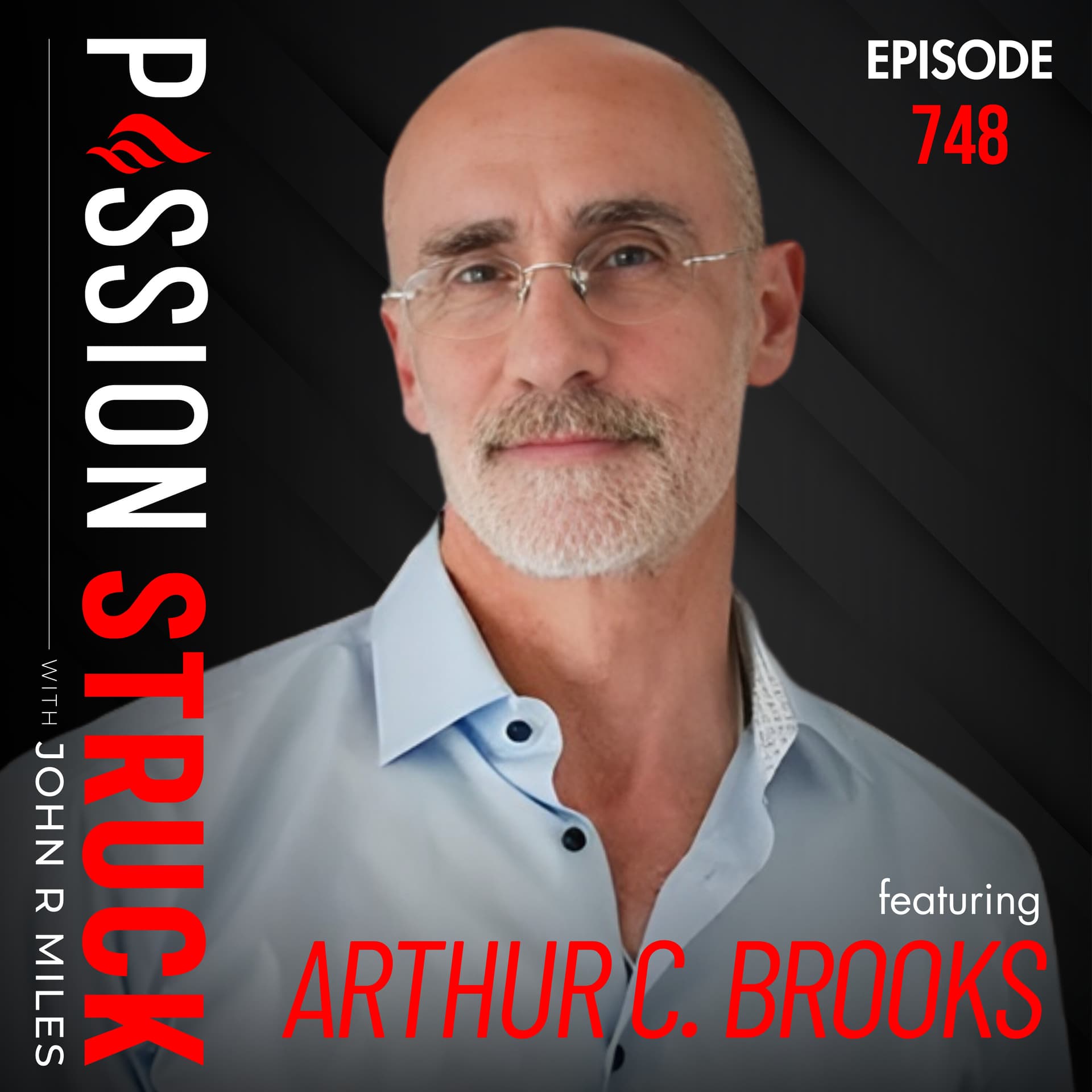
Arthur Brooks argues that today’s depression/anxiety surge is fundamentally a meaning crisis: modern life prioritizes achievement and stimulation while undermining coherence (why things happen), purpose (why you do what you do), and significance (why your life matters). He claims the problem is worsened by “left-brain” overuse (how/what) and avoidance of “right-brain” mystery (why), plus device-driven doom loops that replace real love and boredom/beauty cycles with simulated life.
Guest background
Arthur Brooks is a Christian believer and scientist; he previously left academia (2008) and returned (2019), noticing increased depression, anxiety, loneliness, fear, and grievance culture among young people.
Key claims
Meaning predicts anxiety/depression; conspiracy theories can be attempts to answer “why”; performance without a “why” feels like peddling without direction; love is willing the good of the other; suffering gains meaning by reducing resistance, not necessarily eliminating pain.
Notable examples
Frankl’s “people who had a why” survived Auschwitz; George Bailey in “It’s a Wonderful Life”; campus “astronomy 101” popularity as perspective relief; Camino de Santiago pilgrimage leading Brooks to a life mission.
Written by AI. May contain mistakes. Listen to the episode to check what was said.
Chapters
Tap a time to open that second in VOExploring Human Connection and Belief
0:45 to 2:06
Discussion on human connection and the deeper question of life’s meaning.
“This is the show where we explore the art of human flourishing and what it truly means to live like it matters.”
Understanding the Meaning Crisis
2:07 to 3:36
Arthur Brooks discusses the rise of depression and anxiety as a meaning crisis.
“there's still a more fundamental question.”
The Importance of Meaning Over Success
3:37 to 4:05
The conversation shifts to the significance of meaning in life compared to mere success.
“Arthur goes into the three core elements of a meaningful life, coherence, purpose, and significance.”
Introduction of Arthur Brooks
4:21 to 5:29
John introduces his guest, Arthur Brooks, and discusses his past appearances.
“Thank you for choosing PassionStruck and choosing me to be your host and guide on your journey to creating an intentional life that matters.”
Arthur's Insights on Academic Trends
5:30 to 7:33
Arthur shares observations about rising mental health issues among students.
“Although someday I would love to write one, but that's going to take some work because it's a completely different frame than what we write through.”
The Search for Meaning in Modern Life
7:34 to 9:39
A discussion on how modern life impacts our search for meaning.
“And I was hoping you can describe that here in a second, but I've heard similar observations from other professors, notably when I had Laurie Santos on the show.”
The Role of Coherence, Purpose, and Significance
9:40 to 14:02
Arthur elaborates on the three elements crucial for a meaningful life.
“So does modern life fail because it's overwhelming the young kids, or is it because it makes them feel interchangeable?”
Understanding Meaning in Life
14:02 to 18:11
Explore the significance of meaning, purpose, and significance in life.
“And people live in a world where that's not clear.”
The Role of Suffering in Finding Meaning
18:11 to 18:55
Learn how suffering can contribute to the meaning of life and its understanding.
“Before we continue, I want to pause for a moment.”
Navigating Modern Life and Technology
19:06 to 24:15
Discussion on how modern life and technology challenge our sense of meaning.
“Now, let's return to the conversation with Arthur Brooks.”
Show all 21 chapters
AI's Impact on Happiness and Relationships
24:15 to 29:29
Insights on how AI affects happiness and personal connections.
“towards something as opposed to just avoiding boredom, avoiding discomfort, avoiding suffering.”
The Nature of Love and Commitment
29:30 to 30:51
Understand love as an act of commitment rather than just a feeling, based on historical perspectives.
“So in other words, think about what you can do that leverages your right hemisphere, not things that are living.”
Teaching of Love in Modern Culture
30:52 to 32:55
Discuss how modern culture's perception of love differs from traditional teachings and its implications.
“He was the 13th century philosopher who defined love as to will the good of the other as other.”
Finding Meaning through Service and Transcendence
32:56 to 36:23
Learn how acts of service can lead to personal transcendence and a deeper understanding of meaning.
“Matthew in the Christian Bible, Matthew 5, 44, which for those who are not steeped in this stuff, that's the Sermon on the Mount where Jesus gave this crazy teaching.”
Perspective through Astronomy and Nature
36:24 to 37:54
Discover how looking outward, such as through astronomy, can provide peace and meaning in life.
“Arthur, I did a whole series on transcendence a few years ago.”
Navigating Meaning and Life's Journey
37:55 to 39:07
Gain insights on how life's challenges and journeys contribute to finding personal meaning.
“Speaking of that course, when I was at the academy, we had to take celestial navigation.”
The Loneliness Epidemic and Real Connection
39:08 to 42:00
Examine the loneliness epidemic and the importance of real, meaningful connections in life.
“You always think that you're looking for something.”
Understanding the Loneliness Epidemic
42:00 to 43:15
Explore the impact of technology on human relationships and loneliness.
“Right now, a lot of people are talking about the loneliness epidemic, which is real.”
The Role of Being Needed in Combating Loneliness
43:15 to 45:16
Discover how being needed by others can alleviate feelings of loneliness.
“You need to be needed by those people, which is one of the best ways to be less lonely is to have a child.”
The Ineffable Nature of Meaning and Experience
45:16 to 46:38
Learn about the complexities of language and meaning in human experience.
“because because you're needed by them this is the solution it's love so last question for you author, you've been spending years thinking and writing about happiness and meaning.”
Finding Meaning in Relationships and Service
46:38 to 48:24
Understand the importance of connections and serving others for a meaningful life.
“I've just tried to just live things in ways that I haven't before.”
Transcript
Automatic transcript. May contain errors.0:00Coming up next on PassionStruck.
0:02Arthur Brooks:Interesting to point out is when people get very far down the rabbit hole of conspiracy theories, it's because they're trying to answer the question, why do things happen the way they do, which is a cry for meaning. Anybody who has a meaning crisis is going to be prone to conspiracy theories, for example, and there are much better ways to help them, like engaging them in modern science or religion, or in my case, both. I'm a Christian believer who happens to be a scientist, actually, is how we actually do that. The second is purpose, and you find that more and more young people are struggling to answer the question, why am I doing what I'm doing?
0:34Arthur Brooks:They feel like they're going in circles, and nobody ever helps to explain what the goals and the direction of their life can be. And then the last is significance. Why does my life matter? Welcome to PassionStruck. I'm your host, John Miles. This is the show where we explore the art of human flourishing and what it truly means to live like it matters. Each week, I sit down with change makers, creators, scientists, and everyday heroes to decode the human experience and uncover the tools that help us lead with meaning, heal what hurts, and pursue the fullest expression of who we're capable of becoming.
1:08Whether you're designing your future, developing as a leader, or seeking deeper alignment in your life, this show is your invitation to grow with purpose and act with intention. because the secret to a life of deep purpose, connection, and impact is choosing to live like you matter.
1:31Hey, friends, and welcome back to episode 748 of PassionStruck. Over the past two episodes, we've been exploring something fundamental to the human experience. With Justin Garcia, we looked at connection, how humans are biologically wired for intimacy, and why modern life is creating a growing gap between our need to bond and how we actually live. Then, with Near AL, we explored belief, how the assumptions we carry shape our behavior, our resilience, and ultimately how we experience reality itself. But those conversations point to something even deeper. Because even if you improve your relationships, even if you change your beliefs, there's still a more fundamental question.
2:13What makes a life meaningful in the first place? And that's where we begin a new chapter. Today marks the start of our new series that I'm calling Purpose by Design. Because a meaningful life doesn't happen by accident. It's built intentionally through what you choose to value, how you choose to serve, and the direction you decide to move your life toward. And there may be no better person to begin that conversation with than today's guest. My guest today is Arthur Brooks. And this is the third time I've had the honor of having Arthur on the show. Each time our conversations have gone deeper, moving from happiness to fulfillment, and now to something even more essential, meaning.
2:54In his new book, The Meaning of Your Life, Finding Purpose in an Age of Emptiness, Arthur tackles a trend that's becoming impossible to ignore. Rates of depression and anxiety, as I've been talking about, especially among young people, have surged dramatically over the past two decades. And what he argues is this, this isn't just a mental health crisis, it's a meaning crisis. We have built a world that prioritizes achievement, productivity, and constant stimulation, but neglects the deeper human needs for coherence, purpose, and significance. We're more connected than ever, yet increasingly lonely.
3:29More accomplished than ever, yet often unfulfilled. And the result is a growing sense that something essential is missing. In today's conversation, we explore why success without meaning leads to emptiness. Arthur goes into the three core elements of a meaningful life, coherence, purpose, and significance. We discuss how modern life pulls us away from meaning, often without us realizing it, and how to begin reconnecting with a life that actually feels worth living. At its core, this episode is about a question that sits underneath everything else. Not just how do I succeed, but what is my life actually for?
4:04Before we dive in, a quick ask. If this episode resonates with you, share it with someone who might need it. You can also watch the full conversation on YouTube. And if you haven't yet, leaving a rating or review on Apple Podcasts or Spotify helps more people find these conversations. Now, let's dive into my conversation with my friend, Arthur Brooks. Thank you for choosing PassionStruck and choosing me to be your host and guide on your journey to creating an intentional life that matters. Now, let that journey begin.
4:38I am absolutely thrilled today to welcome back Arthur Brooks, one of my favorite authors. Arthur, so great to see you today.
4:45Arthur Brooks:Nice to see you too, John. And you're an author yourself. You have two books coming out in 2026 this year. That's fantastic. Man, it's surreal. I love it. It's just become such a big passion of mine and I can't wait to write many more. Maybe not as many as James Patterson, who you recently interviewed on your great show. I love that interview. you. Yeah, he's had 200 titles and 69 number one New York Times bestsellers. That's a pretty hard aspiration to live up to for others. Almost impossible. I just don't know where he comes up with the ideas, but he said on your show that he's got about 500 more that he could write about, which gives me hope.
5:21Arthur Brooks:I know. It is notices one little thing here and there. Then again, you and I are mostly writing nonfiction, which is a different kettle of fish than mystery novels. Yes. Although someday I would love to write one, but that's going to take some work because it's a completely different frame than what we write through. That's right. Well, speaking of authors, you are one of only two who has joined me three times on this podcast. The other one is Gretchen Rubin. She's fantastic. You specialize in authors on happiness and doing hat tricks on your show, right? Absolutely. Absolutely. Well, in our first conversation, we talked about success addiction and from strength to strength.
6:06And the second, we went into build the life you want, and we focused on emotional self-management. But what did you start seeing that made you realize those weren't enough, that something deeper around meaning itself was breaking down?
6:19Arthur Brooks:One of the things that I like to do is when I'm in a particular place, I start just listening to people and the words that start to show up again and again. In academia today, I noticed, well, we've all noticed this incredible explosion of depression and anxiety. And in fact, in our society today, among people under 30, there's been about a tripling of clinical depression since 2008. And it's especially prevalent among young people that are college educated, people who would seem to have the most going for them in this epidemic of mental illness and mood disorder and just misery is how it comes about.
6:53Arthur Brooks:So what I've been doing over the past five years is just listening to the words that people are using when I talk to them about their lives. And the word that keeps showing up and up over and over again is meaning. I don't know what I'm meant to do. They'll say, or my life feels meaningless, or I don't know the meaning of my life. And that's really where the penny drops, it turns out, because that is the best predictor. Feeling like your life is meaningless or you don't know the meaning of your life is the number one predictor of anxiety and depression for people of any age, which is especially prevalent among young people.
7:24Arthur Brooks:That's why I decided to write a whole book on why meaning is missing, what meaning is, and most importantly, where you got to go to get it. You start out the meaning of your life by describing the return to campus and feeling unheimlich. And I was hoping you can describe that here in a second, but I've heard similar observations from other professors, notably when I had Laurie Santos on the show. So she was talking about how she built her course, which has now become the most popular course at Yale. But it was based on also seeing some of the same things. She told me students were anxious, depressed, but also quietly unseen.
8:02What did you notice that told you this was more than stress or burnout?
8:06Arthur Brooks:It was different than when I left academia. So I left academia at the end of 2008, and I returned in 2019. And I was running a think tank in Washington, D.C. in the middle of there. So I was a CEO, not really paying me that much attention to academia. But I had a great contrast between the two. It's not like it's people oozed into this problem. I left and academia, university life was happier. I know that you're a Naval Academy guy. And my guess is you have incredibly happy memories of your college days. You're the friends you made, falling in love, having a great time. That's what college is all about, man.
8:40Arthur Brooks:And that's what it was when I left. When I came back in 2019, I saw depression. I saw anxiety. I saw loneliness. I saw fear. I saw cancel culture. I saw a culture of grievance and victimization, angry activism. I'm like, man, what is going on here? And that's what actually made me think that this is a crisis. This is a psychogenic epidemic among young people. And it's not limited to campuses. It's just where I saw it. And again, that's the reason when I started interviewing people to see, okay, what's behind this? What's behind this? And it's not just, well, boomers wrecked everything. And it's not just that young people are entitled.
9:16Arthur Brooks:People have been saying that stuff forever. It's that something is actually different. And there was a tangible reason. Number one is they couldn't identify the meaning of life. And there was a tangible reason I felt that had to be behind that. And that's where this research actually started. What is meaning? What are they looking for? Where do you find it? And then how do you have to live differently such that you can experience the meaning of your life as well? That's what this book's really all about. So does modern life fail because it's overwhelming the young kids, or is it because it makes them feel interchangeable?
9:49Arthur Brooks:So modern life is harming the ability to discern meaning in life because it's making us use our brains wrong. And what I'm talking about here requires a little bit of explanation, and this is what the science of this book is really all about. The brain is what neuroscientists call a laterally hemispheric organ. That is to say, two sides, and they both do different things. The left side of your brain does different things than the right side of your brain, which kind of makes sense. You got a big brain, it wouldn't just be a mirror. The left side of your brain does all the technical stuff, all the how-to and all the what, all the efficiency, all the grinding, all the get to the bottom of problems.
10:29Arthur Brooks:the right side of your brain is the why side of your brain, the mystery, the meaning. The left side does all the complicated stuff that you have to learn how to do that's hard. The right side of your brain is the complex stuff, which means that you understand it, but you can never solve the problems. You can only live with them and understand them. So the left side is work. The right side is meaning and love and relationships. My marriage is a complex right side phenomenon. I'm never going to solve it. I'm just going to live it. That's how love actually works. Now, here's the problem. John, here's what's actually going on in modern life.
11:05Arthur Brooks:Modern life is pushing people to live exclusively in the left hemispheres of their brains, to not actually explore the complex problems of why, but only the complicated problems of how to and what. Our life is becoming incredibly mechanistic. The things that we study are so that we can get better jobs. We spend all of our day online. We're always trying to solve specific problems. There's very little of our lives that are based on love, that are based on philosophy, that are based on mystery. And that's the kind of consciousness that we actually need. But the more that you actually follow along with what the culture tells you to do, work on Zoom, date on apps, make friends on social media, play video games, look at YouTube shorts.
11:49Arthur Brooks:Man, you're living in a simulation and the simulation of a real life is in the left hemisphere of your brain, the one thing you'll never simulate is the meaning of your life. And that's our problem today. I love what you're talking about. I often talk about how so many of us have fallen into this trap of living the life we should be leading instead of the life we could be leading. And it seems that for many of us, we reached that point older in life. It now seems that young adults are getting there quicker. Is what you're saying a reason for that? For sure. And part of it is that, again, all of us struggle.
12:26Arthur Brooks:Every single person watching us of every age, little kids through people in their sixties, like me, they're stuck too. And they're struggling too. And they're distracting themselves with their devices too. And they're part of the culture as well. But people my age and your age, John, we remember the before times. That's the key thing. And so we remember when life had this kind of beautiful boringness to it. It's funny because I just saw this video on YouTube that was going around of people saying, imagine life in the 80s. Man, I remember the 80s. I was there during the 80s. And they were doing all this stuff like hanging out down in the video arcade and just goofing around, sitting around in somebody's car and laying on the grass in somebody's backyard.
13:07Arthur Brooks:That looks so awesome. Well, that was life. That was actually life. And by the way, sometimes it was actually boring. And our brains were quite frankly, working the way our brain's supposed to work. But now we've got the perfect anti-bordom devices in each one of our pockets. We've been able to banish all of these terrible experiences of not doing something every single second. And the result of it is our brains aren't working right. We can't find the meaning of our lives and we're anxious and depressed. I know you're familiar with self-determination theory, and I've had Richard Ryan on this show.
13:39For those who aren't familiar, it's really about three things, autonomy, competence, and relatedness. In your book, you go into coherence, purpose, and significance when you're defining meaning. When you look at modern life, which of those three do people struggle the most to experience?
13:56Arthur Brooks:These days, the problem is actually all three. Coherence is why things happen the way that they do. And people live in a world where that's not clear. Religion helps you understand why things happen the way they do. And science helps you understand that. And even conspiracy theories help you understand that. And actually, one of the things that's interesting to point out is when people get very far down the rabbit hole of conspiracy theories, it's because they're trying to answer the question, why do things happen the way they do, which is a cry for meaning. Anybody who has a meaning crisis is going to be prone to conspiracy theories, for example.
14:30Arthur Brooks:And there are much better ways to help them, like engaging them in modern science or religion, or in my case, both. I'm a Christian believer who happens to be a scientist, actually, is how we actually do that. The second is purpose. And you find that more and more young people are struggling to answer the question, why am I doing what I'm doing? They feel like they're going in circles, and nobody ever helps to explain what the goals and the direction of their life can be. And then the last is significance. Why does my life matter? And people have a harder and harder time answering those things as well.
14:59Arthur Brooks:So one of the things that I point out in this book, and I show with real data, is that these three questions, why do things happen? Why am I doing what I'm doing? And why does my life matter are getting all getting harder. And it has everything to do with, once again, the fact that we're not even asking these questions because we're in literally the wrong side of our brains. Arthur, what happens psychologically, speaking of significance when it erodes, but performance remains? When performance remains, that means you're doing something for no reason. You're effectively that you're peddling as fast as you possibly can, but the bike isn't moving, or even if it is, you don't know where it's going.
15:37Arthur Brooks:That's what it comes down to. If you don't have a why, and this gets into somebody that you admire very much, which is Viktor Frankl. His famous book, Man's Search for Meaning, that he wrote after getting out of the concentration camp at Auschwitz, he said that the people who survived were the people who had a why. They had significance. They were living for someone. Somebody actually loved them. That's what he said. Without that significance, then people just die. And that's actually the case. And the preface to that book, he quotes Nietzsche, ironically, because Nietzsche is like the most depressing guy ever.
16:10Arthur Brooks:And he says that he who has a why can withstand any what it comes down to. Now, ideally, your what's pretty awesome too. But even no matter how awesome your what is, if there is no why, it will have no significance and therefore your life won't have a sense of meaning. Since we're recording this just before Christmas, and I'm Catholic like you are, so it's a very significant time of the year for us, you bring up, it's a wonderful life. And I think with what you were describing, George Bailey is probably the poster child of what you were just describing. But he discovers his meaning by getting the gift of seeing who would suffer without him.
16:48Why do so few people today ever receive that kind of verdict?
16:51Arthur Brooks:Part of it is because our mechanistic world does not deliver this information. Our mechanistic world is really all about what you can do today and how efficiently you can actually get it done. And that's a really big problem because we're not in communion with each other meaningfully. We don't have love relationships in which we actually, the relationship is the point of the whole thing. This is what really, it makes couples, for example, that makes it so hard for them to continue to thrive. One of the things that I've studied a lot is why more and more couples are divorcing after 25 years, 25 years, John, just once you're in for 25, in for a penny in for a pound at that point, you'd think.
17:29Arthur Brooks:But no, there's more and more divorce. And the reason is because it's not significant with respect to each other. It's really all just kind of deal friends, not real friends. And the deal is the kids. And once the kids move out, there's no reason for it. There's no more significance to it. There's no more purpose to it anymore. And that's more and more how life is. Life is all about doing something that has some economic purpose or some technological purpose to it. And you know what? That's just the problem. It's just a boring way to live because it's a simulation of real life. It's not real life.
18:01Arthur Brooks:It's like we're living in the matrix, which is what, by the way, that's what a lot of young people tell me when I interview them. They say, I feel like I'm living in a simulation. And there's one thing you can't simulate, which is the meaning of your life. Before we continue, I want to pause for a moment. One of the core ideas in this new series, Purpose by Design, is that meaning isn't something you stumble into. It's something you build. But most people don't pause long enough to actually ask the questions that matter, such as, why am I doing what I'm doing? What is this all for? And does this life actually feel like mine?
18:32On the ignitedlife.net, I'm sharing companion reflections and articles for each episode designed to help you go deeper into your own life. Because insight creates awareness, but reflection creates direction. If you want to explore the companion guide for this episode, you can visit the ignitedlife.net. And I also want to give a shout out to our sponsors and thank them for supporting our show. Now, a quick break for those sponsors.
19:01You're listening to PassionStruck right here on the PassionStruck Network. Now, let's return to the conversation with Arthur Brooks. You're absolutely right. And as you were talking, it made me think of Frankl because when he describes how do you find meaning, he gives three different areas that you can do it through work. You can do it through love and the relationships that you cherish. It could be taking care of a sick child that you have. It could be caring for a loved one, like a parent as they age. And then he says suffering. But I also believe there could be a fourth, which is something you go into in the book.
19:37Dacher Keltner was the first time I heard this, which is moral beauty. Do you think that fourth is a way that you can find meaning in life?
19:46Arthur Brooks:For sure. And as a matter of fact, my book lays out the six ways to find the meaning of your life, which encompass all of Viktor Frankl's and brings in the other things that modern neuroscience and Viktor Frankl was a genius, but he was before the advent of modern neuroscience. And now with neuroscience, we can actually look at the things that stimulate the right hemisphere of the brain the most. The first is actually asking big questions without answers. That's really important. All these why questions. The second is to experience love, mostly romantic love, by the way. Romantic love is the most mysterious.
Read the full transcript
20:19Arthur Brooks:God knows. It's a mystery and a painful one at that a lot of the time. The third way is to actually find transcendence. And you transcend yourself by looking upward to God or looking outward to other people and serving them, as you just say. The fourth way is to find your calling through work, just as Viktor Frankl talks about, which is not what am I good at or what people pay me to do. It's what's in my heart? What's my calling? What am I meant to do? And in this book, I talk about the ways to actually find that. The fifth is finding, is looking for beauty, and moral beauty is one of them, as well as natural beauty and artistic beauty.
20:52Arthur Brooks:And last but not least, it's through suffering and finding meaning in your suffering, by which you have to stop resisting your suffering. And this is one of the biggest mistakes that young people have today. In our technologized culture, there's a belief that suffering means there's a defect, there's a pathology. and therefore you must resist it. You must eliminate it if you possibly can. And that of course is eliminating the meaningful life itself. I think Frankl, when he was talking about suffering, he always referred to it as a suffering you can't avoid. Meaning if you're in a point of suffering and you can find a way out of it, then do.
21:26But if you find yourself with a life-threatening condition or you're going through the death of a loved one or some other type of suffering, suffering it's really seeing a path through that that takes you through it which i think is really
21:40Arthur Brooks:an important clarification it is there's little versions of that there's a lot of literature that suggests bruce feiler's stuff talks about every 18 months you have a transition you that you don't expect and every five years you have a catastrophe that you really hate and one of these things is life-threatening illnesses but we have suffering as small as a flight delay that we can't control and the truth is that the buddhists talk about the fact that suffering is pain multiplied by resistance. You can try to reduce the pain, but a lot of times you can't and you shouldn't. In those cases, you need to reduce the resistance.
22:14Arthur Brooks:And reducing the resistance is really what it's all about. This is one of the reasons that one element of strength and courage is patience. And that's something that we've lost entirely in our technologized left brain culture. We don't have patience when we're on the left is what it comes down to. And so the result is that we're going to have more and more futile resistance and then the suffering is going to be more intense and actually less meaningful than it could be. Arthur, in my first book, I was trying to describe the unconscious state that I think so many people are drifting through life as their approach to life.
22:48And I often hear people use the word, people are living on autopilot. Right. And I always think it's the wrong analogy because when you put the plane on autopilot, it's too many of us are living like we're a pinball in the game instead of playing the game. I don't know if you agree with that analogy, but I think modern life is crowding out meaning in some ways through actively rewarding behaviors that strip significance away. Yeah. And we're like that pinball and it's like micro choice by micro choice. our significance and our meaning happens over time. Do you agree with that? That's a purpose problem, really.
23:34Arthur Brooks:Because one of the things that you find is when somebody feels like their life is we who've suffered through a lot of graduate training and statistics, we call that a random walk. And the random walk is just like what it sounds. It's a random walk. And your life feels like a random walk. That means you don't have purpose. Purpose is goals and direction so that you know you're making progress. And this is one of the key elements of the meaning of life. It's one of the defining elements of the meaning of life. And so when I talk to somebody who feels like a pinball, the ball in the pinball machine, somebody whose life feels like a random walk, the first thing I start talking about is, okay, we got to set some goals.
24:09Arthur Brooks:We got to set some goals here in life. And once they do, boy, oh boy, there's a lot of research on this that shows that students, young adults, their life gets so much better when they're moving towards something as opposed to just avoiding boredom, avoiding discomfort, avoiding suffering. Because here's the thing, the ball and the paintball machine, what's going on is it hits the bumper and the bumper springs it away. And so everything is this avoidance, avoidance. The ball isn't actually going anywhere. It's avoiding things that it's been repelled from. And that's what people's life actually looks like.
24:42Arthur Brooks:Let's get into a different game where there's something better in the future. We can define it and we can start making progress toward it. That's when meaning really start to become quite obvious and manifest. Yeah, I've been working my way through Yuval's most recent book on information networks. And it's been interesting to hear what he's writing about. But where I'm going with this is, I was recently going through this section where he was talking about modern day technologies and the algorithms that are underneath them, and how they're completely disrupting the way that information used to flow because they're manipulating it.
25:18And you bring this concept of doom loop, where my interpretation of a doom loop is technology is soothing our meaninglessness while deepening it at the same time. Can you go into that a little bit more? Why does that distraction feel like relief, but function like erosion? So humans hate boredom.
25:38Arthur Brooks:We naturally hate boredom. And Mother Nature doesn't care. We've been bored from time immemorial. Our brains are the same as they were 250 ,000 years ago. And I'm telling you, John, life was alternating between boring and scary a lot, 250 ,000 years ago. And it was unpleasant for a lot of that, but that's the way our brains were supposed to work. Mother Nature doesn't care if we're happy. She wants us to survive and pass on our genes. And we need to actually do nothing and be bored a lot more than we currently are. There's tons of research showing how much people actually don't like it. But here's the way to think about it.
26:12Arthur Brooks:I guarantee you that granddad Miles never once said to grandma Miles, I had a panic attack behind the mule today. No, he did not say that. And that's because his brain was working the way it was supposed to work. He was bored a lot and he wasn't freaking out. He wasn't having panic attacks and depressive episodes, nearly like people actually do today. It was very rare in those days because we're disequilibrated is the way that this works out. It's very important for us to understand that we can't use these algorithms to create this simulation of modern life and think that there are going to be no consequences to this.
26:50Arthur Brooks:So that's what Yuval Harari is actually talking about is these complicated simulacra, these complicated simulations of the way that things are actually supposed to work. We're supposed to actually have real spontaneity in our lives, real sense of boredom and beauty alternating. We're supposed to have mystery and meaning and things that we actually can't understand. And if we don't, if it's all worked out, if we're actually saying, okay, I'm going to work it out in the simulation here, I'm not going to see nature, I'm going to see nature on the screen. I'm not going to have actual dates with people that are really spontaneous.
27:23Arthur Brooks:I'm going to solve for my relationships with my dating app. Well, that's going to have super strong consequences. And among them are a sense of life emptying out and feeling meaningless. It is such an issue. And one of the questions that I get all the time, I've got two kids now who are 21 and 27. I've got another similar to your kids. I have another niece who's in the army right now. And they are constantly asking me, what should we study? What should we focus on? Because they're all so worried about getting replaced by all the technology and everything that's around them. For kids that are facing that, even your own kids, what advice do you give them?
28:04Arthur Brooks:So one of the things I talk about, the biggest questions that I get actually in my work, and I will address this, how do you not be replaced? But the big question I get is how do these new technologies, mostly AI, how do they affect happiness? How does AI affect happiness? And the answer is number one, AI is a great assistant to the left brain, the how to and what, and it's a terrible assistant to the right brain, which is the why part. So if you're using it to answer questions, technological questions, the technical questions, et cetera, and that frees up your time, which you then spend in relationship with others, great, you'll get happier.
28:38Arthur Brooks:However, if you try to use it as your girlfriend or as your buddy or as your therapist, it's going to make you lonely and sad and anxious. I promise everybody listening to us that your brain knows the difference and you're going to feel empty. And you might not be able to describe why, but that's actually the case. Now, how is it actually going to affect us going forward? And what should we actually study? So what we want to do is to stay employed, be able to support ourselves and our families, to be productive. But at the same time, we want to have meaning and happiness in our lives. So how do you do this?
29:12Arthur Brooks:AI will never replace the hands and the heart. It's just not going to. And so when we're actually doing things that are productive, that use our bodies, and we do things that actually use our hearts, or we're connecting with other people, we become unreplaceable. But if you're nothing more than a not very fast computer, that's not great. That's actually not going to be how it works because a bigger left brain than yours is going to replace yours. So in other words, think about what you can do that leverages your right hemisphere, not things that are living. Look, everybody watching this podcast, they're smart.
29:44Arthur Brooks:They're smart. That's why they're listening to this podcast. But being smart just means that you've got a really fast left hemisphere, a really well-developed left hemisphere. Think about stuff that actually leverages your right hemisphere, your EQ, not just your IQ, your social skills, your compassion, your willingness and ability to connect with other people, your true deep creativity, your appreciation for beauty, your ability to connect people with the divine. Those are the things, even if you're in an intellectual profession like me, your comparative advantage is going to be on those social and soft and mystery-based skills that exist on the right side.
30:22Last week, I had the opportunity for the first time to interview Mark Nepo. And he said something that stayed with me. I asked him what he thought was the most fundamental thing that we need to focus on in life. And he said it was love, but he described love not as emotion or romance, but as the act of showing up fully to what's in front of you, holding nothing back. Right. How do you contrast that with the modern love depression that you write about?
30:47Arthur Brooks:In a couple of ways. To begin with, I completely agree with that definition. Thomas Aquinas, you and I are Catholic guys, so we had to read a lot of that stuff in school. But Thomas Aquinas, he defined love. We don't know. He was the 13th century philosopher who defined love as to will the good of the other as other. That's the definition of love. Nothing about feelings or sentiments. It's an act. It's a commitment. It's a decision. Notwithstanding your feelings, you can always choose to love by willing somebody else's good as them. That's the whole idea of showing up for them. So that's a really good definition of love.
31:20Arthur Brooks:Now, the problem that we have today is number one is defined as feelings. And feelings, as we talked about in our last conversation on your show, about the management of emotion, that the idea that you would be relying on your emotions to have a good friendship, to have a good marriage. I've been married 34 years, John. If it were all about emotions, I wouldn't have been married 34 minutes. Because there's quarreling and there's this agreement and emotions clash. But the fact is my marriage is based on actual love where she wills my good as me and I will her good as her. And she'll be the person that I'm looking at as I take my dying breath as a result of that.
31:58Arthur Brooks:That's number one, what the modern, what modern culture is taking away from us. Second, modern culture technologically is trying to solve for this problem. You can't solve love. You can only live love. You can't actually, you have to understand it by living it is the way that this works, which is why love is so awesome. because it's not a problem that you can solve like building a toaster or creating a piece of software that will find you a pizza at 10 p.m. That's not the way it's supposed to work, and that's not the way anything good in life actually works. I want to switch directions just for a second.
32:30Last week, I also did a fun conversation. I had Rick Hansen on with Joshua Green, who you might know from Harvard. Yeah, of course. And we were talking about how do you expand the circle of moral concern. And as you think about meaning and how we're so much today in this us versus them type of mentality, how do the two connect?
32:52Arthur Brooks:The most transgressive teaching in all of humanity is contained in the Gospel of St. Matthew in the Christian Bible, Matthew 5, 44, which for those who are not steeped in this stuff, that's the Sermon on the Mount where Jesus gave this crazy teaching. He said, you have heard that you should love your friends and hate your enemies. But today I give you a new teaching, love your enemies and pray for those who persecute you. Love your enemies. Now remember what love is. Love is to will the good of the other as other. So it doesn't matter how you feel about your enemies, because that's not the point.
33:23Arthur Brooks:Jesus didn't say, go like your enemies, go have warm fuzzies for your enemies. He didn't say that. He said to love your enemies. And he could have said, notwithstanding your feelings, which is what Dr. Martin Luther King actually added in a sermon on that in 1957, a very famous sermon that people can actually listen to on the internet. So the point of all that is that changed society, and that should change our lives today. Even if you're not religious at all, the idea that you could actually not hate and destroy your enemies is the reason for the enlightenment. The enlightenment, this idea that not everything has to be based on force, that we can actually try to persuade each other.
34:01Arthur Brooks:Persuasion is based on this idea that John and I might disagree on something, but Arthur's going to try to persuade John and John's going to try to persuade Arthur. And by the way, if one of us persuades the other, we both win. Because if you persuaded me, I'm like, huh, you're right. That's a better way to think. And that's how modern life is supposed to be built. Unfortunately, that's what we forget all the time. That persuasion is better than coercion. Negotiation is better than coercion. And all of that comes from this idea of love. It comes to the idea of loving in a different way, even if you don't feel it.
34:32Arthur Brooks:And that's incredibly powerful for each one of us. That gets lost in modern life. That gets lost in human life, quite frankly. Yeah. I'm not sure why my mind went to this, but as you were talking about that act of Jesus, I was thinking about when he is with his disciples and he's on his knees washing their feet. Right. And when I think of this us versus them, I often think how many of us would do that same thing to those around us that Jesus did humble yourself in front of those around you. What are your thoughts on that? Well, when you humble yourself or when you serve somebody else from basic goodness, you're actually doing yourself the best possible favor, because that's how you find meaning.
35:16Arthur Brooks:That's the idea of transcendence to transcend by looking upward. And you've had Dakar Keltner on your show before, and you've had him on the show, right, John? Oh, yeah, I've had that. And Dacher, he talks about awe, standing in awe of something greater than you. You find meaning when you're outside of yourself, when you're transcending yourself. When you're looking in at yourself, you're not going to find meaning. You're just going to be a tortured soul the more you look in on yourself. But another way to do that is by looking outward to others and willing their good as them. That's a kind of love toward another.
35:46Arthur Brooks:But it's also the ultimate method of self-preservation. That's what William James, the father of modern psychology, called the I-self. The I-self is to look outward. The me-self is to look inward. And you're going to do that because we're self-reflective and we're self-conscious so that we know where our car is in traffic. We're not smashing into other people, for sure. But the I-self is the relief that people actually get when they look to the stars or read philosophy or practice their religion or serve somebody else. And that's what we need a lot more of. washing somebody else's feet, doing something that actually benefits somebody and not just you is the best, fastest way to get happier and find meaning in life.
36:27Arthur, I did a whole series on transcendence a few years ago. I had Dacher, Scott Barry Kaufman, David Yadin, and David Vago, all in succession, and Andrew Newberg. And it was so fascinating how these out-of-body type of experiences that we get into, and you can get into them using psychedelics, what they were saying is you get into them the most by observing acts of kindness that others are doing, really renews faith. But more than that, it reminds you that the world matters, people matter in it, you still matter in the world. Is that what your research has found as well?
37:05Arthur Brooks:Absolutely. And I've been studying other focused behavior for decades. I wrote my doctoral dissertation on the topic. I do people give. It's so weird. They're not buying anything at all except the meaning of life it turns out and it's also weird because i find that on college campuses inevitably one of the most popular classes among undergraduates is astronomy 101 and they're not astronomers why is it and the answer is because they'll go into class on thursday morning they just had a argument with their mom and they're afraid they're afraid that their boyfriend is breaking up with them and they got a b and at harvard that's like some big tragedy And they go in and they come out an hour and a half later saying, I'm a speck on a speck.
37:46Arthur Brooks:And it gives them relief because it gives them peace and perspective. And we got to get out of ourselves. We have to get out of the psychodrama of me. If you want to find the meaning of life, you got to start looking outward and stop looking inward. Yeah, I love that. Speaking of that course, when I was at the academy, we had to take celestial navigation. And all of us used to always wonder, in the age of GPS, why are you making us learn to study the stars? I know. My daughter, but our listeners don't, she's at officer training school at Quantico as a Marine Corps officer. And she has to do this night land nav.
38:20Arthur Brooks:You remember night land nav? Oh, yeah. And that's where, with a compass, you have to go out in the dead of night in the forest looking for ammunition dumps, ammunition boxes. And you got to keep taking the test over and over and over again, as if you're qualified now to win the Battle of the Bulge or something like that. But the truth of the matter is that these are basic skills that who knows when navigation gets knocked out because of an electromagnetic pulse or something that you might need these at some point. Well, that's the exact answer we got from our professors. It has come in handy for me one time.
38:51I happened to be on a sailboat at night. We were lost and my training kicked back in.
38:56Arthur Brooks:There you go. That's right. So you finally used that class from the Naval Academy. Great. You conclude that we don't find meaning. Meaning finds us. What do people have to stop proving before that becomes possible? It's a funny thing about all sorts of wisdom that people actually get. You always think that you're looking for something. And then what you find is if it's of sufficient value, sufficient spiritual value, that you have to get yourself into a position where that knowledge, that wisdom can find you. And I found that out in my own life. I started on this project because in point of fact, I'm not immune to these problems of meaning.
39:31Arthur Brooks:And I was having a huge meaning crisis when I was 55 years old, six years ago. I'm 55 years old and I had left a job. I retired as president of a big think tank in Washington. And I felt like I didn't know who I was, which happens a lot, by the way, when you step away from a real vocational thing. And so I went for a very long walk. This is what Catholics do when we don't know what to do. We go for a super long walk. And this was the Camino de Santiago across northern Spain. And I walked and walked and I was sore. and I had blisters and I was tired, but I was also without devices and I was praying and I was with my wife and I was doing all of these things that I talk about in this book.
40:10Arthur Brooks:I talk about the six ways to find meaning, which are really the six ways to open the aperture in your soul and mind so that meaning will find you. And sure enough, on my last day of this long pilgrimage, I felt like I was gifted with the information that I was supposed to spend the rest of my life lifting people up and bringing them together and bonds of happiness and love using science and ideas, which is what I dedicated the rest of my life to doing. That's what I get to do right now on your show, as a matter of fact. That's why I write my books is what it comes down to. And that's how meaning found me, but I had to be tired and I had to be open and I had to really open my heart and open my soul to it.
40:48Arthur Brooks:So these are the means, this is a guidebook on how to open your soul, really is this book. I love that analogy. And it leads me to a philosophical question as I was thinking about, as you were saying that, is it possible for life to be deeply meaningful if no one ever witnesses it? Meaning, if your significance is never mirrored back to you, or does meaning require some form of being seen by others? That's a good question. With a tree falls in the forest and no one hears it, does it make a sound? Is it meaningful, I guess, is the whole question. And the answer is almost certainly yes, provided that you believe that you truly aren't the only intelligence, You aren't the only being that exists out there.
41:30Arthur Brooks:And so what you find, for example, is you can find documentaries about Carthusian monks who live in relative isolation, an exploited monastery, praying in small acts of service and praying, but not being ever regarded for it by the world, but have deeply meaningful lives. And that's one of the reasons that what's more important than, certainly more important than the applause of the world, is believing like you're doing something good because this is what you're made to do. that this is what your real moral goal is to do in life, because this is why you've been put on earth. Right now, a lot of people are talking about the loneliness epidemic, which is real.
42:07But I'm wondering if we should be talking more about how rarely we're talking about people being needed. Do you think that's necessary now and that we should be doing that more?
42:20Arthur Brooks:For sure. Now, to begin with, the loneliness epidemic has everything to do with the fact that the brain does not consider you to be with others when you're online. It's as simple as that. It's the abuse of technology where we substitute electronically mediated relationships for real relationships. That's the matrix. That's the simulation of real life. You can't simulate meaning. You can't simulate love. It can't be done. And that's the reason that the more you date online, the more troubling it becomes. And this is one of the most terrible scourges in our society today is that of internet pornography, for example.
42:54Arthur Brooks:Not as a moral concern. People can figure that out for themselves, but because it makes them feel intensely lonely. When they feel like they're virtually with somebody else, but they're not with that other person, that makes them feel intensely alone, depressed, anxious, sad, even self-harming as a result of this. And so that's incredibly important is that you need other people in real life. Then what do you need to do? You need to be needed by them. You need to be needed by those people, which is one of the best ways to be less lonely is to have a child. And again, it's not because the child is going to be saying, I love you, I love you.
43:28Arthur Brooks:On the contrary, you know perfectly you've got kids, so do I. They don't tell you that much. It's because they actually need you. And it's the intense practice of being in person with somebody who needs you. That's the end of loneliness for most people. One more just philosophical question for you. One thing that worries me today is how good people have become at enduring lives that quietly drain them. At what point does endurance stop being resilience and start becoming some kind of disappearance for people? And is that part of why meaning is disappearing? Yeah, for sure. It's actually the great trick, which is that we believe that we're being refreshed and in our distraction when we spend a whole lot of time on devices.
44:07Arthur Brooks:but what it really does is it's draining us of attention and distracting us by actually stressing us out. That's what's actually happening. We're being fooled all the time by the way that we use YouTube reels and scrolling social media. It's actually stressing you out and making you feel and making you less refreshed, even though you think it's making you more refreshed. And so this is an accelerant to all the things that we're actually doing. People often will make the same kind of mistake in their ordinary lives. At my university, for example, they'll say, if you're all stressed out, you need more self-care, more self-care.
44:42Arthur Brooks:And then there's this new thing called radical self-care where you marginalize other people in favor of yourself. That's exactly wrong. Exactly wrong. If you're lonely, if you're depressed, if you're anxious, you need other care. You need to serve other people. Now, there are people who give so much of themselves that they completely forget themselves and wipe themselves out. We're not very much in danger of that right now i think we're much too much in danger of frittering away our time online and thinking about ourselves 24 7 and that's what we need to get away from get off the devices get toward people that you love and who love you and that you need and you need them because because you're needed by them this is the solution it's love so last question for you author, you've been spending years thinking and writing about happiness and meaning.
45:31What part of the human ache do you still feel you don't quite have language for yet?
45:37Arthur Brooks:That's an interesting question because it turns out that the more I learn, the less language I actually do have for the following reason. And this is a technical reason, so bear with me. The language centers of the human brain sit in the left cortex. They sit over here. So in my brain, I don't think we're doing mirrors here. This is for people watching us. The left hemisphere includes two areas called Broca's area and Wernicke's area. One is for understanding language and the other is for pronouncing language. It's for speaking. And it's really important because what it means is that the words that you have for something are in this technical left hemisphere, but the things that you understand that have the deepest meaning are ineffable, which means that they're beyond language.
46:20Arthur Brooks:And the more that I actually work in the realm of love and happiness, the more that I write books about it and I do my best, but the more that I realize that life is really all about experience and not about language. And that's certainly true in my own life as well. I've stopped trying to analyze many important things. I've just tried to just live things in ways that I haven't before. I try to live in my relationship with God, with my wife, with my kids, with my grandchildren, with my friends, and stop trying to say, I got to get the words because the words are on the other side. Arthur, I love the book.
46:56I love this discussion. And what I really took away from this is both sobering and hopeful. Meaning hasn't disappeared, but our ways of living have made it much harder to see. But with intention, courage, and devotion, it can return. And I think it's such a powerful message. For people who you're very discoverable, but for people who want to learn more, where's the best place for them to go?
47:20Arthur Brooks:Arthurbrooks.com. That's my website. It's got all my columns. It's got my television appearances. It has links to the book. But also for people who get the book, The Meaning of Your Life, it also has a lot of extra resources. So you can do a reading group. It gives you points to think about, even some PowerPoints so that you can share it with your friends, whatever it happens to be. So you can go deeper on anything that I write, speak, or teach by going to Arthurbrooks.com. I love that because to me, it's kind of like a podcast episode. I always do a companion workbook and I'll do one for this episode because it's one thing to hear information.
47:52It's another thing to apply it in your life. And that's what I'm trying to get people to do because if not, what's the point?
47:58Arthur Brooks:Exactly right, John. Exactly right. And that's what your work is doing. It's enriched me and millions of other people so very much because you're going deep on the things that actually matter. And I'm super appreciative and grateful to you for that. Well, Arthur, always such an honor to have you on the show. And I'm happy to welcome you back for number four when the next book comes out. Thank you, John. And thanks to all of your audience for staying with it. And most importantly, not just from learning from you, but for sharing these ideas with other people who need them. That's what it's all about.
48:26Right on. That brings us to the end of today's conversation with Arthur Brooks. What stood out most to me is this. Meaning hasn't disappeared, but our way of living has made it harder to access. We've built lives around productivity, around efficiency, around constant stimulation, but in doing so, we've drifted away from the very things that create meaning, such as love, service, connection, and transcendence. Arthur reminds us that a meaningful life isn't found in what you accumulate. It's found in how you relate to others, to your work, and to something greater than yourself. And that insight leads directly into our next conversation.
49:01On Thursday, I'm joined by Corinne Lowe. While today's episode explored meaning at a deeper personal level, Corinne examines how the systems around us, such as work, incentives, and economic structures shape the choices we make and the lives we build. Because purpose isn't formed in isolation, it's influenced by the environments we operate within. It's a powerful continuation of purpose by design, moving from inner meaning to the external structures that shape it.
49:27Arthur Brooks:For parents, we want to endlessly pour energy into our kids and we do let ourselves become depleted. We skip the gym or we skip the things that we need to take care of ourselves. I think the piece that we miss is that when we're not getting that energy in, the energy that's flowing out becomes degraded also. So what we're putting into our kids actually isn't as high quality when we are not getting that energy flow in that we need. If this episode resonated with you, share it with someone who might need it. Leave a five-star rating or review on Apple Podcasts or Spotify and explore more reflections from this series at TheIgnitedLife.net.
50:07Until next time, remember, a meaningful life isn't something you find once, it's something you build through what you choose to value, how you choose to serve, and who you choose to become. I'm John Miles, and you've been PassionStruck.
From the publisher
What if the real crisis of our time isn’t stress, burnout, or even anxiety—but a loss of meaning?
In this powerful episode of the Passion Struck podcast, I sit down with Arthur Brooks—for the third time—to explore his most urgent work yet: The Meaning of Your Life: Finding Purpose in an Age of Emptiness.
Arthur reveals a striking trend: since 2008, rates of depression and anxiety—especially among young, high-achieving individuals—have surged dramatically. But beneath the surface, he argues, this isn’t just a mental health crisis. It’s a meaning crisis.
We’ve built a world optimized for achievement, productivity, and constant stimulation—yet increasingly disconnected from the deeper human needs that make life feel worth living. In this conversation, we explore why success without meaning often leads to emptiness, how modern life pulls us away from purpose, and what it actually takes to build a life rooted in coherence, significance, and service.
Passion Struck is the #1 alternative health and personal growth podcast dedicated to human flourishing and the science of mattering. It is ranked #1 on FeedSpot’s list of the Top Passion Podcasts on the Web and is consistently recognized among the world’s top business and mindset podcasts.
Check the full show notes here:
Explore guided prompts, reflections, and a companion reflection guide connected to this episode at: https://TheIgnitedLife.net
Thank You to Our Sponsors
Limited Time Offer – Get Huel today with my exclusive offer of 15% OFF online with my code PASSION at huel.com/passion. New Customers Only. Thank you to Huel for partnering and supporting our show!
Connect with John
- Keynotes, books, podcast, and resources: https://linktr.ee/John_R_Miles
- Children’s Book — You Matter, Luma: https://youmatterluma.com/
- Pre-Order The Mattering Effect: https://matteringeffect.com/
- Get the book The Meaning of Your Life: https://www.arthurbrooks.com/the-meaning-of-your-life
In This Episode, You Will Learn:
- The Psychogenic Epidemic: Why college-educated young adults are experiencing a crisis of meaning despite having the "most going for them".
- The Left Brain Trap: How modern life overemphasizes productivity and logic while neglecting love, connection, and transcendence.
- Love and Service as Anchors: Why meaning is not found in what you achieve, but in how you relate to others and contribute beyond yourself.
- Technology and Disconnection: How constant stimulation and digital engagement are quietly eroding our sense of meaning and belonging.
- Transcendence and Purpose: Why connecting to something greater than yourself is essential for long-term fulfillment and wellbeing.
- Designing a Meaningful Life: Practical ways to realign your life toward purpose in a world that constantly pulls you away from it.
Support the Movement
Every human deserves to feel seen, valued, and like they matter. Wear it. Live it. Show it. https://StartMattering.com
Disclaimer
The Passion Struck podcast is for educational and entertainment purposes only. The views and opinions expressed by guests are their own and do not necessarily reflect those of Passion Struck or its affiliates. This podcast is not a substitute for professional medical or psychological advice.
See Privacy Policy at https://art19.com/privacy and California Privacy Notice at https://art19.com/privacy#do-not-sell-my-info.


